
10 Best Ergonomic Chair
 Lauren Wilson
Please note that we participate in affiliate marketing programs. When you purchase through links on our site, we may earn a commission. As an Amazon Associate we earn from qualifying purchases. This comes at no additional cost to you and helps support the resources required to provide valuable content.Advertising Disclosure
Top-rated Ergonomic Chair Comparison
1

2
3
4
5
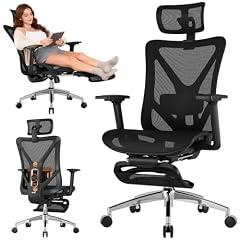
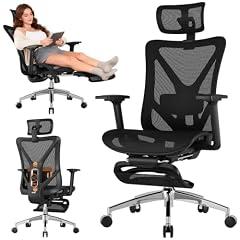
6
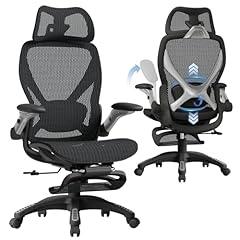
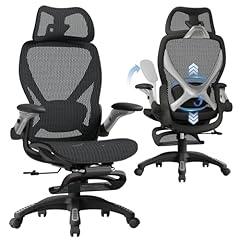
7
8
9
10
Overview
An ergonomic chair is meant to support a workable relationship between your body, desk, monitor, keyboard, and floor. The useful question is not whether a product is labeled “ergonomic,” but whether its adjustments let you sit with your back supported, shoulders relaxed, elbows near the desk, feet supported, and knees clear of the seat edge. A chair can help configure a workstation; the supplied reviews do not support treating any chair as a cure for back pain, neck pain, circulation problems, or repetitive-strain conditions.
Fit depends on more than a headline weight rating. Check the actual seat-height range, seat depth and width, back and lumbar adjustment, armrest movement, recline controls, and the manufacturer's recommended user-height range. OSHA's purchasing guidance referenced in the reviews commonly points to a 15–22 inch chair-height range and a roughly 15–17 inch seat-depth target, but those figures are starting points rather than guarantees. A 20-inch fixed seat may suit one adult and press behind another user's knees. A 300-, 330-, 350-, 400-, or 440-pound statement is a use limit, not proof that the chair's geometry fits every person within that limit or that its structure has been independently tested.
For rolling chairs, look for a sturdy five-leg base, a specified gas lift, a recline or tilt lock, and casters intended for the actual floor. “Silent,” “rollerblade,” or “hard-floor” descriptions remain manufacturer claims unless supported by model-specific testing. Stability and durability should be tied to the exact product, not merely to a component or a generic reference to BIFMA. The strongest evidence would be a current entry in the BIFMA Compliant product registry or a traceable test report for the exact model from an ISO/IEC 17025-accredited laboratory, alongside a check of CPSC recalls and incident reports.
Indoor-air and environmental claims also need finished-product evidence. Mesh, foam, nylon, metal, or “breathable” construction does not by itself establish low emissions or safer chemistry. Look for current GREENGUARD or GREENGUARD Gold records in UL SPOT, Indoor Advantage or Indoor Advantage Gold records in the SCS directory, or testing against furniture-emissions standards such as ANSI/BIFMA M7.1 and X7.1 or the CDPH Standard Method. For sustainability, seek quantified recycled or responsibly sourced content, material disclosure, packaging information, and a practical recovery route not only “eco-friendly” wording.
A durable purchase is easier to justify when wear parts can be identified and replaced. Check for a parts catalog, repair instructions, replacement casters or lifts, a meaningful warranty, and a clear support contact. A warranty may cover defects without guaranteeing ordinary wear-part availability. Also compare every published dimension and capacity: several supplied products contain conflicting seat heights, dimensions, weight limits, warranty terms, or certification language.
Recurring safety cautions are significant. Multiple reviews found no public exact-model structural test record or finished-chair low-emission certification. Fixed or poorly documented seat depth and arm adjustment repeatedly limit fit, especially for shorter users, taller users, shared workstations, and people with unusual body proportions. Several products make pain-relief, posture-correction, circulation, fatigue, or productivity claims that exceed the limited and mixed evidence. Do not use a chair as medical treatment, stand on it, or assume a weight rating proves stability. One kneeling chair has conflicting 200- and 250-pound limits, and another has conflicting 300- and 385-pound limits; resolve such discrepancies before use. Floor compatibility, balance, knee or shin loading, and dynamic use also matter for kneeling, cross-legged, reclining, and footrest designs.
Integrity
The scores below reflect the supplied product reviews. Higher scores indicate stronger evidence and clearer documentation within this group; they do not turn a manufacturer claim into independent proof or establish a medical benefit.
HHealth & Safety
Fit and adjustment range
This measures whether height, seat depth, lumbar support, arms, tilt, and casters can be adjusted to the person and workstation. It matters because a fixed or poorly documented seat can press behind the knees or leave the arms unsupported. The supplied scores range from 53 to 80: higher-scoring chairs document more useful adjustment points, while lower-scoring chairs omit seat-depth, arm, or fit-range information.
Health-benefit realism
This measures whether posture, pain, fatigue, circulation, or productivity claims stay within the limited evidence for chair interventions. A chair can help configure a workstation but is not established treatment. Scores range from 45 to 74. Higher-scoring products use more qualified fit language; lower-scoring products make broader claims about pain relief, spinal protection, circulation, fatigue, or posture correction without product-specific clinical evidence.
Fall and collapse resistance
This measures resistance to tipping, base failure, seat-to-lift separation, and structural breakage, ideally through exact-model independent office-seating tests. It matters because a weight limit alone does not demonstrate stability or durability. Scores range from 65 to 73, but no supplied product had a located public exact-model BIFMA record or traceable accredited report, so even the higher scores represent better documentation judgment, not confirmed pass results.
Lift, recline and rolling safety
This covers the gas lift, tilt lock, recline control, five-leg base, casters, and floor suitability for controlled movement. It matters because a chair may roll or recline unpredictably if its controls or intended surface are unclear. Scores range from 68 to 76. Higher-scoring reviews describe locks, tension controls, maintenance, or floor limits; lower-scoring ones leave caster performance or moving-part testing less certain.
Low-emission material safety
This measures independent VOC-emissions and material-chemical controls for the complete chair, not just mesh or foam. It matters in enclosed offices and homes because breathable fabric does not prove low emissions. Scores are tightly grouped from 68 to 70. The main limitation is consistent: no supplied product had a located finished-chair GREENGUARD, Indoor Advantage, or comparable public low-emission certification.
Body-size and use-limit honesty
This measures whether weight capacity, seat dimensions, height guidance, and intended use are complete and consistent. It matters because a capacity figure cannot show that the seat or lumbar position fits the user. Scores range from 52 to 77. Higher-scoring products provide concrete dimensions or height guidance; lower-scoring products contain conflicting limits, implausible measurements, missing ranges, or capacity claims that could be mistaken for ergonomic support.
EEcology
Repairable, long-life design
This measures whether casters, lifts, arm pads, mesh, cushions, and tilt parts can be identified, replaced, and supported through a warranty or repair instructions. It matters because replacing a worn part can avoid replacing the whole chair. Scores range from 69 to 78. Higher-scoring reviews document replacement parts, maintenance guidance, or meaningful coverage; lower-scoring reviews provide only general support or a warranty without a parts route.
Lower-impact materials and end of life
This measures quantified recycled or responsibly sourced content, material disclosure, packaging reduction, and realistic recovery options. It matters because mesh, foam, nylon, wood, or metal alone does not establish lower impact. Scores range from 65 to 70. The higher end reflects somewhat clearer material descriptions, but no supplied product had located public recycled-content certification, a full material disclosure, packaging data, or an end-of-life program.
EEvidence
Claims that match the evidence
This measures whether claims about materials, certifications, load, adjustments, and ergonomic benefits are specific and supported for the exact product. It matters because generic BIFMA, SGS, “eco-friendly,” or medical-style wording can sound stronger than the evidence. Scores range from 38 to 73. Higher-scoring listings are more restrained and internally consistent; lower-scoring ones combine inflated health claims, conflicting figures, or unverifiable certification language.
Independently verified, exact-model performance
This measures public, model-level proof for safety, durability, emissions, and sustainability, such as a registry record or traceable accredited report. It matters because a tested component or generic certificate may not cover the complete chair. Scores range from 68 to 70, yet the reviews repeatedly found no public exact-model BIFMA, emissions, or accredited structural record, making this a major evidence gap across the category.
Recall status and accountable seller
This measures model traceability, responsible-party information, customer contact, warranty clarity, and the absence of matching unresolved US safety actions. It matters because buyers need a route for recalls, defects, and replacement support. Scores range from 70 to 78. Higher-scoring products identify a manufacturer or support channel and had no matching recall located; lower-scoring products provide thinner seller, importer, warranty, or accountability information.
Full reviews

HUANUO Ergonomic High Back Office Chair
Overview
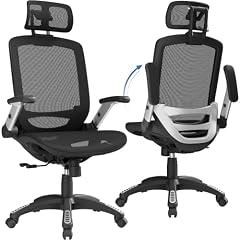
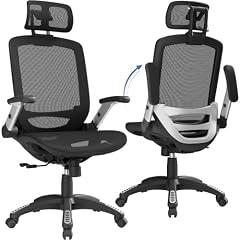
This is a high-back mesh office chair for computer work, with a foam seat, headrest, rolling five-star base, adjustable lumbar support, flip-up armrests, height adjustment, and a stated 300-pound maximum load. Its published seat height range is 14.5 to 18.5 inches, with a 20.1-inch-wide and 20.1-inch-deep seat. Those dimensions and adjustment claims are manufacturer-stated, though they are also reproduced by an independent retailer. The most concrete fit features are the claimed 2D lumbar adjustment, 2D headrest, 3D armrests, and 90 to 120 degree recline. This provides more adjustment than a basic fixed-arm task chair, but the published information does not show seat-depth adjustment, armrest height range, or caster flooring guidance. A seller claim references an SGS Class 3 gas lift, not a public test report for the complete chair.
What works
- Published specifications provide a usable 14.5 to 18.5 inch seat-height range for many standard desk setups.
- Manufacturer-stated 2D lumbar support, 2D headrest, and 3D armrests allow meaningful adjustment of contact points.
- The stated 90 to 120 degree recline meets OSHA guidance for a backrest that reclines at least 15 degrees from vertical.
- The brand's current warranty page lists a five-year office-chair limited warranty and says it ships covered replacement parts.
What does not
- No public BIFMA Compliant listing or model-specific accredited lab report was located for complete-chair stability, strength, or durability.
- The claimed SGS Class 3 gas lift does not verify the complete chair's base, back, tilt mechanism, or seat-to-lift attachment.
- No finished-product GREENGUARD, Indoor Advantage, or comparable low-emission certification was located.
- The 20.1-inch seat depth is fixed in the published specifications, which can make lumbar contact harder for shorter users.
- Published warranty information is inconsistent, with a general five-year brand policy and a separate three-year marketplace specification.
Who is it for
It suits an adult home-office user who wants several basic fit controls without a commercial seating specification. The stated 14.5 to 18.5 inch seat-height range can work with many conventional desk heights, while adjustable lumbar support, headrest positioning, reclining, and armrest depth and pivot can help a user tune the chair around keyboard and monitor placement. It is most appropriate for a single user who can assemble it carefully, periodically re-tighten hardware, and confirm that the fixed 20.1-inch seat depth feels right before relying on it for long workdays.
Who is it not for
It is not a good match for buyers who need documented whole-chair testing for a workplace, school, clinical setting, or high-consequence home use. People near the stated 300-pound limit, users with balance limitations, and households where a collapse or uncontrolled roll would create a serious injury risk should seek a chair with publicly traceable complete-chair stability and durability verification. Shorter users, or anyone who regularly finds deep fixed seats press behind the knees, should avoid assuming the lumbar adjustment replaces seat-depth adjustment. It also does not provide verified low-emission credentials for sensitive indoor environments.
Integrity
The chair's health case rests mainly on adjustability, not treatment. OSHA identifies adjustable seat height, lumbar support, recline, a five-leg base, and floor-appropriate casters as useful workstation features. This chair publishes several of those controls, including height adjustment, lumbar adjustment, recline, and a rolling five-star format. Still, evidence that chair interventions alone reduce pain or discomfort is low and conflicting, so posture or comfort claims should not be read as medical benefit claims. No public finished-product emissions certification, recycled-content disclosure, environmental product declaration, or BIFMA LEVEL listing was located. The materials are broadly described as mesh, foam, plastic, and metal, without quantified recycled content or end-of-life guidance. The brand publishes an office-chair warranty policy and replacement-part shipping for covered defects, which can support repair after a failure. No matching CPSC recall was located in the searched federal recall database, but the public record does not substitute for model-specific structural testing.

SIHOO M18 Ergonomic Big and Tall Chair
Overview
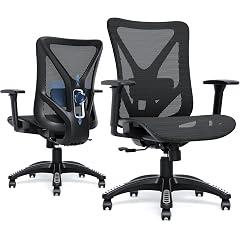
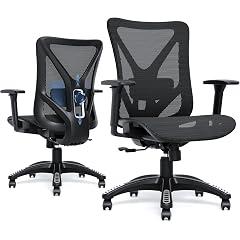
This is a rolling, high-back home-office chair with a mesh back, cushioned seat, headrest, adjustable lumbar support, height-adjustable armrests, swivel base, and recline function. SIHOO publishes a 17.1 to 20.7 inch seat-height range, a 17.9 inch fixed seat depth, a 20.1 inch seat width, and a 330 pound maximum load for listed M18 versions. It is intended for one seated adult at a desk, not as a step stool or armrest perch. The brand states that the chair reclines to 126 degrees, uses vertically and horizontally adjustable lumbar support, and has a five-star rolling base. It also claims BIFMA certification, but an exact-model entry in BIFMA's public product registry and an exact-model third-party test report were not located. SIHOO's own M18 pages identify polyester mesh, foam padding, polypropylene and fiber in the back frame, plus steel, aluminum and nylon framing parts.
What works
- The published seat-height range falls within OSHA's 15 to 22 inch purchasing guidance for many desk users.
- Manufacturer-stated vertical and horizontal lumbar adjustment, headrest adjustment, armrest height adjustment, and recline give more fitting options than a fixed task chair.
- The manufacturer identifies the main materials and publishes core dimensions, including seat width, depth, height range, and stated load limit.
- SIHOO's US warranty policy states three years of coverage for manufacturing defects, structural failures, and mechanical issues under normal use.
What does not
- The 17.9 inch seat depth is fixed. OSHA recommends effective seat-depth adjustment because a fixed pan can prevent some shorter or taller users from reaching the backrest comfortably.
- Only armrest height adjustment is clearly documented for the US product. Armrest width, depth, pivot range, and the actual adjustment range are not published.
- SIHOO claims BIFMA certification, but public exact-model certification or an accredited laboratory report for this product was not found. A test report visible through Amazon applies to different M90C models, not this chair.
- No current finished-product GREENGUARD, Indoor Advantage, BIFMA LEVEL, recycled-content, or comparable low-emission certification was located for this product.
Who is it for
It suits an adult setting up a conventional home workstation who can confirm that the fixed 17.9 inch seat depth and approximately 20 inch seat width fit their body. The seat-height range can work with many standard desks, especially when paired with a footrest or adjustable desk if needed. It is most appropriate for someone seeking adjustable lumbar position, an adjustable headrest, height-adjustable armrests, and a recline function, while understanding that these features help fit the workstation rather than treat back pain.
Who is it not for
It is not a strong match for people who need a sliding seat pan, adjustable armrest width or depth, or documented armrest ranges to achieve neutral keyboard posture. Shorter users may find the fixed seat pan difficult to use with full back contact, while taller users should check thigh support before relying on the stated load rating. People with significant back, neck, circulation, balance, or fall-risk concerns should not treat this chair as medical equipment. It is also unsuitable for standing on, sitting on the armrests, or use by more than one person at once.
Integrity
Its most useful health-related attributes are practical fit features rather than therapeutic ones. OSHA emphasizes adjustable chair height, lumbar support, a five-leg base, floor-appropriate casters, and workstation setup. SIHOO documents several of those features, including seat-height adjustment, lumbar adjustment, recline, and rolling casters. The evidence that a chair by itself reduces back pain or discomfort is limited and conflicting, so statements about spinal relief, reduced strain, or improved posture should be treated as comfort and fitting claims, not treatment claims. The material disclosure is better than a generic mesh-chair listing, naming polyester mesh, foam, polypropylene and fiber, steel, aluminum, and nylon. However, no independent finished-chair low-VOC certification, product-level recycled-content evidence, or end-of-life recovery program was located. SIHOO states a three-year warranty and describes replacement support for covered defects, which can help extend service life. No matching US CPSC recall or public safety warning for this product was located in the checked sources.

SIHOO B100 Ergonomic Mesh Office Chair
Overview
The SIHOO B100 is an assembled-at-home, high-back mesh desk chair with a plastic and steel structure, headrest, flip-up armrests, five-caster base, and a floating sacral support pad. The official US product page lists overall dimensions of 27.6 by 28.3 inches, a 44.1 to 51.6 inch overall height range, a 330-pound maximum load, and a three-year warranty. Those are manufacturer-stated specifications. The product page also states that the chair has a Class 4 gas lift, 2D headrest, 2D flip-up armrests, and three lockable recline positions up to 135 degrees. An independently hosted copy of the marketplace manual gives an 18.3 to 21.9 inch seat-height range and identifies a 300-pound maximum weight recommendation. The conflicting 300 and 330-pound figures mean the applicable use limit should be confirmed with the seller before purchase.
What works
- The documented 18.3 to 21.9 inch seat-height range falls within OSHA's general 15 to 22 inch chair-height guidance.
- Manufacturer-stated three-position recline up to 135 degrees gives users locked posture changes, rather than an unspecified free-float backrest.
- Flip-up armrests can allow closer desk approach and easier storage in tight work areas, according to the manufacturer.
- The official US warranty states three years of coverage for manufacturing defects, structural failures under normal use, and mechanical issues, with repair through replacement parts where possible.
What does not
- Seat-depth adjustment is not documented. The listed 17.1 inch seat depth may not fit users with substantially shorter or longer thighs.
- The brand's claims of BIFMA, SGS, and TÜV certification could not be confirmed for this exact product in the relevant public certification registries or through a traceable test report.
- The official source lists a 330-pound load limit, while the marketplace manual lists 300 pounds. This is a material use-limit inconsistency.
- No finished-product GREENGUARD, Indoor Advantage, BIFMA LEVEL, recycled-content, or other public low-emission and sustainability certification was identified for this product.
Who is it for
This product suits an adult home-office, study, or hybrid-work user who needs a mesh chair with a conventional seat-height range, a high back, a headrest, and the ability to fold the arms away for a compact desk. It is most appropriate for someone who treats the manufacturer-stated 300 to 330-pound limit as a ceiling rather than a fit recommendation, can test the fixed seat depth during the return period, and values a stated three-year mechanical and structural warranty.
Who is it not for
It is not well suited to users who need documented seat-depth travel, adjustable armrest height and width, or a chair fitted to a specific body size or clinical need. People near or above 300 pounds should not rely on the conflicting load claims without written clarification for the exact product configuration. It is also a poor fit for workplaces, schools, or safety-sensitive settings that require public, exact-model proof of ANSI/BIFMA testing, emissions certification, and traceable accredited laboratory reports.
Integrity
The usable ergonomic evidence is mixed. OSHA recommends a five-leg rolling base, adjustable seat height, lumbar support, a lockable recline, suitable casters, and ideally adjustable seat depth and armrest dimensions. The B100 documents several of these elements, including a conventional seat-height range, recline locks, a headrest, and flip-up arms. It does not document seat-depth adjustment, while its lumbar and posture claims are manufacturer statements. A systematic review found very low to low quality and conflicting evidence that chair interventions reduce low-back pain or discomfort. The product should therefore be viewed as a fit and comfort tool, not a treatment. No matching B100 recall was identified in the CPSC recall search reviewed here. The brand states it repairs eligible warranty issues with replacement parts, but it does not publish a product-specific parts catalog, emissions certificate, material breakdown, recycled-content figure, or practical end-of-life instructions.

FelixKing Ergonomic Mesh Office Chair
Overview
This is a mesh-back home-office chair with a foam seat, five-wheel swivel base, flip-up armrests, height adjustment, adjustable lumbar pad, and a rocking recline. FelixKing's product materials identify mesh, foam and nylon finish, while the catalog record identifies a metal frame. The published instructions state a 300-pound maximum user weight, a 20.5-inch-wide by 19.7-inch-deep seat, and a 90 to 120 degree rocking range. The strongest concrete fit features are manufacturer-stated, a 10 cm seat-height range, 5 cm vertical lumbar adjustment, recline tension adjustment, and armrests that flip up. These can help position the chair at a desk, but the fixed seat depth and non-adjustable armrest height and width limit individualized fit. No public exact-product BIFMA conformance listing, accredited test report, or finished-chair low-emissions certification was located.
What works
- Manufacturer-stated lumbar-height adjustment, seat-height adjustment, recline tension, and 90 to 120 degree rocking offer several ways to alter seated posture.
- The stated 20.5-inch seat width exceeds OSHA's approximate 18-inch minimum purchasing-guide reference.
- Flip-up armrests can reduce desk-clearance interference when arms do not fit a workstation.
- FelixKing's published instructions describe a five-year service commitment and replacement of necessary parts for quality problems.
What does not
- The seat pan is fixed at a stated 19.7-inch depth, which can be too deep for shorter users who need to reach the backrest without knee-edge pressure.
- Armrests flip up but are not documented as height, width, or pivot adjustable, limiting neutral forearm support for shared workstations.
- The published 300-pound limit is a manufacturer statement, not public evidence of exact-model strength, stability, lift, or durability testing.
- No public GREENGUARD, Indoor Advantage, BIFMA LEVEL, recycled-content, or exact-product materials disclosure was located.
- Marketing about posture support and relief from prolonged sitting should not be treated as pain treatment. The available systematic-review evidence for chair interventions is low and conflicting.
Who is it for
This chair suits a budget-conscious adult working at a standard-height desk who wants a breathable mesh back, a moderately wide fixed seat, and the convenience of arms that can fold up to slide under the desk. It is most suitable when the user can test the 19.7-inch fixed seat depth and set the chair so both feet are supported. The stated 300-pound capacity may be relevant for users within that limit, but it should be treated as a use limit rather than proof of individualized ergonomic fit or independently verified durability.
Who is it not for
It is not a strong fit for short users, people with unusually long thighs, or shared offices where several people need the same chair to fit well. Those users may need seat-depth adjustment and armrests with documented height and width adjustment. It is also not appropriate for anyone who needs independently verified BIFMA strength and stability testing, certified low indoor-air emissions, or documented hard-floor caster performance. People managing persistent back pain should not rely on this chair's posture language as a medical intervention.
Integrity
A five-leg rolling base, 360-degree swivel, lumbar adjustment, height adjustment, and a recline range of at least 15 degrees are features that align in part with OSHA workstation guidance. The product information also describes mesh upholstery and a foam seat. Proper setup still matters, including feet supported on the floor or a footrest, relaxed shoulders, and a desk height that lets elbows stay near the body. FelixKing states a five-year service commitment and replacement parts for qualifying quality issues, which could extend use if support is honored. However, no public exact-product BIFMA conformance record, accredited laboratory report, low-emissions certification, recycled-material content, or end-of-life recovery program was located. A search of the CPSC recall database did not identify a matching FelixKing product recall, but absence of a recall is not independent proof of structural safety.

Gabrylly Ergonomic Reclining Office Chair
Overview
This is a high-back, all-mesh desk chair with a retractable steel footrest, headrest, rolling five-leg base, and three lockable recline positions at 90, 110, and 135 degrees. The manufacturer states a 300-pound maximum user weight, a 20.6 by 19.1 inch seat, and a roughly 42.7 to 48.8 inch overall height range. It is intended for seated computer work, then reclining during breaks. Its defining fit features are manufacturer-stated 2-way lumbar adjustment, 3D armrests, adjustable headrest, and a claimed user-height range of 5 feet 3 inches to 6 feet. Amazon identifies an SGS-issued Global Recycled Standard certificate for the product. By contrast, the listing's broad BIFMA compliance statement is not backed here by a public exact-product BIFMA registry record or a traceable chair test report.
What works
- Manufacturer-stated lumbar adjustment moves 3 inches vertically and 1.6 inches in depth.
- Manufacturer-stated 3D armrests can change height, fore-aft position, and pivot angle.
- The three-position recline lock exceeds OSHA's basic recommendation for a backrest able to recline and lock.
- Amazon identifies a Global Recycled Standard certification for this product, with SGS certificate number TE-00297545.
- A manufacturer-stated 3-year parts warranty and gas-lift replacement contact provide some post-purchase support.
What does not
- The seat pan is not stated to adjust in depth, which limits fit tuning for very short and very tall users.
- The 300-pound rating and BIFMA compliance claim are not accompanied by a public exact-product BIFMA listing or accredited test report.
- No finished-chair GREENGUARD, Indoor Advantage, or comparable low-VOC certification was found.
- Marketing says lumbar support can reduce fatigue and improve posture, but chair-intervention evidence for pain and discomfort outcomes is low quality and conflicting.
- Caster material and intended floor types are not clearly specified, so hard-floor protection and rolling control remain uncertain.
Who is it for
This product suits a home-office user within the manufacturer-stated 5 foot 3 inch to 6 foot height range who wants more adjustment than a basic task chair. It is most relevant for someone able to set up a desk, monitor, and keyboard around the chair, then use the lumbar, armrest, and recline controls to find a neutral working position. The footrest and 135-degree recline may also suit users who want a supported break position in the same chair. The stated 300-pound limit should be treated as a use limit, not proof of universal ergonomic fit.
Who is it not for
It is not a strong fit for people who need a clinically supported solution for back pain, circulation symptoms, or fatigue. A chair cannot substitute for medical assessment, movement, or a properly arranged workstation. Very short or tall users, or people with unusually long or short thighs, should be cautious because the seat pan is not depth-adjustable. It is also unsuitable for buyers who require public model-specific proof of ANSI/BIFMA chair testing, low-VOC finished-product certification, or documented caster suitability for delicate hard flooring.
Integrity
The useful health feature is adjustability, not a medical effect. OSHA emphasizes adjustable lumbar support, recline control, adjustable armrests, a five-leg base, and a seat that lets feet rest on the floor or a footrest. This chair appears to offer many of those controls, but the listed posture and fatigue benefits are manufacturer claims. Systematic-review evidence does not establish that a chair intervention alone reliably reduces back pain or discomfort. Amazon identifies Global Recycled Standard certification for this product and names SGS with certificate number TE-00297545. That is meaningful recycled-content evidence for this product, although the listing does not disclose the specific recycled materials, percentage by component, packaging details, or an end-of-life recovery route. No completed-chair low-emission certification was found. No matching CPSC recall was found in the searched US recall sources, but the public evidence does not include an exact-model structural test report.
ELABEST X100 Ergonomic Office Chair
Overview
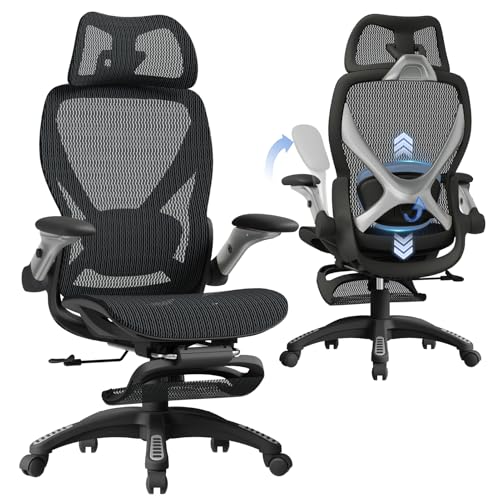
The X100 is a mesh office and gaming chair with a retractable footrest, headrest, adjustable arms, lumbar support, swivel base, and reclining function. The product listing states a 300 pound maximum user weight, an 18 inch seat depth, a 20.47 inch seat width, and three recline positions. It is intended for adult desk work and gaming rather than medical treatment. The manufacturer describes multi-point adjustment, including lumbar, armrest, headrest, seat-height, and recline controls. Those useful adjustment features are manufacturer-stated, not independently verified for this product. Its public product material also makes stronger posture, pain, fatigue, and productivity claims than the available human evidence supports. Public specifications are internally inconsistent, including 275 versus 300 pound capacity and differing descriptions of the seat and arm adjustments.
What works
- Manufacturer-stated lumbar, armrest, headrest, height, and recline adjustments can help users set up a desk chair more precisely.
- The listed mesh seat and back can improve airflow compared with an upholstered solid-back format.
- A manufacturer-stated three-position recline lock and tension control can support changing posture during a work session.
- The product listing includes a footrest, which may be useful for short reclined breaks.
What does not
- No public exact-product BIFMA registry entry, accredited test report, or other independent proof of whole-chair strength, stability, lift, recline, or durability testing was located.
- The manufacturer presents incompatible capacity figures, 275 pounds on its product page and 300 pounds in the marketplace specifications.
- The manufacturer describes the seat as mesh in one set of specifications and dual-density memory foam with a fabric cover in another, limiting material clarity.
- Marketing claims that the chair reduces lower-back pain, fatigue, and improves productivity are not substantiated for this product. Research on chair interventions finds low or very low quality and conflicting evidence for these outcomes.
- No public low-emissions certification, material chemical disclosure, recycled-content documentation, parts catalog, or product-specific repair guidance was located.
Who is it for
This product is suited to an adult home-office or gaming user who wants a mesh chair with a footrest and is prepared to spend time setting up lumbar position, arm height, headrest, and recline. Its listed 18 inch seat depth and roughly 20.5 inch seat width suggest it may suit many average-size adults, provided they can confirm comfort after assembly. It is more appropriate for someone seeking adjustable comfort features than for someone who needs independently documented workplace-grade performance.
Who is it not for
It is not well suited to users near the stated weight limit, because public product materials conflict between 275 and 300 pounds and do not provide an independently verifiable structural test report. It is also a poor fit for people with diagnosed back pain who need treatment-level evidence, or for employers and institutions that require documented BIFMA compliance, emissions certification, repair parts, or a clear commercial warranty. Households needing a chair for hard floors should verify caster compatibility before use.
Integrity
The practical health value here is adjustment, not treatment. Seat height, arms, lumbar support, headrest, and recline are manufacturer-stated features that may help a user set up a more neutral workstation when paired with a suitable desk and monitor. They do not establish that the chair treats pain or improves circulation, focus, or productivity. A systematic review found low or very low quality and conflicting evidence that chair interventions reduce pain or discomfort. The manufacturer uses BIFMA-related language, but no public exact-product compliance listing or accredited whole-chair test report was located. No matching CPSC recall was identified in the recall search reviewed. The review also found no public GREENGUARD, Indoor Advantage, or comparable finished-product emissions certification, and no verified recycled-content or end-of-life documentation. Public materials describe mesh, but conflict over other seat materials and capacity, which reduces material and use-limit transparency.

Gabrylly Ergonomic Mesh High Back Office Chair
Overview
This is a high-back mesh task chair for indoor desk use, with a headrest, swivel base, flip-up armrests, a pneumatic height control, and a backrest that the product listing says locks from 90 to 120 degrees. The listed seat is 20 inches wide by 19.3 inches deep, with a stated seat-height range of 18.5 to 22.05 inches and a stated 300-pound capacity. Those dimensions are manufacturer-stated, not independently tested. The height range reaches OSHA's 22-inch upper guideline, but it starts higher than OSHA's 15-inch lower guideline and the product does not document seat-depth adjustment. The listing also claims BIFMA certification, but no exact-product entry or traceable accredited test report was located in the public BIFMA registry search.
What works
- The stated 18.5 to 22.05 inch seat-height range reaches OSHA's upper recommended height for computer-workstation chairs.
- A 20-inch-wide stated seat and 19.3-inch stated depth give buyers concrete fit measurements.
- The listing specifies a five-point base, swivel function, PU casters, and a 90 to 120 degree tilt lock.
- The brand's warranty page states a five-year repair warranty for defects, although the product listing gives conflicting warranty language.
What does not
- Seat-depth adjustment, armrest height range, armrest spacing, and lumbar-adjustment range are not documented, which limits fit assessment.
- The Amazon page contains conflicting warranty statements, including three years in a feature bullet and at least five years in product information.
- The product page calls the chair BIFMA-certified, but public exact-product BIFMA conformance evidence and an accredited laboratory report were not found.
- No finished-product GREENGUARD, Indoor Advantage, or comparable low-emission certification was located.
- A chair can support workstation fit, but evidence that chair interventions alone reduce back pain or discomfort is low quality and conflicting.
Who is it for
It suits an adult desk user who falls near the maker's stated 5 foot 5 to 6 foot 2 fit range, wants a breathable mesh chair, and can work with an 18.5-inch minimum seat height. It is especially relevant where armrests need to fold up for desk clearance and where a 90 to 120 degree backrest adjustment is useful for changing position. The stated 300-pound limit should be treated as a use limit, not proof of individualized ergonomic fit or independently verified durability.
Who is it not for
It is not well suited to shorter users or anyone who needs a seat lower than 18.5 inches, because the stated range does not reach OSHA's 15-inch lower guideline. People who require adjustable seat depth, documented armrest-height adjustment, or precisely adjustable lumbar support should use a product with published ranges. It is also not appropriate to rely on for treating back pain, circulation problems, or posture-related medical conditions. Buyers needing independently documented structural or emissions testing should require that evidence before use.
Integrity
The product is a mesh, nylon, and metal chair according to the marketplace listing. It has a stated five-leg base, PU casters, a class-4 gas lift, and a 300-pound capacity, but no public exact-product ANSI/BIFMA test report or registry record was located to independently confirm stability, strength, lift durability, or caster performance. No matching CPSC recall or public safety action was located in the searched U.S. sources. No exact-product GREENGUARD, Indoor Advantage, BIFMA LEVEL, recycled-content, or end-of-life documentation was located. That leaves indoor-air emissions, chemical controls, recycled material content, and recovery options unverified. The brand states a five-year repair warranty, which could support longer use, but the product page also says three years and does not provide a public chair-parts catalog or repair manual. The conflicting warranty and unsupported certification language reduce the clarity of its claims.

Molents Ergonomic Mesh Office Chair
Overview
This is a full-mesh, rolling office chair for adult desk work. The manufacturer describes a 19.8-inch-wide seat, a seat-height range of 19.5 to 23.3 inches, adjustable lumbar support that moves vertically and forward or back, 3D armrests, and three recline positions from 90 to 120 degrees. It is intended for indoor office or home-office use. The published 300-pound capacity, nylon frame, mesh upholstery, foam fill, and two-year warranty are manufacturer-stated. The fit features are useful in principle, but the product does not provide public numeric ranges for lumbar travel, armrest movement, caster type, or seat-depth adjustment. Public specifications also conflict on overall height, so buyers should confirm dimensions directly before relying on clearance or desk-fit planning.
What works
- Manufacturer-stated lumbar adjustment, adjustable arms, height adjustment, swivel, and recline give more setup options than a fixed task chair.
- The manufacturer states that the seat and back use breathable mesh, which may be more comfortable than non-breathable upholstery in warm work areas.
- A two-year manufacturer warranty and assembly manual are stated, and the brand says it can provide a different gas lift when needed.
- The stated 19.8-inch seat width and 300-pound capacity give prospective users concrete starting points for judging basic fit.
What does not
- No public exact-product BIFMA registry entry, accredited test report, or other independent proof was located for the claimed structural quality or 300-pound capacity.
- No finished-product GREENGUARD, Indoor Advantage, or comparable low-emission certification was located. Mesh and foam descriptions do not establish low indoor chemical emissions.
- The brand makes strong posture, strain, ache, and productivity claims. Available systematic-review evidence does not establish that this specific chair can reliably prevent pain or treat discomfort.
- Seat depth appears fixed, and the product lacks published adjustment ranges for the lumbar support and armrests. This limits confidence in fit for unusually short, tall, or broad users.
- Manufacturer materials list conflicting overall dimensions across public listings. That is a specification transparency problem, not proof that the product is unsafe.
Who is it for
This product suits an adult home-office or shared-office user who wants a mesh chair with several manufacturer-stated adjustment features and has room to test the fit after assembly. It is most appropriate for someone whose desk height works with a 19.5 to 23.3-inch stated seat-height range, who values adjustable lumbar positioning and arm support, and who does not need independently documented commercial-duty testing. The stated 19.8-inch seat width may suit many average-to-broader adult users.
Who is it not for
It is not well suited to buyers who need documented compliance for an employer, school, clinic, or other institutional setting, because public exact-product third-party test evidence was not located. People above the stated 300-pound limit, very short users who need a lower seat position, and users needing a sliding seat pan should select a product with published fit ranges. It is also unsuitable as a medical solution for persistent back pain, injury, numbness, or circulation symptoms.
Integrity
The product uses manufacturer-described mesh upholstery, shaped foam, and a nylon frame. Those descriptions identify broad material types, but they do not disclose foam chemistry, recycled content, textile composition, flame-retardant status, packaging details, or end-of-life recovery options. No current finished-product low-emission certification was located in the major public certification directories searched. A retailer's generic California Proposition 65 notice does not identify a product-specific chemical exposure. No matching CPSC recall was located in the searches performed, and the brand provides consumer contact details and a stated two-year warranty. The health marketing needs more restraint. The manufacturer links adjustability to reduced strain, healthy posture, eliminated aches, and better productivity, while a systematic review found very low to low-quality and conflicting evidence that chair interventions reduce office-worker pain or discomfort. Adjustable fit can support workstation setup, but it is not a treatment claim.

FLEXISPOT ErgoX Premium Ergonomic Chair
Overview
This product is a rolling, five-leg mesh office chair with an adjustable headrest, 3D armrests, dynamic lumbar support, recline settings, and a retractable footrest. The marketplace listing states a nylon frame and mesh seat, a 400-pound maximum recommendation, a 20.5-inch seat width, 20-inch seat depth, and a 3-year warranty. Assembly is required. Its defining strength is the stated adjustment set, which can help a user place arm support and lumbar contact more deliberately than a fixed chair. FlexiSpot publishes detailed adjustment information for a related C7 chair family, including a nylon base, adjustable lumbar support, 3D armrests, and recline. However, I did not find a model-specific manual, accredited test report, or public certification entry that confirms those details for this exact product configuration.
What works
- The stated 3D armrests, adjustable headrest, lumbar support, and recline offer several fit controls.
- The mesh seat and back are a practical format for users who prefer less heat retention than upholstered seating.
- The listing gives useful core dimensions, a stated 400-pound use limit, and a five-leg rolling base.
- A 3-year manufacturer warranty for the chair body and mechanisms offers some support for defects in covered parts.
What does not
- No public, exact-product ANSI/BIFMA conformance listing or traceable accredited test report was located for stability, strength, gas lift, or recline durability.
- No finished-product GREENGUARD, Indoor Advantage, or comparable low-emissions certification was located.
- The public product documentation is thin. I did not find an exact-product repair guide, replacement-parts catalog, or mesh and mechanism service instructions.
- Ergonomic features can improve fit, but research finds low or very low quality and conflicting evidence that chair interventions reduce back pain or discomfort.
Who is it for
It suits an adult home-office user who wants a mesh chair with multiple manufacturer-stated adjustment points, including armrest, headrest, lumbar, recline, and footrest controls. It is most relevant for someone prepared to assemble the chair and to adjust it alongside desk, monitor, keyboard, and foot position. The stated 400-pound capacity may be useful for larger users, but it should be treated as a use limit, not proof of individualized ergonomic fit or long-term structural performance.
Who is it not for
It is not well suited to buyers who need independently documented safety, durability, or indoor-air performance for a workplace procurement program, a school, or a health-sensitive home. It also is a poor fit for someone who needs verified replacement parts before purchase, such as casters, arm pads, gas lift, mesh, or tilt hardware. People managing persistent back pain should not treat lumbar support, recline, or a footrest as medical treatment and should seek individualized clinical advice when appropriate.
Integrity
The product's health-relevant value is primarily adjustability, not a demonstrated therapeutic effect. Its stated armrest, headrest, lumbar, height, and recline controls can help users set up a more individualized sitting position. That matters because workstation fit is more credible than broad promises about correcting posture, relieving pain, or increasing productivity. A systematic review of office-chair interventions found the evidence for reducing pain and discomfort to be conflicting and low quality. The product is stated to use nylon and mesh, but the available information does not quantify recycled content, identify all coatings and foam components, or document end-of-life recovery. No public finished-product low-VOC certification was located. FlexiSpot provides a limited 3-year chair warranty, which may extend service life for covered defects, but no exact-product parts catalog or repair pathway was found. Searches of U.S. consumer-safety recall resources did not identify a matching recall for this product.
SIHOO Ergonomic Office Chair White
Overview
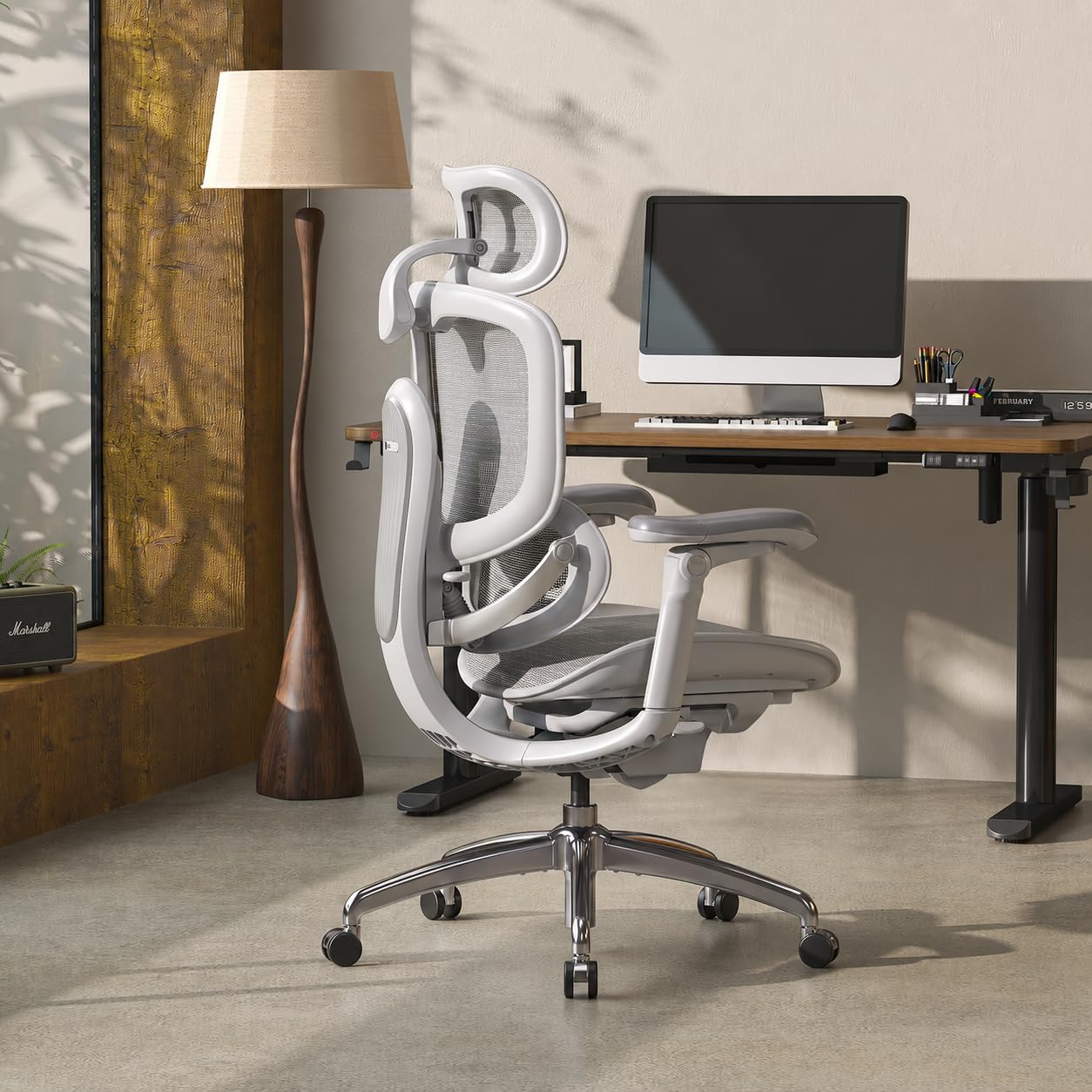
This is a large, high-back mesh desk chair for computer work, gaming, and reclining breaks. The manufacturer specifies a 20.5-inch seat width, 16.9 to 18.5-inch seat-depth range, 105°, 120°, and 135° recline positions, 8D armrests, a 3D headrest, and a 330-pound maximum load. It is intended for users from 4 feet 11 inches to 6 feet 3 inches, according to the manufacturer. Its defining feature is adjustment density. Seat depth, backrest height, lumbar position, headrest, armrests, and recline are all adjustable, which aligns with core workstation-fit principles. Independent hands-on reporting also found the mesh breathable and the chair stable in short-term use. However, the maker's statements that it is tested to BIFMA, SGS, and TÜV standards were not matched by a public exact-product certificate, test report, or BIFMA registry record during verification.
What works
- Broad adjustment set includes seat depth, backrest height, headrest, lumbar support, armrests, and recline, based on manufacturer specifications.
- The 16.9 to 18.5-inch seat-depth range can help users avoid either unsupported thighs or pressure behind the knees when correctly set.
- The product has a five-leg rolling base and reclines at least 15 degrees from upright, features consistent with OSHA chair guidance.
- Independent short-term testing reported stable rolling and reclining behavior, along with breathable mesh during extended desk use.
- A 3-year manufacturer warranty covers manufacturing, structural, and mechanical defects under normal use, with replacement parts promised for covered issues.
What does not
- Public, exact-product evidence was not found for the stated BIFMA, SGS, or TÜV testing, so structural, durability, and control claims remain manufacturer-stated rather than independently confirmed.
- No finished-product GREENGUARD, Indoor Advantage, or comparable low-emission certification was located. Mesh construction does not by itself establish low indoor VOC emissions.
- The 330-pound load figure is a manufacturer specification, not proof of ergonomic fit or long-term safety for every body shape at that weight.
- The numerous controls may require careful setup. Independent hands-on reporting found the chair cumbersome and potentially over-adjustable.
- The warranty excludes normal wear and tear, and public documentation does not provide a consumer parts catalog or repair procedure for mesh, lift, casters, or tilt components.
Who is it for
This product suits a home-office user who can spend time adjusting a chair and wants a broad range of posture changes rather than a simple fixed setup. Its sliding seat, adjustable backrest, multi-axis armrests, headrest, and three recline stops are most relevant to someone whose desk work includes typing, video calls, reading, and periodic reclining. It is also better suited to a room with adequate clearance, since independent hands-on reporting describes it as physically large. The manufacturer-stated fit range is 4 feet 11 inches to 6 feet 3 inches.
Who is it not for
It is not a strong fit for buyers who need independently documented proof of BIFMA compliance, laboratory emissions testing, or exact-model durability certification before using a chair intensively. People with active back, neck, circulatory, or pain conditions should not treat adaptive lumbar support or mesh as therapy, since chair-intervention evidence for reducing pain and discomfort is low and conflicting. It also may not suit very small work areas, people who dislike complex controls, or households needing clearly documented replacement-part availability after normal wear.
Integrity
The practical health strength is adjustability, not a medical effect. OSHA guidance supports chairs with adjustable lumbar support, a reclining and controllable backrest, adjustable armrests, a five-leg base, and casters suited to the floor. This product appears to provide many of those elements, but its advertised full-body support, pressure relief, and fatigue-related benefits are manufacturer claims. A systematic review found low to very low quality and conflicting evidence that chair interventions reduce office-worker pain or discomfort. The manufacturer identifies mesh for the seat and back, PU-coated armrests, an aluminum base, and a nylon back frame. It also offers a 3-year warranty that covers covered structural and mechanical defects with replacement parts. No public finished-product indoor-air certification, recycled-content certification, circularity scorecard, or exact-product independent test certificate was located. No matching U.S. CPSC recall was located during verification, but absence of a recall is not independent evidence of product safety.