
10 Best Emergency Kit
 Lauren Wilson
Please note that we participate in affiliate marketing programs. When you purchase through links on our site, we may earn a commission. As an Amazon Associate we earn from qualifying purchases. This comes at no additional cost to you and helps support the resources required to provide valuable content.Advertising Disclosure
Top-rated Emergency Kit Comparison
1


2

4
5
6

7
8
9
10
Emergency kits: what to look for
An emergency kit is not defined by a large piece count or a broad survival label. It is a collection of supplies intended to help with a particular risk: minor injuries, outdoor problems, evacuation, a power outage, or several days without normal services. The first buying decision is therefore scope. A first-aid case may help clean and cover wounds but still lack water, food, lighting, communications, sanitation, medicines, and personal-needs supplies. A power bank, battery pack, seed assortment, or water-treatment product can be useful components without being complete emergency kits.
A credible kit should state what it contains, how many people and days it covers, and what it does not cover. Compare those claims with the basic categories expected in emergency guidance: water, shelf-stable food, light, batteries or charging, communications, first aid, medicines, sanitation, and household-specific needs. “300 pieces” can be misleading when most pieces are small bandages, wipes, cotton items, or duplicate adhesive strips. A count also does not show whether there is enough of a high-need item, whether supplies are suitable for children or allergies, or whether the kit includes the duration claimed.
For first-aid products, look for an itemized contents list, quantities, sterile packaging, expiration information, storage instructions, and a clear replacement path. A claim of workplace suitability should be matched to the workplace hazard assessment and the applicable ANSI/ISEA Z308.1 configuration; OSHA does not certify a generic kit for every workplace. Medical-device status can be checked through FDA registration and listing, but registration or listing is not the same as FDA approval, clearance, or authorization. Medicines should have identifiable Drug Facts information and dates.
For water treatment, check the EPA-registered product label, active ingredient, dose, water condition, contact time, limitations, storage, and expiry or lot information. Treatment claims may apply only to clear or pre-cleared water and may not address chemicals, radioactive contamination, or every organism. An independent WHO or NSF record can strengthen the evidence, but it does not remove the need to follow the product label. For electronics and lighting, look for product-specific FCC information where applicable, UL Product iQ or Intertek ETL records when claimed, battery specifications, charging limits, and realistic capacity. A solar panel’s presence does not show that it can recharge a device meaningfully during a short outage.
Durability and organization matter because emergency use is time-sensitive. Divided, labeled compartments, a protected case, plain-language instructions, and a practical carrying method can help under stress. “Waterproof,” “professional,” “trauma,” “OSHA compliant,” and “survival” are not proof by themselves; look for a test method, certification, registration, or precisely qualified claim. Traceable maker and model information, lot or date codes, recall notices, and replacement documentation make it possible to maintain the kit rather than guess.
Across the supplied products, the recurring caveat is that none should be treated as a complete multiday household disaster kit unless water, food, lighting, communications, sanitation, medicines, and personal needs are separately addressed. Several products also lack full contents, expiry, lot, certification, or refill information. Listed tourniquets and trauma language do not establish severe-bleeding capability without identifiable equipment, instructions, training, and performance evidence. Chemical water treatments require careful dosing and do not remove all contaminants; batteries and other chemicals need safe storage and disposal. Product claims should be checked on arrival and supplies inspected and replaced over time.
Integrity
These topics distinguish a useful, maintainable emergency supply from a high-count assortment. Scores reflect the supplied product reviews and are most meaningful when read alongside the documented limits of each product.
HHealth & Safety
Health and injury readiness
This measures whether the product supplies safe, appropriate basics for the injuries it claims to address. High-scoring examples document useful wound-care items, barriers, dressings, tools, or instructions; lower-scoring products may rely on broad survival language or incomplete medical details. Among the supplied products, first-aid cases score up to 77, while a phone power bank scores 42 because it does not provide injury-care supplies.
Real emergency coverage
This asks whether contents and quantities match the stated people, days, and scenario, including water, food, light, communications, first aid, medicines, sanitation, and personal needs. High scores require more than a large item count. Aquatabs and batteries score 68 and 70 as useful components, while the listed first-aid and outdoor kits generally score 43–68 because they omit core multiday supplies.
Safety-critical component compliance
This measures whether medical, chemical, electrical, and protective components are identifiable and have an appropriate U.S. safety status. High scores are supported by checkable records, such as Aquatabs’ EPA label and NSF listing; lower scores occur where a kit includes anonymous medical items, an undocumented tourniquet, or an unverified electrical certification. Scores range from 52 for one hard-case first-aid product to 92 for Aquatabs.
Works when needed
This measures protection from damage, storage quality, dates, packaging, durability, and usable shelf life. A high score means sterile goods, medicines, chemicals, batteries, and electronics have clear storage and date information. The supplied products score 65–80. Aquatabs scores 80 because its label provides storage and expiry fields, while products lacking component-level dates and inspection schedules score lower.
Safe consumables and treatment
This covers whether food, medicines, and water-treatment products are labeled for the claimed use, with doses, contact times, directions, expiry, and limitations. High scores belong to products with documented labels and bounded claims; Aquatabs scores 82, while seed products score 58 because seeds are not immediate food and a broccoli-seed recall connection cannot be confirmed. First-aid kits with undocumented medicine labels also remain limited.
Usable under stress
This measures organization, labeling, portability, instructions, and whether a non-expert can find supplies and understand their limits. High scores are associated with divided cases, labeled compartments, guides, or clearly separated pouches. The supplied products score 72–80. Organized first-aid cases and Aquatabs score relatively well; mixed survival kits score lower when contents, instructions, or replacement steps are not fully documented.
EEvidence
Honest emergency claims
This measures whether claims such as professional, trauma, waterproof, solar-powered, OSHA-compliant, or safe drinking water match the contents and evidence. High scores use narrow, qualified claims: Duracell scores 80 and Aquatabs 72. Lower scores occur when a product is presented as a complete or professional solution despite missing water, food, communications, medical documentation, or realistic solar capacity.
Independent proof
This measures product-specific evidence from an accredited or publicly checkable outside source rather than only seller statements. High scores reflect records such as EPA, NSF, WHO, FCC, FDA, or independent testing tied to the product or model. Aquatabs scores 90 because several such records are supplied; most first-aid and survival kits score 68–72 because certification or accredited testing was not found.
Traceable and recall-ready
This measures whether the maker, model, lot or date codes, recall path, and replacement information are identifiable. High scores make it easier to check notices and replace expired or recalled components. Aquatabs scores 87 and SurviveX 76 because public identification is stronger; products with incomplete contents, missing lot information, or no refill path score closer to 58–70. A public record still does not prove every component is safe.
EEcology
Lower-waste preparedness
This measures disposable-material burden, hazardous-waste risks, refillability, reusable storage, and end-of-life guidance. A high score favors restockable cases and durable components while acknowledging batteries, chemicals, medicines, and contaminated supplies. Scores range from 50 to 72. Reusable cases, refillable first-aid supplies, rechargeable power, or long storage can help, but most kits still contain many single-use dressings, wipes, packets, batteries, or chemical items.
Full reviews

SurviveX Large Emergency First Aid Kit
Overview
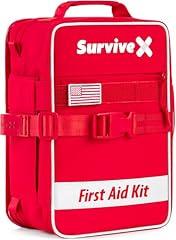
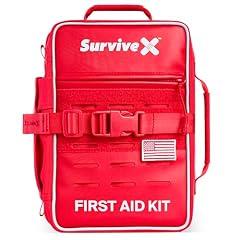
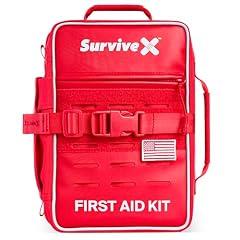
This is a 2.8-pound soft, tri-fold first-aid bag intended by SurviveX for three to four people. The manufacturer lists 250 supplies, including adhesive and strip closures, gauze and dressings, a pressure bandage, burn gel, gloves, alcohol and antiseptic wipes, a CPR mask, trauma shears, an 18-inch splint, triangular bandages, a thermal blanket, glow sticks, and a whistle. It is a first-aid kit, not a complete multiday disaster-supply kit. The FDA database independently lists this product under Intent Brands LLC as a Class I first aid kit without drug. That is traceability evidence, not FDA approval or proof that every included component has been independently performance tested. SurviveX states that the bag has labeled, color-coded compartments and sells replacements for selected consumed items. Published product information does not provide a complete component-by-component expiry, lot, or certification record.
What works
- The disclosed contents go beyond adhesive bandages, with a pressure bandage, CPR mask with valve, trauma shears, splint, triangular bandages, gloves, and a thermal blanket.
- The product is publicly identifiable in the FDA device-listing database as a Class I first aid kit without drug, under Intent Brands LLC.
- SurviveX states that supplies are separated into labeled, color-coded tri-fold sections, which can reduce search time during routine first aid.
- SurviveX states that selected consumables, including gauze, antiseptic wipes, burn dressings, and wound closures, can be replaced individually.
What does not
- It is not a complete household disaster kit. The published contents lack stored water, food, a flashlight, batteries, radio, charging capability, and a multiday medicine supply called for in federal emergency-kit guidance.
- The published kit contents do not show a manufactured windlass tourniquet, hemostatic gauze, or chest seals. It should not be treated as a dedicated severe-bleeding or penetrating-trauma kit.
- SurviveX's sales page describes the product as FDA approved, but FDA states that registration and listing do not mean a device is FDA approved, cleared, or authorized.
- No product-specific independent test report, UL or ETL certification, or public certification record was found for the CPR mask, splint, bag water resistance, or other safety-critical components.
- The product page does not publish a full lot, expiration-date, storage, or inspection schedule for the sterile and medicated supplies in this exact kit.
Who is it for
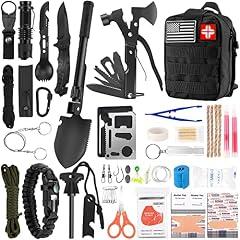
This product suits a household, vehicle, campsite, or day-trip group that wants a compact organized first-aid supply bag for common cuts, scrapes, minor burns, splinters, sprains, and basic immobilization until professional care is available. It is particularly relevant for users who will periodically inspect individual packets, note their expiration dates, replace opened items, and take first-aid and CPR training. The 2.8-pound, mountable soft bag is also practical where cabinet-style kits are awkward to carry.
Who is it not for
It does not suit a buyer seeking a self-contained disaster kit for three to four people. Federal preparedness guidance calls for several days of water, shelf-stable food, lighting, batteries, radio access, sanitation supplies, medicines, and personal documents, which are not listed here. It also is not sufficient as the only kit for remote travel, worksites with hazard-specific requirements, firearms ranges, or situations where catastrophic bleeding and chest injuries are credible risks. Those applications need a documented hazard assessment and purpose-specific equipment.
Integrity
The product has a useful degree of U.S. traceability. FDA's public database lists the SurviveX Large First Aid Kit as a Class I first aid kit without drug and identifies Intent Brands LLC as the registered establishment. The triple-antibiotic ointment sold under the SurviveX name also has a public Drug Facts label with active ingredients, directions, warnings, and room-temperature storage instructions. Those records do not establish independent performance testing of the entire kit. The reusable outer bag and manufacturer-stated availability of selected refills can reduce replacement of the whole kit after routine use. However, the product contains many single-use dressings, wipes, gloves, ointment packets, masks, and chemical cold-pack materials. The reviewed product materials did not provide disposal instructions for contaminated supplies, expired medicine, or chemical packs. Keep sterile and medicated packets dry, inspect their individual dates and seals, and follow local guidance for disposal.

Large Pro First Aid Kit
Overview
This is a 4.4-pound, soft-sided first aid kit intended for a household or group. The manufacturer states that it contains 270 supplies for five to six people in a fold-open bag with labeled, color-coded modules. Listed contents include wound dressings, compressed gauze, a pressure dressing, burn dressings, a splint, trauma shears, gloves, a CPR barrier, a cold pack, a thermal blanket, and wound-closure strips. The underlying product is publicly listed in the FDA device database as a Class I first aid kit without drug. Multiple named components, including gloves, compression dressings, trauma shears, the CPR valve, and wound closures, are also listed under the same responsible company. The kit is a first aid package, not a complete disaster supply kit. It does not provide the water, food, lighting, communications equipment, sanitation supplies, or personal prescription medicines that federal emergency guidance calls for.
What works
- Its listed wound-care selection goes beyond adhesive bandages, with compression dressing, compressed gauze, non-adherent dressings, wound closures, and a splint.
- The bag layout is designed for rapid access. The manufacturer states that modules are color-coded, labeled by use, and visible when the bag is unfolded.
- The product and several safety-relevant components are publicly traceable in FDA device listings under an active U.S. establishment.
- A listed triple-antibiotic ointment has a current DailyMed OTC label with active ingredients, intended use, and directions for minor cuts, scrapes, and burns.
What does not
- It is not a self-sufficient emergency kit for five to six people. Confirmed contents do not include drinking water, food, a flashlight, radio, batteries, sanitation supplies, or personal medications.
- The seller page says the kit is FDA approved. FDA states that device registration and listing do not mean FDA approval, clearance, or authorization.
- No product-specific independent performance testing, ANSI kit certification, or publicly available lot-specific sterility and shelf-life evidence was found.
- Online content information does not provide a complete public expiry-date, replacement schedule, or disposal guide for all sterile, drug, and disposable supplies.
Who is it for
This product suits a larger household, vehicle, camp group, or small team that wants a centralized first aid kit for cuts, burns, sprains, minor wound care, and basic stabilization while professional help is sought. It is especially relevant where a fold-open, labeled layout can reduce searching during a stressful event. The buyer should be prepared to inspect dates on arrival, learn the limits of the CPR and wound-care supplies, and add personal medicines and scenario-specific equipment.
Who is it not for
It does not suit anyone seeking a complete multi-day disaster kit for five or six people. Federal emergency guidance calls for water, food, light, batteries, communications, sanitation supplies, cash, and individualized medication planning, which this first aid-focused package does not replace. It is also not sufficient by itself for remote trauma response, major bleeding management, prolonged care, or people who need specialized medical equipment. Users without training should not treat wound-closure products as a substitute for professional assessment of deep, contaminated, or gaping wounds.
Integrity
The strongest safety finding is traceability. The responsible company has an active FDA establishment registration, and the product is listed as a Class I first aid kit without drug. Several named components are separately listed in the same database. A SurviveX-branded triple-antibiotic ointment is also represented by a current DailyMed OTC label. These listings support identification and regulatory traceability, but they are not FDA approval. A material concern is claim wording. The seller page calls the kit FDA approved, while FDA explicitly says registration and listing do not establish approval or clearance. No relevant CPSC recall, FDA recall, or warning letter was found in the searched public sources. The durable reusable bag can reduce replacement of the carrier itself, but most contents are single-use. Public materials did not provide component disposal directions for contaminated supplies, expired ointment, or other consumables.

Swiss Safe 2-in-1 First Aid Kit
Overview
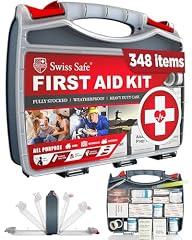
This is a roughly 3-pound hard-case first-aid product for home, vehicle, travel, camping, and workplace storage. It pairs a large dual-access case with a small 32-item pouch. An independently published contents list confirms that the count is driven largely by small wound-care items, including 45 medium bandages, 40 butterfly closures, 40 finger bandages, 28 alcohol pads, and 28 sting-relief pads. It also includes basic response items such as sterile gauze, elastic bandages, two pairs of PVC gloves, a CPR mask, trauma shears, a trauma pad, triangular bandage, cold pack, emergency blanket, and guide. The maker states that the case has organized compartments and opens from both sides. The documented contents do not include water, food, medicines, a thermometer, burn dressings, or a tourniquet, so it is a first-aid supply case rather than a complete disaster kit.
What works
- The independently documented contents provide substantial coverage for minor cuts, abrasions, blisters, and routine wound cleaning.
- Includes a CPR mask, two pairs of gloves, sterile gauze, elastic wraps, trauma shears, a cold pack, and an emergency blanket.
- A separate 32-item mini pouch gives a second location for basic bandages, gauze, wipes, and tweezers.
- The maker states that the hard case has compartmentalized, dual-side access and includes a first-aid guide.
What does not
- The documented contents omit medications, water, food, sanitation supplies, communications gear, and light beyond one glow stick, despite emergency and survival positioning.
- The contents list has no burn dressing or burn gel, although the product materials describe burn-treatment coverage.
- No product-specific ANSI workplace-kit conformity, UL listing, FDA listing, or accredited third-party test report was located for the case or its medical components.
- The product carries a California warning for possible exposure to DEHP, and the materials do not identify the component or exposure route.
- PVC gloves are listed rather than nonlatex gloves, which the American Red Cross recommends for a family first-aid kit.
Who is it for
This product suits a household, driver, or traveler who wants a stored first-aid case focused on common minor injuries, plus a small companion pouch for a glove box, backpack, or day bag. It has enough adhesive bandages, closure strips, gauze, cleaning pads, and basic wraps to support repeated everyday wound care. It also fits a user willing to inspect sterile-item dates, add their own personal medicines, and tailor the contents to their medical needs and activities.
Who is it not for
It does not suit someone seeking a self-contained disaster kit for evacuation or several days without services. guidance includes water, food, light, batteries, communications, sanitation, and personal medications, none of which are documented here. It is also not a demonstrated workplace-compliance kit, a burn-care kit, or a severe-bleeding kit. People with latex or material sensitivities should check the actual glove and adhesive packaging before relying on it, especially because the listed gloves are PVC and the product carries a DEHP warning.
Integrity
The documented contents support basic first aid, especially cleaning and covering small wounds, but they do not replace medical care or a tailored emergency plan. The Red Cross recommends maintaining a kit, checking expiration dates, and adding personal medications. This product's manual similarly instructs users to inspect sterile goods and wipes, replace expired or used supplies, and keep the case dry. Those are useful maintenance steps, but no product-specific third-party conformity certification or test report was found. A California Proposition 65 warning states that the product can expose users to DEHP, a chemical California lists for cancer and reproductive harm. The public notice identifies a different Swiss Safe first-aid product, not this exact configuration, but the same warning appears with this product. The product also relies on many single-use bandages, wipes, pads, gloves, and chemical cold-pack materials. No refill program, material disclosure, or disposal guidance for those items was located.

Aquatabs Water Purification Tablets 397mg
Overview
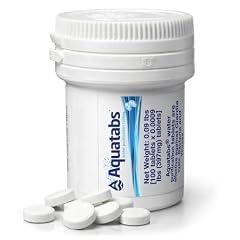
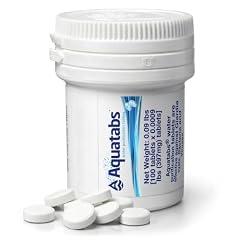
Aquatabs 397 mg is a 100-tablet sodium dichloroisocyanurate water-disinfection product, not a filter or a complete emergency kit. The EPA-reviewed label identifies 16.88 percent active ingredient and directs one 397 mg tablet for 4 gallons of clear water, or 1.5 gallons of cloudy water. Water should first be cleared of suspended material, mixed for at least 10 minutes, then left for 30 minutes before drinking. The formulation is independently listed by NSF under the drinking-water-treatment chemical standard, although certification applies only if the unit bears the NSF mark. WHO testing classified Aquatabs as targeted protection against bacteria and viruses, not protozoa, after finding very low Cryptosporidium reduction. The manufacturer states a tub shelf life of up to three years, but the actual expiry date and lot code need checking on the unit received.
What works
- EPA-reviewed labeling identifies the active ingredient, hazard warnings, first aid, storage, disposal, and drinking-water directions.
- One tablet can treat a large water volume, 4 gallons of clear water under the manufacturer and EPA label directions.
- WHO independently found Aquatabs meets its bacteria and virus performance targets when used correctly.
- NSF lists Medentech Aquatabs for drinking-water disinfection and oxidation, with a maximum use level of 10 mg/L.
- The official label provides lot, batch, manufacture-date, and expiry-date fields for traceability.
What does not
- This is only a water-treatment component, not a disaster kit with stored water, food, light, communications, first aid, medicines, or sanitation supplies.
- WHO classified Aquatabs for targeted bacteria and virus protection only. It did not meet the protozoa performance target for Cryptosporidium.
- Chemical disinfection does not remove chemical or radioactive contamination, and the label requires pre-clearing visibly suspended material.
- The catalog description calls it filtration and sedimentation, but the verified mechanism is chemical disinfection.
- The tub is nonrefillable, and the unit's actual NSF mark, lot code, packaging condition, and expiration date cannot be confirmed from the catalog record alone.
Who is it for
This product suits a preparedness-minded camper, boater, RV user, or household assembling a water-treatment reserve for clear or pre-filtered source water. The 397 mg size is designed for people who can accurately measure multi-gallon containers, such as 4-gallon jugs or buckets, rather than single bottles. It also fits users willing to follow chemical-handling directions, wait the full treatment time, and maintain separate stored water, a filter or cloth for sediment, and the other supplies needed for an emergency plan.
Who is it not for
It does not suit someone seeking a complete emergency kit, a personal first-aid kit, or a single-bottle treatment option. It is also unsuitable as the only safeguard where Cryptosporidium is a realistic concern, or where water may contain fuel, pesticides, industrial chemicals, salt, or radioactive contamination. People unable to measure water volumes, pre-clear cloudy water, keep tablets dry, or wait 30 minutes should use a setup with more appropriate instructions and treatment controls. Keep the tablets inaccessible to children.
Integrity
The verified active ingredient is sodium dichloroisocyanurate, a chlorine-releasing disinfectant. Aquatabs holds an active U.S. EPA product registration, and its EPA-reviewed label gives instructions, first-aid information, storage precautions, and a warning that the tablets can cause substantial but temporary eye injury and are harmful if swallowed. WHO independently evaluated Aquatabs, but that evaluation is a performance classification, not a WHO product certification. The label directs cool, dry storage away from heat and sunlight. It also identifies the tablets as a strong oxidizer, so they should not be mixed with other chemicals or handled with wet or contaminated utensils. The container is nonrefillable, though recycling is encouraged where available. The label warns that the pesticide is toxic to fish and aquatic organisms, making careful storage and disposal important. Independent research on NaDCC-treated water found trihalomethane levels below WHO guideline values in tested source waters, but this does not replace label-directed use.

Vriexsd 400-Piece Large First Aid Kit
Overview
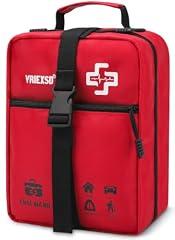
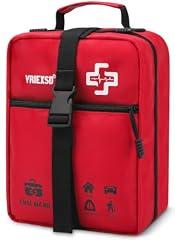
This is a soft-sided, red 400-piece first-aid bag intended for home, car, travel, camping and sports use. Publicly indexed seller content lists adhesive bandages, wound-closure strips, moleskin, a triangular bandage, gauze, tape, metal scissors, a compression bandage, a user-filled seven-day pill box and a first-aid guide. The listed weight is 2.5 pounds, although public product descriptions show conflicting dimensions. The contents indicate a broad minor-injury kit rather than a complete disaster supply kit. It has basic wound-care materials and an emergency blanket, but no verified supply of drinking water, food, ready-to-use medicines, radio, flashlight, batteries or sanitation supplies. The bag is described as compartmented and water-resistant by seller materials, but no product-specific waterproof test, component certification, expiry inventory or independent contents test was located.
What works
- The publicly listed contents include a practical mix of adhesive bandages, gauze, tape, a triangular bandage and a compression bandage for common minor wounds.
- A first-aid guide is listed, which can improve basic access to instructions during a stressful event.
- Seller materials describe divided, labeled compartments and a portable bag, useful for keeping routine supplies together.
- The listed contents include a user-filled pill organizer, allowing a household to add its own clearly labeled medicines.
What does not
- The 400-piece count does not make this a full disaster kit. Water, food, light, communications, power, sanitation and personal medication supplies are not verified as included.
- No product-specific ANSI workplace compliance claim, third-party certification, FDA listing, accredited test report or independently verified component specification was located.
- The tourniquet is listed, but its maker, model, lot traceability and performance evidence were not established. It should not be treated as authenticated trauma equipment.
- Expiry dates, sterile-package details, glove material, refill options and replacement instructions were not publicly documented. Public descriptions also show conflicting dimensions.
Who is it for
This product suits a household, vehicle owner, classroom, office or recreational user who wants a compact, organized collection of basic supplies for cuts, scrapes, blisters and simple dressing needs. It is most appropriate when stored as one part of a larger preparedness plan, with the user checking each item on arrival and adding personal medicines, water, emergency contacts and location-specific supplies. The first-aid guide and separately organized bag may be useful for users who need routine supplies easy to find rather than loose items in a drawer.
Who is it not for
It is not designed as a standalone evacuation or disaster kit for any household size. People preparing for power outages, wildfire evacuation, hurricanes or remote travel need separate water, food, lighting, communications, sanitation, personal medications and weather-appropriate equipment. It is also not a substitute for a workplace kit selected through a documented hazard assessment, or for a trauma kit where a verifiable arterial tourniquet and trained use are required. People with latex allergies should confirm glove material before relying on the kit.
Integrity
The visible supply mix is mainly disposable first-aid material, including adhesive bandages, gauze, wipes and dressings. This can be appropriate for hygiene and wound care, but it creates routine replacement waste after use or expiry. The public contents list identifies a user-filled pill box, not included medication, so medication selection, labeling, dose checks and expiry management remain the user's responsibility. No product-specific independent certification, material disclosure, refill program, disposal guidance or accredited testing report was located. No product-specific CPSC or FDA recall was identified in the searched public sources, which is not proof that every component has been independently assessed. Store the bag dry, inspect sterile packaging and dates on arrival and periodically, replace used or expired supplies, and follow local guidance for disposal of medicines, batteries or contaminated materials added to the bag.

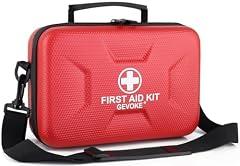
Gevoke 410 Piece Waterproof First Aid Kit
Overview
This is a portable 410-piece first aid kit in a red EVA hard-shell zip case. It is intended for minor injuries in a home, vehicle, campsite, travel bag, or outdoor basecamp. The maker presents the case as waterproof and includes a handle, shoulder strap, and five transparent interior compartments. An independent retailer describes the supply category as bandages, gauze, antiseptic wipes, tape, and basic tools. The case is the clearest defined part of this product. Published dimensions are 9.8 by 6.6 by 4.1 inches, although listed weight is inconsistent, with 2 pounds in one specification field and 2.43 pounds in another. Neither the maker nor the available retailer material provides a complete, quantity-by-quantity contents list, expiry inventory, product-specific certification, or public test report. It is therefore a portable minor-wound supply case, not a documented workplace-compliance, trauma, or complete disaster-supply kit.
What works
- The hard EVA case, zipper closure, handle, and shoulder strap support protected vehicle or basecamp storage, based on manufacturer-stated construction details.
- Five transparent compartments can make supplies easier to locate under stress, based on the stated layout.
- Available third-party product descriptions consistently characterize it as a kit for cuts, scrapes, blisters, and other minor injuries rather than advanced care.
- The reusable hard case can be restocked instead of discarded after individual supplies are used, although refill sources are not specified.
What does not
- The available product information does not give a complete contents list with quantities, so buyers cannot confirm coverage of Red Cross family-kit basics before opening it.
- There is no product-specific public evidence of ANSI workplace-kit conformity, OSHA suitability, accredited laboratory testing, or a recognized certification listing.
- The waterproof claim is not paired with an IP rating, immersion limit, test method, or independently available performance report.
- It is not a complete disaster-supply kit. Water, food, lighting, communications, medications, sanitation supplies, and household-specific needs are not documented as included.
- Sterile-item dates, component lot codes, latex status, replacement instructions, and a component-by-component expiry schedule are not publicly documented.
Who is it for
This product suits a household, driver, camper, or RV user who wants a structured first aid supply case for everyday minor wounds and is prepared to inspect and tailor it on arrival. Its compact rigid format is more practical for a trunk, garage, boat locker, or campsite bin than for a minimalist daypack. It is most appropriate when the user will add personal medicines, verify expiry dates, and fill any missing items against a first aid checklist.
Who is it not for
This product is not suited to an employer seeking a documented workplace first aid solution, because public materials do not establish compliance with an ANSI workplace-kit standard or suitability for the hazards of a specific worksite. It is also not sufficient by itself for a household disaster plan, serious bleeding response, remote backcountry care, or people with known latex or medication sensitivities. Those uses need a fully itemized kit with suitable specialized supplies, labels, expiry controls, and training.
Integrity
The publicly described contents are limited to conventional minor-injury supplies such as bandages, gauze, antiseptic wipes, tape, and basic tools. No food, drinking-water treatment product, medicine, battery, or electronic device is documented, so there is no disclosed dose, water-treatment contact time, or food safety claim to verify. The lack of a public itemized contents and expiry list means users should inspect each sterile or chemical component, confirm its label and date, and replace any damaged or expired item. The reusable EVA hard case is the main lower-waste feature because it can be retained and refilled rather than replacing the full container. However, the product information does not provide a refill program, material recycling directions, disposal guidance for contaminated supplies, or battery and hazardous-waste instructions. No product-specific accredited test report, certification listing, or recalled-product notice was identified in the checked public materials. The waterproof claim remains manufacturer-stated rather than independently demonstrated.

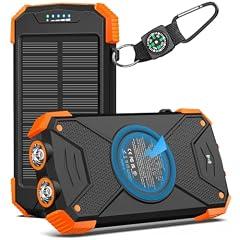
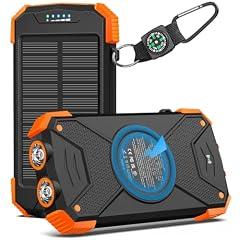
Blavor Solar Power Bank 10,000mAh
Overview
This is a pocket-size rechargeable power bank with a stated 10,000mAh, 37Wh lithium battery, wired USB outputs, Qi wireless charging, a small solar input, and dual flashlights. It is intended to keep low-voltage electronics such as a phone running, not to serve as a complete emergency kit. The documented 5V output capacity is 6,000mAh in a product-specific safety test report. Its solar input is documented at a maximum of 5V and 0.23A, about 1.15W, under stated sunlight conditions. The maker's manual cautions that solar charging is slow and supplementary. A public FCC filing identifies the product and its wireless-power specifications. A separate NCT report tested a sample against UL 2056, but that is a test report, not a UL certification listing.
What works
- A documented 37Wh battery provides a defined reserve for phone power during an outage or travel delay.
- Wired, Qi wireless, and solar charging give several ways to charge compatible low-voltage devices.
- The product-specific NCT report states a 6,000mAh output capacity at 5V, which is more useful than relying on the internal-cell rating alone.
- Dual flashlights can provide basic nearby illumination, according to the manufacturer.
What does not
- This is not a complete emergency kit. It does not supply water, food, first-aid materials, sanitation items, medicine, radio communications, or protective equipment recommended for a basic disaster supply kit.
- The small solar input is only 1.15W at its stated maximum, so it is not a practical primary way to refill the battery during a short emergency.
- The available UL 2056 document is an NCT test report, not evidence of a current UL product certification. It also states that the tested battery cell was not approved to UL 1642.
- The maker's 10,000mAh internal-cell figure and the report's 6,000mAh 5V output rating describe different measurements, which can confuse expected usable capacity.
Who is it for
This product suits one person who already has food, water, first aid, sanitation supplies, and a communications plan, but wants a compact reserve for a phone. It is most relevant for commuting, short outdoor trips, evacuation bags, or brief outages where the unit can be fully charged from mains power beforehand. Wireless charging can be useful when a compatible phone cable is unavailable, and the flashlight can cover close-range tasks. Treat the solar panel as a slow supplemental source, not planned daily energy production.
Who is it not for
It does not suit a household seeking a ready-made emergency kit for a three-day event, especially one involving evacuation, medical needs, infants, pets, prescribed medicines, or unreliable access to water. It also does not suit people who need dependable multi-day solar generation, power for laptops or medical devices, or a verified UL-listed power bank. Anyone relying on it for emergency communications should bring a separate radio, charged spare batteries, cables, and a higher-output solar solution if off-grid recharging is essential.
Integrity
The main health-related benefit is continuity of phone power, which may help with calls, maps, alerts, and emergency information. It does not replace supplies needed for injury care or survival. FEMA guidance for a basic kit includes water, nonperishable food, first aid, sanitation materials, a radio, and lighting. This product contributes only limited power and lighting. A product-specific NCT report records testing to UL 2056 and identifies safety circuitry, but it is not a UL certification listing. The same report says the tested battery cell was not approved to UL 1642. The rechargeable lithium-polymer battery can reduce repeated use of disposable batteries, but no take-back or replacement-cell program was verified. EPA advises keeping lithium-ion devices out of household trash and curbside recycling because damaged batteries can create fire hazards. Use a dedicated battery or electronics recycler at end of life.
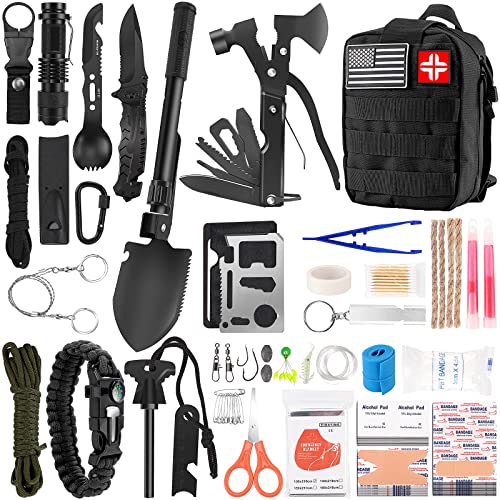
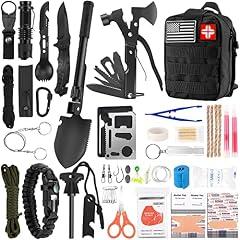
LUXMOM Survival and First Aid Kit
Overview
This is a compact 142-piece outdoor pouch that combines basic first-aid supplies, survival tools, and a small fishing set. A separate retailer description lists 106 first-aid pieces and 21 survival tools in a 600D nylon, MOLLE-compatible pouch. Listed equipment includes a flashlight, whistle, emergency blanket, fire-starting tools, paracord, wire saw, hatchet, folding shovel, bandages, alcohol pads, scissors, tweezers, and a tourniquet. It is best understood as a supplemental camping or vehicle kit, not a complete disaster kit. Its stated contents do not include stored drinking water, food, medicines, a radio, spare batteries, sanitation supplies, or water-treatment products. Those are core categories in federal disaster-kit guidance. The available third-party listings do not document safety certifications, component model numbers, sterile-item expiry dates, flashlight battery specifications, or performance testing for the tools or tourniquet.
What works
- A separate retailer lists both basic wound-care items and outdoor tools in one compact pouch.
- The listed pouch is 600D nylon with MOLLE-compatible attachment straps, which can help keep the small components together and attach the kit to larger gear.
- Listed contents include a whistle, flashlight, emergency blanket, and fire-starting tools for basic signaling, light, warmth, and ignition needs.
- The contents include scissors, tweezers, bandages, alcohol pads, and a tourniquet, which provide a basic starting point for minor injury response.
What does not
- It lacks water, food, medications, sanitation supplies, a radio, and a documented water-treatment method, so it does not cover the basic needs of a multiday disaster kit.
- The product is marketed as professional, but no product-specific ANSI workplace-kit compliance, medical-device listing, UL or ETL certification, or accredited test report was identified.
- Expiry dates, lot codes, sterility details, battery information, and replacement instructions for safety-critical consumables were not documented in the sources reviewed.
- A tourniquet is listed, but its design, labeling, training guidance, and performance evidence are not documented. It should not be assumed equivalent to a purpose-designed emergency bleeding-control device.
- The stated three-month warranty is short for a kit intended to remain stored for emergencies.
Who is it for
This product suits a camper, hiker, driver, or day-trip user who wants a compact pouch containing basic bandages alongside signaling, fire-starting, cutting, and shelter items. It is most appropriate as a supplemental module inside a larger, personally maintained vehicle kit or hiking pack. The user should be willing to inspect every item on arrival, learn how to use the tools, add medical supplies matched to their activities, and separately pack drinking water, food, personal medication, hygiene items, and dependable lighting power.
Who is it not for
It is not suited to households expecting a complete 72-hour disaster supply, people managing prescription medicines, families with infants or pets, or anyone who needs a workplace-compliant first-aid kit. It is also not appropriate as the sole trauma kit for remote travel, hunting incidents, or severe bleeding risk because the listed tourniquet has no documented model, certification, instructions, or performance evidence. Users who cannot inspect expiry dates, replace used supplies, or train with unfamiliar tools should choose a more clearly documented first-aid setup.
Integrity
The useful health feature is the presence of basic wound-care supplies plus scissors, tweezers, alcohol pads, bandages, and a listed tourniquet. However, the available sources do not establish sterile-pack dates, latex status, tourniquet construction, or first-aid standard compliance. Public searches did not identify a product-specific recall or regulatory action, but the maker and individual safety-critical components are not documented well enough for strong recall traceability. The reusable nylon pouch may reduce waste by allowing users to retain the carrier and replace depleted supplies. The kit nevertheless relies heavily on small disposable medical items, glow sticks, batteries, and mixed-material tools. No refill program, component-by-component disposal guidance, or battery end-of-life instructions were identified. Replace expired or used medical supplies, and handle batteries, glow sticks, and contaminated first-aid waste through appropriate local collection or disposal routes.
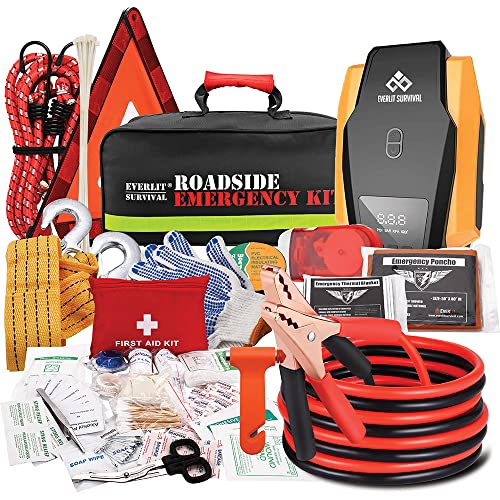
Everlit Car Emergency Kit with Air Compressor
Overview
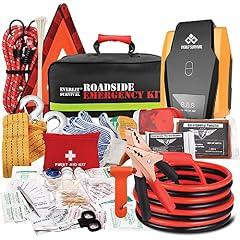
This is an 8-pound, 17 x 7 x 7 inch vehicle-focused roadside kit in a carry bag. EVERLIT states that it combines a digital 12-volt tire inflator with automatic shutoff, 12-foot jumper cables, a tow strap, warning triangle, glass breaker and seatbelt cutter, hand-crank flashlight, poncho, blanket, gloves, and a 108-piece first-aid assortment. The manufacturer’s itemized first-aid list supports basic care for small cuts and minor roadside injuries, including bandages, gauze, wipes, gloves, tweezers, shears, CPR mask, and triangular bandage. It does not present this as a multi-day disaster supply, and it contains no drinking water, food, personal medication, sanitation kit, radio, or power bank. The maker provides a lifetime warranty, but publicly checkable model-specific safety certification or independent performance testing was not identified.
What works
- The manufacturer provides a specific list of roadside tools for tire inflation, jump-starting, towing, visibility, and vehicle exit.
- The stated first-aid contents include gloves, gauze, dressings, antiseptic and cleansing wipes, a CPR mask, tweezers, shears, and a triangular bandage for minor-injury response.
- A hand-crank flashlight, emergency blanket, rain poncho, and reflective warning triangle provide basic low-light and weather exposure support.
- The official product page identifies a carry bag, dimensions, weight, customer contact route, and lifetime warranty.
What does not
- This is not a complete disaster kit. It lacks water, nonperishable food, medications, sanitation supplies, communications equipment, and other supplies identifies for several days of emergency readiness.
- The listed first-aid kit is useful for minor wounds, but its published contents fall short of several American Red Cross family-kit quantities and items, including absorbent compress dressings, cold packs, thermometer, ointments, and first-aid instructions.
- The product page does not identify makers, lot codes, expiration dates, or publicly checkable safety certifications for the compressor, jumper cables, sterile supplies, or wipes.
- The kit includes disposable medical supplies and electrical components, but the product page does not provide refill options, battery disposal guidance, or component end-of-life instructions.
Who is it for
This product suits a driver who wants one compact trunk kit for common roadside disruptions, especially a soft tire, dead battery, low-light stop, minor cut, or need to signal other traffic. It is most appropriate for daily commuting and road trips where the vehicle already has its factory jack, spare tire or repair equipment, and where the owner is willing to inspect the inflator, flashlight, cables, and first-aid expiry dates before relying on them. It also fits someone who will add water, medications, and personal items separately.
Who is it not for
It is not sufficient for households preparing for evacuation, prolonged weather exposure, remote winter travel, wildfire smoke, or disasters that can interrupt services for several days. Those situations require drinking water, food, sanitation supplies, medications, communications, weather-appropriate clothing, and tailored supplies for children, pets, or medical needs. It is also not a substitute for a trauma kit, vehicle recovery training, a tire repair plan, or professionally rated equipment when a vehicle has unusually high electrical or towing demands.
Integrity
The health value is centered on immediate roadside readiness rather than comprehensive survival. EVERLIT lists basic wound-care supplies, two gloves, a CPR mask, gauze, dressings, antiseptic and cleansing wipes, plus a blanket and poncho. Those items can support minor care and short-term exposure protection. However, the product page does not name the medical-supply manufacturers, disclose sterile-package dates, provide a refill list, or show a publicly checkable certification for its electrical or medical components. Inspect each package and replace expired, torn, wet, or used contents. The reusable carry bag and hand-crank flashlight can reduce reliance on single-use packaging and disposable flashlight batteries. The kit still contains disposable first-aid items and an electrical inflator. The manufacturer does not provide material disclosure, recycling directions, or disposal instructions for damaged electrical parts and batteries. No product-specific recall or regulator warning was identified in the reviewed public sources.

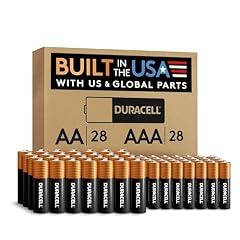
Duracell Coppertop AA & AAA Batteries, 56 Count
Overview
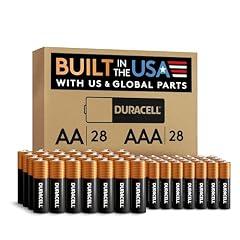
This product is a 56-cell reserve of single-use 1.5 V alkaline batteries, with 28 AA and 28 AAA cells. It is meant to replace batteries in compatible household equipment, including flashlights, radios, clocks, remote controls, baby devices, and some medical devices. It is a power component for an emergency supply, not a self-contained emergency kit. Duracell identifies Coppertop AA and AAA cells as alkaline manganese dioxide batteries and states a 12-year storage guarantee. Its safety sheet lists zinc, manganese dioxide, and aqueous potassium hydroxide inside the sealed cells. Independent discharge testing on a Coppertop AA sample documented measurable capacity from 100 mA through 2 A loads, although that older test does not establish the performance of every current lot or of the AAA cells.
What works
- Provides both AA and AAA sizes, which cover many common flashlight, radio, clock, and household-device battery compartments.
- Duracell states a 12-year storage guarantee, a useful rotation window for a stored power reserve when kept dry at normal room temperature.
- Independent testing documented Coppertop AA discharge performance at four loads from 100 mA to 2 A.
- The manufacturer publishes an ingredient and safety information sheet, including handling, storage, first-aid, and disposal precautions.
What does not
- This is not an emergency kit. It supplies no water, food, first aid, medicines, sanitation items, light source, radio, charger, or communications plan.
- The 12-year storage statement is a manufacturer guarantee, not a current-lot independent shelf-life test.
- AAA cells are a small-part ingestion hazard. Damaged or leaking cells can expose users to caustic potassium hydroxide.
- These are disposable alkaline cells. The product does not provide a rechargeable system or a reuse pathway.
Who is it for
This product suits a household building out emergency supplies one component at a time, especially where flashlights, battery radios, clocks, headlamps, remote controls, baby devices, or other equipment already use AA or AAA cells. The mixed-size format is useful for maintaining a home reserve rather than stocking only one device type. It also fits people who can keep the cells sealed, dry, and accessible, then rotate them by the date marking and install them only in equipment specified for single-use alkaline batteries.
Who is it not for
It is not suitable as the only emergency purchase for a household preparing for evacuation, a prolonged outage, injury care, or sheltering in place. Those situations also require water, food, first aid supplies, medications, sanitation materials, lighting equipment, communications tools, and a plan. It is also a poor fit for homes where loose AAA batteries could be accessible to young children, or for users seeking a lower-waste rechargeable power system. Do not use these cells in devices designed only for rechargeable batteries.
Integrity
The cells are sealed alkaline manganese dioxide batteries containing zinc, manganese dioxide, and potassium hydroxide. Under normal use, the manufacturer says internal contents should not be exposed. If a cell leaks, is crushed, overheated, disassembled, recharged, or installed incorrectly, it can vent or leak and may cause burns. Keep AAA cells away from children. Swallowing requires immediate medical attention. Duracell states that these batteries are mercury-free and publishes safety, storage, and disposal guidance. They remain single-use products, so a 56-cell reserve creates a meaningful end-of-life material stream. EPA guidance says alkaline batteries may be accepted in household trash in many communities, but recommends using a battery recycler or checking local and state requirements. Never burn batteries, and handle visibly damaged or leaking cells carefully.