
10 Best Portable Solar Generator
 Daniel Kenitz
Please note that we participate in affiliate marketing programs. When you purchase through links on our site, we may earn a commission. As an Amazon Associate we earn from qualifying purchases. This comes at no additional cost to you and helps support the resources required to provide valuable content.Advertising Disclosure
Top-rated Portable Solar Generator Comparison
1

2
4
5
6
7
8
9
10
Portable solar generators: what to look for
A portable solar generator is a rechargeable battery and inverter system that stores electricity, converts it to usable AC power, and may accept solar, wall, or vehicle charging. It can keep phones, laptops, lights, routers, coolers, cameras, and selected appliances running when an outlet is unavailable. It is not an engine generator, and it does not automatically provide whole-home backup or safe power to every appliance.
The first question is whether the station can handle the load. Continuous watts describe what the inverter can supply over time; surge or peak watts describe short startup demand. Motors, compressors, heaters, cooking appliances, and power tools can exceed a station's practical limit even when a headline peak number looks sufficient. Power-lifting modes also need careful reading: in the supplied reviews, these modes were limited to certain resistive loads and did not replace the stated continuous rating. A buyer should compare both running and startup watts, and should not use a portable station to backfeed household wiring.
Battery capacity is usually advertised in watt-hours, but the nominal number is not the same as energy delivered at the AC outlets. In the supplied testing, measured output varied with load, inverter losses, and output type. Look for an independent discharge test using a watt-hour meter that identifies the load, output, ambient conditions, and cutoff point. A stated runtime without those details is difficult to compare. A high-quality capacity claim should be repeatable and should describe realistic loads rather than promise a fixed number of hours.
Solar claims also require context. Panel wattage is generally a laboratory rating, not a guaranteed everyday input. Sun angle, shade, temperature, and weather affect production, while the station's input-voltage, current, and wattage caps can limit the result. Check whether a panel is included, whether the bundle's panel is smaller than the station's maximum input, and whether recharge claims are solar-only, wall-only, or combined. A short wall-recharge time may be an optimal-condition manufacturer claim rather than a typical solar refill time.
For electrical and battery safety, look for a current listing for the exact product model and manufacturer not merely a component, logo, or seller statement in UL Product iQ, Intertek's ETL Listed Product Directory, or CSA Group's Product Listing database. The applicable portable-power standard in the supplied reviews is ANSI/CAN/UL 2743, and the certifier should be recognized through OSHA's Nationally Recognized Testing Laboratory program. FCC compliance, a generic “UL tested” statement, or a certification mark without a matching public record is not the same evidence.
Also check the manual for overcharge, short-circuit, overload, overtemperature, ventilation, grounding, charging-temperature, discharge-temperature, and storage limits. Weather claims need an actual ingress rating: outdoor marketing does not make a station rainproof, and several supplied products were rated IP20 or had no verified rating. Across the supplied products, recurring cautions include keeping the station and connectors dry, avoiding wet-weather or exposed placement, respecting continuous watt limits, and not treating a 10–20 millisecond transfer function as a zero-transfer UPS for servers, workstations, precision equipment, or life-sustaining medical equipment. No product should be relied on for those uses without separate equipment-specific validation.
Integrity
The topics below focus on the risks and evidence that matter when a large lithium battery and inverter are used around people, homes, vehicles, and outdoor equipment. Scores are relative to the supplied products: a high score reflects stronger verification or clearer controls in that topic, while a low score reflects missing evidence, contradictions, or unresolved limitations.
HHealth & Safety
Verified electrical and battery safety certification
This measures whether the exact station model is listed by an accredited U.S. safety certifier to an applicable portable-power standard, such as UL 2743. It matters because fire, shock, and battery safety are product-level questions. The supplied scores range from 70 to 95: the higher-scoring product has a model-matched SGS listing recognized through OSHA's NRTL program; lower-scoring products lacked a current public UL, ETL, or CSA match.
Fire, burn, and charging-risk controls
This measures protection against overheating, overcharge, short circuit, overload, and unsafe charging, along with clear warnings and any unresolved fire or burn action. These controls matter because lithium batteries can be hazardous when damaged, overheated, wet, or incorrectly charged. Among the supplied products, scores from 72 to 84 distinguish documented temperature indicators, shutdown behavior, ventilation instructions, and warnings from more limited manufacturer-only documentation.
Safe power delivery under load
This measures whether the AC and DC outputs deliver safe usable power, manage startup surges, regulate output, and shut down safely under overload. It matters when a station powers compressors, appliances, laptops, or other sensitive equipment. Scores range from 54 to 92: higher-scoring products have independent load testing near their stated continuous ratings and documented protection behavior; lower scores lack measured surge, waveform, or sustained-load evidence.
Safe charging and temperature limits
This measures whether AC, car, and solar charging limits—and heat, cold, use, and storage boundaries—are specific and credible. Clear limits help prevent charging or operating a battery outside safe conditions. The supplied scores range from 68 to 84. Higher-scoring products provide separate charging or discharge ranges and protective alerts, while lower-scoring products leave charging or storage limits unclear or provide conflicting instructions.
Outdoor and weather-use safety
This measures whether the station, cords, connectors, and panel are precisely rated for outdoor conditions, including a verified ingress-protection rating and warnings about rain or wet connections. It matters because outdoor-oriented marketing can be mistaken for waterproofing. Scores range from 70 to 81, but the reviews repeatedly note that stations were not rainproof, had IP20 ratings, or lacked a verified rating; dry placement remains necessary.
EEvidence
Verified usable battery capacity
This measures energy actually delivered at the AC outlet and realistic runtime, rather than nominal watt-hours. It matters because inverter losses and load determine what a buyer can run. Scores range from 52 to 94: the strongest products have independent, meter-based discharge results under stated loads; lower-scoring products rely on nameplate capacity or lack a documented exact-model test.
Honest solar and recharge performance
This measures whether solar-input limits, panel wattage, recharge times, and included equipment are stated under clear conditions. It matters because rated panel output is not routine production and input caps can bottleneck a large battery. Scores range from 45 to 84: higher-scoring products have independent recharge or input testing and clearly defined caps, while lower scores reflect conflicting accessories, unspecified limits, or headline times without controlled conditions.
Clear, supportable specifications
This measures consistency and support for capacity, output, battery chemistry, cycle life, charging time, UPS behavior, and compatible loads. It matters because contradictions can cause a buyer to exceed a station's safe capability. Scores range from 45 to 83: higher-scoring products align manuals, listings, and testing; lower-scoring products contain conflicts such as different battery chemistries, capacities, continuous-watt ratings, warranty terms, or solar-bundle contents.
EEcology
Long-lived, serviceable, responsibly disposable design
This measures transparent battery-life testing, warranty and service support, repairability, replacement parts, and practical lithium-battery recycling guidance. Longer service can reduce replacement demand, but cycle claims need test conditions. Scores range from 57 to 78: higher-scoring products pair longer warranties or clearer disposal directions with stronger support signals, while lower-scoring products lack independent cycle testing, user-service options, parts, or a take-back route.
Specific environmental claims, not greenwashing
This measures whether claims such as solar-powered, recyclable, eco-friendly, or low-impact define their boundaries and provide lifecycle, recycled-content, or recycling evidence. Solar charging does not remove the battery's manufacturing and end-of-life impacts. Scores are mostly 70–73 in the supplied set: the products generally explain disposal limits, but none supplied strong lifecycle assessment, recycled-content, or product-specific carbon evidence.
Full reviews

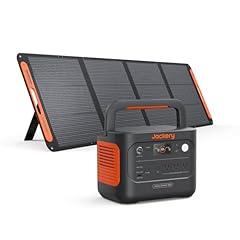
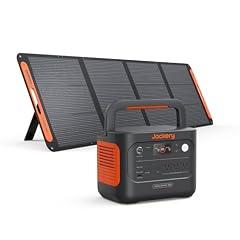
Jackery Solar Generator 1000 v2 with 200W Panel
Overview
This product combines a 23.8-pound, 1,070Wh LiFePO4 portable power station with one foldable 200W SolarSaga panel. The station has three 120V AC outlets, a 1,500W continuous AC rating, 3,000W surge rating, 100W USB-C output, and a 12V car outlet. It is intended for device charging, small appliances, camping, RV use, and limited outage backup. Independent ADAC testing measured 943Wh delivered through AC and 930Wh through DC, which supports a strong usable-capacity result. ADAC also found stable high output. The 200W panel rating is a manufacturer specification measured under standard test conditions, not a promise of routine field output. Jackery specifies a 400W maximum solar input, while independent testing measured 178W peak from a matched 200W panel.
What works
- Independent testing measured 943Wh usable AC energy, about 88 percent of nominal capacity.
- ADAC found stable, high output, consistent with the stated 1,500W continuous AC limit.
- The manual provides temperature warnings, high and low temperature alerts, ventilation instructions, and overload fault guidance.
- The included panel is manufacturer-rated IP68, with stated electrical specifications and a 3+2 year warranty.
- LiFePO4 chemistry and a manufacturer-stated 4,000-cycle rating support long service potential.
What does not
- No current model-matched UL, ETL, or CSA portable-power-station listing was located in the applicable public certification registers. A UL-marked AC cable is not certification of the complete product.
- ADAC identified a material charging-input safety concern. Its two DC inputs are not electrically isolated, creating a possible vehicle-damage risk if car and solar inputs are connected improperly.
- The power station itself has no stated ingress-protection rating. The manual directs users to keep it dry and out of rain.
- The stated 200W solar rating is based on laboratory conditions. Independent testing reached 178W peak with the matched panel, so recharge times depend strongly on sun and setup.
- No consumer-facing repair parts program or product-specific battery take-back path was identified. The warranty is limited to the original purchaser.
Who is it for
This suits a user who needs roughly 0.9kWh of independently measured usable energy in a portable unit for camping, road trips, field work, or short backup of modest loads. It is especially relevant when a 1,500W ceiling covers the intended appliance and the user can charge from a wall outlet or place the included panel in clear sun. The buyer should be comfortable monitoring load, temperature, and battery state rather than treating it as unattended household backup infrastructure.
Who is it not for
It is not suitable for essential equipment needing zero-transfer backup, including data servers, workstations, or other loads that cannot tolerate the manual's stated 20ms transfer time. It is also unsuitable for wet-weather operation of the power station, for heavy appliances above 1,500W, or for multi-day high-energy household backup. Avoid simultaneous or improvised car and solar charging arrangements, since independent testing found the DC inputs are not isolated. Buyers needing user-serviceable batteries or a documented take-back program should look elsewhere.
Integrity
The station uses LiFePO4 cells, a chemistry commonly selected for cycle life, and Jackery states 4,000 cycles to at least 70 percent capacity. Its manual gives usable charge limits of 32 to 113°F and discharge limits of 14 to 113°F. It also requires ventilation, dry placement, intact cables, and avoidance of direct high heat. The display provides high and low temperature warnings, though a current model-specific third-party US electrical-safety listing was not located in the public UL, ETL, or CSA registers. The SolarSaga 200 panel is manufacturer-rated IP68, but that rating does not apply to the power station. The manual says to keep the station dry. ADAC found that the two DC charging inputs are not isolated, a safety concern when car and solar systems are used incorrectly. Solar charging can reduce fuel use during operation, but Jackery does not provide a product lifecycle assessment, recycled-content disclosure, repair-parts program, or clear product-specific battery recycling route. Lithium batteries should be sent to an appropriate battery recycler, not household trash.

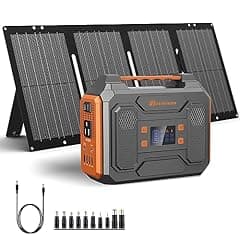
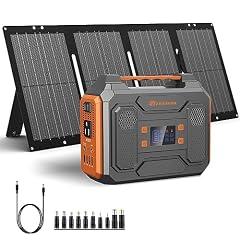
ZeroKor 300W Portable Solar Generator with 60W Foldable Solar Panel
Overview
This is a compact lithium-ion portable power station packaged with a foldable 60W solar panel. The station is specified at 280Wh, 300W maximum AC output, two 110V AC outlets, one DC outlet, USB outputs, and a 5.1 pound carryable format. It is intended for low-power electronics and small camping loads, rather than heaters, cooking appliances, pumps, or other high-draw equipment. The available R200 manual states that connected loads must remain below 300W and estimates AC runtime using 85 percent of the 280Wh rating. That is a manufacturer calculation, not an independently measured delivered-capacity test. The manual also states a 13V to 23V, 2.4A maximum charging input, which caps input near 55W even when using the included 60W-rated panel. No current model-matched UL, ETL, or CSA portable-power listing was located in the certifier registers searched.
What works
- The compact 280Wh, 5.1 pound format is manufacturer-documented and practical for carrying phone, light, camera, and laptop power.
- The bundle is documented as including a foldable 60W solar panel, so solar charging equipment is not an assumed extra.
- The manual gives clear limits against loads over 300W, wet use, damaged cords, modified batteries, and incorrect input voltage.
- Manufacturer documentation describes short-circuit, overload, over-current, and over-voltage protections, plus a cooling fan and high-temperature warning.
What does not
- Usable AC watt-hours and sustained 300W behavior were not independently verified with a documented watt-hour meter or load test.
- No current model-matched UL 2743, ETL, or CSA electrical safety certification record was found. This is missing verification, not evidence of a defect.
- The solar bundle pairs a 60W panel claim with a station input limit of 13V to 23V and 2.4A, roughly 55W maximum. Actual field recharge time is not documented.
- Temperature guidance is inconsistent. One specification gives operation from 14F to 104F, while the safety instructions say charging, use, and storage should be 32F to 104F.
- The manual states more than 1,000 cycles, but gives no test conditions, battery replacement path, or manufacturer take-back program.
Who is it for
It suits a camper, road-trip traveler, or outage-prepared renter who needs a lightweight power source for phones, USB accessories, LED lighting, a modest laptop load, or similarly low-draw electronics. The buyer should be prepared to check each appliance's actual running and startup wattage, keep the station dry, and treat the solar panel as a weather-dependent recharge source. It is most appropriate when a stated 280Wh battery is enough and independently measured runtime is not required for planning essential loads.
Who is it not for
It is not suited to households needing verified backup power for medical devices, refrigeration, space heating, cooking, hair tools, pumps, compressors, or appliances that can exceed 300W or have high startup surges. It is also a poor fit for buyers who require a current third-party electrical safety listing, tested AC capacity, a verified weather-resistance rating, or clear below-freezing charging guidance. Do not use it in rain, around wet connectors, or where an unverified lithium-ion power source creates unacceptable fire-risk consequences.
Integrity
The product uses a lithium-ion battery, so its primary health and safety concern is electrical and battery fire risk rather than fuel exhaust. The R200 manual provides meaningful warnings against opening or modifying the battery, using wet hands, rain exposure, damaged equipment, excessive input voltage, and loads over 300W. It also directs users to stop use if overheating, odor, rust, or other abnormal conditions occur. No product-specific CPSC recall was located in the searched U.S. recall sources. There is no located current model-matched UL, ETL, or CSA listing to independently confirm fire, shock, and battery testing. The station is explicitly not waterproof. Its solar panel can reduce grid charging during use, but no lifecycle assessment, recycled-content disclosure, repair program, replacement battery option, or take-back program was located. At end of life, lithium-ion products should go to a dedicated battery or household hazardous-waste collection route, never household trash or curbside recycling.

ZeroKor Portable Power Station 120W
Overview
This is a very small lithium-ion portable power station for phones, cameras, lights, small laptops, and other low-draw equipment. It has two AC outlets, one DC outlet, USB-A, quick-charge USB, USB-C output, and a built-in flashlight. The product is listed at 97.6Wh, 120W maximum AC output, 2.2 lb, and 5.7 by 4.4 by 4.1 inches. These are manufacturer-stated figures that are also reproduced by a separate retailer, not independently measured performance results. The documentation states that the battery management system covers short circuit, over-current, over-voltage, overload, and overheating, with a cooling fan. It also warns against loads above 120W and tells users to keep the unit dry. No model-matched UL, ETL, or CSA electrical-safety listing was located in the corresponding U.S. certification registries. Most importantly, the advertised five-hour runtime at 50 percent load is incompatible with a 97.6Wh battery at a 60W load, even before inverter losses.
What works
- Very compact, light carry format, with a manufacturer-stated weight of 2.2 lb.
- Manufacturer documentation specifies separate AC, DC, USB-A, quick-charge USB, and USB-C outputs for small electronics.
- The stated safety design includes overload, short-circuit, over-current, over-voltage, and overheat protections, plus an automatic cooling fan.
- The instructions clearly warn against connecting appliances above the stated 120W AC limit and advise ventilation during use and charging.
What does not
- No current model-matched UL, ETL, or CSA listing was located, so third-party electrical and battery safety certification is unconfirmed.
- No independently documented AC watt-hour discharge test was located, so usable capacity and real runtime remain unverified.
- The five-hour runtime claim at 50 percent load conflicts with the stated 97.6Wh capacity. A 60W load alone would require about 300Wh over five hours.
- Solar charging is described only through USB-C, without a stated solar-input wattage limit, voltage range, compatible-panel specification, or test conditions.
- The instructions advise keeping the product dry but provide no ingress rating or quantitative operating, charging, or storage temperature limits.
Who is it for
This product fits a traveler, camper, photographer, or commuter who needs a small, hand-carried reserve for low-draw electronics, such as phones, cameras, small LED lights, and some USB-powered devices. Its stated 120W ceiling and compact dimensions make it more appropriate for short, closely supervised charging sessions than for household backup. It also suits someone who already understands device wattage, will use the correct cables, and can keep the station dry, ventilated, and away from heat.
Who is it not for
It is not suited to anyone needing dependable backup for medical equipment, refrigerators, heating appliances, pumps, cooking equipment, hair tools, or other equipment with high continuous or startup loads. The stated 120W limit is restrictive, and no independent output, surge, or usable-capacity testing was found. It is also unsuitable for rain-exposed campsites, wet work areas, or unattended vehicle use because no ingress rating was found. Buyers needing a confirmed certified electrical-safety listing or stated temperature operating limits should use a product with those records.
Integrity
The product uses a lithium-ion battery in an ABS enclosure. Its documentation gives useful basic precautions, including keeping it dry, avoiding heat and humidity, maintaining ventilation, not puncturing or incinerating it, and staying below the 120W AC limit. It also states that internal protections and a cooling fan are present. Those are manufacturer claims, not independently validated protection tests. No model-specific CPSC recall or public safety action was located in the checks performed, but no model-matched UL, ETL, or CSA certification record was located either. The product is solar-charge capable only with a separately purchased panel, and the documentation does not provide a solar input limit or real-world recharge test. A 12-month warranty is stated, but no battery cycle-life data, repair parts program, take-back service, or product-specific recycling route was found. Lithium-ion power stations should not go into household trash and should be routed through an appropriate battery or electronics recycler.

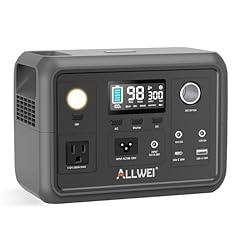
ALLWEI Portable Power Station 300W Solar Generator
Overview
This is a compact battery power station for charging and running low-draw electronics during camping, travel, and short outages. The current manufacturer page describes a 256Wh unit weighing 6.5 pounds, with a 300W continuous AC limit, 600W surge claim, pure-sine-wave output, one AC outlet, USB-C rated to 60W, and 12V outputs. A solar panel is optional, not included. The safety and output protections are manufacturer-stated, not independently load-tested. ALLWEI lists overload, short-circuit, low-voltage, over-voltage, and over-temperature protections that lock the output until restart. Documentation is a concern. The catalog combines an older 280Wh version with the newer 256Wh version, while the current product page itself pairs 256Wh with 26Ah at 10.8V, figures that do not reconcile mathematically. No model-matched U.S. third-party safety listing or credible independently measured AC capacity was located.
What works
- Compact 6.5-pound format is practical for carrying between a vehicle, tent, and room.
- The manufacturer states a 300W continuous limit and 600W surge capacity for modest electronic loads.
- The manufacturer specifies a 60W USB-C output, useful for many laptops and tablets.
- Published protection modes cover overload, short circuit, voltage faults, and overheating, with output lockout and restart.
What does not
- No current UL, ETL, or CSA listing for this exact 256Wh product was located in public U.S. certification records.
- No credible independent discharge test was located to establish usable watt-hours at the AC outlet.
- Product information mixes versions, including 256Wh versus 280Wh capacity, one versus two AC outlets, and inconsistent battery specifications.
- The product is not rainproof. A closely related manual explicitly says not to use it in water or damp conditions.
Who is it for
It suits a person who needs a light, limited-energy station for phones, tablets, cameras, a laptop, a router, LED lighting, or a low-draw CPAP setup, provided the actual device power and startup draw are checked first. Its small physical size and stated 300W ceiling make it more appropriate for travel, vehicle use, and brief outage support than for running household appliances. The buyer should be comfortable treating the stated capacity, surge rating, and recharge figures as manufacturer claims rather than independently confirmed results.
Who is it not for
It is not suited to households relying on backup power for refrigerators, heaters, coffee makers, microwaves, power tools, sump pumps, or other loads that can exceed 300W or have high motor startup demand. It is also inappropriate for unattended medical-device backup, wet weather operation, or use where a model-matched U.S. safety certification is required. Buyers who need dependable runtime planning should choose a product with independently measured AC capacity and clearer, internally consistent technical documentation.
Integrity
The product uses a lithium iron phosphate battery according to the current product description, a chemistry often selected for stationary and portable energy storage. ALLWEI states that its battery-management system protects against overcharge and overheating, and that overload, short-circuit, and over-temperature events lock the output for restart. Those are useful stated controls, but no independently verified U.S. safety listing for this exact unit was found. The older related manual also warns against fire sources, damaged use, and water or damp environments. Longevity claims are not stable across the available materials. The current page claims more than 3,000 cycles, while older materials for a similarly named 280Wh unit cite 1,500 cycles. The battery is not user-replaceable, and no product-specific take-back program or replacement-parts route was located. Keep the unit dry, store it within its stated temperature range, and use a qualified lithium-battery recycling route rather than household trash when it reaches end of life.

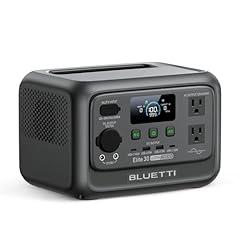
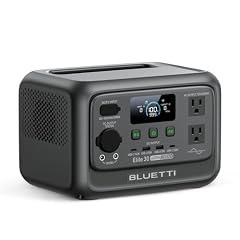
BLUETTI Elite 30 V2 Solar Generator
Overview
This is a compact lithium iron phosphate portable power station with a manufacturer-stated 288Wh battery, 600W continuous AC output, two USB-C ports rated to 100W and 140W, USB-A, 12V outputs, car charging, and solar charging. It weighs about 9.5 pounds and is intended for phones, laptops, lights, small electronics, and short outage or travel use. Its most useful independently documented figure is an AC discharge test that recorded 255Wh at an approximately 210W load, or 88.5% of nominal capacity. The manufacturer specifies a 200W maximum solar input and an IP20 enclosure rating, so it is not weatherproof. It also states a transfer time of 10ms or less, but its own manual says not to use it for data servers or workstations requiring high-performance UPS behavior.
What works
- An independently documented AC test delivered 255Wh at an approximately 210W load, a useful real-world figure for a 288Wh-rated unit.
- A documented test reported stable 120.6V AC output at about 210W, and another reported uninterrupted operation through a power-loss test at about 473W.
- The manual identifies overtemperature, overload, short-circuit, overcurrent, PV overvoltage, and charging-temperature fault states.
- The manufacturer provides explicit solar limits, 12V to 28V, 10A maximum, and 200W maximum, plus a five-year warranty.
What does not
- I did not find a current model-matched UL, ETL, or CSA portable-power listing in the searched certifier registers, so third-party electrical safety certification remains unverified.
- IP20 is protection against finger access, not rain or water ingress. The product needs dry, protected use despite outdoor-oriented marketing imagery and use cases.
- The 1500W Power Lifting claim is restricted to pure resistive loads. The manual says actual output remains 600W and warns against use with complex electronics.
- The battery is not user-serviceable, and I found no published replacement-battery, parts catalog, or repair procedure for buyers.
Who is it for
It suits a person who needs portable short-duration power for phones, tablets, a laptop, lights, a router, camera gear, or other modest loads during travel, camping, or a brief outage. The roughly 9.5-pound body and independently documented AC capacity make it practical where carrying a larger station is inconvenient. It also fits someone who can keep it dry, can check total connected load, and plans solar around the stated 200W input ceiling rather than expecting all-day household backup.
Who is it not for
It is not appropriate for wet-weather use, exposed campsites, rain-prone emergency staging, or vehicle locations where connectors can get wet, because the enclosure is rated IP20. It is also unsuitable as the only backup for critical servers, workstations, oxygen equipment, or other safety-critical loads. The manual specifically excludes high-performance UPS use, and the 288Wh battery cannot sustain high-wattage appliances for long. Avoid relying on Power Lifting mode for computers, televisions, motor loads, or compressor loads.
Integrity
The product uses lithium iron phosphate cells, a chemistry commonly selected for long cycle life, and the manufacturer states more than 3,000 cycles to 80% capacity with a five-year warranty. Its manual documents temperature-related charging and discharge protection, plus overload, inverter overtemperature, and short-circuit fault responses. It also gives a 0°C to 40°C charging range and a minus 20°C to 40°C discharge range. Model-specific third-party UL, ETL, or CSA safety listing evidence was not found in the searched registers. The manual directs owners not to put the battery in household waste and to use designated battery or electronics recycling channels. That is useful disposal guidance, but the product materials are not designed for consumer repair and no replacement-battery pathway was found. Solar charging can reduce use-phase grid electricity when panels are available, but the manufacturer does not provide a lifecycle assessment, recycled-content disclosure, or quantified carbon claim for this product.

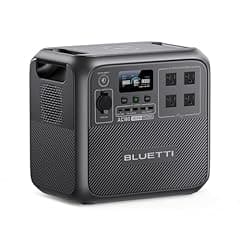
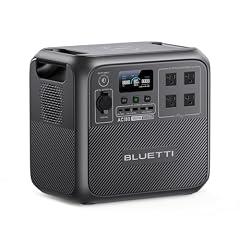
BLUETTI AC180 Portable Power Station
Overview
This is a 35.3-pound portable power station with a 1,152Wh lithium iron phosphate battery, four 120V AC outlets rated at 1,800W total, USB outputs, a 12V vehicle-style outlet, wireless charging, and a 500W maximum solar input. It is intended for temporary household backup, camping, vehicle use, and off-grid electronics and appliances, not for wiring into a home electrical system. Independent AC-discharge tests measured about 950Wh to 1,030Wh delivered through the inverter, depending on load and test method. That is roughly enough energy for a 1,000W appliance for about an hour before accounting for cycling loads. The manufacturer states 1,440W maximum AC charging, 0 to 80 percent in 45 minutes, 3,500 or more battery cycles to 80 percent capacity, and a five-year warranty.
What works
- Independent tests found usable AC energy of roughly 950Wh to 1,030Wh, giving a realistic basis for runtime planning.
- Independent reviewers documented stable AC operation at substantial loads, and one waveform inspection found the sine-wave output suitable for ordinary electronics.
- The manual gives specific limits for solar input, 12V to 60V and 10A, and warns that panels above 60V open-circuit voltage can damage the product.
- The manual documents protections and alerts for overload, short circuit, temperature faults, and solar-input overvoltage.
- A five-year manufacturer warranty and lithium iron phosphate battery chemistry support a longer-use design, although cycle-life conditions are not independently documented.
What does not
- The manufacturer says the product meets a UL standard, but a current, public model-matched UL, ETL, or CSA listing for this exact AC180 model could not be independently confirmed.
- Usable capacity varies by output and load. Independent AC tests ranged from 82 percent to about 89 percent of the stated battery capacity, and one USB-C test found lower DC efficiency.
- There is no verified ingress-protection rating. The manual says not to clean it with water and gives no basis to treat the station or its connectors as rainproof.
- The 2,700W Power Lifting setting is for resistive heating loads, not a general increase in continuous inverter capacity. Motor and compressor startup loads can still overload it.
- The stated 20ms UPS transfer time is not a guarantee that sensitive computers or network equipment will remain uninterrupted. The manual specifically tells users to test the function to avoid data loss.
Who is it for
It suits a person who needs a transportable, single-person-lift backup for short outages, car camping, or jobsite electronics, and who has already calculated loads below 1,800W. It is especially practical for running lighting, communications gear, laptops, a small refrigerator with manageable startup demand, cooking appliances for short periods, or power-tool battery chargers. It also fits users who can recharge from a wall outlet quickly and who understand that a 1,152Wh battery does not provide overnight whole-home power.
Who is it not for
It is not for anyone needing rainproof outdoor power, permanent home integration, medical-equipment backup without device-specific transfer testing, or unattended indoor charging. Do not use it where a 20ms transfer interruption could create a safety or data-loss problem. It is also a poor fit for high-duty heating, air-conditioning, large pumps, or compressors whose startup draw can exceed the inverter limit. Buyers needing long solar autonomy should account for weather, panel orientation, and the 500W solar-input cap rather than relying on rated panel wattage.
Integrity
The product uses a lithium iron phosphate battery and its manual documents a battery-management system, temperature alerts, overload and short-circuit alerts, solar-input overvoltage protection, and clear operating limits. Charging is specified for 32°F to 104°F. Discharge is specified for 4°F to 104°F, with output limited to 1,500W above 86°F. Keep ventilation openings clear, avoid direct sun and water, and do not use damaged cables or a cracked enclosure. The manufacturer makes broad clean-energy and eco-friendly marketing claims, but does not provide a lifecycle assessment, recycled-content disclosure, or product-specific take-back route. The battery is not user-serviceable in the manual. At end of life, do not place this product in household trash or curbside recycling. U.S. EPA guidance directs lithium-ion products to a dedicated battery recycler, electronics recycler, or household hazardous-waste collection program.

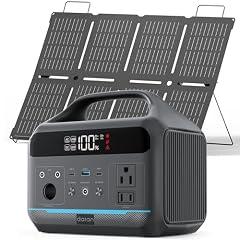
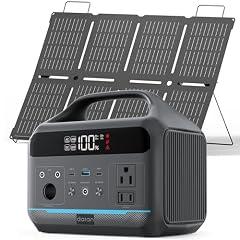
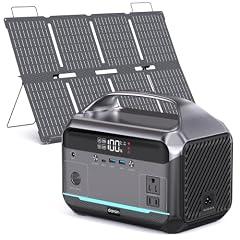
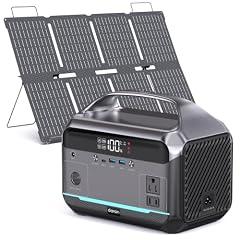
DARAN 600W Portable Power Station with Solar Panel
Overview
This is a compact portable power station packaged with an 80W solar panel in the product record. The station is listed at 288Wh, 600W output, 8.4 pounds, with two AC outlets, USB-C charging including a claimed 100W port, and DC outputs. It is intended for small electronics, lighting, camping equipment, and short outage support, not high-draw household appliances. Published Daran NEO documentation supports the stated LiFePO4 chemistry, 288Wh nominal battery size, 600W rated output, and 8.4-pound weight, but these are manufacturer-stated specifications rather than independent bench-test results. The same documentation describes battery-management protections and warns users not to exceed the output rating, keep the unit dry, ventilated, and away from heat. I did not find a current model-matched UL, ETL, or CSA listing, nor an independent AC capacity or surge test for this exact product.
What works
- Compact, manufacturer-stated 8.4-pound format is practical for carrying to a campsite, vehicle, or room during a short outage.
- Manufacturer documentation identifies LiFePO4 battery chemistry, a generally durable rechargeable lithium battery type.
- The published port list includes two AC outlets and a USB-C port rated up to 100W, which can cover many phones, laptops, lights, and low-power DC accessories.
- Documentation describes overload, overcharge, overcurrent, short-circuit, and overheating protections, plus instructions to maintain ventilation.
What does not
- No current third-party UL, ETL, or CSA certification listing was located for the exact product and model, so electrical and battery safety claims remain unverified.
- No independent measured AC watt-hour, continuous-load, surge, voltage-regulation, or waveform test was located for this exact unit.
- Published NEO documentation is inconsistent across listings on output, dimensions, inputs, included accessories, and recharge claims. The bundled panel and recharge expectations need confirmation from the delivered package and manual.
- No ingress-protection rating was found. The available safety instructions say to keep it away from water, so it should not be treated as rain-safe outdoor equipment.
- The stated one-year warranty is short relative to the claimed multi-thousand-cycle battery life, and no repair, replacement-battery, or brand take-back pathway was located.
Who is it for
This product suits a buyer who needs a light, carryable source of short-duration power for phones, laptops, LED lights, routers, cameras, and modest DC equipment. It can also suit camping users who understand that the 288Wh figure is nominal battery capacity, not guaranteed AC-delivered energy. Its small size and stated 600W ceiling make it most relevant when portability matters more than long runtime. Buyers should retain the manual and use only the supplied or manufacturer-specified charging equipment.
Who is it not for
It is not suited to buyers who need independently verified safety certification for indoor backup, unattended charging, workplace use, medical-device support, or insurance-sensitive applications. It is also unsuitable for heaters, kettles, microwave ovens, full-size refrigerators, power tools with high startup demand, and other loads that can exceed its stated 600W limit. Do not use it in rain, near wet connectors, or in hot enclosed vehicles. Anyone expecting predictable solar recharge should seek documented real-world input testing.
Integrity
The product is stated to use LiFePO4 cells and a battery-management system with protections for overcharge, overload, short circuit, overcurrent, and overheating. Those are useful design claims, but I could not independently confirm the controls through a model-matched UL, ETL, or CSA safety listing. No product-specific CPSC recall or public incident report was located in the searched U.S. databases. The available instructions still require ventilation, dry conditions, and distance from heat. Solar charging can reduce use of grid electricity during operation, but it does not make the battery system environmentally neutral. No lifecycle assessment, recycled-content disclosure, repair program, or product take-back service was found. At end of life, lithium battery equipment should not go into household trash or curbside recycling. EPA guidance directs owners to a separate battery or household hazardous-waste collection route.
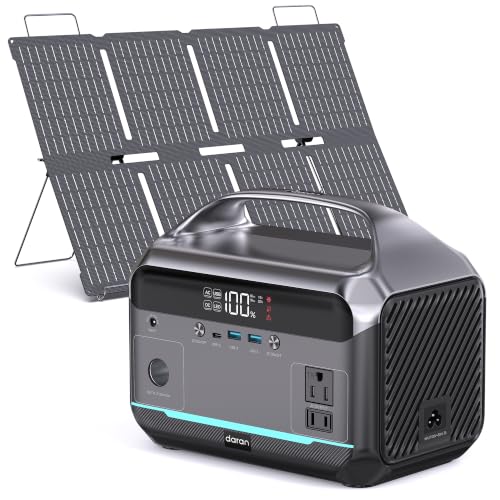
Daran 600W Portable Power Station with Solar Panel
Overview
This is a compact, 8.16-pound portable power station with a manufacturer-stated 288Wh LiFePO4 battery, two AC outlets, USB-A ports, a 60W USB-C port, a 12V car socket, LED light, and solar, vehicle, or wall charging. It is intended for low-draw electronics, lighting, and short backup use, not high-watt household appliances. The most important finding is a material power-rating conflict. Daran’s own product page and manual identify 350W continuous AC output with 600W surge, while this marketplace record presents it as a 600W product. The maker also states a 40W solar input and an included-panel variant, but independent delivered-capacity, load, solar-input, and recharge-time testing for this exact product was not located.
What works
- The official manual documents automatic AC shutdown for overload and AC short-circuit conditions.
- The manual describes overheat and low-temperature warning indicators, cooling instructions, and a required ventilation gap.
- Manufacturer specifications provide a concrete 350W continuous and 600W surge AC rating, plus 60W USB-C and 120W vehicle-socket limits.
- The manufacturer states LiFePO4 chemistry, a 288Wh nominal capacity, and 3,500-plus cycles to 80 percent capacity.
- The manual provides a repair or replacement warranty path, with one year standard coverage and a stated registration extension to three years.
What does not
- The marketplace description’s 600W framing conflicts with the manufacturer’s 350W continuous AC rating. This could lead a buyer to connect an appliance that exceeds the unit’s rated output.
- No current model-matched UL, ETL, or CSA listing to a U.S. portable-power safety standard was verified in the searched certification sources.
- No independent watt-hour-meter discharge test, inverter waveform test, surge test, or voltage-regulation test for this exact product was located.
- The catalog’s two-hour fast-charge claim is not supported by the maker’s 100W maximum AC-input specification, and the manufacturer documentation itself has inconsistent solar-input figures.
- The station is not described with an ingress-protection rating. The manual warns against water and rain, so the power station should not be treated as weatherproof.
Who is it for
It suits a buyer who needs a small, carryable battery source for phones, laptops, lights, routers, cameras, or other loads that remain comfortably below 350W continuous. It can also fit occasional outage preparation when the buyer understands that 288Wh is limited stored energy and checks the actual wattage label on every connected device. This buyer should be willing to follow the manual’s ventilation, cooldown, dry-use, and periodic battery-check instructions, and should treat the solar panel as weather-dependent supplemental charging.
Who is it not for
It is not appropriate for anyone selecting a product specifically for 600W continuous AC power, for heat-producing appliances, or for loads with uncertain or high startup demand. It should not be used as weatherproof outdoor electrical equipment, in rain, with wet connectors, or where ventilation around the case cannot be maintained. It is also not a suitable sole power source for safety-critical or medical equipment, since the manual does not guarantee such use and independently verified output and runtime evidence was not located.
Integrity
The product uses a manufacturer-stated LiFePO4 battery and its manual gives meaningful basic safety instructions. These include avoiding damaged cords and modified equipment, keeping the unit away from heat and water, allowing airflow, stopping use for abnormal heat or odor, and waiting one to two hours before recharging after a high-load discharge. The manual also describes overload, short-circuit, overheating, and low-temperature protective behavior. No model-specific CPSC recall or public incident report was located in the searched U.S. sources. Its safety certification status remains unverified. No current model-matched UL, ETL, or CSA listing was found, despite those organizations being recognized U.S. testing pathways. For disposal, the manual says not to put the built-in battery in household waste and not to disassemble it. That aligns with EPA guidance to use an electronics recycler or household hazardous-waste program. The brand gives no lifecycle assessment, recycled-content disclosure, or product take-back program, so solar charging should not be read as evidence of an overall environmental benefit.

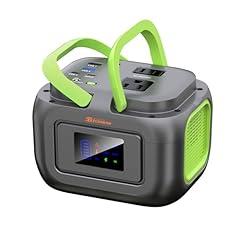
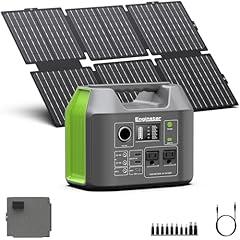
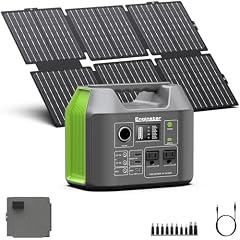
EnginStar Portable Solar Generator 300W
Overview
This product is a compact lithium-ion portable power station bundled in this listing with a foldable 60W solar panel. The station is documented at 296Wh nominal capacity, about 6.5 lb, with two 110V AC outlets, 12V and 24V DC outputs, USB outputs, and an 18W maximum USB-C output. It is intended for low-draw electronics, lights, fans, and similar loads rather than heating appliances or major kitchen equipment. Its manual states a 300W AC limit, pure-sine-wave output, and automatic shutdown for a short circuit or load above 300W. It also gives a rough 85 percent runtime calculation, which implies about five hours for a 50W load, but no independent watt-hour discharge test was located. The documentation supports solar input from 12V to 25V, although real solar recharge performance with the included panel was not independently verified.
What works
- The manual specifies automatic shutdown for short circuit and overpower conditions above 300W.
- Specific charging paths are documented, including wall power, a 12V vehicle outlet, and 12V to 25V solar input.
- The manual specifies regulated 12V and 24V DC outputs, useful when a connected device requires those voltages.
- The product documentation gives operating temperature guidance of 14°F to 104°F and warns that charging can make the unit hot.
- A nominal 296Wh capacity and 6.5 lb weight are consistently documented in the available R300 manual.
What does not
- No current model-matched UL, ETL, or CSA portable-power safety listing was verified through an issuing body's product register.
- No independent AC discharge, surge, voltage-regulation, or waveform test for this product was located, so usable capacity and load behavior remain unconfirmed.
- The manual provides no ingress-protection rating and directs users to keep the unit away from water and humidity, limiting confidence for exposed outdoor use.
- Solar claims lack tested sunlight conditions, measured input data, and a real-world recharge test for the bundled 60W panel.
- The stated cycle life exceeds 1,000 cycles, but the documentation does not give test conditions, replacement-battery availability, repair instructions, or a brand take-back program.
Who is it for
This product suits a camper, vehicle traveler, or emergency-preparedness user who needs a lightweight battery source for phones, cameras, LED lighting, a small fan, or a low-draw CPAP setup with the heater and humidifier disabled. The documented 300W ceiling makes it appropriate only where every connected load, including startup demand, is known to remain below that limit. It also fits users able to keep the station dry, supervise charging, and accept manufacturer-stated rather than independently measured runtime figures.
Who is it not for
It is not for running space heaters, kettles, microwaves, induction cookers, large power tools, or appliances with high compressor or motor startup demand. The manual specifically warns that refrigerators, ice makers, and laser printers can exceed its protection threshold. It is also unsuitable for rain-exposed campsites, marine use, or other wet settings because no ingress rating was verified. Households needing independently certified electrical safety, tested medical-device backup performance, rapid solar recovery, or a documented repair and battery-replacement path need more evidence than is available here.
Integrity
The available R300 documentation identifies a lithium-ion battery and states protections for overload, over-discharge, overcharge, overheating, and short circuit. It warns users not to short circuit, crush, disassemble, cover, overcharge, or expose the unit to water, liquids, humidity, direct sun, or high heat. It also cautions that the unit may become hot while charging. No product-specific CPSC recall or SaferProducts report was located in the public searches performed, but no current model-matched UL, ETL, or CSA safety listing was independently verified. Solar charging can reduce use-phase grid power, but it does not establish a broader environmental benefit for the lithium-ion station or panel. No lifecycle assessment, recycled-content disclosure, or manufacturer take-back route was located. At end of life, the battery should not enter household trash or curbside recycling. EPA directs consumers to specialized battery recycling or household hazardous-waste collection, with terminals protected from contact.