
10 Best Dual Hose Portable Ac
 Lauren Wilson
Please note that we participate in affiliate marketing programs. When you purchase through links on our site, we may earn a commission. As an Amazon Associate we earn from qualifying purchases. This comes at no additional cost to you and helps support the resources required to provide valuable content.Advertising Disclosure
Top-rated Dual Hose Portable Ac Comparison
1

2
4
5
6
7
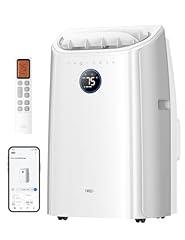
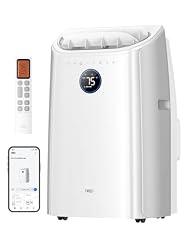
8
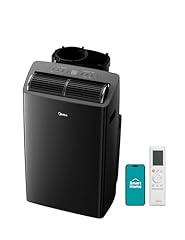
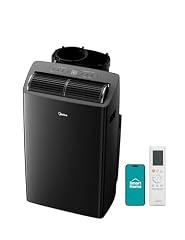
9
10
Overview
A dual-hose portable air conditioner removes heat from one room and sends it outdoors through two separate air paths: one intake hose brings in outdoor air to cool the condenser, while the other exhausts heated air. When the hoses and window panel are sealed correctly, this balanced arrangement can limit the room depressurization and hot-air infiltration associated with single-hose units. It still needs a compatible window, a grounded outlet, floor space, and enough cooling capacity for the room’s actual heat load.
The most useful capacity number is the DOE seasonal-adjusted cooling capacity, usually shown as SACC or DOE BTU. Older ASHRAE or headline BTU figures are often larger and are not directly comparable. Room-size claims can also mislead: the supplied reviews include conflicting coverage figures, unclear test methods, and products whose advertised capacity exceeded independently measured output. A buyer should compare the exact model’s DOE certification record in the Department of Energy’s Compliance Certification Management System, use the capacity listed under the DOE portable-air-conditioner test method, and treat square-foot claims as estimates affected by sun, insulation, ceiling height, air leakage, and occupancy.
A true dual-hose design should have distinct intake and exhaust connections documented in the exact owner’s manual and window-kit instructions. Look for clear sealing limits and installation steps, rather than relying only on a marketplace title. Condensate management is equally important. “Drainage-free” generally means reduced routine draining under particular cooling and humidity conditions, not that water can never collect. Full-tank protection, a practical continuous-drain route, cleaning instructions, and clear storage procedures reduce the risk of overflow, leaks, and stagnant moisture.
Noise claims need context. A number such as 40–49 dB may describe sleep or silent mode, rather than normal cooling with the compressor operating. The stronger evidence is an independently measured exact-model result that identifies the setting and test conditions. The same principle applies to energy use: compare DOE-tested efficiency and a consistent seasonal capacity, not unsupported annual-kilowatt-hour figures or non-comparable efficiency labels.
Electrical and fire safety should be verified for the complete appliance, not inferred from a component, retailer statement, or a listing for a related model. Before installation, match the exact model and current certification record in an OSHA-recognized NRTL directory, such as UL Product iQ, Intertek’s ETL directory, or CSA’s product database. Also check the CPSC Recall Database. R-32 appears across many supplied products and has lower global-warming potential than several legacy refrigerants, but it is an A2L, mildly flammable refrigerant; the appliance’s labeling, safety design, intact refrigerant circuit, and qualified service remain important.
Across the supplied reviews, the recurring cautions are substantial. Several products lack a matched UL, ETL, or CSA record, exact DOE result, or independent performance test. Multiple listings conflict with their manuals on hose count, capacity, room size, noise, wattage, warranty, or refrigerant details. Single-hose products are not suitable substitutes for a genuinely balanced dual-hose design. High humidity can still require drainage, and large or open rooms may receive inadequate heat relief. Buyers who need dependable cooling for medically vulnerable occupants, dangerous heat, unattended use, or a quiet bedroom should not rely on headline claims where exact-model evidence is missing.
Integrity
These topics assess whether a portable air conditioner can provide useful heat relief safely, limit moisture and indoor-air problems, reduce environmental burden, and support its claims with traceable evidence. Scores are relative to the supplied products; a high score means stronger supporting information or performance evidence, not a guarantee for every room or installation.
HHealth & Safety
Heat-relief performance
This measures whether cooling and dehumidification can meaningfully lower heat exposure in the room size claimed. It matters because portable units can underperform in sunny, leaky, or open rooms. The supplied scores range from 45 to 90: the highest-scoring unit had independent cooling measurements, while lower-scoring products relied on headline claims or had unclear capacity.
Verified electrical and fire safety
This asks whether the complete appliance has a current, traceable U.S. NRTL certification addressing shock, overheating, and fire risk. That matters for a high-wattage appliance operating indoors, especially one using mildly flammable R-32. Most supplied products scored around 68–75; the higher score reflected stronger documentation, but even several reviewed products lacked a publicly matched exact-model UL, ETL, or CSA record.
Genuinely balanced dual-hose design
This measures whether separate intake and exhaust paths remain sealed from the machine through the window kit. A real dual-hose arrangement can reduce room depressurization and hot-air infiltration. Scores ranged from 20 to 89: confirmed single-hose products scored low, while independently reviewed hose-in-hose or well-documented two-duct designs scored highest. Installation sealing still determines the result in practice.
Leak, overflow, and mold control
This measures full-tank protection, drainage options, cleaning guidance, and resistance to stagnant water or floor damage. It matters because self-evaporation is conditional, especially in humid weather or dry mode. Scores ranged from 58 to 82. Higher-scoring products documented shutoff, gravity or continuous drainage, filters, and storage steps; lower scores reflected missing tank details, conflicting instructions, or limited drainage evidence.
Noise that will not overwhelm the room
This measures realistic sound during cooling, work, conversation, or sleep—not just the quietest mode. It matters because compressor noise can make a portable unit unsuitable for bedrooms or offices. Scores ranged from 40 to 86. The strongest product had independent low-setting measurements, while lower-scoring products had only manufacturer claims, conflicting figures, or substantially louder maximum-cooling results.
EEcology
Lower-impact refrigerant
This measures the refrigerant’s climate and safety profile and whether the appliance is designed and labeled for it. R-32, reported across many products, has a stated GWP of 675 and is EPA-acceptable with conditions, but is A2L mildly flammable. Scores ranged from 60 to 83; higher scores reflected clearer refrigerant identification and stronger supporting evidence, while uncertain model identity lowered confidence.
Energy use for the cooling delivered
This measures electricity consumed for verified cooling output using comparable DOE methods. It matters because a large headline BTU number does not show how much cooling arrives per kilowatt-hour. Scores ranged from 45 to 89. The highest score combined a seasonal capacity and stronger performance evidence; lower scores reflected non-comparable ratings, unsupported annual energy figures, or independent findings of high consumption.
Built to last and serviceable
This measures warranty strength, replacement filters and critical parts, service support, and refrigerant-handling information. Repairability can prevent premature replacement of a heavy refrigerant appliance. Scores ranged from 54 to 78. Higher-scoring products documented meaningful warranties and replacement hoses, window kits, or filters; lower-scoring products had short or conflicting warranties and no verified parts or service network.
EEvidence
Honest BTU and room-size claims
This measures whether capacity and coverage use a clearly identified DOE seasonal-adjusted figure instead of an older, larger rating. It matters because room sizing and heat protection depend on delivered cooling. Scores ranged from 25 to 91. Higher-scoring products paired SACC with a room claim; lower-scoring products used headline BTUs, conflicting square-foot figures, or documentation that could not identify the tested configuration.
Independently checked performance
This measures whether exact-model cooling, energy, and sound claims are supported by an independent laboratory or test organization. It is especially important when a portable unit is being relied on during heat. Scores ranged from 56 to 91. The strongest products had exact-model independent cooling or sound measurements; most lower-scoring products had only seller or manufacturer statements and no DOE or accredited-lab record.
Traceable model, support, and safety history
This measures whether buyers can identify the exact model, manufacturer or importer, safety mark, manual, warranty, and recall path. It matters because related products and shared chassis names can have different hose counts, refrigerants, capacities, or warranties. Scores ranged from 30 to 82. Higher scores reflected consistent documentation; the lowest scores involved conflicting model identities and unclear support.
Full reviews

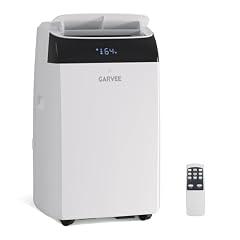
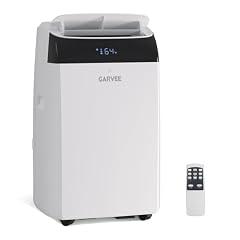
Garvee 14,000 BTU Inverter Portable Air Conditioner
Overview
This is a 115 V portable air conditioner with wheels, remote control, cooling, dehumidifying, fan, and heat-pump modes. Garvee states that it has 14,000 BTU cooling, two vent hoses, 1,030 W input, 42 dB sleep operation, and coverage up to 700 square feet. It is intended to sit indoors beside a window, with hoses routed through the supplied window kit. The clearest independent record is a federal EnergyGuide label for the same product model. It lists 9,000 BTU capacity and a 7.54 combined energy efficiency ratio, rather than the prominently marketed 14,000 BTU figure. Archived documentation for that same model also describes one exhaust hose and 54 dBA operation. Those conflicts prevent the Garvee-specific cooling, dual-hose, and quiet-operation claims from being treated as confirmed.
What works
- The product combines cooling, dehumidifying, fan, and heat-pump modes, according to Garvee.
- A federal EnergyGuide label for the matching model reports a 9,000 BTU capacity and 7.54 combined energy efficiency ratio.
- Garvee documentation describes auto-evaporation during cooling and continuous drainage for humid conditions or dry mode.
- The product has a removable washable air filter, according to the available operating documentation.
What does not
- The 14,000 BTU marketing claim is not presented with its comparable DOE seasonal-adjusted capacity. The matching federal label instead lists 9,000 BTU.
- The claimed two-hose arrangement conflicts with archived documentation for the same model that specifies one flexible exhaust hose. The supplied configuration cannot be verified as a balanced dual-hose design.
- Garvee states 42 dB in sleep mode and 50 dB generally, while archived documentation for the same model states 54 dBA. No independent exact-product sound test was found.
- No current NRTL directory record was located that matches the Garvee-branded product exactly. ETL statements for another branding of the same model do not verify this product's complete appliance listing.
- The product page states a 30-day manufacturer warranty, which is short for a refrigerant appliance. Garvee's site also presents a general 12-month policy, creating warranty ambiguity.
Who is it for
This product fits a renter or homeowner needing portable cooling and occasional supplemental heat in one enclosed room with a compatible sliding window and space for a 66-pound floor unit. It is most appropriate where the buyer can independently inspect the carton and rating plate before use, confirm the safety mark, refrigerant label, hose count, and warranty coverage, and arrange continuous drainage if the room is very humid. The federal label's 9,000 BTU capacity is the more useful planning figure than the 14,000 BTU headline.
Who is it not for
It is not suited to buyers who need documented cooling for a large or heat-stressed 700-square-foot space, including people relying on the unit for heat-health protection during extreme heat. It is also unsuitable where quiet sleep operation is essential, because the published sound figures conflict and no independent exact-product test was found. Avoid relying on it as a confirmed dual-hose unit until the delivered product and installation instructions show separate, sealed intake and exhaust paths. Households needing clear safety certification, long warranty support, or known replacement-parts access should require that documentation before use.
Integrity
The usable health feature is mechanical cooling with dehumidification, not an unsubstantiated wellness mechanism. Garvee says cooling condensate normally auto-evaporates, while high humidity and dry mode can require gravity drainage. That can reduce routine emptying, but users still need to keep the drain route clear, level the appliance, clean the washable filter, and fully dry it before storage to limit leaks and stagnant water. The matching federal EnergyGuide label reports 9,000 BTU and a 7.54 combined energy efficiency ratio. This provides a traceable efficiency figure, but it does not confirm Garvee's inverter or dual-hose claims. Refrigerant documentation is inconsistent for the matching model, with published records naming both R-32 and R-410A. The delivered unit's rating plate should therefore be checked before judging climate impact or refrigerant-service requirements. No matching CPSC recall record was located in the recall search, but exact Garvee safety-listing traceability was not established.

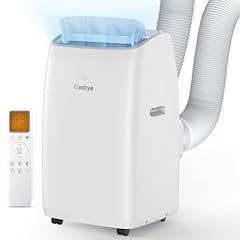
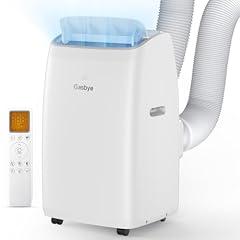
Gasbye Cool Prime 8000-W
Overview
This is a 59-pound, 115-volt portable room air conditioner that rolls to a window and uses separate outdoor-air intake and exhaust hoses. It provides cooling, fan, and dry modes, and includes a window bracket system, foam seals, and a remote control. The current manufacturer product page identifies the white unit as CoolPrime 8000-W. Gasbye states 12,000 BTU under the older ASHRAE rating, 8,300 BTU under the DOE seasonal-adjusted rating, coverage up to 450 square feet, and 7.3 CEER. That is a more useful capacity disclosure than an ASHRAE-only headline, although the underlying DOE record and independent laboratory report were not located. The supplied manual documents two rear drain outlets, including continuous drainage in dry mode. The claimed 45 dB noise level and full DC inverter compressor remain manufacturer-stated rather than independently measured.
What works
- The manufacturer presents both 12,000 BTU ASHRAE and 8,300 BTU DOE capacity figures, rather than relying only on the larger legacy figure.
- The supplied setup is described and illustrated as separate intake and exhaust airflow paths, with window brackets and foam seals included.
- The exact manual documents continuous drainage for dry mode, a separate low quick-drain outlet, and a water-full alert response.
- A three-year warranty is offered, with the final two years requiring registration.
What does not
- No exact-model UL, ETL, CSA, or other NRTL listing could be matched in the public certification directories checked. This is missing verification, not evidence that the appliance is unsafe.
- No independent exact-model cooling, energy-use, or sound test report was found. DOE verification is claimed by the manufacturer, but the underlying record was not independently confirmed here.
- The 45 dB sound figure is not accompanied by test conditions, fan setting, distance, or third-party measurement.
- Drainage still needs attention in dry mode and unusually humid or open spaces. The manual advises continuous drainage to reduce water-full alerts.
- The manufacturer's current specifications differ from some marketplace data for dimensions, wattage, and annual energy use, which complicates model-level claim tracing.
Who is it for
This product suits a renter or homeowner who needs movable cooling for one enclosed bedroom, office, or living area and can install two hoses in a compatible window. It is most appropriate when the room is meaningfully below the stated 450-square-foot maximum, has doors and windows that can remain closed, and has a practical route for a drain hose during dry-mode use. Buyers who value the lower, DOE-style capacity figure rather than relying on the larger headline rating can size the unit more cautiously.
Who is it not for
It is not well suited to people who require a publicly traceable electrical safety listing before bringing a high-wattage appliance indoors, because no exact-model NRTL certification match was located. It is also a poor fit for very noise-sensitive sleepers, since the 45 dB claim lacks independent test conditions. Avoid relying on it as whole-home cooling, for open-plan spaces, or for a full 450-square-foot room with heavy sun, poor insulation, frequent door opening, or significant indoor heat loads. Users unable to manage occasional drainage should also choose another format.
Integrity
The central health benefit is real cooling and dehumidification in an enclosed room, provided the hoses and window seals are installed correctly. Separate outdoor intake and exhaust paths should avoid the room depressurization associated with single-hose designs, but this installation benefit is based on the manufacturer’s design documentation, not an independent room test. The manual gives usable drainage instructions, including continuous dry-mode drainage and a separate quick-drain point, which can reduce overflow risk when followed. The product is listed with R-32 refrigerant. EPA materials identify R-32 as below the current 700 global-warming-potential limit for residential and light-commercial air conditioning, but R-32 needs the appliance safety controls and labeling required for its use. Those exact-model safeguards could not be verified through a public NRTL listing. No product-specific CPSC recall was located in the recall sources checked. The manufacturer offers three years of coverage, but a public replacement-parts catalog and authorized service network were not located.

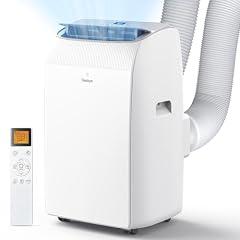
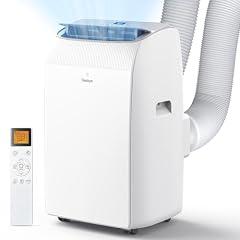
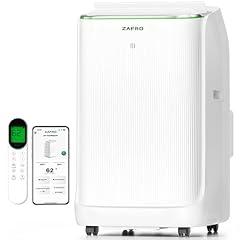
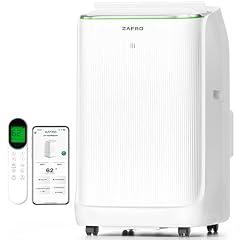
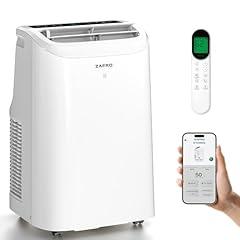
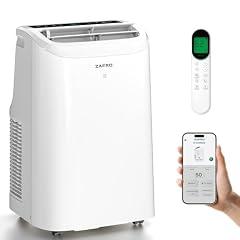
ZAFRO Smart Inverter Portable Air Conditioner 14000 BTU
Overview
This is a 54-pound, floor-standing portable air conditioner for a sliding-window installation. It uses two window hoses, runs on 115 volts, and includes a remote, app controls, window panels, sealing foam, and a drain hose. It is intended to cool, circulate air, and dehumidify a single enclosed room. The published product manual states 14,000 Btu/h cooling capacity and 10,000 Btu/h SACC, the DOE-style seasonal capacity figure that is more useful for comparing portable units. It also describes a dual-duct setup, manual and continuous drainage options, a washable filter, R-32 refrigerant, and a claimed 42 dB sleep setting. These are manufacturer-stated specifications. I found no exact-product DOE certification entry, independent lab report, Consumer Reports result, or traceable NRTL safety listing to independently confirm cooling output, energy use, noise, or electrical safety certification.
What works
- The capacity claim clearly includes 10,000 Btu/h SACC, rather than relying only on the larger 14,000 Btu/h figure.
- Published instructions describe two hoses, window sealing foam, and latching hose connections, which can help preserve the intended balanced-venting setup when installed carefully.
- The manual provides both manual draining and a continuous-drain option for humid conditions or dry mode.
- R-32 is a lower-GWP refrigerant than legacy high-GWP refrigerants. EPA lists HFC-32 at GWP 675, with use conditions.
What does not
- No exact-product UL, ETL, CSA, or other current NRTL listing could be matched in the searched certification sources. This leaves electrical and fire-safety certification unverified.
- No exact-product independent cooling, energy, or sound test was located. The 42 dB claim and 12.8 CEER claim remain manufacturer-stated.
- The drainage-free claim is conditional. The manual recommends a drain hose in high humidity or dry mode, and directs users to empty the unit manually when needed.
- The published warranty is one year, and no exact-product replacement-parts catalog or authorized repair network was located.
- The manual evidence is inconsistent on rated wattage, with one published version stating 1,390 watts while the marketplace record states 1,250 watts.
Who is it for
It suits a renter or homeowner who needs a movable room unit, has a compatible sliding window, and is prepared to install and seal both hoses carefully. The stated 10,000 Btu/h SACC capacity makes it more appropriate for a closed medium to large room than for an entire open-plan home. It also suits users who value a continuous-drain option in humid weather and want app or remote control, while accepting that the advertised cooling, sound, and efficiency figures have not been independently verified for this product.
Who is it not for
It is not well suited to households that require a confirmed U.S. electrical-safety listing before operating a high-wattage appliance unattended, including homes with strict landlord, insurer, or local inspection requirements. It is also a poor fit for bedrooms where quiet operation is critical, because the 42 dB figure lacks exact-product independent testing. People in very humid spaces who cannot route a drain hose, or users cooling large open areas, should not treat the drainage-free and room-coverage claims as guarantees.
Integrity
The main health-related benefit is the stated dual-hose arrangement. DOE test rules recognize separate single-duct and dual-duct configurations and account for duct heat transfer and infiltration, so correct hose attachment and window sealing matter to actual room cooling. The instructions include sealing foam and describe drain-hose use, but they also say high humidity and dry mode may require drainage. Emptying residual water and cleaning the filter monthly are important to reduce leak and stagnant-water risks. The product is stated to use R-32. EPA lists HFC-32 with a GWP of 675 and an A2L safety classification, meaning it is lower impact than many older refrigerants but is mildly flammable and subject to equipment safety conditions. No product-specific safety listing was verified to confirm those conditions. A search of CPSC recall materials did not identify a recall for this product, but public recall history does not substitute for a traceable safety certification.

Gasbye Dual Hose Portable Air Conditioner 2026
Overview
This is a 65-pound, floor-standing portable air conditioner for a sliding window, supplied with separate intake and exhaust hoses, window brackets, foam seals, and a remote. Gasbye identifies the white product as CoolPrime-10000-W, with a 10,500 BTU DOE seasonal-adjusted cooling capacity, a 14,000 BTU ASHRAE figure, 13.6 CEER, and coverage up to 500 square feet. Those performance figures are manufacturer-stated. Its defining design feature is the supplied dual-hose arrangement, which can avoid the room depressurization associated with a single exhaust hose if both hose paths and the window panel are properly sealed. The 45 dB claim applies to Inverter Mode and has not been independently verified for this exact product. Gasbye also states that drainage is usually unnecessary, but may be needed above 85% relative humidity.
What works
- The product page clearly separates the 10,500 BTU DOE capacity from the larger 14,000 BTU ASHRAE figure.
- Separate intake and exhaust hoses, supplied seals, and three window brackets support a usable dual-hose installation, manufacturer-stated.
- Gasbye specifies a full DC inverter compressor and 13.6 CEER, with 446 kWh per cooling season claimed.
- A higher rear drain outlet is provided for occasional manual draining in very humid conditions, manufacturer-stated.
- Coverage can reach three years with product registration, and the company offers lifetime technical support, manufacturer-stated.
What does not
- No exact-model UL, ETL, CSA, or other NRTL safety listing could be matched in a public issuer directory. This is an evidence gap, not a confirmed safety defect.
- The claimed DOE capacity and 13.6 CEER were not matched to an exact public DOE certification record during verification.
- The 45 dB noise figure is a manufacturer claim for Inverter Mode, without an independent exact-model sound report or stated test distance.
- The 500 square foot claim depends heavily on heat load, sun exposure, insulation, and a well-sealed window installation.
- At 65 pounds, it is cumbersome to move. The supplied 59-inch hoses also constrain placement near a compatible sliding window.
Who is it for
This product suits a renter or homeowner who needs portable cooling in a medium-size, enclosed room and has a horizontal or vertical sliding window within about five feet of the placement area. It is most appropriate for someone willing to install both hoses carefully, use the included foam seals, and size expectations around the disclosed 10,500 BTU DOE capacity rather than the larger ASHRAE number. Inverter Mode may be useful for overnight temperature maintenance after the room has already cooled.
Who is it not for
It is not well suited to people who need a publicly traceable electrical safety listing before bringing a high-power appliance into a bedroom, nursery, rental unit, or unattended space. It also does not fit casement or outward-opening windows without a separate, carefully engineered solution. Buyers expecting certified performance across a full 500 square feet in a sunny, open-plan, poorly insulated, or high-humidity space should not rely on the coverage claim alone. People unable to lift or reposition a 65-pound appliance should plan for a more manageable setup.
Integrity
A sealed dual-hose layout is the principal health-relevant design feature. When the intake and exhaust paths are installed separately and the window panel is sealed, it can reduce the hot-air infiltration and pressure imbalance that compromise many portable cooling setups. In humid weather, the company says manual drainage may occasionally be needed above 85% relative humidity. Empty standing water promptly and keep the air path and filter clean to reduce leak and moisture-related problems. The catalog identifies R-32 refrigerant. EPA lists HFC-32 as acceptable with use conditions for residential and light-commercial air conditioning, with a global warming potential of 675 and an A2L lower-flammability classification. That makes correct safety engineering and labeling important. However, an exact-product NRTL certification and a public exact-model DOE record were not located, so the product's electrical safety certification, tested efficiency, and sound performance remain unconfirmed by the issuing bodies.

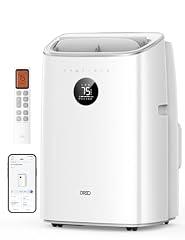
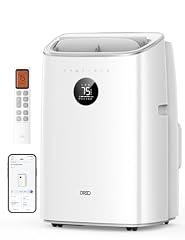
Dreo 8,000 BTU Portable Air Conditioner
Overview
This is a 55-pound, floor-standing portable air conditioner for a small room with an outside-facing window. It uses one exhaust hose and a supplied adjustable window panel, foam seals, remote, app controls, and Cool, Dry, and Fan modes. The published window-kit range is 18 to 53 inches. The capacity disclosure is unusually clear. Dreo and a major retailer identify 8,000 BTU under the older ASHRAE method and 5,000 BTU under DOE SACC, with 150 square feet presented as the recommended room size. The 45 dB figure applies to the lowest setting and is manufacturer-stated, not independently measured. Its supplied configuration is single-hose, despite this page's dual-hose search category. That design sends room air outside to cool the condenser, which can pull warmer replacement air into the room.
What works
- The product clearly distinguishes its 5,000 BTU DOE SACC capacity from its higher 8,000 BTU ASHRAE figure.
- Its manual documents a window kit with foam seals and a supported 18 to 53 inch opening range.
- The manual provides continuous-drain instructions for Dry mode, tank drainage for storage, and washable-filter cleaning guidance.
- It uses 205 g of R-32 refrigerant. EPA lists HFC-32 as acceptable with use conditions and gives it a 675 global-warming-potential value.
- Dreo provides a 12-month warranty for new products and published support contact details.
What does not
- This is a confirmed single-hose product, not a balanced dual-hose system. Room depressurization and hot-air infiltration can reduce practical cooling performance.
- No exact-product Consumer Reports result, accredited laboratory report, or publicly traceable DOE certification record was located during this review.
- The 45 dB claim is only stated for the lowest setting. Retailer data lists up to 50 dB, and no independent sound test was found.
- Drainage-free operation is conditional. The manual requires continuous drainage in Dry mode and warns condensate can leak when the drain cap is removed during Cool or ECO operation.
- A retailer lists it as ETL Listed, but an exact model match could not be confirmed in Intertek's public listing directory.
Who is it for
This product suits someone cooling a closed, roughly 150-square-foot bedroom, office, or rental room where a window air conditioner cannot be installed but a compatible window can vent an exhaust hose outdoors. It is most appropriate for a buyer who will install the supplied foam seals carefully, keep doors and windows closed, clean the washable filter, and can manage a drain hose if using Dry mode for extended periods. App, remote, and voice controls may also suit users who need to adjust operation from bed or a desk.
Who is it not for
It is not suited to a buyer specifically seeking a dual-hose portable AC, or to rooms that are large, poorly sealed, sunny, or connected to hot adjacent spaces. The single-hose design can draw replacement air into the room and makes heat control more difficult. It should not be used in bathrooms, laundry rooms, wet locations, or near flammable vapors. Households unable to provide an outdoor vent path, clean filters, inspect drainage, or move a 55-pound appliance safely should select a different cooling arrangement.
Integrity
The key health limitation is the single exhaust hose. Consumer Reports explains that single-hose portable ACs use conditioned indoor air for their mechanicals, creating negative pressure that draws warmer unconditioned air into the room. The unit can still provide localized heat relief in a suitably small, closed room, but its manufacturer-stated capacity and noise claims have not been matched to an independent exact-product test. The product uses 205 g of R-32, an A2L mildly flammable refrigerant. EPA lists HFC-32 as acceptable with use conditions and reports a 675 global-warming-potential value, lower than many older common refrigerants. The manual includes flammable-refrigerant warnings and directs qualified personnel for refrigerant work. It also gives cleaning and drainage instructions that can reduce stagnant-water and mold risk. No CPSC recall or regulatory warning specific to this product was located in the sources reviewed.

ZAFRO 10000 BTU Portable Air Conditioner
Overview
This is a 115 V portable, single-exhaust-hose air conditioner with casters, a window panel, remote, touch controls, Wi-Fi app control, cooling, fan, dehumidifying, sleep, and timer functions. It is roughly 23 inches high, 15 inches wide, and about 52 pounds, so it is intended to move between rooms rather than remain permanently installed. The product materials describe 6,000 BTU per hour of seasonally adjusted cooling capacity, alongside a larger 10,000 BTU headline figure, and a claimed coverage area of up to 250 square feet. Those are manufacturer-stated figures, not independently located exact-product test results. Installation documentation shows one exhaust hose, so it is not a balanced dual-hose design. It uses self-evaporation during ordinary cooling, but drainage remains necessary during prolonged dehumidification or high-humidity use.
What works
- The stated 6,000 BTU SACC figure is the relevant modern capacity figure, rather than relying only on the larger 10,000 BTU headline claim.
- Its manual describes a full-tank shutdown indicator, manual draining, and continuous drainage for humid or extended dehumidifying use.
- The supplied controls include remote, touch, and app operation, plus a timer and child lock.
- Manufacturer documentation identifies R-32 refrigerant, an EPA-accepted lower-GWP refrigerant when used under its safety conditions.
What does not
- This is a single-hose product, not a genuinely balanced dual-hose system. The room can be depressurized as indoor air is exhausted outdoors.
- No current exact-product UL, ETL, or CSA listing was located in the public certification directories searched, so electrical and refrigerant-safety certification cannot be matched to this unit.
- No independent exact-product cooling, energy, or sound test report was located. The 47 dB figure is manufacturer-stated and specified for sleep mode, not a documented full-cooling measurement.
- The available product documentation conflicts on wattage and annual energy use, listing 800 W and 634 kWh per year in one version and 900 W and 675 kWh per year in another.
- The one-year limited warranty is short, and no model-specific replacement-parts catalog or authorized-service network was located.
Who is it for
This product suits someone needing temporary cooling in a small enclosed bedroom, office, dorm room, or similar space that has a compatible window and a properly grounded 115 V outlet. The stated 6,000 BTU SACC capacity and 250 square foot coverage make sense only when doors and windows are closed, the exhaust hose is short and well sealed, and heat loads are modest. It also fits a user who values app or remote adjustment and can periodically inspect the drain system in humid weather.
Who is it not for
It is not suited to users specifically seeking a dual-hose portable air conditioner, because the supplied installation uses only one exhaust hose. It is also a poor fit for hot, humid, sun-exposed, open-plan, or oversized rooms, where a single-hose unit can lose effective cooling through replacement air drawn into the room. Households that need independently verified noise, capacity, energy, or electrical-safety documentation should choose a product with exact-model records. Do not use it in bathrooms, laundry areas, or other wet locations.
Integrity
For heat relief, the useful stated number is 6,000 BTU SACC, not the larger 10,000 BTU headline. The product documentation calls for window venting, clearance around the cabinet, a grounded outlet, and no wet-location use. Its single-hose arrangement matters because it exhausts indoor air outside rather than supplying separate outdoor condenser intake air. Careful window sealing is therefore important to limit hot-air infiltration. Manufacturer documentation identifies R-32 refrigerant. EPA lists HFC-32 as acceptable with use conditions for residential and light-commercial air conditioning, with a global warming potential of 675 and an A2L mildly flammable safety classification. No exact-product public safety listing was located in the UL, ETL, or CSA directories searched. No product-specific CPSC recall or public warning was located, but the incomplete safety and service documentation limits traceability. Drain the unit as instructed in high humidity and clean the air filter regularly to reduce overflow and stagnant-moisture risk.

Dreo Smart AC 12000 BTU Portable Unit
Overview
This is a 62.9-pound portable, single-exhaust-hose air conditioner for a window-vented room. It combines cooling, fan, and dehumidification modes, with app, voice, touch, and remote controls. The supplied window kit is intended for openings from 17 to 53 inches, and the product has a washable nylon filter. A Canadian government efficiency registry identifies the product as a single-duct unit with 8,300 BTU per hour seasonally adjusted cooling capacity and 7.4 CEER. United States retail documentation instead reports 7,000 BTU SACC, 6.1 CEER, and a 300-square-foot maximum coverage claim. The manufacturer-facing claim of 12,000 BTU is an older ASHRAE capacity measure, not the number to use alone for room sizing. Retail documentation reports 46 to 51 dB, while an independently measured sound report for this exact product was not located.
What works
- A government product registry independently identifies this model as a single-duct portable air conditioner with 8,300 BTU per hour SACC and 7.4 CEER.
- The manual provides specific high-humidity, reservoir-drainage, continuous-drainage, winter-storage, and filter-cleaning instructions.
- The product uses R-32, according to its specifications. EPA lists HFC-32 as acceptable with use conditions for residential and light-commercial air conditioning.
- Retail documentation lists automatic shutoff, overload protection, a grounded 5-15P plug, and ETL safety listing.
What does not
- This is not a dual-hose product. The single-hose design depressurizes the room during cooling and can pull unconditioned outdoor air inward through leaks.
- Capacity and efficiency information is inconsistent across records. The Canadian registry reports 8,300 BTU SACC and 7.4 CEER, while United States retail documentation reports 7,000 BTU SACC and 6.1 CEER.
- The 46 to 51 dB sound figures are retailer or manufacturer disclosures, not an identified independent sound test for this exact product.
- Dry mode requires continuous drainage. Removing the cap can release condensate, and the manual advises using a drip pan that is not included.
- A retailer provides an ETL listing claim, but a matching exact-model record in the issuing body's public certification directory was not located during verification.
Who is it for
This product suits someone cooling one enclosed bedroom, small office, or similar room with a compatible vertical or horizontal window and a nearby grounded wall outlet. It is most appropriate when the user sizes the space from the approximately 7,000 to 8,300 BTU SACC range, rather than from the prominent 12,000 BTU ASHRAE figure. It also suits a renter or seasonal user who needs a movable unit, accepts window-hose installation, and can clean the washable filters every two weeks and drain the unit when conditions require it.
Who is it not for
It is not suited to buyers specifically seeking a balanced dual-hose setup, or to very leaky, sun-exposed, open-plan, or larger rooms where single-hose air replacement can meaningfully reduce delivered cooling. It is also a poor fit where sleep requires independently verified low noise, because the available sound figures are disclosed by retail or manufacturer sources only. Households unable to place a drip pan, route a hose to a drain in dry mode, or monitor occasional condensate drainage should avoid relying on the drainage-free description alone.
Integrity
The most useful performance evidence is an independent government registry entry for the product model. It classifies the appliance as single-duct and records 8,300 BTU per hour SACC with 7.4 CEER. This supports using the smaller seasonally adjusted capacity for heat-relief planning. The single-hose construction is consequential because it exhausts indoor air outdoors, which can draw warm replacement air into an imperfectly sealed room. The stated R-32 refrigerant has a 675 global-warming-potential value in EPA's SNAP table and is acceptable with use conditions. It is an A2L refrigerant, so safe equipment design and labeling matter. Retail documentation says ETL safety listed, but the exact certification could not be confirmed in the public issuer register. The retailer also supplies a California warning for lead and bisphenol A. The manual requires draining residual water before storage and cleaning filters at least every two weeks, which helps limit stagnant water and dust buildup.

Midea Duo 14,000 BTU Inverter Portable Air Conditioner
Overview
This is a 73.9-pound, floor-standing portable air conditioner that vents through a supplied window kit. Midea identifies this product as a 12,000 BTU DOE unit for rooms up to 550 square feet, with cooling, dehumidifying, fan, app, remote, and voice-control functions. It uses a hose-in-hose arrangement, rather than two separate loose hoses, and the manual supplies foam seals, a window brace, and an outdoor air divider. The 12,000 BTU DOE capacity is clearly distinguished from the larger 14,000 BTU marketing figure used by some sellers. Midea states sound can be as low as 42 dB. Independent field testing of the closely related MAP14S1TBL, without the later suffix, measured 41.8 to 49.3 dB and found effective cooling in humid conditions, but that is not an exact-product laboratory confirmation.
What works
- The supplied installation system includes foam seals, a window brace, and an air divider to support a genuinely separated intake and exhaust path.
- The manual documents a condensate pump for elevated continuous drainage up to 6 feet, plus P1 full-tray shutdown and audible warning.
- R32 refrigerant is documented in the product manual. EPA lists HFC-32 as an acceptable lower-GWP refrigerant with use conditions.
- The product presents its 12,000 BTU DOE capacity prominently, avoiding reliance only on the larger non-comparable 14,000 BTU figure.
- Midea provides a model-specific manual, parts channel, repair request route, and one-year limited warranty.
What does not
- A current U.S. NRTL listing for this exact product could not be matched in a public UL, Intertek, or CSA certification register. The manual's safety instructions are not a substitute for a traceable appliance listing.
- The low 42 dB claim is manufacturer-stated. Independent noise results located were for the related MAP14S1TBL, not this exact product.
- The one-year warranty is limited, and the owner can remain responsible for diagnostics, removal, transport, reinstallation, and some service-call costs.
- Condensate control requires maintenance. The manual directs owners to clean the washable filter every two weeks, drain after a P1 alert, and run fan mode for 12 hours before storage to reduce mold risk.
- A 2025 CPSC mold recall involved other Midea U and U+ window air conditioners, not this portable product. It does not establish a defect here, but careful drainage and drying remain important.
Who is it for
This product suits a renter or homeowner who needs portable cooling for one large, closed room and has a compatible hung or sliding window opening from 19.1 to 63.8 inches. It is particularly relevant where a single-hose portable unit would pull hot outdoor air back into the room, because the supplied hose-in-hose window system is designed to separate intake from exhaust. It also fits users willing to install foam seals, clean a washable filter, and manage drainage when humidity is high.
Who is it not for
It is not suited to someone who cannot securely vent through a window, lacks roughly 20 inches of clearance around the hose path, or needs a lightweight appliance for frequent stair carrying. At nearly 74 pounds, it is substantial despite its casters. It is also unsuitable for unventilated spaces under 4 square meters, around open flames or ignition sources, or for users unwilling to follow R32 refrigerant precautions. Buyers requiring a publicly traceable U.S. safety listing for the exact product should seek that confirmation before use.
Integrity
The most useful health feature is the balanced venting setup. The manual specifies both inlet and outlet paths, window foam, a brace, and an air divider, while independent testing of the closely related earlier product found that its window sealing and hose arrangement reduced heat leakage. Proper installation still matters because bent, extended, blocked, or poorly sealed hoses undermine cooling and can allow outdoor heat back in. The product uses R32, an A2L mildly flammable refrigerant with a global-warming potential of 675. EPA lists it as acceptable with use conditions, and the manual includes fire, room-size, storage, service, and recovery precautions. The manual also provides full-tray shutdown and continuous-drain instructions, but stagnant water is still a maintenance concern. A 2025 CPSC recall for mold involved separate Midea window units and does not name this portable product. No exact-product recall was located. The exact product's public NRTL safety certification could not be confirmed.
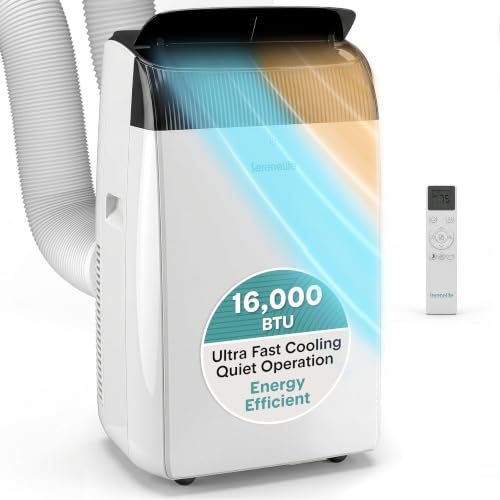
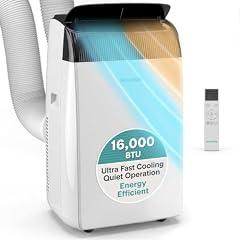
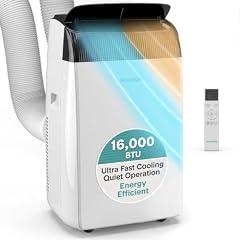
SereneLife 16,000 BTU Dual Hose Inverter Portable Air Conditioner
Overview
This is a 115 V, floor-standing portable air conditioner and heater with cooling, heating, fan, and dry modes. The manufacturer lists a DC inverter compressor, R-32 refrigerant, a washable air-filter screen, a drain pipe, remote control, wheels, and a 0.8 L water tank. Its stated dimensions are 16.5 by 14.06 by 27.09 inches. The manufacturer states 16,000 Btu/h under ASHRAE and 14,500 Btu/h under DOE, plus coverage up to 350 square feet. Those are manufacturer figures, not independently located test results. Documentation presents one exhaust hose and one window plate, despite the marketplace title describing a dual-hose product. Manufacturer documentation also calls this Wi-Fi enabled, which conflicts with the marketplace title.
What works
- The manufacturer provides both a 16,000 Btu/h ASHRAE figure and a lower 14,500 Btu/h DOE figure, rather than presenting only the larger number.
- The stated 42 to 49 dBA noise range is relatively specific and identifies a lower-speed operating range, though it is not independently verified.
- The unit includes a drain pipe and manufacturer-stated self-evaporation system, practical provisions for humid-weather condensate management.
- R-32 is a lower-GWP refrigerant than older HFC-134a. EPA lists HFC-32 as acceptable with use conditions for relevant new air-conditioning equipment.
What does not
- The supplied-equipment list names only one exhaust hose. That does not support the marketplace dual-hose description or demonstrate balanced dual-duct operation.
- No exact-model result was located in the DOE public certification database, Consumer Reports testing, or an independent laboratory report for cooling output, electricity use, or sound.
- No exact-model UL, ETL, or CSA listing could be matched in the searched certification directories. This is missing verification, not evidence that the appliance is unsafe.
- The standard warranty is one year. The advertised three-year extension excludes air conditioners under the current warranty terms.
- The official product page identifies Wi-Fi control, while the marketplace title says no Wi-Fi. This documentation conflict makes configuration verification harder.
Who is it for
This product fits someone who needs a movable, plug-in cooling and supplemental-heating unit for one enclosed room of roughly 350 square feet or less, and who can place it near a compatible window. It is also suited to a user willing to manage a window panel, exhaust hose, periodic filter cleaning, and drainage in humid weather. The stated 14,500 Btu/h DOE capacity and 1,350 W input are manufacturer figures, so this use case assumes a normally insulated room rather than a sun-exposed, open-plan, or poorly sealed space.
Who is it not for
It is not suited to buyers specifically seeking a verified balanced dual-hose system. The manufacturer package list shows one exhaust hose, so the marketplace dual-hose wording is not supported by the available product documentation. It is also a poor fit for bedrooms requiring independently verified low noise, households that need a traceable U.S. safety listing before use, or humid locations where a tiny 0.8 L stated tank and unverified overflow safeguards would create unacceptable floor-leak risk. Avoid relying on it for a large open area or medical heat protection plan without measured room performance.
Integrity
The useful health feature is active room cooling with a manufacturer-stated 14,500 Btu/h DOE capacity, dehumidification rated at 1.9 L per hour, and a supplied drain pipe. The manufacturer also states a 42 to 49 dBA operating-noise range. Neither cooling performance nor sound was independently verified for this exact product. The one-hose package documentation is important because a single-duct setup can depressurize a room and pull in warmer outdoor air through gaps. The manufacturer specifies R-32 refrigerant. EPA lists HFC-32 at a 675 global-warming potential and as acceptable with use conditions, including equipment-specific safety conditions because it is an A2L mildly flammable refrigerant. A matching U.S. NRTL listing was not located, so compliance with the applicable refrigerant safety design standard could not be confirmed. No matching CPSC recall was identified in the reviewed recall search results as of September 13, 2026.