
10 Best Wireless Dog Fence
 Brianna York
Please note that we participate in affiliate marketing programs. When you purchase through links on our site, we may earn a commission. As an Amazon Associate we earn from qualifying purchases. This comes at no additional cost to you and helps support the resources required to provide valuable content.Advertising Disclosure
Top-rated Wireless Dog Fence Comparison
1

2
4
5


6


7
8
9
+
10
+
Wireless dog fences: what matters
A wireless dog fence creates a boundary without serving as a physical barrier. Depending on the design, the boundary may come from a circular radio signal around an indoor transmitter, a buried wire loop, or GPS coordinates created by a collar, remote, or app. The collar then gives a warning usually sound or vibration and some products can add static stimulation when the dog approaches or crosses the programmed area.
The advertised radius or acreage is only a starting point. Actual performance can change with trees, buildings, hills, metal objects, wiring, weather, radio interference, collar orientation, dog speed, GPS reception, and the shape of the property. Circular boundaries may not fit a lot, while GPS systems may drift or fail to trigger under trees, eaves, or other weak-signal conditions. A buried-wire system still depends on loop integrity and correct installation. Headline figures such as “up to” acreage, feet, battery life, waterproofing, or shock levels do not establish repeatable performance at a particular property.
For boundary performance, look for an independent test that identifies the exact model and explains how boundary location, warning latency, repeatability, terrain, tree cover, buildings, weather, interference, and escape behavior were measured. A manufacturer manual should also state the claimed range, minimum usable area, boundary type, and known limitations. For wireless hardware, an FCC Equipment Authorization System record should match the transmitter, collar, charger, and model identifiers where applicable. A logo or generic compliance statement is weaker evidence than a model-matched authorization and its exhibits.
If a collar can correct the dog, look for disclosed settings, maximum activation time, lockout behavior, contact-point and fit instructions, minimum age or weight, skin checks, and daily wearing limits. A high-quality welfare approach makes static unnecessary or clearly allows it to remain disabled, uses gradual supervised training, and identifies dogs for whom the product is unsuitable. Independent electrical testing should measure output using a disclosed collar-load and pulse protocol; numbered levels alone do not show how much stimulation reaches the skin.
Weather claims also need context. “Waterproof” or an IP rating is a manufacturer claim unless supported by an identifiable IEC 60529 ingress test. Charging safety is stronger when the charger or power supply has a traceable UL Product iQ or Intertek ETL listing. Check what happens after a dead battery, wire break, transmitter failure, GPS loss, signal interference, app or cloud outage, or lost cellular service. The system should provide understandable owner alerts, avoid unexplained correction, and be described as a training aid rather than a physical barrier.
Across the supplied reviews, the recurring safety caveats are substantial. Every product with electronic correction raises a welfare concern because AVSAB guidance favors reward-based training and advises against aversive electronic collars. No product had independent boundary testing that established reliable accuracy and escape performance across realistic conditions. Several products lack model-specific electrical-output testing, and many have only manufacturer-stated waterproofing or charging claims. These systems are repeatedly unsuitable for fearful, reactive, aggressive, very young, medically vulnerable, undersized, sick, injured, or skin-sensitive dogs, or for properties near roads, water, livestock, wildlife, or other high-consequence hazards. None should replace supervision or a physical barrier where an escape could cause serious harm.
Integrity
The scores below compare the supplied products on the frozen topics. Higher scores indicate stronger documented safeguards or evidence within this review set; they do not prove that a product is safe in every property or suitable for every dog.
HHealth & Safety
Humane containment approach
This measures whether containment can rely on reward-based training and non-aversive warnings rather than static correction, and whether welfare limits are clear. It matters because electronic correction is available on most supplied products. Higher-scoring examples include systems with a documented tone-and-vibration or beep-and-vibration fence mode; lower scores generally retain static as a central option or provide fewer welfare safeguards. Scores ranged from 35 to 58.
Correction and skin-contact safety
This measures disclosed correction limits, timeout or lockout behavior, fitting guidance, contact-point precautions, and wearing-time limits. It matters because the collar must touch the dog's neck and poor fit or prolonged exposure can cause irritation or pressure injury. Higher-scoring products disclosed features such as maximum activation times, skin checks, repositioning, and daily limits. Lower-scoring products lacked output measurements or detailed contact guidance. Scores ranged from 54 to 75.
Dog suitability and training safeguards
This measures whether the seller identifies exclusions and provides gradual, supervised training rather than presenting the product as suitable for every dog. It matters because fearful, reactive, aggressive, young, medically vulnerable, or undersized dogs may need another approach. Higher-scoring products gave size limits, behavioral exclusions, leash-and-reward training, or professional-referral guidance. Lower-scoring products relied mainly on broad size claims. Scores ranged from 58 to 78.
Durability and charging safety
This measures safety and durability of the collar, battery, charger, seals, and contact hardware under claimed outdoor conditions. It matters because wet use, dirt, heat, repeated charging, and damaged seals can affect both the dog and the electronics. Higher scores reflected clearer care or charging information and more durable component claims, while lower scores reflected unsupported waterproofing or charger claims. No supplied product had consistently identified third-party ingress and charger testing. Scores ranged from 62 to 74.
EEvidence
Proven boundary accuracy
This measures whether the real warning and correction zones match the claimed boundary under realistic conditions. It matters because acreage and radius figures are often approximate, and radio or GPS conditions can change the usable area. Higher scores in this set reflected clearer boundary limitations or testing-related disclosure, not independent proof: no supplied product had a model-specific independent study covering repeatability, latency, interference, terrain, and escape performance. Scores ranged from 63 to 70.
Failure and escape safeguards
This measures responses to dead batteries, broken wires, transmitter failure, GPS loss, interference, and app or communications outages. It matters because a collar system is not a physical barrier and failures may leave a dog uncontained. Higher-scoring products documented features such as saved boundaries, weak-signal behavior, loop alarms, activation pauses, or visible alerts. Lower-scoring products provided fewer owner warnings or left important failure behavior unclear. Scores ranged from 53 to 76.
Verifiable wireless compliance
This measures whether the actual radio hardware can be matched to a U.S. authorization record, model number, label, and included components. It matters because a generic compliance statement does not identify the tested transmitter or collar. Higher-scoring products had model- or family-matched FCC records and exhibits; lower-scoring products had only general Part 15 claims or no matching record. Scores ranged from 68 to 90.
Honest safety and coverage claims
This measures whether claims about range, acreage, GPS, tracking, battery life, waterproofing, and containment are qualified and consistent with the manual. It matters because “up to” figures can omit terrain, interference, GPS, shape, and supervision limits. Higher-scoring products disclosed meaningful operating restrictions and limitations; lower-scoring products made broad claims while leaving important performance or failure conditions unclear. Scores ranged from 52 to 79.
Independent proof and safety transparency
This measures whether important safety and performance claims have current, model-specific independent testing and whether incidents or corrective actions are transparently reported. It matters because manufacturer statements alone cannot establish electrical output, boundary reliability, ingress protection, or charger safety. Higher-scoring products had more traceable FCC or other documentation, but none supplied a complete independent evidence package. Scores ranged from 68 to 76.
Verifiable wireless compliance
This measures whether the transmitter, collar, charger, and radio identifiers can be traced to applicable U.S. authorization records rather than an unverifiable logo. It is especially important for GPS and radio fences because authorization addresses identifiable hardware, not merely a product family name. Higher scores reached 90 where the X3 remote and collar family could be matched to FCC records; several products scored in the high 60s because no model-matched record was found.
EEcology
Battery and e-waste responsibility
This measures whether the product avoids disposable batteries, supports battery or part replacement, enables repair, and provides a credible U.S. recycling or take-back route. It matters because wireless fences combine batteries, chargers, plastics, and electronics. Higher-scoring products used rechargeable or replaceable batteries and listed service parts; lower-scoring products lacked replacement or end-of-life pathways. Even the stronger products generally did not identify a manufacturer take-back route. Scores ranged from 68 to 77.
Full reviews
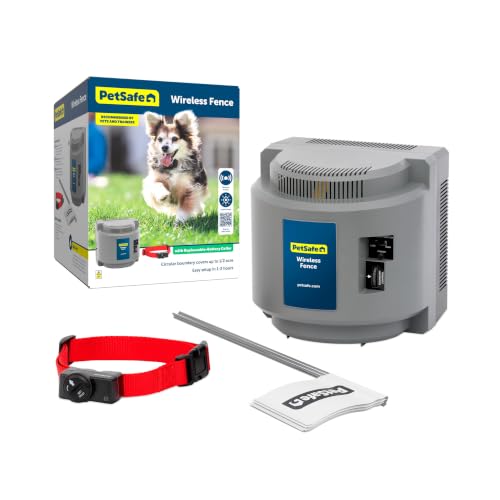
PetSafe Wireless Pet Fence Containment System
Overview
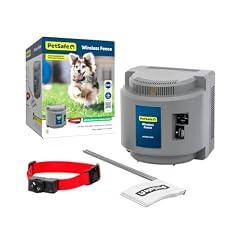
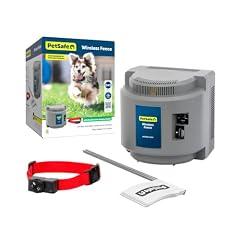
This product is a plug-in radio transmitter and battery-powered receiver collar that creates an adjustable circular boundary, rather than a physical fence or buried-wire layout. PetSafe states that the boundary can reach up to one-half acre, or about 180 feet across, and that the waterproof receiver fits dogs at least 8 pounds and 6 months old. The collar provides a warning tone, tone-only operation, and adjustable static correction. The manufacturer’s manual provides unusually specific operating limits. It says the radio field can fluctuate by up to 5 percent, and that metal objects, vehicles, terrain, and electronic noise can reduce range or trigger activation in the yard. It also states that this is not a solid barrier and cannot guarantee containment. No model-specific independent laboratory evidence was located for boundary repeatability, escape performance, electrical output, or waterproof rating.
What works
- The collar has a tone-only setting, so static correction can be disabled for training or for dogs that no longer need it.
- The manual specifies six correction settings, a 30-second correction timeout, and static-free re-entry after an escape.
- Detailed fit and skin-care instructions include a 12-hour daily wear limit, daily skin checks, and stopping use if irritation occurs.
- The receiver uses a replaceable battery, and the manufacturer lists replacement batteries, collars, transmitter, adapter, and flags.
- The manufacturer clearly describes several performance limits, including circular-only coverage, interference sensitivity, and the fact that it is not a physical barrier.
What does not
- This is an aversive containment system when static correction is enabled. AVSAB recommends reward-based training rather than aversive methods, and controlled e-collar research has identified welfare concerns without consistent effectiveness benefits over reward-based training.
- The manufacturer documents boundary fluctuation of up to 5 percent and says vehicles, metal structures, terrain, orientation, and electronic noise can alter activation. No independent field accuracy testing was found.
- A power outage or unplugged transmitter can cause an unintended correction if the dog is near the boundary. The system has no documented owner alert for that event.
- Static output levels are named from low to high, but no independently verified voltage, current, pulse, collar-load, or skin-contact output data were found.
- The receiver is called waterproof, but no model-specific ingress-protection test report or independent electrical-safety certification was located.
Who is it for
This product suits an owner with a simple, open, roughly circular yard who cannot install a physical or buried-wire fence and can place the transmitter indoors. The dog should be at least 6 months old, at least 8 pounds, comfortable wearing a fitted contact collar, responsive to basic cues, and supervised through the manufacturer’s staged training process. It is most workable where the owner can repeatedly test the boundary, remove the collar indoors, inspect the skin daily, and use a separate physical restraint whenever dependable containment is necessary.
Who is it not for
It is not suited to aggressive, fearful, reactive, highly anxious, medically vulnerable, or very young dogs. The manufacturer specifically advises against electronic devices for aggressive dogs, while veterinary behavior guidance favors reward-based approaches over aversive correction. It is also unsuitable for properties needing a square, irregular, or reliably road-side boundary, or sites with substantial metal structures, parked vehicles, electronic interference, or frequent power instability. Do not treat it as security against traffic, wildlife, other animals, or a dog determined to cross the boundary.
Integrity
The health issue that stands out is the product’s static-correction mechanism. The collar can be placed in tone-only mode, has adjustable correction settings, a 30-second timeout, and static-free re-entry, but static remains an available containment method. AVSAB recommends reward-based training and advises against aversive tools. The manual also recognizes practical contact risks, including redness, sores, and pressure injury, and gives concrete safeguards such as no more than 12 hours of daily wear, repositioning, daily skin checks, and prompt discontinuation if irritation appears. The receiver uses a replaceable proprietary battery rather than an integrated rechargeable pack. That can extend product life because replacement batteries and several spare components are listed, but it creates recurring battery waste. The manual directs owners to dispose of used batteries properly and flags perchlorate handling. No U.S. manufacturer take-back program, independent waterproof test report, charger certification, or model-specific independent performance and output testing was located. A CPSC recall was found for a different PetSafe heated-bed adapter, not this containment product.

PetSafe Guardian GPS Dog Fence
Overview
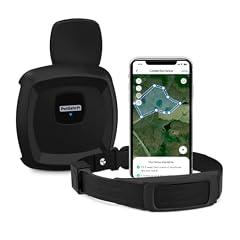
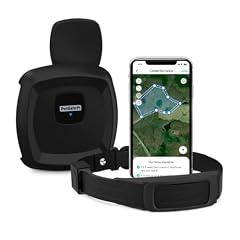
This product is a GPS containment system for dogs, made up of a rechargeable receiver collar, an indoor base unit, and the My PetSafe app. The owner draws a boundary with up to 32 digital fence posts. PetSafe states that it is intended for properties of at least three quarters of an acre, and that one charge lasts up to five days. The collar is intended for dogs at least 25 pounds, with a 13 to 28 inch neck. The manual documents tone and vibration warnings followed by optional static correction, with ten static levels available. It also documents a maximum 15-second correction and a 10-second over-correction lockout. The collar continues operating if home power or Wi-Fi fails, but GPS loss and system errors turn the boundary off. FCC test documentation independently identifies the included collar as part of this system, but no independent field test was located for claimed GPS boundary precision or escape performance.
What works
- Correction can be set to tone and vibration only, rather than requiring static correction.
- The manual gives concrete fit guidance, short and long contact points, a 12-hour daily wear limit, and a 15-second maximum correction with a 10-second lockout.
- The stored boundary continues operating during a home power or Wi-Fi outage, according to the manual.
- The included collar has model-specific FCC radio test documentation for its link to the base unit.
What does not
- Static correction remains an enabled mode. AVSAB advises against aversive methods, including electronic collars, and the product is therefore not a fully non-aversive containment approach.
- No independent, model-specific testing was located for GPS accuracy, repeatability, latency, terrain performance, or escape rates.
- The manual warns that GPS loss or a detected system error disables the boundary. This is a disclosed safety limitation, not evidence that the fence is a physical barrier.
- PetSafe calls the collar waterproof, but no identified ingress-protection rating, independent water test, or charger safety certification was located.
Who is it for
This product fits an owner of a healthy, trainable dog over 25 pounds who has a large, open property, can create a boundary at least 25 feet from roads and structures, and can supervise a gradual training program. It is most applicable where digging for a wire is impractical and where the owner can check collar fit, battery status, GPS status, and the boundary test routine. A buyer should be comfortable choosing tone and vibration only if avoiding static correction is important.
Who is it not for
It is not suited to dogs under 25 pounds, dogs younger than roughly six months who have not learned basic cues, or dogs with a history of aggression, which the manual specifically excludes. Fearful, reactive, medically vulnerable, or skin-sensitive dogs also need veterinary or qualified behavior-professional input before any contact-point collar is used. It is unsuitable where a physical barrier is necessary, including properties close to roads, wildlife hazards, public access, or homes where an escape cannot be promptly managed. It also does not locate a dog after escape.
Integrity
The main welfare concern is the available static correction through skin-contact points. PetSafe provides adjustable settings, tone and vibration warnings, fit instructions, two contact-point lengths, a daily wear limit, and an automatic correction lockout. Those controls reduce some foreseeable exposure risks, but they do not make the product non-aversive. AVSAB recommends reward-based training and advises against electronic collars and other aversive methods. The receiver uses a rechargeable lithium-ion battery and comes with its charging equipment, which avoids disposable collar batteries. PetSafe provides a one-year limited warranty, but no identified U.S. take-back route, battery replacement program, ingress-protection test rating, or independent charger safety listing was found. Model-specific FCC testing supports traceability of the collar radio, but it does not validate GPS containment accuracy, correction output, waterproofing, or animal-welfare claims. No model-specific CPSC recall was located during this review.

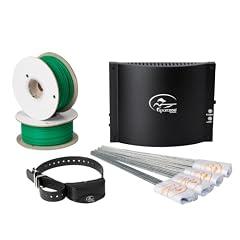
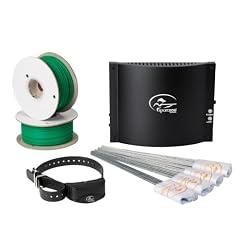
SportDOG Rechargeable In-Ground Fence System
Overview
This is a buried-wire containment system for one dog. It includes 1,000 feet of boundary wire, 100 training flags, an indoor transmitter, and a rechargeable collar receiver. SportDOG states that the included wire can outline up to 1 1/3 acres, and that added wire can extend a continuous loop to 100 acres. The collar can be set to tone and vibration only, or to one of seven static-stimulation levels. The manual documents practical safeguards that matter for this format, including a transmitter alarm for a broken wire, low-battery indication on the collar, and explicit instructions not to treat the system as a physical barrier. It also gives a structured 30-day training plan. However, no model-specific independent boundary-accuracy, electrical-output, or ingress-test report was located. Static stimulation remains an enabled containment mechanism, despite the non-static setting.
What works
- The manual provides a break alarm and loop-status indicator, so a failed boundary wire is not silent.
- Detailed fit, skin-check, collar-repositioning, and maximum-wear instructions address known contact-point risks.
- The training plan starts with supervised, short sessions, visual flags, treats, play, and tone or vibration before any increase in static level.
- SportDOG states that the collar is rechargeable, submersible to 25 feet, and supported by replacement collars, contact points, straps, cables, and battery service.
- The manual plainly says the system is not a solid barrier and cannot guarantee containment.
What does not
- Static stimulation is an available and encouraged escalation path. Veterinary behavior guidance recommends reward-based training and advises against aversive methods, while controlled studies found no consistent training advantage over reward-focused methods and identified welfare concerns.
- The manufacturer labels seven static levels, but does not disclose model-specific pulse energy, voltage, load conditions, or an independent electrical safety test report.
- No independent, model-specific testing was located for boundary repeatability, escape performance, interference tolerance, or the advertised coverage area.
- A wire break triggers an alarm at the transmitter, not a remote owner alert. A depleted collar battery or power loss can leave the dog without containment.
- The collar's water-resistance claim is manufacturer-stated. No identifiable third-party IP or NEMA test certificate for this unit was located.
Who is it for
This product is suited to an owner with a stable residential property who can install and periodically inspect a buried continuous wire loop, perform supervised training, and use a separate physical restraint when containment must not fail. The dog should be healthy, over 8 pounds, comfortable wearing a fitted contact collar, and already able to learn basic cues. It is most relevant where a visible fence is impractical, but the household can actively monitor the system, recharge the collar, test the boundary, and respond promptly to a wire-break alarm.
Who is it not for
It is not appropriate as the sole safeguard for a dog that could injure itself, people, wildlife, or other animals if it exits the property. The manual specifically excludes aggressive or aggression-prone dogs and advises veterinary or trainer input where suitability is uncertain. It is also a poor fit for fearful, highly reactive, medically vulnerable, or skin-sensitive dogs, and for households unable to supervise training, inspect contact areas daily, or maintain the wire and collar. A physical barrier is needed where reliable exclusion is essential.
Integrity
The main health concern is not chemical exposure, but the product's aversive containment design. The collar can run in tone-and-vibration mode, yet static stimulation is built into settings 2 through 8 and the manual directs escalation when lower levels do not work. AVSAB recommends reward-based training rather than electronic collars. Controlled research on electronic-collar training has found reward-focused training at least as effective, with fewer welfare concerns. Those studies are not tests of this exact product, but they are relevant to its static-correction mechanism. SportDOG provides unusually specific contact safety guidance, including one-finger fit, collar repositioning, daily skin inspections, weekly cleaning, and no more than 12 hours of wear. The rechargeable Li-ion pack avoids routine disposable batteries, and the manual describes replacement and recycling steps. Replacement electronics and parts are available, although no clearly identified U.S. manufacturer take-back program or independent water-ingress certificate was located.

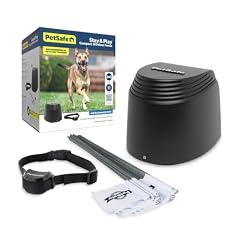
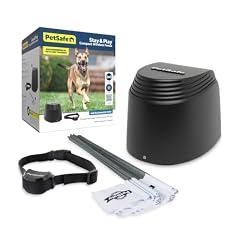
Stay & Play Wireless Pet Fence
Overview
This product is a portable radio-based containment system. An indoor transmitter creates an adjustable circular play area, manufacturer-stated at up to 105 feet from the transmitter, or up to 3/4 acre. The included receiver collar is intended for dogs over 5 pounds and uses a warning tone followed by optional static correction when the dog enters the boundary zone. The manufacturer provides six collar settings, including a tone-only setting with no static correction, plus a 15-second static-correction limit and a 10-second lockout. It also states that the rechargeable receiver is waterproof and typically charges in two to three hours. This is not a physical fence. The manual expressly says containment is not guaranteed, and metal objects can reduce or alter the usable area.
What works
- Tone-only mode permits training without enabling static correction, according to the manufacturer manual.
- The collar has disclosed correction settings, a 15-second activation cap, and a subsequent 10-second lockout.
- The manual gives concrete fitting precautions, including daily skin checks and a 12-hour daily wearing limit.
- The transmitter provides audible alarms for power loss, metal interference, and transmission failure.
- Replacement charging hardware remains available from the manufacturer.
What does not
- The product is designed to use static correction, an aversive method that AVSAB says should not be used in dog training or behavior modification.
- No model-specific independent electrical-output test was located, so pulse intensity under a disclosed collar load is unverified.
- No independent boundary-accuracy or escape-performance report was located. The manufacturer warns that metal can reduce the size and shape of the play area.
- Power-loss and transmitter-failure alerts are audible at the transmitter, not owner notifications delivered remotely.
- The internal lithium-ion battery is nonreplaceable, which can shorten the usable life of an otherwise serviceable collar.
Who is it for
This product fits a household that needs a temporary, circular off-leash area without digging, such as a traveler or a renter using a clear, low-stakes yard. The dog should be over 5 pounds, comfortable wearing a properly fitted contact collar, and already assessed as behaviorally suitable by a veterinarian or qualified behavior professional. It is most workable for an owner who can complete the manufacturer’s multi-day, supervised flag training, test the boundary regularly, and treat the system as a training aid rather than a barrier.
Who is it not for
It is not suited to aggressive, fearful, reactive, or medically vulnerable dogs, or dogs whose escape could expose them or others to traffic, wildlife, people, or other animals. It is also a poor fit for homes needing a shaped boundary, properties with substantial nearby metal, or owners who cannot supervise training and recheck the signal after environmental changes. Households seeking containment without an aversive consequence should avoid relying on this static-correction system, even though tone-only mode is available.
Integrity
The central health issue is the collar’s static-correction mechanism. The manufacturer supplies a tone-only setting, adjustable correction levels, a 15-second shutoff, contact-point options for coat length, daily skin checks, and instructions not to leave the collar on for more than 12 hours daily. Those are meaningful use safeguards, but they do not remove the welfare concern of an aversive containment method. AVSAB’s current humane-training position opposes electronic collars and other aversive methods. The transmitter is intended for a dry, ventilated indoor location and the receiver is manufacturer-described as waterproof. The manual includes lithium-ion battery warnings against puncturing, incinerating, short-circuiting, or using an inappropriate charger. No model-specific public IP test, electrical safety listing, output laboratory report, or boundary field test was located. No relevant CPSC recall was identified in the reviewed recall search, but the collar’s nonreplaceable lithium-ion battery remains an avoidable e-waste limitation. PetSafe does offer replacement charging hardware.

Thereye Wireless GPS Dog Fence Collar
Overview
This is an app-managed GPS containment collar that creates circular or polygonal virtual boundaries and no-go zones without buried wire. The Amazon listing says it combines dual-frequency GPS, cellular, Wi-Fi, and Bluetooth positioning. It also claims location accuracy within 6 feet in open areas, coverage from 0.08 to more than 3,534 acres, and a first year of subscription service included. Those performance figures are manufacturer claims, not independently confirmed test results. The listing states that the collar fits dogs over 8 pounds and 6 months old, with 8 to 25 inch necks. It says dogs must be trained for boundary tones and corrections. It also says GPS failure disables the virtual fence to avoid injury. That is a useful correction safeguard, but it also means containment stops during a positioning failure. No model-specific independent boundary, electrical-output, charging-safety, or ingress test report was located.
What works
- Flexible circular, polygonal, and no-go zones can be created in the app, according to the manufacturer.
- The listing identifies a fail-safe response in which GPS loss disables the virtual fence, rather than continuing an uncertain correction.
- The manufacturer provides minimum age, weight, and neck-size guidance, rather than presenting the collar as one-size-fits-all.
- The product page clearly notes that dogs need training for boundary tones and corrections.
What does not
- The listing refers to corrections but does not disclose their type, electrical output, maximum activation time, contact-pressure guidance, or a published electrical safety test.
- The claimed 6-foot accuracy and very large coverage range have no located independent field test covering trees, buildings, weather, dog speed, or signal interference.
- A virtual fence is not a physical barrier. The product itself says signal issues can prevent use in some areas, and GPS loss disables its containment function.
- No matching FCC identifier, accredited IP67 test report, charger certification record, battery-replacement path, or manufacturer recycling program was located.
Who is it for
This product is most suited to an adult supervising a healthy dog that meets the stated 8-pound and 6-month minimums, has a properly fitted 8 to 25 inch neck collar, and spends time on an open property where GPS reception can be checked before each use. The owner should be comfortable using an app, monitoring battery and signal status, and teaching boundary cues gradually with reward-based training. It fits situations where movable virtual zones and no-go areas are more useful than installing buried wire.
Who is it not for
It is not appropriate as the sole protection for dogs near roads, unfenced water, wildlife, neighbors, livestock, or any place where an escape has immediate consequences. It is also a poor fit for fearful, reactive, aggressive, medically vulnerable, undersized, or very young dogs, especially without veterinary or qualified behavior-professional input. Avoid it for households that need a physical barrier, require independently validated boundary accuracy, or cannot supervise training and verify GPS, cellular, and battery operation regularly.
Integrity
The main welfare concern is that the product listing calls for training around boundary tones and corrections, while not identifying the correction method or publishing its output limits. AVSAB recommends reward-based training and advises against electronic shock collars. Controlled research has also found greater welfare concerns with electronic-collar training than reward-based approaches, without a consistent efficacy advantage. Use non-aversive cues and supervised training, and seek professional behavior help for fear, anxiety, or aggression. The collar is marketed as IP67 waterproof and rechargeable, but no accredited ingress test, charger listing, battery chemistry, replacement-battery option, or manufacturer take-back program was located. No product-specific CPSC recall or public safety incident record was found in the searches performed. Rechargeable electronics still require responsible end-of-life handling. EPA advises that lithium-ion batteries and devices should not go in household trash or curbside recycling, and should instead go to a dedicated battery recycler or household hazardous-waste collection site.

Lilyeel GPS Wireless Dog Collar Fence System
Overview
This is a GPS virtual-boundary collar for outdoor dog containment. The owner draws a polygon in a phone app, then the collar is intended to warn a dog near that boundary with sound, vibration, or an optional electric correction. A separate remote is included for initial training. The manufacturer states that the app has no monthly fee, the remote can address two collars, and the app can manage up to five. The defining limitation is also manufacturer-stated: it is designed for open outdoor areas with a strong GPS signal and is not suitable for indoor or heavily wooded use. No model-specific independent boundary-accuracy test, electrical-output report, ingress-rating test, or product manual with activation and fitting limits was located. The product's ability to apply an electric correction is a material welfare concern, because AVSAB recommends reward-based training and advises against electronic shock collars.
What works
- Wire-free polygon mapping can avoid trenching or installing a buried boundary wire, manufacturer-stated.
- The stated open-space and heavily wooded-area limitation is more useful than presenting GPS containment as universal.
- The manufacturer describes an initial training sequence using the remote before GPS fence mode, including sound and vibration cues.
- The app is stated to operate without a recurring subscription and to manage up to five collars. This is manufacturer-stated, not independently verified.
What does not
- Static correction is enabled. This conflicts with AVSAB guidance favoring reward-based training and advising against electronic shock collars.
- No model-specific independent test was located for boundary placement, repeatability, GPS latency, escape performance, or performance around buildings, trees, and changing weather.
- No electrical output, maximum activation duration, contact-point, age, weight, neck-size, or maximum daily wear limits were located. Electrical characteristics vary greatly across collar models, so generic assurances of a safe shock are not enough.
- No matching FCC authorization, identifiable FCC label, charging-safety listing, IP rating, or independent fault-response report was located for this product.
- The claim that the system keeps dogs safely contained is too broad beside its own dependence on clear outdoor GPS reception and its exclusion of heavily wooded areas.
Who is it for
This product is most suited to an owner of an adult, behaviorally stable dog who has a large, open outdoor area, reliable GPS reception, and the time to supervise a gradual boundary-training process. The owner should be comfortable using sound and vibration cues first and should treat the virtual line as a training aid rather than a barrier. It may also fit a household that values a wire-free layout and wants manufacturer-stated multi-collar app management without a stated monthly app fee.
Who is it not for
It is not suited to puppies, undersized dogs, fearful dogs, dogs with reactivity or aggression, dogs with medical or skin vulnerabilities, or households unable to supervise training. It is also a poor fit for yards with heavy tree cover, indoor use, dense structures, roads, wildlife hazards, or situations where an escape could have serious consequences. The product offers no located model-specific evidence that its GPS boundary or electric output stays predictable under those conditions, and it is not a physical barrier.
Integrity
The central health issue is the collar's optional electric correction. AVSAB's current humane-training guidance recommends reward-based methods and says aversive tools, including electronic collars, should not be used. The product description does offer sound and vibration settings and recommends preliminary training, but no evidence was located showing that static correction can be disabled permanently, bounded by a disclosed maximum duration, or independently measured on this model. No model-specific FCC record, independent durability report, charger safety certification, IP test, recall notice, replacement-parts program, battery chemistry, or take-back route was located in the reviewed materials. The listing identifies an included nonstandard battery, but does not provide disposal guidance. If the battery is lithium-based, EPA says it and devices containing it should not go in household trash or curbside recycling, and should instead go to an appropriate battery or electronics collection route.

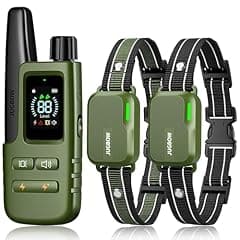
Jugbow 3300FT Dog Training Collar for 2 Dogs
Overview
This is a handheld remote training system for up to two dogs, with two receiver collars, nylon straps, metal contact points, silicone covers, a charging cable, and a test light. Jugbow states a 4,200-foot remote range, receiver water resistance rated IPX7, and fit for dogs from 10 to 120 pounds. The manual instead describes three active modes, beep, vibration, and static stimulation, with 16 vibration settings and 99 static settings plus a 10 percent boost. It is a remote collar, not a wireless fence or an automatic containment system. The collar does not create a boundary, track a dog, or provide a physical barrier. The available manual gives meaningful fit, charging, skin-check, and dog-exclusion instructions, but no independent electrical-output, range, waterproofing, or real-world radio-performance report was located.
What works
- One remote is designed to operate two receiver collars on separate channels, which can simplify closely supervised training for two dogs.
- The manual includes a keypad lock, adjustable vibration and static settings, short and long contact points, and silicone contact covers.
- The manual provides concrete skin-contact precautions, including daily skin checks, repositioning the receiver every one to two hours, and a 12-hour daily wearing limit.
- Jugbow provides a one-year warranty and states that straps, chargers, and batteries are covered during that period.
What does not
- Static stimulation is enabled, including a 10 percent boost. AVSAB recommends reward-based training and advises against electronic shock collars, while controlled studies found no consistent training advantage over reward-based approaches and identified welfare concerns.
- The 99 static levels are not accompanied by a model-specific independent electrical-output report, pulse-duration limits, or a disclosed laboratory test method.
- The product page calls the modes humane, but the manual acknowledges that static stimulation is unpleasant and that punishment is harsh. The product page also advertises four modes while the manual lists three.
- No independent boundary, escape-prevention, weatherproofing, charging-safety, or field-range testing was located. The manual warns that electromagnetic interference can impair performance.
Who is it for
This product fits an experienced adult handler working one dog at a time, in a controlled and low-distraction setting, who specifically wants one remote for two rechargeable collars and is prepared to follow the manual's fit, skin-check, charging, and exclusion instructions. It is better aligned with users who intend to begin with verbal cues, treats, and the beep or vibration functions, rather than treating its claimed range as a containment or off-leash safety system. The dog should be at least six months old and healthy.
Who is it not for
It is not for anyone seeking a wireless dog fence, GPS tracker, automatic boundary alert, or a dependable method of preventing an escape. It is also unsuitable for puppies under six months, dogs that are fearful, aggressive, pregnant, in heat, medically unwell, or prone to skin irritation, all groups the manual excludes. Households with children or inexperienced handlers should avoid it. Dogs needing behavior treatment for reactivity, fear, aggression, or recall problems should be assessed by a veterinarian or qualified reward-based behavior professional.
Integrity
The principal health issue is the static-contact mechanism. The manual instructs owners to keep metal contacts against the skin, warns that tight or prolonged wear can cause redness, pressure sores, and rashes, and sets a maximum of 12 hours per day with frequent repositioning. It also excludes dogs under six months and several vulnerable groups. These are useful safeguards, but they do not remove the welfare concern created by an optional static shock mode. Independent behavioral research and AVSAB guidance favor reward-based methods over aversive electronic collars. The system uses rechargeable lithium-polymer batteries, which can reduce disposable-battery waste. However, the manual discourages owner battery replacement and no Jugbow take-back or recycling program was located. At end of life, the collar and remote should go to an electronics or battery collection route, not household trash or curbside recycling. The receiver's IPX7 and remote's IPX4 claims are manufacturer-stated, with no identified independent ingress or charger-safety certification.

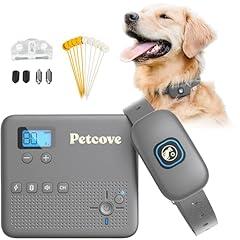
PetCove Invisible Dog Fence & Training Collar
Overview
This is a rechargeable, radio-based dog containment and remote-training system with one receiver collar, a portable transmitter, boundary flags, short and long metal contact points, silicone caps, and a USB charging set. The product is intended for dogs weighing 15 to 77 pounds, with an adjustable circular boundary described in the published PawGuard instructions as 20 to 500 feet in diameter. It combines tone, vibration, and static correction, with nine manufacturer-stated intensity settings. The manual gives more usable safety guidance than the product page alone, including a 12-hour daily wear limit, one-finger fit guidance, no-leash instructions, and exclusions for young, undersized, aggressive, pregnant, nursing, senior, and medically vulnerable dogs. However, fence mode automatically applies tone and static for successive 4, 5, and 6 second periods after a dog crosses the boundary. No model-specific independent boundary, electrical-output, ingress, or durability test report was identified.
What works
- The published instructions set a 15-pound minimum, 6-month minimum age, neck-size range, and several medical and behavioral exclusions.
- The manufacturer provides concrete contact-safety directions, including one-finger fit guidance, silicone contact caps, a separate leash collar requirement, and a 12-hour wear limit.
- Remote mode has disclosed vibration and static settings from 1 to 9, with instructions to start at the lowest setting and stop if distress occurs.
- The receiver is manufacturer-stated as rechargeable and IPX7 rated, and the kit includes contact-point options for different coat lengths.
What does not
- Fence mode automatically delivers static correction after a boundary crossing, which conflicts with veterinary behavior guidance favoring reward-based methods and avoiding electronic collars.
- There is no identified independent report measuring the actual static output, collar-contact heating, pulse characteristics, boundary repeatability, escape rate, or performance around terrain and structures.
- The published instructions say trees, hills, buildings, moisture, and other features can affect signal range, while the advertised 500-foot coverage is not independently verified.
- The compliance trail is concerning. The PawGuard manual cites an FCC identifier whose available authorization record describes a different 915 MHz remote training collar, while the PawGuard manual itself lists a different operating frequency.
- The rechargeable batteries are stated to be nonreplaceable, and no brand take-back or repair-parts recycling route was identified.
Who is it for
This product is narrowly suited to an owner of one healthy adult dog within the stated 15 to 77 pound range who already knows basic obedience, has a simple open yard, and can supervise setup and training closely. That owner would need to map the real trigger line with the supplied flags, use a separate walking collar or harness, inspect skin daily, and treat the electronic boundary as a training cue rather than a secure barrier. The manufacturer’s stated exclusions and signal limitations matter here.
Who is it not for
It is not suited to puppies under 6 months, dogs under 15 pounds, dogs with aggression, fearfulness, heart conditions, cancer, pregnancy, nursing responsibilities, or geriatric needs. It is also unsuitable where containment failure could put a dog into traffic, near water, livestock, wildlife, or hostile neighboring dogs. Avoid relying on it for irregular, wooded, hilly, wet, or building-dense properties because the published instructions acknowledge environmental signal effects. Families seeking reward-only training should choose a non-aversive containment approach.
Integrity
The main health issue is the use of static correction. The manufacturer offers lower-level settings, distress signs, fit directions, silicone caps, and limits on wear time, but the fence sequence still applies automatic static correction after a boundary crossing. The American Veterinary Society of Animal Behavior recommends reward-based training and states that electronic collars should not be used. Controlled research has also found welfare concerns without a consistent efficacy advantage over reward-based training. The collar and transmitter are stated to use rechargeable 3.7-volt batteries, which avoids routine disposable-battery waste. The published instructions also state that the transmitter battery is not removable or replaceable. No product-specific battery recycling, take-back, replaceable battery, or independent waterproofing documentation was identified. At end of life, the battery-containing electronics should be kept out of household trash and recycled through an appropriate battery or electronics collection program.

RAINLEOTI GPS Wireless Dog Fence and Training Collar
Overview
This is a rechargeable GPS virtual-fence collar with a handheld remote and app-based polygon boundary setup. The product is intended for outdoor use with dogs over 6 months old and stated to fit dogs weighing 10 to 120 pounds. It includes a receiver collar, remote, charging cable, silicone contact covers, and two lithium-ion batteries. The seller states that it needs no monthly subscription and should only be used where the collar has at least three GPS signal bars. An independent retailer listing for the same GC05 model family describes tone, vibration, and stronger correction options, so this is not a reward-only containment tool. No product-specific independent boundary-accuracy, escape-rate, electrical-output, ingress-protection, or fault-testing report was located. No matching FCC authorization record or labeled FCC identifier was located for this product.
What works
- Cable-free app boundary setup is a practical manufacturer-stated option for outdoor properties.
- The stated age, weight, outdoor-only, and minimum-GPS-signal limits are more specific than a blanket suitability claim.
- Silicone contact covers are included, which may help reduce direct metal-contact irritation when correctly fitted.
- Rechargeable lithium-ion power avoids routine disposable-battery replacement.
What does not
- The product family is described with static correction capability, an aversive method that conflicts with AVSAB reward-based training guidance.
- No public, model-specific electrical-output test shows pulse energy, maximum activation time, correction limits, or performance across wet and dry coat conditions.
- No independent field evidence was located for GPS boundary accuracy, latency, drift, or containment performance around trees, buildings, weather, and moving dogs.
- No matching FCC authorization, named laboratory report, IP test report, replacement-parts program, or battery take-back program was located.
Who is it for
This product is most suited to an owner with an open outdoor property, a healthy dog older than 6 months within the stated 10 to 120 pound range, and time for closely supervised boundary training. The owner should be able to keep the boundary away from roofs, dense tree cover, and structures that weaken GPS reception. It may fit someone specifically seeking a subscription-free, app-defined outdoor zone, provided they are prepared to use tone or vibration first and treat it as a training aid rather than a physical barrier.
Who is it not for
It is not suited to puppies under 6 months, dogs outside the stated weight range, fearful, reactive, aggressive, medically vulnerable, or skin-sensitive dogs, or dogs with a history of distress around collars. It is also unsuitable for small urban yards, heavily wooded sites, covered areas, locations near buildings that obstruct satellite reception, or any household needing guaranteed escape prevention. A physical fence, leash management, and reward-based training are more appropriate where road access, wildlife, neighbors, or other immediate hazards make an escape dangerous.
Integrity
The main health concern is the apparent availability of static correction. AVSAB recommends reward-based methods and advises against aversive electronic-collar methods. Published research on electronic collars also found welfare concerns without a consistent training advantage over reward-based approaches. The included silicone covers may reduce direct metal contact, but no product-specific electrical measurements, safe wearing-time instruction, maximum activation limit, or independently verified skin-contact protocol was located. The product uses rechargeable lithium-ion batteries, which can reduce disposable-battery waste. However, no verified repair pathway, spare-battery listing, manufacturer recycling program, or U.S. take-back route was found. Used lithium-ion batteries should not go in household trash or curbside recycling. EPA guidance directs users to specialized battery recyclers, retailer take-back services, or local household hazardous-waste programs.

GPS Wireless Dog Fence System
Overview
This is a rechargeable GPS containment collar that creates one circular outdoor boundary, rather than using buried wire, a base station, Wi-Fi, or an app. The marketplace listing states that its radius can be set from 49 to 6,561 feet, that it fits dogs weighing 20 to 160 pounds with 8 to 31 inch necks, and that it uses beep, vibration, and optional static correction. It includes metal contact probes, boundary flags, a magnetic charger, and a manual. The most consequential product-specific disclosure is that static correction can be switched off, although static remains an available 0 to 9 setting. The listing also usefully warns that dense forest, buildings, and high-voltage lines can weaken satellite reception and cause drift or loss of signal. However, no independent boundary-accuracy, correction-output, battery, or ingress-protection report was located for this product.
What works
- Static correction is optional according to the listing, allowing a beep and vibration only configuration.
- The listing identifies real GPS limitations in obstructed terrain and around buildings or high-voltage lines.
- No buried wire, base station, app, Wi-Fi connection, or subscription is stated to be required.
- The listed 20 to 160 pound and 8 to 31 inch fit range gives buyers a concrete starting point for sizing.
What does not
- Static correction and metal contact probes remain part of the product. Veterinary behavior guidance recommends reward-based methods rather than aversive electronic collars.
- No independent report was located for GPS boundary accuracy, warning-zone repeatability, escape performance, or response during satellite loss.
- The listing does not disclose electrical output, pulse duration, activation limits, skin inspection guidance, or a daily wear-time limit.
- Water-resistance claims conflict. The title says IPX7, while the feature text says IP67, and no third-party test report was located.
- The listing labels the product for all life stages while also setting a 20 pound minimum, without specific exclusions for fearful, reactive, aggressive, medically vulnerable, or very young dogs.
Who is it for
This product is most relevant to an owner of a physically healthy, adult dog within the stated 20 to 160 pound range who has a large, open outdoor area and understands that the boundary is circular. It suits someone willing to use the included flags, closely supervise gradual training, and keep the static setting disabled if using the collar at all. The listing itself makes open terrain important, so this use case is narrower than a general solution for every yard or travel location.
Who is it not for
It is not suited to puppies below the stated size range, dogs with fear, anxiety, reactivity, aggression, neck or skin problems, or households unable to supervise conditioning around the boundary. It is also poorly matched to wooded, heavily built-up, irregular, or power-line-adjacent properties because the seller warns that these conditions can degrade GPS reception. Anyone needing a physical barrier, verified escape prevention, or documented performance during dead battery and lost-satellite events needs a different containment approach.
Integrity
This collar can deliver static correction through metal contact probes. Although the listing says static can be disabled, its availability matters because the American Veterinary Society of Animal Behavior recommends reward-based training and advises against aversive tools such as electronic shock collars. A controlled study of electronic-collar training found no consistent training advantage over non-electronic approaches and identified greater welfare concerns. No product-specific output testing, activation-duration limit, or contact-safety protocol was located. The collar is stated to use a rechargeable lithium-ion battery and magnetic charging, which can reduce disposable-battery use. However, no replacement battery program, repair support, take-back option, or disposal guidance was found. Lithium-ion devices should not enter household trash or curbside recycling. They should go to a dedicated battery or electronics recycler, or a household hazardous-waste collection route. The IPX7 and IP67 inconsistency also leaves outdoor durability and charging safety unverified.