
10 Best Baby Carriers
 Lauren Wilson
Please note that we participate in affiliate marketing programs. When you purchase through links on our site, we may earn a commission. As an Amazon Associate we earn from qualifying purchases. This comes at no additional cost to you and helps support the resources required to provide valuable content.Advertising Disclosure
Top-rated Baby Carriers Comparison
1

2
4
5
6
+
7
8
9
Baby Carriers: what to look for
Baby carriers hold a child upright against a caregiver so the caregiver can move with their hands partly free. The useful distinction is not whether a product says “ergonomic,” “hip healthy,” or “newborn to toddler.” It is whether the carrier’s actual design, instructions, fit limits, warnings, and safety evidence match the child’s size and developmental stage.
Start with the claimed weight and age range, then look for position-specific limits. A newborn setup should explain head and neck support, upright posture, visible face, clear nose and mouth, and how to prevent the chin from resting on the chest. Outward-facing or back carrying should have developmental conditions, such as independent sitting or full head control, rather than relying on age alone. Seat width, leg openings, adjustment points, caregiver waist range, and the method for tightening the carrier all affect whether the child stays supported and whether the caregiver remains balanced.
Headline capacity figures can mislead. Several supplied products list different maximum weights across their title, retail specifications, manufacturer page, or manual. A claimed 35-, 44-, or 50-pound maximum is not meaningful if the instructions give a lower limit, do not define position-specific limits, or say the design works best at a lower weight. “Newborn” can also conflict with a stated minimum age, minimum weight, or missing newborn instructions. Weight alone does not establish that a particular baby fits safely.
For US soft infant and toddler carriers, look for a current Children’s Product Certificate identifying the exact product, production identity, applicable rules, and a CPSC-accepted laboratory, with the underlying test reports available. The relevant federal framework includes 16 CFR Part 1226 and ASTM F2236-24, covering issues such as leg openings, load performance, fasteners, strap retention, warnings, and instructions. A statement that a product is “CPSC-certified” is not the same as a publicly available certificate; CPSC does not generally certify products for manufacturers.
Independent marks also need checking. A JPMA listing, an OEKO-TEX STANDARD 100 record, a GOTS supplier and scope record, or recycled-content certification should identify the exact product or covered material and be searchable with the issuing organization. An IHDI listing can support attention to hip-positioning education, but it is not a substitute for airway, retention, load, or regulatory testing, and IHDI states that carriers cannot be shown to cause or prevent hip dysplasia.
Material claims should identify more than the main fabric. Ask whether padding, foam, webbing, dyes, coatings, buckles, metal, and the finished product are covered by lead, phthalate, and harmful-substance evidence. For longer use, look for care limits, inspection and retirement guidance, a warranty, replacement hardware, repair support, and a registration route tied to the responsible US manufacturer or importer.
Across the supplied reviews, do not rely on a carrier for a premature, low-birth-weight, medically fragile, respiratory-compromised, or developmentally unready child without individualized professional guidance. Never use one for sleep, driving, cycling, running, sport, cooking, hot or chemical activities, or water safety unless the instructions specifically and safely address the situation; a carrier is not flotation or drowning protection. Before every use, confirm the face is visible, the airway is clear, the child is upright and supported, all fasteners are engaged, and straps, seams, fabric, and hardware are undamaged.
Integrity
These topics separate a carrier that is merely described as comfortable or safe from one whose design, limits, materials, and accountability are better supported. Scores reflect the supplied reviews; a higher score indicates stronger documented performance or evidence within this group, not a guarantee of safe use for every child.
HHealth & Safety
Infant airway and age-appropriate safety
This measures newborn setup, head support, upright posture, visible face, and clear airway across the claimed age range. High-scoring products supplied clearer model-specific instructions and developmental limits; the strongest examples addressed chin-to-chest risk and face visibility. Lower scores reflected conflicting age or weight guidance, missing newborn setup details, or broad claims unsupported by usable instructions.
Fall and escape protection
This measures containment against slipping through leg openings, buckle release, strap pull-through, seam failure, and excessive load. High scores were associated with instructions for secure openings, fastener checks, inspections, and defined limits. Lower scores appeared where testing evidence was unavailable or capacity statements conflicted, even when the carrier had buckles, restraints, or a hip seat.
Secure fit and supported positioning
This measures whether child and caregiver adjustments keep the child supported and the wearer balanced. Higher-scoring products supplied concrete seat settings, waist ranges, position limits, or M-position guidance. Lower-scoring products relied on vague ergonomic language, lacked caregiver sizing or position-specific thresholds, or required skillful tying without enough model-specific fitting detail.
Low-exposure materials
This measures disclosure and testing for textiles, foam, coatings, dyes, plastics, and metal parts that contact the child or caregiver. Higher scores generally reflected clearer fiber or component disclosure, but no supplied product had complete public finished-product evidence. Lower scores reflected broad fabric labels, undisclosed components, or unverified OEKO-TEX and harmful-substance claims.
Clear safety instructions
This measures whether warnings and manuals explain age limits, positioning, tightening, buckle checks, fall prevention, and airway checks before purchase. The highest supplied scores belonged to products with accessible exact-model manuals containing repeated airway, fastener, and inspection directions. Lower scores reflected missing manuals, incomplete newborn guidance, or warnings that could not be reviewed before purchase.
EEvidence
Recall readiness and traceability
This measures whether a buyer can identify the responsible US business, production identity, registration route, and corrective-action history. Higher scores reflected safety-alert registration, customer support, business contact details, or product records. Lower scores reflected missing importer information, unavailable lot details, or no clear registration route. No located recall is not proof of compliance.
Documented US safety compliance
This measures exact-product compliance with mandatory US rules, including a current Children’s Product Certificate and underlying reports from a CPSC-accepted laboratory. It carries extra weight because the federal requirements are mandatory. Higher scores reflected more credible manufacturer conformity claims and documentation; lower scores reflected unsupported “certified” language or no public certificate and report.
Independent safety verification
This measures evidence beyond seller statements, such as an exact-model laboratory report or a searchable JPMA, OEKO-TEX, GOTS, or recycled-content record. Higher scores reflected an external listing or accessible manual-backed evidence, but the supplied reviews still found gaps in exact-model documentation. A logo, IHDI mention, or general certification claim alone scored less convincingly.
Honest safety and wellness claims
This measures whether ergonomic, hip-health, newborn, breathable, pain-relief, and protective claims match the design and available evidence. Higher scores went to narrower claims tied to stated limits and instructions. Lower scores reflected medical-style promises, claims of preventing hip or spine conditions, reducing strain, or improving health without product-specific human evidence or appropriate qualification.
EEcology
Lower-impact materials and packaging
This measures specific, independently substantiated claims about organic or recycled content, chemicals, packaging, and supply chain. Higher scores in the supplied set reflected disclosed cotton, linen, cellulosic, or other material information, but those claims were often not certified. Lower scores reflected generic “breathable,” “compostable,” or low-impact language without a matching registry record or composition evidence.
Built to last and supportable
This measures care instructions, inspection and retirement guidance, warranty, repair, replacement parts, and construction evidence. Higher-scoring products combined usable washing and inspection guidance with some warranty, registration, replacement, or repair support. Lower scores reflected hand-wash or care conflicts, unclear warranty coverage, and no documented replacement hardware or repair pathway.
Full reviews

Momcozy Baby Carrier
Overview
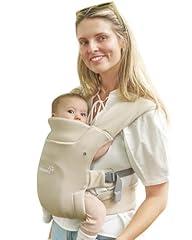
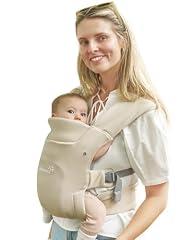
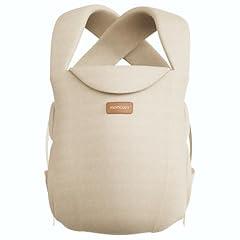
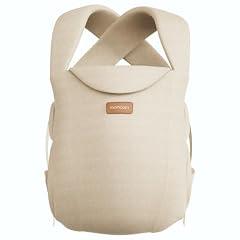
This is a structured, inward-facing front baby carrier with crossed shoulder straps, a waist belt, adjustable seat width, padded leg openings, and a foldable neck-support panel. Momcozy states a 7 to 44 pound range, three seat settings, and front carry use only. Its support instructions specify a 7 to 45 pound range and tell caregivers to secure the waist buckle through its elastic safety loop, check the baby’s M-position, and tighten both shoulder straps. The most important limitation is an age conflict. The Amazon marketplace title describes newborn use from 7 pounds, while Momcozy’s own product page and support answer say this product is designed from 3 months. The public warnings are comparatively specific about falls, face clearance, and the increased suffocation risk for infants under 4 months. IHDI lists PureHug among Momcozy partner products, but IHDI says it does not certify products or perform their safety testing.
What works
- Public manufacturer warnings directly address leg-opening falls, fastener checks, bending, face clearance, and risks for infants under 4 months.
- The manufacturer provides illustrated fitting steps, including use of the waist-belt safety loop, strap tightening, and M-position checks.
- The product has three manufacturer-stated seat-width settings, with published child-weight limits for each setting.
- IHDI independently lists PureHug among Momcozy partner products and acknowledges the company’s support of hip-health education.
- Published care guidance permits cold machine washing, which can support routine cleaning.
What does not
- The newborn claim in the Amazon marketplace title conflicts with Momcozy’s own stated minimum age of 3 months. This is a safety-relevant contradiction, not merely missing evidence.
- No public Children’s Product Certificate, exact-product laboratory report, or CPSC-accepted laboratory identification was located for this product.
- The materials are incompletely disclosed for exposure assessment. Cotton is stated for the main textile, but public evidence does not verify testing of the finished carrier’s foams, dyes, hardware, and other components.
- IHDI’s listing is not a safety certification. The organization explicitly says it neither certifies products nor performs product safety testing.
- No public replacement-parts or repair program was located. The available support is a general one-year warranty and customer-service route.
Who is it for
This product suits caregivers seeking an inward-facing structured carrier for a baby who is at least 3 months old, fits securely in the adjustable panel, and weighs within the manufacturer’s published range. It is particularly relevant for caregivers who value a publicly available setup guide, clear buckle and airway warnings, machine-wash care, and crossed straps with a padded waist structure. Before regular use, the caregiver should be able to achieve a high, snug fit with the child’s face visible, airway clear, and knees supported in the stated M-position.
Who is it not for
It is not appropriate for a caregiver relying on the marketplace newborn claim alone. Momcozy’s own product information says this carrier is for babies from 3 months, despite a 7-pound lower weight claim elsewhere. It is also not a suitable choice for premature infants, infants with respiratory concerns, or any baby who cannot achieve a secure fit with a fully visible face and unobstructed nose and mouth. Households needing publicly accessible compliance documents, finished-product chemical test reports, or a defined repair-parts program will find those evidence gaps important.
Integrity
The strongest health evidence is the manufacturer’s public safety guidance. It tells caregivers to keep leg openings snug, confirm fasteners before every use, bend at the knees rather than the waist, leave room for head movement, and keep the baby’s face unobstructed. These directions align with pediatric guidance to check frequently that the face is visible and airflow is clear. The newborn marketing conflict matters because infants younger than 4 months have heightened airway vulnerability, while Momcozy’s own product page says this carrier is designed from 3 months. The carrier is described as cotton for its main textile and is machine washable. That is useful for maintenance, but it is not equivalent to verified low-exposure materials. Publicly accessible evidence did not establish an exact-product OEKO-TEX record, a finished-product chemical report, recycled or organic content, or packaging specifications. IHDI lists the product as part of Momcozy’s industry partnership, while clarifying that it does not certify or safety-test products.

Baby Carrier for Newborns and Toddlers
Overview
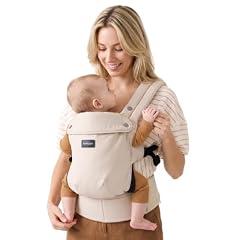
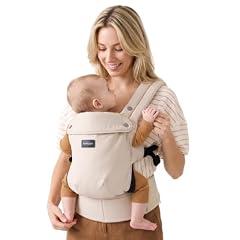
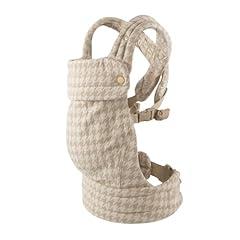
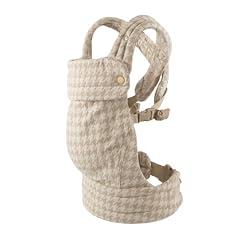
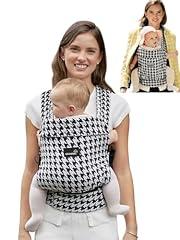
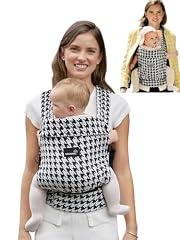
This is a soft, buckle-style baby carrier intended for front use with a child weighing 7 to 35 pounds. The manufacturer’s exact Houndstooth product page identifies the shell as 90% cotton and 10% linen, lists machine washing, and describes padded leg openings, X-shaped back straps, and a lumbar-support format. The brand also says the carrier can be used in several positions, though the exact product page lists its orientation simply as front. Its FAQ says back and outward-facing use should wait until a child sits independently, and outward-facing use also requires the child’s chin to clear the head-support panel. Those are useful conditions, but a complete model-specific instruction manual, permanent warning-label images, and newborn setup instructions were not publicly available during this review. No exact-product Children’s Product Certificate or laboratory report was provided for verification.
What works
- The exact Houndstooth version has a specifically disclosed 90% cotton and 10% linen fabric composition, manufacturer-stated.
- A defined 7 to 35 pound child range is published, rather than a vague newborn-to-toddler claim alone.
- The brand publishes position limits that reserve back and outward-facing carrying for children who sit independently, manufacturer-stated.
- An online registration route is presented specifically for safety alerts and recalls.
- Machine-wash care instructions are published, including cold gentle washing and complete drying guidance.
What does not
- No publicly accessible exact-product Children’s Product Certificate or CPSC-accepted laboratory report was found, so mandatory US conformity cannot be independently confirmed.
- No complete model-specific manual or visible permanent warning labels were found before purchase, leaving airway checks, newborn adjustment, buckle checks, and inspection instructions incompletely documented.
- The brand claims OEKO-TEX-tested fabric and ASTM compliance, but no certificate number, label-check record, or report linking either claim to this product was available.
- The material disclosure covers the textile blend, not dyes, padding, webbing, buckles, hardware, or finished-product lead and phthalate testing.
- The advice that there is no time limit for wearing is overly broad. Safe carrying still depends on ongoing fit, temperature, feeding, and visible-airway checks.
Who is it for
This product suits a caregiver seeking a relatively light, machine-washable soft carrier with a manufacturer-stated 7 to 35 pound range and a cotton-linen Houndstooth textile. It is most appropriate for someone prepared to inspect the delivered product closely, follow the included instructions if they are more complete than the online materials, and use inward-facing carrying while actively checking the child’s airway, posture, leg position, and every buckle. The published XS to 3XL wearer range may also be useful for households expecting more than one caregiver to use it.
Who is it not for
It is not well suited to buyers who need independently accessible proof of US compliance, finished-product chemical testing, a verifiable OEKO-TEX certificate, or an online model-specific manual before use. It is also a poor fit for anyone who expects detailed newborn positioning guidance to be available before purchase, or who plans to use outward-facing or back carrying without first confirming the child can sit independently and meets the stated positioning conditions. Families needing replacement buckles, repair service, or a clearly published warranty should seek fuller support documentation.
Integrity
The exact Houndstooth product is identified by the manufacturer as 90% cotton and 10% linen. That is more specific than a generic “breathable fabric” claim, but it does not disclose the composition or chemical testing of dyes, padding, webbing, buckles, or metal hardware. The company’s claims that its supplier is BSCI and ISO 9001 certified and that fabric passed OEKO-TEX Standard 100 could not be tied to a publicly verifiable certificate covering this product. For safety accountability, the brand has an online form described as being for safety-alert and recall registration. However, its public materials did not provide an exact-product compliance certificate, third-party test report, accessible full manual, repair program, replacement-parts policy, or warranty terms. Machine-wash guidance may support continued use, but the manufacturer recommends minimizing machine washes and does not publish retirement criteria for worn straps, seams, or buckles.

Nest Blanche Baby Carrier
Overview
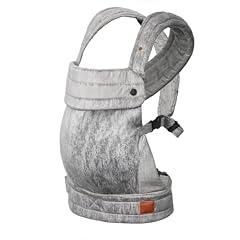
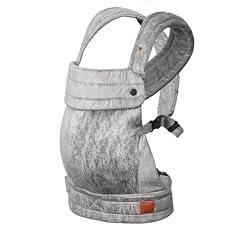
This is a soft structured baby carrier for front inward carrying, front outward carrying, and back carrying. The manufacturer states that this grey polyester version is machine washable, weighs 1.5 pounds, fits children from 7 to 35 pounds, and has an adjustable seat, padded leg openings, X-shaped back straps, and a folding neck-support pad. The public guidance provides some useful limits. It says back and outward-facing use are for children who sit independently, and outward-facing children also need their chin above the support panel. However, no exact-model instruction manual, Children’s Product Certificate, laboratory report, or independently verifiable certification was located. The product’s safety claims therefore remain manufacturer-stated rather than independently confirmed.
What works
- The published 7 to 35 pound range, up to 54-inch wearer waist guidance, and adjustable seat give buyers concrete manufacturer-stated fit parameters.
- The brand’s public guidance appropriately limits back and outward-facing carrying to children who sit independently, with an added chin-clearance condition for outward-facing use.
- A dedicated online registration page says it can be used for safety-alert and recall contact.
- Cold gentle machine-washing guidance, drying instructions, and a 30-day unused-product return policy are publicly available.
What does not
- No public exact-model manual was located, so newborn setup, buckle checks, tightening sequence, airway checks, inspection intervals, and retirement criteria cannot be independently reviewed before purchase.
- No public Children’s Product Certificate, exact-model third-party laboratory report, or verifiable voluntary certification was located for this polyester version.
- The product page identifies polyester, while the general brand FAQ describes carrier materials as cotton or cotton-linen. That inconsistency leaves the full textile and component specification unclear.
- The claim that the carrier ensures healthy hip and spinal development is too strong. A correct M-position may support healthier hip positioning, but the available guidance does not establish that a carrier can ensure development or prevent hip dysplasia.
- No warranty, replacement-buckle program, repair service, or replacement-parts policy was found.
Who is it for
This carrier suits a caregiver who wants a compact, washable soft structured option for routine short outings and is prepared to check fit carefully at every use. Its published range covers a broad 7 to 35 pound span, its seat is described as adjustable, and the stated 54-inch waist guidance may help households needing a larger waist range. It is most appropriate where the caregiver can inspect the physical product’s labels, registration information, instructions, buckles, seams, and newborn fit before relying on it.
Who is it not for
It is not well suited to a household that needs independently accessible proof of exact-model testing, a public compliance certificate, fully documented material chemistry, or readily available replacement parts. It also deserves extra caution for premature infants, infants with respiratory concerns, or very young babies who need especially clear head, neck, and airway positioning instructions. Do not use outward-facing or back carry before the child can sit independently, and do not treat the ergonomic claims as medical protection for hip or spine development.
Integrity
The exact grey product page identifies polyester and gives machine-wash care instructions. The brand also states that the seat can be adjusted toward an M-position. That positioning concept aligns with hip-health guidance when thighs are supported and hips are flexed and spread, but the brand’s stronger claim that it ensures healthy hip and spinal development is not supported by the available evidence. The product should be used with the infant upright, face visible, and mouth and nose clear, with frequent checks. The brand says its supplier is BSCI and ISO 9001 certified and that fabric passed OEKO-TEX Standard 100, but it does not provide a certificate number, scope, or documentation linking either claim to this polyester product. No recycled-content, organic-material, packaging, repair, or replacement-parts evidence was found. A web registration route and customer-service email are available for safety-alert contact, but public importer, tracking-label, and exact-model compliance records were not located.

Baby Carrier
Overview
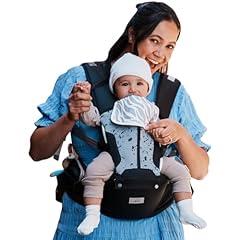
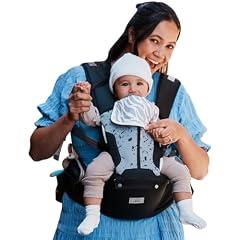
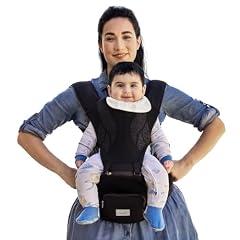
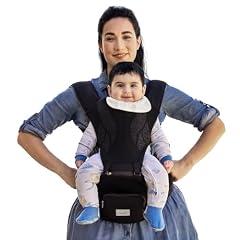
This is a cotton and polyester soft carrier with a detachable, structured hip seat, adjustable shoulder straps, waist belt, rear chest strap, pockets, and a removable bib. The available product documentation describes six arrangements. For newborns up to 3 months, it describes a horizontal hip-seat carry that still requires the caregiver to support the baby with an arm. The full hands-free carrier arrangements are stated for ages 3 to 36 months. The available manual includes practical airway, buckle, inspection, and bending guidance. It also calls for an M-shaped leg position. However, the product’s public specifications conflict on maximum load. The sales listing claims 50 pounds, while an available manual and retailer specification list 12 kg, about 26.5 pounds. No public exact-product CPC, laboratory report, or issuer-verifiable safety certification was located in this review.
What works
- The available instructions specifically tell caregivers to keep the baby’s face visible, airway clear, and chin off the chest.
- The manual directs a pre-use inspection of straps, buckles, and fabric, plus secure fastening before use.
- The newborn arrangement is described as in-arms support, rather than as hands-free upright carrying.
- The full carrier has stated inward-facing, outward-facing, and back-carry arrangements from 3 months onward.
What does not
- The stated 50-pound maximum conflicts with a 12 kg, about 26.5-pound, maximum in available documentation. This is a material safety-limit contradiction.
- “Safety-certified” is not tied to a named certifier, certificate number, public CPC, test report, or CPSC-accepted laboratory.
- Cotton and polyester are disclosed, but the public materials do not identify the full fabric blend, foam, coatings, dyes, plastics, metal components, or finished-product chemical testing.
- The plus-size claim is not backed by a published caregiver waist range or a detailed fitting chart.
- No public repair policy, replacement buckle or strap program, or product-specific warranty terms were located.
Who is it for
This product may suit a caregiver seeking a lower-cost, structured hip-seat carrier for short, closely supervised daytime carries after the child has reliable head and trunk control. It is most relevant for someone willing to use the available instructions carefully, inspect every buckle and seam before each use, and keep the child close enough to monitor breathing and posture. For newborn use, its documented role is an in-arms horizontal support, not a hands-free newborn carrier.
Who is it not for
It is not well suited to buyers who need a clearly documented hands-free carrier for a newborn, a confirmed maximum load above 26.5 pounds, or a published fit range for larger or smaller caregivers. Avoid relying on it for premature infants, babies with respiratory concerns, or any child without the developmental control required for the selected position. Those situations need clinician guidance and unambiguous product-specific instructions. The conflicting weight information also makes it unsuitable for caregivers who need a single dependable limit.
Integrity
The available manual contains useful safety directions, including frequent airway checks, visible-face positioning, chin-clear-of-chest guidance, buckle checks, damage inspection, and bending at the knees. Those align with general pediatric carrier-safety guidance. Its stated M-position is consistent with the hip position generally encouraged for young infants, but the product itself was not located on an International Hip Dysplasia Institute acknowledgement list. Outward-facing use should not be treated as a hip-health claim for young infants. The stated material description is cotton and polyester, with hand washing specified. That is not a complete material disclosure. No public finished-product lead, phthalate, chemical, OEKO-TEX, organic-textile, recycled-content, packaging, or repair evidence was located. No product-specific CPSC recall or warning was found in the reviewed public sources, but the absence of a public exact-product CPC and laboratory report prevents independent confirmation of its required US conformity testing.

GROWNSY Ergonomic Baby Carrier Cream
Overview
This is a front-worn, buckle-fastened soft baby carrier marketed for newborns through toddlers. The listed construction is cotton and polyester, with adjustable shoulder and waist straps, a foldable head and neck support pad, cross-back straps, and EVA waist cushioning. GROWNSY says the design supports an M-shaped leg position and allows machine washing. The safety instructions available for a closely matching GROWNSY carrier tell caregivers to tighten all straps, keep the baby snug, keep the airway visible and clear, and extend head support for newborns or sleeping babies. However, published capacity information is inconsistent. The manufacturer product page says up to 36 pounds, while the catalog record states 44 pounds and a matching published instruction page states 35 pounds. No exact-product test report, Children’s Product Certificate, or independently verifiable certification was located.
What works
- Published instructions address key use practices, including snug strap adjustment, clear airways, head support, and an M-shaped leg position.
- The manufacturer describes a foldable head and neck support pad for newborns and sleeping babies.
- A published instruction page specifies machine washing on a cold gentle cycle, with air drying or low heat drying.
- GROWNSY provides online registration intended to contact owners about safety alerts or recalls.
What does not
- The product's maximum child weight is materially inconsistent across published information, ranging from 35 to 44 pounds.
- No publicly accessible Children’s Product Certificate or exact-product laboratory report was found to document compliance with the US carrier standard.
- Cotton and polyester are named, but the complete material breakdown, dyes, coatings, hardware composition, and finished-product chemical testing were not disclosed.
- No independently verifiable JPMA, OEKO-TEX, GOTS, or similar certification specific to this product was located.
- Claims that the carrier reduces back strain and supports healthy development are manufacturer statements, not product-specific human evidence.
Who is it for
This carrier fits a caregiver seeking a front carrier with buckle fastening, a foldable newborn head-support feature, and machine-washable care instructions. It may suit full-term infants and children only when the caregiver can obtain the product’s included instructions, confirm the current weight limit on the actual label, and achieve a close fit with the face fully visible. The published guidance is especially relevant for caregivers willing to perform frequent strap, buckle, seam, and airway checks during use.
Who is it not for
It is not a good fit for premature infants, babies with respiratory problems, or any child whose airway, head position, or leg support cannot be maintained visibly and securely. The American Academy of Pediatrics advises additional caution for these infants in upright carrying devices. It is also unsuitable for anyone needing a clearly documented maximum capacity, an accessible independent test report, a verified low-exposure textile certification, or a documented repair and replacement-parts program. Do not rely on the 44-pound catalog figure without confirming the label and instructions supplied with the product.
Integrity
The published instructions contain useful core safety direction. They call for a close fit, clear and visible airway, regular buckle and strap checks, extended head support for newborns or sleeping babies, and an M-shaped leg position. These practices align generally with pediatric guidance to keep a baby’s face visible, nose and mouth unobstructed, and leg openings secure. Correct fit remains essential, particularly for infants younger than four months. GROWNSY identifies cotton and polyester but does not publish a full material specification or finished-product chemical test results for this carrier. No product-specific OEKO-TEX, GOTS, recycled-content, or other environmental textile certification could be verified. Machine-wash guidance can support repeated use, and the company offers safety-alert registration. However, its public manual library did not provide a carrier manual, warranty term, repair pathway, replacement hardware program, or retirement criteria for this product. The conflicting published weight limits should be resolved from the physical label and included instructions before use.

Momcozy WeeSnug Newborn Carrier
Overview
This is a front, inward-facing soft structured carrier for carrying one infant close to the caregiver. Momcozy states a 7 to 25 pound range, 100% cotton fabric, an adjustable seat-width scale, cross-back straps, lumbar padding, and a foldable head and neck support. The listed format is intended for newborn and early-infant carrying, although the 25 pound upper limit may be reached well before 12 months for some children. The strongest externally checkable positioning evidence is limited. The International Hip Dysplasia Institute lists WeeSnug among Momcozy partner products, but also states that it is not a certifying body and does not perform product safety testing. No public, exact-product test report, Children’s Product Certificate, instruction manual, or third-party laboratory record was located during this review.
What works
- Momcozy provides a specific 7 to 25 pound range and a visual seat-width adjustment scale, which are more actionable than a vague newborn claim.
- The manufacturer describes a foldable head and neck support for younger babies, a relevant design feature when an infant lacks head control.
- WeeSnug is listed by the International Hip Dysplasia Institute as a Momcozy partner product associated with hip-positioning education.
- Momcozy states the carrier uses 100% cotton, and the product is described as machine washable.
What does not
- No publicly accessible exact-product laboratory report or Children’s Product Certificate was found, so compliance with required load, retention, leg-opening, and fastener testing cannot be independently checked.
- A model-specific manual and permanent warning-label images were not publicly available before purchase, leaving newborn airway, tightening, buckle-check, and fit instructions unverified.
- The claimed OEKO-TEX status could not be validated because no certificate or label number linking the certification to this finished product was provided.
- Marketing around ergonomic support and healthy hip and spinal development needs qualification. IHDI says carriers cannot be shown to cause or prevent hip dysplasia, and it does not safety-test products.
Who is it for
This product suits a caregiver seeking a compact, inward-facing carrier for a full-term infant within the stated 7 to 25 pound range, especially someone who values a structured alternative to a tied wrap. The adjustable seat-width scale, cross-back straps, and lumbar pad may be useful for caregivers who want a repeatable setup. It is most appropriate for buyers willing to inspect the delivered product, read all enclosed warnings, and confirm that the child sits high and close, with their face visible and breathing unobstructed.
Who is it not for
It is not suited to premature infants, infants with breathing problems, or babies without sufficient head control unless a pediatric clinician specifically advises on carrier use. It is also a poor fit for buyers who require publicly available proof of exact-model compliance testing, a downloadable manual before purchase, verified finished-product chemical certification, or replaceable parts. Do not rely on the stated weight range alone. Stop use if the child does not fit with thighs supported, clear airway, secure leg openings, and a snug caregiver fit.
Integrity
Momcozy states that this product is made with 100% cotton and markets it as OEKO-TEX certified. Cotton composition is a concrete material disclosure, but the claim does not establish that every component, including webbing, buckles, padding, dyes, hardware, and labels, is cotton. The OEKO-TEX claim could not be confirmed through the issuer because no label or certificate number tied to this product was publicly supplied. The International Hip Dysplasia Institute includes WeeSnug in its Momcozy partner listing. That supports the brand’s connection to hip-positioning education, not independent safety certification. IHDI explicitly says it does not conduct product safety testing and that no carrier can be said to cause or prevent hip dysplasia. Momcozy’s published warranty policy states one year of coverage in regions outside Europe for non-human-factor failures, but no repair-parts program or product-specific durability testing was located. No exact-product CPSC recall was located in this review.

Grownsy 3D Knit Baby Carrier
Overview
This is a soft, structured baby carrier with a hipseat, buckle closure, adjustable straps, and claimed front, back, and hip carrying use. The product record lists a 7 to 50 pound child range and polyester construction. GROWNSY's own product page describes a 3D knit textile, removable pads, an absorbent bib, and inward-facing, outward-facing, and hip-carry positions. The defining evidence gap is safety documentation. The manufacturer calls it safety certified, but does not identify the certifier, standard, laboratory, certificate, or production run on the public product page. Its public manual library does not provide a manual for this carrier. No exact-model Children’s Product Certificate, load and retention report, finished-product chemical report, or independent certification listing was located. A web registration form for safety alerts and recalls is available.
What works
- GROWNSY provides a web registration route intended for safety alerts and recalls.
- The manufacturer states that removable pads can be laundered without washing the whole carrier.
- The manufacturer describes three carry positions, which can support changing routines when each position is set up correctly.
- The claimed 3D knit construction may be useful for warm conditions, although breathability performance has not been independently measured.
What does not
- The broad safety-certified claim is not tied to a named issuing body, standard, laboratory report, or publicly verifiable certificate.
- No exact-model manual was available in the manufacturer’s public manual library, limiting pre-purchase review of newborn setup, buckle checks, warnings, and inspection instructions.
- No public Children’s Product Certificate or exact-model evidence of the mandatory U.S. carrier tests was located.
- Complete fiber, foam, dye, coating, plastic, and hardware disclosure is absent, and no finished-product lead, phthalate, or harmful-substance testing was found.
- Claims about healthy hip and spine development, prevention of overheating, and relief of shoulder or back pressure are manufacturer statements rather than product-specific human evidence.
Who is it for
This product fits a caregiver seeking a lightweight, lower-cost structured carrier for everyday indoor use, errands, or short walks, who values removable washable pads and wants manufacturer-stated inward, outward, and hip carrying options. It is more appropriate for a buyer willing to inspect the delivered warning labels, tracking information, buckles, seams, and fit before use. Newborn use requires especially careful positioning, with the face visible, nose and mouth clear, chin off the chest, and enough head support for the individual infant.
Who is it not for
It is not well suited to buyers who need pre-purchase proof of U.S. compliance, a public independent laboratory report, verified chemical certification, or detailed newborn instructions. It also is not appropriate for premature infants or infants with respiratory problems without pediatric guidance, because upright carrier positioning can make breathing harder for some infants. Caregivers who cannot achieve a snug fit, cannot see the baby’s face continuously, notice large leg openings, damaged seams, loose buckles, or persistent caregiver instability should not use it until those issues are resolved.
Integrity
The public product page identifies 3D knit fabric, but does not give a full fiber breakdown or disclose the foam, dyes, coatings, plastics, metals, or finishes. No exact-product OEKO-TEX, GOTS, recycled-content, or finished-product chemical testing record was found. Polyester is listed in the product record, but that alone does not establish lower chemical exposure or lower environmental impact. GROWNSY offers online product registration specifically for safety alerts and recalls, which is useful for traceability. However, the public listing’s safety-certified wording cannot be independently checked because no named program, certificate, or test report is supplied. No GROWNSY recall for this carrier was located in the CPSC recall search reviewed. The manufacturer states that removable pads reduce the need to wash the entire carrier, but it does not publish repair parts, repair instructions, a model-specific warranty, or retirement criteria.

GROWNSY Newborn Baby Carrier
Overview
This is a soft, buckle-fastened front baby carrier with adjustable shoulder straps, a foldable head and neck support, and an EVA-cushioned waist section. The manufacturer describes inward and outward front carrying, an M-shaped leg position, and use from newborn through toddler stages. An independent retailer identifies cotton and polyester fabric and machine-wash care, but does not provide fiber percentages or finished-product chemical test results. The defining safety issue is conflicting public limits. The manufacturer’s Easy-Breezy Cozy page says 7 to 40 lb and 0 to 36 months. Other listings for this houndstooth product say 7 to 44 lb, while a listed specification says 12 kg, about 26 lb. That inconsistency makes the safe upper limit unclear. No public product-specific compliance certificate, laboratory report, or verifiable voluntary certification was located.
What works
- The manufacturer provides a foldable head and neck support and describes inward newborn carrying.
- The published design calls for an M-shaped leg position, which aligns with general hip-positioning guidance when the thighs are properly supported.
- A product registration route exists for safety-alert or recall contact.
- Cotton and polyester construction and machine-wash care are publicly identified by an independent retailer.
What does not
- Public listings conflict on the maximum child weight, including 12 kg, 40 lb, and 44 lb. This is a safety-relevant contradiction.
- No public product-specific Children’s Product Certificate or CPSC-accepted laboratory report was located.
- No accessible exact-product manual was found on the manufacturer site to confirm permanent warnings, newborn setup, buckle checks, or model-specific sizing instructions.
- Material percentages, dyes, coatings, foam composition, and finished-product chemical testing are not publicly disclosed.
- Claims about healthy spinal growth and reduced back strain are broader than the public evidence located for this exact product.
Who is it for
This carrier suits a caregiver seeking a simple front-carry format with a manufacturer-described foldable head support, adjustable straps, and a washable cotton-polyester fabric blend. It is most appropriate for families willing to use conservative fitting practices, keep the baby upright and face-visible, inspect buckles and seams before every use, and confirm the safe weight limit directly with GROWNSY before carrying a larger infant or toddler. The available public information supports careful, supervised use rather than reliance on marketing claims.
Who is it not for
It is not well suited to households that need a clearly documented maximum load for a heavy toddler, or to caregivers who require accessible independent test reports before using a carrier from birth. Premature infants, babies with breathing problems, and infants with known hip concerns need individualized advice from their clinician. It also does not suit buyers seeking verified low-chemical textile certification, a full material specification, repair parts, or a published model-specific manual that resolves the conflicting weight limits.
Integrity
The carrier is publicly described as cotton and polyester, with an EVA waist cushion claimed by the manufacturer. However, there are no published fiber percentages, details of dyes or finishes, or accessible finished-product reports for lead, phthalates, or other chemical exposures. No valid OEKO-TEX, GOTS, recycled-content, or other textile certification for this specific product was located in the relevant public registers. The manufacturer provides a web registration form intended for safety alerts or recalls, which is useful for traceability. A search of CPSC recall materials did not locate a recall specific to this product. Still, CPSC requires soft infant and toddler carriers to meet the federal carrier rule, undergo required third-party testing, and be supported by a Children’s Product Certificate. Those product-specific documents were not publicly available. The conflicting published weight limits should be resolved with the manufacturer before use.

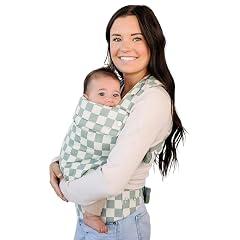
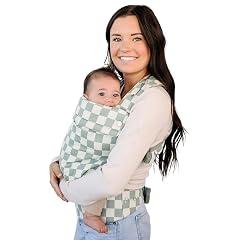
Ergonomic Baby Carrier, Olive
Overview
This is a soft-structured baby carrier for inward-facing front carry and inward-facing back carry. Ava & Oliver states that it is for children weighing 7 to 35 pounds, includes an attachable chest clip for back carrying and a removable sun hood, and can be machine washed. The Olive Checker version is listed by the maker as 90% cotton and 10% linen. The company says the product is CPSIA compliant, meets ASTM F2236 carrier safety standards, and was certified by SPS. Those are important claims because US soft carriers must meet the federal carrier rule, but no product-specific Children’s Product Certificate, laboratory report, instruction manual, registration information, or public certification record was located. The maker’s public page also does not provide newborn setup details, caregiver sizing limits, or model-specific airway and buckle-check instructions before purchase.
What works
- The maker provides a concrete 7 to 35 pound use range and specifies inward-facing front and back carry.
- Olive Checker has a disclosed 90% cotton and 10% linen fabric composition, rather than an unspecified textile blend.
- Machine-wash care is manufacturer-stated, which can make routine cleaning more practical.
- The maker states that all buckles have safety elastics and that a chest clip is included for back carrying.
What does not
- The claimed ASTM compliance and SPS certification could not be independently tied to a public, product-specific test report or certificate.
- No pre-purchase manual was found to show the required newborn setup, head support, airway checks, adjustment sequence, or safe back-carry start point.
- The “hip-healthy” description is not accompanied by an International Hip Dysplasia Institute acknowledgment for this product.
- No public warranty, repair program, replacement-parts policy, product registration route, or visible tracking-label details were found.
Who is it for
This product suits a caregiver seeking a relatively simple inward-facing soft carrier for ordinary walks, errands, travel transitions, and household tasks with a child within the maker’s stated 7 to 35 pound range. It is most relevant for someone who values a cotton-linen Olive Checker shell, machine-wash care, and the option to move from front carry to back carry as the child grows. The buyer should be comfortable carefully inspecting the delivered product and following all attached instructions before first use.
Who is it not for
It is not well suited to a buyer who needs independently accessible proof of compliance, a publicly available manual, or documented newborn fit guidance before bringing a carrier home. Families carrying a premature infant, a baby with breathing concerns, poor head control, or diagnosed hip issues should seek individualized advice from their pediatric clinician and use only a setup that keeps the airway visible and clear. It also may not suit households that require published caregiver size limits, replacement buckles, repairs, or a clearly stated warranty.
Integrity
The maker discloses the Olive Checker shell as 90% cotton and 10% linen, and says all fabrics are tested and certified free from harmful substances. However, it does not name the certifier, identify a certificate number, or publish finished-product chemical reports. That means the claim cannot confirm coverage of dyes, coatings, foam, buckles, metal hardware, lead, or phthalates. No product-specific US recall or regulatory warning was located in the CPSC sources searched. The company claims compliance with the federal soft-carrier standard and says it is certified by SPS, but it does not publish the underlying report or a Children’s Product Certificate. The “hip-healthy” wording should be read as a design claim, not proof that the carrier prevents hip dysplasia. The International Hip Dysplasia Institute emphasizes correctly supported, bent and spread legs, particularly in early infancy. Cotton and linen are disclosed, but no organic, recycled-content, packaging, repair, or service-life evidence was found.
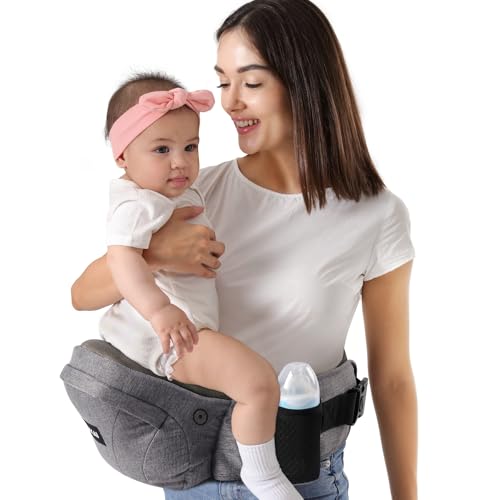
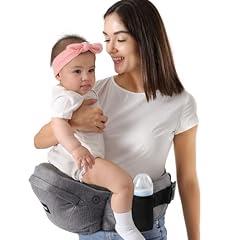
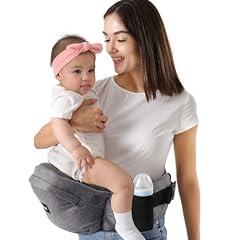
HKAI Baby Hip Carrier Grey
Overview
This is a waist-worn baby hip seat intended to help a caregiver support a child on the front or hip. Available product documentation describes a buckle-secured adjustable waistband, a tilted non-slip seat, mesh storage pockets, and positions including inward-facing, outward-facing, side carrying, feeding support, and an inclined cuddle hold. The stated child range is 7 to 44 pounds. The available manual includes meaningful basics, including buckle checks, routine inspection, airway checks, and a stated M-position for the hips. Those are manufacturer-stated directions, not independently verified performance evidence. No public exact-product Children’s Product Certificate, laboratory report, verified voluntary certification, or public material test report was located. Documentation also conflicts on material, dimensions, weight, and care instructions, so the product’s composition and laundering details are not reliably established.
What works
- The available manual gives a defined 7 to 44 pound stated use range and describes several carrying positions.
- It instructs caregivers to check buckles and straps, inspect for wear or damage, and keep the child’s airway unobstructed.
- The waist belt is stated to adjust up to 55 inches, with a broad support pad and a buckle closure.
- Multiple integrated pockets can keep small caregiving items accessible at the waist, according to the available manual.
What does not
- No public exact-product compliance certificate, CPSC-accepted laboratory report, or independently verifiable certification was located.
- The product is presented as newborn-suitable, but the available instructions do not document a model-specific newborn head-support setup or face-visible positioning check.
- Material and care information conflicts across available product documentation, including cotton and mesh, polyester, machine washing, and hand washing.
- Claims that the seat is ergonomic, hip-supportive, shock-absorbing, or prevents back pain are not supported by product-specific human testing or independent verification.
Who is it for
This product may suit a caregiver seeking a compact waist hip seat for short, closely supervised carries with an infant or toddler who can be held securely and positioned upright. Its stated 7 to 44 pound range, adjustable waistband, and built-in storage are practical for quick transfers, errands, or keeping a child close while carrying essentials. The caregiver should be comfortable checking buckle engagement, seat placement, and the child’s posture each time. The available documentation is better suited to attentive use than to relying on independently validated hands-free containment.
Who is it not for
It is not well suited to families who need independently documented newborn airway support, confirmed load and retention testing, or a clearly evidenced body-enclosing carrier for extended hands-free carrying. Extra caution is warranted for premature infants, infants with respiratory concerns, children with poor head and neck control, or babies receiving care for hip dysplasia. It is also a poor fit for buyers who need a verified fabric composition, low-chemical-exposure documentation, replacement parts, a stated warranty, or a traceable registration and recall-contact route before use.
Integrity
The available safety directions tell caregivers to keep the child’s airway clear, secure buckles and straps, inspect for damage, and maintain a bent-knee, spread-leg position. These are sensible precautions. Pediatric and hip-health guidance also emphasizes visible airways, upright positioning, correct fit, and support of the thighs, especially for young infants. The product documentation does not demonstrate that this specific hip seat has been independently tested to deliver those outcomes. No public product-specific chemical testing, OEKO-TEX record, recycled-content evidence, organic-textile certification, packaging specification, repair program, replacement-parts program, or stated warranty was found. The documentation conflicts on the textile composition and cleaning method, which limits confidence about material exposure and care. No matching CPSC recall or regulatory action was located in the searches performed, but public compliance and traceability evidence remains unavailable.