
10 Best High Frequency Wand
 Lauren Wilson
Please note that we participate in affiliate marketing programs. When you purchase through links on our site, we may earn a commission. As an Amazon Associate we earn from qualifying purchases. This comes at no additional cost to you and helps support the resources required to provide valuable content.Advertising Disclosure
Top-rated High Frequency Wand Comparison
1

2
4
5
6
7
8
9
Overview
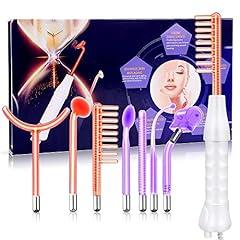
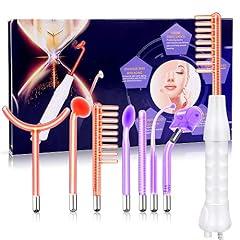
A high-frequency wand is a handheld electrical beauty device that passes a high-frequency discharge through a glass electrode held against, or briefly above, the skin. Supplied attachments commonly include mushroom, bent, tongue, rod, and comb shapes for broad facial areas, contours, small spots, and the scalp. Some products use neon, argon, or other gases in the glass tubes; others make conflicting statements about the gas fill. These devices are generally sold for cosmetic routines involving acne, wrinkles, skin tightening, radiance, circulation, collagen, or hair and scalp care.
The central question is not how many tubes are in the box or how impressive the claimed frequency sounds. It is whether the exact product delivers a known exposure, has safeguards proportionate to electrical discharge near the face, and has human evidence for the promised result at the settings buyers can actually use. The supplied reviews found no controlled human evidence supporting the advertised acne, wrinkle, tightening, collagen, hair-growth, or similar outcomes for any of the products at their sold home-use settings. Laboratory antimicrobial findings, studies using invasive or professional electrical treatments, and research on a different device do not establish results for a home glass-electrode wand.
A substantiated product should have model-specific measurements from an independent ISO/IEC 17025 laboratory. Useful testing would identify frequency, voltage or current behavior, power, leakage and dielectric safety, treatment limits, and ozone concentration at normal and maximum settings. Ozone deserves particular attention: high-frequency discharge can generate it, and EPA guidance identifies ozone as a respiratory irritant. A claim that a product produces ozone, oxygenates skin, or uses a superior electrode gas is not evidence that exposure is safe or beneficial. Odor is not a safety measurement.
For electrical safety, look for a current, traceable listing for the exact product and charger in UL Product iQ, Intertek’s ETL directory, or the CSA Group database, with the relevant certification scope. A seller’s statement of CE, FCC, RoHS, FDA registration, or “clinical” status is not equivalent to a model-specific U.S. safety listing or an accredited test report. If the product is marketed to treat disease or alter the body, its regulatory status and responsible firm should also be traceable through appropriate FDA databases. A lack of a recall is not proof of safety.
Headline specifications can mislead. A frequency number without delivered output, waveform, electrode type, treatment distance, and exposure limits cannot be compared meaningfully with research. A gas percentage does not quantify ozone. A long session recommendation may increase exposure without establishing benefit. “Adjustable intensity” or many levels describes a control, not the actual output range. A large attachment count may improve convenience while adding fragile parts and breakage risks. Ratings and review volume show customer experience, not certification, clinical efficacy, or safe emissions.
Across the supplied products, buyers should treat fragile glass as a serious safety issue: do not use cracked, loose, chipped, dropped, sputtering, or otherwise damaged electrodes. Reported injuries include glass breakage with lacerations and reports of burns or irritation; these reports do not establish a failure rate, but they justify careful inspection and immediate stop-use. Repeated cautions also concern pregnancy, implanted electronic devices such as pacemakers, heart or seizure conditions, broken or inflamed skin, eye-area use, and respiratory sensitivity. People with asthma or other lung disease should be especially cautious because exact-product ozone measurements were generally unavailable. Keep the device dry, start at the lowest setting, follow the shortest stated limits, use ventilation, and seek clinician advice when contraindications are unclear.
Integrity
These products were assessed across health, ecological responsibility, advertising and evidence quality, and U.S. traceability. The scores are relative to the supplied products; they do not turn missing testing into proof of safety or effectiveness.
HHealth & Safety
Health impact
This measures whether credible human evidence shows a meaningful skin or scalp benefit at the device’s sold settings without disproportionate harm. Among the supplied products, scores were generally moderate because reviews found no relevant controlled human evidence for the advertised home-use outcomes. A higher score reflects a better benefit-risk picture, not proof that acne, wrinkles, tightening, or hair claims work.
Skin and user safeguards
This measures warnings and instructions intended to prevent burns, painful shocks, irritation, eye-area injury, and unsuitable electrical or ozone exposure. Higher-scoring products included clearer limits, low-start guidance, damaged-part warnings, or contraindications; lower-scoring products omitted respiratory, eye, implanted-device, or stop-use guidance. Adjustable intensity helps only when paired with clear limits and instructions.
Ozone exposure control
This measures independent ozone testing at normal and maximum use, low emissions, and respiratory warnings without claiming ozone is healthful. Most supplied products lacked exact-model emissions reports, so even products with relatively higher scores retain uncertainty. A high score requires measured exposure from a qualified laboratory and appropriate warnings; a gas name or ozone smell is not a measurement.
Electrical and battery safety
This measures protection against shock, overheating, charging faults, and battery fire. Higher-scoring supplied products generally benefited from corded designs that avoid rechargeable-battery risks or from stronger documented precautions, but the reviews still commonly found no exact-product UL, ETL, CSA, or equivalent listing. A high score means model-specific certification and usable instructions, not merely a power-source label.
Glass electrode and attachment safety
This measures whether glass tubes, contacts, and attachments are secure, durable, cleanable, and replaceable, with instructions for damaged parts. Higher-scoring products offered clearer attachment information or replacement routes; lower-scoring products had no retention testing or parts pathway. Because the category includes fragile glass near skin, inspection before every use and immediate replacement after damage are important.
EEcology
Repairability and e-waste responsibility
This measures whether replaceable electrodes, repair information, parts availability, battery service, durable design, and responsible recycling can prevent premature disposal. Higher-scoring products commonly had manufacturer-sold replacement glass tubes or stated warranty support. Most still lacked powered-handle repair instructions, battery service, take-back programs, or verified recycler partnerships, so replaceable attachments alone do not make a product fully repairable.
EEvidence
Claim honesty
This measures whether advertising stays within the available evidence and regulatory status. Higher-scoring products used more restrained beauty-tool language or made fewer unsupported disease and biology claims. Lower-scoring products promoted acne treatment, collagen, wrinkle reduction, hair growth, oxygenation, sterilization, or dramatic absorption benefits without product-specific controlled human evidence. A clear cosmetic description is more credible than an absolute safety or clinical claim.
Independent safety verification
This measures whether an independent, traceable body has certified or tested the exact product and charger for relevant safety requirements. The supplied products had relatively similar scores because reviews repeatedly found no active model-specific UL, ETL, CSA, or comparable public record. A genuinely high score requires an issuer record with the exact model, certificate or report number, and relevant scope.
Verified output and exposure data
This measures independent, reproducible measurements of frequency, voltage or current, power behavior, treatment limits, leakage or dielectric safety, and ozone at normal and maximum settings. Higher-scoring products had somewhat better documented figures or review transparency, but no supplied product had a complete exact-model evidence package. A frequency or voltage printed in a listing is an assertion unless independently measured.
Evidence for results at home-use settings
This measures controlled human evidence for the specific promised outcome, electrode type, intensity, and schedule buyers can use. Scores varied only modestly because the reviews found no product-specific home-use trials supporting the main claims. In-vitro antimicrobial findings and studies of invasive or different technologies do not establish cosmetic results from these wands.
U.S. regulatory and recall traceability
This measures whether the seller, responsible firm, regulatory status, recalls, and enforcement history can be identified through appropriate U.S. channels. Higher scores reflected clearer product or manufacturer identification and no located recall or warning, but absence of a record is not a safety certification. Medical-device claims may require additional FDA registration, listing, clearance, or recall traceability.
Full reviews

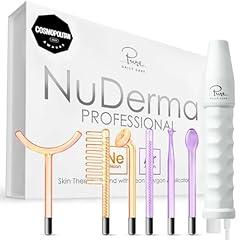
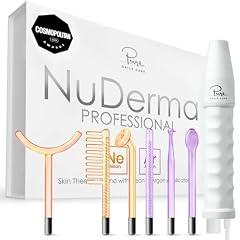
Skin Therapy Wand by Pure Daily Care
Overview
This plug-in high-frequency skin wand is supplied with six fragile glass electrodes, three described by the manufacturer as neon-filled and three as argon-filled. The shapes are intended for broad facial and body areas, small spots, the neck, and scalp. Pure Daily Care directs users to treat skin for two to three minutes, two to three times weekly. The manufacturer markets the product for acne, wrinkles, firmness, scalp care, circulation, and collagen-related benefits. Those are manufacturer claims, not findings from controlled human studies of this product at its stated home-use schedule. Independent research on a comparable high-frequency device found antimicrobial effects in laboratory samples, but explicitly reported that clinical studies were still needed. The manual contains unusually specific electrical, skin-condition, pregnancy, implanted-device, water, flammability, and breakage precautions. No model-specific independent safety certification, electrical-output report, or ozone-emissions report was located.
What works
- The manual gives concrete stop-use and handling directions for damaged cords, smoke, water exposure, wet hands, fragile glass, and incompatible attachments.
- It identifies important contraindication groups, including pregnancy, implanted or body-worn electronics, certain cardiovascular or seizure conditions, broken skin, suspicious lesions, children, and animals.
- Six application shapes provide manufacturer-stated options for face, body, spot, neck, and scalp use.
- Official replacement glass attachments are sold individually, which can avoid discarding the main handle after an electrode breaks.
What does not
- The product claims acne clearance, bacterial elimination, wrinkle reduction, collagen support, and improved absorption without controlled human evidence for this exact product and schedule.
- No independent, model-specific report was located for ozone output, electrical output, leakage safety, attachment retention, or charger safety certification.
- High-frequency treatment can generate ozone. Comparable-device laboratory research measured rising ozone during use, while the product does not provide measured emissions or respiratory exposure limits.
- The electrodes are explicitly fragile. Replacement availability helps, but no independent drop, dielectric, or retention testing was found.
- The product uses medical-sounding acne and inflammation claims, but no corresponding FDA clearance, listing, or enforcement record for this product was located in the searched U.S. sources.
Who is it for
This product is most suited to an informed adult who wants a short, at-home cosmetic skincare ritual and understands that its promised acne and anti-aging results remain unproven for this particular device. It is better matched to someone able to read and follow detailed precautions, use it only on intact dry skin, keep it away from water and flammables, and replace a damaged glass electrode rather than continuing to use it. The official availability of individual replacement tubes is useful for a careful owner who breaks or wears out an attachment.
Who is it not for
It is not suited to anyone pregnant or potentially pregnant, children, people with pacemakers, defibrillators, neurostimulators, ECG monitors, insulin pumps, or other body-worn electronic medical devices. People with epilepsy, seizure disorders, heart conditions, blood-pressure concerns, diagnosed skin disease, impaired skin sensation, active infection, broken skin, swelling, bruising, suspicious lesions, or active skin cancer should not treat this as routine self-care without clinician advice. It also does not suit people with asthma or other respiratory sensitivity who need known ozone exposure levels, because model-specific emissions data were not found.
Integrity
The safety documentation is a meaningful strength, although it is manufacturer-provided rather than independently certified. It tells users not to use the device around water, with wet hands, near combustible liquids or gases, or with alcohol-based or oil-based products. It also says to stop using damaged equipment and to handle glass tubes by their bases. These precautions are important because the product uses electrical high-frequency energy and fragile glass attachments. Ozone is the major unresolved health issue. Independent laboratory research on a comparable high-frequency device observed ozone rising during operation, and EPA identifies ozone as a lung irritant. No accredited, model-specific emissions test or maximum-use exposure result was found for this product. From an e-waste perspective, individually sold official replacement electrodes and a stated one-year warranty are useful, but the manufacturer discourages self-repair and no battery-service or verified electronics-recycling program was identified. The device should be treated as electronic waste at end of life, with glass handled separately and safely.
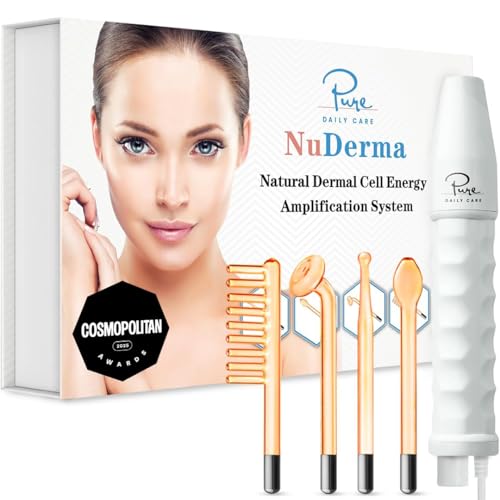
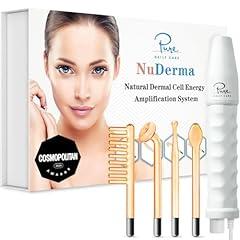
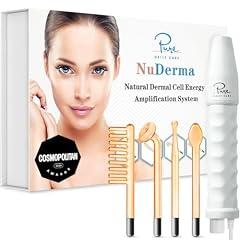
NuDerma Portable Skin Therapy Wand
Overview
This corded handheld high-frequency skin and scalp wand uses four neon-filled glass electrodes, including mushroom, spot, comb, and tongue shapes. The published instructions describe direct-contact treatment after grounding the electrode, starting at low power, with use near facial contours and through the scalp. The brand sells individual replacement electrodes for this standard model. The documentation includes useful precautions for children, pregnancy, pacemakers, epilepsy, heart conditions, damaged or inflamed skin, water exposure, and the eye area. However, treatment limits conflict within the published instructions, which give both 2 minutes per area twice weekly and 5 to 10 minutes per area 2 to 3 times weekly. No traceable independent report was found for this product's electrical output, ozone exposure, safety certification, or human results at its home-use settings. One FDA adverse-event report describes a serious glass-related hand injury involving a NuDerma unit in 2021.
What works
- Four electrode shapes provide manufacturer-stated options for broad facial areas, spots, eye-adjacent contours, and scalp use.
- The published instructions include stop-use advice, grounding steps, low-power starting guidance, and several medical contraindications.
- Official replacement glass electrodes are sold individually, reducing the need to discard the complete unit after an attachment breaks or is lost.
- The manufacturer states that purchases from authorized retailers receive one year of defect coverage.
What does not
- No model-specific, independently traceable UL, ETL, CSA, or equivalent electrical-safety certification was located.
- No independent measurement was located for emitted ozone, frequency, current, power behavior, or maximum-use exposure.
- The product's wrinkle, skin-tightening, oxygenation, ATP, and hair or scalp benefit claims are not supported by controlled human evidence for this home-use product and schedule.
- An FDA voluntary adverse-event report describes a 2021 glass explosion and serious hand injury involving a Pure Daily Care NuDerma unit. A single report cannot establish frequency or causation, but it makes careful inspection and damaged-part replacement important.
- The published directions conflict on session duration and frequency, which weakens safe-use clarity.
Who is it for
This product fits an adult who specifically wants a corded cosmetic high-frequency wand with separate glass shapes for occasional face and scalp routines, understands that visible anti-aging and hair-related results are unproven, and is prepared to follow conservative handling practices. It is most practical for someone who values being able to buy official replacement electrodes rather than replacing the full device after a lost or visibly damaged attachment. Use should remain cautious, short, and limited to intact skin.
Who is it not for
It is not suited to children, people who are pregnant without clinician guidance, or people with pacemakers, epilepsy, seizure disorders, heart conditions, impaired skin sensation, suspicious lesions, active skin cancer, infections, cuts, or markedly inflamed skin. People with asthma or other respiratory sensitivity should be particularly cautious because high-frequency discharge can generate ozone and this product has no independent emissions measurement. It is also unsuitable for anyone seeking clinically demonstrated wrinkle reduction, acne treatment, or hair growth results.
Integrity
The useful durability point is practical rather than environmental certification. Pure Daily Care sells individual neon glass replacement electrodes for the standard wand and states that authorized-retailer purchases receive a one-year warranty for manufacturing defects. That can reduce avoidable whole-device disposal when an attachment is lost or visibly damaged. No verified recycling program, repair manual for the powered handle, battery-service information, or independent durability testing was found. Health evidence is limited. Published directions include important warnings about water, damaged components, children, sensitive or injured skin, pregnancy, certain medical conditions, and the eyes. They also acknowledge that the glass attachments are fragile. An FDA adverse-event report recorded a serious 2021 hand injury attributed by the reporter to a glass explosion involving a NuDerma unit. High-frequency discharge has been measured to generate ozone in category research, while EPA identifies inhaled ozone as a lung irritant. This product has no independent ozone-emissions data.

Quiet&Far High Frequency Facial Wand
Overview
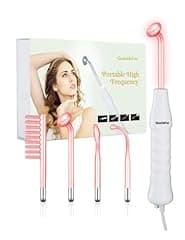
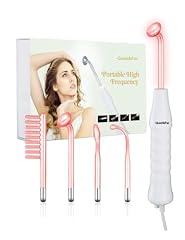
This corded, hand-held high-frequency facial and scalp tool is sold with four glass electrodes, described as mushroom, comb, bend and tongue shapes. The Amazon listing identifies glass as the attachment material, names ShuoLi as manufacturer, and lists a 0.65 kg product weight. The available sales description says the intensity is adjustable and assigns the attachments to broad facial areas, the nose, eye area and scalp. Those use details are manufacturer-stated, not independently tested. The product is marketed for wrinkle reduction and skin tightening. No model-specific human trial, independently measured electrical-output report, ozone-emissions report, or traceable UL, ETL, or CSA safety certification was located. Evidence for commercial high-frequency electrode devices is limited, with a published study finding antimicrobial effects in vitro and explicitly calling for in-vivo research.
What works
- Includes four glass electrode shapes for facial and scalp routines, manufacturer-stated.
- An adjustable intensity control is described, which can support starting at a lower setting, manufacturer-stated.
- The Amazon listing identifies the manufacturer and includes a power cord and manual.
- Amazon states a 30-day refund or replacement return window for the current seller.
What does not
- No independent, model-specific electrical safety certification or laboratory report was located.
- No independent measurement of ozone exposure, electrical output, frequency, or treatment limits was located.
- The wrinkle-reduction and skin-tightening claims lack controlled human evidence for this product and its home-use settings.
- Publicly visible listing material did not provide prominent, product-specific contraindications or detailed stop-use directions.
Who is it for
This product is most suited to an adult who wants a basic corded, non-battery facial and scalp wand format with several glass attachment shapes, and who treats it as an experimental cosmetic tool rather than a proven wrinkle treatment. The stated adjustable intensity may suit someone willing to begin cautiously and stop with any discomfort. It also suits a buyer who values an Amazon return path, because the current listing states a 30-day refund or replacement window. Product-specific performance and safety testing should not be assumed.
Who is it not for
It is not suited to people seeking clinically demonstrated wrinkle reduction, acne treatment, hair growth, or medical treatment, because the necessary human evidence at this product's settings was not located. People with asthma or another respiratory condition should avoid an unmeasured ozone-producing electrical treatment near the face. Those who are pregnant, have an implanted electronic device, heart disease, epilepsy, very reactive skin, open wounds, or eye-area concerns should use a clinician-guided alternative rather than rely on incomplete product-specific warnings.
Integrity
The product uses glass electrodes and a corded handle rather than a lithium battery, so it does not add battery-fire risk or a built-in battery replacement issue. Glass attachments can be fragile, however, and no independent attachment-retention, breakage, dielectric, or replacement-parts documentation was located. The current listing identifies a manufacturer and includes a manual, but it does not show a model-specific UL, ETL, or CSA listing, warranty terms, repair instructions, or recycling program. High-frequency electrode devices can generate ozone. A published commercial-device study measured increasing ozone during operation, while the EPA warns that inhaled ozone can irritate the airways and worsen asthma. This product has no located independent ozone-emissions measurement or respiratory warning. No product-specific U.S. recall, FDA warning letter, or enforcement action was found in the searched public sources, but that is not equivalent to independently verified safety.

UUPAS High Frequency Facial Wand
Overview
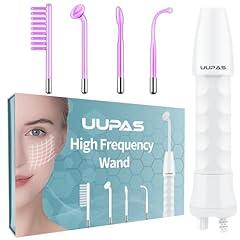
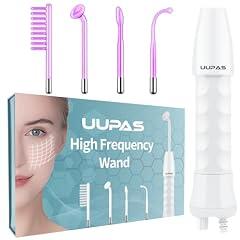
This is a portable handheld high-frequency facial wand supplied with four violet glass electrodes, including tongue, bend, mushroom, and straight shapes. The product listing says users can choose direct or indirect methods and use it two to three times weekly for 10 to 20 minutes. The accessible instructions also say to set intensity to zero before changing an electrode, test sensation on a hand or leg, and avoid holding an electrode on one spot for more than 10 seconds. The product listing describes the treatment as “100% natural” and “very effective,” but does not provide measured output, ozone emissions, or independent safety certification for this model. Published research on a similar handheld high-frequency device found antimicrobial effects in vitro, not human clinical benefit, and measured increasing ozone during use.
What works
- Four supplied glass electrode shapes can accommodate different facial contours, manufacturer-stated.
- Published instructions include useful basic precautions, including a zero-intensity setting for electrode changes and a pre-use sensation test.
- The manufacturer states that the product carries a one-year warranty for manufacturing defects.
What does not
- No public model-specific UL, ETL, CSA, or equivalent independent electrical-safety listing was identified.
- No independent laboratory report was located for this model's electrical output, leakage protection, or ozone exposure at normal or maximum use.
- The listing's broad effectiveness language is not supported by controlled human evidence at this product's stated home-use schedule.
- The publicly accessible directions reviewed give basic handling precautions but do not provide prominent respiratory-risk guidance or comprehensive contraindications for electrical-device users.
Who is it for
This product suits an adult who wants a compact, low-complexity cosmetic facial tool with several electrode shapes and is prepared to use conservative technique. It is most relevant for someone seeking a brief, nonmedical skincare ritual rather than treatment for acne or another diagnosed condition. The user should be comfortable following the stated precautions, especially starting at low intensity, testing sensation away from the face, changing attachments only at zero intensity, and keeping the electrode moving rather than dwelling on one area.
Who is it not for
It is not suited to anyone who needs clinically demonstrated treatment for acne, scars, wrinkles, hair loss, infection, or a scalp condition. People with asthma or other reactive airway disease should be cautious because high-frequency devices can generate ozone and this model has no published emissions test or respiratory warning located. Avoid use on open, irritated, or damaged skin as the instructions direct. People who are pregnant, have implanted electrical devices, have seizure concerns, or need medically tailored advice should seek clinician guidance instead of relying on these limited public safeguards.
Integrity
The provided electrodes are glass, and the instructions say to replace damaged or worn attachments. That is a practical safety point because chipped or broken glass should not be used. The manufacturer also states a one-year warranty, but no public spare-electrode catalog, battery-service information, repair guide, or verified electronics-recycling program was located. The product should therefore be treated as a small electronic item that needs appropriate local e-waste handling at end of life. No model-specific independent electrical-safety certification or laboratory output report was located in the reviewed product materials and certification searches. This matters because a published study of a similar high-frequency handheld device measured ozone increasing during operation, while EPA identifies ozone as a lung irritant. That study was not of this product, so it cannot quantify this product's exposure. It does show why an exact-model ozone test and clear respiratory precautions would be important.

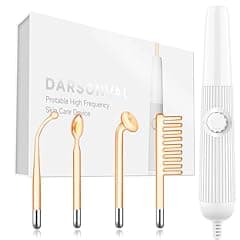
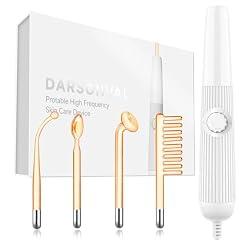
Darsonval High Frequency Facial Wand
Overview
This is a corded high-frequency facial and scalp wand with four glass electrode attachments, a mushroom, bent, comb, and tongue shape. It is intended for direct or sparking contact over limited skin or scalp areas, using an adjustable electrical discharge. A matching retailer record identifies the manufacturer as Li-tek and lists a 7.9 by 4 by 11.8 inch unit weighing 1.7 pounds. The listing confirms the four supplied attachments and a power cord, but it does not publish the operating frequency, electrical output, electrode gas, treatment limits, or ozone measurement. Searches did not locate model-specific UL, ETL, CSA, or comparable third-party safety certification, accredited laboratory output testing, or controlled human studies at this product's settings. A manual is included, but its safety warnings and contraindications were not publicly available for review.
What works
- Four supplied glass electrode shapes offer manufacturer-stated options for broad facial areas, narrow spots, and scalp routines.
- Corded operation avoids lithium-battery charging faults and battery disposal.
- The manufacturer and product model are identifiable through the retailer listing, which improves basic traceability.
- An independent retailer reproduces a manufacturer-stated one-year warranty.
What does not
- No model-specific independent safety certification or accredited electrical test report was located.
- No independently measured frequency, voltage, power behavior, leakage, or ozone-exposure data was located.
- The publicly visible listing does not provide reviewed contraindications, eye-area limits, burn precautions, or stop-use directions.
- No controlled human evidence was located for acne, wrinkle, hair, or other skin results at this product's home-use settings.
- Replacement electrodes, repair instructions, recycling arrangements, and a public battery or parts service policy were not located.
Who is it for
This product fits a budget-conscious adult who specifically wants a corded, non-battery high-frequency wand for occasional cosmetic face or scalp routines and is comfortable following a supplied manual. The four included shapes are practically useful for someone who wants a broad mushroom electrode plus narrower or comb-style attachments in one kit. It is most appropriate where expectations are limited to trying a cosmetic tool, rather than relying on it as a treatment for acne, hair loss, scarring, or another medical condition.
Who is it not for
It is not suited to people with asthma or other respiratory sensitivity who cannot tolerate possible ozone exposure, because this model has no published ozone test result. It is also unsuitable for anyone needing independently certified electrical safety, documented output limits, or evidence-backed treatment results. Avoid self-treatment around the eyes, on broken or highly irritated skin, or where a clinician has advised against electrical cosmetic devices. Households with children or anyone unable to handle fragile glass attachments safely need a more clearly safeguarded option.
Integrity
The product uses a cord rather than a rechargeable battery, so it avoids lithium-battery charging and end-of-life risks. It includes four glass attachments, but no public evidence was found for their mechanical durability, secure retention, replacement availability, or a repair pathway. A retailer states a one-year warranty, although the manufacturer warranty terms were not independently published. No listing in major third-party electrical certification directories was found for this exact product, and no accredited laboratory report was located for electrical output or ozone emissions. That matters because ozone can irritate airways and worsen asthma, and odor is not a reliable indicator of safe exposure. The product's public listing is relatively restrained in its title, but it does not substantiate cosmetic outcomes with model-specific human studies or publish the safety limits needed to assess exposure.

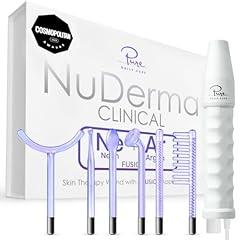
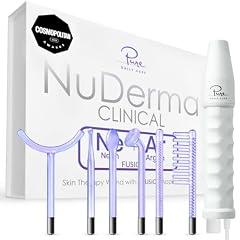
NuDerma Clinical Skin Therapy Wand
Overview
This is a plug-in high-frequency skin and scalp wand with a handle and six blue glass electrodes for broad facial areas, contours, individual blemishes, the scalp, neck, and body. It is used on clean, dry skin with the electrode kept moving, beginning at a low setting. The manufacturer manual limits use to five minutes every other day and directs users to avoid eyelids, lips, and sensitive areas. Pure Daily Care sells individual replacements for the six Clinical-model glass attachments. Its product page states that the blue tubes combine neon and argon gases. A published NuDerma manual lists 10 W power and AC input, which conflicts with the marketplace record's battery and 1.5 V specification. No exact-model independent laboratory report for electrical output, ozone concentration, safety certification, or clinical results was located.
What works
- The manual gives unusually concrete operating limits, including low-start settings, moving contact, eye-area avoidance, and a five-minute session maximum.
- Warnings specifically exclude use during pregnancy and with implanted electronic devices, and call for clinician advice for several health conditions.
- Individual replacement electrodes are sold directly by the manufacturer, so a cracked or dim tube need not require replacing the whole product.
- The manual gives practical breakage and shock-prevention directions, including handling glass only by its base and keeping hands dry.
What does not
- No independent exact-product measurements were located for ozone at the face, electrical output, leakage protection, or attachment-retention strength.
- High-frequency treatment has shown antimicrobial effects in laboratory testing, but controlled human evidence for this product's wrinkle, radiance, acne, or hair claims at its home-use settings was not located.
- The product produces electrical discharge around the face. Ozone is a respiratory irritant, and the available documentation does not provide an exposure measurement or respiratory-risk warning.
- The published manual's AC and 10 W specifications conflict with the marketplace record's battery-powered 1.5 V description, which weakens specification clarity.
- The manufacturer advises against self-repair. Replacement glass is available, but battery service, internal repair instructions, and a verified recycling program were not located.
Who is it for
This product fits an adult who already wants a short, cosmetic at-home high-frequency routine for face, scalp, or body areas and is willing to follow detailed handling rules. It is most practical for someone who values separately available replacement glass attachments and can use the product in a dry indoor area with a standard wall outlet. The user should have intact, non-irritated skin, tolerate a mild electrical-device routine, and treat the advertised appearance benefits as unproven rather than predictable results.
Who is it not for
It is not suited to pregnant people, children, people with pacemakers or other implanted electronic devices, or anyone using a body-worn medical device without clinician approval. People with epilepsy, seizure disorders, blood-pressure or heart conditions should follow the manual's direction to consult a clinician first. Avoid use over suspicious lesions, active skin cancer, infections, cuts, bruising, swelling, numb skin, eyelids, lips, and sensitive areas. It is also unsuitable for households needing independently certified electrical safety and measured ozone exposure data.
Integrity
The main health positive is the breadth of the manufacturer manual's safeguards. It instructs users to stop for unusual pain, swelling, marked redness, discoloration, or hyperpigmentation. It also prohibits use around water, with alcohol-based or oil-based products, near combustible materials, or with visibly damaged parts. The manual recognizes that glass tubes are fragile and gives handling, storage, cleaning, and replacement directions. The main unresolved health issue is exposure evidence. High-frequency devices can form ozone, and laboratory research on a commercial device measured ozone rising during treatment. EPA identifies ozone as a lung irritant. No independent emissions result for this product was found, and the product documentation does not quantify ozone or give respiratory precautions. Individual glass replacements are available, which can reduce avoidable e-waste, but no verified repair pathway, battery-service information, certified recycler program, or product-specific recycling guidance was located.

Meifuly High Frequency Wand Machine with 7 Tubes
Overview
This is a portable, handheld high-frequency cosmetic wand sold with seven interchangeable glass treatment tubes. The manufacturer positions the tubes for facial and scalp routines, including a comb attachment for the scalp. It is intended for short, direct-contact home treatments rather than clinical procedures. The defining evidence gap is that Meifuly publishes broad claims about acne, circulation, collagen, fine lines, scalp health, and hair growth, but no independent exact-product output testing or controlled human trial at this product's settings was located. Its website also calls the ozone produced during treatment beneficial. Ozone concentration, room exposure, and treatment limits were not independently reported.
What works
- Seven interchangeable glass tubes give the user manufacturer-stated options for face and scalp contact areas.
- The compact handheld format is manufacturer-stated and is practical for occasional home cosmetic routines.
- The brand provides a public product page and a U.S. contact address, phone number, and stated business hours.
What does not
- No traceable third-party certification, exact-model electrical test report, or charger safety listing was located in UL, ETL, CSA, or FDA searches.
- No independent measurements of frequency, power, leakage current, treatment dose, or ozone concentration were located for this product.
- The manufacturer presents ozone as beneficial, while EPA identifies inhaled ozone as a lung irritant and notes respiratory risks.
- The broad acne, wrinkle, collagen, scalp, and hair-growth claims are not supported by controlled human evidence for this home device and its sold settings.
- No product-specific repair guide, spare-electrode listing, battery-service information, warranty details, or recycling program was located.
Who is it for
This product suits an adult who wants a compact, cosmetic home tool with several glass contact shapes for limited face and scalp experimentation, and who understands that the advertised skin and hair outcomes remain unverified for this exact unit. It is most appropriate for someone able to use it cautiously in a ventilated space, inspect the glass before every session, follow any included instructions, and stop promptly if there is discomfort, visible arcing, irritation, or a respiratory reaction.
Who is it not for
It is not suited to people with asthma or other respiratory disease, because the manufacturer says treatment produces ozone and no measured exposure data were found. It is also not suitable for people with implanted electronic medical devices, pregnancy-related safety concerns, active or broken skin, unexplained lesions, significant sensitivity, or anyone seeking treatment for acne, hair loss, or another medical condition. Choose clinician-guided care when a diagnosis, evidence-based treatment, or monitored electrical safety is needed.
Integrity
Meifuly confirms seven interchangeable glass tubes and promotes the product for skin and scalp use, but it does not publish an exact-product safety certificate, accredited laboratory report, or independently measured electrical and ozone output. Searches of FDA, CPSC, UL, ETL, and CSA sources did not identify a product-specific recall, enforcement record, or active third-party listing. That absence is not evidence of tested safety. The key health issue is the brand's ozone messaging. Its website describes ozone produced by high-frequency treatment as beneficial. EPA describes ozone as a lung irritant that can cause cough, throat irritation, chest symptoms, and worsened asthma. No emissions figure was found to show exposure remains low during normal or maximum use. Ecological documentation is also limited, with no identified replacement-electrode program, battery-service instructions, repair documentation, or dedicated electronics recycling option.

High Frequency Wand Case, Customizable Base, Black, L
Overview
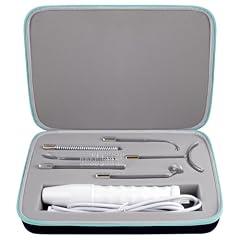
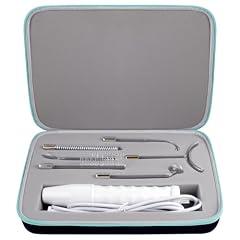
This product is a zippered storage and travel case, not a high-frequency facial treatment device. It is sold empty for an owner’s existing wand and attachments. The stated exterior size is 13.5 by 9.75 by 3 inches, with a handle, two compartments, and a cuttable foam base intended to organize a wand plus accessories. The case is described by the seller as hard EVA with water and shock resistance, but those protective properties were not supported by a model-specific independent drop, compression, or moisture test. It has no battery, charger, electrical output, glass electrodes, or ozone-producing function. That makes it materially different from the powered facial wand it may be used to store. No clinical result should be expected from the case itself.
What works
- It is a passive case only, so it does not itself create electrical shock, charging, or ozone exposure.
- The seller clearly identifies the package as case only, reducing the risk of mistaking it for a facial treatment kit.
- The stated cuttable foam insert can be adapted around an owner's existing equipment.
- The stated compact dimensions, handle, and zipper support contained storage and transport.
What does not
- Hard EVA, water resistance, and shock resistance are seller claims, not independently verified protection ratings.
- No model-specific test report was located for foam retention, impact protection, zipper durability, or resistance to crushing.
- Fit is not assured for every wand kit. The foam may need cutting, and third-party buyer reports describe some loose or mismatched cutouts.
- No repair instructions, replacement foam listing, recycling instructions, or recognized third-party certification was located.
Who is it for
This suits an owner who already has a compatible high-frequency wand kit and wants a compact, dedicated place to store the handle and fragile attachments at home or while traveling. It is most relevant when the original carton is inconvenient and the owner is willing to check each attachment’s fit, then trim the foam if needed. It is also appropriate for someone who understands that this purchase supplies storage only, not a powered facial device, replacement electrodes, or a skincare treatment.
Who is it not for
It is not for anyone seeking acne, wrinkle, scalp, or hair results, because the product has no treatment function. It is also unsuitable for buyers who need independently tested impact protection for frequently transported glass attachments, or who require guaranteed fit without modifying foam. Households with children should keep the separate powered wand and its fragile glass parts stored according to that device’s instructions. People with respiratory, electrical-device, or skin-sensitivity concerns must assess the actual wand separately, not this case.
Integrity
The important health point is that this is a non-powered storage accessory. It contains no supplied electrode, power source, charger, or ozone-generating component, so it does not add the electrical and ozone exposures associated with operating a high-frequency wand. Ozone is a respiratory irritant, and EPA guidance warns that ozone-generating devices can create harmful exposures. Those concerns apply to the separate treatment device, not to this empty case. The seller identifies EVA as the case material and describes a removable foam base. No independent model-specific report was located for material emissions, protective performance, or attachment retention. GWCASE’s website makes broad statements about eco-friendly materials and responsible sourcing, but it does not provide material percentages, third-party environmental certification, repair guidance, or a take-back and recycling program for this case. No product-specific U.S. recall or safety action was located in the searched CPSC resources.

TUMAKOU High Frequency Facial Machine with Tubes
Overview
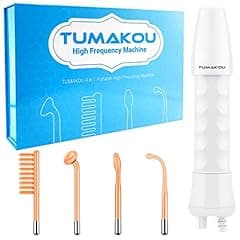
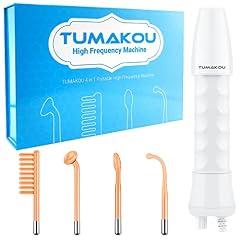
This corded, handheld high-frequency facial and scalp device uses four removable glass electrodes, a mushroom, tongue, bent, and comb shape. The supplied manual describes direct facial use, a brief sparking method for inflamed areas, and comb use on the scalp. It lists 50 to 60 Hz mains input and either 10 W or 30 W, but does not identify which power rating applies to the product. The manual sets a 10-second maximum on one area and excludes pregnant people and people with pacemakers. These are manufacturer instructions, not independently validated safeguards. The brand site says the electrical discharge creates ozone, while no exact-product laboratory ozone, output, leakage, or attachment-retention report was located. Human evidence located for comparable high-frequency therapy was laboratory based, rather than controlled home-use evidence for this product.
What works
- Includes four differently shaped glass electrodes for face and scalp use, according to the supplied manual.
- The manual provides a one-year repair warranty and directs users to stop using a damaged or wet device.
- Instructions include an adjustable intensity control, a 10-second single-area limit, and exclusions for pregnancy and pacemakers.
What does not
- FDA MAUDE includes a voluntary serious-injury report received in February 2025 alleging burns and irritation with this product. A report does not establish causation, but it is a material safety signal.
- The manual confirms ozone generation for sterilization, but no independent emissions measurement for the product was located. EPA identifies ozone as a lung irritant.
- No active exact-model UL, ETL, or CSA listing, accredited laboratory test report, or independently verified electrical-output data was located.
- Marketing and manual materials claim wound healing, wrinkle reduction, hair benefits, sterilization, and measured skin improvements without product-matched controlled human evidence.
Who is it for
This product is suited only to an informed adult who wants a compact, corded cosmetic tool with separate electrodes for broad facial areas, small spots, contours, and scalp contact. They should be comfortable following conservative instructions, including starting at low intensity, keeping the electrode moving, limiting contact on one area, and inspecting each glass tube before use. It is most relevant to cosmetic experimentation rather than treatment of acne, wounds, hair loss, or another medical condition, because controlled human evidence at its home-use settings was not located.
Who is it not for
It is not appropriate for pregnant people or people with pacemakers, because the supplied instructions specifically exclude them. People with asthma or other respiratory sensitivity should be cautious because the brand says normal operation creates ozone, and no product-specific emission measurement was found. It also is not a suitable substitute for clinical assessment of persistent acne, wounds, inflamed skin, scarring, or hair loss. Anyone with broken, irritated, highly sensitive, or recently treated skin should avoid self-treatment or seek clinician guidance first, especially given the reported burn event.
Integrity
The manual gives some practical electrical and handling directions. It says to keep the unit and hands dry, unplug it after use, stop using it after liquid exposure, a broken cable, or a fall, and replace damaged or worn electrodes. It also offers a one-year repair warranty. However, no practical spare-electrode catalog, battery service information, recycling program, accredited product test report, or recognized U.S. electrical-safety listing was located. Ozone is a central health concern. The supplied instructions present ozone as sterilizing, and the brand site says the normal crackling discharge creates it. EPA describes ozone as a lung irritant and notes that ozone-generating electronics can create levels above those considered harmful under some conditions. The FDA adverse-event database also contains a voluntary 2025 report alleging first-degree burns and irritation. This report is not proof that the product caused the injury, but it supports careful, limited use and prompt stop-use after discomfort.

Uaike High Frequency Facial Wand
Overview
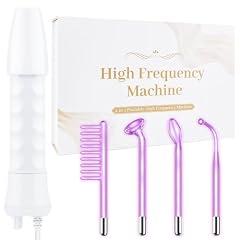
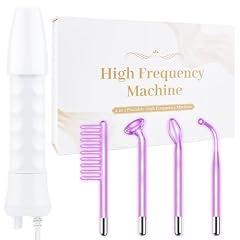
This is a handheld, battery-powered high-frequency facial and scalp wand with four purple glass electrodes, a mushroom, tongue, bend, and comb-style tube. The listing states that intensity is adjustable and describes direct and indirect application methods. It measures 9.45 by 1.85 by 1.85 inches and is listed at 1.43 pounds. The product page gives a limited spot-contact instruction, no more than 10 seconds in one area, and suggests sessions of 10 to 20 minutes, two to four times weekly. Those are seller instructions, not independently validated treatment limits. No exact-product laboratory report was located for electrical output, ozone concentration, attachment retention, or third-party electrical safety certification. Human evidence for comparable high-frequency devices is not established at this product's stated home-use settings.
What works
- Four supplied glass electrodes provide different contact shapes for facial and scalp placement, according to the product listing.
- The listing provides an adjustable intensity control, which can support a gradual comfort-based start.
- The seller gives a specific limit of no more than 10 seconds on one spot, a useful but limited safeguard.
- A one-year product coverage statement is included on the listing, although its terms were not independently reviewed.
What does not
- No independently traceable certification or exact-model electrical safety test report was located for the wand or its power system.
- No exact-model ozone-emissions measurement was located, despite evidence that comparable high-frequency devices can generate ozone.
- The listing does not prominently provide a full set of contraindications or stop-use directions for electrical exposure, eye-area use, respiratory sensitivity, or damaged skin.
- Claims of results comparable to spa treatment are not supported by controlled human evidence at the listed home-use schedule.
- No repair instructions, replacement-electrode source, battery-service information, or verified recycling program was identified.
Who is it for
This product fits an adult who specifically wants a compact, nonclinical beauty tool with several electrode shapes for cautious, short contact on the face or scalp. The user should be comfortable treating it as an experimental cosmetic routine rather than an acne, hair-loss, wrinkle, or skin-treatment device. It is most suitable for someone who will begin at low intensity, follow the stated spot-contact limit, use it in a ventilated area, inspect the glass before each use, and stop if discomfort occurs.
Who is it not for
It is not well suited to people with asthma or other respiratory sensitivity, because comparable high-frequency devices can generate ozone and this product has no exact-model emissions data. It is also unsuitable for anyone needing a proven treatment for acne, hair loss, infection, scarring, or wrinkles. People who are pregnant, have an implanted electronic medical device, have active skin injury or marked irritation, are sensitive to electrical stimulation, or need documented safety certification should seek clinician guidance or choose a product with clearer safeguards and independent testing.
Integrity
The central health concern is unmeasured ozone exposure. A peer-reviewed evaluation of a comparable high-frequency device detected increasing ozone during use, while U.S. environmental guidance identifies ozone as a respiratory irritant that can worsen asthma and cause coughing, chest discomfort, and shortness of breath. No independent ozone test was located for this product, so its actual exposure during facial use is unknown. The listing identifies glass electrodes and gives a short spot-contact limit, but it does not provide independently confirmed electrical-output, dielectric, glass-retention, or breakage testing. No independently traceable safety certification, repair guide, battery-service information, replacement-parts source, or verified e-waste program was identified. The supplied electrodes may reduce immediate need for an additional attachment, but the available information does not establish a practical repair or end-of-life pathway.