
10 Best Dehumidifier with Pump
 Lauren Wilson
Please note that we participate in affiliate marketing programs. When you purchase through links on our site, we may earn a commission. As an Amazon Associate we earn from qualifying purchases. This comes at no additional cost to you and helps support the resources required to provide valuable content.Advertising Disclosure
Top-rated Dehumidifier with Pump Comparison
1

2
4
5
6
7
8
9
Dehumidifiers with pumps: what to look for
A dehumidifier with a pump removes water from indoor air and sends the condensate through a hose to a drain that may be higher than the appliance. That makes it useful when gravity drainage is impossible, but the pump does not solve flooding, foundation seepage, plumbing leaks, wet materials, or existing mold. Those sources still need correction.
The first question is whether the product actually has a built-in pump. Several products sold with “pump” or “continuous drainage” wording use gravity drainage only; their hoses must run downhill and cannot lift water to a sink or elevated drain. For a true pump model, look for documented hose requirements, maximum vertical lift, full-bucket shutdown, pump-failure behavior, and cleaning instructions. A stated lift height is useful, but it does not by itself prove backflow protection, leak sensing, or safe unattended operation.
Capacity claims need careful interpretation. Large figures such as 80, 100, 125, or 150 pints per day commonly describe very hot, very humid conditions often around 86–95°F and 80–95% relative humidity. They are not interchangeable with the current DOE portable-dehumidifier rating conditions. In the supplied products, independently documented household-comparable ratings were often much lower: examples include 23, 24.5, 32, 49.66, and 49.95 pints per day. Prefer a capacity tied to an identifiable basic model in the DOE Compliance Certification Management System, the current DOE test procedure, or an ENERGY STAR record. Coverage claims such as 4,500, 5,000, or 7,000 square feet are also incomplete without room temperature, ceiling height, air leakage, moisture load, and layout assumptions.
For health-related control, look for an adjustable humidistat that can target the EPA-preferred 30–50% relative-humidity range. The setting range is not the same as accurate control: sensor tolerance, cycling behavior, and the ability to hold the selected level matter. Several reviews found no accuracy specification, while one product showed a demonstrated humidity-reading offset. A separate hygrometer is sensible when moisture control affects a building or a health-sensitive room. Automatic defrost and a documented minimum operating temperature matter in basements, because compressor units can ice up or lose output in cold conditions.
Electrical safety deserves exact-model verification. A claim such as “UL,” “ETL,” or “cETL” should match the product’s brand and model in an OSHA-recognized Nationally Recognized Testing Laboratory directory, such as UL Product iQ or Intertek’s public listing. ENERGY STAR verifies energy and water-removal information; it does not replace an independently checkable electrical-safety listing. The supplied products show why this distinction matters: some had strong ENERGY STAR records but no located safety listing, while others had public UL evidence.
For environmental impact, compare the integrated energy factor and annual energy use from DOE or ENERGY STAR records rather than broad savings language. Check the refrigerant name and global-warming potential, plus instructions for qualified service and end-of-life recovery. R32 and R290 appeared in the supplied products; both require responsible handling, and R32 and R290 are flammable refrigerants. Finally, favor clear model labeling, recall support, cleanable filters, buckets, drain paths, and pump screens, along with meaningful warranty and parts or repair support.
Across these products, the recurring safety caveats are substantial: many exact-model UL, ETL, or CSA listings could not be verified; pump safeguards such as backflow protection and leak sensing were often undocumented; cold-weather limits or tested low-temperature performance were frequently missing; and headline capacity and coverage claims commonly exceeded comparable tested figures. Do not use any unit as a remedy for active water intrusion or mold, and do not assume a pump makes unattended drainage risk-free. Follow hose, cleaning, refrigerant, temperature, clearance, and electrical instructions, and use a separate hygrometer where accurate humidity control matters.
Integrity
A dehumidifier can support moisture management, but it is not an air purifier, mold treatment, or substitute for repairing water intrusion. The supplied reviews distinguish independently verified performance from manufacturer claims and repeatedly emphasize maintenance, drainage, temperature, refrigerant, and electrical-safety limits.
HHealth & Safety
Healthy humidity control
This measures whether the product can sense and hold a selected humidity level, especially within the EPA-recommended 30–50% RH range, without over-drying. It matters because a displayed setting is not proof of actual room humidity. Higher-scoring products documented useful ranges and control behavior; lower-scoring ones lacked sensor tolerances or showed a demonstrated reading offset.
Verified electrical and fire safety
This measures whether the exact product is listed by an OSHA-recognized testing laboratory for the applicable dehumidifier safety standard. It matters because compressors, pumps, water, and unattended operation create shock, overheating, and fire concerns. The strongest supplied scores belonged to products with a public UL record; many lower-scoring products had only an unverified manufacturer or retailer listing claim.
Pump drainage and overflow protection
This measures pump lift, hose requirements, drainage choices, full-bucket shutdown, and protection against leaks or failed pumping. It matters because a blocked or poorly routed hose can renew dampness or cause water damage. Higher-scoring products documented pump care, lift limits, and shutdown behavior; lower scores reflected missing backflow, leak-sensor, or pump-failure information.
Cold-basement performance
This measures documented operation and automatic defrost in cool basements and crawl spaces. Compressor units can ice up or remove less moisture as temperatures fall. Higher-scoring products supplied a minimum temperature or defined cold-weather operating range and defrost details. Lower-scoring products claimed defrost but did not state a minimum temperature or tested low-temperature extraction.
Cleanable moisture-path design
This measures whether filters, buckets, hoses, drain ports, pump screens, floats, and accessible surfaces can be cleaned as instructed. It matters because stagnant condensate, dust, odors, clogs, and leaks can undermine moisture control. Higher-scoring products provided specific cleaning intervals or accessible components; lower scores reflected limited instructions or poorly documented water-path maintenance.
Recall and safety-track-record transparency
This measures whether the exact product, brand, manufacturer, and relevant model information can be tracked through recalls, incidents, and support channels. It matters because a traceable model makes a later hazard easier to identify and address. Scores were generally moderate because no product-specific recall was found in the reviewed material, but accountability and model-level records were uneven.
EEvidence
Verified water-removal performance
This measures whether the advertised pints-per-day figure matches an identifiable basic model and the current DOE test method. It matters because maximum-condition claims can greatly overstate ordinary household output. Higher-scoring products had traceable ENERGY STAR or qualified-registry ratings, such as roughly 24.5 to 50 pints per day; lower scores lacked DOE or ENERGY STAR confirmation.
Honest capacity, coverage, and health claims
This measures whether capacity, square-foot, pump, noise, and health claims state test conditions and limitations without implying that dehumidifiers cure mold or allergies. Higher-scoring products separated standardized ratings from hot-and-humid maximums. Lower-scoring products used large capacity or coverage headlines without comparable conditions, or made unsupported ENERGY STAR Most Efficient or broad savings claims.
Independent certification that can be checked
This measures whether ENERGY STAR, safety, and other certification marks match the exact brand and model in the issuing organization’s public records. It matters because a badge or retailer statement can describe a related model rather than the product being sold. Higher-scoring products had exact ENERGY STAR or UL traceability; lower scores involved family matches, conflicting claims, or no public record.
EEcology
Energy-efficient moisture removal
This measures how much water the product removes per kilowatt-hour and its estimated annual electricity use, using comparable DOE or ENERGY STAR data. It matters because dehumidifiers may run for long periods. Higher-scoring products had independently reported figures such as 2.01–2.09 L/kWh and annual-use estimates; lower scores relied on manufacturer efficiency language or lacked comparable records.
Lower-impact refrigerant and disposal information
This measures whether the refrigerant is identified, acceptable for the intended residential use, lower in global-warming impact, and accompanied by responsible service or disposal guidance. It matters because refrigerant leakage and careless disposal create climate and safety risks. Higher scores came from verified R32 or R290 information and GWP data; lower scores reflected missing refrigerant or end-of-life details.
Durability and repair support
This measures warranty length, replacement parts, service information, and repair support for pumps, compressors, controls, hoses, and related components. It matters because extending appliance life reduces premature waste. Higher-scoring products offered longer or clearer warranty coverage and, in one case, replacement-part information or pump-replacement instructions. Lower scores reflected short coverage or no public parts documentation.
Full reviews

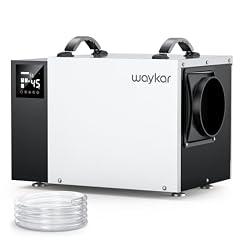
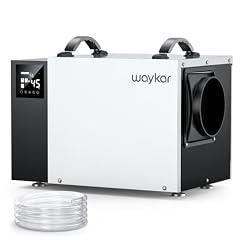
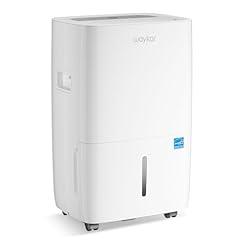
Waykar 125 Pint Commercial Dehumidifier with Pump
Overview
This is a compressor-based crawl-space and basement dehumidifier with an internal pump, gravity-drain and pump hoses, a removable filter, and a stated 125-pint-per-day high-humidity rating. The manufacturer manual identifies a 530 W, 110 V unit, 42 pints per day at 65 F and 60% RH, 1.60 L/kWh integrated energy factor, and 220 g of R32 refrigerant. Its useful control features are manufacturer documented, not independently performance tested. The manual describes a selectable humidity setting, with operation pausing 3% RH below the target and resuming more than 3% RH above it. It also documents automatic defrost, operation from 41 F to 100 F, and a pump lift limit of 16.4 feet. Several sales claims conflict across Waykar materials, including airflow, humidity-range, dimensions, and warranty descriptions.
What works
- The documented humidity-control behavior can be set within EPA's preferred 30% to 50% indoor RH range.
- The manufacturer specifies automatic pump drainage, a supplied pump hose, and up to 16.4 feet of vertical lift.
- The manual documents automatic defrost and a 41 F minimum operating temperature, relevant to many cool basements.
- A removable filter and instructions to clean the filter, drain port, and hoses support routine moisture-path upkeep.
- The manual identifies R32 refrigerant, which EPA lists as acceptable subject to use conditions for new residential dehumidifiers.
What does not
- No exact-model listing was located in the public UL, ETL, CSA, or ENERGY STAR records checked, so independent electrical-safety and efficiency certification remains unverified.
- The 125-pint rating is stated at 95 F and 90% RH. The manual's 65 F and 60% RH figure is 42 pints per day, and no DOE compliance record was located for this exact product.
- Waykar's own materials conflict on airflow, humidity range, dimensions, and warranty coverage. This is a documentation problem, not proof of a product defect.
- Pump installation needs care. The manual warns that an unattached hose, loose gravity port plug, excessive lift, or kinks can cause water leakage.
- The manual gives a 12-month warranty, extendable by registration, while sales material separately advertises five-year compressor coverage without matching terms.
Who is it for
It suits an owner or facilities user managing a large, enclosed crawl space, storage area, or basement where a floor drain is unavailable and condensate must be lifted to a sink, window, or elevated drain point. The stated 41 F minimum operation, automatic defrost, continuous drainage, and accessible filter make it most relevant to cool but not freezing spaces that can be inspected regularly. It is also appropriate only where the drain run can stay below the stated lift limit and remain unkinked.
Who is it not for
It is not suited to spaces below 41 F, areas with standing water or an unresolved foundation leak, or occupied rooms where very dry 10% RH operation could be selected without independent humidity monitoring. It also is not appropriate for installations that cannot provide clearances, a securely routed drain hose, and periodic checks for pump or drain leaks. Buyers requiring independently searchable electrical certification, ENERGY STAR verification, or a clearly documented long-term compressor warranty need more traceable product records.
Integrity
Keeping indoor humidity around 30% to 50% can help limit moisture conditions that favor mold, according to EPA guidance. This product's documented control range includes that target, and its described 3% RH control band is more specific than a simple continuous-run claim. Moisture control does not repair leaks or remove existing mold. EPA advises correcting water intrusion and drying wet materials promptly. The manual identifies 220 g of R32, an A2L refrigerant. EPA lists HFC-32 as acceptable for new residential dehumidifiers when specified use conditions are met, and the manual appropriately warns that refrigerant service and disposal require qualified personnel. The exact product did not appear in the independent certification registers checked, and Waykar's warranty language conflicts between its manual and sales page. No exact-product recall was located in the CPSC sources checked.

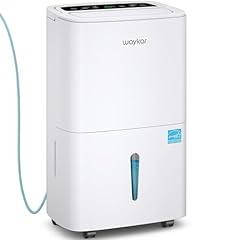
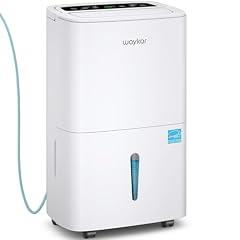
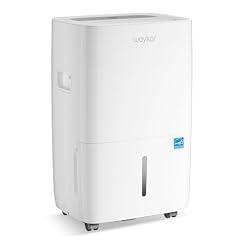
Waykar 150 Pints Dehumidifier with Pump
Overview
This is a portable, compressor-based dehumidifier for large indoor spaces. It has a built-in condensate pump, a 1.85-gallon bucket, continuous-drain capability, two fan speeds, and a stated 30% to 80% target humidity range. The manufacturer specifies a 16.4-foot maximum pump lift, automatic defrost, and operation from 41°F to 90°F. The product's 150-pint figure is a manufacturer rating at 95°F and 90% relative humidity, not the current standardized rating. ENERGY STAR independently lists this exact product at 50 pints per day, 2.02 L/kWh integrated energy factor, and 522 kWh annual energy use for the United States and Canada. Its ENERGY STAR certification is publicly traceable. A public NRTL listing for the exact product was not located in the UL or Intertek resources checked.
What works
- ENERGY STAR independently identifies this exact product as a 50-pint-per-day portable dehumidifier with a 2.02 L/kWh integrated energy factor.
- The manufacturer documents a built-in pump with a 16.4-foot maximum vertical lift, useful where gravity drainage is impractical.
- Its 30% to 80% humidity setting range includes the EPA's preferred 30% to 50% indoor range, although sensor accuracy is not published.
- The manual documents automatic defrost, full-bucket shutdown and alarm, removable filter cleaning, and drainage-port cleaning.
What does not
- The 150-pint headline is measured at very hot, extremely humid conditions. The independently listed standardized capacity is 50 pints per day.
- No publicly verifiable UL, ETL, or CSA listing for this exact product was located during this review, so independent electrical and fire-safety certification remains unconfirmed.
- The humidistat's measurement tolerance and cycling accuracy are not published, limiting confidence in how precisely it maintains a selected humidity.
- The warranty is limited to one year, with a stated second-year extension, and there is no publicly detailed parts catalog or repair manual for the pump, compressor, or controls.
Who is it for
This product fits an owner of a warm, damp basement, large finished lower level, garage, or storage area who needs continuous drainage and has a suitable drain route or elevated discharge point. It is especially relevant where manually emptying a bucket is impractical, since the manufacturer documents pump lift up to 16.4 feet. It also suits users who can keep the space above 41°F, clean the filter and tank regularly, inspect hoses, and set a measured humidity target around 40% to 50%.
Who is it not for
It is not well suited to cold crawlspaces, unheated basements, or garages that regularly fall below 41°F, because the manufacturer says operation outside 41°F to 90°F can cause malfunction. It is also not the right tool for active flooding, a foundation leak, wet building materials, or established mold contamination. Those conditions need the water source corrected and, where appropriate, professional remediation. Buyers requiring a publicly confirmed NRTL electrical-safety listing or long-term, readily documented repair-parts support should seek a product with those records available before installation.
Integrity
Humidity control can help reduce moisture conditions that support mold. EPA guidance favors indoor relative humidity of 30% to 50%, and this product's manufacturer-stated target range includes that interval. It does not cure mold, allergies, or a water intrusion problem. The manual provides useful hygiene steps, including emptying and cleaning the tank, cleaning the drain port and hose, and cleaning and drying the removable filter. Its full-bucket shutdown and alarm add protection when bucket drainage is used. ENERGY STAR publicly verifies this exact product at 50 pints per day, 2.02 L/kWh, and 522 kWh per year. It uses R-32 refrigerant, which ENERGY STAR identifies with a global-warming potential of 675. EPA lists HFC-32 as acceptable with use conditions for new residential dehumidifiers, and it is an A2L lower-flammability refrigerant. The manual also carries a California styrene exposure warning and requires a minimum 43-square-foot operating, storage, and placement area. No exact-product CPSC recall was located in the public recall materials checked.

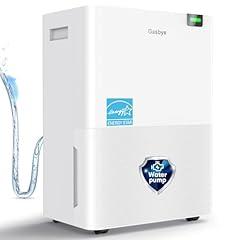
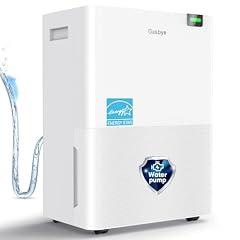
Gasbye 2026 Energy Star Dehumidifier
Overview
This is a portable, compressor-based dehumidifier with a 1.45-gallon bucket, a washable air filter, continuous gravity drainage, and a built-in pump. It is intended for indoor rooms such as basements, with manual humidity settings from 30% to 80% relative humidity. The manual states a displayed humidity accuracy of plus or minus 5%, so a separate hygrometer is useful where tight control matters. Its independently checkable capacity is 36.53 pints per day at the current federal 65 F and 60% RH test condition. The brand's 75-pint figure is a maximum at 86 F and 80% RH, which is a much wetter and warmer condition. The pump design is a defining feature, with manufacturer instructions for a 16-foot vertical lift limit, a full-bucket alert if pumping fails, and removal of the pump intake screen for cleaning.
What works
- ENERGY STAR records verify this pump version as an additional model, with 36.53 pints per day capacity, 2.01 L/kWh efficiency, and estimated annual energy use of 378 kWh.
- The adjustable 30% to 80% humidity range includes the EPA's preferred 30% to 50% indoor range.
- The manual documents operation from 41 F to 90 F and warns that defrosting becomes more frequent below 60 F.
- The pump, bucket, intake screen, and washable filter have specific cleaning instructions. The pump can be accessed and rinsed, according to the manufacturer.
- The manufacturer provides a one-year limited warranty, with a second year available through registration, plus a separately replaceable pump.
What does not
- No exact-model UL, ETL, or CSA electrical safety listing could be confirmed through a public certification directory during this review.
- The manual states a humidity display tolerance of plus or minus 5%, which can be material when trying to maintain a room near 50% RH.
- Cold use is supported down to 41 F, but the manual says defrost cycling below 60 F reduces dehumidification efficiency.
- The manufacturer calls the unit ENERGY STAR Most Efficient 2024, while the current ENERGY STAR record confirms certification but lists Most Efficient as no.
- The 4,500-square-foot coverage statement is not paired with a defined room condition, moisture load, or building leakage assumption.
Who is it for
This product suits a homeowner with a damp but finished or routinely occupied basement, utility room, or large open indoor area that has a reachable drain above or away from the unit. It is particularly relevant where emptying a bucket is inconvenient and the buyer is willing to clean the bucket, filter, pump screen, and hose on schedule. Set the humidistat near 45% to 50%, then confirm room conditions with a separate hygrometer because the stated display accuracy is plus or minus 5% RH.
Who is it not for
It is not for a flooded basement, active foundation leak, plumbing leak, or visible mold problem that needs source repair and cleanup. It is also not ideal for an unheated space that routinely falls below 41 F, or where sub-60 F operation must deliver full warm-weather removal performance. Buyers who require independently verifiable electrical safety certification for the exact product, or a published pump backflow specification, should select a unit with those records available. Do not rely on the 4,500-square-foot claim alone for unusually wet or leaky spaces.
Integrity
Keeping indoor humidity below 60%, ideally around 30% to 50%, is consistent with EPA moisture and mold guidance. This product can be set within that range, but its stated humidity reading tolerance is plus or minus 5%, so independent room monitoring matters. It offers auto defrost and specifies 41 F to 90 F use. Below 60 F, the manual cautions that more defrosting reduces moisture-removal efficiency. A dehumidifier helps manage airborne moisture, but it does not correct water intrusion or remove established mold. The ENERGY STAR record independently confirms 36.53 pints per day at the current test condition, 2.01 L/kWh efficiency, 378 kWh annual energy use, and HFC-32 refrigerant with a global warming potential of 675. EPA lists HFC-32 as acceptable with conditions for residential dehumidifiers, though it is an A2L refrigerant and the product documentation does not provide end-of-life refrigerant handling instructions. The serviceable pump and cleaning access can reduce premature disposal, but the exact product's public electrical safety listing could not be confirmed.

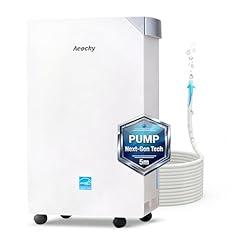
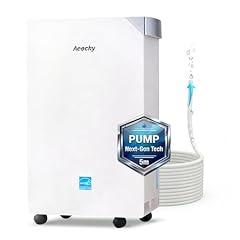
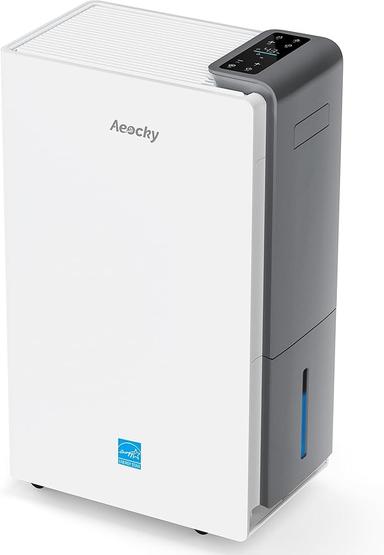
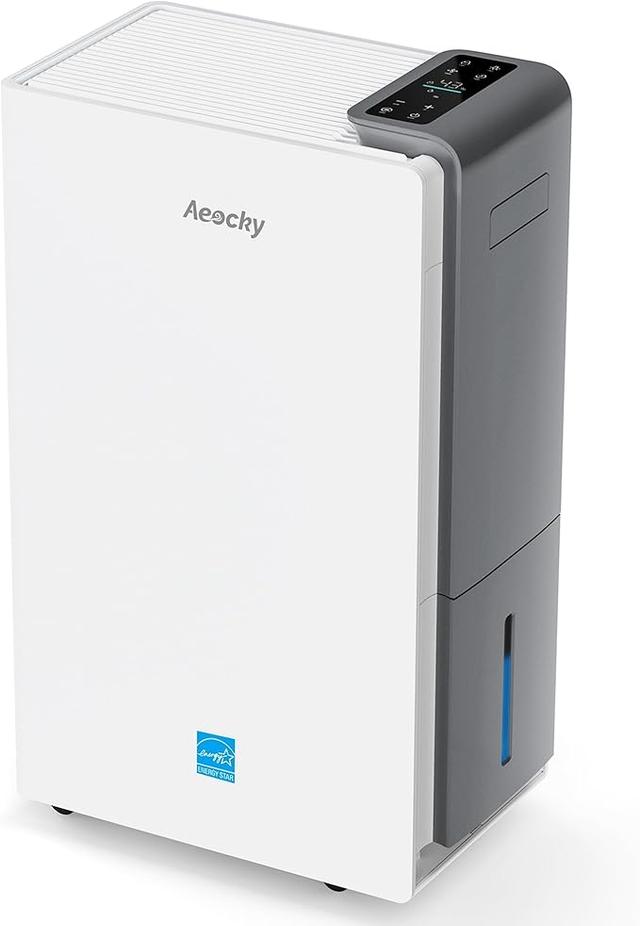
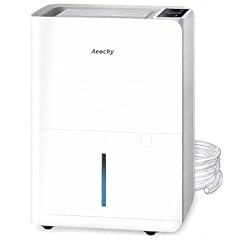
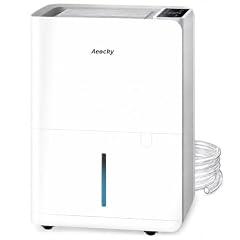
AEOCKY 4500 Sq.Ft Dehumidifier with Pump
Overview
This is a portable compressor dehumidifier for residential rooms, with a 1.45-gallon collection tank, a built-in condensate pump, drain hose, and user-adjustable humidity control. AEOCKY markets it for spaces up to 4,500 square feet and as capable of up to 80 pints per day, but those are manufacturer-stated maximum and coverage claims rather than the current standardized rating. The exact product is independently traceable in ENERGY STAR records as an additional model of a 24.5-pint-per-day portable dehumidifier. That record lists a 1.87 L/kWh integrated energy factor, 286 kWh estimated annual energy use, HFC-32 refrigerant, and ENERGY STAR Most Efficient status. Manufacturer documentation describes a pump lift of up to 5 meters, 40% to 80% humidity settings, automatic defrost, and a full-tank shutoff. Public verification of the claimed ETL safety listing was not located.
What works
- The exact product is listed in the ENERGY STAR registry, including ENERGY STAR Most Efficient status and a 1.87 L/kWh integrated energy factor.
- Its standardized 24.5-pint-per-day water-removal rating is independently recorded, making its performance comparable under current test conditions.
- Manufacturer documentation describes three drainage methods, including a built-in pump with up to 5 meters of lift for routing water to a suitable drain.
- The documented 40% to 80% setpoint range includes the 40% to 50% range commonly used for indoor moisture control.
- The manufacturer provides cleaning instructions for the air filter, tank, and pump filter cap, plus a stated three-year product warranty.
What does not
- The prominent 80-pint-per-day and 4,500-square-foot claims do not state test conditions or moisture-load assumptions. The independently listed standardized capacity is 24.5 pints per day.
- AEOCKY claims ETL certification, but a public listing for this exact product could not be corroborated in the available certification records.
- Pump instructions document lift height and cleaning, but do not clearly document backflow prevention, leak sensing, or a pump-failure alarm.
- Humidity settings are documented, but no sensor accuracy tolerance or independent humidity-control testing was located.
- Replacement parts, repair instructions, and an independently identified manufacturing source were not found.
Who is it for
This product suits a homeowner managing ordinary residential dampness in a basement, laundry area, bathroom, or larger enclosed living space where a floor drain is unavailable. The built-in pump is particularly relevant when condensate must travel upward to a utility sink or other suitable drain, with the manufacturer stating up to 5 meters of lift. It also fits users who want a 40%, 45%, or 50% humidity setpoint and who will regularly inspect the hose, clean the filter and tank, and keep the appliance within its documented operating conditions.
Who is it not for
It is not suited to a space with active flooding, standing water, foundation leaks, or visible mold growth that needs source repair and remediation rather than humidity control alone. It is also a weaker fit for locations below the documented low-temperature operating range, or for installations where a drain hose cannot be securely routed and checked for leaks. Households requiring publicly verifiable electrical safety certification before installation should seek a product whose exact safety listing can be confirmed in an NRTL directory. Do not use it near ignition sources or damage its refrigerant tubing.
Integrity
Maintaining indoor humidity near 40% to 50% can help limit moisture conditions that support mold, and this product has documented settings that reach that range. The manufacturer also describes full-tank shutoff, automatic defrost, washable-filter care, and cleaning of the tank and pump filter cap. Those features can reduce stagnant-water and dust buildup when users follow the maintenance instructions. The exact public safety listing was not confirmed, despite the brand's ETL claim, so electrical certification remains an evidence gap. Its strongest environmental evidence is the independently listed ENERGY STAR Most Efficient status, 1.87 L/kWh integrated energy factor, and 286 kWh annual energy-use figure. ENERGY STAR also identifies HFC-32 refrigerant with a global-warming potential of 675, lower than many older refrigerants but flammable. Refrigerant tubing should not be pierced, and service should be handled by qualified technicians. No product-specific CPSC recall was identified in the recall search. AEOCKY states a three-year product warranty, but public repair-parts support was not found.
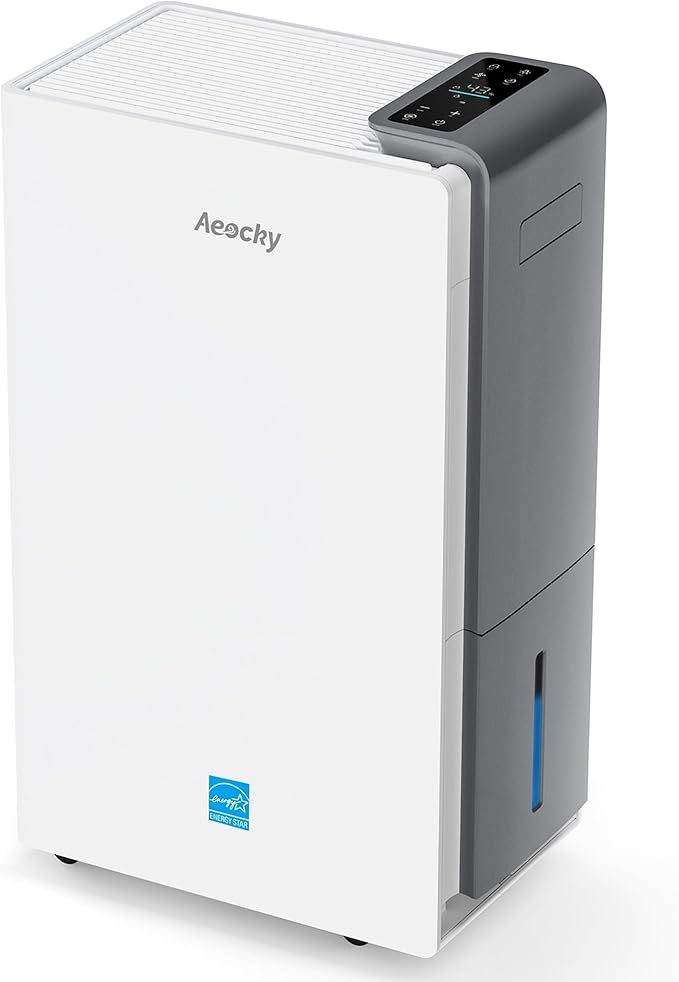
AEOCKY 80 Pint Smart Dehumidifier
Overview
This is a portable compressor dehumidifier with a 1.45-gallon bucket, washable filter, casters, and either bucket collection or gravity drainage through the included hose. It has no built-in condensate pump, so the hose must run continuously downhill to a suitable drain. The manufacturer describes adjustable 40 to 80% relative humidity control, automatic defrost, and operation down to 42°F. Its moisture-removal claims need context. The manufacturer states 80 pints per day at 95°F and 95% relative humidity, and 56 pints per day at 86°F and 80% relative humidity. ENERGY STAR independently links this product to a current 24.5-pint-per-day DOE-rated capacity, 1.86 L/kWh integrated energy factor, 285 kWh annual energy use, and ENERGY STAR Most Efficient status. The lower DOE figure is the useful comparable capacity figure, not evidence that the higher hot, humid-condition figure is impossible.
What works
- ENERGY STAR independently identifies this product as Most Efficient, with 285 kWh annual energy use and a 1.86 L/kWh integrated energy factor.
- The 40 to 80% selectable humidity range includes EPA's preferred 30 to 50% indoor relative humidity range, although sensor accuracy is not independently documented.
- The manual documents a full-bucket automatic shutdown and a gravity-drain hose option, which can reduce overflow risk when installed with a continuous downward slope.
- The manual specifies a removable washable nylon filter and cleaning every two weeks, making routine airflow-path maintenance practical.
- The manufacturer provides a three-year whole-unit warranty and five-year compressor coverage.
What does not
- This is not a pump dehumidifier. Continuous drainage is gravity-only, so it cannot lift water to a sink, window, or elevated drain.
- The manufacturer claims ETL certification, but an exact-product listing could not be confirmed in a public Intertek directory during verification.
- Humidity sensor tolerance and real-world control accuracy are not published, so precise control near a 50% target remains unverified.
- The broad 4,500 to 5,500 square foot coverage claims lack a stated room layout, moisture-load, or air-exchange condition.
- Its HFC-32 refrigerant has a lower climate impact than many older HFCs, but it is an A2L refrigerant and the available documentation does not provide end-of-life disposal instructions.
Who is it for
This unit suits a homeowner managing humidity in a warm, damp basement, large living area, or several connected rooms where a floor drain is available below the unit. It is especially relevant for someone who wants a DOE-rated portable unit with independently traceable ENERGY STAR Most Efficient certification, adjustable humidity settings, and less frequent bucket handling. Use a separate hygrometer to confirm the actual room humidity, particularly when trying to maintain roughly 40 to 50% relative humidity. Keep the drain hose sloped downward and inspect it for kinks or leaks.
Who is it not for
Choose a different drainage setup if water must travel uphill to a sink, standpipe, or window, because this product uses gravity drainage rather than an internal pump. It is also not the right response to active flooding, foundation seepage, plumbing leaks, or visible mold that needs source repair and possibly professional remediation. Cold spaces that routinely fall below the manufacturer-stated 42°F minimum need a unit specifically documented for lower-temperature performance. Households requiring a publicly verifiable exact-product electrical listing should seek documentation before use.
Integrity
Controlling indoor humidity can help limit moisture conditions associated with mold. EPA guidance recommends keeping indoor relative humidity below 60%, ideally between 30 and 50%. This product can be set from 40 to 80%, so it can target that range, but neither the manufacturer nor an independent source publishes a sensor-tolerance figure. The manual also specifies automatic defrost, a washable filter, full-bucket shutdown, and gravity drainage. Those features require routine cleaning and correct hose slope to avoid stagnant water and leaks. The strongest independently checkable environmental evidence is the current ENERGY STAR record. It identifies this product as ENERGY STAR Most Efficient with 24.5 pints per day under the DOE rating framework, 1.86 L/kWh efficiency, and estimated annual use of 285 kWh. It uses HFC-32 refrigerant, listed by EPA as acceptable with use conditions for residential dehumidifiers, with a GWP of 675 and A2L flammability classification. No relevant AEOCKY product recall was found in the CPSC recall search during verification.

VEAGASO 30 Pint Dehumidifier with Drain Hose
Overview
This is a portable compressor dehumidifier with a 2 L bucket, washable intake filter, two fan speeds, a 1 to 24 hour timer, and a supplied 3.28 foot drain hose. It is intended for indoor rooms and basements. Despite the page category, this product does not have a built-in condensate pump. Its hose is manufacturer-described gravity drainage and must terminate at least 3.9 inches below the outlet. The manufacturer documents a 30% to 80% RH setting range in 5% steps, which includes the EPA's preferred 30% to 50% indoor range. The exact product is independently listed by ENERGY STAR at 9.53 pints per day under the current test basis and 1.65 L/kWh. Its advertised 34 pints per day is a manufacturer figure measured at much hotter, wetter conditions, 95°F and 90% RH.
What works
- The exact product is listed in ENERGY STAR records for the United States, with an independently reported 1.65 L/kWh integrated energy factor.
- Its 30% to 80% RH control range includes the EPA preferred 30% to 50% indoor humidity range, although sensor accuracy is not published.
- The manual documents automatic bucket-full shutdown, a washable filter, and a gravity-drain installation method.
- A documented 41°F to 95°F operating range and automatic defrost provide some basis for cool-basement use.
- The manufacturer provides one year of automatic coverage, plus two additional years after registration, and states lifetime technical support.
What does not
- It is not a pump dehumidifier. The included hose relies on gravity, so it cannot lift water to a sink, window, or elevated drain.
- No public UL, ETL, or CSA listing for this exact product was located in the checked certification directories. ENERGY STAR certification is not a substitute for an electrical safety listing.
- The 34-pint headline capacity is not the current DOE-style capacity. ENERGY STAR lists 9.53 pints per day, while the manual ties 34 pints to 95°F and 90% RH.
- The manufacturer states humidity settings but does not publish humidistat accuracy or tolerance, so precise hold performance is unverified.
- R290 is a low-climate-impact refrigerant but flammable. The manual calls for qualified refrigerant service and does not provide a consumer-facing parts catalog or repair procedure.
Who is it for
This product suits a renter or homeowner managing a moderately damp enclosed room, bathroom, bedroom, or basement that has a nearby floor drain or sump basin below the unit. It offers a small 2 L bucket for portable use and a gravity hose for less frequent emptying. It is also suited to people who want a user-selectable humidity target within the EPA-preferred range and value independently documented ENERGY STAR efficiency. Room size claims should be treated as conditional, not as a guarantee for every 2,500 square foot layout.
Who is it not for
It is not for a basement where condensate must travel upward or horizontally over a long run. This product has no built-in pump, and an improperly sloped or kinked hose can stop drainage and return water to the bucket. It is also not for homes needing independently verified electrical safety certification for a specific installation, or users needing published humidistat accuracy. Do not rely on it to resolve active leaks, flooding, wet foundations, or existing mold without fixing the moisture source and cleaning affected materials.
Integrity
Keeping indoor humidity in the 30% to 50% range can help limit conditions favorable to mold, and this product's manufacturer-stated 30% to 80% setting range can reach that range. The unit also has bucket-full shutdown, a removable washable filter, and cleaning instructions that call for drying the filter completely. These features support routine moisture-path maintenance, but they do not make the product an air purifier or a remedy for water intrusion or existing mold. The exact product appears in ENERGY STAR records for the United States at 9.53 pints per day and 1.65 L/kWh, providing independently traceable efficiency data. The manual identifies 45 g of R290 refrigerant. R290 has low climate impact compared with many legacy refrigerants, but it is flammable, so refrigerant-circuit service and disposal require trained personnel. No relevant CPSC recall was located in the checked public sources, but a public exact-model NRTL electrical safety listing was not found.

Max 50 Pint Smart Dehumidifier
Overview
This is a portable compressor dehumidifier with a 0.8-gallon bucket, washable prefilter, garden-hose connection, humidistat controls, and a stated 3-year product warranty with 5 years for the compressor. It is intended for room-level moisture control in living areas, bedrooms, bathrooms, and basements. The most reliable capacity figure found is 15 pints per day in Natural Resources Canada’s public record, with an integrated energy factor of 1.35 L/kWh. The manufacturer instead markets a maximum of 50 pints per day at 95°F and 95% relative humidity, plus 38 pints per day at 86°F and 80% relative humidity. Its manual documents adjustable humidity control that includes the EPA-recommended 40% to 50% range, automatic defrost, full-bucket indication, and gravity drainage. Despite the page keyword, the available manual describes a downhill hose drain, not a built-in condensate pump.
What works
- A public government record identifies this exact product at 15 pints per day and 1.35 L/kWh, giving a test-based baseline for capacity and efficiency.
- The manufacturer-stated humidistat range includes 40% to 50% RH, the range EPA identifies as ideal for limiting moisture and mold risk.
- The manual gives specific hygiene directions, including washing the prefilter every 2 to 4 weeks and cleaning the water bucket every 1 to 2 weeks.
- Automatic defrost and a stated operating range down to about 41°F support use in moderately cool spaces, though performance at that temperature is not independently quantified.
- The manufacturer states a 3-year product warranty and 5-year compressor coverage.
What does not
- This product does not document a built-in pump. Its hose setup relies on gravity drainage, so it cannot send water upward to a sink or elevated drain without separate equipment.
- The 50-pint headline is a maximum at very hot, very humid conditions, while the independently listed standardized capacity is 15 pints per day. Coverage claims should therefore be treated as conditional.
- ETL, RoHS, REACH, and NRCan are claimed in available product documentation, but an exact product listing was not located in a public UL, Intertek, CSA, or ENERGY STAR register.
- The manual includes R290 refrigerant safety instructions, but no accessible nameplate or service document confirmed the refrigerant charge and end-of-life handling for this exact product.
- The published control description does not provide humidistat sensor accuracy or tolerance, so its ability to hold a precise RH setpoint is unproven.
Who is it for
This product fits a homeowner or renter managing ordinary room or basement humidity where the unit can sit level and drain downhill to a floor drain. It is most suitable for someone who will use a separate hygrometer, target roughly 40% to 50% RH, clean the filter and bucket regularly, and understand that the public standardized capacity is 15 pints per day. The compact bucket is workable when hose drainage is available, or when the user can empty it often.
Who is it not for
It is not appropriate for a basement, crawl space, laundry area, or utility room that requires water to be lifted to a sink, window, or elevated drain. The available instructions describe gravity drainage only, not a built-in pump. It is also a weaker fit for spaces regularly below about 41°F, serious flooding or structural leaks, or households that need publicly verifiable electrical certification before unattended operation. A dehumidifier does not fix water intrusion, existing mold growth, or unsafe electrical conditions.
Integrity
Keeping indoor RH around 30% to 50% can help limit dampness and mold conditions. This product’s documented control range includes 40% to 50%, and its manual includes automatic defrost, a full-bucket indication, a washable filter, and routine bucket-cleaning instructions. Those maintenance steps matter because standing condensate and a neglected filter can contribute to odors, leaks, and persistent moisture. The exact product has a public Canadian efficiency record of 1.35 L/kWh and 15 pints per day. That is useful independent performance data, but it does not substantiate the much larger maximum capacity headline under normal basement test conditions. The manual contains flammable R290 refrigerant safety instructions, including keeping the product away from ignition sources and using qualified service personnel. Exact third-party electrical-listing evidence and product-specific refrigerant disposal instructions were not located. No exact-product CPSC recall was found in the review performed.

DECIUU 5000 Sq.Ft Energy Star Dehumidifier with Pump
Overview
This is a portable, compressor-based dehumidifier with a 1.45-gallon bucket, three fan speeds, a washable filter, gravity drainage, and a built-in condensate pump. It is intended for damp basements, garages, and larger living areas. The manual states a 35% to 80% humidity setting range, automatic defrost, and operation above 41°F. Its independently checkable capacity is 32 pints per day under the current DOE Appendix X1 test method. ENERGY STAR publicly lists this product as an additional model of a certified 32-pint portable unit, with 333 kWh annual energy use and a 2.07 L/kWh integrated energy factor. The listing's prominent 100-pint and 5,000-square-foot claims need context. The manual ties 100 pints to very hot, highly humid 95°F and 90% RH conditions, while the public certification record does not support its “Most Efficient” claim.
What works
- ENERGY STAR certification is publicly traceable to this product through the certified model's additional-model record.
- The verified 32-pint daily removal rating uses the current DOE Appendix X1 method, making it comparable with other current residential dehumidifier ratings.
- The manufacturer documents three drainage methods, including a pump lift of up to 16.4 feet, continuous gravity drain, and bucket shutoff when full.
- The stated 35% to 80% setpoint range includes the EPA's recommended 30% to 50% indoor humidity zone.
- The manual gives practical cleaning instructions for the washable filter and water bucket, including drying them before storage.
What does not
- No public UL, ETL, or CSA listing for the exact product was located, so independent electrical and abnormal-operation safety certification could not be confirmed.
- The marketing uses a 100-pint headline, but the independently listed DOE-test capacity is 32 pints per day. The higher figure applies only at 95°F and 90% RH.
- The manual and marketing call it ENERGY STAR Most Efficient, while ENERGY STAR's product record says it is certified but not Most Efficient.
- Pump instructions specify lift height and hose connection, but do not document backflow protection, pump failure sensing, or a leak alarm.
- The two-year coverage requires timely registration, and publicly accessible replacement-parts and repair documentation were not located.
Who is it for
This product suits someone managing recurring humidity in a basement, garage, or large open area where a nearby floor drain is unavailable. Its manufacturer-stated pump can send condensate upward to a sink or other drain up to 16.4 feet away, while the verified 32-pint DOE capacity provides a realistic benchmark for normal operation. It is most appropriate for a buyer willing to clean the filter and bucket regularly, install and inspect the drain hose, and use a separate hygrometer to confirm room humidity.
Who is it not for
It is not suited to households that require a publicly verifiable UL, ETL, or CSA electrical listing for an appliance running unattended, because no exact-product listing was found. It is also not appropriate where temperatures commonly fall below 41°F, despite the stated automatic defrost feature. Buyers expecting 100 pints per day in ordinary indoor conditions should not rely on that headline figure. It cannot remedy active flooding, foundation leaks, wet building materials, or existing mold without correcting the moisture source and cleaning affected materials.
Integrity
Maintaining indoor relative humidity around 30% to 50% can help limit moisture conditions that support mold. The manufacturer's stated 35% to 80% control range reaches that target zone, but no sensor-accuracy tolerance or independent humidistat test was found. The product has a washable filter, removable bucket, automatic full-bucket shutoff, and manual instructions to clean and dry moisture-contact parts. Those features can reduce stagnant-water and odor risks when they are maintained. ENERGY STAR publicly verifies this product's 32-pint DOE-test capacity, 333 kWh annual energy use, and 2.07 L/kWh efficiency. It uses HFC-32 refrigerant, listed in the certification record with a 675 global-warming potential and 5-ounce charge. EPA allows HFC-32 in new residential dehumidifiers subject to use conditions, and identifies it as mildly flammable. No recall for this exact product, brand, or identified manufacturer was located in the CPSC recall material reviewed. Public repair-parts support and an exact independent electrical safety listing were not found.
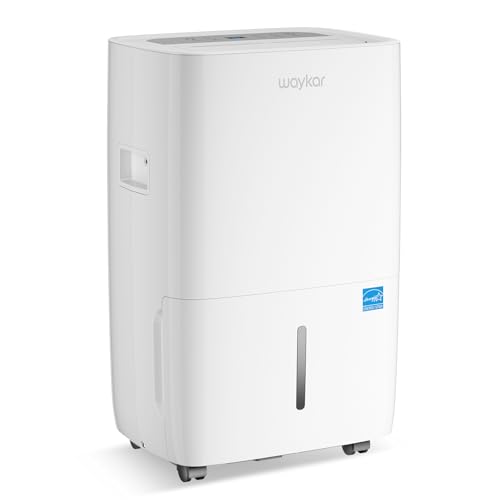
Waykar JD025CE-80 Energy Star Dehumidifier 80 Pints
Overview
This is a portable, compressor-based home dehumidifier with a 1.14-gallon bucket, wheels, two fan speeds, a hose connection for gravity drainage, and an adjustable humidistat. Waykar states that it can be set from 30% to 80% relative humidity, has automatic defrost, and removes up to 80 pints daily at 95°F and 90% relative humidity. Its stated 5,000-square-foot coverage is not tied to a standardized room condition. The independently checkable figure is lower but more comparable. ENERGY STAR lists this exact product for the United States with 24.93 pints per day under the current federal test, 1.7 L/kWh integrated energy factor, and 299 kWh annual energy use. It is not a pump model. The supplied hose is for downhill gravity drainage, while the bucket-full shutoff is documented in the manual.
What works
- ENERGY STAR independently lists the product as certified for the United States, with a 24.93-pint-per-day standardized capacity.
- The verified 1.7 L/kWh integrated energy factor and 299 kWh annual energy figure provide usable operating-efficiency data.
- The humidistat's manufacturer-stated 30% to 80% setting range includes the EPA's preferred 30% to 50% indoor range.
- The manual documents automatic bucket-full shutdown, continuous gravity drainage, a removable filter, and cleaning instructions.
- Waykar provides a one-year warranty, with one additional year available through timely registration.
What does not
- This product has no built-in pump, no lift height specification, and no backflow protection. It cannot send condensate uphill to a sink or drain.
- The 80-pint headline applies at 95°F and 90% relative humidity, while the independently listed current-test capacity is 24.93 pints per day.
- No exact-model UL, ETL, or CSA electrical safety listing could be verified in the public certification directories searched.
- Automatic defrost and operation down to about 44.6°F are documented, but independent low-temperature performance testing was not located.
- The manual carries a California Proposition 65 warning for styrene and its compounds. The warning does not quantify consumer exposure.
Who is it for
It suits someone with a warm basement, large open living area, or moisture-prone storage space who has a floor drain positioned below the product. They should want a portable unit with a bucket backup, a user-selectable humidity target, and independently traceable ENERGY STAR capacity and efficiency figures. It is most practical where the actual moisture load is moderate enough for a roughly 25-pint-per-day standardized removal rating, not where an 80-pint headline is treated as everyday output.
Who is it not for
It is not suited to a basement or crawlspace that needs condensate lifted upward, because this product has gravity drainage only and no built-in pump. It is also a poor fit for spaces routinely colder than about 45°F, or for unattended locations without a downhill drain, since the modest bucket will need emptying after shutoff. Buyers requiring publicly verifiable UL, ETL, or CSA listing for a specific installation policy should use a product with that exact listing available in the certifier's directory.
Integrity
Controlling indoor moisture can support mold prevention when humidity is kept around 30% to 50%, the range EPA recommends. Waykar states that this product can be set within that range, though sensor accuracy and control tolerance were not independently published. It can help manage airborne moisture, but it does not fix leaks, groundwater intrusion, existing mold, or structural water damage. ENERGY STAR confirms U.S. certification, 1.7 L/kWh efficiency, and 299 kWh annual energy use. It also identifies HFC-32 refrigerant, with a global-warming potential of 675. EPA lists HFC-32 as acceptable for new residential dehumidifiers subject to use conditions, but it is an A2L mildly flammable refrigerant, so service and disposal need appropriate handling. The manual also includes a California Proposition 65 warning concerning styrene and its compounds. No exact-product recall was located in the CPSC recall material searched.

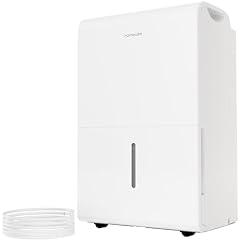
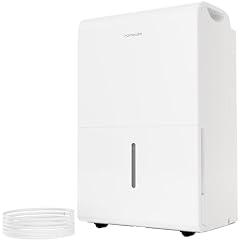
hOmeLabs WiFi Dehumidifier with Pump - 50 Pint
Overview
This is a portable, compressor-based 50-pint dehumidifier with a built-in condensate pump, 1.6-gallon bucket, washable air filter, Wi-Fi pairing, casters, and hose drainage options. It is intended for large indoor spaces such as basements, but coverage figures should be treated as site-dependent rather than as a measured room-size guarantee. Its moisture-removal claim is unusually well documented. ENERGY STAR records identify this exact product as a portable unit certified at 49.66 pints per day under the current DOE Appendix X1 test method, with an integrated energy factor of 1.9 L/kWh. The available product manual states a 35 to 85 percent humidity set range, plus or minus 5 percent displayed room-humidity accuracy, automatic defrost, and a pump lift of up to 16.4 feet. Independent public verification of an exact-model electrical safety listing was not located.
What works
- ENERGY STAR records independently match this product to 49.66 pints per day under the DOE Appendix X1 method.
- Its independently listed 1.9 L/kWh integrated energy factor supports efficient moisture removal for its tested capacity.
- The manual documents adjustable humidity control from 35 to 85 percent RH, including settings within the EPA's generally recommended 30 to 50 percent indoor range.
- Manufacturer documentation specifies a built-in pump with a 16.4-foot maximum lift, leak-check instructions, bucket-full shutdown, and pump fault guidance.
- The manual provides practical hygiene maintenance steps, including bucket cleaning every two weeks and washable-filter cleaning at least monthly.
What does not
- No exact-model UL, ETL, or CSA electrical safety listing could be verified in the public certification directories reviewed. This is missing verification, not evidence that the product is unsafe.
- The pump system has important installation limits. The manual requires a secure hose connection, limits lift to 16.4 feet, and warns against pump or continuous drainage at or below 32 F because hoses can freeze and block.
- The stated coverage is not a standardized performance measure. Product descriptions have used both 7,000 and 7,500 square feet, which makes it a weak basis for sizing a unit.
- R-32 refrigerant has a lower climate impact than many older HFC refrigerants, but it is mildly flammable and requires the manual's storage, servicing, and disposal precautions.
- Warranty support is limited to one year and excludes commercial or non-household use. Public replacement-parts documentation for the pump, compressor, and controls was not located.
Who is it for
This product fits a homeowner managing sustained moisture in a finished or unfinished basement, large living area, or similarly warm enclosed space, especially where a floor drain or elevated drain route can be set up correctly. It is most suitable for someone who will set a target around 45 to 50 percent RH, clean the bucket and filter on schedule, and wants documented test-based 50-pint-class performance with a built-in pump. The ENERGY STAR certification is useful for buyers expecting long operating hours during humid seasons.
Who is it not for
It is not a good fit for spaces that routinely fall below 41 F, such as unconditioned cold basements, garages, or seasonal buildings. Although it has automatic defrost, the manual gives 41 F as the lower operating limit and warns that pump and continuous drainage can freeze at 32 F or below. It also does not suit buyers who require a publicly verifiable exact-model electrical safety listing, a longer warranty, documented access to repair parts, or a product sized solely from a broad square-foot coverage claim.
Integrity
Controlling damp indoor air can help limit conditions that support mold, but a dehumidifier does not repair leaks, flooding, wet construction materials, or hidden mold. This product's controls can be set from 35 to 85 percent RH, and the manual reports plus or minus 5 percent room-humidity display accuracy. A 45 to 50 percent setting is a practical starting point for many homes, with an independent hygrometer useful for checking actual conditions. The product is listed by ENERGY STAR at 49.66 pints per day and 1.9 L/kWh. Its manual identifies R-32 refrigerant, which EPA lists as acceptable with conditions for new residential dehumidifiers and assigns a global-warming potential of 675. R-32 is mildly flammable, so the manual's no-extension-cord, ventilation, qualified-service, and refrigerant-recovery instructions matter. No exact-product recall was found in the CPSC recall materials reviewed, but no public exact-model NRTL electrical listing was confirmed.