
10 Best Creatine Monohydrate Gummies
 Lauren Wilson
Please note that we participate in affiliate marketing programs. When you purchase through links on our site, we may earn a commission. As an Amazon Associate we earn from qualifying purchases. This comes at no additional cost to you and helps support the resources required to provide valuable content.Advertising Disclosure
Top-rated Creatine Monohydrate Gummies Comparison
1

2
4
5
6
7
8
9
+
10
Creatine monohydrate gummies: what matters
Creatine monohydrate gummies are a chewable way to take creatine without measuring powder or mixing a drink. The intended use across the reviewed products is regular daily supplementation alongside resistance training or repeated high-intensity exercise. Human research most consistently supports creatine monohydrate not loosely defined “creatine complexes” at practical daily maintenance amounts generally around **3–5 grams**. A gummy can therefore be evidence-aligned on paper while still failing to deliver its stated amount in the finished product.
The most important question is whether the gummies contain the labeled creatine when purchased and throughout shelf life. The strongest evidence is a **lot-specific finished-product certificate of analysis** tied to the retail lot and expiry date. It should identify the laboratory, method, date, lot, signatory, measured creatine, and creatinine. HPLC or another validated creatine and creatinine method is preferable. A raw-material test, a factory statement, or a generic “third-party tested” claim does not establish what is in the bottle or pouch a buyer receives. The supplied reviews repeatedly found that this evidence was missing. One tested lot did match its 5-gram label claim, but it was not linked to every retail lot or expiry date.
Independent certification is a separate check. A product should be searchable by its exact name, format, flavor, count, and serving in a public registry such as **NSF Certified Dietary Supplements, NSF Certified for Sport, USP Verified, Informed Sport, or BSCG Certified Drug Free**. NSF/ANSI 173 dietary-supplement certification provides meaningful label, contaminant, adulterant, audit, and retesting oversight, but it is not the same as NSF Certified for Sport. Informed Sport and sport-specific certifications are particularly relevant to tested athletes and others concerned about prohibited substances.
Headline figures often need unpacking. “5,000 mg” may be a manufacturer-stated total rather than an independently measured creatine amount. A larger number such as 6,200 or 9,000 mg may refer to all active ingredients, not creatine alone. Serving directions can also conflict: three, four, or five gummies may be required, and a lower permitted serving may deliver less than the advertised daily dose. Check the Supplement Facts panel, the arithmetic per gummy, the number of gummies per serving, and the total servings per container.
The gummy delivery system creates its own tradeoffs. Compare added sugar, calories, acids, and sugar alcohols per daily serving. “Sugar-free” does not necessarily mean free of maltitol, isomalt, erythritol, or other polyols that may cause digestive symptoms; it also does not establish that the product is low-burden overall. Full ingredient, allergen, age, warning, lot, expiry, and responsible-company information should be available on the physical label. Marketing should stay focused on creatine-supported training performance rather than unsupported promises about disease, fat loss, hormones, guaranteed results, broad cognitive benefits, or child development.
Across the supplied reviews, recurring cautions include the lack of lot-linked potency and stability evidence, absence of sport certification for most products, and incomplete warnings or allergen information. Sugar alcohols may cause gastrointestinal discomfort, while some products contain substantial added sugar. Several products are adult-only; pregnancy, breastfeeding, kidney disease, other medical conditions, and medication use repeatedly call for individualized clinical advice. The child-marketed product raised a particularly serious concern: evidence for healthy young children was described as limited, especially for focus, memory, learning, and long-term safety. These products should not be treated as interchangeable with ordinary candy or as automatically appropriate for minors.
Integrity
The scores below reflect the supplied topic assessments. For this category, a high score generally means the product provides product-specific evidence and clear labeling; a low score often reflects manufacturer-only claims, missing lot records, inconsistent identity, or undisclosed gummy ingredients.
HHealth & Safety
Verified creatine still present at purchase
This measures whether finished gummies deliver their labeled creatine monohydrate amount and remain low in creatinine through shelf life. It matters because moisture and acidity can contribute to degradation. Among the supplied products, the strongest scores went to products with independent or product-specific testing, while lower scores reflected reports not tied to a retail lot or expiry date, or no finished-product assay at all.
Protection from contaminants and prohibited drugs
This covers finished-product control of heavy metals, microbes, undeclared drugs, and sport-prohibited substances. Gummies need finished-product evidence because ingredient or facility testing does not establish the condition of the final formula. Higher-scoring products had NSF oversight or independent contaminant testing; lower-scoring products relied on generic testing claims or had no public report for the exact product.
Low-burden gummy ingredients
This measures added sugar, calories, acids, sweeteners, sugar alcohols, and other avoidable excipients in the stated daily number of gummies. The delivery format can turn a simple creatine dose into a daily confectionery burden. Higher scores went to simpler or sugar-free formulas with disclosed amounts; lower scores reflected substantial sugar, high polyol loads, or missing nutrition and ingredient panels.
Responsible use safeguards
This measures adult-versus-minor directions, pregnancy and medical cautions, medication guidance, and allergen disclosure. It matters because creatine gummies may contain several additional ingredients and are sometimes marketed to children or women without enough context. Higher scores reflected clear adult positioning and usable warnings; lower scores reflected sparse cautions, inconsistent allergen descriptions, or marketing to young children despite limited evidence.
EEvidence
Independently certified, not just self-tested
This measures whether the exact product appears in a credible public certification registry with continuing oversight. It matters because “third-party tested” can describe an unsupported brand claim. The highest scores belonged to products listed by NSF or Informed Sport; products without NSF, USP, Informed Sport, or BSCG listings generally remained near the lower end despite facility or manufacturer testing statements.
Dose and form that match the evidence
This measures transparent creatine monohydrate dosing at a practical daily amount, without hidden blends or implausible arithmetic. A clear 3–5 gram daily serving is generally the relevant benchmark in the supplied reviews. High scores went to products showing a defined serving and form; lower scores reflected unclear totals, conflicting directions, or multi-ingredient headlines that obscured how much creatine was actually provided.
Traceable label and accountable seller
This measures whether the buyer can identify the responsible company and trace a bottle through its lot number, expiry, serving count, and consistent label information. It matters when a quality concern arises. Higher scores reflected clear company details and stable product identity; lower scores reflected conflicting brand or manufacturer names, inconsistent retailer descriptions, missing contact information, or unclear package records.
Claims that stay within the evidence
This measures whether marketing limits claims to what creatine monohydrate at the labeled dose can support. Higher-scoring products used restrained muscle, strength, or training language. Lower-scoring products made unsupported claims about absorption, focus, brain effects, fat loss, recovery, hormones, or guaranteed outcomes, or used large active-ingredient headlines that could mislead buyers about the actual creatine dose.
Manufacturing controls shown with evidence
This measures quality controls beyond vague GMP or facility language, including identifiable manufacturing responsibility, finished-product release testing, and accessible lot records. High scores require records that buyers can check rather than self-issued badges. Among the supplied products, stronger scores accompanied certification or independent testing, while weaker scores relied on unnamed laboratories, expired certificates, or broad facility claims without finished-product documentation.
EEcology
Lower-impact packaging with honest environmental claims
This measures packaging waste, material disclosure, recycled content, recycling or disposal instructions, and the credibility of environmental claims. Most supplied products provided little bottle or pouch detail, so their ecological impact could not be meaningfully compared. The higher-scoring examples had a stated sustainability or carbon-assessment feature, but even those did not establish recycled content or locally useful disposal guidance.
Full reviews
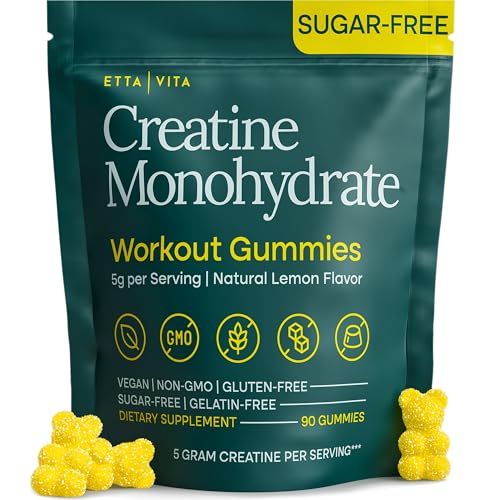
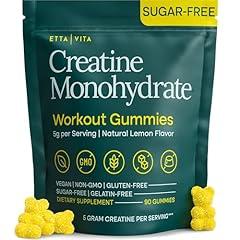
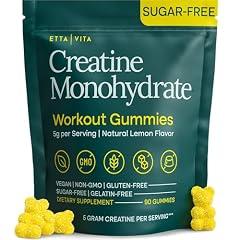
Etta Vita Creatine Monohydrate Gummies
Overview
This is a 90-gummy, sugar-free creatine monohydrate product. The retail label presents a four-gummy serving as 5,000 mg of creatine monohydrate, with 36 calories, 6 g carbohydrate, 0 g added sugar, and 2 g sugar alcohols. Its intended use is daily creatine supplementation for exercise performance and training adaptation. Creatine monohydrate is the form and nominal daily amount most closely aligned with established human performance research. The defining concern is potency verification. A certificate image used in the retail materials reports 1,011 mg creatine per gummy, which would total about 4.0 g across four gummies, not the 5 g label target. That report is not linked to a retail lot or expiry date. It also does not provide current shelf-life evidence for the product a buyer receives. The manufacturer claims third-party testing and GMP-certified facilities, but no public product certification registry listing was identified.
What works
- The nominal ingredient is creatine monohydrate, the form most consistently supported for high-intensity exercise capacity and training-related lean-mass gains.
- The retail label lists zero added sugar, with 2 g sugar alcohols per four-gummy serving.
- The ingredient panel and serving arithmetic are disclosed, rather than hidden in a proprietary blend.
- The manufacturer provides a phone number and email contact on its product site.
What does not
- The displayed potency report gives 1,011 mg creatine per gummy, which is about 4.0 g across four gummies and does not support the 5 g label target.
- The displayed report is not tied to a retail lot number or expiry date, so it cannot verify potency or creatinine stability at purchase.
- No NSF, USP, Informed Sport, or BSCG product certification listing was identified for this product.
- The manufacturer simultaneously promotes no heavy metals and displays a California Proposition 65 warning, without publicly identifying the relevant substance or a lot-specific contaminant report.
- Claims that MCT coating improves absorption, plus broad cognitive-support language, are not backed by product-specific human evidence on the product page.
Who is it for
This format is most relevant to healthy adults who already intend to use creatine monohydrate and strongly prefer a chewable, travel-friendly serving over powder. The label's zero added sugar may also matter to people limiting conventional sugary gummies. It is better suited to someone using creatine as part of regular resistance or repeated high-intensity training, who understands that four gummies are needed for the labeled daily amount and accepts the remaining uncertainty around finished-product potency.
Who is it not for
This product is not well suited to tested athletes, military personnel, or others who need a publicly verifiable banned-substance certification. It is also a poor fit for buyers who require lot-linked confirmation that the full labeled creatine amount remains present through expiry. People who are pregnant, breastfeeding, managing kidney disease, taking medicines, or following a clinician-directed diet should seek individualized medical advice before using creatine. Those sensitive to sugar alcohols may prefer a format without maltitol, isomalt, and erythritol.
Integrity
The label identifies a sugar-free formula with maltitol syrup, isomalt, erythritol, pectin, citric acid, sodium citrate, natural lemon flavor, steviol glycosides, and beta-carotene. Zero added sugar is a meaningful formulation point, although the listed 2 g sugar alcohols per serving can still be relevant for people prone to gastrointestinal discomfort. The manufacturer states that the gummies are vegan, gluten-free, and gelatin-free. Quality transparency is incomplete. Retail materials display a laboratory report, but it is not retail-lot linked and its reported per-gummy creatine amount does not substantiate the four-gummy 5 g claim. The brand also makes a California Proposition 65 disclosure while advertising no heavy metals, without a public lot-specific metals report explaining the warning. No product-specific package material, recycled-content detail, disposal instruction, or independently verifiable environmental certification was located. No Etta Vita-specific FDA recall or warning letter was identified in the federal-record searches performed.

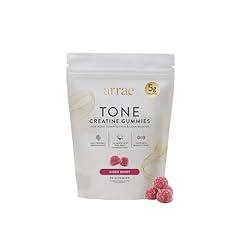
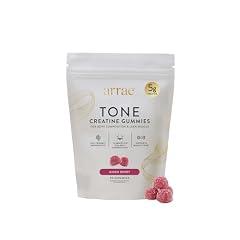
Arrae Tone Gummies Mixed Berry
Overview
This is a mixed-berry, pectin-based creatine gummy supplement marketed to adult women. Arrae’s current product page lists a serving as four gummies, providing 5 g creatine monohydrate, 400 mg ginger extract, and 34 mg of a heat-inactivated L. fermentum postbiotic. It lists 22 servings per container, 42 calories, and 4 g total sugars per four-gummy serving. Directions allow three to four gummies daily, so the lower end provides less than the stated 5 g serving. The creatine form and full four-gummy dose fit the 3 to 5 g daily range supported in human creatine research. However, the 5 g amount is manufacturer-stated, not confirmed by a public, lot-specific finished-gummy assay. This matters because creatine can convert to creatinine in moist, acidic formats, and the formula includes water and citric acid. Arrae and Target state that testing includes heavy metals and microbiology, but no public finished-product certificate, laboratory report, or independent certification listing was located.
What works
- The stated four-gummy serving provides 5 g of creatine monohydrate, a form and daily amount aligned with established creatine research.
- The full ingredient list and nutrition information are publicly disclosed, including 4 g sugars and 42 calories per four-gummy serving.
- The formula uses pectin rather than gelatin, and Arrae states the gummies are vegan.
- The brand advises against use by people under 18, and the retail warning advises adults who are pregnant, nursing, or managing a medical condition to consult a clinician.
What does not
- No lot-specific public testing report verifies that the finished gummies retain the labeled creatine amount or remain low in creatinine through expiry.
- No public product listing was located in NSF Certified for Sport, NSF Certified Dietary Supplements, USP Verified, Informed Sport, or BSCG registries.
- Four gummies add 4 g sugar and 42 calories daily, plus citric acid and several syrup-based gummy ingredients.
- The product directions permit three gummies daily, although the stated 5 g creatine serving requires four gummies.
- Allergen messaging is inconsistent across retailers. Arrae says the product contains coconut, while a Target listing describes it as nut-free.
Who is it for
This product suits an adult who wants a candy-like, travel-friendly way to take creatine and is willing to use four gummies daily to reach the manufacturer-stated 5 g serving. It is most relevant for someone doing regular resistance training or high-intensity exercise, where creatine monohydrate has the strongest evidence for supporting training performance and lean-mass gains over time. It may also suit someone who strongly dislikes powders, provided the added sugar, multi-gummy serving, and lack of publicly accessible finished-product potency testing are acceptable tradeoffs.
Who is it not for
It is not well suited to competitive athletes or other buyers who require independently certified banned-substance controls, because no public certification listing was located. It is also a poor fit for people who need to minimize added sugar, acids, or confectionery-style supplements, and for those seeking a one-unit daily dose. People who are pregnant, nursing, under 18, have a medical condition, or use medications should not rely on general online reassurance and should first discuss creatine and the added ingredients with a qualified clinician. People with coconut sensitivity should treat the conflicting allergen descriptions cautiously.
Integrity
Creatine monohydrate at 3 to 5 g daily has substantial human evidence for supporting high-intensity exercise performance and training adaptations in healthy adults. Arrae’s stated four-gummy serving reaches that range. The company lists ginger extract and a heat-inactivated postbiotic alongside creatine, but the product-specific evidence for body-fat or no-bloat marketing was not independently established in this review. The label also adds 4 g sugar per full serving. Arrae states that ingredients undergo identity testing and that finished products receive heavy-metal and microbiological testing, but it does not publicly provide a lot-linked finished-product report showing creatine potency, creatinine, contaminants, test method, laboratory, and expiry. No public independent certification record was located. No product-specific packaging material, recycled-content disclosure, recycling instructions, or substantiated environmental claim was located. No relevant FDA recall or warning letter was found in the searches performed.

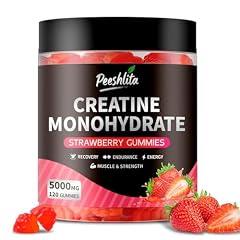
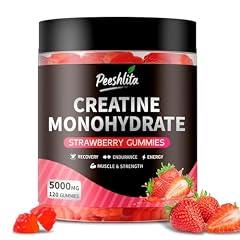
Peeshlita Creatine Monohydrate Gummies 5000mg
Overview
This is a 120-count strawberry creatine monohydrate gummy product marketed for adult women and men who want workout-performance and recovery support without mixing powder. The retail claim is 5,000 mg of creatine monohydrate per serving, and the listing describes it as sugar-free, vegan, and gluten-free. Those are manufacturer or retailer-stated specifications, not independently confirmed finished-product findings. The 5 g stated serving is within the commonly studied 3 to 5 g daily range for creatine monohydrate. However, I did not locate a lot-specific finished-product assay showing how much creatine remains in these gummies, their creatinine level, or their stability through expiry. I also did not locate a public certification listing for this exact product from NSF, USP, Informed Sport, or BSCG. The public retail material located does not provide a complete ingredient panel, directions, allergen statement, or verifiable manufacturing and lot-release documentation.
What works
- The stated 5 g creatine monohydrate serving matches a commonly studied daily intake range for adult exercise use.
- Gummy delivery can remove the need to measure or mix powder, according to the retailer description.
- The retailer describes the product as sugar-free, vegan, and gluten-free.
- The stated performance, strength, and training-support positioning broadly fits evidence for creatine monohydrate when the labeled dose is actually delivered.
What does not
- No lot-specific independent assay was located to confirm finished-gummy creatine content, creatinine level, or shelf-life stability.
- No public exact-product certification from NSF, USP, Informed Sport, or BSCG was located.
- The available retail material does not disclose a complete ingredient list, sweeteners, acids, or nutrition information, so gummy-related digestive and dental burden cannot be assessed.
- Public retail specifications are incomplete and inconsistent, including an external listing that reports 120 total servings for a 120-count bottle while also stating 5 g per serving.
- The catalog materials include an immune-support benefit, which is not a well-established primary use of creatine monohydrate.
Who is it for
This product fits an adult recreational exerciser who specifically wants a chewable, no-mixing format and accepts that the stated 5 g daily creatine amount is manufacturer-stated rather than independently verified in the finished gummies. It is most relevant for someone doing regular resistance training, sprint-style work, or other high-intensity exercise, where creatine monohydrate has the strongest evidence base. The sugar-free claim may also matter to a buyer limiting added sugars, although the full sweetener system and nutrition panel were not available for review.
Who is it not for
It is not well suited to tested athletes or people subject to anti-doping rules, because no exact-product NSF Certified for Sport, Informed Sport, or BSCG certification was located. It is also a poor fit for buyers who need independently verified potency, contaminant testing, full allergen disclosure, or transparent ingredient quantities. Minors, people who are pregnant or breastfeeding, and people with kidney disease or other relevant medical conditions should seek clinician guidance before using creatine, especially when the product label warnings and directions are not publicly available.
Integrity
Creatine monohydrate itself has substantial human research behind it for increasing muscle creatine stores and supporting high-intensity exercise capacity when used at typical daily intakes such as 3 to 5 g. The stated 5 g serving therefore fits the evidence base if the gummies deliver that amount. This product's key uncertainty is finished-product verification. No lot-linked assay, creatinine stability result, contaminant certificate, or public sport-certification record was located for this exact gummy product. The retailer claims sugar-free, vegan, and gluten-free status, but the available material did not provide the complete ingredient list, allergen statement, package-material specification, recycled-content claim, recycling instructions, or disposal guidance. No product-specific recall or warning-letter result was identified in the checked public FDA resources, but that does not substitute for accessible manufacturing records, a batch number, expiry traceability, or a current finished-product certificate of analysis.

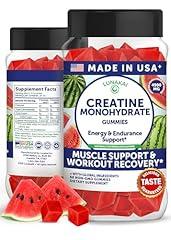
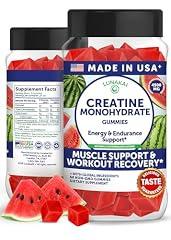
Lunakai Creatine Gummies
Overview
This is a 60-count watermelon creatine monohydrate gummy product for adults. Lunakai directs users to chew 2 to 3 gummies daily, which the manufacturer says supplies 3,000 to 4,500 mg of creatine monohydrate. At that use rate, one bottle is roughly a 20 to 30 day supply. It is intended for regular use around training, not as a stimulant pre-workout. The stated form and daily amount fit established creatine monohydrate research, which commonly uses 3 to 5 g daily. That match is based on the manufacturer’s dose claim, not an independent test of a finished bottle. Lunakai says the product is vegan, gelatin-free, non-GMO, caffeine-free, and third-party tested, but no retail-lot certificate of analysis, public sport-certification listing, or finished-product potency and creatinine report was located. A retailer listing identifies it as an adult product and says to keep it away from children.
What works
- The manufacturer-stated 3 to 4.5 g daily amount is within the commonly researched 3 to 5 g creatine monohydrate range.
- Chewable, water-free dosing may make daily use easier for people who avoid powder mixing.
- Lunakai states that the formula contains no caffeine or stimulants.
- The manufacturer states that the gummies are vegan and made without gelatin, gluten, dairy, or soy.
What does not
- No lot-specific finished-product report was found to confirm creatine content, creatinine breakdown, heavy metals, or microbiological results through expiry.
- The brand’s third-party-tested claim is not the same as a publicly verifiable product certification, and no NSF, USP, Informed Sport, or BSCG listing was located.
- The full quantitative nutrition and excipient disclosure was not available from the verified brand page, so added-sugar and acid burden cannot be independently assessed.
- Listing identity is inconsistent, because Lunakai markets the product as Made in USA while a current retailer listing gives the origin as imported.
- Directions give no clear pregnancy, nursing, kidney-disease, medication, or other medical-condition caution beyond consulting a physician.
Who is it for
This product suits a healthy adult doing regular resistance training or repeated high-intensity exercise who wants creatine monohydrate in a chewable format and is comfortable relying on the manufacturer’s stated 3 to 4.5 g dose. It may also fit someone who dislikes powders, does not need a caffeine-containing pre-workout, and values a vegan, gelatin-free format. The 60-count bottle is best suited to a person able to use it consistently every day, rather than someone seeking occasional workout stimulation.
Who is it not for
It is not well suited to tested athletes or military personnel who need independently verified banned-substance controls. It is also a weak fit for buyers who require a lot-specific potency, creatinine, heavy-metal, or microbiology report before using a gummy creatine product. Children should not use it without professional guidance, as the retailer identifies it for adults and says to keep it away from children. People who are pregnant, nursing, have kidney disease, take prescription medicines, or have another relevant medical condition should seek individualized clinical advice first.
Integrity
Creatine monohydrate is the form supported by the strongest human performance evidence, and the manufacturer’s stated 3 to 4.5 g daily range is consistent with common research protocols. Lunakai also states that this product is stimulant-free, vegan, non-GMO, gluten-free, and made without gelatin, dairy, or soy. Those are manufacturer claims, not independently verified findings for this bottle. The important unresolved health issue is verification. Lunakai’s general third-party-testing statement was not accompanied by a current retail-lot certificate showing creatine potency, creatinine, heavy metals, or microbiological results. No public independent product certification was located. No product-specific FDA recall, warning letter, or safety alert was found in the searches performed. The bottle is plastic in retailer images, and no recycled-content statement, recyclability instructions, package-material specification, or substantiated environmental claim was located.

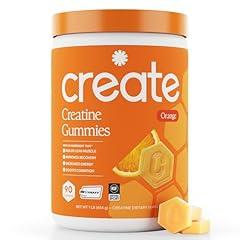
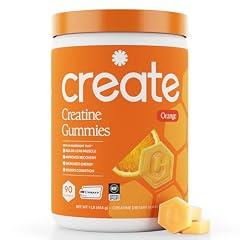
Create Creatine Monohydrate Gummies, Orange, 90ct
Overview
This product is a 90-gummy orange creatine monohydrate supplement intended for adults. The labeled routine is three gummies daily, supplying 4.5 g of creatine monohydrate, with 30 servings per bottle. Creatine monohydrate at this daily amount matches the range commonly used in human performance research, particularly alongside high-intensity or resistance training. Its defining quality feature is independently verifiable NSF Certified for Sport status. NSF’s current United States registry lists the orange gummy product, named lots, a three-gummy serving, and the product’s 5 g sugar and 60-calorie serving profile. That certification provides substantial assurance for banned-substance and quality control, although a purchaser still cannot access a public assay report tied to the bottle’s own expiry date. The ingredient list is simple for a gummy, but it includes tapioca syrup, sugar, allulose, pectin, malic acid, flavoring, and coloring.
What works
- NSF Certified for Sport status is independently verifiable for the orange gummy product and listed lots.
- A three-gummy serving provides 4.5 g of labeled creatine monohydrate, a practical dose consistent with established performance research.
- The pectin-based format is vegan and listed as gluten-free in the independent certification registry.
- The registry identifies the responsible company, United States market, named lots, package sizes, and serving size.
What does not
- The product has no publicly accessible finished-product certificate of analysis linked to a buyer’s own lot and expiry date, so direct shelf-life potency and creatinine conversion cannot be independently checked by the purchaser.
- A three-gummy serving listed by NSF contains 5 g of sugar and 60 calories, which is a meaningful daily candy-like burden for people limiting sugar or protecting dental health.
- The available retail label gives water-intake advice but does not visibly provide detailed pregnancy, breastfeeding, kidney-condition, medication, or minor-use cautions.
- An unresolved federal consumer complaint filed in April 2026 alleged under-delivery of labeled creatine. This is an allegation, not a regulatory finding or recall, and it sits alongside the product’s current NSF certification.
Who is it for
This product suits an adult who wants a travel-friendly, no-mixing creatine routine and is willing to take three gummies each day. It is particularly relevant for a recreational or competitive exerciser who values independently verified banned-substance controls, since the exact orange product and several lots appear in NSF’s Certified for Sport registry. The 90-gummy bottle provides 30 days at the three-gummy routine. It also fits someone avoiding gelatin or gluten, based on the certified product listing and ingredient format.
Who is it not for
It is not a strong fit for people who need the lowest possible added-sugar exposure, have frequent cavities, or are managing blood glucose closely, because the NSF listing reports 5 g sugar and 60 calories per three-gummy serving. Children and teenagers should not be treated as the default audience because the retail information identifies adults and the available label lacks detailed youth guidance. People who are pregnant, breastfeeding, have kidney disease, use prescription medicines, or have a clinician-directed fluid restriction should seek individualized medical advice before using creatine.
Integrity
The important health control is real and independently checkable. NSF’s Certified for Sport registry lists this specific orange creatine gummy for sale in the United States, with four named lots, and the program is designed to address label-content and banned-substance concerns. No FDA recall or product-specific FDA warning action was located in the reviewed recall and enforcement resources. However, independent certification does not replace a publicly available potency report tied to each buyer’s bottle and expiry date. The gummy uses pectin rather than gelatin and is listed as vegan and gluten-free. Its tradeoff is the sweetened delivery system, with tapioca syrup, sugar, allulose, pectin, malic acid, flavoring, and coloring. No package-material specification, recycled-content claim, disposal instruction, or substantiated environmental program was found. The available evidence therefore supports dietary-format claims more clearly than environmental claims.
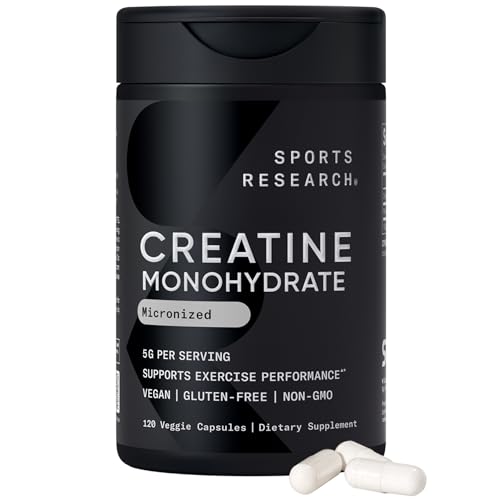
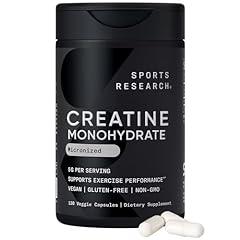
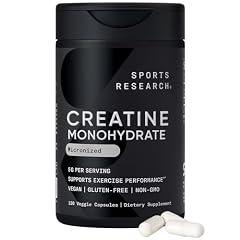
Sports Research Creatine Monohydrate - Workout Recovery & Performance
Overview
This is a 120-count, unflavored creatine monohydrate capsule product, not a gummy. Four vegan capsules supply 5 g of micronized creatine monohydrate, yielding 30 daily servings. The disclosed non-active ingredients are a hypromellose capsule and rice extract blend. It is intended for adults taking a daily creatine serving to support training performance, strength, and recovery. The 5 g dose and creatine monohydrate form match established human performance research. More importantly, the exact capsule product is independently listed by Informed Sport for North American sale. Its public registry shows multiple tested batches with test dates and expiry dates. That is meaningful banned-substance oversight, but it is not a public assay showing creatine potency, creatinine level, heavy metals, or microbiological results for the individual bottle purchased.
What works
- The disclosed 5 g daily serving of creatine monohydrate fits the 3 to 5 g daily maintenance range supported in sports-nutrition research.
- The exact capsule product is independently listed by Informed Sport, with batch-specific test dates and expiration dates in the public registry.
- Capsule ingredients are short and do not include sugar, flavorings, or sugar alcohols. This avoids the typical added-sugar burden that can accompany gummy formats.
- The current label information identifies vegan capsules and states gluten-free and soy-free positioning.
- The public certification record creates a practical way to compare a bottle lot and expiry date against listed tested batches.
What does not
- No public, lot-specific finished-product certificate of analysis was located showing the labeled creatine amount, creatinine degradation, heavy metals, or microbiological results.
- Informed Sport certification provides strong banned-substance control, but it should not be treated as a published potency and shelf-life report for every retail bottle.
- A full serving requires four capsules, which may be inconvenient for people who dislike swallowing multiple capsules.
- The product is marketed as cGMP compliant and third-party tested, but accessible finished-product release records and named laboratory reports were not located.
- Packaging details do not provide bottle-resin identification, recycled-content information, or locally useful recycling instructions.
Who is it for
This product fits healthy adults who want a research-aligned 5 g daily creatine monohydrate serving without mixing powder into drinks. It is especially relevant to athletes, service members, and other people subject to drug-testing rules because the exact capsule product has a current Informed Sport listing with batch-level testing records. It also suits people avoiding gelatin, sugar, flavored powders, soy, or gluten, provided they can comfortably take four capsules daily and can match the bottle lot to the public certification record where possible.
Who is it not for
It is not a fit for children unless a qualified clinician specifically supervises use, or for pregnant or nursing people seeking a product with pregnancy-specific safety evidence. People with kidney disease, a diagnosed medical condition, or prescription medication use should follow the label's direction to consult a qualified healthcare professional before use. It is also poorly suited to anyone who needs public potency, creatinine, heavy-metal, or microbiological results for their exact bottle, or who cannot comfortably swallow four capsules per serving.
Integrity
The strongest health-quality finding is independent Informed Sport certification of this exact North American capsule product. The registry identifies multiple tested batches, their test dates, and expiry dates, which supports control of sport-prohibited substances. The product uses creatine monohydrate at 5 g per serving, a form and dose supported by human exercise-performance literature. The short disclosed ingredient list avoids the added sugars, acids, and sugar alcohols often found in creatine gummies. Important limits remain. No public lot-specific certificate was found for creatine potency, creatinine stability, heavy metals, or microbiology. The label warns users to consult a healthcare professional before use when pregnant, nursing, managing a medical condition, or taking prescription medication. Ecological transparency is limited. The brand states the bottle is non-BPA, but does not provide verified recycled-content, resin, refill, or disposal guidance for this product.
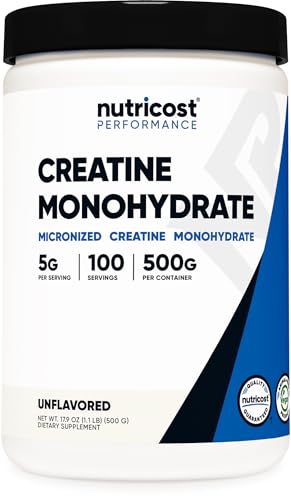
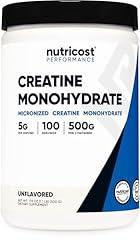
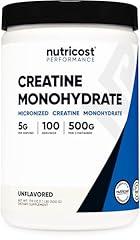
Nutricost Micronized Creatine Monohydrate Powder 500g
Overview
This product is an unflavored creatine monohydrate powder, not a gummy. The independently cataloged label lists 5 g of micronized creatine monohydrate per one-scoop serving, 100 servings, and no other ingredients. It is mixed into water or another beverage. The label includes an optional five-day loading schedule of four daily servings, followed by one daily serving. The 5 g daily maintenance serving matches the range commonly used in human exercise research. The manufacturer states that the product is third-party tested and made in a quality-tested U.S. facility with globally sourced ingredients. More importantly, ConsumerLab's June 2026 creatine review included this exact unflavored Nutricost product among independently purchased products tested for creatine content and creatinine, but its lot-specific results are not publicly available. No NSF Certified for Sport, USP Verified, Informed Sport, or BSCG certification listing was located for this product.
What works
- The independently cataloged label identifies one active ingredient only, 5 g of micronized creatine monohydrate per scoop.
- A 5 g maintenance serving is consistent with established human evidence for creatine monohydrate used alongside training.
- It avoids the added sugar, acids, sweeteners, gelatin, and multiple daily pieces associated with creatine gummies.
- The label provides adult-use guidance, loading and maintenance directions, medical consultation language, storage instructions, and a manufacturer address and phone contact.
- The exact unflavored product was included in ConsumerLab's recent independently purchased creatine testing program, although the detailed result is member-only.
What does not
- No public, retail-lot-linked certificate of analysis was found showing creatine potency, creatinine level, heavy metals, or microbiological results through the bottle's expiry date.
- The product was not found in major public supplement-certification registries, including NSF Certified for Sport, USP Verified, Informed Sport, and BSCG.
- The manufacturer’s third-party-testing statement is not accompanied by a named laboratory, assay method, lot number, or public release report.
- The plastic bottle has no verified recycled-content statement, material specification, recycling directions, or other substantiated environmental information.
- The optional loading directions provide 20 g daily for five days, which is unnecessary for many users and can be less convenient or less well tolerated than starting with one daily serving.
Who is it for
This product suits healthy adults who want a straightforward, unflavored creatine monohydrate powder for resistance training, sprint-oriented exercise, or other high-intensity training. One scoop supplies the evidence-aligned 5 g daily amount without sugar or gummy excipients, and the 500 g container provides 100 maintenance servings. It is also a practical format for people who prefer to control how their supplement is mixed, such as adding it to water, a shake, or another nonheated drink. The label’s adult-use directions and simple one-ingredient formula fit buyers seeking minimal formulation complexity.
Who is it not for
It is not designed for children or for households wanting a candy-like or ready-to-eat format, because this is a scoopable powder and its label limits use to healthy people age 18 and older. People who are pregnant or nursing, take medication, or have a medical condition should follow the label’s instruction to consult a healthcare professional first. Competitive athletes and others subject to drug testing may prefer a product with a publicly verifiable sport certification, because none was located here. It is also a weaker fit for buyers who require public lot-specific contaminant and potency reports.
Integrity
The health positive is formulation simplicity. The independently cataloged label reports only micronized creatine monohydrate, with no sweeteners, flavors, sugar, gelatin, or other gummy ingredients. Its 5 g serving aligns with the well-studied daily range used for performance and training adaptations in healthy adults. The label also includes adult-only use, a medical consultation caution, a safety-seal instruction, and contact details for the responsible manufacturer. Quality evidence is incomplete rather than disproven. ConsumerLab included the exact unflavored product in a recent independently purchased creatine review that tested creatine content and creatinine, but public materials do not disclose this product's detailed result or lot. No public major independent certification or current retail-lot certificate of analysis was located. No product-specific FDA recall or warning letter was identified in the checks performed. The product is sold in a plastic bottle, but no verified recycled-content, recyclability, or disposal information was found.

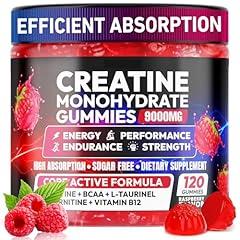
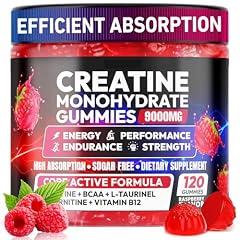
Creatine Gummies Monohydrate Complex 9000MG
Overview
This is a raspberry flavored, sugar-free claimed creatine gummy supplement with 120 gummies. The directions shown in the retail content call for four gummies, including use about 30 minutes before exercise or after a workout, which makes the bottle a stated 30-serving supply. The retailer and product images state 5,000 mg of creatine monohydrate per serving, a daily amount consistent with common creatine maintenance protocols in human research. Its defining limitation is verification. No lot-specific finished-gummy creatine and creatinine report, independent product certification, or finished-product contaminant report was located. The marketing also creates material label ambiguity. It presents a 9,000 mg active-ingredients headline, while separately identifying 5,000 mg creatine, and the bottle image displays AEQNJV whereas the retail brand is Cytona.
What works
- The manufacturer-stated 5 g creatine monohydrate serving matches the 3 to 5 g daily range commonly used after loading in human performance research.
- Four gummies per stated serving offers a chewable, portable alternative for adults who cannot use powder at the time they take creatine.
- The product is presented as sugar-free, which can reduce added-sugar exposure compared with conventional sweetened gummies.
- A 120-gummy bottle provides a stated 30 servings when used as directed.
What does not
- No current lot-specific finished-product assay was located to confirm that gummies still contain the stated creatine amount rather than creatinine after manufacture and storage.
- No listing in major independent supplement-certification registries was located for this exact product, so banned-substance and contaminant controls are unverified.
- The displayed 9,000 mg headline is not a clear creatine dose. It appears to refer to multiple active ingredients, while other product content states 5,000 mg creatine.
- The visible product identity is inconsistent, with AEQNJV on the bottle image and Cytona used by the retailer. A complete back-label contact, lot, expiry, allergen, and excipient record was not available for review.
- Claims that it has high absorption and is better than powders or capsules were not supported by product-specific human testing.
Who is it for
This format fits an adult recreational exerciser who wants a stated 5 g daily creatine monohydrate serving in a chewable, travel-friendly format and accepts that the amount has not been independently confirmed in the finished gummies. It is most relevant for someone already using resistance training or repeated high-intensity exercise, since those are the performance contexts best supported for creatine monohydrate. The four-gummy serving and 120-count bottle may also suit people who find powder preparation inconvenient.
Who is it not for
It is not suited to drug-tested athletes or others who need a publicly verifiable banned-substance certification, because none was located for this exact product. It is also a poor fit for people who require lot-level potency, creatinine, heavy-metal, microbiological, allergen, or full excipient documentation before use. Pregnant or nursing people, minors, and people with kidney disease or another relevant medical condition should not rely on the broad adult marketing alone and should seek individualized advice from a qualified clinician.
Integrity
Creatine monohydrate itself has strong human evidence for improving high-intensity exercise capacity and supporting training adaptations when it is actually delivered at an appropriate dose. This product states 5 g per four-gummy serving, but that is a manufacturer claim, not an independently verified finished-product result. This distinction matters for gummies because independent category testing has found that some creatine gummies can be understrength or contain excess creatinine from degradation. No exact-product NSF, USP, Informed Sport, or BSCG certification was located. The retailer claims manufacture in a cGMP-certified facility, but that is not equivalent to independent certification or a public finished-product release record. FDA searches did not identify a product-specific recall or warning letter in the reviewed results. Packaging material, recycled content, recycling instructions, and environmental certifications were not disclosed in the accessible retail content, so its packaging impact cannot be meaningfully assessed.

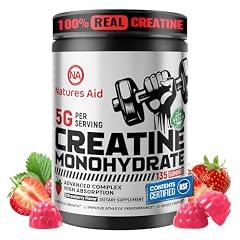
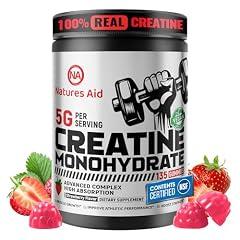
Natures Aid Creatine Monohydrate Gummies
Overview
This product is a strawberry-flavored creatine monohydrate gummy supplement. The bottle contains 135 gummies, and the independently maintained NSF registry identifies the exact strawberry product with a recommended serving of three gummies. That works out to 45 labeled daily servings. Natures Aid states that the three-gummy serving supplies 5 g of creatine monohydrate. That is a practical daily amount consistent with human research on maintenance supplementation, although no public retail-lot assay was found that confirms creatine potency or creatinine degradation through the bottle's expiry date. Its defining strength is verified NSF/ANSI 173 dietary-supplement certification. This is product certification with continuing oversight, not merely a factory GMP claim. The available materials also state vegan, gelatin-free, sugar-free, gluten-free, and non-GMO positioning, but a complete independently readable ingredient and nutrition panel was not located.
What works
- The exact strawberry 135-count product is listed in NSF's public dietary-supplement certification registry.
- NSF/ANSI 173 certification includes label-claim, formulation, and contaminant review, plus continuing facility oversight.
- The manufacturer-stated 5 g creatine monohydrate serving matches the commonly studied 3 to 5 g daily maintenance range.
- Three gummies daily from a 135-count bottle provides a simple 45-day labeled routine.
What does not
- No public, lot-specific finished-product report was found for creatine content, creatinine degradation, heavy metals, or microbiology at retail expiry.
- NSF dietary-supplement certification is not NSF Certified for Sport, so it does not establish the extra banned-substance screening sought by drug-tested athletes.
- The full ingredient list, added-sugar amount, allergen statement, and medical cautions were not independently readable in the reviewed retail materials.
- Marketing references pre-workout energy and recovery. Creatine evidence is strongest for repeated high-intensity exercise capacity and training-related lean-mass gains, not an immediate stimulant-like energy effect.
Who is it for
This product suits a healthy adult who wants a portable, chewable alternative to powder and can consistently take three gummies per day. The stated 5 g creatine monohydrate serving is within the usual evidence-based maintenance range, and the exact product's NSF dietary-supplement listing gives more independent quality oversight than an unsupported testing badge. It is particularly relevant for adults doing resistance training, sprint-type exercise, or other repeated high-intensity activity, where creatine monohydrate has the clearest evidence base.
Who is it not for
It is not designed for people who require sport-specific banned-substance certification, including athletes subject to testing programs, because the verified credential is NSF dietary-supplement certification rather than NSF Certified for Sport. It is also a poor fit for shoppers who need a publicly available retail-lot potency, creatinine, heavy-metal, and microbiology report before use. Minors, pregnant or breastfeeding people, and people with kidney disease or other relevant medical conditions should obtain clinician-specific advice before starting creatine.
Integrity
The meaningful health-quality finding is independently verified product certification. NSF lists this exact strawberry 135-count gummy under its dietary-supplement program. NSF says this program reviews label claims and formulations, tests for contaminants and undeclared ingredients, and uses periodic retesting and facility audits. That materially strengthens confidence in identity and general contaminant control, even though it does not provide a buyer with a bottle-specific public assay or sport banned-substance certification. The manufacturer describes the gummies as sugar-free, vegan, gelatin-free, gluten-free, and non-GMO, but the complete ingredient and nutrition panels were not independently confirmed in the material reviewed. No product-specific packaging material, recycled-content disclosure, recycling instructions, or substantiated environmental claim was located. The rigid bottle format therefore has unresolved disposal and material-impact details. No product-specific FDA recall or warning-letter action was identified in the regulatory checks reviewed.
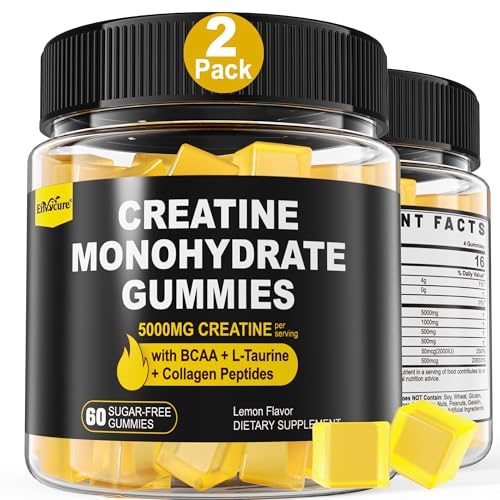
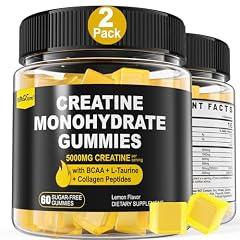
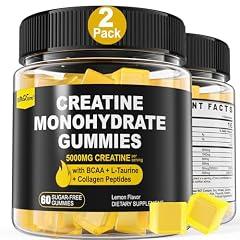
Envycure Creatine Monohydrate Gummies with BCAA
Overview
This is a two-bottle lemon flavored gummy creatine supplement. The listed use is four gummies daily, supplying 5 g of creatine monohydrate per serving, alongside 1 g BCAA, 500 mg collagen peptides, 500 mg L-taurine, vitamin B12, and vitamin D3. The 5 g creatine amount and four-gummy serving are reported by an independent product database, while the brand itself describes the formula and directions. Creatine monohydrate at 3 to 5 g daily matches established sports-nutrition evidence for raising muscle creatine stores over time. The key limitation is verification of the finished gummy. I could not verify a lot-specific assay showing that this product retains its claimed creatine amount and remains low in creatinine through its shelf life. I also could not verify an independent sport, supplement, or drug-screening certification for this exact product.
What works
- The stated 5 g daily creatine monohydrate serving is consistent with commonly studied maintenance dosing.
- Four gummies provide the stated full serving, which may suit people who dislike powders or capsules.
- The public manufacturer page provides a distributor address, phone number, and email for follow-up.
- The formula is manufacturer-stated as sugar-free and uses pectin rather than gelatin.
What does not
- No lot-specific finished-product creatine and creatinine report was publicly verifiable, which matters especially for a moisture-containing gummy.
- No exact-product listing was verified in NSF Certified for Sport, USP Verified, Informed Sport, or BSCG public certification records.
- The product is described as containing collagen peptides while the manufacturer also calls it vegan. That is an unresolved claim conflict that needs clarification.
- Publicly available product information did not let me verify a complete warning and allergen panel, including guidance for pregnancy, medications, kidney conditions, or other medical circumstances.
- The manufacturer claims GMP-factory production and testing, but did not provide publicly checkable finished-product release records or a lot-specific contaminant report.
Who is it for
This format is most suited to a healthy adult who specifically wants a chewable creatine routine and accepts four gummies daily. Its manufacturer-stated 5 g creatine monohydrate serving fits the common evidence-based maintenance range for resistance training, repeated high-intensity exercise, or people who struggle to use powder consistently. It may also suit someone seeking a sugar-free flavored format, provided they review the physical bottle's full Supplement Facts, allergen statement, lot code, and expiration date before use.
Who is it not for
It is not well suited to tested athletes, military personnel, or anyone whose work or competition requires strong prohibited-substance assurance, because an exact-product certification was not verified. It is also a poor fit for people who need confirmed vegan products, since the public description pairs a vegan claim with collagen peptides. Pregnant or nursing people, minors, people with kidney disease or other relevant medical conditions, and people using medicines should seek individualized advice from a clinician or pharmacist before using creatine or this multi-ingredient gummy.
Integrity
The useful health point is the stated 5 g creatine monohydrate serving. That amount matches the 3 to 5 g daily maintenance range commonly used in human performance research. However, the product itself was not independently confirmed to contain that amount at purchase or near expiry. Public information did not provide a lot-linked creatine, creatinine, heavy-metal, microbiological, or prohibited-drug report. The manufacturer says the gummies are made, tested, and bottled in a GMP-certified factory, but that is a manufacturer claim rather than publicly verifiable finished-product evidence. The inactive ingredients publicly reported for the formula include pectin, stevia or stevioside, citric acid, sodium citrate, coconut oil, and carnauba wax. The brand calls the product sugar-free, gluten-free, soy-free, and gelatin-free, yet also lists collagen peptides and calls it vegan. That contradiction should be resolved before use. It is sold in bottles, but no package material, recycled-content statement, disposal guidance, or substantiated environmental claim was publicly identified.