
10 Best Creatine for Women
 Lauren Wilson
Please note that we participate in affiliate marketing programs. When you purchase through links on our site, we may earn a commission. As an Amazon Associate we earn from qualifying purchases. This comes at no additional cost to you and helps support the resources required to provide valuable content.Advertising Disclosure
Top-rated Creatine for Women Comparison
1

2
4

5

6
7
8
9
Creatine for women: what to look for
Creatine is not a women-specific ingredient. In the supplied products, the most evidence-aligned option is usually **creatine monohydrate** providing about **3–5 g per day**. That is the amount repeatedly used for daily maintenance in human research and referenced in sports-nutrition guidance for female athletes. The form matters: products that use a clearly labeled amount of creatine monohydrate are easier to compare than blends that mention creatine without showing how much is present.
The first check is dose math. A powder may provide 5 g in one scoop, while capsules may require four capsules and gummies may require three, four, or five pieces. A 90-count bottle does not necessarily mean 90 days: three gummies per day provide 30 servings, four gummies provide about 22 full-dose days, and a product labeled for twice-daily use can turn 30 scoops into a 15-day supply. Headline figures such as “5,000 mg” can also be misleading when marketplace materials conflict, or when the amount refers to a multi-gummy serving rather than one gummy. Look for a current Supplement Facts panel, serving size, number of servings, ingredient amounts, directions, lot code, and expiry date.
The next distinction is whether the labeled amount has been independently checked in the finished product. Manufacturer statements such as “third-party tested,” “potency validated,” or “heavy-metal tested” are not the same as a public, lot-specific certificate of analysis. Stronger documentation identifies the finished-product lot, laboratory, test method, creatine result, and where relevant creatinine degradation, heavy metals, and microbiological results through expiry. The supplied reviews show that this level of buyer-accessible evidence was uncommon, including among products with otherwise clear labels.
Independent certification is a separate quality signal. A live exact-product listing in **NSF Certified for Sport**, **Informed Sport**, **BSCG**, or **USP Verified** is more meaningful than a generic badge or a statement that a facility is certified. Certification scope matters: **NSF/ANSI 173** supports label and contaminant oversight, but it is not the same as NSF Certified for Sport banned-substance screening. The exact flavor, format, size, and product name should match the registry entry; a certification record under a related brand name can create uncertainty.
Formula simplicity can reduce avoidable burdens. A single-ingredient powder avoids sugar, polyols, stimulants, botanicals, and overlapping vitamins or minerals. Gummies and flavored blends may be more convenient, but can add sugar, allulose, maltitol, erythritol, flavoring, acids, or other ingredients that affect tolerance. Collagen products also require attention to animal source and allergens: fish, bovine, egg, or other animal-derived ingredients can make a product unsuitable for some buyers. “Vegan” or “sugar-free” claims should be checked against the current physical label, especially where supplied product information conflicted.
Across the supplied reviews, recurring cautions are important. These products are intended for adults, not children or adolescents. Pregnancy, breastfeeding, trying to conceive, kidney disease or unexplained kidney-test changes, clinically managed conditions, and medication use commonly call for clinician guidance; women-focused marketing does not establish safety for those situations. People with fish, egg, bovine, peanut, or tree-nut concerns should check the complete formula and cross-contact information. Buyers needing banned-substance assurance should choose a product with a current exact-product sport certification. Finally, no supplied product provided fully substantiated lower-impact packaging claims, so bulk containers may reduce single-serve waste, but recyclability, recycled content, refillability, and sourcing remain product-specific questions.
Integrity
The scores below reflect the supplied reviews and the frozen topic definitions. Higher scores indicate stronger evidence or controls for that specific issue; they do not mean a product is risk-free or that every marketing claim is supported.
HHealth & Safety
Evidence-matched creatine dose and form
This measures whether the labeled daily serving provides a realistic human-evidence-supported amount—usually 3–5 g—of creatine monohydrate. For this category, high scores went to clearly labeled 5 g powder, capsule, or gummy servings, while lower scores reflected underdosing or conflicting amounts. A large headline number is not enough if the serving size or number of pieces is unclear.
Verified active creatine potency
This asks whether finished-product, lot-specific testing confirms the stated creatine amount through expiry and checks creatinine degradation where relevant. It matters because a label claim does not prove that the buyer receives the stated grams. Among these products, stronger scores reflected named-lot testing or meaningful finished-product evidence; lower scores reflected only manufacturer testing claims without a public certificate.
Contaminant and hidden-ingredient control
This measures controls for heavy metals, microbes, undeclared drugs, and other contaminants using finished-lot results and relevant safety records. High scores were associated with independent certification or stronger documented controls. Lower scores reflected inaccessible testing, incomplete ingredient information, unresolved label inconsistencies, or warnings that made contaminant control harder to assess. No supplied product was treated as contaminant-free merely because it claimed testing.
Formula safety and tolerability
This considers the full formula rather than creatine alone: sugar, polyols, stimulants, botanicals, allergens, hidden blends, and unnecessary add-ons. High-scoring products generally used one ingredient or clearly quantified, restrained formulas. Lower-scoring products added sugar alcohols, sugar, collagen allergens, multiple botanicals, or ingredients whose amounts or identity were unclear. Digestive tolerance and dietary suitability can differ even when creatine dosing is sound.
Women-specific safety boundaries
This measures whether women-focused marketing avoids implying established safety or benefits for pregnancy, breastfeeding, hormonal conditions, kidney disease, or other clinical situations. Higher scores reflected visible consultation warnings and more cautious boundaries. Lower scores reflected claims about hormonal stages, body shaping, or women-specific outcomes without comparable evidence. Marketing aimed at women does not substitute for clinical guidance or female-specific safety data.
EEvidence
Clear label and usable dose math
This measures whether buyers can identify the creatine form, grams per serving, number of capsules or gummies, servings, net contents, ingredients, responsible firm, lot, and expiry. High scores came from readable panels with straightforward one-scoop or clearly stated multi-piece dosing. Lower scores reflected conflicting marketplace amounts, missing panels, ambiguous serving counts, or formulas whose practical duration differed from the headline container count.
Honest, evidence-fitting claims
This measures whether claims about strength, recovery, cognition, energy, skin, hair, anti-bloat effects, body composition, or detox stay proportionate to the actual formula and evidence. Higher scores went to products whose positioning centered on creatine and training support. Lower scores reflected rapid transformation, cellulite, targeted body-shape, hormonal, or broad cognitive promises that were not established for the individual product.
Meaningful independent certification
This measures whether the exact finished product has a current registry record from a credible independent program. High scores came from exact listings in NSF, Informed Sport, or similar registries, with the format and serving details matching. Lower scores reflected generic facility claims, seller-issued badges, withdrawn certifications, or no current record. General NSF/ANSI 173 certification should not be confused with NSF Certified for Sport.
Traceable manufacturing and regulatory record
This measures whether the responsible company, facility controls, lot traceability, expiry dating, contact route, and regulatory history are transparent. Higher scores reflected identifiable companies, usable lot information, and no relevant unresolved FDA signal. Lower scores reflected incomplete responsible-firm information, inaccessible batch records, or weak traceability. A clean recall search is reassuring but does not prove potency, purity, or clinical benefit.
EEcology
Packaging and ingredient footprint
This measures avoidable packaging, single-serve waste, unnecessary ingredients, and substantiated claims about recycled, recyclable, refillable, or responsibly sourced materials. Bulk tubs and jars can reduce individual sachets, but that alone does not prove a lower footprint. The supplied products generally scored in the middle because packaging-material documentation was absent; higher scores reflected somewhat less waste or simpler formulas, not verified environmental performance.
Full reviews
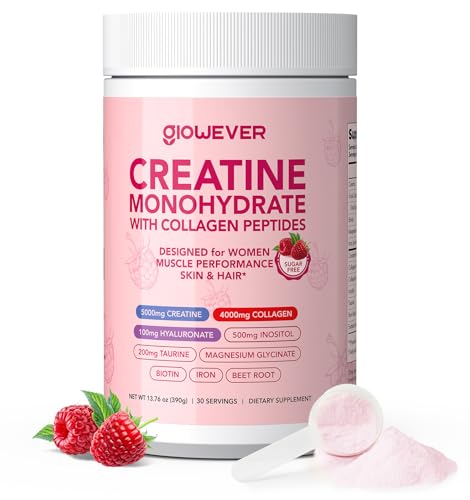
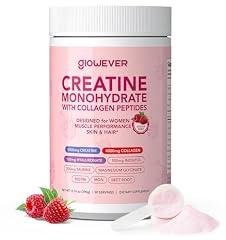
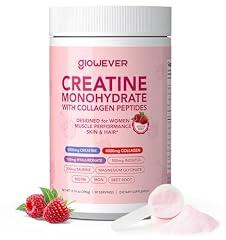
GlowEver Creatine & Collagen Powder for Women
Overview
This is a raspberry-flavored powdered supplement in a 30-serving, 390 g tub. The label directs adults to mix two scoops, a 13 g serving, with 6.8 to 8.5 fluid ounces of cold water, typically before exercise. Each stated serving supplies 5 g creatine monohydrate, which matches the commonly studied 3 to 5 g daily maintenance range, plus 4 g fish-derived collagen peptides and tripeptides. The manufacturer’s Supplement Facts panel also lists 500 mg inositol, 200 mg taurine, 100 mg sodium hyaluronate, 60 mg magnesium, 5 mg iron, and 100 mcg biotin. These quantities and the full ingredient list are visible on the manufacturer’s product image, but no public lot-specific finished-product certificate was located to independently confirm creatine content, creatinine stability, or contaminant results through expiry. The product is explicitly labeled as containing fish.
What works
- The manufacturer-stated 5 g creatine monohydrate serving matches the dose range commonly used in human creatine research.
- The package image provides usable serving math, two scoops per 13 g daily serving, with 30 servings per container.
- The label identifies the fish source of its 4 g collagen blend, rather than leaving the collagen origin unclear.
- The formula is labeled sugar-free and lists citric acid, raspberry fruit powder, natural flavor, and steviol glycosides as other ingredients.
What does not
- No public, lot-specific finished-product certificate was located for creatine assay, creatinine degradation, heavy metals, or microbiological testing.
- The brand claims third-party testing and a GMP-certified facility, but it does not identify the testing laboratory, facility, certification holder, or product-specific results.
- Fish-derived collagen makes this product unsuitable for people with fish allergy, despite the brand’s broader major-allergen-free messaging.
- The 30-day, 13% lean-muscle before-and-after marketing graphic is not accompanied by product-specific clinical evidence. Evidence for performance benefits in active women remains less consistent than marketing suggests.
- The formula adds iron, biotin, inositol, taurine, and hyaluronate, but public materials do not explain why these amounts are needed for every user.
Who is it for
This product fits a nonpregnant adult who specifically wants a flavored daily creatine powder, prefers a single drink that also includes fish collagen, and can tolerate two scoops per day. Its stated 5 g creatine monohydrate dose is practical for a person doing resistance training or repeated high-intensity exercise who wants to use the standard maintenance range without calculating partial scoops. It may also suit someone who accepts a sweetened raspberry flavor and does not need independently certified sport status.
Who is it not for
It is not appropriate for anyone with fish allergy because both collagen ingredients are fish-derived. People who are pregnant, breastfeeding, managing kidney disease, have iron-related conditions, use medications, or have an individualized nutrition plan should discuss the combined formula with a clinician before use. Competitive athletes subject to banned-substance testing, and buyers who require independently verified label potency or current contaminant results, should use a product with an exact-product certification or accessible lot-specific finished-product testing. It also may not suit people seeking plain, single-ingredient creatine.
Integrity
The main health-positive feature is the clearly stated 5 g creatine monohydrate serving. That amount aligns with the usual evidence-based maintenance range. The label also discloses its 4 g fish-collagen blend, other ingredients, serving size, and fish allergen, which helps users identify a meaningful safety limitation. Female-only safety evidence has not shown a clear increase in serious adverse outcomes from creatine monohydrate, but women-specific performance research remains limited and mixed. GlowEver states that its products are made in a GMP-certified facility and undergo third-party and heavy-metal testing. Public materials did not provide a laboratory name, a lot-specific certificate, or an exact-product certification record to independently verify those claims. Searches of public FDA recall and enforcement sources did not identify a GlowEver-specific action. The tub is a multi-serving container, which avoids single-serve packets, but no product-specific recycled-content, recyclability, refill, or responsibly sourced-material documentation was found.
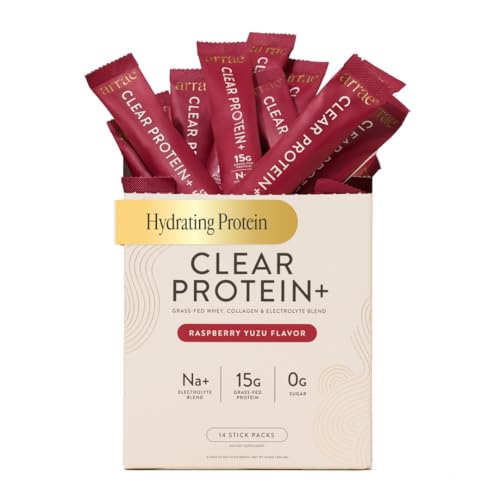
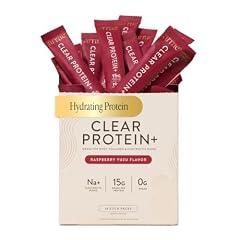
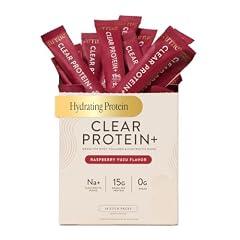
Arrae Clear Protein Powder with Electrolytes
Overview
This is a raspberry-yuzu drink powder in 14 single-use packets. One packet is mixed with 16 to 32 ounces of water. The independently listed Supplement Facts provide 15 g protein, 70 calories, 500 mg sodium, 200 mg potassium, and 60 mg magnesium. The protein is identified as bovine collagen peptides plus hydrolyzed whey protein, but the amount of each source is not disclosed. Despite appearing under a creatine search category, this product contains no creatine on the current ingredient and Supplement Facts information reviewed. It is therefore a protein and electrolyte drink, not a creatine supplement. Arrae states that it uses grass-fed hydrolyzed whey and bovine collagen, contains no sugar, and is designed to dissolve into a light drink. The label identifies milk as an allergen and advises adults with electrolyte or fluid restrictions to consult a clinician.
What works
- The 15 g protein, 70-calorie serving and stated electrolyte amounts are clearly listed by an independent retailer.
- It uses a short disclosed ingredient list with no added sugar, no artificial colors listed, and no sugar alcohol or stimulant-like botanical ingredients identified.
- The 500 mg sodium, 200 mg potassium, and 60 mg magnesium provide a concrete electrolyte dose for people replacing fluids after sweating.
- Individual packets make measured preparation practical for commuting, travel, and gym bags.
What does not
- It contains no creatine, so it cannot provide the evidence-based 3 to 5 g daily creatine monohydrate dose sought in a creatine product.
- No lot-specific finished-product certificate of analysis was publicly located for protein content, heavy metals, microbes, or other contaminants.
- No live exact-product record was identified in the NSF Certified for Sport, Informed Sport, BSCG, or USP verification registries checked.
- The 15 g protein total does not disclose how much comes from whey versus collagen. That matters because collagen is not equivalent to whey for muscle protein synthesis.
- Fourteen individually wrapped packets create more single-serve packaging waste than a bulk powder format.
Who is it for
This product suits an adult who wants a light, fruit-style protein drink rather than a creamy shake, especially for travel, a workday drink, or a modest post-exercise snack. It offers a measured 15 g protein serving and meaningful sodium, potassium, and magnesium in each packet. It is also relevant for someone who knowingly accepts milk-derived ingredients and prefers single-serve convenience. At about $2.50 per packet at the listed price, it is best suited to occasional convenience use rather than the lowest-cost way to add protein.
Who is it not for
It is not for anyone specifically seeking creatine for strength, training adaptation, or creatine-related cognitive research, because the reviewed label lists no creatine at all. Avoid it with a milk allergy. People with severe lactose intolerance should be cautious because the product contains whey, even though Arrae describes it as low in lactose. People with kidney disease, heart failure, hypertension managed with sodium restriction, or other electrolyte or fluid limits should seek clinician-specific guidance, particularly given the 500 mg sodium serving. It is also a poor fit for buyers who require lot-specific contaminant results or sport certification.
Integrity
The main health limitation is identity, not an unsafe active ingredient. The current reviewed label describes whey, collagen, and electrolytes, with no creatine. Whey has stronger human evidence than collagen for stimulating post-exercise muscle protein synthesis, while collagen research is more limited and does not establish that an undisclosed collagen-whey split delivers the same result. The stated 500 mg sodium can be useful after substantial sweat loss, but it also explains the label caution for people with electrolyte or fluid restrictions. Milk is clearly identified, which is important for allergy safety. No public FDA recall, warning letter, or safety alert specific to Arrae Clear Protein was identified in the checked FDA sources as of September 7, 2026. However, no public finished-lot testing report or exact-product independent certification record was located. The carton contains 14 individual stick packs, which improves portability but creates recurring packet waste. No product-specific recycled-content, recyclability, refill, or responsibly sourced packaging documentation was found.

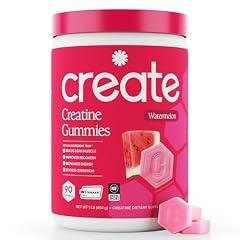
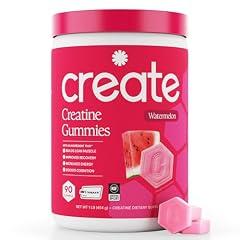
Create Creatine Monohydrate Gummies for Focus and Strength
Overview
This is a 90-gummy Watermelon creatine monohydrate supplement for adults. The manufacturer directions say to take two to three gummies daily. Three gummies provide 4.5 g creatine monohydrate, or 1.5 g per gummy, making the bottle a 30-serving supply at the three-gummy amount. That daily amount fits the 3 to 5 g range recommended in an International Society of Sports Nutrition position stand for female athletes. The Watermelon product is listed in NSF's live Certified for Sport registry, with two traceable lots and a three-gummy serving. NSF certification independently covers label-content checks, contaminant testing, facility controls, and banned-substance screening. An independent 2025 test of Create creatine gummies found 4.59 g creatine per labeled 4.5 g serving, although it did not provide a public Watermelon-specific, expiry-stage result. The gummy format adds sugars and carbohydrate, and published sources show some variation in its current calorie and sugar declaration.
What works
- Three gummies provide 4.5 g creatine monohydrate, a human-evidence-supported daily amount.
- The exact Watermelon gummy is currently listed by NSF Certified for Sport, including identifiable production lots.
- NSF certification includes finished-product label-content verification, contaminant testing, and screening for banned substances.
- Independent testing of Create creatine gummies found 4.59 g creatine per 4.5 g labeled serving.
What does not
- The independent potency result was not a publicly identified Watermelon lot tested through its expiration date.
- Independent gummy testing found meaningful creatinine in Create gummies, indicating some creatine degradation even though the tested serving exceeded its label claim.
- This is not a women-specific formula, and the product materials located do not provide pregnancy, breastfeeding, kidney-disease, or medication-specific guidance.
- The gummy base includes tapioca syrup, sugar, and allulose. Current sources differ on the precise sugar and calorie declaration, so buyers should check the bottle they receive.
- Focus and mental-acuity marketing is broader than the strongest evidence base, which is high-intensity exercise performance and training adaptation.
Who is it for
This product suits a healthy adult, including a woman who wants creatine but is more likely to use a chewable format consistently than an unflavored powder. It provides a practical 3 to 4.5 g daily range with two or three gummies, and the three-gummy amount matches the common evidence-based intake range. It is especially relevant for resistance training, repeated high-intensity exercise, or a regular fitness routine where banned-substance screening and independently certified manufacturing controls matter.
Who is it not for
It is not suited to people who are pregnant or breastfeeding, or people with kidney disease, reduced kidney function, diabetes, hypertension, or other conditions that may affect renal risk, unless their clinician advises use. It also does not fit households trying to minimize added sugars or keep candy-like supplements away from children. Competitive athletes should still confirm their sport organization's current supplement rules. People seeking a clinically established cognitive treatment, sleep aid, hormone product, or medical therapy should not rely on its broad wellness claims.
Integrity
The major health-quality highlight is a live NSF Certified for Sport listing for the exact Watermelon gummy. NSF states that this program verifies label contents, tests for unsafe contaminant levels, audits manufacturing controls, and screens production lots for banned substances. The registry also records specific Watermelon lots, which gives this product unusually useful traceability for a gummy supplement. The formula uses creatine monohydrate, the form with the strongest human research base, and avoids stimulant-like botanicals and proprietary blends. There is still a gummy-specific stability consideration. Independent testing found the labeled creatine amount in a Create serving, but also found creatinine, a degradation marker. No product-specific recycled-content, refill, recyclable-material, or responsibly sourced-packaging documentation was located. The product is sold in a plastic bottle, and its gummy base adds sweeteners and processing ingredients beyond creatine. No relevant FDA recall, supplement warning letter, or safety alert for Create Wellness Inc. or this product was located in the searches reviewed.

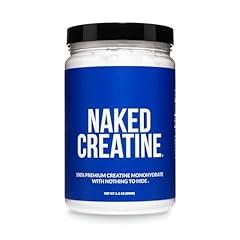
Naked Micronized Creatine Monohydrate Powder
Overview
This is an unflavored, micronized creatine monohydrate powder in a 500 g container with 100 stated servings. One scoop provides 5 g, intended to be mixed into 14 to 16 ounces of a drink and used daily. That dose is within the 3 to 5 g daily range supported for creatine maintenance use in human research. The formula is a single ingredient, creatine monohydrate, according to the manufacturer. More importantly, NSF currently lists NAKED CREATINE as a finished powder product certified to NSF/ANSI 173 at a one-scoop, 5 g daily serving. This is NSF Contents Certified, not NSF Certified for Sport. The brand states that the powder is micronized, vegan, gluten-free, and free of artificial additives. Publicly accessible, lot-specific assay results for creatine potency and creatinine through the expiry date were not located.
What works
- The 5 g serving delivers an evidence-matched amount of creatine monohydrate without requiring capsule or gummy dose math.
- NSF independently lists this exact NAKED CREATINE powder under NSF/ANSI 173, a certification that verifies label claims and screens for unacceptable contaminants.
- The one-ingredient formula avoids sweeteners, flavor systems, stimulants, polyols, and proprietary blends.
- A 500 g container provides 100 daily 5 g servings, reducing the repeated packaging associated with individually portioned formats.
What does not
- No public, lot-specific certificate of analysis was found showing finished-product creatine assay, creatinine degradation testing, contaminants, lot number, and expiry date together.
- The verified certification is NSF Contents Certified, not NSF Certified for Sport, so it is not the same as an athlete-focused banned-substance screening program.
- The manufacturer FAQ includes questionable advice that caffeine flushes water and that creatine should be stopped when not exercising. Those statements are not well aligned with the broader evidence base.
- Female-specific performance evidence is less consistent than the general creatine literature, and this product does not provide pregnancy, breastfeeding, kidney-disease, or medication-specific guidance.
Who is it for
This product suits an adult woman who wants a straightforward daily creatine monohydrate routine for resistance training, sprint-style exercise, or other repeated high-intensity activity. The 5 g scoop matches commonly studied maintenance dosing and the unflavored, single-ingredient powder is practical for mixing into a shake, smoothie, or drink. It also fits buyers who value an independently verified contents certification but do not need a flavored format, stimulant pre-workout blend, or portable single-serve packaging.
Who is it not for
It is not a self-directed choice for pregnancy or breastfeeding because human supplementation evidence in those settings remains inadequate. People with kidney disease, reduced kidney function, diabetes or hypertension, or anyone under clinical monitoring should discuss creatine use with their clinician first. It is also not the most suitable option for athletes or workers subject to banned-substance rules who require a Certified for Sport or equivalent program. Children, people unable to use powder, and households needing individually portioned servings may need another format.
Integrity
The central health strength is unusually simple composition. The manufacturer lists only creatine monohydrate, with no sugar, flavoring, sweeteners, stimulants, or added botanicals. NSF currently verifies the finished product under NSF/ANSI 173, which includes label-content and contaminant review with ongoing auditing and retesting. ConsumerLab also included Naked Creatine in its 2026 creatine testing review, although the public page does not reveal the product-specific result without membership. No product-specific FDA recall or warning letter was identified in the regulatory materials reviewed. Still, buyers cannot independently inspect a current lot-specific potency and creatinine-stability report. The 100-serving bulk container has a lower packaging burden per serving than sticks or sachets, but the manufacturer does not substantiate recycled-content, recyclability, refill, or ingredient-sourcing claims for this container.
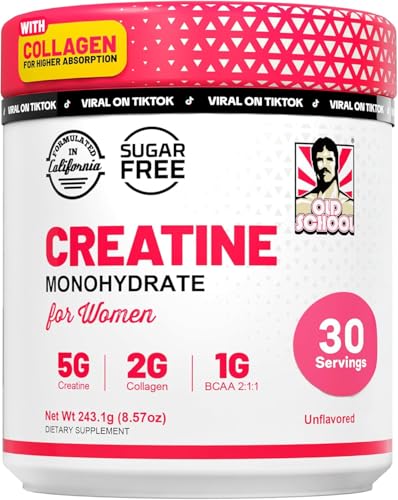
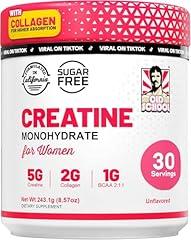
Old School Labs Creatine Monohydrate + Collagen & BCAA Powder
Overview
This is an unflavored, 30-serving powder. One 8 g scoop is labeled to provide 5 g creatine monohydrate, 2 g hydrolyzed bovine collagen, and 1 g of 2:1:1 BCAAs, with no other ingredients listed. The manufacturer directs one scoop daily, with an optional five-day loading phase of four scoops daily. The 5 g creatine monohydrate serving matches the commonly studied daily range for building muscle creatine stores and supporting high-intensity training. That dose is supported by human research, but the stated contents are manufacturer label claims, not independently confirmed finished-product results. Old School Labs states that the formula is third-party tested and made in a cGMP facility, but it does not publish a lot-specific certificate of analysis for this product or identify an exact-product certification registry entry.
What works
- The labeled 5 g creatine monohydrate dose fits established daily maintenance dosing used in human research.
- The powder has a short declared formula, with no listed sugar, sweeteners, colors, flavors, or filler ingredients.
- The label makes serving size, ingredient amounts, 30-serving capacity, and optional loading instructions easy to calculate.
- The manufacturer provides precautionary guidance to consult a clinician during pregnancy, nursing, medication use, or medical conditions.
What does not
- No lot-specific finished-product assay or creatinine stability result was located, so actual creatine potency through expiry is unproven.
- No current exact-product NSF Certified for Sport, Informed Sport, BSCG, or USP registry record was located.
- Bovine collagen makes this unsuitable for vegans and some religious or dietary preferences. The manufacturer also says its facility handles major food allergens.
- The women-focused sales material claims glute-specific delivery, a bloat-free effect, and visibly rounder or lifted glutes. These claims go beyond evidence for standard oral creatine monohydrate.
- The package carries a California Prop 65 lead warning. A warning does not establish the amount of lead exposure from this product, but it is relevant safety information.
Who is it for
This suits a healthy adult who wants a single daily scoop containing a research-aligned 5 g amount of creatine monohydrate and prefers an unflavored powder without sweeteners or flavor systems. It is most relevant for resistance-training users who will use it consistently and understand that creatine supports training capacity and adaptation, rather than targeting a body part. The added 2 g collagen and 1 g BCAAs may appeal to buyers who specifically want them, although those additions are not needed to obtain the evidence-based creatine dose.
Who is it not for
This is not for pregnant or breastfeeding people, children, or anyone with kidney disease, another medical condition, or medication use without individualized clinician advice. It is also inappropriate for vegans, people avoiding bovine-derived ingredients, and households managing severe allergen cross-contact concerns because the manufacturer says its facility handles major allergens. Drug-tested athletes and buyers who require independently certified content or banned-substance control should choose a product with a current exact-product certification record. People seeking glute-specific reshaping, cellulite reduction, or guaranteed beauty effects should not rely on its marketing claims.
Integrity
The central health-positive feature is the labeled 5 g creatine monohydrate dose. Creatine monohydrate is the best-studied creatine form, and female safety reviews have not found increased serious adverse events in the available studies of healthy women. However, research in active women remains smaller and less consistent than the marketing suggests. The formula contains bovine collagen and BCAAs, but their listed amounts do not validate claims of glute targeting, cellulite reduction, or a natural body-contouring effect. Old School Labs states that the product is made in the USA, produced in cGMP-certified facilities, and third-party tested. Those are manufacturer statements, not a substitute for a public finished-lot report or an exact-product certification. The plastic 30-serving tub avoids single-serve sachets, but no product-specific recycled-content, recyclability, refill, or responsibly sourced-material documentation was located. The label also carries a California Prop 65 lead warning.

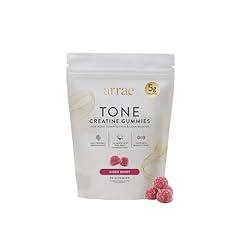
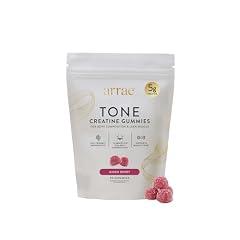
Arrae Tone Gummies Mixed Berry
Overview
This is a mixed-berry creatine gummy product marketed to women for strength, recovery, body composition, and cognitive support. The catalog record describes a 90-count bottle and a claimed 5 g creatine serving. Manufacturer and retailer materials identify the active as creatine monohydrate, the form used in most human creatine research, with ginger extract and a heat-inactivated L. fermentum postbiotic added to the formula. The claimed 5 g daily amount sits in the commonly studied 3 to 5 g range, but it is manufacturer-stated rather than verified for a finished lot. Public retailer disclosures are not fully consistent across package versions, with one 60-count label showing 3.75 g from three gummies and another showing 5 g from four gummies. The product has no located public, lot-specific assay for creatine and creatinine through expiry, and no located exact-product certification registry record.
What works
- The stated 5 g daily creatine monohydrate amount matches the upper end of a widely used research dose range.
- The full active formula is disclosed, rather than hidden in a proprietary blend.
- The disclosed gummy base uses pectin instead of gelatin, and the retailer disclosure identifies coconut as an allergen.
- Adult-use, pregnancy and nursing, medical-condition, and child-safety cautions are displayed in retailer label information.
What does not
- No public lot-specific finished-product certificate was located showing creatine potency, creatinine degradation, heavy metals, or microbiology results.
- No exact-product NSF Certified for Sport, Informed Sport, USP Verified, or BSCG registry record was located.
- Retailer disclosures conflict on serving math and active amounts across package versions, which makes it harder to confirm the exact dose before purchase.
- Claims around no bloating, hormonal support, fat loss, and a sculpted result go beyond what the disclosed creatine dose directly establishes.
- A full serving contains added sugar in retailer label disclosures, and the formula contains coconut.
Who is it for
This product suits an adult who specifically wants creatine monohydrate in a chewable, travel-friendly format and is willing to take several gummies each day. It is most aligned with someone doing regular resistance or high-intensity training, where creatine has the clearest evidence base, and who values a flavored alternative to powder. The buyer should check the physical bottle's Supplement Facts panel, gummy count, lot, and expiration date because current retailer disclosures show more than one serving configuration.
Who is it not for
It is not well suited to competitive athletes or other buyers who need a product-level banned-substance certification, because no current exact-product registry record was located. It is also a weaker fit for people limiting added sugars, those with coconut allergy, and anyone who prefers the simplest possible creatine formula. Pregnancy, breastfeeding, kidney disease, liver disease, or other clinical conditions warrant clinician input before use. People seeking proven fat loss, hormonal, or guaranteed anti-bloat effects should not treat those marketing claims as established outcomes.
Integrity
Creatine monohydrate is the product's central evidence-based ingredient, and the manufacturer-stated 5 g serving is within the 3 to 5 g daily range commonly recommended in sports-nutrition guidance. A systematic review in females found no signal for serious adverse outcomes or significant renal or hepatic harm in the available studies, but women-specific performance research remains limited and mixed. The label information does include adult-use and pregnancy or nursing precautions. The manufacturer reports ingredient identity checks plus third-party heavy-metal and microbiological testing. However, no public finished-lot reports were located to independently confirm those claims, including creatine content or degradation to creatinine. No relevant product-specific FDA recall, warning letter, or health-fraud listing was located in the searches performed. The package is a single plastic gummy bottle. No product-specific recycled-content, recyclability, refill, or responsible-sourcing documentation was located, so its material footprint cannot be substantiated as lower impact.

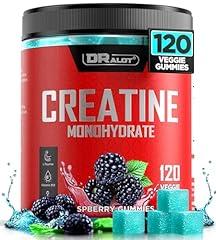
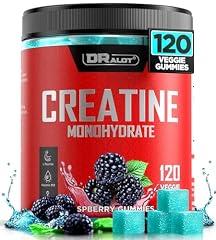
Dralot Creatine Monohydrate Gummies Pre-Workout Complex
Overview
This is a 120-count blue-raspberry creatine gummy product. The package label states that a daily serving is four gummies, providing 5 g creatine monohydrate, 200 mg L-taurine, 100 mcg vitamin B12, 24 mg potassium, and 4 mg magnesium. That makes 30 labeled daily servings. The 5 g creatine amount matches the 3 to 5 g daily maintenance range described in the International Society of Sports Nutrition position stand, provided the finished gummies retain their labeled creatine content. The core dose and ingredient panel are manufacturer-stated, not independently confirmed. No lot-specific finished-product certificate of analysis, creatine and creatinine stability assay, or exact-product certification record was located. The brand's marketing includes NSF-tested and GMP-certified language, but an exact product entry was not located in the NSF Certified for Sport registry. Its claims also go beyond the evidence, including 5X results, zero bloat, superior absorption, and assertions that powder creatine is unsuitable for air travel.
What works
- The labeled 5 g daily creatine monohydrate serving aligns with the established 3 to 5 g maintenance range.
- The package panel clearly shows a four-gummy serving, 30 servings per bottle, calories, carbohydrates, and listed active amounts.
- The formula uses pectin rather than gelatin, and the manufacturer states it is vegan and contains no added sugar.
- The manufacturer gives a specific precaution to consult a healthcare professional during pregnancy, nursing, medical supervision, or management of a health condition.
- A responsible company name, mailing address, and customer-support email are published on the brand contact page.
What does not
- No public lot-specific finished-product assay was located to confirm creatine potency through expiry or quantify creatinine degradation, which is especially relevant for an acidified, water-containing gummy.
- No finished-lot heavy-metal, microbiological, or undeclared-drug test results were located.
- The site says NSF-tested and GMP-certified, but no exact product certification record was located in the NSF Certified for Sport registry. These statements are not equivalent to an independently verifiable finished-product certification.
- Marketing claims such as 5X results, zero digestive downside, faster absorption, and superiority over powder are not supported by product-specific human evidence presented by the brand.
- Four gummies provide only 4 mg magnesium and 24 mg potassium, so those minerals are nutritionally minor at the labeled serving.
Who is it for
This format suits an adult recreational exerciser who specifically wants a chewable, portable routine and is comfortable taking four gummies every day. The manufacturer-stated 5 g creatine monohydrate serving is the relevant part of the formula for resistance training or repeated high-intensity exercise. It may also fit someone avoiding gelatin, since the label lists pectin. This is for buyers who value format convenience and can accept that the finished-product creatine amount and shelf-life stability have not been independently verified publicly.
Who is it not for
It is not suited to tested athletes or other buyers who need a live, exact-product NSF Certified for Sport, Informed Sport, BSCG, or USP registry record. It is also not ideal for people seeking independently published lot testing for creatine potency, creatinine degradation, heavy metals, or microbiology. Pregnant or breastfeeding people, those with kidney disease, people under medical supervision, and anyone managing a health condition should not rely on the general marketing. The manufacturer's own directions say to consult a healthcare professional first.
Integrity
The useful health feature is the labeled 5 g creatine monohydrate serving, a dose consistent with established maintenance protocols. Evidence in women is still less extensive than in men for exercise-performance outcomes, although a systematic review of female participants found no signal of increased serious adverse outcomes, gastrointestinal events, or renal and liver complications in the studies assessed. Pregnancy evidence remains inadequate, making the package's consult-a-clinician precaution important. The label lists tapioca syrup, pectin, water, stevia, sodium citrate, citric acid, maltodextrin, natural flavors, natural color, and vegetable oil with carnauba wax. It lists 0 g sugar, 1.5 g carbohydrate, and 10 calories per serving. No product-specific recycled-content, recyclability, refill, certified-sourcing, or reduced-packaging evidence was located. No relevant FDA recall or warning-letter result was located in the searches performed, but no public finished-lot contaminant testing was found either.

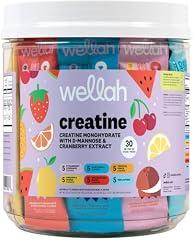
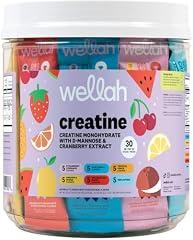
Wellah Women's Creatine Variety Pack
Overview
This is a 30-serving variety pack of single-use powder sticks. The directions say to mix one stick into 6 to 10 ounces of water daily. Retail and manufacturer materials identify 3 g of creatine monohydrate per stick, a labeled maintenance amount within the commonly studied 3 to 5 g daily range for healthy adults. The manufacturer-stated formula also includes folate, dandelion extract, D-mannose, cranberry extract, acids, natural flavors, and noncaloric sweeteners. The exact amounts shown on a manufacturer label image for Strawberry Lemonade are 80 mg dandelion, 80 mg D-mannose, and 20 mg cranberry extract. No finished-lot certificate of analysis, creatine and creatinine assay, or independent finished-product certification was located. A retailer's NSF-facility claim is also materially at odds with an NSF public notice concerning Wellah Nutrition.
What works
- The labeled 3 g creatine monohydrate serving fits the standard 3 to 5 g daily maintenance range used in human creatine research.
- Thirty premeasured sticks remove scoop measurement and can make daily use more practical for travel, work, or a gym bag.
- The disclosed flavored formula uses stevia, Reb M, and monk fruit rather than added sugar.
- The manufacturer label identifies individual active amounts for creatine, folate, dandelion, D-mannose, and cranberry rather than using a proprietary blend.
What does not
- No lot-specific finished-product assay was found to confirm active creatine content through expiry or quantify creatinine degradation.
- No current exact-product listing was found in major independent supplement certification registries.
- The product's dandelion, cranberry, and D-mannose amounts are small, and the evidence does not establish that this combination prevents creatine-related bloating.
- Claims around clearer thinking, less brain fog, and avoiding bloating are broader than the direct evidence available for this exact formula and dose.
- A retailer statement that the product is made in an NSF-certified facility conflicts with NSF's public notice that Wellah Nutrition is not authorized to make NSF certification claims.
Who is it for
This format suits a healthy adult who wants a labeled 3 g daily creatine monohydrate serving without measuring powder. It is particularly practical for someone who regularly carries supplements to work, travel, or training and prefers flavored, lightly sweetened drink mixes over plain creatine. The variety format may also fit a person who wants to try multiple flavors while keeping the daily dose fixed. Its intended use is routine supplementation, not rapid loading or treatment of a medical problem.
Who is it not for
This product is not appropriate for people who need independently certified sport-supplement controls, documented banned-substance testing, or lot-level verification of label potency. Pregnant or breastfeeding people, people under 18, and anyone with kidney disease, a medical condition, or medication use should consult a qualified clinician before use. It is also a poor fit for people seeking an ingredient-minimal creatine product, avoiding sweeteners or flavors, reducing single-use packaging, or expecting the added botanicals to reliably prevent bloating or treat urinary symptoms.
Integrity
Creatine monohydrate is the formula's evidence-based active, and the labeled 3 g daily amount is consistent with a standard maintenance approach for healthy adults. The disclosed flavored formula contains 1 g carbohydrate and uses stevia, Reb M, and monk fruit. The label image also shows folate plus dandelion, D-mannose, and cranberry, but no finished-lot laboratory report was located to independently verify active content, degradation control, heavy metals, or microbiology. The manufacturer calls the product third-party tested, but it does not publish the needed lot-specific results. More importantly, NSF has publicly stated that Wellah Nutrition has no NSF-certified products and is not authorized to make NSF certification claims, despite retailer material using NSF-facility language. The package uses 30 individual stick packs inside a rigid container. This is convenient, but it creates recurring single-serve packaging waste. No product-specific recycled-content, recyclability, refill, or responsible-sourcing documentation was found.

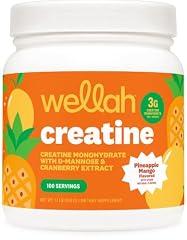
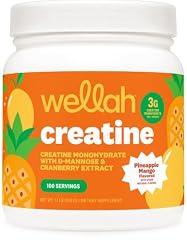
Wellah Pump-It-Up Creatine Pineapple Mango
Overview
This is a pineapple mango flavored creatine powder sold as a 100-serving tub. The product listing states that one daily scoop supplies 3 g of creatine monohydrate, with dandelion, cranberry, and D-mannose added. Directions on the brand site say to mix one scoop in 6 to 10 ounces of water daily, before or after exercise. The 3 g monohydrate dose is within the 3 to 5 g daily range cited in an International Society of Sports Nutrition position stand for women. The full formula and daily dose are manufacturer-stated, rather than confirmed by a public finished-lot assay. Wellah also states that the product is third-party tested, but no lot-specific certificate showing creatine potency, creatinine degradation, heavy metals, or microbiological results was publicly located for this product.
What works
- The stated 3 g daily creatine monohydrate dose fits the evidence-supported maintenance range used in women-focused sports nutrition guidance.
- A 100-serving powder tub supports a simple once-daily routine, without the packaging burden of 100 individual stick packs.
- The disclosed flavor system uses stevia and monk fruit rather than added sugar, and the accessible ingredient list does not show caffeine or other stimulant ingredients.
- The accessible retailer warning advises adults only and recommends clinician advice for pregnancy, nursing, medication use, or medical conditions.
What does not
- There is no public, finished-product, lot-specific certificate confirming the labeled creatine amount through expiry or reporting creatinine degradation.
- No public finished-lot heavy-metal and microbiology report was found, despite the brand's third-party-testing claim.
- Dandelion, cranberry, and D-mannose are included without accessible individual amounts, making their practical dose and contribution unclear.
- Women-directed marketing includes hormonal balance, brain fog, anti-bloat, and water-retention claims that are broader than the well-established evidence for 3 g of creatine monohydrate.
- An NSF public notice states that Wellah Nutrition LLC had no NSF-certified products and was not authorized to use the NSF mark or make NSF-certification claims. This notice concerned other Wellah advertising, not a finding that this specific product is contaminated.
Who is it for
This product suits a healthy adult who wants a flavored, once-daily creatine monohydrate powder and is comfortable relying on the manufacturer-stated 3 g dose. It is particularly relevant for someone doing resistance training, sprint-style exercise, or other repeated high-intensity work, where creatine monohydrate has the clearest evidence base. The 100-serving format also fits a person who expects to use creatine consistently for several months and prefers a sweetened drink mix rather than unflavored powder.
Who is it not for
It is not suited to people who need independently verified potency, contaminant screening, banned-substance certification, or a public batch report before using a supplement. Pregnant or breastfeeding people, those with kidney disease, people taking medicines, and anyone managing a clinical condition should seek individualized medical advice before use. It also may not fit people sensitive to flavored sweeteners or those who want a plain single-ingredient creatine product without unquantified botanical and D-mannose additions.
Integrity
The core ingredient is creatine monohydrate at a manufacturer-stated 3 g per scoop, a form and dose range supported by human sports-nutrition evidence. The accessible formula lists creatine monohydrate, dandelion extract, D-mannose, cranberry extract, acids, flavors, stevia, monk fruit, and processing aids. No public finished-lot assay was located to confirm potency, creatinine stability, heavy metals, or microbes for this product. Wellah states that its creatine is made and quality tested in the United States. However, no meaningful exact-product certification was found in major independent registries. NSF's July 16, 2024 public notice says Wellah Nutrition LLC had no NSF-certified products and was not authorized to use the NSF mark or claim NSF certification. No product-specific recycled-content, recyclability, refill, or responsible-sourcing documentation was located. The 100-serving tub may reduce single-serve waste, but its material and end-of-life pathway are not substantiated.
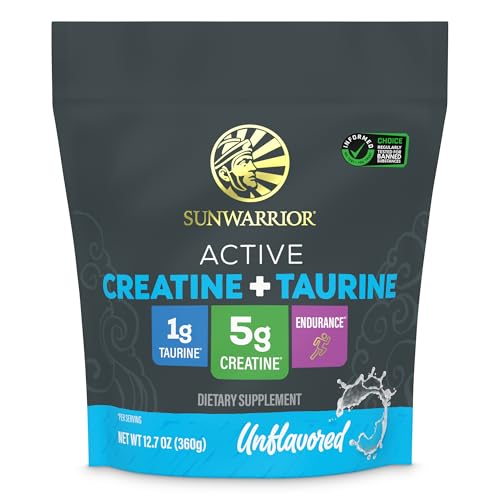
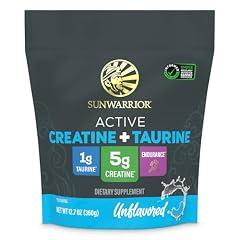
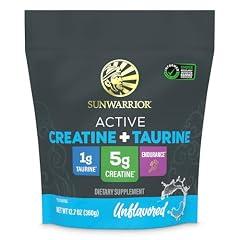
Creatine Monohydrate & Taurine Supplement, Unflavored
Overview
This is an unflavored powder sold as a 60-serving tub. The manufacturer directs adults to mix one 6 g scoop into 8 to 12 fluid ounces of cold water. That scoop is manufacturer-stated to provide 5 g creatine monohydrate and 1 g taurine, with no other ingredients listed. The 5 g creatine dose matches the commonly studied daily maintenance range for creatine monohydrate. The exact Active Creatine + Taurine powder is independently listed as Informed Choice certified in North America, with current unflavored batch entries. That certification supports screening for many prohibited and contaminating drug substances. It does not publicly provide a lot-specific creatine assay, creatinine result, heavy-metal panel, or microbiology report, so labeled active potency through expiry remains unconfirmed.
What works
- The manufacturer-stated 5 g creatine monohydrate serving aligns with a well-studied daily dose for strength and repeated high-intensity exercise.
- The formula is unusually simple on the stated label, containing only creatine monohydrate and 1 g taurine, without sweeteners, flavors, stimulant ingredients, or proprietary blends.
- The exact powder is currently listed by Informed Choice, with recent unflavored batch testing shown in the program registry.
- A 2020 systematic review of female-only creatine monohydrate studies found no significant increase in adverse events, gastrointestinal events, weight gain, or renal and hepatic markers among non-pregnant participants.
What does not
- No public lot-specific finished-product certificate was found that verifies creatine quantity, creatinine degradation, heavy metals, or microbiological results for the tub a buyer receives.
- Informed Choice is meaningful banned-substance certification, but it is not public proof that every tub contains 5 g of active creatine through its expiration date.
- The product is not specifically formulated or labeled for women, and the available manufacturer guidance does not provide pregnancy, breastfeeding, kidney-disease, or medication-specific use boundaries.
- Taurine may be a reasonable addition for some training use, but the product's 1 g dose is not independently established here as necessary for the stated hydration, endurance, or recovery benefits.
Who is it for
This product fits a healthy adult who wants a plain daily creatine powder rather than gummies or a flavored pre-workout, and who is comfortable measuring one scoop into a drink. It is especially relevant for resistance training or repeated high-intensity exercise, because the manufacturer-stated 5 g creatine monohydrate serving matches the dose range commonly used in human research. Drug-tested recreational athletes may also value the current Informed Choice registry listing, provided they confirm the lot and expiration details on their own tub.
Who is it not for
It is not designed for pregnancy or breastfeeding, since adequate human randomized trial evidence for creatine monohydrate safety in pregnancy is still unavailable. People with kidney disease, unexplained abnormal kidney tests, complex medical conditions, or medication regimens should get individualized clinician advice before using creatine. It also does not suit buyers who require publicly available lot-specific testing for creatine potency, creatinine, metals, and microbes. Anyone avoiding taurine, or seeking a creatine-only formula, should choose a product matching that need.
Integrity
The main independently verified quality point is the current Informed Choice certification for this exact Active Creatine + Taurine powder. The registry displays recent unflavored batches and expiration dates. Informed Choice uses LGC testing for a broad screen of prohibited substances and contamination risks relevant to sport. It is useful protection against banned-drug exposure, though it should not be read as a public certificate of labeled creatine potency or comprehensive contaminant results. The stated formula contains only creatine monohydrate and taurine, which limits unnecessary flavoring and sweetener exposure. Sunwarrior states that its tubs use post-consumer recycled plastic and can be recycled again, but I did not find product-specific packaging specifications or third-party recycled-content documentation for this tub. I found no product-specific FDA recall, safety alert, or warning letter in the reviewed public searches, but absence of a public action is not equivalent to finished-lot test evidence.