
10 Best Electric Composter
 Daniel Kenitz
Please note that we participate in affiliate marketing programs. When you purchase through links on our site, we may earn a commission. As an Amazon Associate we earn from qualifying purchases. This comes at no additional cost to you and helps support the resources required to provide valuable content.Advertising Disclosure
Top-rated Electric Composter Comparison
1

2
3
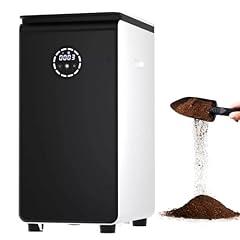
4
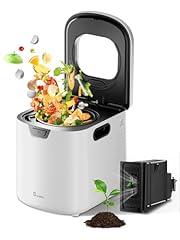
5
6
7
8
9
10
Electric composters: what they do and what to check
Most products in this category are not composters in the biological sense. They use heat, grinding, cooling, carbon filtration, or in some models a microbial chamber to make food scraps drier, smaller, or easier to handle. The resulting material may still need composting, curing, dilution, or another approved treatment before soil use. The U.S. EPA distinction matters: a dried and ground food-scrap mixture is not automatically stable, finished compost or universally safe fertilizer.
A useful product should have clear, model-specific limits rather than broad claims about processing “everything.” Look for stated capacity, maximum fill level, accepted foods, excluded materials, cycle duration, and instructions for bones, pits, shells, grease, liquids, fibrous scraps, packaging, and animal-derived foods. A large chamber does not necessarily mean high daily throughput. A claimed reduction percentage describes weight or volume under particular conditions, not the amount of waste diverted, the quality of the output, or the energy required to process it.
Electrical, thermal, and blade safety deserve separate verification. For a product combining mains electricity, heat, and grinding parts, a current third-party listing for the complete appliance should be checkable in the OSHA Nationally Recognized Testing Laboratory program, UL Solutions Product iQ, or Intertek’s ETL directory. A component mark, seller statement, or non-U.S. certification reference is not equivalent. Buyers should also compare the exact model number and rating label with the manual and listing, and check CPSC recalls and public incident reports. Lid locks, blade-stop sensors, overload protection, cooling periods, grounded-outlet instructions, and unplug-before-cleaning directions are useful features, but they do not replace independent certification.
Headline claims about “odorless,” “quiet,” “90% reduction,” “fertilizer,” and “compost” are often manufacturer statements. Stronger evidence would be a publicly checkable, exact-model report from an ISO/IEC 17025-accredited laboratory, with the test method and conditions disclosed. Energy claims should state watt-hours or kilowatt-hours per batch or per kilogram; without that number, climate benefit and operating impact cannot be assessed. Odor, dust, noise, nutrient content, pathogen safety, and output maturity likewise need model-specific testing rather than generic category claims.
Also assess the ongoing burden. Carbon filters need a stated replacement interval, available replacements, cost, material information, and disposal route. Refillable media can reduce whole-cartridge waste, but still require maintenance. A credible long-term choice should identify the maker, importer or support contact, model and serial information, warranty terms, replacement parts, repair support, and an electronics end-of-life route. Local organics programs may reject dried or ground scraps, so confirm acceptance before buying.
Across the supplied products, no category-wide product was found with independently verified complete-appliance U.S. electrical certification and independent performance testing. Several products have heated chambers and moving blades, so children should not be allowed to rely solely on a stated child lock or lid interlock. Do not process prohibited hard objects, oils, liquids, packaging, or fibrous materials. Treat dried output as unfinished material unless cautious, model-specific instructions and an appropriate composting route say otherwise; products that permit pet waste require particular caution before any garden use. If there is no practical downstream composting, curing, or accepted organics route, the appliance may only move food waste from one disposal form to another.
Integrity
The scores below compare the supplied products against the defined health, ecology, and evidence topics. Higher scores indicate stronger available support relative to the other products, not proof that a product is risk-free or independently certified.
HHealth & Safety
Verified electrical, heat, and blade safety
This measures protection against shock, fire, overheating, hot-surface burns, and access to grinding parts, with the highest standard requiring a current listing for the complete appliance. The supplied scores range from 58 to 75. Higher-scoring products provide more useful interlocks and operating warnings, but none was shown to have a publicly checkable current U.S. NRTL listing for the complete appliance.
Safe output handling and garden use
This measures whether instructions address cooling, storage, moisture, mold, pests, further composting, and soil limits. Scores range from 52 to 78. Higher-scoring products give more cautious steps, such as curing, sifting, dilution, or further treatment; lower-scoring products make direct fertilizer or garden-use claims without output testing or adequate limits. Dried scraps should not automatically be treated as finished compost.
Odor, dust, and indoor-air control
This measures ordinary loading, drying, grinding, emptying, and filter maintenance, including airborne dried-food dust. Scores range from 62 to 75. Higher-scoring products describe filters, cleaning, moisture control, or cooling more clearly, while lower-scoring products mainly rely on “odorless” or quiet claims. The supplied reviews found no exact-product independent odor, particulate, or emissions testing.
EEvidence
Independent proof for this exact model
This measures whether safety, energy, capacity, odor, noise, reduction, and output claims have current, public, exact-model support from certification, an accredited laboratory, or another named independent source. Scores cluster from 68 to 72. Higher scores reflect better documentation or corroboration, but the reviews repeatedly found no public exact-model laboratory report for the major performance claims.
Honest “compost” and soil claims
This measures whether a seller distinguishes biological composting from heat-drying and grinding and explains the need for further treatment. Scores range from 45 to 86. The highest-scoring product explicitly calls its output processed scraps rather than finished compost; lower-scoring products call dried material fertilizer or compost without sufficient qualification. EPA’s category distinction is central here.
Useful capacity and honest input limits
This measures whether batch size, cycle time, reduction, and accepted foods reflect practical operation. Scores range from 52 to 78. Higher-scoring products state maximum loads and exclusions for bones, pits, shells, oils, liquids, or packaging. Conflicting capacity figures, impossible all-food claims, and unsupported reduction percentages lower confidence even when the advertised chamber is large.
Traceable maker and safety accountability
This measures whether the responsible maker, model, serial or lot information, support contact, and recall remedy can be identified. Scores range from 68 to 77. Higher-scoring products provide model details, support contacts, production information, or warranty paths; lower-scoring products have limited U.S. service, importer, parts, or recall documentation. Traceability improves accountability but is not safety certification.
EEcology
Real waste and climate benefit
This measures whether electricity use and the actual destination of the output create a credible diversion benefit compared with local alternatives. Scores range from 52 to 76. Higher-scoring products provide more useful energy or downstream-use information, but benefit still depends on the output reaching composting or an accepted organics route. A reduction claim alone does not establish climate benefit.
Compatible with local organics systems
This measures whether dried output can realistically go to a garden, backyard compost, or local organics program without contamination or disposal shifting. Scores range from 52 to 78. Higher scores reflect clearer exclusions and more realistic downstream guidance; lower scores leave local acceptance or further treatment unclear. Buyers must check their own municipality or hauler because acceptance rules vary.
Low filter and consumable burden
This measures replacement quantity, interval, cost, availability, effectiveness evidence, and disposal. Scores range from 68 to 83. Higher-scoring designs include washable or refillable elements, longer stated intervals, or clearer replacement information. Even the stronger products still create some recurring carbon or other consumable waste, and effectiveness was generally not independently tested.
Durable, repairable design
This measures warranty, replacement parts, repair support, service information, and end-of-life electronics handling. Scores range from 69 to 76. Higher-scoring products identify repair guides, support routes, or longer stated warranties; lower-scoring products lack parts and service documentation. A warranty alone does not establish long service life or easy repair.
Full reviews

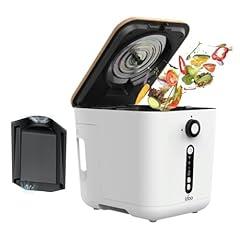
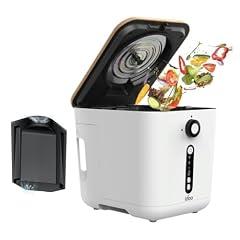
iDOO Electric Kitchen Composter 3L
Overview
This is a plug-in, countertop food-scrap processor with a 3-liter removable bucket. The manufacturer manual describes a 120V, 500W household appliance that dries, grinds, then cools scraps over a stated 6 to 10 hour cycle. It has a carbon filter, a removable water reservoir, an automatic cleaning program, and a lid lock. The manual gives useful operational limits, including a fill line, small pieces, no oil or water, and no large bones, pits, hard shells, glass, metal, or utensils. It also describes hot surfaces and steam, and tells users to cool the unit for about 35 minutes before opening. However, the product is marketed as making fertilizer or compost, while the EPA says appliances that dry and grind scraps make a dried mixture that needs further composting, curing, or treatment before use.
What works
- The manufacturer manual gives concrete household operating limits, including a 3-liter capacity, 6 to 10 hour cycle, 120V input, and 500W maximum power draw.
- The lid must be locked for operation, and the manual describes child-lock behavior, motor-stall indication, cooling, and overheating indication.
- The manual warns against large bones, pits, hard shells, oils, excess water, fibrous material, utensils, and overfilling, which gives users practical jam-prevention limits.
- A replace-filter indicator is specified, with a stated maximum filter service life of 720 hours. The manufacturer also lists replacement filters for sale.
- The manual provides a one-year warranty, a US phone number, an email contact, and instructions to retain the product for inspection or repair when requested.
What does not
- No current UL, ETL, or other NRTL listing for this complete product was located in the relevant public certification directories. The listed lock and heat protections remain manufacturer-stated rather than independently certified.
- No public independent test report was located for this product's noise, odor, emissions, capacity, reduction rate, energy per batch, or output quality.
- Calling the output compost or fertilizer is misleading without a clear further-treatment step. EPA guidance says residential drying and grinding appliances produce dried food scraps, not biologically stable compost.
- The odorless claim is not backed by a public odor or particulate test. The carbon filter is a maintenance item, and the manual says it must be replaced by its usage limit.
- The manual offers no repair guide, parts catalog, end-of-life electronics route, filter disposal guidance, or energy-per-cycle figure.
Who is it for
This product fits a household that wants to dry and reduce small, properly sorted kitchen scraps before moving the material into an existing backyard compost system. It is most suitable where a 3-liter batch and a 6 to 10 hour cycle fit the household's food-waste volume, and where the user can leave the unit on a stable, ventilated counter with substantial clearance. The user should be prepared to monitor the filter reminder, follow the input exclusions, and treat the output as a pre-processed feedstock rather than finished garden compost.
Who is it not for
It is not suited to buyers who need independently verified electrical certification, measured odor performance, or a confirmed energy-per-batch figure. It is also unsuitable for households expecting finished compost or universally safe fertilizer directly from the bucket, because the dried and ground output needs further biological treatment. Avoid it where countertop clearance, ventilation, safe handling of hot surfaces and steam, or supervision around children cannot be maintained. It is also a poor fit for users who routinely need to process large bones, pits, shellfish shells, oils, liquids, bulky fibrous scraps, or compostable packaging.
Integrity
The manual contains meaningful handling precautions. It requires a locked lid before operation, warns about moving parts, hot surfaces, hot steam, water exposure, damaged cords, and cleaning while connected to power. It also specifies clearance around the unit and directs users to unplug it before cleaning or replacing the filter. These are manufacturer instructions, not a substitute for a publicly verifiable NRTL certification for the complete appliance. The product uses a replaceable carbon filter with a stated 720-hour maximum service life and a reminder light, but no public test verifies odor removal or indoor-air emissions. iDOO sells replacement filters, although the manual gives no material specification or disposal route. No related CPSC recall or public unsafe-product report was located in searches conducted through August 16, 2026. The main ecological limitation is the output claim. EPA guidance says this drying and grinding process makes pre-processed food scraps that should be composted, cured, or otherwise treated before garden use.

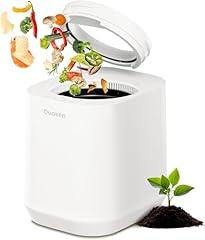
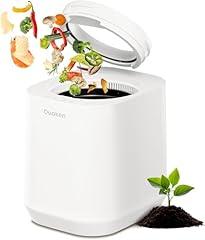
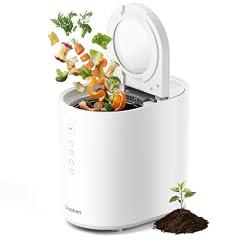
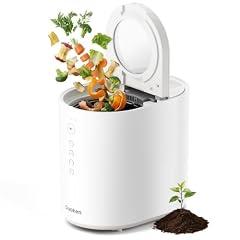
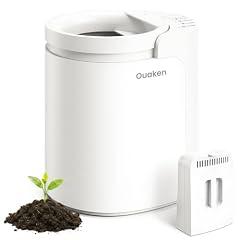
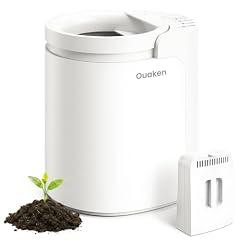
Ouaken Electric Composter for Kitchen
Overview
This is a countertop electric food-scrap pre-processor with a stated 4-liter aluminum bucket, measuring about 12.8 by 10.4 by 13.3 inches. Its instructions describe high-temperature drying, grinding, cooling, a removable washable bucket, carbon filtration, and separate crush, ferment, and cleaning modes. The stated crush cycle is 3 to 8 hours, while the stated ferment cycle is 12 to 17.5 hours. The available product instructions provide useful loading limits, including exclusions for hard bones, tough shells, oils, plastics, glass, and metal. They also state a below-40 dBA noise level and odor control by carbon filter, but no independent test report was located for noise, odor, reduction rate, energy use, or output quality. No current third-party electrical safety listing for the complete appliance was located in the checked public certification sources.
What works
- The instructions give concrete exclusions for hard bones, tough husks, oils, plastics, glass, metal, and excessive paper, which can reduce jams and blade damage.
- A 4-liter stated capacity and 3 to 8 hour crush cycle give buyers usable manufacturer-stated operating parameters.
- The removable bucket is stated to be washable, and the product includes an automatic cleaning mode.
- The instructions specify a carbon-filter replacement alert at 1,000 hours. Separate filter guidance estimates roughly five months under typical stated use.
- A one-year warranty, 30-day refund policy, model information, and customer-support email are stated in the available instructions.
What does not
- No current UL, ETL, or other NRTL listing for the complete appliance was located in the checked public certification registers.
- No independent model-specific testing was located for electrical safety, hot-surface protection, odor control, noise, cycle performance, energy consumption, or the safety of the dried output.
- The product calls its output compost and fertilizer. EPA guidance says countertop grinders and dehydrators produce dried food-scrap mixture, not finished compost, and that material needs further treatment before use.
- The instructions say cleaning water can be used on plants, but no output or liquid testing was located to support broad garden-use guidance.
- Carbon filtration creates a recurring consumable. Replacement cost, spent-filter disposal instructions, and a parts catalog were not located.
Who is it for
This product suits a household that wants to reduce the bulk and wetness of ordinary kitchen scraps before moving the dried material into an established backyard compost system or a program that explicitly accepts it. It is most practical for a buyer with countertop room for a roughly 13-inch-tall appliance, willingness to follow loading exclusions, and willingness to empty the bucket between batches. It also fits someone prepared to monitor and replace the activated-carbon filter and to treat the output as a pre-processed ingredient rather than ready-to-use compost.
Who is it not for
It is not suited to anyone who needs independently verified electrical safety certification, measured odor performance, or tested soil-amendment quality. Households with young children or people sensitive to hot appliances should note that the available safety documentation is limited and no current public NRTL listing was located. It is also a poor fit for users expecting to put the output directly into houseplants or gardens without further composting, curing, or local guidance. Avoid it for large bones, coconut or macadamia shells, cooking oil, plastics, glass, and metal.
Integrity
The instructions include practical operating precautions, such as unplugging before cleaning, avoiding overfilling, keeping the main unit out of water, and excluding materials that can jam or damage the grinding system. They also describe a carbon filter and a replacement alert. However, no current independent safety listing for the complete appliance was located in the checked public registers, and no independent test was found for its odor, dust, noise, or output claims. The main ecological limitation is claim accuracy. EPA states that residential grinders and dehydrators reduce food-scrap volume and weight but do not make finished compost. Their dried output is not biologically stable and should be composted, cured, or otherwise further treated before soil use. The stated fertilizer and direct plant-watering language therefore needs caution. Climate value also depends on electricity use, which was not disclosed, and on having a real downstream composting route. No product-specific recall was located in the checked CPSC recall search.

GEME World First Bio Smart 19L Electric Composter
Overview
This is a floor-standing, plug-in food-scrap processor with a 19L chamber, measuring about 18 by 12.6 by 26.2 inches. It uses a microbial starter called Kobold, intermittent mixing, moisture management, and a deodorization system. The manufacturer says users can add scraps continuously rather than run sealed batches, and says the North American version uses 110V, 60Hz power. Its defining feature is its stated biological process, rather than simple grinding and heat-drying. That claim is not independently validated for this product. The maker’s own current guidance also says material broken down in hours or days is not yet finished compost, and advises waiting at least 45 days or mixing output with soil. Its published manual gives meaningful input limits, including large bones, shells, long fibers, paper, tea bags, and seeds.
What works
- The manual gives concrete limits for hard, fibrous, and non-biological inputs, which can help prevent shaft damage and contamination.
- The 19L chamber and continuous-loading format are manufacturer-stated features suited to ongoing collection rather than small sealed batches.
- The maker publishes a setup and care manual, including microbiota activation, cleaning, troubleshooting, and UV-lamp replacement information.
- A named company, physical contact address, support email, device registration path, and warranty terms are publicly available.
What does not
- No current UL, ETL, or other U.S. NRTL listing for the complete appliance was found. Claimed CE, FCC, and ISO credentials do not substitute for a U.S. appliance safety listing.
- No public independent laboratory report was found for this product’s odor, noise, capacity, reduction, energy-use, pathogen-control, or finished-compost claims.
- The marketing says odorless and promotes rapid real composting, while the maker also says the short-term output is unfinished and should wait 45 days or be mixed with soil.
- The stated 5kg daily capacity is qualified by manual warnings that excessive wet input may require stopping additions for two to five days. Large bones, shells, and long fibers require preparation or exclusion.
- The permanent deodorization system avoids carbon-filter changes, but its long-term effectiveness is not supported by public emissions testing. The microbiota is also sold in refill packs.
Who is it for
This product suits a household with dedicated floor space, a steady stream of separated food scraps, and a garden, backyard compost system, or other responsible route for a partly processed organic output. It is most appropriate for users willing to follow the published restrictions, cut or exclude hard and fibrous materials, manage excess moisture, and allow output to cure before relying on it around plants. The large chamber and continuous-load design fit users who dislike frequent small-batch emptying and accept an always-plugged-in appliance.
Who is it not for
It is not suited to buyers who require independently listed electrical safety, independently measured indoor-air performance, or a tested finished compost suitable for direct garden use. It also does not fit very small kitchens, households unable to accommodate a 42-pound floor appliance, or anyone expecting all scraps to be accepted without preparation. Avoid treating it as a safe disposal route for pet waste, cat litter, packaging, or unrestricted bones and shells. Buyers without a garden, composting route, or local acceptance guidance may simply relocate waste rather than divert it.
Integrity
The manufacturer identifies the North American unit as a 110V, 60Hz appliance and claims CE, FCC, and ISO management-system credentials. Those claims do not establish a current U.S. NRTL safety listing for the complete appliance. No public model-specific independent tests were located for electrical protection, odor emissions, noise, energy consumption, pathogen reduction, or compost quality. The manual does identify shaft-damaging inputs and describes a replaceable UV lamp, which is more useful safety information than an unrestricted all-foods claim. Ecologically, the unit may reduce the volume of separated food scraps, but its benefit depends on what happens afterward and on its electricity use. The manufacturer estimates 1.44 kWh per day, or 525.6 kWh per year. Its own guidance recognizes that short-term output is unfinished, advising curing or soil mixing. Keep pet waste, litter, packaging, and other contaminants out of any material intended for gardens or organics collection, and confirm what a local program accepts before sending output there.

Soliddis Electric Composter 4.2L Indoor Kitchen
Overview
This is a 14.3-pound countertop food-scrap grinder and dehydrator with a stated 4.2-liter bucket. The published dimensions are 12.9 by 12.6 by 10.6 inches, and the product is described as aluminum. It is intended to crush and dry kitchen scraps in a stated 4 to 6 hour cycle, then leave a dry residue for disposal or later use. The most important limitation is terminology. The product listing says it turns waste into compost, but also describes crush-and-dry processing and dry pre-compost. EPA guidance says residential grinding and dehydrating appliances do not produce biologically stable compost. The available product material does include a cautious soil instruction, advising a 1:10 mix and not direct top-dressing. A 900 mL carbon filter, self-cleaning function, noise claims, and 1,000-hour filter interval are manufacturer statements, not independently verified results. No current public listing or independent report was located for this exact product’s electrical certification, emissions, energy use, safety testing, or performance claims.
What works
- The stated 4.2-liter capacity and compact countertop dimensions are consistently published across retailer product records.
- The available instructions are more cautious than a blanket fertilizer claim, advising against direct top-dressing and specifying a 1:10 soil mix.
- The product description identifies its basic mechanism as crushing and drying, which aligns with EPA’s description of countertop food-scrap pre-processing.
- A carbon filter is specified, with a manufacturer-stated replacement interval of about 1,000 operating hours.
What does not
- The headline compost claim is misleading. EPA says countertop grinders and dehydrators make dried food-scrap mixture, not finished compost, and the material needs further treatment.
- No third-party electrical safety listing for the complete product was found in the UL or Intertek public registers checked.
- No public independent testing was found for cycle time, odor control, noise, reduction percentage, filter performance, energy use, or safe garden application.
- Published product information does not provide clear, model-specific limits for bones, pits, shells, greasy scraps, fibrous material, or local organics-program acceptance.
- No publicly located parts catalog, repair manual, warranty terms, U.S. responsible-party details, or electronics end-of-life program was available.
Who is it for
This product fits a small household that wants to reduce the volume and mess of food scraps between trips to a backyard compost system, community drop-off site, or another accepted organics route. It suits a buyer with sufficient counter space for a roughly 13-inch-square appliance, access to electricity, and a willingness to manage a dry intermediate material rather than expect finished compost. The published 4.2-liter capacity makes it more practical for modest daily scraps than for sustained high-volume cooking waste. The buyer should also be comfortable treating the stated odor, quiet-operation, and cycle-time figures as manufacturer claims.
Who is it not for
It is not appropriate for anyone seeking verified electrical safety certification, tested odor or indoor-air performance, or a documented energy-use figure before placing a heated grinding appliance indoors. It also does not suit gardeners who need finished compost or a universally safe fertilizer straight from the machine. Households producing large volumes of scraps, or frequently generating bones, pits, shells, greasy leftovers, and tough fibrous material, need clearer input limits than the published information provides. Buyers without a composting or organics destination for the dried output may simply move waste from one container to another.
Integrity
The available records identify an aluminum-bodied, 4.2-liter appliance with a carbon filter, but they do not establish a current third-party safety certification for the complete product. Searches of the public UL and Intertek certification resources did not locate this model. No CPSC recall, product-safety warning, or public incident report was located in the checked sources. Absence of a located record is not proof of safety or of a problem. Ecologically, this is best treated as a food-scrap pre-processor. EPA says countertop grinders and dehydrators reduce the weight and volume of scraps but do not make compost, because the dried material is not biologically stable. The listing’s claim of finished compost and broad carbon-footprint benefit lacks model-specific testing. Its more useful instruction is to mix the output into soil at 1:10 rather than top-dress plants, but further composting or confirmation from the local organics program remains the more cautious route. The stated carbon filter creates a recurring consumable, with no published disposal guidance or independently verified service life.

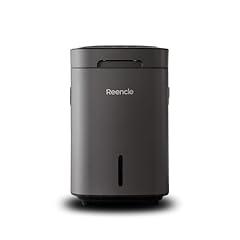
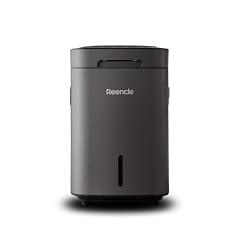
Reencle Electric Kitchen Composter - 14L
Overview
Reencle Prime is a 14 L, countertop food-waste processor for households. It weighs 20.1 pounds and measures 12 by 13 by 18.4 inches. Setup uses a supplied microbial starter and about 1.8 L of water. The manufacturer says the heater activates immediately, the unit should remain powered during normal use, and it processes up to 700 g daily, with 1 kg as a maximum. The product combines heat, stirring, airflow, a carbon filter, and a microbial bed rather than simply running a short drying batch. Its manufacturer lists 52 W average power use, 1.25 kWh per day, and average noise below 28 dB, but no independent report was provided for those figures. A manufacturer-posted Penn State laboratory report examined cured samples collected from users, not a current model-specific certification, and reported a 2.2 respirometry stability score after three to four weeks of curing.
What works
- The manufacturer gives usable daily loading limits and warns that exceeding them can create moisture, odor, and process failures.
- Its garden instructions specifically warn against putting uncured output in direct contact with roots or seeds, then give a soil-mixing and curing method.
- A manufacturer-posted report identifies Penn State's Agricultural Analytical Services Laboratory and describes testing of user-collected, cured Reencle samples.
- Published support material includes repair procedures for the mixing motor, fan motor, gears, seals, power input, and control boards.
What does not
- No current, publicly checkable U.S. NRTL listing for the complete appliance was located. The current product specifications list KC and CE, which are not a substitute for a U.S. NRTL listing.
- The sales page calls the output "real compost," while the brand's own guidance says output for root or seed contact needs three to four weeks of curing. That distinction should be clearer at the point of sale.
- Odor-free and quiet-operation claims are manufacturer statements. No independent odor, airborne-particle, or model-specific noise test was found.
- The carbon filter requires 440 g of replacement activated carbon and is recommended for replacement every nine to twelve months. Disposal instructions and filter performance data are limited.
- Hardware warranty information is inconsistent across current brand pages, with product marketing stating two years while the published limited warranty states one year.
Who is it for
This product suits a one to three person household that produces regular food scraps, has stable counter or floor space in a ventilated kitchen, and can keep the unit powered continuously. It is most suitable for someone who will follow daily loading limits, monitor moisture, and keep hard pits, hard shells, large bones, plastic, glass, and chemicals out. Gardeners who can cure the harvested material before using it near seeds or roots have a clearer downstream use than households that only want instant finished compost.
Who is it not for
It is not suited to buyers who require a publicly verifiable U.S. electrical safety listing for the complete appliance, or who cannot place a heated appliance in an open, ventilated location. It also does not suit households that need to process large loads beyond the stated 700 g daily recommendation, routinely generate shellfish shells, hard bones, or large pits, or expect unrestricted disposal of the output. Avoid direct root or seed application when the material has not been mixed and cured for three to four weeks.
Integrity
The manufacturer lists polypropylene construction and says the material is free of PFOA, PFOS, and BPA, but it does not provide a public, independent material or food-contact test for this product. The unit uses heat, an AC mixing motor, continuous airflow, a mesh filter, and refillable activated carbon. Reencle advises a well-ventilated location and a tray or mat where moisture could be a concern. The strongest output evidence is a manufacturer-posted Penn State laboratory report on three user-collected samples that were cured for roughly three to four weeks. It reported a 2.2 stability score, just short of the report's stable category. That supports treating curing as part of the process, not as optional. The environmental value depends on placing the output into a garden or an accepting organics system. Electricity use and activated-carbon replacement reduce that benefit, and local organics programs should be checked before adding this material.

Ouaken OK-255 Electric Kitchen Composter
Overview
This is a 5.5-liter, countertop electric food-scrap processor measuring 15.9 by 10.3 by 14 inches and weighing 10 kg. It uses heat, airflow, grinding, and cooling to dry and reduce food scraps. The available product guide describes Standard, Quick, Crush, Clean, and Store modes, with stated Standard-cycle times of 3 to 10 hours. The stated 90% volume reduction, below-45 dBA noise level, odor control, and fertilizer outcome are manufacturer claims, not independently verified results for this unit. Its instructions provide useful restrictions for hard bones, large pits, hard shells, fibrous material, oils, plastics, metal, and glass. However, no current third-party electrical-safety listing, independent performance report, energy-use figure, or publicly checkable output test was located for this product.
What works
- The product guide gives specific limits for inputs that can jam or damage grinding parts, including hard bones, large pits, fibrous scraps, oils, and non-food items.
- A removable bucket, Clean mode, condensation tray, and detachable power cord are described in the available product documentation.
- The stated five-month activated-carbon-filter interval gives users a defined maintenance trigger, rather than an unspecified replacement schedule.
- The 5.5-liter stated capacity and 3 to 10 hour Standard-cycle range provide more usable operating detail than a simple all-foods claim.
What does not
- No current UL, ETL, or other independently verifiable safety listing was located for the complete appliance. The available instructions also warn that the top surface and viewing window can become hot.
- The product is marketed as turning scraps into fertilizer, but EPA guidance says residential grinders and dehydrators produce dried food-scrap mixture, not finished compost, and that output needs further treatment.
- Odor-free, quiet, 90% reduction, and long-term durability claims lack a named independent test for this exact product.
- No electricity-consumption specification, replacement-filter price, parts catalog, repair manual, warranty duration, or electronics take-back path was located.
Who is it for
This product fits a household that regularly generates fruit and vegetable scraps, leftovers, grains, and small amounts of soft food waste, has a stable place for a 10 kg appliance, and wants to reduce and dry scraps before transferring them to a backyard compost system. It is most practical for users who will follow the stated loading limits, empty the moisture tray, replace the carbon filter, and treat the dried material as a compost feedstock rather than a finished soil product.
Who is it not for
It is not appropriate for anyone who needs independently verified electrical certification, measured indoor-air performance, or tested garden-use safety before operating a heated grinding appliance indoors. It also does not suit households expecting true finished compost or universally safe fertilizer directly from the machine. Avoid relying on it for hard bones, large pits, hard shells, fibrous husks, oils, grease, liquids, plastic, metal, or glass. Buyers without access to further composting or a confirmed local acceptance route have limited downstream options.
Integrity
The key health issue is evidence quality. The available guide warns of hot exterior surfaces and identifies materials that can damage or obstruct the grinding system. It also calls for cooling before maintenance, keeping the unit clean and dry, and using ventilation. Those are sensible precautions, but they do not substitute for a publicly checkable safety certification of the finished appliance. No relevant CPSC recall or public incident report was located in the checked databases. Ecologically, the machine appears to be a dehydrator and grinder, not a biological composter. EPA guidance says this type of appliance creates dried food-scrap material that should be composted, cured, or otherwise further treated before use. The carbon filter is a recurring consumable, with replacement suggested about every five months. No verified energy-per-batch figure or local organics-program compatibility guidance was found, so its actual diversion and climate value depends on how the dried output is handled.
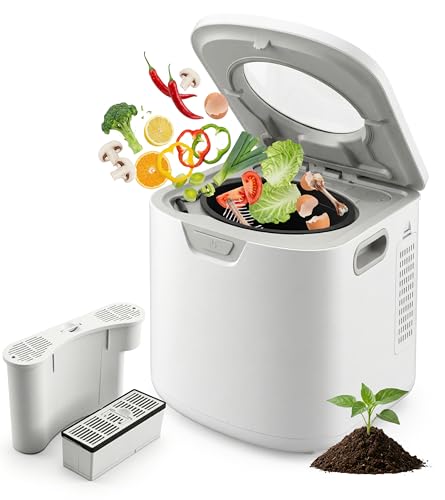
NutriChef Electric Kitchen Composter 4 Quart
Overview
This is a plug-in, countertop food-scrap pre-processor with a 4 L chamber, 500 W rating, three stated cycle lengths of 4, 5, or 6 hours, and five aluminum grinding blades. The manufacturer describes heat drying, grinding, cooling, a 30-minute cleaning mode, a ceramic-oil-coated aluminum grinding pot, and an ABS, PC, and glass exterior assembly. It is intended for fruit and vegetable scraps, coffee grounds, eggshells, and similar kitchen waste. The manufacturer states that dual activated-carbon filters, a lid-open shutoff, overload protection, and overheat protection are built in. Those claims are not matched by a publicly checkable third-party safety listing or independent test report for this product. Its marketing calls the output fertilizer and compost, but EPA guidance classifies this appliance type as a grinder and dehydrator that produces dried scraps needing further treatment, not finished compost.
What works
- The 4 L capacity, 4 to 6 hour cycle options, and 500 W rating are specifically disclosed by the manufacturer.
- The manufacturer identifies a lid-open automatic shutoff, overheat protection, and overload protection, which are relevant safeguards around a heated grinding appliance.
- The manufacturer specifies dual activated-carbon filters and a 600-hour replacement alert, giving users a stated maintenance trigger.
- The maker provides a product-registration path that states a 3-year warranty activation, plus a model-specific support form.
What does not
- No current UL, ETL, or other publicly verifiable NRTL listing for the complete appliance was located, so electrical, heat, and blade safety protections remain manufacturer-stated.
- No independent model-specific testing was located for noise, odor control, energy use, reduction rate, capacity, or the safety and maturity of the output.
- Calling the dried, ground output compost or fertilizer conflicts with EPA guidance that residential drying and grinding appliances produce material requiring further composting, curing, or treatment.
- The available product information does not provide locally actionable instructions for garden application, organics collection acceptance, filter disposal, replacement-filter cost, repair parts, or electronics end of life.
Who is it for
This product suits a small household that wants to reduce the volume and mess of ordinary plant scraps, coffee grounds, and eggshells before moving the dried output into an established backyard compost system. It is also suited to users with enough counter or under-cabinet space for an appliance measuring about 10.9 by 13.0 by 12.6 inches, who can supervise a heated, bladed device and follow filter replacement reminders. It makes the most practical sense where the output has a real downstream composting destination.
Who is it not for
It is not suited to anyone who needs independently certified electrical safety, independently measured odor or noise performance, or a tested soil amendment. Households without backyard composting, a garden-use plan, or confirmation from their local organics program should not assume the dried output belongs in a curbside organics cart or can go directly into soil. It is also a poor fit for users unable to manage heated appliance placement, filter replacement, cleaning, and safe handling around enclosed grinding blades.
Integrity
The manufacturer identifies ABS, PC, glass, an ADC12 aluminum grinding pot with ceramic-oil coating, and a Teflon exterior coating. It also states that the product has five aluminum blades, a cover-open shutoff, overload protection, and overheat protection. These are useful disclosures, but no current third-party certification for the complete product or independent validation of these safeguards was publicly located. No product-specific recall or regulatory warning was located in the reviewed U.S. sources. Ecologically, drying and grinding may make scraps lighter and easier to store, but the stated 500 W appliance uses electricity and no energy-per-batch data were provided. EPA says countertop grinders and dehydrators do not make finished compost. The dried material should be further composted, cured, or otherwise treated before soil use. The dual carbon filters are a recurring consumable, with a manufacturer-stated 600-hour alert but no disclosed disposal route, price, or independently measured odor-control performance.

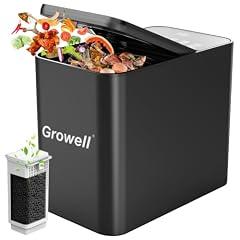
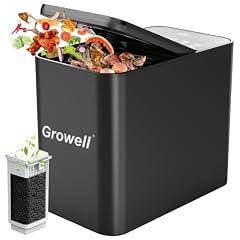
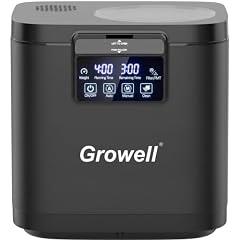
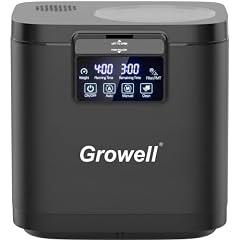
Growell Electric Kitchen Composter EC04
Overview
This is a countertop electric food-scrap processor with a stated 3.2 liter chamber, grinding blades, heated drying, cooling, carbon filtration, an LED display, and automatic or manual operation. The maker says automatic processing can take up to eight hours, while manual operation is adjustable from one to ten hours. It also states that the unit can reduce waste volume by up to 90 percent. The maker describes the appliance as cETLus certified, but an exact-product listing was not located in Intertek's public directory during this review, so that safety claim remains unconfirmed. Its own description identifies the mechanism as grinding and high-temperature drying, not biological composting. That distinction matters because EPA guidance says countertop grinders and dehydrators produce dried food-scrap material that requires further processing before it is compost.
What works
- The manufacturer gives concrete operating claims, including automatic processing up to eight hours and manual cycles from one to ten hours.
- A stated 300-hour filter-use reminder can help prompt filter replacement, if the claimed function performs as described.
- The maker publishes a support email address, phone number, and product-specific operating claims rather than providing only a marketplace listing.
What does not
- The product is marketed as making true compost and plant fertilizer, but EPA says residential grinding and dehydration appliances make dried food-scrap mixture, not finished compost.
- The cETLus claim could not be independently confirmed in Intertek's public listed-product directory for this exact product.
- No independent test report was found for noise, odor control, volume reduction, energy use, output quality, or the claimed brushless-motor lifespan.
- The maker's general warranty page states 18 months after registration, conflicting with the three-year warranty stated in the product record. Replacement filter availability is also unclear on the maker's own store.
Who is it for
This product suits a household with limited space that wants to dry and grind small batches of food scraps before adding them to an established backyard compost system, where the material can continue to decompose. It may also fit users who value programmable processing and are prepared to maintain a carbon filter. The buyer should be comfortable treating the stated odor, noise, capacity, reduction, and blade-performance figures as manufacturer claims rather than independently verified results.
Who is it not for
It is not suited to anyone who needs finished compost or a universally safe fertilizer directly from the appliance. The dried output needs further composting or other appropriate treatment before soil use. It is also a poor fit for households relying on municipal organics collection without first confirming that their local program accepts dehydrated and ground food scraps. Safety-sensitive buyers seeking publicly verifiable certification, measured emissions data, and a clearly documented warranty should note the unresolved evidence gaps and warranty conflict.
Integrity
The maker states that the appliance is cETLus certified and uses a sealed design with activated-carbon filtration. Intertek is an OSHA-recognized testing laboratory, but the claimed listing was not independently located for this exact product in its public directory. No product-specific recall or CPSC warning surfaced in the reviewed public searches. The manufacturer lists aluminum alloy, stainless steel, and plastic, but does not publish a detailed materials breakdown or testing for food-contact surfaces, emissions, or dried-output safety. Ecologically, its stated process is grinding, heating, drying, and cooling. EPA classifies residential appliances of this kind as pre-processors, not composters. Their output should be composted, cured, or otherwise treated before use, and actual climate benefit depends on electricity use and whether the material reaches a compatible composting route. The maker does not publish model-specific energy-per-cycle data, output testing, or locally actionable disposal guidance. Carbon filters also create a recurring consumable burden, with a stated replacement alert at 300 hours but unclear direct availability.

Ouaken Electric Indoor Composter 2.5L
Overview
This is a countertop electric food-scrap pre-processor with a 2.5L stated capacity, an aluminum-alloy stated construction, and stated dimensions of 11.6 by 9.4 by 12 inches. It uses drying, grinding, cooling, and a removable blade assembly. The product is intended for small households with limited daily scraps, rather than for yard-waste composting. The seller states that Crush mode reduces food-scrap volume by up to 90 percent and that Ferment mode creates pre-compost for later composting. That framing is materially more accurate than calling dried scraps finished compost. However, no model-specific independent test, public instruction manual, electrical-safety listing, energy-use specification, or laboratory evidence for its reduction, noise, odor, or output claims was located.
What works
- The seller distinguishes dried and ground scraps from finished compost, and directs further composting for Ferment mode output.
- A compact 2.5L stated capacity and countertop dimensions suit small daily food-scrap batches.
- The listing gives a specific carbon-filter replacement target of about 500 operating hours or five months.
- The listing includes basic safety directions to unplug before cleaning, avoid overfilling, and protect against sharp objects.
What does not
- No current UL, ETL, or other OSHA-recognized testing-laboratory listing for the complete product was located.
- The up-to-90-percent reduction, below-40 dB noise, and odor-elimination claims are seller statements without located independent model-level testing.
- Instructions say pre-compost may be mixed with soil as appropriate, but EPA says dried food-scrap output is not biologically stable and should be composted, cured, or otherwise further treated before use.
- No wattage, energy per batch, replacement-filter price or availability, repair-parts catalog, or meaningful stated product warranty was located.
Who is it for
This product suits a small household that wants to reduce the bulk of routine kitchen scraps before placing the output into an established backyard compost system, where the material can continue decomposing. It also fits buyers with limited counter space who can work in small batches and are prepared to replace a carbon filter on the seller's stated schedule. The user should be comfortable treating the listed performance figures as manufacturer claims, not independently verified results.
Who is it not for
It is not suited to households that need independently verified electrical, thermal, blade, noise, odor, or reduction performance. It is also a poor fit for anyone expecting finished compost or a universally safe garden fertilizer directly from the machine. Buyers without a backyard compost system or a local organics program that accepts the processed material need a clear downstream plan first. It is also unsuitable for users needing documented replacement parts, a defined manufacturer warranty, or quantified electricity use.
Integrity
The product has an exposed evidence gap where it matters most for an appliance that heats and grinds food. No current model-specific UL, ETL, or comparable NRTL certification was located, and the listing provides only basic cleaning and overfill precautions. No model-specific recall or public incident report was located in the sources searched, but the available listing does not provide a detailed manufacturer warranty or a public repair-parts pathway. Ecologically, the listing's strongest point is its acknowledgement that the output is pre-compost or dried food waste, not automatically finished compost. EPA similarly explains that residential drying and grinding appliances create a mixture that needs further treatment. The claimed 80 to 90 percent volume reduction, carbon-filter odor control, and five-month filter life remain manufacturer-stated. Energy use is not specified, so the climate value depends on electricity consumption and whether the output is actually composted rather than discarded.
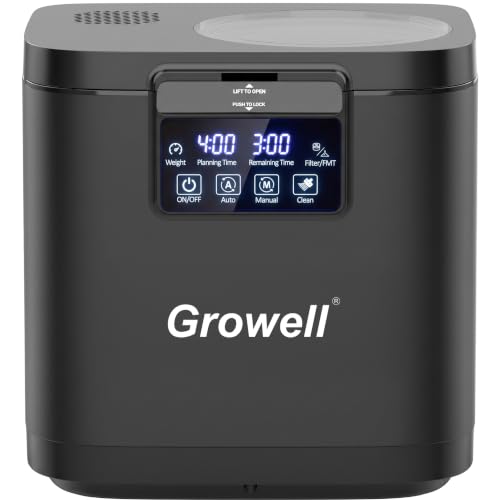
Growell 4L Electric Kitchen Composter
Overview
This is a plug-in, countertop food-scrap processor with a 4 L inner bucket. Manufacturer materials describe a 13.2 by 10.2 by 13.3 inch appliance that grinds, heat-dries, then cools food waste. It has automatic and manual processing modes, a separate fermentation mode, a visible window, touch controls, and dual activated-carbon filters. The manufacturer states that ordinary cycles take about 4 to 6 hours and reduce food-scrap volume by up to 90 percent. Those figures are not backed by a publicly available model-specific independent test. Its manual also lists food limits, allowing items such as soft bones, eggshells, and small amounts of meat or dairy, while excluding hard bones, oils, shells, non-food materials, and wood. This is a dehydrating grinder, not finished composting. EPA guidance likewise says these appliances create dried scraps that need a home or collection composting system.
What works
- The 4 L bucket, stated dimensions, and removable inner container give buyers concrete counter-space and batch-size information.
- Manufacturer guidance provides useful exclusions for hard bones, oils, shells, wood, and non-food contamination.
- The reusable carbon-filter setup has a separately sold 500 g activated-carbon refill, rather than requiring replacement of the entire filter housing.
- A 3-year manufacturer warranty is stated for the product, which is meaningful coverage for a powered countertop appliance.
What does not
- No current third-party safety listing for the complete appliance was located in the UL or Intertek certification resources reviewed. The published safety claims therefore remain unverified.
- No publicly checkable independent report was found for this product's noise, odor removal, energy use, reduction rate, blade durability, or output quality.
- Calling the processed material compost or plant fertilizer is too broad. EPA says this appliance category produces dried food scraps that require further composting.
- The manual permits some meat, dairy, and soft bones, but gives no model-specific output testing or clear local organics acceptance guidance for that mixed material.
- Carbon media creates recurring consumable waste. The manufacturer states a refill lasts over three months, but provides no verified odor-removal test or disposal guidance for spent carbon.
Who is it for
This product suits a household that wants to dry and reduce a modest daily quantity of kitchen scraps before transferring them to an established backyard compost system, a verified local organics program that accepts the output, or the trash. It is most practical where counter space can accommodate its roughly 13 inch footprint and height, and where the buyer will follow the loading exclusions, replace carbon media, clean the bucket, and treat the dried material as an intermediate feedstock rather than ready garden compost.
Who is it not for
It is not suited to buyers who need independently verified electrical safety certification, measured odor performance, or documented energy use before placing a 500 W heating and grinding appliance indoors. It is also a poor fit for households expecting finished compost or universally safe fertilizer within hours. People with curbside organics collection should first confirm whether their program accepts dried, ground scraps. Avoid it for large volumes, frequent hard bones or shell waste, cooking oil, fibrous wood, or any household unable to manage filters and cleaning safely.
Integrity
The manufacturer identifies aluminum alloy, stainless steel, and ABS among the product materials, and describes a removable bucket, dual carbon filters, and a 30-minute cleaning mode. Its published instructions tell users to unplug before cleaning, keep hands and utensils away from moving parts, avoid damaged cords, and keep the appliance away from children. These are sensible operating precautions, but they do not substitute for a current, independently verifiable listing of the complete appliance. No product-specific recall or public CPSC incident report was identified in the sources reviewed. Ecologically, the main limitation is downstream handling. EPA states that countertop dehydrating and grinding appliances make dried food-scrap mixtures, not compost, and that material should enter a home or collection composting system. The manufacturer sells activated-carbon refill media, which can extend filter-housing use, but it also creates recurring spent-carbon waste. No public model-specific energy-per-batch data, output analysis, or local program compatibility guidance was found.