
10 Best Percussion Massager
 Lauren Wilson
Please note that we participate in affiliate marketing programs. When you purchase through links on our site, we may earn a commission. As an Amazon Associate we earn from qualifying purchases. This comes at no additional cost to you and helps support the resources required to provide valuable content.Advertising Disclosure
Top-rated Percussion Massager Comparison
1

2
4
5
6
7
8
9
Percussion massagers: what to look for
Percussion massagers use a motor to move an attachment rapidly against soft tissue. In the supplied reviews, the most defensible benefit is modest and short term: massage-gun research suggests possible improvements in flexibility, range of motion, stiffness, and perceived soreness. It does not establish treatment for disease, reliable injury recovery, superior athletic performance, circulation improvement, lactic-acid removal, weight loss, or prevention of injury. No product in this group was tested in the human studies cited, so a plausible category benefit is not proof that a particular model works at its advertised settings.
The useful specifications are the ones that help control exposure: speed or frequency range, amplitude, available intensity levels, attachment design, treatment-area guidance, and automatic shutoff. A stated range such as 1,600–3,200 rpm, a 10-minute timer, or a two- to three-minute limit per body area can make conservative use easier, but these figures are often manufacturer claims. Amplitude is especially easy to overread: supplied materials for one model gave 8 mm, 10 mm, and 12 mm, while other products had conflicting speed, head-count, runtime, or configuration claims. A larger stroke, higher stall force, more heads, or more speed settings is not automatically safer or more useful, and headline figures do not show how much force reaches the body in real use.
Look for a model-specific manual with clear instructions to use only on soft tissue, start gently, keep the head moving, stop for pain or bruising, and avoid the head, neck, spine, bones, joints, wounds, and inflamed areas. A shutoff is helpful, but it does not replace appropriate placement or clinical advice. Heat and cold attachments deserve separate scrutiny: credible documentation should state the temperature range, timer, automatic protections, and burn or cold-injury warnings. In the supplied products, those features were generally manufacturer-stated rather than independently tested.
For electrical safety, a buyer seeking stronger evidence should be able to match the exact model to an NRTL listing in UL Product iQ, Intertek’s ETL directory, or the CSA product database. Battery and charger evidence should identify the exact system and, where applicable, address UL 2054 or IEC 62133-2. FCC authorization, when mentioned, concerns radio interference and is not the same as electrical or battery-fire certification. For performance, the meaningful proof would be a current, model-specific report from an ISO/IEC 17025-accredited laboratory measuring output, force, amplitude, noise, runtime, temperature, and shutdown behavior. A badge, seller statement, or general brand claim is not equivalent.
Also check traceability: a named maker or importer, exact model, batch or lot information, support contact, warranty terms, and a way to obtain replacement parts or a remedy if a recall occurs. Built-in lithium-ion batteries were common in this group. They should not go in household trash or curbside recycling; use a dedicated battery, electronics, or household-hazardous-waste route. Some products offered replaceable batteries or heads, while many provided no repair or recycling path.
Safety caveats
Across the supplied products, recurring cautions include avoiding use for unexplained, persistent, or acute pain; suspected fractures; recent surgery; open, infected, bruised, swollen, or inflamed skin; impaired sensation; bleeding or clotting risk; vascular disease; neuropathy; cancer; and implanted electronic or orthopedic devices without clinician advice. Pregnancy, diabetes, heart conditions, seizures or migraines, osteoporosis, joint replacements, and metal implants also repeatedly prompted medical consultation. Do not use percussion devices on the head, face, throat, front or side of the neck, spine, bony prominences, superficial nerves or blood vessels, or surgical sites. Neck use deserves particular caution: one supplied review cited a case report involving vertebral artery dissection after repetitive neck use, although it could not establish causation. Children, sleeping or unconscious people, and anyone unable to judge pressure safely should not use these devices without appropriate supervision.
Integrity
The topics below separate plausible short-term self-care from unsupported treatment claims, unmanaged exposure, and avoidable battery or product-lifecycle problems. Higher scores indicate stronger documentation and controls within this supplied group; they do not mean independent certification or medical effectiveness.
HHealth & Safety
Realistic health benefit and safety balance
This measures whether a product presents percussion as limited, short-term self-care and gives users a reasonably safe way to use it. Higher-scoring products combined plausible comfort or flexibility benefits with timers, gentle-use instructions, and meaningful warnings. Lower-scoring products leaned more heavily on pain, recovery, circulation, or injury claims without equivalent safeguards.
Clear warnings for unsafe users and body areas
This measures whether the manual identifies higher-risk users and unsafe locations. For a massager, warnings about the head, neck, spine, bones, wounds, fractures, implants, pregnancy, vascular conditions, bleeding risk, and reduced sensation are especially important. The supplied scores ranged from stronger manuals with specific exclusions to lower-scoring products with incomplete or conflicting guidance.
Safe heat and cold features
This measures whether heated or cooled attachments disclose temperatures, time limits, automatic protections, and burn or cold-injury warnings. A high score reflects clearer manufacturer limits and safer instructions; a low score reflects vague thermal claims or missing specifications. Even the better-documented thermal products lacked independent temperature testing in the supplied reviews.
Verified electrical and battery fire safety
This measures evidence for the massager, charger, and rechargeable battery against shock, overheating, and fire risks. It is weighted more heavily because lithium-ion devices were common in this group. Higher scores indicate better documented safety signals, while lower scores reflect no confirmed exact-model UL, ETL, CSA, UL 2054, or IEC 62133-2 evidence. No supplied product had a confirmed exact-model NRTL listing.
Controlled force, speed, and shutoff safeguards
This measures whether output claims are paired with sensible settings, pressure limits, stall or overheat protection, and automatic shutoff. Higher-scoring products generally supplied five or more adjustable speeds and a 10- or 15-minute timer, while lower-scoring products had less complete controls or conflicting specifications. Manufacturer-stated numbers were not independent measurements.
Secure, skin-safe, easy-to-clean attachments
This measures attachment retention, surface safety, materials, and cleaning practicality. A high score requires heads that stay secure, do not deteriorate, and can be cleaned without trapping residue. Among the supplied products, stronger documentation included removable heads, wipe-clean or wash-and-dry instructions, and stated materials; most lacked independent retention or skin-contact testing.
Traceable maker and recall readiness
This measures whether a buyer can identify the responsible maker, exact model, lot or batch information, support contact, warranty, and recall remedy. Higher-scoring products had named manufacturers, manuals, support routes, and, in one case, device-record traceability and batch tracking. Lower-scoring products had inconsistent naming, missing importer details, or weak replacement and recall information.
EEcology
Longer life and responsible battery disposal
This measures durability, repairability, replacement parts or batteries, packaging and environmental claims, and practical end-of-life handling. Higher-scoring products stood out when manufacturers offered replaceable batteries, replacement heads, repair help, or lifetime support. Most used sealed lithium-ion batteries and supplied no specific U.S. recycling route, so buyers should plan for dedicated battery collection.
EEvidence
Honest pain, recovery, and performance claims
This measures whether advertising stays within what category evidence and product classification can support. A high score avoids implying cures, injury recovery, circulation changes, lactic-acid removal, or superior athletic performance. Lower-scoring listings used broad pain, recovery, deep-tissue, or healing language despite evidence limited mainly to short-term flexibility, range of motion, stiffness, or perceived soreness.
Independently checked, model-specific proof
This measures whether an ISO/IEC 17025-accredited laboratory or other qualified independent source tested the exact model for output, noise, runtime, temperature, or shutdown. Higher scores reflect better available documentation, but no supplied product had a public exact-model independent performance report. Manufacturer specifications, reseller records, badges, and FCC authorization do not provide the same proof.
Benefits match the evidence and settings sold
This measures whether human research used comparable percussion settings, attachments, body areas, treatment duration, and users. Higher-scoring products kept claims close to limited short-term outcomes, while lower-scoring products extrapolated to disease treatment, injury recovery, athletic performance, circulation, or eliminating soreness. The cited research did not study any exact product in this group.
Full reviews
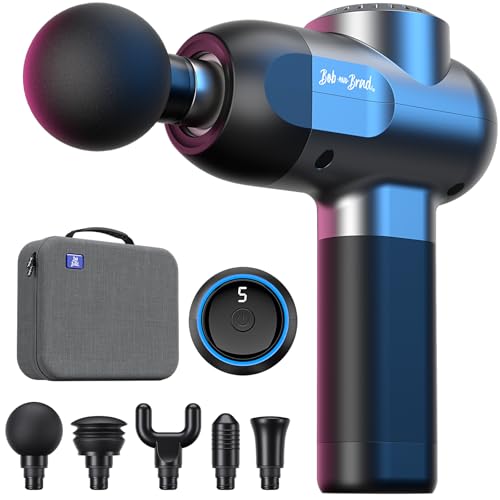
C2 Deep Tissue Massage Gun
Overview
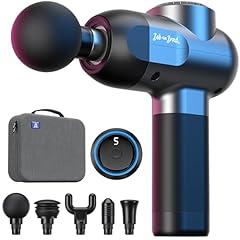
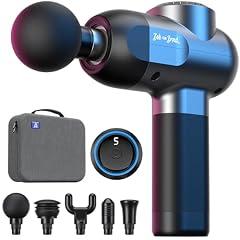
This is a compact, rechargeable handheld percussion massager for working over large muscle areas such as the calves, thighs, glutes, shoulders, and back. The manufacturer states that it weighs 1.5 pounds, has five speed settings up to 3,200 rpm, includes five push-in heads, charges by USB-C, and has a 10-minute automatic shutoff. Its manual lists a 7.4 V, 2,000 mAh internal battery and 25 W rated power. Human research on massage guns supports limited, short-term improvements in flexibility and perceived muscle soreness, but the studies do not test this exact product. The C2 manual contains useful warnings about excessive force, bony or sensitive areas, fractures, hot conditions, damaged charging equipment, and several health conditions. Its output, noise, battery safety, and attachment retention have not been independently documented for this product.
What works
- The manual sets a 10-minute automatic shutoff and describes overheat shutdown, useful controls against prolonged continuous use.
- Its stated 2,000 to 3,200 rpm range falls within the broad frequency range used in some human massage-gun research, though this product itself was not studied.
- The manual gives concrete instructions to stop if pain or bruising occurs, avoid the head, neck, eyes, spine-adjacent sensitive areas, and avoid use where fracture risk exists.
- The manufacturer provides a support contact and product-specific manual, and currently states a two-year warranty on its product page.
What does not
- No exact-product UL, ETL, CSA, battery, charger, or publicly inspectable independent performance test was located.
- The manufacturer promotes faster recovery, circulation, and flexibility more broadly than the limited short-term human evidence can establish for this product.
- The warning list omits several important risk groups commonly cited in safety reviews, including blood clots, bleeding disorders, open wounds, skin infection, cancer, pacemakers, and impaired sensation.
- The internal battery is not user-removable, and no product-specific battery recycling, replacement-battery, material declaration, or attachment-retention test was located.
- Warranty information conflicts between the manual, which says one year, and the current manufacturer page, which says two years.
Who is it for
This product suits a healthy adult who wants a compact self-massage tool for brief use on well-muscled areas after activity, especially calves, thighs, glutes, upper back, or shoulders. It is most appropriate for someone seeking temporary easing of ordinary muscle tightness or a short-term flexibility routine, rather than treatment for an injury or condition. The manufacturer-stated five speeds and timed shutoff provide a straightforward way to start gently and limit a single session.
Who is it not for
It is not appropriate for people with unexplained pain, acute injury, suspected fracture, open or infected skin, blood-clot risk, bleeding disorders, reduced sensation, serious vascular disease, cancer, implanted electronic devices, or recent surgery unless a clinician specifically approves use. People who are pregnant, have diabetes, epilepsy, migraines, herniated discs, joint replacements, or metal implants should follow the manual's advice to consult a physician first. It is also unsuitable for unsupervised children, cognitively impaired users, wet environments, and anyone wanting independently certified electrical safety or measured performance data.
Integrity
The product is an electrically powered therapeutic-massager format that FDA classifies as a Class I device category, but that classification does not independently verify this particular product's safety or performance. The manual is stronger than many brief listings on use precautions. It says the product is not intended to treat medical conditions, advises medical consultation for several conditions, prohibits use on sensitive or lightly padded areas, and directs users to stop for pain or bruising. It also warns against use or charging near heat and against use with a damaged cable or abnormal battery. No exact-product listing in the major U.S. NRTL directories, public battery test evidence, recall notice, or independent laboratory output report was located in this review. The battery is sealed inside and the manual prohibits user replacement, which limits repairability and complicates end-of-life handling. A one-year warranty appears in the manual, while the manufacturer's current product page states two years. No product-specific battery recycling instructions, replacement-battery route, material disclosure, or environmental certification was found.

BOB AND BRAD D6 Pro Massage Gun
Overview
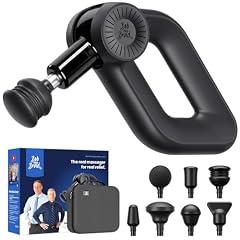
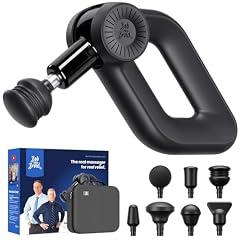
This is a 2.8-pound handheld percussion massager with a triangular multi-grip handle and a rotating arm intended for self-massage of soft tissue. The supplied manual specifies a 16 mm stroke, 1,500 to 2,500 RPM range, six manual speeds, four modes, seven attachments, and a 2,500 mAh internal battery. These are manufacturer-stated specifications, not independently measured results. The manual provides concrete use limits, including soft tissue only, no more than 30 minutes continuously, and a five-minute rest after that. Its automatic modes shut off at about 10 minutes, and it displays an overheat warning. Research on massage guns supports limited short-term improvements in mobility and perceived muscle soreness, but the evidence base is methodologically limited and does not test this exact product, its 16 mm stroke, or its stated force.
What works
- The manual gives usable intensity and time controls, including six speeds, automatic routines, a 10-minute shutoff, and an overheat indicator.
- Its six-position, 0-90 degree rotating arm and multi-grip handle are manufacturer-stated design features that can make self-treatment of the upper and lower back more manageable.
- The manual names the attachment materials as ABS, PU, and silicone, and explains how to remove and firmly reinstall a head.
- Human research on comparable massage guns supports modest, short-term mobility and soreness benefits, rather than disease treatment.
What does not
- No exact-model UL, ETL, or CSA electrical safety listing, battery certification, or independent laboratory report for output, noise, runtime, force, or attachment retention was located.
- The safety guidance is incomplete for a powerful percussion device. It does not specifically address vascular disease, blood thinners, neuropathy, pregnancy, or implanted medical devices.
- The manual warns against bony areas including the shins, but later supplies a shin treatment protocol. That internal conflict is a real safety communication problem.
- The internal battery is not user-removable, and the manual provides no product-specific battery recycling or repair route.
- Marketing claims about pain relief, recovery, circulation, and performance go beyond what has been independently shown for this exact product and dose.
Who is it for
This product suits a healthy adult who wants a substantial handheld tool for brief self-massage of large, intact muscle areas after exercise or prolonged sitting. It is particularly relevant for someone who can handle a 2.8-pound device and values a rotating arm for reaching parts of the back without asking another person for help. Use should stay gentle, moving, and limited to comfortable soft tissue. The evidence supports short-term relief and mobility effects, not diagnosis, injury treatment, or a substitute for rehabilitation.
Who is it not for
It is not appropriate for children, people with unexplained or persistent pain, or anyone using medical equipment without first asking a clinician. People with bleeding risk or blood-thinning medication, vascular disease, reduced sensation, recent injury, suspected fracture, open or irritated skin, pregnancy concerns, or implants should seek individualized advice before use. Avoid the head, neck, spine, bony prominences, genitals, breast implants, artificial limbs, and areas that become painful or bruise. The conflicting shin instructions make that area especially unsuitable for self-directed use.
Integrity
The product has an FCC authorization covering this model family, which supports compliance for its wireless radio function. That authorization is not a certification of charger, motor, battery, burn, or fire safety. The reviewed manual also provides a named support channel, a one-year warranty, an internal overheat warning, and limits on continuous use. No exact-model UL, ETL, or CSA listing, or publicly inspectable independent performance report, was located in the reviewed registers. The battery is built in and the manual says users should not remove or replace it. No manufacturer recycling instructions, replacement-battery pathway, or repair parts catalog was located. At end of life, EPA says lithium-ion devices should not enter household garbage or curbside recycling because they can create fire hazards. They should go to a dedicated battery, electronics, or household hazardous-waste collection route. The product has no heat or cold attachment in the reviewed D6 Pro-C documentation.

RENPHO Thermacool 2 Heated Massage Gun
Overview
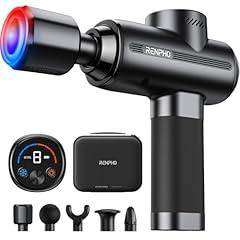
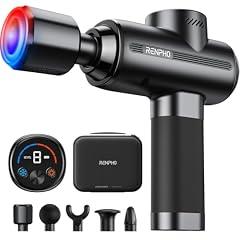
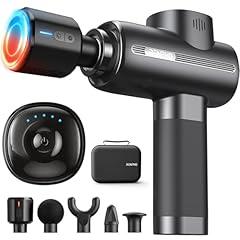
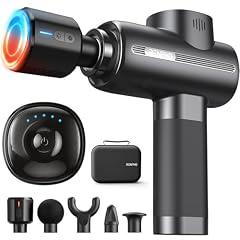
This rechargeable handheld percussion massager has five interchangeable heads, including one heat and cooling head, a USB-C cable and a carry case. Its manufacturer manual specifies five percussion settings from 1,800 to 3,200 RPM, 10 mm amplitude, a 2,500 mAh, 18.5 Wh battery, and a listed weight of 1.39 pounds. It is intended for household use, not treatment of disease or an abnormal physical state. The manual documents heat settings of 102°F to 113°F and cooling settings of 46°F to 57°F. It also states that the motor stalls under excessive pressure, the unit has overheat protection, and continuous operation stops automatically after 10 minutes. Those are manufacturer-stated safeguards, not independently tested results. Human research on massage guns supports limited short-term flexibility, range-of-motion and soreness-related benefits, but does not establish injury treatment, dependable athletic performance gains, or the advertised outcome of eliminating soreness.
What works
- The manual gives concrete operating limits, including five speed levels, 10 mm amplitude and a 10-minute automatic shutoff.
- Heat and cooling ranges are disclosed, rather than described only with vague comfort claims.
- Safety instructions are relatively specific for a home massage gun, covering pregnancy, pacemakers and defibrillators, fractures, recent joint surgery, poor circulation, inflamed skin, varicose veins, head and face use, and cervical vertebrae.
- The heads use rubber sleeves and a twist-to-lock installation method, with spare sleeves included according to the manual.
- A named manufacturer, US and Canadian support contact, model-specific manual, and one-year limited warranty provide basic traceability.
What does not
- No exact-product UL, ETL, CSA, battery certification, or independent laboratory report for output, temperature, noise, runtime, attachment retention, or shutdown behavior was located in the reviewed public sources.
- The manual's safety directions conflict somewhat with its attachment guide, which describes the U-shaped head for the neck while also telling users not to use the product on cervical vertebrae.
- Marketing claims such as eliminating soreness and accelerating recovery go beyond the limited, short-term outcomes supported by massage-gun research.
- The internal lithium-ion battery is non-replaceable and the manual says not to disassemble or repair the product, limiting repairability and battery replacement.
- The manual calls for proper disposal but does not provide a practical US battery-recycling route or removal procedure.
Who is it for
This product suits an informed adult who wants a compact home tool for short sessions on large, intact muscle groups such as the thighs, calves, glutes, or upper back. The strongest use case is temporary self-care after activity or for perceived muscle tightness, using low intensity first and moving the head rather than pressing hard in one spot. It is also relevant for someone who specifically values an integrated, temperature-controlled head and accepts that its stated output and thermal performance have not been independently published.
Who is it not for
It is not appropriate for children without responsible supervision, or for people who are pregnant, have a pacemaker, defibrillator, heart disease, blood stasis, fractures, impaired circulation, or recent joint surgery without clinician guidance. Avoid use over the head, face, throat, cervical vertebrae, bones, varicose veins, possible fractures, tumors, inflamed or broken skin, and unexplained abdominal pain. People with reduced sensation or heat and cold sensitivity should be particularly cautious. It is also unsuitable for anyone seeking treatment for an injury, medical condition, or persistent pain.
Integrity
The health case is limited but plausible for short-term comfort and flexibility use. Systematic reviews of percussion massage report modest short-term range-of-motion, flexibility and recovery-related effects, while evidence for performance improvement is inconsistent and study quality is limited. The manufacturer manual appropriately states that this is a household product, not a medical treatment, and gives unusually detailed body-area and user warnings. It also specifies a 10-minute shutoff, locked-motor protection and overheating shutoff. Temperature and mechanical claims remain manufacturer-stated because no model-specific independent test report was located. The product contains a non-replaceable lithium-ion battery. Its manual warns against battery damage, overheating, disassembly and prolonged charging, but does not offer a US removal or recycling pathway. EPA guidance says lithium-ion batteries and devices containing them should not go in household trash or curbside recycling because they can start fires. No product-specific US recall, regulator warning, or public NRTL electrical safety listing was located in the sources reviewed. FCC compliance noted in the manual concerns radio interference, not electrical or battery safety certification.

RENPHO Massage Gun with Extension Handle
Overview
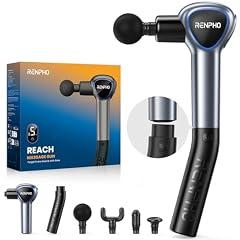
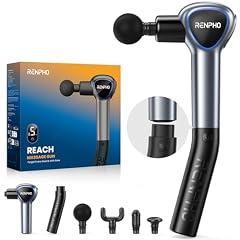
This is a cordless percussion massager with a detachable extension handle intended to make self-massage of hard-to-reach back muscles easier. The product has four push-in heads, including ball, U-shaped, flat, and bullet forms. Its official manual specifies 8 mm amplitude, five fixed speeds from 1,600 to 2,800 rpm, an automatic speed mode, and a 2,000 mAh, 14.8 Wh lithium-ion battery. The manual documents a 10-minute automatic shutoff, locked-motor protection, and overheat shutdown. Those are manufacturer-stated safeguards, not independently tested results. Its health use is best framed as short-term relief of muscle tension or stiffness. Research on massage guns suggests possible short-term flexibility and range-of-motion benefits, but the evidence base is small, variable, and does not validate this exact product or establish treatment for injuries or disease.
What works
- The extension handle is a concrete self-use aid for reaching back muscles without asking another person for help.
- The manual gives unusually specific precautions, including consultation advice for pregnancy, blood stasis, fractures, heart disease, pacemakers, defibrillators, metal implants, and recent joint surgery.
- Documented use controls include five fixed speeds, pressure-responsive automatic mode, a 10-minute shutoff, and stall and overheat protections.
- The exact product is listed in the FDA device identifier database with a named company, batch tracking, and a compliance contact.
- The manual includes four attachment shapes, insertion instructions, rubber retention sleeves, and wipe-clean maintenance guidance.
What does not
- No exact-model UL, ETL, CSA, or other nationally recognized electrical safety certification could be confirmed in an issuer directory.
- No ISO/IEC 17025-accredited, model-specific test report was located for output, noise, runtime, attachment retention, charger safety, or shutdown performance.
- The manual says the product has no user-serviceable parts, and no replacement battery or repair-parts program was identified.
- Its cautions are strong, but the product is still marketed with broad pain-relief language that goes beyond the limited short-term outcomes supported by massage-gun research.
- The product uses a lithium-ion battery, yet the manual gives only general disposal advice rather than a specific US recycling route.
Who is it for
This product suits an adult who wants a handheld, battery-powered tool for brief self-massage of ordinary muscle tightness after activity or prolonged sitting, especially where a normal short-handle massager is difficult to position on the upper or mid back. The extension handle, 1.4 pound manufacturer-stated weight, four heads, and 10-minute automatic shutoff are practical for cautious home use. It is most appropriate for a person who can follow the manual, begin at low intensity, avoid painful pressure, and treat the device as a comfort tool rather than injury care.
Who is it not for
It is not appropriate for children under 8, sleeping or unconscious people, or anyone unable to reliably sense discomfort or operate the controls. The manual says people who are pregnant, have blood stasis, fractures, heart disease, a pacemaker, defibrillator, metal implants, or joint surgery within 90 days should consult a doctor first. Avoid use over the head, face, throat, neck vertebrae, spine, varicose veins, swollen or inflamed skin, poor-circulation areas, wounds, tumors, unexplained abdominal pain, and possible fracture sites. People seeking diagnosis or treatment of persistent pain should use clinical care instead.
Integrity
The product has meaningful safety guidance for a consumer percussion massager. Its manual tells users to avoid several high-risk medical situations and body areas, stop with unusual discomfort, avoid water and blocked vents, and keep it away from long hair, loose clothing, and jewelry. It also specifies a 10-minute automatic shutoff plus locked-motor and overheat shutdown. These are manufacturer instructions, not independent certification or laboratory verification. Federal device records identify the product as an electric therapeutic massager, list Joicom Corporation as the labeler, and indicate lot or batch identification. No exact-product recall was identified in the searched US recall sources. The built-in lithium-ion battery is not user-serviceable, which limits repair. The manual says to dispose of used batteries according to local rules, but does not name a takeback program. EPA guidance says lithium-ion batteries and battery-containing electronics should not go in household trash or curbside recycling.
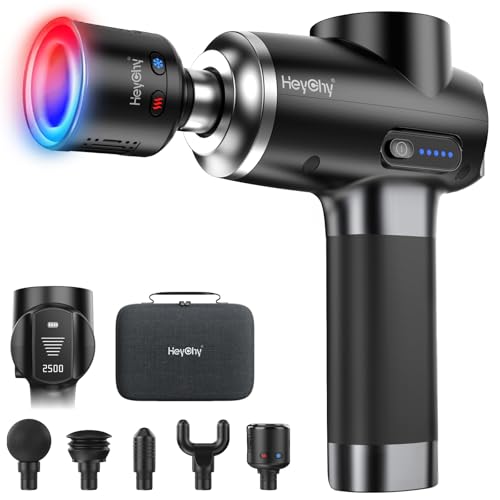
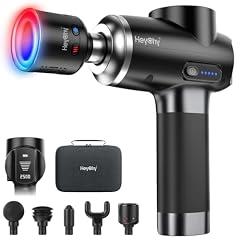
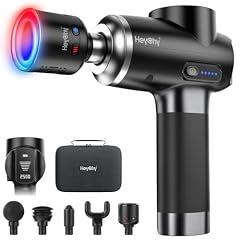
HEYCHY Massage Gun with Heat and Cold
Overview
This is a cordless, handheld percussion massager sold with heat and cold functions for self-massage of sore muscles. Independent reseller records corroborate a plastic body, rechargeable lithium-ion power, two lithium-ion cells, and a claimed 12 mm percussion stroke. The product is relatively heavy for a handheld unit at about 4.2 pounds in that record. The 12 mm stroke and heat and cold features are seller or manufacturer-stated specifications, not independently measured results. No exact-model laboratory report was located for stroke, force, noise, runtime, battery protection, attachment retention, heat temperature, cold temperature, or automatic shutoff. Human research on massage guns supports limited short-term flexibility and symptom outcomes, but it does not establish that this particular product, its settings, or its thermal heads produce those results.
What works
- A 12 mm percussion stroke is consistently stated for this product by independent sellers, giving buyers a concrete output specification.
- Heat and cold functions offer two non-drug comfort options, although their temperatures and controls were not independently verified.
- Cordless rechargeable operation avoids a mains cord during use.
- Category-level human evidence suggests massage guns can offer limited short-term flexibility and musculoskeletal symptom benefits.
What does not
- No exact-model UL, ETL, CSA, or other North American electrical-safety listing could be confirmed for the massager, charger, or battery system.
- No exact-model heat or cold temperature range, timer, thermal cutout evidence, or independent burn and cold-injury testing was found.
- A publicly accessible exact-model manual with clear contraindications, body-area warnings, cleaning directions, and attachment-retention information was not located.
- The pain relief, recovery, circulation, and deep-tissue framing goes beyond the limited, short-term outcomes established in massage-gun research for comparable products.
- No repair policy, replacement-battery path, battery-removal instructions, or product-specific recycling guidance was found.
Who is it for
It suits an adult who wants a cordless self-massage tool for occasional, short sessions on intact large muscle areas such as the thighs, calves, glutes, or upper back after ordinary activity. The user should be comfortable treating the 12 mm stroke, heat function, cold function, and deep-tissue language as manufacturer-stated rather than independently verified. It is most appropriate when used conservatively for temporary comfort or mobility, not as treatment for an injury, persistent pain, or a diagnosed condition.
Who is it not for
It is not suited to people with unexplained pain, a recent injury or fracture, open or irritated skin, impaired sensation, bleeding or clotting disorders, suspected deep-vein thrombosis, severe osteoporosis, or a recent surgery without clinician approval. Pregnant people and people with diabetes-related neuropathy, implanted medical devices, cancer, seizures, vascular disease, or anticoagulant use should seek clinical advice first. Avoid the head, face, front or side of the neck, spine, chest, superficial nerves and blood vessels, and areas around surgical hardware or joint replacements.
Integrity
No product-specific recall, FDA action, or CPSC recall was located in the reviewed United States sources. That is not the same as independent safety clearance. The product has a traceable model designation and a UPC in reseller records, but no confirmed United States importer, serial or batch system, public warranty terms, or replacement-parts catalog was found. The product uses rechargeable lithium-ion cells in a plastic housing. No exact-model North American electrical listing, battery certification, temperature test, or independent performance report was found. This matters because rechargeable percussion massagers have been recalled by other firms for battery overheating and fire hazards. The brand did not provide a battery-removal or recycling route in the material reviewed. If it reaches end of life, do not place the lithium-ion battery in household trash. Use an established rechargeable-battery collection program where the battery can be safely accepted.

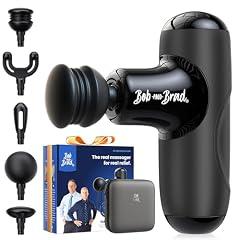
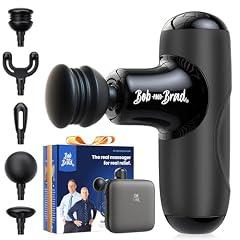
BOB AND BRAD Q2 Mini Massage Gun
Overview
This is a compact, rechargeable percussion massager for self-massage of soft tissue. The manufacturer manual lists a 5.7 by 3.3 by 1.8 inch body, five speed levels from 1,800 to 3,000 rpm, a 2,500 mAh battery, four removable heads, and charging from a 5V/2A source. It is intended for short sessions on muscles, not as a medical device. Its defining safety control is manufacturer-stated, automatic output stop after 10 minutes. The manual also gives unusually specific placement and pressure guidance, including avoiding the head, bony areas, fracture-risk areas, spine and tailbone. Human research on massage guns supports limited, short-term flexibility, range-of-motion and soreness-related benefits, but does not establish the product’s broader recovery, injury-prevention, body-shaping or weight-loss statements.
What works
- The manual provides concrete speed, battery, charging and session-shutoff specifications rather than only general performance language.
- Automatic 10-minute stop is a practical manufacturer-stated guard against uninterrupted prolonged use.
- The manual directs use to soft tissue, tells users to stop with pain or discomfort, and identifies several sensitive areas to avoid.
- A one-year warranty and US support phone number provide a defined post-purchase contact route.
What does not
- No exact-model UL, ETL, CSA, battery-standard certification, or independent electrical safety report was located in the checked public registers and materials.
- No independent, exact-model test report was located for delivered force, amplitude, noise, runtime, attachment retention, or automatic shutoff behavior.
- The warnings are useful but do not explicitly address several higher-risk groups, including people with bleeding disorders, anticoagulant use, vascular disease, neuropathy, active skin injury or infection.
- The manual makes weight-loss, body-shaping and injury-risk-reduction claims that are not supported by the available massage-gun evidence, and it recommends some relatively aggressive use settings.
- The internal battery is not presented as user-replaceable, the warranty excludes disassembly, and the manual gives no end-of-life battery disposal instructions.
Who is it for
This product suits a healthy adult who wants a very small, cordless tool for brief self-massage of accessible muscle areas such as calves, thighs, hips, shoulders or forearms. It is most aligned with someone seeking temporary comfort, relaxation, or a short mobility routine around exercise, who will use light pressure and follow the 10-minute session limit. The stated 1,800 to 3,000 rpm range and lower settings may be useful for people who prefer to start gently. It is not evidence of treatment for an injury or chronic condition.
Who is it not for
It is not appropriate for children, older adults according to its own manual, or anyone unable to reliably judge pressure and discomfort. People who are pregnant, have diabetes, epilepsy, migraines, herniated discs, spondylolisthesis, recent surgery, recent joint replacement, an IUD, metal hardware, or other health concerns should seek clinical advice first. People with bleeding risk, anticoagulant use, vascular disease, neuropathy, fracture risk, open skin, infection, severe unexplained pain, or a suspected acute injury should choose clinician-guided care instead. Do not use it on the head, neck bones, spine, tailbone, implants, or other bony and sensitive areas.
Integrity
The product has no heat or cold function, avoiding a separate burn or cold-injury pathway. Its manual has meaningful basic precautions, including soft-tissue-only use, avoiding pain, keeping clear of the moving shaft, and avoiding the head, bony areas, fracture-risk locations, implants and the spine. It also provides a manufacturer support email, phone number and one-year warranty. No product-specific US recall or regulatory action was located in the checked public sources. The battery is a built-in 11.1V, 2,500 mAh rechargeable pack. No public exact-model UL, ETL, CSA, IEC 62133-2, battery-pack, charger or independent performance test documentation was located. The manual says attempted disassembly voids the warranty and does not explain battery removal, replacement parts, recycling or disposal. Because devices with lithium-ion batteries should not go in household trash or curbside recycling, end-of-life handling requires a local battery or electronics collection option.

arboleaf Mini Massage Gun
Overview
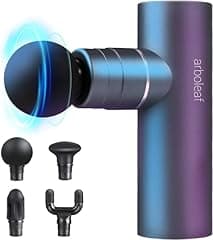
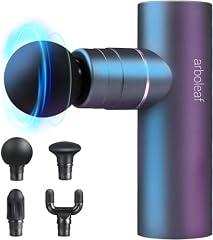
This is a compact, rechargeable percussion massager for short self-care sessions on muscle tissue. The available product manual describes a 13.4-ounce, full-metal unit with four silicone heads, USB-C charging, and five stated speed settings from 1,000 to 3,200 rpm. It is intended for sore-muscle relief and post-exercise relaxation, not diagnosis or treatment of an injury. The strongest unit-specific safeguards documented in the manual are a stated 10-minute automatic shutoff and instructions to use light to moderate pressure while avoiding bones, joints, and irritated or broken skin. The 35-pound stall-force, 35 to 55 dB noise range, long runtime, and pressure-responsive setting are manufacturer-stated, not independently verified. No public exact-model laboratory report or UL, ETL, or CSA listing was located.
What works
- Compact 13.4-ounce format and USB-C charging are documented in the available product manual.
- The stated 10-minute automatic shutoff can limit an unintentionally prolonged session.
- Four silicone heads can be wiped with a damp cloth or mild disinfectant, according to the manual.
- The manual identifies basic electrical and skin precautions, including using the supplied cable and not immersing the main unit.
- Arboleaf publishes a United States support phone number and states a two-year replacement policy on its site.
What does not
- No public exact-model UL, ETL, CSA, battery-safety certification, or independent performance report was located. This is missing evidence, not proof of a defect.
- The manual's advice is internally inconsistent. It says to avoid sensitive areas, yet describes the fork head for the spine and neck.
- Warnings do not specifically address bleeding disorders or anticoagulants, vascular disease, neuropathy, fractures, implants, or other high-risk situations in sufficient detail.
- The listed output claims omit amplitude, and the stated force, noise, battery runtime, and pressure response lack independent confirmation.
- The rechargeable battery is not documented as user-replaceable, and no product-specific battery removal or recycling instructions were located.
Who is it for
This product suits an adult who wants a small cordless tool for brief, gentle massage of intact large-muscle areas such as the thighs, calves, glutes, shoulders, or upper back after ordinary activity. Its stated low weight, silicone attachments, USB-C charging, and automatic shutoff fit travel, desk, or gym-bag use. It is most appropriate when the goal is temporary comfort or flexibility support, with expectations kept modest because research on massage guns supports limited short-term outcomes and not a specific result from this product.
Who is it not for
Choose a clinician's guidance or another approach if you have unexplained pain, a recent injury or suspected fracture, impaired sensation, active skin damage, a bleeding disorder, take anticoagulants, have vascular disease, use an implanted medical device, or are pregnant. This is also not suitable for children without professional direction. Do not use it on the head, front or side of the neck, spine, joints, or bony areas. A published case report linked repeated handheld massage-gun use at the neck with vertebral artery dissection.
Integrity
The available manual identifies an aluminum and metal body with silicone heads. It says the heads can be cleaned with a damp cloth or mild disinfectant, while the main unit should not be submerged. The product has no heat or cold attachment, so it avoids the separate burn and cold-injury questions those accessories create. However, the available instructions leave important risk communication gaps and specifically create concern by associating a fork attachment with the neck and spine. No relevant Arboleaf product recall, public CPSC incident report, or FDA regulatory action was located in the searched United States databases. No exact-model independent electrical, battery, output, or noise certification was found either. Arboleaf provides support contact details and states a replacement policy, but no public product-specific repair parts, removable-battery procedure, or recycling instructions were found. EPA advises taking lithium-ion batteries to dedicated collection or household hazardous-waste sites, rather than household trash or curbside recycling.

RENPHO Massage Gun with Heat and Cold
Overview
This is a handheld, rechargeable percussion massager for soft-tissue self-care. The official manual specifies five speed settings from 1,800 to 3,200 RPM, 10 mm amplitude, a 2,000 mAh internal battery, five heads, and a separate rechargeable heat and cooling head. It weighs 1.5 lb and comes with a travel case and USB-C cable. The manufacturer documents 99-113 F heating with a 10-minute timer and 47-61 F cooling with a five-minute timer. It also documents a 10-minute massage shutoff, locked-motor protection, overheating protection, and a warning to begin at low intensity. These are manufacturer-stated safeguards, not independently tested results. Human research supports limited short-term flexibility and recovery-related effects from massage guns, but it does not establish that this specific product eliminates soreness or accelerates recovery.
What works
- The manual provides specific speed, amplitude, battery, temperature, and timer information rather than only broad marketing claims.
- A separate temperature head has defined heat and cooling ranges, plus shorter automatic shutoffs for cooling.
- The instructions include substantial precautions for pregnancy, vascular conditions, fractures, recent joint surgery, implanted devices, open wounds, and unsafe body areas.
- A 10-minute automatic massage shutoff and locked-motor protection are documented to limit prolonged or overly forceful use.
- The manufacturer provides an exact product manual, warranty terms, and customer-support route, which improves traceability.
What does not
- No exact-product UL, ETL, CSA, IEC 62133-2, or other North American independent electrical and battery certification could be confirmed in the relevant public registers.
- No ISO/IEC 17025 laboratory report was located for the product's actual percussion output, noise, stall force, battery runtime, attachment retention, or head temperatures.
- The manual says the internal batteries are non-replaceable, which limits repairability and makes end-of-life recycling less convenient.
- The listing language about eliminating soreness and accelerating recovery goes beyond the mixed, short-term human evidence for massage guns.
- The heat and cooling ranges and automatic protections are manufacturer specifications, not independently verified temperature-safety testing.
Who is it for
It suits an adult who wants a compact at-home tool for brief, conservative massage of large, intact muscle areas after ordinary activity, such as calves, thighs, glutes, shoulders, or the upper back. The documented low-to-high speed progression, ten-minute shutoff, carry case, and separate heat and cooling head fit someone who values guided, short sessions and is comfortable following device instructions. It is most appropriate when the goal is temporary comfort or mobility support, not treatment of an injury or medical condition.
Who is it not for
It is not appropriate for anyone seeking to diagnose, treat, or recover from a fracture, tendon injury, surgical condition, severe pain, or a circulation problem. The manual directs pregnant or postpartum users and people with blood vessel conditions, hypertension, severe varicose veins, heart disease, implanted pacemakers or defibrillators, metal implants, inflammatory injuries, or recent joint surgery to consult a doctor first. Do not use it on the head, throat, suspected fractures, tumors, open wounds, surgical incisions, or bony areas. Households needing independently certified electrical safety evidence should choose a product with publicly verifiable documentation.
Integrity
The safety documentation is more detailed than a typical bare listing. It identifies a 10-minute massage timer, a ten-minute heating timer, a five-minute cooling timer, locked-motor protection, overheat protection, and specific heat and cooling ranges. The manual also tells users to avoid bones, joints, the head, throat, open wounds, incision sites, suspected fractures, and tumor sites. These are manufacturer documents, and no independent test report was found to confirm their operation or measured temperatures. The product has two non-replaceable lithium-ion batteries, one in the massager and one in the temperature head. Its manual calls for disposal under local environmental rules, but it does not provide a U.S. battery-recycling route or a replacement battery program. Lithium-ion devices should not go in household trash or curbside recycling. They should go to a separate battery or household hazardous-waste collection point. No relevant U.S. recall or regulator action was located in the searches performed.

Snailax Cordless Handheld Deep Tissue Massager
Overview
This is a cordless, 13 W handheld percussion massager with two fixed round nodes, optional heat at those fixed nodes, and three pairs of twist-on heads. The manufacturer states that it has three intensity levels, three modes, up to 3,200 pulses per minute, and about 80 minutes of battery runtime after a 2.5 to 3 hour charge. Its most meaningful built-in safeguards are documented in the official manual. It directs users to use light pressure, move the device rather than dwell on one place, limit a single area to three minutes, and relies on a 15-minute automatic shutoff. The manual also says the product is for personal soothing massage, not medical treatment. Human research on massage guns supports only limited short-term outcomes, and does not independently validate this product's output, heat level, or advertised deep-tissue effect.
What works
- The official manual gives usable exposure limits, including no more than three minutes on one area and a 15-minute automatic shutoff.
- It has specific safety cautions for pregnancy, pacemakers, diabetes, poor circulation, impaired sensation, inflamed skin, infants, and unconscious users.
- Three pairs of interchangeable heads provide different contact shapes, and the manual explains how to remove and install them while powered off.
- The manufacturer publishes a current manual, support phone number, email contact, operating voltage, power rating, charge time, and runtime claim.
What does not
- No exact-model UL, ETL, CSA, or other NRTL electrical and battery certification could be confirmed in the relevant public listing directories.
- The heat function has a burn warning, but no disclosed surface-temperature range, heat-duration limit, or independent temperature test report.
- The manual does not specifically warn against use over the head, front or side of the neck, spine, fractures, blood clots, active bleeding, or implanted orthopedic hardware.
- The maker states a maximum pulse rate and runtime, but no independent report verifies force, amplitude, noise, heat output, attachment retention, or battery performance.
- The battery is built in, and the manual does not provide battery-removal, replacement-part, or end-of-life recycling instructions.
Who is it for
This product suits an adult seeking brief, at-home self-massage for ordinary post-activity muscle tightness in accessible areas such as the calves, thighs, shoulders, or broad back muscles. It is best matched to a user who can comfortably hold a roughly 2.6 pound device, can follow the three-minute-per-area and 15-minute-session limits, and is willing to use low pressure first. The evidence base supports modest, short-term flexibility and perceived recovery benefits at the category level, not treatment of an injury or medical condition.
Who is it not for
It is not appropriate for infants, sleeping or unconscious people, people with impaired heat sensation, or anyone unable to operate the controls safely. People who are pregnant, have a pacemaker, diabetes, poor circulation, skin injury, swelling, inflammation, neurologic symptoms, a suspected fracture, bleeding risk, or a vascular condition should seek clinician advice first. Avoid using it on the head, front or side of the neck, or directly over the spine. A published case report links repetitive handheld massage-gun neck use with vertebral artery dissection, although it cannot establish causation.
Integrity
The manual is more safety-specific than many basic wellness-device listings. It says not to use the product for medical treatment, gives a three-minute limit for one body area, includes a 15-minute automatic shutoff, and warns that overlong heat exposure can burn skin. It also advises consultation for pregnancy and pacemaker use, and advises against use for diabetes, poor circulation, reduced sensation, swollen or inflamed skin, and vulnerable users. The product uses a built-in lithium-ion battery, but no exact-model NRTL electrical listing, battery certification, or independent heat test was located. No relevant CPSC recall or FDA safety action was identified in the searched public records. The manual directs users to contact the brand for service, but does not explain battery replacement or disposal. At end of life, EPA guidance is to keep lithium-ion batteries and battery-containing devices out of household trash and recycling bins, and use a dedicated collection route.

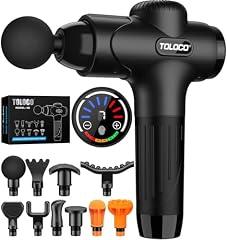
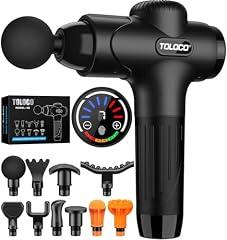
TOLOCO Deep Tissue Percussion Massage Gun
Overview
This is a cordless, roughly 3-pound handheld percussion massager for short sessions on larger soft-tissue areas such as the back, shoulders, and legs. Product materials describe seven speed settings from 2200 to 3300 rpm, 10 interchangeable heads, an LED display, and USB charging. Those performance figures are manufacturer-stated, not independently measured. One unusually strong point is electrical traceability. UL's product directory lists this exact X8 model, made by Guangdong Liwan Intelligent Electrical Appliances, as UL Certified in the Massage and Exercise Machines category. The available X8 instructions also set a 10-minute limit for one area and caution against use on the head, face, bony areas, broken skin, and near the neck. The catalog's heat designation could not be reconciled with the X8 product materials and instructions, which do not document a heated attachment, temperature range, or thermal safeguards.
What works
- An exact-model UL certification listing provides independently traceable electrical safety evidence.
- The instructions give practical limits, including no more than 10 continuous minutes on one body area.
- Product materials provide seven selectable speeds and 10 heads, which can help users keep pressure and contact shape appropriate to the muscle area.
- The manual directs users to stop for pain or discomfort and to seek clinical advice for pregnancy, diabetes, neuropathy, pacemaker use, and other medical conditions.
What does not
- The catalog identifies heat, but the available X8 materials do not document a heated head, temperature range, automatic thermal protection, or burn warnings. This is a specification conflict, not merely missing test data.
- No public independent report was located for this unit's actual percussion amplitude, delivered force, noise, battery runtime, attachment retention, or shutdown behavior.
- The marketing claim that percussion breaks down lactic acid is poorly aligned with human evidence. A massage-gun systematic review found no lactate difference, and no product-specific clinical study was located.
- Warnings are useful but incomplete for a high-force device. They do not specifically address bleeding risk, blood-clot disorders, recent fracture, osteoporosis, implants, spine use, or vascular disease.
Who is it for
This product suits an adult who wants a compact cordless tool for occasional, short self-massage of intact soft tissue after routine exercise or prolonged sitting. It is most appropriate for someone who can follow the 10-minute per-area limit, start with a lower setting, avoid the neck and bony areas, and treat the device as comfort-focused self-care rather than injury treatment. The confirmed UL listing is particularly relevant for a buyer who values independently traceable electrical certification alongside a basic, multi-head design.
Who is it not for
It is not for children, people unable to feel or communicate discomfort, or anyone likely to use it aggressively for long sessions. People who are pregnant, have neuropathy, diabetes, a pacemaker, osteoporosis, a bleeding or clotting condition, vascular disease, recent surgery, fracture, skin injury, cancer, or an implant should obtain clinician-specific advice first. It should not be used on the head, face, front or side of the neck, spine, superficial vessels, bruised or broken skin, or directly over painful bones.
Integrity
The most meaningful safety finding is an exact-model UL certification record under the Massage and Exercise Machines category, linked to the named manufacturer. That is stronger evidence than a seller badge. The accessible X8 instructions also provide meaningful use limits and several contraindication cues. However, the product-specific evidence does not establish a heated feature or safe temperature controls, despite the catalog marking heat. It also does not publicly document the battery chemistry, charger certification, battery-pack certification, or independent output testing. Human research on massage guns supports limited, short-term flexibility, range-of-motion, stiffness, and some recovery-related effects, but study quality is limited and it does not validate claims about breaking down lactic acid. Case reports link aggressive percussion use with serious muscle injury and neck vascular injury. No product-specific CPSC recall was located in the checks performed. The rechargeable battery should not enter trash or curbside recycling. EPA directs consumers to battery or electronics collection routes, but no X8 battery-removal, repair, replacement-part, or manufacturer take-back program was documented.