
10 Best Collagen Peptides
 Lauren Wilson
Please note that we participate in affiliate marketing programs. When you purchase through links on our site, we may earn a commission. As an Amazon Associate we earn from qualifying purchases. This comes at no additional cost to you and helps support the resources required to provide valuable content.Advertising Disclosure
Top-rated Collagen Peptides Comparison
1

2
4
5
6
7
+
8
9
Collagen peptides: what to look for
Collagen peptides are animal-derived proteins that have been broken down into smaller pieces, usually for mixing into drinks or foods. The supplied products include powders, capsules, packets, and one adhesive patch. Their intended benefits vary, but the human evidence described in the reviews is strongest and still limited for modest, outcome-specific changes such as skin hydration, skin elasticity, and some joint-related symptoms. Marketing claims about hair growth, wrinkle reversal, cartilage repair, broad anti-aging effects, or disease treatment go beyond what the supplied evidence establishes for these products.
The first question is whether the product’s form, route, and amount resemble the research. Most cited studies involve **oral hydrolyzed collagen**, commonly around **2.5 to 10 grams daily**, although some trials used 20 grams and one VERISOL study used 2.5 grams. A label should state the actual collagen amount per serving, serving size, collagen form, and animal source. A headline such as “multi-collagen” can conceal the amount of each source or type. A large total powder serving may include protein or other ingredients, while a capsule product may provide only 1 to 1.6 grams of collagen. A patch claiming 10 milligrams through the skin is not equivalent to oral gram-level research, and the supplied review found no matching human evidence for that route and dose.
Look for a complete ingredient and warning panel. It should identify bovine, fish, chicken, eggshell, or other animal sources and disclose relevant allergens. Added vitamin C, biotin, hyaluronic acid, botanicals, enzymes, glucosamine, chondroitin, probiotics, and MSM should have named amounts rather than being hidden in a proprietary blend. High biotin amounts deserve particular attention: several supplied products contain 2,500 to 10,000 micrograms daily, and the reviews warn that biotin can interfere with some laboratory tests. Glucosamine, chondroitin, and botanicals such as ashwagandha may also require medication or medical-condition review.
Quality claims should be checkable. The strongest supplied evidence comes from an exact finished product appearing in an independent registry, such as **NSF/ANSI 173**, **NSF Certified for Sport**, USP Verified, Informed Sport, or another applicable product-level listing. A factory certification, “GMP-made” statement, or “third-party tested” claim is not the same thing. The most useful contaminant evidence is a recent, lot-specific certificate of analysis from an **ISO/IEC 17025-accredited laboratory**, showing numerical results and methods for lead, cadmium, arsenic, mercury, pathogens, and relevant residues. None of the supplied products consistently provided that level of public lot documentation.
Collagen is also not a complete protein. Several reviews note that it lacks tryptophan or does not provide all essential amino acids, while the clearest labels say it should not replace varied, complete protein foods. Treat collagen as an optional supplement, not a meal replacement or automatically suitable workout protein.
Animal and packaging claims need the same scrutiny. “Grass-fed,” “pasture-raised,” “wild-caught,” “upcycled,” “cruelty-free,” recyclable, and compostable claims are meaningful only when species, tissue, country or fishery, welfare or fishery controls, package materials, and real U.S. disposal instructions are documented. Across the supplied products, independent sourcing certification, farm or fishery traceability, refill options, and verified disposal guidance were generally absent.
Recurring safety cautions are important: many products are unsuitable for vegans, vegetarians, or people avoiding bovine, fish, chicken, egg, eggshell, or gelatin-derived ingredients. Fish and egg allergens are especially common, and some facilities also process milk, fish, tree nuts, shellfish, or soy. People who are pregnant, nursing, taking medicines, managing a medical condition, or undergoing treatment should review the specific formula with a clinician. Anyone scheduled for laboratory testing should disclose supplemental biotin. Persistent joint pain, unexplained hair loss, or significant skin changes should not be self-treated with collagen alone. One supplied product also carried a California Proposition 65 lead warning, so a certification or testing claim should never be treated as proof that every current lot is contaminant-free.
Integrity
These topics assess more than whether a product contains collagen. They cover dose fit, label honesty, allergens, finished-product quality controls, animal sourcing, packaging, and whether the evidence can be checked. Higher-scoring products generally disclose more and have stronger independent verification; lower-scoring products more often rely on broad claims, undisclosed blends, or manufacturer statements without public supporting records.
HHealth & Safety
Evidence-matched benefits
This measures whether the collagen form, daily amount, and oral or non-oral route match human research for a specific outcome. For these products, roughly 2.5–10 grams of oral hydrolyzed collagen is a meaningful comparison range, while a 10-milligram patch is not comparable. Higher-scoring powders included doses aligned with studied ranges; the patch scored lowest because its route and dose were not supported by the cited evidence.
Lot-specific contaminant safety
This asks whether finished lots are screened for heavy metals, pathogens, pesticides, and other relevant residues, with results, methods, and laboratory credentials available. Collagen’s animal and marine sources make contaminant documentation particularly important. The strongest scores were attached to products with independent certification or stronger quality controls, but no supplied product consistently offered a public current lot report with numerical results for the buyer’s container.
Allergen and use-safety labeling
This measures whether animal sources, allergens, added actives, contraindications, and—in topical products—adhesive risks are clear before use. Fish, egg, bovine, chicken, and eggshell ingredients recur across the supplied products, and some facilities process additional allergens. Higher-scoring labels identify these inputs directly; lower scores reflect incomplete online panels or undisclosed adhesive and source details.
Protein quality and nutrition clarity
Collagen contributes protein but is not a complete protein replacement. This topic measures whether the product communicates that limitation and gives enough nutrition information to prevent misuse as a meal or post-workout protein. Higher scores went to products that explicitly state collagen lacks essential amino acids or is incomplete. Lower scores were associated with protein marketing that did not explain the limitation.
Added-ingredient safety
This measures whether vitamins, biotin, hyaluronic acid, probiotics, botanicals, enzymes, glucosamine, chondroitin, and other actives are named, quantified, and safety-qualified. It matters because a collagen product can become a multi-ingredient supplement with interactions or testing concerns. Higher-scoring formulas either used one ingredient or disclosed additions clearly; lower scores involved proprietary blends or missing individual doses, especially for botanicals and enzymes.
Regulatory and manufacturing record
This assesses whether the responsible firm and manufacturer are identifiable and whether relevant recalls, warning letters, labeling failures, and current-GMP controls are transparently addressed. A warning concerning a different product does not prove a collagen defect, but it remains relevant context. Most supplied products had moderate scores; the lowest reflected a documented notice about an unauthorized GMP certificate, while higher scores reflected clearer accountability and quality history.
EEcology
Responsible animal and fish sourcing
This measures disclosure of species, tissue, country or fishery, and welfare or fishery controls, ideally backed by independent certification. Collagen is not plant-based, so source transparency is central to responsible purchasing. The supplied products usually named broad animal categories, but few documented farm-level or fishery traceability. Scores were therefore mostly moderate rather than high, even where grass-fed, pasture-raised, or wild-caught claims appeared.
Packaging and waste responsibility
This considers unnecessary single-use material, refill options, material disclosure, and whether recycling or compostability claims work in U.S. disposal systems. Bulk powders generally avoid the repeated waste of individual packets, while 20- or 40-packet products create more single-use material. Across the supplied set, scores were limited by missing package specifications, recycling instructions, and refill programs; convenience alone did not establish a lower footprint.
EEvidence
Independently verified quality
This measures whether the exact finished product—not just its ingredient or factory—appears in a credible independent registry for contents, contaminants, and quality. The clearest separation in the supplied set came from NSF/ANSI 173 and NSF Certified for Sport listings; products without an exact registry match scored much lower. A manufacturer’s “third-party tested” statement or a facility credential is not equivalent to finished-product verification.
Clear collagen identity and dose
This measures whether the label states collagen form, source species, serving size, and actual daily grams or milligrams, along with all other ingredients. High-scoring products identified a single bovine formula or gave a concrete total amount such as 9.5, 11, or 20 grams. Lower-scoring multi-collagen products left type-specific or source-specific amounts unclear, and some products had inconsistent type claims.
Honest, checkable claims
This measures whether marketing stays within modest, outcome-specific evidence and provides support that buyers can check. Stronger products distinguish possible skin or joint effects from guaranteed hair growth, wrinkle reversal, disease treatment, or absorption promises. Lower-scoring products used broad beauty, metabolism, or therapeutic claims without product-specific human evidence, while higher scores reflected more restrained positioning and accessible supporting information.
Full reviews
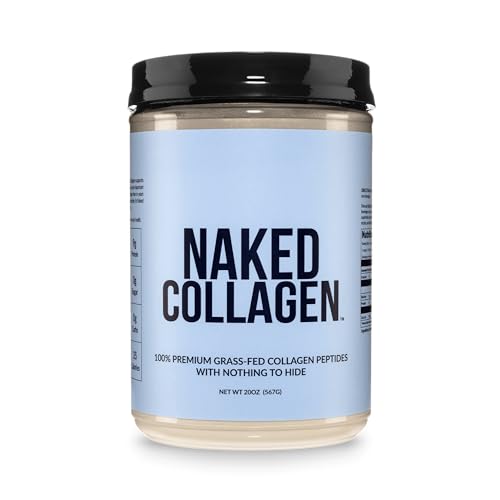
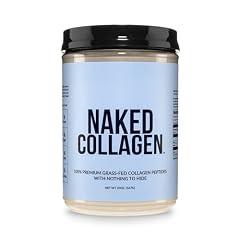
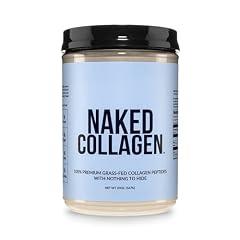
Naked Collagen Peptides Protein Powder
Overview
Naked Collagen is an unflavored bovine-hide collagen-peptide powder in a 20-ounce canister. The current label image states 60 servings, with one 9.5 g scoop supplying 9 g protein and 35 calories. The maker suggests mixing one or two scoops into coffee, other hot drinks, smoothies, or baking, so routine use can range from 9.5 g to 19 g daily. The formula is unusually simple. The label identifies bovine hide collagen peptides as its only ingredient and provides an amino-acid profile. The product is independently listed by NSF as Naked Collagen under its Functional Foods certification program, at a recommended 19 g daily serving. That is meaningful ongoing quality oversight, although buyers cannot view a current lot-specific contaminant report with numerical results.
What works
- The current NSF registry independently lists Naked Collagen as a certified finished powder product.
- The manufacturer-stated formula has one ingredient, bovine hide collagen peptides, with no added vitamins, botanicals, sweeteners, or proprietary blend.
- Its 9.5 g scoop falls within oral collagen amounts studied for modest skin hydration and elasticity outcomes.
- The available label gives serving size, protein, calories, ingredient identity, and an amino-acid profile.
What does not
- No current public certificate of analysis provides batch-specific lead, cadmium, arsenic, mercury, pesticide, or microbiology results.
- This is bovine-derived, so it does not suit vegans, vegetarians, or people avoiding beef-derived ingredients.
- Collagen is not a complete dietary protein. The label's amino-acid panel shows no tryptophan, so it should not stand in for a balanced protein source.
- Marketing for hair, nails, wrinkle treatment, and broad joint support is less specific than the modest, outcome-dependent human evidence for oral collagen peptides.
Who is it for
This product suits an adult who specifically wants plain bovine collagen peptides, prefers an unflavored powder for coffee or smoothies, and wants to use about 9.5 g to 19 g daily. That range overlaps doses used in human studies of skin hydration, elasticity, and some joint-symptom outcomes. It also fits buyers who value a very short ingredient list and independently confirmed product certification, rather than added beauty ingredients or flavored drink mixes.
Who is it not for
It is not suited to vegans, vegetarians, people who avoid bovine ingredients for religious or personal reasons, or anyone with a known sensitivity to beef-derived products. It is also a poor choice for someone seeking a complete post-workout protein, meal replacement, or sole protein supplement because collagen lacks a complete essential-amino-acid profile. People who are pregnant, breastfeeding, managing a medical condition, or using medication should discuss supplement use with a clinician.
Integrity
The strongest quality finding is the current NSF registry entry for the exact Naked Collagen powder. NSF describes its certification programs as including label review, toxicology review, contaminant review, audits, and periodic retesting. This provides more support than a self-issued testing statement, but it does not substitute for a public, lot-specific report showing actual heavy-metal and microbiology results. The manufacturer identifies the sole ingredient as bovine hide collagen peptides from pasture-raised European cattle. The species and tissue are clear, but no independent welfare certification, farm identification, or full supply-chain documentation was located. Packaging appears to be a rigid plastic canister, with no verified material specification, refill program, or U.S. recycling instructions. A 2019 California Proposition 65 matter involved other Naked Nutrition products and lead or cadmium allegations, not this collagen product, so it does not establish contamination in the current formula.

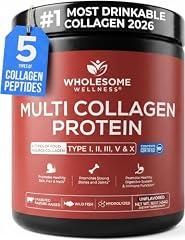
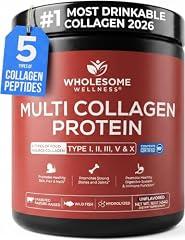
Wholesome Wellness Multi Collagen Protein Powder
Overview
This is an unflavored, 16-ounce oral collagen powder intended to be stirred into water, coffee, tea, juice, smoothies, or recipes. The accessible product label record lists one scoop as 7.83 grams of a multi-collagen complex, with adults directed to use one scoop once or more daily. NSF’s current certification registry instead identifies the manufacturer-recommended daily serving as two scoops, about 15.66 grams, so buyers should follow the package in hand. The recorded formula combines hydrolyzed bovine and fish collagen peptides with chicken and bovine bone-broth collagen and eggshell membrane, covering types I, II, III, V, and X. The exact amount from each source is not disclosed. The product is independently listed by NSF as a certified dietary supplement, which is stronger quality evidence than a manufacturer-only testing statement. Human research on oral hydrolyzed collagen suggests possible skin and joint benefits, but findings are mixed and are not specific to this multi-source blend.
What works
- The finished powder is listed in NSF’s dietary-supplement certification registry, with certification designed to assess label claims, contaminants, and manufacturing controls.
- The label identifies fish and egg as allergens and includes a caution for pregnancy, nursing, medical conditions, allergies, and medication use.
- A label record provides a total collagen-blend amount per scoop, an amino-acid profile, and practical mixing directions.
- The formula has no flavoring or sweetener listed in the accessible label record.
What does not
- The five collagen sources are combined in one blend, so the dose of each collagen type and source cannot be determined.
- No public, current lot-specific certificate of analysis was located showing numerical results for lead, cadmium, arsenic, mercury, or microbial testing.
- Evidence for oral hydrolyzed collagen is modest and inconsistent, especially when higher-quality or independently funded skin studies are considered. It does not establish that this exact blend will improve hair, nails, skin, joints, or recovery.
- The responsible firm received an FDA warning letter on February 18, 2021 for disease-treatment claims on a different product. That does not demonstrate a defect in this collagen powder, but it is relevant to the firm’s regulatory history.
- Collagen is not a complete dietary protein, and the marketing does not clearly explain that it should not replace varied protein foods.
Who is it for
This product fits an adult who specifically wants an unflavored animal-derived collagen powder for drinks or recipes, accepts fish and egg ingredients, and values a finished-product certification over a vague third-party-testing claim. It is most practical for someone using collagen as an optional addition to an otherwise adequate diet, rather than as treatment for joint disease or a primary protein source. The disclosed total blend amount and scoop format make routine use straightforward, although source-specific collagen doses remain unknown.
Who is it not for
It is not appropriate for people with fish or egg allergy, and it is unsuitable for vegetarians or vegans. People who are pregnant, nursing, have a medical condition, or take medicines should follow the label caution and speak with a clinician or pharmacist before use. It is also a poor fit for someone seeking a complete protein powder, a product with publicly available batch-by-batch heavy-metal results, or a formula that discloses the precise dose of each collagen source. People expecting treatment for arthritis, injury, or visible aging should not rely on this supplement alone.
Integrity
The strongest quality finding is independent rather than manufacturer-stated. NSF’s certification registry currently lists this finished Multi Collagen Protein powder. NSF certification includes review of label claims and ingredients, toxicology review, and contaminant controls, although it does not provide consumers with a public numerical report for the particular tub they receive. The accessible label record clearly calls out fish and egg, which matters because fish collagen and eggshell membrane are part of the blend. It also identifies bovine and chicken-derived ingredients. Broader sourcing language such as grass-fed beef and wild-caught or certified wild fish is manufacturer-stated, and no independently verifiable fishery, chain-of-custody, welfare, or country-of-origin certification was found for this product. Packaging material, recycled-content information, refill options, and disposal guidance were not disclosed. FDA issued Wholesome Wellness a warning letter on February 18, 2021 over disease claims for a different anxiety product, not this collagen powder.

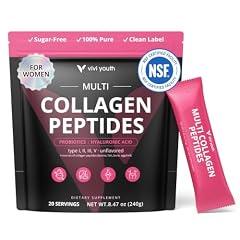
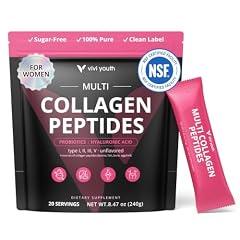
VIVI Youth Multi Collagen Peptides Powder
Overview
This is an unflavored oral powder in 20 individually sealed 12 g packets. The manufacturer directs users to mix one packet daily into a cool drink, smoothie, shake, or yogurt, and cautions against liquids above 104°F because of the live probiotics. It is positioned for skin appearance and hydration, hair, joints, bones, and digestive support. The manufacturer states that each packet provides 5,000 mg of VERISOL collagen peptides, 100 mg sodium hyaluronate, 1,000 mg inulin, and 20 billion CFU from seven probiotic strains. Human studies of oral hydrolyzed collagen have used doses overlapping 5 g, including a VERISOL trial at 2.5 g for wrinkles. However, the public product information does not provide a complete Supplement Facts panel, probiotic strain names, or amounts for every added ingredient.
What works
- The manufacturer-stated 5 g collagen amount is within the range used in human skin studies.
- Single packets provide a defined daily format and may better protect a probiotic powder from repeated exposure after opening.
- The manufacturer identifies bovine, fish, bone, and eggshell as collagen-related sources, which is more useful than an unspecified multi-collagen description.
- The product is stated to be unflavored and sugar-free, which can make it easier to add to foods or cold drinks.
What does not
- No current lot-specific certificate of analysis was publicly available for heavy metals, microbes, or other contaminants, despite a third-party testing claim.
- No matching finished-product listing was found in the NSF, USP, Informed Sport, or ConsumerLab certification resources checked.
- Fish and egg-derived materials are stated, but the available public ingredient information does not clearly present a complete allergen warning or full ingredient panel.
- The listing makes broad hair, joint, bone, gut, and anti-aging claims, while the clearest human evidence is more limited and relates mainly to modest skin outcomes from oral collagen.
- Twenty single-use packets improve portability but create substantially more packaging waste than a bulk pouch or refillable container.
Who is it for
This product suits an adult who specifically wants a portable, unflavored collagen routine and is comfortable using a manufacturer-stated 5 g daily collagen serving for possible skin hydration or wrinkle-related benefits over weeks to months. It may also suit someone who prefers packets over measuring loose powder and wants inulin and probiotics in the same serving. It is most appropriate for buyers who can verify the current package label before use and who do not have relevant animal-source allergies.
Who is it not for
It is not appropriate for people with fish or egg allergy unless a clinician has reviewed the complete current label, because the manufacturer describes fish and eggshell-derived components. People with severe bovine sensitivity should also avoid relying on the incomplete online allergen presentation. Those who need independently certified contaminant screening, named probiotic strains, clinically established treatment for digestive symptoms, or reliable protein replacement should select a product with a complete label and finished-product verification. People with medically managed conditions or medication-related dietary restrictions should check with a clinician first.
Integrity
The useful evidence-linked feature is the stated 5 g daily VERISOL collagen amount. Published randomized research on VERISOL used 2.5 g daily in middle-aged women and reported a reduction in eye-wrinkle volume, while broader collagen reviews find mixed evidence and substantial study-quality concerns. That supports modest expectations for skin appearance, not treatment of disease or guaranteed hair, joint, bone, or gut outcomes. The manufacturer identifies bovine, fish, bone, and eggshell sources, but does not provide country, fishery, farm, welfare, or chain-of-custody documentation. No public current lot certificate from an accredited laboratory was found, and no finished-product certification record was found in the major independent registries checked. Individually sealed packets may help maintain probiotic viability, but their single-use material raises the product's waste footprint. Publicly searchable FDA recall and warning-letter checks did not identify a matched action for this product or brand.

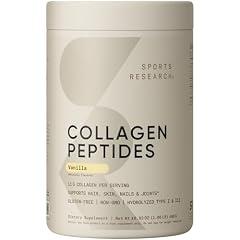
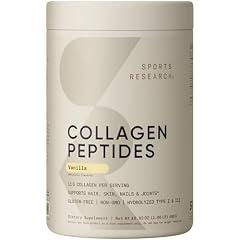
Sports Research Collagen Peptides Supplement
Overview
This is a vanilla-flavored oral collagen powder in a 480 g canister, with 40 servings. One 12 g scoop provides 11 g of hydrolyzed bovine collagen peptides, identified as types I and III, plus 10 g protein and 40 mg sodium. The directions allow one or two scoops mixed into a beverage or meal. The dose and oral format broadly fit human research on collagen peptides for modest skin hydration and elasticity outcomes, although the product itself was not the subject of the studies reviewed. Its label is unusually specific about the collagen amount, amino-acid profile, bovine hide sourcing regions, and all added ingredients. Independent registries confirm both IGEN non-GMO certification and current Informed Choice batch listings. Those programs do not provide a public, lot-specific heavy-metal and microbe report for this vanilla product.
What works
- The label clearly identifies 11 g hydrolyzed bovine collagen peptides per scoop, with type I and III positioning and a full amino-acid profile.
- The simple formula lists only collagen peptides, natural flavor, and monk fruit extract, with no proprietary blend or added vitamin megadoses.
- Informed Choice publicly lists recent tested Vanilla batches for this collagen powder, relevant to buyers concerned about prohibited-substance screening.
- IGEN's registry confirms certification for the Vanilla Bean collagen product as non-detectable for the genetically engineered proteins and genes in its panel.
What does not
- No current public, lot-specific certificate was found showing lead, cadmium, arsenic, mercury, pathogens, or chemical-residue results for this vanilla product.
- Collagen is an incomplete protein source, and the label's amino-acid panel shows very low amounts of several essential amino acids. It should not be treated as a replacement for complete dietary protein.
- Bovine origin is disclosed, but the stated U.S., New Zealand, and Australian sourcing does not document farm-level welfare certification or hide-level traceability.
- The brand has had California lead-related actions involving other Sports Research products. These records do not identify this vanilla collagen product, but they reinforce the value of product-specific contaminant reporting.
Who is it for
This product fits an adult who wants a flavored, bovine collagen powder with a clearly stated 11 g serving and intends to mix it into coffee, smoothies, or food. It is most relevant to someone seeking a modest adjunct for skin hydration or elasticity, or general connective-tissue nutrition, rather than treatment for a medical condition. It may also suit athletes or tested-sport participants who value the current Informed Choice batch listings. The 40-serving container is practical for a one-scoop daily routine, while two daily scoops shorten the supply to about 20 days.
Who is it not for
It does not fit vegans, vegetarians avoiding bovine hides, or anyone with a known sensitivity to bovine-derived ingredients. It is also a poor fit for someone seeking a complete protein powder for meals, muscle protein synthesis, or recovery, because collagen has a limited essential-amino-acid profile. People who are pregnant, nursing, managing a medical condition, following a protein-restricted diet, or taking medicines should review the ingredient list and consult an appropriate clinician. Buyers who require published lot-specific heavy-metal and pathogen results need more documentation than is publicly available here.
Integrity
The strongest quality evidence is product-specific but limited in scope. Informed Choice lists recent Vanilla batch testing for prohibited substances, and Nutrasource's IGEN registry lists the Vanilla Bean collagen product as certified non-GMO under its testing panel. The label also names hydrolyzed bovine collagen, states 11 g per scoop, and identifies natural flavor and monk fruit rather than hiding additives in a blend. The collagen is manufacturer-stated to come from bovine hides sourced from the United States, New Zealand, and or Australia, and to be packaged in the United States. That is useful geographic disclosure, but no independently verifiable welfare or farm-level sourcing program was found. The canister is labeled as non-BPA HDPE number 2, a commonly recyclable plastic where local systems accept it, but there is no refill format. No recall or FDA warning specific to this collagen was identified, yet separate lead-related California matters have involved other brand products.

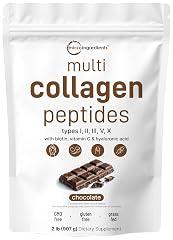
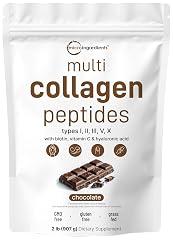
Micro Ingredients Multi Collagen Peptides Powder Chocolate
Overview
This is a 2-pound chocolate-flavored oral collagen powder. The brand directs users to mix two full scoops into a beverage, once or twice daily. Its product page describes a hydrolyzed multi-collagen blend with types I, II, III, V, and X, plus vitamin C, biotin, and hyaluronic acid, marketed for hair, skin, nails, and joints. A matching current label from an independent retailer lists 10.88 g of multi-collagen complex, 55 mg vitamin C, 2,500 mcg biotin, and 55 mg hyaluronic acid in a two-scoop serving. That collagen amount is within the 10 g daily dose used in some human joint trials, although the finished chocolate product itself has not been clinically tested. The manufacturer says its ingredients are third-party tested, but no current lot-specific certificate of analysis or finished-product certification was located.
What works
- The manufacturer-stated collagen serving is about 11 g, a dose consistent with some human studies of oral hydrolyzed collagen for joint outcomes.
- The multi-source formula identifies bovine, fish, chicken bone broth, and eggshell membrane collagen in the matching label.
- Vitamin C, biotin, and hyaluronic acid are individually named and quantitatively declared in the matching formula label.
- A two-pound powder format provides a relatively large supply, with the matching label listing 82 servings.
What does not
- No recent lot-specific independent report was found showing heavy-metal, pathogen, or chemical-residue results for this finished chocolate product.
- No listing was found in the NSF, USP, Informed Sport, or other major finished-supplement certification registries checked.
- The formula contains fish and egg ingredients, and also bovine and chicken-derived materials, so it is unsuitable for relevant food allergies and animal-free diets.
- The 2,500 mcg biotin dose can interfere with some laboratory tests, yet a specific biotin laboratory-test warning was not verified for this product.
- Claims for hair and nail improvement are less well supported than the modest evidence for particular skin and joint outcomes.
Who is it for
This product suits an adult who specifically wants a drink-mix collagen supplement rather than capsules, prefers chocolate flavor, and is comfortable with a multi-animal-source formula. Its roughly 11 g manufacturer-stated daily collagen amount fits the dose range used in some oral hydrolyzed-collagen research, especially for modest skin hydration or joint-comfort goals. It also fits someone who values vitamin C and hyaluronic acid in the same routine, provided they have no fish or egg allergy and do not need independently certified sport-supplement status.
Who is it not for
It is not appropriate for people with fish or egg allergy, or for vegans, vegetarians avoiding animal collagen, and people avoiding bovine or chicken ingredients for dietary, religious, or personal reasons. People scheduled for blood testing, thyroid testing, or cardiac testing should disclose the 2,500 mcg biotin content to their clinician because biotin can distort certain results. It is also a poor fit for anyone needing lot-specific heavy-metal data, verified fishery sourcing, or a finished-product NSF, USP, or sport certification.
Integrity
The formula uses hydrolyzed collagen from bovine, fish, chicken bone broth, and eggshell membrane sources. The manufacturer describes the bovine material as grass-fed and pasture-raised, and says ingredients are third-party tested. Those are manufacturer statements, not independently verified sourcing or finished-product test results. No current lot-specific certificate of analysis was found to confirm lead, cadmium, arsenic, mercury, or microbiological results for this chocolate powder. The added 2,500 mcg biotin is important safety context. NIH notes that supplemental biotin can cause falsely high or low results in some laboratory assays. The product has no verified finished-product certification in the NSF, USP, Informed Sport, or similar registries checked. The two-pound pouch is concentrated and may reduce packaging per serving, but its material, recycling instructions, refill option, and end-of-life claims were not verified. No independently verifiable animal-welfare, fishery, or chain-of-custody certification was located.

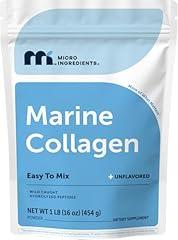
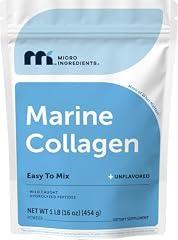
Micro Ingredients Marine Collagen Peptides Powder
Overview
This is a 1 pound pouch of unflavored hydrolyzed marine collagen powder. The current label information lists 37 servings, with adults directed to take two scoops, about 12 g, daily with a meal. Each serving provides 12 g hydrolyzed marine collagen peptides, 11 g protein, 45 calories, and 30 mg sodium. No other ingredients are listed. The manufacturer states that the collagen comes from wild-caught whitefish and markets it for hair, skin, nails, and joints. Human reviews of oral hydrolyzed collagen include skin studies at roughly 2.5 to 10 g daily, so the labeled 12 g oral serving is in a relevant dose range for modest skin hydration and elasticity expectations. Evidence is less product-specific for hair, nails, and joint outcomes. A major unit-specific safety fact is the labeled California Proposition 65 warning for lead exposure. The brand states that batches receive third-party laboratory testing, but no current lot-specific contaminant report was publicly available for review.
What works
- The label provides a concrete daily amount, 12 g of hydrolyzed marine collagen peptides in two scoops.
- The formula is unusually simple, with hydrolyzed marine collagen as the only listed ingredient and no proprietary blend.
- Fish, specifically whitefish, is clearly disclosed, alongside dairy, soy, gluten, and tree-nut exclusion claims.
- The label explicitly says collagen is not a complete protein and should not replace dietary protein.
- The 12 g oral serving is compatible with the dose range used in human studies reporting modest skin hydration and elasticity improvements.
What does not
- The product carries a Proposition 65 warning for lead exposure, which is a real safety signal even though the label does not disclose the measured lead amount.
- The manufacturer's batch-testing statement is unproven for a buyer without a current lot-specific certificate showing metals, microbes, methods, and laboratory accreditation.
- No current listing was located in the reviewed NSF, USP, or Informed Sport finished-product certification registries.
- Wild-caught whitefish is not enough sourcing detail to verify species, fishery, country of origin, chain of custody, or responsible-fishery certification.
- Marketing extends to hair, nails, and joints, while the clearest human evidence for hydrolyzed oral collagen is for modest skin outcomes and remains heterogeneous.
Who is it for
This product suits an adult who specifically wants an unflavored, pescatarian-compatible collagen powder with a plainly stated 12 g daily serving and no added vitamins, sweeteners, botanicals, or filler ingredients. It is especially relevant for someone using collagen as a routine dietary supplement for modest skin hydration or elasticity support, rather than as treatment for a medical condition. It also fits buyers who value a label that directly identifies fish and warns that collagen is nutritionally incomplete protein.
Who is it not for
It is not appropriate for anyone with a fish allergy, since the product identifies whitefish as its allergen source. It is also a poor fit for people seeking a complete protein for meals, muscle building, recovery, or medically directed nutrition, because the label itself says collagen should not replace dietary protein. Pregnant or lactating people, people taking medications, and those managing medical conditions should follow the label's instruction to consult a clinician. People seeking to minimize lead exposure should take the Proposition 65 warning seriously and seek product-specific contaminant documentation.
Integrity
The health strengths are a transparent single-ingredient formula, a quantified 12 g collagen serving, and explicit fish-allergen and incomplete-protein warnings. The amount and oral hydrolyzed form overlap with ranges studied for modest skin hydration and elasticity outcomes, although those studies do not independently verify this finished product. The product also carries a Proposition 65 warning for lead exposure. California lists lead for cancer and reproductive toxicity, and the label does not provide a concentration or daily exposure figure. The manufacturer says its batches undergo third-party testing, but a public lot-specific certificate with heavy-metal and microbiological results was not available for review. No current finished-product certification listing was found in the reviewed NSF, USP, or Informed Sport registries. Ecologically, wild-caught whitefish is manufacturer-stated, but species, fishery, origin, and MSC or ASC chain-of-custody evidence are not disclosed. The powder is concentrated in a flexible pouch, but there is no verified material or U.S. recyclability guidance.

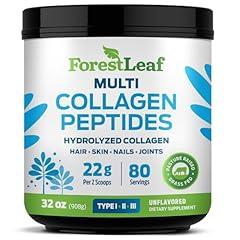
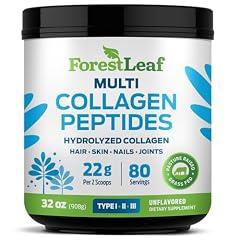
Collagen Peptides Powder Unflavored
Overview
This is an unflavored, orally used 2 pound collagen powder with about 41 servings. ForestLeaf's current product page lists 11 g per serving of a hydrolyzed bovine and chicken collagen complex, described as types I, II, and III, with no other ingredients. Directions are to mix 1 to 2 scoops into food or a drink daily. The stated dose is within or slightly above doses used in human studies of oral hydrolyzed collagen for modest skin outcomes. Evidence for joint symptoms is more mixed, and it does not establish that this particular product will improve hair, nails, exercise recovery, or wrinkles. ForestLeaf says it tests every lot through independent laboratories, but no current lot-specific certificate of analysis, laboratory report, or finished-product certification listing was located.
What works
- The manufacturer clearly states an 11 g serving of hydrolyzed bovine and chicken collagen, with about 41 servings per container.
- The single-ingredient formula avoids added vitamins, botanicals, sweeteners, and proprietary active blends.
- The stated 11 g daily amount is compatible with the oral hydrolyzed-collagen dose range studied for modest skin outcomes.
- Current directions give a practical food and beverage route of use, including a warning that cold liquids may clump.
What does not
- No public, current lot-specific report was found showing measured lead, cadmium, arsenic, mercury, pathogens, or testing methods for this finished product.
- No exact finished-product listing was found in the major independent certification registries checked, including NSF and USP.
- Marketing language saying collagen can reverse wrinkles goes beyond the modest and variable outcomes supported by human evidence.
- The product is animal-derived from bovine and chicken sources, so it is not suitable for vegans despite a conflicting vegan catalog classification.
- An older NIH label record describes bovine collagen alone, while the current manufacturer page lists bovine and chicken collagen, creating a formulation-history clarity issue.
Who is it for
This product suits an adult who specifically wants a plain animal-derived collagen powder, prefers to add it to smoothies, foods, or other flavored drinks, and does not want extra active ingredients. The 2 pound container and roughly 41 servings make it most practical for consistent daily use over several weeks. It may fit someone seeking a modest adjunct for age-related skin appearance or general joint comfort, provided they understand that research supports limited outcomes rather than guaranteed cosmetic or recovery results.
Who is it not for
It is not for vegans, vegetarians avoiding chicken or bovine ingredients, or anyone with a known sensitivity to either source. People who need documented low contaminant exposure, including those who are pregnant, nursing, immunocompromised, or managing a medically directed supplement plan, should seek clinician guidance and may prefer a product with a current public lot certificate. It is also not a complete dietary-protein replacement, and it should not be relied on to treat arthritis, injuries, hair loss, or skin disease.
Integrity
ForestLeaf identifies the product as hydrolyzed bovine and chicken collagen, with no added ingredients, and says its livestock sourcing is grass-fed and pasture-raised. Those sourcing statements are manufacturer claims, not independently verified welfare, country-of-origin, or supply-chain certifications. No marine ingredient is listed. The brand does not provide a public, product-specific welfare certification or a detailed traceability record for the animal tissues used. ForestLeaf says every lot receives third-party heavy-metal and microbiological testing, but it does not publish a current lot report that lets buyers verify results, methods, or laboratory accreditation. No exact finished-product NSF, USP, Informed Sport, or ConsumerLab certification was found. California records show a September 26, 2025 Proposition 65 lead notice involving Forest Leaf Inc's separate sea moss product, not this collagen powder. The jar packaging is not accompanied by material or recyclability details, and no refill option was identified.

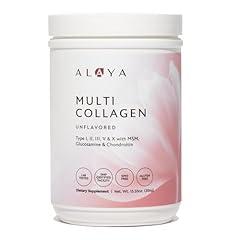
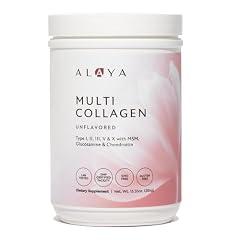
Alaya Naturals Multi Collagen Powder Unflavored
Overview
This is an unflavored oral powder sold in a 40-serving, 13.55-ounce container. One 9.6 g scoop is mixed into 8 to 12 ounces of a hot or cold drink. The current label lists 8.6 g of hydrolyzed bovine, avian, fish, and chicken eggshell-membrane collagen peptides, plus a 1 g blend of chondroitin sulfate, glucosamine hydrochloride, and MSM. It provides 8 g protein and 35 calories per serving. The exact unflavored powder is independently listed by NSF under NSF/ANSI 173, which includes finished-product review, testing, and continuing oversight. Its 8.6 g collagen dose sits within ranges studied for modest skin hydration and elasticity outcomes, and above the 5 g daily amount used in one trial of activity-related knee discomfort. Those studies do not establish that this specific mixed formula will produce the same outcomes.
What works
- The exact unflavored powder is listed in NSF's dietary-supplement registry under NSF/ANSI 173.
- The label gives a concrete 8.6 g collagen amount per serving instead of relying only on a multi-collagen marketing term.
- Its daily collagen amount falls within oral dose ranges evaluated in human studies of skin measures and joint discomfort.
- Fish and egg ingredients, along with potential facility cross-contact allergens, are plainly disclosed on the current label.
What does not
- No public, lot-specific certificate of analysis with numerical heavy-metal or microbiology results was located.
- The 1 g joint-support blend names MSM, glucosamine, and chondroitin, but does not disclose each ingredient's individual dose.
- Glucosamine and chondroitin have reported potential interactions with warfarin, yet the current label does not present a specific anticoagulant warning.
- The product is labeled as protein, but its collagen amino-acid profile is not a substitute for complete dietary protein.
- The brand describes fish and animal sourcing, but independent fishery, country-of-origin, and animal-welfare certification was not located.
Who is it for
This product fits an adult who wants a measured daily collagen-peptide powder for mixing into coffee, smoothies, or other drinks, and who specifically values an independently certified finished supplement. It is most relevant for someone seeking modest, non-disease claims around skin hydration, elasticity, or everyday joint comfort over consistent use. The 40-serving container and unflavored format suit a person who will use one scoop daily and does not need a flavored drink mix or a complete protein supplement.
Who is it not for
It is not suitable for people with fish or egg allergy, because the label identifies cod, haddock, pollock, and egg ingredients. People using warfarin or another anticoagulant should not start a glucosamine and chondroitin-containing supplement without clinician or pharmacist input, given reported interaction concerns. It also does not fit vegetarians, vegans, or people avoiding bovine and poultry ingredients. Anyone seeking a clinically individualized osteoarthritis treatment, a complete meal protein, or public lot-by-lot test results should choose an option designed for that need.
Integrity
The strongest verified quality point is the current NSF/ANSI 173 listing for the exact unflavored powder. NSF's program includes label-claim review, toxicology review, contaminant testing, periodic retesting, and audits. This is stronger evidence than a manufacturer-only statement that a product is tested. However, NSF certification does not give shoppers a public certificate with the numerical results for their own container's lot. The formula contains hydrolyzed bovine, avian, fish, and chicken eggshell-membrane collagen. The label clearly identifies egg and named fish allergens. The brand states that its fish collagen comes from wild-caught cod, haddock, and pollock and that its land-animal sources are grass-fed or cage-free, but independent fishery, welfare, and chain-of-custody certification was not located. The bottle packaging does not provide a verified material specification, refill system, or disposal guidance, so its real-world waste profile remains unclear.
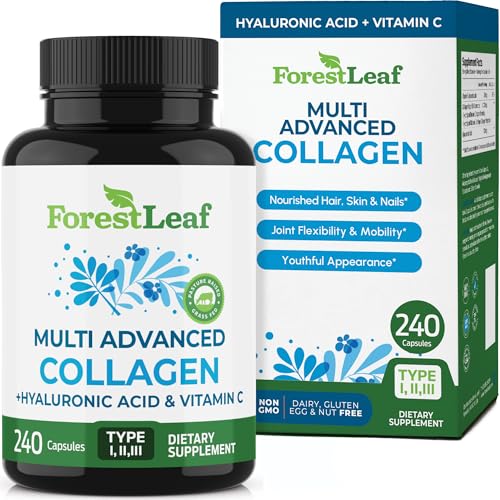
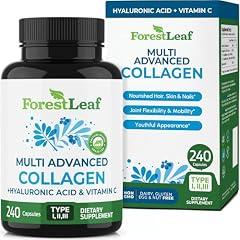
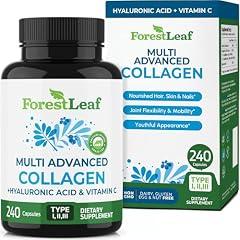
ForestLeaf Multi Collagen Pills with Vitamin C
Overview
This is an oral collagen capsule supplement in a 240-capsule bottle. The stated serving is two capsules, providing 1,000 mg of a hydrolyzed type I, II, and III collagen complex, 60 mg vitamin C, and 100 mg hyaluronic acid. Directions permit two capsules once or twice daily, so the collagen intake is 1 to 2 g daily. The bottle therefore supplies 120 days at one serving daily, or 60 days at the higher directed use. ForestLeaf identifies the collagen as hydrolyzed bovine peptides plus hydrolyzed chicken-cartilage peptides, and lists gelatin capsule, microcrystalline cellulose, vegetable magnesium stearate, and silicon dioxide. Those are manufacturer-stated label details, independently mirrored by a retailer. Human studies support modest skin hydration and elasticity benefits from oral hydrolyzed collagen overall, but most studied skin doses are higher than this product's 1 g serving. The product's stronger promises to reverse wrinkles or reduce cellulite are not matched to product-specific clinical evidence.
What works
- The label names the collagen forms and animal sources, rather than relying only on a multi-collagen marketing term.
- Vitamin C, collagen, and hyaluronic acid are individually quantified, with no proprietary blend obscuring their amounts.
- The directions allow a 2 g daily collagen intake for people who choose twice-daily use.
- The manufacturer discloses gelatin and states that the product is free of dairy, egg, fish, shellfish, gluten, peanuts, and tree nuts.
What does not
- The 1 g collagen serving is below the 2.5 to 10 g daily range commonly used in skin-focused hydrolyzed-collagen trials. Twice-daily use reaches 2 g, still below many trials.
- Marketing says the formula improves hair and reverses wrinkles, while the available evidence is more limited and supports modest, outcome-specific skin changes rather than reversal claims.
- ForestLeaf says it tests lots for heavy metals and microbiological components, but does not publish a current lot-specific laboratory report, methods, or results for this product.
- No exact finished-product listing was found in the NSF, USP, or Informed Sport certification registries. The facility and manufacturing partner are not identified on the product label.
- Species are disclosed, but country of origin, chicken sourcing details, animal-welfare controls, and independently verified grass-fed documentation are not provided.
Who is it for
This product fits an adult who specifically wants a capsule format rather than powdered collagen, wants bovine and chicken collagen sources disclosed, and prefers a short ingredient list with separately stated vitamin C and hyaluronic acid amounts. It is most practical for someone using collagen as an optional skin-care adjunct with modest expectations, especially if they intend to follow the twice-daily direction and accept a 60-day bottle life. It is not positioned as a meaningful source of dietary protein.
Who is it not for
It is unsuitable for vegans, vegetarians who avoid gelatin, and anyone avoiding bovine or chicken-derived ingredients. People with a known sensitivity to these animal sources should discuss use with a clinician. Pregnant or nursing people, children, and people taking prescription medicines should follow the label's advice to seek professional guidance first. It is also a poor fit for someone seeking a clinically studied collagen dose for skin outcomes, a complete protein supplement, published lot-level contaminant results, or independently certified sport-supplement screening.
Integrity
The health-positive feature is basic label transparency. ForestLeaf states the collagen source and form, and the label quantifies vitamin C, collagen complex, and hyaluronic acid without a proprietary blend. The product also carries broad allergen-free claims for major food allergens, though it remains animal-derived because it contains bovine collagen, chicken cartilage collagen, and a gelatin capsule. ForestLeaf states that it tests every lot for heavy metals and microbiological components through independent certified laboratories. That statement could not be independently checked because no current product-specific certificate of analysis, laboratory identity, methods, or results were published. No exact-product certification was located in major NSF, USP, or Informed Sport registries. The brand identifies bovine and chicken sources and calls its bovine collagen grass-fed, but does not provide country, farm, fishery, welfare certification, or traceability documentation. The bottle is single-use packaging, with no refill option or verified material and recycling specification disclosed.

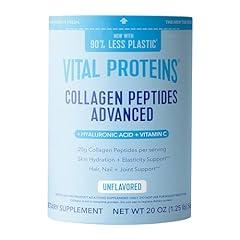
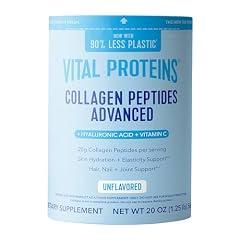
Vital Proteins Collagen Peptides Powder Unflavored
Overview
This unflavored drink-mix powder provides a 21 g serving, listed as two level tablespoons blended into 8 fluid ounces of liquid. The current label image identifies 20 g bovine collagen peptides, 120 mg hyaluronic acid from sodium hyaluronate, and 90 mg vitamin C from calcium ascorbate. It provides 18 g protein and 70 calories per serving. The 20 g collagen amount is within, and above, oral amounts used in human collagen-peptide trials for joint outcomes. Evidence for skin effects is less settled because a recent analysis found apparent benefits concentrated in industry-funded and lower-quality trials. The label also explicitly says collagen is an incomplete protein, so it does not present this powder as a stand-alone replacement for complete dietary protein.
What works
- The label gives concrete daily amounts and sources for collagen, hyaluronic acid, and vitamin C, without a proprietary blend.
- Twenty grams of oral collagen peptides matches or exceeds doses used in randomized studies of joint-related outcomes.
- The label clearly identifies bovine collagen and says the facility also processes milk and fish, useful information for allergy-aware households.
- The label directly states that collagen is an incomplete protein and does not supply all essential amino acids.
- Vital Proteins is listed as a Certified B Corporation, and the brand states its collagen comes from upcycled bovine hides.
What does not
- No current lot-specific certificate of analysis was found for this product showing heavy metals, pathogens, or chemical-residue results and methods.
- The exact collagen plus hyaluronic acid and vitamin C product was not found in NSF, USP, or Informed Sport finished-product registries. A facility certification is not the same as finished-product certification.
- The evidence does not establish that this exact formula improves hair or nails, and higher-quality independent evidence for skin aging remains uncertain.
- Bovine source makes it unsuitable for vegetarians, vegans, and people avoiding beef-derived ingredients.
- The current product label image says the facility processes milk and fish, which can matter to people with severe allergies despite bovine being the listed collagen source.
Who is it for
This suits an adult who wants a plainly dosed, unflavored bovine collagen powder to mix into coffee, smoothies, or other drinks and who understands that expected benefits are modest rather than cosmetic guarantees. The 20 g daily amount is compatible with doses studied for joint discomfort and active-adult function. It also fits someone who values having vitamin C and hyaluronic acid premeasured in the same serving, and who already meets core protein needs through complete foods such as dairy, eggs, soy, meat, fish, or legumes.
Who is it not for
This is not appropriate for vegans, vegetarians, or people who avoid bovine ingredients for religious, ethical, or dietary reasons. People with severe milk or fish allergy should account for the label statement that the manufacturing facility processes both, and should seek clinician guidance if cross-contact is a concern. It is also not a suitable primary protein supplement for anyone trying to meet essential-amino-acid needs, including older adults with low food intake. Pregnant, nursing, medically supervised, or medication-using consumers should follow the label advice to consult a clinician first.
Integrity
The product label is unusually direct about identity and nutrition. It names bovine collagen peptides, sodium-hyaluronate hyaluronic acid, calcium-ascorbate vitamin C, and their daily amounts. It also says collagen is an incomplete protein. The exact product was not found in major finished-product certification registries, and no public lot-specific contaminant report was located, so its current heavy-metal and microbiological results cannot be independently checked from public documentation. Vital Proteins states that its bovine collagen uses upcycled hides and that cattle are raised predominantly on outdoor pasture, while acknowledging it cannot guarantee 100 percent grass-fed sourcing. The company is listed by B Lab as a Certified B Corporation. Its newer paperboard-canister program is manufacturer-stated to use 80 percent paperboard, FSC-certified forest materials, and substantially less plastic, but packaging may vary during transition and local disposal options still determine whether materials are practically recyclable.