
10 Best Chocolate Protein Powder
 Lauren Wilson
Please note that we participate in affiliate marketing programs. When you purchase through links on our site, we may earn a commission. As an Amazon Associate we earn from qualifying purchases. This comes at no additional cost to you and helps support the resources required to provide valuable content.Advertising Disclosure
Top-rated Chocolate Protein Powder Comparison
1

2
4
5
6
7
8
9
Chocolate protein powder: what matters
Chocolate protein powder is usually a convenient way to add protein to a shake, smoothie, oatmeal, or recipe. Whether it works depends less on the flavor or headline protein number than on the protein source, the amount that comes from a useful protein, and the reliability of the label. Whey and other complete proteins provide all essential amino acids and have stronger muscle-use evidence than collagen. Collagen can be a reasonable choice for a collagen-focused routine, but its listed protein should not be treated as equivalent to whey or another complete muscle protein. Some plant blends can also contribute useful protein, but the supplied products do not always publish amino-acid, leucine, or digestibility information.
For post-exercise use, the supplied reviews commonly treat roughly 20–40 g of high-quality protein as a practical serving range. That number can mislead when a product counts collagen toward total protein, as in a shake listing 25 g total protein but 10 g collagen. It can also overstate precision when the protein amount is only manufacturer-stated, when a proprietary blend hides the amount of each source, or when the serving size differs between a retailer label and a certification registry. A product marketed as a meal replacement may still provide only about 120–160 calories and need other foods to supply adequate energy and broader nutrition.
A buyer should look for a complete ingredient list, a clearly stated serving size, named protein sources, and no opaque proprietary blend. Meaningful added ingredients such as probiotics, enzymes, mushrooms, botanicals, vitamins, minerals, or MCTs should have their individual amounts disclosed. A claim such as “third-party tested” is not the same as a public, current product listing or a lot-specific report. Stronger evidence includes a matching entry in NSF, USP Verified, Informed Choice, or Informed Sport registries, with the flavor, serving, and product identity aligned. For athletes, NSF Certified for Sport, Informed Sport, or Informed Choice provides more relevant banned-substance assurance than ordinary functional-food certification.
Cocoa and plant ingredients make contaminant control important. The most useful evidence is a current finished-product, lot-specific report from an accredited independent laboratory covering lead, cadmium, arsenic, mercury, microbes, and relevant pesticide residues. A passing statement without measured values may show that a lot met limits, but it does not let a buyer calculate exposure. California Proposition 65 warnings, notices, or consent judgments are not the same as an FDA recall, but repeated or product-specific lead signals deserve attention. Organic, grass-fed, regenerative, non-GMO, or “sustainable” language also needs product-specific certification or transparent sourcing evidence rather than relying on brand wording.
Recurring cautions in the supplied reviews include milk allergy and possible digestive problems from whey or lactose, plus cross-contact with milk, soy, eggs, fish, peanuts, tree nuts, sesame, or wheat. Several products use sweeteners, fibers, gums, MCTs, or high-fiber blends that some people may not tolerate. Undisclosed botanical, mushroom, enzyme, or probiotic doses make medication interactions harder to assess. People who are pregnant, breastfeeding, medically supervised, using prescription medicines, or choosing powder for a child should obtain professional advice. Products carrying lead-related warnings or unresolved exposure signals should not be assumed safe simply because they are labeled “tested.”
Integrity
These topics explain the safety, usefulness, environmental, and evidence checks applied to chocolate protein powders. A higher score reflects stronger supplied evidence for that topic; it does not erase a product-specific warning or make an untested claim certain.
HHealth & Safety
Protein quality for the result promised
This measures whether the serving supplies a disclosed, digestible, complete protein dose for muscle or meal use. Whey and complementary plant proteins score better for muscle utility than collagen-heavy formulas. Among the supplied products, scores range from 48 for a collagen-rich bone-broth powder to 94 for a whey product with 25 g per serving, showing why total protein alone can mislead.
Heavy-metal and contaminant safety
Cocoa and plant powders can carry lead, cadmium, arsenic, mercury, microbes, or pesticide residues, so the key question is finished-product control at the labeled use. High-scoring examples include a current batch report or strong independent testing; lower-scoring examples lack lot results or carry exposure signals. A pass/fail statement is useful, but measured concentrations are better for estimating exposure.
Allergen and digestion safety
This measures accurate disclosure of milk, soy, egg, fish, shellfish, peanuts, tree nuts, sesame, gluten, and shared-equipment risks, along with formula choices that avoid unnecessary digestive burden. Higher-scoring products clearly declare allergens and cross-contact information. Lower scores reflect conflicting nut or soy statements, milk-based formulas unsuitable for milk allergy, or blends containing fibers, sweeteners, gums, MCTs, or botanicals that may be poorly tolerated.
Added ingredients are useful and safely dosed
This examines whether collagen, probiotics, enzymes, mushrooms, botanicals, vitamins, minerals, sweeteners, or stimulants have disclosed amounts and a plausible human evidence base. Higher-scoring products avoid hidden add-ons or quantify them clearly. Lower-scoring products include reishi, cordyceps, adaptogens, enzymes, or probiotic blends without individual doses, making both benefit and medication-interaction assessment uncertain.
Safer choice for tested athletes
This measures protection against undeclared substances prohibited in sport. The strongest supplied evidence is a current public listing for the exact product in NSF Certified for Sport, Informed Sport, or Informed Choice. Ordinary NSF functional-food certification, a brand statement, or certification of a differently named formula does not provide the same assurance. The supplied scores therefore favor exact sport-listed products.
EEvidence
What the label says is what you get
This measures whether serving size, protein, ingredients, sweeteners, and meaningful active amounts are plainly disclosed and supportable. Higher-scoring products name their protein sources and avoid proprietary blends; the strongest supplied examples also have independent label or batch checks. Lower scores reflect undisclosed blend quantities, conflicting serving information, or headline protein totals that include collagen or other less useful protein.
Independently verified, not just claimed
A high score requires the exact product to appear in a credible public certification program that checks identity, contents, contaminants, and manufacturing controls. NSF, USP Verified, Informed Choice, Informed Sport, and covered ConsumerLab testing are stronger than a generic “third-party tested” statement. The supplied scores distinguish products with matching registry entries from products supported only by brand claims or a different formula’s listing.
Claims match the evidence
This checks whether muscle, meal-replacement, gut, skin, joint, focus, or recovery claims fit the formula, disclosed dose, and human evidence. Higher-scoring products make narrower claims tied to a disclosed protein or ingredient. Lower-scoring products promise guaranteed digestion, cognition, satiety, or recovery while hiding doses, counting collagen as equivalent protein, or relying on evidence that does not match the finished formula.
Clean regulatory and recall record
This measures unresolved recalls, safety alerts, warning letters, Proposition 65 actions, and the transparency of corrective action. A clean search is reassuring but does not prove laboratory clearance. Lower scores in the supplied set reflect product-specific lead allegations, historical recalls, or regulatory signals; a resolved or differently formulated event should not automatically be treated as current contamination, but it remains relevant context.
EEcology
Environmental impact is credibly reduced
This measures independently verified or transparent efforts affecting cocoa, plant proteins, dairy, land use, pesticides, and animal welfare. Organic, Rainforest Alliance, or specific certified sourcing can support a higher score, while unsupported “grass-fed,” “regenerative,” or “sustainable” wording is weaker. Among the supplied products, scores are generally moderate because many sourcing claims are manufacturer-stated without product-specific farm or supply-chain certification.
Less packaging waste per serving
This considers material used per serving, tubs versus flexible pouches, refill or no-scoop options, recycled content, and clear local recycling instructions. A pouch or reduced-plastic claim can help, but it is not enough without material specifications or actionable recycling guidance. The supplied scores remain moderate because most products lack verified resin, recycled-content, refill, or local-collection details.
Full reviews
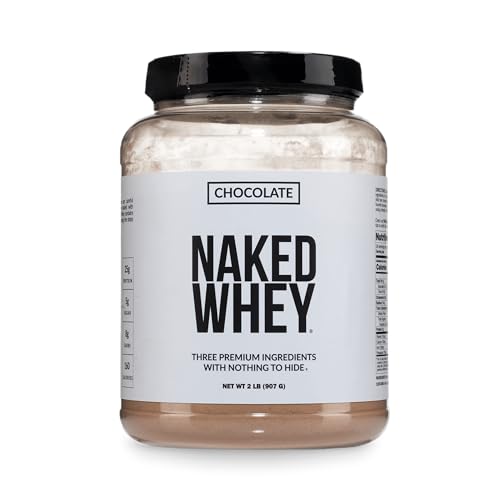
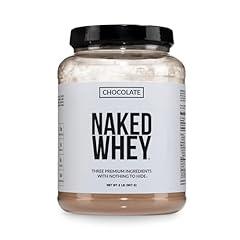
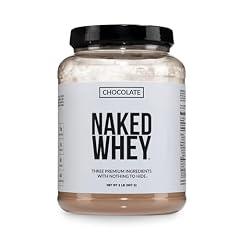
NAKED Whey Chocolate Protein Powder
Overview
This is a 2-pound chocolate whey protein powder with about 24 servings. The manufacturer directs users to mix two scoops, or 38 g, into 6 to 10 ounces of liquid for shakes, smoothies, or baking. Its stated nutrition provides 25 g protein, 160 calories, 8 g carbohydrate, 5 g sugar, and 3 g fat per serving. The formula is unusually short for a flavored powder, with manufacturer-stated grass-fed whey protein concentrate, organic coconut sugar, and cocoa powder. The exact Chocolate Naked Whey product and 38 g serving are independently listed in NSF's Functional Foods registry under Guideline 229, which includes formulation, label-claim, and contaminant review. The product page also carries a California Proposition 65 lead exposure warning, while public lot-specific lead results were not located.
What works
- A 25 g whey-protein serving fits the 20 to 40 g high-quality protein range commonly used around resistance exercise.
- The exact chocolate product is currently listed by NSF under Functional Foods Guideline 229.
- The disclosed formula contains only whey concentrate, coconut sugar, and cocoa powder, with no proprietary blend.
- There are no added stimulants, botanicals, vitamins, minerals, or digestive enzymes with unclear doses.
- The manufacturer clearly identifies milk-derived whey and states that the product is soy-free and gluten-free.
What does not
- The product carries a California Proposition 65 warning for lead exposure, which is a meaningful safety disclosure despite the NSF listing.
- No current public, lot-specific certificate of analysis showing the measured lead, cadmium, arsenic, pesticide, or microbiological results was located.
- It is a whey concentrate, so it is not suitable for milk allergy and may be poorly tolerated by people sensitive to lactose.
- A current public Certified for Sport or Informed Sport listing for this exact product was not verified.
- Grass-fed, non-GMO farm, and environmental benefits are manufacturer statements without product-specific animal-welfare or regenerative sourcing certification.
Who is it for
This product suits an adult who wants a straightforward chocolate whey powder for post-workout shakes, smoothies, or baking and can tolerate dairy. A 38 g serving supplies 25 g protein, a practical amount for someone building daily protein intake around resistance training. It also suits buyers who prefer coconut sugar instead of stevia, sugar alcohols, artificial sweeteners, or flavor systems. The 2-pound format supplies about 24 servings, so it is best for regular but not necessarily multiple-times-daily use.
Who is it not for
It is not appropriate for anyone with a milk allergy, and people with lactose intolerance or whey-concentrate digestive symptoms may need a different protein format. People who need to minimize added sugar should note the 5 g sugar per serving. Drug-tested athletes should not treat the NSF Functional Foods certification as banned-substance assurance because a current public sport-certification listing for this product was not verified. People seeking to avoid products carrying a California lead exposure warning should also consider another option.
Integrity
The strongest independently confirmed quality point is the exact product's active NSF Functional Foods Guideline 229 listing. NSF says this program includes technical review, formulation and label-claim checks, product testing, contaminant testing, and facility controls. That is stronger evidence than a brand-only third-party-tested statement. However, the manufacturer also posts a California Proposition 65 warning that consumption can expose users to lead. Public lot-specific contaminant values were not found, so the actual exposure from a current container cannot be quantified here. The manufacturer states that the whey comes from grass-fed cows on non-GMO dairy farms and that the coconut sugar and cocoa are organic. Those descriptions do not establish product-specific animal-welfare, regenerative agriculture, or supply-chain impact certification. The product is sold in a rigid canister, but no refill option, resin identification, recycled-content figure, or locally actionable recycling instruction was verified. The short ingredient list reduces added-formula complexity, but it does not by itself resolve dairy, cocoa, or packaging impacts.

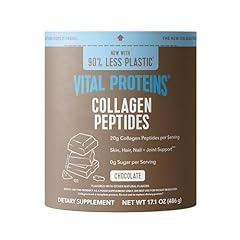
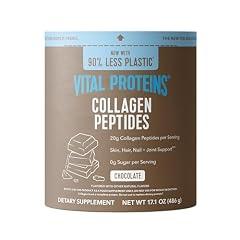
Vital Proteins Chocolate Collagen Powder Supplement
Overview
This is a chocolate-flavored bovine collagen-peptide powder in a 17.1-ounce canister with 18 catalog-listed servings. A serving is mixed into a drink or recipe and is positioned for skin, hair, nail, bone, joint, flexibility, and movement support, rather than as a conventional meal-replacement protein powder. Independent NSF records identify the chocolate formula as a 27 g serving with 20 g collagen peptides and 18 g protein. The same product is publicly listed under both NSF/ANSI 173 dietary-supplement certification and NSF Certified for Sport. The ingredient list is short, with bovine collagen, alkalized cocoa, natural flavors, sea salt, and stevia. Its cocoa is identified on the independently displayed label as Rainforest Alliance Certified.
What works
- The exact chocolate formula is publicly listed by NSF under NSF/ANSI 173 and NSF Certified for Sport.
- A fully disclosed serving supplies 20 g of bovine collagen peptides, with no proprietary blend.
- The NSF registry verifies dairy-free and gluten-free claims for this product.
- The label identifies Rainforest Alliance Certified cocoa, an independently displayed sourcing attribute.
What does not
- Its 18 g of protein is collagen, which is not equivalent to a complete protein for stimulating muscle protein synthesis.
- Public certification confirms ongoing controls, but it does not provide consumers with a current lot-specific heavy-metal result.
- The formula contains natural flavors, but does not disclose their composition.
- The product has no verified product-specific animal-welfare or full collagen supply-chain certification.
Who is it for
This product suits an adult who specifically wants a flavored collagen powder for a daily coffee, smoothie, or recipe routine, and whose priority is collagen intake rather than post-workout muscle protein. The 20 g collagen serving is above doses commonly studied for skin hydration and elasticity. It is also a relevant option for a competitive athlete or tested recreational athlete who wants an independently listed product with sport-focused prohibited-substance controls. People avoiding dairy or gluten can use the NSF-verified free-of claims as a useful screening point.
Who is it not for
It is not suited to someone seeking a meal replacement, a primary muscle-building protein, or a complete source of essential amino acids. Human trials have found whey, not collagen, increased post-exercise myofibrillar protein synthesis. It is also unsuitable for vegans, vegetarians, people avoiding bovine ingredients, or anyone with a medical reason to restrict protein without clinician guidance. Those who need current numerical lead, cadmium, arsenic, or mercury results for every lot should choose a product that publicly releases a matched lot-specific certificate of analysis.
Integrity
The clearest health-strength evidence is independent certification. NSF lists this exact chocolate powder for U.S. sale under both NSF/ANSI 173 and Certified for Sport. The latter includes formulation and label review, facility and supplier inspection, ongoing monitoring, and testing for prohibited substances. The disclosed formula provides 20 g bovine collagen peptides per serving. Evidence supports possible skin hydration and elasticity benefits from hydrolyzed collagen, although results vary and collagen is not a complete muscle-building protein. The label identifies Rainforest Alliance Certified cocoa. Vital Proteins also describes its collagen as an upcycled bovine-hide byproduct and reports broader paperboard-packaging initiatives, but those broader sourcing and packaging claims are not enough to verify the material or recyclability of this specific canister. The brand previously recalled one Costco-distributed unflavored collagen batch in 2023 due to possible plastic fragments. That action did not identify this chocolate product.
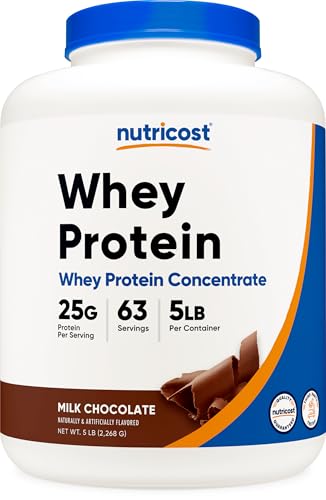
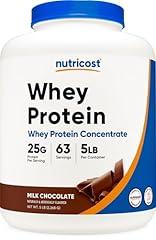
Nutricost Chocolate Whey Protein Concentrate 5 lbs
Overview
This is a 5-pound chocolate whey protein concentrate powder intended to be mixed as one scoop with 6 to 10 ounces of a beverage. The current retail label lists a 36 g scoop, 63 servings, 140 calories, 25 g protein, 3 g fat, 3 g carbohydrate, and 2 g total sugars. It is a protein supplement, not a complete meal replacement. The ingredient list is relatively short and identifies whey protein concentrate with sunflower lecithin, alkalized cocoa, natural and artificial flavors, salt, sucralose, and acesulfame potassium. The milk allergen is explicitly declared. Nutricost states that the product is gluten-free, non-GMO, made and quality tested in the United States with globally sourced ingredients, and third-party tested. Those manufacturing and testing statements were found on the label, but a current public, lot-specific test report was not located.
What works
- A 25 g whey serving falls within the 20 to 40 g high-quality protein range commonly used for post-exercise muscle protein synthesis.
- The label names the protein source, sweeteners, flavor system, and cocoa rather than using a proprietary blend.
- Milk is clearly declared, which is important for people with a milk allergy.
- The product does not add stimulants, botanicals, vitamins, or other bioactives that would create extra dose or interaction questions.
What does not
- No current public lot-specific certificate of analysis was located for heavy metals, microbiology, protein content, or amino acids.
- The label's third-party-tested statement does not identify the laboratory, methods, limits, or results.
- No current public listing was found for the exact product in NSF Certified for Sport, Informed Sport, Informed Choice, or USP Verified registries.
- Whey concentrate contains milk constituents and may be less tolerable for people with lactose intolerance. The chocolate formula also uses sucralose, acesulfame potassium, and artificial flavors.
- No product-specific responsible cocoa or dairy sourcing certification was identified, and the rigid tub offers no documented refill or recycling guidance.
Who is it for
This product suits an adult who wants a straightforward chocolate whey shake after resistance training or to help close a daily protein gap. A 25 g scoop is a practical serving for many healthy exercisers when used alongside adequate total food intake. It is also suited to buyers who are comfortable with dairy, artificial sweeteners, and a large multi-serving tub, and who value a fully named ingredient list more than added enzymes, probiotics, or performance ingredients.
Who is it not for
It is not appropriate for anyone with a milk allergy. People with lactose intolerance, milk-protein sensitivity, or a history of digestive symptoms from whey concentrate may need a lactose-free or non-dairy option. It also does not fit buyers avoiding sucralose, acesulfame potassium, or artificial flavors. Tested athletes and other users who require documented banned-substance batch testing should use a product with a current public sport-certification listing. It should not be used as a weight-loss product or treated as a nutritionally complete meal.
Integrity
The health case rests chiefly on the disclosed whey dose. Human sports-nutrition guidance supports 20 to 40 g servings of high-quality protein around exercise, and this product lists 25 g of whey protein per scoop. Its ingredient panel and milk disclosure are clear, and the formula avoids undeclared proprietary blends or added stimulants. However, the third-party-testing statement remains a manufacturer-stated assurance because no current public, lot-matched contaminant or protein analysis was located. No exact-product public sport certification was identified. Cocoa makes contaminant disclosure more important, yet no finished-product heavy-metal results were publicly available for review. Searches of FDA recall and warning-letter resources did not identify a product-specific active recall or warning, but that is not equivalent to laboratory clearance. The product is sold in a large rigid plastic tub, with no verified refill program, resin identification, recycled-content statement, or locally actionable recycling instructions located. No independently certified cocoa, dairy welfare, organic, or regenerative sourcing evidence was identified.
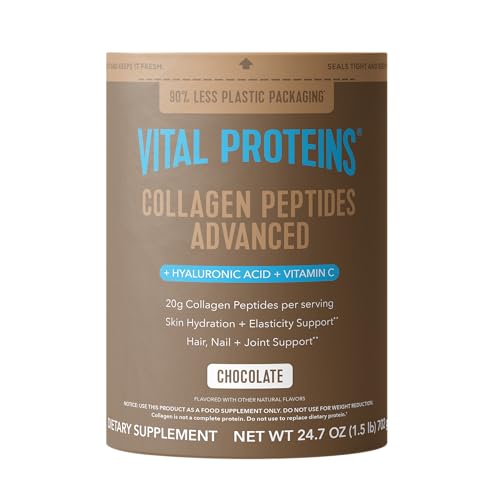
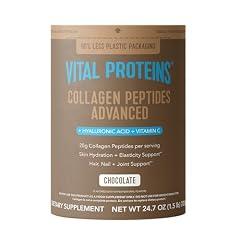
Vital Proteins Collagen Peptides Chocolate Powder
Overview
This is a 24.7-ounce chocolate collagen powder with 26 servings. The manufacturer directs users to mix it into hot or cold drinks and lists bovine collagen peptides, cocoa processed with alkali, 120 mg hyaluronic acid, vitamin C, sea salt, natural flavors, and stevia. It is intended as a collagen-focused supplement for skin, hair, nails, bones, and joints, not as a complete meal replacement. The defining strength is a fully named formula with manufacturer-stated 20 g collagen, 120 mg hyaluronic acid, and 100% Daily Value vitamin C per serving. Its protein should not be treated as equivalent to whey, soy, or another complete muscle protein. Human trials have found collagen produces a smaller muscle protein synthesis response than whey. Public registries list related Vital Proteins chocolate collagen products, but did not clearly match this exact Advanced chocolate unit for sport certification or independent formula verification.
What works
- The manufacturer discloses the collagen source, added hyaluronic acid dose, vitamin C, cocoa, flavoring, salt, and stevia rather than using a proprietary blend.
- The 120 mg hyaluronic acid dose and vitamin C are plainly disclosed, and both additions have a plausible role in a skin and connective-tissue focused formula.
- The manufacturer states that the product is made without dairy or gluten, which may suit people avoiding those ingredients.
- The manufacturer states that each serving supplies 20 g collagen peptides, a substantial collagen-specific serving rather than a token add-on.
What does not
- Collagen is not a complete protein for muscle-building use. Controlled human research has found whey outperformed collagen for muscle protein synthesis.
- No public, lot-specific certificate of analysis was found for this exact chocolate Advanced product, leaving heavy-metal and microbiological results unverified.
- The exact product was not clearly matched in the public NSF Certified for Sport registry, despite related Vital Proteins collagen products appearing there.
- Vital Proteins has a relevant historical California lead and cadmium consent judgment involving earlier products. The current brand disclosure also names other chocolate collagen products for a lead warning, although it does not identify this exact unit.
Who is it for
This product fits an adult who specifically wants a flavored bovine collagen powder for a daily drink, and values having vitamin C and a disclosed 120 mg hyaluronic acid addition in the same serving. It is most relevant for someone using collagen as an adjunct to an otherwise adequate diet, particularly if dairy and gluten avoidance matter. The 26-serving canister suits a roughly monthly routine, provided the buyer accepts manufacturer-stated ingredient and free-from claims without a public lot-specific test report.
Who is it not for
It is not suitable for vegans, vegetarians who avoid bovine ingredients, or people with a beef allergy or sensitivity. It is also a poor fit for anyone seeking a primary post-workout protein or meal replacement, because collagen has a limited essential-amino-acid profile and does not perform like whey for muscle protein synthesis. People who need documented low heavy-metal exposure, including those who are pregnant, trying to conceive, or managing cumulative exposure concerns, should note the absence of a public current lot report and discuss supplement use with a clinician.
Integrity
The formula uses bovine collagen peptides, and the manufacturer describes its collagen as an upcycled hide by-product. That approach can reduce use of an existing meat-industry co-product, but product-specific animal-welfare, pasture, deforestation, and cocoa-supply certifications were not established for this unit. The manufacturer also states that its collagen facilities hold NSF and SQF certifications, which addresses facility controls rather than independently verifying this exact finished formula. The public NSF sport registry includes related Vital Proteins chocolate collagen items, but the matching information does not establish certification for this Advanced chocolate product. No public lot-specific contaminant certificate was located. This matters because cocoa-containing powders can contribute heavy-metal exposure. Vital Proteins has a 2018 California consent judgment concerning lead and cadmium in earlier covered products, and its current disclosure names other chocolate collagen sizes for a lead warning, not this exact product. The manufacturer says its canisters are BPA- and BPS-free and has described a move toward scoopless, paper-based canisters, but exact packaging material and local recyclability for this unit were not independently confirmed.

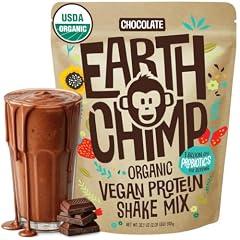
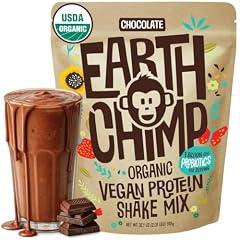
EarthChimp Organic Vegan Protein Powder Chocolate
Overview
This is a 32-ounce chocolate plant-protein powder in a pouch, with 26 stated servings. It is intended for shakes, smoothies, oats, baking, or post-workout use. EarthChimp lists 20 g protein, 120 calories, 4 g fiber, 3 g total sugar, and no added sugar per serving. Those nutrition figures are manufacturer-stated, rather than independently verified. The current manufacturer ingredient list identifies organic pea, coconut, and pumpkin protein, plus fruit ingredients, agave inulin, fibers, cocoa, monk fruit, turmeric, and Bacillus coagulans. The protein blend is plainly named, but no amino-acid profile, protein digestibility score, or finished-product laboratory report was located. Human studies support pea protein as a useful post-exercise protein source, although the studies examined about 30 g protein, not this specific 20 g formula.
What works
- The manufacturer clearly identifies a pea, coconut, and pumpkin protein blend rather than using an unnamed protein blend.
- The stated 20 g protein serving is a practical supplemental dose for smoothies and protein-focused snacks.
- The formula is manufacturer-stated to be dairy-free, gluten-free, soy-free, and free of sugar alcohols and gums.
- The ingredient list discloses Bacillus coagulans, inulin, psyllium, monk fruit, cocoa, and other added components rather than hiding them in a proprietary blend.
- A pouch uses less rigid material than a conventional tub, and EarthChimp states that a no-scoop option is available.
What does not
- No current lot-specific certificate of analysis or accredited independent heavy-metal and microbiological test report was located for this chocolate product.
- No public listing was located in NSF Certified for Sport, Informed Sport, Informed Choice, USP Verified, or NSF dietary-supplement registries for this product.
- The manufacturer does not publish an amino-acid profile, leucine amount, or protein-quality score, so its muscle-support utility cannot be confirmed for this exact blend.
- Bacillus coagulans is disclosed, but the current product guide does not identify its strain or provide a labeled colony-forming-unit amount on the product page.
- Meal-replacement, weight-loss, and broad digestion expectations need context. At 120 stated calories, this powder is a protein supplement unless mixed with other foods.
Who is it for
This product suits adults seeking a chocolate, dairy-free plant protein powder for a daily smoothie, oatmeal, or post-workout snack. The stated 20 g protein and 120 calories can help someone add protein without making a large calorie contribution to a meal. It may also suit shoppers who avoid soy, gluten, dairy, sugar alcohols, and gums, based on the manufacturer’s current ingredient and free-from statements. The 26-serving pouch format fits a regular home-use routine rather than single-serve travel use.
Who is it not for
It is not a strong fit for tested athletes who need public batch-level banned-substance certification, because no current sport-certification registry listing was located. People who need documented low heavy-metal exposure, including those using protein powder daily during pregnancy or for children, should note that no current lot-specific contaminant report was found. It may also be unsuitable for people sensitive to pea protein, coconut, psyllium, inulin, monk fruit, or probiotic products. Anyone relying on it as a full meal needs to add food for adequate energy and broader nutrition.
Integrity
EarthChimp states that this product is USDA Organic, vegan, non-GMO, dairy-free, gluten-free, and made in Dublin. The manufacturer’s current ingredient list contains organic plant proteins and cocoa, plus fibers and Bacillus coagulans. Organic sourcing is a meaningful agricultural practice claim, but a product-specific certifier record and supply-chain details were not located in this review. There was also no current public certificate showing heavy-metal, pesticide, microbiological, or amino-acid testing for the chocolate product. The brand says it uses recyclable pouches instead of tubs and offers a no-scoop option. A flexible pouch can reduce rigid packaging material, but the brand does not provide material specifications, a How2Recycle label, or United States collection instructions, so local recyclability cannot be confirmed. No relevant FDA recall, warning letter, or California Proposition 65 notice was located in the searches performed, which is reassuring but does not replace lot-specific testing.

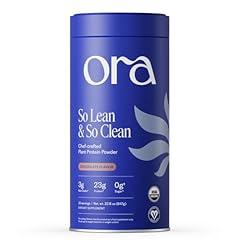
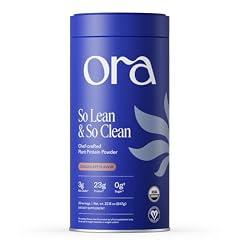
Ora Organic Vegan Protein Powder - Chocolate, 20 Servings
Overview
This is a chocolate, plant-based protein powder sold in a 647 g tub with about 20 servings. The current label from an independent retailer specifies a 32 g, two-scoop serving with 130 calories, 23 g protein, 4 g carbohydrate, 3 g fat, and 1 g fiber. It is intended to be shaken into water or plant milk, or used in smoothies and baking. Its protein blend is led by organic pea and rice protein, followed by smaller amounts of cranberry, sacha inchi, amaranth, sprouted quinoa, fruits, greens, turmeric, coconut milk, and inulin. The label discloses a 100 mg enzyme blend, but not enzyme activity units. A manufacturer-published certificate for a February 2026 chocolate lot reports that it met its 23 g protein target and contaminant specifications at ISO 17025-accredited laboratories. The report gives pass or fail results rather than measured heavy-metal concentrations.
What works
- A 32 g serving supplies 23 g protein from a pea and rice-led plant blend, a useful dose for a post-exercise shake.
- The product is currently listed by Informed Sport for North America, with multiple chocolate batches recorded in 2026.
- The published chocolate batch certificate reports screening for lead, cadmium, inorganic arsenic, mercury, microbiological hazards, residual solvents, and a broad pesticide panel.
- The label identifies coconut as present and the published certificate reports annual testing for gluten and several major allergen residues, including milk, egg, peanut, soy, sesame, fish, shellfish, and tree nuts.
What does not
- The public certificate reports heavy metals only as meeting specifications, not the actual concentrations, so a buyer cannot calculate personal lead or cadmium exposure.
- No quantitative amino-acid or leucine profile is provided, despite the complete-protein and muscle-support positioning.
- The 29.4 g food blend obscures the amounts of the individual fruits, greens, turmeric, coconut milk, and inulin. The enzyme blend lists weight but not activity units.
- The product makes broad no-bloat and digestion claims, but inulin and pea protein can still be troublesome for some people. No product-specific packaging material, resin code, refill, or locally actionable recycling information was found.
Who is it for
This product fits adults who want a chocolate plant-protein shake rather than a meal replacement, especially people avoiding dairy and soy or those needing a convenient 23 g protein serving after training. It is also relevant to tested athletes because the exact product is publicly listed in the current Informed Sport registry for North America. The 20-serving tub suits someone who uses protein powder occasionally or wants a relatively compact monthly supply, rather than someone seeking a bulk-format staple.
Who is it not for
It is not a complete meal substitute. At 130 calories and 1 g fiber per serving, it does not supply the energy, carbohydrate, fat, or micronutrient range needed to replace a meal without other food. People with coconut allergy, pea or other legume sensitivity, or sensitivity to inulin should select a formula that avoids those ingredients. Anyone with severe food allergy should not treat annual cross-contact testing as a personal guarantee. Pregnant people, children, and people managing medical diets should confirm suitability with their clinician.
Integrity
The strongest safety evidence is product-specific. A publicly posted February 2026 chocolate-lot certificate states that independent ISO 17025-accredited laboratories found the lot met specifications for protein, heavy metals, microbiological tests, solvents, and a large pesticide screen. It also documents annual testing for gluten and major allergen residues. The useful limitation is transparency of results, the certificate shows pass or fail rather than the measured contaminant values. The product is listed by Informed Sport as certified for North America, including current chocolate batches, which provides meaningful banned-substance assurance for tested athletes. Its retail label identifies USDA Organic certification through CCOF, and a current CCOF operation certificate is publicly available. Organic certification supports restrictions on synthetic agricultural inputs, but it does not establish zero heavy-metal exposure or quantify this product's climate, water, labor, or cocoa-sourcing impacts. The powder is sold in a rigid tub, with no verified refill program or material-specific recycling guidance located. No product-specific US recall, warning letter, or exposure notice was identified in the regulatory searches reviewed.

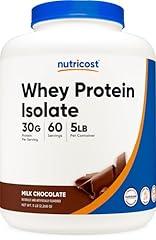
Nutricost Whey Protein Isolate Milk Chocolate 5LBS
Overview
This is a flavored whey protein isolate powder in a 5 pound tub, intended to be mixed as one scoop with water, milk, or another beverage. The current retail label reviewed lists a 38 g scoop with 30 g protein, 140 calories, 2 g carbohydrate, and 1 g sugar. Its protein source is whey isolate, a complete dairy protein, and 30 g falls within the commonly used 20 to 40 g high-quality protein range after exercise. The formula is short, with cocoa, natural and artificial flavors, salt, acesulfame potassium, and sucralose added to instantized whey isolate. Nutricost's own product page carries a California warning for lead exposure for this chocolate flavor. The brand also states that it is made in a GMP-compliant, FDA-registered facility, but public product-specific certification and current lot testing records were not located.
What works
- Provides 30 g of whey protein per labeled scoop, an evidence-supported serving range for post-exercise protein intake.
- The listed formula has no stimulant, botanical, vitamin, mineral, probiotic, or proprietary active blend.
- The nutrition panel lists only 1 g total sugar and 2 g carbohydrate per serving.
- Milk is identified as an allergen on the independently reviewed retail label.
What does not
- Nutricost's own page displays a California lead exposure warning for the chocolate flavor. It does not provide a public lot-specific result that quantifies exposure.
- No current public listing was located for this exact product in NSF Certified for Sport, NSF Certified Dietary Supplements, USP Verified, Informed Choice, or Informed Sport registries.
- Milk makes it unsuitable for people with a milk allergy. Retail listings also differ on the lecithin source, with one listing soy and another sunflower, so soy-sensitive buyers should inspect the tub received.
- It uses sucralose, acesulfame potassium, and artificial flavors, which may not suit buyers seeking an unsweetened or minimally flavored powder.
Who is it for
This product suits an adult who wants a large, flavored dairy protein powder for routine shakes after resistance training or to help close a daily protein gap. A labeled 30 g serving is practical for people who tolerate milk proteins and want a low-sugar shake without extra stimulants, herbs, digestive enzymes, or vitamin blends. It also fits users comfortable with sucralose and acesulfame potassium who will check the package allergen statement before first use.
Who is it not for
It is not appropriate for anyone with a milk allergy, or for households needing reliable soy avoidance because retailer ingredient lists conflict on whether the lecithin is soy or sunflower derived. People who are pregnant, trying to conceive, or particularly concerned about heavy-metal exposure should take the California lead warning seriously and seek a product with current public lot-specific contaminant results. Tested athletes should choose a product publicly certified for sport. It is also a poor fit for people avoiding artificial sweeteners or artificial flavors.
Integrity
The important health issue is the California lead warning shown by Nutricost for this chocolate whey isolate flavor. Cocoa-containing powders can be a relevant source category for metal exposure, and no current public certificate of analysis was located for this finished product to show lead, cadmium, arsenic, mercury, or microbiology results for a retail lot. The formula does clearly identify whey isolate and milk, but conflicting retailer listings for soy versus sunflower lecithin make direct package review important for soy-sensitive users. Nutricost states that the product is made and quality tested in the United States with globally sourced ingredients, in a GMP-compliant, FDA-registered facility. Those manufacturing statements are not equivalent to public independent certification. No product-specific sourcing certification for dairy or cocoa, recycled-content statement, refill program, resin identification, or locally actionable recycling guidance was located. The large tub avoids individual sachets, but its end-of-life handling remains unclear.

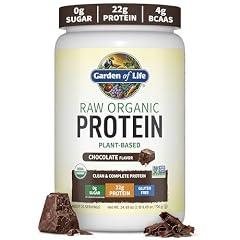
Garden of Life Vegan Chocolate Protein Powder
Overview
This is a chocolate, plant-based powder intended for shakes, with one 35 g scoop supplying 22 g of protein according to the manufacturer. The protein blend uses organic pea protein plus sprouted grains, seeds, and legumes. Garden of Life also states 4 g BCAAs, zero sugar, added fat-soluble vitamins, probiotics, and digestive enzymes. The strongest independently confirmed feature is current NSF listing for Raw Organic Protein Chocolate under NSF Certification Guideline 229. NSF says this program evaluates label contents and screens for heavy metals, relevant microbiological hazards, mycotoxins, and, where relevant, pesticides. The product is not listed as NSF Certified for Sport. Its public heavy-metal table is old, from 2020, rather than a current lot-specific certificate.
What works
- The exact chocolate product is currently listed by NSF under its functional-food certification program.
- A 35 g scoop provides 22 g of complete plant protein, as manufacturer-stated, a practical serving for a post-workout shake.
- The formula is manufacturer-stated as USDA organic, vegan, non-GMO Project Verified, and NSF Certified Gluten Free.
- The product is manufacturer-stated as made without dairy or soy ingredients, which may suit people avoiding those ingredients.
What does not
- No current, lot-specific public certificate of analysis was found, so consumers cannot independently see the heavy-metal result for the tub they receive.
- A 2014 California Proposition 65 case named the chocolate Raw Protein formula for lead and cadmium exposure. It settled in 2015 with warning or reduction requirements, so this is a documented historical concern rather than evidence of a current recall.
- The protein sources are disclosed, but the full amino-acid assay and the amount of each protein source are not publicly disclosed.
- The probiotic and enzyme blend is present, but individual enzyme doses are not disclosed. Digestive-support benefits therefore cannot be assessed at an ingredient-specific dose.
Who is it for
This product fits adults who want a chocolate plant-protein shake and need to avoid dairy or soy ingredients. A 22 g manufacturer-stated protein serving can be used after resistance exercise or to add protein to a snack when the rest of the diet supplies adequate calories and nutrients. It also suits people seeking a gluten-free product with an independently confirmed NSF contents-certification listing. It is more appropriate for routine food-style protein use than for someone who needs a sport-certified supplement.
Who is it not for
Tested athletes subject to anti-doping rules should use a product listed in a current sport-certification registry, because this product is not listed as NSF Certified for Sport. People with sesame allergy should avoid it, because sesame sprout is part of the manufacturer-listed protein blend. Pregnant people, children, and frequent users seeking the lowest possible heavy-metal exposure may prefer a product with current public lot-specific results, given the historical lead and cadmium settlement and the lack of a current public certificate. People sensitive to erythritol, stevia, probiotics, or multi-enzyme blends may also need a simpler formula.
Integrity
Current NSF listing is meaningful independent quality evidence. NSF describes its Guideline 229 program as checking fortified-content accuracy and screening for toxic elements, microorganisms, mycotoxins, and relevant pesticides, with audits and periodic retesting. Garden of Life also states that this formula is USDA organic, vegan, non-GMO Project Verified, and NSF Certified Gluten Free. The manufacturer lists a broad sprouted plant blend, cacao, erythritol, stevia, probiotics, and enzymes. A historical California lead and cadmium action specifically named the chocolate Raw Protein formula. The case settled in March 2015 and required a warning or reduction in lead and cadmium. The brand's public heavy-metal results for this flavor date to 2020, not the current retail lot. Organic certification supports specified agricultural production rules, but it does not by itself establish low heavy-metal exposure. The product is sold in a plastic tub with scoop. The manufacturer says recyclability is package-specific, without public material or local-recycling details for this tub.

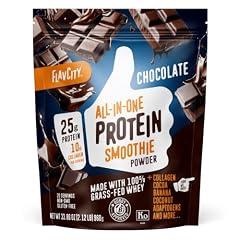
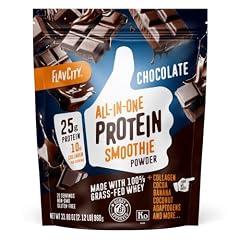
FlavCity Chocolate Grass-Fed Whey Protein Smoothie
Overview
This is a chocolate flavored, 20-serving powdered smoothie mix intended to be shaken with water or milk. FlavCity states that each serving provides 25 g protein and 10 g grass-fed bovine collagen, alongside whey protein concentrate, organic cocoa, coconut milk powder, banana powder, stevia, monk fruit, cordyceps, and reishi. A retailer-hosted package label independently lists 25 g total protein per serving. The defining limitation is protein disclosure. The label reports total protein but does not separate the whey contribution from collagen or provide an amino-acid profile. That matters because whey is a complete muscle-supporting protein, while collagen should not be treated as nutritionally equivalent for that purpose. The product also has a concrete contaminant concern, its chocolate version was named in a California Proposition 65 settlement involving alleged lead and cadmium exposure.
What works
- The independently reproduced package label lists 25 g total protein per serving.
- Whey protein concentrate is the first listed ingredient, and milk is plainly declared.
- The ingredient list is short and identifies the sweeteners, cocoa, fruit powder, collagen, and mushrooms.
- FlavCity states 10 g collagen per serving, a quantity within ranges studied for some skin-related outcomes.
What does not
- The label does not disclose how much of the 25 g protein comes from complete whey versus collagen, and it provides no amino-acid analysis.
- Cordyceps and reishi are listed without individual doses, so the focus and functional-mushroom claims cannot be assessed at the actual intake.
- The exact chocolate product was covered by a 2026 California settlement addressing lead and cadmium exposure and warning requirements.
- No current public listing was found for this exact product in NSF Certified for Sport, Informed Sport, Informed Choice, USP Verified, or NSF dietary-supplement certification registries.
- Milk is present, and the retailer label says shared equipment may contain peanuts or other tree nuts.
Who is it for
This suits an adult who wants a portable chocolate shake format and can tolerate dairy, especially someone using it as a convenient snack or a way to add labeled protein after exercise. It is most appropriate for buyers who value a simple ingredient list with whey, collagen, cocoa, coconut, banana, and non-nutritive sweeteners. It is not a fully specified sports-nutrition product, because the whey-specific protein dose and amino-acid profile are not publicly disclosed.
Who is it not for
It is not suitable for people with a milk allergy, and those with peanut or tree-nut allergies should take the shared-equipment statement seriously. Tested athletes should use a product with a current public sport-certification listing instead. People who are pregnant, feeding children, highly concerned about lead or cadmium exposure, or trying to minimize cumulative exposure from cocoa-containing powders should discuss the California warning history with a clinician. It also does not replace a nutritionally complete meal.
Integrity
The formula uses whey protein concentrate and bovine collagen, with organic cocoa, organic cordyceps, and organic reishi listed among the ingredients. FlavCity describes the whey and collagen as grass-fed and states that it uses third-party laboratory testing, but it does not publish a current lot-specific certificate of analysis for this chocolate product. Public certification registries did not show a current product-specific NSF, USP, Informed Choice, or Informed Sport listing. There is a material contaminant signal. The California Attorney General record identifies this Chocolate All-In-One Protein Smoothie as a covered product for lead and cadmium in a settlement dated February 6, 2026. The agreement requires California sales to meet specified exposure limits or carry a warning. FlavCity also posts a general Proposition 65 notice. The product is sold in a flexible pouch, but no resin code, recycling instruction, recycled-content claim, refill system, or product-specific environmental certification was found.

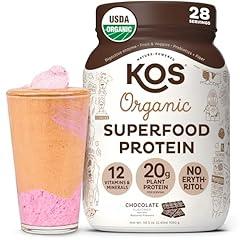
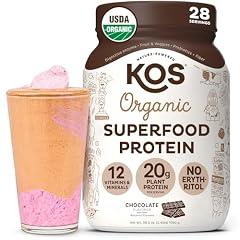
KOS Vegan Protein Powder, Chocolate - Organic Pea Protein Blend
Overview
KOS Organic Plant Protein Chocolate is a 28-serving powdered drink mix. The manufacturer directs users to blend two scoops with 8 to 12 ounces of water or a non-dairy beverage. It supplies 20 g of protein, about 160 calories, and 3 g of fiber per serving, according to KOS. Its protein blend combines pea, flaxseed, quinoa, pumpkin seed, and chia, with coconut milk powder, cocoa, sweeteners, added vitamins and minerals, and digestive enzymes. The ingredient list is substantially disclosed, but the amounts of the protein blend, superfood blend, and enzyme blend are not individually stated. KOS publishes a lot-specific certificate reporting metals below 0.005 ppm and absent Salmonella and E. coli for one chocolate lot. That is useful current manufacturer-published evidence, not a public certification or a test tied to every retail container. Historical California proceedings also specifically covered the chocolate product over alleged lead exposure.
What works
- Provides 20 g of multi-source plant protein per serving, according to the manufacturer.
- The ingredient list identifies the five protein sources, sweeteners, cocoa, added micronutrients, and digestive enzymes.
- KOS publishes a lot-specific chocolate-product certificate with ICP-MS metal results and microbiological results.
- The formula is stated to contain no dairy, soy, or gluten, which may suit people avoiding those ingredients.
What does not
- A California Proposition 65 consent judgment covered the chocolate formula following allegations of lead exposure. This is a real regulatory signal, even though it is not an FDA recall.
- The public chocolate certificate is posted by the brand and does not establish independent certification of every container or ongoing public batch testing.
- No publicly listed NSF Certified for Sport, Informed Sport, USP Verified, or equivalent product certification was identified.
- No amino-acid profile, leucine amount, protein-digestibility score, or individual quantities for the blended proteins and enzymes were found.
Who is it for
This product fits an adult who wants a chocolate-flavored, dairy-free plant protein powder for occasional smoothies, oatmeal, or baking, and who values a multi-source formula rather than a single pea isolate. The 20 g protein serving can make it practical to add protein to a meal or snack. It may also suit people avoiding soy or gluten, provided they review the current package and their own allergy needs. It is not a complete meal on its own at roughly 160 calories per serving.
Who is it not for
It is not well suited to people who need a publicly certified sport supplement, independently verified label-content testing, or a published amino-acid and leucine profile for precise training nutrition. Pregnant or breastfeeding people, children, and frequent daily users should be especially cautious because the chocolate product has a documented California lead-exposure regulatory history. People with coconut or tree-nut concerns should check the current package and consult an allergist if needed. Anyone sensitive to inulin, acacia gum, stevia, monk fruit, or enzyme blends may prefer a simpler formula.
Integrity
The formula is plant-based and KOS states that its ingredients are USDA organic and CCOF certified. The disclosed recipe includes organic pea protein, seeds, quinoa, cocoa, fruit and vegetable powders, coconut milk powder, fiber ingredients, and sweeteners. Organic certification can reduce reliance on prohibited synthetic agricultural inputs, but it does not by itself demonstrate low heavy-metal exposure or quantify the environmental impact of the ingredient supply chain. Contaminant control is the central health limitation. KOS posts a certificate for one chocolate lot showing very low reported arsenic, cadmium, lead, and mercury results, plus absent Salmonella and E. coli. However, California consent-judgment documents identify this chocolate product among products alleged to expose consumers to lead. No public evidence was found for sport certification, public ongoing independent verification, refill packaging, recycled-content claims, or locally actionable recycling instructions for the tub and scoop.