
10 Best Mosquito Repellent
 Daniel Kenitz
Please note that we participate in affiliate marketing programs. When you purchase through links on our site, we may earn a commission. As an Amazon Associate we earn from qualifying purchases. This comes at no additional cost to you and helps support the resources required to provide valuable content.Advertising Disclosure
Top-rated Mosquito Repellent Comparison
1

2
4
5
6
7
8
9
Overview
Mosquito-repellent products do not all solve the same problem. Skin-applied repellents aim to reduce bites on the person wearing them. Spatial products create a limited treated-air zone around a patio or campsite. Larvicides treat standing water before mosquitoes become biting adults. Yard sprays and granules treat outdoor surfaces, while stickers, bracelets, diffusers, and bug zappers make narrower claims that may not translate into dependable bite prevention.
The first buying question is therefore: what needs controlling? For personal protection, look for an EPA-registered skin-applied product with an active ingredient and concentration that match the approved label. In the supplied products, approximately 20% picaridin is supported by registration and public-health guidance. For standing water, look for an EPA-registered larvicide whose label identifies the exact formulation, target life stage, dose, water type, and retreatment interval. Bti products in the supplied set support larval-control claims, but they do not repel mosquitoes or stop adult females from biting.
A credible performance claim should identify the exact product or an equivalent labeled formulation, active ingredient, dose, use format, mosquito species or life stage, test conditions, and outcome. Independent evidence is stronger when a qualified laboratory or peer-reviewed field or human-biting study identifies its methods, conditions, and results. An EPA registration or label establishes legal accountability and permitted use; it is not automatically proof that every marketplace claim is accurate. Minimum-risk products may be exempt from registration, but the supplied reviews repeatedly note that EPA does not evaluate those products for effectiveness.
Headline figures commonly mislead. A “20-foot zone,” “one-half-acre coverage,” or “14-hour protection” describes a labeled or manufacturer-stated limit, not a guarantee in every setting. Wind, ventilation, mosquito pressure, species, placement, warm-up time, water quality, flooding, organic matter, battery condition, and refill condition can all change performance. A yard product may kill larvae without protecting people nearby. A passive wearable may be comfortable but fail to reduce bites; CDC specifically identifies repellent-impregnated wristbands as ineffective. A bug zapper may kill many non-target insects while doing little to control mosquitoes.
Buyers should also compare exposure routes and waste. Skin products need application, age, eye-contact, storage, and first-aid directions. Heated or fuel-powered spatial repellents add hot-surface, flammability, cartridge, and aquatic-toxicity concerns. Electrical devices should have identifiable safety certification and clear cleaning instructions. Essential oils and “plant-based” formulas can still irritate skin, eyes, airways, or aquatic life. Disposable patches, bands, mats, cartridges, briquettes, bottles, and batteries create different end-of-life burdens, so reuse, refill life, and disposal directions matter.
Across the supplied products, the recurring safety caveats are important: unregistered wearables and scent products should not replace proven personal protection where mosquito-borne disease is a concern; many products are not suitable for children under three or for people sensitive to fragrances or essential oils; children and pets may chew or ingest bands, patches, cartridges, or pesticides; and several products require keeping material away from eyes, food, drains, ponds, and other water. Heated, fuel-powered, and high-voltage devices require outdoor-use, fire, electrical, and cleaning precautions. No product should be treated as a complete substitute for removing standing water, using screens or protective clothing, and following label directions.
Integrity
A useful comparison separates personal exposure, household and electrical safety, environmental effects, and the strength of the evidence behind each claim. The supplied scores show the clearest differences between registered, label-supported products and passive or broadly advertised formats with limited product-specific testing.
EEvidence
Proven mosquito-control effectiveness
This measures whether the exact formulation and use format credibly reduce bites or larvae under the claimed conditions. High scores go to the registered Bti products and the registered picaridin spray, which have label-supported target uses. Low scores characterize wristbands, stickers, scent balls, and zappers where comparable or product-specific testing did not show dependable bite reduction.
Independent testing and verification
This measures whether an independent laboratory, regulator, or peer-reviewed study confirms performance, contents, or device claims for the exact model or formulation. High scores reflect identifiable regulatory records and relevant field evidence; low scores reflect manufacturer claims without a report, method, species, conditions, or results. A study of a category is weaker than testing the product itself.
Legally accountable product status
This measures whether pesticide or device status is documented and whether the marketplace claims match the current U.S. label or exemption requirements. High scores belong to products with EPA registration and label-supported uses. Lower scores reflect exempt or unregistered products, conflicting listing information, or marketplace descriptions that call a larvicide a repellent or overstate its permitted scope.
Honest protection claims
This measures whether duration, area, species, weather tolerance, child or pet suitability, and disease-prevention implications stay within the evidence and approved label. High scores use conditional language and concrete limits, such as warm-up time or calm-air requirements. Low scores attach large coverage or duration claims to products without disclosed methods, or imply disease protection from wearables and zappers.
Works in real use conditions
This measures whether performance remains credible with wind, ventilation, placement, warm-up, water conditions, mosquito pressure, reapplication, and battery or refill status. High scores provide tested or label-supported operating limits, such as Bti retreatment conditions or spatial-repellent setup requirements. Low scores leave those factors unstated, making a headline coverage or duration number easy to overread.
HHealth & Safety
Clear ingredients and use directions
This measures whether active ingredients, concentrations, inert materials where required, exposure routes, treatment areas, and directions are disclosed. It matters because a buyer may be applying a product to skin, heating a refill, spraying a yard, or adding a larvicide to water. High-scoring examples identify formulations and doses plainly; low scores reflect missing concentrations or conflicts between marketplace and approved-label ingredients.
People, child, and pet safety
This measures warnings and precautions for skin, inhalation, ingestion, eye contact, storage, age limits, ventilation, first aid, and pets. High scores are associated with concrete label instructions, such as keeping larvicides or cartridges away from children and pets and washing after handling. Lower scores occur where “safe,” “natural,” or child-focused claims exceed the available safety directions or where essential oils may irritate sensitive users.
Electrical, battery, and flame safety
This measures risks from plugs, rechargeable batteries, heating elements, fuel, flames, and high-voltage grids. It matters because spatial repellents and zappers add hazards unrelated to pesticide toxicity. High scores belong to products without powered or combustion parts, or with clear operating safeguards. Lower scores reflect hot surfaces, flammable cartridges, or high-voltage equipment without an identified UL or ETL listing for the exact device.
EEcology
Protects pollinators, wildlife, and water
This measures harm to beneficial insects, aquatic life, pets, wildlife, and water from sprays, vapors, treated water, traps, and broad-spectrum killing. High scores in the supplied set belong mainly to targeted Bti larvicides and skin-use products with limited environmental release. Lower scores occur where metofluthrin or allethrin can harm aquatic life, or where electric traps kill many non-target insects.
Supports durable mosquito control
This measures whether the product fits source reduction and targeted control rather than encouraging broad or ineffective use. High scores address the correct life stage and provide practical limits: Bti treats larvae, while personal repellents reduce bites on the wearer. Lower scores occur when a product is presented as whole-yard or personal protection without evidence, or when it encourages reliance on zappers or wearables that do not control biting adults.
Low waste and responsible disposal
This measures the material burden over the useful life, including patches, bands, cartridges, mats, batteries, pesticide containers, and packaging. High scores reflect durable devices, long-lived or refillable formats, and clear disposal directions. Lower scores reflect frequent replacement or large disposable packs. The supplied reviews also show that even a reusable device can leave recurring cartridge waste.
Full reviews

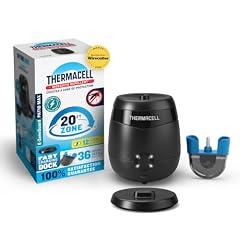
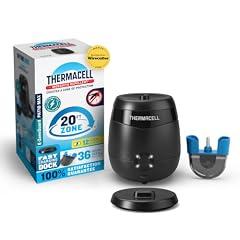
Thermacell E-ZoneGuard Patio Max Mosquito Repeller
Overview
This is a rechargeable outdoor spatial mosquito repeller with a charging dock and replaceable liquid cartridges. Thermacell identifies the E-ZoneGuard cartridge active ingredient as metofluthrin, a volatile pyrethroid, carried in isoparaffinic solvents. The product is intended to heat and diffuse that formulation into nearby air rather than applying repellent to skin. The listed package claims a 20-foot protection zone, a 12-hour battery, and 36 hours of refill. Those are manufacturer-stated product claims. EPA has independently registered a Thermacell metofluthrin refill formulation at 5.5 percent active ingredient, with approved claims for an 11-foot zone and instructions to allow up to 15 minutes for protection. Public evidence supports metofluthrin spatial repellency as a category, but I did not find a public independent field report testing this exact Patio Max unit at its stated 20-foot range.
What works
- Uses a registered metofluthrin refill formulation, rather than an unregistered fragrance or ultrasonic mechanism.
- Avoids skin application, sprays, fuel canisters, smoke, and an open flame during normal use.
- The registered refill label gives concrete handling, first-aid, storage, inspection, and disposal directions.
- The product's rechargeable format can reduce repeated purchase of single-use battery cells.
What does not
- The public EPA label located supports an 11-foot zone, while this product listing claims 20 feet. A current exact-product label or public test report was not located to reconcile that difference.
- No public ISO-accredited laboratory report or peer-reviewed study was found for this exact unit, its 20-foot claim, or its 12-hour battery claim.
- Protection is sensitive to placement, refill condition, and air movement. The registered refill directions call for up to 15 minutes of warm-up.
- The refill is harmful if swallowed and contains petroleum distillate, so it needs secure child and pet storage.
Who is it for
This product fits someone wanting hands-free mosquito reduction around a small outdoor sitting area, such as a patio table, campsite seating area, or deck chair cluster. It is most suitable for buyers who can place the unit near the people being protected, wait through its warm-up period, use only compatible refills, and keep spare cartridges stored securely. The rechargeable battery and dock are useful where frequent replacement of disposable batteries would be inconvenient.
Who is it not for
It is not a stand-alone choice for people who need reliable individual bite prevention while walking, working away from the unit, or traveling in areas with mosquito-borne disease risk. CDC guidance emphasizes EPA-registered skin repellents, protective clothing, and source reduction for those situations. It is also unsuitable for indoor use, for households unable to keep liquid pesticide cartridges away from children or pets, and for use immediately beside ponds, aquariums, or other water.
Integrity
The cartridge formulation is not ingredient-free. Thermacell identifies metofluthrin as the active ingredient, and the EPA-registered refill label identifies a 5.5 percent metofluthrin formulation containing petroleum distillate. The label warns that the refill is harmful if swallowed, instructs users to wash hands after handling, and notes an aspiration-pneumonia hazard if vomiting occurs after ingestion. Keep cartridges closed, avoid touching the wick, and store them away from children and pets. Metofluthrin is a pyrethroid insecticide. EPA's ecological review found potential risk to non-target insects, even though expected use was not projected to create high aquatic concentrations. The refill label says not to apply it to water. Empty cartridges may go in the trash under label directions, but partly filled cartridges should go to local solid-waste guidance and must never be poured into drains. This repels adult mosquitoes and does not address larvae, so removing standing water remains important.

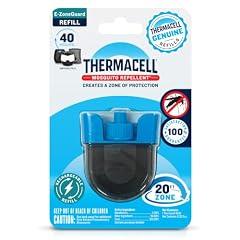
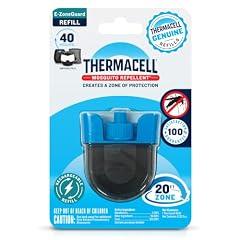
Thermacell E-Series Patio Mosquito Repellent Bundle
Overview
This product is a single 0.33 fluid ounce liquid refill cartridge for a compatible Thermacell rechargeable outdoor repeller. It is not a complete repeller. The EPA-approved refill label identifies 5.5% metofluthrin in petroleum-distillate-containing carrier ingredients, and lists this cartridge size as providing 40 hours of use when operated in the compatible device. The system heats and diffuses the repellent into outdoor air rather than applying it to skin. The approved label supports a 20-foot protection area and says full coverage can take up to 15 minutes, but placement matters. In wind, the device should be set upwind of the seated area. EPA registration verifies the labeled formulation and permitted claims. Publicly available independent human trials were found for metofluthrin spatial repellents as a category, not this exact refill and device combination.
What works
- The exact 40-hour, 0.33 fluid ounce refill format and 5.5% metofluthrin composition are documented on an EPA-approved label.
- It provides a hands-free outdoor option that does not require repellent to be applied to skin.
- The EPA-approved directions disclose a 15-minute establishment time and upwind placement in windy conditions.
- The label gives specific storage, first-aid, and disposal instructions, including not pouring unused product into drains.
What does not
- This is a consumable refill, not a complete mosquito repeller, so a compatible rechargeable device is required.
- The 20-foot zone is conditional on outdoor placement and air movement, not a guaranteed personal shield in wind.
- No public independent laboratory report was located for this exact refill and compatible device setup, although the formulation is EPA registered.
- The cartridge contains a pyrethroid active ingredient and petroleum distillate. It is harmful if swallowed and must be kept away from children and pets.
Who is it for
This refill suits someone who already owns the compatible Thermacell rechargeable outdoor device and wants intermittent protection for a patio chair group, campsite table, deck, or similar small sitting area. It fits users who prefer not to apply a skin repellent during casual outdoor time, can let the device run for about 15 minutes before expecting the full zone, and can position it thoughtfully when there is a breeze. The 40-hour cartridge is also practical for repeated seasonal use rather than one evening only.
Who is it not for
It is not suitable for someone who needs a complete product out of the box, because this package is a refill and needs a compatible rechargeable repeller. It is also a poor fit for indoor use, wet conditions, or highly exposed and windy locations where the vapor zone can disperse. People needing dependable bite prevention during mosquito-borne disease exposure should not rely on a spatial zone alone. CDC guidance supports supplementing spatial repellents with an EPA-registered skin or clothing repellent and other bite-prevention measures.
Integrity
The refill's active ingredient is metofluthrin, a synthetic pyrethroid. Its exact 5.5% concentration, petroleum-distillate carrier, caution statement, and first-aid directions are publicly documented in the EPA-approved label. The main household concern is ingestion. The label says it is harmful if swallowed and notes that vomiting can cause aspiration pneumonia because of the petroleum distillate. Store cartridges closed, cool, dry, and out of reach of children and pets. This is an outdoor-only pesticide product. Do not apply it to water, and do not pour unused refill liquid into any drain. EPA's metofluthrin assessment describes the active ingredient as highly to very highly toxic to aquatic animals and insects, even though expected exposure from registered use was assessed as limited. Each cartridge is non-refillable. Empty cartridges may go in trash under the label, while partly filled cartridges need local solid-waste disposal guidance.

Summit Mosquito Bits, 20 lb, Quick-Kill Biological Control
Overview
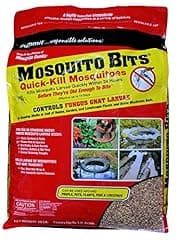
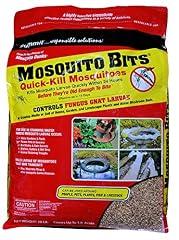
This product is a 20-pound granular larvicide for treating standing water where mosquito larvae breed, and for treating fungus gnat larvae in potting media or soil. Its EPA-accepted label identifies 2.86% Bacillus thuringiensis subsp. israelensis, strain SUM-6218, commonly called Bti. For fungus gnats, the label directs spreading granules into growing media and watering them in, or preparing a soaked-water treatment weekly for three weeks. The exact formulation is federally registered for mosquito and fungus gnat larvae. The accepted label states that it can kill mosquito larvae within 24 hours and control them for up to 14 days in low to moderately organic water, with repeat treatment intervals of 7 to 14 days. This is larval source control, not a skin repellent or an adult-mosquito killer, so it does not protect someone already exposed to biting females.
What works
- Federal EPA registration verifies the exact Bti formulation, active-ingredient concentration, labeled sites, and target larvae.
- The accepted label provides specific rates for household water, large water areas, pots, soil, and soaked-water fungus gnat treatment.
- Bti has regulator-reviewed evidence for mosquito-larva control, and EPA describes it as selectively targeting mosquito, blackfly, and fungus gnat larvae.
- The label permits use in many common breeding sites, including bird baths, rain barrels, gutters, water gardens, and animal watering troughs when used as directed.
- No electrical, battery, flame, vapor, or skin-application hazard is built into this granular product.
What does not
- It is not a mosquito repellent and does not control biting adult female mosquitoes, so it cannot provide immediate bite protection.
- The stated 14-day control period is conditional. Organic debris, water depth, larval age, density, and coverage can require a higher rate and retreatment after seven days.
- The product label warns that dust is harmful if inhaled or absorbed through skin and causes moderate eye irritation, despite the low toxicity profile of Bti itself.
- The label discloses the active ingredient but identifies 97.14% only as other ingredients, not by individual component.
- The 20-pound package is nonrefillable and requires secure, dry storage away from children, pets, food, and feed.
Who is it for
This product suits a property owner, greenhouse operator, landscaper, or mosquito-control worker treating recurring larval habitat rather than seeking personal bite protection. The 20-pound size and label rates are most practical where there are many rain barrels, ponds, gutters, nursery areas, large planters, or substantial fungus gnat pressure in growing media. It is also relevant where standing water cannot be emptied, covered, or otherwise removed. Users need to be able to measure applications, monitor larvae, and repeat treatments on the label schedule.
Who is it not for
It does not suit someone needing protection during outdoor activities, because it neither goes on skin nor controls biting adult females already present. People managing only a few small houseplants may find a 20-pound pesticide package excessive and harder to store safely. It also is not appropriate for casual indoor scattering where dust could be inhaled or get into eyes. Do not use it to treat finished drinking-water reservoirs, and do not assume the product removes the need to dump, cover, or drain unnecessary standing water.
Integrity
The active ingredient is Bti, a microbial larvicide. EPA states that Bti toxins selectively affect mosquito, blackfly, and fungus gnat larvae, and that Bti has minimal toxicity to honey bees. The product label also permits use in sites containing aquatic life, fish, plants, pets, livestock, birds, and wildlife when directions are followed. This targeted life-stage approach avoids broad aerial or surface sprays for adult mosquitoes. Low active-ingredient toxicity does not make the granules risk-free to handle. The accepted label carries a Caution signal word and warns against breathing dust or getting it in eyes or on skin. Keep the sealed original container in a cool, dry, ventilated place away from children, pets, food, and feed. Outdoor fungus gnat applications also require runoff control. Use all material as directed where possible, and take unwanted remainder to a pesticide-disposal program rather than pouring it into drains.

Cliganic Mosquito Repellent Bracelets DEET-Free 50 Pack
Overview
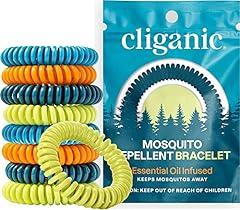
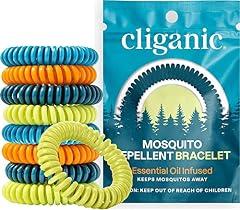
This product is a 50-count pack of individually wrapped, stretchy wrist or ankle bands intended to deter mosquitoes by slowly releasing plant-derived essential oils. Cliganic’s current classic-bracelet page lists geraniol at 13.05%, lemongrass oil at 5%, geranium oil at 2%, and citronella oil at 0.95%, held in a polyethylene-based band. The manufacturer directs users to replace bands every three hours and says up to three may be worn on each exposed limb. Its important limitation is the protection method. Independent human testing of a closely matching geraniol, lemongrass, and citronella wristband found no significant bite protection, and CDC guidance states that repellent-impregnated wristbands are ineffective. The product appears to be an EPA minimum-risk exempt pesticide rather than an EPA-registered repellent, so EPA has not evaluated this product’s effectiveness before sale.
What works
- The manufacturer publicly identifies the active oils, their percentages, and the named band ingredients.
- The band format avoids spraying or rubbing repellent directly onto exposed skin, according to the manufacturer.
- Individually wrapped resealable pouches can preserve unused bands between wears, according to the manufacturer.
- Cliganic is listed as cruelty-free in PETA’s Beauty Without Bunnies directory.
- There are no electrical parts, batteries, heating elements, or flame-related hazards.
What does not
- CDC says repellent-impregnated wristbands are ineffective, and a controlled human study found no significant protection from a closely matching essential-oil wristband formulation.
- No product-specific independent laboratory report or peer-reviewed human biting trial was located for this bracelet.
- The manufacturer’s broader bracelet information gives inconsistent replacement intervals, with current sources stating either three or four hours.
- Essential oils are not risk-free. Citronella oil can cause skin irritation or allergic reactions in some people, including through contact with a treated band.
- This 50-count format uses disposable polyethylene bands and individual plastic pouches, creating substantial single-use material waste.
Who is it for
This product is suited to someone seeking a lightweight, no-spray accessory for short outdoor occasions where mosquito-bite prevention is not safety-critical, such as keeping a spare band in a day bag for a park visit. It may also suit users who specifically prefer a product that does not place the repellent blend directly on skin and who can follow the manufacturer’s storage and replacement directions. The large pack is practical only for households, events, or groups that expect to use many short-duration bands and accept their disposable format.
Who is it not for
It is not suited to travel in places with mosquito-borne disease risk, or for any situation where preventing bites is important. CDC advises choosing an EPA-registered skin-applied repellent for reliable protection, rather than relying on non-registered natural repellents or repellent wristbands. It also does not suit people with known fragrance or essential-oil sensitivities, young children who may mouth or handle the band, or households trying to reduce plastic waste. Do not treat it as larval control or a substitute for removing standing water, protective clothing, screens, or approved repellent.
Integrity
The formula is transparent by minimum-risk pesticide standards. Cliganic lists the active oils and percentages, along with named inert band materials. Geraniol, citronella oil, and lemongrass oil are eligible active ingredients for EPA minimum-risk products. This exemption means the product can be sold without EPA registration if all conditions are met, but it also means EPA has not evaluated this product for effectiveness. A Vermont pesticide list identifies Cliganic’s mosquito repellent bracelet as exempt. The brand’s cruelty-free status is independently listed by PETA. The product has no electrical or combustion hazard and is worn rather than sprayed. However, plant-derived does not mean non-irritating. Citronella oil can trigger irritation or allergic reactions in some people. Ecologically, it avoids broad outdoor spraying and water treatment, but each use consumes a polyethylene band and individual pouch. The manufacturer’s resealable packaging may support limited reuse, yet disposal guidance for the used bands is not clearly provided.

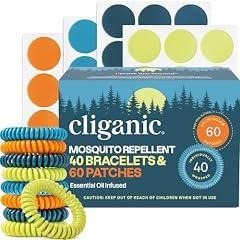
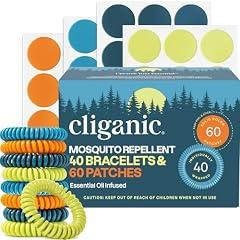
Cliganic Mosquito Repellent Bracelet and Sticker Set
Overview
This is a 100-piece wearable mosquito-repellent set with 40 elastic wrist or ankle bands and 60 adhesive patches. Cliganic directs users to wear bands, place patches on clothing near exposed areas, and replace them about every four hours. The patches are manufacturer-disclosed as containing 12% geraniol, 2% citronella oil, and 1% peppermint oil. The bracelet formula is described as geraniol-based, but a complete U.S. ingredient and concentration disclosure was not located. The product relies on vapor from essential oils rather than an EPA-registered skin repellent. Independent human testing of similar citronella and geraniol wristbands and textile patches found no significant protection compared with untreated controls. CDC guidance also identifies repellent-impregnated wristbands as ineffective. No product-specific independent laboratory report or EPA registration record was found.
What works
- The patches are intended for clothing rather than direct skin placement, which can reduce direct exposure when used as directed.
- The product has no batteries, heating element, flame, or charging system.
- Cliganic provides a stated replacement interval and keeps unused bands individually wrapped and resealable.
- The patches disclose three active essential-oil ingredients and their percentages on Cliganic's product page.
What does not
- Human evidence does not support similar essential-oil wristbands and patches as reliable bite prevention.
- No independent test report was located for this exact band and patch set, its release rate, or its claimed protection time.
- The bracelet component lacks a complete, readily available U.S. disclosure of active concentration and inert materials.
- Geraniol can cause allergic skin reactions, and product warnings advise avoiding vapors and keeping it from children under 3.
- The set creates recurring waste from disposable patches, individual band wrappers, and spent bands.
Who is it for
This set fits a household seeking a spray-free accessory for short, low-exposure outdoor activities, such as a park visit or backyard play, especially when users can follow the clothing-only instruction for patches and replace items on schedule. It is also suited to people who prefer not to apply a scented liquid directly to skin. Its 40 bands and 60 patches provide enough pieces for occasional group use. It should be treated as an added comfort measure, not the primary protection method.
Who is it not for
It is not appropriate as the main bite-prevention method where mosquito-borne illness is a concern, during travel to areas with disease transmission, or for people who react to fragrances or essential oils. It is also a poor fit for parents of children under 3, since product warnings say to keep it out of their reach. Anyone needing predictable protection during hiking, fishing, evening events, humid weather, or heavy mosquito activity should use an EPA-registered repellent and physical barriers instead.
Integrity
Cliganic identifies the patch actives as geraniol, citronella oil, and peppermint oil, and calls the product DEET-free. DEET-free is an ingredient statement, not proof of lower risk or better safety. The bracelet warnings available from a retailer state that geraniol may cause an allergic skin reaction, advise avoiding vapors, and direct users to seek advice if irritation or rash occurs. Patches should not be placed directly on skin. No electrical or combustion hazard is inherent to this passive wearable format. No product-specific recall was located in the CPSC recall search. Ecological exposure from normal wear is likely more limited than from broad outdoor spraying, but this is not a targeted mosquito-control method and does not address breeding water. The disposable patch sheets, individual wrappers, and eventually discarded bands add single-use material waste, with no product-specific U.S. disposal guidance located.

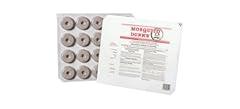
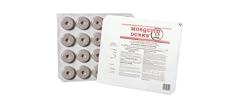
Summit Mosquito Dunk Tablets, 20 Pack
Overview
This 20-count pack contains floating, slow-release mosquito larvicide briquets for water that cannot be emptied or covered. A whole briquet is labeled for up to 100 square feet of standing-water surface, regardless of depth, and can be broken into portions for smaller containers. It is not a skin repellent and does not kill biting adult mosquitoes. The manufacturer’s product label identifies 10.31% Bacillus thuringiensis subspecies israelensis, strain BMP-144, with 89.69% inert ingredients. Its product registration and California listing were independently confirmed as active. The label supports mosquito-larva control for 30 days or more under typical conditions, while also saying that heavily organic water, dense vegetation, or high larval populations can require more treatment and at least 48 hours for control.
What works
- EPA registered microbial larvicide with an active California product listing.
- The labeled use is specific and practical, standing water up to 100 square feet per whole briquet.
- Bti is supported by EPA and CDC guidance for controlling mosquito larvae before they become biting adults.
- The label permits use in many water-holding sites, including bird baths, ponds, rain barrels, troughs, and irrigation water.
- No electrical parts, batteries, heat source, flame, or fuel are involved.
What does not
- It does not repel or kill adult biting mosquitoes, so it cannot provide immediate bite protection.
- The 30-day claim is conditional. The label calls for user monitoring and may require up to four times the normal dose in highly organic water.
- The product is a pesticide, not risk-free handling material. Its label and safety sheet warn of moderate eye irritation and dust exposure.
- The 89.69% inert portion is not identified by name on the label, although the safety sheet provides the required hazard information.
- The briquets and their nonrefillable retail packaging are disposable, and unused material needs local pesticide-disposal guidance.
Who is it for
This product fits a household, gardener, small-property owner, or animal keeper managing standing water that cannot reasonably be dumped, screened, or refreshed. Examples include rain barrels used for irrigation, bird baths, ornamental ponds, troughs, gutters, tree holes, and unused pools. It is especially suited to someone willing to portion the briquet by water surface area, inspect the water after application, and replace treatment on the labeled monthly schedule. It addresses mosquito breeding at the larval stage, not mosquitoes already flying around people.
Who is it not for
It is not suited to anyone seeking personal bite protection during outdoor activity, because Bti does not repel adult mosquitoes or provide a protection time on skin. It is also not appropriate for treated finished drinking-water reservoirs or receptacles intended for human drinking. Buyers unable to avoid dust, follow eye-contact first aid, store pesticides away from children and pets, or check treatment sites should not rely on it. Flowing water, water with heavy organic pollution, dense vegetation, or very high larval numbers can need more active monitoring and different treatment planning.
Integrity
The active ingredient is Bti, a microbial larvicide that must be eaten by susceptible larvae. EPA and CDC identify Bti larvicides as a way to reduce mosquitoes before adulthood, and EPA reports no human toxicity from Bti based on its evaluated studies. This product is still labeled as causing moderate eye irritation. Avoid breathing dust, avoid eye contact, wash after handling, and keep it stored in a cool, dry place inaccessible to children and pets. Ecologically, this is a targeted larval control rather than a broad adult insect spray. EPA says Bti has minimal toxicity to honey bees and does not harm food crops or water supplies when used as directed. It can also affect blackfly and fungus gnat larvae, so targeted placement matters. The label prohibits direct application to treated finished drinking-water reservoirs and directs users not to put unused product down drains. Source reduction remains important, empty or cover water whenever possible.

BugMD Mosquito Repellent Patch Stickers (234)
Overview
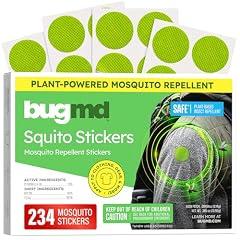
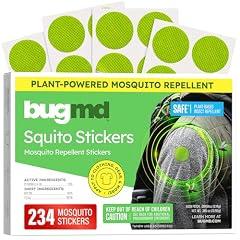
This product is a 234-patch bundle of adhesive mosquito-repellent stickers, packed as three 78-sticker boxes. The manufacturer directs users to place multiple patches on clothing, shoes, bags, tents, strollers, or nearby gear, not directly on skin. Its guidance recommends at least four patches for typical outdoor use and more in heavy mosquito conditions. A safety data sheet identifies the formulation as 10% citronella and 90% nylon. That conflicts with the manufacturer page, which says each patch contains 100% citronella oil and only that ingredient. The product is listed as an exempt pesticide in state records rather than as an EPA-registered repellent. No independent test report was located for these patches. A human study of comparable wearable stickers and bands found no significant bite protection versus unprotected volunteers, so the claimed protection, especially the stated 72-hour duration, remains unverified for this product.
What works
- Clothing and gear placement avoids intentional direct application of citronella to skin.
- The manufacturer gives concrete placement, storage, replacement, and child-supervision instructions.
- The passive patch format has no battery, heating element, plug, fuel, or open-flame exposure.
- Citronella has a long regulatory history as an insect-repellent active ingredient, with low acute toxicity when used as directed.
What does not
- No independent human biting trial or accredited laboratory report was located for this exact patch formulation.
- The manufacturer claims both 100% citronella oil and no other ingredients, while its safety data sheet identifies 10% citronella and 90% nylon.
- The manufacturer claims protection for up to 72 hours, but comparable wearable stickers and bands did not significantly reduce bites in a controlled human study.
- The safety data sheet warns that eye contact may irritate, sensitive users may have skin irritation or allergic reactions, and prolonged exposure may irritate the respiratory system.
- The 234 patches are disposable nylon items, creating ongoing solid waste after use.
Who is it for
This product suits someone seeking a lightweight, non-electrical, clothing-mounted citronella accessory for short, casual outdoor situations, such as a backyard gathering or carrying gear near a seating area. It is most appropriate for users who understand that the patches are not skin repellent, can follow the instruction to use several patches at once, and can treat any bite-reduction benefit as uncertain. It may also suit people avoiding sprays on skin, provided they do not have known fragrance, essential-oil, adhesive, or citronella sensitivities.
Who is it not for
It is not suited to people who need dependable bite prevention where mosquito-borne disease is a concern, including travel to risk areas, work outdoors, or intense mosquito exposure. CDC recommends EPA-registered repellents for personal bite prevention, and no product-specific human efficacy evidence was found here. It is also unsuitable for anyone likely to place patches on skin, allow a young child or pet to mouth them, or continue use after irritation. People with fragrance, citronella, adhesive, respiratory, or skin-sensitization concerns need added caution.
Integrity
The key health issue is disclosure consistency. The manufacturer's safety data sheet identifies 10% citronella and 90% nylon, while product marketing says the patches contain only 100% citronella oil. The same safety sheet says eye contact can irritate, direct contact can cause irritation or allergic reaction in sensitive people, and prolonged exposure may irritate the respiratory system. Manufacturer instructions appropriately say not to apply patches to skin, to keep them away from small children, and to wash hands after handling. Citronella itself has an EPA-reviewed history as a biochemical insect-repellent ingredient, with low acute toxicity and limited expected ecological exposure in its registered uses. That does not validate this patch's performance or duration. The product is a minimum-risk exempt pesticide in state listings, not an EPA-registered repellent with EPA-reviewed product efficacy. A 2023 Indiana pesticide case required website and labeling revisions for Squito Stickers. Each used patch is disposable nylon and is directed to regular household trash, so the multi-pack format creates recurring material waste.

BugMD Ant Killer & Bug Spray Starter Kit
Overview
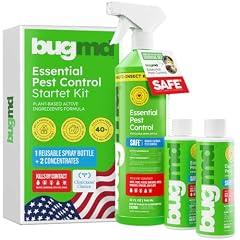
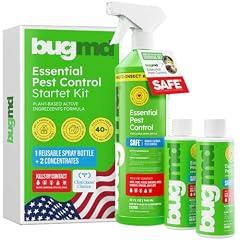
This product is a manually mixed indoor and outdoor pest-control concentrate supplied for use in a reusable trigger-spray bottle. BugMD directs users to combine one full concentrate bottle with 27 ounces of cold water, shake it, then spray visible insects and likely hiding areas such as cracks, cabinets, appliances, windows, and door frames. Its published instruction manual identifies 0.5% clove oil and 0.5% cottonseed oil as active ingredients, with water, soap, glycerin, myristic acid, potassium oleate, and potassium stearate listed as inert ingredients. Those ingredients are disclosed by the manufacturer, not independently tested for this exact formulation. It is a contact-oriented pest spray, not a skin-applied mosquito repellent or larvicide. No independent human biting trial, mosquito protection-time result, or field larval-control result was located for this exact product. The supplied product record also presents inconsistent package-volume details, so the ready-to-use volume should be checked on the package received.
What works
- The manual discloses both active ingredients, their 0.5% concentrations, and the named inert ingredients.
- The active ingredients, clove oil and cottonseed oil, are included on EPA's permitted active-ingredient list for minimum-risk pesticides.
- The manually operated spray format has no plug, battery, heating element, fuel canister, or flame hazard.
- BugMD provides a refill-oriented system, and states that one concentrate bottle is mixed into 27 ounces of ready-to-use spray in the reusable bottle.
- Storage guidance says to keep the concentrate tightly closed, cool, dry, and away from children and pets.
What does not
- No independent testing was located for mosquito-bite prevention, mosquito larvae, or real-world mosquito control using this exact formulation.
- The product's mosquito-related marketplace positioning is broader than the available evidence. It is not documented as a skin repellent with a tested protection time.
- Claims that it is safe around children and pets, eco-friendly, quick-killing, and effective on resistant pests rest on BugMD statements rather than an identified independent report for this product.
- The available manufacturer manual gives limited practical detail on ventilation, eye exposure, first aid, treatment-area exclusion, and aquatic-life precautions.
- It is broad-spectrum contact pest control, so outdoor overspray can affect non-target insects. The formula should not be used near pollinators, aquariums, drains, ponds, or other water.
Who is it for
This suits a buyer seeking a non-powered, mix-at-home contact spray for occasional visible household pests such as ants, roaches, spiders, flies, or bed bugs, and who values a disclosed plant-oil formula and reusable bottle. It is most appropriate for spot treatment of cracks, crevices, and other pest-harboring areas after the user is prepared to remove children, pets, food, bowls, toys, and aquarium exposure from the treatment area. It also fits users who can follow the measured mixing instructions and allow treated surfaces to dry.
Who is it not for
It does not suit someone seeking dependable mosquito-bite protection on skin, tested protection duration, disease-risk prevention, or larval treatment in standing water. It is also a poor fit for active bed bug infestations needing a documented integrated treatment plan, or for users who need independently verified kill rates and residual performance. Households with fish tanks, sensitive pets, toddlers likely to contact treated surfaces, fragrance-sensitive occupants, or limited ability to isolate and ventilate treatment areas need more specific safety instructions than the available material provides.
Integrity
The formula is transparent about its main components. BugMD's manual lists 0.5% clove oil and 0.5% cottonseed oil, plus water, soap, glycerin, myristic acid, potassium oleate, and potassium stearate. Clove oil and cottonseed oil are among the active ingredients permitted for qualifying federal minimum-risk pesticide products. That eligibility does not itself mean EPA has registered, reviewed, or endorsed this individual product. “Plant-based,” “non-toxic,” and “safe around children and pets” should not be read as permission for direct exposure. General pesticide safety guidance supports removing pets, pet bowls, toys, and bedding before spraying, keeping them out until treated areas dry, and preventing access to the concentrate. The reusable bottle may reduce repeat bottle purchases, but the formula is still intended to kill insects. Avoid outdoor overspray on flowering plants and keep it out of aquariums, drains, ponds, and waterways. No independent ecological assessment or exact-formulation aquatic-safety report was located.

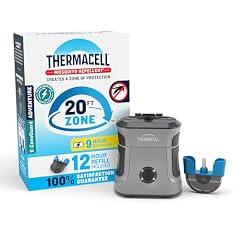
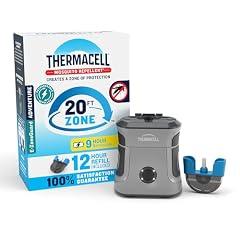
Thermacell EX90 Mosquito Repellent Adventure Series
Overview
This is a portable, rechargeable outdoor spatial mosquito repeller. It heats a liquid refill through a wick, releasing metofluthrin into the surrounding air rather than applying repellent to skin. The product includes a 12-hour refill, a USB charging cable, rubber impact protection, and a lanyard with carabiner. Thermacell states a 9-hour battery runtime, IP54 resistance to dirt and moisture, and a 20-foot protection zone. Its 5.5% metofluthrin refill is part of an EPA-registered pesticide formulation that also identifies petroleum distillate in the cartridge. The EPA-approved directions require outdoor-only operation, upright placement, and about 15 minutes to establish the protection zone. Independent field research on the closely related E90 rechargeable platform found substantially fewer trapped mosquitoes than untreated controls, but this was a trap-capture study, not a human biting trial on this exact product.
What works
- Uses an EPA-registered 5.5% metofluthrin formulation, with active ingredient and hazard labeling available publicly.
- Avoids applying repellent to skin, which can suit stationary outdoor settings where users prefer a zone-based format.
- Label directions clearly state outdoor-only use, a 15-minute warm-up period, central placement, and wind-related performance limits.
- The rechargeable platform avoids fuel canisters and open flame. Thermacell states the EX90 runs up to nine hours per charge.
- The rugged body, locking top, lanyard, and carabiner are practical manufacturer-stated features for carrying and outdoor handling.
What does not
- Protection is location-dependent. The label says wind and air movement can reduce effectiveness, so an open or breezy setting can weaken the zone.
- Independent evidence supports the related rechargeable platform, but no identified human landing or biting trial tested this exact EX90 unit.
- The refill contains petroleum distillate and is harmful if swallowed. The label warns that vomiting after ingestion can cause aspiration pneumonia.
- The 20-foot coverage statement is manufacturer-stated, while the accessible EPA label describes an 11-foot protection zone and 110 square feet. Buyers should treat distance claims as placement-dependent rather than fixed.
- The cartridge is disposable and the built-in lithium-ion battery is not user-replaceable, creating refill and end-of-life waste.
Who is it for
This product fits a person or small group sitting in one defined outdoor area, such as a deck, campsite table, sidelines, fishing spot, or unenclosed porch, especially when they prefer not to put repellent on their skin. It is most suitable when the device can be placed upright near the center or upwind, started about 15 minutes before use, and recharged between outings. The rugged shell and attached carabiner may also suit people carrying it between stationary outdoor stops.
Who is it not for
It is not suited to people needing dependable bite protection while walking, hiking, working across a large yard, or remaining in strong or shifting wind. It is also not a substitute for skin-applied EPA-registered repellent and protective clothing where mosquito-borne disease exposure is a concern. Households with young children, pets that may chew cartridges, or anyone unable to keep the liquid refill secured and out of reach should take the ingestion warning seriously. Do not use it indoors, in enclosed tents, or near water application areas.
Integrity
The refill's active ingredient is 5.5% metofluthrin, a volatile pyrethroid repellent released by heat. EPA labeling identifies petroleum distillate in the formula and warns that the liquid is harmful if swallowed. Keep cartridges away from children and pets, do not touch or remove the wick, wash hands after handling, and store refills cool, dry, upright, and out of direct sunlight. The device is for outdoor use only. EPA's environmental review identifies metofluthrin as highly toxic to aquatic animals and insects under exposure conditions, and the product label says not to apply it to water or pour unused product into drains. A field study using an E90 device and 5.5% metofluthrin reported no measurable effect on honey-bee foraging under its test conditions, but that does not establish safety for all pollinators or aquatic species. Empty cartridges may go in trash under the label. Partly filled cartridges need local disposal instructions.

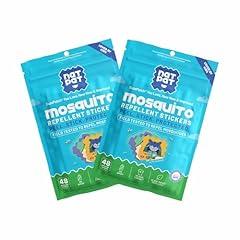
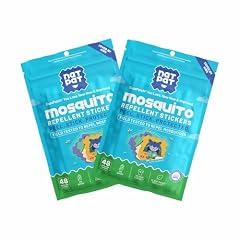
BuzzPatch Mosquito Patch Stickers for Kids
Overview
This product is a disposable, scent-releasing mosquito-repellent sticker intended to be pressed onto clothing rather than applied as a skin spray. The catalog describes a two-pack children’s format. Current retailer listings identify citronella as the active ingredient, with directions to place patches on outer clothing near the chest, arms, and legs. Retail listings differ on duration, giving six hours in one specification while the manufacturer commonly claims up to eight hours. The defining limitation is evidence. The manufacturer describes controlled citronella release and cites an in-house named research claim, but no public report identifying the exact patch, test method, mosquito species, dose, and results was located. A human landing study of comparable repellent stickers and bands found no significant protection for those wearable formats. This does not directly test this product, but it makes the broad whole-body and eight-hour protection claims uncertain.
What works
- Clothing placement can reduce direct skin contact compared with a topical repellent, when used as directed.
- The patch format has no battery, heating element, electrical charger, or flame hazard.
- Citronella is a recognized minimum-risk pesticide active ingredient and repels rather than kills insects.
- Small patches avoid aerosol drift and do not add repellent directly to water.
What does not
- No publicly available independent test report was located for this exact patch, formulation, dose, or claimed duration.
- A human study of comparable mosquito stickers, wristbands, and transdermal patches found no significant protection, so effectiveness should not be assumed from citronella alone.
- The manufacturer’s statements that the product is EPA registered and EPA reviewed for efficacy conflict with EPA’s explanation that qualifying minimum-risk products are exempt from registration and are not evaluated for effectiveness.
- Ingredient reporting is inconsistent across sellers, which variously describe citronella alone, citronella with other essential oils, and a specific 10 percent citronella dose.
- Citronella vapors and accidental contact can irritate eyes or skin and may trigger allergy in susceptible people, while some retail listings provide little or no warning information.
Who is it for
This format suits a family seeking a lightweight, non-electrical accessory for brief, lower-exposure outdoor activities, especially when a child will not tolerate lotion and the patch can be kept on outer clothing. It is most appropriate as a supplemental comfort measure alongside covering clothing, stroller netting for infants, screens, and removal of standing water. The user should be able to prevent mouthing or handling of loose stickers and should understand that the claimed full-body, long-duration protection has not been independently established for this product.
Who is it not for
It does not suit situations where preventing mosquito-borne illness is a priority, including travel or outdoor activity in areas with active mosquito-borne disease risk, heavy mosquito pressure, dusk exposure, wetlands, or long outdoor events. CDC recommends an EPA-registered repellent for dependable bite prevention. It is also a poor fit for children who may chew, swallow, or rub stickers into their eyes, and for people with known fragrance, essential-oil, adhesive, or citronella sensitivity. Do not rely on the sticker alone to protect an infant in a carrier or stroller.
Integrity
Citronella is plant-derived and is listed by EPA as a minimum-risk pesticide active ingredient. The patch is placed on clothing, which can reduce direct dermal application. That does not make it exposure-free. Citronella vapor or residue can mildly irritate skin and eyes, and repeated or prolonged exposure can cause allergic skin reactions in some people. Keep patches away from mouths and eyes, wash hands after handling, and stop use if a rash or irritation occurs. The product is not electrical, does not burn fuel, and is not intended for water treatment, so it avoids the fire, battery, broad insect-kill, and aquatic-treatment issues associated with some mosquito-control products. However, it is a disposable patch system. The manufacturer promotes reusable outer packaging, but no clear product-specific disposal or material-composition guidance was located. The patch should be discarded securely and never flushed. Its repellent-only role does not replace source reduction, such as emptying and scrubbing water-holding containers weekly.