
10 Best Budget Noise Cancelling Headphones
 Daniel Kenitz
Please note that we participate in affiliate marketing programs. When you purchase through links on our site, we may earn a commission. As an Amazon Associate we earn from qualifying purchases. This comes at no additional cost to you and helps support the resources required to provide valuable content.Advertising Disclosure
Top-rated Budget Noise Cancelling Headphones Comparison
1

2
4
5
+
6
7
8
9
Budget noise-cancelling headphones: what to look for
Noise-cancelling headphones combine physical earcup or ear-tip sealing with electronics that reduce some outside sound. The useful question is not whether a product says “35 dB,” “45 dB,” or “90% noise reduction,” but how much sound it reduces in repeatable testing. Strong evidence compares ANC on with ANC off using a head-and-torso simulator and reports attenuation across the frequency range, including scenarios such as aircraft rumble, office noise, and street sound. Passive sealing still matters: a poor fit, glasses, hair, or gaps around the cushions can reduce bass blocking and make ANC less effective.
A product’s noise-cancelling microphone is a separate feature. Environmental or microphone noise cancellation can make your voice clearer on calls, but it does not prove that playback noise is reduced. Wired gaming headsets and many inexpensive earbuds use “noise cancelling” language for the microphone or passive isolation only. Buyers wanting travel or office noise reduction should look for independent ANC-on versus ANC-off results, not a microphone claim or an unsupported headline figure.
Battery claims also need conditions. Runtime changes with ANC mode, codec, volume, lighting, microphone use, and whether the figure describes the headphones alone or a charging case. Independent continuous testing is more useful than an unqualified “40,” “60,” or “100 hours.” A 3.5 mm or USB-C wired mode can preserve listening when wireless power is unavailable, but it does not automatically support the microphone or every gaming platform.
For safety and accountability, check the exact product rather than relying on the brand. Useful records include an FCC equipment authorization for U.S. radio operation, Bluetooth SIG qualification for claimed Bluetooth features, and where supplied UL Product iQ, Intertek ETL, or CSA listings for electrical safety. Battery evidence may include UL 62368-1 or IEC 62368-1 scope, IEC 62133-2 testing, and a UN 38.3 transport-test summary. These records address different questions; an FCC filing does not certify the battery, charger, hearing safety, or sound quality.
Sound quality matters because harsh, distorted, or poorly balanced playback can encourage higher volume. Independent frequency-response, distortion, stereo-matching, and leakage measurements at normal listening levels are stronger evidence than “Hi-Res,” “deep bass,” or a wide frequency-range number. Codec, multipoint, low-latency, console, and wired claims should match the exact product’s manual and compatibility documentation.
Across the supplied products, recurring limitations deserve attention. None documents a universal substitute for hearing protection, and most lack a volume cap, sound-dose monitor, or parental control. Several have high wireless latency, weak microphone performance, or wired microphone limitations. Water-resistance claims are inconsistent for some products; others have no ingress rating, so rain, sweat, and charging around moisture should not be assumed safe. Rechargeable models commonly lack model-specific battery-safety documentation, user battery replacement, repair instructions, or a U.S. take-back route. Finally, passive or microphone-only “noise cancellation” should not be confused with playback ANC, especially when buying for travel, commuting, children, or loud workplaces.
Integrity
The scores below reflect the supplied reviews, with higher results indicating stronger model-specific evidence or safeguards. They do not turn missing documentation into proof of safety.
EEvidence
Real noise reduction
This measures actual ANC and passive attenuation with ANC on versus off across full-spectrum and real-world noise. It is the key separator in this category. The Soundcore Q30 scores 91 and the Q20 scores 88 because independent testing found strong travel, office, street, or bus-noise reduction. Products scoring near 70 generally lack repeatable attenuation curves or have only basic hands-on evidence, while microphone ENC does not count as playback ANC.
Independently verified safety and radio compliance
This measures checkable evidence for the exact product’s electrical, battery, and wireless-radio compliance. FCC authorization supports U.S. radio operation; it does not certify battery safety. Higher supplied scores, such as 88 for the JLab Go Air Pop+, reflect exact-model radio records and stronger verification trails. Lower scores commonly reflect missing UL, ETL, CSA, Bluetooth qualification, or battery-test documentation, or uncertainty about whether a filing matches the product.
Clear, non-misleading noise-cancelling claims
This measures whether listings distinguish playback ANC from microphone noise cancellation and disclose conditions for runtime, latency, water resistance, codecs, and sound claims. Higher scores, such as 78 for the Btootos earbuds and Edifier W830NB, reflect clearer limits in the supplied documentation; lower scores reflect conflicting runtime or Bluetooth claims, unsupported attenuation numbers, or marketplace wording that calls passive or microphone isolation ANC.
Clear, controlled sound at normal volume
This measures balanced frequency response, low distortion, stereo consistency, and leakage at ordinary levels. It matters because harsh or poorly balanced sound can encourage louder listening. The supplied scores range from 58 for Raycon to 86 for Soundcore Life Q20. Higher-scoring products have independent low-distortion or controlled-sound findings; lower scores reflect uneven tuning or no independent acoustic measurements.
Reliable wireless operation
This measures whether Bluetooth, wired, dongle, multipoint, microphone, codec, latency, and platform claims work as stated, with limitations disclosed. It matters because a headset may pair well for music but fail for console chat or low-latency gaming. Supplied scores range from 48 for the Nova 1P to 84 for the Edifier W830NB. Higher scores are supported by exact manuals and independent checks; lower scores reflect conflicting specifications or platform restrictions.
HHealth & Safety
Hearing-health safeguards
This measures volume limits, sound-dose monitoring, parental controls, or clear safe-listening guidance. It matters because ANC can make lower playback levels practical, but headphones can still deliver excessive sound. Among these products, the strongest differentiator is a usable app limit: the JLab Go Air Pop+ documents 85 dB and 95 dB options, while several others have no cap, exposure monitor, or parental control. Scores range from 68 to 83.
Battery and charging safety
This measures safeguards for the rechargeable cell, charging circuit, cable, and instructions, including certification and stop-use guidance. It matters because wireless headphones and charging cases contain lithium batteries. The wired OneOdio scores 95 because it avoids rechargeable-battery and charging hazards; wireless products generally score lower where exact UL, ETL, CSA, IEC 62133-2, or UN 38.3 evidence was not located. Scores range from 70 to 95.
Safety-issue accountability
This measures whether the manufacturer and seller are identifiable, reachable, covered by a warranty, and free of an unresolved exact-product recall or serious hazard pattern. It matters when a battery, charger, radio, or mechanical defect appears after purchase. Supplied scores run from 72 to 80. Stronger examples combine identifiable U.S. support, warranty routes, and recall checks; a general brand recall does not establish a defect in a different headphone model.
EEcology
Built to last and practical to repair
This measures hinge, headband, pad, cable, port, and battery durability alongside replacement parts and repair instructions. Longer service life reduces early replacement. The strongest supplied score is 79 for the SteelSeries Nova 1P, while lower-scoring wireless models often lack battery service, repair manuals, or parts catalogs. Replaceable ear pads or detachable cables help, but a warranty alone does not prove repairability.
Battery and e-waste responsibility
This measures disposal instructions, battery removal, reuse, recycling, and a real U.S. take-back route. It matters because sealed lithium batteries and electronics should not enter household trash or mixed recycling. JLab Go Air Pop+ scores 82 because JLab offers a U.S. mail-in electronics recycling program; most others score 68–77 because no product-specific take-back or battery-removal path was found. Acer also documents a U.S. recycling route for certain branded products.
Full reviews

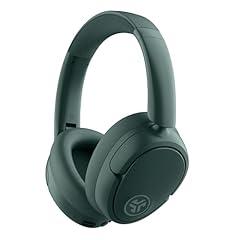
JLab JBuds Lux ANC Wireless Headphones
Overview
This is a 235 g foldable over-ear wireless headset with 40 mm dynamic drivers, hybrid active noise cancellation, faux-leather cushions, USB-C charging and USB-C audio. It is meant for everyday listening, commuting, calls and computer or phone use, with button controls and a companion app. Independent testing found 10 to 20 dB of active reduction below 700 Hz, while the earcups provided much stronger passive blocking at high frequencies. The same test measured 44 hours and 22 minutes of music playback at a 75 dB sound level. JLab states 40 hours with noise cancellation on and 70 hours with it off, plus a 600 mAh lithium-polymer battery. The radio itself has an exact-model FCC equipment authorization. Its app includes a volume limiter, adjustable noise settings, firmware updates and equalizer controls.
What works
- Independent testing confirms useful reduction of low-frequency commuting noise and strong high-frequency passive isolation.
- An independent 75 dB playback test reached 44 hours and 22 minutes, reducing charging frequency.
- The companion app provides a usable volume limiter, custom EQ, adjustable noise control and firmware updates.
- The exact headset radio has an FCC authorization for operation in the 2.4 GHz band.
- USB-C wired playback is available, so listening is not limited to Bluetooth.
What does not
- Independent measurements show a bass-forward response, recessed mids and a pronounced 5 to 10 kHz rise, which may become fatiguing for some listeners.
- Noise cancellation is measurable but not especially strong for low-frequency travel noise, despite JLab's up to 35 dB headline claim.
- No exact-product UL, ETL, CSA or publicly supplied IEC 62133-2 battery-safety certification was located.
- No published repair guide, replacement battery path or confirmed replacement ear-pad and headband parts catalog was located.
- Movie mode is manufacturer-rated below 200 ms, which may still be noticeable in timing-sensitive games and video setups.
Who is it for
It suits a listener who wants full-size, foldable headphones for commutes, study, office work and ordinary home listening, and who is willing to use an app. The measured low-frequency ANC can take the edge off engine and transit rumble, while the closed earcups physically block more high-frequency activity. It also fits users who value long intervals between charges, USB-C audio for a laptop or phone, multipoint use and a volume limiter that can be set before long listening sessions.
Who is it not for
It is not for buyers who need the strongest possible aircraft or train noise reduction, since independent testing found modest low-frequency ANC rather than class-leading attenuation. It is also a poor fit for listeners sensitive to bright treble or who want neutral sound without adjusting EQ. Children and people who cannot reliably manage app settings should use headphones with a fixed, clearly specified output cap. Avoid it for rain, gym sweat or outdoor work that requires an IP rating, because none was verified for this product.
Integrity
JLab identifies the battery as a 600 mAh, 3.7 V lithium-polymer cell and specifies USB-C input at 5 V, 1 A. The product page also gives a narrow charger range of 2.5 to 5 W. The radio authorization is independently verifiable through the FCC, but that is radio compliance, not a product-safety listing. No exact-product UL, ETL, CSA or published lithium-battery test record was located. The app's volume limiter is a practical hearing-health control, although no independent maximum-output measurement was found. JLab offers a U.S. electronics recycling program that accepts devices from any brand and says its packaging is recyclable. The company also sells refurbished returns. However, no product-specific battery-removal instructions, battery replacement service or repair manual was located. JLab has published a firmware response for the Google Fast Pair WhisperPair vulnerability affecting this headset, with the listed U.S. fix released January 29, 2026. No exact-product CPSC recall was located in the checks performed.

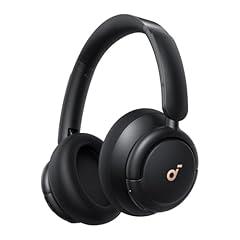
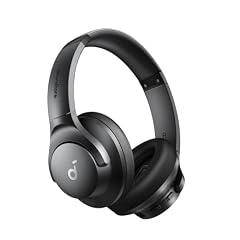
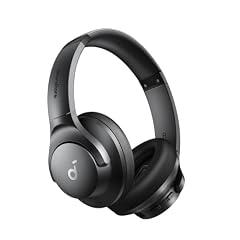
Soundcore Life Q30 Noise Cancelling Headphones
Overview
This product is a closed-back, over-ear Bluetooth headphone with active noise cancellation, a 3.5 mm wired input, NFC pairing, and a foldable travel-oriented design. It uses two 40 mm drivers and charges by USB-C. The manufacturer manual specifies Bluetooth 5.0, a 5 V, 0.65 A input, a two-hour charge time, and up to 40 hours with noise cancellation on or 60 hours with it off. Independent laboratory testing is the defining strength. RTINGS measured strong attenuation in airplane, office, and street scenarios, plus over 44 hours of continuous battery life. Its sound is independently described as bass-boosted with extra high-treble energy, although low distortion and an app graphic EQ help avoid a permanently fixed sound. The Bluetooth radio is covered by an FCC equipment authorization for this exact product, but no model-specific UL, ETL, CSA, or battery-safety listing was located.
What works
- Independent lab testing found strong reduction of airplane, office, and street noise.
- Independent testing found more than 44 hours of continuous battery life.
- The app provides a graphic EQ and presets, which can temper the bass-heavy default tuning.
- The manufacturer manual documents two-device pairing, wired 3.5 mm listening, NFC pairing, and three environment-specific ANC modes.
- The manual gives model-specific USB-C charging instructions, including drying the port, using a certified cable and charger, and not powering on during charging.
What does not
- The advertised 50-hour ANC playtime is not aligned with the manufacturer manual, which states 40 hours with ANC on and 60 hours with ANC off.
- No volume cap, listening-dose monitor, parental control, or clear safe-listening guidance was found for this product.
- No model-specific UL, ETL, CSA, IEC 62133-2, or UN 38.3 battery documentation was located.
- Independent testing flags a headband prone to breakage, and the public parts information does not establish replacement availability for this exact headband, battery, or ear pads.
- The integrated microphone is independently rated passable and struggles to separate speech from background noise.
Who is it for
This product suits an adult commuter, frequent traveler, student, or home-office listener who wants substantial independently measured noise reduction without relying only on a headline claim. It is particularly suited to people exposed to engine rumble, office chatter, or street noise who also want a closed-back over-ear fit and long independently tested runtime. It also fits listeners willing to use the companion app, since its adjustable EQ can make the default bass-heavy, bright sound more personally acceptable. Wired listening remains available through its 3.5 mm input when the battery is depleted.
Who is it not for
It is not well suited to people who need water resistance for workouts, wet commutes, or outdoor use, because no IP rating or water-resistance claim is documented. It is also a poor fit for households seeking built-in hearing-health controls for children or people prone to over-listening, since no volume limit or exposure monitoring was found. Buyers who need a model-specific independent electrical or battery-safety certification should look elsewhere. Cautious long-term owners may also prefer a design with clearly available repair parts, given independent reporting of headband-breakage risk.
Integrity
For charging safety, the manufacturer manual gives useful operational limits. It says to dry the USB-C port before charging, use the supplied or a certified USB-C cable and charger, and avoid turning the headphones on while charging. The exact Bluetooth radio also has an FCC equipment authorization. These are useful safeguards, but they do not substitute for a publicly located model-specific battery-safety listing or test report. The product does not document a volume limiter, exposure monitor, parental control, or safe-listening instructions. High-volume playback can also leak enough sound to disturb people nearby, according to independent testing. Soundcore provides U.S. phone and email support, and its parent company offers a U.S. recycling route for old devices. The headphone manual does not explain battery removal or product-specific recycling. A December 5, 2024 CPSC recall involved certain Soundcore and PowerConf speakers, not this headphone product.

Soundcore Anker Life Q20 Wireless Headphones
Overview
This is a closed-back, over-ear Bluetooth headphone with hybrid active noise cancellation, physical controls, a 3.5 mm wired connection, folding earcups, and USB-C charging. It is intended for travel, office listening, calls, and general media use. The manufacturer documentation identifies Life Q20 as model A3025, while independent testing examined the current 2024 refresh in the same product line. Independent lab testing found excellent combined passive and active isolation across the frequency range, including useful attenuation in aircraft, street, and office scenarios. The same testing measured about 49 hours of battery life, rather than relying on the manufacturer's up to 60-hour claim. It also found a bass-forward, V-shaped tuning, no audible harmonic distortion at regular or elevated levels, and generally well-matched left and right drivers. Treble peaks can make sibilants sound sharp, and glasses can weaken the earcup seal and bass response.
What works
- Independent testing found strong combined passive isolation and active noise reduction for travel, street, and office noise.
- Independent testing measured about 49 hours of battery life, enough for several days of typical use.
- The refreshed version supports USB-C charging, app EQ presets, and Bluetooth multi-device pairing, confirmed by independent testing.
- Measured harmonic distortion was not audible at normal or elevated test levels.
- A 3.5 mm cable provides low-latency audio when Bluetooth latency is unsuitable.
What does not
- The manufacturer states up to 60 hours of playtime, while independent testing measured about 49 hours under its test conditions.
- The sound is V-shaped, and treble peaks can make some sibilant vocals or cymbals abrasive.
- Glasses can break the earcup seal, producing inconsistent bass and reducing isolation.
- Bluetooth latency is too high for most wireless gaming, and the built-in microphone does not work over the passive wired connection.
- No usable volume cap, exposure-dose monitor, or parental listening control was identified.
Who is it for
This product suits a budget-conscious adult who wants closed-back over-ear headphones for commuting, flights, shared offices, or home listening. It is particularly practical for someone who values independently verified noise reduction, long measured battery life, a wired fallback, and the ability to switch between paired devices. It also fits listeners who enjoy elevated bass or are willing to use the companion app EQ. The folding design and light pouch are useful for packing, although the pouch is not meaningful impact protection.
Who is it not for
It is not well suited to people who need a hearing-health volume cap, listening-dose tracking, or parental controls for a child or teen. Glasses wearers who need consistently strong bass and isolation should be cautious because frame thickness can disrupt the seal. It is also a poor fit for competitive wireless gaming because Bluetooth latency is high. People taking frequent calls in loud places should not expect robust background-noise suppression, and multiplayer wired users need a separate microphone.
Integrity
The product documentation includes conventional hearing guidance, including avoiding prolonged high-volume listening and keeping enough awareness of surrounding sounds in hazardous situations. It does not provide a volume limiter or exposure monitor, so safer listening still depends on the user setting a moderate level and taking breaks. The available documentation also warns against disassembly, heat, fire, water exposure at the charging connection, and use of an unspecified replacement battery. A model-specific FCC filing supports U.S. radio compliance for the Bluetooth implementation. The manual directs owners not to place the product or rechargeable battery in household waste and to use an appropriate collection facility. That is useful disposal guidance, but no model-specific U.S. mail-back or take-back route was identified. Replacement ear cushions are sold by the manufacturer, which can extend usable life, while battery replacement is not presented as a consumer repair.

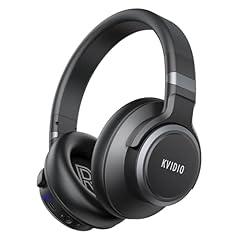
KVIDIO Active Noise Cancelling Bluetooth Headphones
Overview
This product is a closed, over-ear wireless headphone for everyday listening, calls, travel, and desk work. It has physical media controls, a built-in microphone, USB-C charging, a 3.5 mm audio input, and an ANC button that also selects transparency mode. The available manual describes plastic construction, protein-leather ear pads, an adjustable metal headband, Bluetooth pairing, and optional two-device pairing. The manufacturer states up to 70 hours of standard playback, or up to 40 hours with ANC enabled, plus a roughly 2.5-hour full charge and five minutes of charging for four hours of playback. Its stated claim to block up to 95 percent of ambient noise is not backed by an independent attenuation curve or repeatable travel-noise test. A related FCC authorization record supports radio compliance, but it does not verify battery safety, sound quality, or ANC performance.
What works
- The manual documents both Bluetooth listening and a 3.5 mm wired fallback when wireless use is unavailable.
- The manufacturer clearly separates its standard playback claim from its shorter ANC-on playback claim.
- Two-device Bluetooth pairing, ANC switching, and transparency mode are described in the available product manual.
- A manufacturer declaration ties the KVIDIO model to a U.S. FCC-authorized wireless-headphone record.
What does not
- No independent head-and-torso measurements were found to substantiate the stated 95 percent ambient-noise reduction claim.
- No exact-product UL, ETL, CSA, or IEC 62133-2 battery-safety listing was located.
- No maximum-output measurement, volume limiter, exposure monitor, or safe-listening guidance was documented.
- No independent frequency-response, distortion, leakage, or channel-matching measurements were located.
- No replacement battery, ear-pad, headband, repair manual, or U.S. recycling and take-back program was found.
Who is it for
This product suits an adult who wants a basic over-ear headset for long stretches of casual music, podcasts, calls, study, or home-office use. It is particularly relevant for someone who values a stated 40-hour ANC runtime, simple physical controls, a wired backup option, and the ability to pair two Bluetooth devices. It also fits use around dry indoor spaces where the listener can treat ANC as a comfort feature rather than relying on a proven level of travel-noise protection.
Who is it not for
It is not for listeners who need measured proof of aircraft, rail, street, or office noise reduction, or who need predictable sound tuning for critical music work. It is also unsuitable for wet-weather exercise, rain exposure, or jobs around water because the manual says it is not water resistant. Children, people managing hearing exposure, and households needing volume caps or listening-dose monitoring should choose a product with those safeguards. Buyers needing certified battery safety or repairable, replaceable components also need more documentation.
Integrity
The strongest independently checkable safety evidence is for the radio. A manufacturer declaration identifies the KVIDIO version as electrically identical to a wireless headphone covered by an FCC authorization. That supports U.S. radio compliance for the related hardware, but it is not a battery, charger, or whole-product safety certification. The available instructions advise dry cleaning, cool and dry storage, avoiding prolonged full discharge, and avoiding water or excessive moisture. No exact-product UL, ETL, CSA, battery-test summary, or Bluetooth SIG qualification record was located in the reviewed sources. No public U.S. recall result for this product was located during the search, while the marketplace identifies the seller as KVIDIO and provides a 30-day refund or replacement route. The construction is stated to be plastic, with a rechargeable battery, yet no buyer-facing battery-removal instruction, replacement-parts catalog, or U.S. mail-back and recycling program was found. Lithium-ion batteries should not go into household trash or mixed recycling.

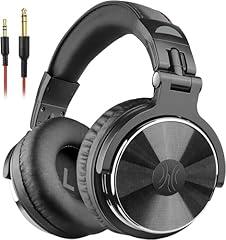
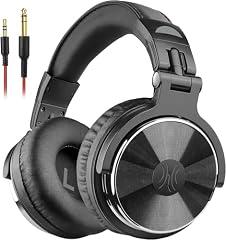
OneOdio Studio Monitor DJ Headphones
Overview
This is a closed, wired over-ear headphone for DJ cueing, home recording, instruments, podcasts, and ordinary listening. It uses 50 mm drivers, has separate 3.5 mm and 6.35 mm connections, and includes a short microphone cable plus a longer coiled cable. The earcups fold and swivel for one-ear monitoring. It is not a wireless or battery-powered product, so there is no charging system, Bluetooth radio, or active noise cancellation. The manufacturer states 32-ohm impedance and 110 dB sensitivity, but its published specifications conflict on frequency range, 20 kHz on the product page and 40 kHz in the supplied manual, and on maximum input power. Independent lab curves for isolation, distortion, channel matching, and maximum output were not found. An independent listening review describes a mild V-shaped balance rather than a demonstrated neutral monitoring response.
What works
- Wired-only construction removes lithium battery, charging, and wireless-radio hazards.
- The detachable, conventional cables can be replaced without replacing the headphone body.
- Separate 3.5 mm and 6.35 mm connections support direct use with many instruments, mixers, and headphone outputs.
- The manufacturer states a two-year warranty and direct customer support.
- The foldable, swiveling earcups are practical for single-ear cueing and storage.
What does not
- There is no active noise cancellation. The sound-isolation claim has no independent attenuation measurement for this exact product.
- No exact-product UL, ETL, CSA, FCC, Bluetooth, or other independently checkable compliance listing was located. FCC and Bluetooth approval are not expected for a wired-only model, but electrical safety certification was also not found.
- The published frequency-range and maximum-input-power specifications are inconsistent across manufacturer materials.
- No volume cap, exposure monitor, parental control, or meaningful safe-listening guidance was found. Its stated 110 dB sensitivity warrants conservative source-volume settings.
- Independent laboratory measurements for frequency response, distortion, leakage, and left-right matching were not found.
Who is it for
This product suits an adult who specifically needs a simple wired over-ear set for a keyboard, guitar interface, mixer, controller, podcast setup, or home computer. The two included cable types and separate 3.5 mm and 6.35 mm connections are useful where adapters are inconvenient. It also fits users who want foldable earcups and one-ear cueing for informal DJ practice. It is most appropriate where passive isolation is enough and the listener can control volume carefully at the source device.
Who is it not for
It is not for commuters, frequent flyers, office users, or anyone who needs measured active noise cancellation, because this product provides passive isolation only. It is also unsuitable for buyers who require independently verified electrical certification, lab-validated sound neutrality, or documented low-distortion monitoring performance. Children, people with hearing sensitivity, and users likely to listen loudly for extended periods should use a product with a usable volume limit or exposure monitoring. Wireless, console-specific, USB, multipoint, and low-latency users need a different design.
Integrity
The main safety positive is architectural. This is a passive wired headphone, not a rechargeable wireless device, so it does not contain a charging circuit or lithium-ion battery that can create battery overheating or disposal concerns. Searches of CPSC recall resources did not identify an exact-product recall or safety warning. OneOdio also publishes a two-year warranty and a customer-service contact path. There are important evidence gaps. No exact-product listing was located in the major independent electrical-safety registers checked. The supplied materials state 110 dB sensitivity, while providing no volume limiter, listening-dose monitor, or clear safe-listening guidance. Keep playback volume conservative, especially when using a powerful mixer or amplifier. Detachable standard cables can reduce waste when a lead fails, but no U.S. take-back program, repair manual, replacement pad catalog, or material-recycling instructions for this product were located.

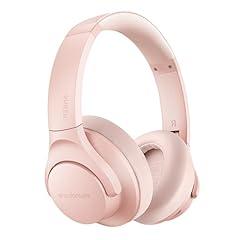
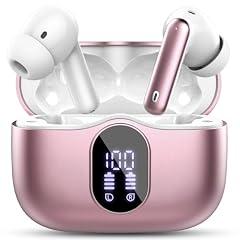
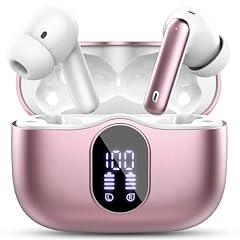
Btootos Bluetooth 5.4 Wireless Earbuds Rose Gold
Overview
The Btootos A90 Pro is a pair of true-wireless, in-ear Bluetooth earbuds with a charging case, touch controls, a USB-C charging port, and interchangeable silicone tips. The exact-product instruction document describes 14.2 mm dynamic drivers, a stated Bluetooth 5.4 connection, 6 to 8 hours of earbud playback, and up to 30 hours including the case. Those are manufacturer-stated specifications, not independently measured results. This product does not claim playback active noise cancellation in the available documentation. It lists passive isolation and ENC for the microphone during calls, so outside sound remains dependent on ear-tip fit. No independent laboratory measurements were located for sound quality, leakage, distortion, isolation, or microphone performance. The available materials also conflict on total playtime, with the brand page stating 36 hours while the exact-product manual states 30 hours.
What works
- The documentation distinguishes call-focused ENC from passive listening isolation, rather than presenting ENC as playback ANC.
- The exact-product manual documents USB-C charging, touch controls, 14.2 mm drivers, and a stated 15 meter wireless range.
- The product documentation includes basic pairing, charging, cleaning, storage, and troubleshooting instructions.
- A manufacturer contact path and a two-year warranty claim are provided in the available product materials.
What does not
- No independent attenuation testing was found, and the product is not documented as having playback ANC for traffic, office, or travel noise.
- No exact-product FCC, Bluetooth SIG, UL, ETL, CSA, or battery-safety listing was located in the checked public registers.
- No volume limit, listening-dose monitor, parental control, or product-specific safe-listening guidance was found.
- Specifications are inconsistent across available materials, including Bluetooth version and 30 versus 36 hours of total playtime.
- No replacement-battery procedure, parts catalog, repair manual, or U.S. take-back program was found.
Who is it for
This product suits an adult who wants compact Bluetooth earbuds for casual music, podcasts, gym use, and ordinary phone calls, and who is comfortable treating the stated battery life, IP7 rating, range, and voice-noise reduction as manufacturer claims. It is also suitable for someone who prefers passive ear-tip isolation over a dedicated playback noise-control mode. The included charging case and touch controls fit short daily sessions where simple phone pairing is more important than advanced app settings or measured audio performance.
Who is it not for
It is not for commuters, frequent flyers, shared-office users, or anyone specifically seeking measured active noise cancellation. The available evidence supports microphone ENC and passive fit isolation, not verified playback noise reduction. It is also unsuitable for children or households that need a built-in volume cap, exposure monitoring, or parental controls. Buyers who require independently verified radio, electrical, or battery certification, proven low-latency gaming support, multipoint operation, repairable batteries, or accessible replacement parts should use a product with those records published before purchase.
Integrity
The main health limitation is the lack of hearing safeguards. No usable volume limit, sound-exposure monitor, or safe-listening instructions were found in the available exact-product documentation. WHO advises keeping volume down, limiting duration, and favoring devices with exposure monitoring or volume limiting. Passive fit may reduce the urge to raise volume in some settings, but its actual isolation was not independently measured. The charging case contains a rechargeable battery, yet no model-specific UL, ETL, CSA, IEC 62133-2, or UN 38.3 documentation was located in the checked public sources. No exact-product CPSC recall or public warning was found in the search conducted September 6, 2026. The manual gives basic care advice, but no battery-removal or U.S. take-back route. At end of life, do not place the earbuds or case in household trash or curbside recycling. EPA directs consumers to separate battery or certified electronics recycling.

Soundcore Q20i Hybrid Noise Cancelling Headphones
Overview
This is a foldable, closed-back over-ear Bluetooth headphone with a 3.5 mm cable option, physical buttons, app EQ, transparency mode, and hybrid active noise cancellation. Soundcore states that its four ANC microphones target steady external sounds, that the 40 mm drivers support wired Hi-Res playback, and that battery life is up to 40 hours with ANC or 60 hours without it. The defining evidence is independent testing. TechGearLab measured average noise cancellation of 25 dB across frequencies and a 49-hour ANC-on battery run. Consumer Reports also found excellent full-range noise reduction, strongest at low frequencies. Independent listening and response testing describes a bass-forward, uneven tuning rather than neutral sound, while the wired connection disables ANC. The product documentation identifies a U.S. importer, a 5 V, 0.75 A charging input, and an FCC ID for its radio.
What works
- Independent testing found meaningful noise reduction, including about 25 dB average cancellation across frequencies.
- Independent testing recorded 49 hours of ANC-on battery life, exceeding the maker's stated 40-hour ANC figure.
- The manual gives specific charging power limits, temperature cautions, liquid-at-port warnings, and battery fire precautions.
- Soundcore states that the app provides a custom EQ, 22 presets, ANC, normal, and transparency modes, plus two-device connection.
- The product has model-specific radio and head-exposure documentation, including an FCC ID and SAR test report.
What does not
- Independent testing found a bass-heavy, uneven sound profile with sharp or inconsistent treble. EQ did not fully correct it in testing.
- Multipoint was not consistently reliable in independent testing, with random second-device disconnects reported by the test lab.
- ANC does not operate through the wired connection, which limits the usefulness of the 3.5 mm cable for travel or wired desks.
- There is safe-listening guidance, but no documented volume cap, exposure-dose monitor, or parental volume control.
- No public model-specific UL, ETL, CSA, or IEC 62133-2 battery safety listing was located. Replacement battery, ear-pad, hinge, and headband parts support is also not clearly documented.
Who is it for
This product suits a budget-conscious commuter, student, or home worker who mainly wants to reduce continuous low-frequency noise from engines, HVAC systems, fans, or general travel rumble. It is also appropriate for someone who wants long tested runtime, a foldable over-ear format, a wired backup option, and occasional switching between a phone and computer. The sound works best for listeners who enjoy prominent bass or are willing to use the app EQ rather than requiring neutral, detailed playback.
Who is it not for
It is not a good fit for people who need dependable speech suppression in shared offices, on transit, or around sudden high-pitched sounds. It is also unsuitable for competitive wireless gaming or critical video work where latency and connection consistency need explicit independent confirmation. People with large ears should take care because independent testers found the ear openings relatively small. Children, people managing hearing exposure, and anyone with sound sensitivity should favor headphones with a usable maximum-volume limit or exposure monitoring.
Integrity
The manual includes practical battery precautions. It specifies a 5 V, 0.75 A input, directs users to keep liquid, sweat, and water away from the charging port, and warns against disassembly, crushing, puncturing, shorting, fire, and temperatures above 60 C. It also advises against extended listening at high volume and says not to use the headphones while driving. Those are useful baseline safeguards, but they are guidance rather than an active listening-dose control. The radio documentation identifies a U.S. responsible importer and model-specific FCC and SAR materials. No recall specific to these headphones was located. Anker and Soundcore did conduct a December 2024 CPSC recall for certain A3102 and A3302 speakers after overheating incidents, which did not include this product. Soundcore states that this headphone is TCO Certified, but an active certification entry could not be independently confirmed in TCO's current public finder. The manual instructs separate e-waste and battery collection, while Anker provides a limited U.S. recycling route, including a District of Columbia mail-back program.
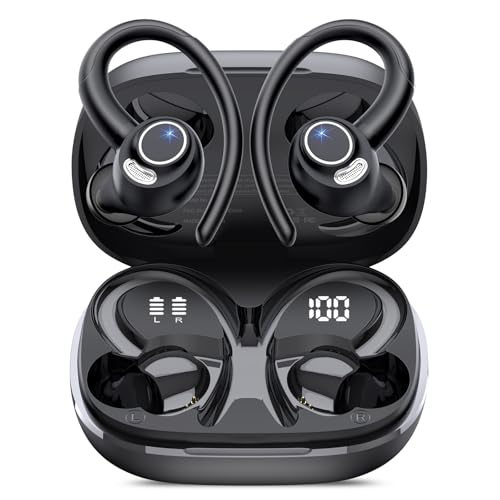
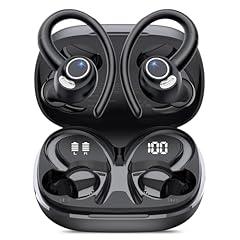
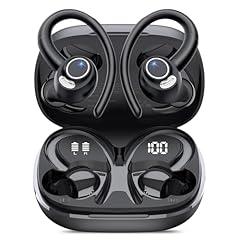
Jesebang Bluetooth 5.4 Sport Earbuds
Overview
This product is a pair of true wireless, in-ear sport earbuds with flexible over-ear hooks, touch controls, a USB-C charging case, and three silicone eartip sizes. It is intended for phone calls, music, exercise, and running. Publicly available product materials state up to eight hours per earbud and up to 48 hours including the case, plus a 14.2 mm dynamic driver and IP7 water-resistance claim. The noise-reduction language needs careful reading. The available manual describes environmental noise cancellation for its microphones, which is meant to improve outgoing calls. No independent ANC-on versus ANC-off isolation measurements were located, and the materials do not establish playback active noise cancellation. Public product materials also conflict on Bluetooth version, with the brand page naming 5.3 while another manual names 5.4.
What works
- The earhook format and included small, medium, and large eartips provide manufacturer-stated options for a more stable exercise fit.
- The available manual documents touch controls, automatic pairing, USB-C case charging, and basic troubleshooting steps.
- A two-year warranty is stated in the product materials.
- Public searches did not locate an exact-product CPSC recall or safety warning.
What does not
- No independent measurements were located for active noise reduction, passive isolation, sound balance, distortion, call quality, or maximum output.
- The noise-cancelling wording is easy to overread. Available documentation describes ENC for calls, not demonstrated playback ANC.
- Public materials conflict on whether the wireless version is Bluetooth 5.3 or 5.4, and no exact-product Bluetooth qualification listing was located.
- No exact-product FCC, UL, ETL, CSA, battery-test, or charging-safety certification record was located in the checked public registers.
- No volume limiter, sound-dose monitor, parental control, repair parts catalog, battery-removal instructions, or U.S. take-back program was located.
Who is it for
This product suits an adult who wants low-complexity wireless earbuds for gym sessions, walking, or casual calls and prefers an earhook to help retain each earbud during movement. The stated 48-hour total runtime may suit someone who recharges a case periodically rather than every day. It also fits users who only need ordinary Bluetooth phone and tablet use, can test eartip sizes for seal and comfort, and understand that the advertised noise control is documented as call-focused ENC rather than verified listening ANC.
Who is it not for
It is not suited to commuters, frequent flyers, or office users who need proven playback noise cancellation, because no independent isolation or ANC testing was located. It is also a poor fit for parents seeking a child-safe listening product, or anyone who needs a volume cap, exposure monitoring, and parental controls. Buyers needing documented radio compliance, certified charging safety, multipoint support, low-latency gaming performance, replacement batteries, or a clearly established recycling route need more complete model-specific documentation.
Integrity
The available materials identify silicone eartips, a plastic and silicone construction, and a rechargeable case, but they do not provide independent material, battery-cell, or charging-safety test documentation. No exact-product listing was located in the checked public Bluetooth qualification, UL, ETL, CSA, or FCC records. Public CPSC searches did not identify an exact-product recall or warning, although an absence of a public record is not proof of safety performance. The product does not document hearing-health controls such as a volume limit, listening-dose monitor, or safe-listening guidance. Keeping volume moderate and taking breaks remains important. The available materials also do not provide a U.S. mail-back program, battery-removal instructions, or replacement-parts pathway. When it reaches end of life, the rechargeable earbuds and case should not go in household trash or curbside recycling. Use a battery or electronics collection program that accepts lithium-ion devices.

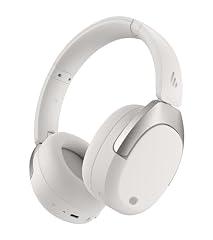
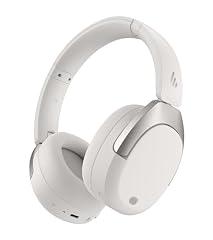
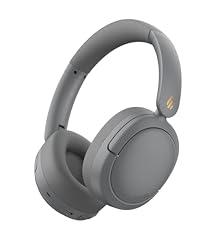
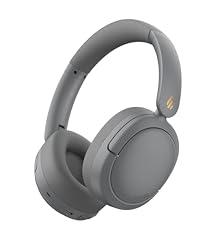
Edifier W830NB Wireless Noise Cancelling Headphones
Overview
This product is a foldable wireless over-ear headphone for music, calls, commuting, and desk use. It weighs about 267 g, uses USB-C for charging and wired audio, and has physical controls plus the Edifier ConneX app. Its manufacturer specifies 40 mm dynamic drivers, Bluetooth 5.4, LDAC support, multipoint connection, and a 5V, 1A charging input. The longest-playback figure is manufacturer-stated, up to 94 hours with noise cancellation off and 54 hours with it on under Edifier's stated test conditions. Independent testing measured 81 hours in standard mode at high volume with AAC, and up to 51 hours with maximum cancellation. Independent reviewers found the cancellation useful chiefly for low-frequency noise, while voices remained more audible. The product's radio has an exact FCC authorization, but no model-specific U.S. UL, ETL, or CSA electrical safety listing was located.
What works
- Independent testing found 81 hours of playback in standard mode at high volume, reducing charging frequency.
- Independent testing found stable Bluetooth through rooms and floors, with working two-device multipoint connection.
- USB-C supports both charging and wired listening, according to Edifier and independent testing.
- The exact wireless headphone model has an FCC equipment authorization for its 2.4 GHz radio transmission.
What does not
- There are no published independent HATS attenuation curves, so the actual full-spectrum noise reduction cannot be quantified.
- The up to 45 dB cancellation depth is a manufacturer laboratory claim, not an independently verified travel or office result.
- The supplied catalog record calls the driver planar magnetic, while Edifier's own specification identifies a 40 mm dynamic driver.
- No usable volume cap, exposure monitor, or model-specific safe-listening control was documented.
- No model-specific U.S. battery safety listing, official repair guide, battery replacement path, or U.S. take-back program was located.
Who is it for
This product suits an adult listener who wants a full-size wireless headphone for long workweeks, home listening, study, or travel, and who can use over-ear cups rather than compact earbuds. It is particularly practical for someone who moves between a phone and computer, because multipoint worked in independent testing. It also fits listeners who sometimes need USB-C wired audio. Its measured runtime supports people who value fewer charging sessions, while the cancellation is more suitable for steady engine, fan, or air-conditioning noise than voice-heavy spaces.
Who is it not for
It is not well suited to people who need independently quantified noise isolation for frequent flights, loud rail travel, or speech-heavy offices. The available evidence does not establish repeatable attenuation across the spectrum, and independent reviews found voices less effectively reduced. It is also a poor fit for households seeking a child-oriented volume limit, parental sound controls, or listening-dose monitoring. People who require certified battery safety documentation, user-replaceable batteries, official repair parts, or a confirmed U.S. recycling route should choose a product with those records published before purchase.
Integrity
The exact wireless model is covered by an FCC equipment authorization for 2.4 GHz Bluetooth transmission, which is meaningful radio compliance evidence for the U.S. market. Edifier specifies USB-C charging at 5V, 1A and provides a one-year U.S. and Canada warranty with a reachable support email and phone line. Searches of the CPSC recall database and SaferProducts public search did not identify an exact-product recall or public incident report. That absence does not prove zero risk. Battery and electrical evidence remains incomplete. No exact-model UL, ETL, CSA, IEC 62133-2, or UN 38.3 documentation was located. The product documentation also did not establish a volume limiter or sound-exposure monitor. Edifier provides support and warranty service, but no official parts catalog, battery-removal instructions, or confirmed U.S. mail-back recycling program was found. Third-party replacement ear pads are available, which may help extend use, but they are not an official repair system.

Edifier W800BT Pro Hybrid Noise Cancelling Headphones
Overview
This product is a foldable, wireless over-ear headset with active noise cancellation, a USB-C port, physical controls, an app, and a built-in 400 mAh lithium-ion battery. It can also play audio through USB-C while charging, although its Bluetooth functions are unavailable in that mode. The manual identifies a 5 V, 1 A charging input and dual-device Bluetooth connection. Its radio authorization is independently checkable through the FCC record for the exact hardware. Edifier's EU declaration also identifies this model and lists safety, radio, electromagnetic compatibility, and restricted-substance standards, but that declaration is manufacturer-issued rather than a U.S. safety certification. Independent hands-on reviews found useful reduction of low-frequency noise and generally clear sound, but no repeatable laboratory ANC curves, distortion data, or maximum-output measurements were located. Claimed 45-hour battery life is manufacturer-stated, though one reviewer found the stated battery figures broadly realistic in use.
What works
- The exact Bluetooth radio has an FCC equipment authorization, with the product manual also carrying the matching FCC compliance statement.
- The manual documents multipoint use with two Bluetooth devices, rather than leaving that compatibility claim undefined.
- Independent hands-on testing found ANC effective mainly on low-frequency rumble, which is relevant for engines, HVAC noise, and similar steady sounds.
- Independent reviewers described the sound as generally balanced and clear, and one reported battery life broadly aligned with the stated runtime.
What does not
- No independent headphone-lab ANC attenuation curves were found, so the advertised maximum noise-reduction figure is not independently substantiated.
- No usable volume cap, sound-dose monitor, parental control, or exact-model safe-listening guidance was located.
- The product uses a largely plastic build, and independent reviewers noted warm ear cups and no included carrying case.
- No exact-model replacement battery, ear-pad, headband, or repair-parts catalog was located. A U.S. mail-back or take-back route was not identified.
Who is it for
This product suits an adult who wants a compact over-ear headset for routine commuting, office work, calls, and travel, and who values physical controls, USB-C charging, and switching between two Bluetooth devices. It is most appropriate for people seeking some reduction of steady low-frequency noise, such as ventilation or vehicle rumble, without treating the product as a hearing-protection device. It also fits listeners who are comfortable adjusting EQ and ANC settings through the companion app and who do not need a supplied travel case.
Who is it not for
It is not designed for people who need certified hearing protection, a child-safe volume ceiling, or app-based sound-dose tracking. It is also a poor fit for buyers who require independently measured ANC performance before relying on it for frequent flights, very noisy offices, or street use. People who need a 3.5 mm analog connection, weather resistance, console-specific compatibility, replaceable batteries, readily available repair parts, or a confirmed U.S. recycling return path should choose a product with those provisions documented before purchase.
Integrity
The product has an independently checkable FCC authorization for its Bluetooth transmitter, and the exact-model manual identifies a 5 V, 1 A USB-C charging input, a dry-port warning, and a built-in lithium-ion battery. Edifier's manufacturer-issued EU declaration lists EN 62368-1 electrical-safety, radio, electromagnetic compatibility, and RoHS standards for this model. Those are useful compliance signals, but they do not substitute for a U.S. UL or ETL listing or publicly supplied battery test documentation. The manual does not provide a volume limiter, listening-dose feature, or clear safe-listening warning. It also does not explain battery removal or provide exact-model recycling instructions. Edifier offers a one-year U.S. limited warranty for headphones and a reachable North American support channel. No exact-model U.S. recall or regulator safety warning was identified in the checked sources, but that is not evidence of long-term battery or hinge durability.