
10 Best Bottle Washers
 Lauren Wilson
Please note that we participate in affiliate marketing programs. When you purchase through links on our site, we may earn a commission. As an Amazon Associate we earn from qualifying purchases. This comes at no additional cost to you and helps support the resources required to provide valuable content.Advertising Disclosure
Top-rated Bottle Washer Comparison
1

2
3
4
5
6
7
8
9
10
+
Bottle washers: what matters
A bottle washer is intended to automate some or all of the sequence for infant-feeding equipment: washing, rinsing, steam treatment or sanitizing, drying, and sometimes enclosed storage. The important distinction is whether a product actually washes and rinses. Some products in this category are steam sterilizers and dryers only, so milk and formula soil still must be removed by hand before loading. Even an all-in-one model may require pre-rinsing, disassembly, hand-brushing of narrow passages, or a second drying cycle.
A useful design has a clear rack map for bottles, nipples, valves, membranes, pump flanges, and other small parts. Bottles generally need to be oriented so spray reaches the inside, while small components need separation and access to water and air. Capacity figures should be read cautiously: a claim such as six, eight, or ten bottles may assume a particular bottle size and may leave less room for pump parts. Conflicting capacity statements in the supplied reviews show why the model-specific manual matters more than a large promotional number.
Cleaning performance should be supported by quantitative testing on realistic milk or formula soil, with loaded bottles and pump parts placed as directed. Spray-jet counts, “360-degree” demonstrations, short cycle times, and claims that a product replaces hand washing do not establish soil removal or detergent rinsing. Look for an ISO/IEC 17025-accredited report for the exact product, with test conditions that identify the load, rack positions, cycle, and detergent. NSF/ANSI 184 requirements may also be relevant where a residential dishwasher certification is claimed.
Steam or heat is not automatically verified sanitization. A stated temperature such as 100°C or 212°F describes heating, not the microbial reduction achieved throughout a loaded chamber. A substantiated germ-kill, sterilization, or “hospital-grade” claim should identify the exact cycle, exposure time, load, item placement, organisms, and test result. Checkable evidence may include an NSF listing, an accredited laboratory report, or appropriate EPA pesticide-device documentation where a pesticidal claim is made. A TÜV or other laboratory report number is not enough if the underlying exact-product report and issuer traceability cannot be reviewed.
Drying and maintenance are equally important. Residual water in nipples, valves, tanks, filters, spray arms, or inaccessible surfaces can undermine storage claims. Favor instructions that specify how to drain parts, clean tanks and water paths, descale, clean filters and jets, and replace filters or other parts. Separate clean- and waste-water tanks or a drain hose may reduce standing wastewater, but they do not eliminate cleaning duties.
Also check wetted-material disclosure, food-contact documentation, detergent ingredients, residue testing, and compatibility instructions from bottle and pump manufacturers. Electrical and steam safety should be supported by an exact-model listing from a recognized laboratory such as UL or Intertek ETL, not merely FCC authorization or a generic safety statement. Water and electricity figures should be measured for a usable wash, rinse, steam, and dry load; comparisons with hand washing or dishwashers are not meaningful without a stated method.
Across the supplied reviews, the recurring limitations are substantial: no product had publicly traceable proof for every major cleaning, rinsing, sanitization, drying, and electrical-safety claim. Many require single-use detergent tablets, filters, or descaling supplies. Several do not disclose wetted polymers or detergent ingredients. Products are not appropriate as a substitute for clinician guidance for premature, medically vulnerable, or immunocompromised infants when independently documented sanitization is needed. Users must follow component manufacturers’ heat instructions, inspect parts for residue, moisture, cracking, or fragments, and stop using a product if contamination or internal deterioration is observed.
Integrity
These topics distinguish a convenient automated workflow from evidence that the workflow is suitable for repeated use on milk-contact equipment. Scores reflect the supplied reviews and verification work; they do not mean that any product guarantees a health outcome.
HHealth & Safety
Infant feeding health protection
This measures whether the complete wash, rinse, sanitize, dry, and storage routine is realistic for bottles and pump parts. High-scoring products provide clearer loading, disassembly, drying, and maintenance instructions; lower-scoring products leave more steps or compatibility limits unresolved. Among the supplied products, scores range from 52 to 76, with stronger results tied to defined cycles and practical handling guidance rather than steam claims alone.
Cleaning and rinse performance
This asks whether milk or formula soil is removed from bottle interiors, nipples, valves, and pump parts and whether detergent is rinsed away. A high score requires quantitative testing on realistic loaded items, not a jet count or demonstration. Supplied scores range from 58 to 75, but no product had public exact-model evidence covering every claimed location and load.
Verified sanitization efficacy
This measures demonstrated microbial reduction at the actual temperature, time, load, and placement sold. A high score needs an exact-product accredited report, relevant certification, or properly supported regulatory claim; heating to 212°F is not enough. Scores cluster between 62 and 71, showing that the products’ steam and germ-reduction language generally remained manufacturer-stated or incompletely traceable.
Food-contact and detergent safety
This evaluates whether wetted materials are identified and suitable for repeated hot food contact and whether required detergent is shown not to leave concerning residue on milk-contact items. Higher scores reflect more material or consumable information; lower scores reflect generic “BPA-free” or plastic descriptions and missing ingredient data. Supplied scores range from 50 to 72, with repeated gaps in residue testing and full detergent disclosure.
Drying, recontamination, and maintenance control
This measures whether items become fully dry and whether tanks, filters, scale, spray arms, and inaccessible surfaces are kept from recontaminating them. High-scoring products give feasible cleaning schedules, filter intervals, drainage guidance, and access to removable parts. Scores range from 62 to 75. Enclosed storage or a HEPA label alone does not prove that complex parts or the appliance interior stay dry and clean.
Thermal, electrical, and burn safety
This covers protection from shock, leaks, overheating, steam, and hot surfaces during normal use and foreseeable misuse. A high score requires exact-model certification from a recognized safety laboratory plus clear warnings and controls. Supplied scores range from 64 to 74. The repeated absence of public UL or ETL records means that stated voltage, FCC authorization, or a steam temperature should not be treated as complete appliance-safety proof.
EEcology
Water and energy per usable load
This measures metered water and electricity for the claimed wash, rinse, steam, and dry load, including repeat cycles. High scores require transparent measurements rather than unsupported claims that the product saves water compared with hand washing. Scores range from 52 to 72. A few products state figures such as 0.8 gallon or 2.5 liters per cycle, but the supplied reviews generally lacked independent metering.
Consumables, repairability, and end of life
This covers detergent tablets, filters, descaler, packaging, replacement parts, repair support, warranty, and disposal. A high score minimizes single-use inputs and makes maintenance and repair practical. Scores range from 62 to 73. Products with available replacement filters or identifiable support scored better, while recurring proprietary-style tablets, undocumented parts, and unclear recycling routes remained common burdens.
EEvidence
Honest, properly limited claims
This measures whether claims about sterilization, germ reduction, HEPA filtration, clinical performance, capacity, speed, and resource savings match the available evidence and state meaningful limits. Higher scores reflect clearer qualification and fewer unsupported comparisons. Scores range from 50 to 73. The supplied reviews repeatedly found inflated or conflicting figures, including inconsistent capacity and germ-reduction percentages.
Independently verified, traceable proof
This measures whether key safety and performance claims have current, publicly checkable exact-product certificates or accredited reports. High scores require a certificate number, laboratory scope, model identity, and manufacturer match—not an unspecified logo or report reference. Scores range from 68 to 72, but even the better-scoring products often lacked a publicly reviewable sanitization, rinse, or electrical-safety record.
Regulatory and postmarket accountability
This evaluates whether the manufacturer and seller are identifiable, support contacts and model labels exist, recalls can be tracked, and buyers have a workable remedy path. Higher scores reflect clearer warranties, registration, support, and fewer unresolved official actions. Supplied scores range from 58 to 76. Public incident reports and alleged plastic deterioration on some products make inspection and recall checking especially important.
Full reviews

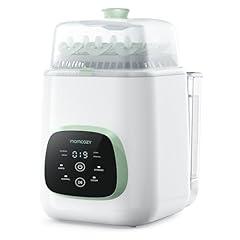
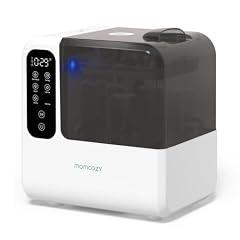
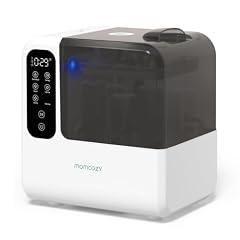
Momcozy KleanPal Pro Baby Bottle Washer
Overview
This is a countertop washer, steam sterilizer, hot-air dryer and storage unit for up to four bottles plus smaller feeding or pump components. It measures about 13.4 by 9.8 by 16.1 inches. The manufacturer directs users to load items in a specific rack layout, add a dedicated detergent tablet or measured powder, fill its separate water tank, and route a drain hose to a sink or container. Momcozy states that bottle-contact shelves and clips are food-grade, BPA-free polypropylene, and that storage can run for up to 72 hours through filtered ventilation. Those are manufacturer statements, not independently substantiated findings. No public exact-product NSF sanitation listing, accredited cleaning or detergent-residue report, or recognized U.S. electrical-safety listing was located. More importantly, three public CPSC incident reports describe internal plastic components breaking down, with two reports describing plastic debris on bottles. These reports are consumer allegations, not agency findings, but they are directly relevant to a product used for infant feeding items.
What works
- The instructions provide a specific rack map for bottles, nipples, caps, pump parts and other small components, which can help users avoid blocked spray paths.
- The separate water tank and direct drain hose avoid a wastewater reservoir that would otherwise need emptying and cleaning, according to the manufacturer.
- Shelves, spray arms and the water tank are removable for cleaning, and the manufacturer gives component-level maintenance directions.
- The manufacturer specifies a minimum water fill, dedicated detergent use and a 10-minute wait after drying because parts may be hot.
What does not
- Three public CPSC incident reports describe brittle or disintegrating internal plastic parts, blocked nozzles, and plastic debris found on bottles. The reports list no injuries, but the contamination concern is material for infant feeding use.
- No public, exact-product accredited test report was located for removal of milk or formula soil, detergent rinse performance, post-cycle drying, or the claimed germ reduction.
- The manufacturer identifies bottle-contact parts as polypropylene, but public food-contact compliance documentation, migration testing and a full detergent ingredient disclosure or safety data sheet were not located.
- Routine use creates consumable demand. The manufacturer calls for one detergent tablet per wash and recommends descaling every 20 cycles.
- No publicly traceable U.S. electrical-safety certification or exact-model sanitation certificate was located.
Who is it for
This product fits a household that routinely cleans several compatible bottles or pump components at once, has dedicated counter space near a sink, and can follow its loading, water-fill, drainage and maintenance instructions closely. It is most practical for caregivers who value a contained wash, steam and dry workflow and are prepared to inspect racks, spray arms and nozzles before each run. Because the unit needs specialty detergent and periodic descaling, it also suits households willing to manage those recurring supplies and maintenance tasks.
Who is it not for
It is not well suited to households feeding a premature, medically fragile or immunocompromised infant when they require publicly traceable validation of sanitation performance and residue control. It is also a poor fit for caregivers unable to inspect the internal plastic racks and jets frequently, or for kitchens without a stable counter location, nearby drainage and room for the drain hose. Anyone seeing cracking, brittleness, flakes, debris, blocked spray holes or incomplete cleaning should stop treating the output as clean feeding equipment and follow the manufacturer and relevant safety-reporting channels.
Integrity
Momcozy says the bottle-contact shelves and clips are BPA-free polypropylene and recommends purified or distilled water to reduce scale. It also specifies removable racks, spray arms and a water tank for cleaning. These are useful maintenance provisions, but the available material statement is manufacturer-issued. Public documentation verifying repeated hot food-contact performance, chemical migration, detergent residues or the stated H13 filter performance was not located. The major safety signal is postmarket reporting. Public CPSC reports published between December 2025 and April 2026 describe internal plastic parts becoming brittle or disintegrating during ordinary use, including reports of debris on bottles and no reported injuries. Those reports do not establish causation or an agency recall finding, but they warrant careful inspection. Ecologically, each wash uses a detergent tablet and the manufacturer recommends citric-acid descaling every 20 cycles. No independent water or electricity measurement, repair program, take-back program or broad replacement-parts catalog was located.

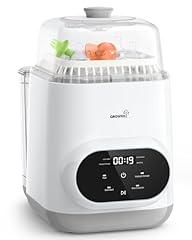
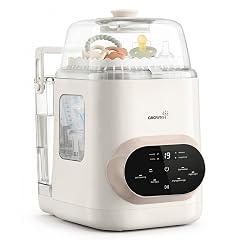
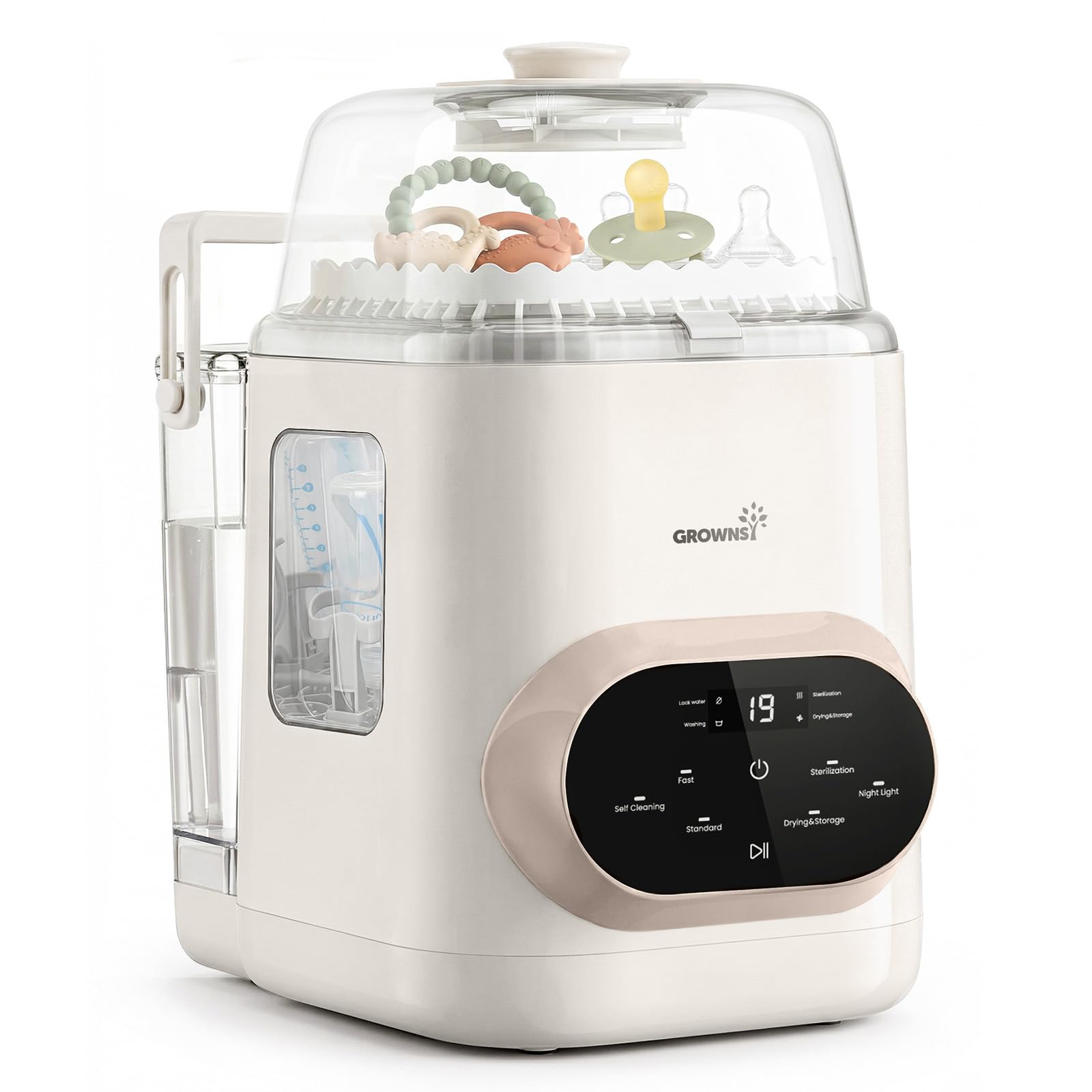
GROWNSY Bottle Washer Pro
Overview
This countertop product is an automatic washer, steam sanitizer, dryer, and storage unit for infant feeding items. GROWNSY states that it holds up to four bottles plus accessories, uses 26 spray jets, offers nine modes including a 19-minute quick wash, and runs a 212°F steam cycle followed by hot-air drying. A drain hose sends wastewater to a sink, and the box includes 30 detergent tablets. The product is intended for disassembled bottles, nipples, pump parts, pacifiers, and similar washable items. Its full wash, steam, dry, and enclosed-storage workflow is consistent with the general hygiene sequence recommended for feeding equipment. However, the central performance claims, including milk-soil removal, detergent rinsing, 99.99% germ reduction, HEPA filtration, and 72-hour sterile storage, were manufacturer-stated. No publicly traceable exact-product accredited laboratory report, NSF listing, or recognized electrical-safety listing was located in the verification search.
What works
- The automatic wash, steam, heated-dry, and storage sequence can reduce handling steps when items are correctly loaded and maintained.
- Manufacturer-stated capacity of four bottles plus accessories can suit a small feeding-item batch.
- The manufacturer provides a drain hose and says the unit uses a separate water tank, which avoids keeping wash water in the chamber.
- The manufacturer states that the unit reaches 212°F steam and uses heated drying, both relevant mechanisms for a wash-and-dry routine.
What does not
- No public exact-product laboratory report was located to verify removal of milk soil, detergent rinse performance, or the claimed 99.99% germ reduction at all rack positions.
- The product describes its wetted composition only as plastic. It does not publicly identify food-contact resin types, nor was a detergent ingredient list, safety data sheet, or residue test located.
- No publicly traceable NSF, UL, or ETL record for this exact product was located during the verification search.
- The 72-hour sterile-storage and HEPA particle-removal claims are manufacturer-stated, with no public filter specification, replacement interval, or post-cycle microbiological evidence located.
- It requires proprietary-style detergent tablets and a filter, but public parts, repair, descaling, and disposal information is limited.
Who is it for
This product suits a household that regularly accumulates several bottles, nipples, or washable pump components and wants a countertop workflow that combines washing and drying. It is most practical where a sink is close enough for the drain hose, there is space for a roughly 13-pound appliance, and the caregiver can follow the loading, tablet, water, cleaning, and descaling instructions. It can also suit users who value drying items before protected storage rather than leaving them on an open rack.
Who is it not for
It is not a strong fit for households that need independently documented sanitization performance for a premature infant, an infant younger than two months, or an infant with a weakened immune system. Those situations require especially careful adherence to pediatric and CDC guidance, and this product's key microbial and rinse claims lack public exact-model validation. It also does not suit buyers seeking disclosed food-contact materials, full detergent ingredients, proven low resource use, readily documented replacement parts, or independently confirmed electrical certification.
Integrity
CDC guidance supports cleaning feeding items after use, sanitizing when appropriate, drying them fully, and storing them in a clean protected place. This product's wash, steam, heated-dry, and enclosed-storage format is aligned with that sequence in principle. The manufacturer states 212°F steam, hot-air drying, and a 72-hour filtered storage mode, but public independent validation of its germ-reduction, drying, and storage claims was not located. The product is described only as plastic, without public identification of the specific wetted food-contact materials. The supplied detergent tablets are required for the stated wash process, yet a full ingredient disclosure, safety data sheet, and residue testing were not found. GROWNSY claims an 86% water reduction versus hand washing, but no exact-cycle metered water or electricity data were located. No U.S. recall or official warning specific to this bottle washer was located in the review.

Momcozy D8 Bottle Washer Sterilizer Dryer
Overview
This countertop bottle washer is a 120 V, 560 W appliance intended to wash, steam sterilize, dry, and store up to eight bottles, plus compatible heat-resistant bottle and pump accessories. It uses a removable 96 oz water tank and drain hose, with specified rapid and normal wash modes. The manufacturer says the normal wash reaches 68°C, while its steam cycle reaches 100°C for 10 minutes. Its rack layout directs water columns into inverted bottles and provides holders for nipples and some pump accessories. The manufacturer also specifies a 72-hour storage mode and an H13 HEPA air filter. These are manufacturer statements, not independently traceable test results. I found no public exact-product NSF sanitation listing, accredited laboratory cleaning or residue report, or recognized electrical-safety certificate record.
What works
- The loading instructions specifically place bottles over spray columns, which is a practical approach for reaching bottle interiors.
- The specified steam cycle is 100°C for 10 minutes, a concrete operating claim rather than an unspecified heat setting.
- Racks, spray arms, the central water column, and the chamber filter can be removed for manual cleaning.
- The instructions require detergent, specify a drainage setup, and warn users to wait about 10 minutes after drying before handling hot contents.
What does not
- No public, exact-product accredited test report was found for milk-soil removal, detergent rinse performance, drying microbiology, or the claimed sterilization result.
- The materials are described only broadly as plastic, glass, and silicone compatibility. Public food-contact material specifications for wetted appliance components were not located.
- The unit requires proprietary-format detergent and descaling tablets, plus an air filter. Public ingredient, safety-data, filter-life, and replacement-part documentation was not located.
- The claimed 72-hour fresh-air storage and H13 HEPA filtration are not supported by a public filtration or post-cycle recontamination test.
- No publicly traceable UL, ETL, or NSF listing for this exact product was located, although the instructions include heat and burn precautions.
Who is it for
This product suits a household washing several compatible bottles or washable, heat-resistant pump parts each day and willing to follow a detailed loading, detergent, drainage, and maintenance routine. It is particularly suited to users with enough counter clearance and a nearby grounded outlet and sink. Its eight-bottle layout may reduce handling steps for batch cleaning. The buyer should be comfortable treating the sterilization, filtration, and storage claims as manufacturer-stated operating features, rather than independently validated performance guarantees.
Who is it not for
It is not well suited to households needing independently documented sanitation performance, verified detergent-residue testing, or a publicly traceable electrical-safety certification for this exact product. Families caring for a premature, medically fragile, or immunocompromised infant should discuss their feeding-item cleaning process with a clinician and follow the bottle and pump manufacturers' instructions. It also does not suit users who cannot routinely clean the inlet, filter, racks, spray arms, and chamber, or who prefer an appliance without recurring tablets, descaler, and filter waste.
Integrity
The instructions align with several core hygiene practices. They require removing residual milk, using detergent, loading bottles so internal spray columns reach them, and allowing hot contents to cool before handling. CDC guidance emphasizes thorough cleaning, sanitizing when appropriate, complete drying, and protected storage for feeding and pump parts. The removable internal components and monthly water-inlet cleaning instruction are useful maintenance provisions. Important evidence limits remain. The manufacturer specifies a 100°C steam cycle but no public independent validation was found for microbial reduction at the sold load layout. It also claims H13 HEPA filtration and 72-hour storage without a public performance report. The appliance uses 560 W power and a 2,850 mL tank, but no measured water or electricity per completed load was found. Detergent tablets, descaling tablets, and a replaceable air filter create recurring material use. No matching CPSC recall or official U.S. safety warning was identified in the reviewed public records.

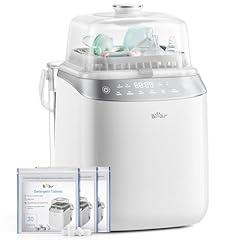
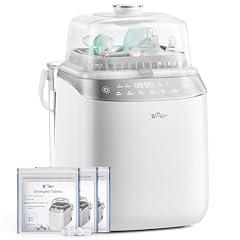
Bear Bottle Washer Pro
Overview
This countertop bottle washer is a 13.86-pound appliance measuring 14.8 by 10.79 by 16.3 inches. It is designed to wash, steam-sanitize, hot-air dry, and store disassembled bottles, pump parts, nipples, and small accessories. The manufacturer states that its two-tier rack holds up to four bottles, that a 99-minute automatic program combines washing, steam, and drying, and that 90 detergent tablets are included. The manufacturer also claims 212°F steam, 26 spray jets, HEPA-filtered storage, and 72-hour sterile storage. Those are manufacturer statements, not publicly traceable independent performance results. No exact-product NSF sanitation listing, accredited laboratory report, or publicly verifiable UL or ETL electrical-safety listing was located in this review.
What works
- The stated automatic program combines washing, steam treatment, and hot-air drying in one 99-minute cycle.
- The two-tier layout is intended to keep bottles separate from smaller feeding and pump components.
- The manufacturer provides loading, draining, descaling, water-tank, and filter-maintenance directions.
- A 90-tablet starter supply is included, which can reduce immediate need to source the required detergent.
What does not
- No public exact-product laboratory report was located to verify removal of milk soil, detergent rinse-off, drying performance, or the stated 99.99% germ-reduction claim.
- The materials are described only as BPA-free. The wetted-material specification, detergent ingredient list, safety data sheet, and residue testing were not publicly located.
- The 72-hour sterile-storage and HEPA claims lack a publicly traceable filter specification and independent post-cycle contamination test.
- No publicly verifiable exact-product UL, ETL, or comparable electrical-safety listing was located.
Who is it for
This product suits a household that regularly accumulates several bottles and removable pump components, has dedicated counter space near a sink or drain container, and accepts a roughly 99-minute automated cycle. It is most practical for caregivers seeking a repeatable loading, washing, steam, and drying routine rather than hand-scrubbing multiple small parts. Use remains conditional on fully disassembling items, following each bottle and pump maker's heat-care instructions, and maintaining the tank, drain path, racks, and filter as directed.
Who is it not for
It is not well suited to households with a premature, medically fragile, or immunocompromised infant that require independently documented sanitization performance for their exact loading pattern. It also does not suit users needing verified detergent-residue data, disclosed detergent ingredients, or a traceable electrical-safety certification before use. Avoid relying on it for components that the bottle or pump manufacturer says must not be steam-treated, exposed to high heat, or machine-washed. Its size and need for a drain route also make it less suitable for very limited counters.
Integrity
Steam can be an appropriate sanitizing method for infant feeding items when the items are first cleaned, are compatible with steaming, and are dried thoroughly. CDC guidance also emphasizes taking bottles and pump parts apart, rinsing and cleaning them after use, and storing them only once fully dry. This product's wash, steam, and hot-air sequence is aligned with that general workflow, but its claimed microbial reduction and storage protection were not independently substantiated in public records located for this exact product. The manufacturer describes BPA-free construction, but does not publicly provide a detailed wetted-material list, detergent ingredients, safety data sheet, or residue test. It supplies detergent tablets and calls for periodic HEPA-filter replacement and descaling, creating ongoing consumable and maintenance needs. No metered water or electricity use was found. No Bear-specific CPSC recall or public safety action was located in the searched U.S. records as of August 16, 2026.

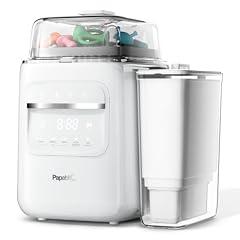
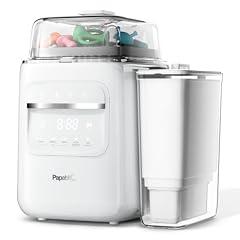
Papablic SafeguardPlus Baby Bottle Washer
Overview
This countertop bottle washer is a mains-powered unit for washing, heat-treating, drying and storing bottles, pump parts and other feeding accessories. Papablic states that it holds up to eight bottle sets or two full pump sets, uses a replaceable water filter, and offers a quick wash of about 12 minutes. The product is intended to connect near a sink for drainage and uses detergent tablets for more thorough removal of milk and formula fats. Its defining feature is a built-in filter that Papablic says reduces lead, PFAS and minerals before washing. The brand also claims 99.99% germ reduction through steam and high heat, plus storage for up to 72 hours. Those are manufacturer claims. I did not find a public exact-product accredited cleaning report, sanitization certificate, water-filter test report, or recognized electrical-safety listing that would independently verify the stated performance.
What works
- Papablic gives concrete capacity guidance of up to eight bottle sets or two pump sets per load, which can reduce handling between washes.
- The manufacturer identifies PP, Tritan plastic, stainless steel and silicone as the main materials, and states that bottle-contact parts are free of BPS, BPF, phthalates and PVC.
- The product page gives a filter-replacement interval of 30 wash cycles and says the unit provides an on-screen reminder.
- Manufacturer instructions describe separate quick, standard and heavy cycles, plus washing, high-heat treatment and drying in one appliance.
What does not
- No publicly traceable ISO/IEC 17025 cleaning or rinse-residue report was found for this exact product and its claimed loads.
- The 99.99% germ-reduction and water-contaminant claims are not accompanied by a public exact-product laboratory report, certificate number, test method, load map or placement limits.
- No exact-product UL or ETL listing was located in the issuing bodies' public registers, so electrical, steam and burn protection cannot be independently confirmed.
- The product requires filter replacement about every 30 cycles, and the brand recommends detergent tablets for routine thorough cleaning. Public ingredient, residue and waste documentation was not located.
- Papablic recommends cleaning the tanks and descaling periodically, but the public product page does not provide a detailed maintenance schedule for all wet internal surfaces.
Who is it for
This suits a household that regularly accumulates a large batch of dishwasher-safe bottles, nipples, pump parts and accessories, has clear counter space near a sink, and is prepared to follow the appliance, bottle and pump manufacturers' care instructions. It is particularly practical for caregivers who value a scheduled drying and protected-storage routine after every use. It also suits users willing to budget for replacement filters and detergent tablets, rather than relying on water-only cycles for milk or formula soil.
Who is it not for
It is not suited to households that need independently documented sanitization, detergent-residue or water-filter performance for a medically vulnerable infant, including a premature baby or an infant with immune compromise. Those families should seek clinician guidance and carefully follow CDC cleaning and sanitizing steps. It is also unsuitable for anyone without safe drainage, a grounded 120 V outlet, sufficient counter space, or willingness to replace filters frequently. Do not use it for components that the bottle or breast-pump maker says cannot be machine-washed, steamed or heat-dried.
Integrity
CDC guidance supports cleaning feeding and pump parts after use, sanitizing for extra protection when appropriate, drying items completely, and storing them in a clean protected area. The product's wash, heat-treatment and drying format can support that routine when items are disassembled, correctly loaded and compatible with heat. However, Papablic's 99.99% germ-reduction claim and its lead and PFAS reduction claim remain manufacturer-stated because public, exact-product independent reports were not available for review. Papablic identifies PP, Tritan plastic, stainless steel and silicone as principal materials, but did not provide public documentation of detergent ingredients, rinse-residue testing or food-contact compliance for the complete system. The filter is a recurring consumable, with replacement directed every 30 washes, and tablets are recommended for thorough everyday cleaning. Papablic maintains a recall page that lists recalls for other brand products, including toothbrush heads and a baby swing. No washer-specific recall or official safety action was located.

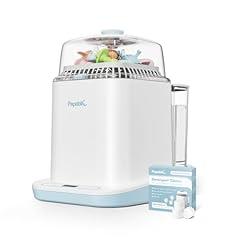
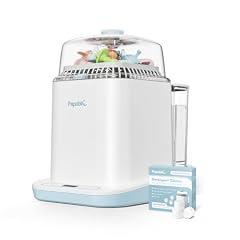
Papablic Baby Bottle Washer
Overview
This countertop product is a four-function bottle washer that washes, steam-sanitizes, hot-air dries, and stores baby feeding items. It uses a removable 2.5 L water tank and a drain hose that must be routed to a sink. The available manual describes 19-minute Quick Wash and 29-minute Normal Wash programs, with one detergent tablet per wash. It is about 10.8 by 14.9 by 16.1 inches and weighs about 15 pounds. Papablic states that the unit has 26 spray jets, 25,000 Pa wash pressure, steam-based 99.99% germ reduction, and capacity for up to six bottles plus two pump kits. Those performance and capacity figures are manufacturer claims, not publicly traceable independent test results. The manual also says heavily soiled items may need pre-rinsing, items must be loaded to allow water and steam access, and the machine needs regular descaling.
What works
- Combines washing, steam treatment, drying, and enclosed storage in one countertop workflow.
- A drain hose sends used water to the sink rather than retaining it in a dirty-water tank.
- The instructions identify practical controls for hygiene, including correct loading, pre-rinsing heavy residue, descaling, and drying items before storage.
- Papablic provides a three-year product warranty and identifiable customer-support route.
What does not
- No publicly traceable accredited laboratory report was found for cleaning performance, detergent rinse-out, or the stated 99.99% germ-reduction claim on this exact product.
- The product materials that contact wash water are not specifically identified, and no full detergent ingredient disclosure or safety data sheet was located for the required tablets.
- No exact-product UL, ETL, NSF, or other recognized United States certificate was located in public issuer registers.
- The manual calls for regular descaling and a replaceable air filter, adding maintenance and ongoing consumable waste. Published energy use per cycle was not found.
Who is it for
This product suits a household regularly washing several bottles or pump components that has clear counter space beside a sink, access to an outlet, and willingness to follow a maintenance routine. It can be particularly practical for caregivers who want a defined wash, heat-treatment, and drying sequence rather than managing separate washing and drying steps. It is better suited to standard, heat-safe items that can be positioned openly in the racks, with the caregiver prepared to pre-rinse heavy milk residue and inspect items after washing.
Who is it not for
It is not well suited to buyers who need independently validated sanitization, cleaning, rinse-residue, or electrical-safety results for a medically vulnerable infant. It also is not ideal where there is no convenient sink for the drain hose, limited counter space, or inconsistent access to filtered or distilled water in hard-water areas. Families using pump parts with narrow passages, heat-sensitive components, or manufacturer restrictions should follow their pump maker's care instructions and may need to hand-clean those pieces.
Integrity
The useful health feature is the complete intended workflow. CDC guidance supports cleaning feeding and pump items before sanitizing, allowing them to dry thoroughly, and storing them in a clean protected place. This product's instructions address loading, steam, drying, and descaling, but the claimed 99.99% germ reduction and cleaning effectiveness have not been backed by a publicly available accredited report for this exact product. No full material specification or detergent ingredient disclosure was located. The appliance uses a refillable water tank and sink drain, but it also requires one detergent tablet per wash, periodic descaling, and air-filter replacement. Neither metered electricity use nor per-cycle water consumption was publicly available. No recall specific to this bottle washer was located in the reviewed public recall sources. Papablic has, however, had unrelated recalls involving an infant swing in 2024 and powered toothbrush replacement heads in 2026.

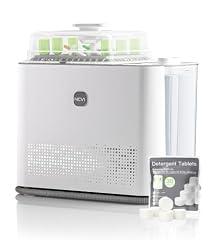
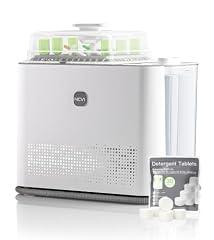
NCVI Baby Bottle Washer and Sterilizer Pro
Overview
This is a countertop appliance that washes, steam-sanitizes, dries, and stores baby bottles, nipples, pacifier parts, and some pump components. NCVI identifies it as model AM8051, with space for up to six standard bottles, a 2.6 L water tank, sink-drain hose, seven programs, and a supplied 30-tablet detergent starter pack. The published body materials are PP, POM, PCT, and stainless steel. The manufacturer states that the full automatic programs use a detergent tablet, heated wash, steam, drying, and a 72-hour storage mode. It also states a 10-minute 212°F steam step and hot wash options. Those operating details are useful, but no publicly traceable exact-product laboratory report was located to confirm soil removal, detergent rinse-out, microbial reduction, drying performance, or the storage claim under a loaded-bottle configuration.
What works
- The manufacturer provides a concrete six-bottle capacity, water-tank size, program list, loading layout, and drain-hose setup.
- The instructions specify regular cleaning of the chamber, spray arm, residue cup, racks, and heating plate.
- The instructions identify a six-month filter replacement interval and advise descaling the heating plate, which gives owners a usable maintenance routine.
- A full automatic cycle combines washing, steam treatment, drying, and covered storage, according to the manufacturer.
What does not
- No publicly traceable accredited test report was located for exact-product cleaning, rinse-residue, sanitization, drying, or 72-hour storage performance.
- The published materials list polymer families and stainless steel, but not food-contact grades, migration testing, or detergent-tablet ingredients and safety documentation.
- The product uses a detergent tablet for each wash cycle and a filter that the instructions say to replace every six months, creating ongoing consumable waste and cost.
- Marketing uses hospital-grade and 99.99% germ-removal language, but this review did not find an exact-product certification or independent efficacy report supporting those claims. Published jet counts also vary between 36 and 39.
Who is it for
This product suits a household that regularly cycles several compatible bottles and wants a dedicated countertop workflow rather than hand-washing each item. It is most practical where there is stable counter space beside a sink, access to a 120 V outlet, and willingness to connect and monitor a drain hose. The defined cleaning, descaling, and filter-replacement steps also fit users who will follow a maintenance schedule and check that each bottle or pump part is approved by its own manufacturer for hot washing, steam, and drying.
Who is it not for
It is not a strong fit for households with a premature, medically fragile, or immunocompromised infant that need independently documented performance for the exact load and cycle. It also does not suit users who need verified detergent-residue data, confirmed food-contact material documentation, or a publicly traceable electrical-safety listing for this exact product. Avoid treating broad compatibility language as approval for every pump valve, membrane, bottle, or nipple. Delicate components should follow their own manufacturer care instructions.
Integrity
Steam is an accepted sanitizing method for infant feeding items when used after cleaning and according to the device instructions. Thorough drying and protected storage also matter, because moisture can support microbial growth. This product has practical maintenance directions, including cleaning removable parts, descaling the stainless heating plate, and replacing the stated HEPA filter every six months. Those are manufacturer instructions, not independently verified post-cycle hygiene results. NCVI lists PP, POM, PCT, and stainless steel, but does not publish the grades, food-contact compliance documents, migration data, or full detergent ingredients needed to assess repeated hot-use and residue exposure in detail. Each wash requires a proprietary detergent tablet, and the filter is a recurring replacement item. No exact-product NSF, UL, or ETL certificate, accredited efficacy report, or official U.S. recall was identified in this review. The hospital-grade language should therefore be read as marketing rather than confirmed medical-grade performance.

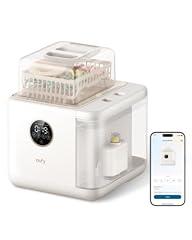
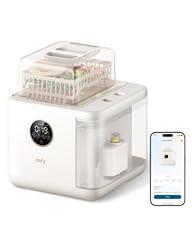
Eufy S1 Pro Bottle Washer and Sterilizer
Overview
This countertop bottle washer is a large, 15.87 kg appliance intended to wash baby bottles, nipples, breast-pump parts, and small tableware. It uses a removable water tank, drain hose, detergent tablet, spray arms, steam, forced-air drying, and an enclosed storage mode. The manufacturer states that it holds up to 10 bottles, or four bottle sets plus a pump set, and offers wash, steam, dry, and storage cycles. The model-specific manual gives useful loading directions, including placing bottle mouths downward, aligning them with nozzles, separating items, and avoiding blocked spray arms. It also tells users to pre-rinse milk or formula stored over three days. eufy cites a TÜV SÜD report for cleaning and steam performance, but the full report, exact test load, microbial methods, detergent-residue results, and certificate record were not publicly traceable during this review. The public manual instead says the appliance holds up to eight bottles, which conflicts with the 10-bottle product claim.
What works
- The manual provides concrete rack and bottle-down loading instructions that can help prevent pooled water and blocked spray coverage.
- A covered wash, steam, dry, and storage workflow is designed to reduce handling between cleaning and use, subject to correct loading and maintenance.
- The manufacturer identifies a named TÜV SÜD report and states that testing was performed under controlled conditions.
- A U.S. importer, support telephone number, email contact, and 12-month limited warranty are listed in the model-specific manual.
What does not
- No publicly traceable full TÜV SÜD report was located to verify microbial reduction, test organisms, cycle conditions, load placement, or detergent-rinse performance.
- The product page claims a 10-bottle capacity, while the public model-specific manual says eight bottles per cycle. This is a documented claim conflict.
- The appliance and its required detergent are not supported by a public ingredient list, safety data sheet, food-contact material specification, or residue test report.
- The built-in softener requires replacement every 40 to 60 days according to eufy, and the washer uses one detergent tablet per load. This creates recurring material use and cost.
- No exact-model UL or ETL electrical-safety listing was publicly located. FCC authorization covers wireless and radio compliance, not steam, scald, leakage, or appliance electrical safety.
Who is it for
This product suits a household that regularly accumulates many compatible bottles and washable pump parts, has stable counter space near a sink, and can follow a structured loading routine. It is most practical for caregivers who value an enclosed wash-to-dry workflow and are prepared to buy the specified tablets and replacement softener filters. It is also better suited to users with hard water who understand that the softener is intended to reduce mineral spotting, not establish that every feeding item is residue-free.
Who is it not for
It is not well suited to buyers who need independently published proof of sanitization, detergent removal, food-contact materials, or appliance electrical certification before using a product for infant feeding items. Families with premature, immunocompromised, or very young infants should be especially cautious about relying on unverified storage or germ-reduction claims. It is also a poor fit for households with limited counter space, limited access to a sink drain, or a desire to avoid recurring tablets and frequent softener-filter replacement. Do not load items unless their own manufacturer permits this wash and steam exposure.
Integrity
The strongest health-positive details are operational rather than outcome-proven. The manual directs users to separate components, point bottle openings downward, align them to the spray nozzles, avoid blocking the spray arm, and wait 10 minutes after drying before unloading because surfaces may be hot. These details matter because CDC guidance emphasizes fully disassembled cleaning, thorough drying, and protected storage of infant feeding items. eufy states that the product uses 212°F steam and cites a TÜV SÜD report, but the full certificate and laboratory methods were not publicly available for checking. It also does not publicly identify wetted plastics, detergent ingredients, or post-cycle residue results. Environmental tradeoffs are substantial. Each load uses a tablet, and eufy recommends changing the softener filter every 40 to 60 days. The manual gives standard disposal guidance and a one-year limited warranty, but no product-specific repair parts catalog or U.S. take-back program was found.
GROWNSY EaseClean Pro Bottle Cleaner
Overview
This countertop bottle-care appliance is a plug-in washer, steam sterilizer, dryer, and covered storage unit for bottles, pump parts, pacifiers, sippy-cup parts, and similar feeding accessories. GROWNSY states that its two-tier rack holds four to eight bottles or a mixed load of feeding components. The published package dimensions are about 16 by 16 by 11.7 inches, so it needs dedicated counter space. The manufacturer states that washing uses 26 jets, 24,000 Pa water pressure, and 140°F water, followed by 212°F steam and hot-air drying. It also claims HEPA-filtered storage for up to 72 hours. Those are manufacturer claims, not independently located exact-product cleaning, microbial-reduction, drying, filter, or residue test results. The public product information does give useful loading advice, including disassembling parts and avoiding nesting, which is important for water and steam access.
What works
- GROWNSY provides concrete loading guidance, including disassembling assemblies and avoiding stacked or shielded pieces.
- The stated four to eight bottle capacity can suit households that run larger mixed loads of bottles and pump components.
- A manufacturer-stated self-cleaning mode and descaling guidance every 20 wash cycles address limescale and internal residue.
- The covered heated-drying and storage concept can reduce handling of freshly cleaned items, if parts emerge completely dry.
What does not
- No publicly traceable, independent exact-product report was located for milk-soil removal, detergent rinse-out, microbial reduction, drying, or 72-hour storage performance.
- The product page calls the steam cycle sterilizing and claims 99.99% bacterial elimination, but no exact-model accredited laboratory report, certificate, or EPA device-label information was located.
- Wetted materials are described only broadly as plastic, without a public material list for food-contact components or evidence of detergent-residue testing.
- The drying claim says all moisture is removed, yet the manufacturer's own guidance acknowledges that some parts can remain wet depending on loading or trapped water.
- No public exact-model UL or ETL listing, metered water use, electricity use, filter replacement interval, or repair-parts catalog was located.
Who is it for
This product fits a household washing several bottles or pump-part sets daily that has stable counter space and is willing to follow a maintenance routine. It is most practical for users who can fully disassemble components, load them so jets and steam reach each surface, inspect parts for retained water, and descale about every 20 cycles in hard-water conditions. Its stated four to eight bottle capacity may be useful when feeding gear accumulates between wash cycles, rather than for a household needing only occasional single-bottle cleaning.
Who is it not for
It is not well suited to buyers who need independently documented sanitation performance for a premature, immunocompromised, or very young infant. CDC guidance emphasizes cleaning first, complete drying, and following both the feeding-item and appliance instructions. It also may not suit homes with limited counter space, unreliable access to maintenance supplies, or a need for known electricity and water use. Users whose pump or bottle makers prohibit machine washing, heat, or steam should use those makers' care instructions instead.
Integrity
The useful health-related design features are manufacturer-stated targeted washing, steam, heated drying, covered storage, and instructions to disassemble items and prevent nesting. Those practices are directionally consistent with CDC guidance that feeding items must be cleaned before sanitizing, dried thoroughly, and stored clean and dry. However, the product-specific proof needed to confirm cleaning, sanitization, detergent rinse-out, and stored-item hygiene was not publicly traceable. The manufacturer recommends a self-cleaning mode and descaling roughly every 20 cycles in hard-water use, which can help manage scale. That maintenance also creates ongoing consumable use, including detergent tablets and descaling tablets. Public information did not identify the complete detergent formulation, food-contact plastics, filter service life, replacement parts, repair pathway, or measured water and electricity per load. No official U.S. recall or safety warning for this product was located in the reviewed CPSC sources.

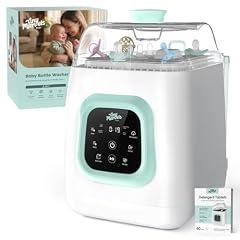
Tiny Marvels Baby Bottle Washer Pro
Overview
This countertop electric appliance is a combined bottle washer, steam sterilizer and dryer intended for bottles, nipples, pacifiers, sippy cups and breast-pump parts. The product is sold for 120 V, 60 Hz use and is listed as holding up to six bottles plus pump accessories. It includes 60 detergent tablets and is described as having wash, steam, dry, storage and self-clean cycles. The maker states that its steam cycle reaches 212°F, uses 46 spray jets, incorporates a water softener, and provides 13 cleaning modes. Those are manufacturer-stated specifications, not independently confirmed performance results. A claimed SGS certification could not be traced to a public certificate, report number, test method, load configuration, or exact-model result. No public exact-model NSF, UL, or ETL listing was located in the relevant registries.
What works
- Manufacturer-stated capacity is up to six bottles plus pump accessories in one load.
- The product includes 60 detergent tablets, so its stated cleaning process can be used immediately.
- Manufacturer-stated self-clean, drying and storage modes address practical steps needed to keep feeding items dry and protected after a cycle.
- The seller describes BPA-free polypropylene components and a food-grade silicone tray, although supporting food-contact compliance documentation was not located.
What does not
- No public accredited laboratory report was located showing removal of realistic milk or formula soil, or detergent rinse performance, for this exact product.
- The 212°F steam and sterilization claims are not backed by a publicly traceable exact-model microbial reduction test, despite the SGS-tested claim.
- No public exact-model NSF, UL, or ETL certification listing was located for sanitation performance or electrical safety.
- The detergent ingredients, safety data sheet, residue testing, filter replacement schedule, and replacement-parts catalog were not publicly available.
- A 72-hour storage claim does not substitute for complete drying and clean protected storage, which CDC guidance treats as important controls.
Who is it for
This product suits a household that wants a countertop machine for repeated washing of a moderate quantity of bottles and removable pump parts, and that can follow each bottle or pump maker's heat and dishwasher-care instructions. Its stated six-bottle capacity and included detergent tablets may be practical for parents handling several daily feeds. It is more appropriate where the user is prepared to inspect parts after cycles, keep the machine and its water-contact surfaces clean, and use manual cleaning when a part has narrow channels or is not approved for heat or machine washing.
Who is it not for
It is not well suited to households needing independently documented sanitization performance, certified electrical safety, quantified rinse testing, or full detergent ingredient disclosure. Families with a premature infant, an infant younger than two months, or an immunocompromised infant should be especially careful because CDC guidance emphasizes thorough cleaning, appropriate sanitizing, complete drying, and following pump-part instructions. It is also unsuitable for parts that the bottle or pump manufacturer says cannot be steamed, machine-washed, or exposed to high heat. Buyers needing readily documented filters, parts, or repair support should seek clearer maintenance records.
Integrity
The available product description identifies BPA-free polypropylene components and a food-grade silicone tray, but these are manufacturer statements. No public food-contact compliance file, detergent safety data sheet, full detergent ingredient list, or post-cycle residue test was found. The product also claims SGS testing and 212°F steam sterilization, but no public report identifies the precise model, cycle, loaded items, microbial target, or achieved reduction. No exact-model NSF sanitation listing or UL or ETL electrical-safety listing was located in the relevant public registries. CDC guidance says feeding and pump parts should be thoroughly cleaned, fully dried, and stored in a clean protected place. It also says sanitizing is especially important for babies younger than two months, premature babies, and babies with weakened immune systems. The included tablets create recurring consumable waste, while the advertised water-saving figure is not supported by an independent metered water or electricity test. No exact-product CPSC recall or public incident report was located in the sources reviewed.