
10 Best Bluetooth Hearing Aid
 Lauren Wilson
Please note that we participate in affiliate marketing programs. When you purchase through links on our site, we may earn a commission. As an Amazon Associate we earn from qualifying purchases. This comes at no additional cost to you and helps support the resources required to provide valuable content.Advertising Disclosure
Top-rated Bluetooth Hearing Aid Comparison
1

2
4
5
6
7
8
9
Bluetooth hearing aids: what matters
Bluetooth hearing aids combine adjustable sound amplification with wireless functions such as phone calls, music, television audio, or app-based fitting. Bluetooth alone does not show that a product will improve hearing. The useful question is whether the device provides controlled, comfortable amplification for an adult with perceived mild-to-moderate hearing loss, while working reliably in the situations that matter to the wearer.
Start with suitability and safety. A credible product should explain who it is for, provide accessible volume adjustment, and include guidance for symptoms that need medical evaluation. Useful controls may include separate left- and right-ear adjustment, maximum-output limits, feedback suppression, listening modes, and fit options. A high gain number is not automatically better: excessive amplification can be uncomfortable or unsafe, while amplification that simply makes every sound louder may not improve speech understanding.
The strongest performance evidence is independent testing. Look for an accredited laboratory report using ANSI/ASA S3.22 or IEC 60118-0 methods, covering output, gain, frequency response, distortion, equivalent input noise, and other electroacoustic characteristics. More useful still is device-specific human testing or a peer-reviewed speech-in-noise study. The supplied reviews show why this distinction matters: several products had manufacturer-published acoustic figures but no independent report, while independent testing of some products found good speech clarity in quiet but weak results in noise. Music-streaming quality can also be strong without making conversations in restaurants easier to follow.
Treat headline specifications as claims until their meaning is clear. “50 dB noise cancellation” may refer to gain, reduction in a particular condition, or a different measurement altogether. Battery claims may describe standby time, case-supported total power, hearing-mode runtime, or much shorter streaming runtime. Conflicting manuals and product pages are a warning sign. “AI,” “clinically proven,” “translation,” “multi-channel,” and “clearer speech” are not substitutes for quantified, independently reproducible results. Bluetooth 5.3 or 5.4 similarly does not prove dependable pairing, calls, streaming, or privacy.
For accountability, check that the exact maker and model can be found in FDA establishment and device-listing or classification records. A listing supports traceability but is not FDA approval or independent validation. For wireless products, an FCC equipment authorization and a Bluetooth SIG qualification record help verify the radio identity. For charging safety, look for a charger or power supply in an OSHA-recognized NRTL directory, such as UL Product iQ or ETL Intertek. Also look for clear compatibility information, app-store privacy disclosures, update support, and a manufacturer privacy policy.
Fit and ownership matter as much as specifications. Multiple dome sizes, open and closed options, wax guards, cleaning instructions, replaceable receivers or other consumables, and retention features can reduce discomfort, feedback, and premature replacement. Rechargeable products avoid routine disposable cells, but they still contain lithium batteries and electronics. Prefer clear warranty, repair, replacement-part, take-back, and U.S. recycling information.
Across the supplied products, recurring safety limits are important: these devices are intended for adults with perceived mild-to-moderate loss, not children or severe/profound loss. Sudden, rapidly changing, fluctuating, or one-sided hearing loss; one-sided ringing; ear pain, drainage, bleeding, dizziness or vertigo; substantial wax or suspected blockage; infection; trauma; or a retained dome or foreign object calls for medical evaluation. Products also varied in whether they supplied complete red-flag warnings, so buyers should read the labeling before use. Independent evidence was generally weaker in noisy environments, and app pairing, privacy, charging certification, repair, and recycling documentation were often incomplete.
Integrity
These topics describe the practical health, environmental, and evidence checks that distinguish a useful Bluetooth hearing aid from an appealing but weakly supported sound amplifier. The supplied scores reward documented controls, traceable identities, independent testing, and ownership information; they do not turn a product into a substitute for hearing care.
HHealth & Safety
Benefit for the right kind of hearing loss
Measures whether the aid is credibly suited to adults with perceived mild-to-moderate hearing loss and provides useful, adjustable amplification rather than simply making every sound louder; a high score means appropriate use limits and evidence of meaningful hearing benefit.
Hearing safety and medical-warning guidance
Measures protection against unsafe over-amplification and whether the buyer is clearly told when ear symptoms or hearing changes need medical evaluation; a high score means compliant output controls, accessible volume adjustment, and complete red-flag warnings.
Independently tested sound performance
Measures whether independent testing confirms low distortion and noise, safe output, usable frequency response, and speech understanding in realistic noise; a high score means published results match the product's stated performance claims.
Comfort, retention, and ear safety
Measures whether the design, dome options, materials, cleaning instructions, and retention reduce discomfort, feedback, skin irritation, trapped parts, and loss of the device; a high score means it can be worn and maintained safely for its intended daily use.
Battery and charging safety
Measures protection from overheating, charging failure, battery leakage, and fire while still providing realistic daily runtime; a high score means traceable battery specifications, safe charging instructions, and third-party electrical-safety certification for the supplied charging system.
EEvidence
Traceable U.S. medical-device accountability
Measures whether the exact maker and model can be traced to a legitimate U.S. OTC hearing-aid listing and whether its safety history can be checked; a high score means the listing, responsible establishment, model identity, and post-market record are clear and consistent.
Honest hearing, AI, and Bluetooth claims
Measures whether claims about hearing improvement, noise reduction, AI, translation, channels, Bluetooth streaming, battery life, and suitability stay within what the product actually demonstrates; a high score means quantified claims are qualified, reproducible, and not misleadingly presented as medical proof.
Independent proof beyond seller claims
Measures whether important safety, performance, and sustainability assertions are backed by accessible third-party reports, certifications, or registries rather than brand-created badges or unsupported specifications; a high score means the exact model can be independently checked.
Reliable Bluetooth without unnecessary data exposure
Measures whether advertised phone calls, audio streaming, app fitting, and updates work on stated devices and whether the companion app handles hearing and account data transparently; a high score means verified radio authorization, clear compatibility, secure updates, and minimal, clearly disclosed data collection.
EEcology
Lower-waste ownership and disposal
Measures how well the product avoids premature replacement through durable charging components, available consumables and support, and responsible battery/electronics take-back; a high score means longer usable life plus clear U.S. recycling instructions for the aid, case, and lithium battery.
Full reviews

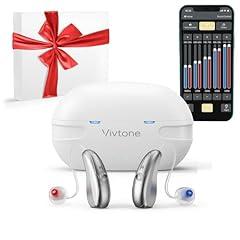
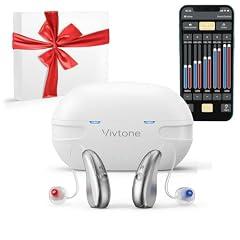
Vivtone Xpure Bluetooth Hearing Aids
Overview
This is a rechargeable receiver-in-canal hearing aid pair with a portable charging case, physical buttons, Bluetooth audio streaming, and the HA-Fit phone app. The manual describes three listening modes, a 3.7 V lithium battery, a stated maximum output below 117 dB, and controls for volume, frequency bands, noise reduction, feedback suppression, and maximum output. It also states at least 24 hours in hearing mode and at least 3 hours of Bluetooth use. The exact Xpure model is independently traceable in FDA device identification records as a commercially distributed Class I behind-the-ear air-conduction hearing aid. However, no accessible independent ANSI or IEC acoustic test report, speech-in-noise study, FCC grant, Bluetooth qualification record, or third-party electrical-safety certification was located. Vivtone markets app self-fitting and a clinically proven app, but the accessible evidence does not substantiate those clinical claims.
What works
- The exact Xpure model is independently identifiable in FDA device records as commercially distributed.
- The manual provides separate left and right app adjustments, including maximum-output control and frequency-band changes.
- Replaceable ear tips and wax guards, plus cleaning instructions, support fit changes and routine maintenance.
- The manual gives clear battery runtime, charging, storage, and moisture-care instructions.
- The manual gives medical-referral guidance for tinnitus, asymmetric loss, dizziness, headache, earache, inflammation, discharge, wax blockage, and sudden changes.
What does not
- No independent acoustic report was located to confirm output, distortion, noise, frequency response, or speech understanding in noise.
- No accessible human clinical study was located for Xpure or its hearing-assessment and self-fitting app.
- The product page describes four adaptive modes, while the manual describes three, creating a specific inconsistency in the stated feature set.
- The manual cites manufacturer-stated electromagnetic testing, but no U.S. NRTL certification for the supplied charging system was located.
- A 2025 voluntary FDA adverse-event report alleges unsuccessful app fitting and worsened hearing after use. It is a report, not a finding that establishes causation or a regulatory violation.
Who is it for
This product is most suitable for an adult who already understands their hearing needs, has perceived mild hearing difficulty, and wants adjustable amplification with direct phone calls or media streaming. It may fit a person comfortable using a smartphone app, selecting ear-tip sizes, cleaning wax guards, and making cautious volume changes. The identifiable FDA device record and detailed manual make it more traceable than an unlabelled sound amplifier, but its stated personalization and acoustic performance still rely mainly on manufacturer documentation.
Who is it not for
It is not appropriate for children, for people with sudden or rapidly changing hearing loss, one-sided or strongly uneven loss, tinnitus, dizziness, headache, ear pain, ear discharge, inflammation, trauma, or suspected wax or foreign-body blockage. Those symptoms warrant medical evaluation before amplification. It is also not well suited to someone who needs independently validated speech-in-noise performance, professional verification of an audiogram-based fitting, dependable long-duration Bluetooth streaming, or a charging system with publicly verifiable U.S. electrical-safety certification.
Integrity
The supplied manual includes useful practical safeguards. It sets a stated maximum output below 117 dB, offers manual and app volume adjustment, describes a maximum-output control, and tells users to stop wearing the aids and seek care for pain, swelling, trauma, or inflammation. It also lists several hearing and ear symptoms for which medical assessment should come first. The exact model appears in FDA device identification records, although registration and listing do not equal FDA approval or independent performance validation. The aids use rechargeable lithium batteries and a portable case, which can reduce disposable battery use. The manual says not to put discarded batteries in ordinary household waste and provides replaceable tips and wax guards. It does not provide a U.S. take-back program, battery-removal instructions, or product-specific recycling pathway. Vivtone's privacy policy describes website and product-account data collection, global storage, and advertising-related processing, while the app manual requests Bluetooth, location on Android, and microphone access for hearing assessment.

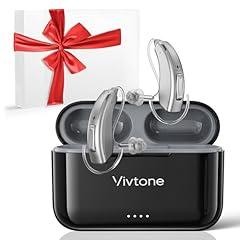
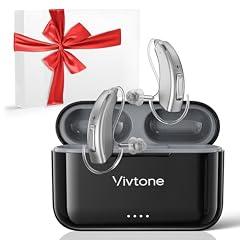
Rechargeable Hearing Aids Lucid508
Overview
This is a pair of rechargeable behind-the-ear OTC hearing aids with physical button controls, silicone ear tips, three listening presets, and a portable charging case. Vivtone states that the case provides 125 hours of backup power for the pair, while its product page states roughly 30 hours of use after a two-hour charge. Those runtime figures are manufacturer-stated, not independently lab verified. The exact Lucid508-S model is traceable in the FDA establishment registration and device listing database as an OTC air-conduction hearing aid. That establishes a checkable regulatory identity, not FDA approval or independent proof of performance. Vivtone publishes output, gain, and distortion figures and claims noise reduction, feedback control, and tinnitus masking, but no accessible accredited ANSI or IEC test report or device-specific human outcomes study was found. Its own page also places Bluetooth phone and media streaming on a different model, not this one.
What works
- The exact silver model appears in the FDA device listing as an OTC air-conduction hearing aid.
- Behind-the-ear construction, multiple silicone tips, and button-operated modes give the user basic physical and listening adjustments, manufacturer-stated.
- The supplied charging case is intended to reduce routine disposable-battery use, with 125 hours of backup power claimed by Vivtone.
- Vivtone publishes concrete electroacoustic specifications, including 118 dB peak OSPL90 and 41 dB peak gain, although these figures are not independently verified.
- A one-year manufacturer warranty and 45-day return period are stated on the manufacturer product page.
What does not
- No independent ANSI or IEC acoustic report, speech-in-noise study, or product-specific clinical outcome study was found.
- Vivtone markets the product for hearing loss up to significant levels, which exceeds the FDA OTC category's intended population of adults with perceived mild to moderate hearing loss.
- The public product page makes tinnitus-masking and noise-reduction claims without accessible evidence showing clinical tinnitus benefit or real-world speech-in-noise benefit for this model.
- Bluetooth, app, phone-call, and streaming compatibility are not documented for this model. Vivtone presents those functions for a different product.
- No accessible UL, ETL, or other NRTL certification for the supplied charging system, and no battery recycling or electronics take-back instructions, were found.
Who is it for
This product is most plausibly suited to an adult, age 18 or older, with self-perceived mild to moderate hearing difficulty who wants a basic behind-the-ear OTC format rather than app fitting or wireless streaming. It may fit someone who can operate a small physical button, test supplied silicone tips for comfort, and use the charging case daily. The model has a traceable FDA OTC listing, and the manufacturer provides normal, noisy-environment, and tinnitus-masking presets. Its output and speech claims should be treated as unverified manufacturer specifications rather than personalized hearing care.
Who is it not for
It is not appropriate for children, or for people with severe or profound loss who need prescription fitting and assessment. Seek hearing care first for sudden, fluctuating, or one-sided hearing changes, ear pain, drainage or bleeding, substantial wax or suspected blockage, vertigo, or tinnitus in one ear. It also does not suit buyers who require verified Bluetooth calling, media streaming, app-based fitting, independently tested speech-in-noise results, or documented charger safety certification. People unable to manage small ear tips, cleaning, or charging should consider a format with hands-on professional support.
Integrity
The strongest health accountability finding is that the exact Lucid508-S model is named in the FDA establishment registration and device listing database as an OTC air-conduction hearing aid. FDA registration and listing are not approval or proof that the agency independently tested the product. FDA describes OTC hearing aids as intended only for adults with perceived mild to moderate hearing loss. Vivtone's claim that this model is for significant loss therefore needs caution. Vivtone states that the device uses silicone tips and medical-grade materials, but accessible biocompatibility documentation was not found. It also publishes acoustic figures, yet no accredited independent ANSI or IEC report was located. Rechargeability can reduce disposable hearing-aid batteries, but the sealed lithium battery system creates an electronics recycling need. No product-specific battery removal guidance, take-back program, or U.S. recycling instructions were located. No product-specific FDA recall was identified in the searched recall records.

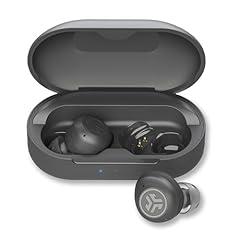
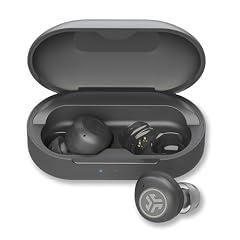
JLab Hear OTC Hearing Aid Earbuds
Overview
This product is a pair of rechargeable, earbud-shaped OTC hearing aids that also function as Bluetooth earbuds for calls and media. They use touch controls, four preset listening modes, and a companion app. JLab states that each earbud runs for up to 10 hours in hearing mode, with a charging case providing 40 total hearing-mode hours. The package includes three open and three closed silicone tip pairs. The product is listed in the FDA device database as a Class II wireless OTC hearing aid, supporting use by adults with perceived mild-to-moderate hearing loss. Independent HearAdvisor testing found excellent streamed-music quality, mixed speech benefit in quiet, and weak speech-in-noise performance. It is an instant-fit design, not a hearing-test-based self-fitting system, so its preset amplification cannot be matched to a personal audiogram.
What works
- FDA device records identify it as a commercially distributed Class II wireless OTC hearing aid.
- Independent lab testing found excellent streamed music quality, scoring 4.6 out of 5.
- JLab provides both open and closed silicone tips in three sizes, which gives users practical fit and venting options.
- Each earbud has independent volume control, according to JLab's support documentation.
- JLab documents firmware updates, Bluetooth 5.3, and a two-year limited warranty.
What does not
- Independent testing found weak speech understanding in noise, with a 1.0 out of 5 score.
- The preset modes do not use an in-app hearing test or audiogram-based fitting, limiting personalization for uneven or more complex hearing loss.
- Independent reviewers reported prominent wind noise, occasional hiss at higher volume, and a bulky fit that can become tiring.
- The 10-hour stated hearing-mode runtime can require midday recharging for all-day users, and streaming reduces stated runtime to seven hours.
- The companion app has reported reliability issues. Its iOS privacy label says no data are collected, while Google Play declares location collection, no encryption, and no deletion option.
Who is it for
This product fits an adult who perceives mild-to-moderate hearing difficulty, especially in quieter one-to-one conversations, television listening, or occasional social settings. It is also suited to someone who wants a single in-ear product for hearing assistance, phone calls, and streamed music, and who is comfortable choosing presets and adjusting each side manually. The included open and closed tips are useful for a buyer willing to experiment with fit. It is more realistic for situational use than uninterrupted daily wear.
Who is it not for
It is not appropriate for children, or for anyone with sudden hearing changes, one-sided loss, ear pain, drainage, dizziness, severe tinnitus, or suspected severe hearing loss. Those situations need clinical assessment rather than self-directed amplification. It is also a poor match for people who regularly need to understand speech in restaurants, crowds, wind, or other noisy settings, because independent testing found weak speech-in-noise results. Users needing audiogram-based fitting, professional hearing care, telecoil access, or all-day battery life should seek a different type of hearing solution.
Integrity
The strongest health accountability point is traceability. FDA device records list JLab's wireless OTC hearing aid as a commercially distributed Class II product. JLab states a 105 dB SPL maximum output, less than 3 percent harmonic distortion, and less than 28 dB SPL equivalent input noise. Independent testing supports useful quiet-setting and streaming performance, but does not support expecting strong help with speech in noise. The product uses silicone tips and lithium-polymer batteries in both the earbuds and case. JLab provides a two-year limited warranty and firmware-update support, which may help extend service life. However, no accessible third-party electrical-safety certification for the charging system, product-specific repair parts program, battery-removal instructions, or U.S. take-back and recycling program was identified. Lithium battery and electronic-device disposal should therefore follow local e-waste and battery collection rules rather than household trash.

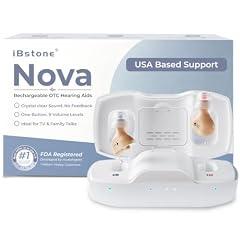
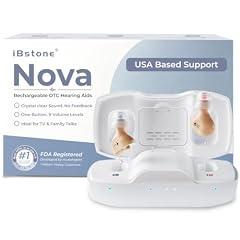
iBstone Nova Hearing Aids
Overview
This is a rechargeable, completely-in-canal hearing aid pair for adults who perceive mild to moderate hearing difficulty. It uses physical button controls, rather than an app, for volume and listening-mode changes. A product manual documents selectable ear domes, automatic on and off when removed from or returned to the case, daily cleaning instructions, and at least 20 hours of aid use after a charge. The case is described as providing at least 80 hours of backup power. The seller and manufacturer describe digital processing, feedback reduction, multiple listening modes, a lanyard, dehumidifying case, wax guards, and a 45-day return period. Those claims are not matched by published independent acoustic or speech-in-noise testing. Runtime descriptions also conflict, since marketing says up to 80 hours of use while the manual specifies at least 20 hours per charge and at least 80 hours of case backup.
What works
- Physical controls offer nine volume levels and three listening modes, documented by an independent retailer.
- The supplied fitting and maintenance kit includes multiple silicone domes, wax guards, and a cleaning brush.
- The manual provides practical fit, cleaning, feedback, moisture, and charging troubleshooting instructions.
- The manufacturer states a 45-day return period, one-year warranty, and ongoing support.
What does not
- No accredited ANSI or IEC acoustic report, device-specific speech-in-noise study, or independent clinical outcome study was located.
- The exact Nova product could not be matched to the FDA listing result. That result identifies iBstone Edge series under Xiamen Vienatone, while the manufacturer markets Nova as FDA registered.
- Marketing claims conflict on battery duration. The manual specifies at least 20 hours per charge, while seller materials advertise up to 80 hours of use.
- The manual and seller materials do not provide the complete medical red-flag warning set expected for OTC hearing-aid purchasers, nor were charger safety certifications located.
Who is it for
This product is suited to an adult with perceived mild to moderate hearing difficulty who prefers a small in-canal format, does not want to use a smartphone app, and can manage tiny domes, wax guards, buttons, and charging contacts. It may fit someone whose main needs are adjusting conversational volume, TV listening, or switching among simple quiet, noisy, and outdoor presets. The stated return period can be useful for testing fit and real-world benefit. A careful trial is important because the claimed performance has not been independently published.
Who is it not for
It is not appropriate for children, for severe or profound hearing loss, or for anyone with sudden or fluctuating hearing change, one-sided hearing loss, vertigo, ear pain, drainage, bleeding, major wax buildup, or an injured or unusually shaped ear. Those situations warrant medical assessment. It is also a poor fit for buyers who need verified Bluetooth streaming, app-based fitting, published speech-in-noise results, independently confirmed output limits, or a clearly traceable exact regulatory listing. People with poor hand dexterity or vision may struggle with its small in-canal parts and maintenance items.
Integrity
The practical health positives are adjustable physical controls, several dome sizes, a lanyard, wax guards, a cleaning tool, and written instructions for cleaning, fitting, moisture management, feedback, and charging problems. These details can help users maintain fit and hygiene. The manufacturer describes the device as intended for mild to moderate hearing difficulty, which is the appropriate OTC use category for adults. However, its medical claims are manufacturer statements, not device-specific human evidence or published acoustic testing. The regulatory and safety record is incomplete for this exact product. The manufacturer displays an FDA-registered claim, but the FDA search result located an iBstone Edge series listing under Xiamen Vienatone rather than Nova. The FDA also cautions that FDA registered language can mislead consumers. No product-specific charger certification, battery test documentation, recycling program, battery removal instructions, or take-back route was located. Reuse of supplied domes, wax guards, and support may extend service life, but end-of-life guidance remains absent.

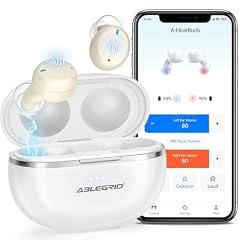
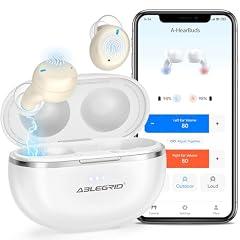
ABLEGRID Rechargeable Hearing Aids with Noise Cancelling
Overview
This is a pair of rechargeable, in-ear air-conduction hearing aids sold for adults with perceived mild to moderate hearing loss. The design uses touch controls for hearing-aid volume, replaceable ear tips, a charging case, and Bluetooth for calls and music. Its manual identifies a 35 mAh battery in each earpiece, a 420 mAh case, and manufacturer laboratory figures of 113 dB maximum output, 48 dB maximum full-range gain, and a 280 to 6,900 Hz response range. The underlying product model is listed in the FDA device database as an OTC air-conduction hearing aid, providing a traceable manufacturer and device identity. That listing is not FDA approval. The product manual states six hours of hearing-aid use per charge, which conflicts with the seller's eight-hour claim. No independent acoustic test report or product-specific speech-in-noise study was located.
What works
- The exact underlying model is traceable in the FDA device-listing database as an OTC air-conduction hearing aid.
- The manual provides output, gain, frequency-response, battery-capacity, charging, and Bluetooth specifications, although these are manufacturer laboratory figures.
- The manual includes fit-tip selection, earwax cleaning, disinfection, feedback troubleshooting, and instructions to lower volume if screeching occurs.
- Bluetooth radio identity is documented through an FCC authorization record for the underlying model, and the manual specifies Bluetooth 5.3 calling and music profiles.
What does not
- No independent ANSI or IEC electroacoustic report, accredited-laboratory result, or product-specific speech-in-noise outcome study was located.
- The seller's eight-hour use claim conflicts with the product manual's six-hour hearing-aid runtime and four-hour phone runtime.
- The seller advertises app-enhanced gain, but the manual describes hearing-aid volume adjustment by touch control and app adjustment of multimedia volume. The extent of app fitting is therefore unclear.
- No identifiable privacy policy, app-store data disclosure, U.S. charger safety certification, replacement-parts program, or U.S. battery and electronics take-back program was located.
Who is it for
This product is most suited to an adult who perceives mild to moderate hearing difficulty, wants an in-ear format, and is comfortable adjusting volume manually and testing several ear tips for a stable seal. It can fit someone who values a rechargeable case and basic Bluetooth calling or music functions, provided they plan charging around the manual's stated six-hour hearing-aid runtime. The documented FDA listing provides more accountability than an untraceable sound amplifier, but it does not replace a hearing assessment when hearing needs are uncertain.
Who is it not for
It is not appropriate for children, people with suspected severe or rapidly changing hearing loss, one-sided hearing changes, sudden hearing loss, ear pain, drainage, dizziness, or persistent tinnitus. Those situations need prompt clinical evaluation. The manual also says people with active outer or middle-ear infection, or a known sensitivity to the product materials, should not wear it. People needing verified speech-in-noise performance, clinician-programmed fitting, all-day call streaming, clear app privacy terms, or a documented U.S. repair and recycling route should choose a product with that evidence.
Integrity
The strongest health accountability finding is that the underlying product model appears in FDA's establishment registration and device-listing database as an OTC air-conduction hearing aid. This confirms a traceable device listing, not FDA approval or independent proof of performance. The manual provides useful cautions about ear infection, skin redness or swelling, moisture, earwax, high volume, small parts, and charging. It also advises consultation for possible interference concerns with implanted electronic equipment. The product is sold as ABS and polycarbonate, while the manual describes a rechargeable 3.7 V lithium battery with a stated cycle life of at least 300 cycles and a three-year service life. The manual includes a general WEEE recycling statement and a table declaring listed hazardous substances below Chinese limits in named parts. It does not provide a U.S. mail-back or drop-off program, battery-removal guidance, charger certification record, or repair-parts pathway.

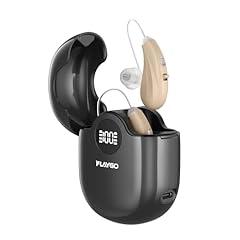
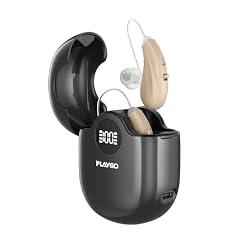
Flaygo Senior Hearing Aids
Overview
The Flaygo GM-362T is a beige, rechargeable behind-the-ear pair intended for adults who perceive mild-to-moderate hearing loss. Each unit is listed at 3.5 g. It uses replaceable silicone domes, sits behind the ear, and is operated by one button that cycles through four volume settings. The package documentation describes a USB-C charging case, cleaning tools, and multiple dome sizes. The available manual states that the product uses a 16-channel digital chip, feedback suppression, noise reduction, 35 plus or minus 5 dB full-scale gain, and a 200 Hz to 5,932 Hz frequency range. These are manufacturer-stated specifications, not independently confirmed results. No product-specific ANSI or IEC acoustic test report, speech-in-noise study, electrical-safety certification, or publicly traceable FDA listing was located in this review.
What works
- Four preset volume levels provide a basic user-adjustable loudness control, according to the available manual.
- Several silicone dome sizes and cleaning tools are supplied, which can help users pursue a more secure fit and keep the sound outlet clear.
- The behind-the-ear format is lightweight at a stated 3.5 g per unit, and the documentation gives practical fit and cleaning instructions.
- Rechargeable lithium-ion power and a USB-C case avoid routine disposable hearing-aid batteries, according to the product documentation.
What does not
- No independent acoustic testing was located to confirm the stated gain, distortion, noise level, frequency range, or claimed speech and noise-reduction benefits.
- The accessible manual does not reproduce the FDA consumer warnings for under-18 users, red-flag ear symptoms, or when professional evaluation is needed. Buyers should inspect the box labeling before use.
- Documentation conflicts on connectivity. The catalog describes compatibility with phones, tablets, and televisions, while the available manual says there is no Bluetooth audio or call streaming.
- Battery runtime claims are inconsistent. One document describes about 20 or more hours per charge and 80 hours from the case, while another describes 80 hours of continuous use per charge.
- No accessible certification for the supplied charger or battery system, detailed warranty term, repair parts program, or product take-back program was found.
Who is it for
This product is most suited to an adult who has perceived mild-to-moderate difficulty following speech and wants a simple behind-the-ear format without app fitting or streaming. The four preset loudness levels may suit someone who can manage a small button and is comfortable testing dome sizes for retention. It is also relevant to someone who values rechargeable use and has the patience to clean wax from the domes and sound outlet. Its claimed 35 dB gain and sound-processing features remain unverified by independent testing.
Who is it not for
It is not appropriate for children, people with severe or profound hearing loss, or anyone with sudden, rapidly changing, one-sided, or fluctuating hearing loss. People with ear pain, drainage, blood, marked dizziness, substantial wax buildup, unusual ear shape, or one-sided ringing should seek medical evaluation first. It also does not suit users who require verified Bluetooth calls or media streaming, professionally individualized fitting, published speech-in-noise evidence, or documented charger safety certification. Glasses wearers may find the behind-the-ear hook competes for space with frames.
Integrity
The accessible documentation identifies plastic housings, silicone domes, and rechargeable lithium-ion batteries. It also provides cleaning and fit directions, including changing dome size and clearing wax from the sound outlet. Those practices can reduce feedback and blocked sound, but the claimed medical-grade ABS material and skin-friendly performance were not supported by biocompatibility documentation located in this review. No product-specific recall, adverse-event record, warning letter, or electrical-safety certificate was located in the public sources checked. That is not proof of safety or regulatory compliance. The available manual also does not reproduce the FDA red-flag medical guidance required on OTC hearing-aid packaging, so the package should be checked carefully. No manufacturer recycling or battery take-back instructions were found. EPA guidance says lithium-ion batteries and electronics containing them should not go in household trash or curbside recycling, and should instead go to appropriate battery or electronics collection programs.
Auiioes Hearing Aids for Seniors
Overview
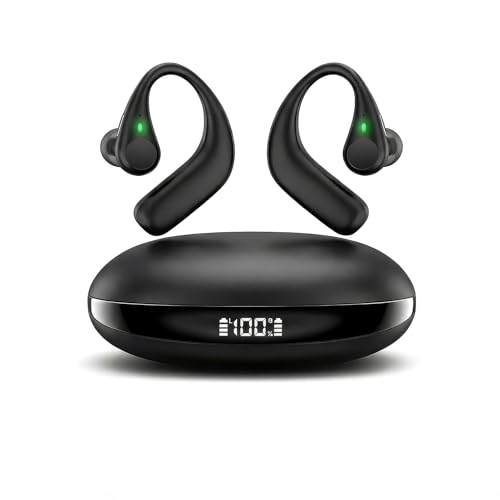
This product is a rechargeable two-ear hearing aid set sold with Bluetooth capability, eight volume levels, and three listening modes. Seller materials for the matching device model describe a charging case, four ear-tip sizes, and about 12 to 15 hours of use per full charge. Those specifications are manufacturer-stated or reseller-reported, not independently laboratory verified. The maker named for this product can be traced to the exact model in FDA's device-listing database as an air-conduction OTC hearing aid. That supports its intended adult OTC category, which is for perceived mild-to-moderate hearing loss. It does not independently confirm sound quality or individual benefit. No accessible product-specific ANSI or IEC electroacoustic report, speech-in-noise study, FCC equipment record, or charger safety certification was located in this review.
What works
- The exact device model is listed under its named manufacturer in FDA's OTC air-conduction hearing-aid database.
- Eight volume steps and three listening modes offer basic user adjustment, according to seller materials for the matching model.
- A rechargeable case can reduce the routine handling and disposal of small replaceable hearing-aid batteries, according to seller materials.
- Matching-model seller materials describe four ear-tip sizes, which may help users seek a more secure seal and fit.
What does not
- No independent ANSI or IEC acoustic test report was located, so output limits, distortion, frequency response, and speech-in-noise performance remain unverified.
- No accessible product-specific clinical study was located, so the claimed noise reduction and practical hearing benefit are unproven for this unit.
- Bluetooth is advertised, but this review did not locate a matching FCC authorization, Bluetooth qualification entry, compatibility list, app privacy notice, or update policy.
- No accessible material declaration, charger NRTL certification, battery safety test report, repair documentation, or U.S. take-back program was located.
Who is it for
This product is most suited to an adult who perceives mild-to-moderate hearing difficulty, wants a basic rechargeable pair for conversations, television, or phone audio, and is comfortable adjusting volume and listening modes manually. The FDA listing provides a traceable OTC device identity, while the advertised eight volume levels may offer more control than a fixed-gain amplifier. It is better suited to someone who can assess fit and benefit during a return window, rather than someone needing professionally individualized programming.
Who is it not for
It is not suited to children, people with severe or profound hearing loss, or anyone needing a prescription device and audiologist-led fitting. Seek medical assessment before using an OTC aid for sudden or fluctuating loss, one-sided hearing loss or ringing, ear pain, drainage, dizziness, suspected blockage, or a damaged ear. It is also a poor fit for buyers who require independently measured speech-in-noise performance, verified Bluetooth compatibility, formal battery and charger certification, or clearly documented repair and recycling support.
Integrity
The strongest health accountability finding is traceability. FDA's device-listing database links the named manufacturer and this exact model to the OTC air-conduction hearing-aid category. OTC aids are intended for adults with perceived mild-to-moderate hearing loss, and FDA guidance says they are not for severe or profound loss. The product's accessible sales materials do not substitute for independent evidence of output control, speech understanding in noise, or comfort over long daily wear. The product uses rechargeable lithium-polymer batteries, according to sales specifications for the matching model. Rechargeability can reduce disposable battery waste, but no accessible charger safety certification, IEC battery test document, warranty, replacement-parts program, battery-removal instructions, or U.S. electronics and battery take-back program was found. No product-specific recall or adverse-event record was identified in the sources reviewed, but absence of a located report is not proof that no issue has occurred.

Vivtone SyncTune Bluetooth Hearing Aids
Overview
This is a rechargeable, in-ear over-the-counter hearing aid pair for adults 18 and older with perceived mild-to-moderate hearing loss. The manufacturer manual specifies seven volume steps, general, noisy, tinnitus, and music modes, five silicone dome sizes, and stated electroacoustic specifications including maximum output of 112 plus or minus 3 dB SPL. It is used by selecting a snug dome, inserting the aids, and changing volume or mode with onboard buttons. The manufacturer states up to 16 hours of ordinary use per charge, about 4.5 hours of continuous phone or music streaming, and up to 320 hours of case backup power. It also claims Bluetooth streaming, in-ear detection, UV-C surface cleaning, and infrared drying. The product name is present in an FDA device listing, but under Tomore Medical rather than Vivtone or the Vivtone-linked Xiamen Vienatone manufacturer, which limits clear product-level accountability. No independent acoustic or human outcome report for this exact product was located.
What works
- The manual provides a concrete intended-user limit, adults with mild-to-moderate hearing loss, plus stated output, gain, frequency-range, noise, and distortion figures.
- Five included dome sizes and replaceable wax guards support fit adjustment and routine maintenance, according to the manufacturer manual.
- Seven onboard volume settings and general, noisy, tinnitus, and music modes offer basic user adjustment without requiring an app.
- The manual gives practical Bluetooth instructions and distinguishes ordinary hearing runtime from shorter streaming runtime.
- The manufacturer provides cleaning, charging, moisture, fit, and feedback troubleshooting instructions.
What does not
- No independent ANSI, IEC, accredited-laboratory, speech-in-noise, or product-specific human outcome report was located for this product.
- The FDA listing identifies SyncTune under Tomore Medical, while the product materials identify Vivtone and an FCC filing found for a different Xiamen Vienatone hearing-aid model. That makes the responsible maker and exact wireless authorization difficult to trace clearly.
- The manual's medical referral advice is limited. It tells users to seek care for pain or injury, but does not present the full range of OTC hearing red flags in the material reviewed.
- Claims for up to 26 dB noise reduction, UV-C reduction of microorganisms, infrared moisture protection, and whistle prevention are manufacturer claims without located independent validation.
- No product-specific NRTL electrical-safety listing, battery test report, battery chemistry disclosure, take-back program, or detailed U.S. recycling pathway was located.
Who is it for
This product is suited to an adult who perceives mild-to-moderate hearing difficulty, can independently manage small in-ear devices, and wants physical controls rather than app-based fitting. It may fit a person who needs occasional phone-call or media streaming and is willing to use the supplied dome options, clean wax guards, and monitor charging. The stated 16-hour ordinary-use runtime may suit a daily wearer with limited streaming, since the manual says continuous streaming reduces runtime to about 4.5 hours. A person should still confirm that the fit is comfortable and feedback-free.
Who is it not for
It is not for children, anyone with severe or rapidly changing hearing loss, one-sided hearing loss, sudden hearing change, ear pain, drainage, dizziness, or other ear symptoms needing medical assessment. It is also unsuitable for users who need audiogram-based professional fitting, independently proven speech-in-noise results, or clear traceability to one responsible U.S. manufacturer. People with implanted medical devices should ask their clinician about the product's magnets. Those who depend on long daily audio streaming should note the substantially shorter stated streaming runtime.
Integrity
The manufacturer manual includes several useful safety basics. It limits use to adults with mild-to-moderate hearing loss, advises using the supplied accessories, tells users to stop and seek ENT care for pain or injury, and warns that the product contains magnets. It also instructs users to avoid MRI and CT examinations while wearing it, water and heat exposure, explosive environments, and extremely noisy settings. The stated maximum output is 112 plus or minus 3 dB SPL, but this figure has not been independently verified. The product uses replaceable silicone domes and wax guards, which can help extend service life when changed as instructed. The manual says not to discard it with household waste and to follow local e-waste rules. That is not a complete end-of-life program. No manufacturer battery take-back option, battery-removal instructions, electrical-safety certification for the supplied charging system, materials disclosure, or product-specific recycling partnership was located. The claimed UV-C and infrared case functions are not independently substantiated.

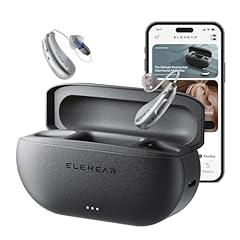
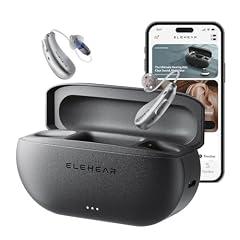
ELEHEAR Beyond Bluetooth Hearing Aids
Overview
ELEHEAR Beyond is a rechargeable, behind-the-ear receiver-in-canal pair of over-the-counter hearing aids for adults with perceived mild-to-moderate hearing loss. It is used with ear domes and a phone app for volume, listening modes, Bluetooth calls, music streaming, and remote support. The maker states that the pair includes nine pairs of domes, wax guards, a cleaning tool, a USB-C charging case, and a one-year limited warranty. The FDA device listing identifies ELEHEAR RIC 03 as an over-the-counter wireless air-conduction hearing aid, and the FCC authorization identifies Beyond as the corresponding Bluetooth product. Independent HearAdvisor testing found strong speech clarity in quiet and stable feedback control, but low speech-in-noise results in absolute terms. The maker states 20 hours per charge, 95 mAh batteries in the aids, and a 1,000 mAh case, figures not independently verified here.
What works
- Independent laboratory testing found strong speech clarity in quiet listening and stable feedback handling.
- The FDA listing gives the product a traceable over-the-counter wireless hearing-aid identity.
- The Bluetooth radio has an FCC equipment authorization for the exact Beyond product.
- The maker supplies multiple dome sizes, wax guards, a cleaning tool, and a one-year limited warranty.
What does not
- The product-page headline claims 50 dB AI noise cancellation, while the maker's specifications state a maximum 24 dB AI noise reduction and up to 50 dB gain. Those are materially different claims.
- Independent testing found speech-in-noise performance low in absolute terms, despite being stronger than the test category average.
- A hands-on review reported that the housings are large and caused substantial behind-the-ear discomfort during short wear periods.
- No public ANSI or IEC acoustic report, charger NRTL certification, material biocompatibility documentation, or product recycling program was located.
Who is it for
This product suits an adult who perceives mild-to-moderate hearing difficulty, especially softer speech or conversation in quieter rooms, and who can use a smartphone app to adjust settings. It is also relevant for someone who wants direct phone-call and music streaming from a behind-the-ear format, plus supplied dome options and remote support. The published laboratory results support its clearest use case as everyday amplification in quiet or moderately controlled environments, rather than as a solution for demanding restaurant noise.
Who is it not for
It is not for children, people with severe or profound loss, sudden or rapidly changing hearing loss, one-sided loss, ear pain, drainage, dizziness, or substantial ringing that needs medical evaluation. Those situations warrant a clinician or audiologist, not self-directed over-the-counter fitting. It is also a poor fit for someone highly sensitive to behind-the-ear pressure, someone who needs reliable speech understanding in loud social settings, or anyone unwilling to use an app and review its health-data permissions.
Integrity
The product has a traceable U.S. regulatory identity. The FDA listing identifies ELEHEAR RIC 03 as an over-the-counter wireless air-conduction hearing aid, and the FCC authorization covers the Beyond Bluetooth radio. Those records support device and wireless traceability, but they do not substitute for publicly available ANSI or IEC acoustic reports, charger safety certification, or clinical studies specific to this unit. The product uses rechargeable lithium-ion batteries in both the aids and charging case. The maker provides consumables such as domes and wax guards, plus a one-year limited warranty, which can help avoid immediate replacement for ordinary maintenance needs. However, no public U.S. take-back or recycling instructions for the hearing aids, case, or lithium batteries were located. Public material declarations and skin-contact biocompatibility documentation were also not located. The app privacy disclosures merit attention because the iOS listing says health information and email may be linked to a user, while the Google Play declaration says no data are collected.
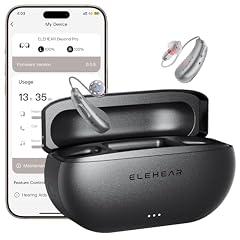
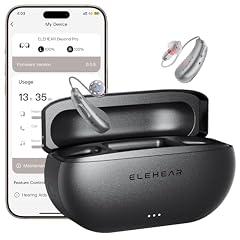
ELEHEAR Beyond Pro Bluetooth Hearing Aids
Overview
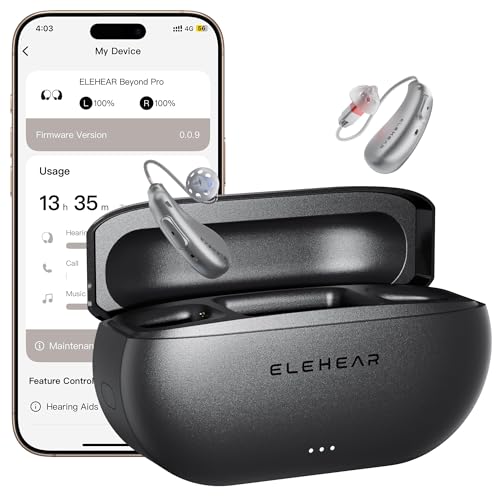
ELEHEAR Beyond Pro is a rechargeable, receiver-in-canal OTC hearing aid system for adults with perceived mild-to-moderate hearing loss. Each aid sits behind the ear, with a thin receiver wire and a dome placed in the ear canal. It can be controlled with onboard volume buttons or the ELEHEAR phone app, which the manufacturer says also adjusts modes, noise control, and directionality. The product's identity is unusually traceable for an online OTC aid. FDA device-listing records identify ELEHEAR RIC 03 as a wireless OTC air-conduction hearing aid, and the Beyond Pro manual identifies this product family with the same FCC authorization. The manual states up to 20 hours of use per charge and a charging case that can recharge the aids up to four times. Those battery figures and the advertised speech and AI benefits are manufacturer statements, not independently published acoustic or clinical test results.
What works
- The manufacturer and wireless model family can be checked against FDA device-listing and FCC authorization records.
- Physical buttons provide 20 volume steps, so basic adjustment does not depend entirely on the phone app.
- The manual includes dome-size guidance, routine cleaning directions, wax-cap maintenance, and instructions to seek professional help if a dome remains in the ear canal.
- The supplied manual gives specific charging times, battery status indicators, a battery type, and battery disposal warnings.
- ELEHEAR provides a one-year limited warranty for defects in the aids and charging case.
What does not
- No independent ANSI or IEC acoustic report, speech-in-noise study, or product-specific human outcome study was located for Beyond Pro.
- The manual reviewed does not clearly present the full OTC medical red-flag guidance for sudden or uneven hearing loss, dizziness, ear pain, drainage, or rapidly worsening symptoms.
- The advertised 30 percent clearer speech, AI noise reduction, translation, tinnitus-relief, and battery claims are not accompanied by accessible independent validation for this product.
- No accessible UL, ETL, or other U.S. NRTL certification was located for the supplied charging system.
- No manufacturer take-back program, replacement-part catalog, battery-removal procedure, or U.S. recycling instructions were located.
Who is it for
This product suits an adult who perceives gradual, bilateral mild-to-moderate hearing difficulty and wants an OTC, behind-the-ear rechargeable format with both physical controls and app adjustment. It is particularly relevant for someone comfortable fitting ear domes, cleaning wax guards, charging a case, and experimenting with sound settings at home. The FDA listing and FCC authorization make the product family more traceable than an unidentifiable online amplifier. A buyer should still treat the advertised speech improvement and app features as manufacturer claims rather than proven clinical outcomes.
Who is it not for
It is not for children, people with severe or profound loss, or anyone whose hearing loss is sudden, rapidly worsening, one-sided, fluctuating, or paired with ear pain, drainage, vertigo, major wax problems, or new one-sided tinnitus. Those situations need medical evaluation rather than self-fitting. It is also a poor fit for someone who needs clinician-verified programming, independently measured speech-in-noise performance, or clearly documented charger safety certification. Users uncomfortable with smartphone setup or routine dome and wax-cap maintenance may need a more supported care pathway.
Integrity
The strongest health accountability point is traceability. FDA records list ELEHEAR RIC 03 as an OTC wireless air-conduction hearing aid, and the Beyond Pro manual uses the corresponding FCC authorization. That supports the product's identity, but an FDA establishment registration or device listing is not FDA approval. FDA specifically cautions that “FDA Registered” or “FDA Certified” marketing can mislead consumers when read as proof of approval. The manual provides practical dome, wax, cleaning, charging, and lithium-battery disposal instructions, including a warning about battery ingestion and improper disposal. It also notes that a retained ear dome needs professional help. However, no accessible product-specific acoustic laboratory report, charger safety certification, material biocompatibility declaration, recall record, take-back scheme, or U.S. electronics and lithium-battery recycling plan was found. Long-term waste reduction therefore depends on preserving the aids and case through the stated warranty and available consumables.