
10 Best Bicycle Car Racks
 Brianna York
Please note that we participate in affiliate marketing programs. When you purchase through links on our site, we may earn a commission. As an Amazon Associate we earn from qualifying purchases. This comes at no additional cost to you and helps support the resources required to provide valuable content.Advertising Disclosure
Top-rated Bicycle Car Racks Comparison
1

+
2
4
+
5
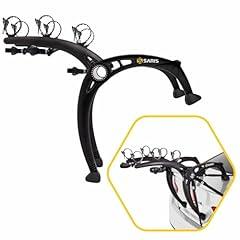
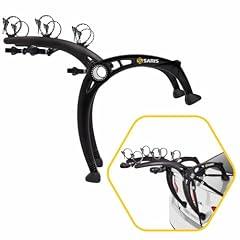
6
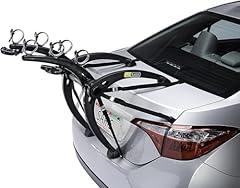
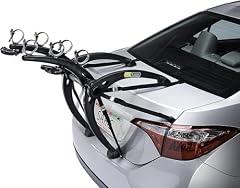
7
8
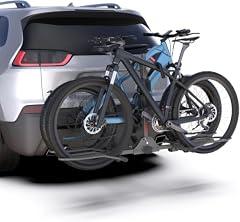
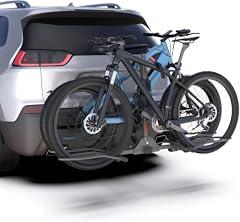
10
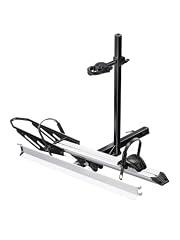
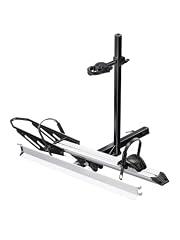
Bicycle car racks: what to check before buying
A bicycle car rack carries bikes behind, on, or attached to a vehicle so they can be transported without placing them inside the cabin. The main formats in this category are trunk-mounted racks, hanging hitch racks, and platform hitch racks. They differ in how bikes are supported, how much lifting is required, which vehicles and receivers they fit, and how much rear equipment they may cover.
A rack works only when the complete combination is compatible: vehicle, receiver or trunk structure, rack, and bicycles. Check the vehicle owner’s manual and hitch label for tongue-weight, roof-load, rear-axle, hatch, camera, sensor, and lighting restrictions. Then check the rack’s exact-model instructions or fit guide for receiver size, approved vehicle types, wheelbase, tire width, frame shape, spare-tire and bumper clearance, bike count, and per-bike and total limits. A headline such as “200 pounds” is not enough. Some listings give only a combined capacity, some do not state a per-bike limit, and supplied reviews include conflicting capacity, wheelbase, warranty, RV, and adapter claims. The rack’s own weight also counts against the vehicle’s available tongue load.
A substantiated capacity claim should identify the exact product and configuration and be supported by a traceable third-party report covering structural, fatigue, vibration, braking, and road-load testing at the claimed loads. The strongest evidence would identify the model and revision, load, test method, and laboratory, with an ISO/IEC 17025 accreditation scope listed by an ILAC-MRA accreditation body such as A2LA. ISO 6563:2025 and, where applicable, ISO 15263 provide relevant rear-load-carrier test methods. A manufacturer statement, product image, or retailer specification is still useful for initial fit checking, but it is not equivalent to an accredited laboratory report. NHTSA does not grant bicycle racks general product approval or certification.
Retention deserves equal attention. Look for positive wheel, frame, strap, pin, latch, tilt, and fold retention, clear installation and torque instructions, and a pre-drive inspection routine. Loading is also a safety issue: a ramp or wheel tray can reduce lifting and drop risk for heavy e-bikes, while hanging or tray designs without ramps require the buyer to lift the bicycle. After loading, confirm that tail lamps, reflectors, the license plate, rear camera, sensors, hatch, exhaust, and required clearance remain acceptable. A rack may need a documented auxiliary lighting or plate solution; a reflector alone does not establish compliance.
Across the supplied products, recurring caveats are important. No exact product had a located accredited, independent dynamic-load report. Vehicle claims described as “universal” still required checking the vehicle, hitch, tongue weight, axle load, clearance, and bike geometry. Several products lacked a supplied lighting or license-plate relocation system. Trunk racks can block rear equipment and require careful strap tightening; hanging racks require lifting and may need frame adapters; platform racks without ramps can be difficult to load with heavy e-bikes. Do not rely on broad RV or trailer wording, use an adapter where the manual prohibits one, exceed the lowest clearly supported capacity, or assume that a recall search proves safe performance.
Integrity
For this category, health and ecology are primarily about preventing detachment, drops, road hazards, difficult loading, premature replacement, and unnecessary drag. The supplied scores reward specific limits, usable instructions, repair support, and traceable evidence; they do not turn a manufacturer claim into independent certification.
HHealth & Safety
Crash and injury protection
This measures whether the rack and its instructions reduce detachment, falling bikes, impacts, and road hazards during loaded use. It matters because a failed rear carrier can endanger occupants and other road users. Among the supplied products, higher scores were associated with clearer operating limits and inspection guidance; lower scores reflected broad fit claims and missing manuals or test reports.
Independently tested carrying strength
This asks whether the exact rack passed traceable third-party structural, fatigue, vibration, braking, and road-load tests at its claimed load. That matters because a 160- or 200-pound listing figure alone does not show how the rack behaves on the road. Scores varied only modestly because no supplied product had a located accredited, model-specific report supporting its full rating.
Verified fit and weight limits
This measures whether buyers can verify bike count, per-bike and total weight, wheelbase, tire width, frame, receiver, vehicle, axle, hatch, and clearance limits before loading. It matters because the vehicle may impose a lower limit than the rack. Higher-scoring products supplied concrete limits and fit guidance; lower-scoring products used universal-fit language, omitted per-bike limits, or contained conflicting capacity figures.
Bike retention and latch security
This covers wheel straps, frame hooks, pins, tilt mechanisms, folding latches, anti-wobble hardware, and pre-drive checks. It matters because ordinary vibration, braking, and turns can loosen poorly secured bikes or rack parts. Higher scores reflected multiple stated retention points and detailed inspection instructions. Lower scores reflected unverified latch behavior, missing torque guidance, or no exact-model manual.
Rear-light and plate visibility
This measures whether loaded bikes leave required lamps, reflectors, and the license plate visible or provide a documented relocation solution. It matters because a rear rack can obstruct vehicle equipment even when the rack itself is securely attached. The supplied scores were generally moderate: some products included a reflector or separate lighting option, but none documented a complete, included solution for every vehicle.
Safe loading for real bike weights
This measures lifting height, ramps, wheel support, pinch warnings, loading instructions, and suitability for the claimed bike weight. It matters because heavy e-bikes can be dropped or cause strain while being lifted to a hitch or trunk. Higher scores belonged to products with included ramps and specific checks; lower scores reflected heavy lift-on designs without ramps or detailed handling guidance.
EEvidence
Safety-record transparency
This measures whether the manufacturer and seller are identifiable, the model has a clear safety history, and buyers have a reachable warranty or recall remedy. It matters because a defect needs a traceable response path. Higher scores reflected named manufacturers, warranties, support contacts, and no identified unresolved recall action; lower scores reflected limited seller information or unclear remedy terms. A clean recall search is not proof of safety.
Honest capacity and compatibility claims
This measures whether listing claims agree with manuals, labels, fit guides, warranty terms, and available evidence. It matters because “universal,” RV, adapter, anti-theft, and high-capacity claims can hide important exclusions. Higher scores went to products with consistent, specific limits. Lower scores reflected conflicting capacities, wheelbases, materials, warranties, or vehicle compatibility.
Independent proof, not just promises
This measures whether important claims are backed by model-specific third-party reports, accredited laboratories, durable identification, and a responsible US contact. It matters because retailer copy and manufacturer claims are not independent verification. The supplied scores were moderate: several products had model numbers, support routes, manuals, or retailer corroboration, but no product had a located accredited laboratory report for the claimed dynamic performance.
EEcology
Long service life and lower replacement waste
This measures corrosion protection, durable construction, replaceable wear parts, repair support, material disclosure, and access to manuals. It matters because replacing a rack for a worn strap, cradle, lock, or bolt creates avoidable waste. Higher scores were supported by documented replacement parts, warranties, and service channels, especially for products with parts catalogs; lower scores lacked corrosion evidence or repair information.
Low added driving energy use
This measures whether the rack’s shape, folding instructions, and loaded configuration reduce added fuel or electricity use. It matters because rear racks can add drag even when unloaded. Scores were close across the supplied products: several fold or can be removed, but no product had independent vehicle-specific road or wind-tunnel testing quantifying energy use. Folding is therefore not proof of low drag.
Full reviews
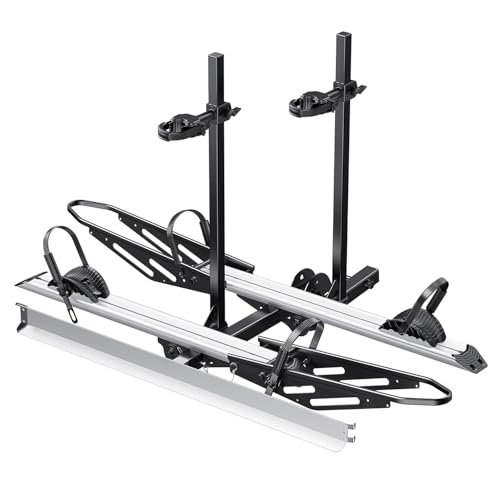
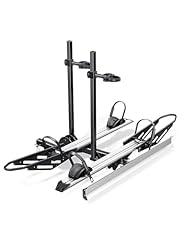
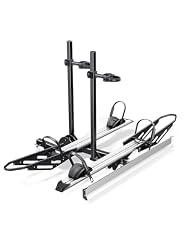
Young Electric Hitch Mount Bike Rack
Overview
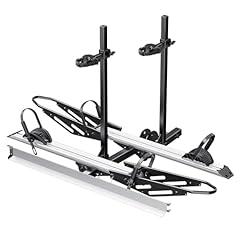
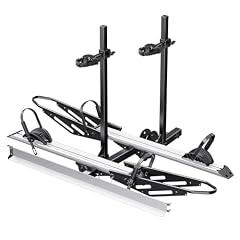
This is a hitch-mounted platform rack for carrying two e-bikes or conventional bicycles on a vehicle with a 2-inch receiver. Its published instructions specify a 200-pound total load limit, 100 pounds per bike, a 50-inch maximum wheelbase, and tires up to 5 inches wide. Bikes are rolled up the included ramp into wheel cradles, held by an upright frame arm, and strapped at both wheels. The loading format is the product's most useful documented characteristic, since it can reduce lifting of heavy e-bikes. The capacity, fit dimensions, ramp use, and pre-drive strap checks come from published product instructions, not an independent laboratory report. No traceable accredited-lab dynamic, fatigue, braking, or vibration report for this exact product was located.
What works
- The supplied ramp allows bikes to be rolled into the wheel cradles rather than fully lifted, according to the published instructions.
- Published instructions give useful core limits, including two bikes, 100 pounds per bike, a 2-inch receiver, 50-inch wheelbase, and tires up to 5 inches wide.
- The restraint process uses wheel cradles, wheel straps, an upright arm, and a locking hitch pin, with instructions to check all securing points before travel.
- The published maintenance guidance calls for inspections of welds, bolts, straps, wheel cradles, and hitch connections before use and after vibration exposure.
- A manufacturer support site provides a contact route, manuals, support videos, and parts-list access.
What does not
- No model-specific accredited third-party report was found to substantiate the 200-pound rating under road vibration, braking, fatigue, or RV and trailer conditions.
- The instructions do not provide a vehicle-by-vehicle fit guide or calculate the combined rack and bike load against the vehicle's hitch, tongue-weight, axle-load, hatch, camera, or sensor limits.
- No supplied, documented rear-light, reflector, or license-plate relocation solution was identified, even though loaded bikes can obstruct vehicle equipment.
- The published information conflicts on construction and weight. The retail listing describes aluminum and 56 pounds, while the published manual describes a steel core with aluminum tray and lists 66.1 pounds.
- The manual advises retightening fasteners after vibration and having assistance with very heavy bikes, which adds handling and inspection demands.
Who is it for
This product suits an owner of a car, SUV, truck, van, RV, or trailer that has a confirmed 2-inch receiver and enough hitch and axle capacity for the rack plus both bicycles. It is most appropriate for two compatible bikes that remain at or below 100 pounds each, have wheelbases no longer than 50 inches, and use tires no wider than 5 inches. The ramp is especially relevant where an e-bike is too heavy to lift safely onto a conventional platform rack.
Who is it not for
It is not appropriate for buyers who cannot verify their vehicle's tongue-weight, axle-load, rear-hatch, camera, and sensor restrictions, or whose receiver is not a 2-inch type. Avoid treating the stated 200-pound product rating as permission to exceed the vehicle or hitch maker's lower limit. It also does not suit riders needing independently documented fatigue and road-load testing, or those who need an included lighting and license-plate relocation system for a vehicle whose rear equipment will be obscured.
Integrity
The relevant safety issue is secure vehicle transport, not chemical exposure. Published instructions call for a locking hitch pin, wheel straps, an upright hold-down arm, pre-drive checks, and frequent inspection of welds, bolts, straps, cradles, and hitch connections. They also caution users to maintain control on the ramp and consider assistance for very heavy bikes. No recall, CPSC warning, or NHTSA recall result specific to this product was located in the checks performed. Material disclosure is incomplete and inconsistent. One retail record calls the product aluminum and lists a 56-pound weight, while published instructions describe a reinforced steel core and aluminum tray at 66.1 pounds. The manufacturer offers support contact and parts-list access, but no exact-product corrosion testing, replaceable-parts catalog, or independently verified durability report was found. Folding the rack when unused may reduce its parked footprint, but no independent evidence quantifies its driving-energy effect.

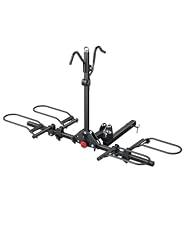
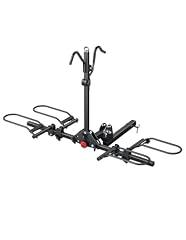
Young Electric Hitch 2-Bike Rack
Overview
This is a folding, hitch-mounted platform carrier for two bicycles, with a roll-on loading ramp, wheel cradles, wheel straps, adjustable frame-holding arms, and a fold-up position. The catalog-matched instruction manual lists a 200-pound maximum load, aluminum trays, a 2-inch receiver connection, and directions to roll each bike up the ramp before tightening its frame and wheel restraints. The central capacity and retention claims are manufacturer-stated, not supported by a disclosed accredited-laboratory road-load or fatigue report. Fit information is useful but incomplete. The available material identifies the 2-inch receiver, 5-inch maximum tire width, and 100-pound-per-bike claim, but does not provide a vehicle-specific tongue-weight, axle-load, hatch-clearance, or lighting-clearance guide. Source material is also inconsistent, because the brand's current similarly titled page gives a different rack weight and dimensions from the catalog-matched manual.
What works
- The included ramp allows bikes to be rolled onto the trays instead of lifted, according to the installation instructions.
- The manual describes multiple restraints, including wheel cradles, wheel straps, frame-arm straps, an adjustable slider, and a spring-return folding pin.
- The brand provides a support contact, manuals, and a parts-support portal.
- The product materials are disclosed as aluminum and alloy steel, and the rack is designed for a 2-inch receiver.
What does not
- No model-specific third-party structural, vibration, braking, fatigue, or corrosion test report was found.
- The instructions do not provide a vehicle-fit guide for tongue weight, rear axle load, hatch interference, camera interference, or sensor interference.
- No included auxiliary lights, reflectors, or license-plate relocation method is documented, despite a loaded rack potentially obscuring rear equipment on some vehicles.
- The available descriptions conflict on rack dimensions and weight, which makes it harder to confirm the exact configuration before loading.
- Ramp capacity, pinch-point warnings, and a detailed pre-drive inspection checklist are not clearly documented in the available material.
Who is it for
This product suits an owner of two e-bikes or fat-tire bicycles who has a properly rated 2-inch hitch receiver and can independently confirm the vehicle's permitted tongue weight after adding the rack and loaded bikes. It is most relevant where lifting heavy bikes is difficult, because the instructions use a roll-on ramp. The owner should be comfortable assembling hardware, checking fastener tightness, securing each wheel and frame restraint, and confirming that the loaded bikes do not cover rear lamps, reflectors, cameras, or the license plate.
Who is it not for
It is not suited to vehicles with a receiver smaller than 2 inches, vehicles whose hitch or owner manual does not permit the combined rack and bike load, or users who need a manufacturer-provided vehicle fit guarantee. It is also a poor match for drivers who cannot verify rear-light and plate visibility after loading. Households that frequently remove the carrier should consider its handling demands, because the rack itself is substantial and the available documents do not provide a supported solo-lifting procedure or a stated ramp load rating.
Integrity
The safety-positive features are practical rather than independently validated. The available instructions show a ramp-based loading process and require wheel, frame, and slider restraints, which can reduce lifting and help prevent bicycle movement when followed carefully. The brand also publishes a support email and support portal. Searches of the CPSC and NHTSA materials did not identify a recall matched to this product as of August 16, 2026. Important gaps remain. No accredited-lab report was located for the stated 200-pound carrying claim, retention system, corrosion resistance, or road vibration performance. The listed aluminum and steel construction may support repairable hardware-based assembly, but model-specific replacement-part availability and corrosion-test evidence were not confirmed. A folded rack may reduce its parked footprint, but no vehicle-specific aerodynamic or fuel-use testing was found. Rear lamps and the plate must remain visible, or require a suitable auxiliary solution.

Rockland RokRack Foldable E-Bike Rack with Ramp
Overview
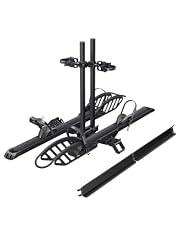
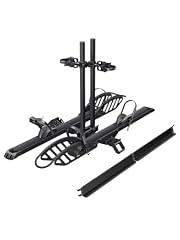
This is a foldable, hitch-mounted platform rack intended to carry two e-bikes on vehicles with a 2-inch receiver. The published product information lists a 200-pound total load rating, a supplied loading ramp, fit for tires up to 5 inches wide, and wheelbases up to 50 inches. It is listed as aluminum and alloy steel, weighs about 66 pounds, and is intended for cars, SUVs, vans, and RVs. Those capacity, fit, ramp, anti-rust, and retention details are manufacturer-stated specifications reproduced by a retailer, not independently verified test results. Publicly available product information describes ratcheting wheel straps, padded contact points, and folding hardware, but no exact-product instruction manual, accredited laboratory report, lighting kit, or documented plate-relocation solution was located. Vehicle tongue-weight, receiver, axle-load, hatch-clearance, and state visibility requirements therefore remain checks for the owner before use.
What works
- Manufacturer-stated 200-pound total capacity supports two bikes up to 100 pounds each.
- The supplied ramp can reduce lifting height and the chance of dropping a heavy e-bike during loading.
- Manufacturer-stated limits cover 5-inch tires and 50-inch wheelbases, which gives useful starting fit information for many fat-tire e-bikes.
- Published descriptions identify ratcheting safety straps and padded contact areas for bike retention and finish protection.
What does not
- No model-specific independent structural, fatigue, vibration, braking, or road-load test report was located for the 200-pound rating.
- The broad universal-fit and RV-use claims are not paired with a vehicle fit guide or limits for tongue weight, axle load, receiver rating, or rear-hatch clearance.
- No supplied auxiliary lights, reflectors, or documented plate holder were identified, despite the likelihood that two e-bikes can obstruct rear lamps or the plate.
- No exact-product manual was located to verify pre-drive checks, strap routing, latch inspection, ramp load limit, pinch-point warnings, or replacement-part availability.
Who is it for
This product suits an owner of two relatively heavy e-bikes who already has a correctly rated 2-inch hitch receiver and has checked their vehicle manual for tongue-weight, axle-load, rear-camera, sensor, and hatch restrictions. It is most relevant where the bikes fit the stated 100-pound per-bike, 5-inch tire, and 50-inch wheelbase limits. The supplied ramp is particularly useful for riders who can roll bikes onto a platform but do not want to repeatedly lift them to shoulder height. Careful pre-trip inspection is important because detailed instructions were not independently located.
Who is it not for
It is not suited to buyers who need independently documented dynamic testing, a vehicle-specific compatibility guarantee, or a supplied solution for obscured rear lights and license plates. Avoid treating universal fit as proof for a low tongue-weight vehicle, a lightweight receiver, a rear-hatch vehicle with limited clearance, or any vehicle whose camera and parking sensors are affected by rear cargo. It is also unsuitable when either bike exceeds 100 pounds, has tires wider than 5 inches, or has a wheelbase longer than 50 inches. Users unable to handle a 66-pound rack during installation or removal should plan assistance.
Integrity
The main safety benefit is the platform format with a manufacturer-stated loading ramp and wheel retention straps, which can make heavy e-bike loading more controlled than lifting. However, these are product claims rather than independently confirmed performance evidence. No accredited lab report was located for the stated 200-pound capacity or for its retention, fold, and tilt hardware. The product information also does not identify an auxiliary rear-light or license-plate system. NHTSA explains that racks and loaded bicycles can create safety concerns when required lamps or reflectors are impaired. The listed materials are aluminum and alloy steel, and the seller describes an anti-rust finish. No model-specific salt-spray result, repair manual, replacement-straps catalog, or spare-hardware program was found, so longevity and repairability cannot be verified. Searches of the public CPSC and NHTSA recall resources did not identify a recall for this product as of August 16, 2026. That is not proof of tested safety, but the product remains traceable through its model number and one-year manufacturer warranty claim.

2-Bike Hitch Rack
Overview
This is a steel, tray-style hitch rack for two bicycles. It mounts only in a 2-inch receiver, weighs about 41.6 pounds, folds upright when empty, and uses a tilt mechanism for rear-hatch access. Young Electric states a 200-pound total limit, or 100 pounds per bike, with support for tires up to 5 inches wide, 20 to 29 inch wheel sizes, and a 58-inch maximum wheelbase. The product-specific manual documents a hitch locking pin, padded J-hooks with snap pins, wheel straps, and a rear reflector. It instructs users to tighten the wheel straps and check their tension before travel. These are useful restraint details, but no model-specific report from an accredited third-party laboratory was located to substantiate the 200-pound rating under vibration, braking, fatigue, or road-load testing.
What works
- The product-specific manual documents wheel straps, frame hooks, snap pins, a hitch locking pin, and instructions to recheck strap tension before driving.
- Fit limits are more specific than a generic universal-fit claim, including two bikes, 100 pounds per bike, 5-inch tires, a 58-inch wheelbase, and a 2-inch receiver.
- The official product page states that the rack folds when unloaded and can tilt down for hatch access.
- A model-specific manual and a reachable support contact are available through the manufacturer.
What does not
- No model-specific independent dynamic-load, fatigue, vibration, braking, or corrosion test report was located.
- The official page conflicts on RV capacity. Its warning limits RV use to 120 pounds, while its specifications state 160 pounds.
- The reflector is not a replacement lighting or license-plate relocation system. The product materials reviewed do not document an auxiliary lamp or plate-holder solution.
- There is no loading ramp. Loading a bike near the stated 100-pound per-bike limit requires lifting it onto a rack that is already about 41.6 pounds.
- The manufacturer’s warranty page is written primarily for e-bikes, while the rack page separately states a one-year rack warranty, leaving detailed rack remedy terms less clear.
Who is it for
This product suits a user with a vehicle already equipped with a properly rated 2-inch receiver, who carries one or two conventional or heavy bicycles within the stated 100-pound-per-bike limit. It is most appropriate when the bikes have tires no wider than 5 inches and wheelbases no longer than 58 inches. The user should be comfortable lifting bikes onto a tray, following a multi-step setup, tightening wheel straps, checking hook pins, and confirming that the combined rack and bike load remains within the vehicle and hitch limits.
Who is it not for
It is not suited to anyone who needs a ramp or cannot safely lift a heavy e-bike to tray height. It is also unsuitable for vehicles with a 1.25-inch receiver, bikes beyond the stated wheelbase or tire limits, or any setup that would exceed the vehicle’s tongue-weight, axle-load, hatch-clearance, camera, sensor, lighting, or plate-visibility limits. RV users should not rely on the conflicting 160-pound specification. The manufacturer warning gives the more conservative 120-pound RV limit, but independent RV-duty testing was not located.
Integrity
The central safety concern is evidence quality, not a documented recall. Searches of public NHTSA and CPSC recall resources did not identify a model-specific recall, and the manufacturer provides a product-specific manual, support contact, and a parts-sales page. The manual gives concrete restraint instructions, including securing each wheel with straps and checking strap tension. Those details matter because a loose bike or rack can become a road hazard. The rack is manufacturer-stated alloy steel, which can support a long service life if its finish remains intact, but no model-specific salt-spray or durability report was located. A customer review on the manufacturer page reports paint chipping, which is not independent proof of a defect but makes routine inspection of the coating, welds, fasteners, straps, hooks, and pins prudent. Folding the rack when unused may reduce its size behind the vehicle, but no vehicle-specific fuel-use or electric-range testing was found.

Saris Bones EX 3-Bike Trunk Rack
Overview
This is a trunk-mounted carrier that hangs up to three standard-frame bicycles from cradles and attaches to an approved vehicle with six straps. Saris specifies a 105-pound total limit and a 35-pound maximum for each bike. The manual directs users to put the heaviest bike nearest the vehicle, keep tires at least 12 inches above the ground, and avoid opening the trunk or hatch while installed. Its injection-molded plastic arms and legs, rubber contact feet, anti-sway cradle straps, and spoiler-clearing leg shape are manufacturer-stated design features. Saris provides a vehicle fit finder, but approval remains vehicle-specific. The manual excludes tandem and recumbent bikes, requires a Bike Beam for many step-through, sloped-top-tube, full-suspension, or low-hanging bikes, prohibits RV and trailer use, and limits use to paved roads at 70 mph or less. No model-specific accredited laboratory report was located for its carrying rating or road-load performance.
What works
- The manufacturer gives concrete limits, 35 pounds per bike and 105 pounds total, rather than only a bike count.
- The manual provides substantive risk controls, including six mounting straps, routine strap and bolt checks, periodic re-tightening, and loading the heaviest bike closest to the vehicle.
- A vehicle-specific fit finder and detailed instructions provide a way to screen compatibility before installation.
- Replacement anti-sway straps and other trunk-rack parts are offered, which can extend service life when wear items need replacement.
- An independent road review reported stable real-world use and effective tie-downs, although it was not a controlled safety test.
What does not
- No traceable accredited-laboratory report was found for the exact product's dynamic, fatigue, braking, vibration, or retention testing at the stated load.
- The product supplies no documented rear-light, reflector, or license-plate relocation solution. Users must check that their loaded vehicle remains legal and visible in their state.
- It is a hanging rack with a 35-pound per-bike ceiling, so many e-bikes and unusually heavy bicycles are outside its permitted use.
- Correct fit is not universal. Some vehicle shapes need separate Hatch Huggers, and nonstandard bicycle frames can need a separate Bike Beam.
- Straps, cradles, knobs, and ratcheting assemblies are consumable items excluded from the limited lifetime warranty, even though Saris sells replacement parts.
Who is it for
It suits drivers with a vehicle approved in the Saris fit finder who transport one to three conventional bicycles weighing no more than 35 pounds each. It is most appropriate for owners comfortable with a hands-on trunk-rack routine, including positioning six straps correctly, checking them during a trip, inspecting wear before each use, and removing the carrier when it is not needed. It also suits households whose bikes have standard horizontal top tubes, or that can use the separately sold Bike Beam where required.
Who is it not for
It is not suited to riders carrying e-bikes over 35 pounds, tandems, recumbents, or bikes that cannot be safely supported with the required frame geometry or a Bike Beam. It should not be used on an unlisted vehicle, any RV or trailer, or for off-road travel. Drivers who cannot confirm rear lamp, reflector, and plate visibility after loading should use a setup with a documented relocation solution. It also demands regular manual checks, so it is unsuitable for users unwilling to inspect straps, cradles, bolts, and paint-contact areas before travel.
Integrity
The strongest safety evidence is the product-specific instruction manual. It specifies the three-bike and per-bike limits, six attachment straps, a 70 mph maximum, no off-road use, and inspection of straps, cradles, wheel scoops, and loose bolts. It also says to replace a mounting strap at the first sign of wear. Saris provides customer support, product registration, a fit finder, manuals, and replacement parts. No recall for this carrier was identified in the U.S. recall searches reviewed, although Saris has had an older recall for an unrelated stationary trainer. Saris states that the rack uses rust-free injection-molded plastic and 100 percent recyclable materials. Those environmental material claims were not supported by a third-party material analysis or recycling certification. The manual instructs users to remove the carrier when unused, which can avoid unnecessary driving drag, but no vehicle-specific aerodynamic or fuel-use test for this product was located. Replacement support is meaningful, though common wear components are excluded from the limited lifetime warranty.

Saris Bones 3-Bike Trunk Rack
Overview
This product is a strap-mounted trunk carrier for up to three standard-frame bicycles. Saris specifies a maximum of 35 pounds per bike and 105 pounds total. The rack itself is listed at 11 pounds in the current manual. It uses six frame straps, spring-buckle vehicle straps with coated hooks, and ratcheting anti-sway straps. Bikes without a horizontal top tube need the separate Bike Beam accessory. Fit is vehicle-specific, not truly universal. The manual requires checking Saris's vehicle fit guide, positioning the center tube above the bumper, and keeping straps clear of the spoiler. Saris publishes detailed use and inspection directions, including regular buckle checks and replacing worn straps. Saris also links a European certification document, but a current public report identifying this exact retail configuration, laboratory, road-load setup, and results was not available for independent review.
What works
- The official manual gives clear limits of three bikes, 35 pounds per bike, and 105 pounds total.
- Six bike-retention straps and ratcheting anti-sway straps are shown in the official instructions, with regular tightening and wear checks.
- The manufacturer provides a vehicle fit guide and states that a Bike Beam is required for frames without a horizontal top tube.
- Wear items and structural parts remain available from Saris, including straps, anti-sway straps, arms, legs, knobs, and hardware.
- The manual provides specific cautions for loading order, driving behavior, spoiler clearance, exhaust clearance, and rear-hatch use.
What does not
- Rear lamps and the license plate can be obstructed. The product does not include a documented light bar or plate-relocation solution.
- The rack does not provide integrated bike or vehicle locks in the current product comparison information.
- The maximum 35-pound per-bike limit excludes many e-bikes, and loading still requires lifting each bike onto hanging arms.
- Independent dynamic-test evidence is incomplete. Saris links European certification material, but no current model-specific laboratory report was publicly traceable.
- Published rack-weight figures are inconsistent across Saris materials, with 9 pounds in one specification area and 11 pounds in the comparison table and manual.
Who is it for
This product suits a household carrying one to three conventional bicycles with horizontal top tubes, or bikes that can use the separate Bike Beam. It is best matched to a car that appears in Saris's approved fit guide and has a trunk or hatch layout that permits the specified strap positions. The user should be comfortable lifting each bike into a hanging carrier, checking strap tension at stops, and removing the carrier before using the rear hatch. It is also practical for owners who value replaceable straps and other service parts.
Who is it not for
It is not suited to riders with bikes above 35 pounds each, including many electric bicycles, or to people who cannot safely lift bicycles into a hanging rack. Avoid using it on any vehicle not specifically approved in the Saris fit guide, especially where straps would bear on an unsuitable spoiler or cannot sit in the required locations. It also does not suit users who need integrated theft protection, rear-hatch access while loaded, or an included solution for obscured rear lighting and license-plate visibility.
Integrity
The primary safety value is the detailed manufacturer instruction set. It specifies a 35-pound per-bike limit, 105-pound total limit, approved vehicle fit, six bike straps, and routine strap and buckle inspections. It also cautions against off-road use, speeds above 80 mph, rear-hatch opening while installed, and bikes or straps contacting a spoiler. Rear lighting and plate visibility remain the driver's responsibility, because no lighting or plate kit is supplied. Saris describes the rack as rust-free injection-molded plastic and made from 100 percent recyclable materials. Those are manufacturer statements, rather than independently verified lifecycle findings. The more concrete waste-reduction strength is repair support. Saris sells replacement straps, anti-sway straps, arms, legs, knobs, and related hardware, and provides a limited lifetime warranty for North American car-rack purchasers. No product-specific CPSC or NHTSA recall record was located in the reviewed searches.

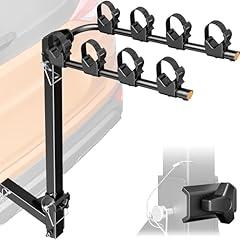
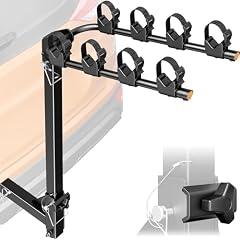
monTEK 4-Bike Foldable Hitch Rack
Overview
This product is a hanging, hitch-mounted carrier for up to four bicycles on a vehicle with a 2-inch receiver. It is listed at 22.7 pounds and about 37.6 by 11.3 by 43.1 inches, with a fold-up position and a tilt function intended to improve rear-access convenience. Independent retailer records repeat the manufacturer-stated alloy-steel construction, 3 mm steel tubing, 150-pound total carrying claim, 6-inch bike spacing, anti-rattle hitch tightening, and frame and anti-sway straps. Those records also state that it is not for trailers, RVs, or vehicles with rear-mounted spare tires, despite the broader universal-fit wording. No exact-product instruction manual, accredited laboratory report, or third-party road-load test was located.
What works
- Independent retailer records consistently identify an alloy-steel rack with 3 mm steel tubing and a 22.7-pound product weight.
- Manufacturer-stated 6-inch spacing and anti-sway straps are intended to reduce bike-to-bike contact during transport.
- The listed 2-inch receiver-only limitation is more useful than an unrestricted vehicle claim, and exclusions for RVs, trailers, and rear spare tires are disclosed by a retailer record.
- The product is listed as foldable and tiltable, which can reduce storage bulk and may improve access behind compatible vehicles.
- A five-year manufacturer warranty is listed, although repair parts and service procedures were not located.
What does not
- The 150-pound total limit conflicts with a separately stated maximum of 44 pounds per bike. Four bikes at that per-bike figure would total 176 pounds, and the documentation does not explain the safe weight distribution.
- No model-specific independent report was found for structural fatigue, vibration, braking, retention, or road-load testing under a recognized rear-carrier test method.
- No exact instruction manual or vehicle-fit guide was located to address tongue weight, axle loading, hatch clearance, wheelbase, frame shapes, tire sizes, or pre-drive inspection steps.
- No documented auxiliary lighting, reflector, or license-plate relocation solution was found, even though a loaded four-bike hanging rack can obstruct rear equipment on some vehicles.
- A ramp, explicit pinch-point warnings, and loading guidance for individual bike weights were not located.
Who is it for
This product suits an owner of a car, SUV, or truck that already has a correctly rated 2-inch hitch receiver and who transports conventional, relatively light bicycles. It is most appropriate when the combined bike weight is kept clearly below 150 pounds, the vehicle manual permits the receiver load, and the owner can verify that the bikes do not hide required lamps or the license plate. The buyer should be comfortable lifting bikes onto a hanging carrier and checking straps, the hitch-tightening mechanism, and clearance before every drive.
Who is it not for
It is not suited to RV, trailer, or rear-spare-tire applications, which are specifically excluded in the available retailer documentation. It is also a poor fit for buyers carrying four heavy e-bikes, unusually shaped frames, long-wheelbase bikes, fat tires, or bikes that cannot be securely supported by the listed frame-and-strap arrangement. Households that need a documented ramp, wheel trays, vehicle-specific fit confirmation, independently tested carrying capacity, or an included rear-light and plate solution should use a product with those records available.
Integrity
The main safety-relevant construction claim is an alloy-steel frame with 3 mm tubing. That may support long service life, but it remains manufacturer-stated. A five-year warranty and a stated 10-year spare-part availability period appear in retailer records, yet no parts catalog, replacement strap listing, corrosion test, repair manual, or service procedure was found. The available information therefore does not establish how readily worn straps, hardware, or latches can be replaced. No product-specific recall, CPSC action, or NHTSA action was located in the searches performed. That is not proof of safety performance. Most importantly, no accredited independent dynamic-load or retention test report was found. ISO 6563:2025 sets functional-safety requirements and test methods for rear carriers, but no evidence was located that this product was tested to it. Fold-up storage may make removal when unused easier, but no vehicle-specific fuel-use or aerodynamic testing was found.

TrailV2 Plus Ebike Hitch Rack
Overview
This is a platform-style, two-bike hitch rack for vehicles with a 2-inch receiver. The manufacturer states a 170-pound combined bike limit, 85 pounds per bike, plus compatibility with tires up to 5 inches wide and wheelbases up to 50 inches. It folds for storage and tilts for vehicle access, although fit on a particular vehicle still depends on its hitch and tongue-weight limits. The product's defining feature is a manufacturer-stated 46-inch steel loading ramp with guide blocks, intended to make heavier e-bikes easier to roll into the wheel trays. The stated retention system uses a front wheel cradle and clamp, rear-wheel straps, a hitch tightener, and keyed hitch and wheel locks. No model-specific independent road-load, fatigue, braking, vibration, or corrosion report was located.
What works
- The stated 85-pound per-bike allowance addresses many heavy e-bike configurations, provided the vehicle hitch is rated for the combined rack and bike load.
- A 46-inch ramp, raised side edges, textured surface, and guide blocks are manufacturer-described features that can reduce lifting and rolling difficulty.
- The published wheelbase and tire-width limits give buyers more usable fit information than a generic two-bike claim.
- Replacement rear wheel holders, wheel clamps, guide kits, and ramps are sold directly by the manufacturer, supporting repair after wear or damage.
What does not
- No traceable independent laboratory report was located for this exact product's 170-pound rating, retention system, road vibration, braking, or fatigue performance.
- The published compatibility claims do not provide a vehicle-by-vehicle fit guide or explain required tongue-weight, axle-load, hatch, camera, and sensor checks.
- No documented auxiliary lights, reflectors, or license-plate holder are supplied. A loaded rear rack can obscure required rear equipment on some vehicles.
- The product page describes locking hardware, but it does not provide a detailed pre-drive inspection procedure or a publicly accessible instruction manual with torque, loading, and maintenance limits.
Who is it for
It suits an owner of a car, SUV, truck, van, or compatible RV with a properly rated 2-inch receiver who needs to carry up to two bikes and can verify the actual hitch rating, vehicle tongue-weight limit, and rear-light and plate visibility before travel. It is particularly relevant for users of heavy e-bikes who prefer rolling rather than lifting, as long as each bike stays within the manufacturer-stated 85-pound limit and the wheelbase and tire dimensions fit the published limits.
Who is it not for
It is not suited to anyone who cannot confirm their vehicle's allowable tongue weight after adding the rack's own weight and both bikes. It is also a poor match for vehicles where the loaded rack hides the plate, lamps, reflectors, camera, or sensors unless the owner adds a lawful solution. Buyers needing independently documented dynamic-load testing, corrosion testing, detailed torque specifications, or a formal vehicle-fit guide should not treat the published manufacturer claims as equivalent evidence.
Integrity
The main injury-reduction feature is the manufacturer-described roll-on ramp. Its 46-inch length, textured steel surface, side edges, and guide components are intended to help steady bikes during loading. The product also uses a three-point wheel-based retention arrangement with a hitch lock, wheel locks, a front clamp, rear straps, and a hitch tightener. Those are meaningful design features, but no independent testing was found to confirm performance at the claimed maximum load. The manufacturer has a public support channel, phone contact, warranty registration page, and replacement parts for wheel holders and clamps. That improves the repair path relative to a rack with no parts support. The manufacturer describes the ramp as steel, while the product listing describes the rack as alloy steel. No model-specific salt-spray result, corrosion warranty terms, recycled-material disclosure, aerodynamic test, recall notice, or documented lighting and plate-relocation kit was located.

Crindar 2-Bike Hitch Rack for Cars
Overview
This is a 39-pound, two-bike platform carrier that inserts into a 2-inch hitch receiver. It holds bikes in wheel trays with straps and padded frame hooks, then uses a hitch tightener and a locking hitch pin. The carrier folds upright when empty and is stated to tilt rearward for vehicle-rear access. The published specification is a 160-pound total limit, or 80 pounds per bike, with stated fit for tires up to 5 inches wide and wheelbases up to 63 inches. Those are manufacturer claims reproduced by outside retailers, not lab-verified ratings. No exact-product instruction manual, accredited laboratory report, vehicle fit guide, lighting kit, or replacement-parts catalog was located. Its title also includes a conflicting 200-pound phrase, while the product specifications consistently state 160 pounds.
What works
- The stated 80-pound per-bike limit addresses many heavy e-bike configurations, provided both bikes and the vehicle hitch remain within their separate limits.
- Published fit details are concrete, including a 2-inch receiver, 5-inch tire width, and 63-inch wheelbase limit.
- The stated platform layout uses wheel straps, padded frame hooks, an anti-wobble tightener, and a keyed hitch pin lock.
- The stated tilt and fold functions can reduce awkward rear-access and storage handling compared with a fixed carrier.
What does not
- No model-specific independent dynamic, braking, fatigue, retention, or corrosion test report was found.
- No exact-product manual was found to verify installation torque, pre-drive checks, tilt-latch operation, strap inspection, or pinch-point warnings.
- No documented rear-light, reflector, or license-plate relocation solution was found, despite a loaded platform rack potentially blocking them.
- The listing uses a conflicting 200-pound phrase even though its stated load capacity is 160 pounds, which weakens capacity-claim clarity.
- The universal vehicle wording is not a substitute for checking the vehicle manual, hitch label, tongue-weight limit, hatch clearance, camera, and sensor restrictions.
Who is it for
This product fits an owner of a car, SUV, truck, van, or RV that already has a correctly rated 2-inch receiver and wants to transport up to two bikes within the stated 80-pound-per-bike limit. It is most relevant where the bikes have wide tires or long wheelbases that remain within the stated 5-inch and 63-inch limits. The user should be comfortable verifying the vehicle and hitch tongue-weight limits, checking rear visibility, and conducting their own pre-trip restraint inspection.
Who is it not for
It is not suited to anyone who needs documented third-party road-load testing, a vehicle-specific fit guide, or a confirmed lighting and plate solution. Avoid using it where the loaded bikes could exceed the vehicle, receiver, or hitch tongue-weight rating, obstruct required lights or the plate, contact the hatch, or interfere with cameras and sensors. It is also a poor fit for users who cannot safely lift bikes onto a platform carrier or who need a published ramp rating and detailed loading instructions for heavy e-bikes.
Integrity
The carrier is described as alloy steel and metal, with a stated 160-pound total load limit, adjustable wheel trays, straps, padded hooks, a hitch tightener, and a keyed hitch pin. These are useful design details, but they remain manufacturer-stated. An exact-product manual and independent laboratory evidence were not located to confirm road-load performance, strap retention, tilt-latch security, corrosion resistance, or the stated capacity. No matching recall or regulatory action was located in the searched CPSC and NHTSA material as of August 16, 2026. That is not proof of safety. The seller states 24 months of professional support, but no parts catalog or repair instructions were found for straps, cradles, locks, or hardware. The product's dimensions and upright folded configuration can add drag when left on a vehicle, and no independent fuel-use or electricity-use testing was found. Removing it when unused can avoid unnecessary driving energy use.

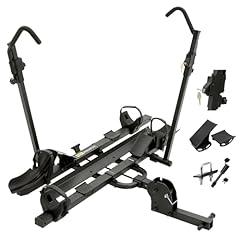
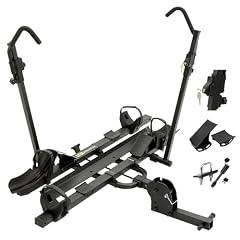
Young Electric Hitch Mount Bike Rack with Ramp
Overview
This is a single-bike, hitch-mounted platform carrier for a 2-inch receiver. It is intended for one bicycle or e-bike, with a manufacturer-stated 100-pound load capacity. The product record lists a 35.3-pound rack and 64.5 by 28 by 34 inch overall dimensions. An independently hosted copy of the model-specific instructions identifies a steel-and-aluminum construction, a removable loading ramp, a 50-inch maximum wheelbase, and 5-inch maximum tire width. Its retention system uses a padded frame clamp plus ratcheting straps at both wheels. The instructions specify 50 Nm torque at key assembly points and periodic checks of bolts, pins, straps, and rubber parts. No traceable accredited-laboratory report was located for this exact product's claimed carrying strength, vibration resistance, or road-load performance.
What works
- The instructions give concrete fit limits, including a 2-inch receiver, 50-inch wheelbase, and 5-inch tire width.
- A ramp allows the bike to be rolled onto and off the platform instead of lifted to tray height.
- The documented retention process includes a frame clamp and separate ratcheting straps for both wheels.
- The manual calls for bolt torque, fastener checks, strap inspection, and replacement of worn restraint parts.
What does not
- The 100-pound capacity is manufacturer-stated. No model-specific independent dynamic, fatigue, braking, or vibration test report was located.
- Vehicle fit is not fully verified by the rack alone. The buyer must separately confirm receiver rating, tongue weight, axle load, hatch clearance, cameras, sensors, and any vehicle restrictions.
- The product does not include a documented rear-light, reflector, or license-plate relocation solution. An optional brake light is mentioned separately, without evidence of a complete compliant lighting and plate setup.
- No model-specific corrosion test, replacement-parts catalog, or repair documentation was located. The published warranty page reviewed is written for e-bikes rather than clearly covering this rack.
Who is it for
This product suits an owner transporting one heavy bicycle or e-bike that actually falls within the manufacturer-stated 100-pound limit, has a wheelbase no longer than 50 inches, tires no wider than 5 inches, and a compatible frame contact point. It is most appropriate for a buyer with a correctly rated 2-inch receiver who will check hitch and vehicle tongue-weight limits before each trip. The ramp is particularly relevant where lifting a heavy bike onto a carrier would be difficult.
Who is it not for
It is not suited to riders needing to carry two bikes, bicycles with a wheelbase over 50 inches or tires over 5 inches, or bikes that cannot safely accept a frame-clamp contact point. It is also a poor fit for anyone who cannot verify the vehicle's receiver rating, loaded tongue weight, rear clearance, and camera or sensor effects. Night drivers and users whose bike blocks lamps or the license plate need a documented vehicle-specific lighting and plate solution before use.
Integrity
The primary injury controls are procedural rather than independently validated. The available model-specific instructions require a 2-inch receiver, torque at key connections, a locking hitch pin, frame clamping, two wheel straps, and recurring inspection of hardware and worn straps. Targeted searches did not identify a product-specific CPSC or NHTSA recall, but no accredited independent road-load or retention test report was located. The supplied guidance also does not document how to preserve rear lighting and plate visibility when a loaded bike obstructs them. Steel and aluminum are disclosed, and the instructions advise washing road salt away, drying the rack, lubricating moving parts, and replacing damaged straps or rubber components. Those steps can extend usable life. However, corrosion-resistance testing, replaceable-part availability, repair instructions, and a rack-specific warranty policy were not located. The non-folding platform form also has no independent evidence showing low added driving energy use.