
10 Best Berberine Supplements
 Lauren Wilson
Please note that we participate in affiliate marketing programs. When you purchase through links on our site, we may earn a commission. As an Amazon Associate we earn from qualifying purchases. This comes at no additional cost to you and helps support the resources required to provide valuable content.Advertising Disclosure
Top-rated Berberine Supplements Comparison
1

2
4

+
5
6
7
8
9


+
Berberine supplements: what to look for
Berberine supplements are sold as capsules, softgels, and gummies, usually for metabolic, digestive, blood-sugar, cholesterol, or weight-related support. The product that “works” is not simply the one with the largest number on the front label. A buyer first needs to know exactly which berberine form is present, how much is provided per serving and per day, and whether that amount has been independently confirmed in the finished product.
Headline numbers can mislead in several ways. A total such as “1,500 mg” may include cinnamon, turmeric, or another botanical rather than berberine itself. An extract-equivalent number may describe the starting amount of raw plant material, not the chemically measured berberine content. A product may list berberine HCl, dihydroberberine, a concentrated extract, or an absorption-enhanced blend; these should not be treated as interchangeable without human evidence. Gummies may provide a much smaller daily amount than capsule products. Directions can also change the exposure substantially: one capsule daily, two capsules with food, or up to three servings daily are different regimens.
A substantiated product should clearly identify the berberine form, botanical source and plant part where applicable, serving size, daily amount, duration, and every active ingredient. For a multi-ingredient formula, each active should have its own amount rather than being hidden in a proprietary blend. The stated amount should be plausibly aligned with human research without implying that a studied dose proves the product will treat diabetes, high cholesterol, obesity, or another disease. Claims about GLP-1 effects, appetite suppression, “Ozempic alternatives,” detoxification, or guaranteed weight loss require particular caution because the supplied reviews describe the human evidence as limited, inconsistent, or inconclusive.
The strongest verification is product-specific, not merely a claim that a factory follows good manufacturing practices or that ingredients are tested. Look for a current listing for the exact finished product in the USP Verified Dietary Supplements directory, NSF Certified Dietary Supplements or NSF/ANSI 173 listings, NSF Certified for Sport, or ConsumerLab’s Quality Certification program. A public, lot-matched certificate from an ISO/IEC 17025-accredited laboratory should identify the product and lot, confirm berberine identity and amount through expiry, and report relevant contaminant testing. Useful coverage includes heavy metals, microbes, pesticides, residual solvents, and undeclared drug-like ingredients. A general “third-party tested” statement is not equivalent to those records.
Also check for a responsible U.S. firm, address, lot number, expiry date, manufacturer or distributor role, and adverse-event contact. These details support recall readiness. Packaging and sourcing claims deserve the same scrutiny: species, plant part, and country or region of origin should be clear; organic claims should be verifiable in the USDA Organic Integrity Database; and wild-harvest safeguards should have independent support such as FairWild certification. “Natural,” “wild,” recyclable, or lower-impact packaging language alone does not establish those facts.
Across the supplied products, berberine should not be used during pregnancy or breastfeeding or given to infants; newborn bilirubin risk can be serious. Children should not be given these products without appropriate medical direction. Berberine can cause nausea, abdominal pain, bloating, constipation, diarrhea, vomiting, and other gastrointestinal effects, and it may interact with prescription medicines, including glucose-lowering, blood-pressure, cholesterol, transplant, blood-thinning, and other medicines. People taking medicines or managing a diagnosed condition should consult a clinician or pharmacist before use. These supplements are not replacements for prescribed treatment or medical monitoring.
Integrity
The review criteria below emphasize what can be checked on the finished product, not what a label or marketing page merely promises. Scores reflect the supplied assessments; a high score means stronger evidence or clearer safeguards, while a low score identifies information a buyer may need to verify before use.
EEvidence
Independent finished-product verification
This measures whether the exact finished product is currently listed by USP, NSF, ConsumerLab, or an equivalent independent program that audits and tests products. Most supplied products scored 70 because no finished-product listing was located. The Toniiq products scored 95 and 96 because current NSF registry listings were found, separating independent product oversight from factory GMP claims.
Proven berberine amount and identity
This measures whether a current, lot-matched independent report confirms the berberine form and amount through expiry. Scores ranged from 35 to 96. The strongest result was an ISO/IEC 17025-accredited HPLC report measuring 565.77 mg per capsule for a named lot; lower results reflected missing reports, conflicting serving information, proprietary blends, or historical under-potency concerns.
Dose and form match human evidence
This measures whether the named form, daily amount, directions, and duration are transparent and plausibly related to human research. High scores, up to 88, went to clearly labeled berberine HCl products with meal-based dosing and studied total amounts. Lower scores reflected gummies or products with 300–500 mg daily amounts, extract-equivalent claims, dihydroberberine ambiguity, or conflicting directions.
Honest metabolic and weight claims
This measures whether messaging about glucose, cholesterol, GLP-1, appetite, and weight stays within limited human evidence and avoids disease-treatment or prescription-substitute implications. Scores ranged from 33 to 86. Higher-scoring products used restrained metabolic-support language; lower-scoring products used GLP-1, “Ozempic alternative,” appetite, detox, or weight-loss claims not matched to product-specific evidence.
Traceable manufacturing and recall readiness
This measures whether a buyer can identify the responsible U.S. firm, address, lot and expiry details, manufacturer or distributor role, and adverse-event contact. Scores ranged from 68 to 91. Higher-scoring products supplied identifiable firms and stronger lot or manufacturing documentation; lower-scoring products offered only general U.S.-made, GMP, or testing claims without enough information to trace a bottle or act during a recall.
HHealth & Safety
Contaminant and hidden-drug controls
This measures lot-specific testing for heavy metals, microbes, pesticides, residual solvents, and undeclared drug-like ingredients. Botanical and weight-management products need broad screening because a clean label does not establish clean contents. Among the supplied products, the strongest score was 93, supported by lot-specific heavy-metal results and finished-product oversight; lower scores, including 45, reflected missing public reports and incomplete coverage.
Medication, pregnancy, and infant safety
This measures whether warnings clearly address medicine interactions and the serious restrictions around pregnancy, breastfeeding, and infants. Berberine may affect glucose and interact with medicines, while infant bilirubin risk is a recurring concern. Higher-scoring products reached 82 with prominent precautions; lower-scoring products relied on broad consultation language or omitted specific infant and pregnancy warnings.
Transparent formula with low interaction burden
This measures whether every active and inactive ingredient is named and quantified, without a proprietary blend that makes exposure and interactions difficult to assess. A simple berberine-only formula scored as high as 82, while products with many ingredients or undisclosed amounts scored as low as 54. Added cinnamon, bitter melon, chromium, piperine, or other actives can also complicate glucose and medicine review.
Stomach-tolerability and safe-use instructions
This measures whether directions account for common gastrointestinal effects, use with meals where appropriate, and when to stop or seek advice. Scores ranged from 52 to 76. Higher-scoring products acknowledged possible digestive effects or gave practical meal-based instructions; lower-scoring products used “gentle” or tummy-friendly language without explaining nausea, diarrhea, constipation, abdominal pain, or stop-use guidance.
EEcology
Responsible botanical sourcing and packaging
This measures traceable species, plant part, and origin, independently supported organic or wild-harvest claims, and disclosure of lower-impact packaging. Most supplied products scored in the high-60s or low-70s, reflecting partial botanical disclosure but little certified sourcing or packaging evidence. A higher score requires more than “natural,” “wild,” or vegan language: it requires verifiable origin, safeguards, or environmental certification.
Full reviews

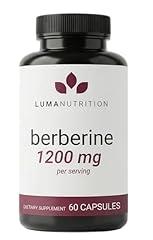
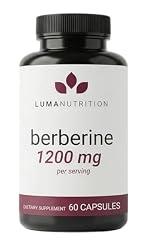
Luma Nutrition Berberine 1200mg Supplement
Overview
This is a 60-capsule berberine supplement intended as a 30-day supply. The documented label calls for two capsules daily and lists 1,200 mg of berberine hydrochloride per serving, plus cellulose, rice flour, maltodextrin, and magnesium stearate. Luma identifies the botanical source as Berberis aristata on its current product page. The stated daily amount is within the 900 to 1,500 mg range commonly used in human research, although human evidence remains mixed. Luma says every batch receives ISO 17025 laboratory testing, but no current lot-matched report was accessible for verification. More importantly, independent testing of a 2023 lot found 352 mg and 385 mg per capsule against a 600 mg label claim, which is about 61% of label on average.
What works
- The label documents a simple single-active formula, without a proprietary blend.
- Current directions address common digestive effects, advise taking it with a meal, and flag blood sugar and blood pressure medicines, manufacturer-stated.
- The 1,200 mg labeled daily amount is within dosing used in some human clinical research.
- The label identifies the responsible firm, Los Angeles address, contact email, serving size, and other ingredients.
What does not
- A tested 2023 lot substantially missed its 600 mg per-capsule berberine claim in two independent analyses. This is a concrete potency concern, not merely missing documentation.
- No USP, NSF dietary supplement, NSF Certified for Sport, or ConsumerLab finished-product certification was verified.
- The current site claims batch testing for potency, heavy metals, and microbiology, but a buyer cannot independently verify a current lot report from the accessible page.
- Some marketing and customer-testimonial language centers on blood sugar and A1C outcomes. That can blur the line between dietary support and management of a diagnosed condition.
Who is it for
This product fits an adult who has discussed berberine with a clinician and wants a plainly labeled, capsule-based formula rather than a blend. It may be practical for someone planning a one-month trial because the bottle contains 30 stated servings and the directions are simple. Its labeled 1,200 mg daily amount is relevant to adults looking at the dose range used in some studies. The user should still treat the labeled dose as unconfirmed for the bottle in hand because an independently tested earlier lot fell materially short.
Who is it not for
It is not appropriate for pregnancy, breastfeeding, or infants. NCCIH says berberine should not be used in pregnancy or while breastfeeding and should not be given to infants. People using glucose-lowering or blood pressure medicines, or those with a medical condition, should not self-start it without a pharmacist or clinician reviewing their medicines. It also does not suit anyone who needs independently certified contents, a current lot-specific certificate of analysis, or reliable certainty that each capsule meets the stated 600 mg claim.
Integrity
The health issue that stands out is potency verification. Luma currently states that every batch is tested by an independent ISO 17025-accredited laboratory for potency, heavy metals, and microbiology. However, a publicly available independent assessment of lot BER230806-60 found 352 mg and 385 mg of berberine hydrochloride per capsule where the label declared 600 mg. That earlier lot result does not establish the contents of every current bottle, but it makes a current, lot-matched report important. The current directions mention digestive changes and medicine precautions, but they do not provide the stronger avoid-use instruction for pregnancy, breastfeeding, and infants identified by NCCIH. No product-specific FDA recall or warning letter was identified in the checked FDA sources. Luma identifies Berberis aristata and says the product is made in the United States, while the archived label says made with global ingredients. No independently verified organic, FairWild, source-country, or lower-impact packaging certification was found.

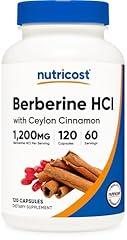
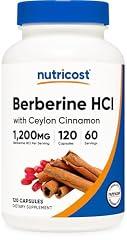
Nutricost Berberine HCI with Ceylon Cinnamon
Overview
This is a vegan capsule supplement for adults, supplied as 120 capsules, or 60 two-capsule servings. The label information reproduced by an independent retailer lists 1,200 mg of berberine HCl from Berberis aristata bark and 200 mg of Ceylon cinnamon bark powder per daily serving, plus hypromellose, vegetable stearates, and silica. Nutricost states that batches are tested by independent ISO-accredited laboratories and made in an NSF-certified GMP facility. The NSF register independently confirms certification of Nutricost Manufacturing facilities to NSF/ANSI 455-2 GMP requirements, but it does not certify this finished product's contents. No current, lot-matched public test report was located to confirm potency, identity, heavy metals, microbes, pesticides, solvents, or undeclared drugs in a bottle being sold.
What works
- The labeled 1,200 mg daily berberine HCl dose falls within the 900 to 1,500 mg daily range used in many short-term human lipid trials, although the evidence base has quality limits.
- Each active is named and quantified, rather than placed in a proprietary blend.
- The official NSF listing verifies GMP certification for Nutricost Manufacturing facilities that handle capsule production.
- The product page avoids explicit disease-treatment, GLP-1, Ozempic-alternative, or weight-loss promises, using broad wellness language instead.
What does not
- No USP, NSF Contents Certified, NSF Certified for Sport, or ConsumerLab certification for this exact finished product was found.
- The company states that independent accredited laboratory testing occurs, but does not publish a current lot-specific certificate of analysis, so labeled potency and contaminant control remain unconfirmed for a buyer's bottle.
- The warning tells pregnant or nursing people and medication users to consult a clinician, but it does not specifically say that berberine should not be used in pregnancy, breastfeeding, or infants.
- Directions do not address common nausea, diarrhea, bloating, or constipation, and do not give clear stop-use guidance for adverse effects.
- Botanical origin is identified by species and plant part, but country of origin, farming or wild-harvest practices, organic status, and packaging material are not disclosed.
Who is it for
This product fits an adult who wants a straightforward capsule format with a labeled 1,200 mg daily berberine HCl serving and a small, separately quantified Ceylon cinnamon addition. It is most appropriate for someone using it as a clinician-informed wellness supplement, who can review medicines and medical conditions first, and who is comfortable with a two-capsule daily routine lasting about 60 days. Its transparent active quantities make it easier to discuss with a pharmacist or clinician than an undisclosed blend.
Who is it not for
It is not appropriate for pregnancy, breastfeeding, or infants. NCCIH warns against berberine in all three situations because infant bilirubin buildup can be dangerous. People taking prescription medicines, especially glucose-lowering treatment, should not self-start it without advice because berberine can interact with medicines and may alter glucose control. It is also a poor fit for someone with recurring nausea, constipation, diarrhea, or bloating who wants stomach-specific instructions, or for buyers who require a public lot-specific certificate before using a botanical supplement.
Integrity
The strongest independently verified quality point is manufacturing oversight, not finished-product certification. NSF currently lists Nutricost Manufacturing facilities in Utah under NSF/ANSI 455-2 GMP certification, including capsule-related manufacturing operations. Nutricost also states that this product is third-party tested by independent ISO-accredited laboratories, but no lot-matched report was publicly available to verify the stated amount or contaminant results for a purchased bottle. Berberine has potential medication interactions and commonly causes gastrointestinal effects. NCCIH says it should not be used during pregnancy or breastfeeding and should not be given to infants. The product's general consultation warning is useful but incomplete for those specific risks. The formula identifies Berberis aristata bark and Cinnamomum verum bark, yet sourcing regions, harvest safeguards, organic certification, and packaging environmental details were not disclosed. No product-specific FDA recall, warning letter, or tainted-product listing was located in the reviewed public searches.

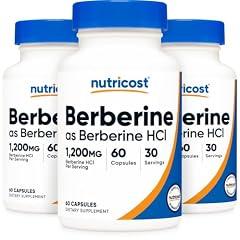
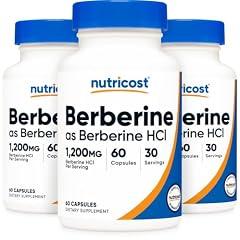
Nutricost Berberine HCl 600mg, 60 Vegetarian Count (Pack of 3)
Overview
This product is a three-bottle supply of vegetarian berberine capsules. Each bottle contains 60 capsules, with a labeled serving of two capsules providing 1,200 mg of berberine hydrochloride from Berberis aristata bark. The stated directions are two capsules daily with water, which makes each bottle a 30-day supply. The ingredient amount, botanical source, and listed excipients are documented in a public NIH label record. Nutricost states that the product is third-party tested and made and quality tested in the United States with globally sourced ingredients, but no current lot-specific certificate of analysis was publicly available to confirm potency, identity, or contaminant results for this unit. Its daily amount is within the range used in human berberine studies, though research remains mixed in quality and does not establish it as a replacement for prescribed metabolic treatment.
What works
- The label fully quantifies the 1,200 mg daily berberine HCl serving and identifies Berberis aristata bark as the source.
- The formula is relatively simple, with no proprietary blend and disclosed capsule, flow-agent, oil, and cellulose ingredients.
- The stated 1,200 mg daily amount is within clinically used berberine dose ranges.
- Nutricost Manufacturing holds current NSF/ANSI 455-2 dietary-supplement GMP certification for capsule-capable facilities.
What does not
- No public, lot-matched independent certificate of analysis was found for this finished product, so the labeled amount and identity are not independently confirmed through expiry.
- The manufacturer states third-party testing, but does not publicly provide batch results for heavy metals, microbes, pesticides, residual solvents, or undeclared drug ingredients.
- The label advises people who are pregnant, nursing, taking medication, or managing a medical condition to consult a clinician, but it does not specifically explain the infant risk or common digestive effects associated with berberine.
- Botanical geographic origin, cultivation or wild-harvest practices, and packaging-impact details are not disclosed.
Who is it for
This product fits an adult who has already discussed berberine with a clinician and wants a plainly labeled, single-active capsule rather than a metabolic blend. The three-bottle format suits someone planning consistent use at the stated two-capsule daily schedule. It is also relevant for vegetarian or gluten-avoiding users because the manufacturer states that the capsules are vegetarian, non-GMO, and gluten-free. The dose is in the range used in human studies, but use should be paired with appropriate glucose or medication monitoring when relevant.
Who is it not for
It is not appropriate for people who are pregnant, breastfeeding, or purchasing for an infant. Berberine exposure can worsen newborn jaundice and carries a kernicterus concern. People taking prescription medicines, especially glucose-lowering drugs, anticoagulants, cyclosporine, or medicines affected by liver enzymes, should not self-start it without clinician review. It is also a poor fit for anyone needing a product with a publicly accessible, lot-specific potency and contaminant report, or for people who commonly experience nausea, diarrhea, constipation, or abdominal discomfort from supplements.
Integrity
The public label identifies 1,200 mg of berberine HCl from Berberis aristata bark per daily serving and lists all inactive ingredients. It also names a responsible Utah company, gives contact details, states an adult-only intended user group, and includes a tamper-seal instruction. Nutricost Manufacturing is listed by NSF as certified to NSF/ANSI 455-2 Good Manufacturing Practices for dietary supplements, including capsule-capable facilities. That is facility-level manufacturing oversight, not certification or independent testing of this exact finished product. The manufacturer states that ingredients are globally sourced and that the product is made and quality tested in the United States. It does not identify the country of botanical origin, growing method, harvest safeguards, organic status, or package material and recyclability. No current lot-specific public results were located for metals, microbes, pesticide residues, solvents, or adulterants. Berberine itself can cause digestive symptoms and can interact with medicines, so the generic label caution should be treated as important rather than routine.

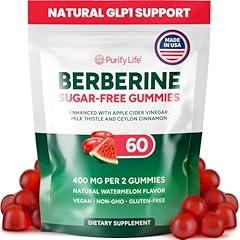
GLP1 Sugar-Free Berberine Complex Gummies
Overview
This is a 60-count, sugar-free watermelon-flavored gummy supplement marketed for appetite, metabolic, digestive, and weight-management support. The manufacturer says it combines berberine HCl, Ceylon cinnamon, milk thistle, and apple cider vinegar, is plant-based, and is made in the USA. The stated formula needs caution. Purify Life's current product page describes 400 mg berberine HCl, 2,000 mg Ceylon cinnamon, 200 mg apple cider vinegar, and 1,000 mg milk thistle as being in each gummy. A separate current reseller record instead describes 400 mg berberine per two-gummy serving. No publicly accessible, lot-matched laboratory report was found to resolve the dose or verify identity and contaminants. The brand says the product is third-party tested, but the public testing page does not provide an independently issued report that can be assessed for this product.
What works
- Chewable, sugar-free format may suit adults who cannot tolerate swallowing capsules, based on the manufacturer's product description.
- The manufacturer names four active ingredients and publishes claimed amounts, rather than using a named proprietary blend for those actives.
- Purify Life provides a U.S. contact location in Austin, Texas, plus email and phone contact details.
- The product page carries a California Proposition 65 notice, which gives buyers a signal to investigate exposure concerns before use.
What does not
- No USP, NSF, ConsumerLab, or comparable finished-product certification listing was found for this product.
- No current lot-specific, independently issued report was publicly available to confirm berberine amount, identity, heavy metals, microbes, pesticides, solvents, or hidden drugs.
- The manufacturer's own dose descriptions are inconsistent across current sales records, with one describing 400 mg per gummy and another 400 mg per two-gummy serving.
- GLP-1 boosting, appetite, fasting, and weight-management messaging goes beyond the modest and mixed human evidence for berberine. The claim that the gummies do not cause stomach upset conflicts with known gastrointestinal side effects of berberine.
Who is it for
This product is most relevant to a nonpregnant adult who specifically wants a sugar-free, chewable alternative to berberine capsules and understands that the claimed metabolic and appetite effects are not independently established for this gummy. It may fit someone who is not taking prescription medicines, can check the physical bottle for a lot number and expiry date, and is willing to ask the company for a batch-specific certificate of analysis before using it. The 60-count format is intended for a short daily routine rather than long-term stockpiling.
Who is it not for
It is not appropriate for people who are pregnant, breastfeeding, trying to conceive, or buying for an infant. NCCIH warns that berberine should not be used in these situations because infant bilirubin buildup can cause serious harm. People using prescription medicines, especially medicines for blood glucose, blood pressure, cholesterol, or other conditions, should consult a clinician first because berberine can interact with medicines. It also does not suit buyers seeking a product with public lot-specific testing, independently certified contents, or a clearly reconciled serving dose.
Integrity
The main safety issue is not a confirmed product recall or contamination finding. Rather, it is the lack of public, lot-matched evidence that would verify what is in a current bottle. Purify Life states that every product is third-party tested and provides a testing page, but no accessible report from an identified accredited laboratory was available for this gummy. A California Proposition 65 notice is displayed on the manufacturer's product page, without an accessible product-specific exposure result explaining the warning. Berberine can cause nausea, diarrhea, bloating, constipation, and other gastrointestinal effects, and it can interact with medicines. The product page's promise that these gummies do not cause stomach upset is not evidence-based. For ecology, no verified organic certification, botanical species and origin details, responsible wild-harvesting certification, recycled-content claim, or lower-impact packaging information was located for this product. Its vegan, plant-based gummy description is manufacturer-stated, not an independent environmental certification.

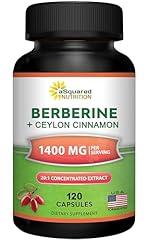
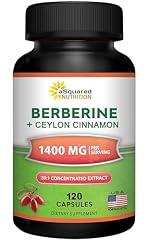
aSquared Nutrition Berberine with Ceylon Cinnamon
Overview
This is a 120-capsule, two-per-day berberine and Ceylon cinnamon supplement, intended as a 60-day supply. The manufacturer states that each daily serving provides 1,200 mg berberine HCl and 200 mg Ceylon cinnamon extract, both described as 20:1 extracts. It also lists a 60 mg Tri-Lipid matrix containing MCT oil powder, phosphatidylcholine, and Alpha-GPC. The stated 1,200 mg daily berberine amount sits within ranges used in human studies, although research often uses divided doses and the specific combination trial used more cinnamon than this product provides. The manufacturer claims third-party testing in an ISO 17025 laboratory, but no current lot-specific certificate of analysis, finished-product certification listing, or public contaminant panel was located. The listed matrix total is disclosed, but the amount of each matrix component is not.
What works
- The stated 1,200 mg daily berberine amount is within the range used in human research, although product potency is not independently confirmed.
- A two-capsule daily direction with a meal gives a straightforward 60-day routine.
- The formula names berberine HCl, Ceylon cinnamon extract, MCT oil powder, phosphatidylcholine, Alpha-GPC, magnesium stearate, and a hypromellose capsule.
- The manufacturer states that the capsules are vegan, non-GMO, gluten-free, and made in the United States.
What does not
- No current lot-matched independent certificate was found to confirm berberine identity, stated potency, heavy metals, microbes, pesticides, solvents, or undeclared drugs.
- No USP, NSF, or ConsumerLab finished-product certification listing was located for this product.
- The 60 mg Tri-Lipid matrix is proprietary, so buyers cannot determine the individual amounts of MCT oil, phosphatidylcholine, and Alpha-GPC.
- The available directions say to take it with a meal, but do not visibly provide the detailed gastrointestinal, medication, pregnancy, breastfeeding, and infant precautions warranted for berberine.
Who is it for
This product fits an adult who specifically wants a capsule format, prefers a two-month supply, follows an animal-free routine, and has reviewed the formula with a clinician or pharmacist. Its manufacturer-stated 1,200 mg daily berberine amount is plausibly aligned with studied daily intakes, and taking it with a meal may suit someone building a consistent supplement routine. It is more appropriate for informed wellness use than for self-management of a diagnosed metabolic condition, because public testing documentation for the finished product was not located.
Who is it not for
It is not appropriate for pregnancy, breastfeeding, or infants. NCCIH states that berberine should not be used in these groups because infant exposure has been associated with dangerous bilirubin buildup. People taking prescription or over-the-counter medicines, especially glucose-lowering treatment, should not start it without clinician or pharmacist review because berberine can interact with medicines and may compound glucose lowering. It also does not suit buyers who require independently certified potency, a public lot-specific contaminant report, or exact disclosure of every component amount.
Integrity
The manufacturer identifies a U.S. business contact and states that the product is made in the United States, vegan, non-GMO, gluten-free, and third-party tested in an ISO 17025 laboratory. Those are manufacturer statements, not independently confirmed finished-product certifications. Searches of major finished-product certification programs did not identify a current listing for this product, and no public lot-specific certificate was located to substantiate potency or contaminant control. Berberine can cause nausea, diarrhea, bloating, constipation, and other gastrointestinal effects. It can also interact with medicines. Human evidence suggests possible modest metabolic effects, but study quality and applicability vary. The formula does identify Ceylon cinnamon rather than merely saying cinnamon, but no botanical origin, species documentation, farm or harvest region, organic certification, FairWild certification, recycled-content claim, or packaging-impact information was found. The bottle and capsule packaging therefore have no verified lower-impact attributes.

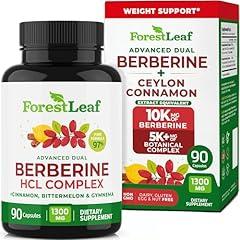
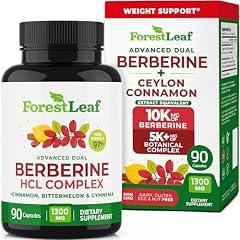
ForestLeaf Berberine Supplement with Cinnamon & Gymnema
Overview
This product is a 90-count vegetarian capsule supplement, providing 45 two-capsule servings. Its documented label directs adults to take two capsules once or twice daily, preferably with food. The label lists a 1,000 mg proprietary berberine complex and a 300 mg proprietary botanical complex containing gymnema, bitter melon, Ceylon cinnamon, and Berberis aristata root extract. The advertised 1,300 mg is the total of those two blends, not a disclosed amount of berberine HCl itself. The documented label names berberine HCl, but does not quantify it separately or provide the amount of any added botanicals. No current public lot-matched independent certificate of analysis, USP verification, NSF product certification, or ConsumerLab certification was located. Human research suggests berberine may have modest metabolic and weight effects, but the exact active dose in this product cannot be matched to that research.
What works
- The documented label clearly provides a two-capsule serving size, 45 servings per bottle, and directions to take it with food.
- The active botanicals and four inactive ingredients are named on the documented label, which helps identify potential dietary exclusions and interaction questions.
- The label includes a pregnancy, nursing, prescription-medicine, and child-access precaution.
- ForestLeaf provides a Brooklyn, New York return address and states that its products are manufactured in the United States.
What does not
- The 1,300 mg headline is split between two proprietary blends, so the actual berberine HCl dose and each botanical dose are not disclosed.
- No public lot-specific independent report was located to verify berberine identity, potency, heavy metals, microbes, pesticides, residual solvents, or hidden drug-like ingredients.
- The GLP-1 weight-management framing is not supported by a human trial of this finished formula. Evidence for berberine and weight change is mixed and generally modest.
- The label gives a broad medicine warning but does not specifically flag infant risk, common gastrointestinal effects, transplant medicines such as cyclosporine, or the added blood-sugar-lowering burden of this multi-botanical formula.
Who is it for
This product is most relevant to an informed adult who specifically wants a vegetarian capsule formula combining labeled berberine HCl with gymnema, bitter melon, cinnamon, and tree turmeric, and who is not pregnant, breastfeeding, or giving supplements to an infant. The 90-capsule bottle supplies 45 label servings, with a practical food-timed schedule. It is better suited to someone who understands that the listed 1,300 mg is total blend weight, not a verified dose of berberine, and who can review medicines with a clinician or pharmacist first.
Who is it not for
It is not appropriate for infants, or for people who are pregnant or breastfeeding. NCCIH notes that berberine exposure can contribute to harmful bilirubin buildup in infants. People using prescription medicines, especially cyclosporine or other transplant medicines, diabetes medicines, blood-pressure medicines, anticoagulants, or antiplatelet medicines, need clinician or pharmacist review before use. It also does not suit buyers who need a precisely quantified berberine dose, public batch testing for contaminants, or a simple single-ingredient product to help identify the cause of side effects.
Integrity
The documented label identifies the capsule material as hypromellose and lists magnesium stearate, silicon dioxide, and microcrystalline cellulose as inactive ingredients. It also presents the product as vegetarian and free of dairy, gluten, egg, and nuts. These are label claims, not independent finished-product certifications. ForestLeaf states that its products are manufactured in the United States, while the product label says ingredients are globally sourced. No current USP, NSF, or ConsumerLab listing was located for this finished product, and no public lot-specific certificate of analysis was located. Searches of FDA recall and warning-letter resources did not locate a product-specific action. However, absence of a located action is not proof of batch quality. No organic, FairWild, source-country, species-traceability, or lower-impact packaging certification was located for the botanicals or bottle.

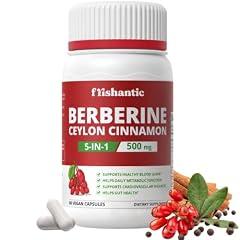
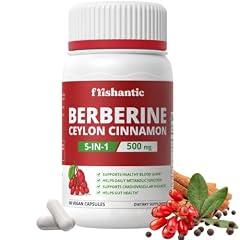
Frishantic Berberine with Ceylon Cinnamon Supplement
Overview
This is a 60-capsule, 30-serving berberine blend intended for adults. The product listing directs users to take two vegan hypromellose capsules with a morning meal. It states that the daily serving contains 500 mg berberine HCl plus Ceylon cinnamon, chromium, alpha-lipoic acid, and BioPerine black pepper extract. The 500 mg berberine amount, capsule count, and serving directions are manufacturer-stated on the marketplace listing. Amounts for the other four active ingredients are not provided there. No current product-specific listing was located in the USP, NSF dietary-supplement, NSF Certified for Sport, or ConsumerLab certification programs, and no lot-matched independent certificate of analysis was made available. Human evidence suggests possible metabolic effects for berberine, but research commonly used repeated daily doses, not this once-daily 500 mg regimen.
What works
- The stated 500 mg daily berberine HCl amount and two-capsule serving are concrete and easy to follow.
- A single daily serving combines berberine with cinnamon, chromium, alpha-lipoic acid, and black pepper extract, as manufacturer-stated.
- The marketplace listing identifies vegan hypromellose capsules and states that the product is gluten-free and non-GMO.
- The listing avoids presenting the product as a replacement for prescription treatment and includes the standard dietary-supplement disclaimer.
What does not
- No USP, NSF, NSF Certified for Sport, or ConsumerLab finished-product certification was found for this product.
- No lot-specific independent report was found to confirm berberine identity, 500 mg potency, heavy-metal results, microbial testing, pesticides, residual solvents, or hidden-drug screening.
- The listing does not quantify the cinnamon, chromium, alpha-lipoic acid, or BioPerine amounts, so the full active formula cannot be evaluated against research doses or interaction risks.
- The publicly available listing does not give prominent berberine precautions for medications, pregnancy, breastfeeding, infants, gastrointestinal effects, or when to stop use.
Who is it for
This product is most relevant to an adult who specifically wants a short, 30-day, once-daily berberine HCl routine and accepts a multi-ingredient formula. Its stated 500 mg daily amount may suit someone seeking general dietary supplementation rather than trying to replicate higher, divided doses used in many metabolic studies. The buyer should be able to review the physical bottle for complete Supplement Facts, lot number, expiration date, and warnings, because those details were not independently verified from the available product information.
Who is it not for
It is not suited to pregnant or breastfeeding people, infants, or households where a child could access the capsules. NCCIH advises against berberine in pregnancy, breastfeeding, and infants because infant bilirubin risks are a concern. It is also not a straightforward choice for people using glucose-lowering medicines, prescription drugs with interaction potential, or several supplements at once. Those with diabetes, liver or kidney conditions, ongoing gastrointestinal symptoms, or planned surgery should seek clinician or pharmacist guidance before using a multi-ingredient berberine product.
Integrity
The marketplace listing states that the product is vegan, gluten-free, non-GMO, and made in a GMP-certified facility. Those are manufacturer statements, not independent finished-product certifications. Searches of major public certification registries did not identify a USP, NSF dietary-supplement, NSF Certified for Sport, or ConsumerLab quality listing for this specific product. No product-specific recall, FDA warning letter, or FDA tainted-product alert was located in the review work. Berberine can cause nausea, diarrhea, bloating, and constipation, and may interact with medicines. National Institutes of Health information also advises that it not be used during pregnancy or breastfeeding and not be given to infants. The listing does not disclose botanical species or growing region for the cinnamon or berberine source, organic or FairWild certification, packaging material, or recyclability information. Environmental sourcing and packaging claims therefore remain unverified.

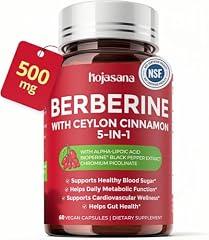
HojaSana Berberine 1600mg with Ceylon Cinnamon
Overview
This is a 60-capsule, vegan five-ingredient supplement intended for daily metabolic support. The current product listing directs adults to take two capsules with a morning meal, making the bottle a 30-day supply. It states that the daily serving contains 500 mg of berberine HCl, plus Ceylon cinnamon, chromium, alpha-lipoic acid, and black pepper extract with 95% piperine. The 500 mg berberine amount is manufacturer-stated, not supported by a lot-matched independent potency report located in this review. Amounts for the other active ingredients are not disclosed in the accessible listing. The brand also states that batches are made in a GMP-certified facility and tested by a third party for heavy metals, but no certificate, laboratory identity, full contaminant panel, or batch-specific results were publicly available to confirm those claims.
What works
- A clearly stated 500 mg berberine HCl serving is paired with a simple two-capsule daily routine, according to the manufacturer.
- The listing identifies the five named active ingredients and the capsule material, hypromellose.
- The manufacturer states that the product is vegan, gluten-free, soy-free, non-GMO, and free of artificial fillers or colors.
- The manufacturer gives a practical administration suggestion to take it with food, which may help reduce stomach discomfort.
What does not
- No current USP, NSF, ConsumerLab, or equivalent finished-product certification listing was located for this product.
- No lot-specific independent report was located to verify berberine identity, potency, heavy metals, microbes, pesticides, residual solvents, or undeclared drug-like ingredients.
- The listing leaves the doses of cinnamon, chromium, alpha-lipoic acid, and piperine undisclosed, making the total exposure and research fit difficult to assess.
- The claims that 500 mg is gentle and supports steady energy are not matched by clear warnings about common gastrointestinal effects, medicine interactions, pregnancy, breastfeeding, or infant exposure.
- A public U.S. responsible-firm address, adverse-event contact, and traceable manufacturer or distributor details were not found in the accessible listing.
Who is it for
This format may suit an adult who specifically wants a once-daily, two-capsule berberine HCl product and values a manufacturer-stated vegan, gluten-free, soy-free formula. It is most relevant for someone seeking general wellness support rather than treatment for diabetes, high cholesterol, or another diagnosed condition. The 30-day bottle and meal-time directions offer a straightforward routine. That buyer should still be comfortable with the fact that the supporting potency and contaminant claims were not independently documented with a publicly available batch report.
Who is it not for
It is not appropriate for people who are pregnant, breastfeeding, or buying for an infant. Berberine exposure can worsen jaundice in newborns and has been linked to dangerous bilirubin buildup. People using prescription medicines, especially glucose-lowering treatment, should speak with a clinician or pharmacist before use because berberine may interact with medicines. It also does not fit buyers who need independently certified finished-product testing, full active-ingredient doses, or a product to replace medical management of blood sugar, cholesterol, or weight.
Integrity
The accessible listing identifies berberine HCl at 500 mg per daily serving and names Ceylon cinnamon, chromium, alpha-lipoic acid, and black pepper extract. It also states that the Ceylon cinnamon comes from Sri Lanka and that the capsules are hypromellose. These are manufacturer statements, not independently certified sourcing records. No organic, FairWild, or comparable responsible-botanical certification was located, and the packaging material beyond a bottle was not meaningfully disclosed. The listing claims GMP-facility production and third-party heavy-metal testing, but no batch certificate or full laboratory panel was available for confirmation. No product-specific FDA recall, warning letter, or tainted-product alert was located in this review. The absence of a public batch report remains important because botanical supplements can vary in identity and contaminants. Berberine can cause nausea, diarrhea, bloating, or constipation, can interact with medicines, and should not be used during pregnancy or breastfeeding or given to infants.

Etta Vita GLP-1 Supplement for Weight Management
Overview
This is a 90-capsule, 30-serving dietary supplement. The manufacturer’s current facts panel directs adults to take three capsules daily with water. It lists 300 mg berberine HCl per serving, plus pomegranate, grape seed, hibiscus, decaffeinated green tea extract, inulin, hops, resveratrol, Akkermansia muciniphila, gymnema, and L. acidophilus listed as 1 billion CFU at manufacture. The manufacturer states that the capsule is vegan, gluten-free, non-GMO, and made in a cGMP and FDA-registered facility. These statements are not product certification. Its certification page says certifications are still being obtained, and no USP, NSF, or ConsumerLab finished-product listing was found. Public product materials also show conflicting older 60-capsule, two-capsule directions and newer 90-capsule, three-capsule directions.
What works
- The manufacturer provides a fully quantified active-ingredient panel rather than a proprietary blend.
- The stated daily serving identifies the berberine form as berberine HCl and its amount as 300 mg.
- A manufacturer-posted Eurofins report shows a screen for several undeclared stimulant and weight-management adulterants, reported as not detected.
- The displayed label identifies the responsible firm, a U.S. mailing address, lot and best-by placement, phone number, and email contact.
What does not
- No current USP, NSF, ConsumerLab, or equivalent finished-product certification was found. The brand’s own certification page says certifications are pending.
- The posted lab report is not lot-matched to a retail bottle and does not verify berberine potency, identity, heavy metals, microbes, pesticides, or residual solvents.
- The 300 mg daily berberine HCl amount is below the 400 to 3,000 mg daily ranges commonly described by NCCIH for clinical use, and the finished blend has no published completed human trial.
- GLP-1 activation, appetite control, and weight-loss messaging goes further than the product-specific human evidence available. The brand’s clinical-trials page says studies are pending.
- Public product images conflict on bottle count, serving size, and directions, which makes it harder to establish which label version a buyer will receive.
Who is it for
This product suits an adult who specifically wants a broad, plant-based supplement formula with a disclosed 300 mg daily berberine HCl amount, prebiotic inulin, and a stated L. acidophilus count, rather than an undisclosed blend. It is most relevant for someone able to review a multi-ingredient label carefully and use it as a supplement to food and lifestyle changes, not as a GLP-1 medicine. A buyer should be comfortable with uncertainty around finished-product potency, contaminant testing, and the exact label revision shipped.
Who is it not for
It is not appropriate for pregnancy, breastfeeding, or infants. NIH safety information says berberine should not be used in these groups because infant bilirubin effects can be dangerous. People taking prescription medicines, especially medicines affecting blood glucose, blood pressure, or drug metabolism, should not self-start this combination without a clinician or pharmacist. It also does not suit people seeking a clinically tested GLP-1 treatment, a single-ingredient berberine product, a lot-matched certificate of analysis, or a product with independently certified contents and contaminant controls.
Integrity
The displayed label identifies berberine HCl, botanical species for several extracts, a vegetable capsule, and silicon dioxide. It also identifies a U.S. responsible firm and says the lot and best-by date are on the bottle bottom. The manufacturer posts a Eurofins report that screens for several undeclared drug-like weight-management stimulants, but it is not tied to a consumer lot and does not establish the formula’s listed potencies or broad contaminant status. The brand states vegan, non-GMO, gluten-free, cGMP-facility, and FDA-registered-facility claims. Its certification page says certifications are still pending, so these should not be read as USP, NSF, or similar finished-product certification. The product page also carries a California Proposition 65 notice for naturally occurring ingredients without naming the exposure. Botanical origins are described only as globally sourced. No organic, FairWild, source-region, recycled-content, or lower-impact packaging certification was found.

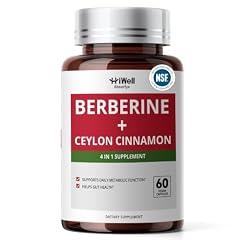
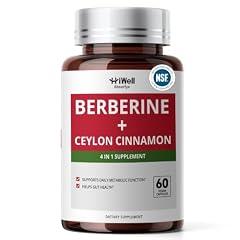
HiWell Berberine with Ceylon Cinnamon
Overview
This is a 60-capsule, 30-serving adult botanical supplement. The manufacturer directs users to take two capsules once daily before meals. Each labeled serving supplies 300 mg berberine hydrochloride, 200 mg of 10:1 Ceylon cinnamon bark extract, listed as equivalent to 2,000 mg cinnamon, 100 mg of 10:1 bitter melon fruit extract, and 60 mg alpha-lipoic acid. The formula is unusually clear for a multi-ingredient supplement, with separate active amounts, extract ratios, plant parts, and other ingredients listed. The manufacturer also states that it is vegan, gluten-free, non-GMO, GMP-made, and third-party tested. However, no current USP or NSF finished-product certification, public independent test, or lot-specific certificate was located to verify contents, botanical identity, heavy metals, pesticides, microbes, or coumarin. The 300 mg daily berberine dose is also below the doses most commonly studied for metabolic outcomes.
What works
- The manufacturer label separately lists all four active ingredients, their quantities, and extract ratios.
- Cinnamon bark and bitter melon fruit are identified rather than presented as unnamed botanical blends.
- The 30-day format has a defined two-capsule daily serving.
- The listed capsule shell is hypromellose rather than gelatin, consistent with the manufacturer's vegan claim.
What does not
- No public lot-specific certificate verifies the labeled berberine amount, botanical identity, contaminants, or coumarin content.
- No USP, NSF, or comparable independent finished-product certification was found.
- The daily 300 mg berberine amount is below the 1 g daily dose identified as optimal for several outcomes in one dose-response meta-analysis, so product-specific metabolic effects are uncertain.
- Marketing includes immune, gut, detox, GLP-1, blood sugar, and cholesterol support claims that are broader than the evidence for this exact formula and dose.
- The displayed use directions do not prominently state the important pregnancy, breastfeeding, infant, and medication precautions associated with berberine.
Who is it for
This product may suit an adult who has already discussed berberine use with a clinician and wants a short, clearly portioned 30-day botanical formula rather than a single-ingredient product. It is most practical for someone who values seeing the stated amount of berberine, cinnamon, bitter melon, and alpha-lipoic acid separately on the label, and who can tolerate two capsules before a meal. Its low daily berberine amount makes it less suitable for someone expecting results comparable to higher-dose clinical research.
Who is it not for
It is not appropriate for infants, children, or people who are pregnant or breastfeeding. Berberine exposure may harm newborns through bilirubin effects, and it may interact with medicines. People using glucose-lowering drugs, cyclosporine, anticoagulants, or several prescription medicines should not start this product without review by a pharmacist or clinician. It also does not fit households that require independently certified purity, a lot-specific contaminant report, verified organic status, or documented low-coumarin Ceylon cinnamon.
Integrity
The manufacturer provides a detailed Supplement Facts panel. It names berberine hydrochloride and lists the cinnamon bark and bitter melon fruit extracts separately, including their 10:1 ratios. Other ingredients are disclosed as microcrystalline cellulose, magnesium stearate, and a hypromellose capsule shell. The company says the product is vegan, gluten-free, non-GMO, GMP-made, third-party tested, and heavy-metals tested, but it does not publish a laboratory, methods, limits, or batch results for independent review. No current USP or NSF certification, public finished-lot test report, FDA recall, or FDA warning letter specific to this product or brand was located in the checked sources. The available information does not identify cinnamon species with a Latin name, growing region, farm, or processor, and no USDA organic record or FairWild certification was found for this product. Bottle resin, recycled content, recycling instructions, and lower-waste packaging commitments are also not disclosed.