
10 Best Beet Powders of 2026
 Lauren Wilson
Please note that we participate in affiliate marketing programs. When you purchase through links on our site, we may earn a commission. As an Amazon Associate we earn from qualifying purchases. This comes at no additional cost to you and helps support the resources required to provide valuable content.Advertising Disclosure
Top-rated Beet Powder Comparison
1

+
2
3
4
5
6
+
7
8

9
Beet powder: what matters before you buy
Beet powder is usually sold as a drink mix or food ingredient, but products in this category are not interchangeable. Some contain plain beetroot powder; others use beet juice concentrate, fermented beet material, extracts, vitamins, herbs, sweeteners, or probiotics. The first question is therefore what you want the product to do: add beet to food, provide a convenient daily drink, or support a specific circulation, blood-pressure, endurance, or nitric-oxide goal.
For the latter uses, the meaningful active is dietary nitrate not the weight of beet powder alone. Human studies in the supplied reviews commonly used measured amounts around 300–600 milligrams of nitrate for exercise, about 200–800 milligrams daily in blood-pressure research, or roughly 5–11 millimoles in exercise studies. A label saying “4,000 milligrams beetroot,” “20:1 extract,” “concentrated,” or “high nitrate” does not establish how much nitrate is actually present. Extract-equivalence language can describe the starting material rather than the active dose. A product with a stated nitrate concentration should still be supported by a current, batch-specific certificate from an ISO/IEC 17025-accredited laboratory using a validated method such as ion chromatography.
Ingredient transparency is the next dividing line. Prefer a label that identifies the beet material and processing type, gives amounts for meaningful ingredients, and avoids proprietary blends or unexplained extract equivalents. A plain 4- or 5-gram scoop is easy to understand, but it still is not a standardized nitrate serving unless nitrate is measured. For blends, check whether each active ingredient is quantified and whether the finished product matches the label.
Testing claims should be specific. “Third-party tested,” “GMP certified,” facility registration, and similar phrases do not by themselves verify the product. Look for finished-product, lot-specific results for lead, cadmium, arsenic, mercury, pesticides, and microbiology, including detection limits and pass criteria. An exact product listing in NSF Certified Dietary Supplements, USP Verified, or a comparable public program is stronger than self-certification. For athletes, NSF Certified for Sport or Informed Sport coverage of the exact current product is the relevant safeguard; certification of another product from the same brand does not transfer.
Organic claims also need verification. A USDA Organic seal or marketing statement is more meaningful when the product, named handler, or manufacturing operation can be matched to a current USDA-authorized certification record. Packaging claims deserve the same caution: a pouch is not automatically recyclable, and a large container is not automatically lower-waste. Look for material identification, clear recycling instructions, defined sourcing claims, or a product-specific environmental assessment.
Finally, check the serving size, added sugar, sugar alcohols, allergens, cross-contact statement, lot and expiration information, responsible US business, and practical warnings. Several supplied products lacked specific guidance for blood-pressure medicines or kidney-stone risk. Across the category, people taking blood-pressure-lowering medicines, those with low blood pressure, recurrent calcium-oxalate kidney stones, kidney disease, pregnancy or nursing concerns, or complex medication regimens should seek clinician advice. Athletes subject to drug testing should use recognized sport certification. Some products also contain substantial sugar, sodium, or sugar alcohols, and one supplied powder carried a California Proposition 65 lead warning; a current lot-specific contaminant result is the better way to assess such concerns.
Integrity
The supplied products generally provide convenient beet formats, but the strongest differences are in dose disclosure, finished-product testing, label clarity, and independent verification. The scores below reflect those distinctions rather than popularity or price.
HHealth & Safety
Evidence-aligned nitrate dose
This measures whether a serving has a current, batch-specific nitrate result that can be compared with human-study doses. It matters because beet powder weight and extract ratios do not reveal nitrate content. Scores were generally moderate—about 55–70—because most products disclosed no nitrate amount; a high score would require both a verified result and a realistically studied dose.
Contaminant safety
This covers lot-specific testing for toxic elements, pesticides, and microbiology, with methods, detection limits, and pass criteria. It is especially important for concentrated plant powders and products carrying lead-related warnings. The supplied scores ranged from 45 to 90: the higher end reflected finished-product or certification evidence, while lower scores reflected only general testing claims without public reports.
What is actually in the scoop
This measures whether the label identifies the beet material, processing type, serving amount, and all meaningful ingredients without hidden blends or ambiguous extract equivalents. Plain single-ingredient powders scored as high as 80–82, while complex blends with conflicting package information scored lower. Clear ingredient amounts improve a buyer’s ability to understand, compare, and use the product.
Allergen and safety guidance
This measures allergen declarations and practical cautions for medicines, kidney-stone risk, pregnancy, nursing, and other relevant users. Scores ranged roughly from 62 to 78. Higher-scoring products supplied broader warnings or clearer allergen information; lower-scoring products offered general disclaimers but did not specifically address blood-pressure medicines or calcium-oxalate stone concerns.
Sport-use contamination assurance
This measures protection against prohibited or undeclared performance-drug contamination. A recognized public listing for the exact current product is what separates strong assurance from a manufacturer’s general testing statement. Most supplied products scored around 68–70 without sport certification, while the sport powder and heart chews scored 96–97 because they were listed in NSF Certified for Sport.
EEvidence
Claims that match the evidence
This measures whether circulation, nitric-oxide, energy, endurance, and heart-health claims fit the exact formula and disclosed dose. Scores ranged from 45 to 77. Higher scores came from narrower, qualified claims or better ingredient-level support; lower scores reflected disease-like or broad performance claims that could not be matched because nitrate content and finished-product trial evidence were absent.
Independently verified, not self-certified
This measures whether the exact product appears in a public third-party certification program that checks contents and quality. Most products scored about 68–70 without a registry match. The strongest scores—92–97—belonged to products listed in NSF dietary-supplement or NSF Certified for Sport programs. Brand GMP language and facility registration are not equivalent to product certification.
Traceable maker and clean regulatory record
This measures whether the responsible business, lot, expiration, and contact route are identifiable and whether relevant recalls, warning letters, or enforcement records remain unresolved. Scores ranged from 55 to 86. Higher scores reflected clearer business and lot traceability with no pertinent product action; lower scores reflected conflicting records, incomplete details, or relevant regulatory history involving the maker or product line.
EEcology
Verified organic sourcing
This measures whether organic crop and handling claims connect to a verifiable USDA certification record. It matters because “organic,” “raw,” and “pesticide-free” wording alone does not establish certified supply-chain oversight. Supplied scores ranged from 64 to 90. Higher scores reflected clearer certifier information or stronger documentation; lower scores reflected package claims without a current public operation match.
Lower-waste packaging and sourcing
This measures specific evidence about packaging materials, recyclability, reduced waste, responsible sourcing, and environmental reporting. Nearly all supplied products scored around 68–70 because the reviews generally found no material code, clear recycling instructions, lifecycle assessment, or product-level sourcing report. A pouch or large container may be practical, but its footprint cannot be judged from format alone.
Full reviews

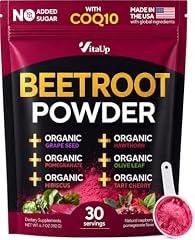
VitaUp Beet Root Energy Boost
Overview
This is a 30-serving, mixed-berry beetroot powder blend sold in a 6.7-ounce bag. The stated routine is one scoop daily mixed into water, juice, or a smoothie. Public retail copy identifies organic beet root powder, grape seed extract, CoQ10, hawthorn, hibiscus, olive leaf, tart cherry extract, and pomegranate powder. Its defining limitation is that no public, lot-specific nitrate result was located. Human beetroot performance studies commonly use quantified nitrate doses, often about 6 mmol or more daily, so a beet ingredient alone cannot establish that this scoop reaches the studied range. The brand also states that batches receive third-party purity and potency testing, but no current finished-product certificate, laboratory identity, contaminant limits, or test results were publicly available for review. The circulation and energy language is qualified as support, rather than a disease-treatment claim, but the exact dose match remains unproven.
What works
- Convenient once-daily powder format that can be mixed into common beverages, manufacturer-stated.
- The public product description identifies all eight featured botanical and nutrient components rather than using an unnamed proprietary blend.
- Claims are framed around normal circulation, antioxidants, and energy support, not treatment of a named disease.
- The seller states the product is vegan, gluten-free, non-GMO, and free of added sugar, preservatives, and sweeteners.
What does not
- No measured nitrate amount or batch-specific nitrate certificate was located, so evidence-aligned circulation or exercise dosing cannot be confirmed.
- The public product copy names the featured ingredients but does not provide independently verifiable per-ingredient quantities for this powder.
- Third-party testing is claimed, but no finished-product certificate showing heavy metals, pesticides, microbiology, potency, detection limits, or pass criteria was available.
- No current public listing was located for this exact product in NSF, USP, Informed Sport, or NSF Certified for Sport registries.
- No public organic certificate for the finished product or its named supply chain was located, despite organic beetroot marketing.
Who is it for
This product suits an adult who wants a flavored, once-daily botanical drink mix and is comfortable treating it as a general wellness supplement rather than a measured nitrate product. The 30-serving format fits a month-long routine, and the seller describes it as vegan, gluten-free, and without added sugar. It is most relevant for someone who values the combined beetroot, CoQ10, grape seed, hawthorn, hibiscus, tart cherry, pomegranate, and olive leaf format, but does not need independently documented active doses or sport certification.
Who is it not for
It is not a suitable choice for an athlete subject to anti-doping testing, because no recognized sport-certification listing was found. It also does not suit buyers seeking a quantified beet nitrate dose for pre-workout use, endurance, or blood-pressure support, because no nitrate content was disclosed or independently verified. People using blood-pressure-lowering medicines, people with a history of calcium oxalate kidney stones, pregnant or breastfeeding people, and anyone managing cardiovascular or kidney disease should obtain individualized advice from a clinician before using a multi-ingredient beet supplement.
Integrity
The formula is sold as a plant-based beetroot powder with CoQ10 and seven botanical ingredients. The seller describes it as vegan, gluten-free, non-GMO, and free of added sugar, preservatives, and sweeteners. It also claims manufacture in a GMP-certified facility and third-party testing. Those are manufacturer statements, not public product-level certification or current lot testing evidence. Dietary supplements are not approved by FDA before sale, and an FDA-registered facility would not establish independent approval of this product. No public lot certificate was located for toxic elements, pesticide residues, or microbiological testing. No active product-specific recall, warning letter, or exposure warning was located in the searches performed. Organic beetroot is claimed in retail copy, but no public USDA organic certificate tied to this product or its supply chain was found. The bag format may use less rigid packaging than a jar, but its material, recyclability instructions, sourcing practices, and lifecycle information were not disclosed.

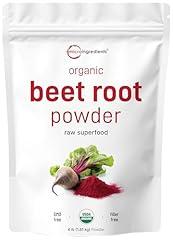
Micro Ingredients Organic Beet Root Powder, 4 Pounds
Overview
This is a 4-pound bag of plain organic beet root powder. The labeled serving is about one 3.5 gram scoop, with 518 servings per bag. It is intended to be mixed into smoothies, juice, oatmeal, yogurt, or other recipes. An independent retailer’s label transcription identifies organic beet root powder as the only ingredient and lists no soy, dairy, gluten, or tree nuts. The manufacturer presents it as cold pressed, water soluble, non-GMO, and third-party lab tested, but it does not publish a current lot certificate showing nitrate content, contaminants, microbiology, or test limits. That matters because the product is marketed around nitric oxide, yet its nitrate dose is not quantified. The manufacturer also displays a California Proposition 65 warning for unspecified chemicals linked by the state to cancer and reproductive harm.
What works
- Single-ingredient formula, with organic beet root powder listed as the only ingredient on an independent retailer label transcription.
- Large bag provides 518 labeled 3.5 gram servings, useful for frequent recipe or smoothie use.
- The manufacturer states that the powder is water soluble and designed for mixing into drinks and foods.
- The retailer label lists the product as free of soy, dairy, gluten, and tree nuts.
What does not
- The manufacturer posts a California Proposition 65 warning for unspecified chemicals associated with cancer and reproductive harm.
- No current lot-specific public certificate was found for lead, cadmium, arsenic, mercury, pesticides, or microbiological testing.
- No measured nitrate amount is disclosed, so the scoop cannot be matched to human studies of nitrate-driven blood pressure or performance effects.
- No public NSF, USP, Informed Sport, or NSF Certified for Sport listing was identified for this exact product.
Who is it for
This product suits adults who want a large, simple beet powder for regular food use, especially smoothies, juices, oatmeal, and yogurt. The 4-pound bag and 518 labeled servings are practical for households that use beet powder frequently and prefer a single ingredient rather than capsules, flavors, sweeteners, or multi-ingredient pre-workout blends. It is more appropriate for culinary-style use than for someone who needs a predictable nitrate dose for a specific circulation or endurance routine.
Who is it not for
It is not well suited to athletes subject to anti-doping testing, because no recognized sport-certification listing was identified. People using blood-pressure-lowering medicines, those with low blood pressure, and anyone managing a kidney-stone history should discuss concentrated beet intake with a clinician. It is also a poor fit for users who need verified low contaminant exposure, a batch-specific nitrate dose, or a clearly explained Proposition 65 chemical and exposure level. Children and pregnancy or breastfeeding use warrant clinician guidance.
Integrity
The product has a short ingredient list, organic beet root powder, and its label representation says USDA Organic and certified by Organic Certifiers. That organic claim was visible through independent retail label information, but a current USDA Organic Integrity Database record tying this exact product or its responsible handling operation to the claim was not located during verification. The manufacturer also states that the product is non-GMO, made in a cGMP-compliant facility, and third-party lab tested, without publishing the associated finished-product reports. The most important safety finding is the manufacturer’s California Proposition 65 warning. It does not name the chemical, concentration, or exposure basis, and no lot-specific contaminant certificate was publicly available to clarify it. No matching FDA recall or warning letter was identified in searches conducted for the product and maker. The bag format is lightweight and resealable, but no material code, recycling instructions, sourcing report, or product-specific footprint assessment was found.
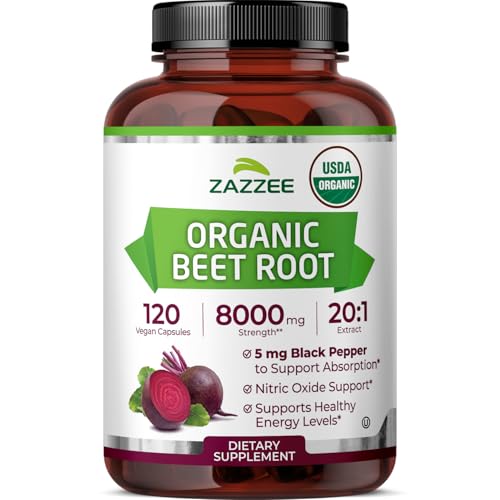
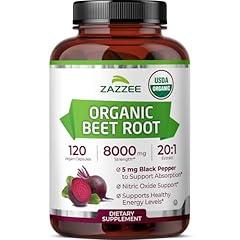
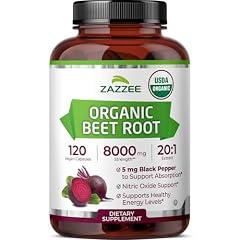
Zazzee Organic Beet Root Extract 8000 mg
Overview
This is a 120-capsule beetroot extract supplement intended for once-daily use. The label archived in the NIH Dietary Supplement Label Database lists 400 mg of beet root extract and 5 mg of black pepper extract per vegan capsule. Zazzee describes the beet extract as 20:1, which it presents as an 8,000 mg whole-beet equivalent, rather than 8,000 mg of measured beet extract or nitrate. The product is marketed for nitric-oxide, energy, circulation, and workout support. Human research on dietary nitrate commonly uses quantified nitrate doses, often around 300 to 600 mg daily, but this product does not disclose nitrate content or provide a current lot-specific nitrate assay. Its practical benefit for those uses therefore cannot be matched to the studied nitrate dose.
What works
- The independently archived label identifies both active ingredients and their per-capsule amounts, with no proprietary blend.
- One capsule daily and 120 capsules per bottle make the stated supply straightforward to use and track.
- The maker states that the beet extract and black pepper extract are organic, and that the capsule is vegan.
- The formula avoids a stimulant-style pre-workout blend, with beet extract and a small amount of black pepper extract as its listed actives.
What does not
- Nitrate content is not quantified or supported by a current lot-specific certificate, so the nitric-oxide dose is unknown.
- No public finished-product certificate was found for heavy metals, pesticides, microbiology, identity, or potency testing.
- No current public NSF, USP, Informed Sport, or NSF Certified for Sport listing was found for this product.
- The maker's broad detox, immune, blood-pressure, performance, and enhanced-absorption messaging goes beyond what can be established for an extract with no stated nitrate level.
- The listing does not give practical cautions for people using blood-pressure medicines, people prone to kidney stones, or those taking medicines affected by black pepper extract.
Who is it for
This product suits an adult who specifically wants a compact, non-stimulant beetroot capsule rather than beet juice or powder, and who values a simple disclosed two-active formula. It may be practical for someone building a daily routine and preferring a 120-day bottle. It is better framed as a general beet-derived supplement than as a measured nitrate protocol, because the label provides extract amount and extract ratio but not the nitrate amount needed to relate use to circulation or performance studies.
Who is it not for
It is not well suited to athletes subject to anti-doping rules, because no recognized sport-certification listing was found. People seeking a reliably evidence-aligned nitrate dose for a race, training block, or blood-pressure goal should choose a product that reports batch-specific nitrate content. People taking blood-pressure-lowering medicines, anticoagulants, or medicines with interaction potential should ask a clinician or pharmacist first, especially because black pepper extract can affect drug handling. Those with recurrent calcium-oxalate kidney stones should also seek individualized advice before concentrated beet products.
Integrity
The label documentation supports a simple formula of beet root extract, black pepper extract, a pullulan capsule, and rice-derived excipients. The maker states that the ingredients are vegan, gluten-free, dairy-free, soy-free, and made in the United States. However, these are manufacturer statements, not a substitute for a current finished-product contaminant or microbiology report. No public lot-specific testing report with detection limits and pass criteria was located. The maker and package make a USDA Organic claim. That claim is meaningful only when it can be linked to the relevant certified operation or supply chain, and a current operation match for this product was not established through the public USDA organic records reviewed. No product-specific packaging material, recycling instructions, sourcing report, or lifecycle assessment was found. No relevant public FDA recall or warning letter was located in the searches reviewed, which is not the same as independent product verification.

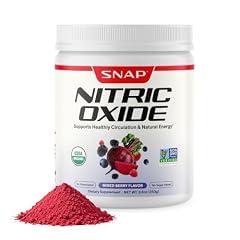
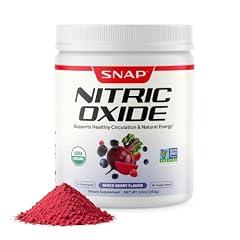
Organic Beet Root Powder, 3-in-1 Nitric Oxide Supplement, 250g (Mixed Berry)
Overview
This is a 250 g mixed-berry powdered dietary supplement with 30 labeled servings. It is intended to be mixed as one scoop in water or another beverage. The independently viewable retail label lists 6 g carbohydrate, 2 g fiber, 4 g total sugars, no added sugar, vitamin C, niacin, vitamin B12, sodium, and a 6,863 mg nitric oxide complex per scoop. That complex contains organic beet root powder, organic pomegranate juice powder, OxyStorm red spinach extract, potassium chloride, and black pepper extract, but the amounts of those individual ingredients and the nitrate amount are not disclosed. Human nitrate studies generally use a measured nitrate dose, so the product's circulation and performance claims cannot be matched to an evidence-based nitrate intake. The manufacturer and retailers state that it is USDA organic and caffeine-free.
What works
- A clear 30-serving scoop format and mixing directions are publicly listed.
- The label lists no added sugar and provides 2 g of fiber per scoop.
- It is stimulant-free, which can suit users avoiding caffeine-based pre-workout powders.
- The ingredient list identifies beetroot, pomegranate, red spinach, black pepper, and the added vitamins, although their individual blend amounts are not provided.
What does not
- The label does not disclose nitrate milligrams or millimoles per serving, so its nitric oxide claims cannot be dose-checked against human studies.
- No current lot-specific certificate of analysis for nitrate, heavy metals, pesticides, or microbiology was publicly available in the verification work.
- No current public NSF, USP, Informed Sport, or NSF Certified for Sport listing was found for this exact product.
- The warning is broad but does not specifically flag blood-pressure medicines or kidney-stone concerns relevant to concentrated beet ingredients.
Who is it for
This format suits an adult who wants a caffeine-free, flavored beet-based drink mix for a general wellness or workout routine, and who is comfortable using a one-scoop daily powder. It may be practical for someone who values the label-listed fiber, added vitamin C, niacin, and B12, while preferring a product marketed as organic and vegan. It is better suited to general dietary use than to someone who needs a known nitrate intake for a planned blood-pressure or performance protocol.
Who is it not for
It is not well suited to competitive athletes who need sport-certification protection against prohibited-substance contamination. It is also a poor fit for people who need a verified nitrate dose, such as those trying to follow a research-based exercise or blood-pressure protocol. People using blood-pressure-lowering medicines, those who have had calcium oxalate kidney stones, pregnant or nursing people, and anyone under 18 should seek clinician guidance before use. The listed warning already advises people with medical conditions to consult a clinician.
Integrity
The product is a plant-based powder with beetroot, pomegranate, red spinach, stevia, and black pepper extract. Its label and retailer materials identify it as caffeine-free, vegan, gluten-free, and free of added sugar. Retail and manufacturer materials also present it as USDA organic, with Oregon Tilth named on some marketplace materials. That supports the agricultural claim, although a current public certificate tying the exact finished product and supply chain to the certification was not located during verification. The main quality limitation is transparency, not a confirmed contamination finding. No current lot-specific, accredited laboratory report was publicly available for nitrate content, toxic elements, pesticide residues, or microbiology. No exact-product public certification listing was found in the major independent supplement or sport-testing registries checked. The jar format has no publicly substantiated recyclability instructions, packaging-material detail, lifecycle assessment, or product-specific supply-chain footprint disclosure.

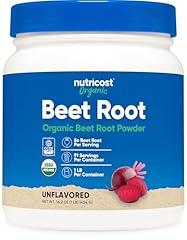
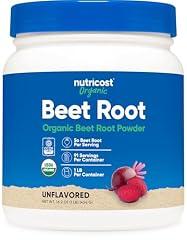
Nutricost Organic Beet Root Powder 1 LB
Overview
This is a 1 pound tub of unflavored organic beet powder intended to be mixed into water or another drink. The current retail label lists one 5 g scoop, about 1/2 tablespoon, per serving and 91 servings per container. It lists organic beet root powder as the only ingredient, with 20 calories, 4 g carbohydrate, 1 g fiber, and 120 mg potassium per scoop. The organic claim has meaningful outside support. Nutricost Manufacturing is currently listed by CCOF as a USDA National Organic Program certified handler. Its manufacturing operation is also listed by NSF to the NSF/ANSI 455-2 dietary-supplement GMP standard. Those are facility and handling credentials, not a public certificate showing this specific lot’s nitrate level, contaminants, or microbiology. Most importantly for circulation or exercise use, the label does not disclose nitrate per scoop.
What works
- The label presents a single ingredient, organic beet root powder, without sweeteners, flavors, or blend ingredients.
- USDA organic handling certification for Nutricost Manufacturing is independently listed by CCOF.
- The manufacturer is independently listed by NSF for dietary-supplement GMP facilities that handle powder products.
- A 5 g scoop and 91-serving tub give a clear, practical mixing format.
What does not
- The product description calls it beet root juice powder, while the ingredient statement calls it beet root powder. That leaves the processing type unclear.
- No batch-specific, public nitrate result is provided, so the 5 g scoop cannot be matched to the nitrate doses used in blood-pressure or performance research.
- The company states that products are third-party tested, but no current lot certificate with heavy-metal, pesticide, microbiology, nitrate, detection-limit, or pass-fail data was located.
- The available warning text focuses on storage and the safety seal. It does not give practical cautions for people using blood-pressure medicines or those with calcium-oxalate stone risk.
Who is it for
This product fits an adult who wants an unflavored beet ingredient to stir into smoothies, juice, or water and prefers a straightforward 5 g scoop rather than capsules or a flavored performance formula. It is also suited to buyers who value a verified organic handling credential and want a large tub that provides 91 labeled servings. It is better framed as a food-style beet powder for routine use than as a precision nitrate supplement, because the nitrate amount is not stated.
Who is it not for
It is not designed for an athlete or clinician-guided user who needs a known nitrate dose before endurance training, competition, or blood-pressure monitoring. Human performance studies commonly use roughly 5 to 15 mmol of nitrate, but this product gives no nitrate quantity or lot result. People taking blood-pressure-lowering medicines, people with kidney disease, and those with a history of calcium-oxalate stones should discuss concentrated beet intake with a clinician. Beets can increase urinary oxalate exposure in susceptible people.
Integrity
The strongest verified point is agricultural integrity. CCOF lists Nutricost Manufacturing as a current USDA National Organic Program certified handler, and the product label identifies the ingredient as organic beet root powder. The manufacturer also operates facilities listed by NSF to NSF/ANSI 455-2 GMP requirements for dietary supplements, including powder operations. These credentials do not replace finished-product testing. No public, lot-specific certificate was found for nitrate, toxic elements, pesticides, or microbiology, so safety and active-compound consistency cannot be independently checked from the available evidence. The label is gluten-free, soy-free, vegan, and non-GMO by manufacturer statement. The product comes in a plastic tub, but no material code, recycling instructions, packaging-reduction evidence, sourcing report, or product-level lifecycle assessment was located.

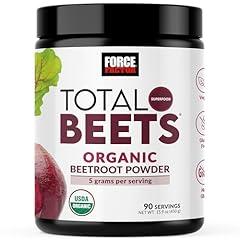
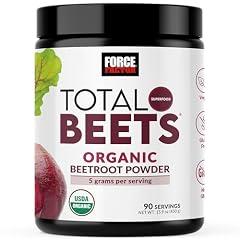
Force Factor Total Beets Organic Beetroot Powder Superfood
Overview
This is an unflavored beet-root powder in a canister, with 90 servings. The stated serving is one 5 g scoop, mixed into 4 to 8 ounces of water or another food or drink once daily. It is positioned as a convenient whole-food nutrition powder rather than a flavored nitric-oxide formula. Force Factor's product page and a separate US retailer both identify organic beet root as the sole ingredient, with 20 calories, 4 g carbohydrate, 1 g fiber, and 105 mg potassium per scoop. The marketplace claims the product is third-party tested, but no current lot-specific certificate or public product-certification registry entry was located. It also does not quantify nitrate, so its dose cannot be matched to the nitrate amounts used in human blood-pressure or performance studies. The marketplace carries a California warning that use can expose consumers to lead.
What works
- A short, transparent formula, organic beet root is the only listed ingredient.
- The 5 g scoop and 90-serving capacity are consistently shown by the maker and an independent US retailer.
- The label lists no added sugar, artificial sweeteners, artificial flavors, or preservatives.
- A one-scoop powder format can be mixed into water, smoothies, or food, as directed by the manufacturer.
What does not
- The marketplace carries a California Proposition 65 lead exposure warning. No current lot-specific heavy-metal, pesticide, or microbiology report with detection limits was publicly available.
- Nitrate content is not measured or disclosed, so circulation, blood-pressure, and endurance effects cannot be tied to the studied nitrate dose range.
- The marketplace's third-party-testing claim is unproven to a buyer because no report, laboratory details, or current public certification listing was found.
- The available safety language is general and does not specifically address blood-pressure medicines, low blood pressure, or calcium-oxalate kidney-stone history.
Who is it for
This format suits an adult who wants a plain, single-ingredient beet powder for routine use in smoothies, yogurt, or water, and values a measured 5 g scoop over preparing fresh beets. It is also practical for people avoiding added sweeteners, flavors, and preservatives. Its 90 daily servings suit a household or individual intending regular use. This use case is about convenient beet-food intake, not reliably dosing nitrate for a specific blood-pressure or athletic-performance outcome.
Who is it not for
It is not suited to athletes who need protection against prohibited-substance contamination or a verified nitrate amount for event preparation, because no sport-certification listing or nitrate assay is public. People using prescription blood-pressure medicines, people with low blood pressure, pregnant or nursing people, and those managing a medical condition should consult a clinician before use. People with a history of calcium-oxalate kidney stones should also seek individualized advice, because beets can increase urinary oxalate exposure. Children should not use it.
Integrity
The product is a single-ingredient organic beet-root powder, and the marketplace presents it as USDA Organic, vegan, gluten-free, and non-GMO. USDA rules limit use of a 100 percent organic claim to products made entirely with organic ingredients apart from salt and water. However, a current public certificate for the relevant Force Factor handling or manufacturing operation was not located, so the agricultural chain could not be independently confirmed. The most important health transparency issue is the California lead exposure warning on the marketplace listing. The brand also says the product is third-party tested, but it does not publish a current lot report showing elemental contaminants, pesticide residues, microbiology, or nitrate content. The canister has no publicly stated resin code, recycling instructions, package-weight reduction data, sourcing detail, or product-specific lifecycle assessment, so its packaging and supply-chain footprint remain unsubstantiated.

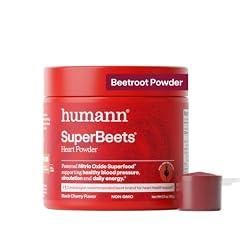
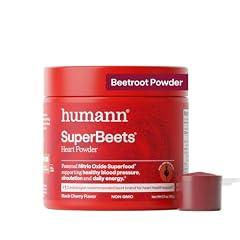
humanN SuperBeets Beet Root Powder
Overview
This is a black-cherry flavored beetroot powder in a 5.3-ounce canister with 30 servings. The labeled daily use is one 5 g teaspoon mixed into 4 to 6 ounces of water, juice, or a smoothie. The ingredient list identifies non-GMO beetroot powder, fermented beetroot powder, natural black-cherry flavor, malic acid, magnesium ascorbate, and stevia leaf extract. One serving has 15 calories, 3 g total sugar, and no added sugar. The manufacturer states that the formula supports nitric oxide production, circulation, healthy blood pressure, and heart-healthy energy. A peer-reviewed analysis of a then-current 5 g SuperBeets powder serving measured 1.03 mmol nitrate and 0.14 mmol nitrite. That is useful independent composition evidence, but it is not a current lot certificate. The current product page does not disclose a quantified nitrate or nitrite dose, despite stating that the formula is unchanged.
What works
- The 5 g serving, directions, nutrition information, and full ingredient list are clearly disclosed.
- It contains no added sugar and is caffeine-free, which can suit people avoiding stimulant-based pre-workout products.
- The label gives a practical adult-use precaution, including consultation for pregnancy, nursing, medicines, or a medical condition.
- Independent academic testing detected nitrate and nitrite in a 5 g SuperBeets serving, rather than relying only on a nitric-oxide marketing claim.
What does not
- No current lot-specific certificate was found for nitrate, nitrite, heavy metals, pesticides, or microbiology.
- The current formula does not state its nitrate or nitrite amount. The available independent 5 g measurement is older and below several human-study doses used for blood-pressure effects.
- The product is not listed as the exact powder in the current NSF Certified for Sport registry, so athletes do not have public sport-certification assurance for this product.
- The product page makes sustainability and third-party-testing statements, but does not provide a product-specific test report, packaging material details, or a verifiable organic certification.
Who is it for
This product suits an adult who wants a small, flavored beet powder to mix once daily and values a short, disclosed ingredient list over a capsule or stimulant pre-workout. It can also fit someone who wants to limit added sugar and caffeine, since one serving provides 15 calories, 3 g total sugar, and no added sugar. Its 30-serving canister is appropriate for a month-long routine, provided the buyer treats the blood-pressure and circulation claims as general support claims rather than a substitute for clinical care.
Who is it not for
It is not a strong fit for athletes who require a publicly listed Certified for Sport or Informed Sport product, because no such listing was found for this exact powder. It is also not ideal for buyers seeking a current, quantified nitrate dose that can be matched to clinical research. People taking blood-pressure medicines, people who are pregnant or nursing, and people with a medical condition should follow the label's clinician-consultation warning. Those with recurrent calcium-oxalate stones or kidney disease should seek individualized clinical advice before using concentrated beet products.
Integrity
The key health limitation is dose transparency. Beetroot nitrate can increase nitric-oxide metabolites, and systematic reviews report modest average blood-pressure reductions in some settings. However, effects vary by person and study population. A historical independent analysis found 1.03 mmol nitrate and 0.14 mmol nitrite in a 5 g SuperBeets serving, while the current formula does not publish a current numeric nitrate or nitrite amount. That prevents a reliable match between this canister and the higher nitrate doses often used in trials. The label and brand materials identify the product as plant-based, gluten-free, non-GMO, caffeine-free, and free of artificial sweeteners. These are mostly manufacturer or retailer-reported properties, not substitutes for a public finished-product quality certification. No product-specific public contaminant certificate was located. No organic certification or product-level packaging material and recycling guidance was located either. Beetroot is also a relatively oxalate-rich food, which is relevant for people managing certain kidney-stone risks.
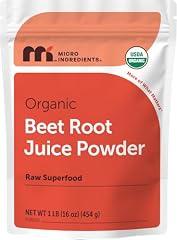
Micro Ingredients Organic Beet Root Powder
Overview
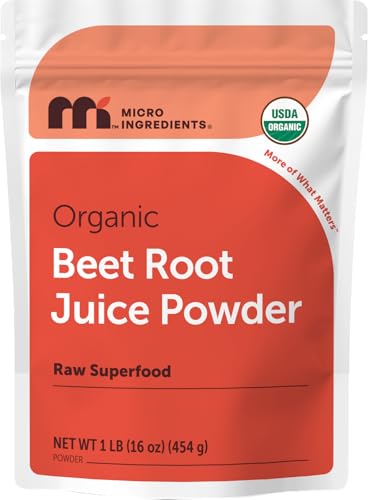
This is a 1 pound pouch of organic beet root juice powder. The current label information from independent retailers identifies one ingredient, organic beet root juice powder, with a 3.5 g scoop and about 129 servings. It is a food-style powder for mixing into drinks or adding to smoothies and recipes, rather than a standardized nitrate supplement. The maker says the powder is made from cold-pressed beet root, contains no additives or preservatives, and can be used at one to three scoops daily. Those processing and use details are manufacturer statements. Most importantly for circulation or exercise use, no batch-specific nitrate amount is disclosed, so a scoop cannot be matched to the nitrate doses used in human beetroot studies. A current retailer label also carries a California Proposition 65 lead warning.
What works
- The ingredient list is simple, organic beet root juice powder is the only listed ingredient.
- The labeled 3.5 g scoop and 129 servings make portions and pouch capacity clear.
- The manufacturer states that the powder is cold-pressed, water soluble, vegan, and usable in drinks or recipes.
- The product carries a USDA Organic claim and names Organic Certifiers as its certifier, although a current product-specific certificate was not publicly confirmed.
What does not
- No current lot-specific nitrate assay is published, so nitric oxide, blood-pressure, and performance dosing cannot be verified.
- No public finished-product certificate was found showing heavy-metal, pesticide, or microbiology results, detection limits, and pass criteria.
- A California Proposition 65 warning for lead appears on a current retailer label. This is a real exposure warning, not proof that every serving is unsafe.
- No current public listing was found for this exact product in NSF Certified for Sport, Informed Sport, NSF dietary supplement, or USP verification registries.
- The available warning guidance is limited. It does not specifically address blood-pressure medicines or kidney-stone risk.
Who is it for
This pouch suits an adult who wants a plainly labeled beet juice powder for food and beverage use, such as adding a small measured amount to smoothies, juice, sauces, or baking. Its large pouch and 129 labeled servings fit frequent household use better than someone who only uses beet products occasionally. It also fits buyers who prioritize a single plant ingredient and a stated organic certification claim, while accepting that the product is not standardized to a verified nitrate dose.
Who is it not for
It is not well suited to an athlete, coach, or military service member who needs sport-certification protection against prohibited-substance contamination. It also does not fit someone seeking a predictable nitrate dose for a performance or circulation protocol, because the nitrate content is not disclosed or independently published by lot. People taking blood-pressure-lowering medicines, people with a history of calcium oxalate kidney stones, pregnant or breastfeeding users, and those managing a medical condition should seek clinician guidance before routine use.
Integrity
The product is a one-ingredient organic beet juice powder with no listed flavorings, sweeteners, or filler ingredients. The maker and retailers state that it is USDA Organic and certified by Organic Certifiers. Organic Certifiers is a USDA-accredited organic certification agency, but a current public certificate linking this exact product and operation could not be independently located during this review. The main health limitation is evidence transparency. Human research supports nitrate-rich beetroot products for some blood-pressure and exercise outcomes, but this pouch does not disclose nitrate per scoop or publish a current lot certificate. A current retailer label also shows a California Proposition 65 lead warning. The flexible bag reduces rigidity and shipping weight relative to a jar, but no material code, recycling instructions, sourcing report, or product-level footprint assessment was located.

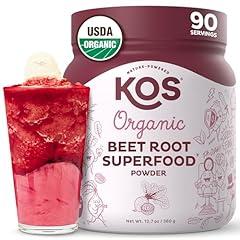
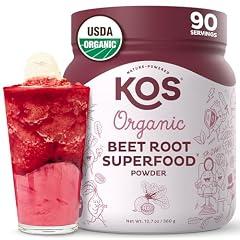
KOS Organic Beet Root Powder, 90 Servings
Overview
KOS Organic Beet Root Powder is a 12.7-ounce food-style powder for stirring into drinks, smoothies, bowls, or recipes. One scoop is 4 g, with about 90 servings per jar. Its Nutrition Facts panel and ingredient listing identify one ingredient, organic beet root powder, with no separate extract, sweetener, flavor, or stimulant listed. A January 2026 Qalitex lot report published by KOS reports measured metals and microbiological results for a 4 g powder lot. It does not report nitrate content, pesticide results, a beet identity assay, or a prohibited-substance screen. That matters because human nitrate studies generally use a quantified nitrate dose, while this product gives only the weight of whole beet powder. Its circulation and active-lifestyle claims therefore cannot be matched to a verified, evidence-aligned nitrate intake.
What works
- One clearly disclosed ingredient, organic beet root powder, in a 4 g scoop.
- A current published lot report includes lead, arsenic, cadmium, mercury, and microbiological results.
- The label gives a specific serving size and about 90 servings, which supports consistent recipe use.
- The package identifies USDA Organic certification by CCOF, and the current brand page repeats the USDA Organic claim.
What does not
- No batch-specific nitrate amount is disclosed, so performance or circulation use cannot be dosed against the human research.
- The published lot report does not show pesticide screening, nitrate testing, or a quantitative identity assay.
- No current public NSF, USP, Informed Sport, or NSF Certified for Sport listing was identified for this exact product.
- The allergen warning notes shared-facility processing for several major allergens, while guidance is general rather than specific to blood-pressure medicines or kidney-stone risk.
Who is it for
This product suits adults who want a plainly formulated beet food powder for smoothies, juices, breakfast bowls, baking, or natural red coloring. The 4 g scoop and 90-serving jar make it practical for a regular food routine, especially for people who prefer a single plant ingredient over flavored pre-workout formulas. It also fits buyers who value an organic claim and want access to a recent lot report covering heavy metals and key microbiological tests. It is better viewed as whole-beet food powder than as a precisely dosed nitric-oxide supplement.
Who is it not for
It is not well suited to athletes subject to drug testing, because no recognized sport-certification listing or prohibited-substance screen was identified. It is also unsuitable for someone trying to reproduce a studied nitrate protocol or manage blood pressure with a quantified intake, since the nitrate amount is not disclosed. People using blood-pressure-lowering medicines, those who are pregnant or nursing, and people with medical conditions should follow the package advice to consult a clinician. Those with recurrent calcium oxalate kidney stones should discuss frequent beet intake with their clinician because beets can contribute oxalate.
Integrity
The product has a simple ingredient profile, organic beet root powder, and its package identifies CCOF as the USDA organic certifier. KOS also states that the product is made from whole red beets and is free from added artificial flavoring. Organic certification is meaningful for crop and handling standards, but the reviewed product materials did not provide a supply-chain certificate identifying the specific grower or processor for this jar. KOS publishes a January 2026 Qalitex report for a listed product lot. It reports very low measured lead and non-detect results for several metals, plus passing results for key microbiological tests. The report does not include pesticides, nitrate, identity, or sport-drug testing. KOS states that packaging uses recycled materials, but it does not provide material codes, recycling instructions, or a product-specific footprint assessment. No relevant active FDA recall or warning-letter record was identified in the reviewed searches.

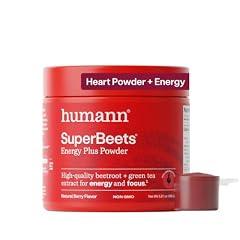
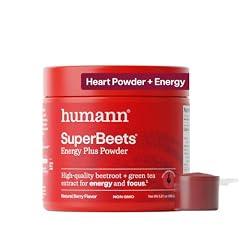
HumanN SuperBeets Energy Plus Beet Root Powder
Overview
SuperBeets Energy Plus is a berry-flavored 5.87-ounce powder with 30 labeled servings. The manufacturer directs adults to mix one scoop in 4 to 6 ounces of water daily, and lists 80 mg of caffeine per serving from green tea extract. It is a beet-based energy and circulation supplement, not a standardized nitrate product. Its public ingredient list names non-GMO beet powder, Enovita grape seed extract, green tea extract, vitamin C from magnesium ascorbate, malic acid, natural flavor, and stevia. Caffeine is quantified, but the label does not disclose the serving amounts of beet material or grape seed extract, or any nitrate amount. The manufacturer says it is third-party tested for purity and potency, but no current lot-specific certificate with nitrate, heavy-metal, pesticide, or microbiology results was publicly available in the verification sources. Public certification registers checked did not list this exact product.
What works
- The labeled 80 mg caffeine dose gives users a concrete amount to count toward total daily caffeine intake.
- The manufacturer provides a named ingredient list rather than an undisclosed proprietary blend.
- The powder format is simple to use, with one scoop mixed into a small glass of water.
- The manufacturer states that the product is vegan, gluten-free, soy-free, dairy-free, non-GMO, and made without artificial colors or sweeteners.
What does not
- The label does not state nitrate content, so its beet dose cannot be matched to the nitrate amounts used in blood-pressure or exercise studies.
- Amounts of beet powder and grape seed extract are not disclosed, limiting formula-level evidence assessment.
- The brand's third-party-testing statement is not backed by a publicly available current lot certificate showing contaminant limits and results.
- This exact product was not found in the public NSF, USP, Informed Sport, or NSF Certified for Sport registers checked.
Who is it for
This product fits an adult who wants a once-daily flavored powder with a clearly labeled, moderate 80 mg caffeine serving and prefers beet, grape seed, and green tea ingredients over a stimulant-heavy pre-workout formula. It can suit someone seeking a convenient morning or afternoon alertness routine who can tolerate caffeine and does not need a product with a precisely measured nitrate dose. The 30-serving canister also suits a buyer who prefers a monthly powder format rather than capsules or ready-to-drink beet juice.
Who is it not for
It is not well suited to competitive athletes subject to anti-doping testing, because this exact product does not appear in the sport-certification registries checked. It is also unsuitable for people avoiding caffeine, those who already consume substantial caffeine, and people who experience caffeine-related anxiety, palpitations, insomnia, or digestive upset. People using blood-pressure-lowering medicines, those with low blood pressure, or people with a kidney-stone history should consult a clinician before using beet-based supplements, especially when the nitrate and beet amounts are not disclosed.
Integrity
The manufacturer states that this powder uses non-GMO beetroot, plant-based ingredients, and grape seed extract sourced from southern France. It also says the product is made in the United States with globally sourced ingredients. These are manufacturer statements, not independently verified product certifications. No USDA Organic certification for this product or its beet supply chain was identified in the reviewed sources. A current lot-specific certificate for toxic elements, pesticides, microbiology, or nitrate content was not publicly available. A 2017 California Proposition 65 complaint alleged lead and cadmium exposures from other Humann products, Protein40 Chocolate Flavor and HeartGreens Lemon Flavor, not this product. That record does not establish contamination in Energy Plus, but it makes transparent finished-product testing especially relevant. No active FDA recall or warning letter for this exact product was identified in the reviewed records. Packaging materials, recyclability instructions, and product-specific lifecycle evidence were not disclosed.