
10 Best Battery Backup
 Daniel Kenitz
Please note that we participate in affiliate marketing programs. When you purchase through links on our site, we may earn a commission. As an Amazon Associate we earn from qualifying purchases. This comes at no additional cost to you and helps support the resources required to provide valuable content.Advertising Disclosure
Top-rated Battery Backup Comparison
1

2
3
4
5
6
7
8
9
Battery backup: what to look for
Battery backups fall into two different categories. An uninterruptible power supply (UPS) stays connected to wall power and switches selected outlets to its battery during an outage. A portable power station stores energy for later use and may provide AC, USB, or DC outputs. A power bank supplies USB power only; it cannot back up wall-powered equipment or provide automatic outage transfer.
The first question is not the advertised capacity but the equipment you need to support. Check continuous watts, startup or surge demand, and whether the device can tolerate a brief interruption. A UPS may be suitable for a desktop, router, modem, NAS, or monitor, but many products are specifically unsuitable for medical equipment, servers, workstations, refrigerators, heaters, laser printers, pumps, motors, and other high-inrush loads. Portable stations are generally better for selected low- or moderate-power loads than for whole-home backup.
Capacity figures need context. Watts describe the maximum load at one time; watt-hours describe stored energy. Neither tells you exactly how long a device will run. In the supplied reviews, independent testing found 910 usable watt-hours from a product advertised at 1,070 watt-hours, 839 watt-hours from a 1,024-watt-hour station, and 247 watt-hours from a 293.8-watt-hour station. Conversion losses, the connected load, battery age, temperature, and the device’s own consumption all change the result. A runtime stated at 500 watts and 25°C should not be treated as a universal runtime claim. Runtime tables or calibrated-load tests are more useful than an unqualified “hours of backup” headline.
For a UPS, look for the exact model in an OSHA-recognized testing laboratory’s public record. UL Solutions Product iQ, Intertek’s ETL directory, and the CSA Group listing database are the relevant places to check. UL 1778 applies to UPS equipment; portable power stations may instead be listed to UL 2743 or another applicable standard. A logo, a broad claim such as “UL certified,” or a battery-only standard does not by itself verify the complete product. OSHA’s Nationally Recognized Testing Laboratory directory helps establish whether the testing organization is recognized.
Output matters as much as capacity. Pure sine-wave output may be required by some equipment, while stepped or simulated sine-wave output can limit compatibility. Transfer time, voltage and frequency regulation, power-factor limits, overload behavior, and restart behavior should be specified for the exact model. Surge, automatic-voltage-regulation, and brownout claims should identify the protected outlets and be supported by applicable documentation, such as a UL 1449 listing for surge protection. ENERGY STAR records can provide independently checkable UPS ratings, runtimes, efficiency, and no-load draw.
Finally, consider ownership after the outage. A replaceable, approved battery can avoid discarding an entire UPS. Lead-acid batteries contain lead and electrolyte; lithium batteries can create fire, burn, leakage, and thermal hazards if damaged, overheated, crushed, opened, or incorrectly charged. Use the maker’s instructions and appropriate battery or hazardous-waste recycling, never household trash or curbside recycling.
Across the supplied products, the recurring caveats are clear: none should be treated as medical or life-safety backup; several are not suitable for servers or equipment needing zero interruption; motorized, heating, refrigeration, printing, pumping, and high-inrush loads commonly exceed their safe use; and many headline runtime, surge, certification, and transfer claims were not independently verified. Battery age, ventilation, moisture, heat, physical damage, and correct load calculation remain important even when a product has useful documentation.
Integrity
Battery backup products combine stored electrical energy, charging electronics, an inverter, and outlets or ports. The topics below distinguish a product with checkable protection and realistic performance from one that mainly repeats unverified specifications. Scores are relative to the supplied products: higher scores reflect stronger documentation or testing for that topic, not a guarantee that a product is suitable for every load.
HHealth & Safety
Independently certified electrical safety
This measures whether the complete, exact product appears in an OSHA-recognized laboratory listing for the applicable U.S. safety standard. That matters because a battery claim or logo may not cover the UPS or power station’s shock, fire, charging, and fault risks. The supplied scores range from the high 60s to 92; the strongest evidence was an exact portable-power listing to UL 2743, while several products had only manufacturer claims or no authenticated listing.
Battery fire and exposure protection
This measures disclosed battery chemistry and safeguards against overheating, overcharge, short circuit, thermal runaway, leakage, and lead exposure. It matters because both lithium and lead-acid products can be hazardous when damaged or mishandled. Higher-scoring products provide clearer manuals, temperature limits, battery-management details, and warnings. Lower scores reflect broad safety language, missing thresholds, chemistry mismatches, or unsupported claims such as eliminating fire risk.
Overload and fault shutdown
This measures whether the product explains and tests shutdown for overloads, short circuits, overheating, and related faults, including how output is reset. These controls can prevent a connected load from escalating damage to wiring, electronics, or the battery. Among the supplied products, higher scores correspond to documented alarms, cutoff behavior, breakers, and error handling; lower scores reflect protections described only generally or without independent testing.
Safe power for connected electronics
This measures waveform, voltage and frequency regulation, transfer behavior, and stated device-compatibility limits. It matters because a backup can keep power flowing yet still cause a sensitive device to reboot or behave poorly. Higher-scoring products disclose output characteristics and compatibility limits more clearly. Lower-scoring products rely on “pure sine” or “UPS” labels without measured waveform, regulation, transfer, or load-compatibility evidence.
Surge and brownout protection that is substantiated
This measures whether surge suppression, automatic voltage regulation, and brownout protection identify the protected outlets and have applicable supporting evidence. A joule number alone does not show what protection reaches each outlet. Scores in the supplied set are generally moderate or lower because several products lacked a UL 1449 record or documented AVR and brownout testing. A high score requires specific, checkable outlet and protection information.
Recall-ready model traceability
This measures whether a buyer can identify the exact product, locate its serial number, contact U.S. support, and obtain a practical remedy if a battery or electrical recall occurs. It matters especially for sealed lithium products and older UPS units. Higher scores in the supplied set reflect stable model information, support contacts, warranty or registration processes, and clearer recall handling; lower scores reflect missing serial, service, or remedy details.
EEvidence
Proven usable backup power
This measures continuous watts, usable watt-hours, runtime at stated loads, and, where relevant, transfer time using reproducible methods. It matters because buyers need to plan around delivered power rather than battery-label capacity. The supplied scores are highest where calibrated or independent testing measured usable energy and sustained output. Lower scores reflect manufacturer formulas, conflicting runtime claims, or no load-specific testing.
Honest capacity, lifespan, and UPS claims
This measures whether capacity, watts, surge power, cycle life, recharge time, pure-sine output, and UPS claims state their conditions and limits. It also checks that a product does not imply zero-interruption, medical, or whole-home performance it cannot support. Higher-scoring products distinguish manufacturer claims from independent results and disclose limitations. Lower scores include conflicting specifications, unqualified runtime headlines, or exaggerated safety and capability language.
Checkable proof beyond the listing
This measures whether certifications, efficiency records, test reports, warranties, and safety documents identify the exact product and can be independently authenticated. It matters because marketplace listings often combine broad claims with incomplete model information. Higher scores in the supplied set come from exact ENERGY STAR records, public certification entries, or independent load testing. Lower scores reflect seller-only claims, inaccessible certificates, and missing model-specific reports.
EEcology
Replaceable, repairable, and safely recyclable battery
This measures whether the maker offers an approved replacement battery or service, gives battery-life information, and explains safe disposal. A replaceable UPS cartridge can prevent whole-unit disposal, while sealed batteries usually make repair dependent on qualified service or end the product’s useful life when the cell fails. The supplied scores favor products with named replacement cartridges and recycling instructions; low scores reflect built-in batteries and vague disposal guidance.
Low waste while waiting for an outage
This measures charging, conversion, and no-load losses while the product is plugged in or switched on. Lower losses mean less wasted electricity and less heat during the many hours when no outage occurs. The strongest supplied scores belong to UPS products with ENERGY STAR data, including independently recorded no-load draw and weighted efficiency. Products without idle or charging-loss figures cannot support a comparable efficiency claim.
Full reviews

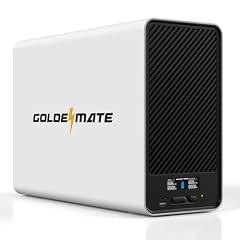
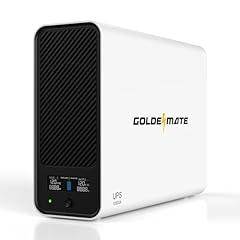
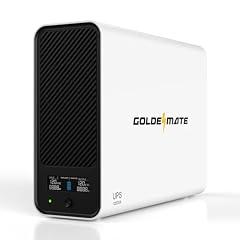
GoldenMate 1500VA Lithium UPS Battery Backup
Overview
This is a 120 V line-interactive desktop battery backup for computers, network gear, televisions, and similar electronics. It has eight NEMA outlets, a stated 1,000 W output limit, front USB-A and USB-C charging ports, a display, and a built-in 296.96 Wh lithium iron phosphate battery. The manufacturer specifies pure sine wave output, automatic voltage regulation, a 4 to 6 millisecond transfer time, and up to 30 minutes of backup at a 600 W load. Those are useful, concrete specifications, but they are manufacturer-stated rather than independently load-tested results. I could not independently authenticate an exact-product U.S. electrical-safety listing to the applicable UPS standard, or find an ENERGY STAR efficiency record. The manufacturer provides a support phone number and states a 30-day return policy, but its product page also conflicts with a circulated manual about whether this version has a communication port for automatic shutdown.
What works
- The manufacturer gives unusually specific capacity, load, runtime, transfer-time, voltage-range, and output-distortion figures for this product.
- Manufacturer-stated 296.96 Wh capacity and up to 30 minutes at 600 W can provide shutdown time for a moderately loaded workstation or network setup.
- The manufacturer states pure sine wave output, AVR, 120 V output regulation, and under 5 percent output THD.
- The manufacturer states protection against overload, short circuit, overcurrent, overvoltage, and overheating, plus a 15 A breaker.
- A stable product page provides dimensions, operating limits, support contact details, and a stated 30-day return policy.
What does not
- I could not verify an exact-product listing from UL, ETL, or CSA to the U.S. UPS safety standard. Marketplace metadata referencing UL 508 does not establish applicable UPS certification.
- No independent calibrated load test, runtime curve, transfer test, surge test, or no-load power measurement was found for this product.
- Surge-protection claims are not accompanied by a verified UL 1449 listing, surge rating, or outlet-level protection map.
- The battery is enclosed and the available instructions say not to open the casing. No manufacturer-approved replacement battery, repair procedure, or take-back program was located.
- The manufacturer's product page says there is no automatic-shutdown communication port, while a circulated manual describes one. That inconsistency narrows confidence in the documentation.
Who is it for
This product suits a home-office or small-business user who needs a compact tower UPS for a desktop computer, monitor, router, modem, NAS, or television, and who can keep the real battery load well below 1,000 W. Its stated 296.96 Wh capacity is most practical for preserving connectivity and allowing an orderly shutdown, rather than for running high-power equipment through a long outage. It also fits users who value a lithium iron phosphate battery and accept that the core performance and protection figures are manufacturer-stated.
Who is it not for
It is not suited to medical life-support equipment, safety-critical controls, or installations where an independently authenticated U.S. UPS safety listing is required by an employer, insurer, landlord, or local procurement policy. It is also a poor fit for refrigerators, microwaves, laser printers, electric recliners, space heaters, or other high-inrush appliances. Buyers who need audited efficiency data, a verified surge-protection listing, a published runtime curve at several loads, or a user-replaceable battery should seek a product with those records and service provisions.
Integrity
The built-in battery is identified by the manufacturer as lithium iron phosphate, a chemistry disclosure that is preferable to an unspecified lithium battery type for safe handling decisions. The manufacturer also states that the product has battery management and overload, short-circuit, overcurrent, overvoltage, and overheat protections. Those safeguards are relevant, but I did not find an independently authenticated exact-product U.S. UPS safety listing or third-party fault testing that confirms their operation. The battery is not presented as user-replaceable, and the available instructions advise users not to open the casing. That can reduce unsafe home servicing, but it also means battery aging may end the usable life of the whole product. No maker take-back or model-specific recycling instructions were located. At end of life, use an electronics recycler or a battery collection program that confirms acceptance of the product's lithium battery, and do not put a damaged lithium battery in an ordinary collection box.

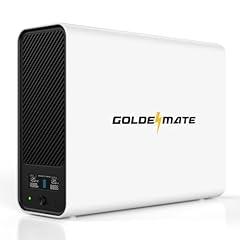
GoldenMate 1000VA Lithium UPS Battery Backup
Overview
This is a compact tower UPS for a desktop PC, monitor, router, modem, network storage, and similar 120V electronics. It has eight battery-backed, surge-protected outlets, an 800W maximum output, and a 230.4Wh lithium iron phosphate battery. The front LCD shows input and output conditions plus battery status. GoldenMate states that it delivers pure sine wave output, transfers to battery in 8 to 20 milliseconds, and can run about 30 minutes at a 400W load. Those are manufacturer figures, although a separate retail-unit test recorded about 28 minutes at roughly 435W. The manual also provides specific overload shutdown thresholds and cautions against medical equipment, refrigerators, microwave ovens, laser printers, sump pumps, heaters, and other high-demand appliances. Its claimed UL and TUV credentials could not be independently authenticated for this exact UPS through the public certification sources reviewed.
What works
- An independently published retail-unit test found about 28 minutes of runtime at roughly 435W, close to the manufacturer's 400W runtime claim.
- The manufacturer documents a 230.4Wh lithium iron phosphate battery and an 800W continuous rating, giving buyers a concrete load ceiling for office electronics.
- The manual specifies overload and short-circuit behavior, including timed shutdown thresholds in both utility and battery operation.
- GoldenMate provides a listed U.S. phone contact, model-specific documentation, and a three-year UPS warranty with a prepaid label for valid returns.
What does not
- The claimed UL and TUV certifications were not independently verifiable for this exact UPS in the public certification registers reviewed. Battery-related standards are not the same as a confirmed complete-UPS listing to UL 1778.
- Surge protection is claimed for all outlets, but no UL 1449 listing, surge rating, protected-outlet map beyond the general claim, or substantiated automatic voltage regulation data was located.
- GoldenMate's own materials conflict on battery life. One source states 5,000-plus cycles at full depth of discharge, while the detailed manual lists 3,000-plus cycles under stated test conditions.
- The battery is not presented as user-replaceable. The manual says battery work should be done by professionals, and no approved replacement pack or product-specific recycling instructions were located.
- No ENERGY STAR registration or model-specific idle-draw and efficiency measurements were located.
Who is it for
This product suits a home-office or small-network user who needs time to save work, keep internet equipment online, or ride through a short outage. It is most appropriate when the combined equipment load is comfortably below the 800W maximum, ideally near the manufacturer's stated 480W to 560W preferred range. The independently reported runtime near 435W makes it particularly relevant for a desktop, monitors, router, and modem where a controlled shutdown matters more than long-duration power.
Who is it not for
It is not for life-support, medical, or other safety-critical equipment, since the manual explicitly excludes medical and life-support use and the exact product's electrical-safety listing was not independently confirmed. It is also unsuitable for refrigerators, microwave ovens, sump pumps, laser printers, space heaters, and other motorized or high-inrush appliances. Buyers needing documented surge ratings, independently verified efficiency, zero-interruption transfer, or a readily replaceable battery should use a product with those exact records and service arrangements.
Integrity
The battery chemistry is lithium iron phosphate, rather than the sealed lead-acid chemistry common in many small UPS units. GoldenMate documents a battery-management system, thermal ventilation requirements, charging and discharging limits, short-circuit protection, and instructions to isolate the unit if it shows heat, odor, discoloration, deformation, or other abnormal behavior. The manual also requires a grounded wall outlet and warns against water, disassembly, and obstructed ventilation. The product's battery is intended for professional service rather than routine user replacement. That can reduce unsafe do-it-yourself battery work, but it also makes repair and end-of-life planning less convenient because no approved replacement pack or product-specific recycling program was located. Lithium batteries and products containing them should not enter household trash or curbside recycling. Use a dedicated battery recycler or local household hazardous-waste program, and contact the manufacturer if a battery is damaged. No CPSC recall for this product was located in the sources reviewed.

1000VA/600W Lithium UPS Battery Backup
Overview
This is a compact, plug-in 120V battery backup for a computer, monitor, network equipment, or similar electronics. It provides eight NEMA outlets, a 600W maximum output, an LCD, USB communication for automatic shutdown, and an internal lithium iron phosphate battery. The maker specifies 153.6Wh of battery capacity and a 25-minute maximum runtime at a 300W load. The manufacturer also specifies pure sine wave output, less than 20 ms transfer time, and no automatic voltage regulation. Its published manual gives a 90V to 140V input range, 120V output with plus or minus 10 percent regulation, and defined overload and short-circuit shutdown behavior. These are manufacturer specifications, not independently published calibrated-load or waveform tests. Searches of major U.S. certification directories did not yield an exact-model listing, despite the product page's general reference to safety certifications.
What works
- The manufacturer publishes concrete load, capacity, recharge, transfer-time, voltage, and fault-protection specifications rather than only a vague runtime claim.
- Manufacturer documentation specifies overload cutoffs and short-circuit response, including immediate battery-mode cutoff at loads of 120 percent or more.
- All eight outlets are described by the manufacturer as battery-backed and surge-protected, which can simplify a small desk or network setup.
- USB communication and automatic shutdown support are stated for Windows, Mac, and NAS use.
What does not
- No exact-model UL, ETL, or CSA listing was located in the searched U.S. certification registers. The product page does not name the claimed safety certification or applicable standard.
- No independent calibrated-load runtime, transfer-time, output-waveform, or efficiency test report was found for this product.
- The manufacturer says this version has no automatic voltage regulation, so it is not presented as a regulator for routine low- or high-voltage utility conditions.
- Life claims are inconsistent across manufacturer materials. The current product page says 5,000 or more cycles, while the published manual specifies 3,000 or more cycles under stated laboratory conditions.
Who is it for
This product is suited to a home-office or small-network user with a measured load comfortably below 600W who mainly needs time to save work, complete an orderly computer or NAS shutdown, or bridge a short outage. It is also relevant where eight battery-backed outlets and a narrow upright form are useful. The manufacturer provides a runtime condition of up to 25 minutes at 300W, so the load should be measured rather than estimated from device labels. It should be plugged directly into a grounded wall outlet as the manufacturer instructs.
Who is it not for
It is not appropriate for refrigerators, microwave ovens, electric recliners, space heaters, or other motorized and high-inrush appliances. The manufacturer specifically excludes refrigerators, microwaves, and electric recliners. It is also not a suitable choice where a hospital, medical, life-safety, or other zero-interruption application requires independently verified transfer behavior and electrical-safety certification. Buyers who need voltage correction during common brownouts should look for a unit with documented automatic voltage regulation, because this product is specified without AVR. Those requiring a user-replaceable battery should also choose another design.
Integrity
The internal battery is identified as lithium iron phosphate, and the manufacturer says its battery-management system stops charging and discharging at set limits. Its manual also describes overload, short-circuit, and fan-cooling provisions. These features are relevant safeguards, but they remain manufacturer statements because no exact-model U.S. NRTL safety listing was located in the searched certification directories. No product-specific CPSC recall or California Proposition 65 warning was found in the searches performed. Lithium iron phosphate avoids the lead exposure associated with conventional sealed lead-acid UPS batteries. However, the battery is not presented as user-replaceable, and the manufacturer says replacement should not be needed during normal use. That reduces routine maintenance but can make eventual repair and recycling less practical. Do not place the unit in household trash or curbside recycling. Use a battery or electronics collection program that accepts lithium batteries, following local handling rules.

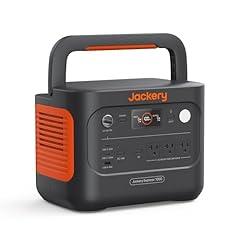
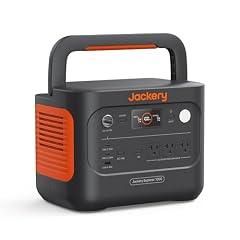
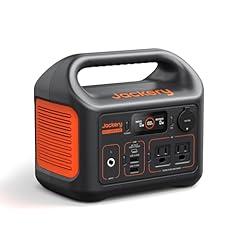
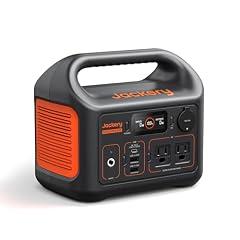
Jackery Explorer 1000 v2 Portable Power Station
Overview
This is a 23.8-pound portable battery power station with a 1,070Wh lithium iron phosphate battery, three 120V AC outlets, USB charging ports, a 12V vehicle-style outlet, and up to 1,500W of continuous AC output. It is intended for portable power, short emergency backup, camping, and RV use, rather than permanent household wiring or whole-home backup. Its electrical safety case is unusually checkable. SGS publicly lists this exact product configuration to ANSI/CAN/UL 2743, CSA C22.2 No. 107.3, and UL 1778, and SGS is an OSHA-recognized testing laboratory. Independent load tests measured roughly 85 to 87.5 percent of the stated capacity delivered through AC power. The maker also documents a transfer time of up to 20 milliseconds in bypass mode, with an explicit warning not to use it where zero-interruption power is required.
What works
- The exact product is publicly listed by SGS to North American portable-power-pack and UPS safety standards, including UL 2743 and UL 1778.
- Independent testing found about 910Wh delivered from the stated 1,070Wh capacity, or roughly 85 percent at the tested load.
- A separate independent high-load test measured 37.5 minutes at 1,479W, equating to 87.5 percent discharge efficiency.
- The manufacturer specifies lithium iron phosphate cells, 1,500W continuous AC output, 3,000W surge output, and a five-year warranty when the extension is obtained.
What does not
- Its backup transfer is not zero milliseconds. The manual says it can take up to 20 milliseconds and specifically excludes data servers and workstations with high uninterrupted-power requirements.
- There is no substantiated product-specific UL 1449 surge-protection listing or documented automatic voltage regulation claim for the AC outlets.
- The internal battery is sealed and not user-replaceable, so declining capacity cannot be addressed with a consumer battery swap.
- Independent tests support delivered energy under load, but publicly available evidence does not establish idle draw, charging efficiency, voltage regulation, or waveform distortion across a full range of loads.
Who is it for
This product suits campers, RV users, and households that want a carryable source for a refrigerator, router, lights, laptops, phones, small tools, or other loads that stay within 1,500W. Its measured AC delivery supports realistic planning for several hours of modest essential loads, not vague capacity arithmetic. It also fits buyers who need a power station that can pass mains power through and switch to battery for ordinary electronics, provided they test their particular device before relying on that setup.
Who is it not for
It is not appropriate for medical equipment, servers, high-end workstations, or any device that cannot tolerate an interruption, because the documented transfer can take up to 20 milliseconds. It is also unsuitable as a permanently installed whole-home power source, a substitute for a code-compliant transfer switch, or a long-duration outage system for high-wattage heating, air conditioning, cooking, or electric water heating. Buyers needing serviceable batteries should avoid a sealed, non-user-replaceable design.
Integrity
The most important safety finding is independently checkable electrical certification. SGS lists the exact product configuration to ANSI/CAN/UL 2743, CSA C22.2 No. 107.3, and UL 1778. SGS North America is recognized by OSHA as a Nationally Recognized Testing Laboratory. That is stronger evidence than relying on a marketplace logo or an unverified safety claim. The battery is manufacturer-stated lithium iron phosphate chemistry, with a stated 4,000 cycles to at least 70 percent capacity. The product is still a large lithium battery, so it should be used within its stated charge and discharge temperature limits and kept intact. The battery is not user-replaceable, which limits repairability. Jackery states that it offers return-for-recycling and trade-in pathways, but owners should confirm current eligibility and shipping instructions before sending a damaged or end-of-life unit.

Jackery Explorer 300 Portable Power Station
Overview
This is a 7.1-pound portable power station with a 293.8Wh internal battery, two 120V AC outlets, USB outputs, a 12V car-style outlet, and solar charging support. It is intended for small electronics and low-draw appliances during travel, camping, or a short outage, not for whole-home backup. Jackery’s manual rates the AC inverter at 300W continuous and 500W surge, with pure sine wave output. Independent calibrated-load testing measured 247Wh of usable energy, about 84% of the stated battery capacity. That supports realistic planning for phones, cameras, laptops, networking gear, and other modest loads. The product record describes a LiFePO4 battery, but Jackery’s current support page and manual identify this version as an NCM lithium-ion battery with a stated 800-cycle life to at least 80% capacity.
What works
- Independent testing measured 247Wh of usable energy, giving a concrete basis for planning modest backup loads.
- The 7.1-pound weight was independently confirmed, making this product practical to carry between a vehicle, campsite, and room.
- Jackery specifies regulated outputs, pure sine wave AC, 300W continuous output, and a 500W surge allowance.
- The manual identifies charge and discharge overvoltage, overcurrent, short-circuit, over-temperature, and overcharge protections.
- The manual provides U.S. telephone and email support, serial-number-based registration, and a 24-month limited warranty.
What does not
- The product record's LiFePO4 claim conflicts with Jackery documentation identifying the battery as NCM lithium-ion. This is a material chemistry and lifespan disclosure problem.
- The battery is not user-replaceable, and the manual offers no consumer battery replacement path or clear recycling program.
- No exact-model listing was located in publicly searchable UL, ETL, or CSA certification records. The manual displays certification marks, but does not identify the applicable safety standard or certificate number.
- No published exact-model idle-power, charging-efficiency, or inverter-efficiency figure was located, so plugged-in energy waste cannot be assessed.
- This is not a UPS. It has no documented transfer time, no bypass mode, and no substantiated surge suppression, voltage regulation, or brownout-conditioning function for the AC outlets.
Who is it for
It suits a person who needs a light, manually operated source for low-draw electronics, such as phones, cameras, laptops, small lights, a router, or selected camping equipment. The independently measured 247Wh usable capacity makes it most appropriate when the buyer can calculate device wattage and accepts limited runtime. It also fits people who value direct USB-C charging and can keep the product dry, ventilated, within its stated temperature range, and recharged periodically during storage.
Who is it not for
It is not suitable for whole-home backup, high-wattage heating appliances, kettles, hair tools, most kitchen appliances, or any load exceeding 300W continuous output. It is also unsuitable where uninterrupted power is required, including critical medical equipment, because no UPS or transfer-time performance is documented. Buyers seeking a long-cycle LiFePO4 battery should not rely on the product record, since Jackery identifies this version as NCM lithium-ion. It should not be used outdoors in rain, snow, or wet conditions.
Integrity
Jackery documents an NCM lithium-ion battery and lists protections for under-voltage, overvoltage, charge and discharge overcurrent, short circuit, over-temperature, and overcharge. The manual also warns that damaged or modified battery packs can create fire, explosion, burn, and electric-shock risks. It directs users to stop using the product if unusual heat, odor, or damage occurs, keep ventilation unobstructed, and avoid fire, heat, moisture, and physical damage. No exact-product CPSC recall was located in the reviewed public recall sources. The manual shows FCC, UN38.3, SGS, and TÜV marks, but the exact product's U.S. electrical-safety listing and applicable standard could not be independently authenticated through the public NRTL directories reviewed. The included AC charging cable is stated by Jackery to bear a UL mark, which does not establish a listing for the power station itself. The sealed battery is not replaceable, which can shorten the serviceable life of the whole product, and clear manufacturer disposal or recycling instructions were not found.

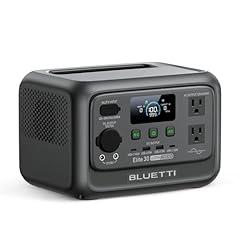
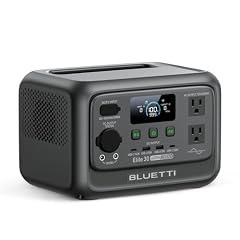
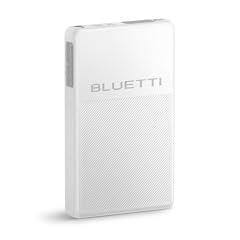
BLUETTI Elite 30 V2 Solar Generator
Overview
This is a compact lithium iron phosphate portable power station intended for charging and running small electronics, lights, tool batteries, and limited appliance loads during travel or short outages. BLUETTI specifies 288Wh of battery capacity, 600W total AC output, nine output ports, two USB-C ports up to 100W and 140W, and a weight of about 9.5 pounds. It can charge from wall power, a vehicle, or solar input within the published limits. The maker states that its UPS mode transfers within 10ms and that Turbo charging reaches 80 percent in 45 minutes at 77°F. The manual also provides a runtime formula using 95 percent depth of discharge, inverter efficiency above 90 percent, and about 9W self-consumption, but these are manufacturer figures, not a published calibrated-load test. A hands-on TechRadar review independently found it practical for brief storm and travel use, while noting its limited runtime.
What works
- The compact 288Wh format and roughly 9.5-pound weight suit portable charging and short-duration backup needs.
- The manual documents overload, short-circuit, over-temperature, DC overcurrent, PV overvoltage, and grid-frequency fault responses.
- Two USB-C outputs are specified up to 100W and 140W, useful for directly charging many modern laptops and devices.
- The manufacturer provides a five-year warranty, support contact details, and a serial number accessible through the product interface.
- The Wi-Fi and Bluetooth radio has an FCC equipment authorization record for this product family.
What does not
- The manufacturer-hosted manual linked for this product specifies 230V AC output, while the US marketplace record states 120V. This is a material documentation conflict that should be resolved with the seller before connecting US equipment.
- No exact-model UL, ETL, or CSA electrical-safety listing was located in the public certification sources checked.
- No calibrated independent runtime, transfer-time, waveform, voltage-regulation, surge-suppression, or brownout-protection test report was located.
- The 1,500W Power Lifting setting is limited to pure resistive loads. The manual says actual output remains 600W, and motors or compressors can need two to four times their rated power at startup.
- The internal battery is not presented as user-replaceable, and no manufacturer replacement-battery or repair-parts pathway was located.
Who is it for
This product fits a person who needs a carryable reserve for phones, laptops, cameras, networking gear, lights, small DC equipment, and occasional low-power AC loads. Its 288Wh capacity is better matched to charging devices or powering them in short bursts than to sustained household appliance use. It also suits users who can follow the stated temperature, ventilation, dry-location, grounding, solar-input, and load-limit instructions, and who are comfortable using the app for settings such as charging mode and UPS behavior.
Who is it not for
It is not appropriate for anyone needing whole-home backup, long refrigerator runtime, high-starting-current compressors, medical equipment, data servers, or workstations that cannot tolerate an interruption. The manual specifically says its UPS function is not for servers or workstations requiring high-performance UPS protection. It also should not be used outdoors in rain or high humidity, near flammables, with damaged cables, or as a substitute for professionally installed surge, ground-fault, or line-conditioning protection. Resolve the published US voltage-documentation conflict first.
Integrity
The battery chemistry is disclosed as LiFePO4, and the manufacturer describes a battery-management system and thermal management. Its manual gives concrete controls for inverter overload, short circuit, DC overcurrent, PV overvoltage, and charging or discharging outside permitted temperatures. It also warns against water exposure, damaged cords, disassembly, heat, fire, and connecting an external source to a DC output. These are useful safeguards, though a public exact-model NRTL electrical-safety listing was not located. BLUETTI documents a five-year warranty and product serial-number access, which helps with service and safety communication. No exact-model CPSC recall or California Proposition 65 warning was located in the sources checked. The battery is built in, with no verified replacement program found. The manual directs users to designated battery and electronics recycling facilities. EPA guidance also says lithium-ion batteries and battery-containing devices should not enter household trash or curbside recycling because damaged batteries can start fires.

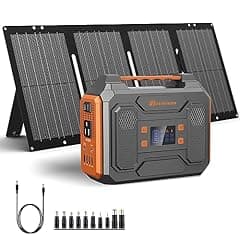
ZeroKor 300W Portable Solar Generator with 60W Foldable Solar Panel
Overview
The ZeroKor R200 is a compact lithium-ion portable power station for low-draw electronics during camping, vehicle travel, or short power interruptions. The manufacturer manual specifies 280Wh of battery capacity, two 110V AC outlets with a combined 300W maximum, USB outputs, one 9V to 12.6V DC output, and a 5-pound, 8.5 by 6.7 by 4.1 inch enclosure. Its manual provides a conditional runtime estimate, using 85 percent of its stated capacity, which equates to about 238Wh before device-specific losses. It also says AC outlets do not pass power while charging, so it is not a zero-interruption UPS. The product record describes a package with a 60W foldable solar panel, while the available R200 manual lists a package without a solar panel. Confirm the box contents before relying on solar charging.
What works
- The manual clearly states a 300W maximum AC limit, helping users match it to low-draw loads.
- Manufacturer documentation specifies pure-sine 110V, 60Hz AC output for compatible electronics.
- The manual discloses lithium-ion battery chemistry, operating temperature limits, and instructions to stop use after overheating, odors, or damage.
- It can accept wall, vehicle, or compatible solar input, according to the manufacturer documentation.
What does not
- No exact-model UL, ETL, or CSA electrical-safety listing was located in the applicable certification directories.
- No calibrated independent load test was located to confirm usable watt-hours, voltage regulation, waveform quality, or sustained 300W operation.
- The manual does not provide a surge-suppression rating, automatic voltage regulation specification, or protected-outlet map.
- Solar-panel inclusion is unclear because the product record describes a panel bundle but the available R200 manual lists no solar panel.
- The battery is not described as user-replaceable, and no manufacturer replacement-battery or repair program was located.
Who is it for
This product fits a camper, road traveler, or renter who needs a small carryable reserve for phones, lights, cameras, a laptop, a small fan, or similar loads clearly below 300W. Its stated 280Wh capacity is more appropriate for several device charges or hours of modest electronics use than for appliance backup. It also suits users who can check connected-device wattage, keep the station dry, and accept that AC output is unavailable while it is charging.
Who is it not for
It is not appropriate for whole-home backup, kitchen appliances, space heaters, hair dryers, power tools with high startup demand, or any load at or above 300W. It should not be treated as a medical-device UPS or a seamless computer backup because AC pass-through is specifically unavailable during charging and no transfer-time specification was found. Buyers who require independently listed electrical safety, documented surge protection, verified runtime testing, or a replaceable battery should use a product with those records.
Integrity
The available product manual identifies the battery as lithium-ion and gives meaningful basic precautions. It prohibits disassembly, moisture exposure, use of damaged equipment, excessive temperatures, and nonapproved charging accessories. It also directs users to stop using the station if it develops overheating, unusual odors, rust, or other abnormal conditions. These are useful risk controls, but an exact-model certification from a U.S. nationally recognized electrical testing laboratory was not located. The manual says to dispose of batteries and electronic goods under local rules, but it does not describe battery replacement or a take-back pathway. The U.S. EPA advises that lithium-ion batteries and devices containing them must not go in household trash or curbside recycling because damage can start fires. Use a dedicated battery or electronics recycler, or a household hazardous-waste program, at end of life.

BLUETTI FridgePower Portable Power Station 2016Wh
Overview
FridgePower is a plug-in indoor battery backup intended primarily for a refrigerator or freezer. The unit has a manufacturer-documented 2,016Wh LiFePO4 battery, 1,800W continuous 120V output, 3,600W surge rating, two AC outlets, and a 78 mm deep enclosure that can sit flat or be wall-mounted. It weighs about 43.4 pounds, so installation and relocation need deliberate handling. BLUETTI documents a UPS switchover time of 10 ms or less. A hands-on TechRadar test reported no visible refrigerator-light flicker when grid power was cut, but it did not publish calibrated usable-capacity, waveform, voltage-regulation, or full-load runtime measurements. BLUETTI has publicly claimed UL 1778 and UL 1741 certification, but an exact-model record was not independently located in public UL, ETL, or CSA certification-directory results.
What works
- A practical hands-on test observed no visible refrigerator-light flicker during a simulated outage.
- The manufacturer manual gives concrete U.S. output limits, 1,800W continuous and 3,600W surge, plus a 10 ms or less transfer claim.
- The thin 78 mm body and included mounting hardware support placement beside or near a refrigerator where floor space is limited.
- The manual includes storage temperatures, charging limits, ventilation guidance, fault indicators, and battery disposal instructions.
- BLUETTI lists a 60-month warranty and provides U.S. phone and email support.
What does not
- The public certification claim for UL 1778 and UL 1741 could not be authenticated to this exact product through an issuing-body listing.
- No independent calibrated report was found for usable watt-hours, full-load runtime, transfer timing, output waveform, voltage regulation, or idle draw.
- The manual warns that it is not for data servers or workstations requiring a high-performance UPS, which limits its suitability for some sensitive loads.
- Surge suppression, automatic voltage regulation, brownout protection, and protected-outlet details are not substantiated in the available product documentation.
- BLUETTI's stated idle-power figures vary by context, including 4W in product marketing and 0.3W for remote wake standby, without a published test method.
Who is it for
This product fits a household seeking a dedicated, plug-in backup for one refrigerator, freezer, or other modest essential loads during outages, especially where a narrow footprint matters. Its documented 1,800W continuous output and manufacturer-stated fast transfer are relevant for compressor startup, while the wall-mount option can help in apartments, condos, and crowded kitchens. The user should be able to keep clearance around the enclosure, follow the temperature and storage instructions, and manage a roughly 43-pound unit safely.
Who is it not for
It is not appropriate for someone needing whole-home backup, outdoor weather exposure, or a permanently grid-connected energy-storage system. The documented IP20 rating is for indoor, non-weatherproof use. It is also not the right choice for data servers, workstations, or other loads needing a high-performance UPS, because the manual expressly excludes those uses. Buyers who require independently documented sine-wave quality, surge protection, voltage regulation, or a precisely tested runtime for a critical medical or business load need evidence that was not located for this product.
Integrity
The battery chemistry is disclosed as LiFePO4, and the manual provides meaningful precautions for charging temperature, storage, ventilation, impact damage, damaged cables, electrolyte contact, fire response, and qualified repair. It directs owners not to disassemble the unit and says battery-containing electronics should go to designated recycling facilities rather than household trash. The manual also identifies a resettable input circuit breaker and fault indication through the power button and app. BLUETTI lists a five-year warranty, stable product naming, serial-number app registration, and reachable U.S. support. No model-specific CPSC recall or public exposure warning was located in the searches performed through September 6, 2026. The battery is not user-replaceable in the available manual, and no approved replacement battery for the main unit was found. Claimed low idle draw is promising but lacks independent efficiency registration or a published standardized test result.

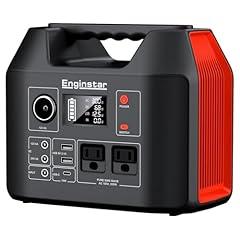
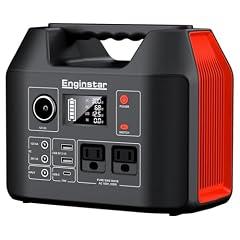
EnginStar 300W Portable Power Station
Overview
This is a compact lithium-ion portable power station for light off-grid and emergency loads. The manufacturer-stated capacity is 296Wh, with a 300W AC limit, 110V AC output, USB and DC outputs, solar charging input, and a listed weight of about 6.5 pounds. It is intended for small electronics, lights, fans, and similar intermittent loads rather than household circuits. Its manual provides a transparent rough runtime calculation, estimating about five hours for a 50W load after applying an 85% conversion factor. It also specifies 110V plus or minus 10% and 60Hz plus or minus 5% for the pure-sine-wave AC output. The documentation reviewed provides no independently authenticated electrical-safety listing, calibrated runtime report, surge test, or idle-draw measurement for this exact product.
What works
- The manual gives a concrete 296Wh capacity, 300W output limit, and a simple runtime calculation for planning light loads.
- Manufacturer-stated AC and DC short-circuit and overpower protection shuts the affected output down when load exceeds 300W.
- The manual identifies lithium-ion battery chemistry, operating temperature range, compatible solar-input range, and storage guidance.
- A stable model name, support email, manual, and stated 12-month limited warranty improve basic product traceability.
What does not
- No exact-product UL, ETL, or CSA electrical-safety listing was independently confirmed in the reviewed certification registers.
- Runtime, waveform quality, voltage regulation, and device compatibility are documented by the manufacturer, not by a reproducible independent test report.
- There is no substantiated surge-suppression, brownout-protection, automatic-voltage-regulation, or no-load-efficiency specification.
- The internal battery is non-removable, and the manual does not identify a manufacturer-approved replacement battery or repair route.
- The manual advises against using the AC outlets while recharging and says the product cannot replace normal household AC or DC power.
Who is it for
This product fits a user who needs a carryable energy reserve for camping, road trips, photography gear, a router, phones, small fans, lighting, or a low-draw CPAP setup with device-specific power needs checked in advance. Its documented runtime method is most useful for people willing to calculate wattage and keep continuous demand comfortably below 300W. The stated 12V to 25V solar-input range also suits users who already understand connector compatibility and panel limits.
Who is it not for
It is not appropriate as zero-interruption backup for medical equipment, a refrigerator, laser printer, heater, coffee maker, or any appliance with a high startup surge. The manual specifically warns that some compressors and printers can exceed its protection threshold. It also does not suit households needing a unit that can stand in for normal household power, buyers who require independently verified electrical certification, or users who need a replaceable battery, formal repair path, measured efficiency data, or verified surge and brownout protection.
Integrity
The product uses a non-removable lithium-ion battery. Its manual directs users not to short it, crush it, expose it to heat or liquids, cover it while charging, or disassemble it. It also describes short-circuit and overload shutdown, a temperature-overload warning indicator, cooling vents, and a cooling fan. These are useful stated controls, but the available documentation does not provide an independently authenticated safety listing or battery thermal-runaway test for this exact product. No product-specific CPSC recall or safety warning was located during the review. At end of life, the manual says not to place the battery in household garbage and to use dedicated collection points. That aligns with EPA guidance that lithium-ion batteries and battery-containing devices should not go in trash or curbside recycling because they can start fires. Because the battery is internal, use an electronics or household-hazardous-waste program that accepts the complete device.

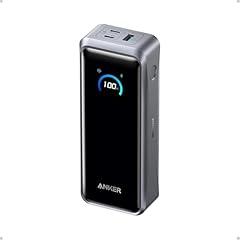
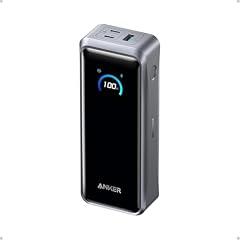
Anker Prime Power Bank 26,250mAh
Overview
This is a 600 g USB power bank with two USB-C ports and one USB-A port. It stores 99.75Wh, or 26,250mAh at the stated cell voltage, and is intended to recharge phones, tablets, cameras, handheld consoles, and USB-C laptops away from an outlet. It has no AC outlet or automatic outage transfer function, so it is a portable charger rather than a conventional household battery backup or UPS. Anker specifies up to 300W combined output, including up to 140W through either USB-C port, plus up to 250W dual-port recharging under stated charger and cable conditions. Independent testing supports strong usable energy, measuring about 87 to 90Wh at several high USB-C loads. Independent testing also found that very high 240W to 280W loads trigger thermal throttling after roughly 13 to 17 minutes, so 300W is a peak capability, not a continuous-load planning figure.
What works
- Independent electronic-load testing measured about 87 to 90Wh of usable output energy, a strong result relative to the stated 99.75Wh cell energy.
- Independent testing measured 137.6W through a USB-C port and found stable simultaneous charging of a laptop-class load, another power bank, and a phone.
- The manufacturer documents thermal monitoring that disables some or all functions when internal temperature is too high or too low.
- The product has a clear model designation, a 24-month U.S. warranty category, reachable support, and an established recall portal.
What does not
- No exact-product listing was located in UL, ETL, or CSA public certification records, so independently certified U.S. electrical safety could not be confirmed.
- The product is not a UPS. It provides no AC output, transfer-time specification, surge-protected outlets, line conditioning, or brownout regulation.
- At extreme sustained output, independent testing recorded temperatures around 53 to 57°C and substantial step-downs from 240W to 280W loads.
- Anker does not document a user-replaceable battery or an approved replacement-battery program for this product. No product-specific idle-power figure or charging-efficiency test report was found.
Who is it for
This product fits a traveler, field worker, creator, or mobile professional who needs to recharge USB-C laptops, tablets, cameras, phones, and accessories from a compact, airline-threshold battery. It is most appropriate when the connected equipment can use USB Power Delivery and the user values high short-term output, clear on-device power information, and rapid recharging with compatible high-wattage chargers and cables. Its 99.75Wh rating is close to the common 100Wh carry-on threshold, though airline rules and approval remain the traveler’s responsibility.
Who is it not for
It does not suit someone seeking uninterrupted outage protection for a desktop computer, modem, medical equipment, appliances, or anything needing wall-power outlets. There is no AC inverter, automatic transfer behavior, stated sine-wave output, surge-protected outlet map, or line-conditioning specification. It is also a poor fit for workloads that truly require 240W to 300W continuously, because independent testing found thermal step-down during such loads. People who require externally verified U.S. safety certification or a replaceable battery should seek documentation that this product does not publicly provide.
Integrity
The manufacturer’s guide states that internal-temperature control can disable some or all functions outside its permitted temperature range. Anker also states that its monitoring system checks temperature frequently, but that frequency is a manufacturer claim rather than an independently published thermal-abuse test. The documentation advises use in a cool, ventilated environment and acknowledges that input power may reduce to prevent overheating. No recall for this specific product was located in the reviewed U.S. recall materials. However, Anker had multiple U.S. power-bank recalls in 2025 involving other models after overheating, fire, explosion, and burn reports. That history makes routine inspection for swelling, unusual heat, odor, smoke, or damaged ports especially important. The internal battery is not documented as replaceable. For end of life, Anker directs users to electronics or battery recycling resources. A damaged or recalled lithium battery must not go in household trash, curbside recycling, or ordinary retail battery boxes.