
10 Best Lower Back Pain Massager
 Lauren Wilson
Please note that we participate in affiliate marketing programs. When you purchase through links on our site, we may earn a commission. As an Amazon Associate we earn from qualifying purchases. This comes at no additional cost to you and helps support the resources required to provide valuable content.Advertising Disclosure
Top-rated Lower Back Pain Massager Comparison
1

2
4
5
+
6
7


+
8


9
+
10
Lower-back pain massagers: what to look for
Lower-back massagers are home comfort devices rather than one uniform treatment. The products supplied here include kneading pillows, rolling chair pads, vibrating or heated belts, TENS units, light-therapy wraps, air-compression cushions, traction-style supports, and a passive stretching board. They work through different mechanisms, so a heat setting, vibration level, light wavelength, or traction height cannot be compared as though each were measuring the same thing.
The most credible expectation is usually temporary comfort for uncomplicated muscular tightness or nonspecific low-back symptoms. The supplied reviews describe evidence for superficial heat and massage as modest, short-term, or low certainty. NICE places massage within a broader package that includes exercise, while WHO allows some physical therapies only conditionally. TENS is not recommended as routine care for chronic primary low-back pain in the cited guidance, and routine traction is a recurring concern: WHO and NICE advise against it. Red or near-infrared light is not well matched to the evidence here; the supplied reviews cite findings showing no clinically important improvement for nonspecific low-back pain.
A buyer should first match the mechanism to the intended use. Kneading and rolling devices need adjustable pressure, stable positioning, and a way to soften contact. Heated products should state a temperature range, session limit, automatic shutoff, and overheating protection. Wearable products should explain fit, charging, battery protection, and whether use is prohibited while charging. TENS products need clear pad-placement instructions, output information, contraindications, and a regulatory indication that matches the claim. Traction or air-lift products should disclose force or pressure limits; a claimed height, such as an air lift measured in inches, does not establish safe or useful spinal traction.
Headline figures can mislead. A wavelength such as 660 or 850 nm does not show that a light dose works; irradiance, energy dose, treatment area, and human testing would be needed. A maximum heat number may describe an internal setting rather than skin-contact temperature, and high contact temperatures can burn skin. Battery runtime says little about charging or fire protection. A 15-, 20-, or 30-minute timer limits continuous use but does not prove that the temperature, pressure, or electrical construction is safe. “FDA listed,” “professional grade,” “doctor recommended,” “UL compliant,” and similar wording are not equivalent to FDA clearance or an independently searchable safety certification.
For electrical products, look for a traceable record for the exact finished model in UL Product iQ, Intertek’s ETL directory, CSA’s listing database, or another OSHA-recognized testing laboratory record. For rechargeable products, battery certification records such as UL 2054 or UL 62133 may matter. FDA registration or device listing identifies a regulatory record but is not approval, clearance, or independent performance testing. For a therapeutic claim, check whether an FDA 510(k) indication actually covers the claimed use. CPSC recall and warning records are useful checks, but finding no recall is not proof of safety.
Across the supplied products, recurring cautions include avoiding sleep, unattended use, wet conditions, damaged cords, broken or inflamed skin, and use when heat or pressure cannot be felt normally. Pregnancy, implanted electronic devices, pacemakers, recent injury or surgery, osteoporosis or fragile bones, impaired sensation or circulation, and certain heart, neurological, vascular, or seizure conditions require avoidance or clinician advice depending on the device. Severe or unexplained pain, major trauma, fever, progressive weakness, spreading or saddle-area numbness, and bowel or bladder changes need medical assessment rather than self-treatment. Traction, electrotherapy, and broad claims about sciatica, spinal alignment, nerve treatment, or structural restoration deserve particular caution because the supplied evidence does not substantiate them.
Integrity
These topics separate a device that offers bounded, clearly described comfort from one whose safety, health claims, or environmental story rests mainly on marketing. Scores reflect the supplied reviews and the evidence available for each exact product; manufacturer-stated features are not treated as independent verification.
HHealth & Safety
Evidence-matched pain relief
This measures whether the actual mechanism, dose, and use time fit credible human evidence for lower-back symptoms. Higher-scoring products were generally limited to plausible short-term comfort from heat or massage; the strongest result was the exact FDA-cleared temporary muscle-pain indication for the TENS unit. Lower scores clustered around unverified light therapy, traction, sciatica treatment, and structural-restoration claims.
Safe heat at the skin
This measures whether contact heat has verified temperature limits, controls, shutoff, overheating protection, and clear no-sleep or reduced-sensation warnings. A high score requires more than a listed heat level: it needs credible protection against burns during real contact use. Among these products, scores were higher where manuals stated timers and cautions, but no supplied product had independently verified skin-temperature testing.
Electrical and battery fire safety
This measures protection against shock, short circuits, charging problems, overheating, and fire in cords, adapters, batteries, and control electronics. Corded products avoid rechargeable-battery hazards but still need model-specific electrical certification. Higher-scoring products had safer documented formats or narrower electrical risks; low scores reflected missing UL, ETL, CSA, battery, or equivalent independent records rather than proof that a product was defective.
Safe pressure, kneading, and traction
This measures whether rollers, nodes, vibration, air supports, and stretching features have bounded force, adjustable settings, and no unsupported spinal-pulling promises. Higher scores came from adjustable intensity, softer sleeves or flaps, and clear stop instructions. Lower scores were associated with undisclosed traction force or pressure and claims of decompression, alignment, or restoration that were not supported by the supplied evidence.
Warnings that protect vulnerable users
This measures whether instructions identify users who should avoid the device and symptoms that need medical assessment. Higher-scoring products gave specific warnings about pregnancy, implanted devices, skin injury, impaired sensation, recent injury, and severe pain. Lower scores omitted red flags such as progressive weakness, neurological symptoms, fever, or bowel and bladder changes, or relied on broad advice to consult a clinician.
Controls that prevent overuse
This measures positioning, fit, accessible controls, intensity adjustment, stability, timers, and instructions against painful or unattended use. Higher-scoring products combined adjustable settings with stated 10-, 15-, 20-, or 30-minute limits, automatic shutoff, or secure straps. Lower scores reflected missing timers, unclear controls, uncertain automatic stopping, or products whose air lift, heat, or pressure could not be bounded.
EEvidence
Honest, bounded health claims
This measures whether advertising distinguishes temporary comfort from diagnosis, cure, structural correction, circulation, nerve treatment, or chronic-pain treatment. Higher-scoring products used narrower comfort language or matched claims to a limited indication. Lower-scoring products promoted sciatica relief, deep tissue treatment, decompression, alignment, circulation, or restoration without product-specific clinical support. A high score does not mean the device is clinically proven; it means the wording is better bounded.
Independently verified, not self-certified
This measures whether claims for safety, performance, materials, or medical status can be checked for the exact finished product in a credible database. Higher-scoring products included traceable FDA model records or a specific clearance; the TENS model scored especially strongly here. Lower-scoring products relied on uncheckable badges or manufacturer statements such as “UL compliant.” FDA registration or listing alone is not approval or performance testing.
EEcology
Long service life and less e-waste
This measures whether a device can remain useful through warranty support, replacement parts, repair guidance, durable construction, and responsible electronics or battery disposal. Higher-scoring examples offered longer coverage, washable covers, replacement adapters, or replacement pads. Lower scores reflected no parts catalog, no repair pathway, no battery take-back information, or conflicting warranty claims. Passive products avoid electronic waste but still need durable, serviceable construction.
Safer materials and credible environmental claims
This measures disclosure and independent support for fabrics, foams, plastics, adhesives, recycled content, and chemical claims. Higher scores reflected at least concrete material descriptions or a traceable claim, while lower scores reflected broad labels such as faux leather or breathable fabric without testing. Across the supplied products, full chemical disclosure, recycled-content verification, and textile or emissions certification were generally absent.
Full reviews

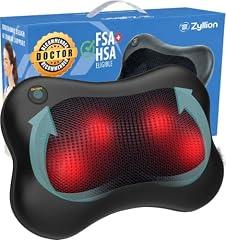
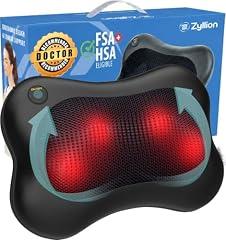
Zyllion ZMA-13 Shiatsu Back and Neck Massager
Overview
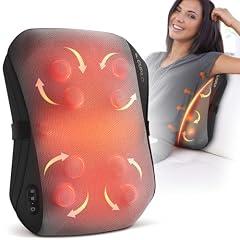
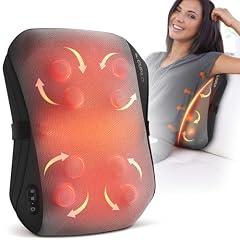
This is a corded, 30 W massage pillow with four rotating kneading nodes, a heat function, a pull-over sleeve, and a strap for attaching it to a chair. It is designed for contact use on the lower back, neck, calves, thighs, and other soft-tissue areas. The user changes pressure by leaning more or less firmly into the pillow. A wall adapter and car adapter are included. The product manual states that it reverses node direction every 60 seconds, switches off after 20 minutes, and has overheat protection. Its FDA establishment listing for an electric therapeutic massager is independently confirmable, although that is registration and listing, not evidence that this particular product has been cleared for a specific lower-back condition. Research supports massage as a possible source of short-term low-back symptom relief, but not as a stand-alone treatment or cure.
What works
- The manual provides unusually detailed safety directions, including warnings for heat sensitivity, reduced temperature perception, open skin, pregnancy, pacemakers, osteoporosis, diabetes, severe pain, and neurological symptoms.
- A 20-minute automatic shutoff and stated overheat protection provide practical limits for a corded heat-and-kneading device.
- The chair strap and removable sleeve can help stabilize the pillow and reduce direct pressure or heat exposure.
- Zyllion states a one-year warranty, plus two additional years after registration, and the manual directs users to obtain repair or replacement support for damaged covers and faults.
- Zyllion is listed in the FDA database as a registered establishment for Class I electric therapeutic massagers.
What does not
- No independently verified maximum skin-contact temperature was found, so the real-world burn margin with direct pressure and heat cannot be confirmed.
- The manual leaves massage force to how hard the user leans into the nodes. There is no stated force limit or adjustable motor intensity setting.
- The available clinical evidence concerns massage generally. No human trial was found for this pillow's four-node, heated, 20-minute protocol.
- Some marketing language overreaches the evidence, including claims about treating neck soreness and promoting circulation, while the manual also says the product is not for medical purposes.
- Material disclosure is thin. The manual calls the exterior a leather cover, while the catalog describes faux leather, and no independent chemical or environmental material certification was found.
Who is it for
This product suits an adult seeking brief, at-home comfort for uncomplicated muscular tightness in the lower back after sitting, exercise, or routine activity. It is especially relevant for someone who can use it upright against a supportive chair, can judge whether the pressure is comfortable, and wants a corded unit with a short session timer and car adapter. It should be used as a comfort measure alongside activity, exercise, and clinical care where appropriate, rather than as a solution for persistent back pain.
Who is it not for
It is not suited to people who cannot reliably sense heat or pain, cannot reposition or unplug the unit independently, or may fall asleep while using it. The manual specifically calls for medical advice or avoidance for pregnancy, pacemakers or implanted electronic devices, heart disease, osteoporosis, diabetes-related circulation or sensation problems, inflamed or broken skin, cancer in the treatment area, and acute injuries. New weakness, numbness, gait problems, confusion, speech or vision changes, severe headache, fever, or unexplained severe back pain need medical assessment, not massage.
Integrity
The clearest independently checkable conformity point is Zyllion's current FDA establishment listing for Class I electric therapeutic massagers. This confirms a regulatory listing category and establishment relationship, but does not establish that this specific product has FDA clearance for lower-back pain. The manual also states that the supplied device operates at 12 V DC, has a 20-minute timer, and uses overheat protection. Its extensive warnings are a meaningful safety strength, particularly for heat-sensitive users. The product is corded and contains no rechargeable battery, avoiding battery disposal issues. Zyllion states a three-year total warranty after registration and directs users to request repair or replacement for faults and torn covers. The manual includes general recycling language, but it does not provide a United States take-back route. Material composition is not adequately disclosed, and no product-specific recycled-content, low-chemical, or textile certification was found. No relevant U.S. recall or regulatory warning was found in the checked sources.

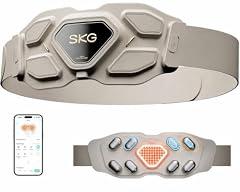
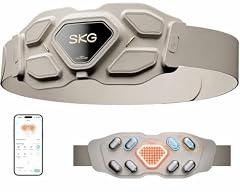
SKG Infrared Heating Back Massager Belt
Overview
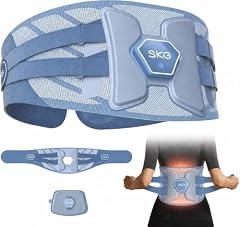
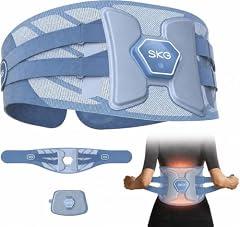
This is a rechargeable, wearable lower-back belt that combines vibration, pulse stimulation, red light, and contact heat. It is worn snugly against the waist and controlled from onboard buttons or the Future Wear app. Manufacturer documentation specifies a 2450 mAh battery, 5 V and 10 W charging input, three heat settings from 100.4°F to 107.6°F, and 80 to 120 minutes of cordless use. The supplied product guide gives this unit useful use limits, including automatic shutoff, a maximum 15-minute heating session, gradual intensity adjustment, and no use while charging. It also explicitly calls it a personal-care massager rather than a medical device. Evidence supports only limited, temporary comfort expectations. Major low-back-pain guidelines do not recommend TENS as routine care, and no human trial of this exact combination or settings was located.
What works
- The product guide specifies three controlled heat settings, topping out at a manufacturer-stated 107.6°F.
- A 15-minute heating limit, automatic shutoff, and gradual intensity guidance offer practical overuse safeguards.
- The guide gives specific warnings for pregnancy, implanted electronic devices, children, wounds, sleeping, driving, and skin discomfort.
- The official product page discloses a nylon micro-yarn belt area and silicone functional area, rather than leaving contact materials wholly unspecified.
- SKG states a one-year limited warranty for new products purchased through its official channels.
What does not
- The claimed pain-relief package is not matched by human clinical evidence on this exact product, settings, or combination of vibration, pulse stimulation, heat, and red light.
- TENS is specifically not recommended for routine low-back-pain management in NICE guidance and the WHO chronic primary low-back-pain guideline.
- Marketing language around pain conditions and circulation is broader than the product guide's personal-care, non-medical-device positioning.
- No exact-model UL, ETL, CSA, or comparable North American electrical-safety listing was located in the public registries checked.
- The warranty is limited to one year, and no replacement battery, repair instructions, spare-parts catalog, or manufacturer electronics takeback route was located.
Who is it for
This suits an adult seeking a portable comfort device for short episodes of muscular lower-back tightness, who can feel heat normally and can follow timed sessions. Its adjustable heat, pulse intensity, and wearable belt format may be useful for someone seated at a desk or resting at home who wants temporary warmth and stimulation without a cord. It is most appropriate when understood as a personal-care massager, not as treatment for sciatica, neuropathy, arthritis, or an undiagnosed back condition.
Who is it not for
It is not for people with a pacemaker or other implanted electronic device, people who are pregnant, or children, because the product guide specifically advises against use. Avoid it on wounds, scarred, inflamed, or broken skin, and do not use it while sleeping, driving, charging, or doing hazardous activities. People with reduced sensation, severe or unexplained pain, recent trauma, progressive weakness, numbness, bowel or bladder changes, or pain radiating down the leg need medical assessment rather than relying on a wearable massager.
Integrity
The product guide has meaningful basic safeguards. It instructs users to start at low intensity, limit heat sessions to 15 minutes, stop for burning or stinging, and avoid sleeping, driving, wounds, pregnancy, and implanted electronics. Its stated maximum heat setting is 107.6°F. These are manufacturer-provided specifications and instructions, not independent temperature or electrical testing. The publicly available material identifies nylon micro-yarn fabric in the belt and silicone at the functional contact area. No exact-model North American safety certification, independent material certification, public repair manual, replacement battery program, or electronics takeback route was located. A search of U.S. recall resources did not locate a recall for this product, but absence of a located recall is not independent proof of safety. The one-year limited warranty is the main documented service-life support.

USUIE Rechargeable Electric Lumbar Support Pillow
Overview
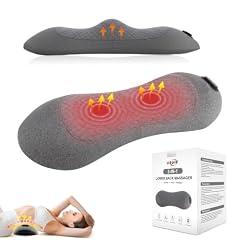
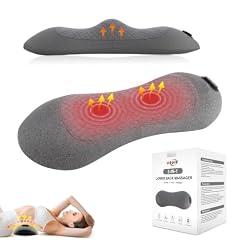
This is a rechargeable lumbar pillow for sitting or reclining, with a soft memory-foam core, polyester air-mesh cover, vibration, constant heat, and an inflatable internal lift. The stated size is 23.23 by 9.06 by 3.15 inches. An independent retailer repeats the manufacturer’s claim of roughly three hours of use per full charge, manual or automatic function selection, and automatic stopping after 30 minutes. The defining limitation is its air-lift traction claim. The retailer listing says the airbag can lift the waist by up to 2.4 inches and describes spinal decompression. That is not a clinically verified performance result. Major low-back-pain guidance advises against routine traction, and the available vibration evidence is low certainty and does not validate this product’s settings or combined heat, vibration, and air-lift program. Instructions also conflict, with the catalog cautioning against more than 20 minutes while the retailer describes a 30-minute cycle.
What works
- Cordless operation can make short comfort sessions practical away from a wall outlet, based on the manufacturer-stated rechargeable design.
- The manufacturer states that the unit stops after 30 minutes and should not be used while charging, which are useful basic controls.
- Its stated memory-foam core and air-mesh polyester cover provide passive lumbar cushioning in addition to the powered functions.
- Manual selection of heat, vibration, or air lift may let a user avoid a function that feels uncomfortable, although setting ranges are not published.
What does not
- The 20-minute maximum in the catalog conflicts with the 30-minute automatic session described by an independent retailer, leaving an important overuse limit unclear.
- No independently verified skin-contact temperature, heat settings, battery specification, charger rating, or certification listing was located for this exact product.
- The air-lift feature is advertised as traction and decompression, but WHO and NICE guidance advise against routine traction for low-back pain.
- Claims extending to sciatica, spinal decompression, and meaningful pain relief are not supported by human trials of this exact product, dose, or combined program.
- No clear contraindication or red-flag guidance was located for reduced sensation, pregnancy, implanted devices, skin injury, acute injury, weakness, numbness, or unexplained severe pain.
Who is it for
It is most suited to an adult seeking a portable, short-duration comfort device for ordinary stiffness after sitting, driving, studying, or travel, who can follow conservative use limits and stop if pressure, heat, or vibration is uncomfortable. The 23-inch curved pillow format may suit someone who also wants soft lumbar padding rather than a compact handheld massager. They should treat heat and vibration as comfort features, not as treatment for a diagnosed spinal, nerve, or sciatica condition.
Who is it not for
It is not suited to people with new severe back pain, pain after trauma, fever, unexplained weight loss, saddle numbness, bowel or bladder changes, progressive weakness, or persistent leg symptoms. Those patterns need clinical assessment rather than self-traction. People with impaired heat sensation, fragile or injured skin, pregnancy-related pain, implanted electronic devices, or difficulty recognizing discomfort should avoid unsupervised use unless a clinician says it is appropriate. It is also unsuitable for anyone who needs verified electrical, battery, or heat-safety certification before using a rechargeable body-contact device.
Integrity
The product’s advertised mechanism combines heat, vibration, foam support, and inflatable lifting. Evidence for vibration in chronic low-back pain is low certainty and does not establish the performance of this pillow. More importantly, WHO and NICE guidance advise against routine traction for low-back pain, so the decompression and sciatica-oriented marketing should not be read as a proven therapeutic result. No product-specific clinical testing, FDA clearance, or independently searchable conformity certification was located. The stated textile construction is polyester air mesh over memory foam, but no ingredient disclosure, textile certification, recycled-content claim, or chemical test report was located. The unit is rechargeable, yet the manufacturer’s battery chemistry, replaceability, warranty, spare-parts availability, and takeback route were not found. If it contains a lithium-ion battery, it should go to an appropriate battery or electronics recycler rather than household trash. No product-specific United States recall or regulator exposure warning was located in the searches performed.
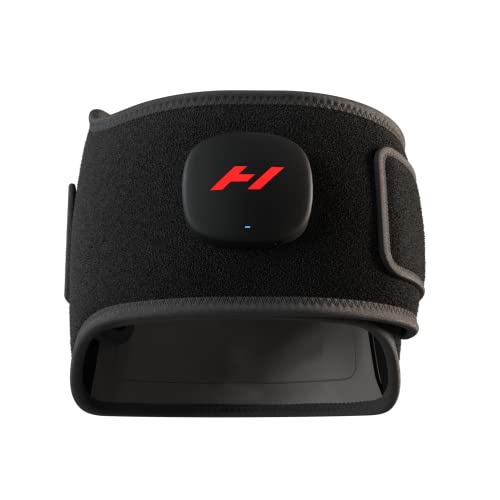
Hyperice Venom 2 Back Wrap
Overview
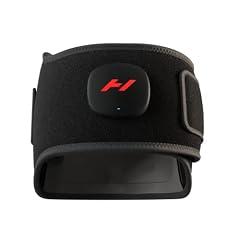
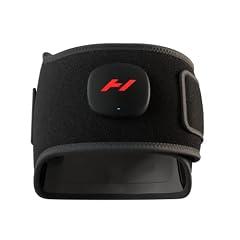
This is a cordless lower-back wrap combining surface heat and localized vibration, secured with a main Velcro waist strap and secondary compression strap. Hyperice states that it measures 48 x 11 x 2 inches, weighs 2.3 pounds, offers three heat settings of 113 F, 122 F, and 131 F, three vibration patterns, and up to three hours of battery life. The operating instructions specify 88 Hz vibration, a supplied 18 V charger, and a maximum continuous session of one hour followed by 30 minutes of rest. The manual also gives unusually concrete heat precautions, including clothing use at all settings and level 1 only for bare skin. Human evidence supports superficial heat for short-term acute or subacute low-back relief, while evidence for vibration is lower-certainty and not specific to this wrap or its settings.
What works
- Three defined heat settings and three vibration patterns allow a user to reduce intensity rather than accept a single fixed treatment.
- The wrap has a hands-free waist design with an extra compression strap, which Hyperice states can be used sitting, standing, or moving.
- The instructions clearly prohibit sleeping use, require regular skin checks, and limit bare-skin heat to the lowest setting.
- The exact Bluetooth control unit has FCC equipment authorization documentation, and the manual specifies the supplied 18 V charger.
What does not
- There is no product-specific clinical trial showing that its 88 Hz vibration and 113 F to 131 F heat settings improve lower-back pain.
- The highest stated temperature, 131 F, can burn skin. Safe use depends on following the clothing, skin-check, and one-hour session limits.
- No public UL, ETL, or CSA listing was located for the finished wrap, charger, or rechargeable battery, so electrical and fire-safety conformity is not independently verifiable through those registers.
- A retailer listing carries a California Proposition 65 warning for cumene, but Hyperice does not explain the material source, exposure level, or mitigation.
- The product has a one-year warranty, but the manual says there are no user-serviceable parts and no replacement wrap or battery program was identified.
Who is it for
This product fits an adult who wants portable, hands-free warmth for temporary sore or tight lower-back muscles, especially during sedentary work, after activity, or while resting at home. It is most suitable for someone able to feel heat normally, monitor their skin, operate the controls, and follow the one-hour treatment limit. The wide 48-inch wrap and added strap are practical for users who prefer a secured wrap rather than holding a heating pad in place. Its $269 price suits buyers specifically seeking a battery-powered heat and vibration format.
Who is it not for
It is not appropriate for sleeping, unattended use, infants, children, people unable to respond to overheating, or anyone with impaired heat sensation or poor circulation. People who are pregnant, have diabetes complications or neuropathy, use a pacemaker, have had recent surgery or joint replacement, have epilepsy, migraines, an IUD, spinal conditions, or implanted metal should obtain clinician approval first. It also is not a substitute for assessment of severe, unexplained, worsening, traumatic, or neurologically associated back pain. Users wanting a repairable appliance or verified North American electrical certification should look elsewhere.
Integrity
The strongest health safeguard is the detailed manufacturer instruction set. It warns that heated surfaces can cause serious burns, prohibits sleeping use, calls for frequent skin checks, tells users to stop at discomfort, and limits direct-skin treatment to the lowest heat setting. The manual also lists several situations requiring medical approval, including neuropathy, pregnancy, implanted devices, recent surgery, and several spinal conditions. The product carries a manufacturer Declaration of Conformity for European electrical, radio, RoHS, and REACH requirements, but this is self-declared rather than a public third-party certification for the United States. FCC documentation supports radio compliance for its Bluetooth control unit. The neoprene and silicone construction is disclosed, but a retailer's California Proposition 65 cumene warning leaves an unresolved chemical-exposure question. The manual directs users to recycle the product through a retailer or suitable route, yet it offers no user repair path and the warranty is one year.
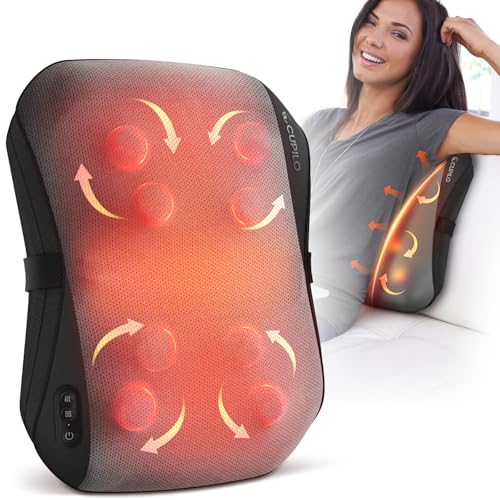
CuPiLo 2025 Shiatsu Back Massager with Heat
Overview
This is a corded, chair-mounted back massager with eight rotating shiatsu-style heads, an elastic positioning strap, two heat levels, three massage modes, and a 15-minute automatic shutoff. The manufacturer’s current manual specifies a 24 W unit powered through a 12 V, 2 A adapter, measuring 16.1 by 3.9 by 12.4 inches and weighing 3.7 lb. It is intended for seated use on a chair, sofa, or other support. Its manual defines the product as for personal relaxation and comfort, not diagnosis or treatment, and specifically says it is not for deep massage or medical use. This conflicts with web advertising that promotes deep-tissue relief, circulation, and chronic-discomfort relief. Human evidence supports massage only as a possible short-term component of broader chronic low-back-pain care, with very low certainty, and no product-specific clinical testing was located.
What works
- The manufacturer provides a 15-minute automatic shutoff and instructs users not to exceed a session.
- The adjustable strap and selectable modes allow the user to reposition the unit and reduce pressure when it feels too strong.
- The manual gives unusually specific precautions for sleeping, driving, heat-insensitive users, pregnancy, recent injury, wounds, swelling, thrombosis, cancer, and implanted electrical devices.
- A one-year limited warranty is stated, with an additional one-year extension available through registration.
What does not
- Pain-relief and deep-tissue marketing is not matched by product-specific human clinical evidence, and the manual instead limits the product to relaxation and comfort.
- The advertised heat temperatures, 122 F and 131 F, are manufacturer-stated. No independent temperature test or listing for the finished product was located.
- The claimed UL-certified adapter cannot be traced to an adapter model or an issuing-body record from the product materials reviewed.
- The instructions omit clear guidance to seek urgent assessment for neurological symptoms, severe or unexplained pain, or possible infection.
- Materials disclosure stops at breathable mesh fabric. No detailed polymer, foam, adhesive, recycled-content, or end-of-life electronics information was located.
Who is it for
This product suits an adult who wants brief, seated comfort sessions for ordinary muscular tightness after desk work, driving, or other prolonged sitting. It is most appropriate for someone who can feel heat normally, can position the unit independently, and will use it on a stable chair or sofa for no more than the stated 15-minute session. The adjustable strap and selectable massage settings can help a user moderate contact pressure. Its manufacturer-stated 24 W, plug-in format also fits a fixed home or office setup rather than travel use.
Who is it not for
It is not appropriate for sleeping, driving, unattended use, infants, or people unable to communicate discomfort. Users with reduced heat sensation, open wounds, skin disorders, swollen or inflamed areas, recent injury, thrombosis, cancer in the massage area, pregnancy, or implanted electrical devices should avoid it or first obtain clinician guidance, as the manual directs. People with new severe back pain, weakness, numbness, bladder or bowel changes, fever, trauma, or unexplained symptoms need medical assessment rather than self-treatment. It is also unsuitable for buyers seeking traction, structural correction, or proven long-term pain treatment.
Integrity
The product has practical safety instructions that address the main contact-use risks. The manufacturer tells users not to sleep with it, not to use it under blankets, not to leave it plugged in unattended, and to limit sessions to 15 minutes. It also states that the product should not be used by people insensitive to heat and directs several higher-risk groups to avoid use or consult a clinician. The manufacturer claims two heat levels, temperature control, overheat protection, and a UL-certified adapter, but an independent certification record for the exact finished product or its adapter was not located. The manufacturer provides a one-year limited warranty, plus a registration-based extension, and describes repair or replacement support for qualifying defects. That may extend service life, but no replacement-parts catalog, repair instructions for consumers, material breakdown, recycled-content certification, or electronics recycling route was found. No product-specific CPSC recall, FDA clearance, or California exposure warning was located in the databases searched. The cover is described only as breathable, wear-resistant mesh fabric, leaving chemical and material transparency limited.
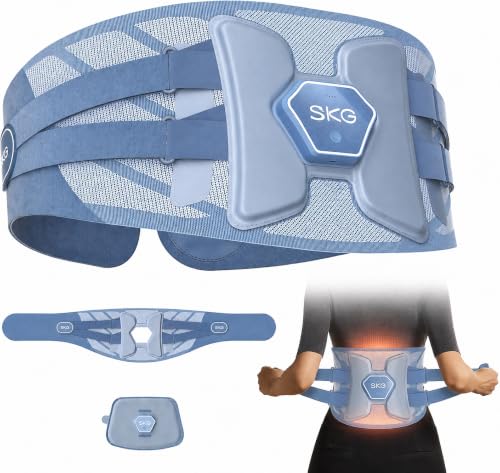
SKG QS300 Lumbar Massager
Overview
This wearable lower-back belt combines four rhythmic massage nodes, wraparound lumbar support, and a rechargeable heat module. SKG states that it provides three heat settings of 113°F, 122°F, and 131°F across a 1.51 square foot heating area, with a 4,500mAh battery. An independent distributor lists 10W input, four massage modes, and a 30-minute automatic shutoff, though those operating details were not confirmed in the US product instructions. Its evidence fit is limited to temporary comfort. Guidelines allow massage as one component of broader care for chronic primary low-back pain, but the certainty is very low and no human trial of this product, its vibration pattern, or its heat dose was located. The belt itself is not traction equipment, although its lumbar-support function should not be read as a treatment for persistent back pain.
What works
- Three selectable heat settings with a stated maximum of 131°F provide some user choice for comfort.
- The stated 30-minute automatic shutoff and four selectable massage modes are useful overuse controls, although they were confirmed only through a distributor specification.
- The detachable module and hand-washable fabric can make regular cleaning more practical, based on the manufacturer's description.
- SKG's US policy provides a one-year limited warranty for new products bought through its official channels.
What does not
- No product-specific clinical study was located, so lower-back pain relief beyond short-term comfort is unproven.
- No exact-model UL, ETL, CSA, TÜV, or FDA listing or clearance was located. Heat and rechargeable-battery safety claims therefore lack independently traceable conformity evidence.
- The available product page gives heat temperatures but does not publish a complete US instruction manual with detailed no-sleep, reduced-sensation, pregnancy, implanted-device, skin-injury, or neurological red-flag guidance.
- SKG's official US warranty page says one year, while the marketplace record says two years. Buyers should confirm the applicable coverage in writing.
- Materials are only broadly described as breathable fabric and a polyimide heating system. No textile chemical certification, recycled-content evidence, replacement-parts catalog, or battery take-back route was located.
Who is it for
This product fits an adult seeking portable, short-session warmth and gentle rhythmic stimulation after prolonged sitting, standing, driving, or ordinary muscular fatigue. It is most suited to someone who values a wraparound belt rather than a plug-in pad, can reliably perceive heat and pressure, and will use it as a comfort tool alongside movement, exercise, and clinician-directed care where needed. The detachable, hand-washable textile section may also suit someone expecting regular contact with clothing or skin.
Who is it not for
It is not appropriate as a substitute for evaluation of new severe back pain, pain after trauma, fever, unexplained weight loss, progressive weakness, numbness around the groin, or bowel or bladder changes. People with reduced heat sensation, fragile or injured skin, circulation problems, pregnancy-related concerns, or implanted electrical devices should obtain individualized medical guidance first because clear product-specific contraindication instructions were not located. It also does not suit buyers who require independently verified electrical, battery, or heating certification.
Integrity
The health case is narrow. Massage may be included in broader care for chronic primary low-back pain, but leading guidance describes the evidence as very low certainty and does not support treating a belt as a standalone solution. The same guidance advises against routinely using lumbar belts or supports to manage low-back pain. The manufacturer describes the massage as gentle and positions the heat for everyday relaxation, which is more bounded than a cure or structural-correction claim. SKG publishes a maximum stated heat setting of 131°F and offers three levels, but no independent exact-model electrical, battery, or thermal certification was found in major US conformity databases. No product-specific US recall, FDA action, or Proposition 65 exposure warning was located in the searches performed. The stated breathable fabric and detachable, hand-washable module support upkeep, but there is no verified environmental certification, recycled-material claim, parts program, repair guide, or end-of-life battery collection route.
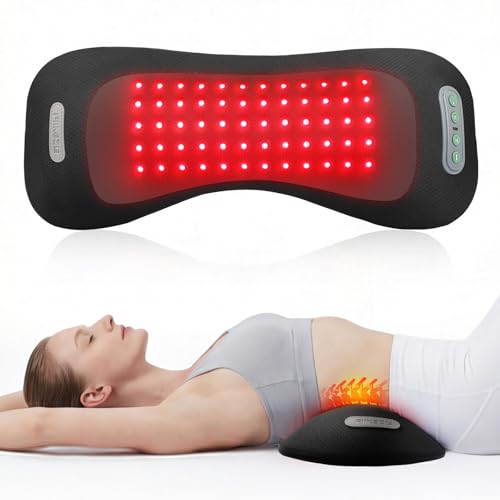
FliKEZE Lumbar Support Massager 4-in-1
Overview
This is a cordless lumbar cushion intended for seated or lying use. The manufacturer states that it combines inflatable lumbar lifting, vibration, surface heat, and red plus near-infrared LEDs. Its stated setup is three traction levels, four vibration modes, 60 dual-chip LEDs at 650 nm and 850 nm, a 5000 mAh rechargeable battery, and a 30-minute automatic shutoff. The heat specification is unusually concrete, though manufacturer-stated rather than independently tested, with settings of 104°F, 111°F, and 118°F. The published product page does not provide traction force, body-weight limits, light irradiance, battery-cell certification, or an independent safety listing. Evidence for this exact combined product was not located. Major guidelines advise against routine traction for chronic primary low back pain, and a systematic review found photobiomodulation did not reduce pain or disability in nonspecific low back pain.
What works
- Heat has three stated settings up to 118°F and a 30-minute automatic shutoff, which are useful guardrails for a contact-warming product.
- The manufacturer states that heat, light, vibration, and air support can be controlled separately, allowing users to avoid a modality that feels uncomfortable.
- A 12-month manufacturer warranty covers manufacturing defects, with stated repair or replacement support.
- The product is cordless and uses a stated 5000 mAh rechargeable battery, avoiding a powered cord during use.
What does not
- No UL, ETL, CSA, TÜV, FDA clearance, or other traceable third-party certification for this finished product was located in the searched registers.
- The manufacturer does not publish traction force, air-pressure limits, a numeric weight limit, LED irradiance, or dose data, so safety margins and light dose cannot be independently assessed.
- Claims that the product can reduce disc pressure, relieve inflammation, and help sciatica or herniated discs are not appropriately bounded by the evidence. WHO and NICE advise against routine traction for low back pain.
- Public-facing guidance is incomplete for a heat and traction product. It does not clearly address reduced sensation, skin injury, acute trauma, neurological red flags, or sleeping with the product.
- Materials are only broadly described as memory foam and breathable fabric. No foam, textile, adhesive, chemical-testing, recycled-content, or end-of-life battery plan was provided.
Who is it for
This product suits an adult seeking a cordless comfort cushion for brief, supervised breaks after prolonged sitting, provided they can comfortably lie on a stable surface or position it securely in a chair. The best fit is someone who values adjustable warmth and vibration more than a clinical treatment claim, and who can stop immediately if stretching feels painful. Its stated 30-minute timer and separate controls make it more practical for occasional self-directed comfort sessions than for continuous use or overnight use.
Who is it not for
It is not appropriate as a self-treatment for severe, unexplained, progressive, or injury-related back pain, or for new weakness, numbness, saddle numbness, bowel or bladder changes, fever, or unexplained weight loss. People with a herniated disc, sciatica, recent spinal surgery, osteoporosis, pregnancy, impaired heat sensation, damaged skin, implanted electronic devices, or other significant medical conditions should seek clinician-specific advice first. It also does not suit users who need independently certified electrical safety, quantified traction limits, or documented light dose.
Integrity
The useful health safeguards are manufacturer-stated, not independently verified. The published heat settings peak at 118°F and the device is said to stop automatically after 30 minutes. A product-specific manual also advises against use while charging and advises consultation for pregnancy, implanted devices, or pre-existing conditions. Those cautions are helpful, but the public product page promotes use for severe pain, sciatica, and herniated discs while supplying limited red-flag guidance. The core concern is evidence matching. Public health guidelines recommend against routine traction for chronic primary low back pain, and the product's specific light dose is not published. No product-specific third-party safety certification, clinical trial, recall, or regulatory action was located in the searched US registers. The manufacturer states a 12-month defect warranty and possible repair or replacement, but offers no replacement-parts catalog, battery takeback, electronics recycling route, or independently substantiated materials disclosure. The rechargeable battery should not enter household trash.

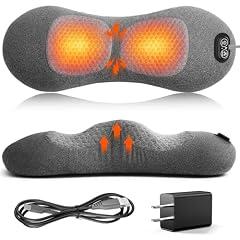
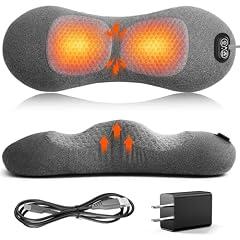
Snailax Lumbar Massager with Heat and Vibration
Overview
This is a compact, battery-powered lower-back cushion intended for use on a sofa, bed, office chair, or other resting surface. The current marketplace listing gives dimensions of about 17.1 by 8.6 by 3.5 inches and a weight of 1.4 kg. Its stated textile material is polyester. The product combines air-compression lifting and stretching with side-to-side swing, horizontal glide, vibration, and three heat settings. Snailax states that users can select three automatic massage modes, eight height levels, an adjustable timer, and a memory function. Those are manufacturer-stated operating features, not independently tested performance measures. Human evidence does not establish that home traction at these unspecified forces or session settings provides meaningful low-back pain relief. Heat and vibration may provide temporary comfort, but the listing does not publish skin-contact temperatures, traction force, battery specifications, or a manual with detailed safety instructions.
What works
- Manufacturer-stated height adjustment, three modes, timer, and memory offer several ways to limit or tailor a session.
- The cordless rechargeable design can reduce the need to sit beside an outlet during use, according to the current listing.
- The listing states a one-year warranty and customer support, which provides a defined initial support period.
- Its health language is comparatively bounded, centering on relaxation and comfort rather than claiming to diagnose, cure, or realign the spine.
What does not
- No independently verifiable UL, ETL, CSA, battery-safety, or medical-device clearance record was identified for this exact product.
- Published heat temperatures, automatic shutoff duration, battery cell specifications, charger rating, and protection-test results were not found.
- The air-lifting and stretching force is not stated, so users cannot judge how much mechanical loading the lower back receives.
- The marketplace page did not provide clear contraindications or red-flag guidance for pregnancy, reduced sensation, acute injury, neurological symptoms, or severe unexplained pain.
- Systematic reviews and clinical guidelines do not support traction as a reliably effective stand-alone treatment for nonspecific low-back pain.
Who is it for
This product is most suited to an adult seeking a portable, non-drug comfort device for occasional lower-back tightness after sitting or standing, rather than treatment for a diagnosed spinal condition. It may fit someone who values cordless use and wants to adjust the cushion height, warmth, vibration, and session timing to personal comfort. Because its evidence base is limited and operating force is not published, it is better framed as a relaxation accessory for people who can stop promptly if stretching or pressure feels painful.
Who is it not for
It is not appropriate as a substitute for clinical assessment or evidence-based care for persistent, worsening, or unexplained back pain. People with new weakness, numbness, bowel or bladder changes, fever, significant trauma, or pain radiating with neurological symptoms need medical assessment rather than home traction. Avoid unsupervised use by people with impaired heat sensation, skin injury, inability to reposition independently, or anyone advised to avoid heat, massage, or spinal stretching. Pregnant users and people with recent surgery or unstable spinal conditions should seek clinician guidance first.
Integrity
The health case is limited by missing product-specific safety data. The listing describes three heat levels, vibration, air compression, adjustable height, and a timer, but it does not disclose temperatures at the skin, compression force, session limits, battery chemistry, charger output, or third-party electrical certification. No exact-product CPSC recall or FDA clearance record was identified in the checked public sources. The absence of a recall is not proof of safety. The marketplace page identifies polyester as the material and displays a Global Recycled Standard claim with certificate number TE-00303828 and GCL International Ltd. as certification body. That is more traceable than an unnumbered environmental badge, but an independently accessible scope certificate linking that number to this exact finished product was not found. No replacement battery, cover, repair instructions, or electronics take-back route was located. The manufacturer-stated one-year warranty is the only documented durability support.

Lower Back Massager with Heat and Vibration
Overview
This is a corded lower-back cushion for a bed, chair, or sofa. It combines a memory-foam lumbar shape with manufacturer-stated heat, vibration, and an airbag-based stretching feature. Independent reseller listings reproduce the 5V, 2A-or-higher power requirement, no built-in battery, and dimensions of about 17 by 9 by 5.5 inches. Its defining limitation is evidence matching. Massage can have a role in a broader low-back care plan, but this product's heat level, vibration dose, air pressure, session limit, and force specifications were not located. NICE specifically advises against traction for low-back pain and sciatica, so the airbag stretching feature should not be interpreted as proven spinal decompression. The comfort claims are comparatively bounded, but product-specific safety certification and clinical testing were not independently verified.
What works
- Its compact lumbar-cushion format is intended for both seated and reclined use, according to manufacturer-stated specifications reproduced by independent retailers.
- The product is stated to use a plug-in 5V supply rather than a rechargeable battery, avoiding battery charging and storage risks.
- The marketing mainly frames benefits as comfort, support, pressure distribution, and relief of discomfort, rather than a cure or structural correction.
- Massage has some guideline support when used as one element of a broader low-back management plan, although that evidence does not validate this product's exact settings.
What does not
- No independently verified heat-temperature range, automatic shutoff specification, or exact-model electrical safety listing was located.
- No product-specific human clinical study was located for its combined heat, vibration, and airbag-stretching program.
- The advertised stretching function has no disclosed pressure or force limit. NICE does not recommend traction for low-back pain or sciatica.
- Publicly available product information reviewed did not provide detailed contraindications, red-flag symptom guidance, a warranty, replacement parts, or an electronics end-of-life program.
Who is it for
It suits an adult seeking occasional, non-medical comfort while sitting at a desk, resting on a sofa, or lying in bed, who understands that the heat, vibration, and airbag functions are manufacturer-stated features rather than clinically validated treatment settings. It is most appropriate for someone who can feel heat and pressure normally, can stop use if discomfort develops, and already has a power adapter that meets the stated 5V, 2A-or-higher requirement. It should be treated as a comfort accessory alongside, not instead of, evidence-based self-management or clinician-directed care.
Who is it not for
It is not suited to people with new severe back pain, recent trauma, fever, unexplained weight loss, progressive weakness, numbness around the groin, or new bladder or bowel symptoms, all of which need prompt medical assessment rather than home massage. People with reduced sensation, fragile or injured skin, pregnancy-related concerns, implanted devices, or conditions aggravated by heat or pressure should obtain clinician advice first because detailed product contraindications were not located. It is also a poor fit for unattended use, sleep use, or anyone expecting proven spinal traction or decompression.
Integrity
The health case is mixed. Independent evidence supports massage only as part of a broader low-back care approach, while evidence for vibration is low certainty and the reviewed product information does not disclose settings needed to match research. The airbag stretching claim deserves special caution because a major clinical guideline advises against traction for low-back pain and sciatica. No exact-product FDA clearance, third-party certification record, or product-specific clinical testing was located in the reviewed public sources. The stated materials are memory foam and unspecified exterior components. No material test report, textile certification, recycled-content claim, chemical disclosure, replacement-parts listing, repair guide, warranty details, or takeback program was located. The product is stated to have no built-in battery, which avoids battery disposal concerns, but its corded electronics should still be kept out of household trash and routed to an appropriate electronics recycling program at end of life.

Snailax Shiatsu Back Massager with Heat
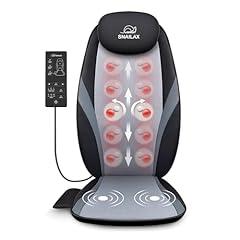
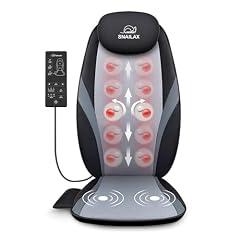
Overview
This is a corded chair-pad massager intended to strap onto a chair, sofa, or recliner. The instruction manual describes four moving kneading nodes for full, upper, lower, or spot-back massage, heat at the back nodes, and three seat-vibration levels. It measures about 40 by 16 inches, uses a 12 V adapter rated at up to 18 W, and is designed for sessions of 5, 10, or 15 minutes. The strongest product-specific safety evidence is manufacturer-stated rather than third-party certification. Its manual specifies a 15-minute automatic shutoff, overheating protection, a removable flap and optional towel barrier for less intense pressure, and chair straps. Massage has conditional, very-low-certainty support for short-term improvement in chronic primary low-back pain, but that evidence is not a trial of this product or its exact heat and kneading dose.
What works
- The manual provides selectable full, upper, lower, and spot-back kneading, which can avoid treating areas that do not need pressure.
- A removable intensity flap and a towel barrier option give users practical ways to reduce uncomfortable kneading pressure.
- The controller offers 5, 10, and 15-minute settings, with automatic shutoff and stated overheating protection.
- The safety instructions are unusually specific for a consumer massager, including warnings for heat-insensitive users, pregnancy, implanted devices, open skin, circulatory problems, and unexplained pain.
What does not
- No UL, ETL, CSA, or other finished-product electrical safety listing could be independently confirmed for this exact product.
- No independently verified skin-contact temperature or heat-output limit was located, so burn protection cannot be fully assessed beyond the manual's warnings and timer.
- Human evidence supports massage only broadly and mainly for short-term benefit. There is no identified clinical testing of this chair pad's moving-node, heat, or vibration settings.
- The product uses synthetic upholstery described inconsistently across available materials as PU leather with mesh or polyester. No material chemical testing, recycled-content certification, or textile certification was found.
- Warranty information differs between available manual versions, and no replacement-parts catalog or formal US electronics takeback route was identified.
Who is it for
It suits an adult who wants short, seated relaxation sessions for ordinary muscular tightness after desk work or daily activity, and who can tolerate focused kneading pressure. It is most appropriate for someone using it as a comfort tool within a broader back-care plan that may include movement, exercise, or clinician-guided treatment. The user should have a stable high-backed chair or recliner, be able to operate the tethered controller, and be willing to use the flap or towel barrier if the rollers feel too forceful.
Who is it not for
It is not appropriate as a substitute for assessment of new, severe, unexplained, or worsening back pain, especially pain with neurological symptoms. Avoid unsupervised use by people with reduced heat sensation, poor circulation, broken or inflamed skin, or difficulty recognizing discomfort. The manual also says pregnant people and users with pacemakers, artificial joints, or other electronic implants should consult a clinician first. It is unsuitable for wet areas, sleeping use, commercial treatment, or use while driving.
Integrity
The manual includes meaningful safeguards. It limits a continuous session to 15 minutes, instructs users to stop for pain or discomfort, warns heat-insensitive people about burn risk, and says not to use it as medical treatment. It also advises consultation for pregnancy, implanted devices, circulation problems, wounds, unexplained pain, and ongoing medical care. These are manufacturer instructions, not clinical validation of the product. The electrical design is a low-voltage 12 V cushion supplied by a mains adapter, but no independent US safety listing for the finished product was confirmed. The manual describes PU leather and mesh upholstery, while other product information names polyester, leaving material disclosure incomplete. No verified low-chemical, recycled-content, textile, or formal electronics-recycling certification was located. The manual does direct owners to use electronics collection points rather than household trash, and it describes warranty replacement support, but not parts-level repair or a dedicated takeback program.