
10 Best Baby Monitors
 Daniel Kenitz
Please note that we participate in affiliate marketing programs. When you purchase through links on our site, we may earn a commission. As an Amazon Associate we earn from qualifying purchases. This comes at no additional cost to you and helps support the resources required to provide valuable content.Advertising Disclosure
Top-rated Baby Monitors Comparison
1

2
4
5
6
7
8
9
10
Baby monitors: what to look for
A baby monitor is an awareness tool: it can transmit video, sound, or alerts so a caregiver can decide when to check in. It cannot replace adult supervision, a safe sleep environment, or unless separately authorized and appropriately labeled medical care. The most useful comparison is not the longest claimed range or battery life, but whether the product’s physical installation, radio hardware, power system, alerts, privacy controls, and support can be checked against model-specific evidence.
Start with placement. A corded camera should be mounted or placed so the camera, monitor parts, power adapter, and every cord remain at least 3 feet from the crib, bassinet, play yard, or other sleep space. Some supplied manuals specify 6 feet, which provides a larger margin. The camera or parent unit should never be placed in a crib, bed, or playpen, and a flexible bracket should not be used in a way that brings equipment within reach. A product’s installation instructions matter more than a listing that simply says “safe.”
Next, separate a local monitor from an internet-connected camera. A non-Wi-Fi monitor can avoid a home-network account and cloud feed, but it still uses a radio link and should not be described as absolutely “hack-proof” without technical evidence. For Wi-Fi products, look for unique credentials, encryption, optional multi-factor authentication, secure firmware updates, a vulnerability-reporting process, a defined support period, and clear information about recording, sharing, and deletion. App-store privacy disclosures may reveal data collection or sharing that the product title does not mention.
Radio claims should be traceable to the exact sold hardware. A meaningful U.S. wireless-compliance check is a matching FCC Equipment Authorization record, FCC ID label, grant exhibits, and RF-exposure documentation under Part 15. A claim of “FCC compliant” without a record is not equivalent. Electrical safety is separate: FCC authorization does not verify the charger, lithium battery, overheating resistance, or complete power system. Look for an exact-product listing in UL Product iQ, Intertek ETL, or CSA records; none of the supplied products had a located model-specific UL, ETL, or CSA listing for the complete system.
Treat headline performance figures as conditional. Range can mean unobstructed open space rather than a home with walls, floors, metal, Wi-Fi devices, microwaves, or other interference. Battery figures may apply only to ECO or sound-activated mode, while continuous viewing is shorter; several supplied products had conflicting runtime or range claims. Resolution may describe the camera rather than the parent display. Cry, motion, temperature, AI, night-vision, and connection-loss features were generally manufacturer claims without independent testing for the exact product. A temperature or humidity display is environmental information, not a baby’s body temperature or a medical alert.
Across the supplied reviews, the recurring safety limitations are clear: no product is a substitute for supervision or safe sleep; none is suitable for breathing, oxygen, pulse, apnea, illness, or SIDS prevention; powered cameras require careful cord routing; and rechargeable lithium-ion devices should not go in household trash. Several products lacked independently listed electrical systems, replaceable batteries, repair parts, take-back programs, or defined firmware support. One product’s placement advice conflicted with the 3-foot separation rule, and another category of the same maker had a separate charging-related recall. Verify the exact model before purchase and follow the supplied instructions conservatively.
Integrity
The topics below distinguish a monitor that merely displays a child from one whose safety limits, radio hardware, alerts, privacy practices, and end-of-life planning are documented. Scores reflect the supplied product reviews; a high score means stronger evidence and more responsible limits, not a guarantee of safe use.
HHealth & Safety
Safe-sleep health impact
This measures whether the product is clearly framed as caregiver awareness rather than supervision, safe-sleep protection, or SIDS prevention. That distinction is central because video, sound, and room alerts cannot establish that an infant is safe. The supplied scores range from 70 to 92: higher-scoring products explicitly say the monitor is only an aid and avoid reassuring medical or sleep claims.
Cord and crib safety
This measures whether cameras, parent units, adapters, and cords can be kept at least 3 feet from the sleep space, with clear warnings and mounting instructions. It matters because most nursery cameras use mains power. Scores range from 48 to 94: the stronger products specify 3 feet or more—some 6 feet—and prohibit crib placement; the weaker review found contradictory guidance involving a crib-rail bracket.
Charging and battery safety
This measures protection against shock, overheating, fire, and battery failure, including applicable independent electrical listing and safe-charging instructions. It matters because cameras are often corded and parent displays commonly contain lithium-ion batteries. Scores range from 68 to 74. Higher-scoring reviews still often lacked UL, ETL, or CSA evidence, so a reasonable manual alone did not establish independent electrical safety.
Medical-monitoring claim validity
This measures whether breathing, oxygen, pulse, apnea, temperature, or illness features are responsibly limited and authorized when regulated. For ordinary baby monitors, a high score means no unsupported vital-sign or SIDS-prevention claim and clear limits on environmental alerts. Scores range from 76 to 92: the strongest products explicitly reject medical use; lower scores reflected broader or less carefully bounded messaging.
Verified wireless compliance
This measures whether every radio-equipped camera, display, and transmitter matches a traceable U.S. FCC authorization and RF-exposure documentation. It matters because a local FHSS link and a Wi-Fi camera both transmit radio signals. Scores range from 68 to 94: higher-scoring products had matching FCC records for the sold camera and display; lower-scoring products had missing or incomplete authorization evidence.
Reliable view and alerts
This measures whether range, night vision, audio, cry or motion alerts, low-battery notices, connection-loss warnings, and multi-camera functions have exact-model evidence and stated limits. It matters because walls and interference can change real performance. Scores range from 54 to 78. Higher scores reflected manuals with alert controls and interference warnings, while independent laboratory testing was generally absent across the set.
EEvidence
Camera privacy and cyber security
This measures protection for live video, recordings, accounts, and home networks through credentials, encryption, multi-factor authentication, secure updates, support periods, and transparent data practices. Scores range from 48 to 83. Non-Wi-Fi products reduced cloud exposure, while stronger connected products disclosed encryption or deletion controls; absolute “hack-proof” claims, missing update commitments, and app data sharing lowered confidence.
Honest performance and safety claims
This measures whether advertised security, range, battery, AI, sleep, safety, and certification claims match the documentation. It matters because several listings overstated privacy or gave conflicting range, runtime, resolution, or zoom figures. Scores range from 39 to 76. Higher scores used qualified, checkable language; lower scores included absolute security claims, contradictory specifications, or marketing that exceeded the available evidence.
Independent safety proof
This measures whether safety and compliance claims are supported by an exact-product certificate, FCC record, regulator record, or test report rather than seller language. It matters because radio authorization does not certify charger or battery safety. Scores range from 68 to 89. Higher-scoring products had traceable FCC hardware and stronger independent records, but no supplied product had located UL, ETL, or CSA listing for the complete electrical system.
Traceable maker and recall readiness
This measures whether buyers can identify the responsible company, exact model, serial or batch information, instructions, warranty, support contact, and recall route. It matters when a charger, battery, or display problem emerges. Scores range from 70 to 84. Higher-scoring products had model-specific manuals, U.S. support, warranties, and serial-number processes; lower scores lacked clear records or durable support details.
EEcology
Long life and responsible end of life
This measures whether a monitor can remain useful through firmware support, replaceable batteries or parts, repair information, and a real recycling or take-back route. It matters because parent units and cameras become electronic waste, often containing lithium batteries. Scores range from 68 to 72, with modest separation: some products offered replacement cameras or manual updates, but no reviewed product had a fully documented repair-and-take-back pathway.
Full reviews

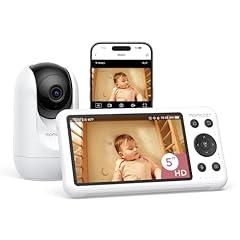
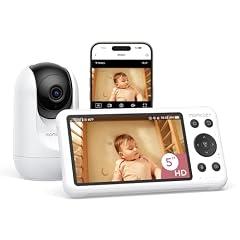
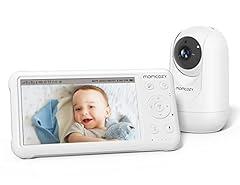
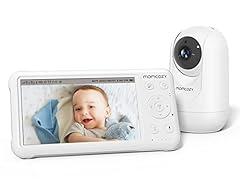
Momcozy WiFi Baby Monitor with Camera
Overview
This is a wall-mountable indoor baby camera with a 5-inch parent display, 1080p video, infrared night viewing, two-way audio, manual photo and video capture, and app access over 2.4 GHz Wi-Fi. Momcozy also documents local FHSS operation, so the parent display can be used without relying on the app connection. The camera and parent monitor have matching FCC equipment authorizations, including radio and RF-exposure filings for the specific BM04 hardware. Momcozy's installation guide tells users to keep the camera at least 4.9 feet from the infant and to position the cable where the child cannot see it. One important documentation issue remains, the marketplace lists a 5000mAh battery while Momcozy's own BM04 specification page lists 500mAh, so battery capacity is not reliably stated.
What works
- Both the camera and parent monitor are traceable to FCC authorizations for the identified BM04 hardware.
- Momcozy gives a concrete placement instruction of at least 4.9 feet between camera and infant, exceeding the common 3-foot cord-safety minimum.
- The official support materials describe both local FHSS viewing and 2.4 GHz Wi-Fi app connection, which offers a non-app viewing path.
- The Android app listing says data are encrypted in transit and that users can request deletion of data.
- The product does not make breathing, oxygen, pulse, apnea, or SIDS-prevention claims.
What does not
- Battery capacity is contradicted by product materials, with 5000mAh on the marketplace record and 500mAh on Momcozy's BM04 specification page.
- No public UL, ETL, or CSA listing for the complete camera, display, adapters, and battery system was identified in this review.
- No public model-specific evidence was found for alert accuracy, connection-loss performance, or detection false-alert rates.
- Privacy disclosures show that the companion app may collect linked location, contact, photo or video, usage, and diagnostic data. Public materials reviewed do not document multi-factor authentication, a firmware-support period, or a vulnerability-disclosure program.
- No repair manual, replacement-battery program, spare-parts catalog, or product take-back program was identified.
Who is it for
This product suits a caregiver who wants a dedicated bedside display but also values optional phone viewing when away from the display. It is most appropriate for a nursery where the camera can be securely wall mounted, kept at least 4.9 feet from the child, and where its power cable can be fully routed out of reach and sight. It also fits households prepared to use a standard 2.4 GHz home Wi-Fi network for app features, while retaining local display viewing.
Who is it not for
It is not suited to anyone seeking a medical device, an apnea alarm, or protection against SIDS. It is also a poor fit where the camera cannot be mounted and its cable kept well away from the crib, or where a child could reach the camera, bracket, or cord. Buyers who require independently listed electrical certification, documented alert-accuracy testing, a clearly confirmed battery capacity, multi-factor account protection, or long-term repair and firmware commitments need more public evidence than was located here.
Integrity
For safe sleep, this should be treated as an awareness tool rather than a substitute for adult supervision, safe-sleep practices, or a medical monitor. The published setup guide provides a useful camera-distance instruction of at least 4.9 feet from the infant and says to keep the power cable out of the baby's sight. Secure mounting and routine checks that the cable remains unreachable are still essential. FCC records independently confirm the radio authorization and RF documentation for both the camera and parent display. That is meaningful wireless compliance evidence, but it is not the same as a UL, ETL, or CSA electrical-safety listing, which was not located. The unit contains a built-in nonstandard battery, yet no public replacement route, repair documentation, take-back plan, or battery recycling program was identified. Battery-capacity documentation also conflicts between marketplace and manufacturer materials, so consumers should not rely on either figure without checking the supplied product documentation.

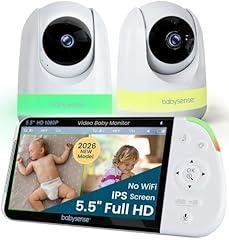
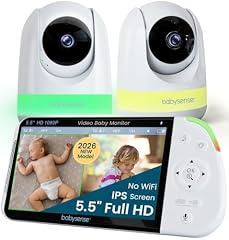
Babysense Pro Split Screen Monitor
Overview
This is a local, non-Wi-Fi video-monitor system with a battery-powered 5.5-inch parent display, two mains-powered pan, tilt and zoom cameras, and split-screen viewing. The manufacturer specifies 1080p video, a 5,000 mAh parent-unit battery, up to 20 hours in sound-activated mode, infrared night vision, two-way audio, temperature alerts, white noise, lullabies, and a six-color camera night light. The radio hardware is traceable to an FCC authorization and RF-exposure evaluation for the displayed FCC identifier, covering 2.4 GHz operation. The official manual also provides unusually direct placement guidance, stating that camera, parent-unit and adapter cables must stay at least six feet from children, and that neither unit belongs in a crib, bed, or playpen. It is an awareness aid, not a medical device or a substitute for adult supervision.
What works
- The manual gives a clear six-foot cord-separation instruction, exceeding the three-foot minimum public-health guidance.
- The local FHSS connection avoids a cloud account, app login, and routine internet exposure for the live feed.
- FCC authorization and an RF-exposure exhibit are publicly traceable for the radio identifier used on the parent unit.
- Two cameras support simultaneous split-screen viewing, a practical setup for two sleep spaces, according to the manufacturer.
What does not
- No U.S. NRTL electrical safety listing, such as UL, ETL, or CSA, was located for this product or its supplied chargers.
- The parent unit contains a rechargeable lithium battery. A February 2026 CPSC fire-hazard recall affected the similar older Max View display, not this Pro model, so buyers should check the rear model label carefully.
- Claims of being completely hack-proof and interference-free are overbroad. The product documentation does not publish encryption details, a firmware-support period, or a vulnerability-reporting policy.
- The stated range is an open-space figure and can be reduced by walls and building layout. No model-specific independent reliability testing was located.
Who is it for
This product suits caregivers who need local video and audio awareness across two nurseries or a nursery and play area, but do not want a phone app or cloud-connected camera. Its split screen, remote camera movement, night vision, and sound-activated display mode are useful for routine checks from elsewhere in the home. It is particularly relevant where Wi-Fi is unreliable or where keeping the feed off the home network matters. Safe installation still requires a stable mounting location and all camera and power cords at least six feet from the sleep space.
Who is it not for
It is not suited to anyone seeking medical monitoring for breathing, oxygen, pulse, apnea, or SIDS prevention, because this product does not provide those functions or FDA-cleared medical claims. It is also a poor fit where caregivers cannot mount the cameras and route every mains cable well outside a child's reach. Households that need documented encrypted communications, multi-factor account protection, long-term software support, or transparent vulnerability handling will not find that evidence in the available materials. Those concerned about charging risks should avoid confusing it with the recalled older display model and inspect the rear label before use.
Integrity
The strongest safety evidence is practical rather than medical. The official instructions state that the monitor supports caregiver awareness and cannot replace responsible adult supervision. They also warn that cords can cause strangulation, require camera, parent-unit and adapter cables to remain at least six feet away, and prohibit placing either unit in a crib, bed, or playpen. Those directions align with U.S. safe-sleep guidance to keep monitor cords well outside the sleep area. The product has no vital-sign or SIDS-prevention claim, which avoids an unsupported medical promise. Its radio identifier has a public FCC authorization and RF-exposure evaluation. However, no U.S. UL, ETL, or CSA listing was located for the complete electrical system. The older Max View display was recalled on February 26, 2026 for overheating or sparking during charging, but the recall identifies model VBM55RX, not the Pro display model. The manufacturer offers a one-year warranty and replacement accessories, but no product-specific U.S. take-back or battery-recycling program was found.

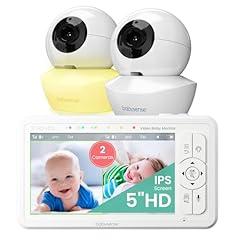
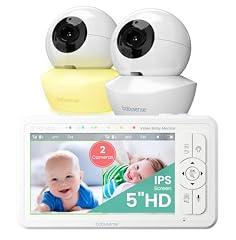
Babysense 5 HD Split-Screen Baby Monitor
Overview
This product is a two-camera indoor video monitor with a rechargeable 5-inch parent display and plug-in cameras. It uses a direct 2.4 GHz FHSS radio link rather than Wi-Fi, and the manual identifies a 720p display, 4,000 mAh built-in parent-unit battery, infrared night vision, two-way audio, sound-triggered display wake-up, and room-temperature alerts. Its clearest safety strength is unusually explicit placement guidance. The manufacturer manual says to keep the camera, parent unit, and power cables at least six feet from the crib, never place either unit in the crib or playpen, and treat the monitor only as an aid to, not a replacement for, personal adult checks. FCC authorization records are traceable to the corresponding HD S2 camera and parent-unit radio hardware. The advertised 1,000-foot range is qualified elsewhere in the manual as up to 960 feet in open space without obstructions.
What works
- The manual gives clear crib and cord instructions, including a six-foot separation from the sleep space.
- It explicitly says the monitor is not a medical device and cannot replace responsible adult supervision.
- The two-camera split-screen function is documented, although audio is heard from only the selected camera at one time.
- The associated camera and parent-unit radio models have traceable FCC equipment authorization records.
- The manual documents low-battery, high and low temperature, and connection-loss alerts.
What does not
- The manufacturer markets the connection as “100% hack-proof,” an absolute privacy claim not supported by published encryption, security-update, or vulnerability-disclosure documentation.
- The advertised 1,000-foot range conflicts slightly with the manual's up-to-960-foot open-space specification, and walls and interference can reduce it further.
- Alert sounds can be muted in settings, including low-battery, temperature, and out-of-range alerts.
- No U.S. NRTL electrical listing for the complete product was located in the reviewed UL, ETL, or CSA registers.
- The built-in lithium-ion battery is non-removable, and the manual provides only general local-disposal guidance rather than a take-back program.
Who is it for
This product suits caregivers who need to watch two separate indoor areas, such as twins in different sleep spaces or a nursery plus a playroom, without setting up an app or home Wi-Fi account. It is particularly appropriate for households that can wall-mount or place each powered camera well beyond six feet from the crib and can use the parent display as an added awareness tool. Its documented split-screen view, remote camera control, night vision, and direct radio link fit that practical, at-home monitoring role.
Who is it not for
It is not for anyone seeking medical monitoring of breathing, oxygen, pulse, apnea, fever, or SIDS risk. The manual says it is not a medical device and requires regular in-person checks. It is also unsuitable where the camera or its power cable cannot be secured well away from the crib, bed, or playpen. Buyers who need app access away from home, published cybersecurity maintenance commitments, independently published range testing, a replaceable battery, or a documented manufacturer recycling route should select a product with that evidence.
Integrity
The product's manual aligns well with core safe-use expectations for a conventional video monitor. It says the monitor is an aid rather than adult supervision, calls for regular personal checks, and provides strong anti-strangulation placement guidance. The cameras and parent display should remain outside the crib and at least six feet away, with cables secured. It makes no breathing, oxygen, pulse, apnea, illness, or SIDS-prevention claim. The parent unit uses a sealed 3.7 V, 4,000 mAh lithium-ion battery. Its manual warns against crushing, opening, overheating, wetting, or using damaged batteries, and tells owners to stop charging a suspected damaged battery. However, the battery is not user-replaceable and the end-of-life direction is limited to local disposal requirements. A February 26, 2026 CPSC fire-hazard recall affected a different Babysense Max View model, not this HD S2 product, but it is a relevant reason to follow charging warnings and confirm the model before acting on any recall notice.

Momcozy 1080P HD Baby Monitor BM01
Overview
This product is a local-link video baby monitor with a plug-in camera and a rechargeable 5-inch parent display. It uses 2.4 GHz FHSS radio rather than home Wi-Fi, has infrared night vision, two-way audio, temperature alerts, sound-activated screen wake, and support for up to four cameras. The camera needs mains power, while the display has a 5,000 mAh battery. Its manual, filed with the FCC, directs caregivers to keep cords more than 3 feet from children, never place the camera or cord in or near a crib, and not mount it over a crib. It also says the product is not medical equipment and does not replace adult supervision. The stated 960-foot range is line of sight without obstructions. Momcozy states 11.5 hours with display and voice on, or 22 hours with the display off and voice on.
What works
- The installation instructions give unusually specific cord and crib protections, including a more-than-3-foot cord distance and no camera mounting above the crib.
- The product is explicitly framed in its instructions as an awareness tool, not medical equipment or a replacement for regular adult checks.
- Both the camera and parent display have traceable FCC equipment records for the 2.4 GHz radio hardware, with exposure and emissions documentation.
- The manual documents connection-loss indication, low-battery behavior, temperature alerts, sound sensitivity settings, night vision, and interference troubleshooting.
What does not
- There is no publicly traceable UL, ETL, or CSA listing for the complete charging system, camera, display, adapters, and rechargeable battery. That is missing independent electrical-safety evidence, not evidence of a defect.
- The stated range and battery runtimes are manufacturer figures. The manual also warns that walls, metal objects, Wi-Fi equipment, and microwave ovens can interrupt the link.
- Marketing language such as "hack-proof," "never miss," and knowing a baby is OK "all the time" is too absolute. It is at odds with the manual's own interference, connection, and regular-check limitations.
- No public repair manual, replaceable-battery information, firmware-support commitment, or U.S. take-back program was found for this product.
Who is it for
This product suits caregivers who want a dedicated in-home display rather than an app-connected camera, and who can install the camera securely on a wall or furniture well outside the child's reach. It is practical for a nursery where a powered camera can stay in one location and the caregiver wants basic video, audio, sound wake, and temperature-threshold notices. It also fits households that prefer not to put a camera on their home Wi-Fi network, while accepting that the local radio link still has range and interference limits.
Who is it not for
It is not suited to anyone seeking a medical, breathing, oxygen, pulse, or SIDS-risk monitor. The instructions specifically say it is not medical equipment and does not replace adult supervision or safe sleep practice. It is also a poor fit where the camera cannot be kept more than 3 feet from the crib and its cable cannot be fully secured. Buyers needing verified electrical certification, a documented encrypted security design, cloud access away from home, replaceable batteries, or a defined long-term repair path need different evidence than is publicly available here.
Integrity
The strongest health safeguard is the instruction set. It says to keep the cable more than 3 feet from children, never put the camera or cord in or near a crib or playpen, and never mount the camera directly over one. It also tells caregivers to test reception after moving the camera, use only the supplied adapters, and keep checking the child regularly. These limits align with core safe-sleep and cord-safety guidance. The product does not make vital-sign or SIDS-prevention claims, and its instructions identify it as non-medical. Its radio hardware is traceable through FCC records, including model-specific testing documentation. However, no public independent listing was located for the whole electrical system, and no verified U.S. electronics take-back, battery replacement, spare-parts, or repair program was found. The manual includes WEEE disposal language, but that does not establish a usable U.S. recycling route for its rechargeable battery.

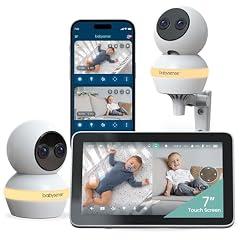
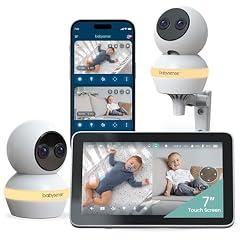
Babysense TOUCH 7 Smart WiFi Baby Monitor
Overview
This is a two-camera, Wi-Fi-capable video monitor system with a 7-inch touchscreen parent unit, phone app access, wall mounts, three power adapters, and a stated 5,200 mAh built-in parent-unit battery. Babysense states that each camera has dual 4MP lenses, infrared night vision, pan, tilt and zoom controls, cry alerts, room temperature and humidity readings, a night light, and optional local recording to a separately supplied memory card. The product is designed for local viewing through the parent unit or remote viewing through a 2.4 GHz Wi-Fi connection and app. The manufacturer states a 1,000-foot open-space local range, up to four cameras, and 20 hours in voice-activated mode or 12 hours of continuous screen use. The published instructions make an important limit clear, it is an aid and not a substitute for responsible adult supervision or safe-sleep practice.
What works
- The published instructions require cameras, parent unit, and cables to remain at least 6 feet from children, exceeding the commonly cited 3-foot minimum around sleep spaces.
- The two radio-equipped hardware models associated with this system have traceable FCC equipment authorizations for the United States.
- The instructions include low-battery and lost-link alert settings, plus explicit warning that walls and other obstacles can reduce range.
- Remote app access, local parent-unit viewing, split-screen operation, and support for up to four cameras are documented manufacturer features.
- The product has a named manufacturer, U.S. support phone number, accessible instructions, and a one-year warranty.
What does not
- No model-specific UL, ETL, CSA, or other independently listed electrical-safety certification was found for the product or its supplied adapter.
- The product's maker recalled a different 5.5-inch Babysense monitor in February 2026 after charging-related overheating and sparking reports. This does not identify this product as recalled, but it makes careful charging and inspection important.
- Marketing uses absolute language such as flawless, zero-latency, perfectly clear, and perfect comfort. No independent, model-specific performance testing was located to substantiate those claims.
- Remote viewing requires an account-based app that may collect baby profile, contact, media, device, diagnostic, and other data. Public materials do not establish multi-factor authentication, a security support period, or a vulnerability-disclosure process.
- The built-in lithium-ion battery is not described as replaceable, and no product-specific take-back or spare-parts program was located.
Who is it for
This product fits a caregiver who needs to watch two sleep or play areas from one dedicated 7-inch screen, while also wanting optional phone access when away from home. It is particularly suited to households that can wall-mount both cameras well outside a child's reach, route each power cable securely, use only the supplied adapters, and treat cry, sound, and motion notices as prompts to check in rather than as health alerts. It also suits users comfortable managing Wi-Fi credentials, app permissions, and software updates.
Who is it not for
It is not suited to anyone seeking a medical breathing, oxygen, pulse, apnea, or SIDS-prevention monitor. This camera system does not make those measurements, and video, cry, or movement notices cannot establish an infant's health status. It is also a poor fit where cameras or cords cannot be mounted and secured at least 6 feet from children, where Wi-Fi account and cloud-connected privacy exposure is unacceptable, or where a documented independent electrical listing and user-replaceable battery are required. Households relying on alerts during outages should use direct checks and safe-sleep practice instead.
Integrity
The instruction material is comparatively clear on basic physical safety. It says to keep the camera, parent unit, and adapter cables at least 6 feet from children, never place units in a crib, bed, or playpen, and use only supplied adapters. It also says the product is not a medical device and cannot replace responsible adult supervision. Those limits align with federal safe-sleep guidance that monitors do not prevent SIDS and that cords must remain out of reach. The radio hardware has traceable U.S. FCC authorizations, but no model-specific third-party electrical listing was located. A February 26, 2026 CPSC recall involved a different Babysense Max View monitor whose charging display could overheat or spark, not this product. The Touch instructions call for responsible disposal of its non-removable lithium-ion battery, but no product-specific recycling, take-back, repair manual, or replacement-battery program was found. Firmware updates are available through the monitor settings, which may help extend useful life.
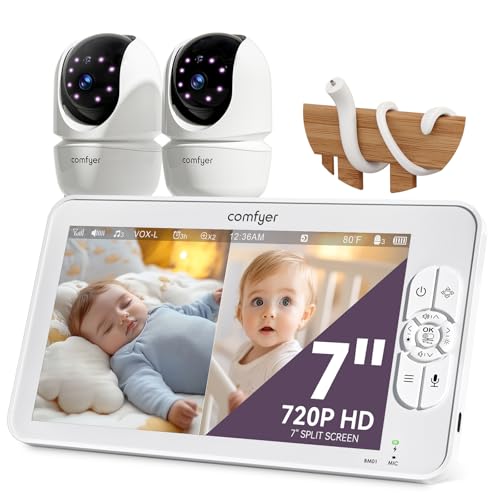
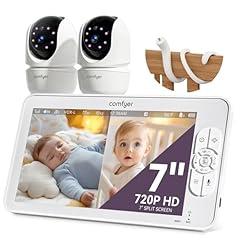
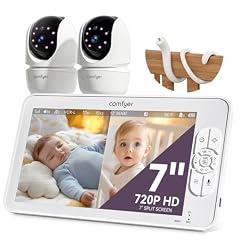
Comfyer 7" HD Split-Screen Baby Monitor
Overview
The Comfyer BM01 is an indoor, non-Wi-Fi video baby monitor with a 7-inch parent display and a two-camera configuration. It uses a 2.4 GHz FHSS radio link, has infrared night viewing, two-way audio, VOX sound activation, temperature alerts, and a flexible camera bracket. The manufacturer says the display is 720p and each camera has a 1080p sensor. Its radio hardware is traceable to an FCC equipment authorization record for this model, including a 2.4 GHz operating range and RF-exposure documentation. Its filed manual gives a 960-foot maximum only in open, unobstructed space and warns that walls, metal objects, other electronics, and low battery can impair reception. The manual also states that this is not a medical device or a substitute for caregiver supervision.
What works
- The filed manual gives unusually clear cord precautions, including keeping camera, display, and adapter cables at least six feet from children and never hanging cords on or near a crib.
- The radio-equipped monitor is traceable to an FCC authorization record for this model, with a documented 2.4 GHz FHSS link and Part 15 compliance statement.
- The non-Wi-Fi design avoids placing the live feed on the household internet connection. Comfyer also states that its radio signals are encrypted, though the encryption method is not published.
- The manual documents practical limits for range and interference rather than presenting its open-space range as a whole-home guarantee.
What does not
- No model-specific UL, ETL, or CSA electrical safety listing was located for the complete monitor, cameras, chargers, and rechargeable battery system.
- The camera units use power adapters, so cord routing and secure placement remain essential despite the flexible mounting option.
- There is no published independent laboratory report validating image quality, cry detection, temperature-alert accuracy, battery runtime, or connection-loss performance for this product.
- Support documents conflict on extended warranty duration. The filed manual says registration extends coverage to 24 months, while the current warranty page says 18 months.
- The battery is described as preinstalled and non-removable, and no manufacturer spare-parts catalog or take-back program was located.
Who is it for
This product suits caregivers who want local viewing of two nursery areas, such as twins in separate cribs or a baby and an older child, without an app account or internet-connected camera. It is most appropriate for indoor use where the camera adapters can be secured well beyond a child’s reach and the parent unit can be recharged with its supplied adapter. Buyers should treat the stated open-space range as a starting point, then test reception through the walls and electronics in their own home.
Who is it not for
It is not suited to anyone seeking medical monitoring of breathing, oxygen level, pulse, apnea, or illness. The manual identifies it as a non-medical device, and video, sound, and room-temperature alerts cannot replace adult supervision or safe-sleep practice. It is also a poor fit where cameras must be mounted close to a crib, where cords cannot be routed securely, or where dependable performance across thick concrete walls, metal structures, or substantial radio interference is required. Buyers needing a documented electrical listing or replaceable battery should seek a product with that evidence.
Integrity
The strongest health-related finding is the product manual’s placement guidance. It says to keep the camera, parent unit, and adapter cables at least six feet from children, secure cords, and never place either unit inside a crib, bed, or playpen. That is more protective than the CPSC minimum guidance of keeping monitor cords at least three feet from a child’s reach. The manual also clearly says the product is not a medical device. The model’s radio authorization can be traced in FCC records, but no model-specific UL, ETL, or CSA listing was found for the complete charging system. The manual advises using only the supplied adapter, stopping use of a damaged battery, and recycling the product at end of life. Its preinstalled rechargeable battery is non-removable, however, and Comfyer does not publish a repair guide, replacement-battery option, or electronics take-back program. No product-specific CPSC recall was identified in the searched records through August 16, 2026.

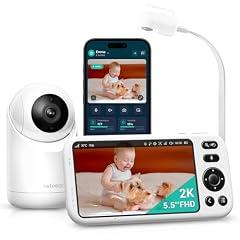
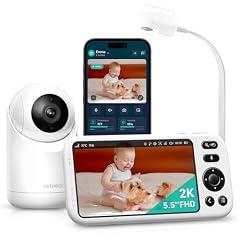
Jartoo Smart Baby Monitor 2K Camera
Overview
This is a smart video baby monitor system with one 2K pan and tilt camera, a 5.5-inch parent display, a clip mount, app access, two-way audio, and claimed cry, motion, temperature, humidity, and noise alerts. It can use a direct camera-to-display connection without home Wi-Fi, or connect through 2.4 GHz Wi-Fi for app viewing. Local SD-card recording is manufacturer-stated, and the card is not included. The camera and parent display radios are independently traceable through separate U.S. FCC authorizations, including RF-exposure documentation. The available quick guide also says the product is not a substitute for adult supervision or a medical camera. Jartoo claims AI detection, long range, and continuous recording, but no independent, model-specific testing was located for alert accuracy, usable range through walls, or recording reliability.
What works
- The camera and parent display each have a model-specific U.S. FCC authorization, with documented radio testing and RF information.
- Direct no-Wi-Fi operation is manufacturer-stated, which can preserve local viewing when the home internet connection is unavailable.
- The available instructions explicitly state that the monitor is not a substitute for proper adult supervision and is not intended as a medical camera.
- Jartoo publishes a U.S. support address, phone number, email contact, and a stated one-year warranty with an extra year available after registration.
What does not
- No independently listed UL, ETL, or CSA electrical safety certification was located for the camera, display, chargers, or battery system.
- Available materials do not provide clear, model-specific guidance to keep power cords and camera hardware at least 3 feet from the crib or sleep space.
- No independent model-specific evidence was located for the claimed alert accuracy, range, AI detection performance, or resistance to interference and false alerts.
- The app store disclosure says no data are collected, while Jartoo's privacy policy says it may collect account, device, network, usage, video, audio, and alert data. The policy also lacks a published security-update term, vulnerability-disclosure process, or multi-factor authentication commitment.
Who is it for
This product fits caregivers who want a dedicated 5.5-inch local parent display rather than relying only on a phone, while retaining optional remote app access when using 2.4 GHz Wi-Fi. It is particularly relevant for homes where internet service can drop out but a direct camera-to-display link is still useful. It also suits families who can mount the camera securely well away from the crib, follow the guide's adult-supervision limit, and treat cry or motion alerts as prompts to check the child rather than as safety or medical monitoring.
Who is it not for
It is not suited to anyone seeking a medical, breathing, oxygen, pulse, apnea, or SIDS-prevention device. The available guide explicitly says it is not a medical camera, and its environmental and AI alerts should not be used to assess illness or safety. It is also a poor fit for households that need independently proven alert accuracy, wall-penetrating range, electrical certification, or a documented long-term cybersecurity support commitment. Avoid a camera mounting location where any power cable, mount, or camera can enter the child's reach or sleep space.
Integrity
The strongest independently confirmed safety evidence is for its wireless hardware. Separate FCC authorizations cover the camera and parent display, and the camera filing specifies a 20 cm separation from people. The guide says the product does not replace adult supervision and is not a medical camera. Those limits are important because the product markets cry, motion, environmental, and human-tracking functions, none of which establish infant health or safe-sleep status. The manufacturer provides a U.S. support contact and warranty, but no model-specific UL, ETL, or CSA electrical listing was located. No clear evidence was located of a repair manual, replacement battery program, spare-parts catalog, take-back program, or recycling instructions. The app privacy policy describes encrypted transmission and local or optional cloud storage, but it also permits collection of monitoring data and third-party service use. Its data-collection description conflicts with the app store privacy label, so families should review permissions and storage settings carefully.

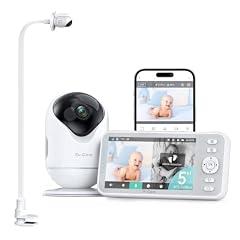
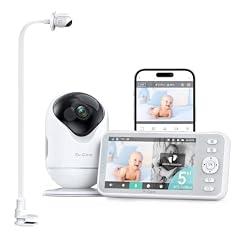
Dr. Care VistaView 5" Baby Monitor
Overview
This is an indoor video baby monitor with a plug-in camera, a 5-inch rechargeable parent screen, and app access over 2.4 GHz Wi-Fi. The documentation describes a 2K camera, two-way talk, motion and cry alerts, temperature sensing, local card storage, and optional cloud functions. It also says the camera can connect directly to the handheld monitor without internet access. Its strongest documented safety feature is placement guidance. The manual says to keep the camera, adapter, and cords at least 1 meter from children, secure cords away from the crib or playpen, and position the camera 3 to 16 feet from the sleep space. It also explicitly says the product does not replace adult supervision and is not a medical camera. The stated 1,279-foot range, battery capacity, alert performance, and security claims were not supported by independent model-specific testing located in this review.
What works
- The manual gives concrete cord and camera-placement instructions that exceed the 3-foot separation advised by the CPSC.
- It is explicitly described as a non-medical camera and not a replacement for adult supervision.
- The parent screen can use a direct 2.4 GHz link, so local viewing does not require internet access, according to the manual.
- The manufacturer documents one-account camera binding, with app sharing for additional family access.
- A named company, support email, downloadable instructions, replacement camera and monitor listings, and a 12-month warranty are available.
What does not
- No traceable U.S. FCC authorization for the radio-equipped product was located, despite U.S. sale and Wi-Fi operation.
- No independently listed U.S. electrical safety certification or model-specific battery test report was located.
- The claimed range, cry and motion alerts, and battery performance lack independent reproducible testing, and real-world performance can be affected by walls and 2.4 GHz interference.
- The privacy documentation describes encryption and short cloud retention, but no published multi-factor authentication, firmware-support period, or vulnerability-disclosure process was found.
- Marketing language about complete peace of mind and continuous safety is broader than the documented limits of a camera and alerts.
Who is it for
It suits caregivers who want a conventional handheld viewing screen at home, while retaining the option of phone access when away. It is particularly relevant for households that can wall-mount or otherwise position the powered camera well outside the sleep area, keep its cord secured, and use alerts as a prompt to check on a child. It also fits users who prefer not to rely on internet access for routine in-home viewing, because the manual describes a direct local monitor connection.
Who is it not for
It is not for anyone seeking a medical device, breathing monitor, oxygen monitor, or a product that can prevent sleep-related infant death. It should not be used as a substitute for safe-sleep practices or in-person caregiver checks. Households unable to keep a plugged-in camera and its cable more than 3 feet from the crib should not use this setup near the sleep space. It is also a poor fit for buyers who require independently traceable U.S. electrical and wireless certifications, audited alert testing, or documented long-term software security support.
Integrity
The available instructions address the highest practical nursery hazard, cord entanglement. They tell caregivers to secure power leads away from the crib or playpen, keep the equipment at least 1 meter from children, and place the camera 3 to 16 feet from the sleep space. This aligns with the CPSC's advice to keep monitor cords and parts at least 3 feet from children. The manual also properly says the camera is not medical equipment and does not replace adult supervision. The product has a rechargeable 5,000 mAh parent-screen battery, while the camera remains plugged in. Documentation identifies a manufacturer and lists replacement camera and monitor components, which may help avoid replacing the entire system after a single component failure. However, no battery recycling, take-back program, repair instructions, replaceable battery specification, or defined firmware-support period was located. The manual declares European RoHS and REACH compliance, but an independently searchable U.S. electrical listing or FCC authorization for this exact product was not found.

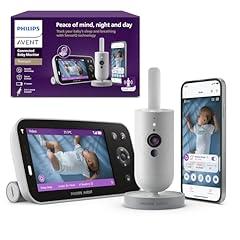
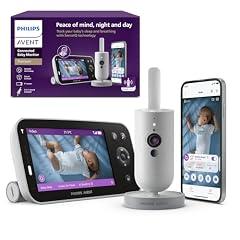
Philips Avent Connected Baby Monitor SCD973/37
Overview
This is a connected indoor baby monitor with a 1080p camera, rechargeable 5-inch parent screen, two-way audio, night vision, room-temperature display, sound and movement alerts, and app viewing. The camera can be attached with the included crib and wall mounting system. Philips documents up to 50 meters of indoor range and up to 400 meters outdoors, while also explaining that walls, moisture, and nearby 2.4 GHz devices can reduce performance. Its defining feature is manufacturer-stated wearable-free sleep and breathing-status tracking based on video motion analysis. The product manual draws unusually clear boundaries around that feature. It says the monitor is an aid, not a replacement for adult supervision or safe-sleep practice, is not a medical device, does not detect breathing interruptions, and will not report every irregularity. A verified FCC authorization family covers the matching radio hardware series and its RF exposure documentation.
What works
- The manual explicitly says it is an aid, not a substitute for adult supervision, and directs caregivers to follow official safe-sleep guidance.
- Medical boundaries are clearly stated. Philips says it is not a medical device and must not be used to detect breathing disorders, diagnose health concerns, or prevent SIDS.
- The installation instructions specify a crib edge at least 3 feet from the outlet, include cable-management parts, and warn that long cables can cause strangulation.
- The parent unit can monitor directly without Wi-Fi. Its documented out-of-range alarm, low-battery alert, and interference guidance make connection limits more visible.
- The connected system documents account roles, strong-password guidance, WPA2 or higher network advice, firmware updates, factory reset steps, and a minimum two-year software-update period.
What does not
- The camera's breathing and sleep outputs are not independently shown here to be clinically validated, and Philips says they can miss irregularities. They must not guide medical decisions.
- No model-specific UL, ETL, or CSA electrical listing was located. Philips provides charger, heat, and lithium-ion safety instructions, but independent electrical certification was not traceable in a public register.
- The app privacy notice describes account, device, usage, and optional cloud-recording processing. Philips states encrypted recordings in its Moments service can remain on its servers for up to seven days.
- Philips claims encrypted links and ongoing updates, but no public multi-factor authentication option or security-support end date beyond the documented minimum update period was found.
- A 2023 CPSC battery-overheating recall affected older Philips Avent monitor products, not this product. It remains a reason to follow the supplied charging instructions and stop use if overheating occurs.
Who is it for
This product suits caregivers who want a conventional dedicated parent screen at home, but also want optional app access when away. It is particularly suited to families willing to install the camera carefully with the supplied mount and cable covers, maintain a secured 2.4 GHz home network, and treat sleep, cry, and breathing-status information as awareness tools. The direct parent-unit connection is useful for households that do not want routine monitoring to depend on home Wi-Fi.
Who is it not for
It is not for anyone seeking a medical breathing, apnea, oxygen, pulse, or SIDS-prevention monitor. Philips specifically says this product may not identify every breathing or sleep irregularity and should never replace adult supervision or professional care. It is also a poorer fit for homes unable to keep the crib at least 3 feet from the chosen outlet, safely route cords, or provide secure 2.4 GHz Wi-Fi for app features. Buyers who require a publicly traceable independent electrical listing should select a product with one.
Integrity
The strongest health safeguard is the product's explicit limitation language. Its manual states that the monitor is an aid, not a substitute for responsible adult supervision, and that its sleep and breathing-status feature is not medical monitoring. The camera and cables require careful mounting. Philips warns of strangulation risk from long cords and specifies at least 3 feet between the crib edge and outlet for the wall-mounted setup. The parent unit uses a built-in lithium-ion battery. Philips provides heat, charging, and damage warnings, specifies use of the supplied power adapter, and tells users to stop charging an abnormally hot, smelly, discolored, or slow-charging unit. The manual supports separate collection of electronics and batteries, provides a qualified-professional battery-removal procedure, and lists parts and accessories support. Philips documents a two-year warranty and at least two years of software updates. A 2023 CPSC recall concerned older Philips Avent monitors with different product names, not this product.

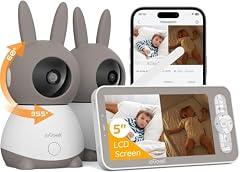
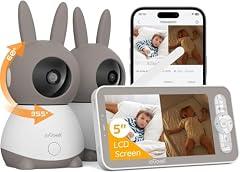
ieGeek 2K Split-Screen Baby Monitor
Overview
This is a two-camera nursery monitoring system with a 5-inch, 720p parent display, two mains-powered pan and tilt cameras, local monitor viewing, and optional 2.4 GHz Wi-Fi app access. The manufacturer states that each camera has 2K resolution, 355-degree pan, 60-degree tilt, infrared night vision, two-way audio, cry, noise and motion alerts, plus room temperature and humidity readings. The monitor has a stated 3000 mAh battery and 7 to 11 hour runtime depending on screen and voice-activation use. Its radio hardware has a traceable FCC authorization record covering the Baby 1T model family and 2.4 GHz operation. The product does not claim to measure infant oxygen, pulse, breathing, or other vital signs, and no SIDS-prevention claim was found. However, its stated 99 percent alert accuracy was not accompanied by a model-specific independent test report.
What works
- The two-camera configuration and split-screen operation are documented in the manufacturer specifications.
- The camera radio is traceable to an FCC equipment authorization record for the Baby 1T hardware family.
- The manufacturer documents both direct parent-display monitoring and optional app viewing, which provides a local-use option when remote access is unnecessary.
- An active product-support page, downloadable instructions, warranty activation, and US and Canada phone support are available from the maker.
What does not
- No model-specific UL, ETL, CSA, or other independently listed electrical safety certification was located for the cameras, display, adapters, or battery system.
- The accessible product instructions reviewed did not clearly present the CPSC guidance to keep every camera and power cord at least 3 feet from the crib or other sleep space.
- The maker's 99 percent motion-alert accuracy claim was not backed by a publicly available independent test report, and alert performance can still be affected by placement, network conditions, and settings.
- The app privacy disclosures describe collection of location, email, photos or videos, identifiers, and diagnostics. No public support-period, multi-factor authentication, or vulnerability-disclosure policy was located.
- The monitor battery is stated as non-removable, and no product-specific spare-parts, battery-replacement, take-back, or recycling program was found.
Who is it for
This product suits caregivers who need to watch two indoor sleep or play areas from one dedicated display and who value the option to check a feed through a phone when away from home. It is especially relevant where two camera positions, pan and tilt control, and split-screen viewing are more useful than medical-style health tracking. It also fits households willing to wall-mount cameras, route every power cord well outside a child's reach, maintain the app and firmware, and treat cry, motion, temperature, and humidity notifications as prompts to check the child.
Who is it not for
It is not suited to anyone seeking medical monitoring for breathing, oxygen level, pulse, apnea, illness, or SIDS prevention. This product has no such stated function or FDA authorization. It is also a poor fit where cameras or cables cannot reliably be installed at least 3 feet from every crib, bassinet, play yard, or child-accessible sleep area. Privacy-sensitive households that require published multi-factor authentication, a defined security-update commitment, independent cybersecurity testing, or a documented vulnerability-reporting process should not rely on the optional internet-connected app without further confirmation.
Integrity
The strongest independently checked safety evidence is radio compliance. An FCC authorization record identifies Baby 1T among the listed models and includes 2.4 GHz testing. The camera system is not presented as a vital-sign device, and no SIDS-prevention claim was found. That distinction matters because FDA guidance says baby monitors are not substitutes for adult supervision or safe-sleep practice. The camera units are corded. CPSC advises keeping all monitor parts and cords at least 3 feet from a crib, bassinet, play yard, or other sleep space. The reviewed materials did not clearly surface that specific placement warning, so installation needs extra care. The parent display uses a built-in, non-removable battery. No model-specific electrical listing, replacement-battery pathway, spare-parts catalog, or take-back and recycling program was located. The app's disclosures also indicate collection of several data categories when app functions are used.