
10 Best Automatic Window Cleaner
 Lauren Wilson
Please note that we participate in affiliate marketing programs. When you purchase through links on our site, we may earn a commission. As an Amazon Associate we earn from qualifying purchases. This comes at no additional cost to you and helps support the resources required to provide valuable content.Advertising Disclosure
Top-rated Automatic Window Cleaner Comparison
1



2

3


4
5


6
+
7


8


9
10


+
Automatic window cleaners: what matters before you buy
Automatic window cleaners use suction or vacuum adhesion to move a powered cleaning head across glass while pads wipe and, on some models, a small reservoir sprays water or cleaning solution. A tether and backup battery are intended to reduce the consequences of a power interruption. Remote controls, automatic routes, edge detection, and washable pads can reduce repetitive reaching and wiping, but they do not make the device hands-off or suitable for every pane.
Whether one works depends first on the glass and the retention system. The most relevant limits in the supplied reviews include smooth, flat, intact glass; minimum thickness or frame dimensions; dry conditions; clean, correctly dampened pads; and a secure tether anchor. Coatings, films, decals, gaps, low borders, textured or irregular surfaces, cracked glass, condensation, oil, grit, rain, and excessive moisture can impair grip, scratch the pane, cause slipping, or make use unsuitable. A robot that cleans ordinary interior glass may not safely handle frameless, exterior, curved, unusually shaped, or high-risk windows.
Headline suction figures are not proof of fall protection. The important question is whether the complete system has been tested through power loss, low battery, wet glass, edge transitions, tether loading, anchor performance, and retrieval not merely whether a listing says “anti-fall” or gives a pressure figure such as 3,200, 6,400, 8,000, or 9,000 Pa. Conflicting suction, backup-runtime, battery-life, cleaning-mode, weight, and warranty claims appear across supplied product materials, so a number is useful only when it is model-specific, internally consistent, and supported by test conditions.
For electrical and battery assurance, look for the exact finished robot, power supply, and charging equipment in a public record from an OSHA-recognized Nationally Recognized Testing Laboratory. Relevant checks include UL Solutions Product iQ, Intertek’s ETL directory, and CSA Group’s listing database; applicable standards may include UL 60335-1 or UL 62368-1, with UL 3300 where relevant. Seller-issued CE, FCC, RoHS, “tested,” or compliance graphics are not equivalent to an independent U.S. safety certification.
Cleaning quality also needs evidence. Look for repeatable testing that identifies the exact model, glass type, soil, spray method, edge conditions, streaking, corner reach, navigation, runtime, and recovery after interruptions. A practical review can be useful, but it is different from an accredited laboratory report. Check the manual for surface exclusions, tether setup, emergency stop or retrieval steps, cord routing, alarms, and low-battery behavior. Also check CPSC Recalls & Product Safety Warnings, SaferProducts.gov, and Amazon product-safety alerts before purchase and during ownership.
Chemistry deserves separate attention. A small tank or “water mist” claim does not establish safer exposure or wastewater behavior. Prefer a disclosed formula with an ingredient list, safety data sheet, clear dilution and ventilation instructions, and where available EPA Safer Choice certification. Finally, washable or replaceable pads are helpful, but long-term sustainability depends on whether pads, seals, nozzles, cables, batteries, and other wear parts can actually be replaced and whether repair and end-of-life guidance exists.
Across the supplied products, recurring safety caveats are substantial: none had located model-specific U.S. independent certification for the complete robot and power system; fall protection was generally manufacturer-stated rather than accredited-test verified; and many products lacked independent testing for wet-glass grip, tether loading, edge transitions, and backup power. Repeated warnings exclude cracked, wet, textured, coated, irregular, greasy, or damaged glass, and several products require a secure indoor anchor, continuous supervision, and a clear area below. These devices should not be treated as unattended high-rise equipment, especially where a falling robot could injure people or damage property.
Integrity
The supplied scores are comparative signals within this reviewed set, not certifications or guarantees. Higher scores indicate stronger evidence against the relevant topic’s definition; they do not remove the need to follow the exact manual and use a tether.
HHealth & Safety
Verified anti-fall protection
This measures whether the robot remains attached or safely retained during power loss, low battery, wet glass, edge transitions, and tether loading. It matters because a falling appliance can injure people or damage property. Among these products, higher scores reached 76, while lower results fell to 52; the stronger scores still generally relied on maker claims rather than a complete accredited safety test.
Electrical and battery safety
This covers shock, overheating, fire, battery failure, and water reaching live parts during spraying, charging, and cleaning. A high result requires certification of the exact robot, power supply, and charging equipment together. Scores ranged from 68 to 72. The narrow spread reflects a common limitation: no supplied product had a located public U.S. certification record for the complete system.
Safer spray and cleaning chemistry
This measures ingredient disclosure, a suitable safety data sheet, dilution and ventilation instructions, and independently reviewed safer chemistry. It matters because these robots spray near users, glass, pads, drains, and electrical components. Scores ranged from 62 to 78. The higher result came from a product directed to use tap water alone; lower results reflected missing formulas, missing SDS documents, or a solution with disclosed fragrance and ethanol.
Glass and surface compatibility
This measures whether the maker clearly identifies safe and unsafe surfaces and provides tested compatibility for framed, frameless, coated, textured, cracked, wet, and irregular glass. It matters because poor grip can cause a fall while abrasive or unsuitable contact can damage glass. Scores ranged from 50 to 79; higher-scoring products had more specific limits and instructions, while lower scores included conflicts between advertising and the manual.
Safe setup and emergency controls
This covers tether anchoring, station placement, cord routing, remote control, alarms, stopping, retrieval, and low-battery response. It matters because setup errors create falling-object, trip, entanglement, and unsafe-retrieval hazards. Scores ranged from 60 to 80. The stronger products supplied concrete anchoring and retrieval procedures; weaker ones offered fewer clear instructions or left key operating details undocumented.
EEcology
Lower-impact cleaning chemistry
This measures whether the recommended liquid minimizes hazardous ingredients, unnecessary fragrance, and harmful releases to drains or outdoor surfaces, while using little liquid and supporting safer formulations. Scores ranged from 64 to 76. The strongest result came from a tap-water approach and the lowest from a product whose solution chemistry was not fully documented; small tanks alone do not prove lower environmental impact.
Built to last and repair
This measures whether pads, seals, nozzles, cables, batteries, and other wear parts can be replaced, and whether the maker offers parts, repair guidance, and end-of-life options. It matters because a short-lived robot becomes electronic waste. Scores ranged from 68 to 76. Higher-scoring products documented washable or replacement pads; most still lacked complete battery service, repair, or take-back information.
EEvidence
Independent safety certification
This measures whether the exact finished product appears in a current public certification record from an independent U.S.-recognized testing body, rather than relying on CE, FCC, RoHS, or seller graphics. Scores ranged from 68 to 70, but no supplied product had a located exact-model UL, ETL, CSA, or comparable U.S. listing for the complete robot and power system. In this category, a similar score does not equal certification.
Proven cleaning performance
This measures repeatable evidence for coverage, edges, corners, streaking, spraying, navigation, runtime, and interruption recovery under disclosed conditions. Scores ranged from 62 to 78. Higher-scoring products had independent practical testing showing structured travel, grime removal, or streak-free flat-glass results; lower scores relied more heavily on suction, nozzle counts, or general seller claims.
Honest, checkable claims
This measures whether suction, cleaning force, AI or navigation, safety stages, coverage, battery backup, noise, and compatibility claims are specific, consistent, and supported. Scores ranged from 50 to 73. Higher-scoring listings had clearer limitations and fewer contradictions; lower-scoring products commonly reported conflicting suction, backup time, battery life, cleaning modes, or surface claims.
Traceable maker and recall support
This measures whether buyers can identify the responsible maker or importer, model information, support channel, warranty, and recall remedy. Scores ranged from 63 to 82. Higher-scoring products had identifiable manufacturers, manuals, support channels, and stated warranties; lower scores reflected unclear ownership, weak documentation, inconsistent warranty language, or limited repair and recall pathways.
Full reviews

Obito Window Cleaning Robot 2026
Overview
Obito X2 is a corded, remote-controlled window-cleaning robot intended for glass, mirrors, tiles, and doors. It uses suction to stay on a vertical surface while two rotating cloth pads clean. The product listing states that it has a 60 ml water tank with ultrasonic spray, edge detection, anti-slip functions, and a backup battery. It is supplied with two nozzle pairs and 10 cloths. The safety and performance claims are manufacturer-stated, not independently confirmed for this exact unit. I did not locate an exact-model instruction manual, accredited fall test, or public North American safety certification record. There is also a material specification conflict: listings for the same X2 identify both 3,200 Pa and 6,400 Pa maximum suction, so the advertised suction figure is not presently checkable with confidence.
What works
- Remote control can keep the operator off a ladder for reachable indoor or exterior glass, if the setup instructions and tether arrangement are appropriate.
- The stated 60 ml spray reservoir allows the unit to wet the cleaning path without the user manually spraying every section.
- The listed package includes 10 cloths and two nozzle pairs, providing consumable spares at purchase.
- The maker states that the unit has edge detection, anti-slip controls, and battery backup, which are relevant safeguards for a vertical cleaning robot, although they are unverified for this model.
What does not
- No model-specific UL, ETL, CSA, or equivalent public safety certification record was located for the finished robot and its power equipment.
- No independent, model-specific testing was located for attachment strength, backup power, tether retention, wet-glass operation, edge transitions, or cleaning results.
- No model-specific manual or technical support document was located that clearly defines compatible glass, coatings, seams, cracks, frames, decals, or textured surfaces.
- The reported maximum suction is inconsistent across listings, with 3,200 Pa and 6,400 Pa both associated with the same X2 product.
- No safety data sheet, ingredient disclosure, or specific cleaning-liquid instructions were located for the spray system.
Who is it for
This product is most suited to a buyer with small to medium, smooth, intact, framed glass panels who wants a remote-operated aid for routine dust and light-film cleaning. The buyer should be able to work from indoors or another stable position, secure a safety tether to a genuinely fixed anchor, supervise the unit throughout operation, and inspect pads and glass before use. It also suits someone who values included cloth spares and accepts that the major safety and performance specifications remain manufacturer-stated.
Who is it not for
It is not suited to anyone who needs independently certified electrical protection or verified retention for work above pedestrians, vehicles, balconies, or valuable property. Avoid relying on it for cracked, loose, heavily textured, very wet, coated, irregular, or poorly framed glass because model-specific compatibility limits were not located. It is also unsuitable where an operator cannot securely anchor the tether, remain present to retrieve the unit, manage the power cord safely, or tolerate uncertainty about the actual suction specification and cleaning-liquid requirements.
Integrity
The product's main health issue is not a confirmed defect or recall. Searches did not identify an Obito X2 recall or a product-specific incident report, but no public exact-model listing was found in the major North American safety-certification databases searched. Its anti-fall, edge-detection, anti-slip, and battery-backup protections are seller claims rather than independently verified evidence. For a device used on vertical glass, secure tethering, constant supervision, dry cord routing, and avoiding unsafe retrieval are important practical controls. The 60 ml onboard tank may limit liquid use per pass, but the product information located does not identify a supplied or recommended liquid, disclose ingredients, provide a safety data sheet, or document a safer-chemistry certification. Ten included cloths and spare nozzles may delay replacement purchases, yet no parts catalog, repair guidance, battery replacement path, warranty terms, or end-of-life program was located. Battery and electronic recycling should therefore be handled through an appropriate local collection program.

ECOVACS WINBOT W2 PRO Window Cleaning Robot
Overview
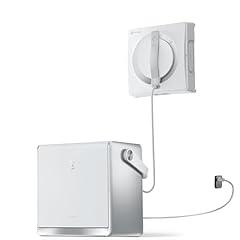
The ECOVACS Winbot W2 Pro Omni is a 1.6 kg glass-cleaning robot used with a 5.5 kg portable station, microfiber pads, a safety rope, and a spray reservoir. It attaches to flat glass, sprays cleaning liquid, travels across the pane, and can be controlled from the station or app. It is intended for reachable windows, mirrors, and similar flat glass surfaces, not unattended or hands-off exterior work. ECOVACS states that its 4,500 mAh, 24 V lithium station can run the robot for up to 110 minutes, or power it continuously while plugged in. The maker also states that the system has a tether, station anchoring, low-power attachment protection, edge sensors, and alarms. Independent editorial testing found strong cleaning on dirty windows and no suction loss during the review, but this is not a complete laboratory validation of the fall-protection system.
What works
- Independent editorial testing found strong one-cycle cleaning on heavily soiled indoor and exterior glass.
- The manufacturer provides specific safety limits, including minimum glass and frame dimensions, rather than treating every pane as interchangeable.
- The portable station has physical start, pause, return, and cable-management controls, plus a tether and carabiner for setup.
- Washable replacement pads and compatible cleaning solution remain available from the manufacturer.
- A U.S. support channel and 12-month limited warranty provide identifiable post-purchase contact and defect coverage.
What does not
- No public exact-product UL, ETL, or CSA certification record was located for the finished robot, power supply, and station together.
- The claimed 12-stage protection system, suction figures, battery-backup time, and station anchoring figures are manufacturer claims, not independent full-system safety testing.
- The compatible cleaning solution safety sheet classifies the liquid as a skin sensitizer and serious eye irritant, and warns of long-lasting aquatic harm.
- The product has important surface exclusions. Do not use it on thin glass, very shallow frames, greasy panes, handled glass or mirrors, damaged glass, or exterior windows in rain.
- Editorial testing found that the pad does not fully reach tight corners, and fan noise can obscure spoken alerts.
Who is it for
This product suits a buyer with several large, reachable, flat glass panes, including tall interior windows, shower glass, mirrors, or exterior panes that can be safely accessed from inside. It is most relevant where carrying a ladder or repeatedly hand-wiping broad glass is inconvenient, but the user can still attach and retrieve the robot. The portable battery station is particularly useful for balconies, bathrooms, or other locations without a nearby outlet. The buyer should be willing to inspect pads, glass condition, tether anchoring, and cleaning results each session.
Who is it not for
It is not appropriate for anyone unable to safely reach the placement and retrieval point, because the robot still requires hands-on attachment and removal. Avoid it for cracked, greasy, rain-wet, thin, heavily textured, irregular, or very small panes, and for glass with shallow frames or handles within the documented exclusion range. It also does not suit homes needing perfect corner cleaning without manual finishing. People who cannot manage a tether, route a cable away from hazards, or keep cleaning liquid away from eyes and skin should use a lower-risk cleaning method.
Integrity
The compatible ECOVACS window-cleaning liquid has a published safety data sheet, which is a useful form of chemical disclosure. The sheet identifies skin sensitization, serious eye irritation, and chronic aquatic-hazard classifications. It calls for avoiding spray inhalation, using protective measures, washing after handling, and preventing release to the environment. The liquid is fragranced, so it is not a low-exposure or independently reviewed safer-chemistry option. No EPA Safer Choice confirmation was located. The product uses a small 60 ml onboard reservoir and washable microfiber pads, with replacement pads sold by ECOVACS. That can reduce disposable wipe use. However, the large lithium battery is not presented as a user-replaceable part, and accessible documentation does not provide a product-specific repair manual, battery-parts listing, or take-back program. Its U.S. warranty lasts 12 months and excludes consumables and normal wear. Public exact-product independent electrical and full-system fall-safety certification was not located.

HUTT Window Cleaning Robot
Overview
This is a corded, remote-controlled window-cleaning robot intended for glass. An independently located retail record identifies an 80 ml tank, button and remote control, and an approximately 11 by 5 by 2 inch body. The product is designed to remain connected to mains power while cleaning, with its onboard battery described as backup protection rather than a cordless cleaning mode. The safety and cleaning claims are primarily manufacturer-stated. These include 6500 Pa suction, a tether rated to 220 kg, 30 minutes of backup power, ultrasonic spraying, and edge sensing. A public Eurasian conformity record names Beijing Hutt Wisdom Technology as manufacturer and covers HUTT10 models with a GVE power adapter, but it is not a U.S. NRTL listing. Product records also conflict on weight, with 6.2 pounds in the supplied catalog and 2.6 pounds in another retail record, which reduces confidence in the published specifications.
What works
- Corded operation avoids depending on a short battery for normal cleaning, while the claimed backup battery is intended for interruption protection.
- The product has a stated tether and edge-detection system, practical safeguards when used as instructed on elevated glass.
- A public conformity record identifies Beijing Hutt Wisdom Technology as the manufacturer of HUTT10 models and identifies a paired GVE adapter model.
- The stated 80 ml tank keeps the amount of cleaning liquid handled per fill relatively small.
What does not
- No model-specific U.S. UL, ETL, or CSA certification record was located for the finished robot and power system.
- No accredited test report was located for attachment loss, wet-glass retention, tether loading, battery backup, edge detection, or cleaning performance.
- The supplied product information does not identify a cleaning liquid or provide an ingredient disclosure, safety data sheet, dilution guidance, or safer-chemistry certification.
- Published product records conflict on basic specifications, including the robot weight and model number, so important claims should be checked against the unit label and manual before use.
- No repair manual, battery replacement procedure, parts catalog, or U.S. end-of-life program was located.
Who is it for
This product suits a buyer with accessible, smooth glass panes who wants a corded tool for routine maintenance cleaning and is prepared to remain present while it runs. It is most appropriate where the tether can be secured to a robust indoor anchor, the power cable can be routed without creating a trip hazard, and the user can retrieve the robot safely. The compact tank may suit smaller cleaning sessions. The buyer should verify the actual label, included manual, adapter, weight, and supported surface limits on arrival because published records are inconsistent.
Who is it not for
It is not suited to unattended cleaning, exterior high-rise use where a dropped object could injure people below, or any setup without a secure tether anchor and safe cord route. Avoid using it on cracked, loose, heavily textured, irregular, or poorly documented coated glass because model-specific compatibility evidence was not located. It is also a poor fit for buyers who require a publicly verifiable U.S. safety listing, independently tested anti-fall performance, a disclosed cleaning chemistry, or clear access to repair parts and battery service instructions.
Integrity
The central health issue is falling-object risk. The product is advertised with suction, edge sensing, a tether, and backup power, but no model-specific accredited test report was located for the complete retention system. The public conformity record found is for low-voltage equipment and electromagnetic compatibility in the Eurasian market. It does identify the manufacturer and a GVE adapter model, but it is not evidence of a U.S. NRTL certification for the finished product. Cleaning-liquid safety remains unclear. No supplied solution, safety data sheet, ingredient disclosure, dilution instruction, or EPA Safer Choice record was located. Use only a liquid explicitly permitted in the product manual, and avoid adding undisclosed concentrates. The small stated tank can limit liquid use, but it does not establish lower wastewater impact. Reusable pads may reduce disposable wiping waste, yet no repair documentation, replacement battery program, or electronics take-back option was located. No HUTT H10 recall or public CPSC warning was located in the searched U.S. databases.

ECOVACS Winbot W1 Pro Window Cleaning Robot
Overview
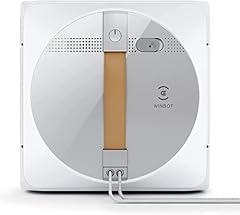
This is a corded, square window-cleaning robot for flat glass. It travels on suction-assisted treads, sprays liquid from a 60 mL reservoir, and wipes with a reusable pad. ECOVACS specifies three cleaning modes, app control, a tether with carabiner, and a backup safety battery. The manufacturer says its 2,800 Pa suction system, leak sensing, edge sensing, and backup power form an eight-level safety system, but those complete-system claims were not supported by a public accredited test report. Independent CHOICE laboratory testing found that it cleaned accessible grimy windows well inside and out, though small dirt patches remained after deep cleaning. The test also found the product noisy at 73 dBA and reported that its cleaning-liquid use could be materially higher than the maker's stated per-tank coverage estimate.
What works
- Independent laboratory testing found effective cleaning on accessible, heavily soiled windows.
- The manual gives concrete use limits, including flat glass at least 3 mm thick and framed edges at least 5 mm high.
- The safety setup includes a tether, carabiner, charged backup battery, cord precautions, and app-based pause or directional control.
- Reusable pads are supported with official replacement-pad listings.
What does not
- No public exact-product listing was located in the searched UL, ETL, or CSA certification registers, so independent U.S. electrical and complete anti-fall certification could not be confirmed.
- The recommended cleaning liquid lacks a readily available ingredient disclosure or safety data sheet for U.S. buyers, limiting assessment of spray and wastewater exposures.
- Safe operation is conditional and hands-on. It must be tethered, kept plugged in while cleaning, and not used on cracked, greasy, rainy, highly humid, or unsuitable glass.
- Independent testing found small residual spots after deep cleaning, and the product cannot fully reach edges and corners.
Who is it for
It suits a household with large, reachable, flat glass panels, such as sliding doors or broad fixed windows, where manual cleaning is awkward but the user can attach and retrieve the product safely. The owner should be comfortable following a setup routine that includes wetting and wringing the pad, securing the tether to a stable anchor, charging the backup battery, routing the cord safely, and remaining nearby. It is most practical for regular maintenance cleaning rather than restoration of badly neglected glass.
Who is it not for
It is not appropriate for anyone who needs a certified, independently proven anti-fall system for work above people, fragile property, public areas, or commercial settings. Avoid it on cracked, uneven, greasy, heavily humid, rainy, or very small glass, and on framed windows with edges below 5 mm. It also does not suit households unable to provide a secure tether anchor or safely reach the exterior attachment and retrieval point. Buyers sensitive to operating noise or spray-chemical disclosure gaps should also look elsewhere.
Integrity
The strongest health safeguard is procedural rather than independently certified. ECOVACS supplies a tether and carabiner, instructs users to anchor them to a safe position, specifies a backup battery for an outage, and warns against leaving the product unattended while plugged in. The manual also excludes cracked glass, greasy glass, rain, and high-risk cord handling. These limits are meaningful, but the reviewed public records did not establish exact-product UL, ETL, or CSA certification or accredited testing of the full fall-retention system. The 60 mL reservoir and reusable pad can limit liquid and disposable-pad use. However, ECOVACS recommends its proprietary cleaning solution, while a U.S. ingredient disclosure, safety data sheet, and independent safer-chemistry certification were not located. The backup battery is replaceable only by the manufacturer or a service agent, which limits owner repair. Official support does list replacement cleaning pads, but a broader repair-parts catalog and U.S. end-of-life program were not confirmed. No relevant U.S. CPSC recall was located in the searched records.

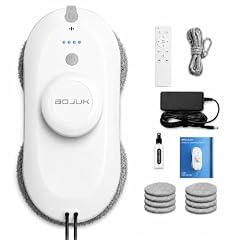
BOJUK Window Cleaning Robot 6500Pa Suction
Overview
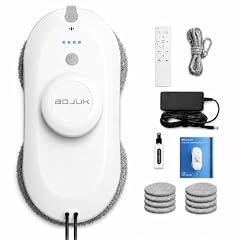
This is a corded window-cleaning robot for smooth glass, mirrors, tiles, glass doors, and similar surfaces. It uses suction to stay on a vertical surface while two microfiber pads move across it. The available model-specific manual describes remote control, three route patterns, dual spray, a safety rope, and a backup power system that is said to keep the unit attached for about 25 minutes after a power interruption. These are manufacturer-stated operating features, not independently verified safety results. The documentation advises securing the tether to a sturdy indoor anchor, supervising operation, avoiding cracked glass and very humid or rainy conditions, and retrieving the unit promptly after a power failure. Product information is not fully consistent across available sources. Suction is stated as 6,500 Pa in the catalog record, while other listings and the manual describe 5,000 Pa or 3,200 Pa. That conflict makes the headline performance specification difficult to check.
What works
- The available model-specific manual gives practical setup directions for tether anchoring, cord connection, retrieval, and power-loss response.
- Manufacturer documentation describes a 25-minute backup hold after a power interruption, plus a safety rope for secondary retention.
- Ten microfiber cloths are listed in the package, and the model-specific manual says the cloths can be washed and reused.
- Remote operation and three stated travel patterns can reduce hands-on positioning during routine cleaning of suitable smooth surfaces.
What does not
- No model-specific UL, ETL, CSA, or other publicly searchable U.S. safety certification record was located for the finished product and its power supply.
- There is no independent laboratory report validating attachment on wet glass, tether loading, backup-power retention, edge transitions, or fall prevention.
- No safety data sheet, ingredient disclosure, or independently reviewed safer-chemistry certification was located for a recommended cleaning liquid.
- Important specifications conflict across available product materials, including the stated suction level and backup duration. This is a documentation problem, not proof that the product is unsafe.
- No parts catalog, repair manual, battery replacement procedure, or responsible end-of-life program was located.
Who is it for
This product fits a buyer who has several reachable, intact, smooth glass panels and wants a corded tool for frequent light maintenance rather than deep restoration cleaning. It is most appropriate where the user can remain nearby, route the power cord safely, attach the tether to a genuinely sturdy indoor anchor, and promptly retrieve the robot if an alarm or power interruption occurs. Reusable cloths and remote route selection may be useful for regular cleaning of large, simple panes, mirrors, shower glass, or glass doors.
Who is it not for
It is not suited to anyone who needs independently certified fall protection for exterior or elevated glass, including homes where a dropped device could endanger people, pets, vehicles, or property below. Avoid using it on cracked, chipped, irregular, heavily textured, very wet, or otherwise compromised surfaces. It is also a poor fit for buyers who need documented electrical certification, a named U.S. importer, repair parts, or a clearly identified cleaning formulation. Do not treat the stated backup hold as a substitute for a correctly anchored tether and active supervision.
Integrity
The main health issue is falling-object control. The available model-specific instructions call for a safety rope attached to a sturdy indoor anchor, continued supervision, and prompt retrieval after an outage. They also caution against cracked or damaged glass and rainy or extremely humid conditions. Those are useful operational limits, but no independent test record was found for the complete attachment, backup-power, tether, and wet-surface safety system. No matching CPSC recall or warning was located in the searches performed, although an absence of a search result does not establish safety. The product documentation allows clean water or an unspecified recommended window cleaner. No ingredient disclosure, safety data sheet, dilution guidance, or EPA Safer Choice listing was located for a supplied or recommended liquid. The cloths are described as washable, which can reduce disposable-pad waste. However, no repair guidance, replacement battery information, parts catalog, or electronics recycling program was found, leaving its long-term repairability and end-of-life handling unclear.

BOJUK Window Cleaning Robot 6500Pa
Overview
The BOJUK C260-L1 is a corded robotic window cleaner intended for windows, glass doors, tiles, and floor-to-ceiling glass. It measures 11 by 5.6 by 3.5 inches, weighs 4.6 pounds, uses a 12 V lithium-ion backup battery, and has a 60 mL water tank. Cleaning is controlled by a remote rather than an app. The marketplace listing states 6,500 Pa suction, dual water spray, smart edge detection, three cleaning paths, a 5-meter safety rope, and a 25-minute UPS backup for power interruptions. These are manufacturer-stated features, not independently validated performance or safety results. Searches did not locate a model-specific manual, independent laboratory report, public electrical-safety listing, or a public certification record for this finished product and its power supply.
What works
- Manufacturer states that a tether and 25-minute UPS backup are provided for unexpected power loss.
- Remote operation can keep the user on the ground while the unit works on accessible high glass.
- The stated 60 mL tank and dual spray system can reduce manual re-wetting during routine light cleaning.
- The listing provides concrete physical specifications, including dimensions, weight, voltage, tank capacity, and battery type.
What does not
- No model-specific independent test was located for attachment retention on wet glass, tether loading, edge transitions, or power loss.
- No public UL, ETL, CSA, or TÜV Rheinland certification record was located for the complete product or its power supply.
- The listing broadly names framed and frameless glass, but does not provide checked exclusions for cracked, coated, textured, mirrored, irregular, or very wet surfaces.
- No safety data sheet, ingredient disclosure, or Safer Choice certification was located for a supplied or recommended cleaning liquid.
- No model-specific parts catalog, repair guide, battery replacement procedure, or documented end-of-life program was located.
Who is it for
This product fits a person maintaining routinely dusty or fingerprinted smooth glass who can remain nearby, secure the tether to a sound anchor, and retrieve the robot safely. Its remote control and manufacturer-stated backup power may be useful where a ladder would otherwise be needed for reachable upper panes. It is most appropriate for light, repeated cleaning rather than neglected exterior glass with mineral deposits, hardened grime, or unknown surface coatings. The buyer should be prepared to use and launder the cleaning pads and confirm compatibility before first use.
Who is it not for
It is not suited to anyone who needs independently certified electrical safety or independently tested fall protection for a high-risk installation. Avoid using it over public walkways, vehicles, people, or locations where a dropped 4.6-pound device could cause injury or damage. It is also a poor fit for cracked, loose, textured, heavily wet, irregular, or coated glass because model-specific compatibility limits were not located. Households needing documented replacement batteries, repair parts, a clear warranty path, or a disclosed safer cleaning solution need more support information.
Integrity
The key health issue is falling-object control. The listing describes suction, edge sensing, a 5-meter rope, and 25 minutes of UPS backup, but these safeguards were not supported by an independent model-specific attachment, tether, wet-glass, or power-loss test. A public certification listing from a U.S.-recognized testing body was also not located for the finished product and its power supply. Searches of U.S. Consumer Product Safety Commission recall material did not identify a matching BOJUK product recall or warning. The water tank is small at 60 mL, which can limit liquid use per cleaning cycle. However, no supplied cleaning liquid, ingredient disclosure, safety data sheet, dilution direction, or EPA Safer Choice certification was located. No parts catalog, repair documentation, replacement-battery information, or recycling program was found, so long-term repairability and electronics disposal planning remain unclear.

AlfaBot Robotic Window Cleaner with Auto Spray
Overview
The AlfaBot GLS480 is a corded robotic cleaner intended to travel across smooth vertical glass and similar surfaces while spraying water and wiping with cleaning pads. Independent retailer descriptions corroborate a square body, a 100 ml water reservoir, four spray nozzles, 5000 Pa stated suction, remote control, and multiple programmed routes. Its defining limitation is the evidence record. Safety, retention, electrical protection, surface compatibility, and cleaning results are presented as manufacturer claims repeated by retailers, rather than as model-specific laboratory reports or public certification records. Listings also conflict on cleaning modes. The U.S. product title states three modes, while other retailer descriptions state five, making this specification difficult to check confidently.
What works
- The 100 ml reservoir and water-mist system are concrete, consistently repeated product specifications.
- The square layout is intended to reach edges and corners, according to manufacturer claims reproduced by retailers.
- Retailer descriptions consistently report a backup battery and safety tether as added retention measures.
- Remote control and programmed cleaning routes can reduce direct handling on reachable smooth glass.
What does not
- No model-specific independent fall, wet-glass, tether-load, or backup-power test report was located.
- No public UL, ETL, CSA, or TÜV Rheinland listing was located for the exact finished product and power system.
- No model-specific manual, safety data sheet, cleaning-liquid ingredient disclosure, parts catalog, or repair guidance was located.
- Cleaning-mode claims conflict across listings, with three modes in the U.S. title and five in other descriptions.
- The claimed 5000 Pa suction, edge coverage, cleaning quality, and backup duration remain unverified by a disclosed test method.
Who is it for
This product fits a buyer who wants help with routine dust, light water marks, and accessible smooth glass panels, and who is prepared to stay nearby during operation. It is most practical where a tether can be anchored securely, the power cord can be routed without creating a trip or snag hazard, and the user can inspect pads, glass condition, and adhesion before each session. The small water reservoir suits shorter, repeated cleaning sessions rather than unattended whole-property cleaning.
Who is it not for
It is not suited to anyone who needs independently certified protection for exterior elevated-window work, such as occupants of high-rise homes, properties above pedestrian areas, or sites where a dropped object could cause injury or damage. Avoid relying on it for cracked, heavily textured, irregular, coated, poorly framed, or wet glass because clear model-specific exclusions and compatibility testing were not located. It also does not fit buyers needing verified electrical certification, repair parts, a documented warranty process, or disclosed cleaning-chemical guidance.
Integrity
The product uses a small water reservoir and a spray-and-pad approach, which can limit the amount of liquid applied per session. However, no product-specific safety data sheet, ingredient list, dilution guidance, or EPA Safer Choice record was located for any recommended cleaning liquid. Water-only use may avoid added cleaner residues, but the maker's instructions on suitable liquids and ventilation were not available for review. Claims of backup power, suction retention, edge sensing, and a safety tether are useful safeguards only as manufacturer-stated features. No public record was located for independent U.S. safety certification of this exact product and power system, or for model-specific drop and wet-surface testing. No product-specific U.S. recall or public incident result was located in the searched CPSC sources. Replacement-pad, battery, cable, nozzle, and recycling support also could not be confirmed, which leaves durability and end-of-life handling unclear.

AlfaBot X7Pro Window Cleaning Robot
Overview
The AlfaBot X7 Pro is a corded window-cleaning robot for smooth glass and similar surfaces. It attaches by suction, moves in automatic patterns, sprays liquid from two directions, and uses washable microfiber pads. The catalog describes a 60 ml tank, remote control, safety rope, and six pads. A product manual submitted in wireless authorization records describes continuous mains operation, a tether tied to an indoor anchor, remote stop and directional controls, and a backup battery intended to hold the robot in place for up to 30 minutes after a power loss. Those are manufacturer-stated safety provisions, not independent validation of attachment, tether loading, or wet-glass performance. Independent editorial testing suggests useful maintenance cleaning on broad glass panels, but also reports circular marks, incomplete corners, and weaker results on baked-on grime.
What works
- The operating instructions give concrete setup, tether anchoring, warning-zone, stop, and retrieval steps.
- Manufacturer documentation describes backup power that maintains attachment during a power interruption, with an alarm to prompt retrieval.
- Remote controls include automatic modes, manual steering, spray control, and a dedicated stop button.
- An independent editorial test found it useful for routine dirt on broad glass areas, reducing the amount of manual wiping required.
What does not
- No model-specific UL, ETL, CSA, or comparable public electrical and whole-robot safety certification was located.
- No independent laboratory test was located for suction retention, backup power, tether strength, wet glass, or edge transitions.
- The instructions permit water or a cleaning solution, but do not provide an ingredient disclosure, safety data sheet, dilution guidance, or safer-chemistry certification for a supplied liquid.
- Important specifications are inconsistent across available materials. The catalog states a 60 ml tank and 6000 Pa suction, while the available X7 Pro manual describes two 25 ml tanks and does not substantiate the 6000 Pa figure.
- No parts catalog, repair instructions, battery replacement procedure, or verified end-of-life recycling program was located.
Who is it for
This product suits a buyer who has broad, regularly maintained glass panels or glass doors, can remain nearby throughout cleaning, and can safely anchor a tether indoors. It is most practical where the user accepts a follow-up wipe for corners or stubborn spots and has a nearby outlet for the continuously powered cord. The included pads and onboard spray can support repeated light-maintenance sessions, rather than intensive restoration of neglected exterior glass.
Who is it not for
It is not suitable for anyone who needs independently demonstrated anti-fall or electrical safety for exterior high-rise use. Avoid it on cracked, damaged, uneven, heavily textured, sticker-covered, or very slippery glass, as the instructions flag surface-grip limitations. It also does not fit buyers seeking unattended operation, cordless use, documented cleaning-liquid chemistry, or a repairable appliance with clearly available replacement batteries, seals, nozzles, and cables.
Integrity
The main safety controls documented for this product are procedural. The instructions call for a tether fixed to an indoor anchor, a restricted area below unprotected exterior windows, continuous power during use, and prompt retrieval after an outage. They also direct users not to self-repair damaged cords or accessories. Wireless authorization records identify Shenzhen AFABOTE Technology as the manufacturer behind the related X7 Pro documentation, improving basic product traceability. No public model-specific listing from UL, ETL, CSA, or another U.S.-recognized safety certifier was located. The available materials describe water or optional cleaning solution, but do not identify a supplied formula or disclose ingredients, dilution, disposal, or safety data. The small onboard tanks can limit liquid use, and the microfiber pads are washable. However, no verified replacement-parts program, repair documentation, or electronics recycling arrangement was located. No relevant CPSC recall or warning was located in the searches performed.

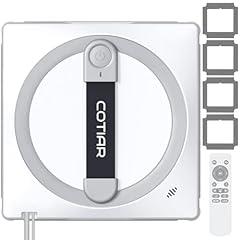
COTIAR Window Cleaning Robot with Auto Spray
Overview
This is a plug-in robot for single-sided glass cleaning. It attaches to smooth glass with vacuum suction, moves in programmed paths, and uses a microfiber pad plus automatic water spray. The independently located product manual identifies it as the COTIAR W10, with a 60 mL tank, dual spray nozzles, remote control, app control, a 4.5-meter adapter cable, and a 5-meter safety rope. The manual also states 3,100 Pa suction and a 30-minute internal backup period after a power interruption. Those are manufacturer-stated specifications, not independently tested results. Its instructions contain important limits: keep the surface relatively smooth and nonporous, avoid gaps, cracked glass, heavy wetness, oil, and debris, and anchor the safety rope before exterior use. No model-specific independent cleaning or fall-retention test report was located.
What works
- The located model-specific manual gives concrete setup directions, including tether anchoring, checking attachment before release, and power-loss retrieval.
- Manufacturer-stated backup power can keep the unit attached for up to 30 minutes after a power interruption.
- The manual identifies washable microfiber cloths and directs owners to inspect and replace worn cloths.
- Use of clean or distilled water is recommended, which can avoid adding an undisclosed cleaner to the onboard tank.
What does not
- No model-specific independent laboratory evidence was located for fall retention, wet-glass grip, tether loading, or backup-power performance.
- A CE claim appears in the located manual, but no public listing was located for the finished product in UL, ETL, CSA, or TÜV Rheinland certification records.
- No safety data sheet, ingredient list, or safer-chemistry certification was located for a supplied or recommended cleaning liquid.
- No independent performance testing was located for coverage, streaking, edge reach, navigation, or automatic spray results.
- Parts support, repair instructions beyond pad and belt maintenance, a stated warranty term, and a responsible U.S. importer contact were not located.
Who is it for
It suits a buyer with reachable, intact, flat glass panels who can stay present for setup and retrieval, securely anchor a safety rope indoors, and use the unit on a dry prepared starting area. It is most relevant for routine dust and light film on windows, glass doors, mirrors, or similarly smooth surfaces. The buyer should be comfortable following the manual's surface checks, cleaning the pads and belts, and treating the stated backup time as a retrieval window rather than unattended operating time.
Who is it not for
It is not suited to anyone who needs independently verified fall protection or electrical certification for exterior high-rise work. Avoid it for cracked, uneven, heavily wet, oily, textured, gapped, or irregular glass, and for panes where a secure indoor tether anchor is unavailable. It also does not fit buyers who cannot supervise operation, safely retrieve a stopped robot, manage a trailing power cable, or confirm that the cloth is free of grit before it contacts glass. Households needing readily documented replacement parts or warranty support should also look elsewhere.
Integrity
The product's main health and safety benefit is procedural, not independently validated hardware performance. Its located manual instructs users to anchor a 5-meter safety rope, check attachment before letting go, avoid cracked glass and significant gaps, and use a dry first pass to remove abrasive debris. It also states that a backup battery maintains attachment during a power failure, but this has not been independently confirmed for this product. For chemistry, the manual recommends clean or distilled water and does not identify a supplied cleaning formula. That can reduce chemical use, but there is no ingredient disclosure, safety data sheet, or EPA Safer Choice certification for any recommended liquid. Washable microfiber pads may reduce disposable-pad waste. No product-specific recall or safety warning was located in the searched U.S. consumer-safety sources, but no public U.S. independent electrical safety certification or end-of-life recycling program was located either.

BOJUK Window Cleaning Robot 5000Pa
Overview
The BOJUK G300 is a cord-powered window-cleaning robot intended for smooth vertical glass and similar hard surfaces. It attaches by suction, travels in programmed routes, wipes with cloth pads, and sprays water through four nozzles. Retail listings independently of the catalog describe 5,000 Pa claimed suction, remote control, three cleaning modes, a safety rope, and six cloths. Those are seller or manufacturer-stated specifications, not laboratory-confirmed results. The product is positioned for elevated windows, with claimed edge detection and an internal backup-power function. One retailer states a 100 ml water tank, a five-meter rope, and up to 30 minutes of attachment after a power failure. No model-specific manual, accredited attachment test, or independently measured cleaning test was located. Public searches also did not identify a matching UL, ETL, or CSA finished-product certification record.
What works
- Remote control and a supplied safety rope are practical setup aids, according to retailer descriptions.
- Four water-spray nozzles can keep pads damp during a pass, though spray coverage and streaking were not independently tested.
- The supplied six cloths allow use and pad rotation without an immediate accessory purchase.
- Retail descriptions state that the square body uses edge detection and programmed routes for window coverage.
What does not
- The fall-protection system, including backup power, rope loading, wet-glass grip, and anchor strength, has no located independent model-specific test report.
- No public UL, ETL, or CSA certification record was found for the complete robot and power supply.
- No model-specific cleaning manual or verified compatibility limits were located for coated, textured, cracked, very wet, frameless, or irregular glass.
- The supplied or recommended cleaning liquid has no located ingredient disclosure, safety data sheet, dilution instructions, or safer-chemistry certification.
- No parts catalog, repair instructions, battery replacement route, warranty terms, or end-of-life program was located.
Who is it for
This product suits an experienced adult who wants assistance maintaining ordinary, smooth, reachable window panes and is prepared to supervise every cleaning cycle. The most fitting use is recurring light soil on larger flat glass where manually wiping exterior panes would be inconvenient. The user should be able to attach the safety rope to a sound anchor, keep people below the work area clear, manage the power cord, and retrieve the robot safely. Its water spray and supplied cloths are most relevant for routine dust and light spotting rather than neglected glass.
Who is it not for
It is not suited to anyone who needs independently verified protection from a falling device, especially in apartments, busy sidewalks, shared outdoor areas, or locations above people, vehicles, or fragile property. Avoid relying on it for cracked, textured, heavily wet, coated, irregular, or uncertain glass because model-specific limits were not located. It is also a poor fit for households unable to supervise cord routing and tether anchoring, or for users needing a documented electrical certification, a formal warranty and repair pathway, or clearly disclosed cleaning-liquid safety information.
Integrity
The main health concern is falling-object and electrical risk at height. Retail descriptions state that the product has suction attachment, a safety rope, and backup power, but these are manufacturer or seller claims. Searches of public UL and Intertek certification resources did not identify a model-specific listing for the finished product and power supply. No relevant BOJUK recall was identified in the CPSC recall search during this review, but that does not validate the safety system. The product sprays water during use, yet no supplied-liquid ingredient list, safety data sheet, dilution guidance, or EPA Safer Choice certification was located. Use of plain water avoids introducing an undisclosed cleaner, but it does not establish performance or eliminate wastewater concerns if a separate cleaner is added. Six reusable cloths are included, which may reduce disposable wipe use. No replacement-parts catalog, battery service information, repair guide, or electronics take-back program was located.