
10 Best Automatic Cat Litter Box
 Brianna York
Please note that we participate in affiliate marketing programs. When you purchase through links on our site, we may earn a commission. As an Amazon Associate we earn from qualifying purchases. This comes at no additional cost to you and helps support the resources required to provide valuable content.Advertising Disclosure
Top-rated Automatic Cat Litter Box Comparison
1

2
4
5
6
7
8
9
10
Automatic cat litter boxes: what matters
Automatic litter boxes sift or rake used litter after a cat leaves, moving waste into a drawer, bag, or disposable tray. Some use rotating chambers; others use a motorized rake. App-connected models may add schedules, alerts, visit counts, weight readings, cameras, or waste observations. Automation can reduce daily scooping, but it does not remove the need to check the litter, empty waste, clean sensors, inspect seals, and watch whether each cat continues using the box comfortably.
The first question is whether the mechanism is intrinsically safe. A product that merely advertises infrared, weight, or “anti-pinch” sensors has not demonstrated fail-safe protection. Stronger evidence would show that the exact model cannot trap, crush, shear, or pinch a cat and safely stops or reverses during obstruction, re-entry, sensor failure, and low-weight-kitten conditions. Look for an accessible independent laboratory report that identifies the model, test weights, obstruction method, forces, stopping or reversal behavior, and failure modes. An ISO 12100 risk assessment for the exact model would also be more meaningful than a general safety badge.
Electrical claims deserve the same model-level scrutiny. A current listing for the exact litter box and supplied adapter in UL Product iQ, Intertek’s ETL directory, or the CSA Group directory is the relevant evidence. The listing should come from an OSHA-recognized Nationally Recognized Testing Laboratory and identify the applicable household-appliance standard. A logo on packaging, an FCC authorization, or a certificate for a component alone does not establish U.S. electrical or fire-safety listing for the complete product.
Fit and hygiene determine whether automation works in real homes. Check the stated minimum age and weight, entry height, usable interior space, litter compatibility, waste-drawer access, cleaning instructions, and replacement-part availability. A large advertised drum or waste-bin capacity does not prove that a cat can turn comfortably, that waste will be fully separated, or that the box will run for the claimed number of days. “Up to” intervals vary with cat count, litter, urine volume, stool consistency, and missed cycles. A health counter or app log is not a veterinary measurement unless accuracy has been validated against an appropriate reference method.
Odor control should be assessed separately from sanitation. Sealed waste paths, washable surfaces, and accessible deep-cleaning points are useful. Fragrance, ionization, negative-ion modules, UV, sterilization, and absolute odor promises need ingredient, emissions, ozone, volatile-organic-compound, or performance evidence. For electronic air treatment, check the California Air Resources Board list where applicable and look for an independent emissions method rather than relying on “odor-free” language.
Across the supplied products, recurring cautions include no model-matched UL, ETL, or CSA listing and no independent obstruction or stop-force testing for most products. Many exclude kittens or cats below roughly 2.2–3.3 pounds, and several also exclude cats under six months, pregnant cats, or nursing cats from automatic operation. Elevated entries and enclosed moving chambers may not suit mobility-limited or anxious cats. One supplied product has unresolved court allegations of a fatal entrapment, while another offers a setting that can continue cylinder motion when a cat enters. These are reasons to supervise introduction, retain a conventional backup box, and avoid treating sensor claims as proof of fail-safe safety.
Integrity
The assessments below focus on the issues that can change a powered litter box from a convenience into a health, environmental, privacy, or evidence problem. Higher numbers indicate stronger relative performance within this supplied set; they do not replace model-specific documentation or veterinary advice.
HHealth & Safety
Cat Entrapment and Pinch Safety
This measures whether a moving rake or rotating chamber is inherently unable to trap, crush, shear, or pinch a cat and whether it stops safely during obstruction, re-entry, sensor failure, or low-weight use. It matters because most supplied products rely on sensors without independent failure testing. The strongest assessment here was 78; the weakest was 20, associated with unresolved fatal-entrapment allegations.
Verified Electrical and Fire Safety
This measures whether the complete product and supplied adapter have a current, model-matched U.S. NRTL listing, such as UL, ETL, or CSA—not merely a logo, FCC authorization, or component certificate. It matters because these are powered appliances used around litter dust and waste. Scores ranged from 68 to 70, showing that no supplied product had a clearly verified advantage on this discriminator.
Hygiene, Waste Containment, and Leak Control
This measures separation of urine, feces, dust, and odors; leak resistance; washable surfaces; access to hidden residue; and the amount of direct waste handling. High-scoring products combine removable drums or washable parts with contained drawers and clear maintenance instructions. Scores reached 77, while low scores reflected reported leaks, smearing, odor, disposable trays, or difficult deep cleaning.
Comfort, Access, and Cat Acceptance
This measures whether cats of the stated age and size can enter, turn, eliminate, and leave comfortably, including entry height, usable space, kitten restrictions, noise, and enclosure design. Open-top products scored as high as 78 in this set, while enclosed or restrictive designs scored as low as 55–60. A stated weight range alone does not establish acceptance or mobility suitability.
Odor Control Without Harmful Emissions
This measures odor reduction through containment or filtration without unsupported sterilization claims, fragrances, ozone, ionization by-products, or other irritants. Higher-scoring products generally relied more clearly on physical containment or disclosed filtration; the top supplied score was 75. The lowest score, 52, reflected a negative-ion system without located ozone or volatile-emissions evidence.
Reliable Cleaning and Easy Maintenance
This measures whether cleaning cycles complete consistently and whether owners can clear jams, clean sensors, replace parts, and recover from power or app failures. A high score combines accessible washable components, physical controls, and documented troubleshooting. Scores reached 76, supported by removable, rinsable chambers and practical manuals; lower scores reflected missed cycles, false full-bin alerts, jams, leaks, or laborious cleaning.
EEcology
Waste, Consumables, and Product Lifespan
This measures ongoing litter, energy, bag, tray, filter, deodorizer, and replacement-part burden, along with repairability, warranty support, and end-of-life options. Products using standard litter and removable washable parts scored better, up to 73. Disposable proprietary trays, frequent liners, recurring odor cartridges, unclear spare parts, and absent recycling or take-back plans pulled scores down as low as 53.
EEvidence
Independent Proof for This Exact Model
This measures accessible third-party testing of the exact retail product for safety, cleaning, odor, noise, capacity, app behavior, or durability. A high score requires disclosed methods, unit identity, conditions, and results—not seller graphics or reviews alone. The supplied scores ranged from 68 to 76. Even stronger entries often had independent hands-on evidence for cleaning but no independent obstruction or electrical-safety report.
Honest Health Tracking
This measures whether weight, visits, stool, urine, camera, or AI features are presented as limited observations rather than diagnosis or treatment, with validated accuracy and clear uncertainty. The best supplied score was 80, but no product had complete veterinary validation for all claimed health functions. Low scores reflect unsupported accuracy, missing error ranges, or marketing that could encourage medical conclusions.
Truthful Claims and Real Certifications
This measures whether quietness, odor, capacity, safety, antimicrobial, health, multi-cat, and certification claims match the exact product and available evidence. Higher scores favor qualified, checkable claims; the supplied range was 45 to 70. Conflicting dimensions, absolute odor promises, badges without model matching, and claims that differ between revisions lowered confidence even when owner ratings were favorable.
App, Camera, and Data Privacy
This measures data minimization, retention and sharing transparency, security controls, update support, camera dependence, and offline operation. Products without apps or cameras scored highest here, including 92 for the simple local PetSafe model. Connected products scored as low as 50 when privacy disclosures conflicted or support information was unclear. Encryption or deletion controls help, but do not eliminate collection and sharing concerns.
Full reviews

PetPivot Automatic Cat Litter Box
Overview
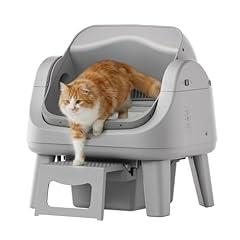
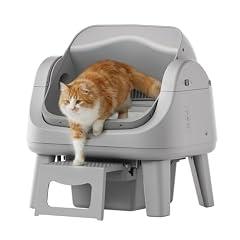
The PetPivot AS12 is a corded, open-top automatic litter box that rotates a litter chamber to separate clumped waste into a lined 8 L waste container. PetPivot specifies 24 W power use, a 5.5 L litter capacity, a 12.4-inch entrance height, and compatibility with small-particle clumping mineral or bentonite litter. Long-strip tofu and crystal litters are excluded. Its most important safety features are manufacturer-stated. PetPivot documents sensor alerts, automatic and manual cleaning modes, and a restriction against automatic use by cats under 3 lb, younger than 6 months, pregnant, or nursing. The chamber and litter bed are removable and washable. However, no accessible independent obstruction, pinch-force, sensor-failure, leak, or long-duration reliability test for this exact product was located. No current model-matched UL, ETL, or CSA electrical listing was located in the public certification registers reviewed.
What works
- The official instructions give a specific 3 lb and 6-month minimum for automatic operation, with manual mode for excluded cats.
- The removable litter chamber and litter bed can be rinsed and brushed, which supports periodic deep cleaning.
- The lined 8 L waste container and retaining ring are designed to reduce direct waste contact during emptying.
- It uses local button controls, with no app, Wi-Fi setup, camera, or cloud account identified.
What does not
- The sensor and anti-pinch system is manufacturer-stated. No independent test report was located for obstruction, reversal, re-entry, low-weight cats, or sensor failure.
- No exact-model U.S. electrical or fire-safety listing was located in the public UL, ETL, or CSA directories reviewed.
- The 12.4-inch stated entry height may still be difficult for some arthritic, injured, or very small cats, even with the supplied step.
- The manual requires monthly sensor wiping because litter dust can cause false detections. Owner reports also describe waste-drawer lockouts, sticking litter, and cycles needing intervention.
- Waste bags and a replaceable litter mat create recurring material use. No public repair-parts catalog, electronics recycling program, or end-of-life guidance was located.
Who is it for
This product fits a household with healthy adult cats over PetPivot's stated 3 lb and 6-month minimum, especially cats that prefer an open litter area over a fully enclosed box. It is most practical for an owner who can use fine clumping mineral or bentonite litter, empty the lined drawer on schedule, wipe sensors monthly, and keep a conventional backup box available during cleaning or troubleshooting. Local controls suit someone who does not want an app-connected appliance.
Who is it not for
It is not for kittens under 6 months or under 3 lb, or for pregnant and nursing cats, because PetPivot directs owners to disable automatic cleaning for those cats. It is also a cautious fit for cats with arthritis, injury, severe mobility limits, or strong fear of moving appliances, since the stated entrance is 12.4 inches high and automatic motion can be intimidating. Households unable to monitor a motorized box, clear jams, or maintain a backup litter box should not rely on it as the sole toilet.
Integrity
The accessible official guidance identifies a 24 W, 12 V DC product with a removable washable chamber and litter bed. These washable parts can reduce the need for disposable litter trays, but the system still uses lined waste bags and a replaceable litter mat. PetPivot provides a 12-month warranty, while consumables and accessories are excluded. Public repair-parts, electronics-recycling, and end-of-life programs for this product were not located. The health issue that needs the most caution is evidence quality. PetPivot specifies a minimum 3 lb weight and 6-month age for automatic operation, and it advises manual mode for smaller, younger, pregnant, or nursing cats. The manual also says litter dust can interfere with sensor operation, requiring monthly wiping. No exact-product recall was located in the reviewed U.S. CPSC sources, but no independent obstruction or electrical-safety certification evidence was located either. No fragrance, ozone, ionizer, health-monitoring, camera, or app-data feature was identified.

Neakasa M1 Self-Cleaning Cat Litter Box
Overview
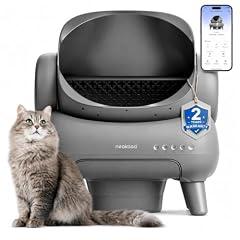
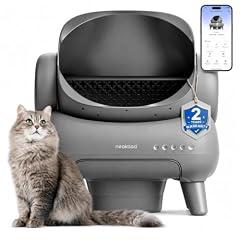
This is a 22.8-pound app-connected, open-top automatic litter box. It rotates the litter chamber to separate clumps into an 11.23 L waste drawer, while the stated 7.17 L litter chamber uses fast-clumping granular litter. Neakasa states that the body uses PP, ABS, and POM plastics, supports cats from 2.2 to about 33 pounds, and has a 13.86-inch entry height. The most useful independent evidence is a 14-day M1 Plus test with two cats. It recorded 74 uses, 72 cleaning cycles, no reported error or blockage, and ten successful obstruction checks. The safety design remains sensor-dependent, however, and no accessible exact-model NRTL electrical-safety listing or accredited mechanical safety report was located. Neakasa provides a two-year limited warranty and says the box continues its prior settings without internet, though app activity updates stop offline.
What works
- Independent testing found reliable cleaning over 14 days, with no reported blockage, false start, or operating error.
- The open layout gave both test cats clear headroom and was accepted from the start in a two-cat trial.
- Independent obstruction checks found that cleaning did not start when a hand or test weight was in the chamber.
- The waste drawer uses a pull-and-wrap closure, and independent testing found good everyday odor control without added fragrance.
- The manufacturer says ordinary fitted bags can be used, rather than requiring proprietary bags.
What does not
- The 13.86-inch entry is high. Independent testing found it difficult for older or mobility-limited cats without an added step.
- The manufacturer claims 100 percent freshness, no trapping risk, and 95 percent leak prevention, but accessible independent evidence does not substantiate those absolute or quantified claims.
- Independent reviewers and user reports describe urine residue near the sieve or liner seam, plus occasional waste-bin full alerts that can stop access until corrected.
- No accessible exact-model UL, ETL, or CSA listing was located for the litter box and supplied adapter. FCC authorization for wireless equipment does not establish electrical or fire safety.
- Usage and weight observations are not supported by a veterinary validation study, so app data should not be treated as diagnosis.
Who is it for
This suits a household with one or more adult cats that already tolerate an open litter area, use fine fast-clumping litter, and can comfortably clear a 13.86-inch entry. It is most practical for people who want automatic clump removal but can still inspect the waste drawer, refill litter, empty bags, and perform regular deep cleaning. The independent two-cat trial supports its usefulness where an open design and routine cleaning reliability matter. A separate conventional litter box remains prudent during transition and troubleshooting.
Who is it not for
It is not well suited to kittens under 2.2 pounds unless automatic cleaning is disabled in Kitten Mode. It also needs caution in homes with senior, arthritic, injured, or short-legged cats because the entry is high without an optional step. Avoid relying on it as the only box when away from home, since waste-bin alerts or faults can interrupt access. It is also a poor fit for households needing a verified NRTL electrical listing, validated health tracking, or completely evidence-backed leak prevention.
Integrity
The open chamber offers an easier escape route than a fully enclosed rotating box, and an independent M1 Plus test found its obstruction checks stopped cleaning in all ten attempts. Neakasa also specifies Kitten Mode for cats under 2.2 pounds, pregnant cats, and nursing cats. Still, the product's safety case relies largely on manufacturer sensor and geometry claims. No accessible accredited safety test, ISO risk assessment, or exact-model U.S. electrical listing was located. No U.S. CPSC recall for Neakasa litter boxes was located in the review work. The box is predominantly PP, ABS, and POM plastic, uses electricity, and generates bagged waste. Its two-year warranty and stated compatibility with fitted nonproprietary bags reduce some replacement pressure, but the product remains an electronic appliance with disposable bags and no identified recycling or take-back program. Odor control is based on sealing and bag closure, not an ozone or ionization feature, so no electronic air-treatment exposure claim was identified.
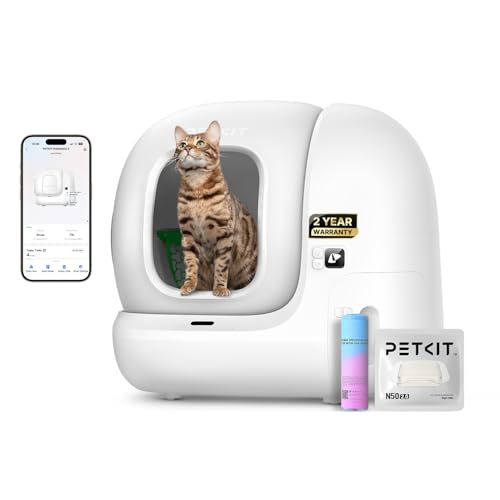
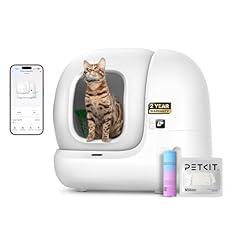
PETKIT PuraMax 2 Self-Cleaning Cat Litter Box
Overview
This is a 22-pound, app-connected automatic litter box with a rotating 76-liter cylinder, a 7-liter waste bin, and a low 7.87-inch entry. It runs on 12V power and uses Wi-Fi and Bluetooth. PETKIT states that it accepts cats from 3.3 to 22 pounds, although its manual separately says cats younger than six months are not recommended. Its most consequential design feature is an always-open entry during rotation, backed by PETKIT's stated 11-sensor system. An independent hands-on review found that daily scooping worked and that the tester's smaller cats used it, while reporting difficult deep cleaning and poor litter-emptying performance. PETKIT also sells an N50 scent-containing waste-bin deodorizer with a disclosed ingredient list, but its odor-removal and safety claims were not backed by accessible independent emissions testing. No exact-model U.S. NRTL electrical listing was located during verification.
What works
- An independent weeks-long hands-on review found the automatic daily scooping worked as intended.
- The rotating cylinder is designed to retain an open exit during cleaning, which is a safer geometry than a fully enclosed rotating chamber. This is manufacturer-stated.
- The product has detachable cylinder components that PETKIT says can be washed, while the powered base is wiped only.
- It can continue operating to preset settings without a network connection, according to PETKIT.
- The U.S. warranty policy provides two years of coverage for eligible purchases from January 1, 2025 onward.
What does not
- No current exact-model UL, ETL, or CSA electrical safety listing was located, so independent U.S. electrical and fire certification is unverified.
- There is no accessible independent obstruction, stop-force, reversal, or sensor-failure test for the exact product.
- Independent testing found deep cleaning laborious, with the litter-emptying accessory leaving substantial litter behind.
- Independent review feedback includes reports of sensor faults, leaks, and larger cats declining the box. These reports are not controlled failure-rate evidence, but they make fit and maintenance important.
- PETKIT markets usage and weight data as able to identify urinary abnormalities, but no exact-product clinical validation, accuracy limits, or veterinary reference comparison was located.
Who is it for
It suits a household with one or more adult cats within PETKIT's stated 3.3 to 22-pound range, a hard and level installation surface, and an owner who wants routine scooping automated while retaining manual oversight. It is more appropriate for cats that already tolerate covered or mechanical litter equipment and for owners willing to clean removable parts, inspect the base for residue, replace bags and deodorizer consumables, and keep a conventional backup box available during adjustment or faults.
Who is it not for
It is not appropriate for kittens under six months, cats below 3.3 pounds, or cats over the stated 22-pound limit. Avoid it for cats that are easily frightened by movement or have already shown litter-box avoidance, unless an owner can introduce it slowly while maintaining a familiar open box. It is also a poor fit for carpeted or unstable placement, high-side urinators where leakage risk is a concern, and households that require independently listed electrical safety or clinically validated health monitoring.
Integrity
The product uses ABS, PP, TPE, and silicone components, according to PETKIT. Its removable cylinder, liner, sifter, and litter-removal pieces can be washed, which can support routine cleaning, but the powered base must not be rinsed. PETKIT offers replacement accessories and gives eligible U.S. purchases a two-year limited warranty. No product recall was located in the CPSC recall search during verification. Ongoing waste includes disposable bin bags and an N50 deodorizer replaced about monthly. N50 contains water, gellan gum, seaweed-derived ingredients, inorganic salt, amino acids, persimmon extract, solubilizer, and added fragrance. PETKIT calls it non-toxic and claims at least 98 percent odor removal, but no independent emissions, fragrance-exposure, or odor-performance test for this product setup was located. The product does not have a camera, but the app's declared data practices include device identifiers, usage data, diagnostics, and coarse location.

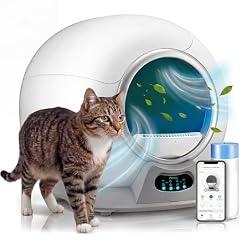
PetCove Self Cleaning Automatic Cat Litter Box
Overview
This is a compact, plastic automatic litter box that sifts clumping litter after a cat leaves, then deposits waste into a bagged drawer. The manufacturer describes a rotating or roll-sifting cleaning system, a removable washable drum, app control over Wi-Fi, a sealed 13L waste drawer, and a stated maximum cat weight of 17 pounds. Safety and odor claims are primarily manufacturer-stated. Petcove describes infrared and anti-pinch sensing, but no accessible independent obstruction, reversal, low-weight-cat, or sensor-failure test report was found for this product. The manufacturer also says it has passed UL, ASTM, and FCC testing, yet no model-matched NRTL electrical listing certificate was located in the public UL, ETL, or CSA directories. Its odor system is described as negative-ion treatment with a carbon filter, without an accessible emissions report.
What works
- The removable drum is manufacturer-described as washable, giving owners access to the main litter-contact surface for periodic deep cleaning.
- A sealed, bagged waste drawer is intended to reduce direct contact with collected waste during emptying, although leak performance was not independently tested.
- The product has physical controls and can run cleaning cycles without app use, so basic operation is not wholly cloud-dependent.
- The app listing says data are encrypted in transit and that users can request deletion of collected data.
What does not
- No independent, model-specific obstruction or anti-pinch testing was found, so sensor claims do not prove fail-safe protection during re-entry or failures.
- The stated UL, ASTM, and FCC certification language was not supported by an accessible exact-product certificate or public NRTL listing.
- Negative-ion odor treatment has no accessible ozone or volatile-emissions test report, and no CARB air-cleaner certification was located.
- The manufacturer states a 17-pound maximum cat weight, but does not provide a clear minimum automatic-use weight, internal usable dimensions, or independent cat-acceptance testing.
Who is it for
This product fits an adult-cat household that wants less routine scooping, uses clumping litter, and can commit to checking the waste drawer, sensors, and litter level regularly. It is most suitable where the cats are comfortably below the stated 17-pound maximum and can be observed while adapting to the movement and sound of the cleaning cycle. It also suits owners who value a washable removable drum and want manual controls available alongside app scheduling and notifications.
Who is it not for
It is not a suitable unattended automatic option for kittens, very small cats, cats near or over the stated 17-pound limit, or cats that show fear, pain, mobility limits, or litter-box avoidance around enclosed moving equipment. Households seeking independently documented pinch testing, a publicly verifiable U.S. electrical safety listing, or tested emissions data should not treat the manufacturer claims as substitutes for that evidence. It also may not suit privacy-sensitive users who do not want an app collecting account, location, usage, and diagnostic information.
Integrity
The central health issue is evidence quality. The manufacturer describes several sensors and anti-pinch protection, but independent testing of realistic obstructions, re-entry, sensor faults, and low-weight animals was not found. The product is intended for cats up to 17 pounds. Introduce it gradually and retain an accessible conventional box if a cat reacts negatively to its noise or motion. The odor system combines sealed waste storage, a carbon filter, and manufacturer-described negative-ion treatment. No exact-product ozone or volatile-emissions report was found. Petcove also claims UL, ASTM, and FCC testing, but an exact-product electrical listing could not be confirmed in the major public NRTL directories. No matching CPSC recall was located in the public recall search. The washable drum may extend use, while bagged waste disposal creates recurring plastic waste and the manual does not identify user-replaceable internal repair parts.

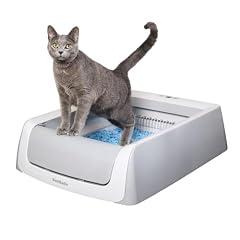
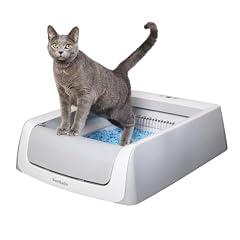
PetSafe ScoopFree Crystal Pro Self-Cleaning Litterbox
Overview
This is an uncovered, plug-in automatic litter box with a stainless-steel rake, a covered waste trap, and a disposable tray prefilled with non-clumping silica crystal litter. PetSafe states that the uncovered unit measures 27.6 by 19.1 by 6.2 inches, is intended for cats under 15 pounds, and begins a cleaning cycle 20 minutes after the cat leaves. The safety design relies on occupancy sensors and a delayed cycle. The manual specifically says to leave it unplugged for kittens younger than 6 months. Independent hands-on testing of the same ScoopFree rake-and-crystal system found quiet, generally consistent operation and good fecal-odor containment, but much shorter tray life with two cats than the brand's up-to-30-day single-cat claim. The health display is a cycle counter, not a diagnostic tool or a measurement of weight, urine, or stool quality.
What works
- Independent hands-on testing found the simple rake mechanism quiet and consistent over extended use.
- The covered waste trap contained fecal odor well in independent testing.
- The low 6.2-inch uncovered profile can make entry easier for many adult cats.
- Normal operation is local, with no app, account, camera, or cloud service required.
- PetSafe provides a clear kitten precaution, instructing owners to keep the unit unplugged until 6 months of age.
What does not
- No accessible exact-model NRTL electrical listing or independent obstruction, force, reversal, and sensor-failure test report was located.
- The product uses an exposed moving rake. Sensors and a 20-minute delay reduce risk, but they do not establish fail-safe protection under every re-entry or sensor-failure condition.
- The box is stated for cats under 15 pounds, and PetSafe does not publish the usable internal litter-bed dimensions needed to assess turning room.
- The disposable crystal trays create recurring waste and the instructions restrict use to PetSafe trays and litter.
- The health counter increments when a rake cycle completes, including a manually initiated cycle, so it cannot reliably equal actual litter-box visits.
Who is it for
This suits a household with one healthy adult cat under 15 pounds that already accepts silica crystal litter, and an owner who wants less daily scooping without an app-connected appliance. Its shallow, open format may be easier for some mobile adult cats to enter than taller enclosed units. It is most practical where the owner can check the litter daily, replace a tray early when odor or saturation develops, and keep a conventional backup box available during acclimation, cleaning, or a rake fault.
Who is it not for
It is not a suitable unattended solution for kittens under 6 months because PetSafe instructs owners to leave it unplugged at that age. It also warrants caution for cats above the stated 15-pound limit, cats with mobility limitations that need individually assessed access, cats that reject crystal litter, or cats with soft stool that can adhere to the rake. Multi-cat homes, homes needing a large preferred litter area, and owners who cannot inspect the rake track and sensors should use a setup with more capacity and a backup litter box.
Integrity
PetSafe identifies the litter as amorphous silica gel and describes it as non-clumping. The product has no ionizer, ozone generator, fragrance diffuser, camera, or app-based monitoring hardware. That avoids electronic air-treatment emissions and connected-data exposure. The open unit also uses a delayed sensor-triggered rake cycle, but no accessible independent test was found that documents safe stopping or reversal with realistic obstructions, very light cats, re-entry during movement, or sensor failure. The tray uses a cardboard base with a plastic leak barrier and a disposal lid. This can reduce direct contact with waste, and independent testing found the covered trap helpful for fecal odor. The tradeoff is material disposal. The product requires disposable crystal trays, and the manufacturer says a single tray may last up to 30 days for one cat. Independent testing found saturation and odor developed far earlier with two cats. No recall or regulator warning for this exact product was located in the reviewed U.S. sources.

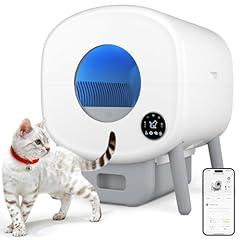
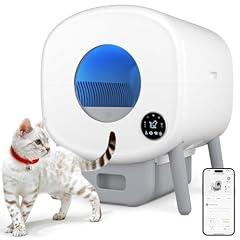
Cumrige Self Cleaning Automatic Cat Litter Box
Overview
The Cumrige M2 is a covered, rotating-drum automatic litter box intended for clumping litter. Manufacturer materials describe a 95 L litter drum, a 15 L waste drawer, 2.4 GHz Wi-Fi connection through the Tuya Smart app, and onboard controls. The published product materials describe automatic cleaning after a cat leaves, while allowing manual operation without the app. The safety case rests mainly on manufacturer documentation. Its manual describes gravity, entrance infrared, waste-chamber infrared, and anti-pinch protections, and excludes kittens under three months. It also shows that some sensors are not active during the emptying mode. No accessible independent obstruction, stop-force, reversal, or long-duration reliability test for this exact product was located. Published dimensions and weights also vary across the manufacturer page and manual, which reduces confidence in the precision of its specifications.
What works
- Manufacturer documentation provides a specific kitten exclusion, rather than presenting the product as suitable for every cat.
- The manual describes removable drum and waste-drawer parts, which should make periodic deep cleaning more practical.
- Automatic cleaning can be used from the unit itself, so ordinary cleaning does not depend on app access.
- The manual describes multiple sensor types and an anti-pinch function, though these protections were not independently tested.
What does not
- No model-matched UL, ETL, or CSA listing, or accessible independent electrical test certificate, was found for the complete product and supplied adapter.
- No independent test was located for entrapment resistance, obstruction stopping, sensor failures, leaks, odor control, noise, or sustained cleaning reliability.
- The stated safety system is incomplete in emptying mode, where the manual lists gravity and waste-chamber sensing as unsupported.
- The deodorizing or aromatherapy feature is not technically described, and no ozone or volatile-emissions test was located.
- The manual says Tuya does not collect location or personal data, but Tuya's App Store privacy disclosure lists location, contact information, identifiers, and usage data among data that may be collected.
Who is it for
This product fits an adult-cat household that wants a covered automatic box with manual controls, has reliable 2.4 GHz Wi-Fi if remote functions are wanted, and is prepared to inspect the machine during introduction and clean it regularly. It is more suitable where the stated 95 L drum and enclosed waste drawer are useful for reducing routine scooping. The household should keep a conventional backup litter box available while confirming that each cat accepts the noise, motion, entry, and cleaning pattern.
Who is it not for
It is not well suited to kittens younger than three months, cats that are very small, mobility-limited, easily startled by moving enclosed equipment, or cats with an existing history of litter-box avoidance. It also does not suit households that require independently verified electrical listing, published obstruction-force testing, or privacy-minimizing connected equipment. People unable to inspect cleaning cycles, diagnose sensor faults, or maintain a backup litter box should avoid relying on it as the household's only toilet.
Integrity
The M2 manual identifies ABS, PP, and POM in its construction, while other published product information describes PP, so the exact material breakdown is not consistently presented. Its waste system uses a removable drawer and manufacturer-stated leak-control design, but no independent leak, residue, odor, or emissions testing was found. The aromatherapy or deodorizing component is insufficiently described to determine whether it uses fragrance alone or an electronic air-treatment method. EPA guidance cautions that some electronic air cleaners can emit ozone or other irritants. No Cumrige M2 recall was identified in the CPSC public recall search reviewed. That absence is not independent safety clearance. The product uses electricity, electronics, a supplied adapter, disposable waste bags, and an app-connected control system. No accessible spare-parts catalog, repair program, electronics take-back pathway, or end-of-life recycling program was found. A one-year warranty is stated in the catalog record, but long-term repair support was not independently documented.

PETLIBRO Smart Litter Box with AI Analysis
Overview
This is a 33-pound, plug-in automatic litter box with an open-top litter basket, removable step, waste drawer, fan and carbon deodorizer. It is intended for clumping clay, tofu, or mixed litter and is sized at 23.3 by 22.5 by 28.1 inches. The manufacturer states that the sealed 2.9-gallon drawer can hold up to one week of waste from two cats, and that the unit supports cats from 2.2 to 22 pounds. Its defining feature is a camera-assisted cleaning system that combines weight, infrared motion, and visual sensing. The manufacturer reports a 0.88-pound sensor threshold and contact reversal, but has not published an independent obstruction-test report. An independent multiweek hands-on review found strong odor control and easy cleanup, while retailer and owner reports also describe occasional false sensor stops and incomplete cycles.
What works
- Independent hands-on testing found the removable basket and waste system easy to clean.
- Independent test cats accepted the wide, open-top entry quickly, which may be less intimidating than a fully enclosed layout.
- The manufacturer provides clear exclusions for cats under 6 months, under 2.2 pounds, and pregnant or nursing cats.
- The companion app can be used without a cloud subscription for visit logs and important activity alerts, according to the manufacturer.
- The manufacturer publishes a support period through December 31, 2028, and includes a two-year product warranty.
What does not
- No current exact-model UL, ETL, or CSA electrical-safety listing was located in the public certification registers checked.
- The maker's extensive safety testing claims are not accompanied by a public independent report with obstruction method, force, sensor-failure results, or test weights.
- Retailer reviews and owner reports describe false detection, paused cycles, and occasional cleaning interruptions. These reports are not proof of a universal defect, but they make supervision and routine checks important.
- Waste liners and carbon deodorizer filters are recurring consumables, and no public lifecycle or end-of-life recycling program was identified.
- AI waste interpretation is presented as an early-warning tool, but no public veterinary validation study or error-rate disclosure was found.
Who is it for
This product fits an indoor household with one or two adult cats that are comfortably above 2.2 pounds, can use a step if needed, and tolerate a motorized litter box after a gradual introduction. It is most relevant for owners who want reduced scooping, a covered waste drawer, visit logs, and optional camera review, while remaining available to inspect the box and respond to alerts. The large footprint, 33-pound weight, app connection, and continuing liner and filter use suit a stable home setup rather than frequent moving.
Who is it not for
It is not suited to kittens under 6 months, cats under 2.2 pounds, or pregnant or nursing cats when automatic cleaning is enabled, because the manufacturer specifically instructs owners to use manual cleaning for those cats. It also warrants caution for highly anxious cats, cats with mobility limitations that do not use the supplied step comfortably, or households that cannot monitor interruptions. Buyers who require publicly verified electrical listing, published independent pinch-force testing, or clinically validated health analysis will need evidence this product does not currently provide.
Integrity
The safety design combines weight, infrared motion, and camera checks, and the manufacturer says the mechanism pauses when a cat is detected. That is a useful layered approach, but it is not equivalent to publicly available independent obstruction testing. The manufacturer also requires manual cleaning for very young, very small, pregnant, and nursing cats. No exact-model U.S. electrical listing from UL, ETL, or CSA was located in the checked public directories. The box is made primarily from ABS and PP plastic and uses disposable waste-drawer liners plus replaceable litter filters and a carbon deodorizer. Those consumables reduce direct waste contact but add ongoing material waste. Its cloud features are optional for basic use. Petlibro says AI recognition is processed on-device, while subscribed videos and images are stored in cloud services. Its privacy policy lists account deletion controls and a published security-support date of December 31, 2028 for this model.

Mimfam Self-Cleaning Automatic Litter Box
Overview
This is a plug-in, open-top automatic litter box with a rotating litter chamber that sifts clumping waste into a lined drawer. An externally hosted exact-product manual states 24 W, DC 12 V and 2 A operation, a 6.5 L litter capacity, a 10 L waste container, and a 13.18-inch entry height. It specifies clumping mineral or bentonite litter, excludes long-strip tofu and crystal litter, and allows the litter chamber and litter bed to be removed and rinsed. The safety case is the defining issue. The manual claims four pairs of infrared sensors and three Hall sensors, while limiting automatic operation to cats over 3 pounds and older than six months. A February 24, 2026 federal court order identifies the same AS11 design sold as PetPivot Autoscooper 11 in a pending case alleging a fatal entrapment on January 27, 2025. Those are allegations accepted for the dismissal motion, not a court finding of defect. No model-matched NRTL electrical listing, obstruction test, or independent safety report was located.
What works
- Manual mode can prevent automatic cycles during acclimation or for cats excluded from automatic use, according to the manual.
- The removable litter chamber and litter bed can be rinsed, giving owners access for monthly deep cleaning, according to the manual.
- A separate lined waste drawer can reduce direct contact with used litter during disposal, according to the manual.
- The product has no app, camera, health tracking, fragrance, ionizer, or ozone feature documented in the available materials.
What does not
- The same AS11 design is involved in a pending federal lawsuit alleging fatal entrapment. The allegation is not an adjudicated finding, but it is a serious safety signal for a sensor-dependent rotating mechanism.
- No exact-product UL, ETL, or CSA listing, independent obstruction test, or ISO 12100 risk assessment was located.
- Recent retailer reviews report wheel jams, sensor obstruction, missed clumps, odor, and urine leaks in some households. These are user reports, not controlled testing.
- The 13.18-inch entry and reported limited interior room can be difficult for kittens, mobility-limited cats, and larger cats. The manual also excludes automatic use for cats under 3 pounds, under six months, pregnant, or nursing.
- Operation requires clumping mineral or bentonite litter and disposable waste liners, adding recurring material use.
Who is it for
Functionally, this product fits a household with an adult, mobile small or medium cat that already accepts clumping mineral litter, and an owner who can inspect the unit daily, clean sensors and moving parts, and keep a conventional backup box available. Its manual mode is relevant for gradual acclimation because it lets the owner control when a cleaning cycle starts. The removable chamber and lined drawer may also suit someone able to perform regular deep cleaning and liner changes. It is not a hands-off appliance.
Who is it not for
This product is not suited to kittens under six months, cats under 3 pounds, pregnant or nursing cats, or households that cannot reliably keep automatic mode disabled for those animals. It is also a poor fit for large cats, cats with arthritis or reduced jumping ability, high-spraying cats, or cats that avoid noisy or moving toileting equipment. Households needing independently demonstrated anti-entrapment protection, third-party electrical certification, or safe unattended operation should treat the missing evidence and the pending AS11 safety allegation as especially important.
Integrity
The manual provides useful operating limits, including a more-than-3-pound and older-than-six-month threshold for automatic mode, plus instructions to use manual mode for smaller, young, pregnant, or nursing cats. It also permits chamber removal for washing, but prohibits washing the powered base. Its claimed sensor system is manufacturer-stated only, and no independent stop, reversal, pinch-force, or sensor-failure testing was found. The pending federal case concerning the same AS11 design alleges a fatal entrapment, although no court has found the allegation proven. The product uses a low-voltage 24 W power system and has no documented ionizer, ozone generator, fragrance system, camera, or app. Its environmental burden includes disposable waste liners, clumping litter, plastic parts, and electronics. No repair-parts catalog, take-back program, or end-of-life plan was located. At end of life, the electronic unit should be routed through an R2 or e-Stewards certified recycler where available.

PetPivot Self-Cleaning Cat Litter Box
Overview
This is a plug-in, open-top automatic litter box with a rotating litter chamber, a separate lined waste container, and button-controlled automatic or manual cleaning. The available AS11 manual specifies 24W power use, a 6.5L litter capacity, a 10L waste container, a 13.18-inch entry height, and use with clumping mineral or bentonite litter. It excludes crystal and long-strip tofu litter. The manual states that infrared and Hall sensors are used during cycling, but no accessible independent obstruction, force, reversal, or sensor-failure test was located. A February 24, 2026 federal court order recounts allegations that an AS11 cat was fatally trapped during operation. The order did not determine liability or establish cause. The manual also says automatic mode requires cats over 3 pounds and older than six months, and it resets to automatic mode after power is unplugged.
What works
- The removable litter chamber and litter bed can be rinsed, with a documented monthly deep-cleaning routine.
- A 10L lined waste container can reduce direct handling of used litter, according to the product manual.
- Manual mode can disable automatic cleaning for kittens, very small cats, pregnant cats, and nursing cats, according to the manual.
- The manual provides sensor-cleaning and motor-jam troubleshooting steps, plus a 12-month repair or replacement warranty.
What does not
- A federal court order describes a fatal-trapping allegation involving PetPivot's AS11 model. This is an allegation, not a finding of liability, but it is a serious safety signal.
- No model-matched NRTL electrical-safety listing or independent obstruction and stop-test report was located.
- Recent retailer reviews describe wheel jams, sensor blockage, residual waste, urine leaks, and failed cleaning cycles. These are user reports, not controlled testing.
- The 13.18-inch entry is high for some senior or mobility-limited cats, and several retailer reviews describe limited room for larger cats.
- The unit uses disposable waste liners, and the warranty excludes consumables and accessories.
Who is it for
This format is most suited to a household with an adult cat above the manual's 3-pound and six-month minimum, using compatible clumping mineral or bentonite litter. It is more practical for an owner who can place it on a stable hard floor, inspect the drawer and sensors daily, and perform the stated monthly deep clean. Given the unresolved safety concern, the cautious use case is an owner who keeps automatic cycling disabled or observes manual cleaning cycles rather than relying on unattended operation.
Who is it not for
It is not suited to kittens under six months, cats under 3 pounds, pregnant or nursing cats when automatic cleaning is enabled, or any household needing unattended cycling. Avoid it for cats with impaired mobility or difficulty stepping over a 13.18-inch entry. Larger cats, high-spraying cats, and cats that eliminate near the front or sides also warrant caution because retailer reports describe cramped use, leaks, litter buildup, and sensor or wheel problems. It is also unsuitable for tofu or crystal litter.
Integrity
The main health concern is mechanical safety. The manual describes infrared and Hall sensors and directs owners to use manual mode for small, young, pregnant, or nursing cats. However, no independent safety test for this product's obstruction response or failure modes was located. A federal court order dated February 24, 2026 recounts allegations that a cat was fatally trapped in an AS11 unit. Those allegations remain distinct from a finding of liability, but they make unattended automatic use a material concern. No model-matched UL, ETL, or CSA electrical listing was found in accessible registers. The unit uses disposable waste liners, though the chamber and litter bed are washable and the manual calls for monthly cleaning. A 12-month warranty covers repair or replacement for qualifying faults, but excludes consumables and accessories. No air-treatment, fragrance, ozone, ionization, health-monitoring, camera, or app function was documented for this product.

Otoging Self-Cleaning Cat Litter Box
Overview
This product is a plug-in, open-top automated litter box in polypropylene plastic. Independent retailer listings corroborate the stated 21.25 by 20.21 by 24.1 inch footprint, 21.3 pound weight, 6 kg litter capacity, 10 L waste container, no-app operation, and one-year manufacturer warranty. It is intended to automate routine waste removal without Wi-Fi, an account, or remote controls. The most defining limitation is evidence quality. No accessible manufacturer manual, safety-risk assessment, model-matched electrical listing, or laboratory obstruction test was located. One affiliate-supported hands-on article reports that its sensor check stopped the cycle, but it does not disclose a repeatable protocol, test loads, force measurements, or failure testing. The same article reports soft stool sticking to the grate, occasional small clumps returning to the litter area, and some longer-term mechanical concerns.
What works
- Offline controls avoid app setup, account creation, and household data sharing.
- The open-top format gives cats visual access rather than requiring entry through an enclosed portal.
- A 10 L waste container and 6 kg litter capacity are concrete manufacturer-stated capacities.
- A one-year manufacturer warranty is stated in independent retailer listings.
What does not
- No model-matched UL, ETL, or CSA electrical-safety listing was located. This is missing safety evidence, not a documented electrical failure.
- No accessible manual specifies a minimum cat weight, kitten exclusion, internal usable space, compatible litter, cleaning procedure, or sensor-failure response.
- The only located hands-on report is affiliate-supported and lacks a disclosed safety or durability test protocol.
- That report describes waste sticking, small clumps returning to the litter area, and some longer-term mechanical concerns. These are reported performance issues, not a recall finding.
Who is it for
This product suits a household with an adult cat that already tolerates an open litter area, and an owner who specifically wants local push-button operation rather than a phone app. Its stated 10 L waste container and 6 kg litter capacity may reduce refill and emptying frequency for routine use. It is most appropriate where the owner can observe early use, maintain a backup litter box during transition, and manually clean residue when needed. The open top may be less visually intimidating for cats that avoid enclosed spaces.
Who is it not for
It is not a strong fit for kittens, very small cats, cats with mobility limitations, or households unable to supervise initial cleaning cycles, because no accessible source establishes a minimum safe weight, entry height, or exact sensor performance under obstruction. Avoid relying on it as the sole box for a cat with litter-box avoidance, diarrhea, soft stool, or medical monitoring needs. The available hands-on report notes residue on the grate and occasional clump return. Buyers needing independently listed electrical safety, documented long-term testing, or readily available replacement parts need more documentation than was found.
Integrity
No exact-product recall or CPSC warning was located in the sources checked, but that does not substitute for a documented mechanical hazard analysis or obstruction test. The product is described as polypropylene, with no stated ozone, ionizer, fragrance, camera, app, or health-monitoring feature. Avoiding app connectivity reduces data collection exposure, but it also means there is no visit or weight record for veterinary observation. The reported polypropylene body may be durable, but no spare-parts catalog, repair instructions, power rating, replacement-bag specification, or end-of-life program was found. The stated one-year warranty offers limited support, while the lack of repair documentation leaves product lifespan uncertain. At end of life, the powered unit should be handled through an appropriate electronics recycling route rather than treated as ordinary household waste.