
10 Best Auto Spray Wax
 Daniel Kenitz
Please note that we participate in affiliate marketing programs. When you purchase through links on our site, we may earn a commission. As an Amazon Associate we earn from qualifying purchases. This comes at no additional cost to you and helps support the resources required to provide valuable content.Advertising Disclosure
Top-rated Auto Spray Wax Comparison
1

2
4
5
6
7
8
9
Auto spray wax: what matters before you buy
Auto spray waxes and quick-detail sprays are usually finishing products: they spread a thin film that can improve gloss, slickness, and water behavior, and some are also sold for light-soil waterless cleaning. Those are different jobs. A wax or sealant intended for a washed surface should not automatically be treated as a wash, while a waterless product should explain what level of dirt it can safely handle and how to reduce the chance of dragging grit across paint.
The useful distinctions are in the directions and the evidence, not the headline terms. Look for panel-by-panel instructions, cool or shaded-surface guidance, clean microfiber requirements, separate application and buffing towels, and explicit limits for mud, sand, salt, grit, and heavy road film. A credible waterless-cleaning claim should be limited to light soil and describe towel rotation or other soil-control technique. None of the supplied products had public independent abrasion testing tied to a stated soil load, cloth type, substrate, method, and result, so waterless scratch-risk claims remain partly unverified.
Surface claims also need boundaries. “All surfaces,” “ceramic,” “graphene,” and “hydrophobic” do not establish compatibility with matte or satin paint, wraps, paint-protection film, specialty wheels, uncoated trim, interiors, or glass where visibility matters. A careful product names its intended substrates and excludes tires, tread, pedals, brakes, wiper blades, windshields, cameras, sensors, and other traction- or visibility-critical areas where slick residue could create a safety problem. Spot testing is useful, but it is not the same as independent compatibility testing.
Durability numbers are commonly overstated by context. Claims such as one month, six months, or one year may be manufacturer estimates rather than results from an independent laboratory, and reapplication directions can conflict with the headline duration. A substantiated protection claim would be tied to the exact product and production-equivalent formula, with stated conditions and relevant methods such as ASTM D4587 for UV-condensation exposure, ASTM D523 for gloss, ASTM D7334 for wettability, ASTM D4060 for abrasion, or ASTM D3359 for adhesion. No supplied product had public independent evidence covering all of those claimed outcomes.
For chemistry, start with a current, product-matched Safety Data Sheet. Sections 2, 3, 8, 9, 11, and 15 should align with the bottle and identify hazards, ingredients or concentration ranges, exposure controls, physical properties, health effects, and regulatory information. The responsible manufacturer or importer and emergency contact should be traceable. A low-VOC number should identify its basis and test method; “VOC-free” or “low VOC” marketing without a product-specific declaration is incomplete. California’s automotive wax, polish, sealant, and glaze rules are a relevant compliance benchmark, but a regulatory category is not independent proof of performance.
Environmental claims also need verification. Look for a current formula screen rather than relying on “eco-friendly,” “biodegradable,” or “non-toxic.” EPA Safer Choice, UL ECOLOGO, and SCS listings are recognizable forms of outside verification when the exact product is listed. Packaging claims should specify recycled content or refill arrangements, and disposal instructions should address leftover liquid and contaminated towels.
Recurring safety cautions are substantial: do not use these sprays on heavy grit, mud, sand, salt, or caked road film without first washing or rinsing; avoid mist inhalation and provide ventilation; and keep products off tires, brakes, pedals, tread, and visibility-critical glass. Several products had incomplete or conflicting SDS records, California warning labels, eye or skin irritation hazards, or aquatic-release concerns. The supplied reviews also include products with suspected carcinogen or reproductive-harm warnings, so a missing or outdated SDS should not be treated as evidence of a low-hazard formula.
Integrity
The scores below reflect the supplied reviews only. Higher scores indicate stronger documentation, clearer limits, or better-supported claims; they do not mean that a product is hazard-free or independently proven in every use.
HHealth & Safety
Chemical hazard and exposure profile
This measures disclosed skin, eye, inhalation, and fire risks, plus whether a current SDS matches the product. That matters because spray application can create mist and because waxes may contain solvents, fragrances, preservatives, or warning-listed chemicals. Higher-scoring products had current, product-matched hazard information; lower-scoring ones had missing, old, conflicting, or formula-mismatched SDS records.
Safe-use directions
This measures whether directions address ventilation, hot surfaces, shade, microfiber technique, first aid, and slick residue on driving-critical surfaces. For spray wax, practical panel limits can prevent streaking and misuse. Higher scores came from specific clean-surface, small-section, two-towel, or light-soil directions; lower scores reflected missing ventilation, first-aid, heavy-soil, or tire, brake, pedal, and windshield warnings.
Formula and supplier traceability
This measures whether the buyer can identify the responsible business, obtain a current product-specific SDS, and reach an emergency contact. Traceability matters when marketplace listings, bottle sizes, or formulas conflict. Higher scores generally had named manufacturers, addresses, phone numbers, and emergency contacts; lower scores had proprietary formulas, inaccessible documents, generic records, or weak supplier information.
EEvidence
Scratch-risk control for waterless use
This measures whether waterless claims are limited to light soil and supported by clean-microfiber technique and finish-damage testing. That distinction matters because wiping grit can scratch clearcoat. Higher scores came from explicit wash-first or light-dust limits, small panels, and towel rotation; lower scores came from broad waterless claims without soil limits. No supplied product had independent abrasion testing.
Surface compatibility and driving safety
This measures whether compatibility claims are bounded for paint, glass, trim, wheels, matte finishes, wraps, and paint-protection film, while excluding traction- and visibility-critical areas. Higher scores used narrower named-surface claims; lower scores relied on broad all-surface language. No supplied product had independent testing covering every claimed substrate, and several lacked clear exclusions for tires, brakes, pedals, or windshields.
Protection life
This measures whether gloss, water behavior, UV protection, wash count, and duration are proven on automotive finishes under stated conditions. A high score requires an independent report tied to the exact product and relevant methods such as ASTM D4587, D523, D7334, D4060, or D3359. Scores were generally limited because supplied products had manufacturer claims but no public independent durability reports.
Independent verification
This measures whether important safety, composition, environmental, and performance statements are checked by an accredited laboratory or credible certifier. Higher scores indicate more publicly checkable product-specific evidence, but the supplied reviews still found no broad third-party verification, EPA Safer Choice listing, UL ECOLOGO certification, or SCS certification for these products. Lower scores had unsupported claims or inaccessible documentation.
Honest, bounded claims
This measures whether terms such as ceramic, graphene, hydrophobic, scratch repair, UV protection, all-surface safety, and protection duration are qualified and supported. Higher scores used narrower descriptions or acknowledged limits, such as stating that deep scratches cannot be repaired or that waterless use is for light soil. Lower scores combined broad claims with conflicting duration, compatibility, or safety evidence.
EEcology
VOC and air-quality impact
This measures documented volatile-organic content and automotive-category compliance. It matters because spraying can add airborne emissions even when a product is water-based. Higher-scoring examples reported concrete values such as 0.11%, 0.8%, 2.5%, 2.95%, or 8 g/L, while lower scores lacked a product-specific declaration or relied on unsupported “VOC-free” language. None had independent VOC testing in the supplied evidence.
Environmental chemical profile
This measures disclosure and screening for persistent, bioaccumulative, aquatic-toxic, or intentionally added PFAS chemistry. It matters because spilled or washed-off detailer can reach waterways. Higher scores had more formula information or safer handling evidence; lower scores involved trade-secret ingredients, missing SDS data, or warnings such as long-lasting aquatic toxicity. No supplied product had complete independent formula screening.
Packaging and disposal impact
This measures refill or concentrate options, packaging waste, recycled-content evidence, and disposal guidance for unused liquid and contaminated towels. Gallon formats or reusable towels may reduce repeated small containers, but that is not proof of lower overall impact. Higher scores reflected larger or reusable formats and some disposal information; lower scores lacked verified recycled content, refill systems, or specific end-of-life guidance.
Full reviews

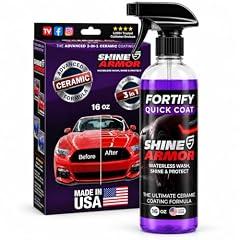
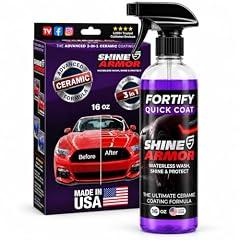
SHINE ARMOR Ceramic Coating Top Coat Spray
Overview
This is a 16-fluid-ounce trigger-spray automotive detailer sold as a waterless wash, paint sealant, and silica maintenance spray. The manufacturer directs users to spray it into a microfiber towel, spread an even layer over paint, wait one to two minutes, then buff with a clean towel. Its own directions also recommend a damp towel for initial cleaning. The product's central claims, including hydrophobic behavior, silica-based ceramic protection, and protection lasting up to six months, are manufacturer-stated. No public independent, product-specific durability report using automotive gloss, wetting, abrasion, adhesion, or UV testing was located. Two publicly available safety data sheets for similarly named Shine Armor Fortify products give materially different hazard classifications and supplier details. One identifies water, isopropyl alcohol, surfactant, polydimethylsiloxane, silicon dioxide, fragrance, and colorant, while another reports no hazardous ingredients at reportable concentrations. That inconsistency limits confidence that either document precisely matches every currently sold bottle.
What works
- A waterless spray-and-buff process can be practical for light-soil touch-ups where hose washing is unavailable, as manufacturer directions specify microfiber use and buffing.
- A product safety data sheet identifies the material as not considered a fire or explosion hazard, with a fire rating of zero.
- One available safety data sheet provides concrete first-aid steps for eye, skin, inhalation, and ingestion exposure, plus an emergency response contact.
- The manufacturer specifically advises against use on windshields, headlights, and taillights to reduce streak-related visibility problems.
What does not
- The public safety documents conflict on eye and ingestion hazards, supplier identity, and composition. This is a traceability concern, not proof that the product is highly hazardous.
- The manufacturer claims no water-based silicones, while one safety data sheet lists polydimethylsiloxane. That is a direct claim inconsistency.
- No independent, product-specific test report was located to substantiate the claimed six-month protection, hydrophobic performance, UV protection, scratch avoidance, or finish durability.
- Waterless-use directions encourage damp, clean microfiber towels but do not clearly limit use to lightly soiled paint or provide robust grit-removal guidance.
- Compatibility directions conflict. The manufacturer advises against glass, headlights, and taillights for streak prevention, yet also says it can be used on all motorcycle surfaces including leather and plastic.
Who is it for
This product suits an adult vehicle owner doing occasional light-dust or fresh-fingerprint touch-ups on conventional painted exterior panels, especially where access to a hose is limited. The 16-ounce spray format and microfiber-based routine fit a quick maintenance session rather than a full wash. It is most appropriate for someone willing to work in shade on a cool surface, use several clean towels, and treat the manufacturer’s water-beading and durability statements as unverified rather than guaranteed performance.
Who is it not for
It is not well suited to vehicles carrying road grit, mud, salt, sand, or abrasive contamination, because the available directions do not establish a sufficiently protective waterless-cleaning protocol for heavy soil. It is also unsuitable for users needing confirmed long-term coating durability, measured UV protection, or independently verified compatibility with matte paint, wraps, paint-protection film, leather, and interior surfaces. Avoid applying it to windshields, headlights, taillights, tires, brake parts, pedals, or other traction and visibility-critical surfaces.
Integrity
Available safety information indicates a water-based mixture with limited isopropyl alcohol, surfactant, polydimethylsiloxane, silicon dioxide, fragrance, and colorant in one Fortify document. That document classifies eye irritation and possible harm if swallowed, while a separate Fortify document says the material is not considered hazardous. Both call for keeping it away from children, avoiding eye contact, and following local disposal rules. Ventilation and washing after handling remain sensible precautions. The brand and reseller materials call the formula VOC compliant, biodegradable, non-toxic, and water-saving, but no independent VOC result, CARB compliance record, biodegradability test, PFAS screen, recycled-content documentation, or environmental certification was located. The identified safety document says the product’s environmental impact has not been fully investigated. The bottle is a conventional single-use trigger-spray package, and no refill option or verified recycled-content information was found. No relevant U.S. recall or regulator warning was located in the searched sources.

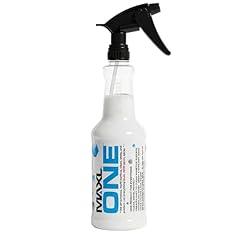
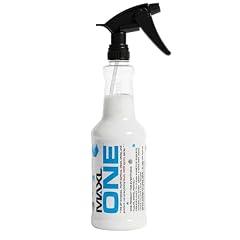
MAXLONE Car Spray with Triphene Technology
Overview
This is a 20-ounce, non-aerosol spray-and-wipe vehicle detailer sold for waterless cleaning, gloss, and a water-repelling finish. MAXL directs users to mist a cool, shaded panel and microfiber towel, wipe, then buff with a separate clean, dry microfiber. It also permits use as a drying aid on a wet vehicle. The most useful product-specific limit is manufacturer-stated, it is for light dust, pollen, fingerprints, and light road film. The same directions say to rinse and wash mud, sand, thick grime, or other abrasive contamination first. MAXL identifies its coating technology as Triphene and claims a 24 to 48 hour cure period, but the review found no publicly checkable, product-specific independent abrasion, durability, compatibility, or chemical-composition report.
What works
- The manufacturer provides concrete waterless-use limits, directing users to wash first when grit, mud, sand, or heavy grime is present.
- Directions call for clean, soft microfiber towels, towel changes when soiled, minimal wiping pressure, and a separate buffing towel.
- The bottle directions specify cool-surface, out-of-direct-sunlight application and a hidden-area compatibility test.
- A disclosed manufacturer contact location and phone number provide a basic route for product support.
What does not
- The manufacturer warns that the product may cause eye irritation, yet no current, product-specific SDS with composition, exposure controls, and transport details was publicly located.
- Directions say to work the product into tire treads. A coating on tread is a driving-safety concern, and the directions do not clearly exclude tire tread, pedals, brake components, or visibility-critical glass.
- Broad claims across paint, glass, trim, interiors, wheels, tires, wraps, and matte finishes are manufacturer-stated, without public independent compatibility testing for those substrates.
- Claims for hydrophobic performance, heat resistance, chemical resistance, and protection lasting months or longer lack a publicly checkable independent test report tied to this product.
- No public VOC declaration, environmental ingredient profile, recycled-content evidence, refill option, or specific disposal instructions were located.
Who is it for
This suits an owner maintaining a recently washed vehicle that has only light dust, pollen, fingerprints, or light road film, and who can work panel by panel with several clean microfiber towels. The 20-ounce ready-to-use bottle fits periodic garage, driveway, or parking-area touch-ups where hose access is inconvenient. It is most appropriate for someone willing to follow the stated limits, use little product, test an inconspicuous area, keep the surface cool, and wash rather than wipe when contamination feels gritty.
Who is it not for
It is not appropriate for a vehicle carrying mud, sand, salt crust, thick road film, gritty brake dust, or embedded contamination, because wiping those abrasives can mar paint. Drivers should not use it on tire tread, pedals, brake friction surfaces, or any surface where residue could affect traction or visibility. Buyers needing a fully disclosed formula, a current product-specific SDS, independently verified durability, documented VOC content, or tested compatibility with PPF, wraps, matte finishes, and specialty coatings need more documentation than was publicly available.
Integrity
MAXL's own directions identify eye irritation as a possible hazard. They tell users to wash skin after handling, wear eye or face protection, avoid eating, drinking, or smoking during use, keep the product away from children, and seek medical advice after swallowing. Those are useful label-level precautions. However, a current product-specific SDS with the ingredient identity, concentration ranges, exposure controls, physical properties, toxicology, and ecological data was not publicly located during this review. The manufacturer describes Triphene as a surface-bonding, wax-tailed coating technology and calls related claims eco-friendly, but that is not independent environmental verification. No EPA Safer Choice, UL ECOLOGO, or other public certification record was located for this product. No public VOC percentage or test method was found, despite consumer-product VOC requirements applying to automotive wax, polish, sealant, and glaze categories in many US jurisdictions. The package is a single 20-ounce spray bottle, with no verified recycled-content, refill, or unused-product disposal guidance located.
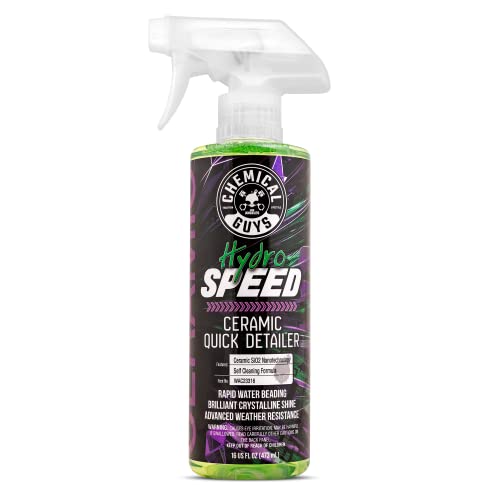
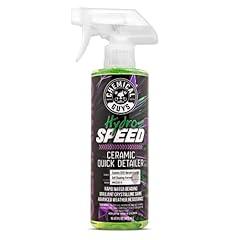
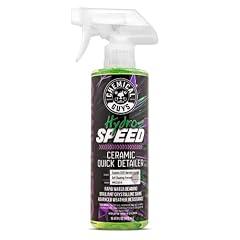
Chemical Guys HydroSpeed Ceramic Quick Detailer 16 fl oz
Overview
This is a ready-to-use 16-ounce spray quick detailer for light, between-wash exterior upkeep. The manufacturer directs users to work on a cool surface out of direct sun, spray one section at a time, and gently wipe it with a clean microfiber towel. Its official specification names paintwork and glass as applicable finishes. Chemical Guys states that hydrophobic polymers and silicon-dioxide nanoparticles add gloss and water beading and can maintain an existing coating. A current product-matched safety data sheet independently confirms an aqueous mixture with 1 to less than 2.5 percent 3-butoxypropan-2-ol, plus undisclosed trade-secret components. No public, accredited independent report was located for its protection life, abrasion resistance, substrate compatibility, or water-beading performance.
What works
- The product has a current, product-matched safety data sheet with a U.S. manufacturer address, emergency phone service, and detailed first-aid instructions.
- The manufacturer gives practical application basics, including a cool, shaded surface, a small test area, clean microfiber, and one-section-at-a-time wiping.
- Its stated paintwork and glass compatibility is narrower and more useful than an unqualified all-surface claim.
- The 1-gallon format offered by the manufacturer can reduce repeat purchase of small bottles for frequent users.
What does not
- The safety data sheet carries a California Proposition 65 warning for methanol and does not disclose its concentration or the full formula.
- The spray-and-wipe directions do not clearly limit use to light dust, explain how to avoid dragging grit across paint, or give a towel-change protocol.
- The official page broadly describes use on virtually any exterior surface, while its specification only lists paintwork and glass. It gives no specific guidance for matte finishes, wraps, paint-protection film, tires, pedals, brakes, or windshield visibility.
- Claims for extended protection, dirt resistance, and hydrophobic performance lack a public independent test report tied to this formula.
- No public VOC declaration, recycled-content claim, refill program, or third-party environmental certification was located.
Who is it for
This product suits a car owner maintaining a recently washed vehicle with light dust or fingerprints, especially someone who already uses a ceramic coating, wax, or sealant and wants a fast gloss touch-up. The 16-ounce trigger spray is practical for occasional garage use, and the manufacturer provides a simple cool-panel, spray-and-wipe process. It is most appropriate where the user can work in shade, has several clean microfiber towels, and can treat it as maintenance rather than a substitute for washing a dirty vehicle.
Who is it not for
It does not suit a vehicle with visible road grit, mud, sand, or winter film, because the instructions do not provide a validated waterless-wash method for safely lifting heavy soil. It is also a poor fit for users needing documented compatibility with matte paint, wraps, paint-protection film, or specialty trim. Avoid applying it to tires, pedals, brakes, controls, or other traction-critical areas. Drivers seeking independently proven durability, VOC data, or a fully disclosed environmental profile need more documentation than is publicly available here.
Integrity
The current safety data sheet classifies the mixture as not hazardous under OSHA Hazard Communication criteria and lists a low concentration of 3-butoxypropan-2-ol, a solvent associated with eye and skin irritation at hazardous concentrations. It also says the product is nonflammable under normal use. Still, the same document carries a California Proposition 65 warning for methanol and withholds the identities or concentrations of remaining trade-secret components. Keep it away from children, avoid eye contact and spray mist, and use the listed first-aid directions if exposure occurs. The data sheet says the product is not classified as environmentally hazardous and advises keeping spills out of drains and surface water. That is not a full environmental assessment. No EPA Safer Choice listing, public VOC value, PFAS screening, recycled-plastic evidence, or product-specific independent environmental certification was located. The manufacturer sells a gallon size, which may reduce bottle use for high-volume users, but no formal refill or packaging-recycled-content program was documented.
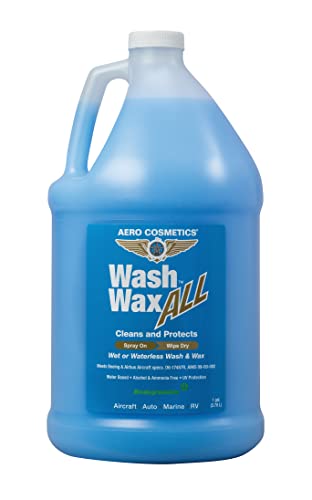
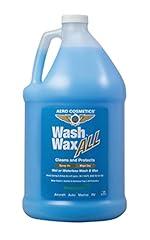
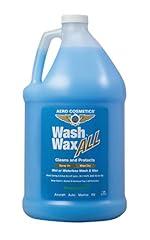
Aero Cosmetics Waterless Car Wash Wax
Overview
This is a ready-to-use, 1-gallon liquid spray cleaner and wax for wet or waterless vehicle cleaning. The manufacturer’s process is to work in small sections, spray the surface, wipe with a damp microfiber or cotton towel, then dry with a separate clean towel before the product dries. It is intended for light routine soil, while the instructions say to rinse mud, sand, and road salt first. Its most consequential safety fact is the product-matched safety data sheet, issued in 2019, which classifies the finished mixture as suspected of causing cancer and calls for gloves, protective clothing, eye protection, ventilation, and locked storage. Separately, a 2012 Scientific Material International report documented conformance on corrosion, acrylic crazing, paint softening, and hydrogen-embrittlement tests. The manufacturer states that its coating offers UV protection for up to six months, but no current independent durability report was located.
What works
- A documented third-party aircraft-material report found conforming results in corrosion, acrylic, paint-softening, and hydrogen-embrittlement testing.
- The manufacturer provides unusually detailed waterless-wash technique, including small work areas, clean towel sides, towel replacement, and pre-rinsing of mud, sand, and road salt.
- The product-matched safety data sheet lists 0.00% VOC and a high flash point, which indicates limited volatile solvent emissions and low fire risk during normal use.
- The safety data sheet identifies Aero Cosmetics Products, LLC, a U.S. address, phone number, email, and emergency contact.
What does not
- The finished product is classified in its safety data sheet as suspected of causing cancer, despite marketing that describes it as safe for users and the environment.
- The safety data sheet is dated 2019, identifies three hazardous ingredients only as trade secrets, and provides no full formula or current product-lot traceability.
- The manufacturer makes broad all-surface, UV, hydrophobic, and up-to-six-month protection claims, but current independent testing for automotive gloss, water behavior, UV exposure, abrasion, or durability was not located.
- Directions do not clearly exclude tires, pedals, brake components, or windshield areas, even though the product is intended to leave a slick coating.
Who is it for
This product fits a vehicle owner maintaining lightly dusty paint, glass, trim, or exterior surfaces where hose washing is impractical, such as an apartment parking area, garage, RV stop, or water-restricted location. The 1-gallon format is most practical for repeated use on several vehicles or large surfaces, provided the user can keep a supply of clean microfiber towels. It suits someone willing to follow the manufacturer’s multi-towel process, pre-rinse abrasive debris, wear protective gloves and eye protection, and use it with ventilation.
Who is it not for
It is not suited to heavily soiled vehicles with mud, sand, road salt, or gritty winter contamination unless those deposits are rinsed away first. It is also a poor fit for users seeking a low-hazard household cleaner, for households where children may access chemicals, or for anyone unable to follow the safety data sheet’s protective-equipment and ventilation directions. Avoid applying a slick coating to tires, pedals, brake components, or visibility-critical glass. Owners of matte paint, delicate wraps, or specialty finishes should confirm compatibility on a hidden area first.
Integrity
The product safety data sheet is a meaningful traceability strength because it names the manufacturer and gives an emergency phone contact. However, it also classifies the finished mixture as suspected of causing cancer. It lists hazardous trade-secret components, including two present at up to 2.5 percent, so the statements that it is biodegradable or safe for users should not be read as a full health assessment. Use ventilation, avoid making spray mist, and use gloves and sealed eye protection as the safety data sheet directs. For air quality, the same safety data sheet lists 0.00% VOC, 81.8% water, and a flash point of at least 374 F. That declaration is consistent with the applicable California 15% VOC limit for automotive wax, polish, sealant, or glaze, but it is manufacturer documentation rather than an independent VOC test. The sheet supplies no aquatic-toxicity, persistence, or biodegradation results, and disposal guidance is general. No EPA Safer Choice certification or public independent environmental certification was located.

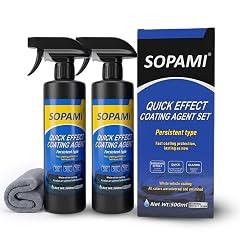
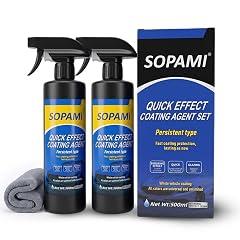
Sopami Quick Car Coating Spray 33.8oz
Overview
This is a liquid automotive spray marketed for cleaning, polishing, gloss enhancement, water repellency, and light scratch filling. The catalog record describes a two-item pack with a towel and presents it as a waterless wash, coating spray, wax, and glass oil-film cleaner. The manufacturer’s directions instead begin with washing the vehicle, then instruct users to shake, spray, wipe, buff, and allow the finish to dry for several minutes. Product identity is the central concern. The catalog title states 33.8 fluid ounces, while its specifications state two fluid ounces. The manufacturer storefront describes a single 500 mL bottle and towel. These incompatible quantity descriptions make the delivered volume and exact formulation difficult to confirm. The manufacturer makes ceramic, hydrophobic, UV, gloss, and light-scratch claims, but no product-specific independent test report or current safety data sheet was located in the verification review.
What works
- Manufacturer directions provide a straightforward spray, wipe, buff, and short drying sequence.
- The manufacturer specifically instructs users to begin with a cleaned surface, which is safer for paint than treating heavy grit as a wipe-on job.
- The product is supplied as a liquid spray with an included towel according to the catalog record and manufacturer listing.
- The manufacturer limits its scratch language to mild scratches and imperfections on its own product page.
What does not
- The stated contents conflict across sources, including two fluid ounces, 33.8 fluid ounces, and 500 mL descriptions. This is a concrete traceability and claim-quality problem.
- No current product-matched safety data sheet, ingredient disclosure, emergency contact, or United States importer identification was located.
- No independent, product-specific durability, gloss, UV, hydrophobicity, abrasion, or surface-compatibility test report was located.
- The broad painted-plastic-glass and waterless-use claims do not clearly exclude tires, pedals, brakes, windshields, cameras, sensors, matte paint, wraps, or paint-protection film.
- Waterless cleaning is promoted, but the manufacturer’s own directions say to wash the vehicle first. No technique is supplied for safely removing grit from lightly soiled paint.
Who is it for
This product fits a buyer seeking a simple spray-and-buff appearance refresher for a recently washed vehicle with light dust, fingerprints, or mild dullness. That user should have several clean, high-quality microfiber towels and should treat the product as a finishing aid rather than a substitute for a proper wash or paint correction. It is most relevant where the buyer accepts manufacturer-stated gloss and water-repelling claims, understands that the package volume needs confirmation on arrival, and can test a small inconspicuous painted area first.
Who is it not for
It is not suited to people who need a documented safety profile, known ingredients, a reliable supplier contact, or independently tested protection life. Avoid using it as a waterless wash on muddy, sandy, or road-grimy paint because the supplied instructions do not explain grit-safe removal. It is also unsuitable for drivers who need confirmed compatibility with matte finishes, wraps, paint-protection film, cameras, sensors, brake components, pedals, tires, or critical viewing glass. Households with children or chemical sensitivities should not rely on it without a product-matched safety data sheet.
Integrity
No certification, accredited laboratory report, or product-specific safety data sheet was located during verification. That leaves skin, eye, inhalation, flammability, volatile-organic-compound, ingredient, and disposal characteristics unconfirmed. Third-party marketplace listings associated with similarly named Sopami coating sprays contain incompatible ingredient fields, so they cannot credibly establish the formula of this product. The manufacturer calls the formula eco-friendly, but provides no composition disclosure, environmental screening, recycled-content evidence, refill option, or disposal guidance to support that statement. There was no identified recall, regulator warning, or certification record for this product in the searched United States sources. Until the seller provides a current safety sheet and label matched to the delivered bottle, avoid spraying in enclosed spaces, prevent overspray on traction and visibility-critical surfaces, keep it from children, and follow local household chemical disposal guidance for unused liquid and used applicators.

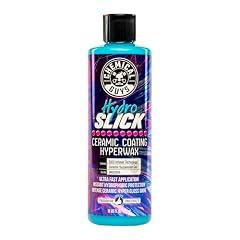
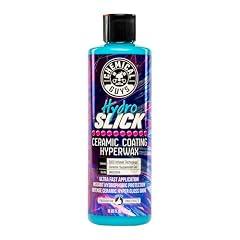
Chemical Guys HydroSlick Ceramic Coating Hyperwax
Overview
This 16 oz product is a blue liquid gel coating applied by hand, rather than sprayed. The manufacturer directs users to place four or five dots on a microfiber applicator, spread a thin coat over one clean, cool, dry panel at a time, wait 30 seconds to two minutes, then buff with a clean microfiber towel. It is intended for paintwork and glass. Chemical Guys states that the coating can last up to one year and improve water repellency for up to 24 hours after application. Those performance and duration statements are manufacturer claims, not independently verified test results located in this review. A product-specific safety data sheet revised June 24, 2024 classifies the mixture as nonhazardous under OSHA rules and nonflammable. However, the current product page carries a California cancer warning for cumene, while the safety data sheet also lists formaldehyde and ethylbenzene in its Proposition 65 regulatory section.
What works
- The gel is applied with an applicator rather than sprayed, which avoids routine aerosol mist exposure.
- Directions give a practical process for clean, cool, dry paint, small test areas, panel-by-panel work, and microfiber buffing.
- The current product-specific safety data sheet identifies the responsible company, contact details, emergency number, storage range, and first-aid steps.
- The current safety data sheet describes the liquid as nonflammable under normal storage, handling, and use.
What does not
- The manufacturer claims up to one year of protection, UV shielding, and contaminant resistance, but no product-specific independent durability report was located.
- The product page carries a California cancer warning for cumene, while the current safety data sheet lists additional Proposition 65 cancer chemicals without disclosing their concentrations.
- The safety data sheet does not provide usable product-level VOC content, ecotoxicity, persistence, or biodegradation results.
- Directions do not specifically warn against use on tires, pedals, brake components, or visibility-critical glass, despite the slick water-repelling finish.
- No independently checkable certification or accredited third-party test report for this exact product was located.
Who is it for
This suits a vehicle owner who wants a hand-applied, wax-style finishing product for already washed, dried, glossy paint and is willing to work slowly one panel at a time in shade. The 16 oz bottle is appropriate for intermittent home detailing rather than rapid wash-bay use. It is most aligned with users seeking water beading and visual gloss who understand that the stated one-year protection period is the manufacturer’s claim, not a publicly verified service-life result.
Who is it not for
This is not suited to households seeking a clearly low-hazard or fully disclosed formula, especially where California cancer warnings or unknown constituent concentrations are a concern. It is also a poor fit for heavily soiled vehicles, matte finishes, wraps, paint-protection film, wheels, cabin surfaces, tires, pedals, brakes, or windshield use when product-specific compatibility evidence is required. Anyone needing proven long-duration protection, verified UV performance, or independently measured VOC data needs documentation this product does not publicly provide.
Integrity
The current product-specific safety data sheet, revised June 24, 2024, says the mixture is not classified as hazardous under OSHA communication rules, is nonflammable, and has no listed occupational exposure limits. It also provides basic first aid, identifies Chemical Guys as the responsible company, and says to keep the product away from drains. A hand-applied gel limits the routine mist pathway associated with spray products. Important uncertainty remains. The manufacturer’s product page has a California warning for cumene, and the safety data sheet lists formaldehyde, ethylbenzene, and cumene under Proposition 65 cancer information, without giving product concentrations in its composition section. The same safety data sheet reports no available product-level ecotoxicity, persistence, biodegradation, or bioaccumulation data. No recycled-content, refill, or certified safer-chemistry information was identified for the single-use 16 oz bottle.

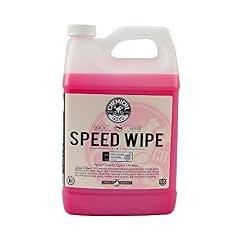
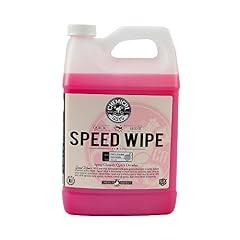
Chemical Guys Speed Wipe Quick Detailer, 1 Gallon
Overview
This is a ready-to-use, cherry-scented quick-detailing liquid supplied here in a one-gallon container. It is intended for light exterior cleanup between washes, applied by misting and wiping with microfiber, then buffing with a clean dry towel. The manufacturer says it is wax-free and intended to add gloss while cleaning dust, fingerprints, and light road film. A current product-specific safety data sheet, revised August 26, 2024, describes an aqueous additive mixture with isopropyl alcohol at 1 to less than 2.5 percent. It reports pH 4.04 and a flash point above 199.4 degrees Fahrenheit. Chemical Guys provides concrete wiping and hot-sun directions, but no public independent abrasion, compatibility, UV-protection, or durability report was located for this formula.
What works
- A current product-specific safety data sheet identifies Chemical Guys, an emergency phone number, the intended bodywork-cleaning use, and disclosed isopropyl alcohol concentration.
- The safety data sheet classifies the mixture as not hazardous under OSHA Hazard Communication criteria and reports a nonflammable flash point under normal handling conditions.
- Manufacturer directions instruct users to wipe in one direction with microfiber, change to a clean dry towel for buffing, and apply to the towel rather than the panel in hot direct sun.
- The one-gallon format can reduce the number of separate small containers needed when a user already has reusable spray bottles.
What does not
- Chemical identities and concentrations other than isopropyl alcohol are withheld as trade-secret information, preventing a full ingredient or PFAS screen.
- The safety data sheet says experimental toxicology and ecotoxicology data for the finished product itself are not available.
- No publicly checkable independent report was located for scratch resistance, claimed UV protection, dust repellency, gloss retention, or protection duration.
- The product page claims use on glass and refers to windshields, while the safety data sheet identifies bodywork cleaning. No public test protocol or driving-safety exclusion for visibility-critical glass was located.
- Directions do not set a clear soil-load limit or expressly exclude tires, pedals, brakes, or other traction-critical surfaces.
Who is it for
This product fits a vehicle owner or detailer who already keeps clean microfiber towels and reusable spray bottles, and wants a large ready-to-use supply for removing light dust, fingerprints, or fresh water spotting between conventional washes. It is better matched to maintained paintwork than to neglected vehicles. The documented one-direction wipe and clean-towel steps are practical for someone willing to use multiple towel sides rather than trying to clean a whole dirty vehicle with one saturated cloth.
Who is it not for
It is not suited to washing a heavily soiled, sandy, muddy, or salt-covered vehicle without a rinse, because public directions do not define a safe grit threshold or provide finish-abrasion testing. People with fragrance sensitivity, those using the product in enclosed spaces, and households that cannot keep chemicals away from children should use added caution. It is also a poor fit for anyone needing independently proven UV protection, long-term durability, matte-finish approval, wrap or paint-protection-film compatibility, or windshield-specific safety documentation.
Integrity
The strongest health positive is traceability. A current safety data sheet names the responsible company, provides an emergency contact, and identifies the product as an aqueous mixture containing 1 to less than 2.5 percent isopropyl alcohol. The finished product is not OSHA-classified as hazardous, though the sheet still advises rinsing skin, flushing eyes for at least 15 minutes, seeking prompt medical advice after ingestion, and avoiding ignition sources during spill handling. Environmental visibility is limited. The sheet says the finished-product ecotoxicology data are unavailable and directs users to keep it out of drains and waters. It provides favorable biodegradability and low-bioaccumulation information for isopropyl alcohol only, not for the undisclosed additives, colorants, or fragrance components. No EPA Safer Choice certification, recycled-content evidence, VOC declaration, or independent environmental certification was located. The gallon container may support reuse of existing spray bottles, but no verified recycled-content or packaging-recovery claim was found.

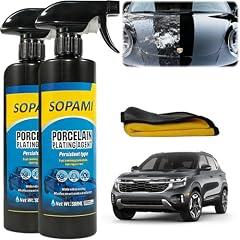
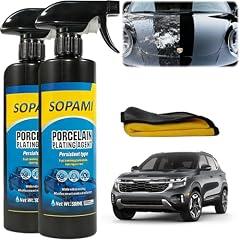
SOPAMI Ceramic Coating Spray 2 Pack
Overview
This is a trigger-spray automotive coating and quick-detailing product sold here as two 17.6 fl oz bottles. It is intended to be sprayed onto a vehicle surface, wiped with a clean towel, buffed, and allowed to set briefly. The brand’s own directions say to wash away dirt and debris first, which makes it better characterized as a finish product for already clean surfaces than a substitute for washing a dirty vehicle. SOPAMI states that its coating adds gloss, water resistance, and protection against contaminants, and it also markets mild scratch-filling and UV-related benefits. Those are manufacturer claims, not independently verified results. Its brand site describes a different package, one 500 mL bottle with a towel, rather than this two-bottle presentation. No current, product-specific safety data sheet, ingredient disclosure, VOC declaration, or independent performance report was located in the reviewed sources.
What works
- The application sequence calls for washing first, which reduces the risk of dragging loose grit across paint.
- A two-bottle 35.2 fl oz format can support repeated use on already clean exterior panels.
- The brand gives a basic spray, wipe, buff, and short setting sequence.
- The product is marketed for gloss and water beading, although these performance benefits are manufacturer-stated.
What does not
- No current product-specific safety data sheet or ingredient list was located, so skin, eye, inhalation, fire, and disposal hazards cannot be assessed reliably.
- The marketing extends to glass, plastic, metal, wheels, and trim without product-specific compatibility testing or clear exclusions for windshields, mirrors, brakes, tires, pedals, or other driving-critical surfaces.
- No independent laboratory report was located for durability, gloss, water contact angle, UV resistance, abrasion, or adhesion of this formula.
- The brand site describes a one-bottle 500 mL package, creating a traceability mismatch with this two-bottle product.
- No VOC content, low-VOC documentation, recycled-content evidence, refill option, or disposal guidance for unused liquid and used towels was located.
Who is it for
This product fits a car owner who wants a low-effort finishing spray for a vehicle that has already been washed and has only light dust or water spotting. The two-bottle format is practical for someone maintaining more than one vehicle or keeping one bottle at home and one in a garage. Use should be confined to small exterior paint sections, with clean microfiber towels and a patch test on an inconspicuous area. The buyer should treat gloss, hydrophobic behavior, and scratch-filling as unverified manufacturer claims.
Who is it not for
It is not suited to people seeking documented chemical safety information, a fully disclosed formula, low-VOC evidence, or independently tested coating life. It is also unsuitable for dirty, gritty vehicles when used as a waterless cleaner, because the published directions first call for washing the surface. Avoid use on windshields, mirrors, tires, brake components, pedals, seats, steering wheels, or other visibility and traction-critical areas. Owners of matte paint, wraps, paint-protection film, delicate trim, or specialty finishes need product-specific compatibility evidence that was not located.
Integrity
The main health limitation is missing chemical transparency. No current product-specific safety data sheet was located with an identified responsible U.S. supplier, emergency contact, hazard classification, protective equipment guidance, first aid, ingredients, or physical-property data. OSHA’s SDS format calls for those details. The reviewed brand material provides basic application steps but does not give adequate surface exclusions for a slick, hydrophobic spray that is also promoted for glass and other exterior materials. The brand calls the formula eco-friendly, but no ingredient-level environmental assessment, EPA Safer Choice listing, UL ECOLOGO certification, SCS certification, PFAS statement, or independent VOC result was found. There was also no evidence of recycled packaging content, refill packaging, or instructions for handling leftover product and contaminated towels. No product-specific CPSC recall or safety warning was located in the reviewed public recall sources.
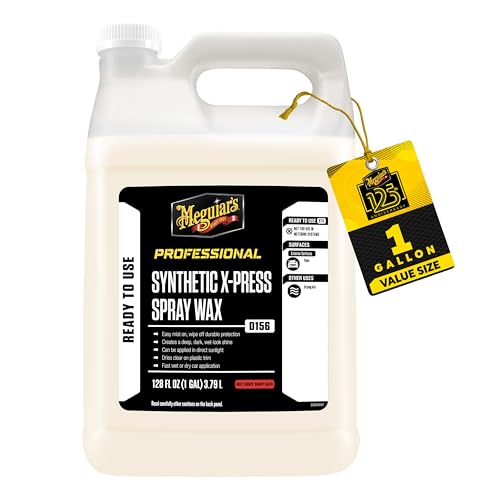
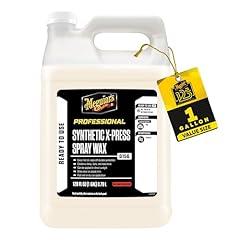
Meguiar's Synthetic X-Press Spray Wax
Overview
This is a ready-to-use, liquid spray wax supplied in a 1 gallon, 3.78 L container. It is intended for automotive paint after washing, including use on a rinsed wet vehicle as a drying aid or on a clean dry panel. Manufacturer directions call for shaking, misting one section at a time, spreading with a clean microfiber, then immediately wiping with a second dry cloth. The current US safety data sheet, issued March 5, 2024, identifies it as a water-based automotive sprayable wax with less than 2 percent dimethicone, a flash point above 200 F, and 0.0 percent VOC by weight. Meguiar's states that its hydrophobic polymer system provides gloss, water beading, and durable protection, but no public independent durability report or stated protection period was located.
What works
- A current, product-matched US safety data sheet identifies the manufacturer, a customer-service number, and a 24-hour CHEMTREC emergency number.
- The current safety data sheet classifies the mixture as not hazardous under OSHA HazCom, reports no expected significant skin irritation during normal use, and reports a flash point above 200 F.
- Manufacturer directions provide a concrete wipe-on, immediate wipe-off process for wet or dry, already-clean vehicle surfaces.
- The manufacturer reports 0.0 percent VOC by weight, which is below the 3 percent limit used for automotive instant detailers in California-style consumer-product rules.
What does not
- The directions do not clearly exclude tires, pedals, brake components, steering wheels, seats, or windshield areas in the driver’s primary field of view. Residue on traction or visibility-critical surfaces is a foreseeable safety concern.
- This is not supported as a waterless wash for dirty paint. The directions say to use it on a clean surface, but do not define light-soil limits or give a grit-safe cleaning method.
- No public independent, product-specific report was found for durability, gloss retention, water behavior, abrasion resistance, or compatibility with matte paint, wraps, paint-protection film, and modern coatings.
- The public ingredient page lists fragrance materials, citrus oils, ethoxylated surfactants, and methylchloroisothiazolinone, while the current US safety data sheet discloses only water and dimethicone in its composition section. Trade-secret protection limits full formula assessment.
- No public recycled-content, refill-system, or product-specific unused-product disposal guidance was located.
Who is it for
This product suits a frequent DIY washer, mobile detailer, or small fleet operator who already has clean microfiber towels and wants a ready-to-use gallon wax for fast after-wash gloss and water behavior. It is particularly practical for applying panel by panel on a rinsed vehicle while drying, or on clean dry paint between more thorough details. The large container makes most sense for repeated use, rather than an occasional user who has no way to decant it into a suitable spray bottle.
Who is it not for
It is not suited to someone seeking a one-step waterless wash for visibly dusty, muddy, or gritty paint, because the published instructions do not provide a soil limit or a scratch-control method. It is also a poor fit for users who need documented long-term protection, quantified UV performance, or independent compatibility evidence for matte finishes, wraps, paint-protection film, or specialty coatings. Keep it away from windshield viewing areas, pedals, tires, brake parts, and interior touch surfaces where a slick residue could affect visibility or grip.
Integrity
The current US safety data sheet is a meaningful strength. It is product-specific, dated March 5, 2024, names Meguiar's as manufacturer, and gives a 24-hour emergency contact. It classifies the product as not hazardous under OSHA HazCom, reports 0.0 percent VOC by weight, and describes a water-based liquid that will not burn under normal conditions. Eye exposure can still irritate because this is a spray, so avoid face-level misting and rinse eyes thoroughly if exposed. Formula transparency is only partial. Meguiar's public ingredient disclosure identifies water, dimethicone, carnauba wax emulsion, silicone materials, surfactants, citrus oils, fragrance ingredients, and methylchloroisothiazolinone. Several components remain confidential, and the safety data sheet does not provide ecological fate or aquatic-toxicity results. The sheet says to avoid environmental release and to prevent larger spills from reaching drains or waterways. No EPA Safer Choice, UL ECOLOGO, or public product-specific independent certification was located.

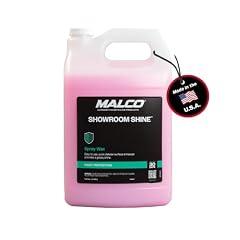
Malco Showroom Shine Spray Car Wax 110401
Overview
This product is a ready-to-use, one-gallon liquid spray wax and instant detailer. Malco directs users to shake it, spray it onto dusty, smudged, smeared, or fingerprinted surfaces, then wipe with a microfiber cloth. The manufacturer markets it for nonporous painted surfaces, metal, and glass, and also as a lubricant for clay bars and polishing work. A safety data sheet revised April 18, 2024 identifies 1 to under 3 percent isopropyl alcohol, with most remaining ingredients withheld below reporting thresholds as trade secret information. It classifies the liquid as causing serious eye irritation. The manufacturer states an estimated 2.95 percent VOC content and compliance for sale in all 50 states. No public product-specific independent abrasion, compatibility, gloss, water-beading, UV, or durability report was located.
What works
- A current product-matched safety data sheet identifies the manufacturer, technical contact, emergency number, disclosed isopropyl alcohol range, and eye-irritation classification.
- The manufacturer states an estimated 2.95 percent VOC content, which is within California's 3 percent limit for automotive instant detailers.
- Ready-to-use one-gallon packaging can support frequent light-soil touch-ups without dilution.
- The stated use as a clay-bar lubricant is a practical secondary detailing use, though it is manufacturer-stated rather than independently tested.
What does not
- This is a confirmed eye irritant. The safety data sheet calls for eye protection, ventilation, and chemical-resistant gloves, while the consumer directions do not repeat those safeguards or first-aid steps.
- Directions allow use on slightly dirty vehicles but do not set a clear soil limit, specify multiple clean towels, or provide a grit-removal method. No public abrasion testing was found.
- The broad painted-surface, metal, and glass claim does not clearly exclude windshields, mirrors, pedals, tires, brakes, or other visibility and traction-critical surfaces.
- Most formula components are undisclosed as trade secrets, including a stated 2.95 percent fraction with unknown acute inhalation and aquatic-hazard information. No public independent performance or environmental certification was found.
Who is it for
This product suits a detailer, dealership lot worker, or careful vehicle owner who needs a ready-to-use bulk quick detailer for fresh fingerprints, light dust, smears, and clay lubrication. The one-gallon size makes most sense where repeated touch-ups are expected and a separate spray bottle is available. Use is better matched to cool, lightly soiled exterior paint with clean microfiber towels on hand, rather than as a substitute for washing a road-dirty vehicle.
Who is it not for
It is not well suited to users seeking documented months-long protection, verified water beading, UV resistance, ceramic chemistry, or independently tested paint compatibility. Avoid using it as a waterless wash on muddy, sandy, salt-coated, or heavily soiled vehicles because the published method does not provide adequate scratch-control steps. It also is not a casual indoor spray product for poorly ventilated garages, or an appropriate treatment for tires, pedals, brake parts, or visibility-critical glass.
Integrity
The most important health point is the current safety data sheet's Category 2A eye-irritation classification. It instructs users to avoid eye contact, provide adequate ventilation, wear eye protection and chemical-resistant gloves, and flush eyes with water for at least 15 minutes after exposure. Isopropyl alcohol is disclosed at 1 to under 3 percent. The rest of the formula is largely withheld as trade-secret material, and the sheet reports a 2.95 percent portion with unknown acute inhalation and aquatic-hazard information. For air quality, Malco declares estimated VOC content of 2.95 percent. That aligns with California's 3 percent instant-detailer limit, but no independent VOC test report was located. The safety data sheet says to prevent releases to drains, watercourses, and soil. Unused material and contaminated containers need locally compliant disposal, and discarded product can be classified as ignitable hazardous waste. No EPA Safer Choice, ECOLOGO, SCS, or other public product-specific environmental certification was located.