
10 Best Automatic Litter Boxes of 2026
 Brianna York
Please note that we participate in affiliate marketing programs. When you purchase through links on our site, we may earn a commission. As an Amazon Associate we earn from qualifying purchases. This comes at no additional cost to you and helps support the resources required to provide valuable content.Advertising Disclosure
Top-rated Automatic Litter Box Comparison
1

2
4
5
6
7
8
9
Automatic litter boxes: what to look for
Automatic litter boxes separate clumping waste from usable litter, usually by rotating a drum or globe, moving a rake across a tray, or sifting a removable basket into a bagged drawer. The useful question is not simply how often the mechanism runs. It is whether the product remains escapable during every movement, handles waste without smearing or leaks, fits the cat comfortably, and can still be cleaned, diagnosed, and used manually when something goes wrong.
Start with the cat, not the app. Check the stated minimum age and weight, maximum weight, entry height, opening size, litter depth, supported litter, and whether the cat can turn around and leave without difficulty. Several supplied products exclude kittens, pregnant or nursing cats, or cats with limited mobility from automatic operation. An open entrance can provide a visible exit, but it does not by itself prove that a mechanism will stop for a paw, tail, or obstruction. An enclosed unit may contain litter and odor better while being a poorer fit for a cat that dislikes a covered or elevated box.
Safety claims deserve model-specific evidence. A credible design should explain what happens during entry, obstruction, sensor failure, a jam, and power loss, and should provide more than a single infrared-sensor promise. Look for a manual that describes stop or reverse behavior, interlocks, manual mode, and safe recovery. For electrical safety, a logo in a listing is not enough: the exact powered unit and adapter should be traceable in UL Product iQ, Intertek’s ETL directory, CSA Group’s product database, or TÜV Rheinland Certipedia. FCC authorization can substantiate a product’s wireless radio configuration, but it does not certify electrical, fire, or motion safety.
Treat capacity and convenience figures cautiously. A large stated drum or waste-bin volume does not show how much usable space a cat has, how quickly soft stool or urine overwhelms the system, or how often a drawer must actually be emptied. “Up to” day counts vary with cat number, litter type, clump quality, and waste consistency; supplied reviews include products whose manuals recommend much more frequent emptying. Health counters, weight records, cameras, and app alerts are observations, not veterinary diagnosis, especially where testing found inconsistent cat recognition or weight records.
For hygiene, favor sealed or covered waste handling, removable washable high-contact parts, clear instructions, and a manual that keeps the powered base dry. Automation does not eliminate fecal exposure, litter dust, handwashing, or the need to inspect stool and urine. For ownership impact, check whether ordinary bags work, how often filters or odor cartridges are replaced, whether parts and firmware support are available, and whether the company explains repair, recycling, or take-back. None of the supplied products had a publicly located exact-model U.S. NRTL electrical listing; independent obstruction and power-loss testing was also uncommon.
Recurring safety caveats are significant: kittens commonly need automatic cleaning disabled; pregnant or nursing cats and cats with arthritis, frailty, injury, or other mobility limitations recur as poor fits; high or enclosed entries can be inaccessible; and every product still needs a conventional backup box during acclimation, cleaning, faults, or power loss. Some products also permit particular leveling, calibration, empty-drum, or “uninterrupted” motions to continue when a cat approaches. A safety system that works only under selected conditions should not be treated as fail-safe.
Integrity
The topics below distinguish a convenient waste-sifting appliance from one that is safer to supervise, easier to clean, and less burdensome to keep in service. Scores are relative to the supplied products; a stronger score indicates better documented performance or accountability in that topic, not a guarantee that a product is risk-free.
HHealth & Safety
Cat Entrapment & Motion Safety
This measures whether the cat can escape during every cleaning motion and whether the mechanism stops or reverses for a cat, paw, tail, or obstruction. It matters because sensor claims do not cover every operating state. Higher-scoring products in this set describe layered sensing, interlocks, or open escape routes; lower-scoring products allow some motions to continue on entry or lack independent obstruction and failure testing.
Electrical & Fire Safety
This measures the powered unit and adapter’s credible electrical certification, wiring, and overheating protection. It matters because a low-voltage adapter or FCC radio authorization does not establish fire or electrical safety. Higher scores reflect more complete model documentation, but no supplied product had a publicly located exact-model UL, ETL, CSA, or TÜV listing; lower scores pair missing certification evidence with conflicting or incomplete power information.
Waste Exposure & Cleanability
This measures containment of feces, urine, litter dust, and leaks alongside the ability to wash high-contact parts thoroughly. It matters because automatic collection reduces scooping but does not remove infection or dust exposure. Higher-scoring products combine bagged or sealed drawers with removable washable chambers, baskets, rakes, or globes. Lower scores reflect smearing, leaks, difficult deep cleaning, or heavier dependence on disposable trays.
Cat Access & Welfare Fit
This measures whether cats can enter, turn, eliminate, and leave comfortably, with honest limits for weight, age, mobility, litter, and manual backup. It matters because a technically functioning box can still cause avoidance or unsafe access. Higher scores provide clearer fit limits, open exits, kitten modes, or workable manual use. Lower scores leave size or mobility limits unclear or rely on high, enclosed entries.
Waste Containment & Cleaning Performance
This measures repeatable separation of waste without scattering litter, smearing, jamming, or leaking across supported cats and litter types. It matters because a large bin or odor claim does not prove clean separation. Higher-scoring products in the set had hands-on evidence of effective sifting or odor containment and clearer litter limits. Lower scores were associated with reported sticking, residue, incomplete pickup, or leakage concerns.
EEcology
Failure Recovery & Repairability
This measures whether the box fails safely and can be maintained rather than discarded. It covers manual operation, error diagnosis, replaceable parts, firmware, warranty, and repair information. Higher-scoring products provide troubleshooting, disassembly guidance, replacement parts, or firmware support. Lower scores have no user-serviceable parts, weak parts documentation, or unclear recovery after jams and sensor errors.
Consumables & End-of-Life Impact
This measures recurring waste from bags, trays, filters, cartridges, batteries, and the appliance itself. It matters because a product that avoids scooping may create frequent disposable material. Higher scores use ordinary bags, washable components, or fewer proprietary supplies. Lower scores require disposable crystal trays or recurring odor products without a specific take-back, recycling, or realistic disposal pathway.
Energy & Material Efficiency
This measures electricity use, standby draw, packaging, material disclosure, and expected service life. It matters because powered litter boxes are often used continuously, yet headline efficiency claims can lack measurements. Higher scores provide clearer power figures and durable reusable parts. Lower scores rely on conflicting ratings or publish no measured cycle or standby consumption, lifecycle information, packaging detail, or service-life evidence.
EEvidence
Claim Honesty
This measures whether claims about safety, odor, quietness, capacity, apps, health monitoring, and environmental impact match their limits and evidence. It matters because “hands-free,” “health monitoring,” and “fully safe” can describe narrower conditions than buyers expect. Higher-scoring products qualify claims and disclose unsupported trade-offs. Lower scores use absolute claims contradicted by manuals, independent testing, capacity limits, or app-record inconsistencies.
Independent Verification
This measures whether the exact product has independently checkable safety and performance evidence. It matters because manufacturer statements, unexplained badges, and CE- or RoHS-style declarations are not equivalent to an exact third-party test. Higher-scoring products have traceable FCC records for connected radios and hands-on or laboratory evidence naming the model. Lower scores have only marketing claims or testing of a related version.
Traceability, Recall & App Accountability
This measures whether buyers can identify the responsible company and model, obtain safety notices and support, and understand app, camera, privacy, and security practices. It matters because connected litter boxes can collect identifiers, location, diagnostics, photos, videos, or audio. Higher-scoring products provide clear U.S. contacts, warranties, firmware or recall support, and privacy disclosures. Lower scores leave app permissions, data handling, or support obligations unclear.
Full reviews

PetPivot Automatic Cat Litter Box
Overview
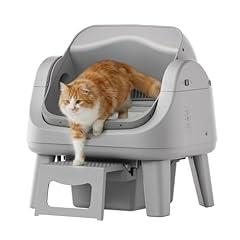
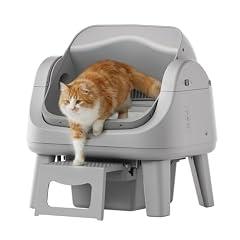
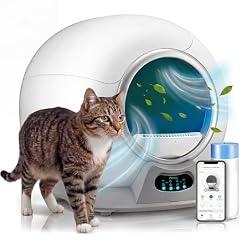
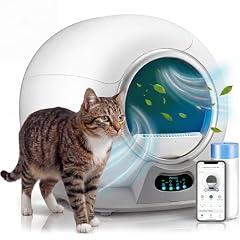
This is an open-top, cord-powered automatic litter box with a rotating litter chamber and a removable 8 L waste drawer. PetPivot specifies a 5.5 L litter capacity, 12.4-inch entry height, 24 W power rating, included step, and use with small-grain clumping mineral or bentonite litter. Long-strip tofu and crystal litter are excluded. Its central safety case is manufacturer-stated, not independently certified. The manual describes infrared sensors, a manual cleaning mode, and a minimum automatic-use limit of more than 3 lb and older than six months. An independent multi-week test found that medium cats adapted readily, the sealed drawer controlled odor, and the removable drum aided deep cleaning. That same test found a 17-pound cat could not turn comfortably, while user reports cited litter scatter and occasional leakage or sensor-related interruption.
What works
- Independent hands-on testing found that medium-sized cats accepted the open layout quickly.
- The removable chamber and litter bed can be rinsed, while the waste drawer is removable for scheduled cleaning.
- The manufacturer provides manual mode, which can keep automatic cycling off during cat acclimation or for cats outside its stated automatic-use limits.
- The manual gives practical fault steps for blocked sensors, an unseated chamber, and a motor jam, plus a 12-month repair warranty.
What does not
- No authentic exact-product UL, ETL, CSA, or TÜV electrical-safety listing was located in the relevant public certification registers.
- Safety sensor and anti-pinch claims are manufacturer-stated. No independent obstruction, sensor-failure, entry-during-cycle, or power-loss test report was located.
- Independent testing found the interior too cramped for a 17-pound cat, despite retail claims extending to 22 pounds.
- Independent reporting and buyer feedback identify litter scatter, possible leakage, and sensor cleanliness as real performance limitations.
- The product uses disposable waste liners and PetPivot provides no specific take-back, recycling, or replacement-parts program for this model.
Who is it for
It suits an adult, medium-sized cat that already uses small-grain clumping litter, and a household that wants basic automatic waste separation without an app, Wi-Fi setup, or a subscription. The open top and optional entry step may make initial acceptance easier for cats that dislike enclosed boxes. It also fits an owner willing to inspect sensors, empty the drawer frequently, wash the removable chamber, and retain a conventional backup box. Manual mode is useful while a cautious cat is introduced gradually.
Who is it not for
It is not appropriate for kittens under six months or cats at or under 3 lb in automatic mode, nor for pregnant or nursing cats unless automatic cleaning is disabled as the manual directs. Large cats need special caution, since an independent test found a 17-pound cat cramped when turning. It is also poorly suited to cats that spray urine outward, households committed to tofu or crystal litter, or anyone unable to check the device daily. Pregnant or immunocompromised people should not treat automation as a substitute for safe litter handling.
Integrity
PetPivot specifies household indoor use, a 12 V, 2 A adapter, and a 24 W rated power draw. The manual directs owners to unplug before cleaning, keep the base dry, wipe infrared sensors regularly, and use only the supplied or specified accessories. Public searches did not identify a recall for this product. However, no exact-model U.S. NRTL electrical listing or independent laboratory safety report was located, so electrical and motion-safety assurances remain only partly independently checkable. The washable chamber and litter bed can reduce replacement of rigid parts, but the waste system uses disposable liners and no model-specific electronics recycling, take-back, or repair-parts program was found. The device does not remove infection risk. CDC guidance still calls for daily litter-box cleaning and handwashing, and recommends that higher-risk people arrange for another person to handle litter when possible. PetPivot advises emptying waste at least every five to seven days, which is a maintenance limit, not a hygiene exemption.

Automatic Self-Cleaning Litter Box For Cats
Overview
This is an open-top, rotating automatic litter box that sifts supported clumping mineral or bentonite clay litter into a lined, sealed waste container. PetPivot lists a 5.5 L litter capacity, 8 L waste container, 12.4-inch entrance height, 24 W power consumption, and a supplied entry step. The manufacturer says it is for cats at least 3 pounds and 6 months old, with manual cleaning available for smaller, younger, pregnant, or nursing cats. Its defining safety feature is manufacturer-stated layered protection, including infrared presence monitoring, resistance-sensitive anti-pinch response, a physical rotation limiter, and Hall position sensors. The published instructions also specify removable, rinseable litter-contact parts and a 5 to 7 day waste-bin emptying interval. I found product documentation and a 12-month repair or replacement warranty, but no publicly traceable U.S. NRTL electrical-safety certification or independent laboratory safety test for this exact product.
What works
- The open-top format and optional entry step may help some cats approach it more readily, although the 12.4-inch entrance remains substantial.
- Manual cleaning mode gives caregivers control during transition periods and for cats outside the stated automatic-use limits.
- The waste container is described as sealed, and the chamber and litter bed can be removed and rinsed for periodic deep cleaning.
- The manufacturer provides detailed routine maintenance instructions, supported litter limits, and a 12-month repair or replacement policy.
What does not
- The claimed multi-layer anti-pinch system has not been independently tested publicly for obstruction, sensor-failure, power-loss, or re-entry scenarios.
- No exact-product UL, ETL, CSA, or other publicly traceable U.S. NRTL electrical listing was located. The manual's FCC statement is not electrical-safety certification.
- The product page makes inconsistent suitability claims. It says small kittens are protected by sensors, while the user guide sets minimum automatic-use limits of 3 pounds and 6 months.
- Its 12.4-inch entrance can still be challenging for cats with arthritis, weakness, severe mobility limits, or pain, even with the supplied step.
- Lined waste disposal creates recurring plastic-bag waste, and no U.S. take-back or product-specific recycling program was found.
Who is it for
This product fits a caregiver of one to several healthy adult cats who already use clumping clay-style litter, can provide a stable indoor location, and is prepared to monitor the first automatic cycles. It is most practical for households that want less routine scooping but will still empty the waste container every 5 to 7 days, deep-clean removable parts, wipe sensors, and retain a standard litter box during transition. Manual mode is useful for a cautious cat that needs gradual introduction to a moving appliance.
Who is it not for
It is not a suitable automatic-use setup for kittens under 6 months or cats under 3 pounds, despite broader marketing language about small cats. Cats with arthritis, poor balance, pain, serious mobility impairment, or an aversion to a 12.4-inch entry need a lower-access toilet arrangement. It also does not suit households using crystal litter or long-strip tofu litter. Pregnant people and people with weakened immune systems should not treat automation as eliminating litter-waste exposure, and should follow medical guidance for litter handling.
Integrity
The health-positive design elements are manufacturer-stated layered motion safeguards, a manual override, a sealed waste container, and removable litter-contact components that can be rinsed. These features can reduce direct contact with routine waste, but they do not remove infection risk. CDC guidance still calls for daily litter-box attention and handwashing, because cat feces can carry germs including Toxoplasma. People who are pregnant or immunocompromised should use extra precautions and follow advice from their clinician. PetPivot documents a 24 W rating and includes a 12-month warranty with repair or replacement for qualifying faults. It also supplies liners, and the unit uses lined waste disposal, so ongoing plastic-bag waste is part of normal use. The manual includes a European electronic-waste notice, but I found no specific U.S. take-back or recycling program. No exact-product U.S. NRTL electrical certification or independent laboratory performance report was publicly traceable.

Whisker Litter-Robot 4 Accessory Bundle Black
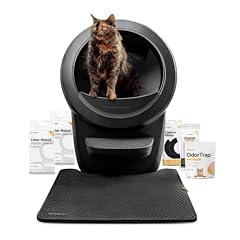
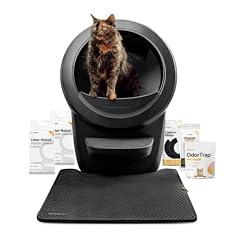
Overview
This product is a 24-pound, plug-in automatic litter box with a rotating globe that sifts clumping litter after a cat leaves, then drops waste into a lined drawer. This black bundle adds a mat, odor-control packs, liners, wipes, and carbon filters. Whisker lists a 22 by 27 inch footprint, 29.5-inch height, 15.75-inch square entry, and 15 V DC power. The defining design feature is a layered detection system. Whisker documents optical curtain sensors, a weight scale, a bonnet guard, anti-pinch software, and a drawer motion response intended to provide an exit path. An independent reviewer observed the cycle stop when an arm entered the opening. The product is intended for cats from 3 to 25 pounds, with under-3-pound kittens limited to supervised, powered-off use between cleanings.
What works
- Layered entry, weight, bonnet, and anti-pinch safeguards are documented in the current manufacturer manual, and independent hands-on testing observed an entry interruption.
- The globe and removable waste drawer can be washed with mild soap and water after the unit is unplugged, according to Whisker's cleaning instructions.
- It accepts ordinary compatible trash bags rather than requiring proprietary drawer liners, although the included bundle supplies branded liners.
- Whisker documents troubleshooting, replacement parts, out-of-warranty repair, and an optional three-year coverage plan.
What does not
- No exact-model UL, ETL, CSA, or TÜV listing was located in the relevant public certification registers during this review. The unit uses a 15 V DC, 2 A adapter, but public third-party electrical certification remains unverified.
- The 12-inch entry height and large footprint can be difficult for cats with arthritis, weakness, poor balance, or limited jumping ability.
- Independent testing has found occasional sensor faults, missed or repeated cycles, and at least one reported leak scenario. These are performance concerns, not evidence of a confirmed entrapment injury.
- The system still requires waste-drawer handling and periodic deep cleaning. Automatic sifting does not remove fecal exposure risk or replace handwashing.
- Filters, odor packs, wipes, and plastic bags create recurring waste, and no specific take-back or recycling route for the full powered unit was identified.
Who is it for
It suits households with one to four healthy cats that are at least 3 pounds, can comfortably use a 15.75-inch opening with a 12-inch step, and already use compatible clumping litter. It is most practical for owners who can give it a firm, level, dry location near an outlet, empty a lined drawer, clean sensors and seals, and troubleshoot an occasional alert. The bundle is especially relevant to buyers who expect to use a mat, filters, wipes, and odor-control consumables from the start.
Who is it not for
It is not a good fit for kittens below 3 pounds in unattended automatic operation, or for cats with mobility limitations, severe arthritis, poor balance, or reluctance to enter enclosed boxes. It also does not suit households unable to keep a conventional backup box available during faults, cleaning, travel, or acclimation. Pregnant people and people with weakened immune systems should not treat automation as protection from litter-borne pathogens. The drawer still needs daily attention, careful bag changes, and handwashing.
Integrity
The safety case is stronger than a sensor-only design. The current manual describes optical and weight sensing, a bonnet that prevents rotation when removed, anti-pinch controls, and a drawer motion response intended to create an exit route. Independent hands-on reporting confirmed that entry detection can interrupt a cycle, but this is not the same as a published laboratory fault, obstruction, or power-loss test. Public exact-model electrical certification could not be confirmed from a U.S. NRTL register. The washable globe and drawer can limit buildup when they are regularly deep-cleaned, but fecal waste remains an exposure source. CDC guidance still calls for daily litter-box cleaning and handwashing, with extra precautions for pregnant or immunocompromised people. Ecologically, compatible generic bags can reduce dependence on proprietary liners, while filters, odor packs, wipes, bags, and eventual electronic disposal add material waste. Whisker offers replacement parts and repair support, which can extend service life, but no product-specific end-of-life recycling program was identified.

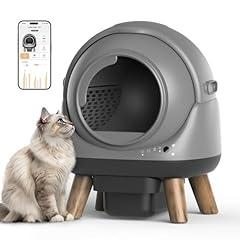
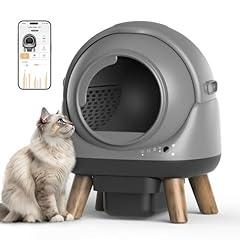
Coziley G1 Automatic Litter Box for Cats
Overview
This is a 27.6-pound, open-entry automatic litter box with a rotating globe, a pull-out bagged waste drawer, and 2.4 GHz Wi-Fi app control. It is intended for cats from 2.5 to 18 pounds, with a manufacturer-stated kitten mode that changes cleaning to manual operation for lighter cats. Coziley states that infrared and weight sensors stop a cleaning cycle when a cat enters, and that a sealed waste bin, waterproof tray, and odor seal help contain waste. The available G1 manual also describes removable globe parts that can be washed, plus error codes for motor, globe, and bonnet faults. These are useful documented operating details, but no exact-model independent obstruction, power-loss, leak, noise, or cleaning-performance test was located. No exact-model U.S. NRTL electrical listing or public laboratory safety report was located.
What works
- The manual directs manual-only cleaning in kitten mode for cats under 2.5 pounds.
- The globe, bonnet, litter sifter, and interior accessories are documented as removable for washing, while the powered base is wiped rather than rinsed.
- The troubleshooting guide identifies several recoverable faults, including abnormal motor current, a misseated globe, and a missing bonnet.
- Coziley provides a public U.S. contact address and links to customer help and warranty pages.
What does not
- The safety case rests on manufacturer sensor claims. No independent exact-model tests were found for obstruction, entry during motion, sensor failure, or loss of power.
- No exact-model UL, ETL, CSA, or TÜV electrical-safety listing was located, and the manual does not publish adapter ratings or measured energy use.
- The claimed odor control, leak prevention, quiet operation, health monitoring, and 99 percent time-saving language lack disclosed test methods or performance limits.
- Bag replacement creates recurring plastic waste, and no product-specific take-back, recycling, spare-parts catalog, or long-term firmware-support policy was located.
- A sensor reset is required after adding litter. The manual says inaccurate calibration can affect cat detection and automatic cleaning.
Who is it for
This product suits an adult-cat household whose cats are within the stated 2.5 to 18 pound range, use clumping litter, and can comfortably use an open-front globe. It is most appropriate for a buyer willing to keep the unit on a firm, level floor, reset its weighing after refilling litter, inspect sensors and moving parts, and empty the drawer regularly. The documented removable globe components may also suit someone who wants a more thorough wash-down option than a sealed, non-removable chamber provides.
Who is it not for
It is not well suited to kittens under 2.5 pounds unless the household will keep kitten mode enabled and start cleaning manually. It also warrants caution for cats with mobility limitations, very large body size, avoidance of enclosed spaces, or a history of reacting to moving litter equipment. Households that need independently documented motion-safety testing, an exact-model U.S. electrical certification, published energy consumption, or strong app privacy disclosures should choose a product with those records available. Pregnant or immunocompromised people should not treat automatic collection as eliminating litter-handling hygiene precautions.
Integrity
The product uses a powered rotating mechanism and a bagged waste drawer. Coziley states that it has infrared and weight sensors, a sealed bin, waterproof tray, and odor seal. Its manual documents washable globe-side components, but says not to rinse the powered base. Daily emptying and handwashing still matter. CDC guidance says cat litter should be changed daily and that people who are pregnant or immunocompromised should take extra care around litter waste. No Coziley G1 recall was located in the searched CPSC public recall materials. However, no exact-model U.S. NRTL electrical certification, independent safety test, measured energy-use record, or public product-specific end-of-life program was found. The unit uses replaceable waste bags, so it creates ongoing plastic waste. At end of life, its powered components should be handled through an appropriate electronics recycler rather than household recycling when local rules require it.

PetPivot Self-Cleaning Litter Box
Overview
This is an open-top, plug-in automatic litter box that rotates its litter chamber after use to separate clumps into a bag-lined rear waste container. The exact-model manual states a 10 L waste container, 24 W power rating, 12 V DC input, 13.18-inch entry height, and suitability for cats over 3 pounds and older than 6 months in automatic mode. It can also be switched to manual cleaning mode. Independent hands-on reviews confirm that it automates routine scooping, has no app or Wi-Fi requirement, and uses a bagged waste drawer. However, evidence about the sensor-based motion safety system is seriously qualified by pending litigation involving this exact product. A federal court described the allegations at the motion-to-dismiss stage, without deciding their truth or the case merits, including an alleged fatal entrapment incident on January 27, 2025.
What works
- Independent hands-on reviews found that it can automate routine waste removal and that the controls are relatively simple.
- The product offers manual cleaning mode, which lets an owner control when a cycle runs and gives a non-automatic fallback during acclimation or maintenance.
- Its bag-lined waste container and removable, washable litter chamber support regular waste handling and deep cleaning.
- The product does not require an app, account, Wi-Fi connection, or ongoing software support to operate.
- A 12-month limited warranty covers qualifying manufacturing, electrical, motor, sensor, and structural defects, according to PetPivot.
What does not
- The core motion safety claim is not independently validated by a disclosed obstruction, entry-during-cycle, power-loss, or sensor-failure test for this product.
- A pending federal product-liability case alleges that an Autoscooper 11 trapped and killed a cat. The court did not determine whether those allegations were true, but allowed key consumer-protection claims to proceed.
- No authentic exact-product UL, ETL, CSA, or TÜV electrical-safety certification listing was located during verification.
- The 13.18-inch entry is high for cats with mobility limitations, and verified-purchase reports describe cramped fit, litter tracking, jams, smearing, odor leakage, and difficulty with larger cats.
- It uses disposable fitted waste bags and replaceable litter-bed pads. No product-specific take-back or recycling program was identified.
Who is it for
This product fits an adult, able-bodied cat above the stated 3-pound and 6-month thresholds whose owner wants a basic, app-free mechanism for reducing routine scooping. It is most workable where the owner can inspect the box daily, keep a conventional backup box available during cleaning or troubleshooting, use compatible clumping litter, and perform regular bag changes and monthly deep cleaning. Manual mode may help households introducing a cautious cat because the owner can choose when the chamber rotates.
Who is it not for
It is not appropriate for kittens younger than 6 months, cats under 3 pounds, or pregnant or nursing cats in automatic mode, according to the product manual. It is also a poor safety fit for households unwilling to accept unresolved sensor-safety concerns or to supervise and inspect an automated device closely. Cats with arthritis, poor balance, reduced jumping ability, or difficulty entering a 13.18-inch-high opening may struggle. Large cats may also be poorly served, given verified-purchase reports of cramped use and soiling.
Integrity
The product has practical hygiene provisions, including a bagged waste container, a removable litter chamber and litter bed that the manual says can be rinsed, plus instructions to empty waste regularly and keep the powered base dry. These measures reduce handling frequency, but they do not eliminate exposure to feces, litter dust, or pathogens. Wash hands after litter handling, clean contaminated surfaces, and maintain a separate litter option when this unit is offline. Its 24 W rating and 12 V DC input are manufacturer-stated, not measured energy-use data. The plastic product relies on disposable fitted bags and a replaceable litter-bed pad, and no take-back program was identified. Most importantly, no exact-product U.S. NRTL certification was verified. Pending federal litigation alleges a fatal entrapment incident involving this product. The court's February 24, 2026 ruling treated the allegations as true only for the dismissal motion, not as a final factual finding.

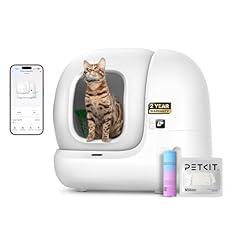
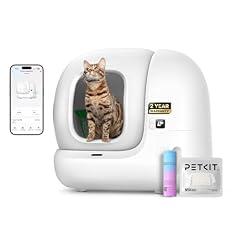
PETKIT PUROBOT MAX PRO AI Cat Litter Box
Overview
This is a plug-in, enclosed automatic litter box with a rotating cleaning cylinder, 8 L waste bin, app control, Wi-Fi and Bluetooth, plus an internal camera and microphone. The manufacturer specifies a 12 V, 2 A input, 24.25 lb unit, two supplied sifters for supported clumping litter, and use only for cats older than six months and at least 3.3 lb. Its most consequential design claim is a permanently open anti-pinch entrance at part of the rotation cycle, backed by 12 proximity and weight sensors. That is manufacturer-stated, not independently safety-lab verified. The radio hardware is independently traceable through an FCC authorization for this exact product. Independent hands-on reporting found the opening easy to enter, but the interior cramped for 15 lb cats and less convenient for older cats that need a low step-in.
What works
- The manufacturer documents specific minimum age and weight limits, supported litter types, and a kitten mode that disables automatic and periodic cleaning.
- Scheduled cleaning continues with preset settings if Wi-Fi drops, while the unit also has on-device status prompts and manual maintenance functions.
- The removable cylinder and sifter can be rinsed, while the sealed bin and drawstring closure are designed to reduce direct handling during bag changes.
- The exact Wi-Fi and Bluetooth hardware has an FCC equipment authorization, rather than only an unexplained wireless claim.
- A two-year limited warranty applies in the United States to qualifying purchases from January 1, 2025 onward.
What does not
- No UL, ETL, CSA, or other U.S. NRTL electrical-safety listing was located for the complete powered product or its adapter. FCC authorization only addresses radio compliance.
- The manufacturer’s "100% safety protection" and odor-free language is too absolute. It is not supported by public failure-mode testing, and hands-on user reporting indicates odors and cleaning needs can remain.
- The interior can be restrictive for large cats. An independent reviewer observed 15 lb cats appearing cramped, and noted the lack of a front lip or step for older cats.
- Soft stool still requires prompt manual cleaning. Several electronics and the litter pad cannot be rinsed or soaked, and the manual prohibits bleach, disinfectant, alcohol, and non-neutral detergents.
- Video and health-tracking functions use cloud services. Some extended history features require a subscription, and the privacy policy permits collection of video, audio, network, device, and usage information when enabled.
Who is it for
It suits a household with one or more healthy adult cats above 3.3 lb that already use clumping clay, tofu, or mixed litter and whose caretaker is comfortable monitoring an app. It is particularly relevant for people who want visit, weight, and camera records as observational information to discuss with a veterinarian, rather than as diagnosis. The fit is stronger where the box can sit on a firm, level indoor floor with clearance from walls, and where someone can still inspect litter level, clean loose stool promptly, and empty the waste bin.
Who is it not for
It is not appropriate for kittens under six months, cats below 3.3 lb, or households that cannot enable the manufacturer’s kitten protection setting when smaller cats may access it. Larger-bodied cats, senior cats, and cats with mobility limitations may need a roomier, lower-entry option because independent testing found the interior tight for 15 lb cats and the entry lacks a step. It also does not fit camera-averse households, people seeking a fully washable appliance, or anyone who expects odor control and health alerts to replace daily hygiene checks or veterinary care.
Integrity
The safety case is stronger than a sensor-only marketing description because the manufacturer documents an anti-pinch entrance design, 12 sensors, weight-based pausing, age and weight exclusions, and a requirement for firm, level placement. However, no public independent test was located that documents obstruction, sensor-failure, or power-loss safety testing. The exact wireless hardware has FCC authorization, but no U.S. NRTL listing for the full electrical product or adapter was found. The box can reduce direct waste contact through its sealed bin and drawstring bag closure, but it does not remove litter-related infection risk. CDC guidance still supports daily waste handling and hand hygiene, with pregnant or immunocompromised people ideally avoiding litter changes. Its plastic body uses replaceable bags and odor cartridges, and no take-back or end-of-life recycling program was located. PETKIT documents cloud-encrypted camera data and deletion requests, but its privacy materials also describe collection of smart-device video, audio, network, and operational data when relevant features are enabled.
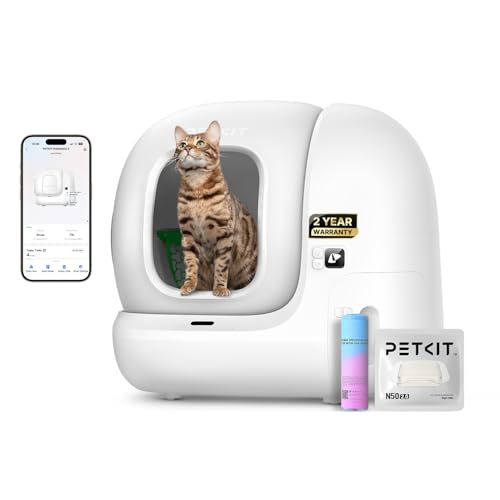
PETKIT PuraMax 2 Self-Cleaning Cat Litter Box
Overview
This is a 22-pound, plug-in automatic litter box with a rotating cylinder, a 7-liter waste drawer, removable litter sifters, a washable cylinder, and app connection by 2.4 GHz Wi-Fi and Bluetooth. PETKIT specifies it for cats older than six months and from 3.3 to 22 pounds. It should sit on a hard, level floor with clearance from walls. Its defining safety feature is a rotation path designed to leave the entrance open, backed by manufacturer-stated proximity and weight sensing. An independent hands-on review also observed the permanently open entrance and reported successful daily scooping and leak resistance in its test. The same review found deep emptying laborious because it depends on a separate magnetic litter-removal part. The product has a verified FCC authorization for its Bluetooth radio, but that is not a safety certification for the full powered appliance.
What works
- The rotating chamber is designed to keep an exit open, and independent hands-on testing observed that configuration.
- The cylinder, sifter, litter pad, and cover are removable, with the cylinder and sifter intended to be rinsed after disassembly.
- A locking waste drawer and anti-leak liner performed well in one multi-week independent hands-on test, including a large rear urine event.
- The exact product has an FCC filing and test documentation for its Bluetooth radio connection.
- The manual provides specific limits for kitten age, minimum cat weight, placement, cleaning, and supported litter dimensions.
What does not
- No U.S. NRTL electrical-safety listing for the complete product or supplied adapter was located in the checked UL, ETL, CSA, and TÜV registries.
- The manual's Continuous Rotation setting can continue operating when a cat approaches, so households should understand that setting rather than assuming all sensor behavior is identical.
- Independent testing found that full litter emptying was slow and incomplete with the required magnetic litter remover.
- The manufacturer recommends hard flooring. Independent testing found carpet impaired weight sensing, so automatic operation was disabled during that test.
- The unit uses waste bags and an N50 odor-control consumable. PETKIT provides no U.S.-specific take-back or end-of-life recycling program located in this review.
Who is it for
This product fits an adult cat household with a stable hard-floor location, cats above 3.3 pounds, and a caregiver willing to inspect the box, clean the sensors, empty bags, and perform periodic disassembly. It is particularly relevant where daily scooping is the main burden and a 7.87-inch entry height is manageable. Buyers should be comfortable using an app for settings and monitoring, while recognizing that the device still needs manual sanitation and a conventional backup litter box during maintenance or faults.
Who is it not for
It is not appropriate for kittens under six months or cats below 3.3 pounds, because PETKIT says they should not use automatic cleaning. It is also a poor fit for cats with limited mobility, cats that reject enclosed or mechanical boxes, or cats near the stated 22-pound upper limit without an in-person fit check. Avoid relying on it on carpet, rugs, or unstable flooring. Households unable to supervise setup, clean sensors, or maintain a manual fallback should not treat automation as a substitute for litter hygiene.
Integrity
The safety case is stronger than a sensor-only claim because the rotating chamber is designed to leave an exit open, and an independent reviewer observed that layout during use. Still, safe operation depends on correct setup. The manual requires a level hard floor, clearance from walls, original power equipment, dry indoor use, sensor cleaning, and no use by very young or very small cats. PETKIT also warns that the base cannot be rinsed or soaked. The product is made from PP, ABS, TPE, and silicone according to PETKIT. Several high-contact parts can be removed and washed, which can reduce retained waste, but odor-control cartridges and disposable waste bags add recurring material use. The manual includes WEEE disposal instructions for Europe, yet no U.S.-specific take-back program was located. Bluetooth radio compliance is publicly traceable through FCC documentation, while an independent electrical-safety certification for the complete U.S. appliance was not located. The app policy says it collects device identifiers, network status, litter-box use data, and optional pet-profile information, and lists third-party service providers and account-deletion controls.

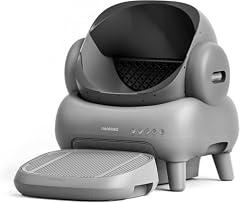
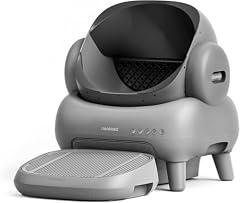
Neakasa M1 Self-Cleaning Cat Litter Box and Cat Step Stool
Overview
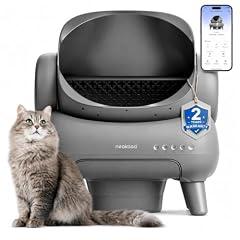
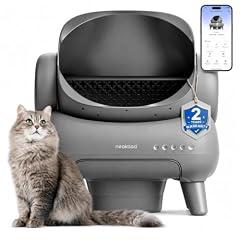
This product bundles Neakasa's open-top, app-connected automatic litter box with a washable plastic ramp that is intended to catch tracked litter and reduce the climb into the chamber. It rotates clumping litter through a screen after use, moving clumps into a lined 11.23 L waste drawer. Neakasa lists a 7.17 L litter chamber, support for cats from 2.2 to about 33 pounds, and six infrared sensor pairs plus four weight sensors. Independent testing of the M1 Plus over 14 days with two cats recorded 74 uses, 72 cleaning cycles, no jams or false starts, low tracked litter, and reliable clump removal. The same tester found the roughly 35 cm entry high for small, elderly, or mobility-limited cats, although the included step can help. Automatic operation remains unsuitable for kittens under 2.2 pounds unless Kitten Mode disables automatic cleaning.
What works
- Independent two-cat testing found no jams, false starts, or blockages over 14 days of use.
- Independent obstruction checks found the chamber did not start when a hand or test weight was present.
- The open chamber provides a visible, readily escapable space rather than a closed globe.
- The included ramp is manufacturer-stated to catch tracked litter and can reduce the practical step-up to the entry.
- Physical controls remain available if Wi-Fi or the app is unavailable.
What does not
- The roughly 35 cm entry is a real access barrier for many senior, small, injured, or mobility-limited cats without the step.
- Independent testing found urine and litter residue can accumulate around the screen, especially when litter is too shallow.
- The product uses disposable waste bags, although Neakasa says a suitably sized non-proprietary bag can be used.
- No exact-product UL, ETL, CSA, or other U.S. NRTL electrical listing was located in the searched public registers.
- Published electricity-use data, repair instructions, replacement electronics availability, and end-of-life recycling instructions are limited.
Who is it for
It suits households with one or more healthy adult cats that prefer an open litter area, especially larger cats that may resist enclosed globe-style boxes. It is also suited to a caregiver who wants less daily scooping but can still inspect the chamber, empty the drawer, clean the screen, and respond to alerts. The included step is useful where a cat benefits from a gentler approach to the high entry. It works best with fine, fast-clumping scoopable litter and a stable indoor location near power.
Who is it not for
It is not a safe automatic-mode choice for kittens below 2.2 pounds, pregnant cats, or nursing cats. Neakasa directs owners of those cats to use Kitten Mode and manually start cleaning only after confirming the cat is clear. It is also poorly suited to cats with severe arthritis, weak hind legs, recent surgery, poor balance, or urgent elimination needs if they cannot comfortably use the ramp. Households unable to inspect and clean the unit regularly should not treat its waste drawer as a hands-off hygiene solution.
Integrity
The strongest health finding is an independent 14-day, two-cat test of the exact M1 Plus. It documented dependable cleaning and repeated sensor checks in which no cycle began with a hand or test weight in the chamber. The open design gives a cat a direct exit path, while the manufacturer specifies Kitten Mode with automatic cleaning disabled for cats under 2.2 pounds, pregnant cats, and nursing cats. The high entry still needs individual assessment, even with the bundled ramp. The waste drawer and pull-and-wrap bag system reduce direct contact during disposal, but they do not eliminate fecal exposure. CDC guidance still supports daily litter removal, handwashing after litter-box handling, and extra precautions for pregnant or immunocompromised people. The unit is primarily PP, ABS, and POM plastic and uses disposable bags. Neakasa offers a two-year warranty for eligible M1 Plus purchases made on or after January 1, 2026, but publishes limited repair and recycling detail. No exact-product U.S. NRTL electrical certification was located in the searched public registers.

PetCove Self Cleaning Automatic Cat Litter Box
Overview
This enclosed, powered litter box uses a rotating cylinder to sift clumping waste into a lined, 2.5-gallon waste drawer. Manufacturer materials describe a 15.4-pound unit measuring about 20 by 19 by 20 inches, with a 9.65-inch entrance, a 17-pound cat limit, a removable cylinder, app controls, and a stated power draw of no more than 18 watts. The core safety case is manufacturer-stated rather than independently verified. Petcove describes infrared and weight sensing that pauses ordinary cleaning when a cat approaches or enters. However, the product manual also says the box does not stop during litter-leveling or weight-calibration cycles. An independent in-home review found effective odor containment in the bagged drawer, but also litter scatter, difficult cleaning of the rubber base, a high entry, and app setup problems.
What works
- The removable cylinder and several non-electronic contact parts are described as washable, allowing periodic deep cleaning.
- The lined waste drawer separates collected clumps from the electronic base, and independent testing found the bagged compartment contained odor reasonably well.
- The manual gives concrete limits for kittens, large cats, mobility-impaired cats, soft stool, litter type, placement, and cleaning, which is more useful than a blanket suitability claim.
- Petcove provides a support phone number and email, and offers a lifetime warranty after registration within 14 days, manufacturer-stated.
What does not
- The manual says leveling and weight-calibration rotations do not stop for cat presence. This conflicts with broad safety messaging and is a meaningful motion-safety limitation.
- No exact-product UL, ETL, CSA, or TÜV listing was located in the issuing bodies' public registers. Petcove's broad certification language is not accompanied by a certificate number or an exact-model listing.
- The listed 5 GHz Wi-Fi claim conflicts with the manual for this product, which says 5 GHz is not supported and instructs users to connect through 2.4 GHz Wi-Fi.
- Independent testing found litter can be flung outside the entrance, the rubber interior is difficult to wash and reinstall, and the waste bin does not alert the user when full.
- The manual says not to disassemble or repair the product because it has no user-serviceable parts, and no public parts catalog or repair instructions were found.
Who is it for
This product fits an adult-cat household with cats above 3 pounds and below the stated 17-pound limit, provided every cat is mobile, comfortable with an enclosed opening, and already uses quick-clumping litter. It is most practical for someone able to place it on a hard, level floor with clear space around the unit, inspect the waste drawer regularly, sweep tracked litter, and retain a conventional litter box during transition or outages. The app is optional for basic operation, but setup may require patience with 2.4 GHz Wi-Fi.
Who is it not for
It is not a suitable automatic option for kittens under 3 pounds, pregnant or nursing cats, cats with mobility, vision, cognitive, seizure, or recent-surgery concerns, or cats above 17 pounds. The entry is relatively high and the enclosed opening was uncomfortable for a larger test cat. It also does not suit households that cannot monitor a rotating appliance, need a verified third-party electrical certification, or need the cleaning motion to stop during every movement. Keep a manual litter box available, particularly during acclimation, errors, or power disruption.
Integrity
The washable cylinder, sealed lined waste drawer, and instructions to disconnect power before cleaning can reduce direct handling of waste, but they do not remove infection risk. The CDC advises daily litter handling precautions and handwashing. Pregnant people should avoid changing litter when possible, or use disposable gloves and wash hands afterward. The manual itself warns that pregnant people should not handle litter and recommends hygiene measures. Petcove states that the product uses plastic, a fan, negative-ion odor treatment, and disposable waste bags. The odor claims have not been supported by a disclosed independent test at the exact product specification. The box has a stated maximum power of 18 watts, but no measured standby use, cleaning-cycle energy data, lifecycle assessment, take-back program, or recycling instructions were found. At end of life, the powered plastic appliance should be directed to an appropriate electronics recycler rather than ordinary curbside recycling. No product-specific CPSC recall or public CPSC incident report was located in the searches performed.

Neakasa M1 Self-Cleaning Cat Litter Box
Overview
This is a powered, open-top automatic litter box that rotates its litter chamber to separate clumps into a bagged waste drawer. The current manufacturer page identifies PP, ABS, and POM as the main materials, a 13.86-inch entry height, and a recommended cat range of 2.2 to about 33 pounds. It uses 2.4 GHz Wi-Fi and an app for cycle settings, alerts, litter-level information, and usage records. Its defining design feature is the exposed top rather than a fully enclosed globe. Independent hands-on reviews found that format roomy and easier for some cats to approach. The removable litter chamber can be rinsed after the unit is unplugged, according to the exact-model instruction manual. The manufacturer also states a bagged Pull and Wrap waste system, but its two-week capacity claim conflicts with the manual instruction to empty the bin every 7 to 10 days for one cat.
What works
- The open top and wide access are practical strengths for cats that resist enclosed litter areas. Independent hands-on testing describes the unit as spacious and accessible.
- The instruction manual supports a real deep-cleaning path, with a removable litter chamber that can be rinsed and a main body that is wiped rather than washed.
- A manual cleaning option and Kitten Mode allow automatic cycling to be disabled for cats below 2.2 pounds, pregnant cats, and nursing cats.
- Hands-on testing found the bagged waste drawer useful for containing clumps and reducing room odor between emptying sessions.
What does not
- No publicly traceable UL, ETL, CSA, or TÜV electrical-safety listing for the exact product or its supplied adapter was identified. The product has an FCC wireless compliance filing, which is not electrical or fire certification.
- The sensor and open-top design are plausible safety measures, but no independent published test was found covering obstruction, entry during every motion, power loss, or deliberate sensor failure.
- The manufacturer claims up to 14 days of scoop-free use, while the exact-model manual says to empty the waste bin every 7 to 10 days for one cat, and no later than 14 days.
- The app's Apple privacy disclosure says contact details, user content, and identifiers may be linked to users. It also lists precise location and diagnostic data as collected but not linked.
- The supplied bags create recurring plastic waste, and no specific product take-back or electronics recycling program was identified.
Who is it for
This product fits an adult-cat household that wants automated clump removal but has a cat that prefers an open, visually unobstructed toilet area. It is most suitable where the 13.86-inch step up is manageable, fast-clumping granular litter is already used, and a caregiver will still inspect the drawer and litter chamber regularly. It also suits users who value a removable, rinseable litter chamber and can accommodate a large powered appliance indoors on a stable, dry floor. Keep a conventional backup box during transition and for service interruptions.
Who is it not for
It is not a good fit for kittens below 2.2 pounds unless automatic cleaning remains disabled and every manual cycle is supervised. Cats with poor balance, painful arthritis, major mobility limits, or difficulty stepping up about 14 inches may need a lower-entry box or an appropriately secure ramp. It is also unsuitable for households that expect unattended two-week waste storage, cannot regularly inspect a powered mechanism, use wood pellets or weakly clumping litter, or require independently verified electrical certification and comprehensive mechanical-failure testing.
Integrity
The health-relevant positives are a physically open litter area, a manual Kitten Mode, bagged waste handling, and a chamber that the exact-model manual says can be removed and rinsed. Those features can reduce direct contact during routine waste handling, but they do not remove the infection risk from litter. CDC guidance still calls for daily litter-box cleaning and handwashing, and advises pregnant or immunocompromised people to have someone else handle litter when possible. The product documentation identifies plastic construction and a 24 W rated power figure, but does not provide measured standby consumption, annual energy use, lifecycle data, or a product recycling program. It uses disposable waste bags, though the drawer is designed around drawstring bags rather than a sealed disposable tray. No CPSC recall for this product was located in the reviewed U.S. recall sources. Its wireless documentation supports FCC radio compliance, but that is not a substitute for independently traceable electrical-safety certification.