10 Best Anti Aging Skin Cream
Please note that we participate in affiliate marketing programs. When you purchase through links on our site, we may earn a commission. As an Amazon Associate we earn from qualifying purchases. This comes at no additional cost to you and helps support the resources required to provide valuable content.Advertising Disclosure
Top-rated Anti Aging Skin Cream Comparison
1
2
4
5
6
7
8
9
Anti-aging skin cream: what to look for
Anti-aging creams mainly work in two ways: they improve the skin’s surface appearance through moisturization, or they use an active ingredient intended to influence visible signs of photoaging over time. Humectants such as glycerin and hyaluronic acid attract water; oils, butters, silicones and ceramides reduce the feeling of dryness and support a smoother-looking surface. These effects can make fine lines look temporarily less noticeable, but hydration is not the same as lasting wrinkle reduction.
The evidence for a product depends on more than its headline ingredient. Retinol, niacinamide, peptides, adenosine, hyaluronic acid and related ingredients have human research behind some uses, but the research usually applies to a particular form, concentration, delivery system and study period. A product that names an ingredient without stating its percentage cannot be matched confidently to those results. “PDRN,” collagen, botanical extracts and proprietary complexes likewise need identity, dose, stability and delivery information before their claimed benefits can be judged.
The strongest product-specific evidence is an independent study of the exact final cream, not an ingredient study or before-and-after marketing. Look for participant details, controls, study methods and validated measurements such as corneometry for hydration, cutometry for firmness, profilometry for wrinkles or standardized image analysis. A small manufacturer-run consumer questionnaire can indicate perceived hydration, but it does not establish durable wrinkle improvement. Claims such as “clinically proven,” “reverses aging,” “repairs collagen,” “repairs sun damage” or rapid 14-day results should be read against the actual study design and outcome.
A buyer should also look for a complete ingredient declaration, disclosed active concentrations, appropriate directions and warnings, and evidence that the formula remains safe through its shelf life. For water-containing creams, useful quality documentation includes antimicrobial challenge testing under ISO 11930 or USP <51>, microbial testing under USP <61> and USP <62>, and stability work. Independent lot verification is stronger when an ISO/IEC 17025-accredited laboratory provides a dated certificate of analysis tied to a lot number and test methods. A clean FDA recall, warning-letter or import-alert search is reassuring context, but it is not proof that a product has passed independent testing.
Certification claims also need scope. Cruelty-free claims are more meaningful when the company appears in the Leaping Bunny register; USDA Organic claims should be checkable in the USDA Organic Integrity Database; and EWG VERIFIED, COSMOS, ECOCERT or NATRUE claims should have a current listing or certificate. “Vegan,” “hypoallergenic,” “dermatologist-tested,” “made in USA” and “recyclable” are not equivalent to independent proof unless the relevant certification or documentation is available. Packaging claims should identify the material, recycled content and realistic recycling pathway rather than simply describing a package as sustainable.
Across the reviewed products, recurring cautions include fragrance and essential oils as avoidable irritation or contact-allergy concerns, especially for rosacea-prone, eczema-prone or reactive skin. Retinol and retinyl palmitate can cause dryness and irritation; retinoid products require gradual introduction and daytime sun protection, and the supplied reviews repeatedly advise avoiding retinoids during pregnancy or seeking clinician guidance. Several products lacked pregnancy warnings. Marine or salmon-derived collagen and PDRN matter to people with fish allergies. Patch testing is prudent, but it does not replace medical advice for persistent dermatitis or other skin disease. One reviewed balm also listed Lilial, an ingredient associated in the supplied review with reproductive-toxicity concerns and prohibited sale in Great Britain; that product is not an appropriate choice for buyers seeking to avoid that risk.
Integrity
These topics separate a comfortable, responsibly presented moisturizer from a product whose anti-aging story is stronger than its supporting documentation. Scores are comparative within the supplied set: higher scores indicate better documented safety, evidence or environmental practice, while missing tests and conflicting claims lower confidence.
HHealth & Safety
Formula safety for facial skin
This measures whether the complete leave-on formula has a credible safety basis and avoids unacceptable hazards at labeled use. It matters because creams remain on facial skin for hours and are often used repeatedly. Among the supplied products, higher scores were associated with conventional moisturizing bases and fewer unresolved concerns; lower scores reflected issues such as a declared Lilial-containing balm or limited formula confidence.
Irritation and allergy risk
This measures fragrance, essential oils, harsh actives, botanical sensitizers and available skin-compatibility testing. It matters because anti-aging products are commonly used on sensitive facial areas and irritation can undermine continued use. Higher-scoring examples were fragrance-free or had a simpler disclosed sensitizer profile; lower-scoring examples included citrus, lavender, frankincense, fragrance allergens or substantial botanical blends without public HRIPT or validated tolerability results.
Safe-use instructions for potent actives
This measures whether retinoids, acids, photosensitizing ingredients and other strong actives have usable directions, concentration information, interaction cautions and pregnancy or sun guidance. It matters because incorrect introduction can cause burning, peeling or avoidable sun sensitivity. The strongest supplied scores went to products with clear SPF, reapplication or gradual-use directions; weaker scores reflected undisclosed active strength or missing pregnancy and sun warnings.
Microbial safety over shelf life
This measures preservation, challenge testing and manufacturing controls for water-containing creams. It matters because repeated opening, jars and wet formulas can allow contamination during normal use. Higher scores generally reflected a disclosed conventional preservation system; lower confidence resulted when no ISO 11930 or USP challenge report, microbial release data or accredited laboratory evidence was available. A plausible preservative list is not the same as demonstrated shelf-life control.
Contaminant and regulatory-screening record
This measures evidence concerning prohibited ingredients, adulteration, contaminants and relevant FDA actions. It matters because a clean public regulatory search does not independently establish that every lot is free of heavy metals, undisclosed drugs or contamination. The supplied products generally scored higher when no product-specific FDA action was found and the formula was disclosed; scores remained limited where independent contaminant reports were absent.
EEvidence
Actives that are identified, dosed and protected
This measures whether anti-aging actives are clearly identified, quantitatively disclosed or analytically verified, and kept stable by the formula and package. It matters because a named retinol, PDRN, peptide or vitamin does not show how much remains usable at the end of shelf life. Higher-scoring products had complete ingredient declarations or some stated dose; low scores reflected missing percentages, assays and stability reports.
Evidence that the active can work at the sold dose
This measures whether human research supports the named ingredient, topical form and actual disclosed dose for the claimed visible outcome. It matters because results for 4% or 5% niacinamide, tested hyaluronic acid or studied retinol cannot automatically be transferred to an undisclosed formula. Higher scores combined a plausible ingredient with a stated or research-aligned dose; lower scores relied mainly on theory or broad marketing.
Proof that this exact cream performs
This measures independent, well-designed human testing on the final sold formula using relevant outcomes such as hydration, firmness or wrinkle measurements. It matters because ingredient studies and consumer impressions do not prove that the finished product works as advertised. The supplied products with higher scores had at least some product-specific testing or reported instrumental hydration evidence; scores stayed modest where studies were small, manufacturer-run or unavailable.
Claims that match the evidence
This measures whether advertising distinguishes temporary moisturization from durable anti-aging change and avoids unsupported medical or rapid-result promises. It matters because phrases such as “reverses aging,” “repairs collagen” and “clinically proven” can exceed the available study. Higher-scoring products used more qualified or label-supported claims; lower-scoring products paired broad wrinkle, cellular-repair or disease-treatment language with limited public substantiation.
Independent verification of what is in the jar
This measures current-lot testing by an independent accredited laboratory for identity, active content, contaminants, microbiology and stability. It matters because a public ingredient list is not proof that every lot contains the stated amount or remains safe through shelf life. No supplied product had strong public lot documentation; scores clustered near the low-confidence end because certificates, lot numbers, dates and methods were generally unavailable.
Meaningful certification and origin claims
This measures whether vegan, cruelty-free, hypoallergenic, dermatologist-tested, organic or origin claims are independently defined and checkable. It matters because these labels can influence both health and ethical purchasing decisions. Higher scores reflected a Leaping Bunny listing or other corroborated record; lower scores reflected self-issued claims, missing certificates or direct conflicts, such as a vegan claim alongside listed propolis.
EEcology
Lower-waste, lower-impact packaging
This measures whether packaging protects a cream while reducing virgin material, unnecessary components and difficult-to-recycle mixes. It matters because most reviewed creams came in jars, tubes or pumps, yet package-specific recycling evidence was often missing. Higher scores reflected claims such as a 95% recycled-aluminum tube or reduced carton material; lower confidence reflected undisclosed materials, recycled content, local acceptance or refillability.
Full reviews

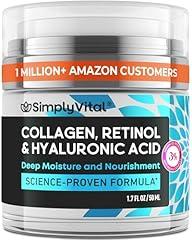
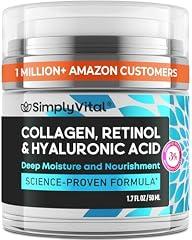
SimplyVital Collagen Face Moisturizer Cream - 1.7oz
Overview
This is a 1.7 fl oz leave-on face, neck, and décolleté moisturizer sold for day or night use. The manufacturer describes a dispensing pump format and instructs users to apply a small amount to clean, dry skin, begin one to two times weekly if sensitive, patch test, and use daytime SPF. It is positioned as a hydrating cream for fine lines, texture, and visible firmness. An independent ingredient listing identifies retinol, hyaluronic acid, hydrolyzed marine collagen, aloe, plant oils, vitamin E, and a multi-part preservative system. Retinol has human evidence for photoaging benefits at known concentrations, but this product does not disclose its retinol percentage, molecular weight of hyaluronic acid, or stability data. The manufacturer says it is made in the USA and rigorously tested, but no public finished-product clinical study, accredited lab report, or lot-specific certificate was located.
What works
- The independently listed formula contains retinol and hyaluronic acid, ingredients with plausible roles in smoothing texture and supporting hydration.
- No added fragrance or essential oils appear in the independently published ingredient list, reducing an avoidable source of scent-related irritation.
- The manufacturer gives practical ramp-up, patch-test, stop-use, and daytime SPF directions for its retinol-containing cream.
- A preservative system including phenoxyethanol, potassium sorbate, caprylyl glycol, and imidazolidinyl urea is listed, which is more credible for a water-containing cream than an unpreserved formula.
What does not
- The retinol concentration, source specification, stability testing, and shelf-life performance data are not publicly disclosed, so effective dose cannot be confirmed.
- The manufacturer provides sun-exposure and irritation guidance, but the public directions do not state a pregnancy or breastfeeding precaution for a retinol-containing product.
- No independent human trial, instrumental hydration test, HRIPT report, preservative challenge test, or current lot-specific laboratory certificate was located for this exact cream.
- The formula includes retinol and imidazolidinyl urea, which can be unsuitable for some reactive or allergy-prone users despite the lack of added fragrance.
Who is it for
This product suits an adult seeking a mid-priced, all-in-one moisturizer for normal to dry skin who wants to introduce an over-the-counter retinol gradually rather than start with a stronger prescription treatment. It is most practical for someone comfortable using a patch test, limiting early use to one or two applications weekly, and applying separate broad-spectrum SPF during the day. The 1.7 fl oz size and pump format fit a simple face and neck routine where hydration and smoother-looking texture are the main goals.
Who is it not for
This is not well suited to people who are pregnant, trying to conceive, or breastfeeding without individualized advice from their clinician, because dermatology guidance advises avoiding retinoids during pregnancy. It is also a poor fit for someone with active eczema, rosacea flares, a damaged skin barrier, or a known sensitivity to retinoids, formaldehyde-releasing preservatives, chamomile, or marine-derived ingredients. Users needing a verified retinol percentage, fragrance-allergen testing, or lot-specific contaminant and microbiology reports should choose a product that publicly provides those records.
Integrity
The formula is not fragrance-free by a self-issued marketing label alone. An independent ingredient listing shows no added fragrance or essential oils, although it does contain retinol, chamomile extract, plant oils, and imidazolidinyl urea. Retinol can cause dryness and irritation and may increase sun sensitivity. The manufacturer appropriately tells users to start slowly, patch test, stop if irritated, and wear SPF. Its public directions do not include a pregnancy or breastfeeding warning. Public FDA recall and cosmetics enforcement searches did not surface a product-specific recall, warning letter, or safety alert as of August 16, 2026. That is not equivalent to independent contaminant clearance. The manufacturer states that the product is made in the USA and rigorously tested, but no recognized third-party certification, accredited lab report, microbial challenge test, recycled-content claim, or recyclability documentation was located. The dispensing pump may reduce repeated finger contact compared with an open pot, but its materials and end-of-life recycling pathway are not disclosed.

Nature Theory Collagen Retinol Moisturizer
Overview
This is a 1.7 fl oz, 50 mL leave-on facial cream marketed for day and night moisturizing, visible firmness, and wrinkle reduction. An independently transcribed ingredient label lists retinol, hyaluronic acid, hydrolyzed marine collagen, aloe, plant oils, vitamin E, and a conventional preservative system. The retinol percentage is not disclosed. The product is positioned as a twice-daily cream, including daytime use. That matters because dermatology guidance generally places retinol in an evening routine and calls for daytime sun protection. No public human clinical report, stability dossier, current lot certificate, or accredited third-party testing record for this exact final formula was located in the verification work.
What works
- The independently transcribed label lists humectant and emollient ingredients that can support surface hydration, including aloe, hyaluronic acid, caprylyl glycol, jojoba oil, and caprylic or capric triglyceride.
- Retinol is specifically identified in the ingredient list. Controlled human research on a different stabilized 0.1% retinol moisturizer supports retinol's potential to improve signs of facial photoaging.
- No fragrance or parfum appears in the independently transcribed ingredient list, which can reduce one common avoidable source of cosmetic irritation.
- The listed preservation system includes phenoxyethanol, potassium sorbate, and imidazolidinyl urea, which is more credible for a water-containing cream than an unpreserved formula.
What does not
- The retinol concentration, form of stabilization, and package-level stability evidence are not publicly disclosed, so the usable dose through shelf life cannot be confirmed.
- Day and night, twice-daily positioning does not align cleanly with dermatology guidance to start retinol slowly, use it at night, and protect skin from the sun during the day.
- Retinol can cause dryness and irritation. Imidazolidinyl urea is a formaldehyde-releasing preservative associated with contact allergy in some people, and chamomile may also be unsuitable for some sensitized users.
- No public independent clinical study, HRIPT or in-use tolerability report, microbial challenge test, contaminant screen, or current lot-specific certificate was found for this formula.
- Claims including visible tightening, wrinkle reduction, cell renewal, and irritation-free use exceed what can be established from the disclosed ingredient list alone.
Who is it for
This product suits an adult with normal to dry-leaning skin who wants one compact facial moisturizer with listed emollients, humectants, and an undisclosed amount of retinol. It is most relevant for someone already familiar with cosmetic retinol and willing to introduce it cautiously in an evening routine, use a separate broad-spectrum sunscreen during the day, and patch test first. The 1.7 fl oz size is also practical for a buyer who wants to try a cream format before committing to a larger jar.
Who is it not for
It is not well suited to pregnancy, breastfeeding, or people trying to conceive without clinician guidance, because dermatology guidance advises avoiding topical retinoids during pregnancy. People with active eczema, rosacea, very reactive skin, known formaldehyde or imidazolidinyl urea allergy, or previous retinol intolerance should choose a simpler product. It may also be a poor fit for acne-prone users who know that richer oils or isopropyl myristate cause breakouts for them. Anyone seeking a documented retinol percentage or independently tested results needs more disclosure.
Integrity
The ingredient list does not show added fragrance or parfum, but unscented does not guarantee low irritation risk. Retinol can irritate skin, especially during early use. The list also includes imidazolidinyl urea, a preservative that can release formaldehyde and has documented contact-sensitization relevance for a subset of users. A gradual evening introduction, patch testing, and reliable daytime sunscreen are prudent. Pregnancy is a particular caution for retinoid-containing skin care. The seller describes the product as cruelty-free, natural, and made in the USA, but no current independent certification or issuing-body registry confirmation was located for those claims. No public recall, FDA warning letter, or import alert specifically tied to this product or brand was located in the reviewed sources. Packaging material, recycled-content documentation, recyclability instructions, and third-party microbial, contaminant, stability, or lot-testing records were not publicly available.

Eight Saints Up the Anti Night Cream
Overview
This is a 2-ounce leave-on night cream for the face, intended for once-daily use on clean skin before bed. Its disclosed formula is a rich water-and-oil emulsion with aloe, safflower, sunflower and jojoba oils, glycerin, shea butter, panthenol, sodium PCA, niacinamide, hyaluronic acid, green tea, botanical extracts, and three palmitoyl peptides. The manufacturer identifies niacinamide, hyaluronic acid and peptides as its anti-aging focus. The exact amounts, molecular weights, stability data, and finished-product active assays are not published. Eight Saints reports a 28-day, 33-person consumer-perception study in which the cream was used nightly alongside a separate eye cream, but it is not an independent controlled clinical trial and does not establish wrinkle reduction for this cream alone.
What works
- The complete ingredient list is publicly available and independently matches a third-party ingredient database.
- The formula has multiple conventional moisturizing components, including glycerin, sodium PCA, oils, shea butter, aloe and hyaluronic acid.
- No added fragrance or essential oil is listed in the declared ingredients, despite the manufacturer describing a green tea scent.
- The manufacturer provides clear nightly application directions.
- The brand reports a 28-day consumer-perception study that included this cream, although the results are not independent clinical proof.
What does not
- Niacinamide, hyaluronic acid and peptide concentrations are not disclosed, so evidence for those ingredients cannot be matched to the dose in this product.
- The published performance evidence is a manufacturer-hosted consumer questionnaire involving 33 participants and a combined routine, not an independent randomized study of this exact cream.
- No public batch-specific certificates of analysis, preservative challenge test, stability report, or contaminant screening report were located.
- The formula contains several botanical extracts and lactic acid, which can still be troublesome for very reactive skin even without listed fragrance.
- Marketing says the cream can prevent wrinkles and increase collagen, claims that are broader than the publicly available finished-product evidence.
Who is it for
This product fits an adult seeking a conventional, richer nightly moisturizer for dry, dull, or temporarily dehydrated facial skin, especially someone who prefers a formula without listed fragrance or essential oils. Its 2-ounce size and once-nightly directions suit a simple moisturizer step rather than a multi-active treatment plan. It may also suit people comfortable with manufacturer-reported consumer feedback, provided they view the likely benefit primarily as improved softness, hydration, and smoother-looking texture rather than proven structural wrinkle correction.
Who is it not for
It is not well suited to people seeking a dose-defined anti-aging treatment, independently verified wrinkle results, or current lot-by-lot laboratory documentation. Those with known sensitivity to botanical extracts, green tea, geranium-related plant materials, or rich oil-and-shea formulas should patch test or avoid it. Acne-prone users who know isopropyl palmitate or heavier emollient creams trigger congestion may prefer a lighter formula. It also does not replace daytime broad-spectrum sunscreen or a clinician-guided treatment for significant photoaging.
Integrity
The disclosed ingredient list does not contain added fragrance or essential oils, which removes a common avoidable source of scent-related irritation. It still contains several plant extracts, including green tea, gotu kola, horsetail, wild geranium and dandelion, so fragrance-free does not mean allergy-free. Lactic acid is listed, but no concentration, pH, interaction guidance, patch-test report, or pregnancy-specific guidance is published. No relevant FDA recall, warning letter, or import-alert listing was located in the searched United States regulatory sources. Eight Saints describes the product as certified cruelty-free and made in the USA with globally sourced ingredients. The product page does not identify a certifier or publish a certificate that could be confirmed in an issuing-body register. The brand also makes broad recycling and renewable-energy statements, but no product-specific package material, recycled-content percentage, recyclability instruction, or packaging certification was found. Public microbial challenge, stability, contaminant, and batch-testing documents were not located.

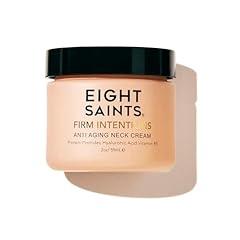
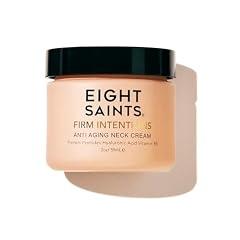
Eight Saints Firm Intentions Neck Cream
Overview
Firm Intentions is a 2 oz leave-on cream for the neck and décolleté. Eight Saints directs users to apply a small amount to clean, dry skin with upward motions, morning and evening. It is marketed for fine lines, wrinkles, dryness and hyperpigmentation. The manufacturer’s current ingredient declaration identifies a water and aloe base with glycerin, safflower, sunflower and jojoba oils, shea butter, panthenol, hyaluronic acid, niacinamide, lactic acid, green tea, three palmitoyl peptides and botanical extracts. It is described as unscented, and the published list contains no added fragrance or essential oil. Active concentrations, pH, stability data and current-lot testing are not disclosed. Eight Saints calls the cream dermatologist approved and clinically proven, but no independent report for this finished formula was located.
What works
- The disclosed formula contains no added fragrance or essential oils, which avoids a common source of cosmetic scent sensitivity.
- The ingredient declaration specifically identifies hyaluronic acid, niacinamide and three palmitoyl peptides rather than using a vague proprietary active blend.
- Directions clearly define the application area and twice-daily use routine.
- Humectants and emollients, including glycerin, aloe, hyaluronic acid, plant oils and shea butter, provide a plausible moisturizing basis for temporary skin plumping and softness.
What does not
- The amounts of niacinamide, hyaluronic acid, lactic acid and peptides are not disclosed, so the formula cannot be matched to the doses used in supportive human studies.
- No independent clinical study, instrumental wrinkle measurement or full tolerability report for this exact cream was located, despite the manufacturer’s clinically proven claim.
- No public antimicrobial challenge test, microbial limit test, stability report or current-lot certificate of analysis was located for this water-containing cream.
- Lactic acid and multiple botanical extracts can still be problematic for some reactive or allergy-prone users, and no public HRIPT or validated sensitive-skin test report was found.
Who is it for
This product suits adults looking for a 2 oz neck and décolleté moisturizer with a fragrance-free declared formula and a simple morning-and-evening routine. It is most aligned with users whose main goal is improving the feel and temporary appearance of dry, crepey-looking skin through humectants, emollients and barrier-supportive ingredients. It also fits buyers who are comfortable evaluating it as an ingredient-led cosmetic, rather than relying on disclosed concentration data or a published clinical trial of the finished cream.
Who is it not for
It is not well suited to people who need independently documented wrinkle reduction, measurable firming results or lot-specific laboratory verification before using a leave-on cosmetic. Those with known reactions to lactic acid, aloe, green tea, centella, geranium, dandelion, plant oils or shea butter should review the full ingredient list and patch test cautiously. It is also a weaker fit for highly reactive skin because the brand does not publish a human repeat-insult patch test or a sensitive-skin tolerability report for this cream.
Integrity
The disclosed formula avoids added fragrance and essential oils, a meaningful reduction in avoidable scent-related irritation burden. It contains moisturizing ingredients such as glycerin, aloe, sodium PCA and hyaluronic acid, alongside niacinamide, panthenol, peptides and emollient oils. Human research supports some topical niacinamide and hyaluronic-acid formulas, but the relevant concentrations and molecular specifications in this cream are not public. Searches of FDA public records did not identify a product-specific recall, warning letter or import alert, which is reassuring but does not substitute for independent testing. Eight Saints describes the product as certified cruelty-free, but its product page does not identify the certifier or certificate scope. No product-specific accredited laboratory report was found for microbiology, contaminants, stability or active-content testing. Packaging material, recycled-content percentage, recyclability instructions and secondary-packaging details are also not publicly specified. These are transparency gaps, not evidence that the product is contaminated or environmentally harmful.

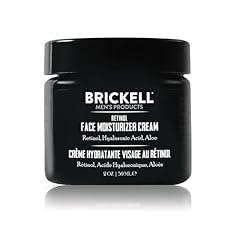
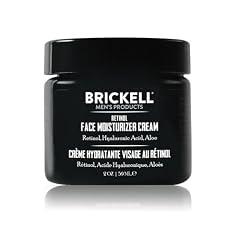
Brickell Men's Retinol Face Moisturizer Cream
Overview
This is a 2-ounce, fragrance-free leave-on facial night cream sold for fine lines, uneven tone, enlarged pores and hydration. The manufacturer directs users to massage a small amount onto clean, dry skin. It says the product can be used daily, but recommends reducing use to one or two times weekly if dryness or flaking occurs, and following daytime use with SPF. The manufacturer publishes a full ingredient list, including retinol, aloe juice, glycerin, sunflower and jojoba oils, shea butter, panthenol, vitamin E, green-tea extract and preservatives. Retinol is specifically named, but its concentration, encapsulation method, real-time stability data and finished-product clinical testing were not publicly available in the materials reviewed. Human research supports stabilized retinol at disclosed concentrations, but that evidence cannot establish the dose or performance of this exact cream.
What works
- Fragrance-free composition is clearly stated by the manufacturer, which avoids added perfume as an avoidable irritation source.
- The published formula combines retinol with humectants and emollients including glycerin, aloe, jojoba oil, shea butter and panthenol.
- Directions acknowledge dryness and flaking, and advise reduced frequency rather than continued daily use.
- The manufacturer provides an ingredient declaration and advises SPF use after daytime application.
What does not
- The retinol percentage is not disclosed, so the active dose cannot be matched to human studies of 0.1% or 0.4% stabilized retinol.
- No public independent clinical report was found for this finished cream's wrinkle, tone or pore claims.
- No public lot-specific accredited laboratory results were found for retinol content, contaminants, microbiology or shelf-life stability.
- The formula contains retinol, alcohol, propolis and several botanical extracts. Fragrance-free does not make it low-risk for every sensitive or allergy-prone user.
- The product page calls the cream vegan while its own ingredient list includes propolis extract, a bee-derived ingredient. That is a direct claim inconsistency.
Who is it for
This product suits an adult seeking a small, fragrance-free night moisturizer that introduces retinol alongside conventional moisturizing ingredients. It is most relevant for people with mild visible photoaging concerns, such as uneven tone or fine lines, who can start slowly and use broad-spectrum sun protection in the daytime. The $40, 2-ounce format is better suited to someone comfortable paying for a compact facial treatment rather than a basic large-format moisturizer. Users should be willing to judge tolerability gradually because the retinol dose is not disclosed.
Who is it not for
It is not well suited to pregnant people or those trying to become pregnant, because dermatology guidance advises avoiding retinoids during pregnancy and the product page does not provide a pregnancy warning. People with rosacea, active dermatitis, very reactive skin, known bee-product allergy or sensitivity to botanical extracts should be cautious, especially because the formula includes propolis, alcohol and multiple extracts. It also is not ideal for buyers who need a disclosed retinol percentage, independently verified lot testing, a published patch-test report or finished-product clinical evidence before using a facial active.
Integrity
The disclosed ingredient list is a useful transparency strength. It identifies retinol and a conventional water-based preservation system that includes phenoxyethanol, ethylhexylglycerin, potassium sorbate and sodium benzoate. However, no public preservative challenge-test report, microbiology certificate, contaminant screen, stability assay or current lot certificate was located. Retinol can irritate skin, and dermatology guidance recommends night use, gradual introduction and daytime sun protection. The directions address slower use and SPF, but do not state a retinol percentage or include a pregnancy warning. No relevant public FDA recall, warning letter or mercury or hydroquinone alert was found in the reviewed searches. The manufacturer claims vegan status and no animal testing, but the listed propolis extract conflicts with a vegan claim. No verified recycled-content, recyclability, refill, package-material or lower-waste claim was found for this product, so its packaging footprint cannot be meaningfully substantiated.

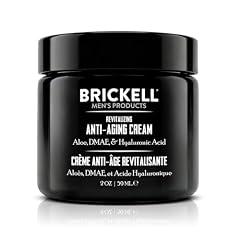
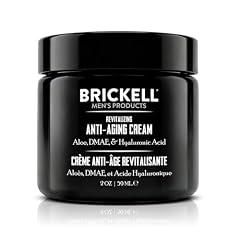
Brickell Men's Revitalizing Anti-Aging Cream
Overview
This is a 2-ounce leave-on facial cream intended mainly for nighttime use. The manufacturer directs users to apply a blueberry-sized amount to clean facial skin, including the forehead and eye area. It is sold in scented and unscented versions, although this catalog record is for the scented version. The manufacturer lists a moisturizing base of aloe, glycerin, plant oils and butters, with hyaluronic acid, DMAE, MSM, vitamin E and green tea extract. Those are manufacturer-disclosed ingredients, not independently assayed contents or doses. Published human research supports topical 3% DMAE gel and topical hyaluronic-acid products in some settings, but no public study was located for this finished cream or its undisclosed active concentrations. The brand calls the cream clinically proven and promises rapid, substantial wrinkle reduction, claims that could not be independently substantiated from a public final-product report.
What works
- The disclosed formula combines humectants, oils and butters that are plausibly useful for overnight moisturization.
- It does not contain retinoids or exfoliating acids, so it does not require the more complex sun and pregnancy warnings associated with those actives.
- Brickell is listed in Leaping Bunny materials, supporting the brand's cruelty-free claim.
- The manufacturer offers an unscented option for shoppers who prefer to avoid the scented version.
What does not
- The scented version is a concern for fragrance-sensitive skin because the manufacturer describes peppermint, eucalyptus and lemongrass essential oils.
- The ingredient presentation is not fully clear. The scent description names essential oils, while the current full ingredient list does not list those oils individually and says formulas can vary by date and region.
- DMAE, MSM and hyaluronic acid are named, but their concentrations, molecular specifications, stability data and final-product assays are not public.
- No independent clinical report, patch-test report, preservative challenge test, current lot certificate or contaminant screen was located for this exact cream.
- Claims about removing deep wrinkles and visible changes within days are stronger than the public evidence located for the finished product.
Who is it for
This product suits an adult seeking a richer nighttime moisturizer in a compact 2-ounce jar, particularly someone whose priority is temporary hydration and a smoother-looking surface rather than a prescription-style treatment. The disclosed mix of glycerin, aloe, oils, shea butter and hyaluronic acid is most relevant to normal or dry skin that tolerates richer emollients. It also fits a buyer who values a cruelty-free certification and prefers to avoid retinoids. Select the unscented version if scent sensitivity is a concern.
Who is it not for
This product is not well suited to people with fragrance allergy, rosacea, eczema, a damaged skin barrier, or prior reactions to peppermint, eucalyptus, lemongrass or botanical extracts. The scented version warrants particular caution because the exact essential-oil disclosure is inconsistent across the available product information. It is also not a strong fit for someone seeking independently verified wrinkle reduction, quantified actives, lot-specific quality testing, or a documented final-product patch test. Those using prescription acne or anti-aging treatments should check compatibility with a dermatologist.
Integrity
The formula is a water-containing cream preserved with phenoxyethanol and ethylhexylglycerin in the manufacturer-disclosed list, which is more reassuring than an openly preservative-free cream. However, no public antimicrobial challenge test, shelf-life study, independent contaminant report or lot-specific certificate was found. No relevant FDA recall or warning-letter record was identified in the searched FDA sources. The scent is the main practical health issue, since the manufacturer describes a peppermint, eucalyptus and lemongrass essential-oil blend, all of which can be problematic for reactive facial skin. Brickell's cruelty-free representation has support from Leaping Bunny materials. Its Made in USA and sustainably sourced language remains manufacturer-stated, and no product-specific packaging material, recycled-content percentage or recyclability evidence was found. The cream is sold in a small jar, but the available information does not establish whether the jar or its closure is widely recyclable or made with recycled material.

Dr. Reju-All PDRN Rejuvenating Cream
Overview
This is a 20 ml leave-on facial gel cream intended for morning and evening use after cleansing. It is positioned as a daily moisturizer for hydration, smoother texture, calming, and visible aging concerns. The manufacturer directs users to apply it across the face or to dry areas, and says it may replace a serum or emulsion. Its full ingredient list is publicly available from the brand and is corroborated by independent ingredient databases. It is a water, glycerin, dimethicone, niacinamide, panthenol and hyaluronate formula, with sodium DNA listed as the PDRN ingredient. The brand states that its salmon-derived PDRN is 99% pure and present at 1,200 ppm, or 0.12%. A human study supports topical 0.1% PDRN in a different eye-cream formula, but no independent full report was located for this exact cream.
What works
- The disclosed formula is fragrance-free and contains no essential oils, which reduces an avoidable source of facial irritation.
- Glycerin, panthenol, betaine, dimethicone and hyaluronate provide a credible humectant and emollient base for immediate moisturization.
- The manufacturer discloses a specific PDRN level of 1,200 ppm, and sodium DNA appears in the ingredient list.
- It does not contain a retinoid, exfoliating acid, or other active that normally requires dedicated sun or pregnancy warnings for routine cosmetic use.
What does not
- The brand's post-laser recovery and 25% improvement statements were not accompanied by a full independent clinical report for this exact product.
- No current lot-specific certificate of analysis, accredited laboratory assay, microbial challenge-test report, or contaminant screen was publicly located.
- The topical PDRN evidence found used a different 0.1% PDRN material and eye-cream formula, so it cannot confirm wrinkle or repair results from this facial cream.
- Salmon-derived sodium DNA may be unsuitable for people with a known fish allergy or anyone instructed to avoid marine-derived cosmetic ingredients.
Who is it for
This product suits an adult seeking a small, simple daily moisturizer with a gel-cream feel and a fragrance-free ingredient list. It is most relevant for normal, combination, or dehydrated skin that benefits from humectants, silicone emollients, panthenol and niacinamide, rather than from a strong retinoid or exfoliant. The 20 ml size also fits travel or a short trial period. Buyers should treat the PDRN and post-laser language as manufacturer-stated positioning, not as independently verified performance for this exact cream.
Who is it not for
It is not a good fit for someone with a fish allergy, a history of reactions to marine-derived ingredients, or active facial dermatitis without clinician guidance. People seeking proven treatment for significant wrinkles, melasma, acne scarring, or recovery after a procedure should not rely on its cosmetic claims because no independent final-product trial was found. It is also a poor match for buyers who require public batch testing for microbes, heavy metals, active content, or stability, or who avoid silicone-containing moisturizers.
Integrity
The disclosed formula avoids fragrance and essential oils, and relies on commonly used moisturizer components including glycerin, dimethicone, panthenol, sodium hyaluronate, allantoin and betaine. Cosmetic Ingredient Review has assessed panthenol and related ingredients as safe in cosmetics under its reviewed conditions of use. The manufacturer also recommends patch testing, which remains sensible for sensitive or reactive skin. No product-specific FDA recall, warning letter, or import-alert listing was located in the checks performed. That is not equivalent to independent clearance. The brand states that every batch is tested and that the product is dermatologically tested, but did not publish traceable laboratory reports. No independently verifiable environmental certification, recycled-content claim, package-material specification, or recyclability evidence was located. The small tube reduces product volume, but its end-of-life impact cannot be assessed from public materials.

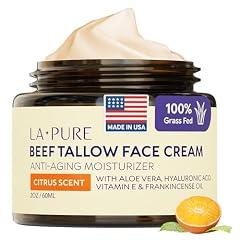
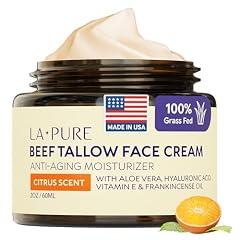
LA PURE Tallow Face Cream with Aloe Vera
Overview
This is a 2-ounce jarred facial moisturizer intended for dryness and visible aging concerns. The manufacturer directs users to apply it to damp, cleansed skin and use it twice daily. Its published ingredient list identifies aloe gel, grapeseed oil, grass-fed beef tallow, raw honey, hyaluronate, vitamin E, colloidal oatmeal, and a multi-oil scent blend that includes frankincense and several citrus oils. The listed formula contains humectant and emollient components suited to moisture support, but it does not disclose hyaluronate concentration, molecular weight, or the amounts of any anti-aging ingredients. Human research supports hydration and some wrinkle-related improvements from certain 0.1% topical hyaluronate formulas, but that does not verify performance of this cream. No independent clinical study, current lot certificate, challenge-test report, or stability report for the finished product was publicly located.
What works
- The manufacturer publishes a relatively detailed ingredient list instead of relying only on front-label hero ingredients.
- The formula identifies hyaluronate, and controlled human research supports hydration benefits from some topical hyaluronate creams, although this product's dose is undisclosed.
- It does not list retinoids or exfoliating acids, so it does not require the usual retinoid or acid-specific use schedule.
- The 2-ounce format and twice-daily directions give users a clear, conventional moisturizer routine.
What does not
- The formula includes frankincense plus sweet orange, tangerine, bergamot, mandarin, clementine, and vanilla essential oils. Fragrance ingredients can trigger irritation or allergic contact dermatitis, especially in reactive skin.
- The website calls the cream suitable for sensitive skin and elsewhere says it has no fragrances, yet its published ingredient list contains multiple scented essential oils. That is a meaningful disclosure conflict.
- No concentration, molecular weight, or stability information is published for hyaluronate, so wrinkle and firmness claims cannot be matched to the topical studies available.
- No independent final-product clinical trial, accredited lot testing, microbial challenge testing, or contaminant report was publicly available.
- A finger-dipped jar can introduce microbes during use. The formula lists preservation ingredients, but the catalog description also calls it preservative-free, creating uncertainty about the preservation claim.
Who is it for
This product is most suited to an adult with uncomplicated dry skin who wants a rich, animal-derived moisturizer in a small 2-ounce jar and accepts a distinctly scented essential-oil formula. It is a practical fit for someone looking primarily for softness and short-term moisture support, rather than a buyer who needs quantified anti-aging actives or documented clinical results. Users should patch test first, particularly if they have not used fragranced facial creams before.
Who is it not for
It is not well suited to people with fragrance allergy, recurrent contact dermatitis, rosacea, eczema-prone facial skin, asthma triggered by scent, or a history of reactions to essential oils. The citrus and frankincense oil blend raises avoidable sensitivity concerns for these groups. It also does not suit vegans because the cream contains beef tallow and raw honey. People seeking a fragrance-free moisturizer, a pregnancy-specific safety protocol, acne treatment, or independently verified wrinkle improvement should choose a product with evidence and labeling tailored to those needs.
Integrity
The manufacturer lists aloe, grapeseed oil, grass-fed beef tallow, raw honey, hyaluronate, vitamin E, colloidal oatmeal, and multiple essential oils. The hyaluronate is described as vegan, but the finished cream is not vegan because it contains animal-derived tallow and honey. The manufacturer also describes the aloe as organic and the product as made in the USA, but no current third-party certification record or scope was publicly located for those claims. No FDA recall, warning letter, or safety alert specific to this product or brand was located in the reviewed public FDA resources. That is not equivalent to independent safety testing. The key health concern is the scented essential-oil blend, since FDA identifies fragrances as a common cosmetic allergen category and notes that some citrus oils can be problematic on sun-exposed skin. Packaging material, recycled content, recyclability, and independent environmental certifications were not publicly documented.

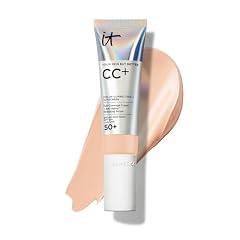
IT Cosmetics CC+ Cream Light Neutral
Overview
This is a 1.08 fl oz, tinted CC cream in 08N Light Neutral, designed to combine full-coverage complexion makeup, color correction, moisturizing ingredients and broad-spectrum SPF 50+ in a pump tube. The manufacturer directs users to apply 1 to 2 pumps evenly to the face, neck and décolleté. It is intended to provide a natural finish while masking uneven tone, redness and other visible skin concerns. Its sunscreen credentials are independently documented in the current US OTC label for Light Neutral. That label identifies 9.0% titanium dioxide and 6.3% zinc oxide as active mineral sunscreen ingredients, with directions to apply liberally 15 minutes before sun exposure and reapply at least every two hours. The anti-aging ingredients are identified, including niacinamide, hydrolyzed hyaluronic acid, vitamin E and peptides, but their individual concentrations and finished-product anti-aging trial results were not published.
What works
- The current US OTC label discloses mineral sunscreen actives, titanium dioxide 9.0% and zinc oxide 6.3%, rather than only making an SPF claim.
- Sunscreen directions, heat-storage advice and eye, rash and accidental-ingestion warnings are clearly supplied on the US drug label.
- Niacinamide, hydrolyzed hyaluronic acid, glycerin, vitamin E and peptides are named in the disclosed formula.
- Topical 5% niacinamide has human trial evidence for improving the appearance of several photoaging measures, although this product's niacinamide dose is not disclosed.
- IT Cosmetics is listed in PETA's Beauty Without Bunnies database, supporting the brand-level cruelty-free claim.
What does not
- The US OTC label for Light Neutral lists lemon, bergamot, orange, lime, grapefruit, pine and eucalyptus oils, plus limonene, linalool and citral. This conflicts with fragrance-free retailer copy and creates an avoidable sensitizer burden.
- No public HRIPT report, validated in-use tolerability report, or other independent skin-compatibility test was located for this finished product.
- No public, independent final-formula clinical study was located to substantiate durable wrinkle, firmness or anti-aging outcomes.
- Niacinamide, hyaluronic acid and peptide concentrations are not disclosed, so evidence from dose-specific studies cannot be directly applied to this formula.
- No current lot-specific third-party certificates for active content, heavy metals, microbiology, preservative challenge testing or shelf-life stability were found.
Who is it for
This product is suited to an adult makeup user seeking a light-neutral, full-coverage complexion product with a natural finish and an included mineral SPF 50+ layer. It is particularly relevant for someone who wants a single pump product for routine makeup application and understands that the labeled sun protection requires liberal application and reapplication every two hours outdoors. It may also suit users who value a disclosed mineral sunscreen dose and can tolerate fragranced botanical ingredients.
Who is it not for
This is not well suited to people with known fragrance allergy, allergic contact dermatitis, rosacea that reacts to essential oils, or a prior reaction to citrus, eucalyptus, pine or fragrance allergens such as limonene, linalool and citral. It is also unsuitable as the sole sun-protection strategy for swimming or heavy sweating because the label directs users to use a water-resistant sunscreen in those circumstances. Buyers seeking quantified anti-aging actives, fragrance-free makeup, vegan makeup, or independently verified batch testing need more documentation than is publicly available.
Integrity
The strongest health documentation is the current US OTC sunscreen label. It confirms mineral UV filters at 9.0% titanium dioxide and 6.3% zinc oxide, identifies the product as broad-spectrum SPF 50+, and gives concrete use, reapplication, eye-contact, rash and storage instructions. The formula also lists niacinamide, hydrolyzed hyaluronic acid, glycerin, vitamin E and peptides, but not their concentrations. A material caution is the mismatch between fragrance-free retailer copy and the US label, which lists several essential oils and declared fragrance allergens. This matters for fragrance-sensitive skin. No public independent lot testing, preservative challenge report, stability report, recycled-content claim or package recyclability specification was found. The pump tube helps control dispensing, but its mixed components and lack of verified material information leave its end-of-life impact unclear.

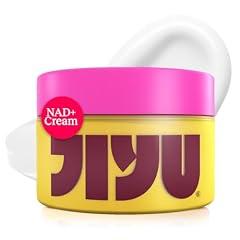
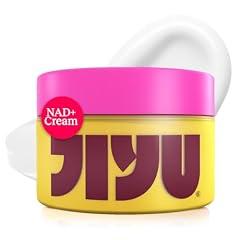
JiYu NAD+ Hydrating Face Moisturizer
Overview
This is a 50 ml leave-on moisturizer for the face, neck, and other dry-looking areas. The manufacturer directs users to apply a pearl-sized amount after cleansing, morning and night, and to use sunscreen in daytime. It is positioned as a hydrating, brightening anti-aging cream rather than an OTC drug treatment. The brand publishes a detailed formula with glycerin, niacinamide, ceramide NP, several hyaluronic-acid derivatives, adenosine, ferulic acid, 3-O-ethyl ascorbic acid, shea butter, and NAD. However, an independently uploaded ingredient record differs substantially, placing NAD near the start and listing fragrance, while the brand list places NAD near the end and does not list fragrance. This prevents confident confirmation of the exact formula, active levels, and fragrance status. No public independent clinical report, lot assay, stability report, or preservative challenge-test report was located for this finished product.
What works
- The manufacturer publishes a broad ingredient declaration with humectants, emollients, ceramide NP, niacinamide, and multiple hyaluronic-acid derivatives.
- Niacinamide has human evidence for improving several visible signs of facial photoaging at 5 percent, although this product's concentration is not disclosed.
- The published brand formula contains no retinoid or conventional exfoliating acid, and the stated directions include daytime sunscreen.
- The cream format includes occlusive and emollient materials such as shea butter, fatty alcohols, and sunflower seed wax that can help reduce moisture loss.
What does not
- Published ingredient information conflicts between the brand page and an independent ingredient record, including the apparent position of NAD and whether fragrance is present.
- The brand does not disclose percentages for niacinamide, NAD, vitamin C derivative, ferulic acid, or ceramide NP, so effective dosing cannot be confirmed.
- No independent human performance study on the finished cream was located, so wrinkle, firmness, and brightening results remain unproven for this exact product.
- No publicly available accredited-laboratory reports were located for production-lot identity, active content, heavy metals, microbiology, stability, or preservative challenge testing.
- The product is marketed as hypoallergenic, but the term has no FDA-defined standard and no product-specific patch-test report was located.
Who is it for
This product suits an adult with normal to dry skin who wants a richer daily moisturizer and is comfortable treating the brightening and anti-aging language as ingredient-led marketing rather than confirmed finished-product results. Its 50 ml size and roughly $59 listed price fit someone looking for a single cream that combines humectants, emollients, niacinamide, ceramide NP, and hyaluronic-acid derivatives. It may also fit users who already use sunscreen consistently and want a non-retinoid moisturizer step for face and neck.
Who is it not for
It is not well suited to people with fragrance allergy, fragrance-triggered dermatitis, rosacea, or highly reactive skin, because the available ingredient records disagree on whether fragrance is present and the formula includes Citrus junos peel extract. It is also a poor fit for buyers who need disclosed active percentages, independent patch testing, pregnancy-specific guidance, or traceable lot testing before repeated facial use. People seeking proven wrinkle reduction, firming, or pigment treatment should not treat the product's broad cosmetic claims as clinical evidence for this exact cream.
Integrity
The published brand formula is a water-based cream using common moisturizing and barrier-supporting materials, including glycerin, fatty alcohols, shea butter, ceramide NP, and several hyaluronic-acid derivatives. These ingredients are compatible with a conventional leave-on moisturizer, but the conflicting public ingredient lists are a transparency concern. One independent ingredient record lists fragrance, and fragrance is a recognized cosmetic allergen category. The hypoallergenic claim does not establish lower allergy risk because FDA does not define that term or require companies to submit substantiation. No public recall, warning letter, or import-alert match for JIYU was located in the FDA sources searched. That is not the same as independent verification of the jar. No public accredited-laboratory reports were found for microbiology, preservative challenge testing, heavy metals, active-content assays, stability, or current lots. No verified recycled-content, recyclability, refill, or third-party environmental certification information was located for the packaging.