
10 Best Alpha Lipoic Acid
 Lauren Wilson
Please note that we participate in affiliate marketing programs. When you purchase through links on our site, we may earn a commission. As an Amazon Associate we earn from qualifying purchases. This comes at no additional cost to you and helps support the resources required to provide valuable content.Advertising Disclosure
Top-rated Alpha Lipoic Acid Comparison
1

2
4
5
+
6
7
+
8
9
10
Alpha-lipoic acid: what to look for
Alpha-lipoic acid (ALA) supplements are sold as conventional mixed-isomer ALA, R-ALA, combination formulas, softgels, and products making stabilized, liposomal, or high-absorption claims. The label may show a modest dose such as 100 or 150 mg, a commonly studied 600 mg amount, or substantially more. A larger number does not by itself show that a product is better suited to a buyer or better supported by testing.
The first question is what is actually in the bottle. A meaningful quality record should confirm the labeled daily amount in the finished product, not just the ingredient specification or the manufacturer’s general testing statement. When a product claims R-ALA, R-ALA-only, or a specific R/S ratio, testing should distinguish the two isomers. HPLC or an equivalent validated assay can measure total ALA and, when appropriate, R- and S-ALA separately. A batch-specific certificate should identify the lot, test method, laboratory, accreditation, limits, and results. A certificate reporting only total ALA does not prove the R/S composition or a 99% purity claim.
Independent finished-product verification is a separate and stronger question than whether a facility follows good manufacturing practices. Look for the exact product in the USP Verified Dietary Supplements directory, NSF Certified Dietary Supplements records, or the Informed Sport directory. A current public register entry is more useful than an on-page “third-party tested” claim that provides no laboratory, lot, method, or result. ConsumerLab testing can also provide product-specific evidence, but a product not appearing in a review should not be treated as tested or failed.
Headline dose figures can mislead in several ways. A serving may contain multiple capsules or softgels, so the amount per capsule is not the daily amount. A high dose may be outside the dose most relevant to the intended use, while a low dose may not resemble doses studied in oral diabetic-neuropathy research. A product can state exact amounts for several ingredients yet leave interaction, duplication, or excessive-intake risks unresolved. “Liposomal,” “stabilized,” “bioavailable,” and “R-ALA” claims require finished-product characterization and relevant human absorption evidence; they should not be inferred from marketing language alone.
Buyers should also check the complete active and inactive-ingredient panel, capsule or softgel materials, oils, colorants, allergens, lot and expiration information, manufacturer contact details, and practical warnings. Structure-function language about antioxidant, nerve, energy, or metabolic support is not evidence that a product treats diabetes, neuropathy, pain, liver disease, or cardiovascular disease. Human evidence supplied for this category is most relevant to particular oral doses and outcomes, not automatically to every blend or broad wellness claim.
Across the supplied products, the recurring safety concern is that ALA can affect blood glucose, with rare reports of insulin autoimmune hypoglycemia. People using insulin or other glucose-lowering medicines, those with unexplained low blood sugar, and people managing diabetes should involve a clinician. Several reviews also call for advice with thyroid conditions or medicines, pregnancy, and breastfeeding. Combination products require additional review: one supplied formula provides 50 mg of vitamin B6, a level flagged for concern with prolonged unsupervised use, and another has conflicting label information. These products should not replace evaluation or treatment for diagnosed neuropathy or another medical condition.
Integrity
The categories below explain the quality questions applied to these products. Higher scores generally reflected specific, checkable documentation; lower scores reflected broad claims, missing lot records, incomplete labels, or warnings that did not address ALA’s known risks.
EEvidence
Verified ALA dose and R/S isomer content
This measures whether independent, batch-specific testing confirms the labeled daily ALA amount and any claimed R- or S-ALA composition. It is central because total ALA does not prove an isomer ratio. The strongest supplied scores went to products with an ISO-accredited total-ALA report or independently listed R-form product; lower scores reflected label claims without an isomer-sensitive, lot-specific result.
Independent product verification
This measures verification of the exact finished product through a current public certification or marketplace test, rather than certification of a factory or ingredient supplier. The supplied products separated sharply here: a current NSF finished-product listing scored highest, while facility GMP credentials and “third-party tested” language scored much lower when no public product record was available.
Human evidence matches the intended use
This measures whether advertised use and oral dose match human research on comparable ALA doses and populations. Evidence supplied here is most relevant to some diabetic peripheral-neuropathy symptom studies, often around 600 mg daily, and findings are mixed. Higher scores reflected restrained, dose-relevant positioning; lower scores reflected broad energy, detox, anti-aging, or disease-adjacent claims that were not tested for the exact product.
Liposomal, stabilized, and high-absorption claims are proven
This measures finished-product testing and relevant human pharmacokinetic evidence for claims of improved absorption, stabilization, liposomal delivery, or superiority from R-ALA. The supplied products generally scored modestly because these claims were inferred from formulation language or ingredient marketing. A high score requires evidence for the actual delivery system, not simply coconut or MCT oil, a softgel, or an R-isomer label.
Claims are honest and do not imply disease treatment
This measures whether marketing stays within qualified structure-function language and does not promise to treat diabetes, neuropathy, pain, liver disease, cardiovascular disease, or other conditions. Higher scores reflected clearer disclaimers and restrained support language. Lower scores reflected unsupported equivalence, anti-aging, disease-adjacent, or broad organ claims that went beyond the available human evidence or the labeled formula.
Traceability and clean regulatory record
This measures whether the brand provides a U.S. contact, lot and expiration information, adverse-event contact details, and a checkable recall or enforcement history. Higher scores reflected bottle-level batch and best-by information or identifiable U.S. support. Lower scores reflected limited public follow-up information. No recall or warning-letter result located in the supplied review should be read as proof of comprehensive safety.
Packaging and environmental transparency
This measures specific, substantiated packaging information rather than general sustainability language. The supplied products mostly lacked material specifications, recycling directions, recycled-content disclosures, or package-specific environmental claims. Even where a pouch, black bottle, or recycle prompt was mentioned, the scores remained limited because buyers could not determine practical U.S. disposal or the actual waste benefit.
HHealth & Safety
Contaminant testing that matches the formula
This measures testing for toxic elements, microbes, residual solvents, and undeclared drugs in the complete formula. It matters because a single-ingredient capsule, softgel oil system, and multi-ingredient blend have different testing needs. Among these products, high scores were associated with defined contaminant or microbiological checks, while lower scores reflected manufacturer claims without public limits, methods, lots, and passing results.
Dose and interaction safety
This measures whether the daily ALA amount and warnings address low blood sugar, rare insulin autoimmune hypoglycemia, diabetes medicines, thyroid conditions or medicines, pregnancy, and other relevant risks. A high score means the buyer receives usable precautions rather than a generic consultation statement. The supplied products scored higher when glucose monitoring or medication adjustment was specifically discussed; lower scores reflected broad warnings that omitted these risks.
Combination-formula safety
This measures whether every added active has an exact amount and whether the combination avoids unnecessary duplication, interaction, or excessive intake. It is especially important for formulas containing B vitamins, berberine, carnitine, NAC, CoQ10, taurine, or vitamin E. Single-active products scored strongly here because they reduce stacking concerns; combination products scored lower when amounts or label versions conflicted, or when vitamin B6 created an additional concern.
Complete inactive-ingredient and allergen disclosure
This measures disclosure of capsule or softgel materials, oils, emulsifiers, colorants, sweeteners, and major allergens, along with support for vegan, gluten-free, soy-free, or non-GMO claims. It matters because gelatin, coconut oil, beeswax, and unspecified colors can change suitability. Higher-scoring products listed excipients and capsule materials; lower-scoring products omitted the full panel or presented conflicting formulation information.
EEcology
Lower-waste packaging with honest environmental claims
This measures whether packaging is minimized, identified for practical U.S. recycling, and supported by specific environmental information. Across the supplied products, scores clustered at the low-to-moderate level because bottles and pouches generally lacked resin codes, recycling instructions, recycled-content figures, or package-specific claims. A recycle prompt or a flexible pouch alone does not establish that the packaging is recyclable or lower-waste.
Full reviews

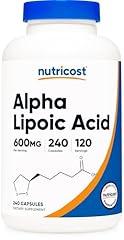
Nutricost Alpha Lipoic Acid 600mg, 240 Count
Overview
This is a 240-capsule alpha-lipoic acid supplement in vegetarian hypromellose capsules. The labeled serving is two capsules, supplying 600 mg of alpha-lipoic acid, with 120 labeled daily servings. Its listed inactive ingredients are dicalcium phosphate, microcrystalline cellulose, vegetable-source magnesium stearate, and silica. The formula is a conventional mixed R- and S-alpha-lipoic acid product, not a separately quantified R-alpha-lipoic acid product. Nutricost states that the product is third-party tested, non-GMO, gluten-free, soy-free, and made in a GMP-compliant, FDA-registered facility. Those statements were not accompanied by a public lot-specific certificate, named laboratory report, or listing in the major independent finished-product certification registers checked. Oral 600 mg alpha-lipoic acid has been studied for symptoms of diabetic peripheral neuropathy, but results across reviews are mixed and it is not an FDA-approved treatment for neuropathy or diabetes.
What works
- The simple formula has one active ingredient, avoiding avoidable overlap with B vitamins, berberine, or other glucose-active ingredients.
- The label identifies the 600 mg daily amount, two-capsule serving, capsule material, and five listed inactive ingredients.
- The labeled 600 mg oral daily amount is within the dose range evaluated in human trials for diabetic peripheral neuropathy.
- The manufacturer provides a U.S. customer-service phone number and states that expiration information is printed on the bottle.
What does not
- No public batch certificate confirms alpha-lipoic acid potency, R and S isomer amounts, heavy-metal limits, microbiological testing, or residual-solvent results for this product.
- The manufacturer’s third-party-testing claim is not matched by a current public USP, NSF, Informed Sport, or ConsumerLab certification or test result for this exact product.
- The product warning advises consultation for medicines or medical conditions, but does not specifically flag blood-glucose lowering, rare insulin autoimmune hypoglycemia, or thyroid-related concerns.
- A pending 2026 class-action settlement concerns Nutricost magnesium glycinate labeling, not this alpha-lipoic acid product. It does not establish an issue with this formula, but it means the brand does not have a fully clean recent labeling record.
Who is it for
This product fits an adult who specifically wants a plain alpha-lipoic acid supplement, prefers vegetarian capsules, and expects to use the label’s two-capsule daily serving for about four months. It is most relevant to someone discussing oral alpha-lipoic acid with a clinician for diabetic peripheral neuropathy, because 600 mg daily is a researched oral dose. It also suits buyers who want no added B vitamins, botanicals, sweeteners, or flavored delivery system. The buyer should accept that potency and contaminant results are not publicly available by lot.
Who is it not for
It is not well suited to people using insulin, sulfonylureas, or other glucose-lowering medicines without clinician oversight, because alpha-lipoic acid can contribute to hypoglycemia and has rare links to insulin autoimmune syndrome. People with thyroid disease or thyroid medicine use should also seek clinician advice. Avoid self-treating diabetic neuropathy, pain, or diabetes with this supplement. Pregnant or nursing people, children, people with a prior unexplained low-blood-sugar episode, and buyers who require public lot-specific potency and contaminant documentation should choose a product with more targeted safety guidance and public verification.
Integrity
The disclosed formula is relatively straightforward. It uses a cellulose-based vegetarian capsule and lists its excipients, with no added vitamin blend or herbal actives that would complicate dose stacking. The manufacturer states gluten-free, soy-free, non-GMO, third-party-tested, and GMP-compliant manufacturing claims. Public searches did not locate a lot-specific certificate or a current independent finished-product certification record that verifies those quality claims for this product. Alpha-lipoic acid is generally not associated with clinically apparent liver injury, but it can affect blood glucose. Published case reports and reviews also link it to rare insulin autoimmune hypoglycemia in susceptible people. No product-specific FDA recall or warning letter was located. A preliminary-approved 2026 settlement concerning a different Nutricost magnesium glycinate product alleged labeling problems, with no finding shown for this alpha-lipoic acid formula. Packaging is a plastic bottle, and no package-specific recycling guidance, recycled-content claim, refill option, or substantiated environmental claim was found.

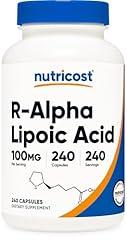
Nutricost R-Alpha Lipoic Acid 100mg, 240 Veggie, Non-GMO, Gluten Free
Overview
This is a single-ingredient adult dietary supplement in a 240-capsule bottle. The labeled serving is one vegan hypromellose capsule daily with water, providing 100 mg of R-alpha lipoic acid. The published label also lists rice flour as the only other ingredient, so it does not combine ALA with B vitamins, berberine, or other actives that can add interaction or excess-intake concerns. Nutricost states that the product is non-GMO, gluten-free, third-party tested, and made in a GMP-compliant, FDA-registered facility. Those are manufacturer claims, not public, lot-specific proof. I did not locate a batch certificate showing the actual R-ALA amount, chiral R and S analysis, contaminant limits, or results for this finished product. The marketed use is antioxidant support, rather than a direct claim to treat a disease.
What works
- A plainly disclosed, single-active formula reduces avoidable overlap with other supplement actives.
- The published label gives an exact 100 mg R-ALA amount per capsule and 240 labeled daily servings.
- The ingredient list is short, with rice flour and a plant-derived hypromellose capsule as the listed inactive ingredients.
- Nutricost states that the product is tested by an independent accredited laboratory, although it does not publish a product-specific report.
What does not
- No public batch-specific certificate was located to confirm potency, R-only isomer content, heavy metals, microbes, residual solvents, or undeclared substances.
- No current public certification record was located for this finished product in the USP Verified, NSF Certified, or Informed Sport directories.
- The label's general clinician-consultation warning does not specifically flag low blood sugar, rare insulin autoimmune hypoglycemia, or thyroid medication considerations.
- The bottle has no published resin code, recycling instructions, refill option, or package-specific environmental information.
Who is it for
This product suits a healthy adult who specifically wants a low, one-capsule daily amount of R-alpha lipoic acid without a multi-ingredient nerve-support blend. The 240-serving bottle is practical for someone planning a long, simple supplementation routine and who can tolerate rice flour and a cellulose capsule. It may also fit buyers seeking a label-stated vegan and gluten-free format, provided they do not need independently certified allergen controls or a public lot test before using it.
Who is it not for
It is not a good fit for people using insulin, sulfonylureas, or other glucose-lowering medicines without clinician oversight, because ALA can affect blood sugar and has been linked rarely to autoimmune hypoglycemia. People who are pregnant, nursing, managing thyroid disease or thyroid medicines, or treating unexplained faintness or low-glucose episodes should seek individualized medical advice first. It is also unsuitable for someone relying on it to treat diabetic neuropathy or pain, since the labeled 100 mg daily amount is below the 600 mg oral dose commonly studied.
Integrity
The health-positive aspect is formula simplicity. The published label identifies one active, 100 mg R-alpha lipoic acid, plus rice flour and a hypromellose capsule. Nutricost also states that its products are made in a GMP-compliant facility and tested by an independent accredited laboratory. However, no named laboratory, lot-specific certificate, chiral assay, or finished-product contaminant report was publicly available to verify those statements for this bottle. Human research on oral ALA has mainly examined higher doses, often 600 mg daily, for diabetic neuropathy, with mixed longer-term evidence. ALA is not FDA-approved to treat disease. The general label warning advises clinician consultation for pregnancy, nursing, medicines, and medical conditions, but gives limited condition-specific guidance. Searches of FDA recall and warning-letter resources did not identify a product-specific public action. The package appears to be a conventional bottle, with no disclosed recycled content, resin identification, recycling guidance, or refill program.

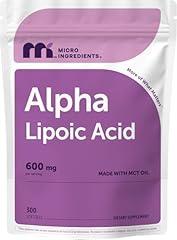
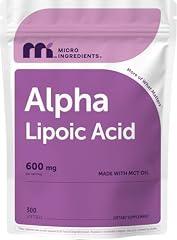
Micro Ingredients Alpha Lipoic Acid Supplement
Overview
This product is a pouch of 300 gelatin softgels. The listed adult use is three softgels daily, providing 600 mg of alpha-lipoic acid per serving and 100 servings. An independent retailer reproduces the Supplement Facts panel and ingredient list, which identify alpha-lipoic acid as the only active ingredient and coconut-derived MCT oil as an excipient. The manufacturer describes the formula as non-GMO and free of soy, dairy, and gluten, and says ingredients undergo third-party testing. Those are manufacturer statements, not public lot-specific results. No batch certificate, public test report, USP, NSF, Informed Sport, or ConsumerLab verification for this exact product was located. The label names alpha-lipoic acid but does not state the R and S isomer amounts. The manufacturer also claims MCT oil improves absorption, but no finished-product human absorption study was found.
What works
- The independently reproduced label gives a concrete daily amount, 600 mg of alpha-lipoic acid from three softgels.
- It is a single-active formula, which avoids added vitamin, botanical, and stimulant doses that can complicate interaction screening.
- The retailer discloses the softgel materials and excipients, including coconut-derived MCT oil, gelatin, glycerin, beeswax, purified water, added color, and the stated soy, dairy, and gluten exclusions.
- The 300-softgel pack provides 100 labeled daily servings.
What does not
- No public batch-specific certificate verifies actual alpha-lipoic acid potency, R and S isomer composition, microbes, heavy metals, residual solvents, or undeclared drugs.
- No current public finished-product certification or independent marketplace test result was located for this exact product.
- The manufacturer markets enhanced absorption from MCT oil, but no human pharmacokinetic evidence for this finished formula was located.
- The listed warning to consult a physician if pregnant, lactating, or taking medicines is useful but does not specifically flag blood-sugar lowering, diabetes medicines, thyroid concerns, or rare insulin autoimmune hypoglycemia.
- The softgel contains gelatin, so it is not suitable for vegans despite broader brand website language about vegan formulations.
Who is it for
This is most suited to an adult who specifically wants a plainly labeled, single-ingredient alpha-lipoic acid product at 600 mg daily, accepts swallowing three softgels, and values a 100-day labeled supply. It is most practical for someone using alpha-lipoic acid as a general dietary supplement after discussing medicines and health conditions with a clinician. It also suits buyers who need stated soy, dairy, and gluten exclusions, but who can use coconut-derived MCT oil and bovine or porcine gelatin softgels.
Who is it not for
It is not suited to vegans, people avoiding gelatin, or people with coconut sensitivity. People using insulin, sulfonylureas, or other glucose-lowering medicines should not start it without clinician guidance because alpha-lipoic acid can contribute to low blood sugar and has rare links to insulin autoimmune hypoglycemia. It is also a poor fit for pregnancy, breastfeeding, thyroid disease or thyroid medicine use without individualized medical advice. Buyers who require independently certified potency, contaminant limits, or confirmed R-ALA content need documentation this product does not publicly provide.
Integrity
The formula is relatively simple. The available retailer label lists one active ingredient, plus coconut-derived MCT oil and standard softgel materials. It also identifies gelatin, glycerin, beeswax, purified water, and added color. This provides more usable disclosure than a front-label claim alone, though the exact colorant is not specified in the retailer text. The manufacturer states the product is non-GMO and free of soy, dairy, and gluten, and says it is third-party tested, but no product-specific lot report or public certification record was located. Alpha-lipoic acid at 600 mg daily has been studied orally, but longer-term evidence for diabetic neuropathy does not establish a meaningful benefit. It can affect glucose control, and rare reports link it to insulin autoimmune hypoglycemia. No product-specific FDA recall, safety alert, or warning letter was located in the checked U.S. sources as of August 16, 2026. The product is sold in a pouch, but no package resin code, recycling instructions, recycled-content percentage, or product-specific environmental certification was provided.

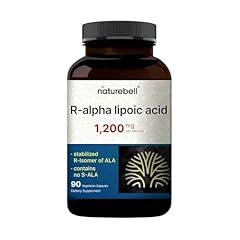
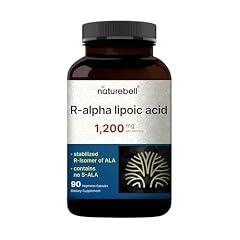
NatureBell R Alpha Lipoic Acid 1200mg
Overview
NatureBell R-Alpha Lipoic Acid is a single-active dietary supplement in a 90 vegetarian capsule bottle. The manufacturer’s Supplement Facts image lists a 3-capsule serving that provides 1,200 mg of R-alpha lipoic acid, giving 30 servings per bottle. The listed inactive ingredients are rice flour, magnesium stearate, silicon dioxide, and a vegetable cellulose capsule. NatureBell states that the formula contains stabilized R-isomer ALA and no S-ALA, and that it is third-party lab tested. Those are manufacturer claims, not publicly verified batch results. No batch-specific certificate showing R and S isomer assay, potency, contaminants, or microbiological results was located. The product is marketed for antioxidant, cellular energy, and general wellness support, rather than as a treatment for a named disease.
What works
- The label presents a straightforward single-active formula, avoiding added vitamins, botanicals, and other active ingredients that can complicate interaction screening.
- The Supplement Facts panel clearly states the serving size, 1,200 mg labeled dose, 30 servings, and named inactive ingredients.
- The manufacturer uses a vegetable cellulose capsule and states the product is free of several major food allergens.
- An amber bottle and double-seal packaging are manufacturer-stated measures intended to protect the capsules during storage.
What does not
- The stated 1,200 mg R-ALA dose and no-S-ALA claim are not supported by a public, batch-specific independent assay using an R and S isomer method.
- NatureBell’s third-party testing claim is not accompanied by a public certificate naming the laboratory, lot, methods, limits, or passing results for this product.
- The official product presentation does not show tailored cautions for glucose-lowering medicines, thyroid conditions or medicines, pregnancy, or the rare autoimmune hypoglycemia reported with alpha-lipoic acid.
- The stabilized and high-bioavailability claims are not supported by finished-product pharmacokinetic testing or a public stability study.
- The amber plastic bottle has no package-specific recycling instructions or substantiated environmental claim.
Who is it for
This product fits an adult who specifically wants a high labeled daily amount of R-alpha lipoic acid in a simple capsule formula, and who can tolerate taking three capsules per serving. It may be practical for someone who wants to avoid formulas that also add B vitamins, berberine, carnitine, or other active ingredients. Because the serving is 1,200 mg, it is more appropriate for a buyer who has reviewed the dose with a qualified clinician rather than someone seeking a low-dose trial or a broadly verified product.
Who is it not for
This product is not well suited to people using insulin or other glucose-lowering medicines, or anyone with episodes of low blood sugar, unless their prescriber is involved. Alpha-lipoic acid has been linked to rare insulin autoimmune hypoglycemia, and the visible product materials do not provide specific guidance on that risk. Pregnant or breastfeeding people, people with thyroid conditions or thyroid medicines, children, and people seeking independently certified or publicly batch-tested supplements should choose a product with clearer medical cautions and transparent testing documentation.
Integrity
NatureBell identifies the product as a vegetarian capsule formula and discloses rice flour, magnesium stearate, silicon dioxide, and vegetable cellulose. It also states that the formula is non-GMO, free of wheat, soy, dairy, gluten, eggs, peanuts, and tree nuts, and third-party lab tested. These statements were not backed by a public batch certificate or an independent certification record for this specific product. The bottle is shown as amber and double sealed, which can help limit light exposure and provide tamper evidence. However, the package does not provide a resin identification code, local recycling guidance, recycled-content information, refill option, or a specific environmental claim. A search did not identify a product-specific FDA recall or warning letter for this NatureBell R-alpha lipoic acid product, but the available public information is still insufficient to independently verify lot-level quality and contaminant controls.

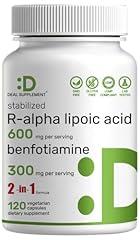
DEAL SUPPLEMENT R Alpha Lipoic Acid 600mg
Overview
This is a 120-capsule vegetarian supplement intended for adults. The manufacturer directs three capsules daily, providing 600 mg of stabilized R-alpha-lipoic acid and 300 mg of benfotiamine per serving, or 40 servings per bottle. Its stated uses are antioxidant, energy, heart, immune, and nervous-system support. The stated R-ALA dose is meaningful because human oral ALA research has examined 600 mg daily in people with diabetic peripheral neuropathy. That evidence is not proof for this exact R-ALA and benfotiamine product, and it does not establish treatment for neuropathy or diabetes. The manufacturer says the product is third-party lab tested, but no current batch certificate, stated assay method, contaminant limits, or public independent certification record was located. The label-facing stabilization and high-absorption claims are also not supported by finished-product pharmacokinetic testing made public.
What works
- The manufacturer fully states both active ingredients and their daily amounts, 600 mg R-ALA and 300 mg benfotiamine.
- A 600 mg oral ALA dose is within the range evaluated in human studies of diabetic peripheral-neuropathy symptoms, though results across reviews are mixed.
- Vegetarian capsules and a 40-serving bottle make the stated daily regimen and bottle duration clear.
- The manufacturer states that the formula excludes gluten, dairy, eggs, peanuts, soy, wheat, yeast, and tree nuts.
What does not
- No batch-specific certificate of analysis was publicly available to confirm R-ALA identity, dose, isomer purity, or stabilization.
- The third-party testing statement does not identify a laboratory, test methods, lot number, contaminant limits, or actual results.
- No public USP, NSF, Informed Sport, or ConsumerLab verification for this finished product was located.
- The product information does not provide clearly verified, product-specific cautions for glucose-lowering medicines or the rare insulin autoimmune hypoglycemia linked to alpha-lipoic acid.
- Claims of improved absorption and easy digestion are unproven for this finished formula.
Who is it for
This product fits an adult who specifically wants a manufacturer-stated combination of R-ALA and benfotiamine rather than two separate supplements, and who is comfortable taking three capsules daily. It is most relevant to someone seeking general antioxidant or nervous-system support while recognizing that such language is not a treatment claim. The 120-capsule bottle provides a stated 40-day routine. A buyer with no need for public certification or lot-level testing may find the disclosed active doses and vegetarian format straightforward.
Who is it not for
It is not well suited to people who need independently verified potency, R and S isomer testing, or documented heavy-metal and microbiological results before using a supplement. People using insulin, sulfonylureas, or other glucose-lowering medicines, or anyone with unexplained low blood sugar or an autoimmune history, should seek clinician guidance because alpha-lipoic acid has been associated with hypoglycemia and rare insulin autoimmune syndrome. It is also not ideal for people who need a one-capsule regimen or a product with verified pregnancy and medication-use guidance.
Integrity
The formula uses vegetarian capsules and the manufacturer states that it is non-GMO and made without several major food allergens, including soy, dairy, eggs, peanuts, wheat, and tree nuts. Those are manufacturer statements rather than certifications independently confirmed in a public register. The product label also presents a third-party lab-tested claim, but no public lot report was found showing potency, R-ALA isomer content, toxic elements, microbes, residual solvents, or undeclared-drug screening. Alpha-lipoic acid is not FDA-approved to treat any disease. Human evidence for oral ALA is most relevant to diabetic peripheral-neuropathy symptoms, not broad energy, heart, or immune outcomes. Rare insulin autoimmune hypoglycemia has been reported with ALA exposure. The package shown is a plastic bottle, but no package-specific resin code, recycling instructions, recycled-content statement, refill option, or substantiated environmental claim was located.

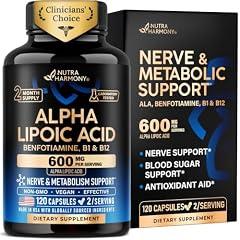
Alpha Lipoic Acid 600mg Supplement
Overview
This is a 120-capsule, 60-serving adult supplement. The stated daily serving is two capsules, providing 600 mg alpha-lipoic acid, 25 mg benfotiamine, 5 mg thiamine, and 500 mcg cyanocobalamin. The manufacturer says it is intended for antioxidant, energy-metabolism, and nerve-health support, and permits one capsule twice daily if preferred. Its defining limitation is verification. The manufacturer states that each batch is tested for heavy metals and microbiology by ISO 17025 laboratories, but no batch certificate, assay result, or public R-ALA and S-ALA ratio was provided. The product is also not identified in the public USP or NSF finished-supplement certification directories checked. Its 600 mg oral ALA dose does correspond to doses studied for diabetic neuropathy symptoms, although this product is not evidence of treatment for a diagnosed condition.
What works
- All four active ingredients and their daily amounts are disclosed, rather than hidden in a proprietary blend.
- The manufacturer lists the capsule and all other inactive ingredients, which is useful for ingredient screening.
- The stated 600 mg oral ALA serving matches a dose evaluated in human studies of diabetic peripheral neuropathy symptoms.
- The manufacturer provides batch ID and best-by traceability on the bottle, plus a neckband and inner safety seal.
What does not
- No public batch certificate verifies the actual ALA quantity, heavy-metal results, microbiological results, or the claimed R-ALA and S-ALA composition.
- No current public USP, NSF, Informed Sport, or ConsumerLab finished-product verification was located.
- The warnings mention diabetes and thyroid medicines, but do not explain the rare insulin autoimmune hypoglycemia risk or its warning symptoms.
- The site calls use during pregnancy or breastfeeding generally safe while also advising clinician consultation, a cautious approach is more appropriate given limited product-specific safety evidence.
Who is it for
This product fits an adult who specifically wants a conventional 600 mg daily ALA serving in capsules, plus modest amounts of benfotiamine, thiamine, and B12, and who values a clearly itemized formula. It is most relevant for someone seeking general antioxidant or nerve-health support rather than treatment of a diagnosed disease. The 120-capsule bottle supplies 60 days at the stated two-capsule serving, and the manufacturer allows the dose to be split across the day if that is better tolerated.
Who is it not for
It is not well suited to children, pregnant or breastfeeding people without clinician guidance, or anyone using glucose-lowering or thyroid medicines without a prescriber reviewing the combination. People with unexplained sweating, pallor, shakiness, dizziness, headache, confusion, or other low-blood-sugar symptoms should stop self-directed use and seek medical advice. It is also not ideal for buyers who require publicly accessible batch testing, a verified R-ALA proportion, or an independently certified finished supplement before using it.
Integrity
The manufacturer states that the product is made in a GMP-certified, FDA-registered facility and that every batch receives third-party heavy-metal and microbiology testing through ISO 17025 laboratories. Those are useful quality-control claims, but public lot reports were not available to confirm a specific bottle. The stated formula uses a vegetable-cellulose capsule and identifies rice flour, dicalcium phosphate, magnesium stearate, and silicon dioxide. Vegan, non-GMO, gluten-free, and common-allergen-free claims are manufacturer-stated rather than supported by a public certification mark. ALA has a documented rare association with insulin autoimmune syndrome and hypoglycemia in susceptible people. The product mentions caution with blood-sugar and thyroid medicines, but does not spell out this risk. Packaging is described as a black BPA-free plastic bottle intended to protect the formula from light. No package-specific recycling guidance, recycled-content disclosure, refill option, or independently supported environmental claim was found. No product-specific FDA recall or warning letter was located in the public checks performed.
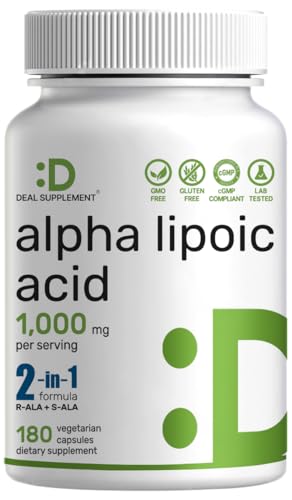
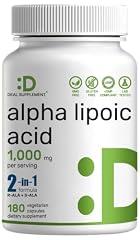
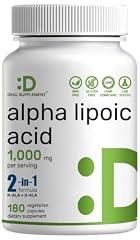
Deal Supplement Alpha Lipoic Acid 1000mg 180ct
Overview
This is a bottle of 180 vegetarian capsules marketed as a 60-serving alpha-lipoic-acid supplement. The stated daily serving provides 1,000 mg total alpha-lipoic acid, divided into 500 mg R-ALA and 500 mg S-ALA. It is intended for adult antioxidant, energy, and nervous-system support, with the product claims describing a non-GMO formula. The stated dose and R/S split are supported by a retailer reproduction of the product information, not by a public batch certificate of analysis. No current public record was found for USP, NSF, Informed Sport, or ConsumerLab verification of this exact finished product. The product uses a simple ALA-only active formula, but its high-absorption wording was not supported by finished-product pharmacokinetic testing.
What works
- The stated formula is limited to alpha-lipoic acid, avoiding added vitamins, botanicals, or stimulant actives that can complicate duplication and interaction risk.
- A stated 1,000 mg serving and stated 500 mg each of R-ALA and S-ALA give buyers a concrete claimed dose and isomer breakdown.
- The 180-capsule bottle is stated to provide 60 servings, which is about three months at the labeled daily serving.
- Human studies of oral ALA have evaluated doses in the general range of 600 to 1,800 mg daily for diabetic neuropathy symptoms, although results across outcomes are mixed.
What does not
- There is no public batch-specific HPLC certificate confirming the actual total ALA dose or the claimed 50/50 R-ALA and S-ALA content.
- No public independent finished-product certification or test result was found in the USP, NSF, Informed Sport, or ConsumerLab sources checked.
- The claim that the R/S blend provides maximum bioavailability is unproven for this finished product. No product-specific human absorption study or formulation characterization was found.
- ALA can lower blood glucose and has been linked in case reports to rare insulin autoimmune hypoglycemia. Clear product-specific cautions for diabetes medicines, pregnancy, and thyroid-related treatment were not independently confirmed.
- California Proposition 65 actions have involved other Deal Supplement products, including an alleged lead and PFOA exposure case and a separate ginger-powder settlement. These records do not identify this ALA product, but they make lot-level contaminant documentation especially important.
Who is it for
This product is most relevant to an adult who specifically wants a straightforward ALA supplement with a manufacturer-stated 1,000 mg daily serving and no added active ingredients. The 60-serving bottle may suit someone planning a defined, approximately three-month trial while tracking tolerance and discussing use with a clinician. It is more appropriate for buyers who understand that the R/S split and non-GMO positioning are manufacturer-stated, rather than independently batch verified, and who do not need a publicly certified supplement.
Who is it not for
It is not a good fit for people using insulin or other glucose-lowering medicines without clinician guidance, or for anyone with unexplained episodes of low blood sugar. ALA has been associated with rare insulin autoimmune hypoglycemia. People who are pregnant, breastfeeding, managing thyroid disease or thyroid medication, or treating diagnosed neuropathy should seek individualized medical advice rather than self-treat. It also does not suit buyers who require public USP, NSF, Informed Sport, or lot-specific third-party test documentation, or complete independently confirmed allergen and excipient detail.
Integrity
The product is marketed as vegetarian and non-GMO, and the active formula is presented as alpha-lipoic acid only. However, no public Non-GMO Project listing, public lot certificate, or independent finished-product certification was located for this product. That leaves the stated dose, R/S isomer ratio, inactive ingredients, and contaminant controls without public batch-level confirmation. Deal Supplement has been named in California Proposition 65 matters involving other products. A September 11, 2025 notice and December 1, 2025 complaint alleged lead or PFOA exposures from specified ginkgo, ginger, and pea-protein products. A separate settlement concerned Deal Supplement ginger powder and alleged lead exposure. These records do not establish contamination in this ALA product. The bottle and outer packaging recycling details, recycled-content information, and package-specific disposal guidance were not publicly documented.

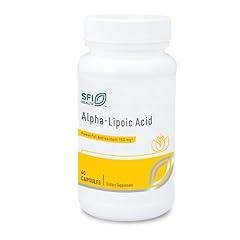
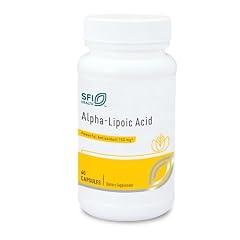
Klaire Labs Alpha-Lipoic Acid 150mg Supplement
Overview
This is a 60-capsule, single-ingredient alpha-lipoic acid supplement. The publicly available label lists 150 mg of alpha-lipoic acid per vegetarian capsule, with one capsule daily suggested for adults. That makes the bottle a 60-day supply when used as directed. The listed inactive ingredients are L-leucine, microcrystalline cellulose, and a hypromellose and water capsule. The formula is simple, but its potency and R- and S-isomer composition have not been confirmed in a public batch-specific laboratory certificate. SFI Health's facility is listed by NSF for dietary-supplement GMP certification, which supports manufacturing-system oversight but is not an independent certification of this finished product. Its liver, antioxidant, glucose-metabolism, circulation, vision, cardiovascular, and neurological support language is manufacturer-stated.
What works
- The label discloses one active ingredient and exact amounts for the full formula.
- The capsule materials and inactive ingredients are named, which helps ingredient screening.
- The label states that the product is made without major common food allergens, including milk, egg, gluten, soy, peanuts, tree nuts, fish, shellfish, and sesame.
- NSF publicly lists ProThera, doing business as SFI Health, for dietary-supplement GMP certification at the facility level.
What does not
- No public batch-specific certificate was found to confirm actual alpha-lipoic acid content, contaminants, or R- and S-isomer proportions.
- No public USP, NSF finished-product, Informed Sport, or ConsumerLab verification was located for this exact product.
- The general label caution advises clinician consultation, but it does not specifically flag low blood sugar, diabetes medicines, thyroid-related concerns, or the rare insulin autoimmune hypoglycemia linked to alpha-lipoic acid.
- At 150 mg daily, the dose is below the 600 mg or higher oral doses commonly evaluated in diabetic-neuropathy research, and evidence does not establish liver detoxification benefits.
Who is it for
This product suits an adult who specifically wants a low-dose, single-ingredient alpha-lipoic acid capsule rather than a combination formula. Its 150 mg daily serving and 60-day bottle may fit someone introducing the ingredient cautiously under clinician guidance, or someone who needs to avoid common food allergens. It is also practical for buyers who want disclosed capsule and excipient ingredients. The intended use should remain general antioxidant support, not self-treatment for diabetes, neuropathy, liver disease, or another medical condition.
Who is it not for
It is not a straightforward option for people using insulin, sulfonylureas, or other glucose-lowering medicines without clinician review, because alpha-lipoic acid can affect glucose handling and has been linked to rare insulin autoimmune hypoglycemia. People with unexplained low blood sugar, autoimmune conditions, thyroid disease or thyroid treatment should seek medical advice first. Pregnant or nursing people, children, and anyone seeking a clinically studied neuropathy dose or independently verified R-isomer amount need a different, clinician-guided approach.
Integrity
SFI Health's related U.S. entity, ProThera, appears in NSF's public listing for dietary-supplement GMP certification. That is useful evidence of independently assessed facility practices, but it does not verify the identity, potency, contaminants, or microbiological quality of this particular finished product. Public checks did not locate a batch certificate, a finished-product USP or NSF certification, or a ConsumerLab result for this exact formula. Alpha-lipoic acid has not been associated with clinically apparent liver injury in LiverTox, but it can interact with glucose management and has a rare association with insulin autoimmune hypoglycemia in genetically susceptible people. The product uses a vegetarian hypromellose capsule and discloses its other ingredients. No package-specific recycling instructions, recycled-content claim, or other substantiated environmental packaging claim was found. No relevant FDA recall or warning letter was identified in the searches performed.

Alpha Lipoic Acid Nerve Support Supplement
Overview
This is a 90-capsule, multi-ingredient nerve-support supplement. The manufacturer directs users to take two capsules daily before a meal, while the marketplace record describes 30 servings, which would imply three capsules daily. That serving-size discrepancy should be clarified from the bottle before use. The disclosed formula is stated to provide alpha-lipoic acid 600 mg, N-acetylcysteine 600 mg, acetyl-L-carnitine 500 mg, benfotiamine 300 mg, vitamin B1 50 mg, vitamin B6 50 mg, vitamin B12 100 mcg, and black pepper extract 5 mg. These are manufacturer-stated label amounts, not independently confirmed finished-product results. Human research has evaluated oral alpha-lipoic acid around 600 mg daily for diabetic neuropathy symptoms, but the exact eight-ingredient combination has not been independently studied or verified.
What works
- The formula identifies individual amounts rather than using a proprietary blend, which makes total intake easier to review.
- Its stated 600 mg alpha-lipoic acid dose is within the dose range evaluated in some oral diabetic-neuropathy trials.
- The manufacturer identifies rice flour and a bovine gelatin capsule, which is useful information for ingredient screening.
- A bottle expiration date is stated to be printed on the bottom, providing basic unit-level traceability.
What does not
- No public batch certificate, R and S alpha-lipoic acid assay, or independent finished-product test result was located.
- NSF published a January 12, 2026 notice stating that Clean Nutraceuticals was not NSF GMP certified and was not authorized to claim NSF certification or registration.
- The official product page makes broad third-party testing and GMP-facility claims without publishing the lab, method, lot result, or certifier.
- The stated 50 mg vitamin B6 dose can add materially to intake from other supplements, and the product page does not present a prominent, product-specific interaction warning.
- The page has conflicting dietary information, because it has presented the product as vegan while also identifying a bovine gelatin capsule.
Who is it for
This product is most relevant to an adult who wants a single, fully itemized capsule formula instead of separately managing alpha-lipoic acid, NAC, acetyl-L-carnitine, benfotiamine, and B vitamins. It may be easier to discuss with a clinician because the stated active amounts are available and there is no proprietary blend. It is better suited to people who can confirm the serving instructions on their own bottle and who are not relying on it to diagnose, treat, or replace care for nerve symptoms.
Who is it not for
It is not appropriate for vegans, vegetarians avoiding bovine gelatin, or households needing a consistently vegan capsule, because the ingredient disclosure identifies bovine gelatin. People with diabetes or taking glucose-lowering medicines should seek clinician guidance, since alpha-lipoic acid may affect blood sugar and rare serious hypoglycemia has been reported. People with neuropathy symptoms, pregnancy or breastfeeding, thyroid conditions, medication regimens, or existing high vitamin B6 intake should also obtain individualized advice rather than self-treating with this combination.
Integrity
The main health positive is label transparency. The formula names its active ingredients and stated amounts, including 600 mg alpha-lipoic acid and 50 mg vitamin B6. However, those figures remain manufacturer-stated because no public, lot-specific independent assay was located. The manufacturer also states that all supplements are third-party tested, but does not provide a product-specific certificate or test report. A significant quality concern is an NSF public notice dated January 12, 2026. NSF states that Clean Nutraceuticals did not hold NSF GMP certification at that time and was not authorized to claim NSF certification or registration. The capsule is disclosed as bovine gelatin, despite vegan presentation elsewhere on the product page. No package-specific recycling instructions, recycled-content statement, or substantiated environmental claim was located, so its environmental profile cannot be meaningfully assessed.

NAD Supplement Extra Strength Liposomal NAD+ 30-Day Supply
Overview
This is a 60-capsule, 30-day multi-ingredient NAD+ product intended for adults who take two capsules daily with food and water. The disclosed daily serving provides 300 mg NAD+, 100 mg each of green tea, turmeric, and grape-seed extracts, plus 50 mg urolithin A and smaller amounts of CoQ10, apigenin, resveratrol, alpha-lipoic acid, pterostilbene, and astaxanthin. The formula is fully itemized rather than hidden in a proprietary blend, and its capsule, microcrystalline cellulose, magnesium stearate, and silicon dioxide are disclosed. A January 2026 market-surveillance report measured 281 mg NAD+ per serving against the 300 mg label claim. That result does not verify alpha-lipoic acid content, its R and S isomer composition, contaminants, or the other listed ingredients. The brand claims liposomal delivery and batch testing, but no public batch certificate or recognized finished-product certification was located.
What works
- Every listed active has a stated daily amount, including 25 mg alpha-lipoic acid.
- The capsule and listed inactive ingredients are disclosed, which is more useful than a formula with unspecified excipients.
- A January 2026 market-surveillance assay found 281 mg NAD+ per serving, relatively close to the 300 mg label claim.
- The label gives broad precautionary advice for pregnancy, nursing, medication use, medical conditions, and blood-thinner use.
What does not
- No public, batch-specific certificate verifies alpha-lipoic acid amount, R and S isomer content, microbes, heavy metals, solvents, or adulterants.
- The 25 mg alpha-lipoic acid serving is far below the 600 mg and higher oral doses evaluated in diabetic-neuropathy trials, so that evidence does not transfer cleanly to this formula.
- The liposomal and superior-absorption claims are not backed by a public characterization test of this finished capsule or relevant human pharmacokinetic study.
- A brand advertorial presents the product as addressing ear ringing and its cause. That is a disease-oriented implication without disclosed human trial evidence for this formula.
- The brand states that the product has no fillers, yet the disclosed ingredient list includes microcrystalline cellulose, magnesium stearate, and silicon dioxide.
Who is it for
This product is most relevant to an adult who specifically wants a once-daily, broad NAD+ and plant-extract formula and values an itemized Supplement Facts panel over a proprietary blend. It may also suit someone who is comfortable with a 30-day bottle and understands that the direct potency evidence currently available is limited to a market-surveillance NAD+ measurement, not comprehensive verification of the whole formula. It is not a targeted alpha-lipoic acid product, because the daily alpha-lipoic acid amount is only 25 mg and its isomer composition is not disclosed.
Who is it not for
It is not well suited to someone seeking alpha-lipoic acid at a dose comparable with oral diabetic-neuropathy research, or someone who specifically wants verified R-alpha-lipoic acid. People with diabetes, recurrent low blood sugar, thyroid disease, pregnancy or nursing, kidney concerns, or prescription medicine use should seek clinician guidance before using it. Extra caution is warranted with glucose-lowering medicines and blood thinners. People with celery allergy should also review the formula carefully because its apigenin is sourced from celery seed extract.
Integrity
The product has a detailed active and inactive ingredient list. The listed capsule is hypromellose, and the disclosed excipients are microcrystalline cellulose, magnesium stearate, and silicon dioxide. The brand also states that it is gluten-free, vegan-friendly, and non-GMO, but no public third-party certification was found for those claims. Although the brand says every batch is independently tested, it does not publish batch certificates or a recognized certification record. A market-surveillance report measured 281 mg NAD+ per serving in January 2026, but it did not establish full-formula purity, alpha-lipoic acid isomers, or contaminant control. The product includes green tea extract, turmeric, grape seed, resveratrol, and other actives that can complicate medication decisions. No product-specific packaging material, recycling instructions, recycled-content information, or substantiated environmental claim was located. No relevant FDA recall or warning letter was identified in the sources reviewed.