
10 Best Air Purifier Washable Filter
 Lauren Wilson
Please note that we participate in affiliate marketing programs. When you purchase through links on our site, we may earn a commission. As an Amazon Associate we earn from qualifying purchases. This comes at no additional cost to you and helps support the resources required to provide valuable content.Advertising Disclosure
Top-rated Air Purifier Washable Filter Comparison
1

2
3
4
5
6
7
8
9
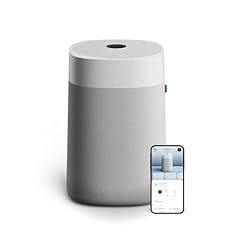
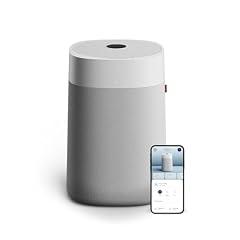
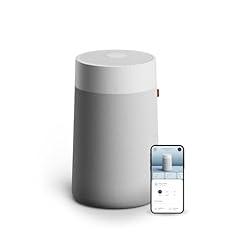
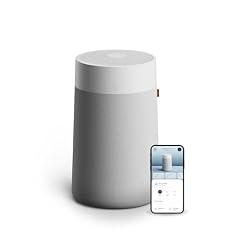
Overview
An air purifier with a washable filter usually combines a reusable outer screen or pre-filter with finer particle media and, often, activated carbon. The washable layer is mainly useful for catching hair, lint, and larger dust before they load the main filter. In most of the supplied products, the HEPA or particle layer and the carbon layer are still disposable. “Washable” therefore does not automatically mean the entire filter can be rinsed or that replacement waste disappears.
The most useful measure of particle cleaning is smoke CADR: the amount of cleaned air delivered for fine particles. Room-size claims should be checked against CADR and an 8-foot ceiling, not accepted at face value. The supplied reviews repeatedly show why: large figures such as 1,000, 2,200, or 3,000 square feet may describe only one air change per hour, while independently listed room ratings are much smaller. A product with a verified 250 CFM smoke CADR, for example, was judged suitable for roughly 385 square feet under the supplied EPA sizing comparison; a 443 CFM result corresponded to a 687-square-foot rating. Look for an exact-model entry in the AHAM Verifide directory, the ENERGY STAR room-air-cleaner dataset, or an accredited test that states smoke, dust, or pollen CADR and the test conditions.
Ozone is a separate safety question. Mechanical filtration avoids intentional ozone generation, while electronic, electrostatic, ionizing, plasma, or similar designs need credible emissions evidence. A current listing in the California Air Resources Board certified-device registry is useful, but it does not prove particle-cleaning power. ENERGY STAR records can also report ozone emissions in parts per billion. A certification or seller badge should be matched to the exact model, not merely to a product family or a similar name.
For a washable-filter product, read the exact manual. Confirm which layer may be washed, whether it should be vacuumed or rinsed, and how long it must dry before reinstallation. The main particle and carbon media need a realistic replacement interval and an available replacement-filter listing. Washing a nonwashable HEPA or carbon cartridge can damage it, reduce performance, or leave moisture inside the unit.
Carbon deserves equally careful reading. A thin or unspecified carbon layer should not be treated as broad protection against formaldehyde, VOCs, smoke gases, or persistent odors. Stronger claims need disclosed carbon quantity or substantial sorbent design and pollutant-specific gas testing with airflow, duration, and breakthrough conditions. Fragrance pads and aromatherapy trays are not cleaning features: they add fragrance chemicals to indoor air and are a poor match for scent-sensitive occupants.
Across the supplied products, no single category-wide contraindication applied to every model, but several safety-relevant limitations recur. Large-room and whole-home claims are often unsupported by CADR, making these products unsuitable for relying on fast cleaning during wildfire smoke, severe allergy or asthma-related particle exposure, infection-risk reduction, or large open-plan use unless the room-specific clean-air delivery is documented. None should be treated as medical treatment, mold remediation, ventilation, or a replacement for source control. Buyers should also be cautious with fragrance accessories, especially where asthma, migraine, chemical sensitivity, children, or pets are concerns. Carbon and odor claims are commonly unsubstantiated, and exact-model electrical certification is not consistently traceable even where a product is listed as CARB-certified.
Integrity
A washable pre-filter can make routine maintenance easier, but it does not by itself establish effective particle cleaning, low emissions, or low environmental impact. The distinctions below are the ones that separated better-supported products from products relying mainly on broad coverage, HEPA, odor, or washable-filter language.
HHealth & Safety
Meaningful health protection
This measures whether supported particle cleaning is relevant to lowering fine-particle exposure while avoiding unsupported claims about allergies, asthma, infection, mold, or disease treatment. Higher-scoring products paired careful health language with verified particle data; lower-scoring products relied on unverified coverage or broad health implications. A purifier supplements source control and ventilation rather than replacing medical care or remediation.
Proven cleaning power for the stated room
This measures independently verified smoke or PM2.5 CADR and whether room size follows the 8-foot-ceiling sizing method. It matters because washable-filter products often advertise very large areas without showing airflow. Higher scores came with exact-model ENERGY STAR or AHAM-linked CADR, such as 250 or 443 CFM smoke CADR; lower scores had no public CADR or only manufacturer claims.
No harmful ozone or ionizer trade-off
This measures whether the product avoids intentional ozone generation and whether electronic features have credible emissions evidence. It matters because particle cleaning should not add a lung irritant. Higher scores were associated with CARB mechanical listings or exact-model ENERGY STAR ozone results such as 0, 2.0, or 2.3 ppb. Lower scores reflected unresolved model matching or weaker verification.
Does not add fragrance pollution
This measures whether aromatherapy pads, fragrance sponges, oils, or deodorizing accessories are absent or clearly optional. It matters because a purifier should not encourage adding volatile fragrance chemicals to the air. Higher-scoring products had no scent feature or explicitly avoided aromatherapy; lower-scoring products actively promoted essential oils, creating an avoidable concern for fragrance-sensitive or scent-triggered occupants.
Honest gas and odor removal
This measures whether odor, smoke-gas, VOC, and formaldehyde claims are supported by substantial, specified sorbent media and relevant gas testing. It matters because a small or unspecified carbon layer may provide limited odor adsorption but cannot substantiate broad, lasting gas protection. Scores were generally lower when carbon mass, media depth, pollutant challenge, duration, and breakthrough criteria were absent.
Washable filter claim that stays effective
This measures whether the washable layer is clearly identified, cleaning and complete-drying instructions are safe, and replacement timing is given for nonwashable media. It matters because many listings call a whole filter washable when only the pre-filter can be rinsed. Higher scores came with exact instructions and schedules; lower scores reflected contradictory “washable HEPA” wording or unclear care guidance.
Cleaning power you can live with
This measures whether useful particle delivery remains practical at occupied-room sound levels, using disclosed sound and airflow by speed. A quiet sleep rating alone does not show strong cleaning. Higher-scoring products combined verified CADR with usable operation or clearer sound information; lower-scoring products lacked speed-by-speed data or required loud top settings for their useful output.
Verified electrical and fire safety
This measures exact-model third-party electrical certification and the absence of unresolved recall or serious incident signals. It matters because washable components, power supplies, and electronic collection systems must be safe in occupied rooms. Higher scores had CARB or traceable safety evidence and no identified recall; lower scores commonly lacked public UL or ETL confirmation despite seller claims.
EEcology
Low energy and replacement-filter waste
This measures clean-air delivery per watt, durable construction, and the amount and replacement frequency of filter material. A washable pre-filter can reduce hair and lint loading, but most products still require disposable particle or carbon cartridges. Higher scores came from ENERGY STAR efficiency data or reusable filter systems; lower scores reflected frequent replacement, such as every 90 days, or no verified energy record.
EEvidence
Claims match the test conditions
This measures whether HEPA, H13, percentage, micron, coverage, auto-mode, odor, and washable-filter statements explain what was tested and under which conditions. It matters because “up to” room figures can mean one air change per hour, while a quiet rating may apply only to sleep mode. Higher scores gave realistic limits; lower scores contained conflicting or overbroad claims.
Independently verified, exact-model evidence
This measures whether key performance and safety claims can be matched to current public registries and traceable reports for the exact product. Higher scores had ENERGY STAR, AHAM, or CARB records tied to the model and useful test values. Lower scores depended on seller-created badges, related model numbers, generic certificates, or manufacturer claims that could not be independently matched.
Full reviews

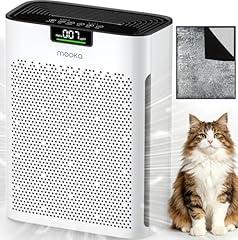
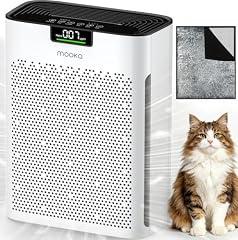
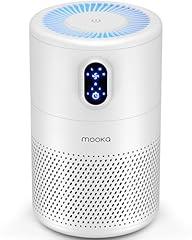
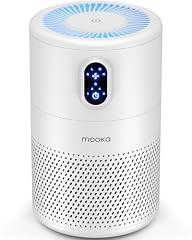
MOOKA H13 Air Purifier for Large Rooms
Overview
This product is a compact corded room air purifier with a three-stage filter assembly, comprising a washable pre-filter, particle filter, and activated-carbon layer. It has touch controls, four fan speeds, a timer, child lock, auto mode, sleep mode, and a particle display. The manufacturer states a 20 dB sleep setting and a filter reminder at about 2,000 operating hours. The strongest independently checkable fact is its California certification. California's air-cleaner register lists both KJ190H and KJ190L versions as certified mechanical devices, providing credible low-ozone assurance. Its claimed H13 particle filtration and large-room coverage were not matched to a public AHAM smoke CADR, ENERGY STAR record, or independent performance report. That means the filter design is plausible for particle reduction, but the advertised room coverage and cleaning speed cannot be confirmed.
What works
- California's official air-cleaner register lists both product versions as certified mechanical devices, supporting low-ozone use.
- The washable layer is specifically identified as the pre-filter, and instructions say to rinse or vacuum it and let it dry completely before reinstalling.
- A matched replacement filter pack for both product versions is sold through the manufacturer's store.
- The manufacturer states that the unit has four fan speeds, an auto mode, a PM2.5 display, and a sleep setting with display lights off.
What does not
- No public AHAM smoke CADR, ENERGY STAR certification record, or independent particle-cleaning report was found for this product. The 2,200-square-foot coverage claim therefore cannot be checked against an 8-foot-ceiling CADR calculation.
- The aroma tray intentionally diffuses essential oils. The instructions encourage adding several drops, which adds fragrance chemicals to air the product is otherwise intended to clean.
- The activated-carbon claim does not disclose carbon mass, media depth, target gases, breakthrough time, or independent gas testing. Odor and VOC removal capacity is unproven.
- Published materials use conflicting rated-power figures, including 22 W and 26 W. The claimed ETL certification was not matched to a public exact-product listing during this review.
Who is it for
This product suits a buyer using it as a supplemental particle filter in a bedroom, pet room, or modest closed room, particularly someone prepared to clean hair and lint from a removable pre-filter. It is most appropriate when the buyer values California's independently verifiable low-ozone certification, wants basic automatic fan control, and accepts manufacturer-stated performance figures. It can be used alongside source control and ventilation, rather than as a substitute for either.
Who is it not for
It is not suited to someone who needs a verified smoke CADR for wildfire smoke, severe allergies, asthma management, infection-risk planning, or a large open-plan space. Those uses need disclosed, independently tested airflow and particle-cleaning performance. It is also unsuitable for fragrance-sensitive households, people with scent-triggered symptoms, and anyone who does not want an essential-oil diffusion feature in an air cleaner. Do not treat it as a solution for active mold or moisture problems.
Integrity
The product's most meaningful health safeguard is independently verified low-ozone status. California lists both relevant product versions as certified mechanical air cleaners. This matters because the product does not rely on an ionizer, plasma device, or UV feature, technologies that can create ozone concerns in some designs. Particle filtration can reduce airborne particles, but portable cleaners do not eliminate all indoor pollution, and health improvements from HEPA cleaners are generally limited rather than guaranteed. The washable component is only the outer pre-filter, not the HEPA or carbon media. It should be dried fully before reinstallation, while the inner particle and carbon media still require replacement at the reminder interval. Reusing the outer layer can reduce some replacement waste, but the manufacturer provides no public clean-air-per-watt result or filter-material disposal details. The essential-oil aroma tray is optional, but using it deliberately adds fragrance exposure. No product-specific CPSC recall was identified in the review search.

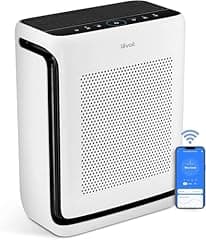
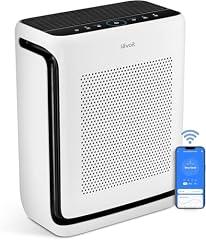
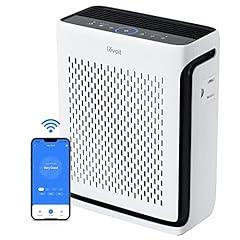
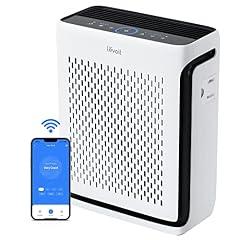
LEVOIT Vital 200S-P Smart Air Purifier
Overview
This is a corded, app-connected room air purifier measuring 15.6 by 8.5 by 19.8 inches. It uses a removable washable pre-filter ahead of a combined main particle and activated-carbon filter. The pre-filter is intended for hair, lint, and larger dust, while the main filter is replaced rather than washed. Its strongest documented feature is particle cleaning. ENERGY STAR certification data for this exact model lists a 242 cfm smoke CADR and a 375-square-foot room size. Levoit separately states 388 square feet at 4.8 air changes per hour and 1,862 square feet at one air change per hour. Its stated 23 to 54 dB range means low-noise operation is available, but the highest particle-cleaning output will generally require higher fan speed. The manufacturer also supplies detailed maintenance instructions and a 12-month replacement interval for the main and carbon filter.
What works
- Exact-model ENERGY STAR data documents 242 cfm smoke CADR, 263 cfm dust CADR, and a 375-square-foot room size.
- Certified data lists fan-and-filter technology and 0 ppb ozone emissions, without an ionizer or ozone-generating function.
- The washable pre-filter has clear cleaning steps, including complete air-drying before reinstallation.
- The manual directs replacement of the nonwashable main and carbon filter every 12 months, with earlier replacement in heavily polluted conditions.
What does not
- The 1,862-square-foot coverage figure represents only one air change per hour, which is much less protective than the stated 388-square-foot, 4.8-air-change figure.
- Gas and odor claims are not supported by disclosed carbon mass or a public gas-phase test showing pollutant, duration, and breakthrough performance.
- A California Proposition 65 warning states that the product can expose users to lead. The manufacturer does not identify the component, exposure route, or measured exposure level in the reviewed materials.
- No exact-model UL or ETL electrical-safety listing was located in the public directories reviewed, despite the product's detailed electrical safety instructions.
Who is it for
This product fits someone using it in a bedroom, office, or similarly enclosed room around 375 square feet with an 8-foot ceiling, especially where dust, smoke particles, pollen, or pet dander are recurring concerns. It is also suited to households that can keep it running routinely, clean the pre-filter every 2 to 4 weeks, and budget for a full replacement filter about yearly. The app, air-quality display, and filter reminder may help users maintain a consistent routine rather than treating filtration as occasional cleanup.
Who is it not for
It is not a substitute for fixing mold, moisture, combustion, or ventilation problems. People needing meaningful particle reduction across a very large open floor plan should not interpret the one-air-change coverage claim as high-rate cleaning. It is also not a documented solution for sustained VOC, formaldehyde, or heavy odor exposure, because the carbon amount and long-duration gas-removal performance are not publicly specified. Buyers who require a publicly verifiable UL or ETL listing for the exact unit should seek a product with that documentation.
Integrity
The exact model has strong third-party particle and ozone documentation through ENERGY STAR. Its record identifies fan-and-filter technology, a 242 cfm smoke CADR, and 0 ppb ozone emissions. This matters because portable filtration can reduce fine-particle exposure when sized to the room, while ozone-generating technologies can irritate the lungs. Air cleaning can complement source control and ventilation, but it does not cure asthma, prevent all infections, or solve a mold and moisture problem. The washable component is only the pre-filter. Levoit instructs users to vacuum or wash it every 2 to 4 weeks, then allow it to dry completely. The main particle and carbon filter must not be washed and is scheduled for replacement every 12 months, creating recurring filter waste. ENERGY STAR data reports 5.3 smoke CADR per watt and 268.2 kWh annual energy use. The manufacturer also carries a Proposition 65 lead warning, without public details on the source or exposure level.

MOOKA H13 True HEPA Air Purifier
Overview
This compact, corded tabletop air purifier uses a replaceable three-layer filter that MOOKA describes as a pre-filter, H13 particle filter, and activated-carbon layer. It is 7.1 inches wide and 11.1 inches high, with four fan modes, timers, a child lock, and a switchable night light. The manufacturer states that it has no aromatherapy function, which avoids an accessory intended to add scented oils to indoor air. MOOKA states that the unit provides six air changes per hour in a 215-square-foot room and one air change per hour in 1,076 square feet. Those are manufacturer-stated coverage figures, not independently verified CADR results. No exact-product AHAM, ENERGY STAR, CARB, UL, or ETL registry record was located during this review. The manufacturer also states 20 dB noise and 13 to 16 watts, but does not publish airflow, CADR, or sound measurements for each fan speed.
What works
- The stated filter design combines a particle-filter layer with activated carbon, which is relevant to dust, pollen, pet dander, and some odors.
- The manufacturer states that there is no aromatherapy function, so the product does not promote adding fragrance oils to the air stream.
- The manual gives clear basic maintenance limits, vacuum or tap the black outer layer only, do not wash the filter, and replace it every 3 to 6 months.
- MOOKA currently lists a dedicated replacement filter for this product as in stock.
- The manufacturer states that the night light can be switched off, which is useful where darkness matters.
What does not
- The advertised 1,076-square-foot figure equals only one stated air change per hour. There is no independently verified smoke or PM2.5 CADR to confirm cleaning speed or room sizing.
- The manufacturer does not state activated-carbon mass, media depth, target gases, or a gas-phase test method. Odor and smoke-gas performance is therefore unproven.
- The product page uses an overbroad claim about removing all airborne contaminants as small as 0.3 microns. A particle-filter claim does not establish removal of every airborne contaminant or gas.
- No exact-product listing was located in the AHAM, ENERGY STAR, CARB, UL, or ETL public registries reviewed. This leaves performance, ozone emissions, and electrical safety claims less traceable.
- The 20 dB figure appears to describe low or sleep operation. Noise and airflow at medium and high speeds are not disclosed.
Who is it for
This product fits a budget-focused user who wants a small, simple mechanical-filter unit for a bedroom, nursery, office, or similarly sized enclosed room. Its stated six air changes per hour in 215 square feet is the more useful sizing figure, rather than the much larger one-air-change figure. It also suits people who want a switchable light, timer, child lock, and no aromatherapy tray. The user should be prepared to replace the filter every 3 to 6 months and use the higher fan settings when faster cleaning is needed.
Who is it not for
It is not well suited to buyers who need independently verified PM2.5 or smoke cleaning performance for wildfire smoke, asthma, allergy management, or infection-risk reduction. Those uses require a verified CADR sized to the actual room, especially with ceilings above 8 feet or open floor plans. It is also not designed as a serious gas or VOC control device because the carbon amount and gas testing are undisclosed. Households needing independently documented ozone and electrical-safety certification should select a product with exact-model public registry listings.
Integrity
The health-relevant strength is a stated mechanical filtration path, pre-filter, H13 particle filter, and activated-carbon layer, without an aromatherapy feature that would encourage fragrance exposure. Mechanical particle filtration is a credible way to reduce airborne particles when the unit is properly sized and operated, but its practical health value depends on clean-air delivery. The manufacturer has not published independently verified CADR data for this product, so its larger room claim should not be treated as evidence of rapid particle reduction. The manual correctly warns against washing the main filter and calls for replacement every 3 to 6 months. That helps preserve filter integrity, but creates recurring disposable-filter waste. The manufacturer lists a replacement filter for the product, which supports continued maintenance. Rated power is stated as 13 to 16 watts, although efficiency cannot be assessed without verified CADR. No matching CPSC recall was located in this review, but public exact-product electrical-safety and ozone-certification registry entries were not located either.
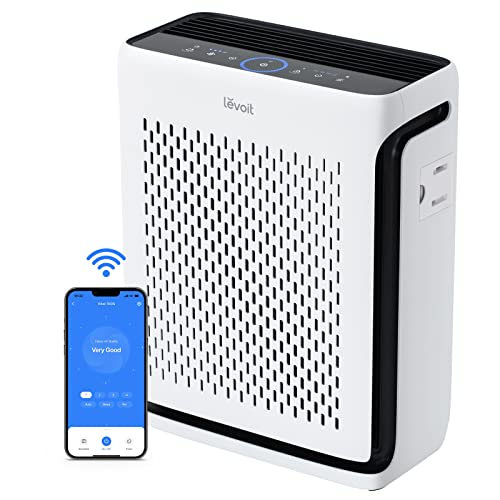
LEVOIT Vital 100S-P Smart Air Purifier
Overview
This is a compact floor air purifier, 12.6 by 6.3 by 16 inches and 8.6 pounds, with Wi-Fi control, an infrared dust sensor, Auto Mode, and a three-stage filter. The removable outer pre-filter is washable. The combined main particle and activated-carbon filter is not washable and is intended for periodic replacement. Its defining performance figure is a 143 CFM smoke CADR and a 222 square foot AHAM room size listed in an ENERGY STAR product record. Levoit separately states coverage of about 1,066 square feet at one air change per hour, not rapid cleaning. The manufacturer lists 23 to 52 dB operation and a 32 to 35 watt rating, depending on the documentation version.
What works
- The 143 CFM smoke CADR and 222 square foot room rating are independently traceable through an ENERGY STAR product record.
- The published 1,066 square foot figure is qualified as one air change per hour, while 222 square feet is specified for 4.8 air changes per hour.
- The manual clearly limits washing to the removable pre-filter, gives mild-detergent cleaning steps, requires complete air drying, and says not to wash the main and carbon filter.
- ENERGY STAR certification supports energy-efficiency verification for the product.
- Levoit states a 23 dB low setting and 52 dB maximum, which provides a disclosed noise range rather than a single best-case number.
What does not
- The carbon layer has no disclosed carbon mass, media depth, gas-capacity test, or breakthrough data, despite broad claims involving VOCs, formaldehyde, fumes, and odors.
- The main particle and carbon filter is a single disposable assembly, with replacement recommended at about nine months in the manual, creating recurring filter cost and waste.
- The product page carries a California Proposition 65 warning for lead exposure, without identifying the component or giving exposure measurements.
- No exact-model UL or ETL electrical-safety listing was located in the public certification directories checked.
- The low noise figure does not establish high clean-air delivery at that setting. CADR is normally measured at the highest fan speed.
Who is it for
This product fits someone who wants independently traceable particle-cleaning capacity for a typical bedroom, office, or pet area around 222 square feet with an 8-foot ceiling. It is especially practical where pet hair can clog an intake, because the outer pre-filter can be vacuumed or washed every two to four weeks. It also suits users who will run a purifier continuously, accept a disposable main filter about annually, and value app scheduling, a sensor-guided Auto Mode, and a quiet manufacturer-stated low setting.
Who is it not for
It is not suited to buyers who need rapid particle removal throughout a 1,000 square foot open plan, especially with high ceilings, wildfire smoke, or a strong indoor particle source. The large-area claim represents only one air change per hour. It is also not appropriate as a solution for mold growth, infection prevention by itself, serious chemical or formaldehyde exposure, or persistent smoke gases. Those needs require source control, ventilation, and, for gases, documented substantial sorbent media or specialized filtration.
Integrity
The core health strength is particle control, not treatment of illness. A smoke CADR of 143 CFM is relevant to fine-particle exposure in a properly sized room. EPA guidance says portable filtration can supplement source control and ventilation, but it cannot remove every pollutant, solve moisture-driven mold, or reliably deliver major symptom improvements for every person. The product uses mechanical filtration with a washable pre-filter and a combined particle and activated-carbon replacement filter. Levoit states that its replacement filter uses FSC-certified wood carbon, but it does not disclose carbon quantity or gas-removal endurance. ENERGY STAR certification supports efficient operation, while the washable outer layer can reduce premature clogging. The product page and replacement-filter page both carry a California Proposition 65 warning for lead. No exact-model public UL or ETL listing was found in this review.
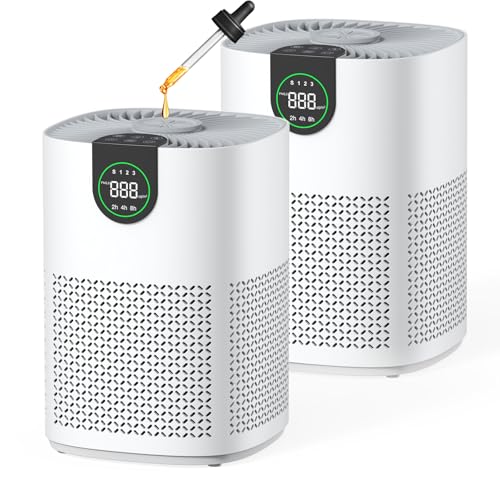
VEWIOR Air Purifiers with HEPA Filter
Overview
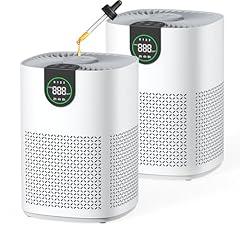
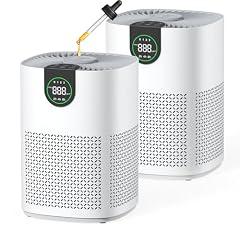
This is a two-unit, compact tabletop air-cleaner set. Each white unit measures about 6.9 by 8.7 by 13.8 inches and uses a plug-in power adapter. The product is intended for bedrooms and other indoor rooms, with sleep, timer, child-lock, particle-display, and automatic fan controls. The seller describes a three-stage filter with a washable pre-filter, particle filter, and activated-carbon layer. It also promotes a 1,200-square-foot coverage claim and five air changes per hour, but no public smoke or PM2.5 CADR result was located to validate that room claim. California's air-cleaner registry does list this exact model as a certified mechanical device, which is meaningful evidence that it is not an intentional ozone generator. The included aromatherapy function is optional, but it changes the product from only filtering room air to potentially adding scented chemicals.
What works
- California certifies this exact product as a mechanical air cleaner, supporting a low-ozone design.
- The two-unit format can place separate cleaners in separate rooms rather than relying on one distant unit.
- The manufacturer states that the filter stack includes a washable pre-filter, particle filter, and activated-carbon layer.
- A PM2.5 display and automatic mode are provided, according to the manufacturer.
What does not
- No public AHAM or ENERGY STAR record, smoke CADR, or independent PM2.5 test was found for this product, so the 1,200-square-foot claim cannot be checked.
- The product encourages essential-oil aromatherapy. Fragrances and air fresheners can aggravate symptoms for sensitive people and add indoor VOC exposure.
- The carbon layer is not specified by carbon mass, media type, or gas breakthrough testing, so odor and gas-removal capacity is unproven.
- Filter-care information is incomplete. The washable layer is identified as a pre-filter, but the instructions found do not provide detailed drying conditions or a clear technical basis for cleaning claims.
Who is it for
This product suits someone who wants two small mechanical air cleaners for separate bedrooms, a home office, or other modest enclosed spaces. It is most appropriate for buyers focused on routine particle reduction from dust, pollen, or outdoor smoke infiltration, who can run each unit near where people spend time. The CARB mechanical-device listing is useful for households trying to avoid intentional ozone generation. Buyers should treat the stated room coverage as a manufacturer claim, not a verified sizing figure, and use the aromatherapy feature only if scents are well tolerated.
Who is it not for
It is not well suited to people who need an independently verified CADR to size a cleaner for wildfire smoke, severe allergies, asthma management, or a large open-plan room. Those uses need documented smoke CADR and sound data at usable fan speeds. It is also a poor fit for fragrance-sensitive households, people with scent-triggered asthma or migraines, and anyone seeking a purifier that adds no scented emissions. Do not rely on it to solve mold growth, remove combustion gases, or provide proven broad VOC removal.
Integrity
The strongest verified health point is the California certification for this exact product as a mechanical air-cleaning device. That is favorable because EPA advises avoiding air cleaners that intentionally generate ozone, a lung irritant. Mechanical filtration can reduce airborne particles, including fine particles, but the degree of health benefit depends on actual clean-air delivery, room conditions, runtime, and source control. No public CADR record was found to establish those conditions for this product. The product's essential-oil tray deserves attention. It is optional, but fragrance use can cause symptoms for some sensitive people and can add VOCs to indoor air. The washable pre-filter may reduce replacement waste, while the main filter still needs replacement about every three to six months according to the replacement-filter listing. No exact-model ENERGY STAR or public electrical-safety listing was located in the checked registries, and no product-specific CPSC recall was found.

VEWIOR H13 HEPA Air Purifier
Overview
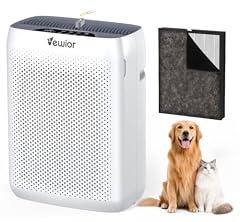
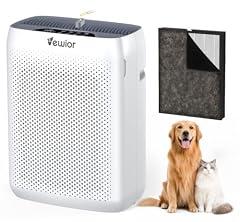
This is a compact, plug-in room air purifier, about 16 inches tall and 8.4 pounds, with four fan speeds, a PM2.5 display, auto mode, sleep mode, timer, child lock, and a separate essential-oil aroma pad. The manufacturer describes a three-stage filter with a washable coarse prefilter, H13 HEPA media, and a carbon layer. It says the replaceable filter should be changed every three to six months. The strongest independently checkable fact is that California lists this exact product as a certified mechanical air cleaner. The manufacturer also states a 500 m³/h CADR and 15 dB sleep mode, but no public AHAM or ENERGY STAR performance listing was found. Its advertised 3,000 square foot coverage is not aligned with the stated CADR under EPA's 8-foot-ceiling sizing guidance.
What works
- California independently lists this exact product as a certified mechanical air cleaner, providing credible ozone-safety evidence.
- The manufacturer clearly separates washable and nonwashable media. Only the coarse prefilter is rinsed or vacuumed, then fully air dried.
- The manufacturer provides four fan speeds, a PM2.5 display, auto mode, timer, child lock, and a claimed 15 dB sleep mode.
- A replacement interval of three to six months and a filter-change reminder are stated, which gives users a defined maintenance routine.
What does not
- The 3,000 square foot coverage claim is problematic. The manufacturer's stated 500 m³/h CADR is about 294 cfm, far below the EPA sizing benchmark for a 3,000 square foot room with an 8-foot ceiling.
- No public AHAM or ENERGY STAR record was found for smoke CADR, airflow, power use, or sound by speed, so real-world cleaning rate and top-speed noise remain unverified.
- The carbon layer is described as high density and more active than a standard filter, but its carbon mass, gas test method, challenge pollutant, and service capacity are not disclosed.
- The included aromatherapy pad intentionally disperses essential oils. It is optional, but it adds fragrance exposure to a device intended to clean indoor air.
- An ETL claim appears in the marketplace specifications, but an exact-model public ETL or UL listing was not located during verification.
Who is it for
It suits someone using it as a supplementary particle filter in a modest bedroom, office, or other enclosed room, especially where pet hair and visible dust make a washable coarse prefilter useful. It also fits users who value an auto setting, a display that tracks PM2.5, a timer, and a low-light sleep setting. The product is more appropriate when its stated CADR is treated as a manufacturer figure rather than proof of 3,000 square foot whole-room cleaning.
Who is it not for
It is not suited to buyers needing verified protection for a very large open-plan area, wildfire-smoke events, a classroom, or a medically important allergy or asthma setting. Those uses need independently verified smoke CADR sized to the actual room and ceiling height. It is also a poor fit for fragrance-sensitive people, people with scent-triggered respiratory symptoms, and households avoiding essential-oil diffusion. Buyers requiring documented electrical listing evidence should seek a product with an exact-model public NRTL record.
Integrity
California's public registry lists this product as a certified mechanical air cleaner, which is meaningful because it does not rely on ionization or ozone generation as its stated cleaning mechanism. Mechanical particle filtration can reduce airborne particle exposure when the cleaner is adequately sized and run, but it does not eliminate all indoor pollutants, cure disease, solve moisture or mold growth, or substitute for source control and ventilation. The washable component is only the coarse prefilter. The HEPA and carbon media still require replacement every three to six months according to the manufacturer, creating recurring filter waste and cost. The product includes an aroma pad for optional essential oils, so it can add fragrance chemicals to indoor air. Carbon-media claims are not supported by disclosed carbon mass or public gas-removal testing. No exact-product air-purifier recall was found in the CPSC material reviewed, but the claimed ETL certification could not be independently matched to a public exact-model listing.
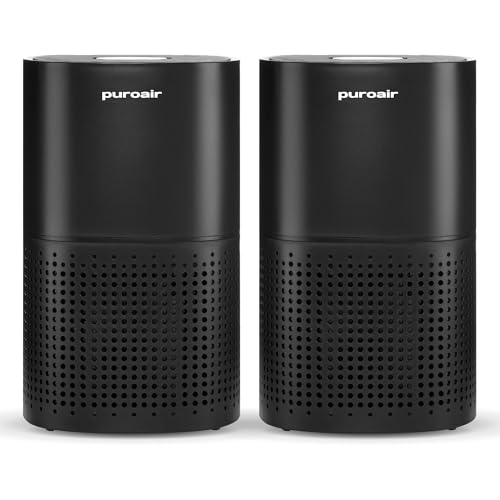
PuroAir Powerful Air Purifiers 2 Pack
Overview
This product is a two-unit package of compact, corded room air purifiers. Each purifier uses one cylindrical, disposable three-layer filter with a pre-filter, particle filter, and activated-carbon layer. It has manual fan settings, sleep mode, auto mode, a particle sensor, timer, child lock, and a filter-change indicator. PuroAir states the lowest sound level is 24 dB and advises replacing the whole filter about every 90 days. The strongest independently checkable performance figure is ENERGY STAR certification for the exact Puro Air 240 model. It reports 183 cfm smoke CADR, 181 cfm dust CADR, 204 cfm pollen CADR, 0.0 ppb ozone emissions, and a 284 square foot recommended room size per unit. That verified room figure is far below the manufacturer's broadly stated coverage of up to 1,000 square feet, so the larger claim needs its stated one-hour test condition to be understood correctly.
What works
- ENERGY STAR independently verifies particle-cleaning performance for the exact model, including 183 cfm smoke CADR per purifier.
- ENERGY STAR lists fan-and-filter technology and 0.0 ppb ozone emissions, with no ionizer or fragrance accessory identified in the manufacturer materials reviewed.
- The manufacturer clearly says the entire integrated filter is not washable, helping prevent water damage to the particle and carbon media.
- A filter-change indicator and a stated 90-day replacement interval give owners a concrete maintenance routine.
- Manufacturer-stated low and high sound levels of 24 dB and 48 dB suggest a quieter low setting is available for bedrooms.
What does not
- The advertised up-to-1,000-square-foot coverage is not the same as the independently listed 284-square-foot room size per unit. Buyers need to account for air changes and ceiling height.
- PuroAir makes broad allergy-relief and cleaner-air health messaging. Particle removal can reduce exposure, but a room purifier is not a treatment for allergies, asthma, infection, or mold-related illness.
- The carbon layer is described only as a proprietary activated-carbon blend. No carbon mass, gas-phase capacity, breakthrough testing, or pollutant-specific performance duration was located.
- Each purifier uses a disposable combined filter that the manufacturer recommends replacing every 90 days. The two-unit package can therefore require up to eight replacement filters annually.
- The listing claims ETL and CARB status, but an exact current entry for this Puro Air 240 model was not located in the public certification registers reviewed.
Who is it for
This product suits a household that needs two independently placed mechanical purifiers for separate bedrooms, offices, or modest living spaces, rather than one purifier for an entire open floor plan. Its independently listed smoke CADR supports meaningful fine-particle removal in rooms around the certified sizing basis. It is also suited to users who prefer no ionizer, no scent system, simple button controls, an auto setting, and a clearly disposable filter routine. It is most practical for people willing to budget for two replacement filters about every three months.
Who is it not for
It is not well matched to someone expecting one unit to rapidly clean a 1,000-square-foot open room at a high air-change rate. The independently listed room size is 284 square feet per purifier, so even two units need thoughtful placement and do not substitute for source control or ventilation. It is also unsuitable for buyers specifically seeking washable filters, because the complete filter must not be washed. People needing documented VOC, formaldehyde, wildfire-gas, mold-treatment, or medical benefits should not rely on the broad carbon and health claims without pollutant-specific evidence.
Integrity
The key health positive is mechanical particle filtration without a measured ozone trade-off. ENERGY STAR lists the exact model as fan-and-filter technology with 0.0 ppb ozone emissions. Its independently reported smoke CADR of 183 cfm per purifier indicates useful removal of airborne particles when each unit is sized to the room. This can reduce particle exposure, but it does not establish treatment or prevention of allergy, asthma, respiratory infection, or mold-related disease. PuroAir describes a pre-filter, a HEPA particle layer, and activated carbon, but does not publish the carbon mass or gas breakthrough data needed to judge durable VOC or odor control. The filter contains all layers in one nonwashable cartridge and is recommended for replacement every 90 days. That avoids washing damage, but creates recurring material waste, especially with two units. ENERGY STAR certification verifies energy performance, though the listed annual energy use is 243.9 kWh per purifier. No product-specific CPSC recall was located in the reviewed public recall search results.
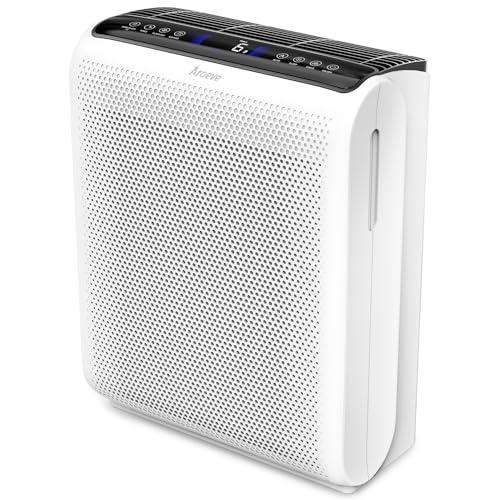
AROEVE MK07 Air Purifier for Large Rooms
Overview
The AROEVE MK07 is a 35-watt portable room air cleaner, measuring 12.4 by 16.2 by 6.69 inches and weighing about 8.3 pounds. It uses a removable washable intake filter ahead of a replaceable non-washable particle and activated-carbon filter. The unit also has a particle sensor, auto mode, sleep mode, timer, touch controls, and a UV component. Independent ENERGY STAR certification records identify this product among the DH-JH07 model family. They report smoke, dust, and pollen CADRs of 148, 158, and 194 cfm, with a listed room size of 229 square feet. CARB separately lists the exact MK07 as an electronic air cleaner certified for ozone emissions. The manufacturer states coverage up to 1,504 square feet, but does not give the air-change rate or other condition behind that much larger figure.
What works
- Public ENERGY STAR records link this product to independently reported CADRs of 148 cfm for smoke, 158 cfm for dust, and 194 cfm for pollen.
- The exact MK07 appears in California's certified-device registry as an electronic air cleaner, meaning it was evaluated against CARB's ozone-emission limit.
- The filter design clearly separates the washable intake layer from the non-washable replacement filter.
- Manufacturer replacement filters are listed in standard and pet-dander versions, with single and two-pack options.
- The manufacturer specifies a 4-8 month replacement interval for the non-washable filter, rather than implying that all filtration media can be washed indefinitely.
What does not
- The stated 1,504-square-foot coverage claim is not matched to the independently listed 229-square-foot room size, and the manufacturer does not state the air-change condition behind its larger figure.
- The UV feature is not accompanied by public, product-specific evidence showing meaningful microbial or health benefit in normal room use.
- Activated carbon is present according to the manufacturer, but no carbon mass, media specification, gas test method, or breakthrough data was found. Broad VOC and odor claims are therefore unproven.
- The 23 dB sound claim is manufacturer-stated for sleep mode. Public airflow and sound data by fan speed were not found, so high-speed usability cannot be independently assessed.
- CARB certification limits ozone emissions, but it does not establish particle-cleaning effectiveness or prove that all health-oriented marketing claims are supported.
Who is it for
This product suits a person using one enclosed bedroom, office, nursery, or similar room of roughly 229 square feet or less who wants independently documented particle-cleaning performance. It is also relevant for households dealing with ordinary airborne dust, pollen, pet dander, or smoke particles, provided the product is run at a suitable fan setting and filters are replaced. The washable intake layer may be useful where pet hair or lint would otherwise load the main filter quickly. It is not a whole-home system.
Who is it not for
It is not suited to buyers who need documented cleaning for a 1,504-square-foot open area, a high-ceiling room, or multiple connected rooms. Those settings need sizing based on the verified smoke CADR, not an unspecified maximum coverage claim. It is also not appropriate as a substitute for medical treatment, infection control procedures, mold remediation, source control, ventilation, or evacuation during severe smoke events. People highly sensitive to ozone or seeking zero-emission evidence should note that this is an electronic, UV-equipped device, not a purely mechanical cleaner.
Integrity
The strongest health evidence is for particle removal. Public ENERGY STAR records connect the product to a 148 cfm smoke CADR, which can help reduce airborne particle exposure when used in a suitably sized room. This does not establish prevention or treatment of asthma, allergies, infection, mold illness, or any other disease. EPA guidance also notes that particle filtration and gas removal are different tasks. The product's carbon media has not been publicly quantified or independently gas-tested. CARB lists the exact product as an electronic air cleaner certified to meet its 50 ppb ozone-emission limit. That is meaningful safety evidence, although it is not proof of zero ozone or a general health endorsement. The 35-watt model family also has public ENERGY STAR efficiency records. Filter waste remains recurring, since the main filter is non-washable and the manufacturer advises replacement every 4-8 months. A February 9, 2026 CPSC recall affected a different AROEVE model, the MK04, for overheating and fire risk. No evidence found ties that recall to this product.
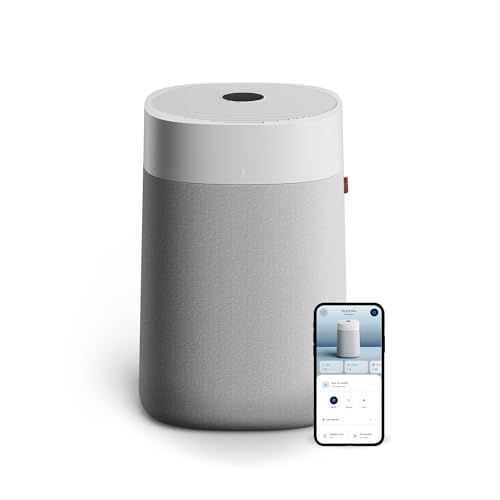
Blueair Blue Pure 211i Max Air Purifier
Overview
This is a 16.2-pound, Wi-Fi-connected floor air purifier for a large single room or open area. It uses a replaceable combined particle and carbon filter, covered by a removable washable fabric pre-filter. It has four manual fan speeds, auto and night modes, a particle sensor, and app controls. The manufacturer rates sound at 23 to 53 dB and lists a 46 W maximum draw. Its core particle-cleaning capability is independently documented. ENERGY STAR lists this exact product at 443 cfm smoke CADR, 457 cfm dust CADR, 450 cfm pollen CADR, and a 687-square-foot room size under its current test record. Blueair’s 674-square-foot, 12.5-minute claim is therefore broadly consistent with the verified sizing range. CARB also certified the exact model for sale in California, and ENERGY STAR reports measured ozone emissions of 2 ppb.
What works
- ENERGY STAR independently documents strong particle-cleaning output, including a 443 cfm smoke CADR and 450 cfm PM2.5 CADR.
- CARB certification confirms the exact model met California’s ozone-emissions and electrical-safety certification requirements. ENERGY STAR reports 2 ppb ozone emissions.
- The washable component is clearly limited to the outer fabric pre-filter. The manual gives vacuuming, washing, drying, and reinstallation instructions.
- ENERGY STAR lists the product as certified and Most Efficient, with an integrated energy factor of 10.2 cfm per watt.
- Blueair publishes a realistic main-filter service interval of 6 to 9 months, rather than describing the full filter as washable.
What does not
- The main particle and carbon filter is disposable and needs replacement every 6 to 9 months, creating recurring cost and filter waste.
- The standard filter’s carbon-media mass and gas-phase breakthrough performance are not publicly specified. Its odor and gas-removal capability is therefore less well established than its particle removal.
- The unit uses electrostatic assistance as part of HEPASilent filtration. Its verified ozone result is low, but people seeking strictly mechanical filtration may prefer to avoid that technology class.
- Published sound levels span 23 to 53 dB, while independently verified CADR by individual fan speed is not publicly available. The highest cleaning output may require the louder settings.
- It can reduce airborne particles, but it does not fix moisture-driven mold growth, remove settled allergens unless they become airborne, or substitute for source control and ventilation.
Who is it for
This product suits someone cleaning particles in one large living room, open-plan area, or large bedroom, especially during wildfire smoke, cooking smoke, pollen periods, or high dust and pet-dander conditions. The independently verified smoke CADR is substantial for a portable unit, and the 687-square-foot ENERGY STAR room-size record fits an approximately 8-foot ceiling. It also suits users who want scheduling, automatic particle sensing, app controls, and a washable outer fabric cover, while accepting regular replacement of the main filter.
Who is it not for
It is not for someone trying to solve an active mold or dampness problem, because filtration does not remove the moisture source that permits mold growth. It is also not a well-substantiated choice for sustained VOC, formaldehyde, or heavy odor control, since Blueair does not publish the carbon mass or a full gas breakthrough test for the standard filter. People highly sensitive to any electronic air-cleaning mechanism may instead want a product using only mechanical filtration, despite this unit’s low verified ozone result.
Integrity
The important health evidence is particle focused. ENERGY STAR independently records high smoke, dust, pollen, and PM2.5 clean-air delivery for this exact product. That makes it relevant to lowering airborne fine-particle exposure in a properly sized room. Health claims should remain limited, however. Portable cleaners supplement source control and ventilation, and they do not cure asthma or allergies, eliminate infection risk, or resolve mold contamination. CARB certified this exact model under its indoor-air-cleaner rule, with documentation from a nationally recognized laboratory. ENERGY STAR reports 2 ppb ozone emissions, which is low. The product has no fragrance tray or aromatherapy feature identified in its manual. Its washable fabric layer can reduce replacement of that outer cover, but not the main filter. The combined particle and carbon filter is replaced every 6 to 9 months and should be handled as recurring material waste. ENERGY STAR also lists the product as Most Efficient.

Blueair Blue Pure 311i Max Air Purifier
Overview
This is a compact, Wi-Fi-connected room air purifier with a 360-degree intake, a PM2.5 sensor, automatic and night modes, and app control. It uses a washable fabric outer pre-filter around a replaceable particle-and-carbon main filter. The unit measures 19 by 12.5 by 12.5 inches and is intended for indoor use. Its defining strength is independently traceable particle-cleaning performance. The verified smoke CADR is 283 cfm, with dust and pollen CADRs of 314 and 365 cfm. That supports the manufacturer’s 439 square foot recommendation for frequent cleaning, not the much larger one-hour coverage figure as an equivalent performance claim. Blueair states 23 to 50 dB sound and 32 W maximum power. Its HEPASilent system includes mechanical and electrostatic filtration, so it is not a purely mechanical HEPA design.
What works
- Independent performance records support strong particle cleaning, including a 283 cfm smoke CADR.
- The washable part is clearly identified as the fabric pre-filter, not the particle-and-carbon main filter.
- The manual gives concrete upkeep steps, including vacuuming or washing the fabric cover and hanging it dry.
- Manufacturer-stated sound is 23 to 50 dB, and independent hands-on testing also found moderate measured sound at high speed.
- The exact product is listed in ENERGY STAR supporting data, with efficient clean-air delivery relative to power use.
What does not
- The main filter is disposable and should be replaced about every 6 to 9 months, creating recurring cost and filter waste.
- The standard carbon layer is described for light household odors. Public specifications do not state carbon mass or provide a sustained gas-removal test, so broad VOC or toxic-gas protection is unproven.
- The product page groups odors with a 99.97% claim, although its disclosed test note concerns PM2.5 particle removal rather than odor gases.
- The purifier uses electrostatic charging. Ozone-safety certification is reported for the product, but public electrical-safety certification for this exact unit was not located in UL or ETL registries.
- The large one-hour coverage number represents slower air cleaning. The smaller recommended-room figure is the relevant sizing figure for regular particle control.
Who is it for
It suits someone seeking documented fine-particle reduction in a bedroom, home office, nursery, or enclosed living space of about 439 square feet or less with an 8-foot ceiling. It is particularly relevant when dust, pollen, pet dander, or wildfire-smoke particles are the practical concern, and when quiet lower-speed operation, auto mode, and app-based filter reminders matter. The fabric pre-filter can also be useful in homes with visible lint or pet hair, provided the buyer is willing to replace the internal filter on schedule.
Who is it not for
It is not designed to solve a moisture source, active mold growth, combustion leak, or infection-control problem on its own. People with strong chemical, formaldehyde, solvent, or persistent odor concerns should not treat the standard thin carbon component as proven broad gas protection. It is also a poor fit for a large open-plan area if fast cleaning is required throughout the space, because the 2,107 square foot figure reflects roughly one air change per hour. Buyers wanting no electrostatic technology at all should choose a mechanically filtered design.
Integrity
For particle exposure, this product has unusually traceable evidence. Its smoke, dust, and pollen CADRs are independently recorded, and the product is ENERGY STAR certified. Those facts support its use as a supplemental method to lower airborne particle concentrations, while not establishing treatment for asthma, allergies, infections, or mold-related illness. The HEPASilent design uses electrostatic charging alongside mechanical filtration. The product is represented in retailer materials as meeting CARB ozone requirements, although users who are especially ozone-sensitive may prefer to confirm the current certification label before use. There is no fragrance tray, oil compartment, or scenting feature in the product documentation reviewed. The washable fabric cover can reduce replacement of that outer layer, but it does not make the main filter washable. The main particle-and-carbon filter requires replacement after roughly 6 to 9 months, and should be treated as recurring material waste. The manual directs owners to recycle the appliance as electronic waste. No current CPSC recall for this product was located in the review.