
10 Best Air Purifier for Room
 Lauren Wilson
Please note that we participate in affiliate marketing programs. When you purchase through links on our site, we may earn a commission. As an Amazon Associate we earn from qualifying purchases. This comes at no additional cost to you and helps support the resources required to provide valuable content.Advertising Disclosure
Top-rated Air Purifier for Room Comparison
1

2
4
5
6
7
8
9
10
Overview
A room air purifier is a fan-and-filter appliance that draws indoor air through particle media and, usually, a layer of activated carbon. Its most defensible use is reducing airborne particles such as dust, pollen, pet dander, and smoke particles. It is not a substitute for ventilation, source control, moisture repair, mold remediation, or medical care, and filtration does not guarantee prevention or treatment of illness.
The first buying question is how quickly the product cleans the room. Look for independently verified smoke, dust, and pollen CADR clean-air delivery rate in the AHAM Verifide directory or an ENERGY STAR product record. CADR is more useful than a claim such as “99.97% removal,” because a high removal percentage at low airflow may still clean a room slowly. Match CADR to room volume, ceiling height, and the desired air changes per hour. A headline square-foot figure may describe one air change per hour, a 30-minute cleaning estimate, or an otherwise undisclosed test condition. Several supplied products advertised very large rooms while their independently listed or internally consistent sizing figures were far smaller.
Ozone and electronic by-products deserve separate attention. Prefer a traceable CARB-certified mechanical cleaner, a UL 2998 zero-ozone validation, or an exact-model record in UL Product iQ or Intertek’s directory. “CARB certified,” “UL certified,” or “ETL certified” printed in a listing is not enough unless the exact model can be found in the issuer’s public registry. Mechanical filtration is generally easier to assess, while electrostatic or other electronic designs need especially clear ozone evidence.
Activated carbon can help with some gases and odors, but its presence alone does not prove meaningful VOC, formaldehyde, or smoke-odor control. Look for disclosed sorbent quantity and relevant independent gas testing. A thin or unspecified carbon layer should not be treated as a gas purifier. Similarly, allergy, asthma, virus, mold, baby, sleep, or wellness language should describe particle reduction only; it should not promise prevention, treatment, symptom relief, or a guarantee of healthy air.
Maintenance determines whether performance lasts. Choose a sealed, replaceable filter with clear instructions, a realistic replacement interval, genuine replacements that remain available, and a filter indicator where useful. A washable pre-filter can reduce loading from hair and coarse dust, but it does not eliminate the need to replace the main cartridge. Sensor displays and auto modes are conveniences unless the manufacturer states their limits and provides credible accuracy evidence.
Finally, consider operating electricity, replacement-filter frequency, material waste, repair or parts support, and any fragrance feature. An aroma pad or essential-oil compartment adds volatile chemicals rather than removing them and may be unsuitable for fragrance-sensitive occupants.
Recurring safety caveats in the supplied reviews are substantial: no purifier should be relied on for large-room or whole-home claims without CADR-based sizing; gas, VOC, formaldehyde, and persistent-odor claims are often unsupported; sensor readings are commonly unvalidated; and disposable filters create ongoing waste. Products with optional fragrance should be avoided when added scent is unwanted. Certification claims that cannot be matched to the exact model should be treated as unconfirmed. A purifier also cannot solve mold or moisture sources, replace ventilation, or serve as treatment for asthma, allergies, infection, or other medical conditions.
Integrity
These topics distinguish a purifier that has useful, checkable performance from one that mainly presents broad claims. Scores reflect the supplied reviews; a higher score indicates stronger evidence or practice for that topic among these products, not a medical guarantee.
HHealth & Safety
Verified particle-cleaning power
This measures independently verified smoke, dust, and pollen CADR at the stated speed. It matters because particle removal depends on both filter performance and airflow. High-scoring products in this set have ENERGY STAR or comparable CADR records, including smoke values from 56 to 283 cfm; lower-scoring products lack independent CADR. Use the verified room figure, not a headline square-foot claim.
No harmful ozone or electronic-cleaner byproducts
This measures whether the purifier avoids intentional ozone generation and has credible low-ozone evidence. It matters because the appliance may run for hours around occupants, including people with asthma. High scores correspond to exact-model CARB, ENERGY STAR, Intertek, or similar records reporting mechanical operation or low emissions; low scores occur where certification is only claimed or cannot be traced to the exact product.
Electrical and fire safety
This measures traceable North American electrical-safety certification, suitable power specifications, and the absence of relevant recall or incident patterns. It matters because room purifiers are commonly left running continuously. High scores reflect stronger documented safety evidence and clear manuals or ratings; lower scores reflect unverified ETL, UL, or similar claims, inconsistent wattage information, or limited exact-model registry evidence.
Filter integrity over time
This measures whether a sealed, replaceable filter, clear maintenance instructions, genuine replacements, and replacement reminders can sustain cleaning. It matters because a bypassed, incorrectly installed, or saturated filter can undermine the appliance. High-scoring products provide model-specific replacements and practical intervals, often with washable pre-filters; lower-scoring products have ambiguous instructions, uncertain availability, or frequent disposable-filter demands.
Avoids added fragrance exposure
This measures whether aromatherapy pads, fragrance sponges, essential oils, or scent features are absent or clearly optional. It matters because a purifier should not add avoidable volatile chemicals while cleaning air, particularly around fragrance-sensitive occupants. High scores belong to products with no disclosed scent feature or clear instructions not to add oils; low scores reflect built-in or optional aroma systems.
EEvidence
Honest health claims
This measures whether allergy, asthma, smoke, virus, mold, baby, sleep, or wellness language stays within the limited evidence for particle filtration. It matters because a purifier can reduce airborne particles without preventing infection, treating asthma, curing allergies, or guaranteeing healthy air. Higher-scoring products use narrower claims; lower-scoring reviews flag broad breathing, sleep, or “all contaminants” promises.
Proven gas and odor control
This measures whether VOC, smoke-odor, formaldehyde, and odor claims are supported by disclosed sorbent media and relevant independent gas testing. It matters because activated carbon alone does not establish capacity. Higher-scoring products disclose more credible carbon or gas evidence, while most supplied products score lower because carbon mass and recognized gas-phase results are missing.
Realistic room-size claim
This measures whether square footage is derived transparently from CADR, ceiling height, and air changes per hour. It matters because a one-air-change claim may sound like robust cleaning but is not equivalent to four or five air changes. High scores include clear figures such as 140 square feet at 4.8 changes per hour or 439 square feet from certified data; low scores rely on oversized headline coverage.
Traceable independent verification
This measures whether meaningful performance, safety, and certification badges map to the exact model in a public issuer registry. It matters because seller-issued logos and untraceable reports cannot be checked. High-scoring products have exact ENERGY STAR, AHAM, CARB, or Intertek records; lower scores occur when a close model, retailer claim, or marketing badge is the only evidence.
Trustworthy air-quality sensing
This measures whether PM2.5 displays and auto modes disclose sensing limits, placement guidance, and credible accuracy evidence. It matters because the purifier may change speed—or reassure the user—based on an unexplained reading. High scores have documented sensor behavior and limits; among these products, most lack independent validation, so even an automatic display should be treated as a convenience signal rather than a calibrated monitor.
EEcology
Efficient clean-air delivery
This measures particle-cleaning delivery per watt and standby consumption at useful operating speeds. It matters because continuous operation can make electricity use a meaningful environmental and household cost. High-scoring products have ENERGY STAR data such as 5.5–5.79 cfm per watt or very low standby power; lower scores lack verified efficiency data or provide only inconsistent manufacturer wattage.
Lower filter waste and longer usable life
This measures replacement frequency, material use, washable pre-filters, parts availability, repairability, and lifecycle or recycling disclosures. It matters because filters are recurring disposable waste. High-scoring products combine washable pre-filters, longer six-to-nine-month intervals, and available genuine replacements; lower scores involve three-month replacement cycles, no recycling route, no parts plan, or unclear long-term support.
Full reviews
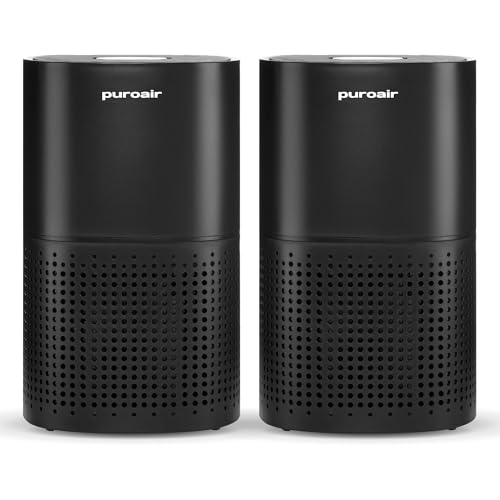
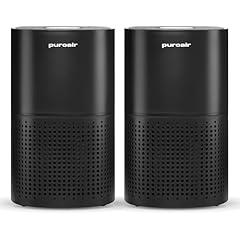
PuroAir Powerful Air Purifiers 2 Pack
Overview
This two-unit product is a compact, corded room air purifier. Each unit measures about 8.7 by 8.7 by 14.2 inches and uses a three-layer replacement filter with a pre-filter, particle-filter layer, and activated-carbon layer. It has four fan speeds, a timer, sleep mode, filter-change light, child lock, and an automatic mode that responds to its particle sensor. Independent ENERGY STAR records verify particle CADR ratings of 183 cfm for smoke, 181 cfm for dust, and 204 cfm for pollen, with reported zero ozone emissions. Those are useful performance figures for a smaller enclosed room. The manufacturer advertises up to 1,000 square feet, but independent testing measured a PM1 CADR of 92 cfm and estimated about 144 square feet at maximum speed. Its 1,000-square-foot claim therefore should not be used as a high-air-change room-sizing figure.
What works
- ENERGY STAR independently lists smoke, dust, and pollen CADR ratings, rather than relying only on a particle-removal percentage.
- ENERGY STAR identifies it as fan-and-filter technology and reports 0.0 ppb ozone emissions.
- Independent testing confirms a compact footprint, four fan speeds, a filter indicator, and particle-sensor auto mode.
- The filter design has a pre-filter, particle-filter layer, and activated-carbon pellets, with genuine replacements sold by the manufacturer.
What does not
- The advertised 1,000-square-foot coverage is poorly aligned with both verified CADR data and independent room-size testing, which places it in small-room use at maximum speed.
- The manufacturer calls the filter HEPA, but independent testing found that the filter itself is not HEPA-certified.
- Carbon is present as pellets, but the manufacturer does not disclose carbon mass or publish a gas-phase test report. Independent testing found too little carbon for a large odor-control effect.
- Filters are disposable and recommended about every 90 days. That creates recurring material waste and requires regular maintenance.
- The air-quality sensor enables auto mode, but no accuracy specification, calibration method, or public validation report was located.
Who is it for
This product suits someone furnishing two separate small bedrooms, offices, or similarly enclosed spaces, especially where particle control is the main goal. The independently listed CADR figures support meaningful smoke, dust, and pollen removal when each unit is run at an appropriate speed in a modest room. It also fits users who want simple push-button controls, a filter-change reminder, no added fragrance feature, and automatic fan adjustment without depending on an app or cloud connection. It is most appropriate when filters can be replaced on schedule.
Who is it not for
It is not suited to treating a 1,000-square-foot open-plan space as a single high-air-change zone, or to relying on quiet operation for strong particle cleaning in a large bedroom. Independent testing found substantially lower practical coverage than the advertised figure. It is also not a strong fit for households dealing with persistent cooking odors, tobacco odor, heavy VOC sources, or formaldehyde concerns, because carbon-media quantity and gas-removal performance are not transparently documented. People seeking a certified true-HEPA filter should note that this filter was not independently identified as HEPA-certified.
Integrity
The strongest health evidence is for particle filtration and low ozone. ENERGY STAR lists this exact product as a fan-and-filter cleaner, reports 0.0 ppb ozone, and provides smoke, dust, and pollen CADR values. This supports use for reducing airborne particles, not preventing or treating allergy, asthma, infection, mold exposure, or other health conditions. The manufacturer’s broader allergy-relief and healthy-home language goes beyond the publicly available product-specific human evidence. The product has no aromatherapy or fragrance component identified in its filter configuration. Its filter is a disposable three-layer part with an activated-carbon layer and a recommended replacement interval of about 90 days, so it creates ongoing filter waste. Genuine replacements and a replacement indicator are available, which can help sustain operation. The manufacturer claims CARB certification, but the current CARB device registry reviewed does not identify this exact product. Its ENERGY STAR certification is publicly traceable, while the claimed CARB, UL, and ETL references were not all traceable to this exact model in public issuer registries.

130i HEPA Air Purifier
Overview
This is a compact, corded room air cleaner with Wi-Fi app control, four manual fan modes, and a replaceable three-layer filter. The manufacturer describes a pre-screen, a HEPA particle layer, and an activated-carbon layer. It measures 7.87 by 7.87 by 12.68 inches, weighs 4.39 pounds, and uses a 24-volt, 18-watt power system. Its particle performance is independently documented. ENERGY STAR lists smoke, dust, pollen, and PM2.5 CADRs of 75, 74, 88, and 74 cfm, respectively, plus 0 ppb ozone. However, ENERGY STAR lists a 116-square-foot room size, while the manufacturer advertises up to 600 square feet in one hour. That difference is central to realistic sizing.
What works
- ENERGY STAR independently lists particle CADRs, including 75 cfm for smoke and 74 cfm for PM2.5.
- ENERGY STAR reports 0 ppb ozone, and California lists this exact model as a mechanical CARB-certified air cleaner.
- ENERGY STAR lists annual energy use of 98 kWh and an integrated energy factor of 4.4 cfm per watt.
- Genuine replacements are sold directly by the manufacturer, with a filter-change indicator and a stated 90-day replacement interval.
What does not
- The manufacturer’s 600-square-foot claim conflicts with ENERGY STAR’s listed 116-square-foot room size and EPA CADR-based sizing guidance.
- The activated-carbon media is described, but its amount, gas-phase capacity, and independent VOC or odor test results are not disclosed.
- Marketing links filtration to healthier breathing, better sleep, and allergy relief, but product-specific human-outcome evidence was not provided.
- The filter is disposable and is recommended every 90 days, creating recurring material use. No recycling program or repair-parts plan was identified.
Who is it for
This product fits someone seeking a small, portable particle filter for a bedroom, nursery, dorm, or compact office, especially where the practical target is close to the independently listed 116-square-foot room size. It is also suited to users who value app scheduling, Wi-Fi control, a filter reminder, and readily available genuine replacements. Its independently listed particle CADRs and zero-ozone result make it relevant for routine dust, pollen, pet-dander, and fine-particle reduction when run consistently with a fresh filter.
Who is it not for
It is not appropriate for someone relying on a single unit to clean a 600-square-foot room at a robust air-change rate. Its independently listed smoke CADR is 75 cfm, far below EPA’s 390 cfm sizing estimate for 600 square feet with an 8-foot ceiling. It is also a poor fit where dependable VOC, formaldehyde, heavy odor, or smoke-gas removal is the main need, because carbon quantity and independent gas-removal results are not disclosed. It should not be treated as treatment for asthma, allergies, sleep problems, or other health conditions.
Integrity
The strongest health evidence is for particle filtration and low ozone, not broad wellness outcomes. ENERGY STAR independently lists 75 cfm smoke CADR, 74 cfm dust CADR, 88 cfm pollen CADR, 74 cfm PM2.5 CADR, and 0 ppb ozone for this exact product. California also lists it as a mechanical CARB-certified device. CARB explains that mechanical devices use physical filtration and do not generate ozone or ions. The filter contains a pre-screen, HEPA layer, and activated carbon, according to the manufacturer. It has no disclosed fragrance or aromatherapy function. The tradeoff is waste, since the manufacturer recommends replacing the disposable filter about every 90 days. The product has a two-year manufacturer warranty, with a lifetime warranty offered only with an active filter subscription. No product-specific recall, CPSC warning, or FDA medical-device listing was identified in the reviewed U.S. sources.

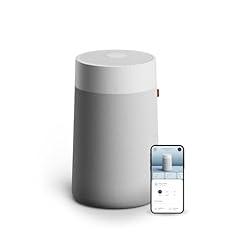
Blueair Blue Pure 311i Max Air Purifier
Overview
This is a compact, floor-standing, Wi-Fi-connected room air purifier with a 360-degree intake, washable fabric pre-filter, replaceable particle-and-carbon main filter, four fan settings, and an automatic mode. It is intended for one occupied room, not whole-home filtration. Blueair’s manual identifies a PM2.5 particle sensor and states that auto mode adjusts fan speed from that reading. Its central strength is independently listed particle-cleaning and energy data. The current ENERGY STAR record lists a 439-square-foot room size, smoke CADR of 283 cfm, dust CADR of 314 cfm, pollen CADR of 365 cfm, and 2 ppb ozone emissions. Blueair separately states that the standard filter includes activated carbon for light household odors. That does not establish robust VOC or formaldehyde control, because the product does not disclose carbon mass or relevant independent gas-removal results.
What works
- ENERGY STAR publicly lists the exact product with strong smoke, dust, pollen, and PM2.5 clean-air delivery figures for a single room.
- The ENERGY STAR record reports 2 ppb ozone emissions, which is low and important because this product uses electrostatic particle charging.
- The manufacturer manual provides concrete safety, placement, filter-change, and washable pre-filter instructions.
- Genuine replacement particle-and-carbon filters are sold directly by Blueair, and the manual indicates replacement based on a filter alert after roughly 6 to 9 months.
- The standard design has no aromatherapy pad, fragrance cartridge, or scent-diffusion feature disclosed in the manual or official product materials.
What does not
- The advertised very large coverage figure is a one-hour cleaning estimate. The independently listed 439-square-foot room size is the more realistic planning figure for routine use.
- The carbon layer is described for light household odors, but Blueair does not disclose sorbent quantity or publish independent gas, VOC, or formaldehyde performance for the standard filter.
- The PM2.5 sensor runs auto mode, but Blueair does not publish accuracy, calibration, cross-sensitivity, or humidity-performance data for it.
- The product uses electrostatic charging. Its low reported ozone result is reassuring, but buyers should not treat it as a purely mechanical HEPA design.
- The main filter is disposable every 6 to 9 months. Blueair gives e-waste disposal guidance for the appliance but no demonstrated recycling route or material disclosure for used filters.
Who is it for
This product fits a person who wants documented particle reduction in a bedroom, home office, nursery, or other single room around 439 square feet with a typical ceiling height. It is particularly relevant for households dealing with pollen, pet dander, dust, cooking particles, or episodic outdoor smoke, provided the unit is run at a useful fan speed. It also suits users who value automatic adjustment and are prepared to wash the pre-filter and budget for genuine replacement filters every 6 to 9 months.
Who is it not for
It is not designed as a substitute for source control, ventilation, medical care, mold remediation, or whole-home filtration. People managing a moisture or mold problem need to correct the water source and clean affected materials. Buyers with substantial formaldehyde, solvent, combustion-gas, or persistent odor concerns should not rely on the standard thinly described carbon stage, because gas-removal capacity is not independently established. It is also unsuitable for anyone unable to keep air inlets clear, replace filters, or use it only in dry indoor locations.
Integrity
The product has meaningful third-party traceability where it matters most for particles and ozone. ENERGY STAR publicly lists this exact product for the United States and Canada, with particle CADRs, connected auto mode, energy metrics, and ozone emissions of 2 ppb. This is especially relevant because Blueair’s HEPASilent design combines mechanical filtration with electrostatic charging. EPA cautions that some electronic cleaners can emit ozone, so the low listed result is more useful than a generic zero-ozone marketing statement. Particle filtration can supplement source control and clean-air ventilation, but it cannot remove every indoor pollutant or guarantee health outcomes. The washable fabric pre-filter may extend main-filter life, yet the main filter remains a recurring disposable item at a stated 6 to 9 month interval. Blueair instructs users to recycle the appliance as e-waste where possible, but no filter recycling program or full filter-material disclosure was found. No current recall specific to this product was identified in the CPSC recall search.

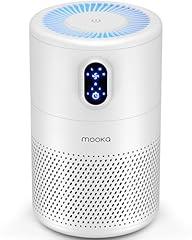
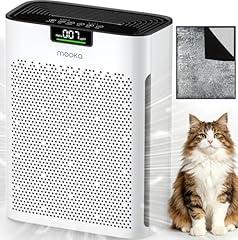
MOOKA H13 True HEPA Air Purifier
Overview
This is a compact, corded room air purifier, measuring about 7.1 by 7.1 by 11.1 inches and using a cylindrical replaceable filter. MOOKA describes a three-stage arrangement with a pre-filter, H13 HEPA filter, and activated-carbon layer. It has four fan modes, timers, a child lock, and a switchable night light. It has no auto mode or air-quality sensor. The manufacturer states 20 dB noise in sleep mode and 13 W rated power, although an available copy of the manual instead lists 16 W. Its area claim is more specific than many listings, stating six air changes hourly in 215 square feet and one hourly in 1,076 square feet. No AHAM-verified smoke, dust, or pollen CADR was located for this product, so its particle-cleaning speed and larger-room performance remain unconfirmed.
What works
- The mechanical pre-filter, HEPA filter, and activated-carbon filter arrangement is clearly described by the manufacturer.
- The manufacturer provides a model-specific official replacement filter and gives a 3 to 6 month replacement interval.
- The room claim discloses both a small-room six-air-change figure and a much lower one-air-change figure for 1,076 square feet.
- No aromatherapy function is listed, avoiding an intentional scent feature while the purifier runs.
What does not
- No AHAM-verified CADR, ENERGY STAR listing, or independent particle-performance result was found for this product.
- The claimed Intertek ETL listing in an available manual could not be matched to this exact product in a public issuer registry.
- The activated-carbon layer is not quantified, and no independent gas, VOC, formaldehyde, or odor-reduction testing was located.
- The product page says it can remove all airborne contaminants, an overbroad claim that conflicts with EPA guidance that no air cleaner removes all indoor pollutants.
- The available documentation gives inconsistent rated power figures, 13 W on the product page and 16 W in the manual copy.
Who is it for
This product suits someone seeking a small, simple mechanical-filter purifier for a bedroom, desk area, nursery, or other enclosed room around 215 square feet, where the manufacturer states six hourly air changes. It may fit users who value manual controls, a dimmable night light, and the absence of an aromatherapy feature. It also suits households willing to buy and install a replacement filter every 3 to 6 months, and to treat the stated room coverage as manufacturer guidance rather than independently verified performance.
Who is it not for
It is not suited to people who need independently verified particle-cleaning rates for wildfire smoke, significant allergies, asthma management, or infection-risk planning. Those users need a product with published smoke, dust, and pollen CADR matched to the room and ceiling height. It is also not suited to households trying to control substantial VOC, formaldehyde, or persistent odor sources, because carbon quantity and gas-removal testing are not disclosed. Anyone requiring publicly traceable electrical-safety and low-ozone certification should seek documentation that maps directly to the exact product.
Integrity
The product uses mechanical particle filtration and activated carbon, with no ionizer, UV, plasma, or aromatherapy function described on MOOKA's product page. That design does not indicate intentional ozone generation, but a product-specific CARB certification or UL 2998 zero-ozone validation was not located. An available manual says the product is ETL listed, but the claim was not independently traceable in a public Intertek record for this exact product. No relevant CPSC recall or regulatory warning was located in the checked sources. EPA guidance supports portable filtration as a supplement to source control and ventilation, not as a way to eliminate all pollutants or solve mold and moisture problems. MOOKA sells a dedicated replacement filter and advises changing it every 3 to 6 months. This supports continued use, but creates recurring disposable-filter waste. No recycling program, lifecycle disclosure, repair-parts catalog, verified CADR, or ENERGY STAR qualification was found.

MOOKA H13 Air Purifier for Large Rooms
Overview
This is a compact, corded room air purifier, about 15.75 inches tall and 6.7 pounds, with touch controls, four fan speeds, timer settings, sleep mode, auto mode, a particle-sensing display, child lock, and a fragrance pad. It is intended to reduce airborne particles such as dust, pollen, pet dander, and smoke in a single room. The manufacturer describes a washable pre-filter followed by an H13-labeled particle filter and activated-carbon media, with a service reminder at 2,000 hours. California's public registry independently lists both KJ190H and KJ190L versions as certified mechanical air cleaners, which is meaningful evidence against intentional ozone generation. However, no public AHAM smoke, dust, or pollen CADR rating was found for this product. That leaves its 2,200 square foot coverage statement and particle-cleaning speed unverified. The supplied record also uses two similar model names, so buyers should match the model shown on the unit label to replacement filters and certification records.
What works
- California publicly lists the relevant KJ190H and KJ190L models as certified mechanical air cleaners, supporting low-ozone use.
- The manufacturer specifies a washable pre-filter, which can capture larger debris before it reaches the disposable particle and carbon filter.
- A 2,000-hour filter reminder and instructions to replace the main H13-labeled and carbon filter provide a defined maintenance trigger.
- The manufacturer states that genuine replacement filters are available and gives a two-year exchange policy with lifetime technical support.
What does not
- No public AHAM-verified smoke, dust, or pollen CADR was found, so fast fine-particle removal cannot be independently quantified.
- The 2,200 square foot claim is not paired with CADR, ceiling height, or air-change assumptions, making realistic room sizing unclear.
- The activated-carbon media is described, but its mass, gas-phase test results, and formaldehyde, VOC, or odor reduction performance are not disclosed.
- Auto mode and the air-quality display lack published sensor type, accuracy, calibration, placement guidance, or independent validation.
- The optional fragrance pad is designed for essential oils, which can add scented volatile chemicals to indoor air rather than only removing pollutants.
- CARB certification is publicly traceable, but the stated ETL and DOE claims were not independently matched to a public listing for this exact product.
Who is it for
This product suits someone seeking a compact mechanical purifier for a bedroom, pet area, or other single room, who will use it mainly for routine particle reduction and is prepared to maintain the filter. It is especially relevant for a household that wants an independently checkable California air-cleaner certification and prefers a washable pre-filter for hair and larger dust. The claimed 20 dB sleep setting may also appeal to light sleepers, but that noise figure is manufacturer-stated rather than independently verified.
Who is it not for
It is not well matched to buyers who need documented clean-air delivery for wildfire smoke, severe allergies, asthma management, or infection-risk reduction in a known room size. Those uses need a published CADR and sizing calculation, neither of which was located here. It is also a poor fit for people seeking proven VOC, formaldehyde, or persistent odor control, because carbon quantity and gas-phase test results are not disclosed. Fragrance-sensitive households should avoid using the included aromatherapy function.
Integrity
The strongest independently checkable health point is California certification. The state registry lists the relevant product versions as mechanical air cleaners, a category that does not intentionally generate ozone. This is more useful evidence than a generic no-ozone marketing statement. No product-specific CPSC recall or federal safety warning was found in the searched public sources. The stated ETL safety claim could not be independently traced to an exact public listing during this review. The washable pre-filter may reduce loading on the main filter, but the H13-labeled particle filter and activated-carbon component still require replacement. The manufacturer says to replace or service the filter when the 2,000-hour reminder activates. It provides no public recycling program, filter material breakdown, lifecycle assessment, or repair-parts catalog. Its fragrance pad is optional, but essential oils add scent chemicals and are not a substitute for gas filtration.

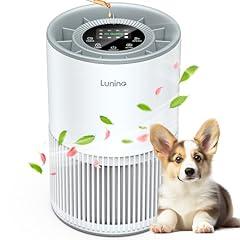
LUNINO H13 True HEPA Air Purifier
Overview
This is a compact, touch-controlled tabletop air purifier, measuring about 6.5 by 6.5 by 9.8 inches and weighing about 2.6 pounds. Its manual describes a cylindrical three-stage replacement filter with a pre-filter, an H13 HEPA layer, and activated carbon. It also has fan settings, auto mode, a colored air-quality indicator, timer, child lock, and a separate pad for user-added essential oil. The particle-filtration design is plausible, but no independently verified smoke, dust, or pollen CADR was located for this exact product. That leaves both real cleaning speed and the stated 1,200-square-foot coverage unconfirmed. The published manual recommends replacing the filter every three to six months and includes a replacement reminder. The product's claimed CARB certification could not be traced to this exact model in CARB's current public registry.
What works
- The manual specifies a replaceable three-stage filter with pre-filter, H13 HEPA, and activated-carbon layers.
- A filter-change indicator and a stated three-to-six-month replacement interval support routine maintenance.
- Its small footprint can fit a bedside table, desk, or other limited-space location.
- The scent feature is separate from filtration and can be left unused.
What does not
- No AHAM-verified CADR or equivalent independent particle-cleaning result was found for this exact product.
- The 1,200-square-foot coverage claim is not tied to a disclosed CADR, ceiling height, or air-change target.
- CARB's public certified-device list did not identify this exact model, despite the product's CARB-certified claim.
- The manual describes activated carbon but does not disclose carbon quantity or independent testing for VOCs, odors, or smoke gases.
- The fragrance pad intentionally adds essential-oil vapors when used, which conflicts with a low-exposure air-cleaning approach.
Who is it for
This product fits a budget-conscious user seeking a small, simple unit for a desk, bedside area, dorm room, or other limited personal space, provided they treat the coverage figure cautiously. It is most suitable for routine dust and allergen management where a replaceable particle filter, compact size, timer, and basic automatic operation are useful. Users who prefer an unscented room can leave the separate aroma pad empty. Filter replacement every three to six months should be planned as an ongoing cost and maintenance task.
Who is it not for
It is not well suited to people sizing a purifier for wildfire smoke, a large living area, serious allergy control, or a bedroom shared with someone with asthma who needs documented cleaning performance. Those situations call for independently verified particle CADR matched to the room volume and desired air changes. It is also not appropriate for people who want demonstrated VOC, formaldehyde, or persistent odor control, because carbon-media quantity and gas-removal testing were not disclosed. Fragrance-sensitive households should not use the aroma feature.
Integrity
The mechanical filter design avoids an intentional ionizer or ozone-generating technology in the product documentation. However, the exact product was not found in CARB's public certified-air-cleaner registry, even though the product claims CARB certification. CARB notes that its certification program addresses ozone emissions, not whether a cleaner effectively removes pollutants or is broadly health-safe. No exact-product UL, ETL, or ENERGY STAR listing was located in the public registries reviewed. The replacement filter is a disposable three-stage cartridge. The manual recommends replacement every three to six months, which can preserve filtration but creates recurring material waste. No recycling program, repair-parts plan, lifecycle assessment, or energy-efficiency certification was located. The essential-oil pad is optional, but adding fragrance introduces avoidable volatile chemicals rather than removing them.

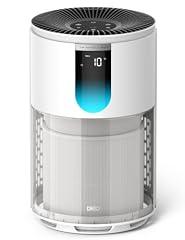
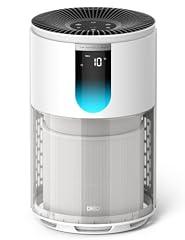
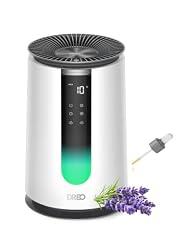
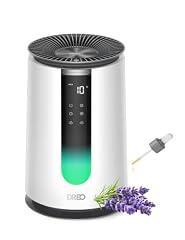
DREO Air Purifier DR-HAP009
Overview
This is a compact, corded room air purifier, about 9.4 inches square and 15.4 inches tall, with a cylindrical replaceable filter, touch controls, four regular speeds, turbo, sleep mode, a timer, a PM2.5 display, and automatic fan control. It is intended to reduce airborne particles such as smoke, dust, and pollen in one enclosed room. Its particle performance is independently traceable. The ENERGY STAR qualified-product record lists smoke, dust, and pollen CADR values of 158, 172, and 174 cubic feet per minute, with a 245-square-foot room-size rating. That record also lists zero ozone emissions and fan-and-filter technology. The listing's 1,176-square-foot coverage claim is not a realistic equivalent of the independently listed 245-square-foot rating, so buyers should size it to the verified figure. The manufacturer sells a three-stage replacement filter with a prefilter, HEPA media, and activated carbon.
What works
- Independently listed particle CADR values provide a concrete basis for room sizing.
- The verified 245-square-foot rating is suitable for a typical enclosed bedroom or small living area.
- The ENERGY STAR record lists zero ozone emissions, and California lists the product as a mechanical air cleaner.
- The manufacturer provides genuine, tool-free replacement filters and the manual gives a 6 to 8 month replacement interval.
- The verified smoke CADR efficiency is 5.79 cubic feet per minute per watt.
What does not
- The advertised 1,176-square-foot coverage conflicts with the independently listed 245-square-foot room size.
- The carbon filter is disclosed, but no carbon quantity or independent gas, VOC, formaldehyde, or odor-reduction test was found.
- The PM2.5 sensor cannot detect odors or gases, and no published accuracy validation was found.
- The claimed ETL electrical-safety mark was not independently traceable to this exact product in a public registry reviewed here.
- The disposable filter is typically replaced every 6 to 8 months, creating recurring material waste.
Who is it for
This product suits someone seeking independently documented particle filtration for a closed bedroom, nursery, home office, or small living room of roughly 245 square feet. It is especially relevant for routine particle concerns, including pollen, dust, pet dander, and outdoor smoke particles, when the unit can run at a useful fan speed and doors and windows are kept closed. It also fits users who want a PM2.5 display, automatic particle-responsive operation, a quiet sleep setting, and readily available genuine replacement filters.
Who is it not for
It is not appropriate to size around the advertised 1,176-square-foot figure. Larger open-plan rooms, high ceilings, and spaces needing rapid wildfire-smoke cleanup need a higher verified clean-air delivery rate or multiple units. It is also not a substitute for source control or ventilation where gas, combustion pollutants, solvent vapors, formaldehyde, or persistent odors are the main concern. The sensor does not detect gases or odors, and the disclosed carbon layer lacks independent gas-removal evidence. People unable to maintain disposable filters every 6 to 8 months should consider that ongoing requirement.
Integrity
The strongest health evidence is for particle removal rather than broad air-quality or medical outcomes. Independent qualification records list smoke, dust, pollen, and PM2.5 clean-air delivery data, along with zero ozone emissions. California also lists this exact product as a certified mechanical air cleaner. Mechanical filtration avoids intentional ionization, and the manual specifically says not to add essential oils or diffusers to the product. The filter combines a prefilter, HEPA media, activated carbon, and a plastic frame. This supports particle capture and may modestly reduce odors, but the manufacturer does not disclose carbon mass or publish independent gas-removal results. The manual recommends replacing the filter every 6 to 8 months, while the prefilter can be dry-brushed every 2 to 4 weeks. Genuine replacements are sold by the manufacturer, but they remain disposable consumables. No applicable CPSC recall or FDA medical-device listing was identified in the reviewed public records.

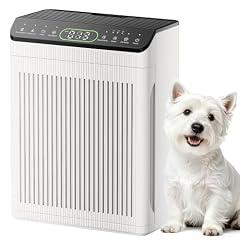
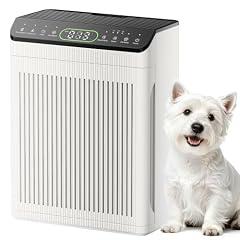
Evalit Air Purifier for Large Rooms
Overview
This is a floor-standing, plug-in room air purifier measuring about 7.5 by 13.4 by 17.1 inches and weighing 8.5 pounds. It uses a replaceable particle filter with a washable pre-filter, touch controls, three fan speeds, timer, sleep mode, pet mode, child lock, and a displayed PM2.5 reading. The manufacturer states that it is intended for spaces up to 2,200 square feet. The most consequential independently confirmed fact is that California Air Resources Board lists the exact ET066 model as a mechanical air cleaner. That supports low-ozone operation. Its large-room claim is not accompanied by publicly verified smoke, dust, or pollen CADR figures, so the practical room size and cleaning speed cannot be independently established. The manufacturer also offers an aromatherapy compartment for user-added essential oils, which is optional but adds scent emissions rather than removing them.
What works
- California Air Resources Board publicly lists the exact model as a mechanical air cleaner, providing credible low-ozone verification.
- The manufacturer states that the washable pre-filter catches larger debris such as pet hair and lint, which can reduce loading on the main filter.
- A replacement filter is documented for this product, with a filter-change indicator and instructions to remove packaging and reseat the filter.
- The manufacturer provides a PM2.5 display and automatic fan mode, plus sleep, timer, child-lock, and manual speed controls.
What does not
- No public AHAM CADR certification or equivalent independent smoke, dust, and pollen performance data was found for this product.
- The 2,200 square foot coverage claim is unproven because it is not tied to a disclosed CADR, ceiling height, or air-change target.
- The activated-carbon odor and VOC claims are not supported by disclosed carbon quantity or independent gas-removal testing.
- The PM2.5 sensor has no published accuracy, bias, detection-limit, or third-party validation data.
- The optional aromatherapy compartment disperses essential oils, an avoidable fragrance exposure that may not suit scent-sensitive users.
Who is it for
This product suits a household seeking a compact, mechanically filtered purifier for ordinary particle control in a bedroom, living area, or pet space, especially if a washable hair-catching pre-filter and straightforward controls are priorities. It may also suit users who want automatic fan changes based on a local PM2.5 reading, while treating that display as a convenience signal rather than a calibrated measurement. The CARB listing is especially relevant for people who want to avoid intentional ozone-generating air cleaners.
Who is it not for
It is not well suited to buyers who need a purifier sized with verified CADR data for wildfire smoke, a large open-plan area, or a specific number of air changes per hour. People with asthma, fragrance sensitivity, migraines, or a preference for source control should avoid using its optional essential-oil compartment. It also does not meet the evidence needs of users requiring independently validated sensor accuracy, ENERGY STAR energy data, a traceable North American electrical-safety listing, or measured gas and formaldehyde removal.
Integrity
California Air Resources Board lists this exact product as a mechanical air cleaner under certificate G-25-252. That is meaningful safety evidence because it supports low ozone emissions, unlike devices designed to ionize air or intentionally generate ozone. EPA notes that portable air cleaners can reduce particle exposure but do not eliminate every pollutant, solve moisture-driven mold problems, or guarantee health outcomes. The product uses a washable pre-filter and a replaceable main filter. The documented replacement guidance says to clean the pre-filter and fully dry it before reinstallation, while the particle and carbon media are replaced rather than washed. This can reduce premature disposal of the main filter, although it remains a recurring consumable and no recycling program or lifecycle disclosure was found. Its essential-oil tray is optional, but it creates an added fragrance pathway. No public CADR, electrical-safety listing, energy-use figure, or sensor-validation report was found.

Dreo 338 HEPA Air Purifier
Overview
This is a compact, corded room air purifier with touch controls, four fan speeds, sleep, turbo and automatic modes, a PM2.5 display, and an optional aroma-pad compartment. It uses a replaceable three-layer filter with a prefilter, particle filter, and activated-carbon layer. The manufacturer sells the genuine replacement filter separately and describes tool-free replacement. Its most important independently checkable performance figures are strong for a small-room unit. ENERGY STAR product data lists smoke, dust, and pollen CADRs of 115, 121, and 131 CFM, plus 0.00 ppb ozone emissions. That same record gives a 178 square foot room-size figure. The advertised 856 square foot claim is therefore not a like-for-like daily-use sizing figure, and should be treated as a low-air-change claim rather than the practical particle-cleaning room size.
What works
- Independent ENERGY STAR data confirms 115 CFM smoke CADR, 121 CFM dust CADR, and 131 CFM pollen CADR.
- The product is listed by California's air-cleaner registry as a mechanical device, and ENERGY STAR data reports 0.00 ppb ozone emissions.
- ENERGY STAR data reports an integrated energy factor of 5.5 CFM per watt, with estimated annual use of 125 kWh.
- Genuine replacements are sold by the manufacturer, with a prefilter, HEPA layer, activated-carbon layer, and tool-free installation.
- The manufacturer states that the lowest-speed noise level is 18 dB, which may suit sleep use, although this figure was not independently verified.
What does not
- The advertised 856 square foot coverage conflicts with the independently listed 178 square foot room size, so the larger claim lacks clear air-change context.
- The carbon layer is disclosed, but its mass and independent gas, VOC, formaldehyde, or odor reduction testing are not disclosed.
- The aroma-pad feature permits intentional fragrance emissions, which is counter to a fragrance-minimizing air-cleaning setup for sensitive occupants.
- A PM2.5 display and automatic mode are included, but no sensor accuracy specification or independent validation was located.
- An ETL safety claim appears in retail material, but an exact public electrical-safety listing for this product was not confirmed in the review.
Who is it for
This product fits someone looking to reduce airborne particles in a bedroom, nursery, home office, or similarly sized enclosed room. Its independently listed smoke CADR of 115 CFM supports use where pollen, pet dander, household dust, or outdoor smoke particles are the primary concern. It also suits users who want a non-smart unit with a particulate display and automatic operation. Use the independently listed 178 square foot room size for realistic sizing, especially when regular particle reduction matters.
Who is it not for
It is not a good fit for someone who needs verified control of cooking fumes, strong pet odors, solvents, formaldehyde, or other gases. The product has activated carbon, but the amount of media and gas-removal test results are not disclosed. It is also unsuitable as a stand-alone solution for a large open-plan area when frequent air changes are needed. People with fragrance-triggered asthma, migraines, or chemical sensitivities should avoid using the aroma-pad feature and may prefer a product without scent capability.
Integrity
The product has unusually traceable particle and ozone evidence for its size. ENERGY STAR data identifies it as a fan-and-filter cleaner, records 0.00 ppb ozone emissions, and provides separate smoke, dust, pollen, and PM2.5 CADRs. California's registry also lists this exact product as a CARB-certified mechanical air-cleaning device. Those records support particle filtration and low ozone exposure, not prevention or treatment of asthma, allergy, infection, or other disease. The genuine replacement is a disposable prefilter, HEPA filter, and activated-carbon assembly. It is available from the manufacturer and installs without tools, helping preserve use over time, but it creates recurring filter waste. The manufacturer offers a 12-month defect warranty. No product-specific CPSC recall was located during this review. The optional aroma-pad system is the main avoidable indoor-exposure issue, because adding essential oils or fragrance intentionally introduces chemicals into the air.
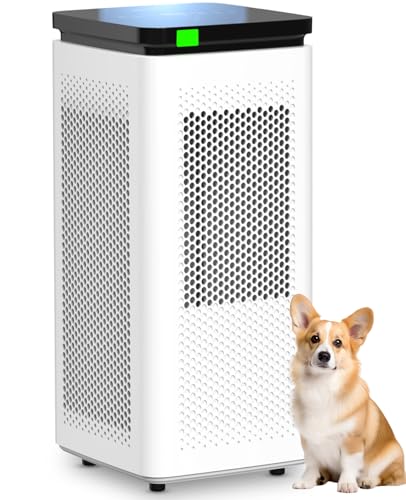
SIESEAN Air Purifier for Large Rooms
Overview
The SIESEAN AP-400 is a 11.3-pound, floor-standing room air purifier with touch controls, a PM2.5 display, automatic fan mode, timer, child lock, and a replaceable particle-and-carbon filter system. The manufacturer specifies a 42-watt input, 30 dB sleep mode, H13 particle filtration, activated carbon, and a 3-year warranty. Its most useful independently confirmed data come from ENERGY STAR. The product is certified for the United States and Canada with 230 CFM smoke, 239 CFM dust, and 242 CFM pollen clean-air delivery rates, plus 0 ppb reported ozone emissions. Those results support substantial particle removal in a single room. However, ENERGY STAR lists a 357-square-foot room size, while the manufacturer advertises coverage up to 3,500 square feet. The larger figure is not accompanied by an air-change rate or ceiling-height basis, so it should not be read as equivalent to the certified room-size figure.
What works
- ENERGY STAR independently lists strong particle-cleaning rates, including 230 CFM for smoke.
- ENERGY STAR lists 0 ppb ozone emissions and fan-and-filter technology, rather than an intentional ozone-generating mechanism.
- The certified 5.6 CFM-per-watt integrated energy factor indicates efficient particle cleaning for its measured output.
- The manufacturer provides genuine replacement filters in a four-pack and states a 3 to 4 month replacement interval.
- A 3-year manufacturer warranty is longer than the short coverage commonly provided for disposable small appliances.
What does not
- The advertised 3,500-square-foot coverage conflicts sharply with ENERGY STAR's listed 357-square-foot room size, and no air-change calculation is disclosed for the larger claim.
- Activated carbon is present, but neither carbon quantity nor independent VOC, formaldehyde, or odor-removal testing was disclosed. Gas and odor claims remain unproven.
- The manufacturer claims CARB and ETL status, but an exact AP-400 entry was not independently located in the accessible CARB and ETL public registries during this review.
- The PM2.5 sensor is described as a laser sensor, but no accuracy range, calibration method, placement guidance, or independent validation was located.
- Replacing filters every 3 to 4 months can mean three or four disposable filter sets per year, and no filter recycling program was identified.
Who is it for
This product fits a buyer who wants independently documented particle reduction for one medium-size room, such as a bedroom, office, nursery, or enclosed living area. The certified smoke CADR of 230 CFM is relevant for pollen, dust, pet dander, and smoke particles when the unit is run at an effective fan setting. It also suits households that prefer a non-ionizing fan-and-filter design with reported zero ozone emissions, automatic operation, and readily available manufacturer-stated replacement filters.
Who is it not for
It is not appropriate for someone expecting verified purification across a 3,500-square-foot home, open floor plan, or multiple closed rooms. Its ENERGY STAR room-size listing is 357 square feet, so larger spaces need a stated air-change calculation rather than the broad coverage claim. It is also not for buyers who need documented removal of formaldehyde, VOCs, or persistent odors, because carbon-media quantity and gas-phase test results are unavailable. People relying on a precise PM2.5 monitor should use a separately validated sensor.
Integrity
For particle exposure, the strongest health-relevant evidence is the ENERGY STAR record: independently listed smoke, dust, and pollen CADRs are all near 230 to 242 CFM, and reported ozone emissions are 0 ppb. This is a mechanical fan-and-filter product with HEPA-type and activated-carbon filter stages in the certified record. It should reduce airborne particles when correctly sized and operated, but it cannot eliminate all indoor pollutants, solve a moisture or mold source, or replace ventilation and source control. The product's energy profile is favorable on the available certified data, with a 5.6 CFM-per-watt integrated energy factor and estimated annual energy use of 243 kWh. The manufacturer says filters should be replaced every 3 to 4 months and sells a four-pack, which helps continued operation but creates recurring filter waste. No recycling pathway, repair parts catalog, or lifecycle disclosure was identified. No applicable CPSC recall was located during this review.