
10 Best Amazfit Smart Watch
 Daniel Kenitz
Please note that we participate in affiliate marketing programs. When you purchase through links on our site, we may earn a commission. As an Amazon Associate we earn from qualifying purchases. This comes at no additional cost to you and helps support the resources required to provide valuable content.Advertising Disclosure
Top-rated Amazfit Smart Watch Comparison
1

2
+
4
5
6
7
8
+
9
Amazfit smart watches: what to look for
Amazfit smart watches combine a wrist display with phone notifications, calls, activity logging, workouts, sleep summaries, heart-rate readings, blood-oxygen estimates, stress or recovery features, and on some models standalone GPS, route recording, or offline maps. The useful question is not how many features appear in a listing. It is whether the watch performs consistently for your intended activity, explains uncertainty, protects your data, and can be safely worn and charged over time.
Sensor evidence is the main separator. Look for independent testing of the exact watch, or identical sensor hardware and software, against a reference instrument. A chest strap can be an appropriate heart-rate reference; sleep, GPS, and oxygen claims need methods suited to those measurements. Stronger evidence reports error, exercise conditions, limitations, and performance across relevant users and skin tones. A general reviewer finding that readings are “useful” is not the same as peer-reviewed validation, clinical evidence, or proof that a watch can diagnose a condition.
Water ratings also need careful reading. IP claims should identify IEC 60529 testing; watch ratings such as 5 ATM or 10 ATM should identify ISO 22810 testing and, ideally, an accredited laboratory report for the exact product. A depth number does not mean permission for diving, hot showers, saunas, salt water, high-speed water, or swimming. Manuals and warranty exclusions may impose stricter limits than a product page.
For wireless safety, look for an exact U.S. FCC Equipment Authorization record that matches the model and hardware, along with applicable RF-exposure information. Bluetooth qualification can be checked in the Bluetooth SIG database. A compliance logo without a matching product record is weaker evidence. Similarly, battery and charging claims should be traceable to UL, ETL, or CSA listings, or supplied IEC 62133-2 or UL 2054 test documentation for the actual watch, battery, and charger.
Headline figures often mislead. “Up to” battery life depends on display, GPS, sensors, calls, and other settings; conflicting typical-use and average-life figures should be treated as uncertainty. A large number of workout modes does not establish accuracy. “AI,” readiness, calorie, stress, sleep-stage, blood-pressure, or medical-sounding language does not turn a general-wellness watch into a medical device. Water resistance can decline with damage or age, and replaceable bands do not imply a replaceable battery or long software life.
Across the supplied products, no exact-model health sensor was supported by broad peer-reviewed validation across skin tones, user groups, and exercise conditions. Many products also lacked complete skin-contact material disclosures, biocompatibility reports, exact battery-safety listings, repair or battery-service commitments, and brand-operated U.S. recycling routes. Companion apps commonly process health and precise-location data, sometimes sharing it for functionality. These watches should not be used to diagnose, treat, screen for low oxygen or heart problems, assess sleep disorders, change medication, or delay care when symptoms are concerning. Follow each manual’s stricter water and charging limits, and use appropriate clinical equipment when health decisions depend on a measurement.
Integrity
These topics cover the practical risks and evidence gaps that matter when a watch sits on the skin, measures health-related signals, connects wirelessly, uses a sealed lithium battery, and may become electronic waste. Higher scores reflect stronger supplied evidence and clearer limits; they do not mean a product is medically validated or risk-free.
HHealth & Safety
Health benefit without unsafe reliance
This measures whether activity, sleep, recovery, and wellness features have product-specific evidence of meaningful benefit and clearly state that readings are not diagnosis or treatment. Among the supplied products, higher scores generally accompany explicit nonmedical warnings and measurement limits; lower scores reflect broad health claims with weaker boundaries. The best-supported use is habit and trend tracking, not clinical decision-making.
Proven accuracy across real users
This asks whether the exact watch or identical sensor and algorithm were independently compared with suitable reference instruments during exercise and across relevant users and skin tones. Scores range from the high 60s to high 70s because most products lacked peer-reviewed exact-model validation. Limited chest-strap or consumer tests support routine trend use, but do not establish equitable or medical accuracy.
Skin-safe materials and wear guidance
This measures disclosure of the band, case back, coatings, and charging contacts, together with sensitization or biocompatibility evidence and practical irritation guidance. Higher-scoring products identify materials more clearly and advise cleaning, drying, loosening, or stopping use after irritation. Lower scores reflect undisclosed contact surfaces and no public biocompatibility report, a recurring gap across the supplied watches.
Battery and charger fire safety
This measures protection against overheating, swelling, shock, and fire, including certification or test evidence for the exact battery and charging system plus clear instructions. Scores are mostly around 70, because manuals often provide heat and charging warnings while exact UL, ETL, CSA, IEC 62133-2, or UL 2054 evidence is absent. A long battery estimate is not a safety certification.
Water-resistance claims that hold up
This measures whether IP or ATM claims identify an applicable standard, exact testing, and exclusions for heat, diving, salt water, damaged seals, or similar conditions. Scores are highest where ISO 22810 or IEC 60529 and a named third-party report are supplied, such as some 10 ATM or SGS-tested products. Lower scores reflect manufacturer-only claims, conflicting guidance, or vague water use.
Verified wireless compliance
This measures whether Bluetooth, Wi-Fi, or other radios are traceable to the exact U.S. FCC authorization and applicable RF-exposure information. Scores range from the high 60s to low 90s. High-scoring products have matching FCC records and exposure testing; low-scoring products lack a model-specific authorization or rely on related hardware or generic compliance language. FCC traceability does not validate health sensors.
EEvidence
Control of sensitive health and location data
This measures collection minimization, understandable permissions, deletion and export, sharing disclosures, and security practices in the companion app. Higher-scoring products document account deletion, data clearing, revocation, export, and encrypted transmission. Lower scores reflect extensive sharing, unclear disclosures, missing security audits, or data not encrypted in transit. Buyers should review app permissions before pairing a watch.
Honest health and performance claims
This measures whether battery, calorie, sleep, stress, recovery, oxygen, training, and medical-sounding claims match available evidence and state uncertainty. Higher scores accompany explicit reference-only or nonmedical language and defined test conditions. Lower scores reflect unsupported accuracy or battery claims, conflicting specifications, and descriptions that could encourage users to treat wellness outputs as diagnosis or treatment.
Independent proof, not badges
This measures whether important health, safety, water, and wireless claims identify an exact model, legitimate registry, standard, laboratory, report date, and test method. Higher scores occur where FCC records, named SGS or TÜV SÜD reports, or other traceable documentation exists. Lower scores reflect self-issued labels, inaccessible reports, related-model evidence, or no registry entry. A badge alone is not independent proof.
EEcology
Built to last instead of becoming e-waste
This measures realistic service life through durable construction, replaceable bands or charging parts, repair options, spare parts, warranty support, and a stated software or security-support period. Higher scores usually reflect replaceable standard bands and documented warranties. Scores remain limited because sealed batteries, absent repair programs, and missing long-term software commitments are common, even where straps can be replaced.
Responsible battery and electronics end-of-life
This measures whether the brand provides a verified U.S. route for recycling the watch, lithium battery, charger, and packaging, plus substantiated material or packaging reductions. Scores sit mostly in the high 60s or around 70 because recyclable-packaging claims are sometimes stated, but brand take-back routes are generally missing. Sealed lithium-battery devices should use appropriate electronics or battery recycling channels.
Full reviews

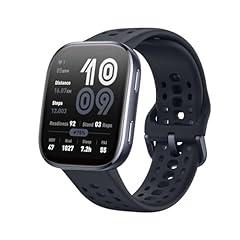
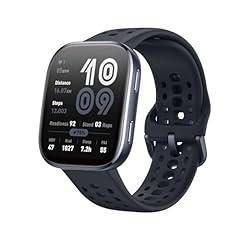
Amazfit Bip 6 Smart Watch 46mm
Overview
This is a rectangular Bluetooth smartwatch with a 1.97-inch AMOLED display, built-in GPS, microphone, speaker, a 340 mAh built-in battery, and a 22 mm liquid-silicone strap for wrists stated to measure 130 to 195 mm. It records activity, heart rate, blood oxygen estimates, sleep, stress, and workout data through the Zepp app. It is not a medical device. The manufacturer states up to 14 days of typical battery life, but that result uses specified light-use conditions and actual life varies. Its 5 ATM water rating is stated to follow ISO 22810:2010 and to have been tested by SGS, although the underlying SGS report was not publicly available for review. The exact radio hardware has an FCC authorization, including an extremity SAR result in the filing. Independent reviews support useful casual heart-rate and GPS tracking, but no peer-reviewed validation of this exact watch was found for sleep stages, blood oxygen, or equitable performance across skin tones and users.
What works
- The exact wireless model is traceable to an FCC authorization, with documented Bluetooth operation and an extremity SAR result in the filing.
- The manufacturer gives unusually concrete water-use limits, including 5 ATM, swimming use, and warnings against sauna steam and chemical residue.
- The product page identifies the frame, case, screen, and strap materials rather than using only a vague skin-friendly label.
- Independent testing programs and reviewers have evaluated the exact watch's activity, heart-rate, and GPS performance, supporting its use for casual fitness trends.
- The manufacturer sells compatible replacement straps and a compatible charging dock, which can extend usefulness after accessory wear.
What does not
- No peer-reviewed clinical validation was found for this exact product's heart rate, blood oxygen, sleep-stage, readiness, stress, calorie, or recovery algorithms, including across skin tones and exercise types.
- The liquid-silicone strap is disclosed, but full composition and biocompatibility evidence for the case back, coatings, sensor window, and charging contacts were not publicly located.
- No public UL, ETL, or CSA listing was located for the exact battery or magnetic charging system. The battery is sealed and not user-replaceable.
- The companion app's Google Play disclosure says health and fitness data and precise location may be shared with other companies for app functionality.
- No U.S. product take-back route or public repair and battery-service program was located. The claimed recyclable packaging does not solve end-of-life handling for the sealed lithium battery.
Who is it for
It suits an adult who wants a lightweight, large-screen watch for notifications, calls, walks, runs, gym sessions, swimming, GPS routes, and broad activity trends rather than medical monitoring. The stated 130 to 195 mm wrist range and 22 mm strap system make it practical for many average wrist sizes, and manufacturer-sold replacement straps and a charging dock help with routine accessory replacement. It also fits someone comfortable using the Zepp app and reviewing battery-life claims as conditional laboratory estimates.
Who is it not for
It is not appropriate for anyone who needs a device to diagnose, monitor, or make treatment decisions about low oxygen, arrhythmia, sleep disorders, illness, or recovery. People using pacemakers, hearing aids, or other implanted or personal medical equipment should follow their device maker's restrictions and consult a clinician, because the manufacturer flags possible radio interference. It is also a poor fit for users with unexplained skin reactions, those needing validated performance across skin tones, or anyone seeking a user-replaceable battery, formal repair pathway, or a clearly documented U.S. recycling program.
Integrity
The manufacturer clearly says the watch and Zepp app are not medical devices and that readings are for reference, not diagnosis. It also explains that movement, tattoos, arm hair, fit, and environmental conditions can impair blood-oxygen results. The manual advises a comfortably fitted strap, loosening it after workouts, and keeping skin able to breathe. The disclosed strap material is liquid silicone, while the body uses an aluminum-alloy frame and fiber-reinforced polymer case. Full biocompatibility documentation for every wrist-contact surface was not publicly available. Its exact Bluetooth radio is FCC authorized, and the filing documents a highest reported extremity SAR value of 0.05 W/kg. The manufacturer states 5 ATM water resistance under ISO 22810:2010 and identifies an SGS test report number, with restrictions for steam, saunas, incompatible straps, and cleaning chemicals. No specific U.S. recall was located. The package is manufacturer-described as fully recyclable, but the sealed battery cannot be replaced by the owner and a U.S. take-back route for the watch and battery was not found.

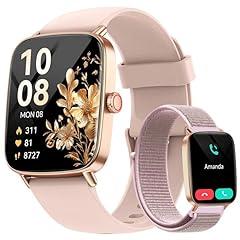
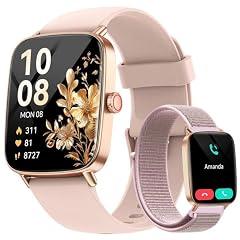
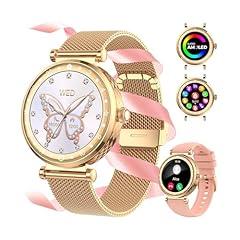
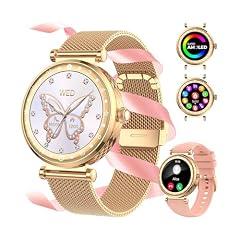
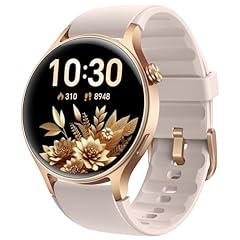
AEAC Women's Smart Watch
Overview
This is a rose-gold Bluetooth smartwatch with a 1.85-inch screen, speaker, microphone, magnetic charging contacts, and two supplied bands. It pairs with the VeryFit phone app and is intended for call handling, notifications, activity records, heart-rate, blood-oxygen, stress, and sleep displays. The product manual identifies a 3.8 V, 350 mAh battery, Bluetooth 5.3, and a claimed five to seven day battery life. The health functions are positioned as general wellness tools, not medical measurement or diagnosis. That boundary is reinforced in the current VeryFit app listing. The manual claims IP68 water resistance but limits use to pools, cold showers, and shallow water, excluding sea swimming, diving, and saunas. A U.S. FCC record exists for an IDW28 watch made by the VeryFit app developer, although the filing is not a direct AEAC-branded authorization.
What works
- The VeryFit app explicitly says its measurements are for general fitness and wellness, not diagnosis or treatment.
- The manual gives practical water-use limits, including exclusions for diving, salt water, and saunas.
- A replacement magnetic charger specifically lists compatibility with this watch model on the brand site.
- An FCC authorization and RF test documentation are traceable for the IDW28 hardware model from the companion app developer.
What does not
- No independent human validation was located for this product's heart rate, blood-oxygen, sleep, stress, calorie, or workout measurements, including testing during exercise or across skin tones.
- The materials touching the wrist and skin are not fully identified, and no product-specific biocompatibility or sensitization evidence was located.
- No accessible UL, ETL, CSA, IEC 62133-2, or equivalent third-party battery and charger safety certification was located for the supplied charging system.
- VeryFit's app disclosures are difficult to reconcile. Google Play says it may share health, fitness, and location data, while also declaring no data collected. Apple's label reports tracking identifiers and handling of health, location, photos, and device identifiers.
- No U.S. take-back or recycling route for the watch, battery, or charger was located. The brand's sustainability wording is not supported by material or packaging evidence.
Who is it for
This product suits an adult who wants a simple wrist display for phone notifications, Bluetooth calls, reminders, step trends, and informal activity records, and who is comfortable using the VeryFit app. It is most appropriate when heart rate, sleep, stress, and blood-oxygen screens are treated as rough wellness reference rather than health decisions. It also fits someone who wants documented limits for occasional pool or cold-shower exposure and values the ability to obtain a replacement magnetic charger from the brand.
Who is it not for
It is not suited to anyone who needs medically dependable pulse, oxygen, sleep, recovery, or exercise readings, including people making decisions about heart symptoms, breathing problems, sleep disorders, medication, or training safety. It is also a poor fit for users who need validated performance across skin tones or vigorous exercise. Avoid it for diving, ocean swimming, hot-water bathing, or sauna use. Privacy-sensitive users should be cautious because the companion app's platform disclosures include health, location, identifiers, and potential sharing.
Integrity
The strongest health safeguard is the companion app's explicit statement that its measurements and analysis are for general wellness and fitness only, not diagnosis, treatment, cure, or disease prevention. The watch manual also advises a loose fit, cleaning, drying after use, using the original power adapter, and avoiding temperature extremes, impact, disassembly, and modification. Those are useful care directions, but they do not substitute for independent sensor, skin-contact, or battery-safety testing. The stated IP68 claim has meaningful use exclusions, which reduces the chance of treating it as a diving or salt-water rating. A replacement charger is sold for this watch model, supporting continued use if that accessory fails. However, no published U.S. recycling or take-back program, battery-service option, material declaration, or substantiation for the brand site's sustainability wording was located. The available privacy policy also appears mismatched to another store identity, which weakens accountability.

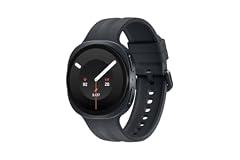
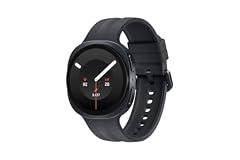
Samsung Galaxy Watch 8 Classic 46mm Bluetooth
Overview
This is a 46 mm Bluetooth smartwatch for Android phones, with a 63.5 g stainless-steel case, sapphire crystal, rotating bezel, three physical controls, GPS, and a stated 445 mAh battery. It uses Samsung Health and Galaxy Wearable for activity, workout, sleep, heart-rate, blood-oxygen, and coaching functions. Samsung lists up to 30 hours in always-on-display use, but actual runtime will vary with settings and sensor use. Samsung states 5 ATM, IP68, and MIL-STD-810H durability ratings. Its published support guidance usefully sets limits, including avoiding high-pressure water, rinsing salt water promptly, drying the watch and charging surface, and recognizing that it is not impervious to water damage. The wellness functions carry a clear manufacturer warning not to use readings for diagnosis, treatment, or clinical decisions. No accessible independent validation report was found for this exact model’s heart-rate, sleep, blood-oxygen, GPS, or coaching algorithms.
What works
- The stainless-steel case and sapphire crystal are specifically identified by Samsung for this model.
- Samsung provides unusually practical water, cleaning, charging, and irritation guidance, including salt-water rinsing and drying instructions.
- Health readings are explicitly framed as general wellness information, with advice to consult a qualified professional rather than act clinically on watch output.
- Samsung Health supports downloading personal data and permanently erasing it from the app and Samsung Health server.
- Samsung offers U.S. watch and battery recycling routes, including drop-off and mail-back options in supported areas.
What does not
- No peer-reviewed, independent validation was located for this exact product’s heart rate, blood oxygen, sleep, GPS, or coaching accuracy across exercise conditions and skin tones.
- The 5 ATM, IP68, and military-test claims are manufacturer-stated. An exact-model accredited laboratory report was not publicly accessible.
- Samsung identifies nickel in stainless-steel components and acrylate in the watch or band materials. People with relevant allergies or recurrent wrist irritation need extra caution.
- Public documentation did not establish a promised software-security support period, a consumer-replaceable battery path, or repairability details for this exact watch.
- Samsung Health’s Google Play disclosure says the app may collect and share location, personal information, and other data types, even though data-deletion controls are available.
Who is it for
This product suits an Android user who wants a substantial 46 mm smartwatch with physical controls, a rotating bezel, phone notifications, GPS activity records, and everyday wellness prompts. It is particularly suited to someone who values a stainless-steel and sapphire-crystal build, intends to use health metrics as personal trend information, and is willing to maintain the watch by drying it after water exposure and cleaning the skin-contact surfaces. It also fits users who want an available U.S. recycling path when the product reaches end of life.
Who is it not for
It is not suited to anyone who needs medical-grade oxygen, sleep, recovery, heart-rate, or training decisions. Samsung says these readings are for general wellness and personal reference, and independent exact-model accuracy evidence was not found. People with nickel or acrylate sensitivity, active eczema, unexplained wrist rashes, or a history of contact dermatitis should consider the disclosed skin-contact materials carefully and stop wearing it if irritation develops. It is also unsuitable for iPhone users, diving use, high-pressure water exposure, or buyers needing a documented long-term software-support commitment.
Integrity
Samsung identifies the Watch8 Classic’s construction as stainless steel and sapphire crystal, and its support material acknowledges nickel in stainless-steel components and acrylate in the watch or band materials. The company advises a comfortably snug fit, regular cleaning, drying after water exposure, and removing the watch if skin becomes red or irritated. It also warns that residue or moisture on the back can impair charging and affect heart-rate readings. The health functions are responsibly bounded in Samsung’s support material as general wellness tools rather than diagnosis or treatment. That boundary matters because independent exact-model validation for key sensor outputs was not located. For disposal, Samsung provides U.S. recycling options for Galaxy watches and directs consumers to battery recycling partners and electronics collection or mail-back services. The watch battery should not be placed in household trash.

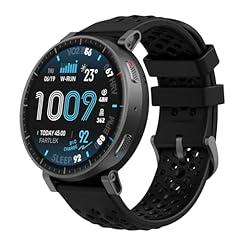
Amazfit Active Max Smart Watch
Overview
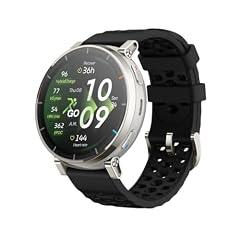
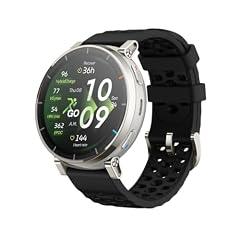
This is a 48.5 mm round Bluetooth smartwatch for Android and iPhone users who want workout logs, GPS route recording, notifications, offline maps and stored audio. It has a 1.5-inch AMOLED touchscreen, two buttons, 4 GB of storage, a 658 mAh built-in lithium battery, a silicone strap, and an aluminum-alloy frame with a polymer case. Those specifications are manufacturer-stated. Amazfit states up to 25 days of typical battery life, 64 hours of continuous GPS use, 5 ATM water resistance, and support for more than 170 sports modes. The supplied manual gives important limits, including no sauna, hot shower, snorkeling, scuba diving, water skiing, or charging while wet. Independent testing is limited but useful. A Live Science reviewer found heart-rate readings generally close to a Polar H9 chest strap, while noting imprecise calories, some workout-count errors, and less precise single-band GPS tracking.
What works
- Independent hands-on testing found generally reasonable wrist heart-rate tracking against a Polar H9 chest strap.
- The official specification identifies a 1.5-inch, 480 by 480 AMOLED display with up to 3,000 nits of peak brightness.
- Manufacturer-stated battery capacity is 658 mAh, with up to 25 days of typical use and up to 64 hours of continuous GPS use.
- Offline maps and 4 GB of storage support routes and locally stored podcasts without depending on a phone connection.
- The manual provides practical use limits for water exposure, skin comfort, cleaning, battery heat, and charging contacts.
What does not
- No peer-reviewed validation was located for this exact product's heart rate, blood-oxygen, sleep, GPS, calorie, stress, or recovery algorithms, including testing across skin tones and user groups.
- Independent reviewers found that calories, some activity counts, and single-band GPS tracks can be inaccurate enough to matter when precise training data is required.
- The manufacturer identifies the silicone band, aluminum frame, and polymer case, but does not publicly provide a complete skin-contact material declaration or biocompatibility test report.
- No exact product record was located in public UL, ETL, CSA, Bluetooth qualification, or FCC equipment-authorization registries, so third-party safety and wireless documentation is not readily traceable.
- The built-in battery is not user-replaceable, and no public repair, spare-battery, charging-puck replacement, or software-support-period policy was located.
Who is it for
This product suits an adult who wants a large, bright everyday fitness watch for walks, gym sessions, recreational swimming, hiking, and route following. It is especially practical for someone who values long claimed battery intervals, on-watch maps, downloaded audio, standard phone notifications, and a conventional 22 mm silicone strap. It is best used as a trend and training log, with heart rate, sleep, stress, and blood-oxygen readings treated as wellness information rather than clinical measurements.
Who is it not for
It is not appropriate for anyone who needs a medical device, dependable blood-oxygen assessment, diagnosis, treatment decisions, or urgent health alerts. People managing heart, breathing, sleep, or circulation conditions should use clinically appropriate care and reference instruments instead of this watch's wellness estimates. It also does not suit divers, sauna users, hot-shower users, or high-speed water-sport users because the manual excludes those activities. Athletes who require tightly accurate GPS, calories, strength counts, or wrist heart-rate data should not rely on its readings alone.
Integrity
The product uses a silicone strap, aluminum-alloy frame, and polymer case according to Amazfit. Its manual advises a comfortably loose fit, cleaning after sweat or swimming, and avoiding soap, lotion, sanitizer, and other residues that can irritate skin or harm water resistance. It also says blood-oxygen readings can be affected by movement, hair, tattoos, fit, and wrist position. The companion app describes itself as a general fitness and health-management service, not a medical device. The battery is built in and the manual says not to disassemble or replace it. It also gives heat and disposal warnings. No public third-party battery-safety certificate, full skin biocompatibility report, exact FCC authorization record, or accredited water-test report was located. Amazfit says omitting a USB-C cable reduces waste, but no practical U.S. take-back route for the watch, battery, or charging puck was found. The Zepp app provides deletion, data clearing, export, consent controls, and encrypted transit, but its store disclosures also say health, fitness, and precise-location data may be collected or shared for app functionality.

Samsung Galaxy Watch 9 LTE 40mm Smartwatch
Overview
This is a 40 mm graphite aluminum LTE smartwatch for Android users. It pairs with Samsung Health and Galaxy Wearable, tracks activity and sleep, provides heart-rate based wellness information, supports GPS and NFC functions, and can use a separate compatible cellular plan for calls and data away from the phone. The 40 mm version has a 390 mAh battery, a sapphire crystal front, and a stated 1.34-inch display. Samsung states that the watch has IP68 and 5 ATM water resistance, with swimming use permitted but not diving or high-pressure water. Its guidance also says water resistance can diminish with age and requires rinsing after pool or sea exposure. The U.S. radio filing identifies this LTE model and documents laboratory RF testing for cellular, Wi-Fi, Bluetooth, and NFC operation. Samsung’s Sleep Apnea Feature is FDA-authorized software for compatible Galaxy Watch models, but it assesses risk and is not a diagnosis or treatment.
What works
- The exact U.S. LTE hardware is traceable to FCC testing documentation covering cellular, Wi-Fi, Bluetooth, and NFC radios.
- Samsung provides unusually specific water-care instructions, including limits for heat, pressure water, salt, pool chemicals, and aging seals.
- The sapphire front and aluminum case are disclosed construction details that support routine wear resistance.
- The FDA-authorized sleep-apnea risk feature has defined medical boundaries and is not presented as a standalone diagnosis.
- Samsung provides U.S. watch recycling drop-off options and instructions to erase personal data before recycling.
What does not
- No peer-reviewed, exact-model validation was located for heart rate, sleep, GPS, oxygen readings, calorie estimates, or performance across skin tones and exercise conditions.
- The supplied sport band, case-back contact surfaces, coatings, and charging-contact materials are not fully disclosed with public biocompatibility or sensitization test reports.
- No public UL, ETL, or CSA listing for this exact watch battery and included charging system was located during verification.
- Wellness scores, coaching, and sleep insights can be useful for trends, but should not be used to diagnose illness or make treatment decisions.
- Water resistance is not permanent, so frequent swimmers and people using hot water or high-pressure sprays need to follow the maintenance limits closely.
Who is it for
It suits an Android user who wants a compact 40 mm watch with LTE independence for walks, runs, commuting, or leaving a phone behind briefly. It is also appropriate for someone who wants routine activity and sleep trend tracking, understands that wrist metrics are estimates, and can use a compatible Samsung account and health app. The documented radio testing and stated swimming guidance are relevant for buyers who value traceable connectivity and practical care instructions over medical-grade monitoring.
Who is it not for
It is not suited to iPhone users, people who need a watch to diagnose symptoms, or anyone planning to change medication or seek treatment based on a wrist reading. People with known contact allergies should seek fuller disclosure of the band and sensor-contact materials first. It is also a poor fit for diving, high-pressure water exposure, sauna use, or owners who cannot regularly charge a smartwatch and maintain a paired Android phone, account, and cellular plan where LTE service is wanted.
Integrity
The strongest health safeguard is the separation between wellness tracking and medical use. Samsung states that its Vitals and Heart Health Score functions are not intended to diagnose, treat, cure, mitigate, or prevent disease. The related Sleep Apnea Feature has FDA authorization for risk assessment on compatible Galaxy Watch setups, but a positive result still requires clinical follow-up. Public evidence for this exact watch’s ordinary heart-rate, sleep, oxygen, GPS, and calorie accuracy remains limited, especially across diverse users and strenuous activity. The watch has a sapphire display front and stated aluminum construction. Samsung documents IP68 and 5 ATM resistance, but warns that seals age and requires rinsing after salt or chlorinated water. Samsung offers U.S. electronics recycling locations that accept watches and advises resetting the watch first. A public battery safety listing and a complete skin-contact material declaration were not located.

Matast HD AMOLED Women's Smart Watch
Overview
This is a small round smartwatch with a 1.19-inch AMOLED touch display, Bluetooth calling, activity tracking, heart-rate, blood-oxygen, and sleep functions. It is intended to pair with an Android or iPhone through the FitCloudPro app, while its magnetic cable connects to a 5V/1A USB power source. Matast states that the rose-gold version has an always-on AMOLED display, Bluetooth calling, IP68 water protection, and more than 110 sports modes. A published S86 manual also gives practical water limits, including shallow swimming only and avoiding hot water, steam, and underwater button presses. The manual identifies the health functions as non-medical. No independent validation report was located for this product's sensor accuracy, skin-tone performance, water testing, battery safety testing, or radio authorization.
What works
- The manual explicitly says the health readings are not for diagnosis or treatment, an important boundary for heart-rate, sleep, and blood-oxygen features.
- Bluetooth calling, notifications, and basic activity tracking give the product practical phone-companion utility, according to the manufacturer documentation.
- The published care guidance gives usable water precautions, including avoiding saunas and hot water and rinsing after saltwater exposure.
- The manual describes two included bands, a magnetic charging cable, cleaning instructions, and a limited defect warranty.
What does not
- No independent human validation was located for this product's heart-rate, blood-oxygen, sleep, calorie, or exercise measurements, including results during movement or across skin tones.
- The materials touching the wrist are not fully specified by composition, and no biocompatibility or sensitization testing was located.
- No exact product record was located in public UL, ETL, CSA, FCC, Bluetooth qualification, or accredited water-test registries.
- FitCloudPro's Google Play disclosure says data is not encrypted in transit. Its privacy materials describe collection of health, activity, device, and optional location data.
- No public repair program, replacement battery service, software-support commitment, or U.S. take-back and recycling route was located.
Who is it for
It suits an adult who wants a compact, fashion-oriented phone companion for notifications, Bluetooth calls, step logging, timers, and casual activity awareness. It is also appropriate for someone who can treat heart-rate, sleep, and blood-oxygen displays as non-medical trend information, not clinical measurements. The stated shallow-water guidance can fit ordinary hand washing, sweat, and surface swimming when the watch is intact, dried afterward, and kept away from hot water and steam.
Who is it not for
It is not appropriate for anyone who needs dependable medical screening, diagnosis, medication decisions, oxygen monitoring, sleep-apnea assessment, or emergency alerts. People with an unexplained low oxygen reading, chest symptoms, fainting, or concerning sleep symptoms should use appropriate clinical care rather than this product. It also does not suit privacy-sensitive users unwilling to share health, device, and potentially location data through FitCloudPro, particularly because the Google Play disclosure reports no encrypted data transfer.
Integrity
The product documentation does provide a useful non-medical warning and practical wear guidance. It says to stop wearing the watch if irritation occurs, wear it snugly for readings, clean it regularly, and avoid hot water, saunas, steam, and underwater button use. Those instructions reduce misuse, but they do not substitute for independent accuracy testing. No public evidence was located for sensor validation, biocompatibility testing, battery-system certification, or an exact radio-authorization record. The companion app's published privacy information describes collection of fitness, health, device, and optional location information. Google Play currently reports that the app's data is not encrypted in transit, though account deletion can be requested. On environmental stewardship, the available documentation describes bands, charger, and limited warranty support, but no verified U.S. mail-back, battery recycling, repair pathway, spare-parts catalog, or software-support period was located.

AEAC Women's Smartwatch with AMOLED Screen
Overview
This is a round, phone-connected smartwatch with a 1.32-inch AMOLED touch display, Bluetooth calling and notifications, a magnetic charging cable, and wrist readings for activity, heart rate, sleep, blood oxygen, stress, and workouts. It pairs with the VeryFit app and uses the phone for GPS routes rather than built-in GPS. The available product manual states a 350 mAh lithium-polymer battery, about two hours of charging, up to 10 days of use, and a five-year warranty. Those are manufacturer-stated figures, not independently confirmed test results. VeryFit clearly says its measurements are for fitness and wellness reference only and must not be used to diagnose, treat, cure, or prevent disease. Public searches did not locate exact-product clinical validation, electrical-safety certification, an FCC equipment record, or an accredited water-resistance report.
What works
- The companion app explicitly frames health readings as general fitness and wellness information, not medical diagnosis or treatment.
- The VeryFit app supports activity, workout, rest, alarm, and reminder functions when paired with compatible hardware.
- The product documentation identifies a magnetic charging cable and a stated 350 mAh lithium-polymer battery, giving buyers concrete charging-system information.
- A five-year warranty is stated in the available product manual, although the public support terms are not independently confirmed.
What does not
- No independent validation was located for this product's heart rate, blood oxygen, sleep, stress, calorie, or exercise measurements, including testing during exercise or across skin tones.
- The product documentation uses both 3 ATM and IP68 water-resistance descriptions. These are different claim systems, and no accredited test report or clear swimming, hot-water, salt-water, or seal-damage limits were located.
- The wrist-contact materials are not fully identified. The record calls the band metal, while other product documentation depicts silicone bands, with no biocompatibility or sensitization evidence found.
- No exact-product UL, ETL, CSA, FCC, Bluetooth qualification, or battery-test record was located in public registries.
- VeryFit's store disclosures say health, fitness, and location data may be shared. Apple also lists identifiers used for tracking, so privacy-conscious users should review permissions and account settings before pairing.
Who is it for
This product suits an adult who wants a low-cost, phone-dependent watch for notifications, simple activity summaries, reminders, Bluetooth calls, and nonmedical wellness trend tracking. It is most appropriate for someone who already uses an iPhone or Android phone, accepts the VeryFit companion app, and understands that heart rate, sleep, blood oxygen, stress, calories, and workout outputs are reference information rather than clinical measurements. The stated quick-charge, multi-day battery claim may also appeal to users who prefer less frequent charging, though it is not independently verified.
Who is it not for
It is not appropriate for anyone who needs dependable medical monitoring of oxygen level, heart rhythm, sleep disorder symptoms, recovery, or any condition requiring diagnosis or treatment decisions. People with unexplained shortness of breath, chest symptoms, fainting, suspected sleep apnea, or low pulse-oximeter readings should use appropriate medical care and validated instruments. It is also a poor fit for swimmers, divers, hot-tub users, or workers with regular water exposure because the 3 ATM and IP68 claims conflict and public test evidence was not found. People who avoid location and health-data sharing should consider the app disclosures carefully.
Integrity
The main health safeguard is software guidance. VeryFit says its connected wearables are not medical devices and that measurements and analysis are only for general fitness and wellness reference. This helps set a necessary boundary for blood oxygen, heart rate, sleep, and stress readings, but it does not establish that this specific watch is accurate. No exact-product human validation study, medical clearance, or public performance data across exercise conditions and skin tones was located. Material and safety traceability is limited. The publicly available documentation identifies a lithium-polymer battery and magnetic cable, but not a complete skin-contact material specification, battery safety report, charger certification, or public radio-authorization record for this product. Its water description is internally inconsistent, using both 3 ATM and IP68. The brand's public site shows warranty and sales information, but no U.S. take-back or recycling route for the watch, battery, or charger was located. Recycle the lithium battery only through an appropriate electronics or battery program, not household trash.

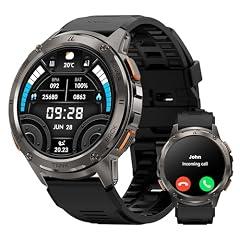
AMAZTIM Men's GPS Smart Watch
Overview
This is a round Bluetooth smartwatch with a 1.43-inch AMOLED touchscreen, physical controls, magnetic charging cable, speaker and microphone for phone calls, and a companion app for Android and iPhone. The product records steps, workouts, heart rate, blood oxygen and sleep patterns, then displays or syncs the results as wellness information rather than medical measurements. The manual describes a 480 mAh lithium-polymer battery, about 15 days of typical use and more than 60 days only in power-saving mode. That important condition is less clear than the product page's broad 60-day battery wording. Its claimed 5 ATM and IP69K water resistance includes care advice to rinse after salt or chlorinated water. A related FCC authorization documents Bluetooth radio compliance for the matching Tank T3 Ultra hardware family, but public independent reports validating this product's health sensors, water sealing, battery pack or charger were not located.
What works
- Bluetooth calling and phone notifications can reduce the need to reach for a phone during routine activity, according to the product manual.
- The manual provides a more realistic battery distinction, with typical use around 15 days and extended power-saving standby above 60 days.
- The manual gives useful water-care instructions, including rinsing after saltwater or chlorinated water and drying the product.
- A public FCC equipment authorization exists for the matching Tank T3 Ultra Bluetooth hardware family.
What does not
- No independent clinical validation was located for this product's heart rate, blood oxygen or sleep measurements, including exercise performance or performance across skin tones.
- Health readings are wellness data, not a basis for diagnosing low blood oxygen, sleep disorders, heart conditions or training readiness.
- The broad 60-day battery claim is qualified in the manual as power-saving mode, while typical-use life is substantially shorter.
- No public model-specific UL, ETL, CSA, IEC battery-safety report, accredited water-test report or skin-contact biocompatibility report was located.
- The companion app's disclosures include health, fitness and location data, and its Google Play disclosure says data are shared with third parties and not encrypted.
Who is it for
It suits an adult who wants a large, rugged-looking Bluetooth watch mainly for call alerts, notifications, timers, step counts and casual workout logs. It is also appropriate for someone who values longer intervals between charges and understands that the longest stated runtime requires power-saving mode. The product is best used as a convenience display and personal activity journal, with health figures treated as rough trends rather than decisions about symptoms, medication, sleep treatment or exercise clearance.
Who is it not for
It is not suitable for anyone who needs medically dependable pulse, blood oxygen, sleep or recovery information, including people managing respiratory disease, heart symptoms, sleep apnea or unexplained dizziness. Seek clinical measurement and professional advice instead. It also does not fit buyers who need independently documented sensor accuracy during exercise or across diverse skin tones, verified battery and charger certification, or a documented long-term software-support commitment. Privacy-sensitive users should consider the companion app's health, location and third-party-sharing disclosures before pairing.
Integrity
The product's wellness functions should be used conservatively. The available manual instructs users to wear the product snugly, keep the rear sensor clean and remain still for measurements, but no public independent human validation was found for its heart rate, blood oxygen or sleep algorithms. Blood oxygen values in particular should not replace a medical pulse oximeter or care for symptoms. Public material information identifies metal case components and a silicone-style band in the manual, but does not provide a model-specific biocompatibility or sensitization report. Its companion app offers access, export and deletion requests through the brand's privacy process, but it also handles health, fitness and location information. The app-store disclosures warrant caution because health and location data may be collected or shared. No product-specific U.S. take-back or recycling route, repair program, battery-replacement service or stated software-support period was located. Recycle the lithium battery product and charging cable through an appropriate electronics or battery recycler rather than household trash.

Amazfit Active 3 Premium GPS Smart Watch
Overview
This is a round, 45 mm smartwatch for Android and iPhone users who want running guidance, route navigation, activity logging, sleep tracking, heart-rate and blood-oxygen readings, and Bluetooth calling. It has a 1.32-inch AMOLED display with sapphire glass, four physical buttons, a stainless-steel frame, a silicone 20 mm strap, a 365 mAh battery, and magnetic charging. Manufacturer documentation states up to 12 days of typical battery life, 24 hours of continuous GPS use, offline maps, and a 5 ATM water-resistance rating. Its Bluetooth radio is independently traceable to a U.S. FCC equipment authorization, including an RF-exposure filing. The health functions are expressly described as non-medical, and the manual warns that movement, tattoos, hair, fit, and other physical or environmental factors can affect readings.
What works
- The Bluetooth radio and wearable RF exposure filing are traceable to the exact U.S. FCC authorization.
- The manufacturer gives unusually concrete water-use limits, cites ISO 22810:2010 and identifies a TUV SUD test report for its 5 ATM claim.
- The manual clearly says health readings are for reference, not diagnosis, and identifies factors that can impair blood-oxygen accuracy.
- A sapphire display cover, stainless-steel frame, silicone strap, replaceable 20 mm strap format, and one-year limited warranty support ordinary daily use.
- The Zepp app listing discloses encryption in transit and account-deletion availability.
What does not
- No peer-reviewed validation was located for this exact watch or its sensor and algorithms across exercise, skin tones, sleep stages, GPS, or blood-oxygen measurement.
- No public UL, ETL, CSA, IEC 62133-2, or equivalent listing was located for the exact battery and magnetic charging system.
- Silicone and stainless steel are identified, but public documentation does not fully identify the case-back, sensor-window, coating, and charging-contact materials or publish biocompatibility testing.
- The Zepp app discloses collection of extensive personal, health, and location data, and its Google Play disclosure says health and location data may be shared with third parties for app functionality.
- A repair or replacement warranty is available, but no stated software-support period, battery-replacement service, spare-parts program, or U.S. electronics take-back route was located.
Who is it for
It suits an adult recreational runner or hybrid exerciser who wants a compact 45 mm watch for guided workouts, offline route use, phone-free GPS sessions, and basic training trends. It is also suited to someone comfortable using the Zepp app and granting the permissions needed for chosen features such as routes, calls, notifications, or voice functions. The stated 12-day typical-use battery figure may particularly help people who do not want daily charging, provided they understand that GPS, music, display settings, and monitoring frequency reduce runtime.
Who is it not for
It is not for anyone who needs medical-grade pulse, blood-oxygen, sleep, stress, recovery, menstrual-cycle, or heart-rate information. People with concerning symptoms, low blood-oxygen readings, arrhythmia concerns, or sleep-breathing concerns should use appropriate clinical care and validated equipment rather than act on this product's readings. It is also a poor fit for users unwilling to share health or location data with a companion app, those needing a published long-term software-support commitment, or divers and sauna users. The water claim does not cover hot steam exposure or diving.
Integrity
The strongest safety documentation is for wireless and water use. The exact product has an FCC authorization for Bluetooth operation and a filed RF-exposure assessment. Amazfit states that its 5 ATM rating follows ISO 22810:2010 and was tested by TUV SUD, with practical limits that include removing it for hot showers and saunas. The manual also gives fit guidance, recommends loosening the band after workouts, and explicitly says health measurements are non-medical reference information. The standard strap is silicone and the frame is stainless steel, but the full skin-contact material stack and biocompatibility testing are not publicly supplied. The box is manufacturer-stated to use recyclable and degradable materials, and no cable is included with the magnetic charging base to reduce duplicate accessories. However, no public U.S. mail-back or take-back program for the watch, charger, and lithium battery was located. No product-specific U.S. recall or regulator warning was located in the reviewed sources.

Amazfit Bip Max Smartwatch Silver
Overview
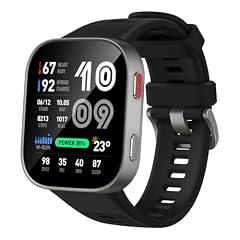
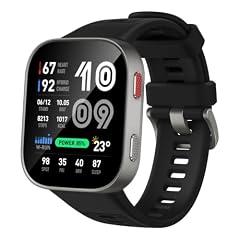
This is a square smartwatch with a 2.07-inch AMOLED display, a 550 mAh battery, built-in GPS, Bluetooth calling, 4 GB of storage, a liquid-silicone 22 mm strap, and a magnetic charging head. It pairs with the Zepp app on Android 7 or newer and iOS 15 or newer. Its practical role is activity logging, route viewing, notifications, calls, and general wellness tracking rather than medical monitoring. Amazfit states that it continuously tracks heart rate, blood oxygen, HRV, stress, sleep, and activity, and it explicitly says that neither the watch nor app is a medical device. It gives fit, stillness, motion, and physical-condition limits for readings. The exact radio hardware is independently traceable in an FCC authorization and accompanying Bluetooth and RF-exposure test exhibits. Amazfit also states a 5 ATM water rating to ISO 22810:2010 and cites an SGS test report, although the underlying water test report was not publicly available for review.
What works
- The exact product is traceable to a U.S. FCC authorization, with publicly indexed Bluetooth and RF-exposure testing documentation.
- Amazfit clearly frames heart rate, blood oxygen, sleep, stress, and recovery readings as non-medical reference information and gives use limits that can affect measurements.
- The manufacturer identifies the strap as liquid silicone, the frame as aluminum alloy, and the case as plastic, rather than using only a vague material claim.
- Amazfit states that the 5 ATM rating follows ISO 22810:2010 and cites third-party SGS testing, with hot shower and sauna limits disclosed.
- The standard 22 mm strap is replaceable, and Amazfit provides a one-year limited warranty for purchases through authorized channels.
What does not
- No peer-reviewed validation of this exact product, its sensor configuration, or its algorithms was found for heart rate, blood oxygen, sleep, GPS, or performance across skin tones and exercise conditions.
- The skin-contact case back, coatings, charging contacts, and any biocompatibility or sensitization testing are not fully disclosed. Liquid silicone alone does not establish suitability for every sensitive skin user.
- No publicly verifiable UL, ETL, CSA, IEC 62133-2, or UL 2054 certification was located for the exact battery and magnetic charging system.
- The Zepp app declares collection of extensive health, location, device, and usage information, and declares that precise location and health and fitness data may be shared with other organizations for app functionality.
- The battery is built in, no software-support term was located, and a clear U.S. recycling route specifically covering this product was not found.
Who is it for
It suits an adult who wants a large-screen general fitness watch for walks, gym sessions, casual running, pool swimming, route viewing, notifications, and basic overnight trend tracking. The 52.6 g watch is better suited to people comfortable with a comparatively large square case, rather than those seeking a small or discreet tracker. It also fits users who can accept manufacturer-stated battery estimates and who will treat heart rate, sleep, stress, and blood oxygen figures as context for habits and training, not clinical findings.
Who is it not for
It is not suited to anyone who needs a medical device, such as people relying on oxygen, pulse, sleep-breathing, arrhythmia, or recovery readings to make treatment decisions. Users with unexplained symptoms should seek clinical care instead of depending on watch alerts. It is also a poor fit for people with contact allergies who need documented biocompatibility testing for every wrist-contact surface. Avoid it for scuba diving, sauna use, or hot-water exposure. Privacy-sensitive users who do not want health and location data handled through a companion account should also consider the app disclosures carefully.
Integrity
The strongest independently checkable safety evidence is radio compliance. The exact watch is listed in the FCC equipment authorization system with Bluetooth operating in the 2.4 GHz band and a related RF-exposure report. This confirms radio authorization, but it does not validate wellness measurements as clinical-grade. The manufacturer also provides useful measurement limits, including tight placement, keeping still for blood-oxygen checks, and the effects of movement and physical conditions. It says the product and app are not medical devices. Amazfit identifies a liquid-silicone strap, aluminum-alloy frame, and plastic case, but it does not publish a complete skin-contact material declaration or biocompatibility report. It states that packaging is fully recyclable and omits the USB-C cable to reduce duplicate cables. The brand also operates a U.S. and Canada trade-in program for selected watches, though this is not the same as a clearly documented recycling route for every retired watch, battery, and charging accessory. No product-specific U.S. recall or FDA clearance was located.