
10 Best 75 Inch Tv
 Daniel Kenitz
Please note that we participate in affiliate marketing programs. When you purchase through links on our site, we may earn a commission. As an Amazon Associate we earn from qualifying purchases. This comes at no additional cost to you and helps support the resources required to provide valuable content.Advertising Disclosure
Top-rated 75 Inch Tv Comparison
1

2
4
5
6
7
8
9
Overview
A 75-inch television is a large 4K display intended for streaming, broadcast viewing, movies, sports, console gaming, or PC use. At this size, the important question is not simply whether the screen is labeled “4K,” “QLED,” or “Mini-LED.” A useful choice depends on how the television performs in the room where it will be installed, which signals it actually accepts, how safely it can be mounted, and how much evidence supports its claims.
Start with the installation. A 75-inch screen can weigh roughly 50 to 71 pounds in the supplied products, and published VESA spacing ranged from 300 × 300 mm to 600 × 400 mm. Check the model-specific manual for the television’s weight, VESA pattern, screw size and depth, stand footprint, wall requirements, and anti-tip instructions. A mount must be rated for the set and the wall structure. Stand placement requires a level, suitably wide surface; an unsecured television is a serious tip-over hazard, especially around children or pets.
For picture quality, native refresh rate matters more than phrases such as “Motion Rate” or “Motion Xcelerator.” The supplied products range from native 60Hz panels to 120Hz, 144Hz, 165Hz, and 4K gaming claims. Confirm whether 120Hz or 144Hz works at 4K, which HDMI inputs support it, and whether VRR variable refresh rate actually operates over the stated range. A television may advertise a 120Hz mode while remaining a 60Hz panel, reduce image sharpness, drop alternate frames, or lack HDMI 2.1 bandwidth. Independent measurements of brightness, contrast, black levels, reflection handling, color, motion, VRR, and input lag are more meaningful than peak-nit claims or panel labels.
Room conditions also determine whether a television works well. Matte or anti-reflection treatment can help with direct reflections, but several reviewed products still performed poorly with lamps or windows facing the screen. Viewing angle varies substantially: some screens lose picture quality quickly off center, while others retain side-seat usability. Flicker findings also differ. Independent testing found some products flicker-free at tested brightness levels, while others used 120Hz or 480Hz pulse-width dimming. Look for disclosed laboratory conditions rather than assuming that a “flicker-free,” “glare-free,” or low-blue-light phrase is a certification.
For energy and longevity, prefer a model-specific FTC EnergyGuide label, DOE television record, or ENERGY STAR Product Finder entry. A standby figure such as 0.5W or less does not reveal normal viewing consumption or annual electricity use. For responsible ownership, look for a written warranty, repair manuals, parts and authorized-service information, a defined software-support period, and a real take-back or recycling route. Recycling programs are useful, but generic green language is weaker than model-specific lifecycle evidence, recycled-content disclosure, TCO Certified or UL SPOT records.
Across the supplied reviews, the recurring safety caveats are secure installation, glare and viewing-angle limitations, privacy risks from connected platforms and voice features, and uncertainty where exact-model measurements or certifications were missing. Some products also showed motion blur, weak HDR, or flicker that may matter to sensitive viewers. No category-wide contraindication was found beyond the need to secure a 75-inch television properly and verify the evidence behind high-refresh, brightness, energy, privacy, and support claims.
Integrity
These topics cover the practical risks and long-term consequences of owning a large connected display. The scores below are comparative signals from the supplied reviews, not certifications or guarantees; a higher score means stronger evidence or performance within this set.
HHealth & Safety
Electrical and interference safety
This measures evidence that the television and supplied power equipment have appropriate electrical, fire-safety, and radio-frequency testing, including public NRTL or FCC records and absence of unresolved safety action. Among the supplied products, scores ranged from 70 to 78. Higher-scoring models had clearer compliance evidence or documentation; lower scores commonly reflected missing model-level UL, ETL, CSA, or FCC records rather than a confirmed defect.
Safe stand and wall mounting
This measures whether the stand, VESA pattern, fasteners, weight information, and instructions support stable installation without a relevant tip-over or stand-failure recall. Scores ranged from 71 to 88. Higher-scoring products supplied concrete model-specific mounting and stability details; lower-scoring products still required careful installation but left more uncertainty about hardware, stand limits, or safe placement. A 75-inch television should never be left unsecured.
Viewing comfort and light control
This covers glare, flicker, brightness control, ambient-light adjustment, and other substantiated viewing controls without making eye-health claims. Scores ranged from 47 to 86. Higher-scoring products had independent evidence of reflection control or flicker behavior and useful picture settings. Lower-scoring products showed measured flicker, weak glare handling, or only manufacturer claims. Room lighting and seating position remain important even for a well-scored screen.
Smart-TV privacy and security
This measures opt-outs, microphone or camera controls, data transparency, updates, and security-support information. Scores ranged from 68 to 82. Higher-scoring products offered stronger controls such as hardware microphone switches, optional content recognition, or longer update policies. Lower-scoring products involved connected viewing, app, audio, advertising, or voice-data collection with less clearly defined support. Privacy settings should be reviewed during setup rather than left at default.
EEcology
Energy use
This measures normal viewing electricity, connected standby, and independently verifiable efficiency qualification. Scores ranged from 68 to 83. Higher-scoring products had clearer annual-use or standby information, while lower-scoring products lacked model-specific EnergyGuide, DOE, or ENERGY STAR evidence. A low standby figure alone is incomplete: annual consumption depends on viewing time, brightness, settings, and connected features.
Useful life and repair support
This measures warranty strength, service information, parts access, repair options, and stated software life—important because an unsupported smart TV can become premature e-waste. Scores ranged from 69 to 84. Higher-scoring products included repair guides or explicit multi-year software policies. Lower-scoring products generally had one-year warranties and no defined parts or end-of-support period. A warranty by itself does not establish long useful life.
Safer materials and responsible end of life
This measures model-specific evidence about materials, recycled content, packaging, take-back, and certified recycling. Scores ranged from 68 to 83. Higher-scoring products had stronger lifecycle or packaging disclosures alongside a disposal route. Lower-scoring products offered only general recycling information or no verified material evidence. A retailer or manufacturer recycling locator is useful, but it is not the same as TCO, UL SPOT, or an environmental declaration.
EEvidence
Honest specifications and labels
This measures whether claims about refresh rate, HDR, brightness, dimming, HDMI, audio, and gaming state conditions and match model documentation. Scores ranged from 44 to 86. Higher-scoring products qualified claims and aligned them with manuals or independent findings. Lower-scoring products used ambiguous headline figures, such as a claimed 120Hz mode on a 60Hz panel or conflicting backlight descriptions. Check the exact input, resolution, and mode.
Measured picture and gaming performance
This is weighted more heavily because repeatable tests are especially useful for a large display. It covers brightness, contrast, color, reflections, motion, input lag, VRR, and supported signals. Scores ranged from 42 to 88. Higher-scoring products had independent measurements confirming strong gaming or picture performance; lower scores reflected weak results or no exact-model laboratory data. Series-level testing is useful but is not identical to testing the 75-inch unit.
Independent proof, not self-issued badges
This measures whether safety, energy, environmental, and performance claims appear in credible public records from independent organizations. Scores ranged from 68 to 80. Higher-scoring products had more corroboration from laboratories or certification records, while lower-scoring products depended more on manufacturer statements or had missing registry entries. The absence of a located record is evidence uncertainty, not proof that a product is unsafe or noncompliant.
Full reviews

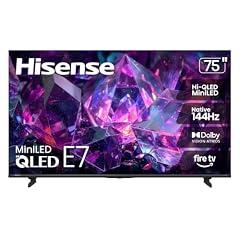
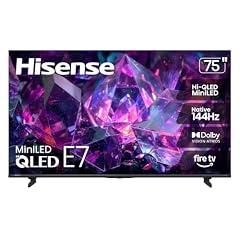
Hisense 75" E7 Cinema Series 4K Smart TV
Overview
This is a 75-inch 4K LCD smart television with a Mini-LED backlight, quantum-dot color layer, Fire TV software, four HDMI inputs, and a supplied tabletop stand and voice remote. It is designed for streaming, console or PC gaming, and large-room viewing. Hisense's model-specific Canadian documentation identifies the same product name and UPC as the catalog record, and states a native 144Hz panel, 48Hz to 144Hz variable refresh range, two HDMI 2.1 inputs, and 144 local-dimming zones. Hisense also states peak brightness of up to 600 nits, Dolby Vision and HDR10+ support, plus an ambient-light sensor that adjusts brightness and color temperature. These are manufacturer claims, not independently measured results. No model-specific RTINGS or Consumer Reports test report was located. The catalog also conflicts with the manufacturer page on power draw and Bluetooth version, so some listing specifications need confirmation before relying on them.
What works
- Manufacturer documentation specifies native 144Hz operation, VRR, ALLM, and two HDMI 2.1 inputs for compatible gaming equipment.
- The model-specific specification lists 144 local-dimming zones and up to 600 nits peak brightness, useful capabilities for HDR viewing if delivered as stated.
- The stated 500 x 400 mm M6 wall-mount pattern, 55.1-pound installed weight, and stand dimensions provide practical installation information.
- Hisense provides a U.S. replacement-parts route, firmware lookup by product serial number, and a one-year limited television warranty for authorized U.S. sales.
- Hisense offers U.S. television recycling information through the MRM collection network.
What does not
- No model-specific independent picture, reflection, flicker, input-lag, or HDR measurement report was located during verification.
- No public model-level UL, ETL, CSA, ENERGY STAR, TCO, UL SPOT, or U.S. Cyber Trust Mark record was located for this product.
- The catalog lists 250W power consumption and Bluetooth 5.3, while Hisense's model page lists 160W and Bluetooth 5.4. This is a concrete specification inconsistency.
- A far-field microphone and hands-free voice control are listed. Clear model-specific evidence of a physical microphone disable control was not located.
- The one-year warranty is basic for a large display, and Hisense does not publish a defined software-security support end date for this product.
Who is it for
This product suits someone furnishing a large living room, media room, or gaming space who needs a 75-inch 4K screen and intends to use current consoles or a gaming PC. It is especially relevant where the buyer can use the stated 144Hz mode, VRR, and two HDMI 2.1 inputs. It also fits an installer who can verify furniture width or use a correctly rated 500 x 400 mm M6 wall mount, because the stand footprint is broad and the unit weighs about 55 pounds with its stand.
Who is it not for
It is not well suited to buyers who require independently measured HDR brightness, black-level control, screen reflections, flicker behavior, or gaming latency before setup. It is also a poor fit for privacy-sensitive households that do not want a television documented as having hands-free far-field voice control without first confirming its microphone controls and account settings. Do not place this large television on narrow, unstable, or overhanging furniture. Households with children or climbing pets should use stable furniture or a properly installed wall mount and manage cables to reduce tip-over risk.
Integrity
No model-specific CPSC recall or regulatory safety action was located in the checks performed. However, public model-level electrical safety listing evidence from UL, ETL, or CSA was not located, and neither was a model-specific FCC compliance document. That absence does not establish a fault, but it limits independent confirmation of electrical, radio, and interference compliance. The manufacturer documentation gives useful installation details, including stand dimensions, weight, and a 500 x 400 mm M6 mount pattern. Stable support or competent wall installation remains important for a television of this size. Hisense states standby consumption of 0.5W or less and use of an ambient-light sensor, but an EnergyGuide label, DOE record, or ENERGY STAR qualification for this model was not located. Hisense operates a U.S. recycling pathway through MRM and provides replacement-parts access. No product-specific environmental declaration, recycled-content evidence, or independent materials certification was found. The manufacturer provides firmware lookup, but no published end date for security or software updates was found.

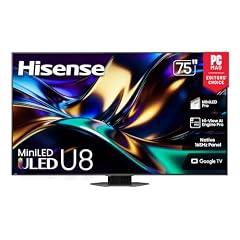
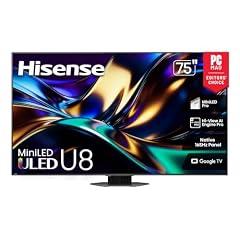
Hisense 75" U8 Series Mini-LED 4K Google TV
Overview
This is a 75-inch 4K LCD television using a Mini-LED backlight and quantum-dot color layer. It runs Google TV, connects through three HDMI 2.1 ports, Wi-Fi 6E, Ethernet, Bluetooth, USB, and USB-C display input, and is intended for streaming, broadcast TV, console play, and PC gaming. Hisense’s model-specific technical sheet states a native 165Hz panel, local dimming, HDR support including Dolby Vision and HDR10+, 4.1.2-channel built-in audio, and a 600 x 400 mm VESA mounting pattern. Independent laboratory coverage exists for the U8QG line, but the tested 65-inch version has a different panel from the 75-inch version. Its strong brightness, deep blacks, and low gaming latency therefore support the series, not a direct measurement of this 75-inch screen.
What works
- The manufacturer publishes unusually useful installation details, including 76.1 pounds without the stand, 89.3 pounds with it, stand dimensions, and the 600 x 400 mm M8 wall-mount pattern.
- Hisense states that all three HDMI ports are HDMI 2.1, with a native 165Hz panel, VRR, ALLM, and 1080p gaming up to 288Hz through HDMI.
- Independent testing of the 65-inch U8QG found exceptional HDR and SDR brightness, strong contrast, low input lag at high refresh rates, and effective handling of indirect room glare. These results are informative but not fully transferable to the 75-inch panel.
- The product has a two-year manufacturer warranty, and Hisense provides a parts and accessories channel plus a consumer electronics recycling program.
What does not
- The available independent laboratory review tested the 65-inch model, while the 75-inch version is reported to use a different ADS Pro panel. Brightness, contrast, uniformity, and viewing-angle results cannot be treated as confirmed for this size.
- The 65-inch laboratory sample over-brightened HDR relative to the intended PQ curve, had visible blur trails in fast action, and handled direct reflections only adequately. These may or may not occur to the same degree on the 75-inch version.
- A hands-free far-field microphone is listed, and the smart-TV privacy policy permits data collection and optional viewing-recognition services. The service can be disabled in settings, but there is no documented physical microphone switch in the available product material.
- No model-specific public ENERGY STAR listing, EnergyGuide label, TCO certification, UL listing, ETL listing, or public FCC declaration was located during verification. This is missing public proof, not evidence that the product is unsafe or noncompliant.
Who is it for
It suits a household that needs a genuinely large 4K screen for a bright living room, console play, or a gaming PC, and can place it mostly in front of the seating area. The published 165Hz capability, VRR support, three HDMI 2.1 inputs, and USB-C display input make its intended gaming role concrete. It also suits installers who need published dimensions, weight, stand footprint, and VESA information before selecting furniture or a wall mount. Installation should still be a two-person job because the set weighs 89.3 pounds with its stand.
Who is it not for
It is not well suited to a room where viewers sit at steep side angles, since independent testing of another U8QG size found image degradation off-axis. People highly sensitive to flicker should confirm comfort in person, because the tested 65-inch version used PWM dimming, even though it was measured at a very high frequency. It also needs careful privacy setup for homes that do not want a hands-free microphone or optional viewing-recognition service. Do not place it on narrow, unstable, or unsuitable furniture, especially where children can climb nearby.
Integrity
For mounting safety, Hisense publishes a 600 x 400 mm M8 VESA pattern, dimensions, and both bare-set and stand-installed weights for this exact 75-inch product. No recall specific to this television was located in the CPSC recall materials checked. Public third-party electrical safety listing evidence for this exact model was not located, so users should inspect the rear label, supplied cord, and installation instructions before setup. The smart platform includes a far-field microphone. Hisense says its optional Enhanced Viewing Service can be turned off through the TV settings, and users in covered states can select a Do Not Sell or Share option there. Hisense also states that certain TV models receive security updates for at least two years from launch, without clearly naming this model. The company routes consumer television recycling through MRM, but no product-specific materials declaration, recycled-content evidence, ENERGY STAR qualification, or public EnergyGuide label was found.
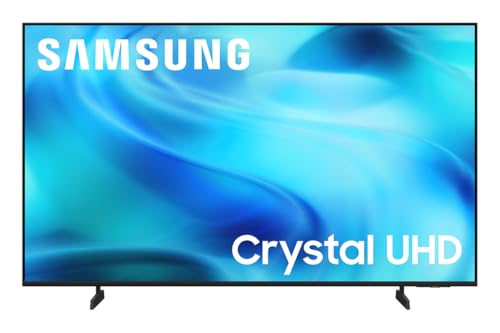
Samsung 75-Inch Crystal UHD U8000H Smart TV
Overview
This is a 75-inch, direct-lit LED LCD smart television with 3840 by 2160 resolution, three HDMI inputs, one USB input, Wi-Fi, Bluetooth, and Samsung's Tizen platform. It is intended for streaming, broadcast television, and external HDMI sources. Samsung lists a 60Hz native refresh rate, HDR10 and HDR10+ support, a 20W two-channel speaker system, and a 400 by 300 mm wall-mount pattern. The supplied feet can be placed 31.2 or 49.2 inches apart, which is useful where furniture width is constrained. Samsung also states 165W typical power, 0.5W standby power, an ambient-light Eco Sensor, and up to seven years of Tizen upgrades from the 2026 release year. Independent testing of the matching series found weak HDR brightness, no local dimming, limited color, slow pixel response, and 4K limited to 60Hz.
What works
- The product has documented 400 by 300 mm VESA mounting support and two stand-width options, with model-specific dimensions and weight information.
- Samsung states a 0.5W standby rating, automatic power-off function, and ambient-light brightness sensor.
- Samsung states that 2026 televisions receive up to seven years of Tizen operating-system upgrades.
- Independent testing confirms it can accept 4K at 60Hz with proper chroma 4:4:4, which supports legible desktop text from a computer.
What does not
- Independent testing found PWM backlight flicker at 480Hz, dropping to a more noticeable 120Hz with Picture Clarity settings enabled. This can matter to flicker-sensitive viewers.
- Independent testing found poor reflection control, low brightness, no local dimming, weak HDR impact, and narrow off-angle viewing.
- Gaming is constrained by 4K 60Hz operation, no HDMI 2.1 bandwidth, slow response time, and above-average input lag.
- A public model-level UL, ETL, CSA, ENERGY STAR, TCO, or UL SPOT record was not located in the checked registries. This is missing public proof, not evidence of a safety defect.
- The written warranty is only one year, and no model-specific public service manual or parts availability commitment was found.
Who is it for
This product suits someone furnishing a large, moderately lit room who mainly watches streaming shows, broadcast TV, or casual console games from a central seating position. It is particularly practical when the supporting furniture is between 31.2 and 49.2 inches wide, or when a 400 by 300 mm wall mount is already planned. It also suits users who value a familiar smart-TV interface and want a manufacturer-stated multi-year operating-system upgrade commitment, while accepting basic picture performance.
Who is it not for
It is not suited to people sensitive to display flicker, especially those likely to use Picture Clarity settings, because independent testing found PWM flicker that becomes more noticeable in that mode. It is also a poor fit for sunlit rooms, wide family seating arrangements, dark-room movie viewing, or competitive gaming. Those uses expose the independently observed glare, low brightness, narrow viewing angle, washed-out dark scenes, slow motion response, and 4K 60Hz limitation. Secure wall installation also requires a correctly rated mount and fasteners for the wall type.
Integrity
For installation safety, Samsung provides model-specific weight, stand-spacing, and 400 by 300 mm VESA information, plus an installation guide. No product-specific CPSC recall or safety warning was located in the checked U.S. recall database. Public model-level electrical safety-listing documentation was not located, so users should retain the supplied power equipment and follow the installation instructions. Viewing comfort is the central health limitation. Independent testing found pulse-width-modulated backlight flicker at 480Hz in normal dimming operation and 120Hz with Picture Clarity enabled, alongside weak reflection handling. The television includes an ambient-light sensor, but that does not establish flicker-free operation. Samsung offers U.S. electronics recycling and collection options, including televisions, but no model-specific recycled-material declaration or independent environmental certification was located. Samsung states up to seven years of Tizen upgrades for 2026 televisions, which may extend smart-platform usability. The included warranty remains one year.

Samsung 75-Inch M70H Mini LED Smart TV
Overview
This is a 75-inch, 4K LCD smart television with a Mini LED backlight, three HDMI inputs, Wi-Fi, Bluetooth, an included stand, and a 400 x 300 mm wall-mount pattern. Samsung's specification sheet lists a 60 Hz native panel, 4K input up to 60 Hz on all HDMI ports, HDR10+, VRR, and 0.5 W standby power. Independent testing of the same M70H series found that the panel has no local dimming, weak HDR brightness, poor direct-reflection handling, and slow, uneven pixel response. It also found that the advertised 1080p 120 Hz mode drops every second frame. This is therefore a very large basic smart TV for controlled lighting, not a strong HDR, bright-room, or high-frame-rate display.
What works
- The 75-inch version has documented 400 x 300 mm VESA support and a listed weight of 48.5 lb with its stand.
- Samsung states a seven-year security-update commitment for smart TVs launched from 2023 onward.
- Samsung lists low 0.5 W standby power plus Eco Sensor, Auto Power Saving, and Auto Power Off controls.
- Independent testing indicates that the LCD panel is not susceptible to permanent burn-in.
What does not
- Independent testing found no local dimming, despite Mini LED branding and dimming language in manufacturer materials.
- Independent testing found poor glare control, low HDR impact, narrow off-angle viewing, and noticeably blurry fast motion.
- The 120 Hz marketing is materially qualified. The native panel is 60 Hz, and independent testing found the advertised 1080p 120 Hz mode drops alternate frames.
- No model-specific ENERGY STAR, TCO, UL SPOT, or publicly searchable model-level electrical listing was confirmed during this review.
Who is it for
It suits a household that needs a 75-inch screen for casual streaming, broadcast television, or native apps in a dim or moderately controlled room. The room should have seating centered on the screen, limited window reflections, and a cabinet at least wide enough for the listed 49.2-inch default foot spacing. It also fits an installation using a correctly rated 400 x 300 mm wall mount, installed into suitable wall structure by someone able to follow the supplied installation instructions.
Who is it not for
It is not suited to bright living rooms with windows or lamps facing the screen, because independent testing found poor direct-reflection handling and insufficient brightness to overcome glare. It is also unsuitable for wide family seating, fast sports viewing, competitive gaming, or console users expecting genuine 4K 120 Hz output. People sensitive to display flicker should take particular care, since testing found PWM behavior at 120 Hz in several picture modes. Do not place it on unstable furniture or use an unrated wall mount.
Integrity
The supplied 75-inch configuration has a documented VESA mounting pattern and a modest listed installed weight, but a screen of this size still needs a properly rated mount or a stable furniture surface. Samsung's specification sheet lists a 0.5 W standby figure and automatic energy-saving controls. Independent testing found a glossy finish with poor control of direct reflections, plus flicker behavior that varies with settings. These factors can make viewing more fatiguing in bright rooms or for flicker-sensitive users. Samsung publicly commits recent smart TVs to seven years of security updates and offers U.S. repair access through certified technicians using genuine parts. It also operates electronics recycling information and state-specific take-back options. However, no model-level TCO, UL SPOT, ENERGY STAR, or public model-specific electrical listing was confirmed, so lower-hazard materials, lifecycle claims, and independently certified efficiency remain unproven for this particular product.

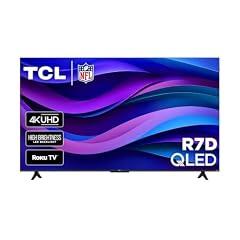
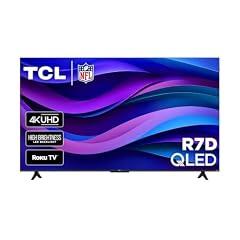
TCL 75-Inch 4K UHD HDR Roku TV 75R7D
Overview
The TCL R7D is a 75-inch 4K QLED LCD smart television with Roku OS, intended for streaming, broadcast TV, consoles, and soundbar use in a large living room or media space. Independent retail reporting corroborates the 75-inch, 3840 by 2160, QLED, and Roku configuration. Retail specifications list three HDMI inputs, Wi-Fi, and a 59-pound set weight. Its documentation trail is notably thin. No official TCL model support page, model-specific manual, EnergyGuide label, public certification record, or independent laboratory review was located for this exact product. The listing identifies a 60 Hz refresh rate while advertising Game Accelerator 120, so that gaming term should not be read as confirmation of a native 120 Hz panel or 4K 120 Hz input support.
What works
- A 75-inch 4K QLED Roku configuration is independently corroborated by an outside retail report.
- Roku publishes automatic security updates and a public record of addressed vulnerabilities.
- Roku TV privacy settings can limit streaming-channel microphone permission, with prompting available by default.
- The listed three HDMI inputs can accommodate common combinations of a console, soundbar, and external streamer.
What does not
- No independent lab measurements were found for brightness, contrast, reflections, color accuracy, input lag, VRR, or HDR performance on this exact product.
- The 60 Hz listed refresh rate sits beside a Game Accelerator 120 claim, without model-specific documentation that explains supported resolutions and frame rates.
- No model-specific public EnergyGuide, ENERGY STAR record, DOE certification record, or standby-power figure was found.
- No official model-specific installation manual or public VESA, stand-spacing, fastener, and wall-mount specification was located.
Who is it for
This product fits a household that primarily wants a very large screen for streaming, local channels, movies, and casual console use, and that prefers Roku's simple home-screen interface. It is most suitable where installation can be planned conservatively, with a substantial TV stand or a wall mount selected only after confirming the mounting details from the delivered product documentation. It also suits users willing to set up privacy preferences and keep the TV connected for Roku software updates.
Who is it not for
It is not for competitive gamers who need verified 4K 120 Hz input, variable refresh rate, low measured input lag, or a documented native high-refresh panel. It is also not suited to buyers who require independently tested HDR brightness, deep-black performance, or reflection measurements before installation. Households with children, climbing risks, narrow furniture, or an existing wall mount should not rely on the listing alone, because model-specific VESA, stand, and fastener information was not publicly verified.
Integrity
For installation safety, this is a large 75-inch television and its listing gives a 59-pound product weight, but public verification did not locate model-specific VESA spacing, stand geometry, approved fasteners, or wall-mount instructions. A CPSC recall search did not identify a recall for this exact product. Use the supplied installation material and secure the set against tip-over where children or pets may be present. Roku provides automatic operating-system security updates and privacy controls for advertising and streaming-channel microphone access. That is useful, but no defined end-of-support date was located for this television. Public verification also did not find model-specific energy-use data, an ENERGY STAR qualification, a TCO or UL SPOT environmental certification, or a product environmental declaration. TCL's general North American warranty documentation supports one year of parts and labor coverage for new non-commercial products, while long-term parts availability and repair documentation remain unconfirmed for this model.
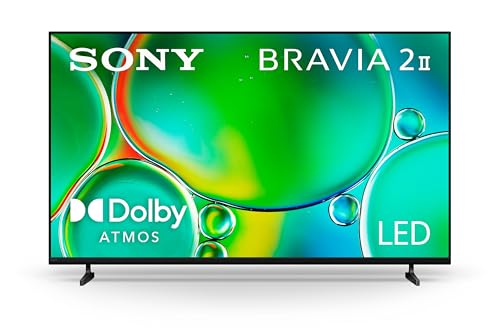
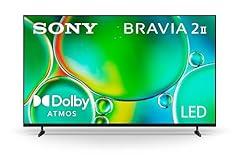
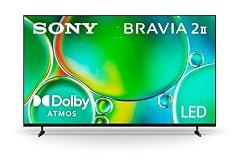
Sony BRAVIA 75" 4K LED Smart TV (2025)
Overview
This product is a 75-inch, 4K direct LED LCD smart television using Google TV. It is designed for streaming, broadcast viewing, consoles, and wall or stand installation. Sony's model-specific support documentation confirms four HDMI inputs, two USB ports, HDR10 and HLG, a native 60 Hz panel, and a 300 x 300 mm VESA mounting pattern. Independent testing was performed on the 75-inch unit. It found a wide viewing angle, accurate SDR color before calibration, and capable processing for low-quality streams. The same testing found low brightness, weak direct-reflection handling, gray-looking blacks, no local dimming, and no VRR or 4K at 120 Hz support. The product therefore has concrete strengths for ordinary SDR viewing and off-center seating, but its HDR, dark-room, bright-room, and fast-motion limits are established rather than merely unproven.
What works
- Independent testing found a wide viewing angle, which helps keep the image more consistent for people seated off center.
- Independent testing found very accurate SDR color out of the box and effective smoothing of low-bitrate streams.
- Sony's specification sheet confirms four HDMI ports, two USB ports, Ethernet, Wi-Fi 6E, AirPlay 2, and Google Cast.
- Sony confirms that this series has no built-in TV microphone, so voice requests require pressing the remote microphone button.
- The supplied documentation gives the 75-inch product's 300 x 300 mm VESA pattern, 63.9-pound stand-mounted weight, and explicit anti-tip and professional wall-mount guidance.
What does not
- Independent testing found the panel too dim for well-lit rooms and poor at handling direct reflections.
- Independent testing found very poor native contrast and no local dimming, so dark scenes can look gray, cloudy, and lacking depth.
- Gaming is limited to 4K at 60 Hz with no VRR or 120 Hz input support, and independently measured pixel transitions were slow enough to blur fast motion.
- Sony lists one year of hardware warranty coverage. It provides repair support and recent firmware, but no model-specific minimum duration for security or feature updates was found.
- No current model-level ENERGY STAR, UL, ETL, CSA, TCO, or UL SPOT public certification record was located during this review.
Who is it for
This product suits a household that needs a large 75-inch screen for routine streaming, cable, and casual console use in a room with controlled lighting. It is particularly appropriate where several people sit across a wide couch or at off-center positions, because independent testing found a wide viewing angle. It also fits users who want Google TV casting and apps but prefer voice search to be activated deliberately from the remote rather than through an always available TV microphone. The stand requires a wide, stable furniture surface.
Who is it not for
It is not well suited to sunlit living rooms, rooms with lamps or windows directly opposite the screen, or dedicated movie viewing in a dark room. Independent testing found insufficient brightness for glare and poor black levels without local dimming. It is also unsuitable for buyers expecting 120 Hz console gaming, VRR, or crisp fast-motion performance. Homes with young children, climbing risks, unstable furniture, or an improvised wall installation need to use the included anti-tip guidance and a qualified wall-mount installer, not rely on the stand alone.
Integrity
Sony's safety guide documents FCC Part 15 compliance language and RF exposure guidance for the wireless equipment. It also gives meaningful installation precautions, including securing the television to a wall or stand, routing cords out of children's reach, maintaining ventilation, and using qualified contractors for wall mounting. No product-specific CPSC recall or safety warning was identified in the recall search completed September 13, 2026. The manual also notes magnets in the product and accessories, which can interfere with certain implanted medical devices and must be kept away from children if detachable magnets are accessible. For environmental use, Sony's product sheet states 131 W in Standard mode, 0.5 W in standby, and 191 kWh annual consumption under its stated calculation method. These are manufacturer figures, not a verified U.S. ENERGY STAR qualification. Sony provides U.S. take-back locations and states that network recyclers are R2 or e-Stewards certified. Its international environmental sheet lists zero mercury for this LED-backlit model but indicates lead is present, so responsible electronics recycling remains important.

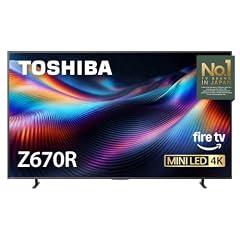
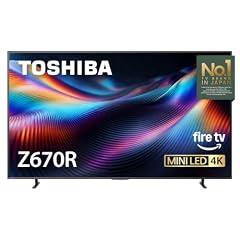
Toshiba Z670 Series 75" Mini-LED 4K Smart TV
Overview
This product is a 75-inch 4K Mini-LED LCD television with quantum-dot color and Fire TV software. It is intended for streaming, broadcast television, console play, and PC gaming. Toshiba states that the Z670R family has full-array local dimming, Dolby Vision support, native 144Hz refresh, variable refresh rate, automatic low-latency mode, and AMD FreeSync Premium. Independent evidence is more limited for this exact 75-inch screen. Consumer Reports tested the related 65-inch Z670R, reporting strong detail, color accuracy, contrast, and motion, while also noting haloing around bright objects and some HDR highlight-detail loss. Toshiba's current product page identifies the 75-inch model correctly but contains body text and images for an unrelated ArtVision television, which weakens confidence in its published documentation.
What works
- Toshiba states native 144Hz, VRR, ALLM, and FreeSync Premium support, features relevant to compatible PC gaming.
- The related 65-inch Z670R received favorable Consumer Reports laboratory findings for detail, color accuracy, contrast, and motion.
- Fire TV privacy settings provide opt-outs for device usage, app usage, interest-based advertising, and broadcast live-TV data.
- Toshiba TV USA provides a route to MRM electronics recycling locations for end-of-life disposal.
What does not
- No public independent measurement table was located for this exact 75-inch screen, so brightness, input lag, reflection handling, flicker, and VRR behavior remain unverified at this size.
- The manufacturer page has a clear documentation mismatch, with ArtVision G700S copy appearing on the 75-inch Z670R page.
- No model-specific public UL, ETL, CSA, ENERGY STAR, TCO, UL SPOT, or FCC compliance record was located during verification.
- The public support page did not provide usable model-specific manuals, installation details, repair documentation, or a defined software-support end date.
Who is it for
It suits a household that wants a very large 4K Fire TV for mixed streaming, broadcast viewing, and gaming, and that can verify settings after installation. It is especially relevant to a PC gamer who can actually output high frame rates and plans to use the manufacturer-stated 144Hz and VRR features. It also fits users comfortable managing Fire TV privacy settings, including turning off optional usage and advertising data collection where available.
Who is it not for
It is not well suited to buyers who need independently measured proof of this exact panel's brightness, glare control, input lag, HDR accuracy, or flicker before installation. Households wall-mounting a large television near children should not rely on the incomplete public support material alone. They need the supplied installation instructions, correct wall hardware, verified mount capacity, and a properly secured setup. It is also a weaker fit for people who do not want a connected, advertising-supported smart-TV platform or ongoing privacy-setting management.
Integrity
The available safety evidence does not identify a CPSC recall specific to this product. However, a public model-level UL, ETL, CSA, FCC, ENERGY STAR, or TCO listing was not located. That is missing public proof, not evidence of a defect. The large screen should be installed using its supplied instructions and securely wall-mounted or stabilized, particularly in homes with children. Fire TV offers meaningful data controls for device usage, app usage, interest-based ads, and broadcast live-TV information. Those controls reduce optional data uses but do not make a connected TV data-free. Amazon's published security-update page does not list this third-party Toshiba television by name. For end of life, Toshiba TV USA directs U.S. consumers to MRM collection locations. No model-specific environmental declaration, recycled-content disclosure, or independently verified materials certification was found.
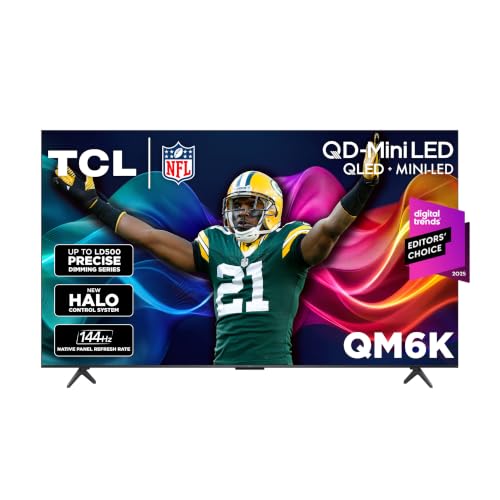
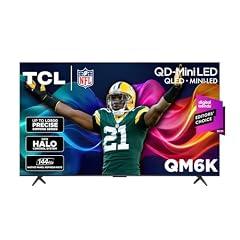
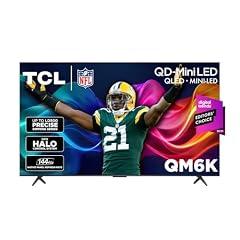
TCL 75-Inch QM6K QLED 4K Smart TV
Overview
This is a 75-inch, 4K LCD television with a Mini LED backlight, quantum-dot color layer, Google TV streaming interface, four HDMI inputs, and a supplied voice remote. It can sit on its supplied two-leg stand or use a separately purchased 300 x 300 mm VESA wall mount. TCL’s installation guide specifies M6 x 16 mm mounting screws and says the mount must support at least five times the television’s net weight. Independent testing was performed on the 75-inch unit. RTINGS confirmed two HDMI 2.1 inputs supporting 4K at up to 144Hz, plus 1080p at 288Hz and variable refresh rate. Its strengths are low input lag, deep blacks, and accurate color. Limits are also concrete, HDR highlights are relatively dim, bright objects can bloom against dark backgrounds, and the glossy screen handles direct reflections poorly.
What works
- Independent testing confirms very low game-mode input lag, 4K at 144Hz, 1080p at 288Hz, and VRR support.
- The model-specific guide provides clear stand hardware, wall-mount dimensions, screw sizes, ventilation instructions, and tip-over warnings.
- A physical switch disables the television’s built-in hands-free microphone, rather than relying only on a software setting.
- Independent testing found very high-frequency 10,400Hz PWM dimming that was not noticeable in normal use.
- TCL offers genuine parts, repair manuals, and a self-repair pathway for out-of-warranty televisions.
What does not
- Independent testing found mediocre real-scene HDR brightness, so small bright HDR highlights have limited impact.
- The glossy 75-inch screen poorly suppresses direct reflections, so a lamp or window facing the screen can be distracting.
- Blooming around bright objects on dark backgrounds is a measured picture-quality limitation.
- The product documentation provides no defined end date or minimum duration for security and feature updates.
- A public model-level UL, ETL, CSA, ENERGY STAR, TCO, or sustainability certification record was not located during verification.
Who is it for
It suits someone furnishing a larger living room, game room, or multipurpose media area who needs a 75-inch screen and intends to connect a current console or gaming PC. The verified 4K 144Hz support, VRR, and low input lag matter most for fast games, while the strong black levels and accurate color also support evening television viewing. It is better placed where lamps and windows will not shine directly onto the glossy screen. Wall installation should be handled by a professional using the specified VESA hardware.
Who is it not for
It is not well suited to a room with a bright window or uncovered lamp directly opposite the display, because independent testing found poor direct-reflection handling. It also does not fit viewers who prioritize intense HDR highlights or highly saturated HDR color, since measured HDR brightness is limited and blooming is visible around some bright objects. Households with climbing children should not rely on furniture alone. Use stable furniture or a properly rated wall installation, route cables safely, and follow TCL’s anti-tip guidance.
Integrity
For home safety, TCL’s model-specific setup guide includes stand screws, stability warnings, cable-routing advice, ventilation clearances, a 300 x 300 mm VESA specification, and a requirement that a wall mount support at least five times the television’s net weight. The same guide documents FCC Part 15 Class B compliance and a physical switch for disabling the integrated hands-free microphone. No product-specific CPSC recall or safety warning was located in the verification search. The television includes adaptive brightness and color-temperature controls. Independent testing found rapid 10,400Hz PWM dimming that was not noticeable, but also found poor direct-reflection handling. TCL provides an electronics recycling locator and says it offers genuine parts and repair manuals for out-of-warranty television repairs. Model-level third-party environmental certification and a stated long-term software-support period were not found.
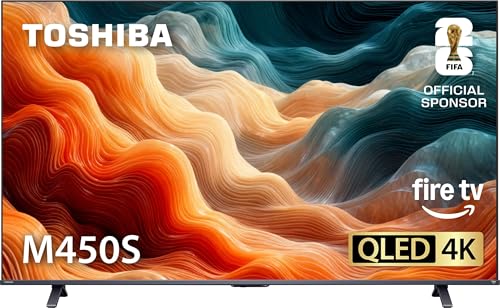
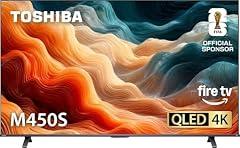
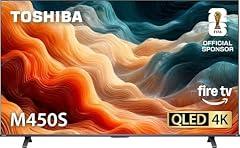
Toshiba M450 Series 75" QLED 4K Smart TV
Overview
This is a 75-inch, 4K QLED LCD television with the Fire TV smart platform, a voice remote, four HDMI inputs, wired Ethernet, Wi-Fi 5, and a 60 Hz native refresh rate. It is designed for large-room streaming, broadcast reception, and console or media-player connections. Independent retailer and Consumer Reports listings confirm the 3840 by 2160 resolution, four HDMI inputs, Fire TV software, Dolby Vision support, and 60 Hz panel specification. Its defining tradeoffs are clear. Consumer Reports found excellent fine detail and color reproduction, but limited HDR impact, merely adequate dark-scene contrast, moderate horizontal viewing angle, some motion blur, and below-average sound. Published installation data identify a 200 by 300 mm VESA mounting pattern, M6 hardware, a 40.8 lb TV-only weight, and a 51.8-inch stand width. The published annual electricity use is 373 kWh, and it is not listed as ENERGY STAR certified.
What works
- Consumer Reports reports excellent fine-detail reproduction and color accuracy, useful for ordinary 4K and HD viewing.
- Four HDMI inputs, eARC, Ethernet, Wi-Fi 5, Bluetooth 5.3, and two USB ports provide practical connections for multiple sources.
- The 200 by 300 mm VESA pattern, M6 mounting hardware, dimensions, weight, and stand footprint are publicly specified for installation planning.
- Fire TV includes opt-outs for device-usage data, app-usage data, interest-based advertising, and over-the-air viewing data.
- Amazon states that Fire TV devices receive security updates for at least four years from new purchase, subject to its published terms.
What does not
- Consumer Reports found HDR effectiveness very limited because peak brightness is low by HDR standards, and dark-scene contrast was only okay.
- The native refresh rate is 60 Hz, so this product does not provide 120 Hz gaming modes.
- Consumer Reports found moderate side-viewing performance, some motion blur, and below-average sound quality.
- Published energy use is 373 kWh per year and the product is not ENERGY STAR certified.
- No model-specific public UL, ETL, or CSA listing, FCC compliance document, TCO certification, or materials declaration was located in the reviewed public registers.
Who is it for
This product suits a household that needs a physically large 4K screen for straightforward streaming, cable replacement through an antenna, and several connected sources. It is a practical fit where viewers usually sit near the center of the screen and where a 60 Hz console, cable box, streaming device, or soundbar will be used. It also fits an installer who can use the published 200 by 300 mm VESA pattern, M6 hardware guidance, and verified dimensions to select a properly rated wall mount or furniture surface.
Who is it not for
It is not well suited to viewers seeking strong HDR highlights for bright daytime rooms or high-impact HDR movies, because independent testing found limited HDR effectiveness and only okay dark-scene contrast. It is also a poor match for users specifically needing 120 Hz console or PC gaming. Families with young children, climbing risks, unstable furniture, or uncertain wall construction should not treat the supplied stands as sufficient safety protection. They need a properly rated mount or furniture setup and a TV anchor where appropriate.
Integrity
The most useful safety information is installation-specific. Published data identify the TV-only weight as 40.8 lb, the VESA pattern as 200 by 300 mm, M6 mounting hardware, and a 51.8-inch stand width. Those details support selection of a compatible, weight-rated mount and appropriately sized furniture. No recall or safety warning specific to this product was located in the CPSC material reviewed. Public model-level third-party electrical listing evidence was not located, so the supplied documentation and product label should be checked before installation. The Fire TV platform offers controls for device usage, app usage, advertising, and antenna-viewing data. Amazon also publishes a minimum four-year security-update policy for Fire TV devices. The standard warranty is one year. Energy use is published as 373 kWh annually, with no ENERGY STAR certification found. Toshiba TV USA directs consumers to MRM collection locations for electronics recycling, but no model-specific recycled-content, safer-materials, or third-party lifecycle certification was found.
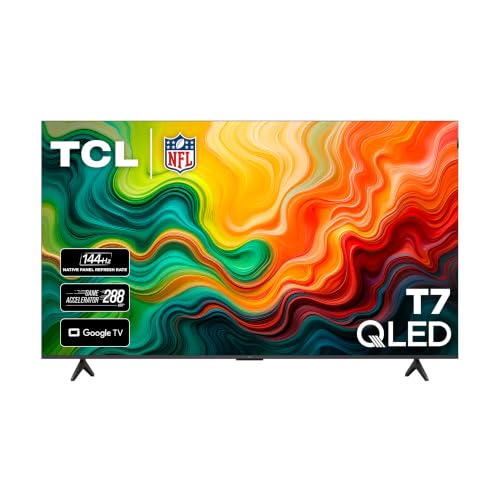
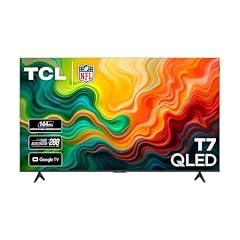
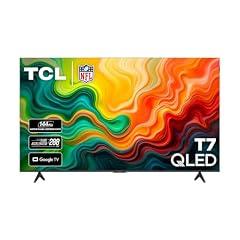
TCL 75 Inch T7 Series 4K QLED TV
Overview
This is a 75-inch, 4K QLED smart television with Google TV, intended for streaming, console or PC gaming, and large-room viewing. Independent retailer material corroborates that it is sold as a T7-series QLED set with a manufacturer-stated 120Hz to 144Hz native refresh range. The product record also states four HDMI inputs, Dolby Vision and HDR10+ support, 30W two-channel audio, and a 400 x 400 mm wall-mount pattern. The evidence record is thin for this exact product. I did not locate a current U.S. manufacturer product page, model-specific manual, public energy label, or laboratory review with measured brightness, contrast, reflection, flicker, input lag, or VRR behavior. The listing also conflicts internally by calling the backlight direct LED while separately naming QD-Mini LED picture technology, so the backlight and local-dimming description should not be treated as settled.
What works
- The 4K QLED format and manufacturer-stated 120Hz to 144Hz native refresh range are corroborated by independent retailer packaging material.
- TCL documents Google TV software-update procedures, including automatic-update options when available, and provides access to privacy settings.
- TCL offers a U.S. self-repair route for televisions, with genuine-parts ordering through an authorized distributor and repair manuals available on request.
- TCL provides a state-based U.S. electronics recycling locator and says its television packaging has carried How2Recycle labels since 2022.
What does not
- No independent laboratory measurements were located for this exact 75-inch product, so picture brightness, reflection handling, flicker, HDR impact, input lag, and VRR performance remain unproven.
- The product record contains an unresolved technical contradiction, describing both direct LED backlighting and QD-Mini LED picture technology.
- No public model-level UL, ETL, CSA, ENERGY STAR, DOE energy, TCO, or UL SPOT record was located during verification. This is missing proof, not evidence of a defect.
- TCL's privacy notice says smart-TV voice-assistant use can collect voice-related data and transfer it to Google or Amazon. A physical microphone-disable control was not verified.
- TCL provides updates and repair options, but no defined software-support end date or model-specific parts availability period was located.
Who is it for
This product suits a buyer who needs a genuinely large 75-inch screen for mixed streaming, sports, and gaming, and who can verify the physical setup before delivery. It is most appropriate for a home with a stable, appropriately sized media console or a professionally selected wall mount. It also suits a user comfortable managing Google TV account, privacy, and update settings, and who treats the advertised 144Hz capability as a manufacturer claim rather than a lab-confirmed performance result.
Who is it not for
It is not well suited to buyers who need independently measured HDR brightness, black levels, glare control, flicker behavior, or console input lag before selecting a television. Households with young children or climbing risks should not rely on generic installation assumptions, because a model-specific U.S. mounting manual and stand limits were not located. Privacy-sensitive users who do not want voice data routed through platform providers should avoid enabling voice assistants. It is also unsuitable where long, guaranteed software support is required.
Integrity
The main health and safety limitation is verification, not a confirmed safety defect. No product-specific U.S. electrical-safety listing, FCC compliance document, or EnergyGuide record was located in the public sources checked, and no relevant CPSC recall was found. The supplied product information gives a 400 x 400 mm wall-mount pattern and a 52.9-pound weight, but a model-specific U.S. installation guide was not available for confirming stand spacing, screw lengths, or wall-mount limits. Google TV provides privacy settings and TCL documents software updates, but TCL's privacy notice says voice-assistant use can involve collection of voice-related information and transfer to Google or Amazon. For end of life, TCL maintains a U.S. state recycling locator, supports recycling in many areas, and provides a self-repair path with genuine parts and manuals on request. No model-specific environmental declaration, recycled-content claim, or independent environmental certification was found.