
10 Best 65 Inch Smart Tv
 Daniel Kenitz
Please note that we participate in affiliate marketing programs. When you purchase through links on our site, we may earn a commission. As an Amazon Associate we earn from qualifying purchases. This comes at no additional cost to you and helps support the resources required to provide valuable content.Advertising Disclosure
Top-rated 65 Inch Smart Tv Comparison
1

2
3
4
5
6
7
8
9
65-inch smart TV overview
A 65-inch smart TV combines a large 4K display with built-in streaming software, broadcast reception, speakers, and connections for consoles, computers, soundbars, and disc players. The useful question is not simply whether a product says “4K,” “QLED,” “Mini LED,” “OLED,” or “144Hz.” It is whether the screen, software, connections, energy use, and installation details work as claimed on the exact product.
Picture quality depends on more than resolution. Independent testing should establish brightness in ordinary and HDR viewing, black levels, contrast, color accuracy, reflection handling, viewing angles, uniformity, motion response, and input lag. A high peak-brightness number may not describe brightness in real content, and HDR support does not guarantee convincing HDR highlights. “Motion Rate” figures can describe processing rather than native panel refresh. A listed 120Hz or 144Hz capability should be checked against the model-specific manual and independent tests for supported resolutions, HDMI bandwidth, VRR, ALLM, and latency. A high refresh rate can coexist with slow pixel transitions, blur, stutter, or color artifacts.
For gaming, look for exact-model confirmation of 4K high-frame-rate input, variable refresh rate, automatic low-latency mode, input lag, and the number and bandwidth of HDMI ports. For movies and shared seating, black performance, HDR behavior, reflection control, and off-angle stability matter more than a headline zone count or processor label. OLED products can provide deep blacks and wide viewing angles, but the supplied reviews also identify possible flicker sensitivity, low-frame-rate stutter, and image-retention concerns with static content. LCD products can avoid some of those concerns but may show blooming, weaker blacks, motion blur, or narrower viewing angles.
A smart TV is also a connected computer. Buyers should be able to review viewing-data collection, advertising identifiers, app permissions, microphone or voice controls, account deletion, and the manufacturer's security-update path. A physical microphone switch, an opt-in viewing-recognition service, or clearly documented privacy controls is more meaningful than a general privacy statement. Check whether captions, audio description, screen readers, text enlargement, high-contrast settings, color controls, and audio outputs meet the household's needs.
Energy claims should be tied to an FTC EnergyGuide label, ENERGY STAR Product Finder record, or a manufacturer sheet using the applicable television test procedure. Annual figures depend on stated viewing assumptions, so compare products on the same basis; a wattage figure alone does not establish real operating use. For end of life, look for a practical U.S. route through a manufacturer program, MRM, ERI, e-Stewards, or an R2-certified recycler. A one-year warranty, current firmware downloads, parts access, and repair information provide different kinds of durability evidence; none alone proves a long service life.
Installation is a recurring safety issue. Verify the exact weight, VESA pattern, screw requirements, stand width, wall structure, anchoring instructions, ventilation clearance, and cable routing in the current manual. Catalog and retailer mounting specifications conflict for several supplied products, so do not select hardware from a generic listing alone. Across the supplied data, no category-wide electrical defect or contraindication was established, but repeated gaps in model-specific UL or ETL records, independent energy records, and exact-model performance testing mean buyers should not treat marketing claims as safety or performance certification. Secure the TV around children, use stable furniture or a correctly rated mount, and follow the manufacturer's anti-tip and power instructions.
Integrity
These topics distinguish a connected display that is merely feature-rich from one that is better documented for safe installation, responsible use, and longer service. Scores below refer only to the supplied products; higher scores indicate stronger evidence against the relevant definition, not a guarantee of safety or performance.
HHealth & Safety
Health and injury safety
This covers verifiable electrical and fire-safety certification, recall clearance, supplied power equipment, and safe-use instructions. It matters because a large connected display combines mains electricity, heat, ventilation, and a substantial glass panel. Among the supplied products, scores ranged from 70 to 78: higher-scoring products had clearer documentation and recall checks, while repeated missing UL or ETL records kept scores from being treated as proof of safety.
Tip-over and mounting safety
This measures stable feet, exact weight and VESA information, wall-mount instructions, anchoring advice, ventilation, and cable routing. It matters because a 65-inch screen can injure a child or vulnerable person if pulled forward. Scores ranged from 54 to 88. The stronger products supplied concrete mounting and anchoring details; the weakest cases included conflicting mount specifications or insufficiently verified installation guidance.
Privacy and smart-TV security
This measures control over viewing data, microphones, cameras where present, permissions, account deletion, and security updates. It matters because streaming platforms can collect device, viewing, account, advertising, or voice data. Scores ranged from 68 to 82. Higher-scoring products documented opt-outs, microphone controls, or longer update policies; lower-scoring products had broader collection disclosures or no clear support end date.
Visual comfort and accessibility
This covers brightness controls, flicker evidence, captions, audio description, screen readers, text scaling, contrast options, and related accessibility settings. It matters for long viewing sessions and for people who need spoken menus, readable text, or captions. Scores ranged from 68 to 86. Higher-scoring products combined documented accessibility tools with better comfort evidence; lower scores reflected limited documentation or flicker and viewing concerns.
EEcology
Energy use in real operation
This measures independently documented on-mode and connected-standby electricity use, rather than relying on labels such as “energy saving.” It matters because a 65-inch display can consume meaningful electricity over years of use. Scores ranged from 68 to 88. Higher-scoring products had ENERGY STAR or EnergyGuide evidence; lower-scoring products offered only catalog wattage or no model-specific energy record.
Materials and end-of-life impact
This measures hazardous-material disclosure, packaging choices, and a practical U.S. take-back or responsible-recycling route. It matters because large displays create difficult-to-handle electronic waste. Scores ranged from 72 to 84. Higher-scoring products had identifiable manufacturer, e-Stewards, ERI, MRM, or retailer recycling routes; lower scores reflected generic instructions or missing material and take-back details.
Durability, repairability, and support
This considers warranty length, firmware support, parts availability, repair information, and evidence about likely continued usefulness. It matters because keeping a television working avoids premature replacement and e-waste. Scores ranged from 70 to 80. Higher-scoring products documented update periods, parts channels, or current support pages; lower-scoring products had one-year warranties and no defined software or parts commitment.
EEvidence
Independently measured picture performance
This measures real brightness, HDR behavior, contrast, color, reflections, viewing angles, uniformity, and motion—not just resolution, zone counts, or AI labels. It is central to choosing a large screen. Scores ranged from 45 to 94. Higher-scoring products had exact-model or closely applicable Consumer Reports or RTINGS testing; lower-scoring products had no purchased-sample measurements or showed measured HDR, motion, or black-level limits.
Gaming and connectivity claim accuracy
This checks native refresh rate, 4K high-frame-rate input, VRR, ALLM, HDMI bandwidth, latency, eARC, wireless connections, and supported resolutions on the actual product. It matters because “120Hz,” “144Hz,” and “gaming” labels can describe processing rather than usable input. Scores ranged from 57 to 95. High scores had independent confirmation; low scores relied mainly on marketing or unverified specifications.
Honest, specific product claims
This measures whether HDR, brightness, local dimming, refresh rate, AI processing, audio, anti-glare, and color claims are model-specific, qualified, and consistent with testing. It matters because several supplied records contained conflicting specifications or unsupported headline figures. Scores ranged from 42 to 88. Higher scores aligned documentation with independent results; lower scores contained ambiguity, contradictions, or large unverified claims.
Independent verification and compliance
This measures whether safety, energy, wireless, and performance claims can be traced to ENERGY STAR, UL Product iQ, Intertek ETL, FCC records, CPSC checks, or independent laboratory testing. It matters because a buyer should not have to rely chiefly on a seller's description. Scores ranged from 68 to 91. Higher scores combined certifications with purchased-sample tests; lower scores had multiple missing public records.
Full reviews
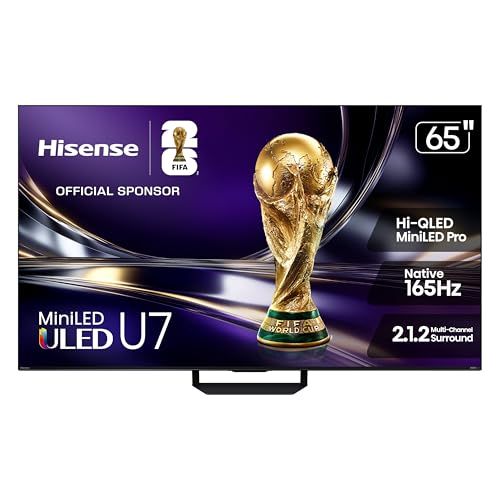
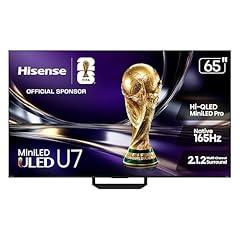
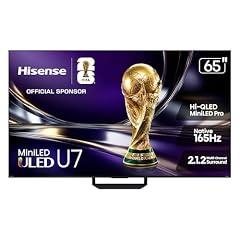
Hisense 65U7SG 65" Mini-LED ULED 4K Smart TV
Overview
This is a 65-inch 4K Mini-LED LCD smart TV with a matte screen, Google TV, four HDMI inputs, built-in 2.1.2-channel audio, and a supplied stand and remote. It is intended for streaming, broadcast TV, consoles, and PC gaming. Hisense documents a 165Hz native panel, variable refresh rate support, Dolby Vision and HDR10+ compatibility, and a 400 x 300 mm wall-mount pattern. Independent testing was performed on the 65-inch product. The testing found very high SDR and HDR brightness, effective local dimming, deep blacks, and strong reflection control. It also confirmed HDMI 2.1 bandwidth on all four inputs, broad console compatibility, and very low input lag. Important limitations were also measured, including a narrow viewing angle, distracting dirty-screen uniformity in some content, slow pixel transitions, HDR gradient banding, and visible stutter in slow pans.
What works
- Independent testing found very high brightness and a matte coating that substantially reduces direct reflections.
- The tested 65-inch product delivered deep blacks and effective Mini-LED local dimming for dark-room material.
- All four HDMI inputs were independently confirmed to have HDMI 2.1 bandwidth, with 4K 120Hz, VRR, ALLM, and broad console support verified.
- The manual provides closed captions, audio description, text-to-speech, picture controls, automatic brightness adjustment, and energy-saving timers.
- Hisense provides a two-year manufacturer warranty and a parts-and-accessories portal. Its stated security-update policy covers certain models for at least two years from launch.
What does not
- Independent testing found slow pixel transitions, so fast sports and games can look blurry despite the high refresh-rate capability.
- The tested unit had a narrow viewing angle and visible dirty-screen effect, which can be troublesome for wide seating or uniform sports fields.
- HDR showed a cool out-of-box color temperature and noticeable gradient banding in testing.
- The manufacturer publishes an EnergyGuide label and power-saving settings, but a model-specific ENERGY STAR record was not located during verification.
- A model-specific listing in UL or Intertek public certification directories was not located during verification, so electrical certification could not be independently confirmed.
Who is it for
It suits a household that needs a 65-inch screen for daytime streaming, movies, console use, or a PC gaming setup, and whose main seats are centered in front of the TV. The independent test results support use in rooms with windows or lamps because the matte screen and high brightness reduce reflections. It also fits users who need 4K 120Hz console support, VRR, low input lag, captions, audio description, or Google TV app access. Wall mounting requires a compatible 400 x 300 mm mount and attention to the product weight and installation guidance.
Who is it not for
It is not well suited to a wide sectional, open-plan room, or group viewing arrangement where many people sit far off center. Independent testing found color and contrast degrade rapidly from the side. It is also a poor fit for viewers highly sensitive to uneven gray-screen appearance, motion blur, stutter, or HDR banding, especially for sports and fast games. Households with children should not treat the supplied feet as a substitute for secure placement. Use a furniture anchor or a correctly rated wall mount, keep cables managed, and follow the installation instructions.
Integrity
The product has useful accessibility and comfort controls. Its manual documents closed captions, descriptive audio, text-to-speech, adjustable picture modes, brightness controls, an ambient-light sensor, sleep timers, and automatic power-off options. Independent testing supports the anti-reflection claim, finding that the matte coating greatly reduces direct reflections. Public test data did not provide a clear model-specific low-flicker result, so viewers with flicker sensitivity should assess the product in person if possible. Enhanced Viewing and its automatic content-recognition function are optional according to Hisense. When enabled, the policy says it analyzes on-screen audio and may analyze video to create hashed signatures for content matching and interest-based advertising. The manual provides account-removal controls. Hisense offers recycling information and a parts portal, but model-specific hazardous-material disclosures, a public ENERGY STAR record, and a public UL or ETL certification record were not located during verification.

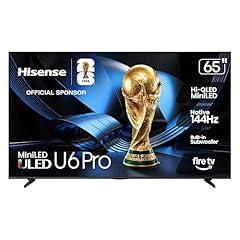
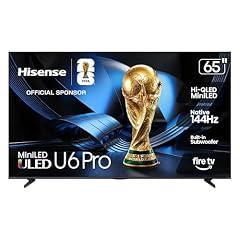
Hisense 65" U6 Pro Series Mini-LED 4K TV
Overview
This is a 65-inch, 4K Fire TV with a Mini-LED backlight, full-array local dimming, four HDMI inputs, and a 2.1-channel speaker system with an integrated subwoofer. It is intended for streaming, broadcast TV, console play, and wall or furniture installation. Hisense documents a native 144Hz panel, Dolby Vision IQ, HDR10+ Adaptive, HDR10, HLG, and a two-year limited manufacturer warranty. The EnergyGuide label is a stronger, standardized data point than the display marketing. It estimates 287 kWh of electricity use per year and $46 in annual energy cost under its stated test assumptions. Hisense also states that two HDMI inputs are HDMI 2.1, with VRR from 48Hz to 144Hz and ALLM. No independent purchased-sample RTINGS or Consumer Reports test was located for this exact product, so picture, latency, reflection, and HDR claims remain unconfirmed.
What works
- The FTC-format EnergyGuide label estimates 287 kWh yearly electricity use, giving a concrete operating-energy reference.
- Hisense provides a model-specific claim of 48Hz to 144Hz VRR, ALLM, FreeSync Premium Pro, and two HDMI 2.1 inputs.
- A two-year limited manufacturer warranty is documented for the ULED line.
- Hisense provides a U.S. recycling route through MRM, including state-specific collection information.
- The supplied safety material includes cable-routing, stable-furniture, anchoring, power-cord, and wall-mount safety instructions.
What does not
- No independent laboratory results were located for this exact product's brightness, contrast, color accuracy, reflection handling, motion, input lag, or VRR behavior.
- Hisense promotes glare reduction and local dimming but does not publish model-specific peak brightness or local-dimming-zone counts in the reviewed materials.
- The product-specific support page did not expose a usable full manual or a published parts-availability commitment during this review.
- Hisense says security updates are maintained for at least two years only for certain models, not with a model-specific support end date for this product.
- No model-specific UL or ETL listing was located in the public certification directories reviewed.
Who is it for
It suits a buyer who wants a large 65-inch Fire TV for mixed streaming, sports, broadcast viewing, and console gaming, and who values an explicit two-year warranty and an EnergyGuide estimate rather than relying solely on marketing wattage. It also fits someone with a cabinet that can accommodate either wide or narrow leg placement, since Hisense states that 65-inch and larger versions have adjustable stand positions. Users should be comfortable checking settings, including privacy controls and picture modes, during setup.
Who is it not for
It is not a strong fit for households with young children or climbing risks if the product will sit unsecured on furniture. The supplied safety guidance specifically calls for stable furniture, cable routing, and anchoring where appropriate. It is also unsuitable for buyers who need independently confirmed HDR brightness, reflection control, viewing-angle performance, gaming latency, or a verified long software-support term before purchase. Privacy-sensitive users who do not want a connected Fire TV ecosystem should consider a display used without network connection.
Integrity
The supplied Hisense safety material gives practical electrical and injury-prevention instructions. It says to use the supplied power cord, avoid wet handling, keep flames away, route cables so they cannot be pulled or tripped over, use stable furniture, and secure furniture and the television against tip-over. No model-specific CPSC recall was located in the reviewed recall search. The product has an FTC-format EnergyGuide label estimating 287 kWh per year and $46 per year under the label's assumptions. Hisense directs U.S. consumers to its MRM recycling program for drop-off locations and collection information. The company also has a vulnerability-reporting process and states that certain television models receive security updates for at least two years, but it does not publish a product-specific software end date. Its privacy documentation describes optional viewing-data services and settings-based opt-out controls.

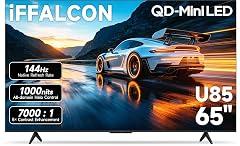
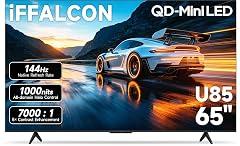
iFFALCON 65-Inch U85 QD-Mini LED 4K TV
Overview
This is a 65-inch 4K Mini LED Google TV with a supplied stand, voice remote, four HDMI ports, Ethernet, Bluetooth, USB ports, and a 2.1-channel speaker system. It is designed for streaming, console gaming, and wall or stand installation. The supplied guide documents 4K at 144Hz input on HDMI ports 1 and 2, while ports 3 and 4 are documented for 4K at 60Hz. The manufacturer states 1,000-nit HDR brightness, 144Hz native refresh, 288Hz game acceleration, Dolby Vision IQ, and a 50W 2.1 audio system. Those picture and gaming figures were not matched to independent purchased-sample testing. A notable documentation conflict needs care during installation, the catalog specification says 400 x 400 mm mounting, while the product guide specifies a 300 x 300 mm mount pattern for the 65-inch version.
What works
- The product guide documents 4K at 144Hz on HDMI ports 1 and 2, which is concrete support for connecting a compatible current-generation console or PC.
- The integrated hands-free microphone has a physical switch to disable it, and always-on screenless voice control requires the user to turn it on in settings.
- The guide includes detailed tip-over precautions, cable-routing guidance, stand assembly steps, and wall-mount instructions.
- Replacement main boards, power boards, driver boards, stand parts, remote controls, speakers, and power cords are listed through an established parts distributor.
- A one-year parts-and-labor warranty applies to new non-commercial use in the United States.
What does not
- No independent RTINGS or Consumer Reports test results were found for this exact product, so actual HDR brightness, local-dimming behavior, reflections, color accuracy, viewing angle, response time, and input lag remain unverified.
- No model-specific UL or ETL safety listing, ENERGY STAR certification record, or FCC equipment-authorization record was located. The guide does state FCC Part 15 compliance.
- The published 400 x 400 mm mounting specification conflicts with the supplied guide, which says the 65-inch product needs a 300 x 300 mm mount with four M6 x 16 mm screws.
- The privacy notice permits collection of device and usage data and use of third-party advertising and analytics tools. A firmware-check process exists, but no defined security-support end date was found.
- The manual does not document low-flicker performance, audio description, or a model-specific accessibility guide.
Who is it for
This product suits a home user who wants a large 65-inch Google TV for streaming and gaming, and who can verify setup details directly from the supplied guide. It is especially relevant for someone using a compatible console or PC on one of the two documented 4K 144Hz HDMI inputs. It also fits households that value a physical microphone disable switch, a standard one-year home-use warranty, and a plausible path to replacement components rather than treating the television as disposable.
Who is it not for
It is not well suited to buyers who need independently measured proof of HDR performance, glare control, wide viewing angles, low input lag, or flicker behavior before installation. Households with young children should not rely only on the supplied feet, and should follow the tip-over guidance or use a professionally installed wall mount. It is also a poor fit for commercial, hotel, rental, or institutional use requiring long coverage, because the documented commercial warranty period is six months. Privacy-sensitive users should avoid enabling hands-free voice control unless they accept the connected-service data practices.
Integrity
The supplied guide provides useful safety content. It warns about electric shock, moisture, heat, battery hazards, tip-over risk, cable routing, and ceiling mounting. It specifies that wall mounting should be done by a professional, and that the mount must support at least five times the television's net weight. It also identifies a physical switch for the integrated microphone. No model-specific CPSC recall or exposure warning was located in the U.S. public sources checked. For end of life, iFFALCON's guide directs U.S. users to a recycling locator and says free television drop-off and recycling is available in many areas. It also references How2Recycle packaging labels. Replacement boards, remote, stand, speaker, and power-cord listings strengthen repair prospects. Energy use remains uncertain because an ENERGY STAR entry and model-specific EnergyGuide data were not located, despite the guide referring to an EnergyGuide label.
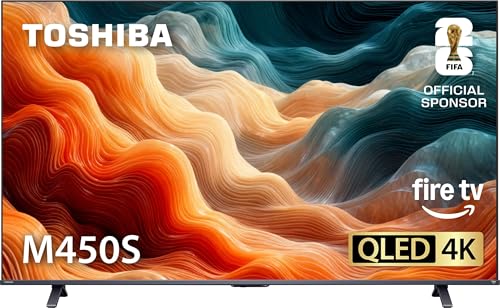
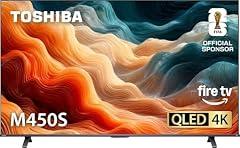
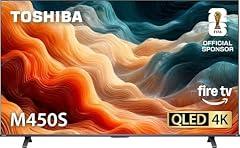
Toshiba 65" M450 Series 4K Smart TV
Overview
This is a 65-inch class, 64.5-inch-viewable, direct-lit QLED LCD television with 3840 x 2160 resolution and Fire TV software. It includes two feet, a voice remote, batteries and a power cord. The supplied setup guide lists 29.5 pounds with the stand, four HDMI ports, two USB ports, wired Ethernet, dual-band Wi-Fi 5 and Bluetooth 5.3. The strongest documentation is for practical setup and connection details. Toshiba's model documentation specifies a native 60Hz panel, a 400 x 200 mm VESA mount pattern, 20W total speaker power and support for Dolby Vision, HDR10+, HDR10 and HLG. Claims for AI picture processing, adaptive HDR and gaming performance are manufacturer-stated. No independent purchased-sample picture, latency, flicker or long-term reliability test for this exact product was located.
What works
- The setup guide gives unusually specific stand, wall-mount, screw-length and anti-tip P-Clip instructions for the 65-inch size.
- Fire TV provides adjustable captions, audio descriptions, VoiceView screen reading, text display controls and screen magnification.
- It has four HDMI inputs, with manufacturer documentation stating 4K 60Hz capability, VRR and ALLM support, plus eARC on one port.
- The model-family guide documents dual-band Wi-Fi, Ethernet and Bluetooth 5.3 rather than leaving wireless connectivity unspecified.
- Hisense USA provides a U.S. electronics-recycling route for Toshiba televisions through MRM collection locations.
What does not
- There is no located independent test of this exact product's brightness, contrast, HDR accuracy, reflections, viewing angle, motion or input lag.
- The panel is natively 60Hz, so it is not documented for 4K 120Hz console or PC play.
- No exact-model UL or ETL listing, ENERGY STAR record, or publicly located model-specific EnergyGuide sheet was found during verification.
- The manual lists up to 200W power consumption, but this is a manufacturer maximum figure rather than independently certified typical-use consumption.
- The supplied warranty is one year, and no model-specific parts-availability or repair-manual commitment was located.
Who is it for
It suits a household that needs a large 4K screen for ordinary streaming, broadcast TV and several 60Hz sources, and that can place it on a 40.3-inch-wide stand or mount it correctly. It is also a practical fit where accessibility controls matter, because Fire TV documents captions, audio description, VoiceView, magnification and high-contrast text. Users who need Ethernet alongside Wi-Fi, or multiple HDMI connections for a soundbar and media devices, have documented connection options.
Who is it not for
It is not suited to buyers who require independently measured HDR brightness, accurate picture modes, wide seating-angle performance, low flicker evidence or verified gaming latency. Competitive console and PC players who need 4K at 120Hz should not assume that capability from this native 60Hz product. Homes with children or climbing risks should not rely only on the supplied feet. Use the documented wall-mount instructions or the optional P-Clip anchoring method, and ensure the furniture or wall structure is suitable.
Integrity
The supplied model-family guide includes concrete electrical and installation cautions, including disconnecting power before attaching the stand or wall mount, using specified mounting hardware dimensions, keeping the screen vertical on the wall and avoiding slanted or ceiling installations. It also includes an FCC Part 15 compliance declaration for the model family. No current recall for this exact product was located in the CPSC sources checked. A public UL or ETL certification listing for the exact model was not located, so electrical-safety certification cannot be confirmed from a public registry. Fire TV offers viewing-data sharing controls for supported apps, and Amazon publishes Fire TV security-update support information. Hisense USA directs Toshiba television owners to MRM recycling locations in the United States. The setup guide lists a 200W maximum power-consumption figure, but an independently verifiable typical-use energy result or exact-model ENERGY STAR certification was not located.

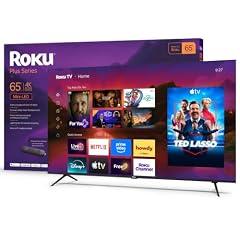
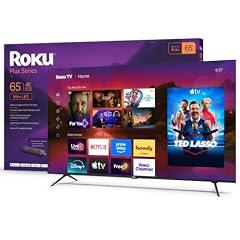
Roku 65-Inch 4K QLED Smart TV
Overview
This product is a 65-inch 4K Roku smart television for streaming, antenna television, and HDMI-connected devices. It has Roku OS built in, Wi-Fi 6 and Ethernet networking, Bluetooth, four HDMI inputs including one eARC connection, and a supplied voice remote. Roku lists Dolby Vision, HDR10+, HLG, QLED color, full-array local dimming, and a 60 Hz refresh rate for this Plus Series model. The important evidence limit is that no independent purchased-sample test was located for this exact 65-inch version. Roku's product page calls it a Mini-LED QLED television, while Roku's current support comparison describes the Plus Series more generally as QLED with local dimming and reserves Mini-LED for the Pro Series. Its 224 kWh annual energy figure appears on Roku's official EnergyGuide sheet for the closely named 65R6CX version, not a separately located sheet for this exact suffix.
What works
- Roku documents four HDMI 2.0 inputs, including one eARC input, plus USB-C, Ethernet, Wi-Fi 6, Bluetooth, optical output, and a headphone jack.
- Roku documents accessibility settings including a screen reader, configurable closed captions, and an automatic or fixed picture-brightness control on compatible sets.
- Automatic Roku OS updates have a public security-update history that identifies CVEs addressed in released software.
- The official EnergyGuide for the closely named 65-inch Plus Series version lists 224 kWh yearly electricity use, based on five hours of daily use.
What does not
- Independent brightness, contrast, reflection, viewing-angle, uniformity, latency, and VRR measurements were not located for this exact product.
- The 60 Hz native refresh rate limits high-frame-rate console and PC use. Roku's support chart identifies the Plus Series HDMI inputs as HDMI 2.0, not HDMI 2.1.
- Roku's public documentation is not fully consistent on the backlight. The product page calls this version Mini-LED, while the current support comparison describes Plus Series sets as local-dimming QLED rather than Mini-LED.
- No exact-model UL, ETL, FCC equipment authorization, or ENERGY STAR record was located in the checked public registers. This is missing verification, not evidence of a safety defect.
Who is it for
This product suits a household that wants a large 65-inch Roku-based television for streaming, broadcast TV, and several everyday HDMI devices, without needing a separate streaming stick. It is also relevant for viewers who benefit from menu readout, caption controls, adjustable picture brightness, and private headphone listening through Roku features. The documented 60 Hz panel and HDMI 2.0 connections fit ordinary console, movie, and television use where 4K at 120 Hz is not a requirement. Wall installation should use a mount rated for the television's weight and 400 x 300 mm mounting pattern.
Who is it not for
It is not well matched to competitive console or PC players who specifically need independently verified 4K at 120 Hz, HDMI 2.1 bandwidth, measured low input lag, or confirmed VRR behavior. It also needs caution in homes with young children or unstable furniture if it will sit on its supplied feet, because a 65-inch television can cause severe injury in a tip-over. Users who require independently measured HDR brightness, reflection control, flicker behavior, or wide viewing angles should not assume those outcomes from the advertised display terms alone.
Integrity
Roku provides useful privacy controls. Automatic Content Recognition is documented as off by default and can be enabled or disabled in settings, although Roku says information collected while it was enabled is retained. Roku also publishes security-update history and provides automatic software updates. A factory reset removes account information from the device, which is useful before resale or recycling. Roku's support materials provide installation and ventilation guidance, a power cable, stands, and stand screws. No active CPSC recall for this product was found in the checked search. However, exact-model public UL, ETL, and FCC verification records were not located. Roku documents recycling routes through its partner in several states and refers other users to local electronics-recycling options. The 65-inch EnergyGuide sheet for the closely named Plus Series version lists 224 kWh per year and an estimated $36 yearly energy cost under the label assumptions.

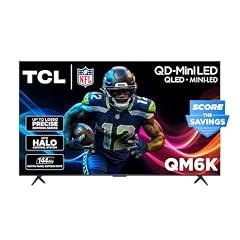
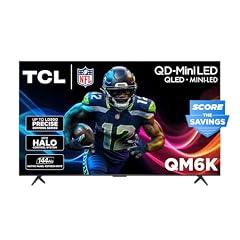
TCL 65-Inch QM6K QLED 4K Smart TV
Overview
This is a 65-inch, 4K QD-Mini LED LCD television with Google TV, integrated 2.1-channel Onkyo audio, four HDMI inputs, and a supplied stand, remote, power cable, and cable clips. TCL’s manual specifies two HDMI inputs supporting up to 4K at 144Hz, two supporting up to 4K at 60Hz, and a 300 x 300 mm wall-mount pattern. It also documents a physical switch for the television’s hands-free microphone. Independent testing was conducted on the 75-inch version, with the tester stating that most results apply to the 65-inch version. It found very low input lag, 4K at 144Hz, 1080p at 288Hz, VRR support, strong black levels, and accurate SDR and HDR color. The same testing found modest real-content HDR impact, glare from direct lights, haloing around bright objects, and motion artifacts in fast scenes.
What works
- Independent testing confirms very low input lag, VRR, 4K at 144Hz, and 1080p at 288Hz.
- Independent testing found strong contrast, good black uniformity, and accurate SDR and HDR color.
- The manual provides unusually concrete setup safety information, including 300 x 300 mm mounting, screw guidance, cable clips, and a five-times-net-weight mount capacity requirement.
- Accessibility controls include captions, high-contrast text, text-to-speech, TalkBack, Switch Access, picture adjustments, and a blue-light filter.
- The official EnergyGuide label estimates 275 kWh of annual electricity use and $44 annual cost under the federal test assumptions.
What does not
- Independent testing found HDR highlights lack strong impact in real content, despite the manufacturer’s high-brightness language.
- Direct reflections are poorly controlled, and off-center viewing degrades the image, which matters in bright rooms and wide seating layouts.
- Fast content can show blur trails and color-transition artifacts. This is a tested performance limitation, not simply missing evidence.
- No model-specific UL or ETL listing could be matched in the public certification directories reviewed. The manual has FCC Part 15 compliance language, but that is not an electrical safety certification.
- The documented warranty is one year for residential parts and labor. TCL has not published a defined software-support lifetime or model-specific replacement-parts availability schedule.
Who is it for
This product suits a household that wants a large 65-inch screen for mixed streaming, console gaming, and evening viewing, while keeping seating mostly centered on the screen. It is particularly relevant for players with compatible hardware that can use 4K at 144Hz or lower-resolution high-frame-rate modes, because those inputs, VRR, and low lag were independently confirmed. It also suits users who need built-in accessibility controls or want a physical switch to disable the television microphone.
Who is it not for
It is less suited to households with intense windows or lamps directly opposite the screen, because independent testing found distracting direct reflections. It is also not ideal for a very wide seating arrangement, as picture quality declines at extreme viewing angles. Families with climbing children should not treat the included feet as a complete safety measure. The manual requires stable furniture, cable routing that cannot be pulled, and anchoring of furniture and television where appropriate. People seeking a documented long-term software-support commitment or publicly matched electrical safety listing will need more evidence than is available here.
Integrity
The installation material is a meaningful safety strength. It warns that unstable placement can cause serious injury or death, tells users to keep cords from being pulled or tripped over, supplies cable clips, and specifies professional wall installation. It also calls for ventilation clearance and warns against moisture, blocked vents, damaged power cords, and heat exposure. No product-specific TCL television recall was located in the CPSC recall results reviewed. For privacy, the product has a microphone disable switch, privacy settings, permission controls, and an auto-update setting. Google TV can collect watch activity, approximate location, device identifiers, app interactions, diagnostics, and advertising or personalization data depending on settings and use, so privacy controls should be actively configured. TCL provides a U.S. electronics-recycling locator and says its television packaging carries How2Recycle labels. The official EnergyGuide label estimates 275 kWh yearly use, but an ENERGY STAR certification record was not confirmed.

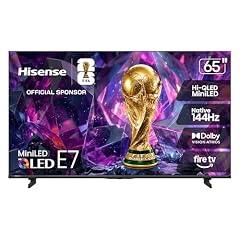
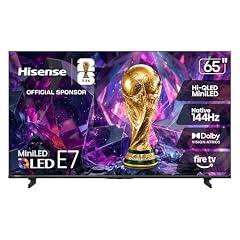
Hisense 65" E7 Cinema Series 4K UHD TV
Overview
This is a 65-inch, 4K LCD smart television with a Mini-LED backlight, quantum-dot color layer, Fire TV software, a stand, remote, and wall-mount compatibility. It is intended for streaming, broadcast TV, console gaming, and external audio or video equipment. Hisense's U.S. product page confirms the model and its Mini-LED, native 144Hz, HDR, and Fire TV positioning. Hisense's Canadian specification page, which carries the same product code and UPC, gives more concrete manufacturer-stated details: up to 600 nits brightness, 144 local-dimming zones, four HDMI ports including eARC, two HDMI 2.1 ports, VRR, ALLM, and a 400 by 300 mm mount pattern. No purchased-sample RTINGS or Consumer Reports test was located for this exact product, so its real HDR brightness, reflection handling, motion, input lag, and panel consistency remain unverified.
What works
- Manufacturer documentation specifies native 144Hz, VRR, ALLM, FreeSync Premium Pro, and two HDMI 2.1 ports for compatible gaming equipment.
- Four HDMI ports, Ethernet, Wi-Fi 5, Bluetooth, optical audio output, USB 2.0, USB 3.0, and eARC give it a documented range of connection options.
- The stated 400 by 300 mm M6 mounting pattern, 38.8-pound assembled weight, and stand dimensions provide useful installation information.
- Closed captions are listed in the product specifications, and Fire TV supports accessibility and voice-control settings.
What does not
- No independent purchased-sample testing was found for this exact product, so advertised brightness, 144-zone local dimming, motion quality, gaming latency, and viewing-angle performance are not confirmed.
- The exact product was not located in ENERGY STAR records or with a U.S. EnergyGuide sheet. A Canadian manufacturer page states 160 W consumption and up to 0.5 W standby, while the catalog record reports 220 W.
- I could not match this exact product to a public UL or Intertek certification record, or to a publicly searchable FCC authorization record, despite its connected features.
- The included warranty is one year. Hisense offers parts and firmware support portals, but does not publish a model-specific minimum parts or security-update support period.
Who is it for
This product suits a household that wants a large 65-inch screen for mixed streaming, sports, and console use, and can verify setup features after delivery. It is especially relevant where four HDMI inputs, eARC for a soundbar or receiver, Ethernet, and manufacturer-stated 144Hz, VRR, and ALLM support are practical needs. A buyer using a properly rated wall mount can work from the documented 400 by 300 mm M6 pattern and stated 38.8-pound assembled weight, while still following the mount maker's load and installation instructions.
Who is it not for
It is not well suited to buyers who need laboratory-confirmed HDR brightness, reflection control, off-angle performance, input lag, flicker behavior, or panel-uniformity results before choosing a television. It also warrants extra caution in homes with young children or climbing risks if it will be placed on furniture, because model-specific anchoring and cable-routing guidance was not located in a U.S. manual. Buyers requiring a published multi-year repair-parts commitment, a stated security-update lifetime, or a verified U.S. energy label should seek clearer documentation.
Integrity
No recall or CPSC safety warning specific to this television was located in the CPSC recall search reviewed for this assessment. That is not the same as a third-party safety certification. The exact product could not be matched to a public UL or Intertek listing, so electrical compliance should be confirmed from the physical product label and supplied documentation. For placement safety, use a stable stand or a mount rated for both the television's stated weight and its 400 by 300 mm M6 pattern. Keep cables managed and out of reach. The Fire TV and Alexa functions create meaningful privacy considerations. Hisense documentation describes viewing-data collection through automatic content recognition and says Alexa service requires express opt-in. Amazon documents microphone-off controls for compatible hands-free Fire TV products. For end of life, Hisense USA appears on Texas's manufacturer TV recycling list. The product itself has no verified ENERGY STAR record or U.S. EnergyGuide sheet located in this review, so its operating energy use is not independently established.
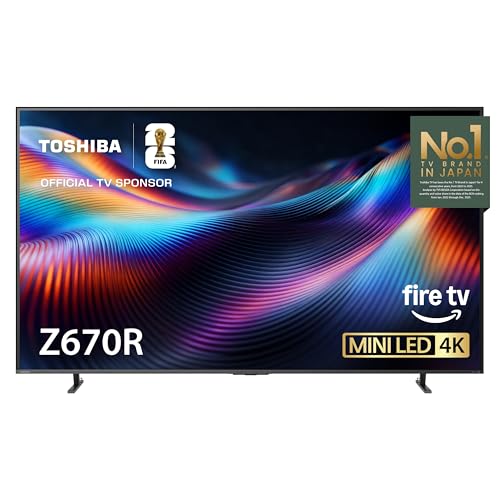
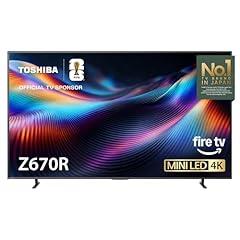
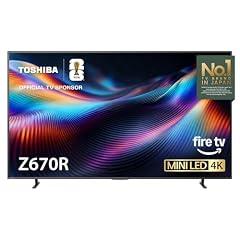
Toshiba 65" Z670R Mini-LED 4K Smart TV
Overview
This is a 65-inch, 4K smart television with a Mini LED backlight, quantum-dot color layer, Fire TV interface, four HDMI ports, and a stated 144Hz native panel. It is intended for streaming, broadcast reception, console gaming, and wall or stand installation. The supplied record lists a 400 x 400 mm mounting pattern and a 44.1-pound set weight, useful installation details that should be reconfirmed on the carton label or model-specific manual before mounting. Toshiba’s United States Z670R-series page states that the series uses Mini LED full-array local dimming, Dolby Vision, VRR, ALLM, and AMD FreeSync Premium. Those are manufacturer claims, not purchased-sample test results for this 65-inch product. No model-specific RTINGS or Consumer Reports measurements, Energy Star record, UL or ETL listing, or FCC equipment record was located in this review.
What works
- Fire TV provides controls to opt out of app-use data collection and broadcast live-TV data sharing.
- Toshiba provides a United States recycling route through MRM drop-off programs.
- The manufacturer states native 144Hz, VRR, ALLM, and FreeSync Premium support for the Z670R series.
- The manufacturer provides a support portal for manuals, warranty information, specifications, and firmware downloads.
What does not
- No model-specific independent picture testing was located, so brightness, reflection handling, contrast, viewing angle, flicker, uniformity, input lag, and HDR accuracy remain unverified.
- No exact product record was found in Energy Star, UL Product iQ, Intertek ETL, or FCC searches, so energy use, electrical certification, and wireless authorization could not be independently matched.
- The smart-TV privacy policy says connected devices may collect contact details, usage information, cookies, and audio information associated with automated content recognition.
- The product claims are not fully specific about HDMI bandwidth, which ports support high-frame-rate gaming, local-dimming-zone count, or measured peak brightness.
Who is it for
This product suits a household wanting a large 65-inch Fire TV display for mixed streaming, broadcast TV, and console use, especially where the buyer wants Amazon account integration and is willing to configure privacy settings during setup. It also fits users who need a stated 400 x 400 mm wall-mount pattern and who can verify the actual set weight, mount rating, fasteners, and wall structure before installation. Its manufacturer-stated 144Hz and VRR features are relevant for compatible gaming equipment, with independent confirmation still unavailable.
Who is it not for
It is not well suited to buyers who require independently measured HDR brightness, black-level control, reflection handling, viewing angle, response time, or input lag before selecting a TV. Privacy-sensitive households should also take care, because both the Fire TV platform and Toshiba connected-device policy describe data collection, although some Fire TV collection settings can be switched off. Homes with young children should not rely on an unverified stand setup, and should use appropriate anchoring or a professionally suitable wall mount after checking the model-specific instructions.
Integrity
No current CPSC recall specific to this product was located. However, no traceable UL, ETL, or FCC record for this exact television was located either, so electrical and wireless compliance cannot be independently confirmed from public registers. Use the supplied power equipment only as instructed, keep ventilation openings clear, avoid moisture, and verify the manual’s mounting and anti-tip guidance before installation. Toshiba TV USA directs consumers to MRM for electronics recycling locations, which gives the product a practical United States end-of-life route. Toshiba’s broader product materials claims include RoHS compliance, but this was not substantiated with a model-specific declaration for this television. Energy use is also unresolved because no exact Energy Star certification or product-specific EnergyGuide sheet was found. Keeping firmware current can reduce security risk, while Fire TV privacy settings allow some collection controls.

Samsung 65-Inch Mini LED M70H Smart TV
Overview
This is a 65-inch 4K LCD smart television with a VA panel, three HDMI inputs, Wi-Fi, Bluetooth, built-in speakers, and Samsung's Tizen interface. It is designed for streaming, broadcast viewing, and external devices. Samsung markets it as a Mini LED set with a Mini LED Processor 4K, Pure Spectrum Color, and Motion Xcelerator. Independent testing on a purchased 65-inch sample confirms a 60Hz native panel and HDMI 2.0 bandwidth, not 4K high-frame-rate capability. The same testing found low gaming input lag and VRR, but a narrow VRR range, very blurry pixel response, weak HDR brightness, poor direct-reflection handling, and no local dimming. The Mini LED description refers to smaller backlight LEDs, not the local-dimming control many viewers associate with Mini LED televisions.
What works
- Independent purchased-sample testing confirms low input lag at the product's actual 60Hz limit.
- Samsung's accessibility controls include captions with appearance options, video description, Voice Guide, high-contrast menus, enlarged text, and multi-output audio with Bluetooth devices.
- Samsung documents privacy controls for personalized recommendations, interactive marketing, targeted advertising, and account-linked data deletion.
- Samsung provides a U.S. electronics recycling locator and take-back routes for televisions.
What does not
- Independent testing found no local dimming, low HDR brightness, poor glare control, washed-out dark scenes, and disappointing screen uniformity.
- The catalog's 120Hz wording is materially misleading for this product. Independent testing found a 60Hz panel, no true 120Hz refresh mode, and dropped frames when fed a 1080p 120Hz signal.
- Fast motion is a documented weakness. Testing found slow, uneven response times, visible color-transition artifacts, and ineffective motion interpolation.
- A product-specific UL or ETL listing, ENERGY STAR certification record, and model-specific verified power-use figure could not be confirmed from the relevant public registries.
Who is it for
This product suits a household that mainly watches streamed shows or broadcast content in a dimmer room, sits mostly near the center of the screen, and wants a large 4K smart display with accessible menu and caption controls. It also fits occasional console play where low input lag matters more than 120Hz gaming or motion clarity. Users who rely on Voice Guide, adjustable captions, video description, or simultaneous TV-speaker and Bluetooth audio have concrete accessibility tools available.
Who is it not for
It is not suited to bright living rooms with windows or direct lamps facing the screen, because independent testing found weak brightness and mirror-like reflections. It is also a poor fit for competitive gaming, current consoles used at 120Hz, fast sports, or PC text work. The panel is limited to 60Hz, has slow and uneven motion response, and uses a BGR subpixel layout that can reduce text clarity. Households with children should use an appropriately rated wall mount or furniture anchor and follow installation guidance.
Integrity
The connected platform collects and uses viewing and usage information for recommendations and advertising features when enabled. Samsung documents controls for personalized recommendations, interactive marketing, targeted advertising, voice-related data choices, and deletion of account-linked personal data. These controls reduce exposure, but users should review privacy settings during setup because home-screen advertising cannot be fully disabled. Samsung supplies broad electrical-use warnings, including cord-routing, outlet-capacity, ventilation, and qualified-service guidance. However, a product-specific public UL or ETL listing was not verified, and an issuing-body ENERGY STAR record or model-specific measured electricity figure was not located. At end of life, Samsung offers a U.S. recycling locator and manufacturer recycling routes for televisions. The brand also states up to eight years of software updates after launch, though parts availability and repair documentation were not independently established.

Samsung 65-Inch QLED Q7F Smart TV 2025
Overview
This is a 65-inch, 4K LCD television with a quantum-dot color layer, Samsung's Tizen smart-TV platform, three HDMI inputs, one USB port, integrated 20 W stereo speakers, and a supplied stand and remote. It is intended for streaming, broadcast TV, casual console play, and wall mounting with compatible hardware. Samsung specifies a 60 Hz panel and provides model-specific installation, Energy Guide, and user-manual downloads. Independent purchased-sample testing confirms that this size was tested directly. It has low input lag at 60 Hz and automatic low-latency switching, but only supports 4K at 60 Hz. Testing also found no local dimming, weak HDR brightness, subpar SDR brightness in bright rooms, gray-looking blacks, and slow pixel transitions that blur fast motion. The product's connected platform has a documented seven-year security-update commitment from launch, while viewing recognition remains an optional, controllable data feature.
What works
- Independent testing on this exact 65-inch product confirms low input lag at 60 Hz and automatic low-latency mode for basic console use.
- Samsung documents security updates for smart TVs launched from January 2023 for seven years from initial launch.
- Viewing-information recognition is optional, and Samsung documents that it can be turned off in settings after setup.
- Samsung provides model-specific installation, user-manual, Energy Guide, and warranty materials, plus stated stand weight and wall-mount support.
- Accessibility documentation supports Voice Guide controls, and Samsung provides caption and other accessibility settings.
What does not
- Independent testing found poor HDR brightness, muted HDR color volume, no local dimming, and washed-out black levels, which are concrete image-quality limitations.
- The backlight uses PWM dimming. Independent testing measured 120 Hz flicker in Filmmaker Mode and at lower brightness settings, which can be troublesome for flicker-sensitive viewers.
- It is limited to HDMI 2.0 bandwidth and 4K at 60 Hz, with no VRR or 120 Hz support. Fast game motion is blurred by slow pixel transitions.
- The catalog's 1,800-nit brightness figure is not supported by the independent HDR scenes examined, which reached only 173 to 285 cd/m² with active tone mapping.
- No model-specific UL or ETL listing record was located in the searched public certification directories. This is missing verification, not evidence of an electrical defect.
Who is it for
It suits a household that wants a large, conventional 65-inch smart screen for streaming, broadcast programs, and casual 60 fps console games in a dim or moderately lit room. The useful fit is a viewer who values familiar app access, built-in voice and accessibility controls, and a documented software-security support path, but does not need advanced gaming connections. It also fits an installation where the supplied stand is used correctly or a compatible wall mount is installed according to Samsung's instructions.
Who is it not for
It is not suited to people with known sensitivity to display flicker, because independent testing found PWM flicker that can occur at 120 Hz. It is also a poor fit for bright, sunlit rooms, home-theater viewers focused on convincing dark scenes or HDR highlights, and owners of current consoles seeking 120 Hz, VRR, or HDMI 2.1 features. Homes with children should not rely on the stand alone, and should follow the installation guidance, use compatible mounting hardware, and secure cables to reduce tip-over and trip hazards.
Integrity
The main health consideration is visual comfort. Independent testing found PWM backlight flicker at 120 Hz in Filmmaker Mode and at lower brightness settings, plus 480 Hz flicker in other modes above a stated brightness threshold. This does not establish harm for most viewers, but it is a meaningful exposure concern for people who know they are flicker-sensitive. The product includes accessible controls such as Voice Guide and caption settings. Samsung also documents optional viewing-data recognition and settings-based opt-out controls. Samsung publishes model-specific installation and energy documents, a one-year limited warranty, and a seven-year security-update policy for this 2025 connected television. Its U.S. sustainability material describes electronics recycling and take-back efforts, but the verification did not establish product-specific recycled-material content, packaging composition, or a nationwide direct take-back route for a 65-inch television. No product-specific CPSC recall was found in the searched records. Public UL and ETL directories did not yield a model-specific electrical-listing match during this review.