
10 Best 3d Printer for Kids
 Daniel Kenitz
Please note that we participate in affiliate marketing programs. When you purchase through links on our site, we may earn a commission. As an Amazon Associate we earn from qualifying purchases. This comes at no additional cost to you and helps support the resources required to provide valuable content.Advertising Disclosure
Top-rated 3d Printer for Kids Comparison
1

2
3
4
5
6
7
8
9

10
3D printers for kids: what to look for
A desktop filament 3D printer heats plastic filament and deposits it layer by layer to make models, toys, decorations, classroom projects, and small functional parts. Despite child-focused packaging, these are machines with hot surfaces, moving mechanisms, electrical components, tools, and during printing potential particle and chemical emissions. The meaningful question is not whether a listing says “kid-safe,” “non-toxic,” or “easy.” It is whether the exact printer, materials, operating conditions, and supervision plan fit the intended setting.
For beginners, useful features include a fully assembled design, automatic bed leveling, a removable build plate, filament-break or power-loss recovery, and a small build area that limits the size of early projects. Independent print testing is more useful than a maximum-speed figure: it should identify the filament, slicer, temperatures, layer height, test object, and failure rate. A headline such as 600 mm/s may describe travel speed rather than ordinary print speed. Conflicting speed figures, unstable software, manual setup hidden behind “one-click” language, and unqualified claims about automatic leveling all deserve caution.
Indoor air deserves separate attention. An enclosure can reduce casual access and may contain some emissions, but it is not proof of low exposure. A meaningful high-confidence claim requires a model-specific independent chamber report covering ultrafine particles and volatile organic compounds, ideally using ANSI/CAN/UL 2904, together with a credible enclosure, filtration, or outdoor-ventilation strategy. A carbon filter alone is not demonstrated particle control, and PLA is not automatically emission-free or chemically uniform. Buyers should look for current safety data sheets identifying the compatible polymer, additives, colorants, temperature limits, and hazards for the actual filament being supplied or recommended.
Safety documentation should identify the completed product, not just a radio module or a generic family. Check the CPSC Recalls database and SaferProducts.gov, and look for a traceable UL, ETL, or CSA listing in the relevant public directory. FCC authorization confirms radio compliance for connected features; it does not establish protection from burns, shock, fire, or emissions. For a product marketed as a children’s toy, a Children’s Product Certificate and supporting testing from a CPSC-accepted laboratory should match the model and marketed age. Guarding, interlocks, door behavior, hot-surface warnings, small-part controls, and clear adult-supervision instructions matter more than cheerful packaging.
Connected printers add another decision. App, camera, cloud, and AI features should be optional where possible, with clear data collection, retention, parental-control, and security-update information. USB, SD-card, or local-network printing can reduce dependence on an account. For sustainability, compare measured reliability and failed-print waste, purge material in multicolor printing, power consumption under stated settings, repair instructions, replacement parts, firmware support, warranty terms, and a documented electronics-recycling or take-back route. “Plant-based,” “biodegradable,” “non-toxic,” and “green” claims do not establish a composting route, low emissions, or a smaller life-cycle footprint.
Across the supplied products, none is supported by a model-specific independent particle-and-VOC chamber test, and no completed printer had a clearly located UL, ETL, or CSA electrical-safety listing. Enclosed models still require adult supervision, ventilation, and careful handling of hot parts; open models are especially unsuitable for unsupervised children. Several products expose or can expose hot nozzles, heated beds, moving axes, tools, or small detachable parts, while some door alarms or locks can be disabled or do not stop operation. App privacy, cloud data collection, inconsistent speed claims, incomplete filament safety data, and undocumented long-term recycling routes are recurring limitations.
Integrity
The topics below distinguish a printer that merely looks suitable for children from one with evidence supporting safer, more reliable, and more accountable use. Scores reflect the supplied assessments; a higher score indicates stronger evidence and controls among these products, not proof that a printer is risk-free.
HHealth & Safety
Indoor-air health protection
This measures model-specific evidence for low ultrafine-particle and VOC emissions plus effective exposure control. It matters because heated filament can release particles and chemicals even when the printer uses PLA. The stronger supplied scores belong to products with enclosures and some documented controls, but no reviewed product had a model-specific chamber report; open designs without filtration scored lower or remained limited by that evidence gap.
Burn, shock, and fire protection
This covers hot nozzles and beds, thermal runaway, damaged wiring, overheating, ignition, grounding, and electrical certification or recalls. It matters because children may approach a machine during heating, printing, or cool-down. Higher-scoring products had more useful thermal safeguards, instructions, or accountability evidence, while lower scores reflected exposed hot parts and no located UL, ETL, or CSA listing for the completed printer.
Child-safe physical design
This measures guarding, interlocks, door behavior, pinch-point protection, small parts, sharp tools, hot surfaces, age-appropriate instructions, and independent child-safety testing. Enclosures, child locks, and door alarms can reduce access, but they do not replace supervision or prove safe operation. The supplied scores were strongest for compact enclosed products with access controls and weaker for open-frame machines or products whose safeguards were manufacturer claims only.
Filament and chemical disclosure
This measures whether the maker identifies compatible polymers, additives, colorants, temperatures, hazards, and current safety data sheets rather than treating every PLA spool as equivalent. It matters because material choice and printing temperature affect emissions and handling. Scores were generally moderate: products named compatible materials, but the reviews repeatedly found missing filament-specific safety data, pigment information, or additive disclosure.
EEcology
Reliable printing with less wasted plastic
This measures consistent beginner printing, automatic leveling, failed-print rates, recoverable errors, and material waste under disclosed conditions. It matters because failed layers, clogs, poor adhesion, and multicolor purging consume plastic and time. Higher-scoring products had independent evidence of dependable leveling, print quality, or lower purge waste; lower scores reflected limited testing, mixed software experience, or unsupported headline-speed claims.
Energy and material footprint
This covers measured power use, heated build volume, purge waste, supplied filament, and quantified design choices that reduce energy or virgin plastic. It matters because multicolor systems can discard substantial purge material and hotter materials require more energy. The strongest supplied scores came from products with independently observed lower purge waste or compact formats, but no reviewed product had a complete model-specific energy or life-cycle assessment.
Repairable, supported, and recyclable
This measures accessible replacement parts, repair instructions, firmware support, warranty coverage, and a documented take-back or qualified electronics-recycling route. It matters because keeping a printer working avoids premature disposal. Higher-scoring products publish procedures and sell parts such as nozzles, hotends, boards, or platforms. Scores were still constrained because the supplied reviews generally found no manufacturer take-back program or documented certified recycling route.
EEvidence
Independent proof, not badge claims
This measures authentic, current, model-specific third-party records for the completed product. It matters because FCC radio authorization, generic CE or UL language, and self-declared badges do not prove burn, fire, electrical, emissions, or toy safety. Higher-scoring products had traceable FCC records, independent testing, or clearer documentation, but the supplied reviews repeatedly found no public UL, ETL, CSA, or model-specific emissions record.
Honest safety, speed, and learning claims
This measures whether claims such as “kid-safe,” “fume-free,” “AI-powered,” “one-click,” and high speed are qualified by conditions and supported for the exact model. It matters because travel speed may be confused with print speed and “enclosed” may be confused with filtered. Higher scores went to products with fewer contradictions; lower scores reflected conflicting speed or leveling claims, exaggerated model-library counts, and unsupported safety language.
Safe app, camera, and data practices
This measures whether connected features are optional, secure, appropriately maintained, and suitable for children, with clear collection, retention, permissions, and parental controls. It matters because printers may upload files, device information, usage data, images, or camera data. Higher scores reflected offline, USB, SD-card, or LAN-only options and clearer disclosures; lower scores reflected broad policies, account dependence, conflicting privacy labels, or child-directed marketing paired with adult-rated apps.
Recall readiness and accountable support
This measures identifiable manufacturer or importer responsibility, reachable support, serial traceability, warranty terms, safety notices, parts access, and credible remedies. It matters because a buyer needs someone accountable if a defect appears. Higher-scoring products supplied clearer warranties, U.S. support, serial guidance, FCC grantee records, or replacement parts. A recall search result alone is not certification, and limited importer or remedy information lowers confidence.
Full reviews

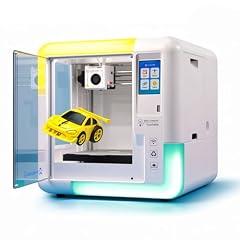
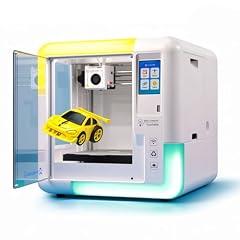
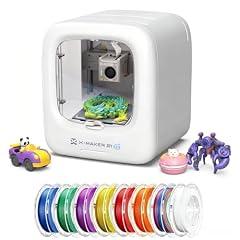
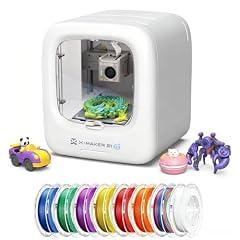
AOSEED X-Maker Joy AI+ 3D Printer
Overview
This is a compact, enclosed desktop fused-filament 3D printer aimed by the manufacturer at children ages 4 to 12. It prints only PLA, including a supplied 200 g PLA Silk spool according to the product guide, and uses a phone or tablet app over 2.4 GHz Wi-Fi. The catalog bundle includes eight PLA filaments, but their exact additives, colorants, and safety documents were not located. AOSEED documents factory pre-calibration, app-managed one-click printing, a door sensor, filament-break and tangle notices, a quick-swap nozzle, and a built-in camera. These are manufacturer-stated features, not independent performance or safety findings. A U.S. FCC authorization was located for an X-MAKER JOY radio product, but no model-specific UL, ETL, CSA, emissions chamber report, Children’s Product Certificate, or electrical-safety certification file was found for this completed product.
What works
- PLA-only compatibility avoids ABS use, according to the manufacturer’s product documentation.
- The enclosed housing and door sensor are meaningful physical safeguards if they operate as described by the manufacturer.
- AOSEED provides practical troubleshooting and replacement instructions for clogs, printhead removal, tubing, nozzle changes, and bed calibration.
- Replacement components, including a baseplate, filament detector, Bowden tube, and filament-related parts, are listed through the manufacturer’s store.
What does not
- No independent chamber test for ultrafine particles or VOCs was located, and the enclosure is not documented as filtered or ventilated.
- No model-specific U.S. electrical-safety listing, thermal-runaway test record, or children’s product compliance file was located.
- The product documentation shows nozzle heating to 200 C for maintenance and requires pliers for filament work, so adult supervision remains necessary.
- The catalog’s 400 mm/s speed claim conflicts with AOSEED’s current JOY specifications, which state up to 300 mm/s.
- The app supports live camera monitoring, while its listed age rating is 18+ and the service terms describe data processing in Hong Kong. A child-specific privacy notice and security-update commitment were not located.
Who is it for
This product suits a household or supervised classroom that wants a small, app-centered PLA printer for simple toys and introductory design activities. It is most appropriate where an adult handles setup, filament changes, unclogging, print removal, and any tool use. The documented workflow reduces manual slicing and leveling work, which can help beginners start from the model library. It also fits users comfortable keeping the printer on a stable indoor surface, allowing cooling time before handling prints, and using the companion app for operation and monitoring.
Who is it not for
It is not suited to families seeking independently documented low-emission indoor printing, a verified electrical-safety listing, or a printer that children can maintain without close adult involvement. It is also a poor fit for users who need ABS, PETG, large prints, or independently tested high-speed output. Households uncomfortable with an app-connected camera or cross-border data processing should avoid relying on the connected functions. Schools with formal procurement, child-privacy, insurance, or laboratory-safety requirements should request product-specific certificates and test reports before deployment.
Integrity
The most important health limitation is that PLA is not the same as demonstrated low-emission printing. AOSEED states that the JOY uses only PLA and sells PLA described as low odor, but no model-specific ANSI/CAN/UL 2904 chamber report or public independent test covering particles and VOCs was located. The enclosure and door sensor may reduce access to moving parts, but no filtration or ventilation performance was documented. Maintenance instructions also show heating the nozzle to 200 C and cutting extruded filament with pliers, so this is not hands-off child use. Material disclosure remains incomplete. AOSEED identifies PLA Silk for the supplied starter spool and gives a 190 to 220 C print range for its PLA, but public safety data sheets for the bundled colors and additives were not found. The manufacturer sells some spare parts and provides repair guides, which can extend service life. No take-back program, qualified electronics-recycling route, measured power-use data, or quantified print-waste data was located.

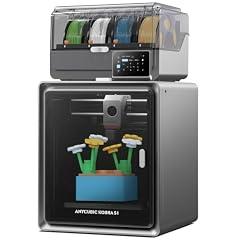
Anycubic Kobra S1 ACE 2 Pro 3D Printer
Overview
This is a desktop fused-filament 3D printer bundled with the ACE 2 Pro feeder and dryer. It has an enclosed CoreXY printer body, a 250 x 250 x 250 mm build volume, a 0.4 mm nozzle, and a heated PEI flex plate. The maker states that the base bundle feeds four colors and can expand to 16 colors with additional units. The maker lists a 320 C maximum nozzle temperature, 120 C bed, 65 C filament drying, Wi-Fi and cloud controls, a 480p camera, and 300 mm/s recommended print speed. These are manufacturer specifications, not independent performance findings. The listing includes activated carbon, but no model-specific chamber test for ultrafine particles or VOCs was located, and it does not document HEPA filtration or outdoor exhaust.
What works
- The enclosed printer format provides physical separation from moving mechanisms during normal closed-door operation, although it is not a child-safety interlock.
- The included ACE 2 Pro is specified to feed four colors, monitor temperature and humidity, and dry filament at up to 65 C.
- Official support materials include firmware, setup information, replacement guides, and a parts and accessories catalog for the printer family.
- The maker identifies a wide material range, including PLA, PETG, TPU, ABS, and ASA, and notes that TPU must bypass the multi-material feeder and load directly into the printer.
What does not
- No independent, model-specific emissions chamber report was found for particles or VOCs, despite the enclosed design and included carbon component.
- The printer can reach 320 C at the nozzle and 120 C at the bed. It is not presented as a toy or as independently tested for a child age group.
- The manufacturer markets fast, reliable, and low-waste functions, but no disclosed independent failure-rate testing or comparable power-use test was located.
- Cloud printing, remote monitoring, and camera features involve data collection. The published policy describes device, usage, IP, location-related, and third-party login data collection, but does not provide a product-specific security-update commitment.
- No U.S. third-party electrical safety listing for this completed printer-and-feeder package was located in the checked certification sources.
Who is it for
This product suits an adult hobbyist, classroom technician, or supervised makerspace user who wants a compact enclosed printer for multicolor PLA or PETG projects and has a dedicated, ventilated work area. It is particularly suited to users willing to learn slicer settings, loading procedures, nozzle care, and material-specific limits. The 250 mm cube build space fits many models, props, organizers, and prototypes without making the printer a small appliance. Remote monitoring can help an adult supervise longer jobs away from the machine.
Who is it not for
It is not suited to unsupervised children, bedrooms, nurseries, or shared living rooms without meaningful ventilation. The hot nozzle, hot bed, moving parts, cleaning tools, and small accessories require adult handling. Households with asthma, chemical sensitivities, infants, or pets should not treat the enclosure or carbon component as proof of low indoor exposure. It is also a poor fit for buyers who need independently verified emissions control, a U.S. electrical-safety listing, a child-product certificate, or documented low-waste and energy-use results.
Integrity
The enclosure is a useful physical barrier, but it is not evidence that printing emissions are controlled. This product can use PLA, PETG, ABS, and ASA. Public-health guidance for filament printing recommends ventilation or local exhaust, selecting lower-emission materials such as PLA where appropriate, and limiting time near active printers. The maker supplies an activated-carbon item, but no model-specific particle and VOC test, HEPA specification, filter efficiency, replacement interval, or exhaust performance evidence was located. Material disclosures are better than a generic all-filament claim because the maker identifies supported polymers and specifically states that TPU must feed directly rather than through the ACE 2 Pro. It also publishes safety-data-sheet resources for filaments. Official parts listings, guides, firmware support, and a one-year printer warranty improve the practical chance of repair. No documented take-back program or independently measured operating energy and multicolor purge-waste data was located.

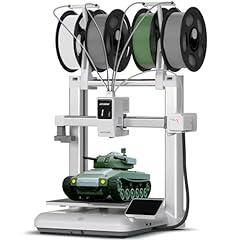
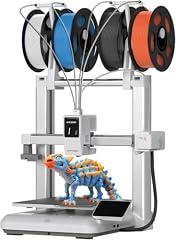
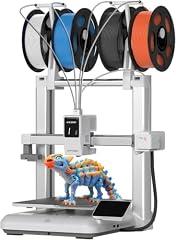
Kobra X Multicolor 3D Printer
Overview
This is an open-frame fused-filament 3D printer with a 260 x 260 x 260 mm build volume, a single hardened-steel nozzle rated to 300 C, and a heated PEI spring-steel bed rated to 100 C. It has four built-in filament paths for multicolor work, with manufacturer-stated expansion to 19 colors. The product also includes Wi-Fi, app and slicer control, USB printing, a 720p camera, and automated leveling. Its most meaningful confirmed performance evidence is independent hands-on testing. Tom's Hardware reported successful PLA, PETG, and flexible TPU prints, clean color changes, and substantially lower purge output in a defined four-color test. Those are useful results, but they are not emissions, electrical-safety, or long-term durability certifications. Anycubic's own speed, noise, AI detection, and 24-hour material-test statements remain manufacturer evidence.
What works
- Independent testing found clean multicolor output and successful PLA, PETG, and flexible TPU printing.
- Independent testing documented materially lower color-change purge waste under disclosed default settings.
- USB printing is available, so cloud or app use is not essential for every print.
- The manufacturer provides a model manual, firmware updates, a support ticket system, and a one-year whole-machine warranty.
What does not
- This is an open printer with no stated enclosure, particle filtration, or model-specific ultrafine-particle and VOC chamber test report.
- The manufacturer manual says to keep the printer and its small accessories out of children's reach, which conflicts with marketing that presents it for kids.
- The nozzle can reach 300 C and the bed 100 C, while moving axes, exposed hot surfaces, cutters, screws, and loose tools remain accessible.
- No model-specific UL, ETL, CSA, or equivalent electrical-safety listing was located in the searched public certification sources.
- Anycubic lists compatible polymer families, but current product-level disclosure does not provide complete additive, colorant, or safety-data documentation for all compatible filaments.
Who is it for
This product suits an adult beginner, supervised teen, hobbyist, or classroom technician who wants multicolor filament printing in a moderate 260 mm cube format and can give it a dedicated, ventilated workspace. It is most appropriate for users prepared to learn filament handling, basic maintenance, slicing, and safe hot-tool practices. USB printing is useful for people who prefer not to rely on cloud control. The independent print testing supports ordinary PLA and PETG projects, plus flexible TPU experimentation.
Who is it not for
It is not appropriate as an unsupervised children's appliance. The manufacturer warns that hot parts, high-speed moving components, screws, cutters, and other small accessories should be kept away from children. It is also a poor fit for bedrooms, nurseries, or poorly ventilated shared rooms because the open design has no stated enclosure or filtration and no model-specific emissions report. People who need independently verified electrical safety, low-emission operation, or documented child-product testing should select a product with that evidence.
Integrity
The health limitation is the open heated-filament format. The product supports PLA, PETG, TPU, PVA, carbon-fiber filled materials, and ASA, with a nozzle rated to 300 C. FDM printing can release ultrafine particles and volatile chemicals that vary with filament and temperature. NIH guidance identifies ventilation and exposure control as important, yet no model-specific UL 2904 emissions test, enclosure, or integrated filtration was identified for this product. Use adult supervision, position it away from occupied living areas, and provide effective local exhaust or room ventilation. The manual gives useful burn, motion, electrical, and small-accessory warnings, but it expressly says to keep the product out of children's reach. On material use, independent testing found lower color-change purge than the tested comparator, though multicolor printing still created 150 g of purge filament plus a 42 g purge tower in one reported project. Anycubic offers model parts, manuals, firmware updates, support tickets, and a one-year machine warranty. No U.S. CPSC recall for this model was located in the searched public records.

Creality K2 3D Printer
Overview
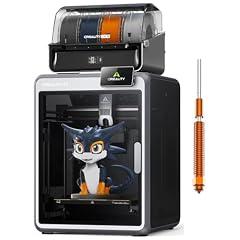
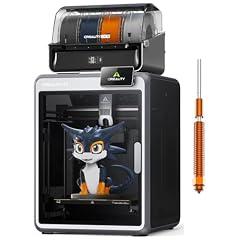
This is a fully enclosed, desktop fused-filament 3D printer with a 260 x 260 x 260 mm build area, a 0.4 mm nozzle, automatic leveling, a camera, Wi-Fi and USB file transfer. The Combo package adds Creality's four-spool CFS feeder for automated multicolor or material changes. Creality lists PLA, PETG, ABS, PLA-CF and PET as supported, with a 300 C nozzle limit and 100 C heated-bed limit. The stated 600 mm/s figure is a maximum specification, not a documented everyday print rate. An independent K2 Combo review reported generally trouble-free testing, with one clog linked to a filament break. The enclosure includes an activated-carbon filter according to that review, but no model-specific UL 2904 particle and VOC chamber report was located.
What works
- Independent hands-on testing found reliable operation overall, with one recoverable clog reported.
- The enclosed print chamber reduces direct access to moving axes during printing, though it is not a child safety interlock.
- The CFS can automate four loaded filaments, and Creality states that up to four CFS units can be connected for larger color sets.
- The manufacturer provides current firmware, support channels, a one-year warranty claim, and documented maintenance and replacement guidance.
What does not
- No model-specific independent emissions test was located, so the enclosure and carbon filter should not be treated as proof of low indoor particle or VOC exposure.
- This is not a children's toy or independently child-certified product. The manual requires adult supervision and warns of hot surfaces, moving parts, crushing and cutting hazards.
- Creality lists several compatible polymer families, but product-specific safety data sheets and additive or colorant disclosures for the filaments used were not located.
- Multicolor changes from a single nozzle inherently create purge material. No model-specific power-use, purge-waste, life-cycle, take-back, or recycler program documentation was located.
- The available conformity document is a manufacturer-issued EU declaration. It names test reports, but it is not a US NRTL listing or a public model-specific emissions certification.
Who is it for
This product suits a supervised hobbyist, teen maker working with an adult, classroom technician, or small workshop user who needs an enclosed printer for medium-size PLA or PETG projects and wants automatic four-filament printing. It is most appropriate where the user can handle setup, routine cleaning, filament loading, nozzle clogs, firmware updates, and basic maintenance. A dedicated, ventilated work area is important, especially if using ABS or carbon-fiber-filled filament.
Who is it not for
It is not appropriate as an unsupervised printer for children. The manual specifically warns that children need adult supervision, and the nozzle, heated bed, cutters, and moving mechanism remain injury risks. It also does not fit bedrooms, nurseries, or poorly ventilated living spaces where people may be present during lengthy printing, particularly when using ABS or filled materials. Buyers needing verified low-emission operation, a US third-party electrical listing, quantified energy use, or a formal recycling route need stronger documentation.
Integrity
The product has a fully enclosed format and an activated-carbon filter was observed in independent testing. Those are exposure-control features, not evidence that its indoor emissions are low. Creality's manual calls for a well-ventilated location, grounded outlet, distance from flammables, and adult supervision around children. That caution matters because material-extrusion printers can emit ultrafine particles and chemicals, and emissions depend strongly on filament and temperature. No chamber report for this completed product and filament setup was located under the UL 2904 emissions method. Creality publishes a manufacturer EU conformity declaration for this model that cites electrical-safety, machinery, radio, electromagnetic-compatibility, and RoHS test standards. The company also identifies serial-number locations, provides firmware updates and maintenance documents, and lists US support contact channels. No relevant CPSC recall was located in the searched public recall resources. However, no quantified power test, material-waste analysis, take-back program, or qualified electronics-recycling route for this product was found.

Creality SPARKX i7 Multi-Color 3D Printer
Overview
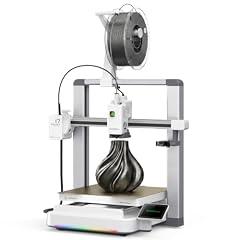
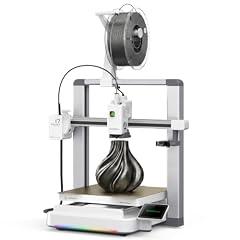
This product is an open-frame fused-filament desktop 3D printer that melts 1.75 mm plastic filament to build parts layer by layer. Its manufacturer specifies a 260 x 260 x 255 mm build area, a direct-drive extruder, a nozzle rated to 300 C, and a heated bed rated to 100 C. The base printer supports PLA, PETG, PLA-CF, and TPU, while multicolor operation requires a separately added CFS filament system. The manufacturer also lists automatic leveling, filament runout recovery, a 720p monitoring camera, Wi-Fi, USB transfer, and a claimed maximum speed of 500 mm/s. Independent hands-on testing of the related color setup found good first prints, reliable automatic leveling, and generally quiet operation. That testing is useful performance evidence, but it is not an emissions, electrical-safety, or child-safety certification.
What works
- Independent hands-on testing documented strong initial print results and reliable automatic bed leveling.
- USB and LAN operation allow printing without using the cloud service.
- Creality publishes model-specific repair guides for major wear parts and several electrical and motion components.
- The open design provides a substantial 260 x 260 x 255 mm workspace in a roughly 20-pound machine.
What does not
- The printer is open-frame, has no listed air filter or enclosure, and lacks a located model-specific chamber test for ultrafine particles and VOCs.
- A 300 C nozzle, 100 C heated bed, moving axes, tools, and accessible filament path make unsupervised child use inappropriate.
- No model-specific UL, ETL, CSA, or equivalent North American electrical-safety listing was located in the certification directories searched.
- Multicolor printing needs an additional CFS unit and can create substantial purge waste. Independent testing found default color settings could consume far more purge material than the printed object.
- The connected camera and portrait-to-model features rely on a cloud ecosystem with a lengthy privacy policy. Creality Cloud says it is not intended for children under 13.
Who is it for
This product suits a supervised teen or adult beginner who wants to make hobby parts, models, organizers, toys, or classroom prototypes in common lower-temperature materials such as PLA and PETG. It fits users with a stable workbench, access to a grounded outlet, and enough ventilation to keep printing away from occupied living and sleeping spaces. It also suits people willing to use USB or local-network workflows and to learn routine tasks such as bed cleaning, nozzle care, filament handling, and occasional part replacement.
Who is it not for
It is not appropriate for a young child to operate alone. The accessible nozzle, heated bed, moving gantry, cutters, scraper, and small maintenance parts create burn, pinch, cut, and ingestion concerns. It is also poorly suited to bedrooms, small poorly ventilated apartments, or other spaces where people cannot separate themselves from printer emissions. Buyers needing documented low-emission operation, independently verified electrical certification, formal child-product testing, or a fully enclosed printing environment need evidence that this product does not provide.
Integrity
The main health concern is the open-frame design. Creality lists no air filter or enclosed chamber, while the product can heat its nozzle to 300 C and its bed to 100 C. No model-specific independent chamber report covering ultrafine particles and volatile organic compounds was located. Material choice matters because PLA, PETG, TPU, and carbon-fiber-filled PLA are not interchangeable from an exposure or maintenance standpoint. The maker identifies supported polymers, but complete product-specific safety data for supplied or recommended filament was not established. There is no located active CPSC recall for this product. Creality does provide support contact details, firmware releases, and unusually extensive model-specific repair instructions. Those guides can extend service life. However, no documented take-back program or qualified electronics-recycling route was located. For color printing, independent testing found that purge material can greatly exceed the object’s material use unless settings are tuned.

Anycubic Kobra X Multicolor 3D Printer
Overview
This is an open-frame fused-filament 3D printer with a 260 x 260 x 260 mm build area, a single hardened-steel nozzle rated by the manufacturer to 300 C, and a PEI spring-steel heated bed rated to 100 C. It feeds up to four filaments directly into one printhead for color or material changes. It can also be used with USB, local network, or the Anycubic app. Independent hands-on testing confirmed clean multicolor output, successful PLA, PETG, and flexible TPU prints, automatic leveling, and short color-change cycles. The printer remains physically open, however. Its own manual warns users not to touch the hot printhead, bed, or fresh plastic, to keep clear of high-speed moving parts, and to keep small accessories out of children’s reach. No model-specific chamber emissions report or recognized North American electrical-safety listing was located.
What works
- Independent testing completed long multicolor PLA prints plus PETG and flexible TPU prints with generally strong output.
- A reviewer measured roughly 35 seconds from cut to purge for color changes, supporting the printer’s practical multicolor workflow.
- The printer can operate through USB or local network, so cloud access is not essential for basic printing.
- Anycubic publishes model-specific maintenance, firmware, troubleshooting, and replacement guides for major assemblies.
What does not
- The open hotend, heated bed, moving axes, cutters, screws, and tools are not a child-safe physical design. The manual specifically says to keep children and small accessories away.
- No model-specific independent chamber testing was found for ultrafine particles or VOCs, and there is no enclosure or built-in air filtration strategy.
- The manual shows FCC and other marks, but no traceable UL, ETL, or CSA electrical-safety listing for this completed model was found.
- Independent testing found the default purge settings could allow color bleeding. Raising purge settings improves separation but weakens the manufacturer’s material-savings claim.
- No quantified model-specific electricity-use test or documented electronics take-back program was found.
Who is it for
This product suits an adult beginner or hobby household that wants native four-color fused-filament printing in a compact desktop format and is prepared to learn slicer settings. It is particularly relevant for supervised craft models, labels, toys made by an adult, organizers, and prototypes using PLA or PETG. It also suits users who value the option to print from USB or local network instead of relying on cloud access. The user should have a stable work surface, room for top-mounted spools, and a separate plan for ventilation and plastic purge waste.
Who is it not for
It is not appropriate as an independently operated printer for children. The exposed 300 C nozzle, heated build plate, fast-moving mechanism, cutter, and small maintenance parts require adult control. It is also a poor fit for bedrooms, poorly ventilated classrooms, or other occupied spaces where an open printer would run for long periods, because model-specific emissions evidence and exposure controls were not found. Users needing a traceable North American electrical-safety listing, certified low-emission operation, low-waste multicolor production, or formal electronics take-back should choose a product with those records.
Integrity
The main health issue is physical exposure, not an identified recall. The product is open rather than enclosed, while its manual warns about high-speed moving parts, hot surfaces, hot fresh plastic, and small accessories. It supports materials including PLA, PETG, TPU, PVA, ABS, ASA, and fiber-filled variants, according to the manufacturer. Those polymers and additives should not be treated as chemically interchangeable. No model-specific independent ultrafine-particle or VOC chamber report was found, so ventilation remains important, especially for hotter materials such as ABS or ASA. The multicolor feed design can reduce purge material in particular tests. One independent four-color test recorded 150 g of purged filament plus a 42 g purge tower, though the printed model weighed only 31.74 g. Another independent reviewer found the factory purge settings could cause color contamination, requiring higher purge values. Anycubic does provide replacement guides for major components and a one-year printer warranty, but no documented model-specific power-consumption test or U.S. electronics recycling program was found.

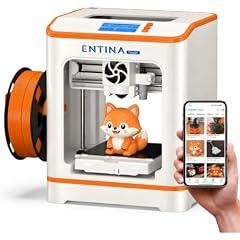
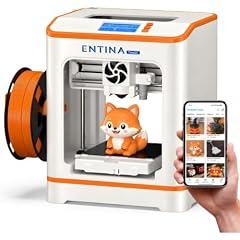
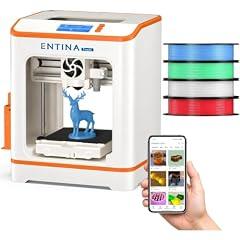
Entina Tina2C 3D Printer for Beginners
Overview
This is a compact, open-frame filament printer intended for first-time users, families, and classrooms. It arrives assembled and uses 1.75 mm PLA filament to make small plastic objects, with a manufacturer-stated 100 x 100 x 100 mm build volume, a removable spring-steel plate, Wi-Fi, USB, and memory-card print options. The box includes a 100 g PLA sample. Entina states that the product has automatic leveling, nozzle cleaning, power-loss recovery, app monitoring, and a guarded hot end. Its radio authorization is independently traceable through an FCC filing for this model, but that authorization addresses radio compliance, not burn, fire, emissions, toy-safety, or print-quality performance. No model-specific independent chamber emissions report, electrical safety listing, or child-product test certificate was located.
What works
- Compact 100 mm cubic build area can fit on a desk or classroom table, according to Entina.
- The manufacturer provides a one-year quality-issue warranty and publishes phone and email support contacts.
- The app listing reports encrypted data in transit and offers a deletion request option.
- The Wi-Fi hardware has an FCC equipment authorization traceable to this product model.
What does not
- The open frame leaves moving parts accessible, and the hot-end guard is not a full enclosure. Adult supervision is still needed around children.
- No independent model-specific testing was located for ultrafine-particle or VOC emissions, electrical safety, fire resistance, or child physical safety.
- The supplied filament is identified only as PLA. Current public material disclosures do not provide an SDS, additives, colorants, or detailed temperature and hazard information for the included spool.
- Entina's setup and model-library claims are inconsistent across listings, including claims of first printing in 8, 15, or similar short timeframes and differing library counts.
- No documented take-back program, recycler partnership, power-consumption test, or verified repair manual for this exact model was found.
Who is it for
This product fits an adult-supervised household, teacher, or first-time maker who wants to try small PLA projects without assembling a printer. Its small build volume suits simple figures, labels, classroom objects, cable guides, and other compact prints rather than large functional parts. It is most appropriate where a stable desk, a separate ventilated work area, and an adult who can manage hot-end risks, filament handling, failed prints, and app account choices are available. The app and automatic leveling may reduce initial setup work, based on manufacturer claims.
Who is it not for
It is not appropriate for a child to operate alone, especially in a bedroom or poorly ventilated shared space. The hot-end guard does not enclose the moving printer, and no independent child-safety or indoor-emissions test record was located. Households that need verified low-emission operation, a tested electrical-safety listing, a fully enclosed print chamber, or documented privacy protections designed for children should use a product with those records. It also is not suited to users needing large prints, engineering plastics, or established end-of-life recycling support.
Integrity
Entina markets PLA-friendly printing and a guarded hot end, while the product remains an open-frame fused-filament printer. PLA can be lower odor than some common printing plastics, but low odor is not proof of low ultrafine-particle or chemical exposure. No independent chamber test for this exact printer and filament setup was located. Use it in a well-ventilated area, keep children from the nozzle and moving axes, and do not treat app monitoring as a substitute for adult supervision. The supplied 100 g filament sample is described only as PLA. There is no located public SDS or detailed disclosure of the spool's additives and colorants. Entina states that automatic leveling, nozzle cleaning, power-loss recovery, and a spring-steel plate can reduce beginner setup errors, but independent failure-rate and material-waste testing was not found. The manufacturer sells accessories and offers support, yet no documented take-back or qualified electronics-recycling program was located. No Entina-specific CPSC recall was found in the checked U.S. recall sources.

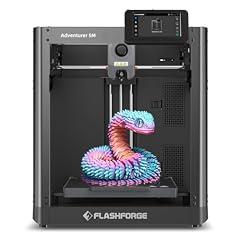
FLASHFORGE Adventurer 5M High Speed 3D Printer
Overview
This is an open-frame, single-nozzle fused-filament 3D printer for making plastic objects layer by layer. It has a 220 x 220 x 220 mm stated build area, a removable PEI-coated steel build plate, direct-drive quick-change nozzles, Wi-Fi, Ethernet, and USB connectivity. Flashforge lists a 280 C nozzle limit, a 100 C heated-bed limit, and recommended PLA and PETG with the standard nozzle. The most important limitation for a family setting is confirmed by the manufacturer specification, this is an open machine with no air-filtration system. The optional enclosure is sold separately. Independent hands-on testing found setup took about 12 minutes and praised dimensional tolerances and support removal, while also finding some surface, overhang, and network-connection weaknesses.
What works
- Independent hands-on testing found a short, guided setup process of about 12 minutes.
- Official replacement nozzles, PEI build plates, extruder assemblies, and other service parts are sold separately.
- The manufacturer provides troubleshooting, nozzle replacement instructions, firmware downloads, and serial-number guidance.
- Independent testing found strong dimensional clearance results and particularly clean support-removal surfaces.
What does not
- The open frame and lack of built-in filtration leave hot surfaces, moving parts, and print emissions accessible in the room.
- No model-specific independent chamber test for ultrafine-particle or VOC emissions was located.
- No model-specific UL, ETL, or CSA electrical-safety listing was located in the checked certification sources.
- Independent testing found inconsistent surface quality on some geometry tests, and occasional software connection loss.
Who is it for
This product suits an adult hobbyist, classroom staff member, or supervised older teen who wants to make medium-size PLA or PETG prototypes, models, organizers, and functional parts without building a printer from a kit. It is especially practical where replacement parts, guided setup, and local network or USB transfer matter. Use it on a stable, nonflammable work surface with room around the machine, and treat its fast motion, heated plate, and hot nozzle as active workshop equipment rather than a toy.
Who is it not for
It is not appropriate as an unsupervised printer for younger children. The machine is open, its nozzle can reach 280 C, its bed can reach 100 C, and its moving gantry and detachable parts remain accessible during use and maintenance. It is also a poor fit for bedrooms, poorly ventilated rooms, or homes needing documented low-emission operation, because no model-specific independent emissions report was located and there is no built-in air filter. Users needing documented electrical certification should seek a product with a traceable listing.
Integrity
The key health issue is the product's open design. Flashforge lists no air filtration and sells the enclosure separately. The official material guidance covers PLA, PETG, TPU, PLA-CF, and PETG-CF by nozzle size, but the product documentation located does not provide complete filament-specific additive, colorant, or emissions disclosure. No independent chamber report covering ultrafine particles and VOCs for this exact printer was located. The printer is repairable in practical ways. Flashforge sells replacement nozzles, PEI plates, extruder assemblies, and other parts, and publishes repair and troubleshooting guidance plus current firmware downloads. An independent power test measured about 130 W while printing PLA, 25.9 W in standby with motors on, and 11.3 W idle. No relevant CPSC recall was located in the checked records, but no traceable UL, ETL, or CSA safety listing for this exact model was found.

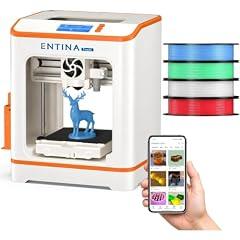
Entina Tina2C Mini 3D Printer Starter Bundle
Overview
This is a compact, single-nozzle filament 3D printer for small beginner projects, home use, and supervised classroom activity. The manufacturer specifies a 100 x 100 x 100 mm build volume, 0.4 mm nozzle, 0.1 to 0.4 mm layer settings, 60 W rated power, and compatibility with 1.75 mm PLA and TPU. It has Wi-Fi and cloud-app printing, plus microSD and Type-C options. Entina states that it arrives assembled and includes auto-leveling, a flexible spring-steel build plate, nozzle cleaning, and power-loss recovery. The product page also explicitly warns that the nozzle and other heated components remain hot during and after printing, and says younger children require supervision. No model-specific independent emissions, electrical-safety, or print-reliability test report was located in this review.
What works
- Compact 100 mm cubed build area suits small models, labels, organizers, and learning projects.
- The manufacturer provides offline microSD and wired Type-C routes as alternatives to cloud printing.
- Manufacturer documentation acknowledges hot components and directs supervision of younger users, rather than presenting operation as risk-free.
- A public manufacturer wiki offers firmware, calibration, maintenance, and slicer guidance for the Tina2 family.
What does not
- No model-specific chamber test for ultrafine particles or VOCs was located, and the printer has no stated filtration or ventilation system.
- No current model-specific UL, ETL, CSA, or equivalent electrical-safety listing was located in the relevant public certification registers.
- The supplied filament is identified only as PLA in the product listing. Safety data sheets, additive details, colorant disclosure, and temperature-specific hazard information were not located.
- The cloud app collects personal information and app activity according to its Google Play disclosure. A child-specific privacy notice and parental-control policy were not located.
- Auto-leveling and nozzle cleaning are manufacturer claims, not independently measured failure-rate evidence.
Who is it for
This product fits an adult-led household, library activity, or introductory classroom that needs compact prints rather than large functional parts. It is most suitable for a beginner making small PLA projects and willing to learn basic setup tasks such as checking Z-offset, removing prints, and clearing occasional failures. It also suits users who value an offline microSD or wired workflow and can place the printer in a ventilated area away from routine living, sleeping, and play spaces.
Who is it not for
It is not suited to unsupervised use by young children. The hot nozzle remains a burn hazard, moving parts and small tools still need adult handling, and the manufacturer itself calls for supervision. It is also a poor fit for households that need independently verified low-emission operation, an electrically safety-listed completed product, or a fully enclosed and filtered print environment. Buyers who need large builds, validated high-volume reliability, detailed filament chemistry, or child-specific cloud privacy controls need a product with those records.
Integrity
The stated PLA and TPU compatibility does not establish low indoor exposure. PLA is described by the manufacturer as low odor, but no independent chamber report was located for this exact printer and filament setup, and there is no stated filtration or ventilation control. Use the manufacturer’s warning seriously, heated parts can burn during printing and while cooling. Keep younger children supervised and run it in a separately ventilated work area. Entina publicly lists a 60 W rating, a small 100 mm cubed print capacity, power-loss recovery, and a spring-steel build plate. These may limit the energy and material involved in small projects, but no measured electricity-use profile, life-cycle assessment, recycling program, or take-back route was located. The company offers a one-year quality warranty and maintains a Tina2-family maintenance and firmware wiki, though model-specific replacement-parts availability and end-of-life arrangements remain unclear. No U.S. recall for this product was located in the checked CPSC resources.